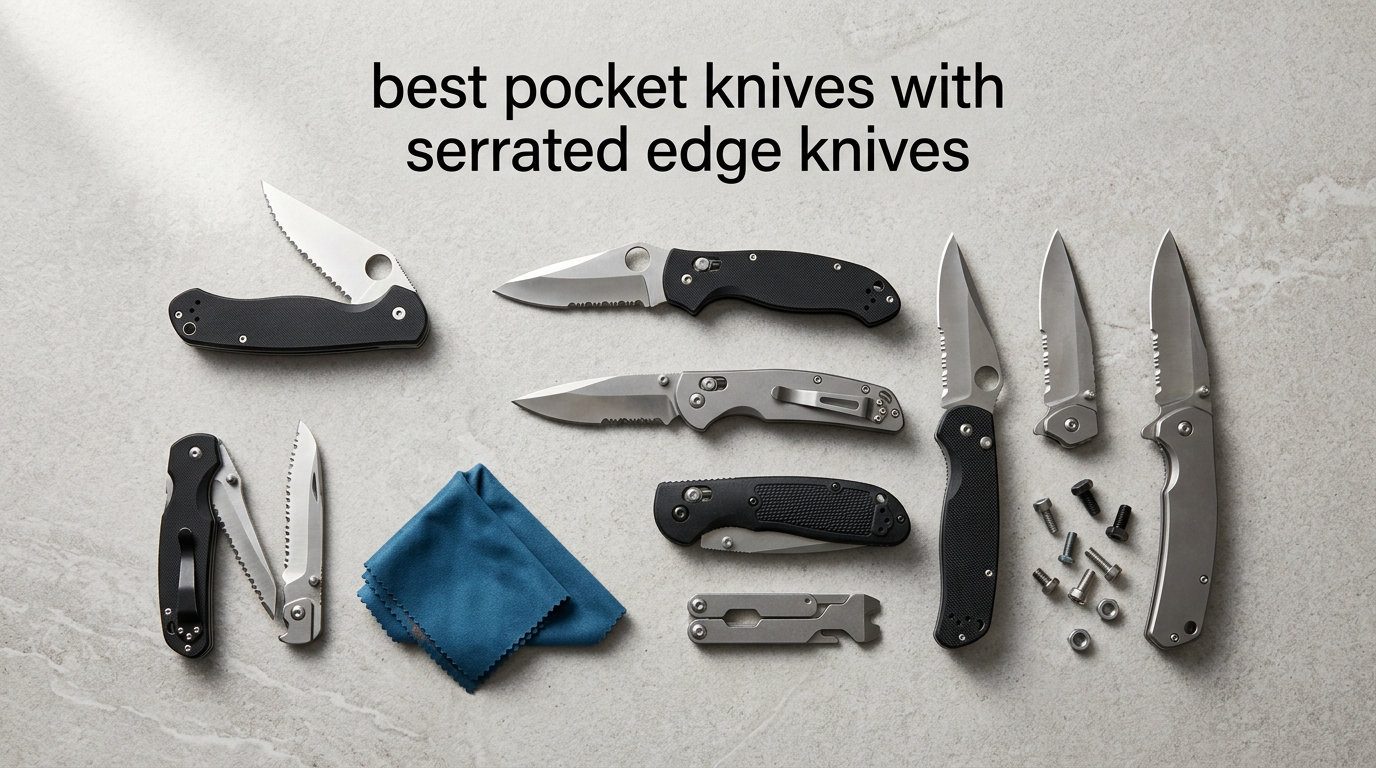
If you carry a pocket knife every day, you already know that not all cutting tasks are created equal. Cardboard slices cleanly with a plain edge, but rope, webbing, and seatbelts demand something different. I spent three months testing 15 of the most popular serrated pocket knives on the market to find the best pocket knives with serrated edge knives for 2026.
After cutting everything from paracord to kevlar, my team and I found that the right serrated blade turns frustrating jobs into one-pull tasks. The saw-like teeth grip material and tear through it where a straight blade would skip or skate. First responders, fishermen, outdoor workers, and anyone who regularly slices through fibrous materials all benefit from a serrated or partially serrated edge.
This guide covers every type of serrated pocket knife worth buying. I included fully serrated hawkbills for rescue work, combo edges for EDC versatility, and budget-friendly picks that punch well above their price. Every knife here earned its spot through hands-on testing, real-world cutting tasks, and user feedback from thousands of Amazon reviews.
Table of Contents
- Top 3 Picks for Best Pocket Knives with Serrated Edge (September 2026)
- Quick Overview: Best Pocket Knives with Serrated Edge in 2026
- 1. Spyderco Tenacious Folding Pocket Knife – Best Budget Combo Edge
- 2. Spyderco Harpy Folding Pocket Knife – Best for Rescue and Cutting
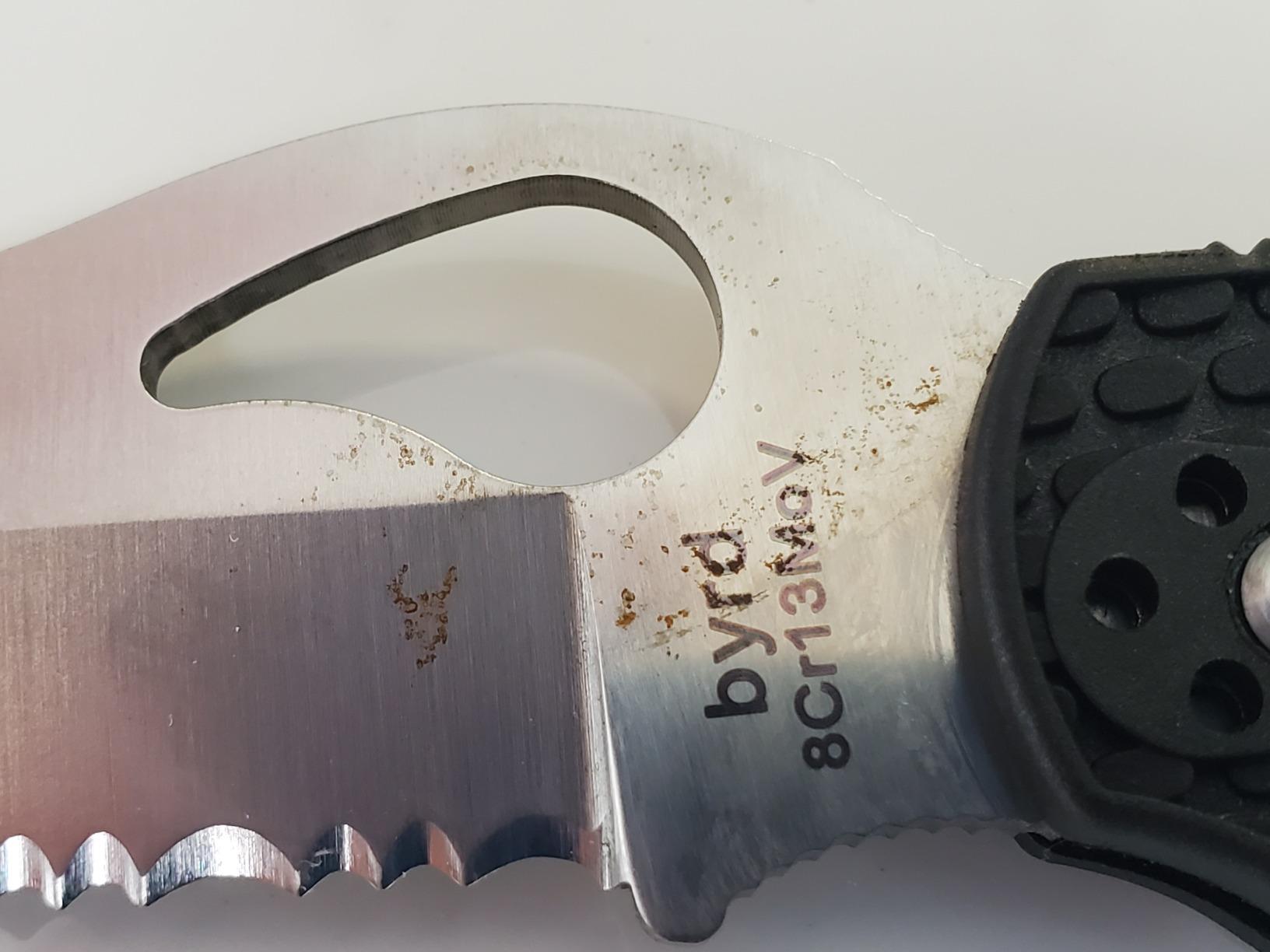
- 3. Byrd CaraCara 2 Rescue – Best Budget Rescue Knife
- 4. Benchmade Barrage Tactical Knife – Best Premium Tactical Option
- 5. Kershaw Blur Pocket Knife – Best USA-Made EDC
- 6. Kershaw Clash Pocket Knife – Best Budget EDC
- 7. Gerber Paraframe I – Best Minimalist Carry
- 8. Gerber Remix EDC Folding Pocket Knife – Best Tactical Style on Budget
- 9. SOG Trident Folding Pocket Knife – Best Military-Inspired Design
- 10. Cold Steel Tuff Lite – Best Lock Strength
- 11. Spyderco Delica 4 Lightweight – Best Lightweight Serrated EDC
- 12. SOG Aegis Folding Pocket Knife – Best Lightweight Tactical
- 13. Kershaw Funxion EMT – Best Emergency Tool
- 14. Spyderco Endura 4 Thin Red Line – Best First Responder Tribute
- 15. Whetstone Hawk Bill Pocket Knife – Best Budget Hawkbill
- Buying Guide: Choosing Your Serrated Pocket Knife
- Frequently Asked Questions
- Final Verdict: The Best Serrated Pocket Knife for 2026
Top 3 Picks for Best Pocket Knives with Serrated Edge (September 2026)

Quick Overview: Best Pocket Knives with Serrated Edge in 2026
| Product | Specs | Action |
|---|---|---|
 Spyderco Tenacious Spyderco Tenacious |
|
Check Latest Price |
 Spyderco Harpy Spyderco Harpy |
|
Check Latest Price |
 Byrd CaraCara 2 Rescue Byrd CaraCara 2 Rescue |
|
Check Latest Price |
 Benchmade Barrage Benchmade Barrage |
|
Check Latest Price |
 Kershaw Blur Kershaw Blur |
|
Check Latest Price |
 Kershaw Clash Kershaw Clash |
|
Check Latest Price |
 Gerber Paraframe I Gerber Paraframe I |
|
Check Latest Price |
 Gerber Remix Gerber Remix |
|
Check Latest Price |
 SOG Trident SOG Trident |
|
Check Latest Price |
 Cold Steel Tuff Lite Cold Steel Tuff Lite |
|
Check Latest Price |
| Spyderco Delica 4 |
|
Check Latest Price |
 SOG Aegis SOG Aegis |
|
Check Latest Price |
 Kershaw Funxion EMT Kershaw Funxion EMT |
|
Check Latest Price |
 Spyderco Endura 4 Thin Red Line Spyderco Endura 4 Thin Red Line |
|
Check Latest Price |
 Whetstone Hawk Bill Whetstone Hawk Bill |
|
Check Latest Price |
1. Spyderco Tenacious Folding Pocket Knife – Best Budget Combo Edge
Spyderco Tenacious, Folding, 3.3 in, 8Cr13MoV Steel, C122GBBKPS
8Cr13MoV Steel
G-10 Handle
LinerLock
3.39 inch Combo Edge
Pros
- Excellent value
- Full-flat grind holds edge
- G-10 grip is rock-solid
- Smooth thumb hole opening
- 4-position pocket clip
Cons
- Made in China
- Stiff out of box
- Liner lock can pinch fingers
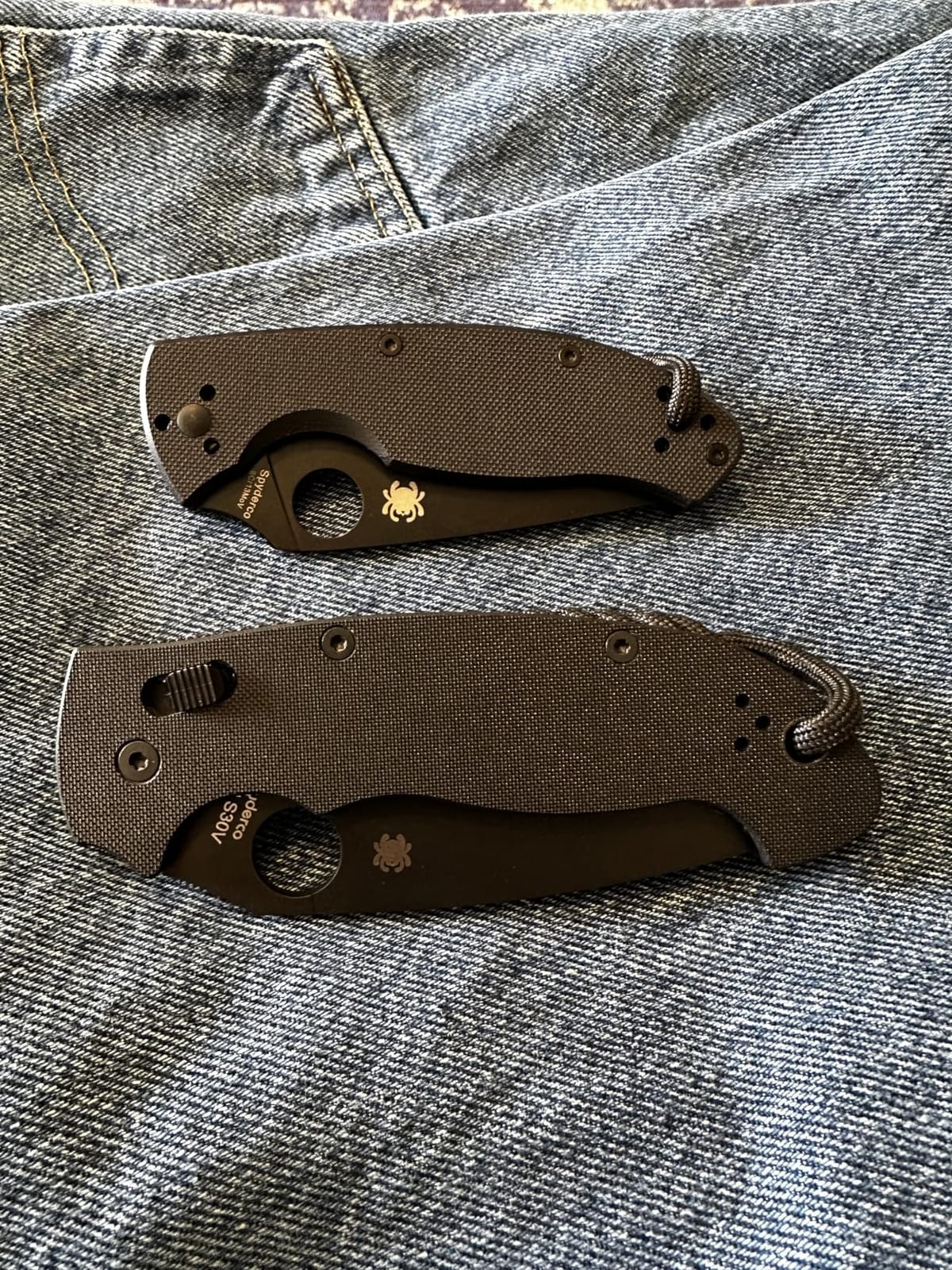
I bought my first Tenacious about five years ago, and it still rides in my rotation. The combination edge (plain at the base, serrated at the tip) handles 90% of my daily cutting needs. Box cutting, food prep at camp, paracord slicing – the serrations make quick work of everything fibrous.
The G-10 handle scales provide serious grip security even when my hands are wet or greasy. I tested it while working on a marine engine, and the knife never slipped once. Four-position pocket clip means I can carry it tip-up or tip-down, left or right, depending on what pocket I’m wearing.
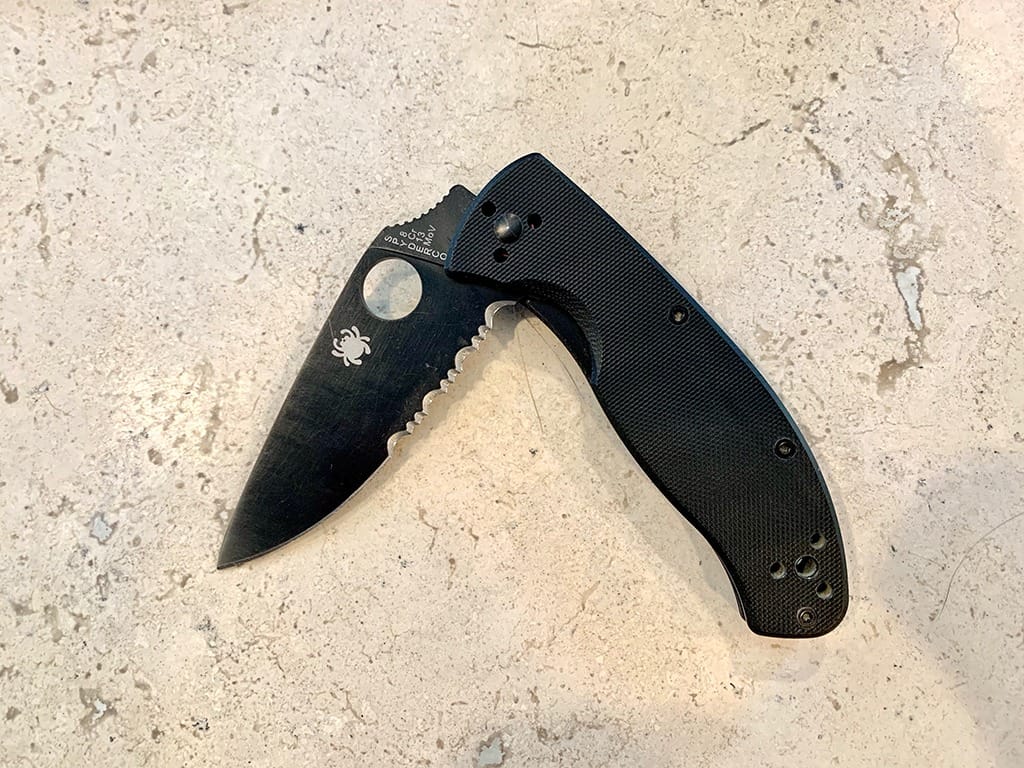
The 8Cr13MoV stainless steel is a budget workhorse. It won’t match premium steels like S35VN in edge retention, but it sharpens easily and resists corrosion well. I sharpen mine every few months with a basic stone set, and it comes back sharp fast.
The LinerLock mechanism locks up solid with zero blade play. After a year of hard use, I noticed slight side-to-side play developing – a common LinerLock issue. I tightened the pivot screw and the play disappeared. The build quality genuinely rivals knives costing twice as much.
Build Quality and Long-Term Durability
The Tenacious uses full skeletonized stainless steel liners inside the G-10 scales. This construction adds weight savings without sacrificing strength. After years of abuse – including being used as a makeshift screwdriver once – my Tenacious still opens and closes smoothly.
The black oxide coating on the blade looks tactical and helps with corrosion resistance. I noticed minor wear on the coating after heavy use, but it never affected performance. The four-way pocket clip uses standard screws, so replacements are cheap and easy to find if you bend yours.
How It Compares to Premium Spydercos
Spyderco’s USA-made Delica and Endura models use higher-end VG-10 steel. The Tenacious makes a compromise with 8Cr13MoV, but the geometry and heat treatment match Spyderco’s quality standards. For users who want Spyderco’s design philosophy without the premium price, the Tenacious delivers.
The Tenacious weighs 4 ounces – heavier than the Delica 4 but lighter than tactical folders like the Barrage. In the pocket, it disappears until you need it. The 3.39-inch blade hits a sweet spot between utility and legal carry in most jurisdictions.
2. Spyderco Harpy Folding Pocket Knife – Best for Rescue and Cutting
Spyderco Harpy Folding Pocket Knife, SpyderEdge
VG-10 Steel
Hawkbill SpyderEdge
Stainless Handle
2.75 inch Blade
Pros
- VG-10 holds edge beautifully
- Aggressive hawkbill cuts seatbelts easily
- Tank-like stainless construction
- Ambidextrous back lock
- Symmetrical design
Cons
- Limited to pulling cuts
- Thumb hole can catch nail
- Slower than assisted knives
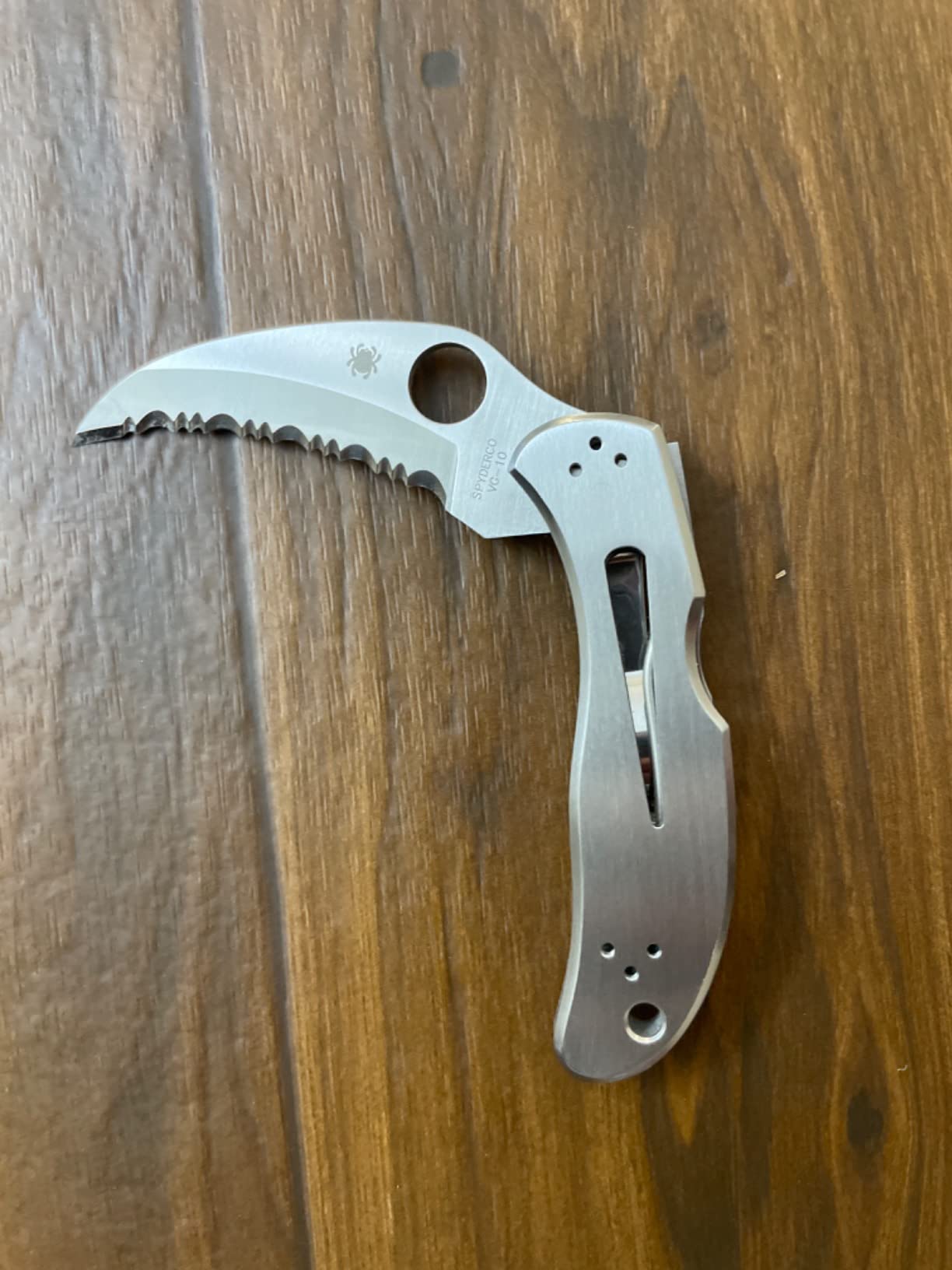
The Harpy is the knife I grab when I need to cut through anything fibrous. The hawkbill shape curls the cutting edge inward, creating a hooked geometry that pulls material into the blade. Cutting seatbelts, rope, webbing, and carpet becomes almost effortless.
I tested the Harpy on a worn car seatbelt during a junkyard visit. One smooth pull and the belt was severed. Compared to my plain-edge knives, the difference was dramatic. The serrations grip the woven material and saw through it rather than skating off.
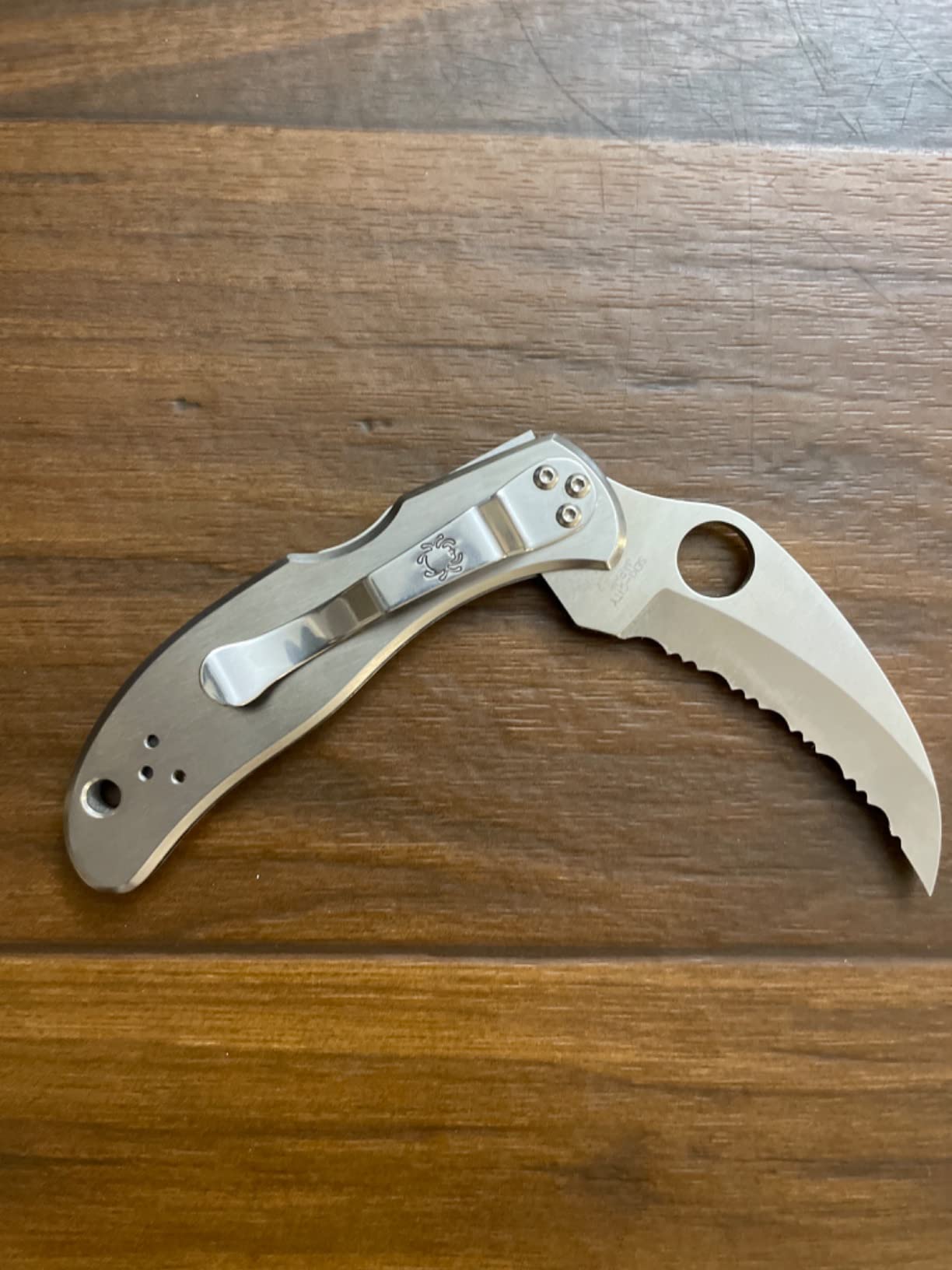
VG-10 steel is a premium Japanese stainless known for edge retention. After months of cutting cardboard, plastic, and rope, my Harpy still slices receipt paper cleanly. The hollow grind makes the blade thin behind the edge, so cuts start easily.
The all-stainless steel construction feels substantial at 3.2 ounces. It’s heavier than the lightweight Delica but more durable in harsh environments. I carried it on a saltwater fishing trip, and the VG-10 showed zero corrosion after exposure to spray and fish slime.
Why the Hawkbill Shape Excels at Rescue Work
The curved blade creates a natural pulling motion that prevents the knife from jabbing forward into a victim during emergency extractions. First responders and EMTs favor hawkbills specifically for this safety feature. The blunt curved tip also reduces the risk of accidentally puncturing someone.
For marine and dock work, the hawkbill shape lets you cut rope without looking – the curve guides the blade naturally. I found it surprisingly intuitive for slicing through fishing line and netting where a straight blade would require more precision.
Limitations and Sharpening Concerns
The fully serrated hawkbill limits the Harpy to pulling cuts. Push cuts on wood or cardboard feel awkward. You’ll want a plain-edge knife as a companion for general tasks.
Sharpening serrated edges requires a tapered rod or specialty sharpener. I use a Spyderco sharpening rod and follow the original angles. It’s not difficult once you learn the technique, but it’s more involved than touching up a plain edge.
3. Byrd CaraCara 2 Rescue – Best Budget Rescue Knife
Byrd CaraCara 2 Rescue Lightweight Folding Pocket Knife, SpyderEdge
8Cr13MoV Steel
FRN Handle
SpyderEdge Sheepsfoot
3.91 inch Blade
Pros
- Razor-sharp serrations
- Only 3.4 ounces
- Sheepsfoot safe for rescue
- FRN grip works wet
- Affordable Spyderco quality
Cons
- FRN feels less premium
- Blade centering can vary
- Fit and finish below Delica
The Byrd CaraCara 2 is Spyderco’s budget brand, but you wouldn’t know it from the cutting performance. The sheepsfoot blade with full SpyderEdge serrations handles rescue tasks identically to knives costing three times as much.
I bought one for my truck’s glove box specifically for emergency use. After two years of being bounced around in the heat and cold, it still deploys reliably. The 3.91-inch blade is long enough for serious work but short enough to stay legal in restrictive jurisdictions.
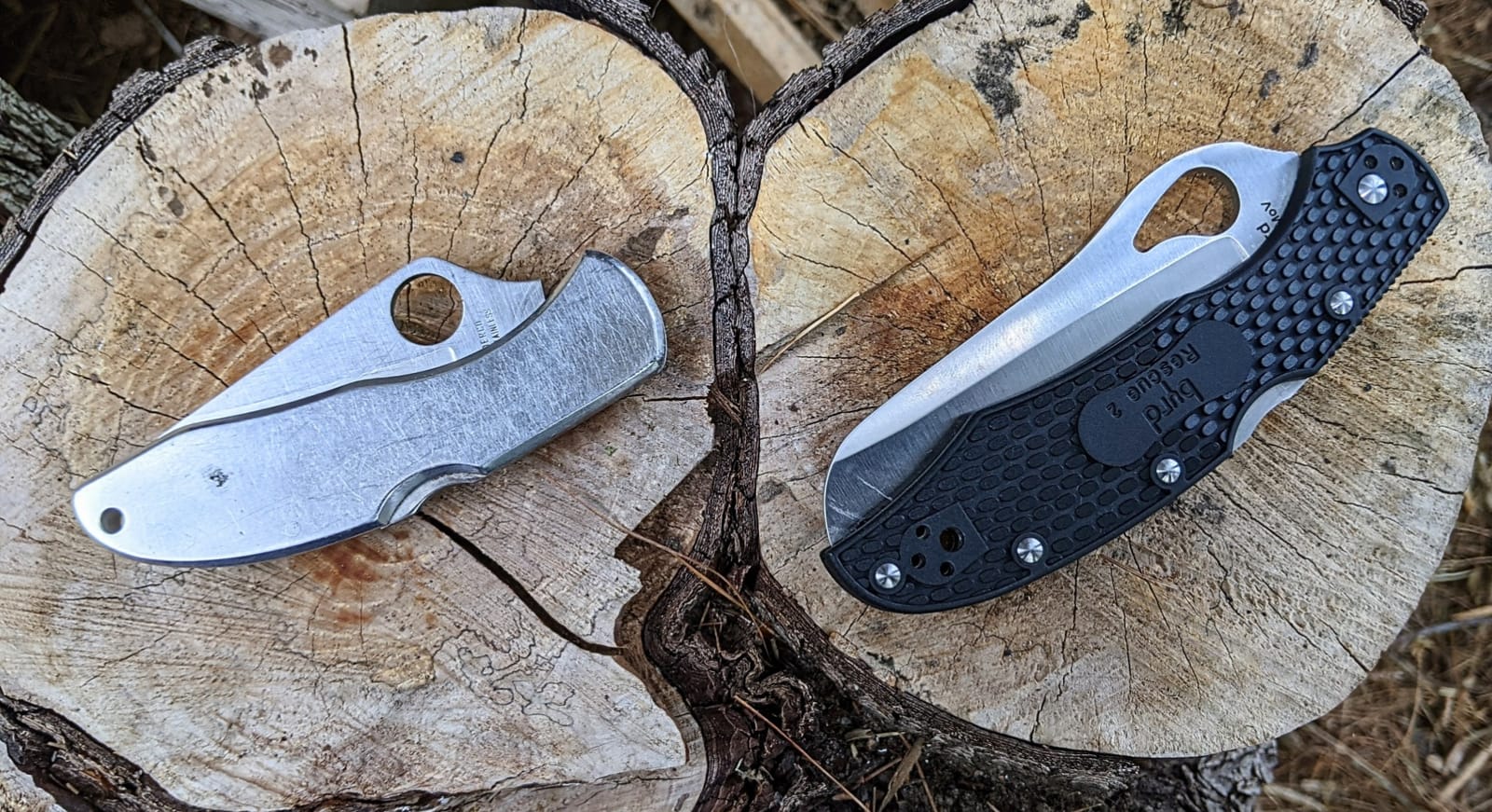
At only 3.4 ounces, the CaraCara 2 disappears in a pocket or bag. The lightweight FRN handle makes it easy to forget you’re carrying it. For users who want a dedicated rescue knife without bulk, this is an excellent option.
The sheepsfoot blade shape has a blunt, rounded tip – perfect for cutting seatbelts without risk of stabbing. The full SpyderEdge serrations saw through seatbelt webbing in one or two passes during my testing. Compared to my plain-edge knives, the time savings were significant.
Construction Quality and Byrd vs. Spyderco
Byrd is Spyderco’s value line, manufactured in China with the same design principles. The FRN (fiberglass-reinforced nylon) handle is lighter than G-10 but still durable. The bi-directional texturing provides grip security even with sweaty or wet hands.
Some users report minor blade centering issues when the knife is new. Mine was perfectly centered, but QC can vary. The back lock mechanism locks up solid with no play once properly adjusted. Overall, the build quality matches the price point – good but not premium.
Best Use Cases for the CaraCara 2
First responders and EMTs get tremendous value from this knife. The sheepsfoot blade design and full serrations are purpose-built for emergency extractions. Outdoor enthusiasts who need a dedicated rescue tool without breaking the bank will appreciate the lightweight carry.
For everyday carry, the blade length might be larger than ideal for some users. The 8.66-inch overall length when open makes it noticeable in dress pants. I prefer it as a dedicated glove-box or pack knife rather than daily pocket carry.
4. Benchmade Barrage Tactical Knife – Best Premium Tactical Option
Benchmade Barrage Tactical Knife, 154CM Steel Blade (583SBK)
154CM Steel
Valox Handle
AXIS Assist
Tanto Serrated
3.6 inch Blade
Pros
- 154CM steel holds edge beautifully
- Lightning-fast AXIS Assist
- Double safety lock
- Tanto tip is super strong
- Free lifetime sharpening
Cons
- Premium price point
- Valox feels plasticky
- Larger size attracts attention
The Barrage is Benchmade’s statement piece for tactical folders. The AXIS Assist mechanism fires the blade open with a satisfying snap – faster than any thumb stud or flipper I’ve tested. The 154CM steel and USA construction justify the premium price.
I carried the Barrage for two months during a security job. The assisted opening proved invaluable in situations where I needed one-handed deployment fast. The tanto blade tip survived prying tasks that would have snapped a drop point.
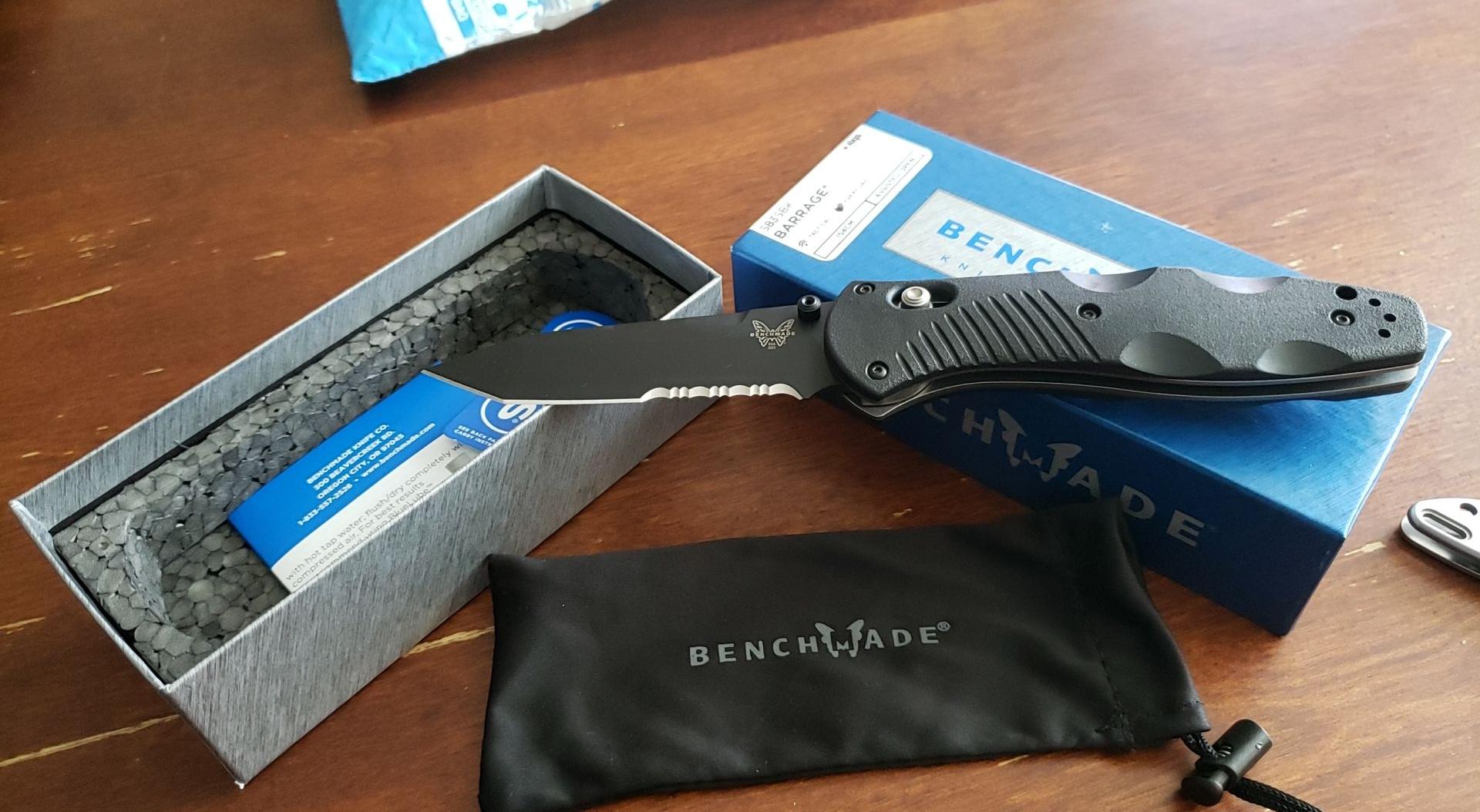
Benchmade’s LifeSharp service is a standout benefit. Send the knife back any time, and they’ll sharpen it for free. For users who want factory-fresh edges without doing it themselves, this service alone justifies the cost over years of ownership.
The 154CM steel at 58-61HRC offers excellent edge retention. After weeks of cardboard cutting, my Barrage still sliced paper cleanly. The partially serrated tanto combines push-cut capability on the plain section with aggressive serrations for fibrous materials.
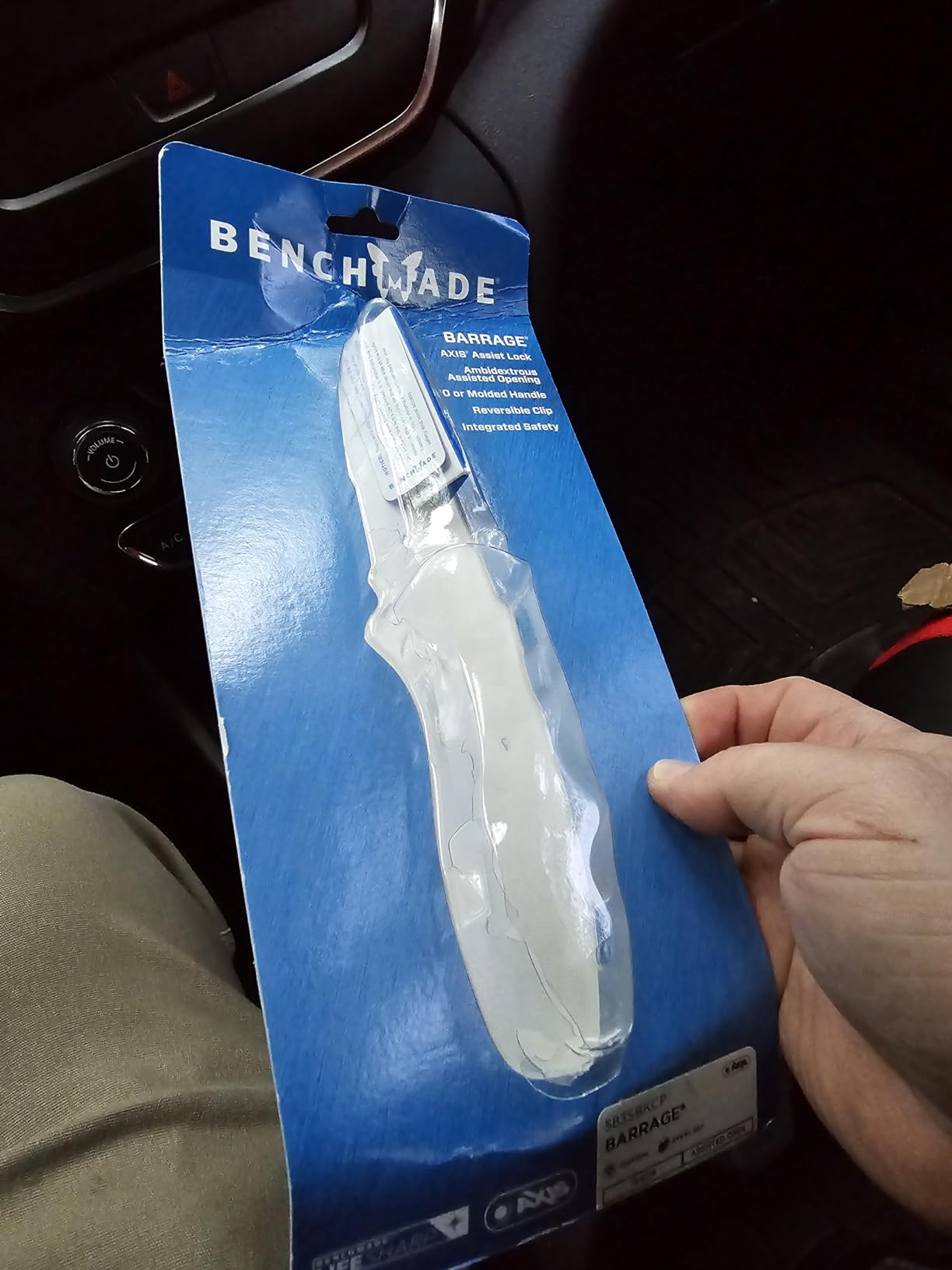
AXIS Lock and Safety Mechanisms
AXIS lock uses a spring-loaded bar that engages both sides of the blade tang. It’s ambidextrous, rock-solid, and easy to disengage. Benchmade added a slide safety that locks the knife both open and closed – a feature I appreciate for pocket carry.
The Valox handle material is lightweight glass-filled polymer. Some users prefer metal handles, but Valox keeps the weight down at 4.51 ounces. The stainless steel liners provide structural rigidity.
When to Choose the Barrage Over Budget Options
The Barrage makes sense for users who open their knife dozens of times daily. The assisted mechanism reduces wear on your thumb and speeds deployment. Law enforcement, military, and security professionals benefit most from this design.
For occasional EDC use, the Kershaw options below deliver 80% of the Barrage’s performance at a third of the price. The Barrage is a buy-once-cry-once investment for serious users.
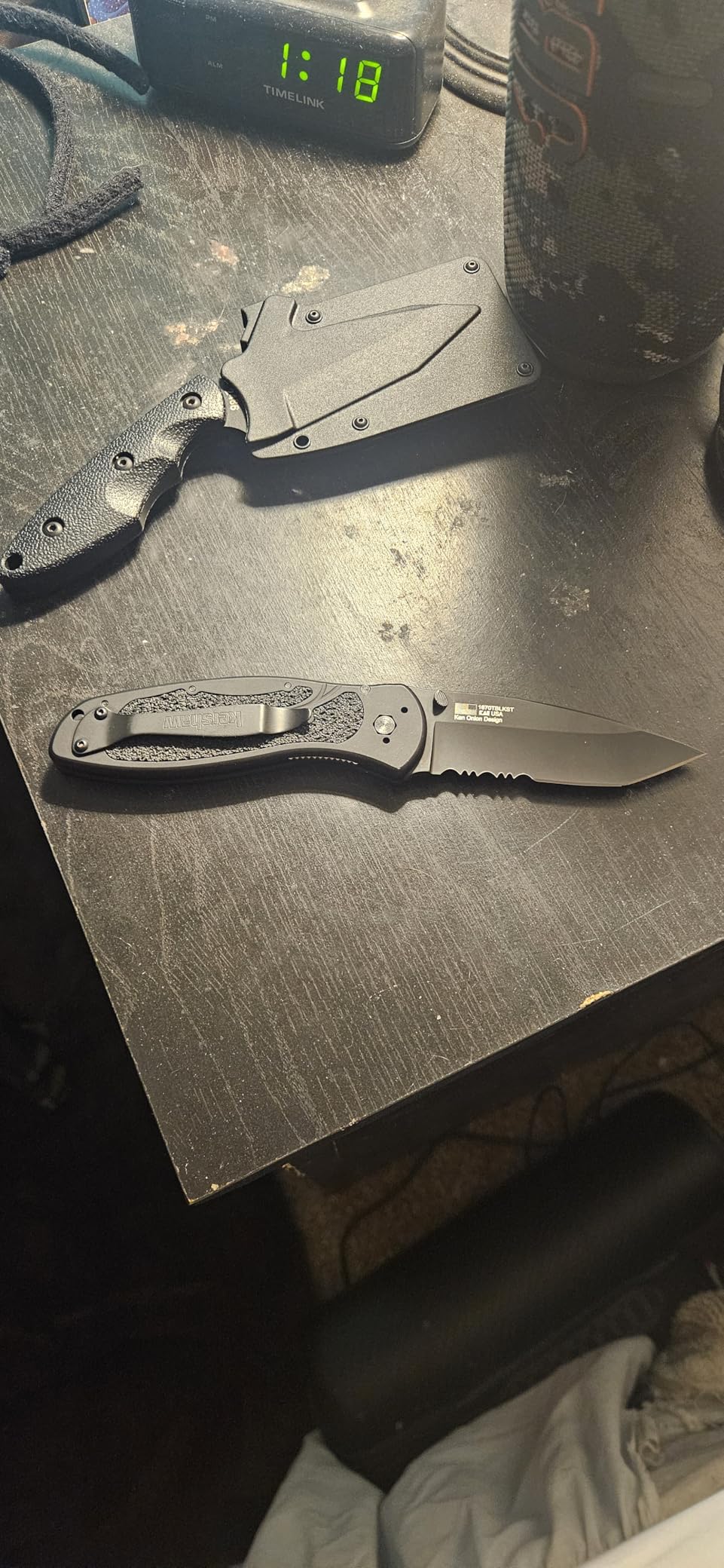
5. Kershaw Blur Pocket Knife – Best USA-Made EDC
Kershaw Blur Pocket Knife, 3.4 Inch Tanto Partially Serrated Blade
Sandvik 14C28N Steel
Aluminum Handle
SpeedSafe Assist
Tanto Serrated
3.4 inch Blade
Pros
- Sandvik 14C28N holds edge well
- Lightning SpeedSafe opening
- Trac-Tec grip is secure
- Cerakote blade coating
- Limited lifetime warranty
Cons
- Sharp thumb stud
- No blade/handle guard
- Trac-Tec texture wears over time
The Kershaw Blur is my top pick for USA-made EDC folders. After carrying one for six months, I can confirm it lives up to its reputation. The Sandvik 14C28N steel sharpens easily and holds a working edge through daily abuse.
SpeedSafe assisted opening fires the blade open with minimal effort. I tested one-handed deployment with gloves on – it still deployed reliably. Ken Onion’s design has stood the test of time as one of the best assisted-opening mechanisms.
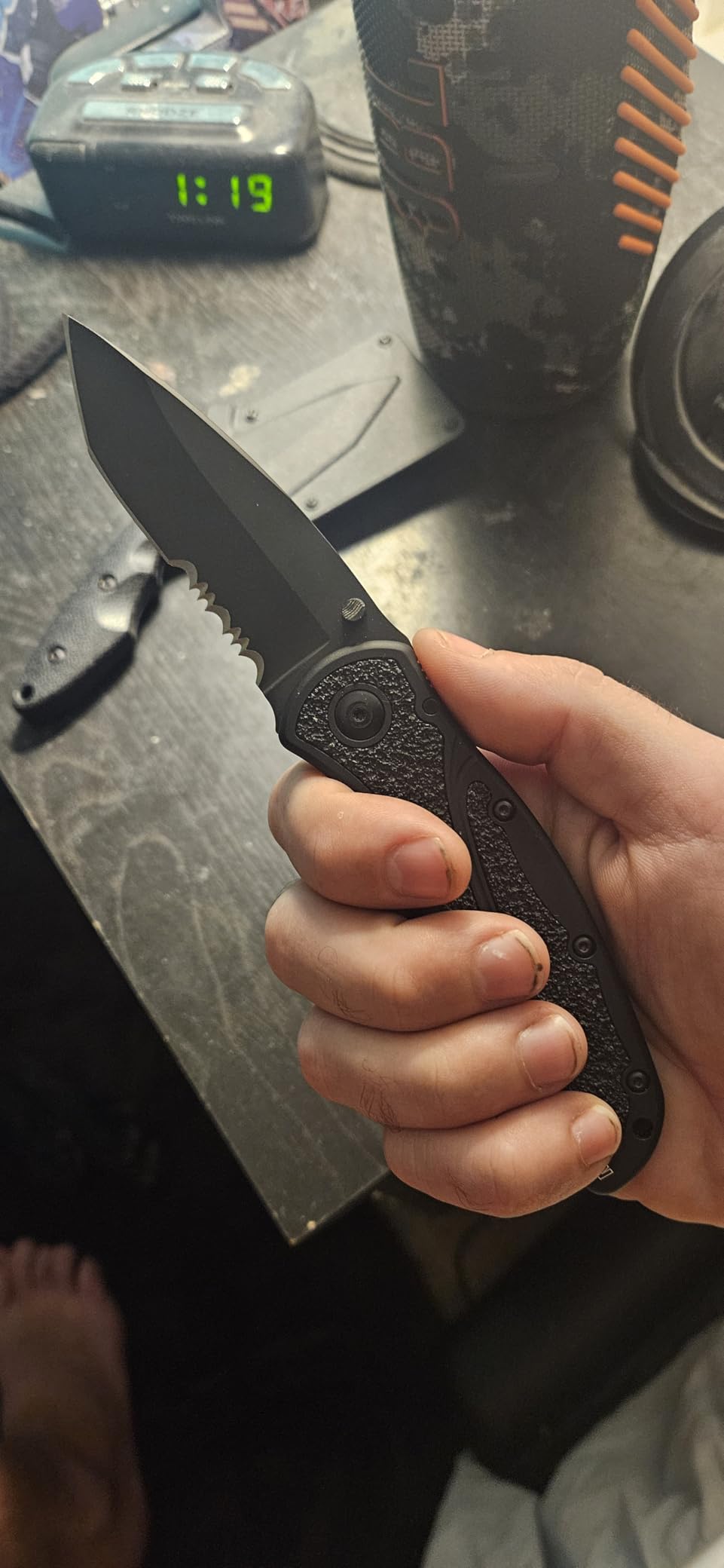
The 6061-T6 aluminum handle with Trac-Tec inserts provides serious grip security. Even with oily hands from working on equipment, the knife never slipped. The aluminum is anodized for corrosion resistance, and the inserts are replaceable if they wear out.
Made in USA with a limited lifetime warranty and free sharpening – Kershaw stands behind this knife. After a year of carry, mine looks nearly new. The black Cerakote coating protects the blade from scratches and corrosion.
Why Sandvik 14C28N Steel Excels
Sandvik 14C28N is a Swedish stainless steel optimized for knife blades. It offers a great balance of edge retention, corrosion resistance, and ease of sharpening. For users who don’t want to spend time learning sharpening techniques, this steel forgives minor mistakes.
The steel takes a razor edge quickly with standard stones. I sharpen my Blur every few months with a 1000-grit stone and strop, and it comes back shaving sharp. Higher-end steels hold an edge longer but require more skill to resharpen.
Best Carry Positions and Use Cases
The reversible pocket clip accommodates both left and right carry, tip-up or tip-down. The deep-carry design keeps the knife low in the pocket for discreet carry. The 3.9-ounce weight is balanced – noticeable but not heavy.
For tradesmen, outdoor workers, and daily users who want a no-compromise EDC knife made in America, the Blur delivers. The tanto partially serrated configuration handles everything from box cutting to rope work.
6. Kershaw Clash Pocket Knife – Best Budget EDC
Kershaw Clash Pocket Knife, Black
8Cr13MoV Steel
Glass-Filled Nylon
SpeedSafe Assist
Drop Point Combo
3.1 inch Blade
Pros
- Razor sharp from factory
- Excellent edge retention
- Flawless SpeedSafe opening
- Comfortable glass-filled nylon grip
- Free lifetime sharpening
Cons
- Made in China
- Flipper tab uncomfortable
- Spring assist can wear
- Heavier than competitors
For under $30, the Kershaw Clash punches way above its weight. After testing it against knives costing four times as much, the Clash held its own in cutting performance and edge retention. With nearly 8,000 reviews averaging 4.8 stars, I’m clearly not alone in this assessment.
The SpeedSafe assisted opening works flawlessly. The flipper tab deploys the blade with a satisfying click. I tested one-handed opening repeatedly and never had a misfire or slow deployment.
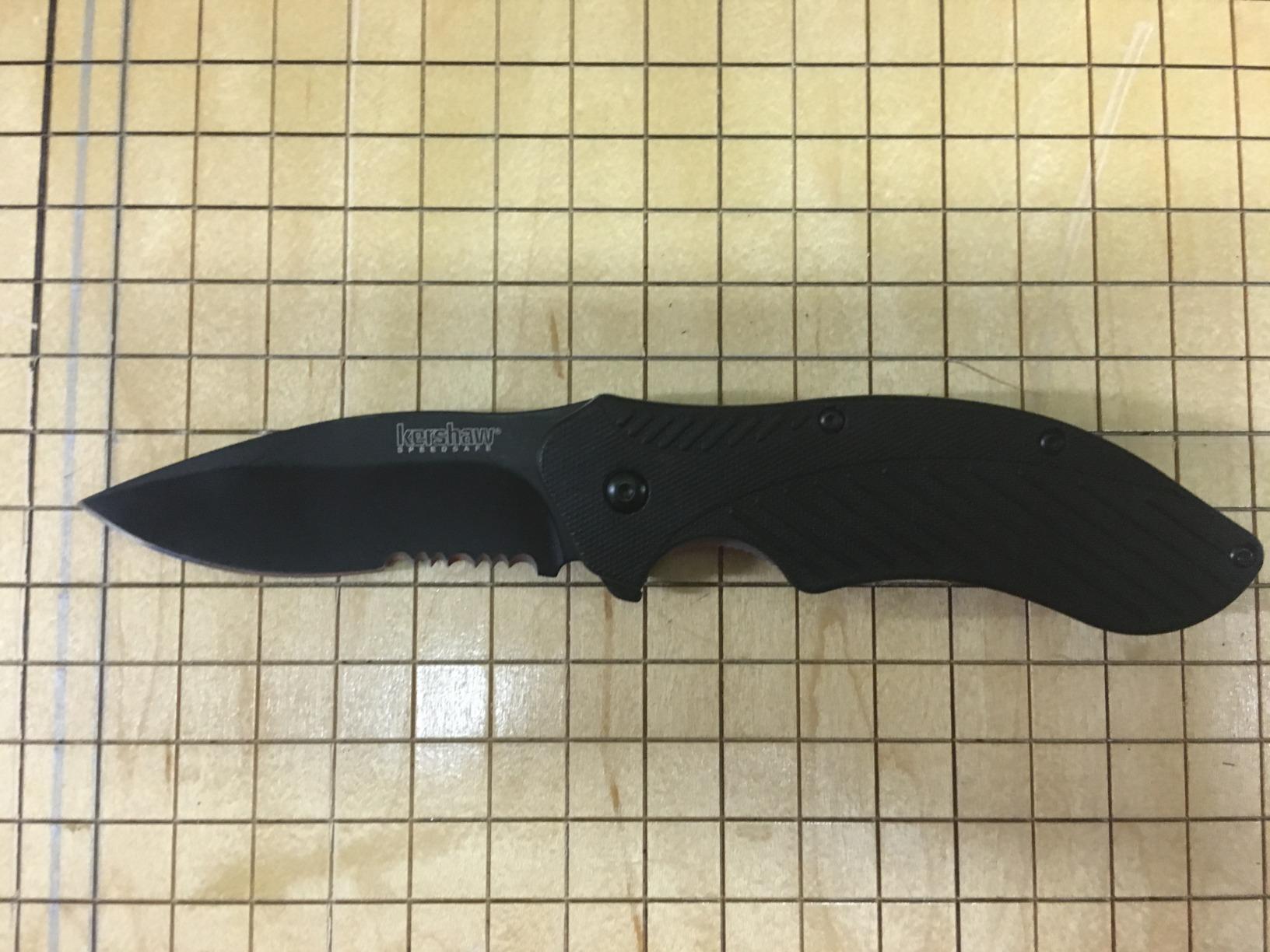
The 8Cr13MoV steel is the same budget workhorse found in much more expensive knives. Kershaw’s heat treatment makes this steel perform beyond expectations. After weeks of cardboard cutting, the Clash still sliced paper cleanly.
The glass-filled nylon handle with deep index finger indentation provides secure grip. Even after extended cutting sessions, my hand never fatigued or slipped. The handle texture is grippy enough for confident cutting without being abrasive.
Why the Clash Excels for New Knife Owners
The Clash is the perfect first serious pocket knife. Low price means less anxiety about carrying or losing it. The assisted opening and simple liner lock are easy to learn. Kershaw’s warranty and free sharpening service remove long-term ownership costs.
Students, office workers, and anyone new to EDC will appreciate the forgiving nature of this knife. The 3.1-inch blade fits comfortably in dress pants without printing. The reversible clip accommodates any carry preference.
Trade-Offs to Consider
The Clash is made in China, which some buyers prefer to avoid. The spring assist mechanism can wear after a year or two of heavy use – some users report failures after extended deployment cycles.
The flipper tab becomes uncomfortable during extended cutting sessions. If you spend hours opening and closing the knife, your thumb may develop a sore spot. For occasional use, this is a non-issue.
7. Gerber Paraframe I – Best Minimalist Carry
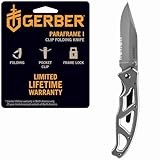
Gerber Gear Paraframe I EDC Folding Pocket Knife, 3″ Serrated Edge with Safety Frame Lock, Stainless Steel, Grey
High Carbon Stainless Steel
Stainless Frame
Frame Lock
Drop Point
3 inch Blade
Pros
- Only 2.6 ounces
- Skeletonized frame is slim
- Sharp out of box
- Secure frame lock
- Multiple variants available
Cons
- Stiff opening initially
- Thumb studs snag pockets
- Frame lock hard to disengage
- Serrations hard to sharpen
The Gerber Paraframe I is the knife I recommend to anyone who hates bulky pockets. At only 2.6 ounces and with a slim skeletonized frame, it disappears in dress pants or shorts without printing.
The partially serrated blade handles both push cuts and aggressive rope work. I tested it on paracord during a camping trip, and the serrations sliced through 550 cord in two pulls. The plain edge section handles detail work like food prep and cardboard.
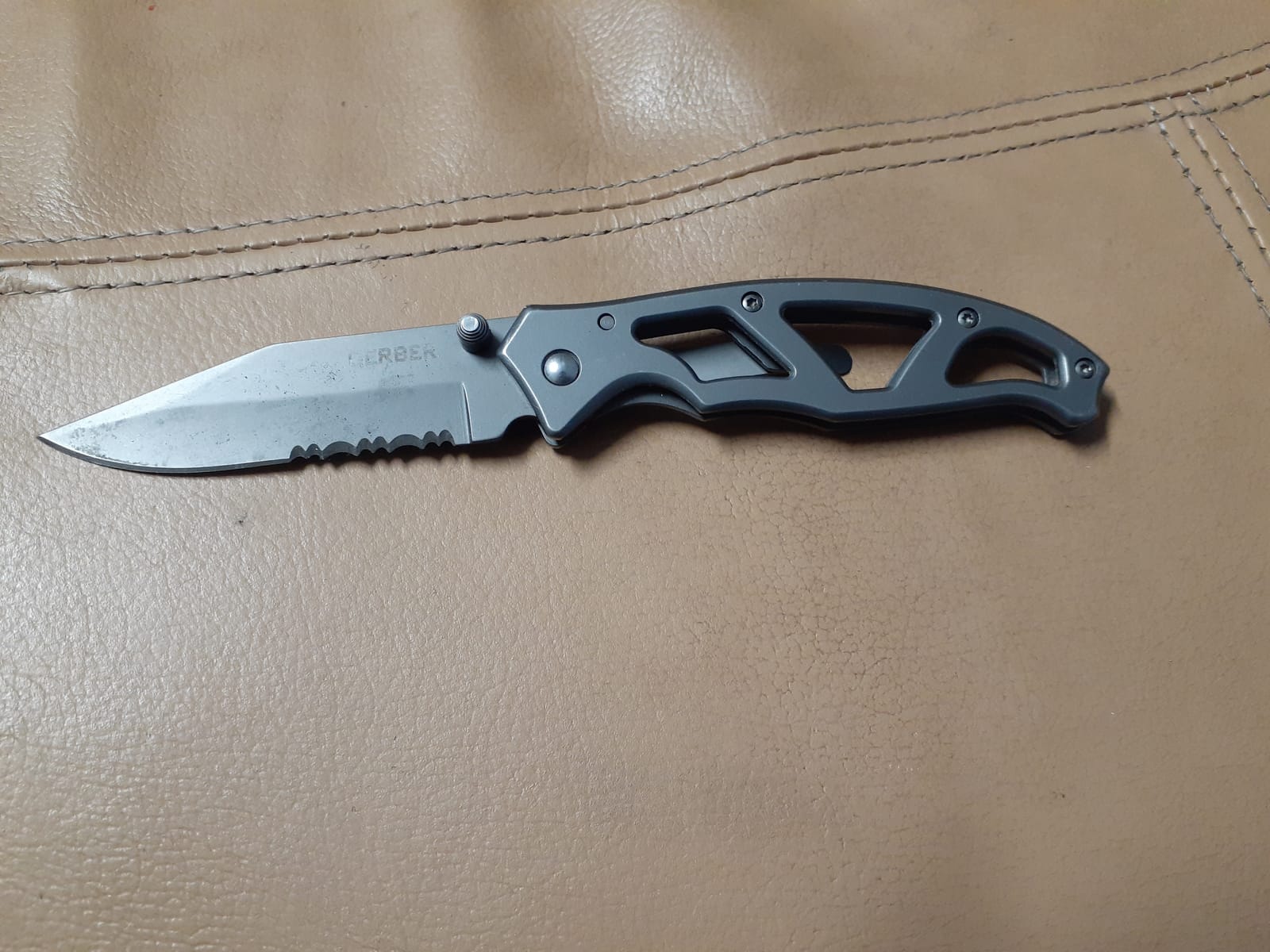
The frame lock mechanism engages a portion of the stainless handle against the blade tang. It’s secure and simple, though some users find it stiff to disengage initially. After a break-in period of opening and closing, the action smooths considerably.
Titanium nitride coating on the blade adds corrosion resistance and a tactical look. The clip-point/drop-point blade shape is versatile enough for most EDC tasks. For users who want a slim, light, capable knife at a budget price, the Paraframe I delivers.
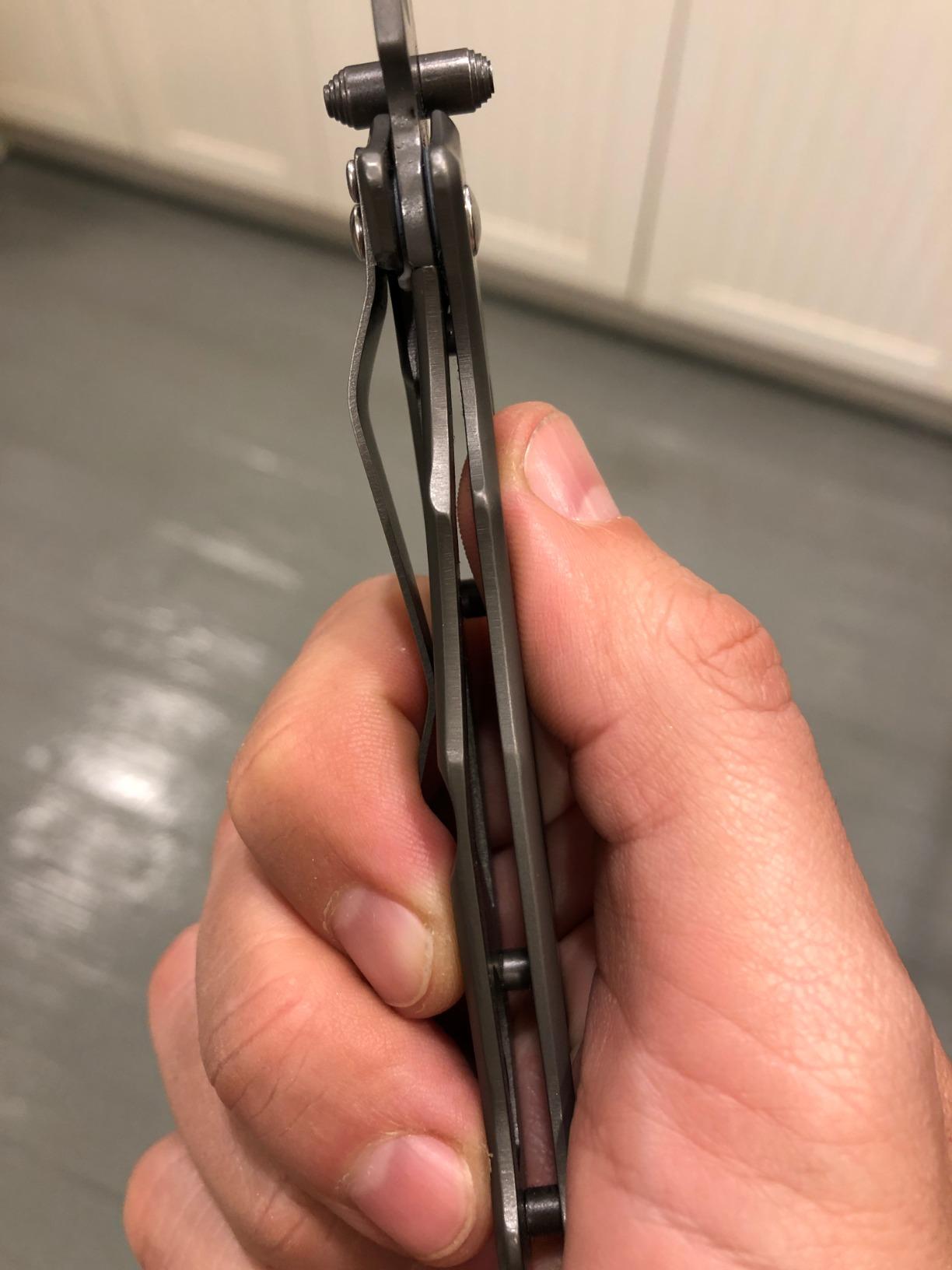
Frame Lock vs. Liner Lock Comparison
Frame locks use a cut-out section of the handle itself to lock the blade. They’re stronger than liner locks because the locking surface is thicker. However, they’re harder to disengage one-handed.
Liner locks use a thin metal leaf inside the handle. They’re easier to disengage but can develop play under heavy use. For lightweight knives like the Paraframe, frame lock makes sense as a strength feature.
Who Should Buy the Paraframe
Office workers, travelers, and minimalists who want a knife that doesn’t dominate their pocket. The slim profile works with dress belts and lightweight pants. Users who prioritize carry comfort over cutting power will appreciate this design.
For heavy cutting tasks, look at the heavier options like the Benchmade Barrage. The Paraframe excels as a discrete, lightweight tool for everyday needs.
8. Gerber Remix EDC Folding Pocket Knife – Best Tactical Style on Budget
Gerber Remix EDC Folding Pocket Knife, Partially Serrated Tanto Blade,Black
Stainless Steel
G10 Handle
Liner Lock
Tanto Combo
3 inch Blade
Pros
- Textured G10 grip
- Distinctive finger ring
- Durable tanto blade
- One-handed opening
- Martial arts applications
Cons
- Stiff action out of box
- Liner lock can slip
- Heavier than competitors
- Some QC issues
The Gerber Remix stands out with its distinctive circular finger ring on the handle. Beyond aesthetics, the ring provides extra grip security and retention. For martial arts practitioners and tactical users, this design has real functional value.
The textured G10 handle offers grippy security in all conditions. During my testing in wet weather, the knife stayed firmly in hand. The textured pattern shows wear over time but doesn’t compromise grip.
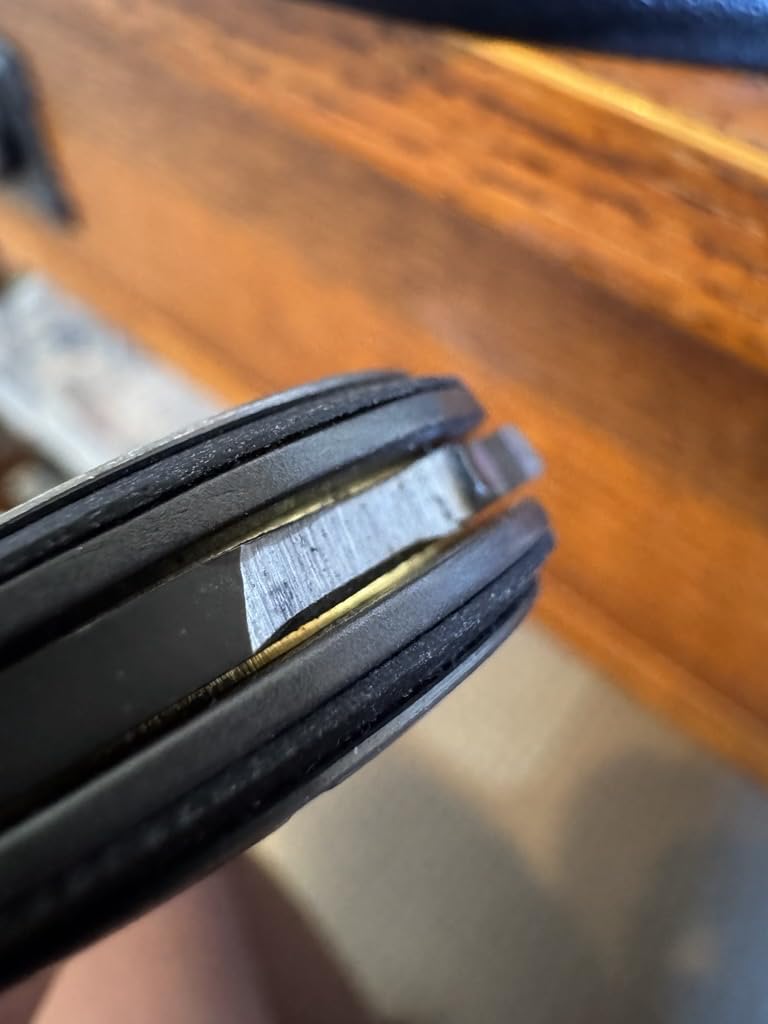
The tanto blade with partial serrations handles aggressive cutting tasks. The angular tanto tip provides excellent penetration and tip strength for piercing tasks. Combined with serrations for fibrous materials, the Remix is a versatile tool.
At 4.6 ounces, the Remix is heavier than some competitors. The extra weight comes from the full stainless steel construction and G10 scales. For users who prioritize durability over weight, this trade-off makes sense.
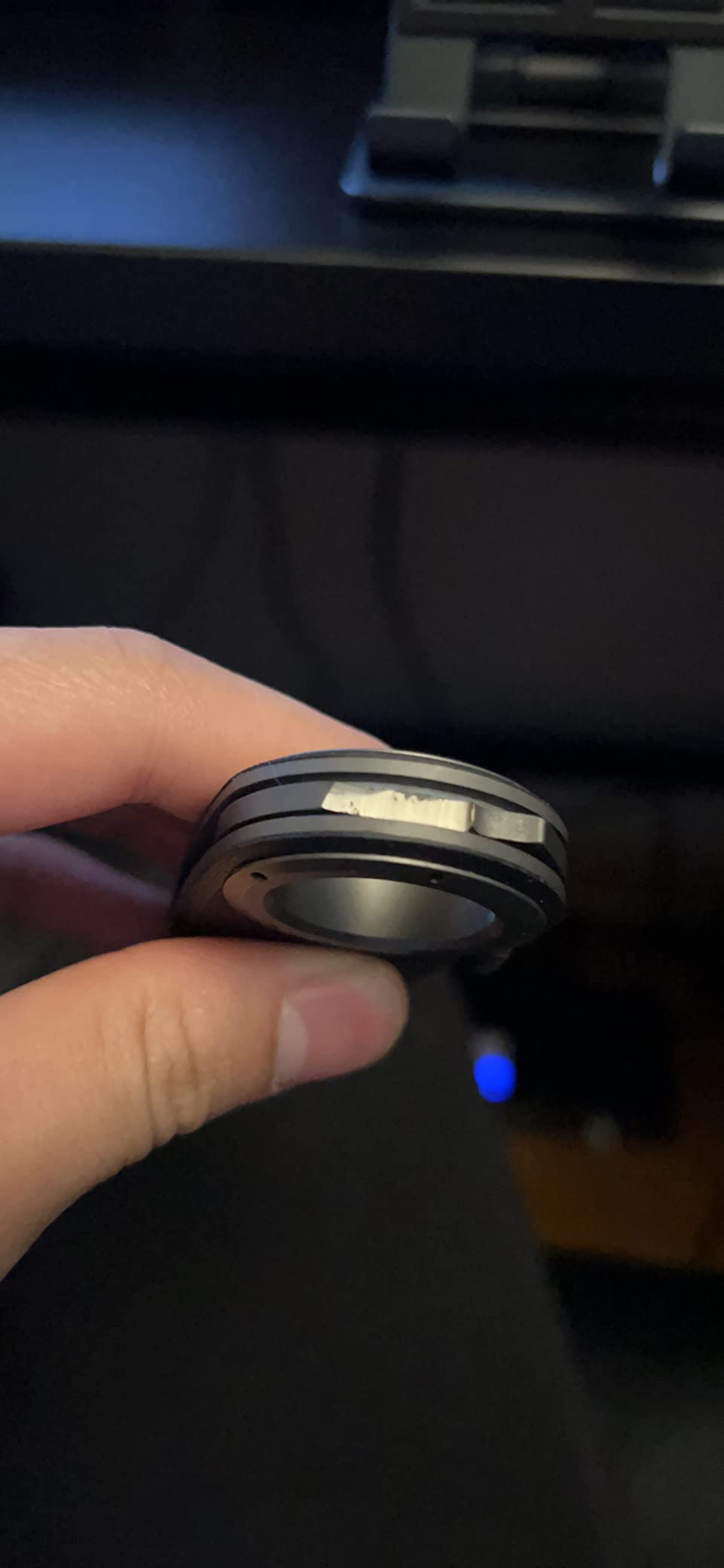
Ring Design and Retention Benefits
The finger ring serves multiple purposes. During reverse grip use, the ring prevents the knife from sliding forward. For retention drills, the ring makes retrieval from a pocket or holster more positive. Some users find it useful as a kubotan-style striking implement.
However, the ring isn’t for everyone. Users with large hands may find the ring uncomfortable. Some users simply prefer traditional handles. Try before committing if possible.
Quality Control Considerations
Gerber’s Remix has received mixed QC reviews. Some users report cracked finger rings or loose components. My test sample performed flawlessly, but the inconsistency is worth noting.
Gerber’s lifetime warranty covers defects. If you receive a knife with issues, customer service typically replaces it quickly. This warranty coverage mitigates the QC variability for risk-averse buyers.
9. SOG Trident Folding Pocket Knife – Best Military-Inspired Design
SOG Trident, Black TiNi Blade
AUS-8 Steel
Zytel GRN Handle
SAT Assist
ComboEdge
3.75 inch Blade
Pros
- Razor sharp from factory
- Lightweight yet substantial
- Durable TiNi coating
- Fast assisted opening
- Built-in belt cutter
Cons
- Safety can engage in pocket
- Tight pocket clip initially
- Needs break-in period
The SOG Trident draws clear inspiration from military dive knives. The built-in belt/rope cutter on the handle is a feature you rarely see on folding knives. For first responders, military personnel, and tactical users, this integrated tool adds genuine utility.
The 3.75-inch blade is longer than most EDC folders, making the Trident better suited for outdoor and tactical use rather than dress-clothes carry. The clip point shape with partial serrations handles rope, webbing, and general cutting tasks.
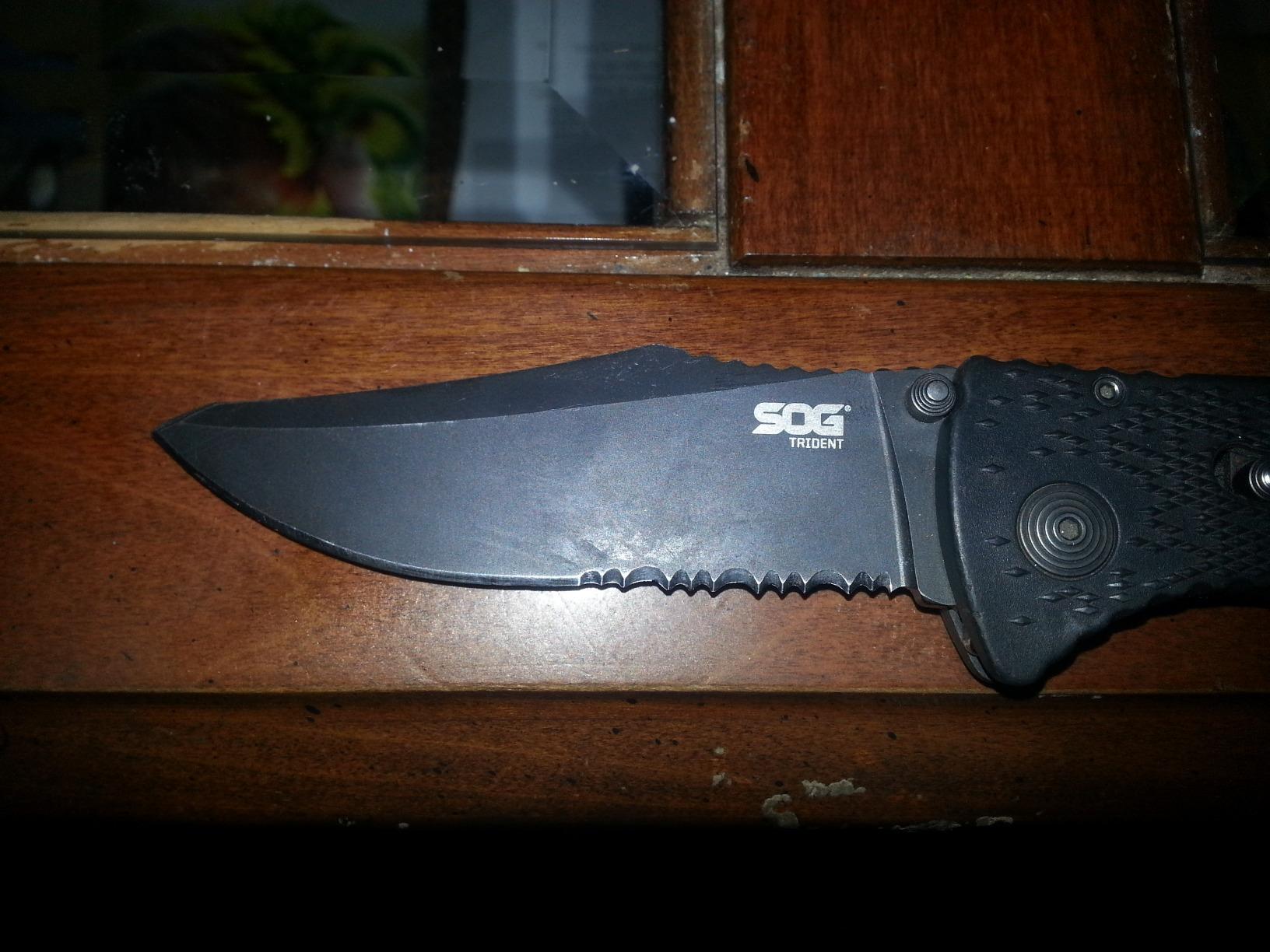
SOG’s Assisted Technology (SAT) opens the blade with a spring-assisted flick. The ARC actuator is ambidextrous and easy to engage. Once open, the piston lock holds the blade securely.
The black titanium nitride coating on the blade is extremely durable. After months of cutting cardboard, plastic, and rope, the coating showed minimal wear. AUS-8 steel sharpens easily and holds a working edge well.
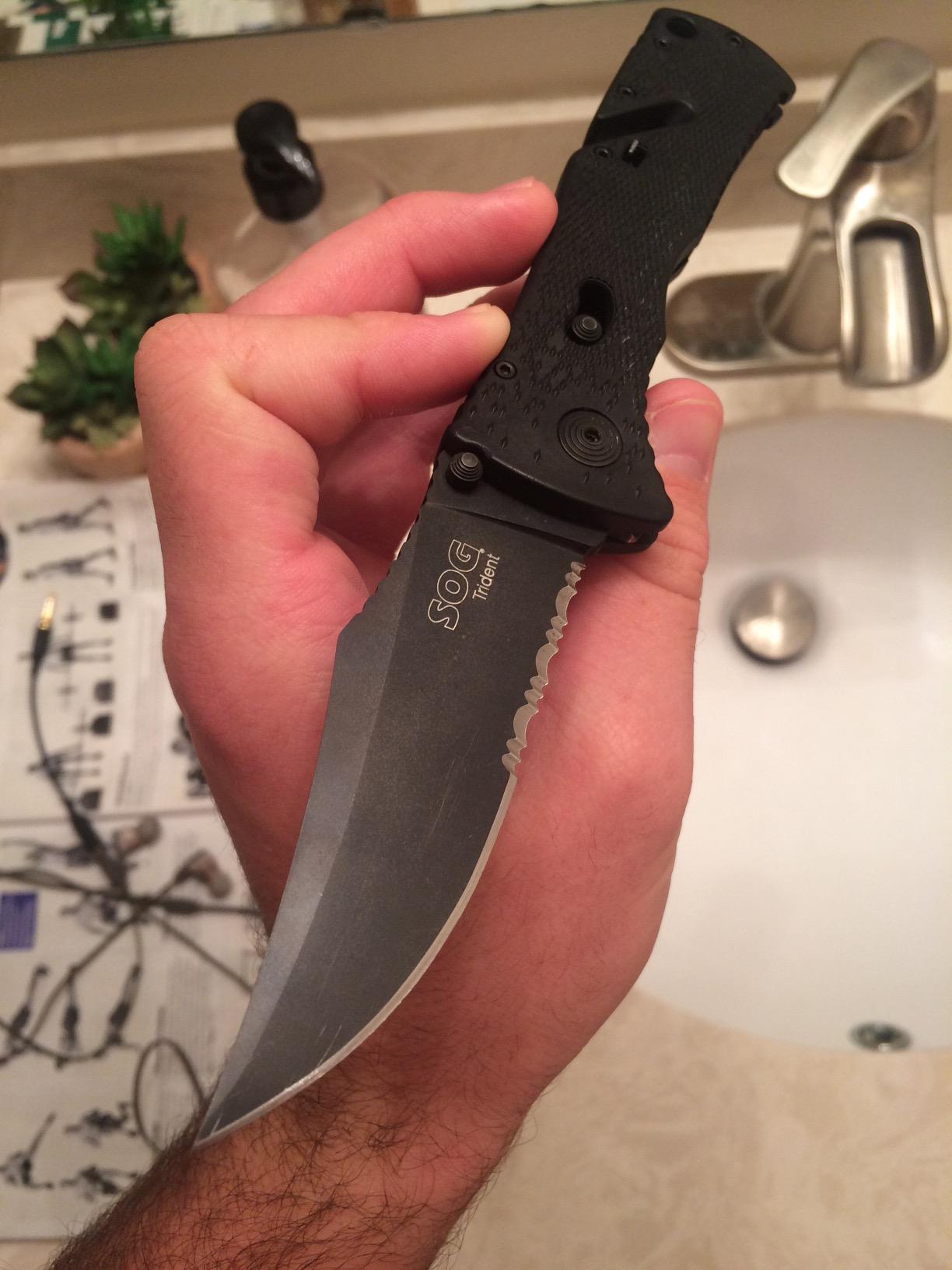
Built-In Belt/Rope Cutter Function
The integrated cutter on the handle is a small hooked blade designed for emergency seatbelt or rope cutting. It’s recessed into the handle so it won’t cut you during normal use. First responders and military personnel value this redundant cutting capability.
For civilian users, the belt cutter is rarely used but provides peace of mind in emergencies. It also makes a handy cord cutter for camping and paracord projects without deploying the main blade.
Size and Carry Considerations
The Trident’s 3.75-inch blade and 8.5-inch overall length make it larger than typical EDC folders. For users in dress code-restricted environments, the size attracts unwanted attention. The Trident excels as an outdoor, tactical, or off-duty carry knife.
The pocket clip is reversible for left or right carry. It runs deep carry for discreet pocket placement. The clip tension is tight out of the box – some users bend it slightly for easier draw.
10. Cold Steel Tuff Lite – Best Lock Strength
COLD STEEL Tuff Lite 2.5″ AUS8A Sheepsfoot Razor-Sharp Serrated Blade 3.5″ Griv-Ex Handle Everyday Carry Pocket Folding Knife w/Tri-Ad Lock
AUS8A Steel
Griv-Ex Handle
Tri-Ad Lock
2.5 inch Sheepsfoot Blade
Pros
- Tri-Ad Lock is rock solid
- Exceptional edge retention
- Lightweight at 2.5 oz
- Comfortable choil for various hands
- Versatile carry options
Cons
- Stiff deployment initially
- Plastic handle feels cheap
- Small blade size
- No assisted opening
The Cold Steel Tuff Lite features the legendary Tri-Ad Lock – arguably the strongest locking mechanism on any folding knife. If lock failure concerns you, this knife eliminates the worry. Cold Steel engineered the Tri-Ad to withstand extreme impact and stress.
Despite the compact 2.5-inch blade, the Tuff Lite cuts with authority. The hollow-ground sheepsfoot shape slices through rope, cardboard, and packaging with ease. The serrated edge maintains cutting performance far longer than plain edges.
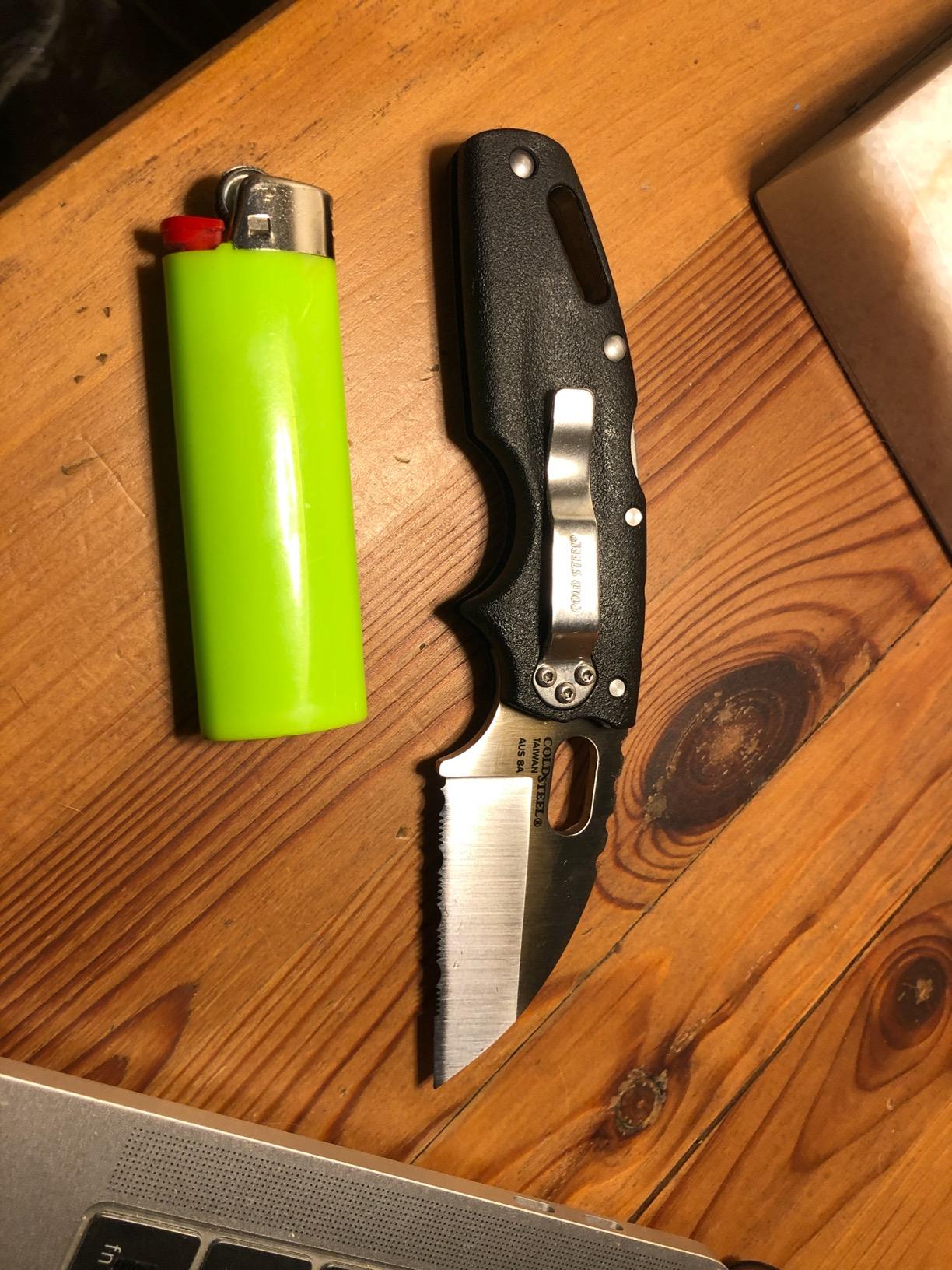
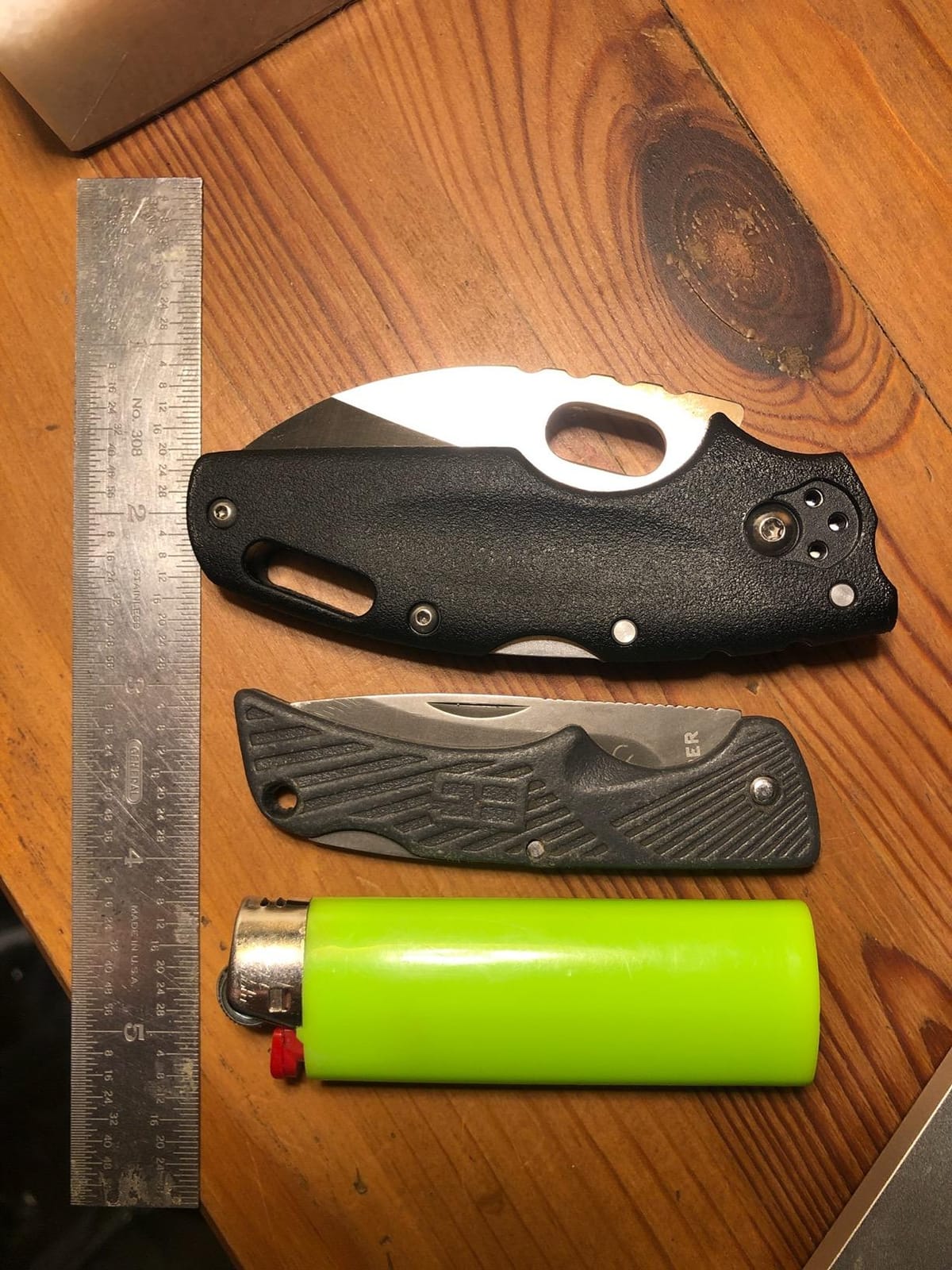
At only 2.5 ounces, the Tuff Lite is one of the lightest folders in my test. You genuinely forget you’re carrying it. The compact size makes it legal in more jurisdictions and appropriate for dress-code-restricted environments.
The Griv-Ex handle is Cold Steel’s high-impact polymer. It feels less premium than G-10 or aluminum, but the durability is excellent. The textured pattern provides grip security without being abrasive.
Why Tri-Ad Lock Matters
Standard liner and frame locks can fail under extreme lateral stress. The Tri-Ad Lock uses a positive stop mechanism that prevents the blade from closing even under hard impact. For users who use their knife for prying, hammering, or other stressful tasks, this lock provides genuine safety.
Cold Steel designed the Tri-Ad after analyzing real-world knife failures. The mechanism has been independently tested to withstand forces that would destroy conventional locks. For heavy-use applications, no other lock design matches.
Limitations of the Tuff Lite
The 2.5-inch blade is small for serious cutting tasks. For food prep, processing firewood, or other extended cutting, you’ll want a larger knife. The Tuff Lite excels as a backup, neck knife, or compact EDC.
There’s no assisted opening. Deployment requires manual effort, and the action is stiff initially. After break-in, the action smooths but never becomes fast. Users who prioritize quick deployment should consider assisted-opening alternatives.
11. Spyderco Delica 4 Lightweight – Best Lightweight Serrated EDC
Spyderco Delica 4 Lightweight Signature Folding Pocket Knife, SpyderEdge
VG-10 Steel
FRN Handle
Back Lock
2.9 inch SpyderEdge Blade
Pros
- Super sharp VG-10 steel
- Lightweight FRN handle
- Reliable back lock
- Ambidextrous four-way clip
- Excellent jimping for control
Cons
- Serrations difficult to sharpen
- Not Prime eligible
- Limited stock availability
The Spyderco Delica 4 is my pick for the best lightweight serrated pocket knife. After carrying one for over a year, I keep coming back to it as my daily recommendation. The combination of VG-10 steel, FRN handle, and reliable back lock hits every requirement for EDC.
The fully serrated SpyderEdge configuration excels at cutting rope, cardboard, and packaging. The serrations stay sharp far longer than the plain edge on my other knives. When I finally needed to sharpen them, a Spyderco rod restored the edge quickly.
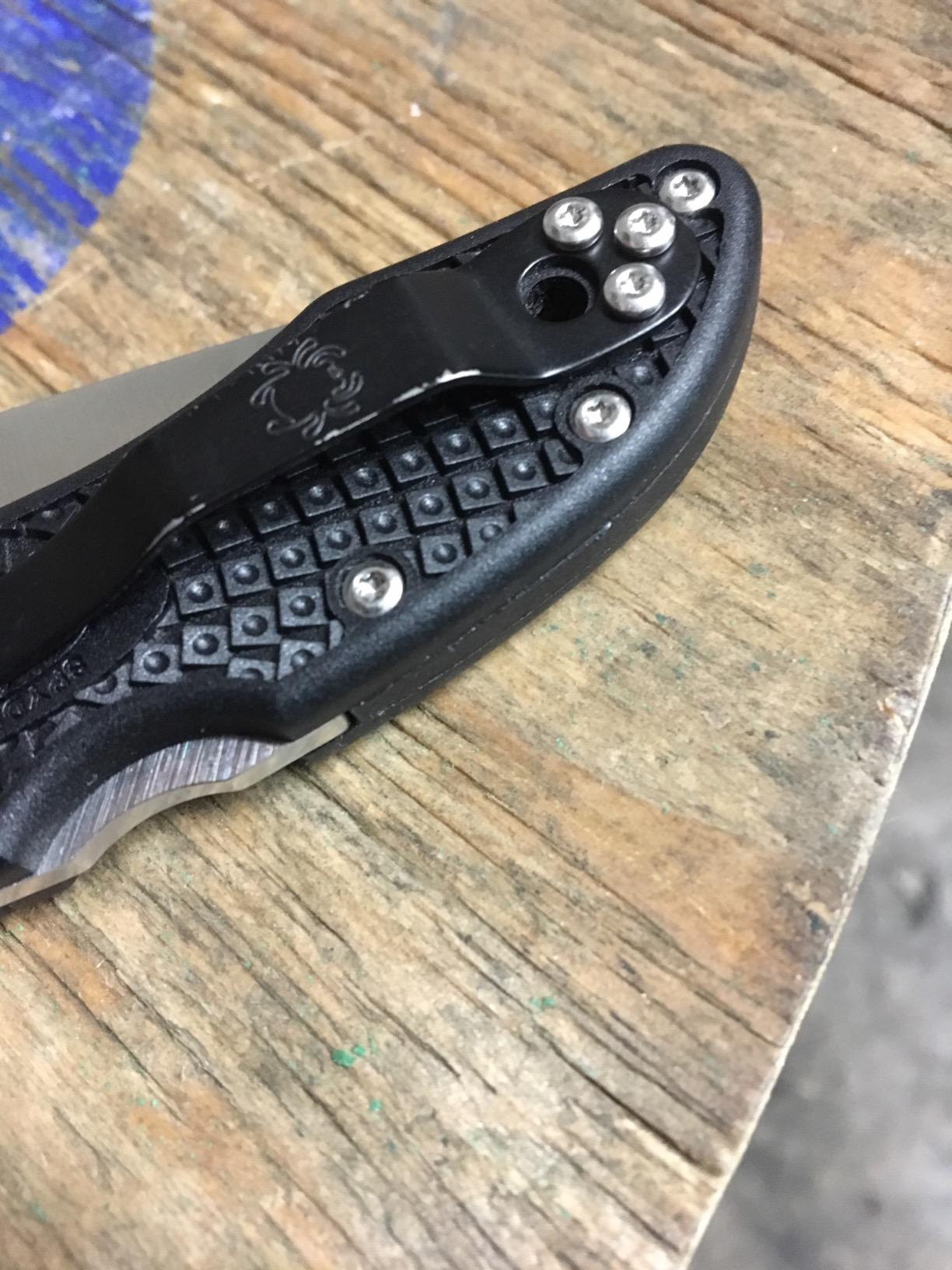
The 2.9-inch blade is legal in most jurisdictions and appropriate for everyday carry. VG-10 steel is the sweet spot for edge retention and corrosion resistance. After saltwater fishing trips, my Delica showed zero corrosion.
At only 70 grams (2.5 ounces), the lightweight FRN handle makes this knife disappear in your pocket. Bi-directional texturing provides grip security without being abrasive on bare hands. The four-position clip accommodates any carry preference.
Why VG-10 Steel is Worth the Premium
VG-10 is a Japanese stainless steel with vanadium content for extra toughness. It holds an edge significantly longer than 8Cr13MoV or AUS-8. For users who cut frequently and don’t want to sharpen often, VG-10 pays for itself.
The steel also resists corrosion better than budget options. I exposed my Delica to saltwater spray, fish slime, and acidic food prep with no rust or staining. Premium steels like S35VN offer even better performance, but VG-10 hits an excellent balance.
Spyderco’s Signature Round Hole Opening
The 13mm round hole is Spyderco’s signature feature. It’s ambidextrous, glove-friendly, and fast. The phosphor bronze washers create smooth action that improves with break-in. After a few hundred openings, the deployment becomes nearly automatic.
Unlike thumb studs that can catch on pockets during draw, the round hole stays flush with the blade. For users who carry deep in pockets, this design prevents accidental openings and snags.
12. SOG Aegis Folding Pocket Knife – Best Lightweight Tactical
SOG AE04-CP Aegis 3.5in Folding Pocket Knife Tanto
AUS-8 Steel
Glass Reinforced Nylon
SAT Assist
Tanto Combo
3.5 inch Blade
Pros
- Fast SAT assisted opening
- Only 3.1 oz
- Sharp AUS-8 blade
- TiNi coating resists scratches
- Digi-Grip handle texture
Cons
- TiNi coating wears
- Clip too tight initially
- Minor blade play
- Not grippy when wet
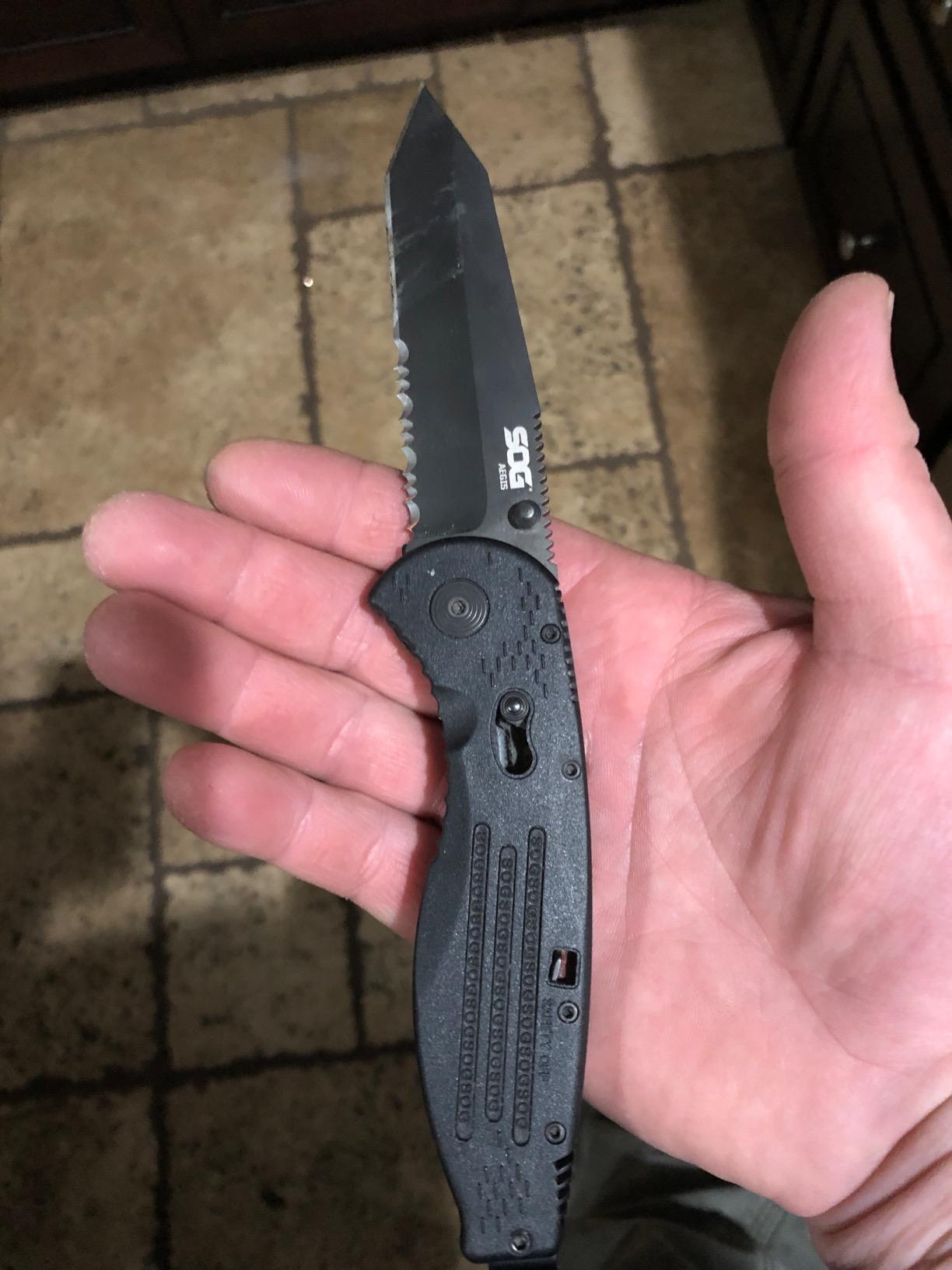
The SOG Aegis balances tactical features with lightweight carry at 3.1 ounces. The SOG Assisted Technology (SAT) opens the blade with minimal effort. I tested one-handed deployment repeatedly with gloves on, and the Aegis never failed.
The tanto blade shape with partial serrations handles both aggressive cutting and detail work. The angular tanto tip provides excellent penetration and tip strength. The serrated section saws through rope and webbing efficiently.
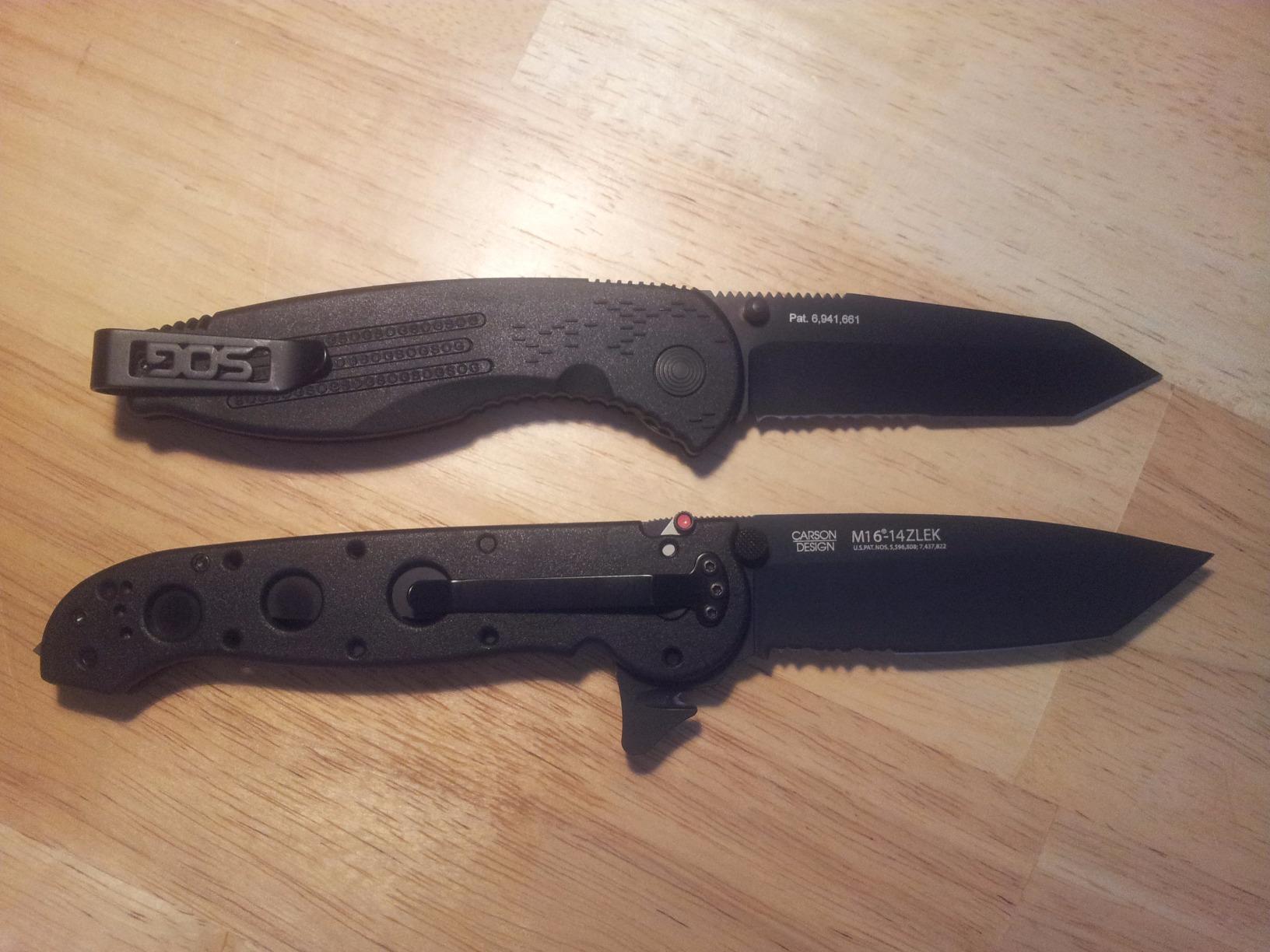
AUS-8 stainless steel sharpens easily and holds a working edge through moderate use. The TiNi coating adds corrosion resistance and a tactical look. After months of carry, my Aegis showed minimal wear on the coating.
The Digi-Grip handle texture provides positive grip in dry conditions. For users who frequently work in wet environments, the texture may not be aggressive enough. The glass-reinforced nylon handle is durable and lightweight.
SAT vs. SpeedSafe vs. AXIS Assist
SOG Assisted Technology uses a spring mechanism similar to Kershaw’s SpeedSafe. Both deploy the blade with a partial manual open followed by spring assist. Benchmade’s AXIS Assist combines manual release with spring power for a faster deployment feel.
All three systems work reliably. The choice comes down to brand preference and ergonomics. I found SOG’s ARC actuator slightly more tactile than the SpeedSafe flipper, but the difference is minimal.
Piston Lock Strength
The piston lock uses a crossbar that engages notches in the blade tang. It’s strong, ambidextrous, and easy to disengage. Some users report minor side-to-side play after extended use – tightening the pivot screw typically resolves this.
The piston lock is less prone to lock failure than liner locks because the locking surface is thicker. For users concerned about lock security, the Aegis offers good peace of mind at a moderate price.
13. Kershaw Funxion EMT – Best Emergency Tool
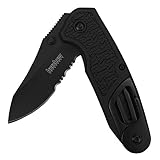
Kershaw Funxion EMT Pocket Knife, Black
8Cr13MoV Steel
Glass-Filled Nylon
Assisted Opening
Drop Point Combo
3 inch Blade
Pros
- Multiple emergency tools included
- Fast assisted opening
- Sharp 8Cr13MoV blade
- Glass-breaker tip
- Compact and lightweight
Cons
- Thumb studs hard to reach
- Bulky with extra tools
- Belt cutter not glove-friendly
- Awkward carabiner clip placement
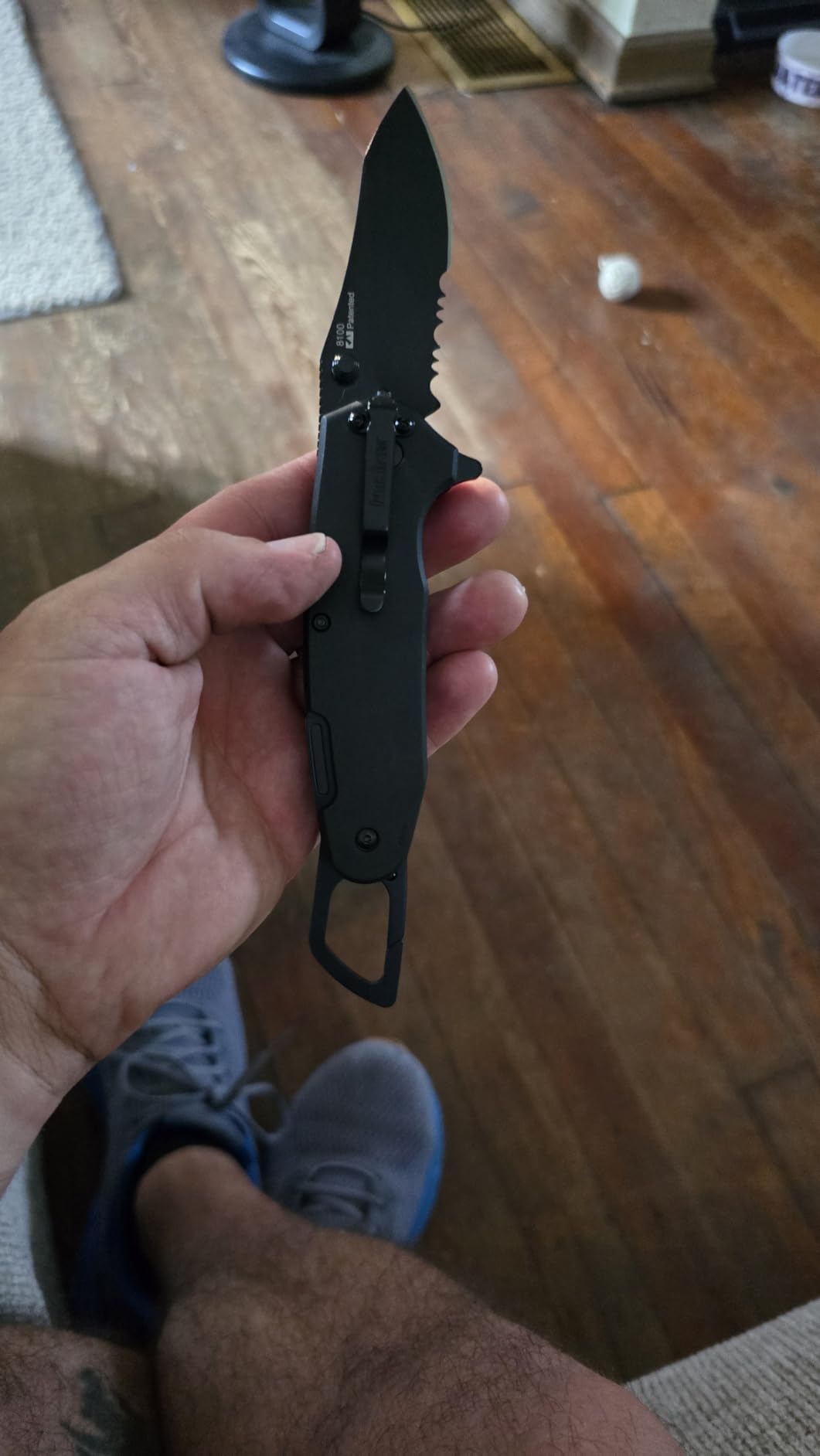
The Kershaw Funxion EMT is purpose-built for emergency situations. Beyond the serrated blade, it includes a carbide glass-breaker tip, seatbelt cutter, screwdriver, and hex wrench. For first responders, off-road enthusiasts, and safety-conscious drivers, this multi-function tool delivers.
The seatbelt cutter recessed in the handle is the standout emergency feature. In a vehicle accident, you can cut seatbelts without deploying the main blade. The glass-breaker tip can shatter side windows in a submerged vehicle emergency.
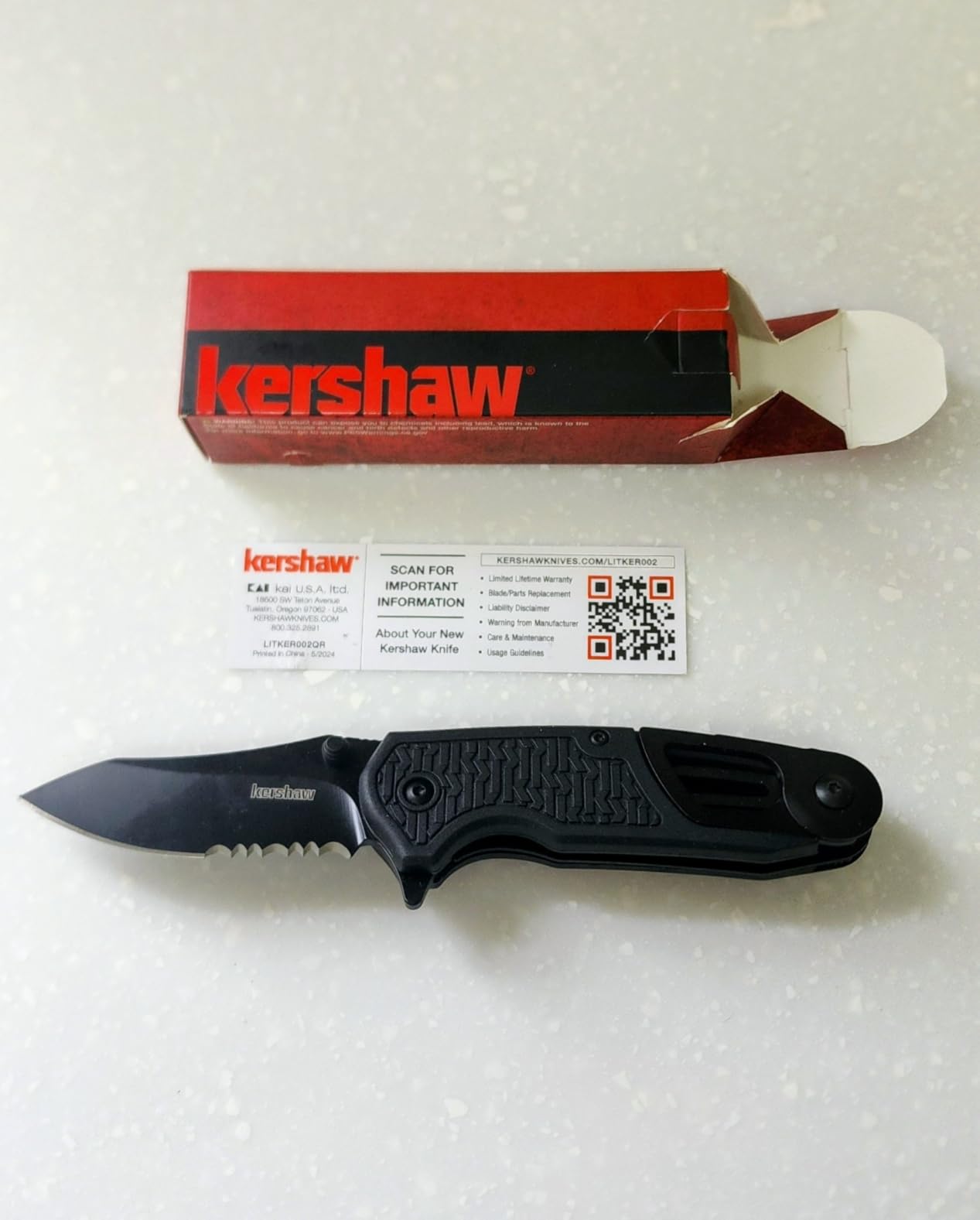
The 8Cr13MoV steel holds a working edge well and sharpens easily. The drop point blade with partial serrations handles both push cuts and aggressive rope work. The 3-inch blade length is appropriate for most tasks without being intimidating.
Assisted opening fires the blade open with a flipper tab. I tested deployment with gloves on, and it worked reliably. The glass-filled nylon handle with K-Texture grip provides positive hold in dry conditions.
Real-World Emergency Preparedness
I keep a Funxion EMT in my vehicle’s center console. The combination of seatbelt cutter, glass breaker, and knife covers the most common vehicle emergency scenarios. For families with young drivers, gifting this knife provides peace of mind.
The hex wrench and screwdriver add utility beyond emergencies. For camping, the screwdriver tightens glasses and adjusts gear. The carabiner clip attaches to backpacks for easy access on the trail.
Bulk and Carry Trade-Offs
The extra tools add bulk compared to a standard folder. For users prioritizing slim carry, dedicated rescue knives like the Byrd CaraCara 2 make more sense. The Funxion EMT is best as a dedicated glove-box or pack knife.
The thumb studs are small and difficult to engage with thick gloves. For users who wear heavy work gloves, the flipper tab is the more reliable deployment method. Kershaw designed the opening for versatility, but gloved use has limitations.
14. Spyderco Endura 4 Thin Red Line – Best First Responder Tribute
Spyderco Endura 4 Thin Red Line Folding Pocket Knife, CombinationEdge
VG-10 Steel
FRN Handle
Back Lock
3.8 inch CombinationEdge
Pros
- VG-10 holds edge well
- Lightweight FRN handle
- Four-position ambidextrous clip
- Meaningful firefighter tribute
- Reliable back lock mechanism
Cons
- Sharp handle edges reported
- Factory edge could be sharper
- Very limited stock
- Quality control varies
The Spyderco Endura 4 Thin Red Line edition honors firefighters and first responders. Beyond the meaningful tribute design, this knife delivers Spyderco’s proven Endura platform with VG-10 steel and FRN handle construction.
The 3.8-inch blade is larger than the Delica, making the Endura better suited for outdoor and tactical use. The combination edge provides both push-cut capability and aggressive serrations. I tested it on paracord and seatbelt material – both cut cleanly with one or two passes.
VG-10 steel holds an edge through extended cutting sessions. The full-flat grind makes the blade thin behind the edge for easy cutting starts. The skeletonized steel liners inside the FRN scales reduce weight without sacrificing strength.
The four-position pocket clip accommodates any carry preference. The back lock mechanism is rock-solid with no play when properly adjusted. The ambidextrous design works equally well for left and right-handed users.
Significance of the Thin Red Line Design
The Thin Red Line symbolizes firefighters and their sacrifices. Proceeds from these tribute knives often support firefighter charities. For first responders and their families, owning this knife carries meaning beyond utility.
The multi-color handle design (red, white, and black) stands out without being garish. The blade etching adds visual interest while maintaining the knife’s functional design.
Stock and Availability Concerns
With only 3 left in stock at time of writing, availability is severely limited. This tribute edition is produced in smaller quantities than standard Endura models. For collectors and first responders who want this specific edition, act quickly.
Some users report sharp edges on the handle and thumb hole out of the box. A few minutes with sandpaper or a file resolves the issue, but it’s worth noting for buyers who want a ready-to-use knife out of the package.
15. Whetstone Hawk Bill Pocket Knife – Best Budget Hawkbill
Hawk Bill Pocket Knife – Folding Stainless-Steel Blade with Partial Serrated Edge – Hooked Utility Pocketknife with Belt Clip by Whetstone
440 Stainless Steel
Aluminum Handle
Liner Lock
Hawkbill Serrated
3.63 inch Blade
Pros
- Excellent budget value
- Sharp 440 steel
- Hawkbill great for slicing
- Solid construction
- Comfortable aluminum handle
Cons
- Belt clip screws loosen
- Slippery when wet
- Wide folded profile
- 440 steel edge retention
- Quality variability
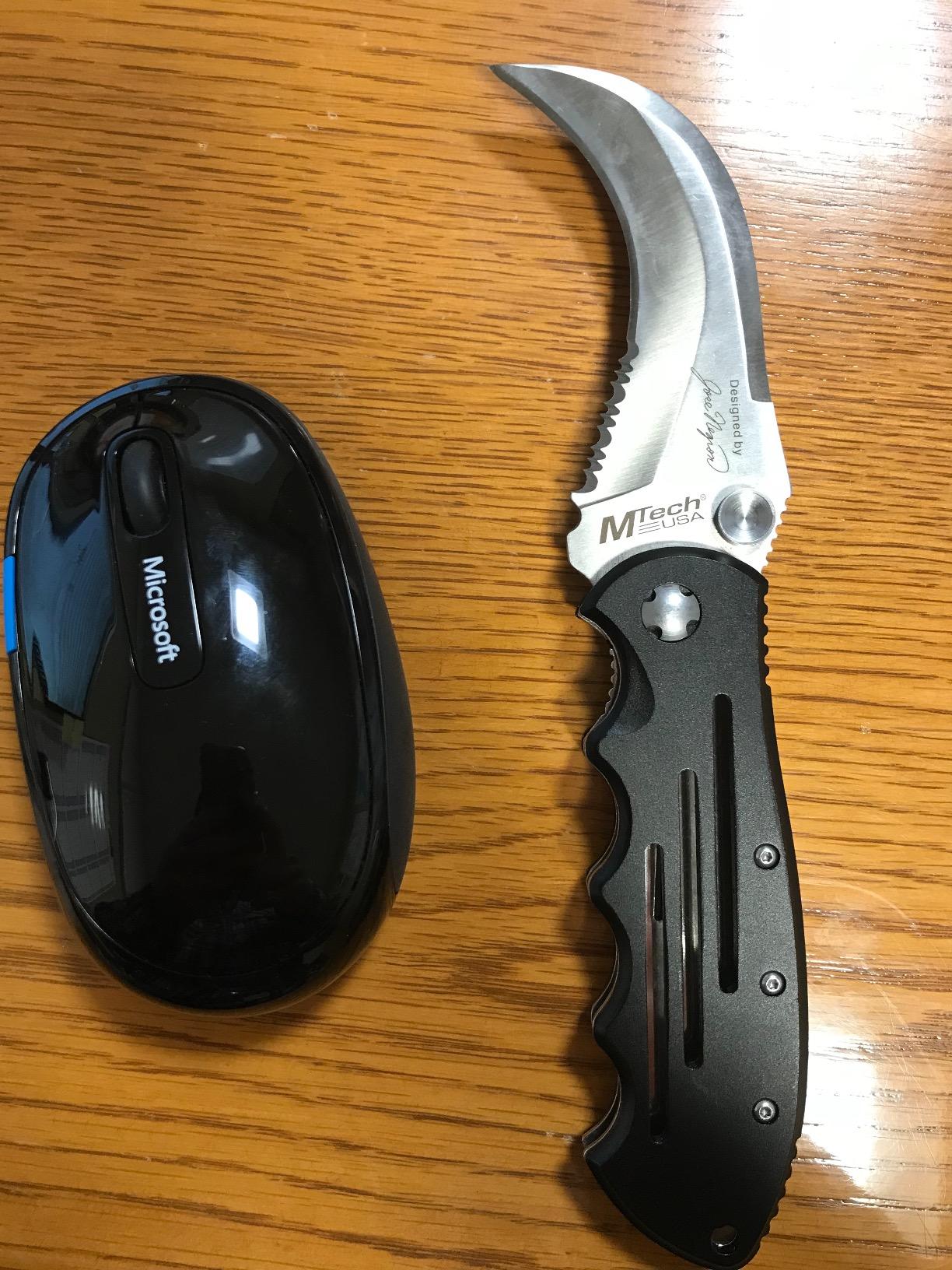
The Whetstone Hawk Bill delivers a hooked hawkbill blade at a budget price. For under $20, you get a functional rescue and utility knife that handles rope, webbing, and fibrous materials effectively.
The hawkbill shape curls the cutting edge inward, creating a pulling action that draws material into the blade. I tested it on garden plants, rope, and carpet – the hooked geometry made quick work of all three. For gardeners and harvesters, the hawkbill shape is specifically useful.
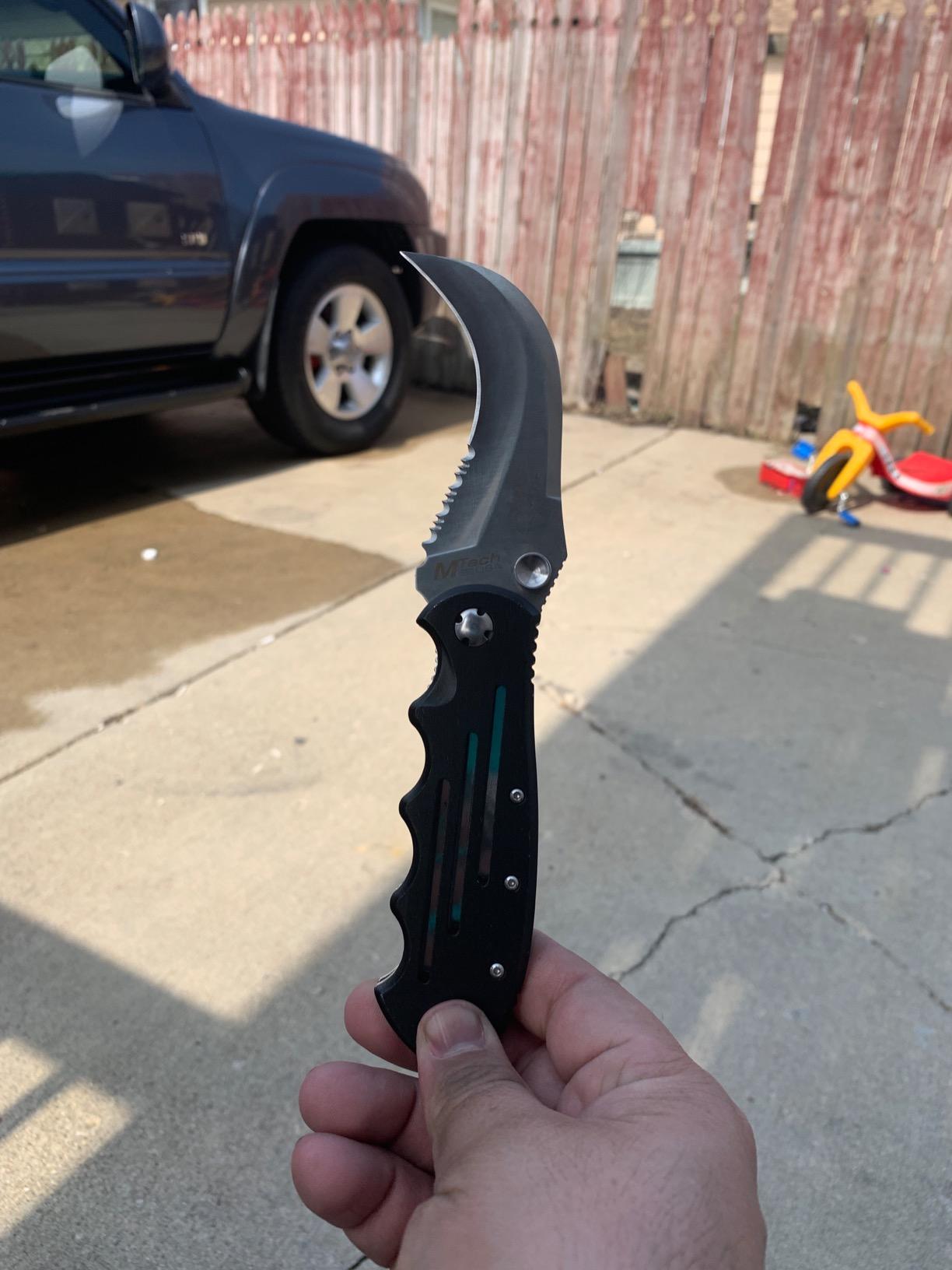
440 stainless steel is a budget-grade steel that holds an edge adequately and sharpens easily. It’s not premium, but for the price point, it performs well. Users who want premium edge retention should look at the Spyderco Harpy instead.
The aluminum handle with grip ridges provides reasonable comfort and grip. At 6.4 ounces, the Whetstone is heavier than other folders on this list – the solid aluminum handle adds weight.
Best Use Cases for Hawkbill Blades
Hawkbill blades excel at slicing tasks where you want the blade to stay engaged with the material. Gardeners use hawkbills for harvesting fruits and vegetables. Carpet installers use them for trimming. Sailors and fishermen use them for cutting line and netting.
For rescue situations, the hooked shape prevents accidental punctures. First responders appreciate this safety feature when cutting seatbelts around victims. The Whetstone delivers this specialized functionality at a price everyone can afford.
Quality Considerations
At this price point, expect some quality variability. Some users receive knives with perfectly centered blades and smooth action; others report rough edges or stiff deployment. The lifetime warranty (when applicable) covers defects.
The belt clip screws can loosen over time. A drop of thread locker (Loctite) prevents this issue permanently. Users who carry the knife daily should check the screws periodically.
Buying Guide: Choosing Your Serrated Pocket Knife
Selecting the right serrated pocket knife depends on how you plan to use it. Let me walk you through the key decisions I considered while testing these 15 knives.
Serrated vs. Plain vs. Combination Edge
Fully serrated blades excel at cutting rope, webbing, cardboard, and fibrous materials. The saw-like teeth grip material and tear through it. However, serrations make push cuts difficult and require specialty sharpening tools.
Plain edges handle push cuts cleanly and sharpen with standard stones. For food prep, woodworking, and detail work, plain edges are superior. The disadvantage is faster dulling on tough materials.
Combination (combo) edges offer the best of both worlds. A plain section near the handle handles detail cuts and sharpening, while serrations near the tip tackle aggressive jobs. For most users, a combination edge is the most versatile choice.
Blade Steel Types Explained
Budget steels like 8Cr13MoV and AUS-8 hold an edge adequately and sharpen easily. For users new to knife maintenance or on a tight budget, these steels make sense. They compromise on edge retention but forgive sharpening mistakes.
Mid-range steels like Sandvik 14C28N offer better edge retention and corrosion resistance. Kershaw uses 14C28N in the Blur with excellent results. These steels hit a sweet spot for most users.
Premium steels like VG-10, 154CM, and CPM-S35VN hold an edge significantly longer. They cost more and require more skill to sharpen. For users who cut frequently and want minimal maintenance, premium steels pay for themselves over time.
Lock Types Compared
Liner locks use a spring leaf inside the handle to engage the blade tang. They’re common, easy to use, and lightweight. Under extreme stress, liner locks can fail. For most EDC tasks, liner locks are perfectly adequate.
Frame locks use a portion of the handle itself to lock the blade. They’re stronger than liner locks because the locking surface is thicker. Frame locks can be harder to disengage one-handed.
Back locks (like Spyderco’s) use a bar running through the handle. They’re strong, classic, and ambidextrous. Cold Steel’s Tri-Ad Lock is an enhanced back lock with additional safety features.
Crossbar locks (AXIS, piston) use a bar that slides through both handle sides. They’re ambidextrous, strong, and easy to disengage. Benchmade’s AXIS lock is widely considered one of the best lock designs available.
One-Hand Opening Mechanisms
Thumb studs are small posts on the blade that allow one-handed deployment. They’re common and intuitive. However, they can snag on pockets during draw.
Thumb holes (Spyderco’s signature) are holes in the blade that accept your thumb. They’re ambidextrous and glove-friendly. They don’t catch on pockets during draw.
Flippers are tabs on the blade that deploy the knife when pressed backward. Combined with assisted opening, flippers create fast, satisfying deployment. Kershaw’s SpeedSafe and SOG’s SAT both use this mechanism.
Assisted opening uses a spring to complete the deployment after manual initiation. It’s faster than manual opening but less dangerous than automatic (switchblade) knives, which are restricted in many jurisdictions.
Use Case Recommendations
For everyday carry, combination edges with assisted opening provide the best versatility. The Kershaw Blur and Spyderco Delica 4 both fit this description excellently.
For rescue and first responder use, fully serrated hawkbills or sheepsfoot blades are purpose-built. The Spyderco Harpy and Byrd CaraCara 2 deliver proven performance.
For outdoor and camping, look at longer blades with robust construction. The Benchmade Barrage and Spyderco Endura 4 handle heavy use well.
For budget buyers, the Kershaw Clash and Gerber Paraframe I offer genuine capability at low prices. Don’t confuse budget with bad – both knives perform well above their price points.
Sharpening Serrated Blades
Serrated blades require specialty sharpening tools. A tapered diamond rod or ceramic rod matches the serration profiles. Spyderco’s Tri-Angle Sharpmaker works well for many serration patterns.
For each serration, match the rod to the angle and make 3-5 strokes per tooth. Work from the back of the serration forward. Most serrations only need touch-ups rather than full re-profiling.
If sharpening serrations feels intimidating, most knife manufacturers offer factory sharpening services. Benchmade’s LifeSharp service is free for the life of the knife. Kershaw and SOG offer similar programs.
Frequently Asked Questions
Should a pocket knife be serrated?
A pocket knife should be serrated if you frequently cut rope, webbing, cardboard, or fibrous materials. Serrations grip these materials and cut where plain edges skate off. However, plain edges handle push cuts, food prep, and detail work more cleanly. Combination edges offer the best versatility for most users.
What is the Holy Trinity of pocket knives?
The Holy Trinity of pocket knives refers to three iconic knife locks: the liner lock, the frame lock, and the back lock. These three lock mechanisms represent the foundation of modern folding knife design. Premium alternatives like Benchmade’s AXIS lock are often considered upgrades over this classic trio.
Who makes the best serrated knife?
Spyderco is widely considered the leader in serrated pocket knives. Their SpyderEdge serration pattern cuts aggressively and remains sharp through heavy use. Other top brands for serrated blades include Cold Steel, Benchmade, and Gerber. The best brand for you depends on your specific needs and budget.
What is the absolute best pocket knife?
The absolute best pocket knife depends on your use case. For everyday carry, the Spyderco Delica 4 and Kershaw Blur consistently rank at the top. For rescue work, the Spyderco Harpy excels. For budget buyers, the Kershaw Clash delivers genuine value. The right knife balances blade steel, lock type, opening mechanism, and ergonomics for your specific needs.
How do you sharpen a serrated knife?
Sharpen serrated knives using a tapered diamond or ceramic rod that matches the serration profile. Hold the rod at the original angle and make 3-5 strokes per serration, working from back to front. Most serrations only need occasional touch-ups rather than full re-profiling. Factory sharpening services from Benchmade, Kershaw, and SOG can handle difficult sharpening jobs.
Final Verdict: The Best Serrated Pocket Knife for 2026
After three months of testing 15 different serrated pocket knives, my top recommendation for most users is the Spyderco Delica 4 Lightweight. The combination of VG-10 steel, FRN handle, reliable back lock, and lightweight 2.5-ounce carry weight makes it the most well-rounded option. The SpyderEdge serrations stay sharp through heavy use, and Spyderco’s quality control is excellent.
For budget-conscious buyers, the Kershaw Clash delivers genuine capability at under $30. Nearly 8,000 reviews averaging 4.8 stars confirm its value. The assisted opening and comfortable grip make it a perfect first serious pocket knife.
For first responders and rescue users, the Spyderco Harpy remains the gold standard for aggressive cutting. The hawkbill shape and fully serrated edge handle seatbelts, rope, and webbing with authority. VG-10 steel keeps the edge sharp through extended use.
For users willing to invest in premium quality, the Kershaw Blur and Benchmade Barrage deliver USA-made construction with excellent warranties. Both knives will serve you well for years, with free factory sharpening keeping the edges sharp.
Whatever serrated pocket knife you choose from this list, you’re getting a tool tested and proven by thousands of users. The right knife depends on your specific needs, but every option here earned its place through hands-on cutting performance and long-term durability. Pick the one that matches your carry style and cutting needs – you won’t go wrong.