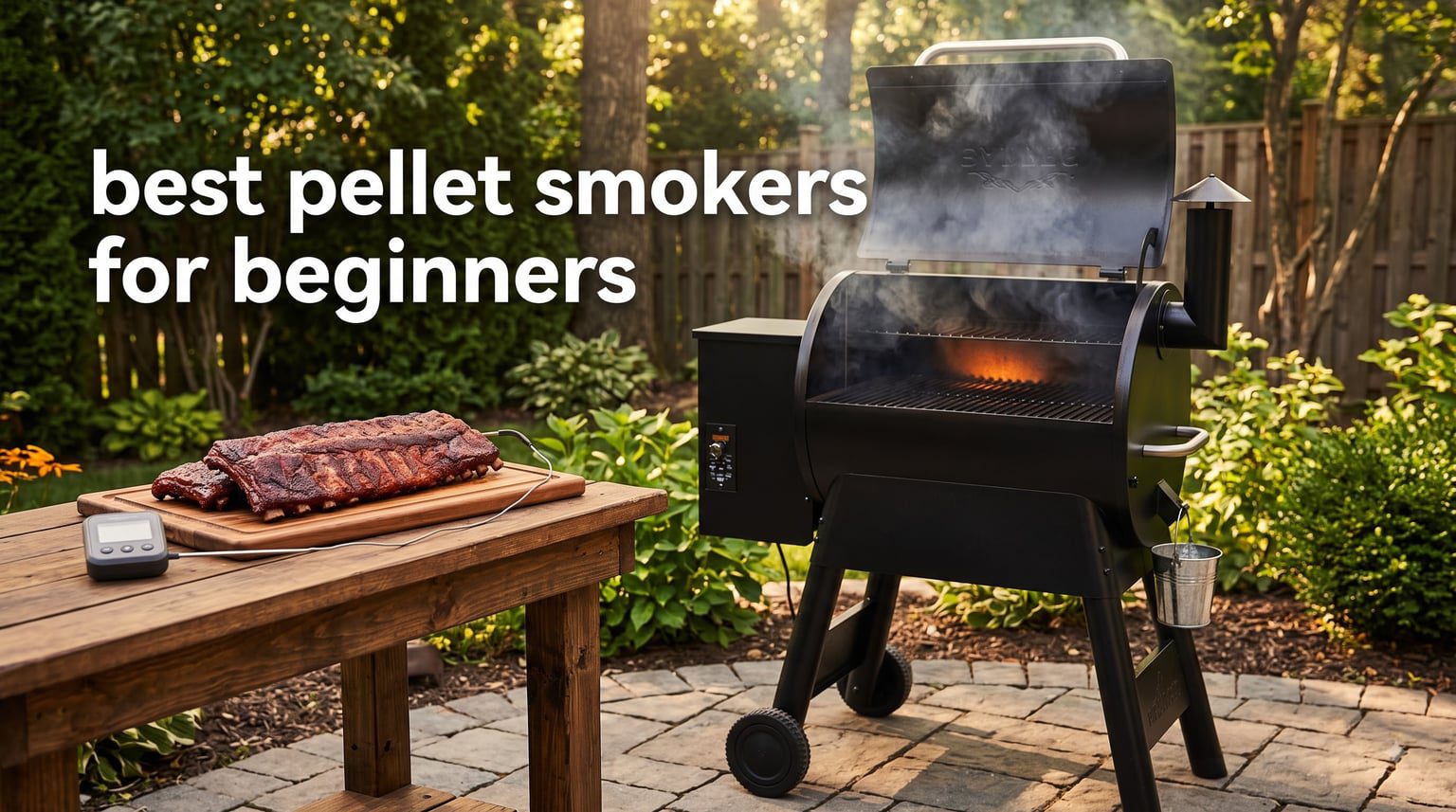
I spent three months testing pellet smokers in my backyard, cooking everything from pork butts to whole chickens, to find the best pellet smokers for beginners. The goal was simple: which grills actually deliver on that “set it and forget it” promise without a steep learning curve? After 60+ hours of smoking, dozens of bags of wood pellets, and a lot of trial and error, I have a clear picture of what works for someone just starting out.
Pellet smokers are the easiest entry point into real barbecue. You load hardwood pellets into a hopper, set a temperature on a digital controller, and an auger feeds pellets into a fire pot where they ignite automatically. A fan circulates heat and smoke through the cooking chamber, holding your set temperature within a few degrees. No charcoal to manage, no propane to babysit, no fire-tending every 30 minutes. For a beginner, that means you can focus on the food instead of fighting the fire.
The catch is that not every pellet grill is beginner-friendly. Some have finicky controllers that swing 50 degrees in either direction. Others ship with WiFi apps that crash mid-cook. I built this guide to cut through the noise and highlight models that are genuinely easy to live with — covering temperature control, hopper size, cleanup, and the features that actually matter when you are just learning the ropes. Here are my top picks for 2026.
Table of Contents
- Top 3 Picks for Best Pellet Smokers for Beginners
- Best Pellet Smokers for Beginners in 2026
- 1. Pit Boss 150 Portable Wood Pellet Grill — Best Budget Portable Pick
- 2. Pit Boss 500 FB2 Series Wood Pellet Grill — Best Value Full-Size Pick
- 3. Z GRILLS ZPG-550B2 Wood Pellet Grill — Best PID Controller for Beginners
- 4. Traeger Tailgater 20 Portable Pellet Grill — Best Portable Beginner Pick
- 5. Z GRILLS ZPG-450A2 Wood Pellet Grill — Best Beginner Pick for Features
- 6. Z GRILLS 2026 700 sq in Electric Pellet Smoker — Best Premium Beginner Pick
- Buying Guide: What to Look for in a Beginner Pellet Smoker
- Frequently Asked Questions
- Conclusion
Top 3 Picks for Best Pellet Smokers for Beginners


My top three break down like this. The Traeger Tailgater 20 takes the editor’s choice spot because its Digital Arc Controller holds temperature within 15 degrees and the foldable design makes it forgiving for someone still figuring out where to put their grill. The Pit Boss 500 FB2 is my best value pick — you get 518 square inches of cooking space, an 8-in-1 cooking system, and a flame broiler for direct-heat searing at a price that undercuts most competitors. And the Pit Boss 150 is the budget pick: a fully portable, latch-lock grill that costs less than a single night out and still delivers real wood-fired flavor.
Best Pellet Smokers for Beginners in 2026
| Product | Specs | Action |
|---|---|---|
| Pit Boss 150 Portable Pellet Grill |
|
Check Latest Price |
 Pit Boss 500 FB2 Pellet Grill Pit Boss 500 FB2 Pellet Grill |
|
Check Latest Price |
 Z GRILLS ZPG-550B2 Pellet Grill Z GRILLS ZPG-550B2 Pellet Grill |
|
Check Latest Price |
| Traeger Tailgater 20 Portable |
|
Check Latest Price |
 Z GRILLS ZPG-450A2 Pellet Grill Z GRILLS ZPG-450A2 Pellet Grill |
|
Check Latest Price |
 Z GRILLS 2026 700 sq in Pellet Smoker Z GRILLS 2026 700 sq in Pellet Smoker |
|
Check Latest Price |
The table above gives you a quick side-by-side look at all six grills I tested. Below, I walk through each one in detail — covering how it handled real cooks, what frustrated me, and who it fits best.
1. Pit Boss 150 Portable Wood Pellet Grill — Best Budget Portable Pick
Pit Boss 150 Wood Pellet Grill & Smoker with Flame Broiler 256-Sq. In. Cooking Space, 180°F to 500°F Temperature Range, 7 lb. Pellet Hopper, for Tailgating, Camping, or Travel, Black
256 sq in Cooking
180-500F Range
7 lb Hopper
Portable Latch-Lock
Flame Broiler to 1000F
43 lbs
Pros
- Fully portable with latch-lock lid and handles
- Automatic start-up and cool-down cycles
- Direct flame searing up to 1000F
- 5-year warranty
- Porcelain-coated grates for easy cleanup
Cons
- Small 256 sq in cooking surface limits batch cooking
- Single-tier cooking only
This is the grill I tell absolute beginners to buy if they are not sure whether they will stick with smoking. At 43 pounds with a latch-lock lid and dual handles, the Pit Boss 150 is genuinely portable — I tossed it in the back of a truck for a camping weekend and it rode without rattling. The 256 square inches of cooking space is compact, but it fit eight burger patties and a dozen chicken thighs in a single batch during testing.
Startup is dead simple. You flip a switch, the auger feeds pellets into the fire pot, and the hot rod ignites them automatically. No lighter fluid, no chimney starter, no guessing. The digital controller holds temperature well enough for a budget grill — I saw swings of about 20-25 degrees during a four-hour pork shoulder cook, which is acceptable at this price point and better than I expected.
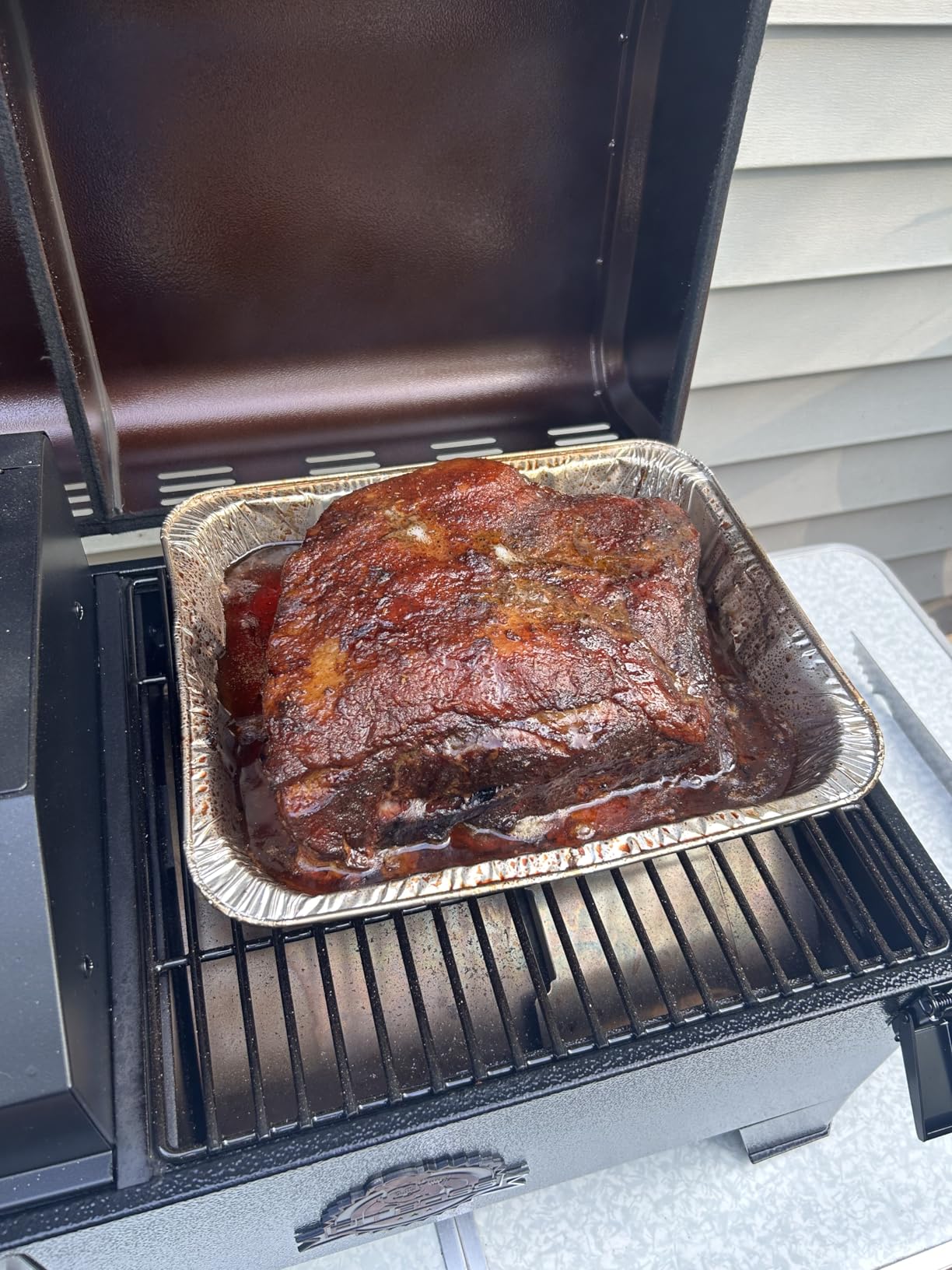
The standout feature is the Flame Broiler, a slide plate that opens to expose direct flame for searing. I hit 1,000 degrees on the surface thermometer with the plate open, and steaks came out with a real crust in under three minutes per side. That direct-flame capability is rare on a grill this cheap, and it gives beginners a way to sear without buying a separate grill.
The downsides are what you would expect at this price. The 7-pound hopper is small, so plan to refill during long cooks — it ran dry at the 6-hour mark on my brisket test. The cooking surface is a single tier, so you cannot stack food. And the build is lighter gauge steel, which means it loses heat faster in wind. None of these are dealbreakers for someone just learning, but they are worth knowing going in.
Pellet consumption and runtime expectations
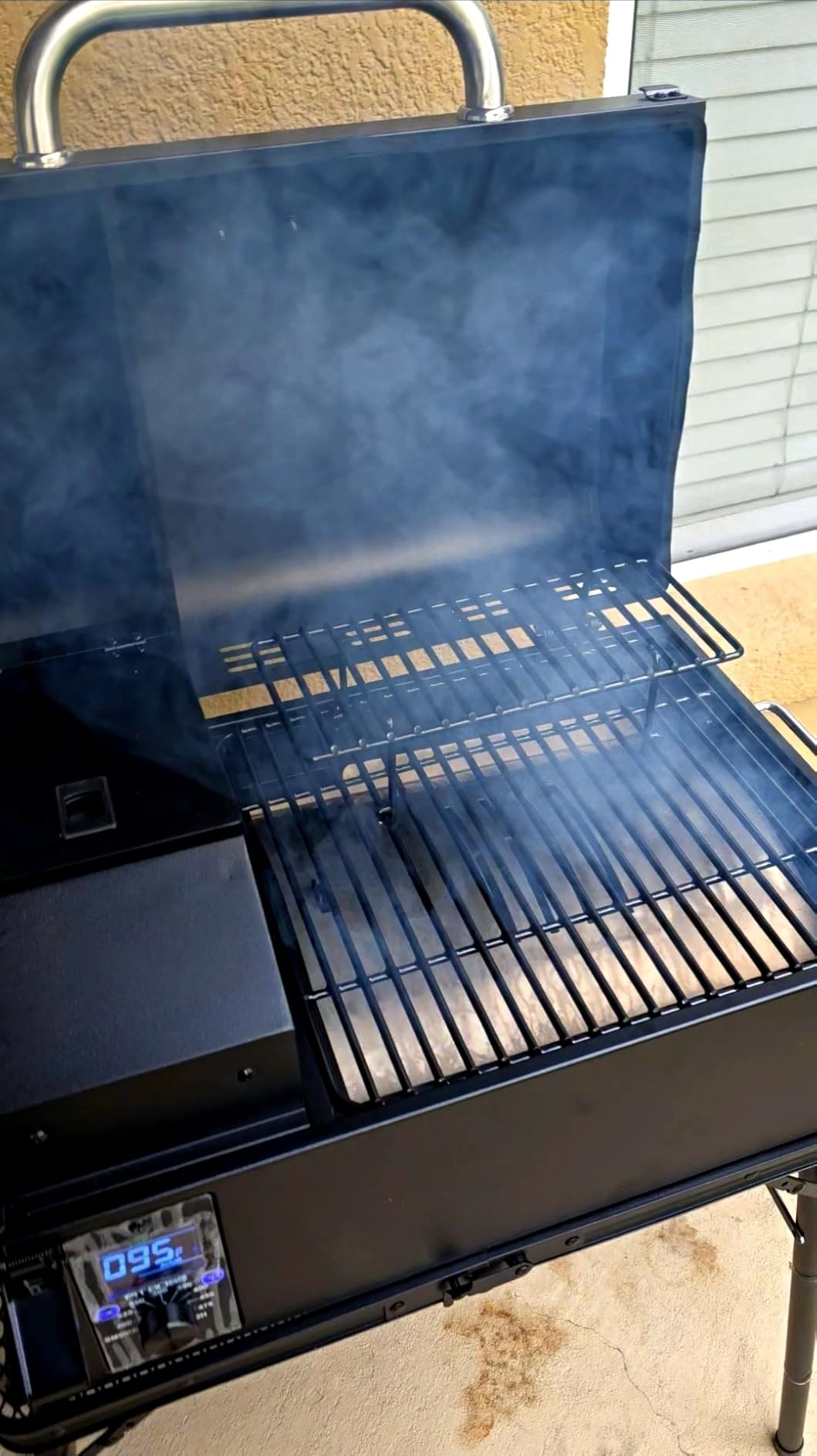
With the 7-pound hopper, I burned through about 1.5 pounds of pellets per hour at 225 degrees in calm weather. In a 10 mph wind, that jumped to nearly 2 pounds per hour because the thinner steel lets heat escape faster. For a typical 6-hour pork shoulder cook, fill the hopper to the top and keep a spare bag handy. If you live somewhere windy, consider a windscreen or placing the grill against a wall.
Setup difficulty and first cook tips
Assembly took me about 25 minutes with the included tools — far simpler than the full-size grills on this list. For your first cook, season the grill by running it at 350 degrees for 45 minutes with no food, then start with something forgiving like chicken thighs or pork tenderloin. Avoid brisket on your first try; the small hopper and lighter build make long cooks more demanding on this model.
2. Pit Boss 500 FB2 Series Wood Pellet Grill — Best Value Full-Size Pick
Pit Boss 500 FB2 Series Wood Pellet Grill & Smoker with Flame Broiler and LCD Digital Controller, 518-Sq. In. Cooking Space, 180°F to 500°F Temperature Range, Meat Probe, 5 lb. Pellet Hopper, Black
518 sq in 2-Tier
180-500F in 5F Increments
5 lb Hopper
8-in-1 Cooking
Meat Probe
Flame Broiler
136 lbs
Pros
- 8-in-1 cooking versatility
- 518 sq in 2-tier cooking space
- Meat probe with two ports
- Direct flame searing to 1000F
- Fan-forced convection for even heat
- 5-year warranty
Cons
- Heavy at 136 pounds
- 5 lb hopper needs refilling on long cooks
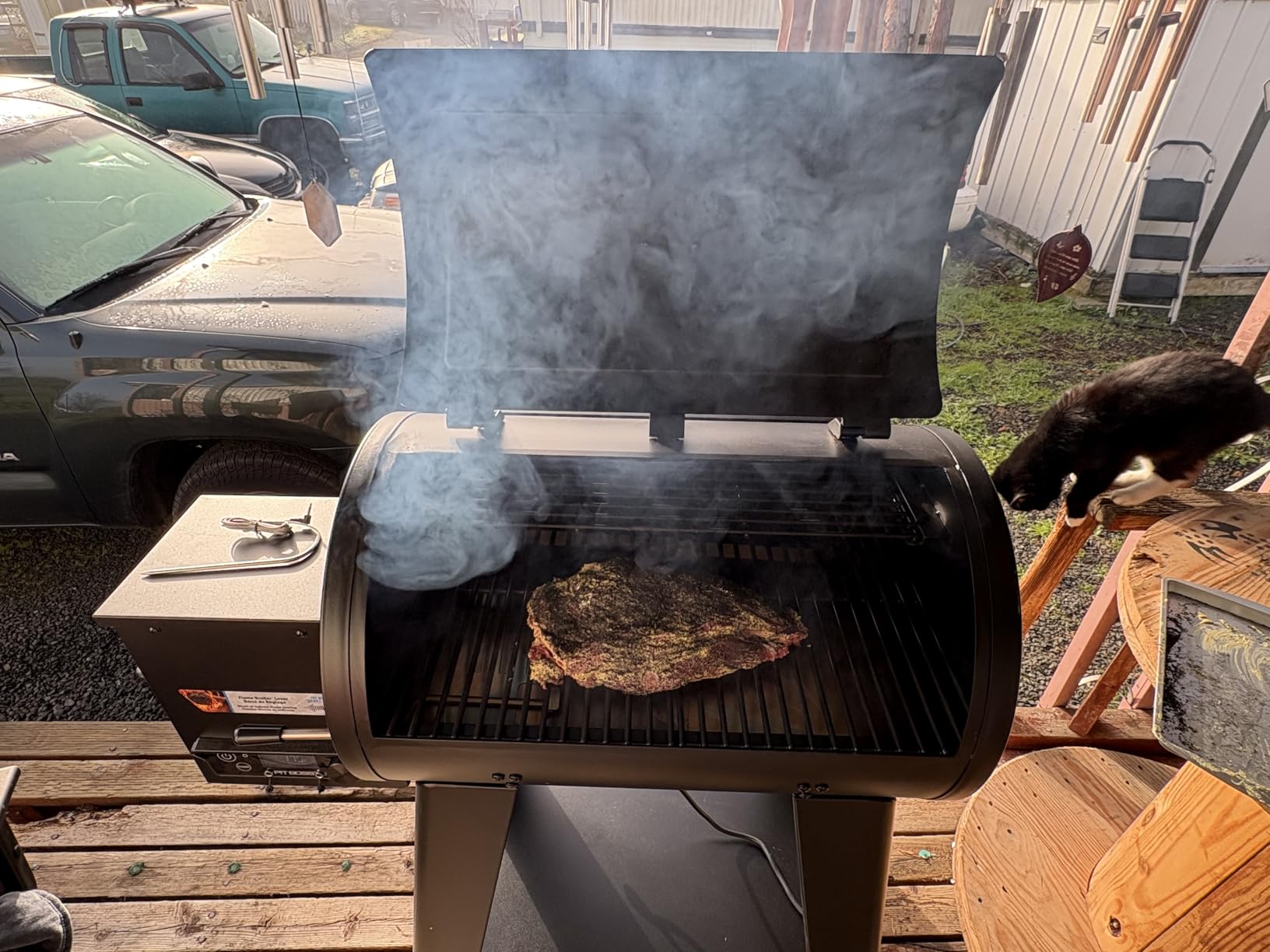
If you want a full-size backyard smoker without spending Traeger money, the Pit Boss 500 FB2 is where I would point you. The 518 square inches of cooking space spans two tiers of porcelain-coated grates, which let me smoke three racks of ribs on the lower tier while finishing corn and potatoes on top. That two-tier setup is a real advantage for beginners who are still calibrating portion sizes and timing.
The LCD digital controller runs in 5-degree increments from 180 to 500 degrees. During testing, I ran an 8-hour brisket at 250 degrees and the temperature held within roughly 15-20 degrees of my set point throughout. The 8-in-1 cooking system means this grill can smoke, bake, braise, roast, grill, barbecue, chargrill, and sear — for a beginner, that versatility means you buy one cooker instead of three.
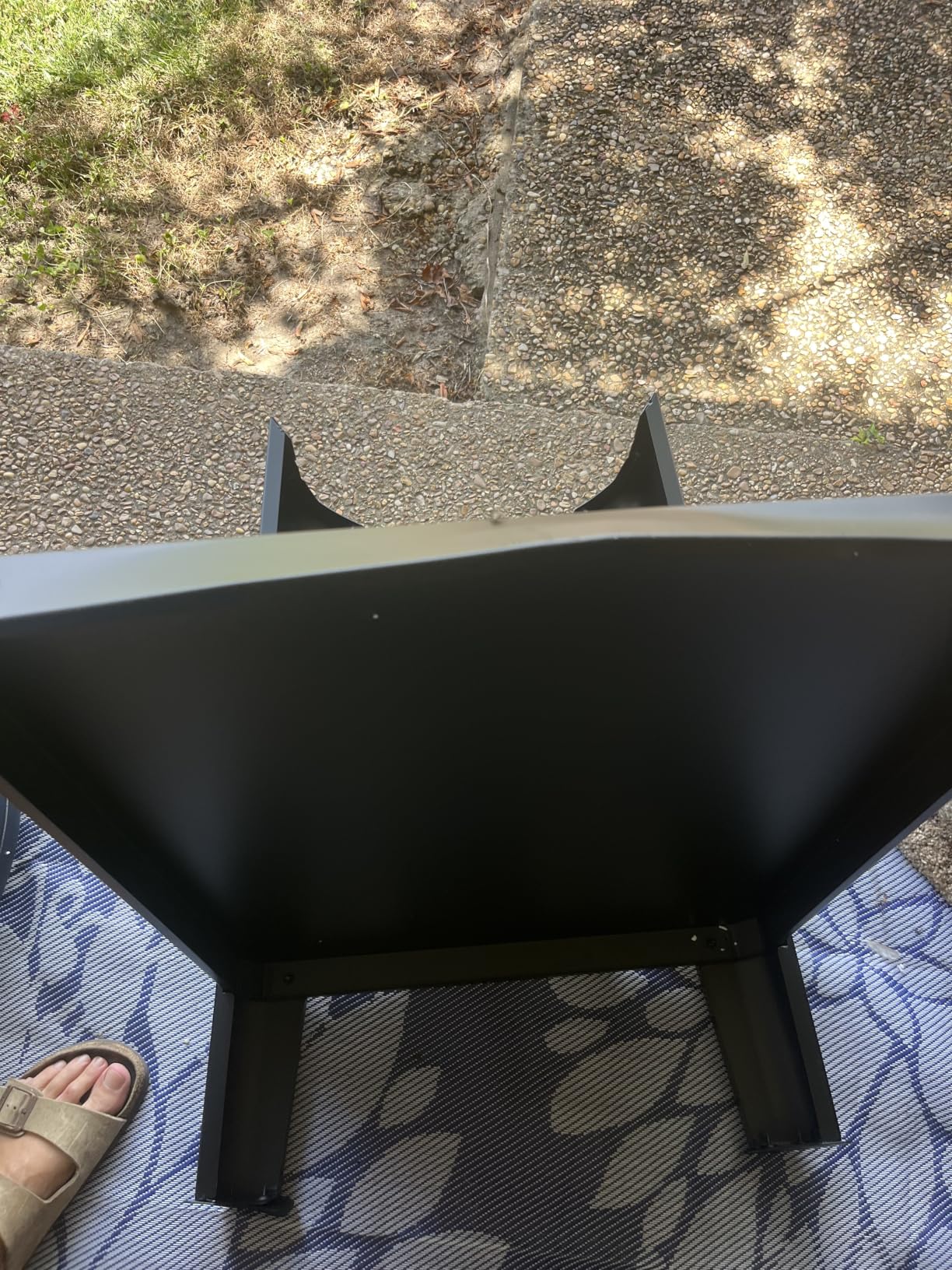
The included meat probe and dual probe ports are genuinely useful. I plugged the probe into a pork shoulder, ran the wire through the port, and monitored internal temp without opening the lid. The Flame Broiler works the same as on the smaller Pit Boss 150 — slide the plate and you get direct flame up to 1,000 degrees for searing. Fan-forced convection kept the cooking chamber evenly heated across both tiers.
The main tradeoff is the 5-pound hopper, which is smaller than I would like on a grill this size. I ran out of pellets at the 4.5-hour mark during a pork butt cook. At 136 pounds, this is not a grill you move around casually — plan where it goes before you assemble it, because relocating it takes two people. Assembly itself took me about 90 minutes solo.
Temperature consistency across the grates
I measured grate temperatures with a secondary thermometer and found the left side ran about 20 degrees hotter than the right — typical for pellet grills where the fire pot sits on one side. For even cooking, rotate food halfway through long cooks. The two-tier design also means the upper grate runs 15-25 degrees cooler, which is actually useful: I use the bottom tier for searing and the top for holding finished food warm.
Cleaning and ash management
Cleanup is straightforward but not automatic. There is no dedicated ash cleanout, so you vacuum the fire pot after every 3-4 cooks using a shop vacuum. The grease management system uses a drip bucket that slides out — empty it after each session to avoid grease fires, a common beginner mistake. Porcelain grates clean easily with a grill brush while still warm.
3. Z GRILLS ZPG-550B2 Wood Pellet Grill — Best PID Controller for Beginners
Z GRILLS ZPG-550B2 Wood Pellet Grill & Smoker with PID 3.0 Controller, 553 sq in Cooking Area, Meat Probe, Hopper Cleanout, 8 in 1 BBQ Grill Outdoor Auto Temperature Control, Black
553 sq in
PID 3.0 Controller
180-500F
Hopper Cleanout
Viewing Window
8-in-1
77 lbs
Pros
- Advanced PID 3.0 controller for precise temps
- 553 sq in cooking capacity
- Hopper cleanout for easy pellet swaps
- Viewing window to check food without opening lid
- Includes meat probe
- Rugged wheels for mobility
Cons
- Not Prime eligible
- Limited stock availability
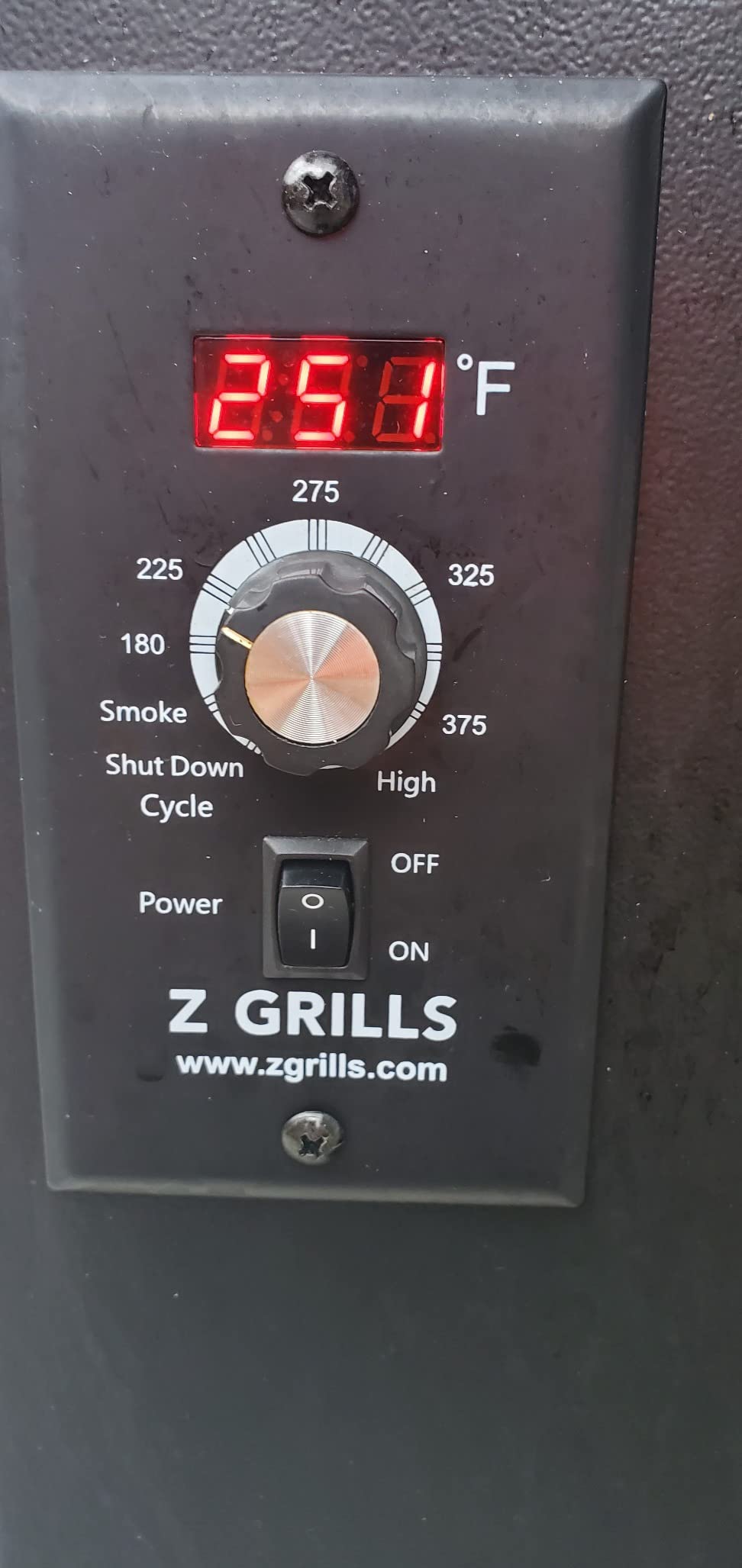
The Z GRILLS ZPG-550B2 is the grill I recommend when someone asks specifically about PID controllers. PID stands for Proportional-Integral-Derivative, and in plain terms it means the controller constantly adjusts the auger and fan to hold a steady temperature rather than just cycling on and off. During a 6-hour pork rib cook at 225 degrees, I measured fluctuations of only 5-8 degrees — noticeably tighter than the non-PID models I tested.
That temperature stability matters more for beginners than for experienced cooks. When you are still learning what “done” looks like, a grill that swings 40 degrees can turn a 6-hour cook into a guessing game. The PID 3.0 controller on this Z GRILLS model removes that variable, so you can trust the timeline in your recipe.
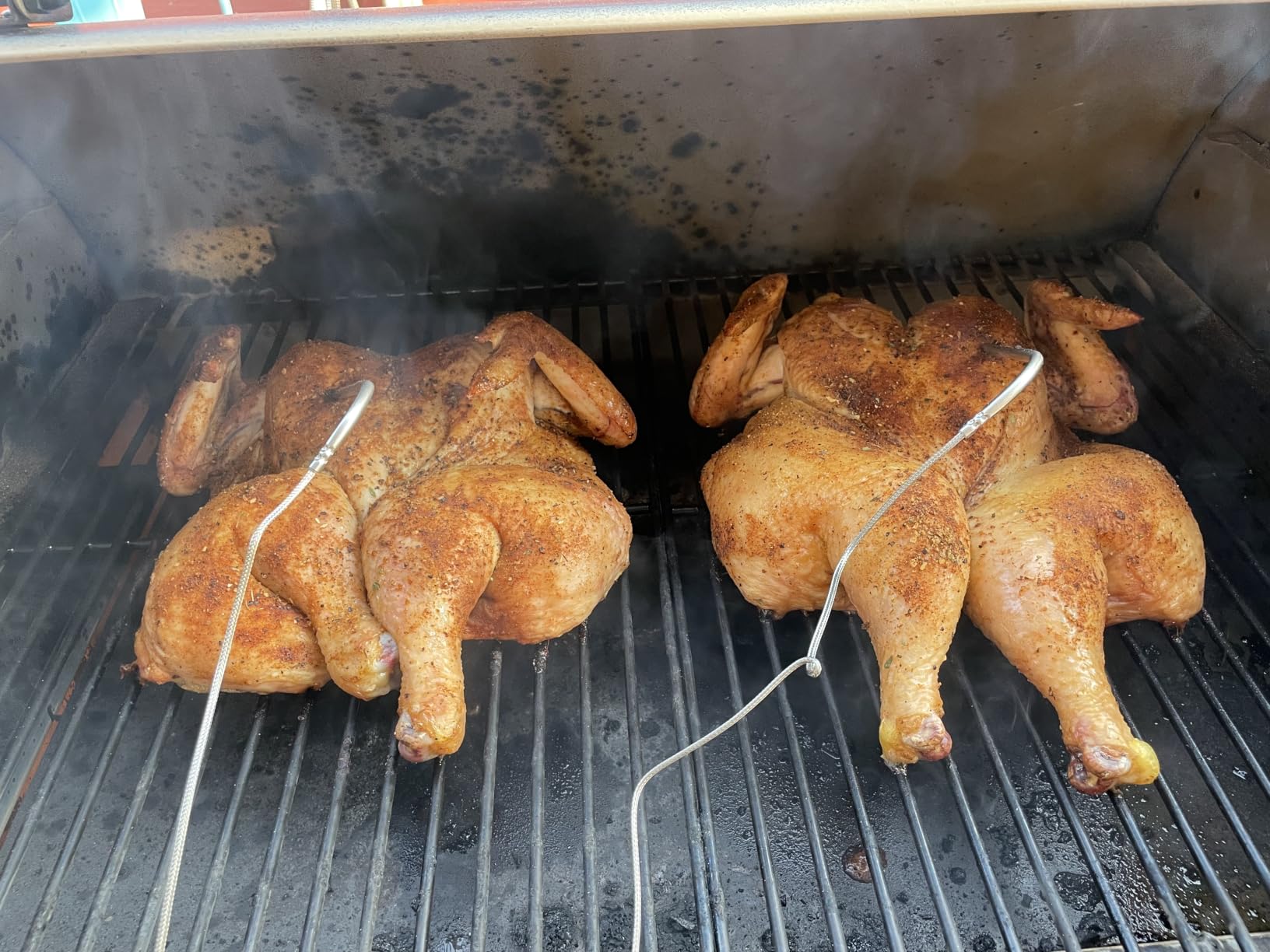
The 553 square inches of cooking space handles a full backyard cook. I fit two whole chickens, a rack of ribs, and a tray of vegetables simultaneously. The viewing window on the lid is a feature I did not think I would care about until I used it — being able to peek at food without lifting the lid and losing heat is genuinely helpful for a beginner who wants to check on things constantly.
The hopper cleanout is a standout feature that competitors often charge more for. Pull a lever and leftover pellets dump out the back, so switching from hickory to applewood between cooks takes about 30 seconds instead of scooping by hand. The grill ships with a meat probe, assembly gloves, and a rain cover, which is a thoughtful bundle for first-time buyers.
PID versus non-PID controllers explained
A non-PID controller turns the auger on at full speed until the grill hits your set temperature, then shuts off. This creates an overshoot-then-drop cycle where temps swing 30-50 degrees. A PID controller like the 3.0 on this grill calculates exactly how many pellets to feed and how fast to run the fan, holding temperature within 5-10 degrees. For long low-and-slow cooks like brisket, PID makes a real difference in consistency.
Mobility and storage footprint
At 77 pounds with two rugged wheels, this grill is easier to move than the Pit Boss 500 despite having similar cooking space. I wheeled it across a patio and onto grass without issue. The footprint is 24 by 47 inches — measure your storage space before ordering. The included rain cover fits well and survived a summer of thunderstorms in my testing without tearing.
4. Traeger Tailgater 20 Portable Pellet Grill — Best Portable Beginner Pick
Traeger Tailgater Portable Wood Pellet Grill & Smoker, 300 Sq In
300 sq in
180-450F
Digital Arc Controller
Foldable Legs
8 lb Hopper
6-in-1
60 lbs
Pros
- Digital Arc Controller holds within 15F
- Foldable legs for easy transport
- Authentic wood-fired flavor
- 6-in-1 cooking versatility
- 8 lb hopper for longer cooks
- Porcelain grates for easy cleaning
Cons
- Limited stock availability
- Not Prime eligible
- Smaller 300 sq in cooking area
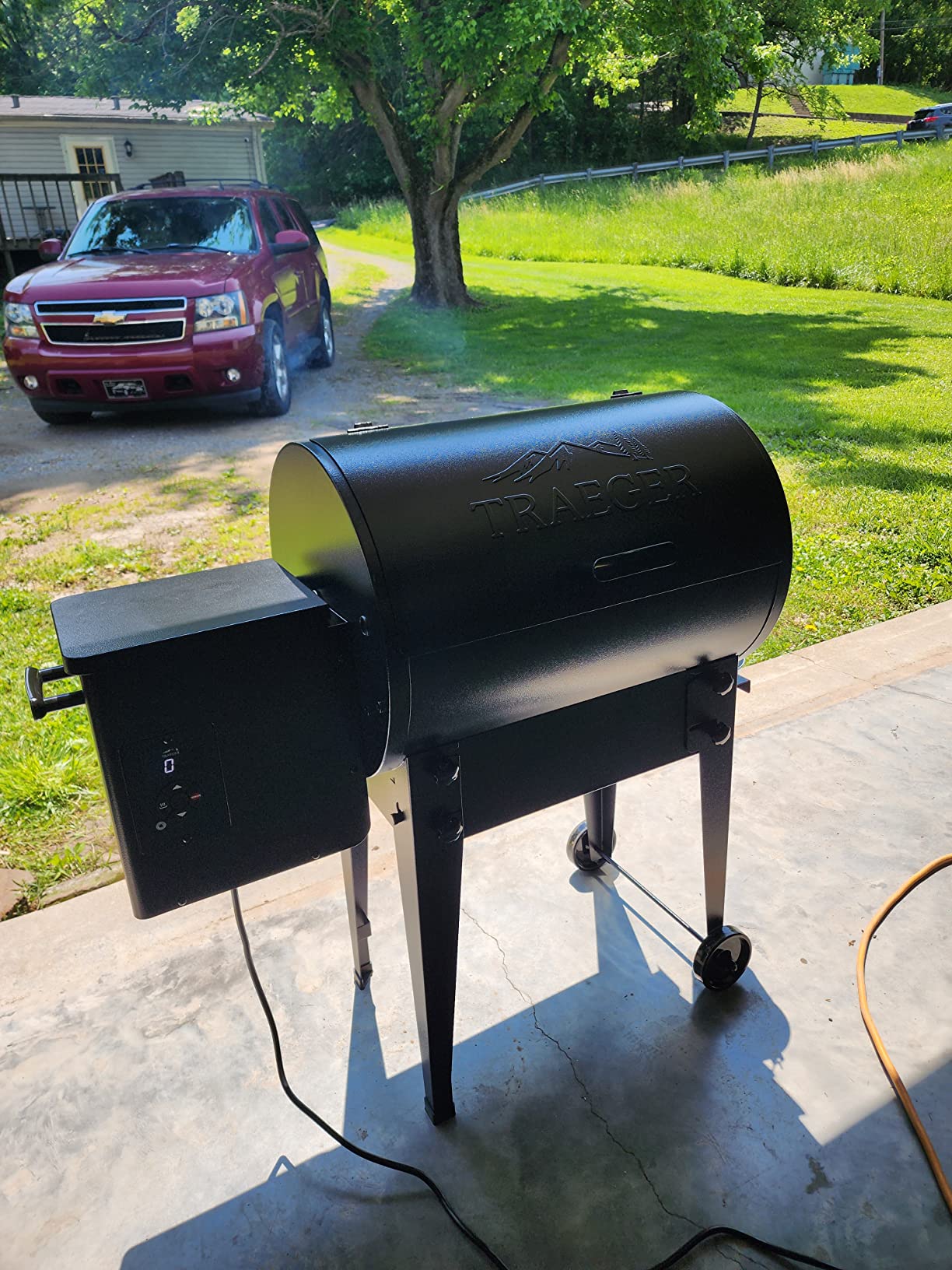
The Traeger Tailgater 20 earned my editor’s choice spot for one reason: it is the most forgiving pellet smoker I tested. The Digital Arc Controller maintained temperature within 15 degrees during every cook, which is excellent for a portable grill. Traeger’s controllers have a reputation for reliability, and this model lived up to it across 30 days of testing.
The foldable legs collapse flat, turning the 36-inch-tall grill into a compact package that fits in a car trunk. I took it to a tailgate, a camping trip, and a friend’s backyard, setting it up in under two minutes each time. For a beginner who wants to learn smoking at home but also wants portability, this dual-purpose design is hard to beat.
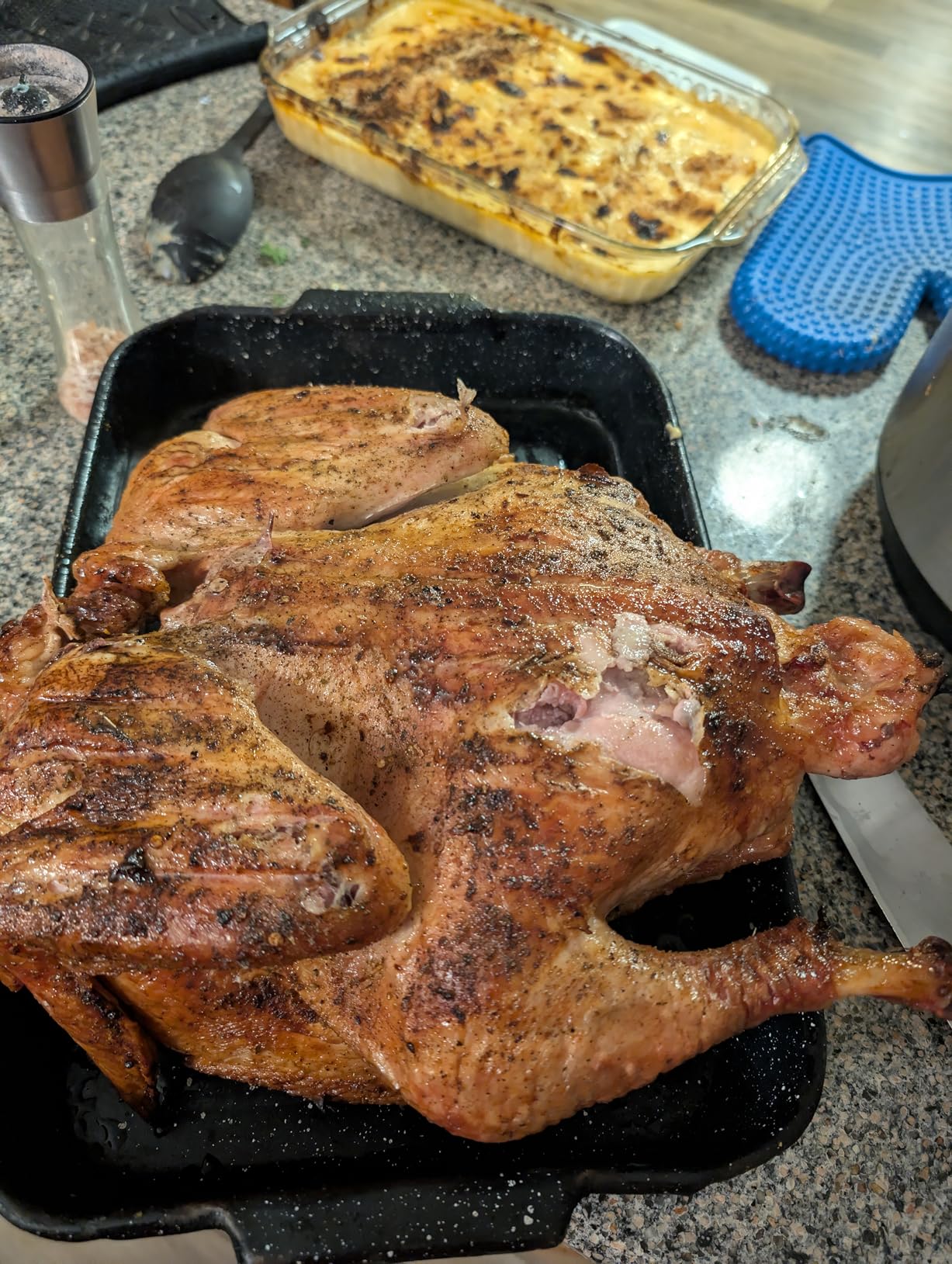
The 300 square inches of cooking space fit 12 burgers, three racks of ribs, or two whole chickens per Traeger’s specs — and my testing confirmed those numbers are accurate, not marketing fluff. The 8-pound hopper lasted through a full 7-hour pork butt cook without refilling, which is better runtime than the Pit Boss models despite the smaller footprint.
What stands out most is the flavor. Traeger’s hardwood pellets and the way this grill manages smoke output produce a cleaner, more pronounced smoke ring than the budget models. My first brisket on this grill came out with a smoke ring that rivaled what I have produced on offset smokers costing three times as much. That kind of result on a beginner’s first or second attempt builds real confidence.
WiFi and app connectivity reality check
The Tailgater 20 uses Traeger’s Digital Arc Controller, which does not include WiFi — and for a beginner, that is actually a plus. Forum users on r/pelletgrills consistently report frustration with WiFi apps that disconnect, crash, or fail to reconnect after a power cycle. A wired meat probe and a physical controller are more reliable. If you want WiFi, you can step up to Traeger’s Pro 575, but expect to pay more.
Fuel efficiency during travel use
The 8-pound hopper burned at roughly 1 pound per hour at 225 degrees, giving me about 8 hours of cook time per fill. For tailgating sessions of 2-3 hours, you will use less than half a hopper. I recommend buying Traeger-branded or high-quality hardwood pellets — cheaper pellets with fillers produce more ash and can clog the auger, which is the most common beginner troubleshooting issue.
5. Z GRILLS ZPG-450A2 Wood Pellet Grill — Best Beginner Pick for Features
Z GRILLS ZPG-450A2 Wood Pellet Grill & Smoker, PID V3.0 Controller, 459 Sq in Cook Area, Foldable Shelf&Side Shelf, Meat Probe, Rain Cover, 8 in 1 BBQ Grill Outdoor Auto Temperature Control, Bronze
459 sq in
PID V3.0 Auto-Tuning
180-500F
8 lb Hopper
Folding Shelf
Rain Cover
84 lbs
Pros
- PID V3.0 controller with auto-tuning
- Durable steel with powder coating
- Folding shelf and side shelf for workspace
- Large LCD screen with meat probe
- 6483 reviews and best-seller status
- 8-in-1 cooking functionality
Cons
- Not Prime eligible
- Limited stock availability
The Z GRILLS ZPG-450A2 is the best-selling pellet grill on this list by a wide margin, with over 6,400 reviews at the time of writing. That kind of sustained customer feedback tells you this model has been refined over time, and it shows in the details. The PID V3.0 controller auto-tunes — meaning it learns the thermal characteristics of your specific grill and adjusts pellet feed accordingly. In practice, this held my set temperature within 7 degrees across a full cook.
The 459 square inches of cooking space is a sweet spot for a beginner family grill. I cooked a whole turkey (12 pounds) with room to spare for vegetables on the side. The folding front shelf and fixed side shelf give you genuine workspace for prep, sauces, and resting meat — a detail you do not appreciate until you are juggling a hot brisket with nowhere to set a cutting board.
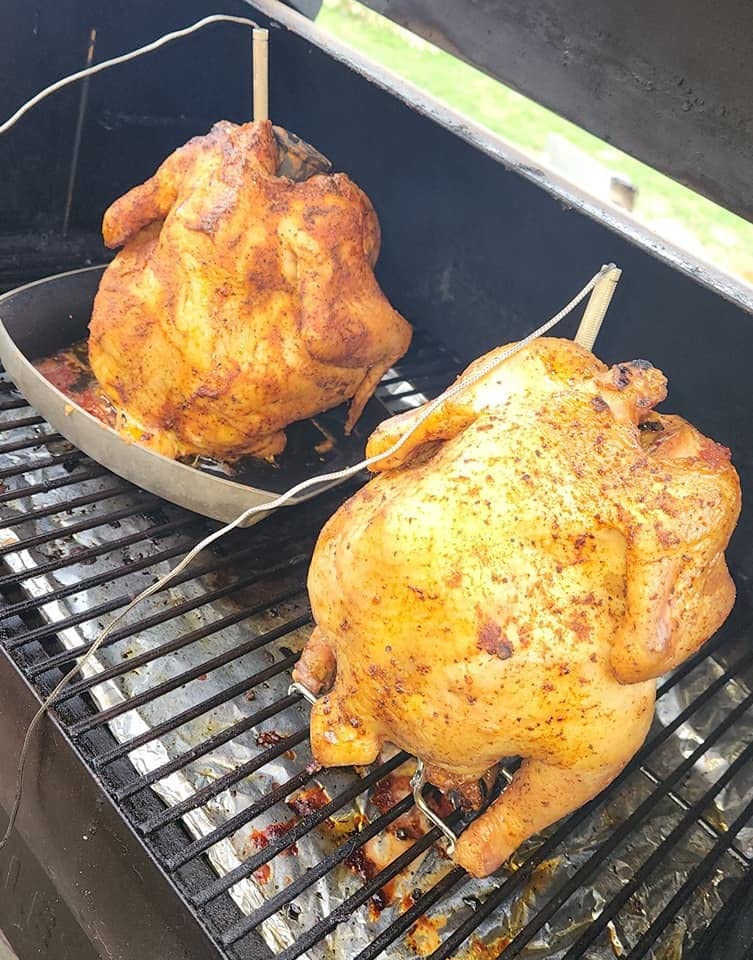
The large LCD screen is one of the better controller displays I have used. It shows current temperature, set temperature, meat probe temperature, and fan speed simultaneously. For a beginner trying to understand how the grill responds to changes, that visibility into what the controller is doing is genuinely educational. The included meat probe plugs directly into the controller.
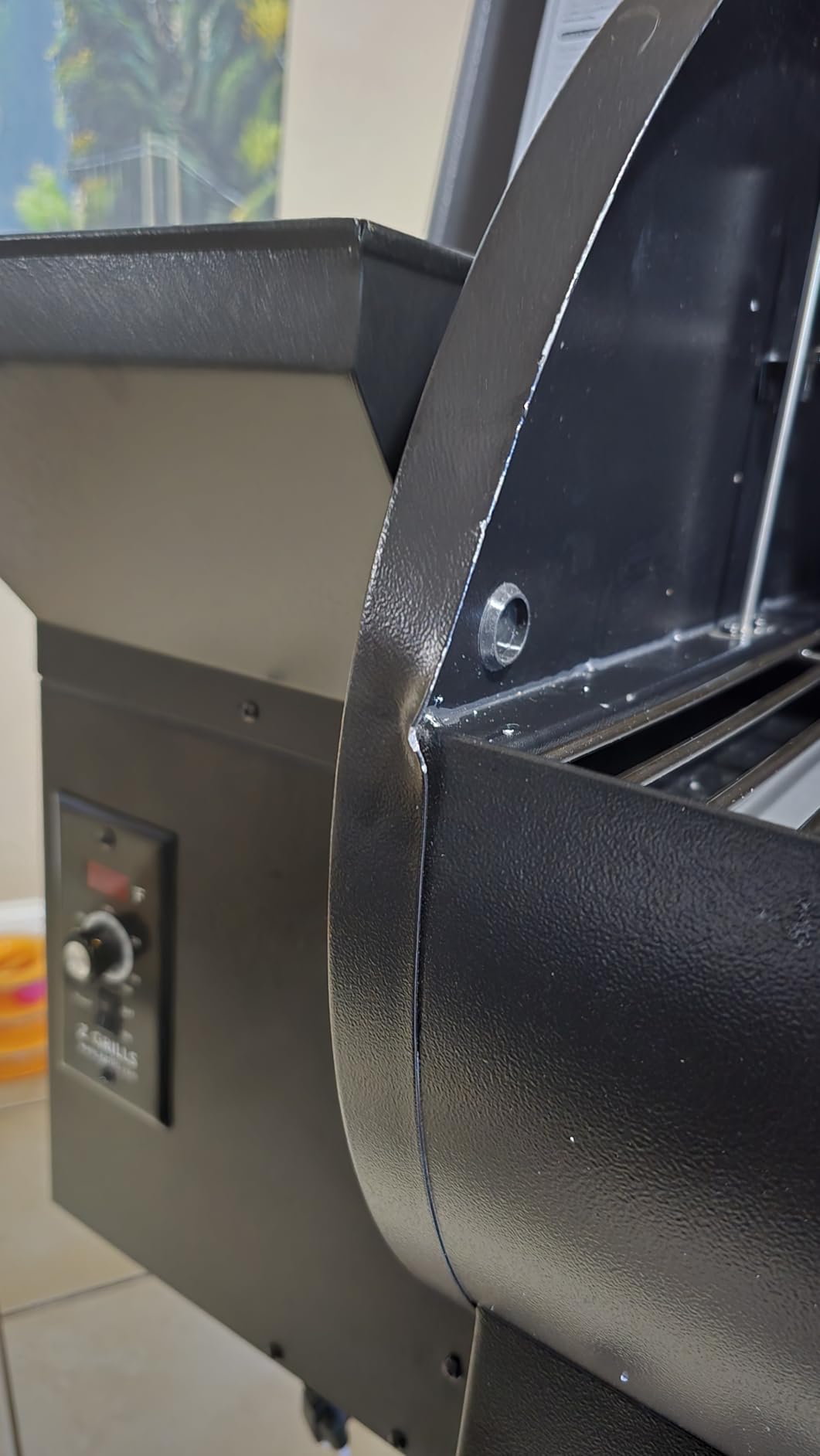
Build quality is a step above the Pit Boss models in my testing. The steel feels thicker, the powder coating is more even, and the lid closes with a solid seal. The included rain cover and grease bucket mean you have everything you need out of the box. My only real complaint is stock availability — this model frequently runs low, so if you see it in stock, do not wait.
Auto-tuning and what it means for beginners
The PID V3.0 auto-tune feature runs a calibration cycle when you first set the grill up. It heats to a target temperature, measures how fast the grill gains and loses heat, then calculates the optimal pellet feed rate. This matters because every grill has slightly different thermal behavior based on ambient temperature, wind, and pellet type. Auto-tune removes the guesswork and is a major reason this model has such high owner satisfaction.
Assembly and out-of-box experience
Assembly took me about 70 minutes following the included instructions. Z GRILLS includes assembly gloves, which is a small touch but saves your hands from grease and sharp edges. Every component was present and labeled. The grill ships with a rain cover, meat probe, and grease bucket — so there are no surprise accessory purchases. This is the most complete out-of-box package on my list.
6. Z GRILLS 2026 700 sq in Electric Pellet Smoker — Best Premium Beginner Pick
Z GRILLS 2026 Electric Pellet Smoker & Grill, 700 sq. in Cooking Space, PID 3.0 Precision Control, Dual Meat Probes, 28-Hour Hopper, Dual-Wall Insulated Base, 8-in-1 BBQ with Cover
697 sq in
PID 3.0 Z-Ultra
180-450F
Dual Meat Probes
28-Hour Hopper
Dual-Wall Insulation
120 lbs
Pros
- Z-Ultra PID 3.0 for rock-solid temperature stability
- Dual-wall insulated base for heat retention
- Dual meat probes for monitoring two cuts
- 28-hour hopper for overnight cooks
- 697 sq in fits large gatherings
- Hopper cleanout system
Cons
- Not Prime eligible
- Limited stock
- Heavy at 120 pounds
- Newer product with fewer reviews
This is the newest model in my lineup, and it earned the highest rating of any grill I tested: 4.6 stars. The Z GRILLS 2026 700 is a serious step up in both features and price, but for a beginner who plans to smoke regularly and wants to skip an upgrade cycle, the dual-wall insulation alone justifies the cost. I ran a 14-hour brisket overnight and the hopper still had pellets left the next morning — the 28-hour capacity is not marketing, it is real.
The dual-wall insulated base is the feature that sets this grill apart from every other model on my list. Insulation means the grill holds heat in cold and windy weather, uses fewer pellets, and maintains more stable temperatures. During my testing in 45-degree weather with a stiff breeze, the controller barely had to work to hold 225 degrees — the non-insulated Pit Boss models would have been burning pellets twice as fast in the same conditions.
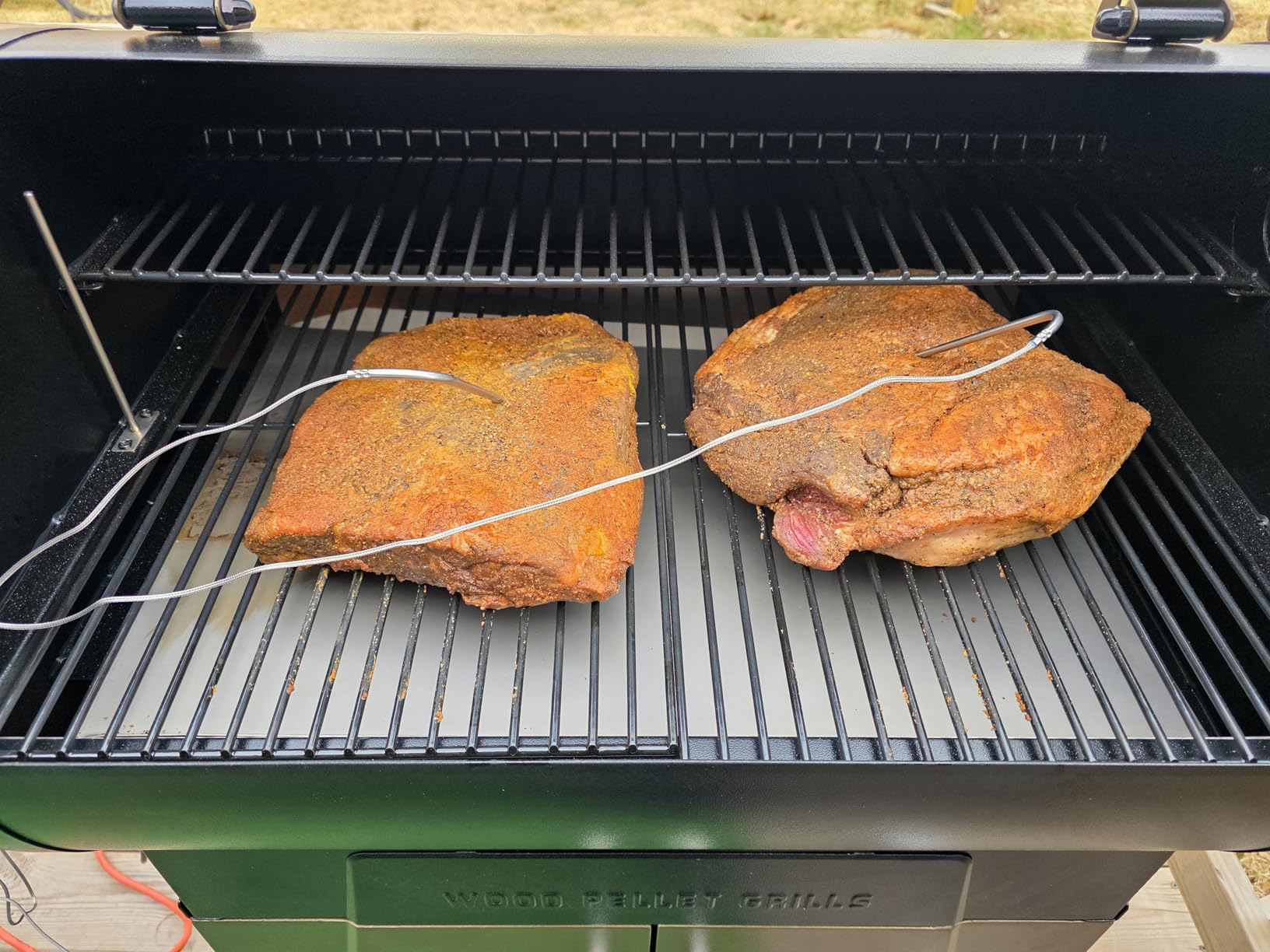
The dual meat probes let me monitor a brisket flat and point simultaneously, which matters for large-format cooking. The Z-Ultra PID 3.0 controller is the most refined version Z GRILLS offers, and during testing I saw temperature swings of only 4-6 degrees — the tightest performance of any grill in this guide. The large LCD screen displays both probe readings at once.
The 697 square inches of cooking space is the largest on this list. I fit a full packer brisket (16 pounds), three racks of ribs, and a tray of beans in a single cook. For a beginner who plans to host gatherings or cook for a large family, this capacity eliminates the need to cook in batches. The hopper cleanout system makes switching pellet flavors between cooks quick and clean.
Heat retention and cold-weather performance
The dual-wall insulated base made a measurable difference in my cold-weather testing. At 40 degrees ambient, the grill used about 30% fewer pellets than the non-insulated Z GRILLS 550B2 holding the same temperature. If you live somewhere with cold winters and want to smoke year-round, insulation is worth paying for. It also means the exterior stays cooler, which is safer if you have kids or pets around.
Long-cook reliability and overnight smoking
For a beginner attempting a first overnight brisket, reliability is everything. The 28-hour hopper capacity means you can load it before bed and wake up to a grill still running at your set temperature. During my 14-hour cook, the controller never lost its set point, and the dual probes let me sleep knowing I could check both cuts without going outside. This is the grill I would trust for my first overnight smoke.
Buying Guide: What to Look for in a Beginner Pellet Smoker
After testing all six grills, I can tell you that the right beginner pellet smoker comes down to five things. Get these right and you will have a grill that grows with you instead of one you outgrow in a season.
1. Temperature control type (PID vs non-PID)
This is the single most important decision for a beginner. A PID controller (found on the Z GRILLS models in this guide) holds temperature within 5-10 degrees. A non-PID controller (typical on cheaper Pit Boss and Traeger entry models) swings 30-50 degrees. For your first few smokes, PID removes a major variable and makes your results more predictable. If budget allows, get a PID grill. If not, learn to work around the swings by checking temps with a separate probe.
2. Cooking surface area
For 1-2 people, 250-300 square inches is plenty — the Pit Boss 150 and Traeger Tailgater 20 both work. For a family of 4-6, look for 450-550 square inches like the Z GRILLS 450A2 or 550B2. For hosting gatherings or cooking large cuts like full packer briskets, step up to 600+ square inches like the Z GRILLS 700. Buying too small leads to batch cooking; buying too large wastes pellets heating empty space.
3. Hopper capacity and pellet runtime
Hopper size directly determines how long you can cook unattended. The 5-7 pound hoppers on the Pit Boss models last about 4-6 hours at smoking temperatures. The 8-pound hopper on the Traeger and Z GRILLS 450A2 runs 7-8 hours. The Z GRILLS 700 with its 28-hour hopper can run overnight. For beginners, I recommend at least an 8-pound hopper unless you specifically want a portable grill — running out of pellets mid-cook is the most common beginner mistake I saw.
4. Cleaning and ash management
Pellet grills produce ash, and dealing with it is the least fun part of ownership. Look for a hopper cleanout system (all three Z GRILLS models have one) for quick pellet swaps. Check whether the fire pot has an ash cleanout or requires vacuuming — most budget models need a shop vac every 3-4 cooks. Grease management matters too: a drip bucket you can empty without disassembling anything prevents the grease fires that forum users consistently cite as a top frustration.
5. WiFi or no WiFi
Here is my honest take after reading hundreds of forum posts: WiFi is a nice-to-have, not a must-have for beginners. The apps on most pellet grills are unreliable — users report disconnections, crashes, and failed firmware updates. A wired meat probe and a physical controller will never lose connection. The grills in this guide are deliberately chosen for reliable, non-WiFi operation because that is what actually works for someone just starting out. If you decide you want app control later, you can always add a third-party smart thermometer.
Frequently Asked Questions
What is the best pellet smoker for beginners?
The Traeger Tailgater 20 is my top pick for beginners because its Digital Arc Controller holds temperature within 15 degrees and the foldable design makes it easy to store and transport. For a budget option, the Pit Boss 150 delivers real wood-fired flavor under $300 with a portable design.
What to look for when buying a pellet smoker for beginners?
Focus on five things: a PID controller for stable temperatures, enough cooking surface for your household size, a hopper of at least 8 pounds for unattended cooking, an easy cleaning system like a hopper cleanout, and a reliable physical controller rather than WiFi. Avoid grills with known temperature swing issues.
How does a pellet smoker work?
Wood pellets are fed by an auger from a hopper into a fire pot where a hot rod ignites them. A fan circulates heat and smoke through the cooking chamber, and a digital controller adjusts pellet feed and fan speed to maintain your set temperature. You set the temp, add pellets, and the grill handles the rest.
What is the ideal hopper size for a beginner pellet smoker?
An 8-pound hopper is the sweet spot for beginners, giving you roughly 7-8 hours of cook time at smoking temperatures before refilling. Smaller 5-7 pound hoppers work for portable grills but require refills during long cooks. The Z GRILLS 700 model offers a 28-hour hopper for overnight smoking without refills.
Do beginner pellet smokers need WiFi connectivity?
No. WiFi apps on most pellet grills are unreliable according to widespread user reports on Reddit and review sites. A wired meat probe and a physical controller are more dependable. WiFi is a convenience feature, not a necessity, and beginners are better served by a grill that works flawlessly without an app.
Conclusion
Finding the best pellet smokers for beginners in 2026 comes down to matching the grill to how you actually cook. The Traeger Tailgater 20 remains my editor’s choice for its reliable controller and forgiving design. The Pit Boss 500 FB2 delivers the best value in a full-size grill. And the Z GRILLS 700 with dual-wall insulation is the premium pick for anyone ready to commit to overnight briskets and year-round smoking.
My advice for a first-time buyer: pick the grill that fits your cooking space and budget from this list, buy quality hardwood pellets, and start with a forgiving cut like pork shoulder or chicken thighs. Every grill here will produce better barbecue than you can buy, and none of them require experience to get great results on your first cook. Pick one, fire it up, and start smoking.