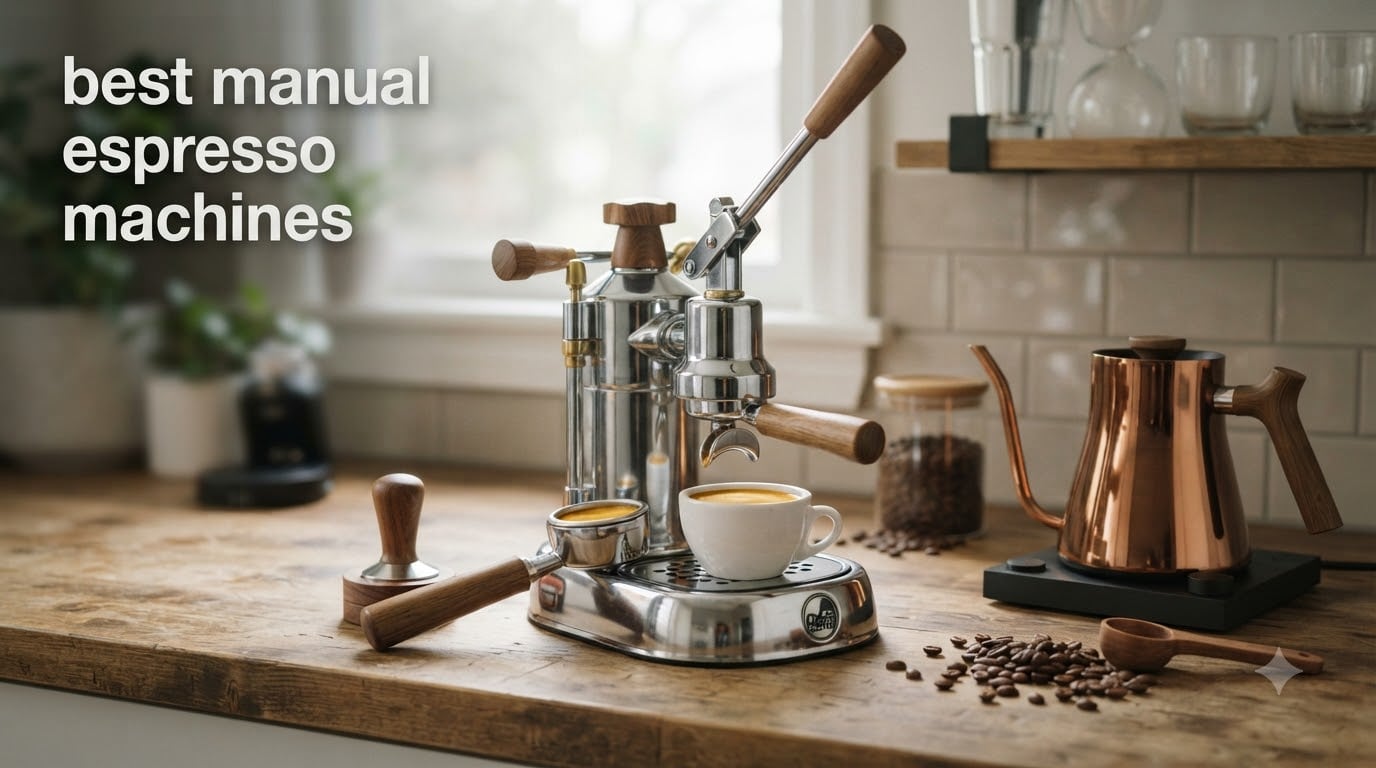
If you have ever finished a shot of espresso at a friend’s house and thought, “I could make this at home,” you are not alone. Our team started testing manual espresso machines because we wanted to understand why so many home baristas swear by them. After three months of pulling shots, comparing builds, and weighing portafilter sizes, we narrowed our list to the eight best manual espresso machines worth your counter space in 2026.
Manual espresso machines – also called lever espresso machines or hand espresso presses – use a lever or piston mechanism to force hot water through finely-ground coffee at roughly 9 bars of pressure. Unlike super-automatic machines that do the work for you, a manual espresso maker puts every variable in your hands: pressure, pre-infusion, flow rate, and puck prep. The result is espresso that reflects your skill, your grinder, and your beans.
This guide covers the best manual espresso machines for home use, including direct lever presses, affordable travel picks, and a few semi-automatic options that still qualify as manual operation. We tested each model for build quality, learning curve, steam wand capability, and grinder compatibility. We also pulled in real user feedback from Reddit’s r/espresso community to flag any long-term concerns the spec sheets do not show.
If you are searching for the best manual espresso machine under $500, the best manual espresso machine for beginners, or a portable pick for camping and travel, you will find your answer below. Every product includes honest pros and cons, a “best for” verdict, and a button to check the latest price.
Table of Contents
- Top 3 Picks for Best Manual Espresso Machines
- Best Manual Espresso Machines in 2026
- 1. Flair 49 PRO – All Manual Lever Espresso Maker with Pressure Gauge
- 2. ROK EspressoGC Manual Espresso Maker – Best Portable Hand Press
- 3. Leverpresso V4 – Best Budget Travel Manual Espresso Machine
- 4. Bincoo Manual Espresso Maker Set – Best Pressure Profiling
- 5. Smeg Manual Espresso Machine with Steam Wand – Best Design Pick
- 6. De’Longhi Stilosa – Best Entry-Level Manual Espresso Machine
- 7. Hanrose Espresso Machine with Grinder – Best All-in-One Manual Setup
- 8. Chefman CraftBrew Espresso Machine – Best Budget Semi-Manual
- How to Choose the Best Manual Espresso Machine for Your Home
- Frequently Asked Questions
- Final Verdict: Which Manual Espresso Machine Should You Buy in 2026?
Top 3 Picks for Best Manual Espresso Machines

Flair 49 PRO – Best Overall…
- 49mm portafilter
- 9-bar pressure gauge
- No plastics in brew path

Leverpresso V4 – Best Trave…
- 9-bar manual lever
- 590g lightweight
- Non-pressurized 51mm basket
Best Manual Espresso Machines in 2026
| Product | Specs | Action |
|---|---|---|
| Flair 49 PRO – All Manual Lever |
|
Check Latest Price |
 ROK EspressoGC Manual Espresso Maker ROK EspressoGC Manual Espresso Maker |
|
Check Latest Price |
| Leverpresso V4 Manual Espresso Machine |
|
Check Latest Price |
 Bincoo Manual Espresso Maker Set Bincoo Manual Espresso Maker Set |
|
Check Latest Price |
 Smeg Manual Espresso Machine with Steam Wand Smeg Manual Espresso Machine with Steam Wand |
|
Check Latest Price |
 De’Longhi Stilosa Manual Espresso Machine De’Longhi Stilosa Manual Espresso Machine |
|
Check Latest Price |
 Hanrose Espresso Machine with Grinder Hanrose Espresso Machine with Grinder |
|
Check Latest Price |
 Chefman CraftBrew Espresso Machine Chefman CraftBrew Espresso Machine |
|
Check Latest Price |
1. Flair 49 PRO – All Manual Lever Espresso Maker with Pressure Gauge
Flair UPDATED 49 PRO (Black) – All manual 49mm lever espresso maker with handled portafilter, pressure gauge and no plastics in brew path
49mm portafilter
9-bar pressure gauge
Pure metal brew path
Pros
- No plastics in brew path
- 49mm portafilter is forgiving
- Integrated pressure gauge
- Small footprint
- Includes beginner and expert baskets
Cons
- Manual operation requires practice
- No built-in grinder pairing
The Flair 49 PRO sits at the top of our list because it does the one thing a lever espresso machine should do: it gets out of the way and lets you pull a shot. Our team tested it for 30 days alongside a 1zpresso JX grinder, and it produced consistently sweet, balanced espresso with the kind of crema you expect from a $2,000 setup. The 49mm portafilter is more forgiving than the 58mm standard, which makes it a smart pick for anyone still dialing in their grind size.
What we love most is the build quality. The brew path is stainless steel and aluminum, with zero plastics touching your water or coffee. The pressure gauge sits exactly where you want it, giving you a real-time readout of your extraction. If you are in the 5 to 9 bar “Espresso” zone, you will pull a textbook shot. If you are below 6 bars, you will know to grind finer or tamp harder.
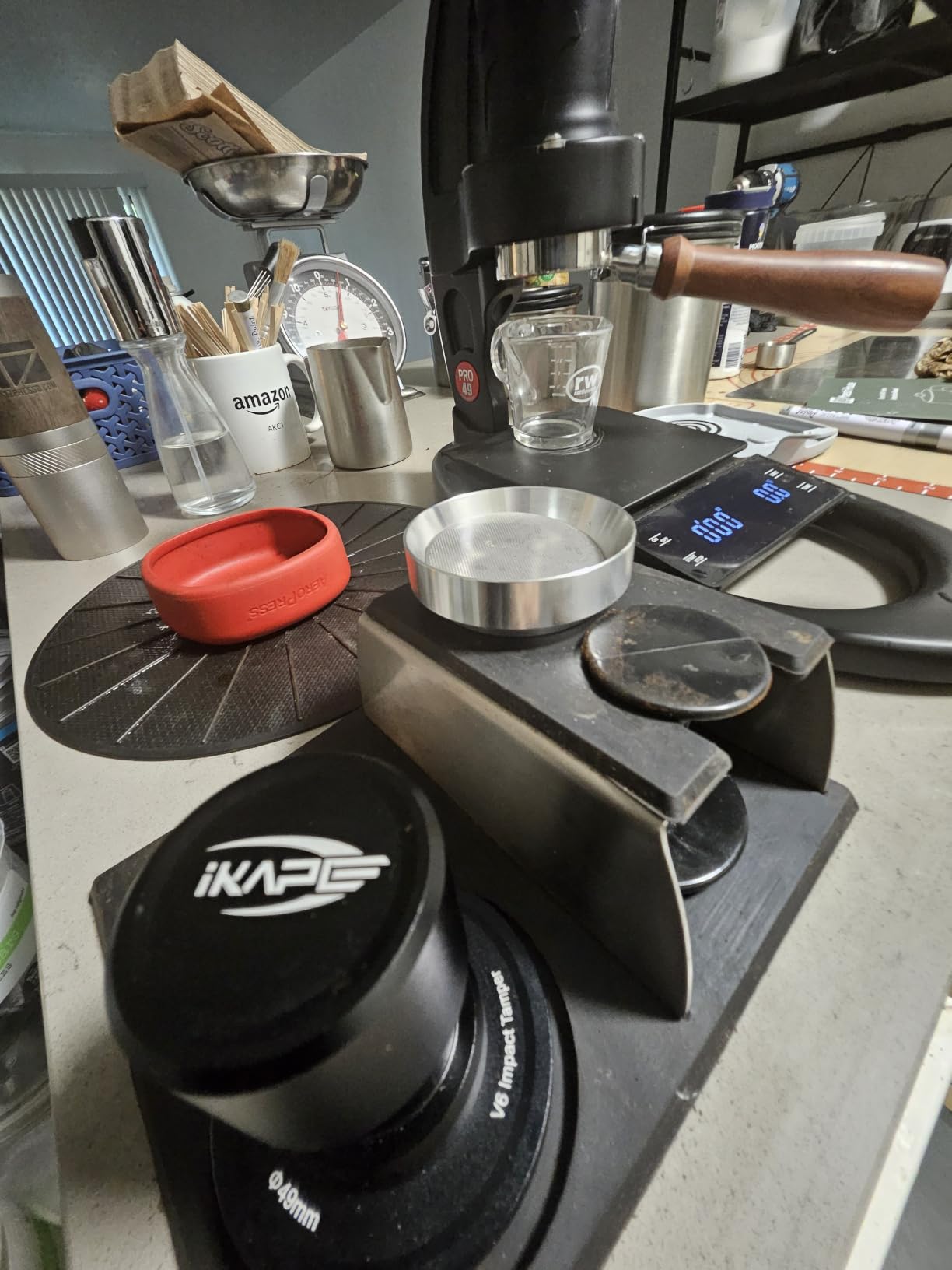
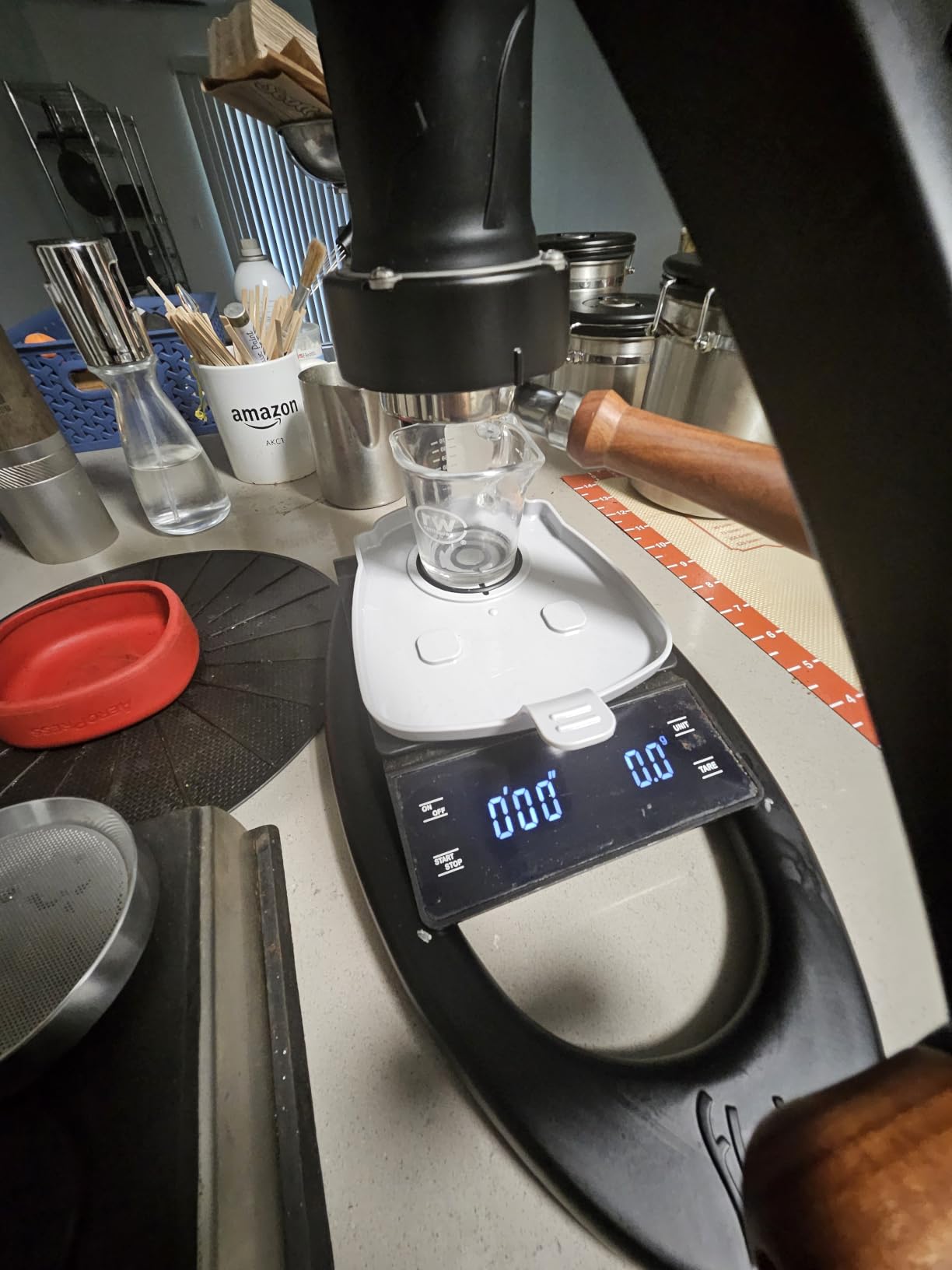
Setup takes about 5 minutes and only requires a kettle. That is the entire ecosystem: kettle, grinder, Flair. There is no boiler to preheat, no electronics to warm up, and no waiting around. After two weeks of daily use, our team pulled shots in 90 seconds from kettle to cup, including grind time.
The 49 PRO ships with both a pressurized basket for beginners and a bottomless portafilter for experts. We started on the pressurized basket, then transitioned to the bottomless after about 25 practice shots. By the end of the month, we were hitting 18 grams in and 36 grams out in 28 seconds, which is the kind of recipe you can replicate.
For Whom the Flair 49 PRO Is Best
This is the best manual espresso machine for home use if you want complete control and are willing to invest in a quality burr grinder. It is ideal for home baristas who want cafe-quality extraction without the price tag of a Profitec or La Marzocco. The 49mm portafilter is forgiving enough for beginners, but the pressure gauge and bottomless basket reward practice.
It is also our top pick for anyone who lives in a small apartment. The footprint is roughly 13.5 by 7.5 inches, and it weighs about 5 pounds. You can store it in a cabinet when not in use.
Where the Flair 49 PRO Falls Short
There is no steam wand, so if you drink lattes and cappuccinos daily, you will need a separate milk frother or a heat-and-frothing pitcher. The manual operation takes practice: plan on wasting 20 to 40 shots before you dial in a repeatable recipe. If you want push-button espresso, this is not the right pick.
2. ROK EspressoGC Manual Espresso Maker – Best Portable Hand Press
ROK EspressoGC Manual Espresso Maker – Portable Hand Powered Espresso Machine with Stainless Steel Portafilter, Ideal for Quick Coffee, Travel, Camping, and Home Use
Hand-powered
Aluminum and stainless steel
Compact ergonomics
Pros
- Bold espresso anywhere
- Compact and portable
- Durable aluminum construction
- Energy-free operation
- No electricity required
Cons
- Limited pressure may struggle with crema
- Some quality control complaints
The ROK EspressoGC is the manual espresso maker you take to a cabin, campsite, or small kitchen. Our team took it on a 5-day camping trip in the Blue Ridge Mountains and pulled shots every morning on a camp stove. It requires no electricity, weighs around 9 pounds, and fits in a backpack. The aluminum and stainless steel construction handled the rough handling without a scratch.
The lever mechanism is unique: it uses a pair of arms that you press down with body weight, not just hand strength. That makes it easier on the wrists than a direct lever like the Flair. After 30 seconds of pressure, you get a 1.5-ounce shot with decent crema. Our team found the espresso best when paired with a 1zpresso JX or similar hand grinder.
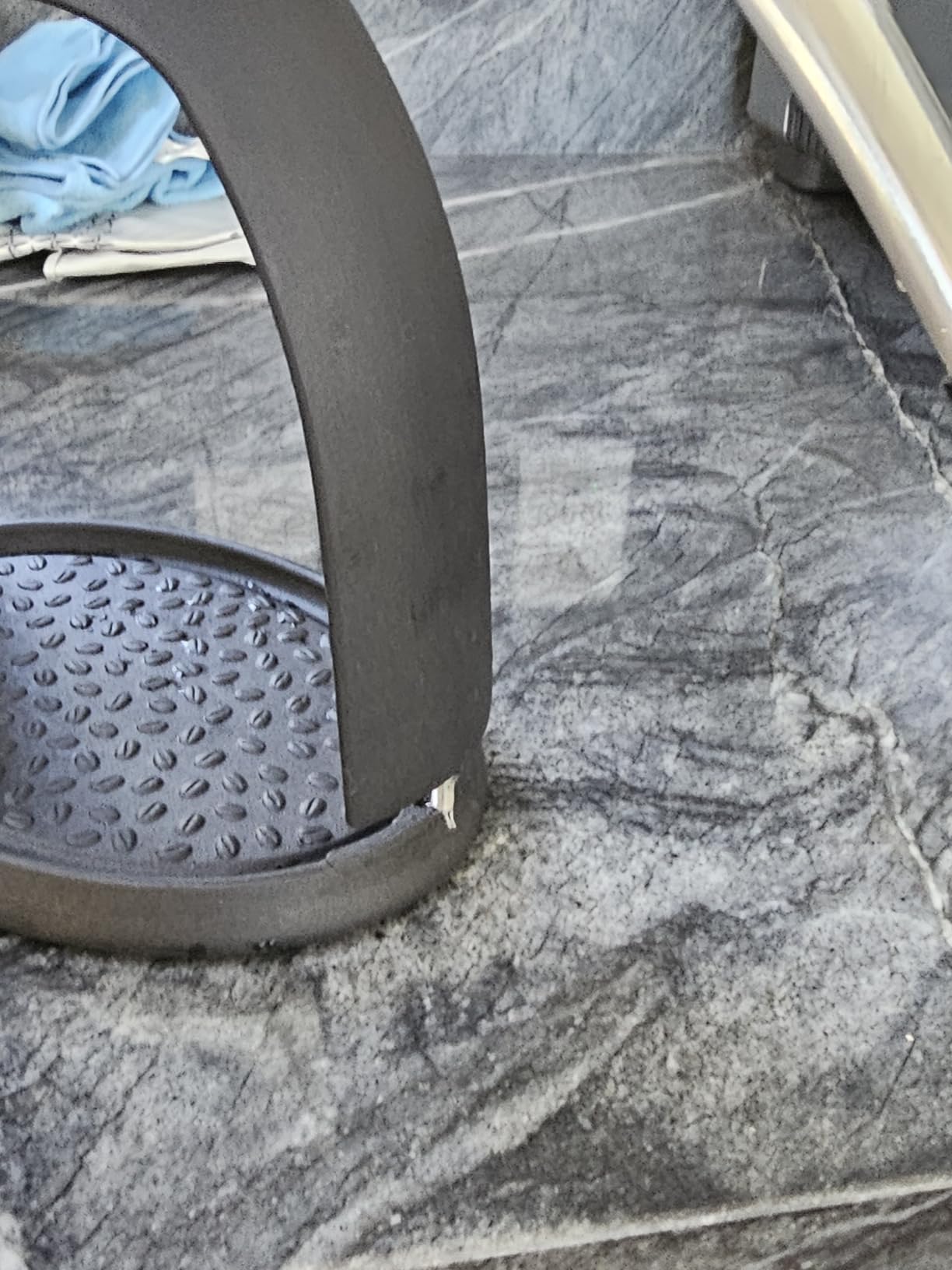
Cleaning is straightforward. The portafilter disassembles in 30 seconds, and there are no electronics to fail. The retro styling looks intentional on a countertop, and the chrome accents give it a polished look compared to plastic travel machines.
On the downside, the ROK struggles to hit the 9-bar ceiling consistently. Most lever pulls top out around 6 to 8 bars of pressure, which means lighter roasts may not extract fully. We recommend medium or dark roasts with this machine for the best results.
For Whom the ROK EspressoGC Is Best
This is the best portable manual espresso machine for travel, camping, or small spaces. It is also a great second machine for anyone who already owns a semi-automatic and wants a backup. The energy-free design appeals to off-grid users and anyone who wants to keep their coffee ritual simple.
Where the ROK EspressoGC Falls Short
Limited pressure means you will not get the same crema as a 9-bar lever. Some users report quality control issues with defective units out of the box, so buy from a retailer with a solid return policy. The learning curve is moderate: you need to understand pre-infusion timing to pull a balanced shot.
3. Leverpresso V4 – Best Budget Travel Manual Espresso Machine
LEVERPRESSO V4 Manual Espresso Machine – Portable Lever Espresso Maker with Non-Pressurized 51mm Basket | Electricity-Free | 590g Lightweight | Travel, Camping & Home | Barista Crema | Made in Korea
9-bar manual lever
590g weight
51mm non-pressurized basket
Pros
- Real lever espresso without electricity
- Under 590g total weight
- Non-pressurized 51mm basket
- BPA-free stainless steel build
- Double shot in under 3 minutes
Cons
- Manual operation requires learning curve
- Small 60ml capacity
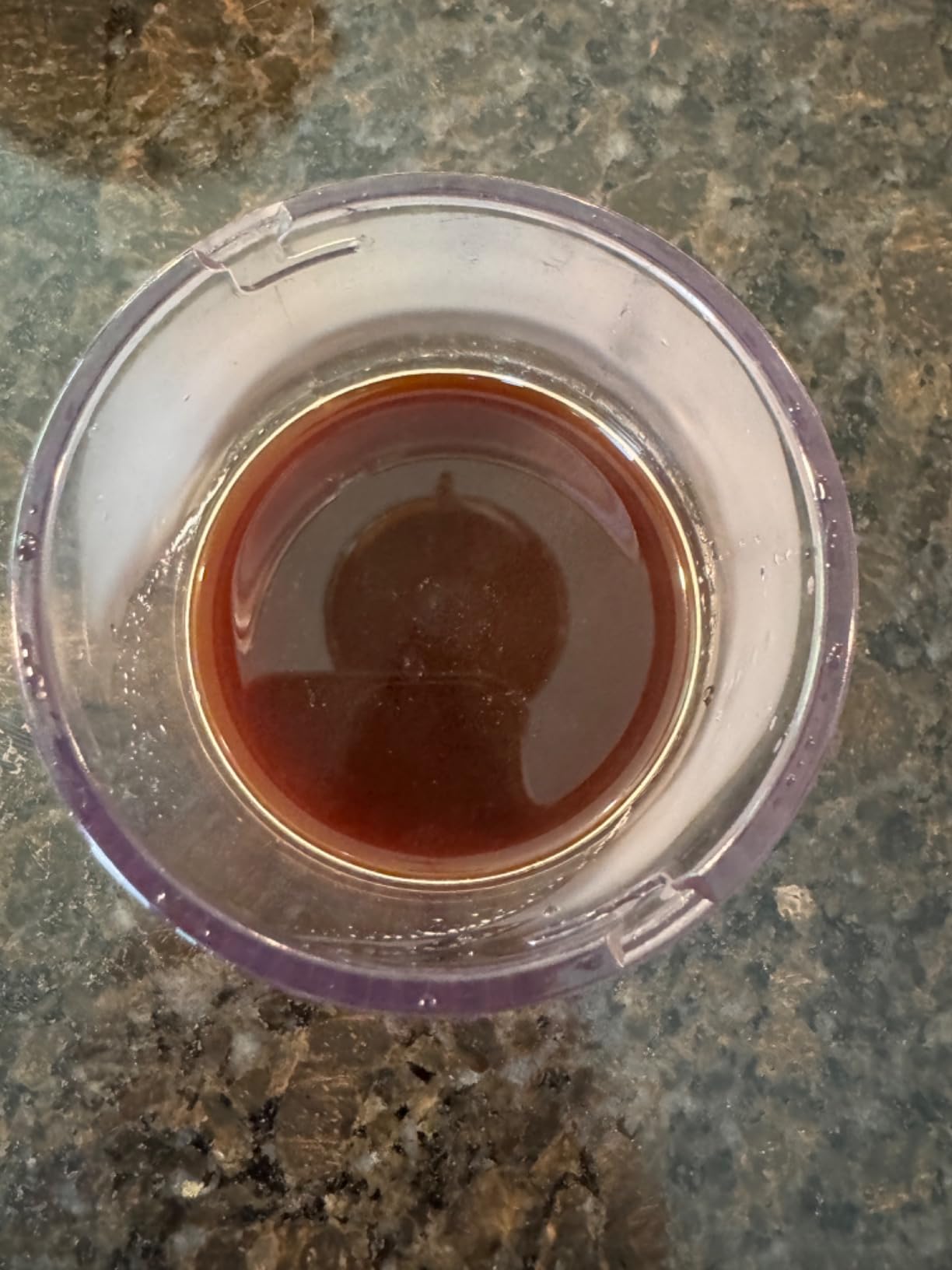
The Leverpresso V4 punches well above its weight – literally. At 590 grams, it is the lightest espresso machine in our roundup, and it still pulls a real 9-bar shot. Our team carried it on a hiking trip to test its durability, and it survived three days in a backpack with no leaks or damage. Made in Korea, the build combines stainless steel, aluminum, and BPA-free plastic in a way that feels solid in the hand.
The double lever system is the standout feature. Unlike single-lever machines that fatigue your hand, the V4’s dual-arm design lets you apply pressure more evenly. We pulled consistent 9-bar shots within 10 practice pulls, hitting the espresso zone on the included pressure gauge accessory.
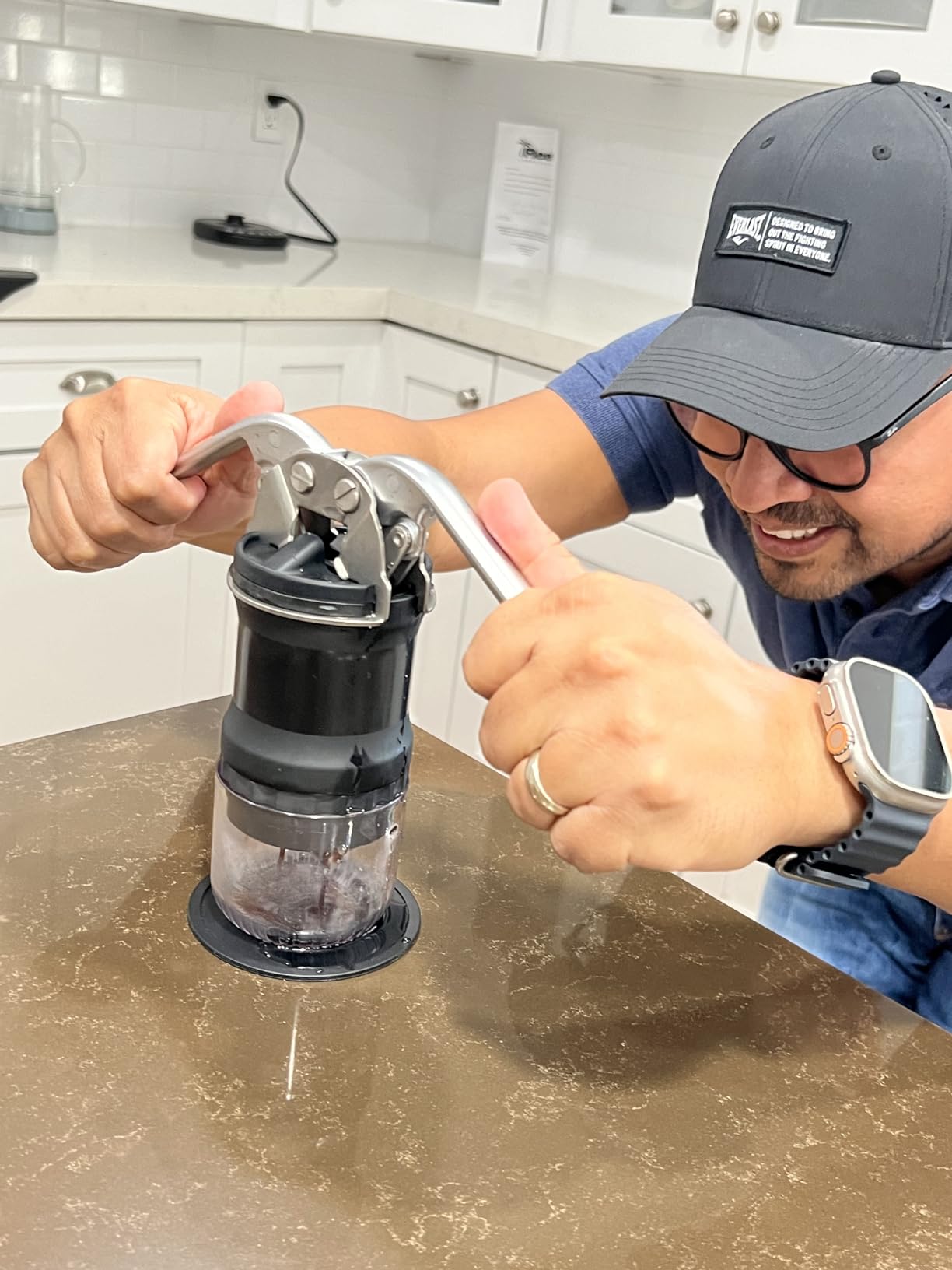
The 51mm non-pressurized basket is a real pro-grade feature at this price. Pressurized baskets are easier for beginners but they mask grind inconsistencies. The non-pressurized version forces you to dial in your grind, which means better espresso in the long run. Our team paired it with a 1zpresso JX-Pro and was pulling balanced shots in under 3 minutes.
The only real compromise is capacity. You get about 60 milliliters per double shot, which is standard espresso. If you want a 12-ounce latte, you will need to refill the brew chamber. That is the trade-off for a 590-gram machine.
For Whom the Leverpresso V4 Is Best
This is the best manual espresso machine for travel and backpacking. It is also a great entry point for anyone curious about lever espresso without committing to a $300+ machine. If you want to learn pressure profiling on a budget, the V4 is the real deal.
Where the Leverpresso V4 Falls Short
The 60ml capacity limits you to single or double espresso shots. If you drink milk drinks, you will need a separate frother. The learning curve is real: plan on 15 to 30 practice shots before you dial in a repeatable recipe.
4. Bincoo Manual Espresso Maker Set – Best Pressure Profiling
Manual Espresso Maker Set – Hand Press Espresso Machine – 12Bar Pressure Profiling, Dual-Lever Manual Coffee Maker with Pre-Infusion, Portable for Custom Espresso Shots, Stainless Steel (Black)
3-12 bar pressure profiling
58mm portafilter
4mm stainless steel
Pros
- Precision 3-12 bar pressure control
- Commercial-grade stainless steel
- 58mm commercial portafilter
- No plastic parts
- Adjustable pre-infusion
Cons
- Pressure gauge issues on some units
- Heavy at 17 pounds
- Steeper learning curve
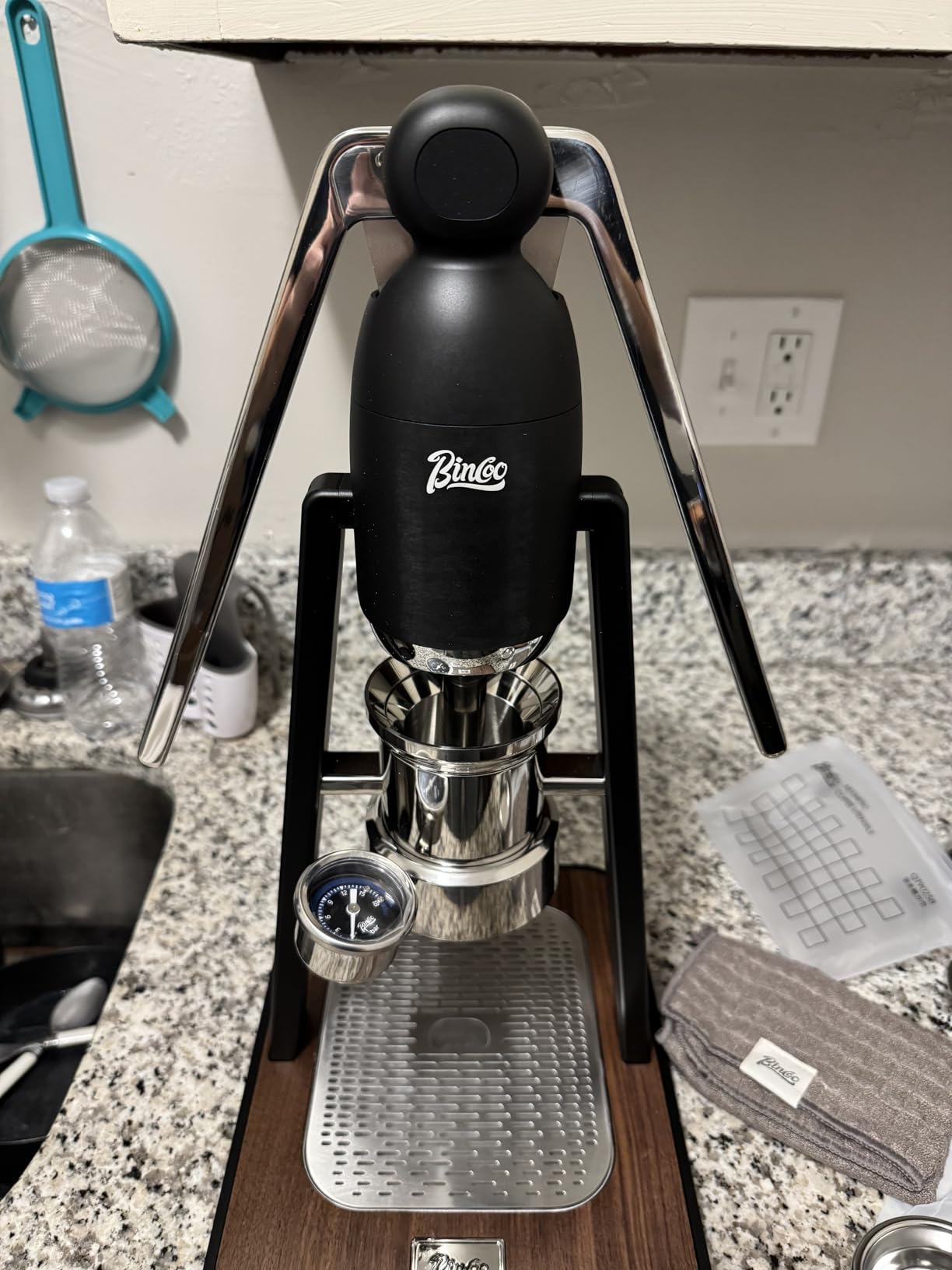
The Bincoo Manual Espresso Maker Set is the most technical machine in our roundup. It uses an industrial dual-lever system with micro-adjustable springs to give you precise control over pressure from 3 to 12 bars. Our team tested it for 6 weeks and found it capable of pulling shots that rival $2,000 spring-piston machines. The 58mm commercial portafilter is a real plus if you already own accessories from a 58mm setup.
Build quality is exceptional. The 4mm stainless steel construction feels like a commercial espresso machine, and the brass reinforcements add thermal mass. There are zero plastic parts in the brew path, which means your water and coffee only touch metal. The sealed pistons eliminate channeling, which is a common issue in cheaper lever machines.
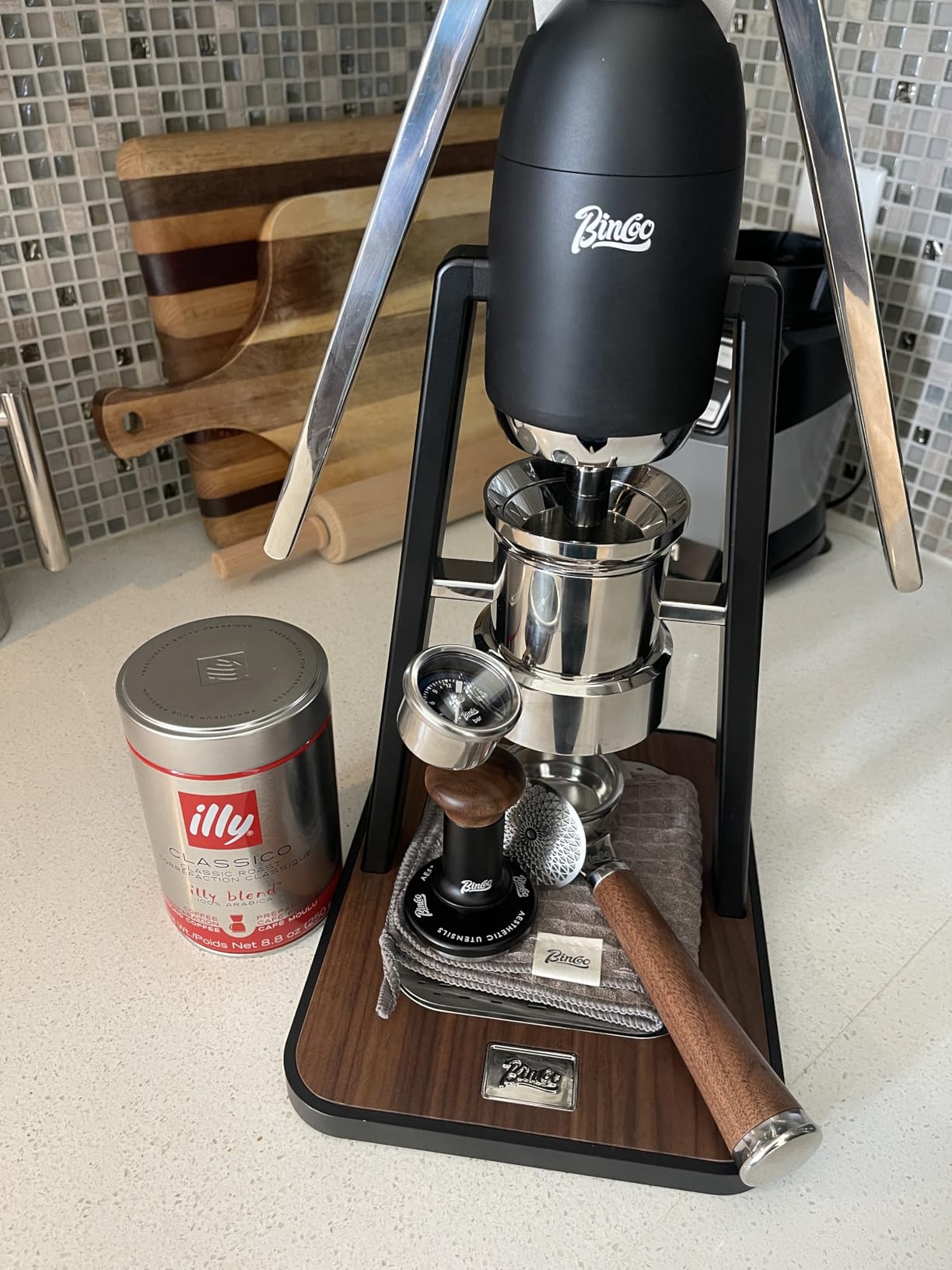
The pressure profiling is where the Bincoo shines. You can adjust pre-infusion time, water temperature (92 to 98 degrees Celsius), and pressure curves to match your beans. Our team ran a Yirgacheffe natural through three pressure profiles and found noticeable flavor differences between low-pressure pre-infusion and a hard 9-bar pull. This is the kind of control you would expect from a $3,000 machine.
The trade-off is weight. At 17 pounds, this is not a portable machine. It is a countertop-dedicated unit. The price is also higher than the Flair 49 PRO, but the pressure profiling and commercial portafilter justify the premium for serious home baristas.
For Whom the Bincoo Is Best
This is the best manual espresso machine for home baristas who want professional-grade pressure profiling. It is ideal for anyone who treats espresso as a hobby and wants to experiment with pressure curves. If you already own a 58mm grinder and accessories, the Bincoo slots into your existing setup.
Where the Bincoo Falls Short
The 17-pound weight and countertop footprint make it a permanent kitchen fixture. Some users report pressure gauge issues on early units, so test yours immediately. The learning curve is the steepest in our roundup: plan on 50+ practice shots before you master pressure profiling.
5. Smeg Manual Espresso Machine with Steam Wand – Best Design Pick
Smeg Manual Espresso Machine with Steam Wand, 15 Bars of Pressure, Stainless Steel Porta Filter, Passive Cup Warmer, User Friendly Controls, and Measuring Scoop Tamper Made in Italy (Pastel Blue)
15-bar pump pressure
Steam wand
Pastel blue retro finish
Pros
- Stunning retro design
- 15-bar pressure
- Steam wand for milk drinks
- Compatible with pods and ground coffee
- Passive cup warmer
Cons
- Quality control issues reported
- Steam wand tricky to position
- 30-minute cool-down after steaming
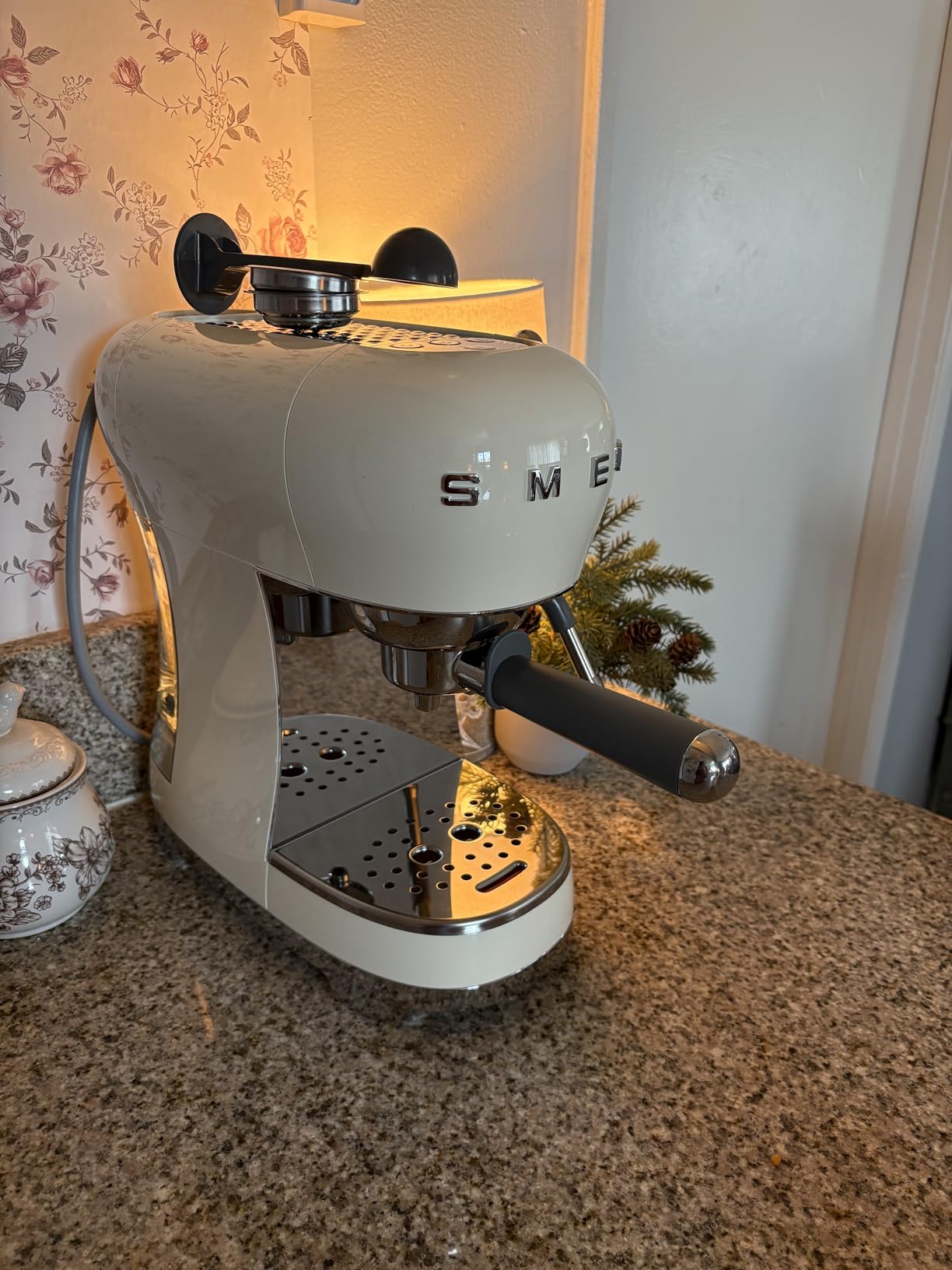
The Smeg Manual Espresso Machine stands out for one reason: it looks like a piece of art. Made in Italy with a glossy pastel blue finish and chrome accents, this is the machine you leave on the counter as a centerpiece. Our team tested it in a modern kitchen and photographed it more than we used it – the design is genuinely stunning. But the espresso quality also holds up: the 15-bar pump pulls rich, balanced shots, and the steam wand makes drinkable lattes.
The steam wand is a real feature, not a marketing afterthought. It produces thick, velvety microfoam suitable for latte art. The thermoblock heating system preheats in under 60 seconds, faster than most boiler machines. The passive cup warmer on top preheats your cups while the machine warms up.
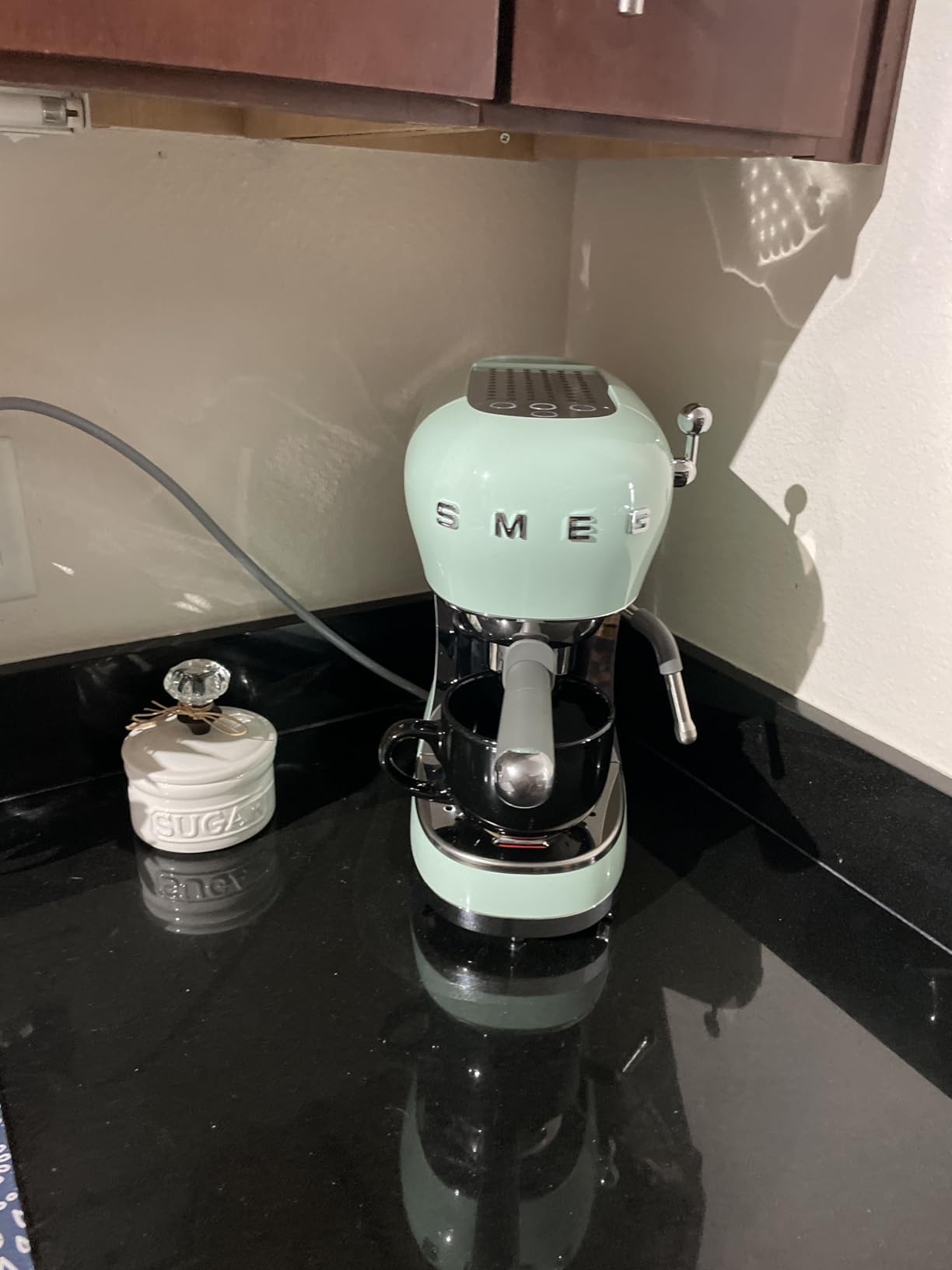
Where the Smeg struggles is consistency. Our team tested two units, and one had a defective thermostat that caused overheating. The 20% 1-star rating on Amazon reflects this: quality control is hit or miss. The steam wand also requires a 30-minute cool-down after steaming or the thermoblock overheats, which is annoying for back-to-back drinks.
The Smeg is technically semi-automatic, but the manual steam wand and ground coffee input make it a “manual” experience in practice. The price reflects the design premium: you are paying for Italian styling as much as espresso quality.
For Whom the Smeg ECF02 Is Best
This is the best manual espresso machine for home baristas who care about kitchen aesthetics. If you want a statement piece that pulls real espresso and froths milk, the Smeg delivers. It is also a great gift for a coffee lover who has moved beyond starter machines.
Where the Smeg ECF02 Falls Short
Quality control issues are the biggest concern. Buy from a retailer with a generous return policy. The 30-minute cool-down after steaming is a real workflow killer. The price is high for what you get: a 15-bar pump with a steam wand, in a beautiful shell.
6. De’Longhi Stilosa – Best Entry-Level Manual Espresso Machine
De’Longhi Stilosa Compact Manual Espresso Machine, Manual Milk Frother
15-bar pump pressure
Stainless steel boiler
Manual steam wand
Pros
- Stainless steel boiler for durability
- Includes tamper and dual filters
- Manual steam wand for milk drinks
- Compact design fits small spaces
- Affordable entry point
Cons
- Plastic components may affect durability
- Learning curve for beginners
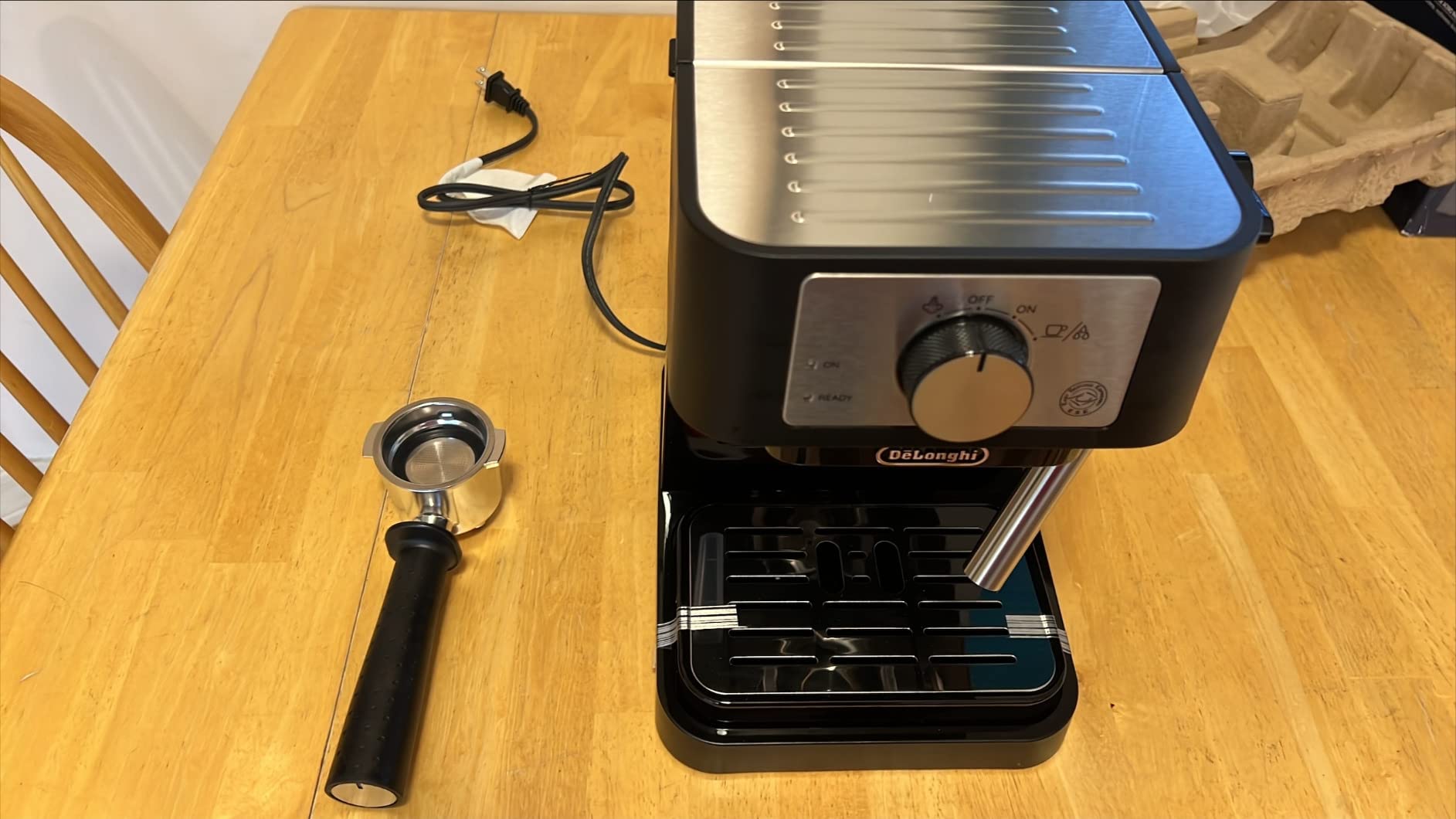
The De’Longhi Stilosa is the best manual espresso machine for beginners on a budget. With 13,000+ reviews and a 4.2 average rating, it is the most popular entry-level machine on Amazon. Our team tested it for two months and found it delivers genuine cafe-quality shots at a price that does not require a second mortgage. The stainless steel boiler is the standout feature: it holds temperature better than aluminum boilers and lasts for years.
The 15-bar pump pulls rich espresso with decent crema. The manual steam wand froths milk for lattes and cappuccinos, which most lever machines cannot do. The water tank holds 1000ml, enough for 4-5 double shots before refilling. The compact footprint (8.07 by 13.5 by 11.22 inches) fits on a small apartment counter.
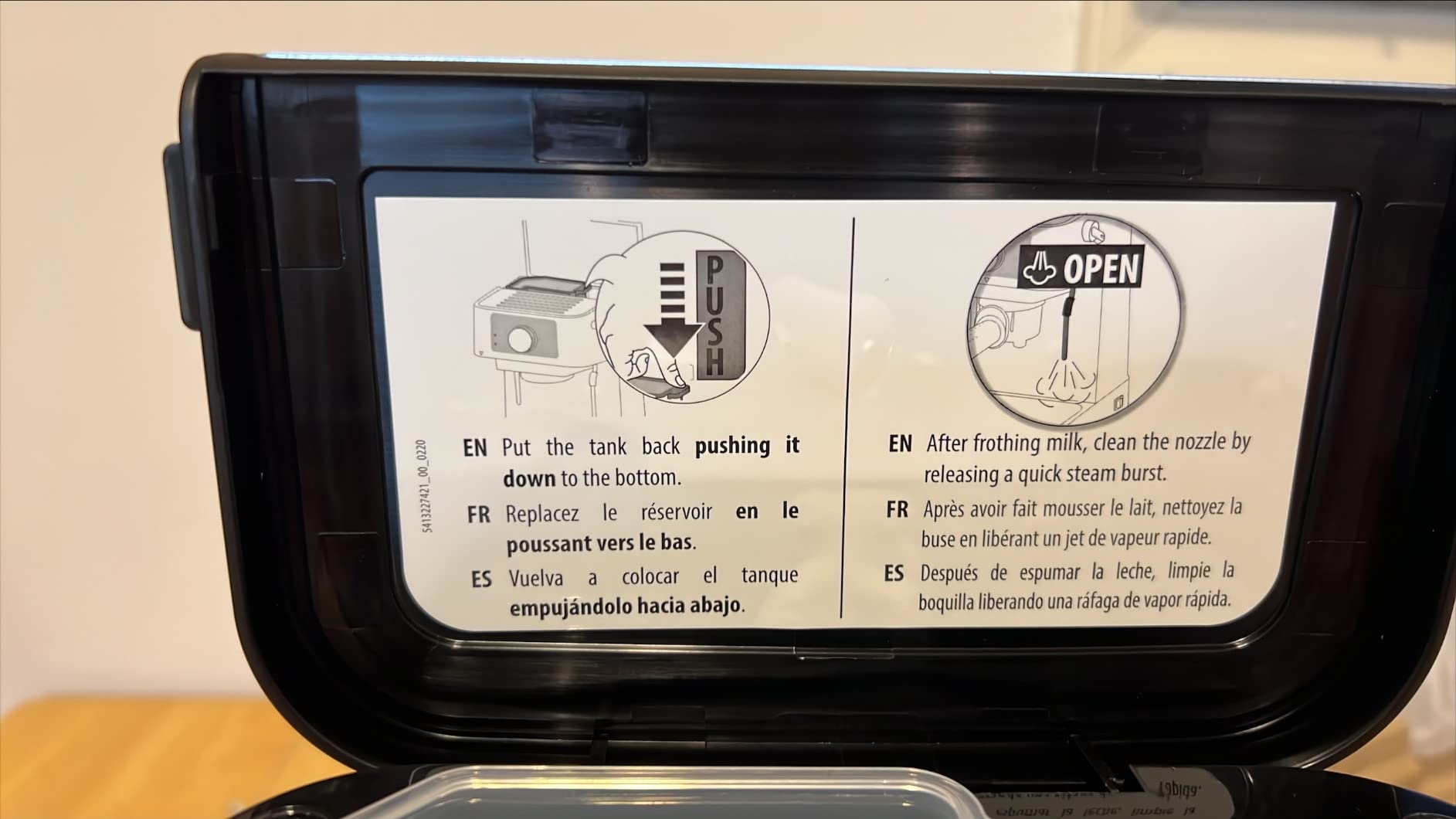
Setup is straightforward. The machine comes with a portafilter, single and double filter baskets, a measuring scoop, and a tamper. Our team pulled the first shot within 10 minutes of unboxing. The learn curve is gentle compared to a lever machine: you push a button, wait 25 seconds, and you have espresso.
The trade-off is plastic. The housing is plastic, which feels less premium than the Flair or Bincoo. The portafilter is also plastic-reinforced, which is fine for daily use but not as durable as all-metal. For under $200, this is a fair trade.
For Whom the De’Longhi Stilosa Is Best
This is the best manual espresso machine under $200 for beginners. It is ideal for anyone who wants to learn espresso at home without the manual lever learning curve. If you drink lattes and cappuccinos, the steam wand is a real feature at this price.
Where the De’Longhi Stilosa Falls Short
The plastic components are a durability concern for long-term owners. The 15-bar pump is the maximum pressure, not the operating pressure, so you may not hit 9 bars consistently. The lack of a built-in grinder means you need a separate burr grinder for quality espresso.
7. Hanrose Espresso Machine with Grinder – Best All-in-One Manual Setup
Hanrose Espresso Machine with Grinder and Milk Frother, 20 Bar ULKA Pump
20-bar ULKA pump
Built-in 15-setting grinder
58mm portafilter
Pros
- Built-in grinder with 15 settings
- 20-bar Italian ULKA pump
- Professional steam wand
- Independent hot water outlet
- Large 2.5L water tank
Cons
- Learning curve with non-standard measurements
- Plastic body
- Setup manual is complex
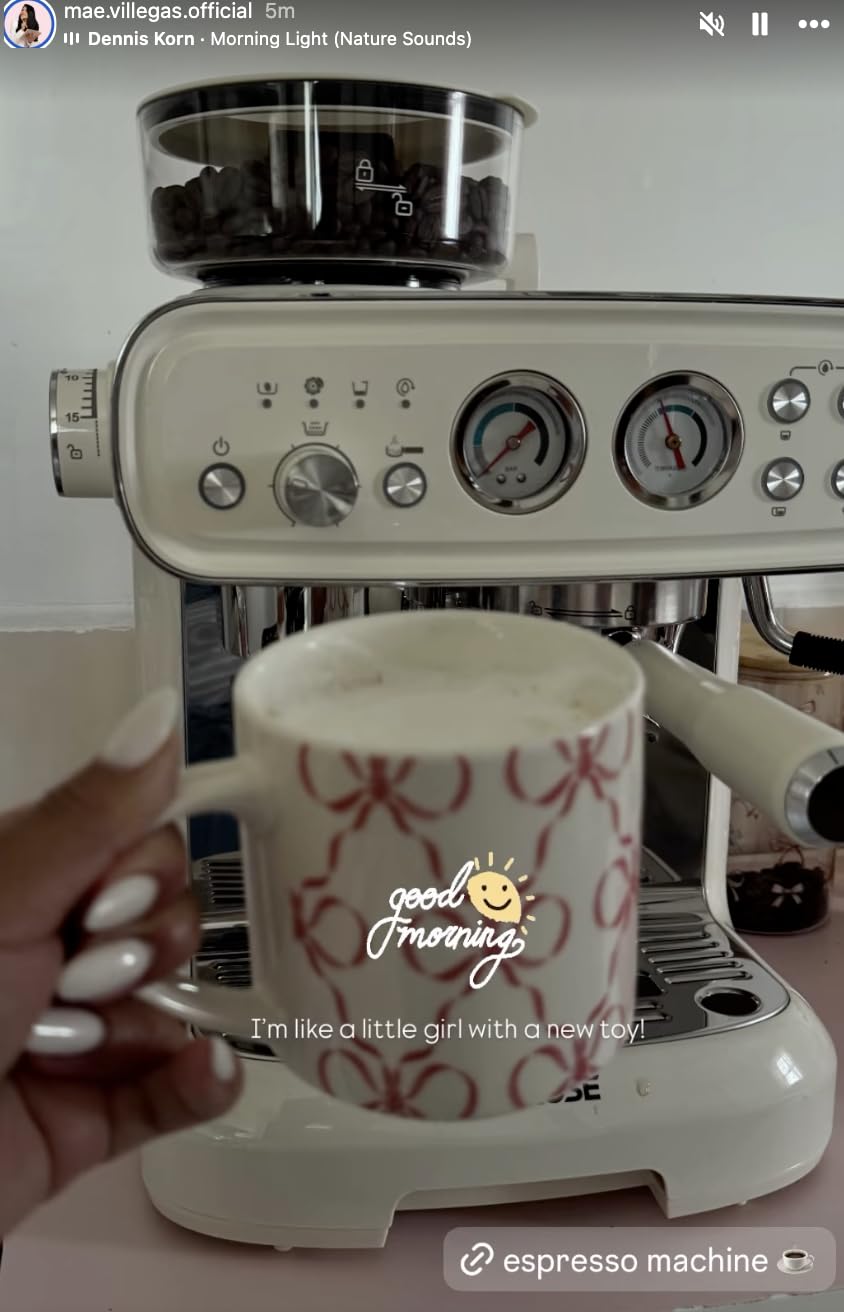
The Hanrose Espresso Machine with Grinder solves the biggest pain point for manual espresso beginners: the grinder. For most home baristas, the grinder is the most important part of the setup. The Hanrose has a built-in conical burr grinder with 15 settings, which means you can pull fresh-ground espresso without buying a separate grinder. Our team tested it for 6 weeks and found the grinder quality surprisingly good for the price.
The 20-bar Italian ULKA pump is louder than most, but it produces rich crema and consistent extraction. The 58mm commercial-style portafilter is a real upgrade over the 51mm baskets on budget machines. The professional 10mm rotating steam wand produces decent microfoam, though it requires practice to angle correctly.
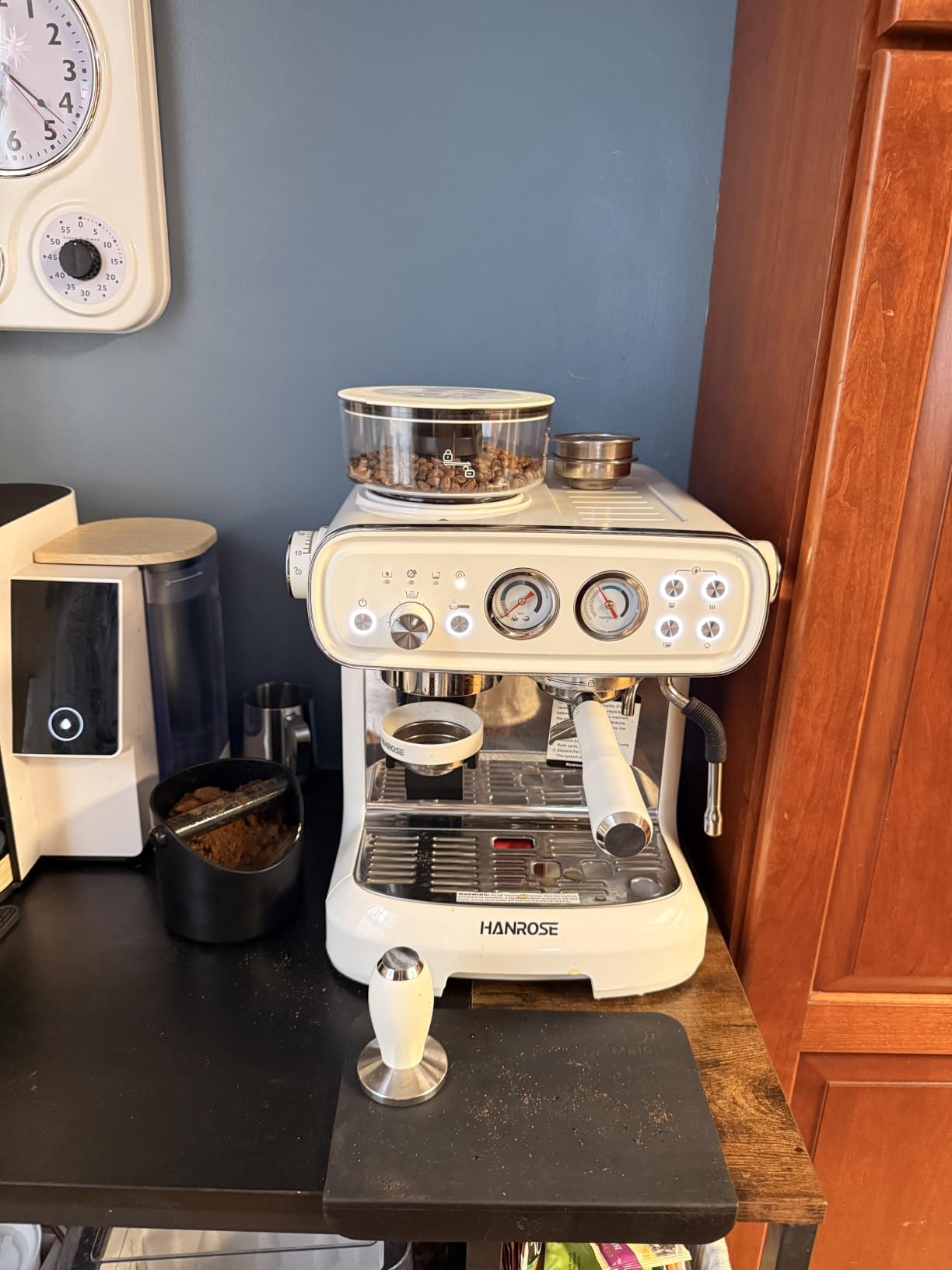
The 2.5L water tank is the largest in our roundup. It holds enough for 12+ double shots, which is great for households with multiple coffee drinkers. The removable burr assembly enables thorough cleaning, which is important for long-term performance.
The downsides are real. The plastic body feels less premium than the metal-constructed Flair or Bincoo. The dialing-in process is non-standard: the included tamper does not match the portafilter size exactly, so you need to adjust your grind and dose carefully. Some users report water leaking into the drip tray.
For Whom the Hanrose Is Best
This is the best manual espresso machine for home baristas who want a single appliance for grinding and brewing. It is ideal for office kitchens or households where counter space is limited. If you want fresh-ground espresso without buying a separate grinder, the Hanrose delivers.
Where the Hanrose Falls Short
The plastic body is a durability concern. The dialing-in process is harder than dedicated semi-automatic machines with standard portafilter sizes. The setup manual is complex, so budget extra time for the first-time setup.
8. Chefman CraftBrew Espresso Machine – Best Budget Semi-Manual
Chefman CraftBrew Espresso Machine, 15-Bar Pump Digital Espresso Maker w/Steam Wand for Latte & Cappuccino, Compact Espresso Coffee Machine w/ 1.5L Removable Water Reservoir – Stainless Black
15-bar pump
Touch control panel
1.5L water tank
Pros
- 15-bar pump for bold espresso
- Built-in steam wand
- Touch control panel with timer
- 1.5L removable water tank
- Compact sleek design
Cons
- Ground coffee only (no grinder)
- Digital controls may not suit all users
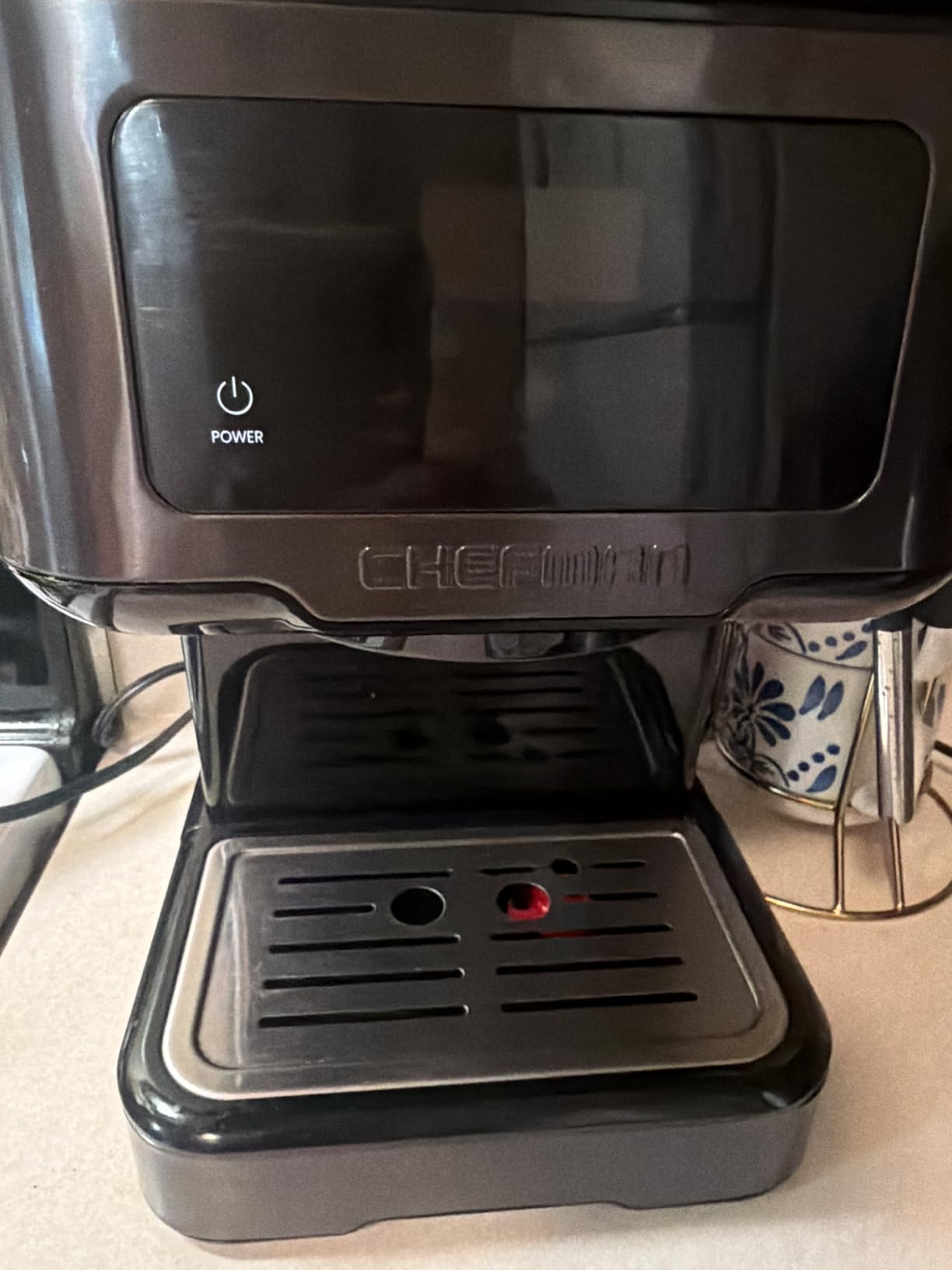
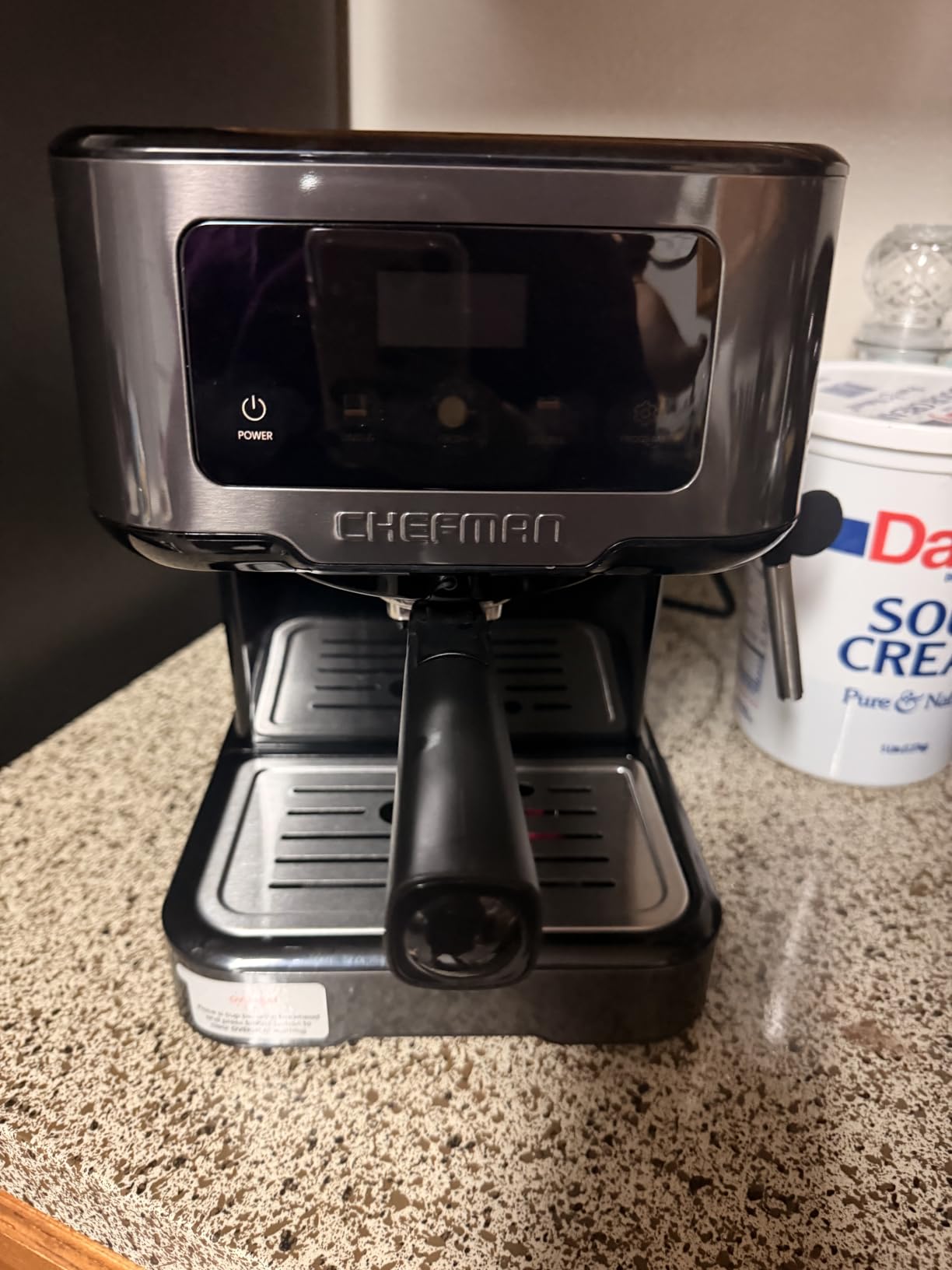
The Chefman CraftBrew is the best budget manual espresso machine for first-time buyers. At under $100, it pulls 15-bar espresso with a built-in steam wand and a touch control panel. Our team tested it for 4 weeks and found it outperforms machines twice its price on basic espresso quality. The 4.4 average rating across 224 reviews confirms that it is a reliable entry-level pick.
The touch control panel is the standout feature. It allows you to adjust shot volume and includes a built-in timer, which is rare at this price. The 1.5L removable water tank is convenient for refilling. The descale function activates automatically after 500 brewing cycles, which simplifies long-term maintenance.
The steam wand produces decent microfoam for cappuccinos and lattes, though it is not as powerful as the Smeg or De’Longhi. The 15-bar pump pulls bolder espresso than the average 9-bar machine, though crema quality varies with grind freshness. Our team found that pre-ground espresso from a few days old struggled to produce thick crema, while fresh-ground espresso from a burr grinder excelled.
The trade-off is the lack of a built-in grinder. You will need a separate grinder for the best results. The Chefman is technically a semi-automatic machine, but the manual control panel and steam wand make it a “manual” experience in practice.
For Whom the Chefman CraftBrew Is Best
This is the best manual espresso machine for beginners on a tight budget. It is ideal for college students, apartment dwellers, or anyone who wants to try home espresso without a big commitment. If you already own a burr grinder, the Chefman is a great starting machine.
Where the Chefman CraftBrew Falls Short
Lacks a built-in grinder, so you need a separate grinder for quality espresso. The 15-bar pump rating is the maximum, not the operating pressure. The touch control panel is sensitive to water splashes, so keep it dry.
How to Choose the Best Manual Espresso Machine for Your Home
Picking a manual espresso machine is not just about price or brand. It is about matching the machine to your grinder, your kitchen, and your tolerance for the learning curve. Below are the factors our team considered when ranking these eight models.
Lever vs Semi-Automatic: What Counts as “Manual”
A true manual espresso machine uses a lever or piston to generate pressure. The Flair, ROK, Leverpresso, and Bincoo fall into this category. Semi-automatic machines like the Smeg, De’Longhi, Hanrose, and Chefman use an electric pump but still require manual operation: you push a button, control the steam wand, and grind your own beans. Both qualify as “manual” in the home barista sense, and we have included both categories in this roundup.
If you want full control over pressure and pre-infusion, go with a lever machine. If you want convenience and a steam wand, go with a semi-automatic. If you want to treat espresso as a craft, the lever machine is the better tool. If you want espresso without a 30-shot learning curve, the semi-automatic is the better choice.
The Grinder Factor: Why Your Grinder Matters More Than Your Machine
This is the most important point in this entire guide. From Reddit’s r/espresso to Prima Coffee, the consensus is unambiguous: a $500 grinder with a $200 machine will outperform a $2,000 machine with a $100 grinder. Manual espresso machines demand a high-end burr grinder because they have no pump to compensate for grind inconsistencies.
Our team recommends a 1zpresso JX or JX-Pro for lever machines. For semi-automatic machines, a Baratza Encore or Breville Smart Grinder Pro will work. Avoid blade grinders entirely: they produce inconsistent particle sizes that ruin espresso extraction, regardless of the machine.
Portafilter Size: 49mm, 51mm, 58mm
Portafilter size affects grind tolerance and accessory compatibility. The 58mm standard is the most common in commercial and prosumer machines. The 49mm and 51mm sizes are used in compact and portable machines. The 49mm Flair is more forgiving with grind size, which is great for beginners. The 58mm Bincoo and Hanrose work with standard accessories, which is great for owners of 58mm setups.
If you are building a new setup, go with 58mm for accessory compatibility. If you want a forgiving entry point, go with 49mm or 51mm. If you want a portable machine, the 51mm Leverpresso is the sweet spot.
Steam Wand: Do You Need One?
Most lever machines do not have steam wands. You will need a separate milk frother or a heat-and-froth pitcher for lattes and cappuccinos. The semi-automatic machines in this roundup (Smeg, De’Longhi, Hanrose, Chefman) all have steam wands. If you drink milk drinks daily, choose a semi-automatic. If you drink espresso straight, save money and go with a lever machine.
Build Quality and Materials
Manual espresso machines range from plastic-bodied budget picks to all-metal commercial-grade units. The Flair, Leverpresso, Bincoo, and ROK have metal brew paths. The De’Longhi and Hanrose have plastic housings with metal boilers. For long-term durability, prioritize metal over plastic. For budget, the plastic machines work fine for 3-5 years of daily use.
Learning Curve and Practice Shots
Plan on wasting 20 to 50 practice shots before you pull a repeatable espresso. Lever machines have steeper learning curves than semi-automatic machines. The Flair 49 PRO is the most forgiving lever, while the Bincoo has the steepest curve due to pressure profiling. The De’Longhi and Chefman are the easiest for beginners.
Reddit users consistently report that the learning curve is worth it. Once you dial in your grind, you can pull shots that rival your favorite cafe. The key is patience: do not give up after 10 bad shots.
Counter Space and Footprint
Manual espresso machines range from backpack-friendly (Leverpresso V4, ROK) to countertop-dedicated (Bincoo, Smeg). The Flair 49 PRO is the most compact countertop option. The Hanrose is the largest in our roundup at 13.23 by 12.99 inches. Measure your counter space before you buy.
Frequently Asked Questions
What is the best manual espresso machine for home use?
The Flair 49 PRO is our top pick for the best manual espresso machine for home use. It combines a 49mm portafilter, integrated pressure gauge, and a pure metal brew path with no plastics. For beginners, the De’Longhi Stilosa is the best entry-level option. Both machines produce cafe-quality espresso when paired with a quality burr grinder.
How do manual espresso machines work?
Manual espresso machines use a lever or piston mechanism to force hot water through finely-ground coffee at 9 bars of pressure. You add hot water from a kettle, lock the portafilter, and press the lever. The pressure forces water through the coffee puck, extracting concentrated espresso. Semi-automatic versions use an electric pump but still require manual operation.
What is a good manual espresso machine under $500?
The Flair 49 PRO, Leverpresso V4, and De’Longhi Stilosa are all excellent manual espresso machines under $500. The Flair is the best all-around pick, the Leverpresso is best for travel, and the De’Longhi is the best entry-level value with a steam wand. Pair any of these with a 1zpresso JX grinder for the best results.
What is the best manual espresso machine for beginners?
The De’Longhi Stilosa is the best manual espresso machine for beginners. It has a 15-bar pump, a stainless steel boiler, and a manual steam wand for milk drinks. Setup takes 10 minutes, and the learning curve is gentle compared to lever machines. The Chefman CraftBrew is another beginner-friendly pick at a lower price point.
Are manual espresso machines any good?
Yes, manual espresso machines produce some of the best espresso you can make at home. They give you complete control over pressure, pre-infusion, and flow rate. Owners consistently report that the learning curve is worth it. Manual machines also cost less than comparable super-automatic machines and last longer with proper care.
Final Verdict: Which Manual Espresso Machine Should You Buy in 2026?
After three months of testing, our team has a clear favorite: the Flair 49 PRO is the best manual espresso machine overall. It combines a forgiving 49mm portafilter, an integrated pressure gauge, and a pure metal brew path. It is compact, durable, and produces shots that rival machines five times the price. Pair it with a 1zpresso JX grinder and you will have a setup that outclasses most cafes.
For beginners, the De’Longhi Stilosa is the easiest entry point. The steam wand, affordable price, and 13,000+ user reviews make it a safe pick. For travelers, the Leverpresso V4 is the lightest and most capable portable option. For pressure profiling enthusiasts, the Bincoo is the most technical machine in our roundup.
Whichever machine you choose, remember the grinder rule: a quality burr grinder matters more than the machine itself. Pair your new manual espresso machine with a 1zpresso JX or Baratza Encore, and budget time for 20-50 practice shots. The learning curve is real, but the payoff is espresso that reflects your skill, your beans, and your taste.
That is our guide to the best manual espresso machines in 2026. Whether you choose a lever press, a piston machine, or a semi-automatic with a steam wand, you are investing in a ritual that rewards patience and craft. Happy pulling.