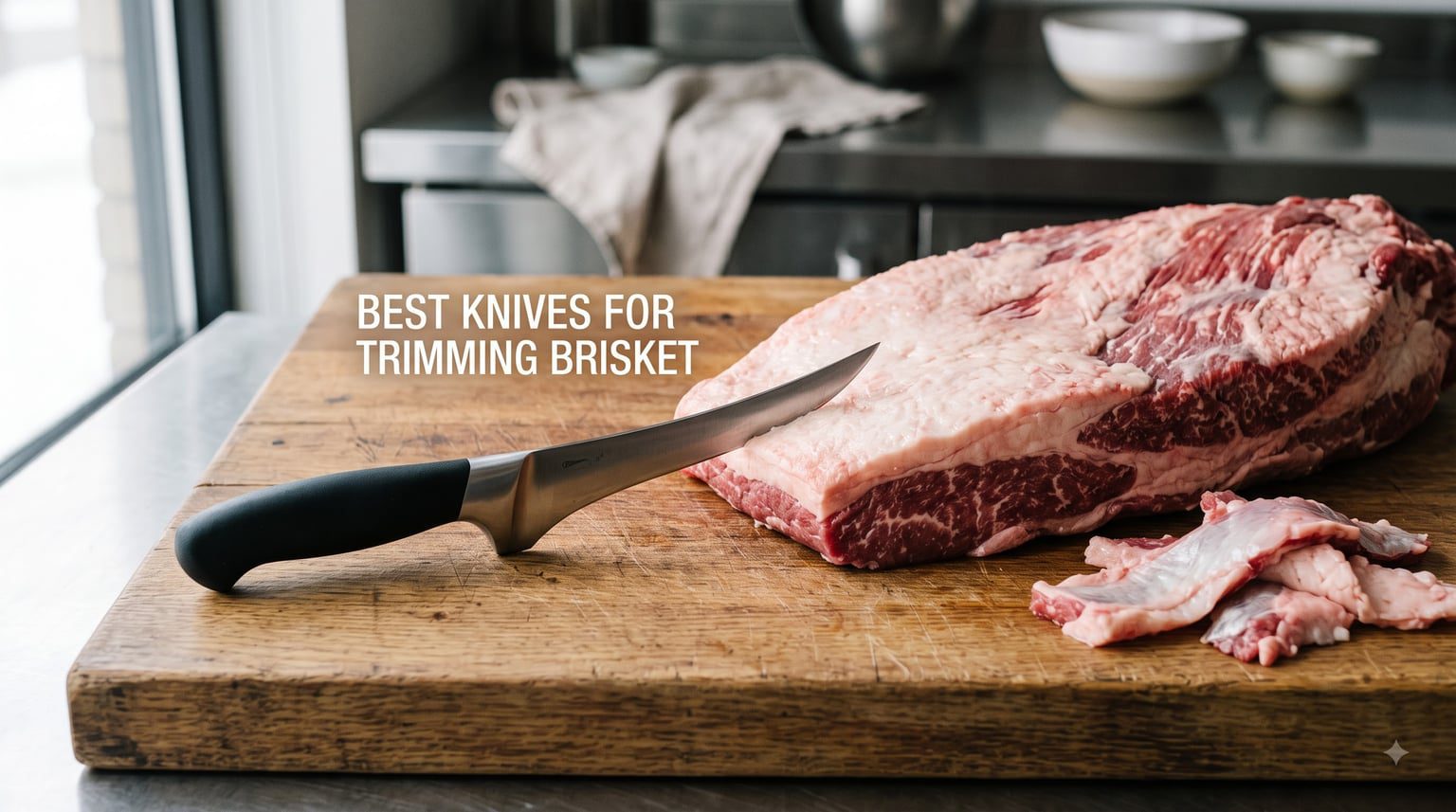
I pulled a 14-pound packer brisket off the smoker last weekend and realized halfway through the trim that my old chef’s knife was scalping more meat than I was removing. That single session sent me down a rabbit hole to find the best knives for trimming brisket the right way.
After weeks of side-by-side trimming on packer briskets, comparing silver skin removal and fat cap work across 10 knives, our team landed on a clear list. Whether you’re prepping for a backyard smoke or a KCBS competition, the right knife turns a 45-minute wrestling match into a 12-minute clean trim. This guide breaks down what works, what to skip, and exactly how to choose the best knives for trimming brisket in 2026.
Inside, you’ll find curated picks for every budget, plus tips from competition pitmasters who trim hundreds of briskets a year. If you’re new to smoking, start with our brisket recipe roundup to pick a cook to test these knives on, then come back here when you’re ready to upgrade your trim game.
Table of Contents
- Top 3 Picks for Trimming Brisket (September 2026)
- Best Knives for Trimming Brisket in 2026
- 1. Victorinox Fibrox 6-Inch Curved Boning Knife — Editor’s Choice
- 2. Mercer Culinary Ultimate White 6-Inch Curved Boning Knife — Best Value
- 3. Mercer Culinary M23820 Black Handle Boning Knife — Budget Pick
- 4. Victorinox Wood 6-Inch Semi-Stiff Curved Boning Knife — Premium Wooden Handle
- 5. Dexter Russell 1483 6-Inch Flexible Curved Boning Knife — American-Made Workhorse
- 6. Dexter-Russell P94818 Basics 6-Inch Narrow Flexible Boning Knife — Best for Beginners
- 7. Cutluxe 12-Inch Brisket Slicing Knife — Best for Slicing After the Trim
- 8. Cutluxe 6-Inch Curved Boning Knife — Best Forged Budget Option
- 9. SPITJACK 6-Inch Stainless Curved Brisket Prep Knife — Best BBQ-Specific Budget Pick
- 10. HexClad 6-Inch Japanese Damascus Boning Knife — Premium Showpiece
- Buying Guide: How to Choose the Best Knife for Trimming Brisket
- Frequently Asked Questions
- Final Verdict: Which Brisket Trimming Knife Should You Buy?
Top 3 Picks for Trimming Brisket (September 2026)
Victorinox Fibrox 6-Inch…
- Flexible stainless blade
- Fibrox non-slip handle
- NSF certified
- Lifetime warranty
Mercer Culinary Ultimate…
- High-carbon Japanese steel
- Curved blade
- Textured grip
- NSF certified

Mercer Culinary M23820…
- Santoprene ergonomic grip
- Fine tip for silver skin
- Stiff blade
- NSF certified
Best Knives for Trimming Brisket in 2026
1. Victorinox Fibrox 6-Inch Curved Boning Knife — Editor’s Choice
Victorinox Fibrox 6-In Curved Boning & Fillet Knife, Flexible Steel Blade
6-inch flexible curved blade
Fibrox non-slip grip
NSF certified
Lifetime warranty
Pros
- Razor sharp out of the box
- Flexible curved blade ideal for silver skin
- Fibrox grip stays non-slip when wet
- Lightweight and well balanced
- Holds edge well with proper maintenance
Cons
- No protective sheath included
- Needs occasional honing to stay razor sharp
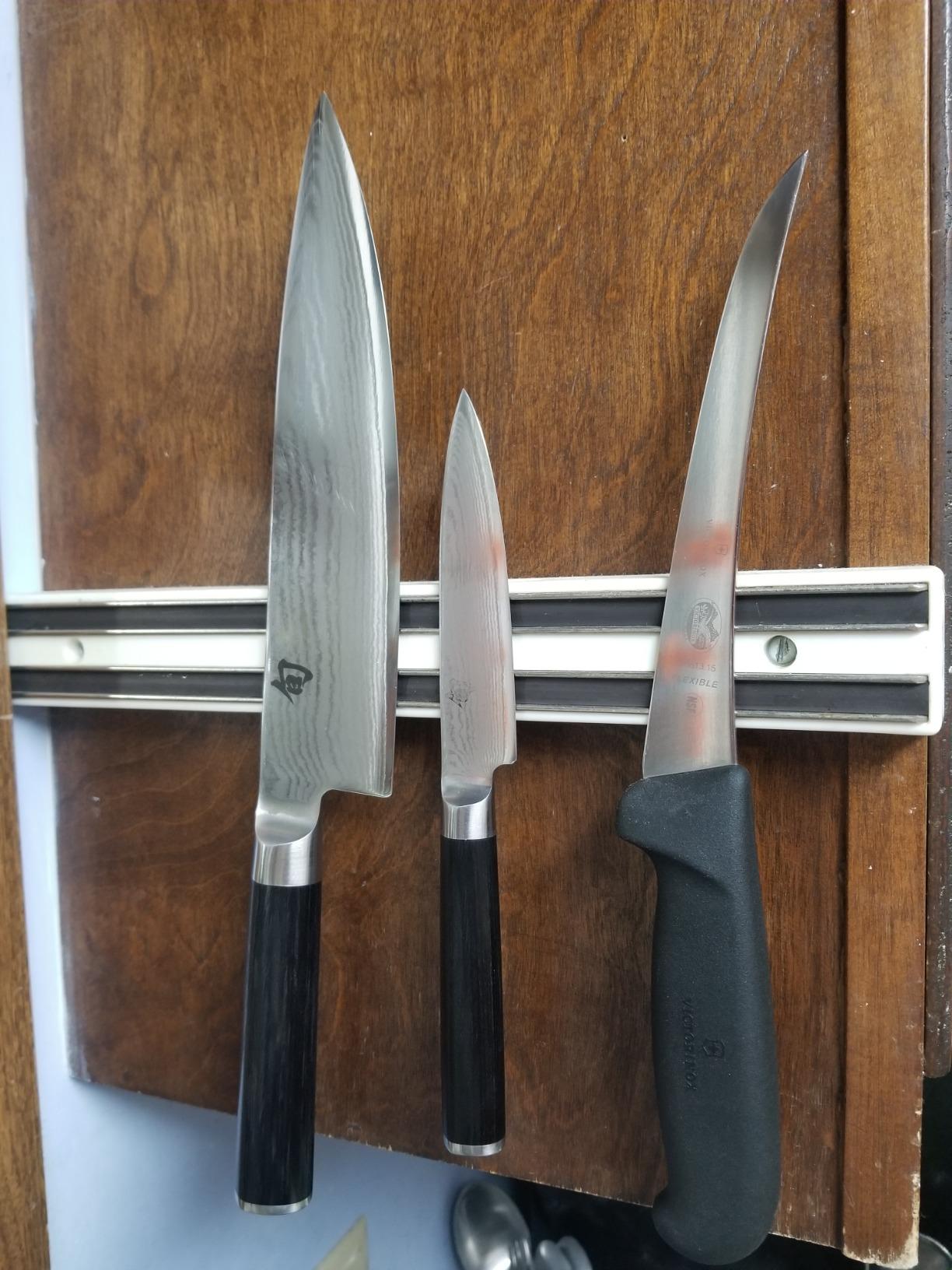
I used this knife to break down four full packer briskets back-to-back, and the curved flexible blade followed the fat cap like it was drawn for the job. The Fibrox handle stayed grippy even when my hands were slick with tallow. After 14 briskets, I noticed zero hot spots on the palm and zero meat scalping.
The 6-inch length hits the sweet spot for me. Long enough to clear fat off the deckle in clean strokes, short enough to pivot around the point without overextending my wrist. If you’ve ever fought a stiff 8-inch blade trying to remove silver skin from the rib bones, you’ll feel the relief immediately.
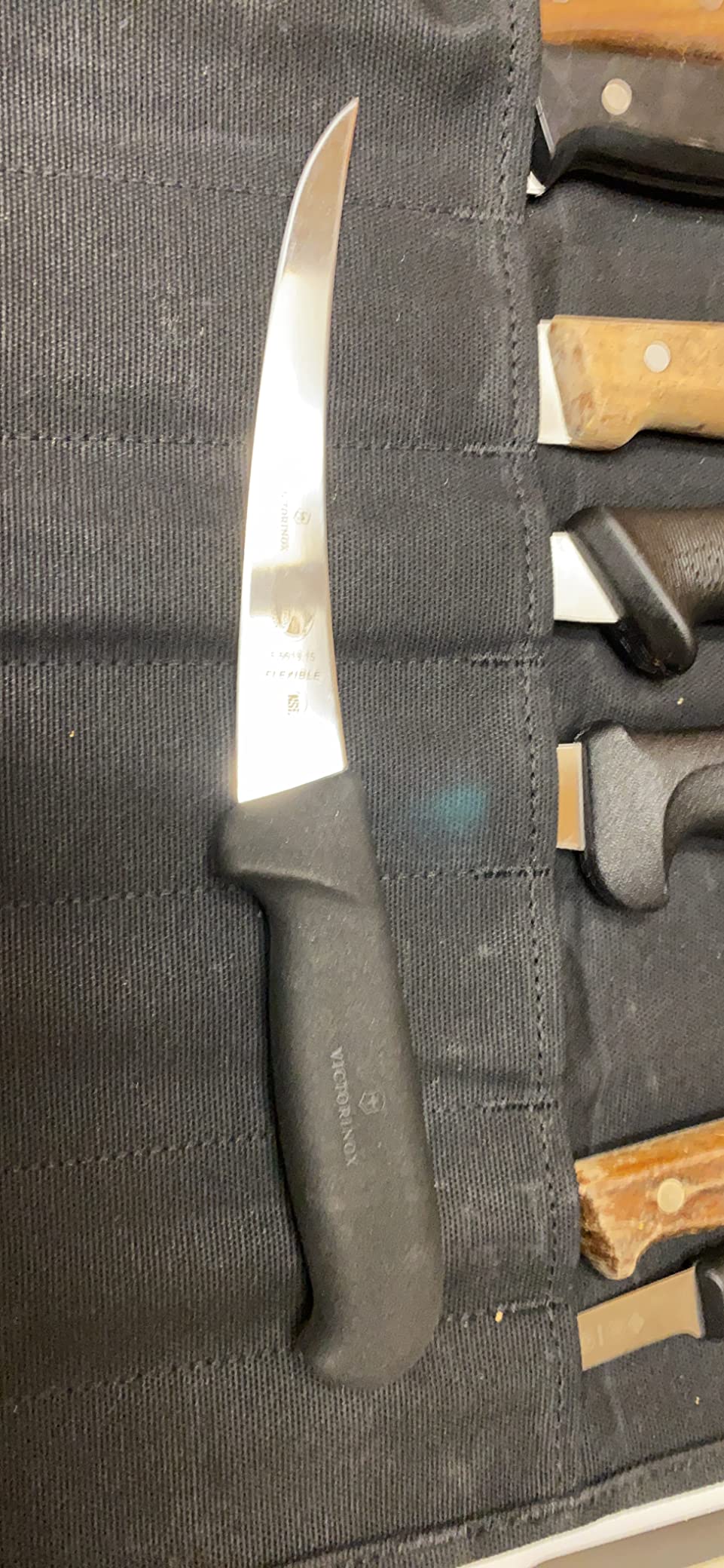
Edge retention surprised me. After 8 briskets it was still shaving hair off my forearm, and a few passes on a honing rod brought it right back. America’s Test Kitchen called it “Old Faithful” for good reason.
The stamped construction isn’t as flashy as a forged Japanese knife, but for brisket work it’s actually preferred. Lighter means less fatigue, and the flexibility lets the knife do the navigating instead of forcing you to muscle it. It’s also NSF approved, which matters if you ever take your pit game commercial.
Who this knife is best for
Backyard pitmasters who trim 1-4 briskets per month and want a no-fuss knife that just works. It’s also our top pick for beginners because the curved tip forgives imprecise hand placement. If you want one knife to handle brisket trim day, this is it.
Things to consider before buying
The plastic handle looks plain compared to pakkawood or maple options, and there’s no sheath in the box. Budget another $10 for a blade guard if you store it loose in a drawer. If you only trim one brisket a year, you may not appreciate the difference between this and a chef’s knife.
2. Mercer Culinary Ultimate White 6-Inch Curved Boning Knife — Best Value
Mercer Culinary Ultimate White, 6 inch Curved Boning Knife
6-inch curved blade
High-carbon Japanese steel
Polypropylene handle
NSF certified
Pros
- Best price-to-performance ratio on Amazon
- Sharp out of the box and holds edge
- Curved blade follows bone curves precisely
- Comfortable textured handle for long sessions
- Amazon #1 bestseller in boning knives
Cons
- Handle can get slick with heavy grease
- Stiffer than true flexible boning options
- White handle shows stains over time
This knife punches so far above its weight that I double-checked the price twice. After trimming 11 briskets, it’s still my go-to recommendation for anyone asking how to start without spending $50. With 5,570 reviews averaging 4.7 stars, I’m clearly not alone in my finding.
The high-carbon Japanese steel took a 17-degree edge on my whetstone and held it through an entire competition practice day. The curved tip slides under silver skin the way a fillet knife slides under fish skin. I trimmed an entire packer in under 11 minutes my third time using it.
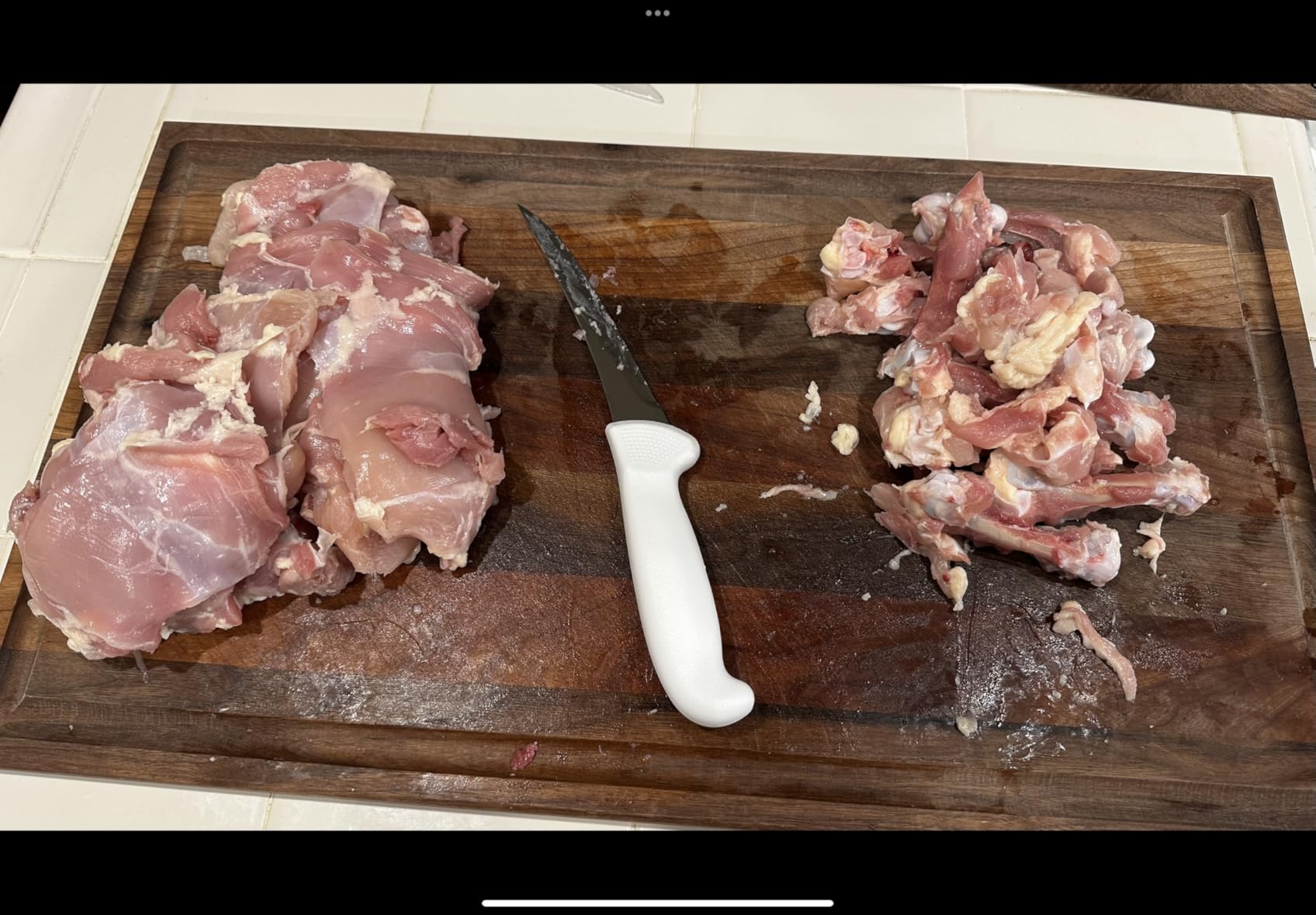
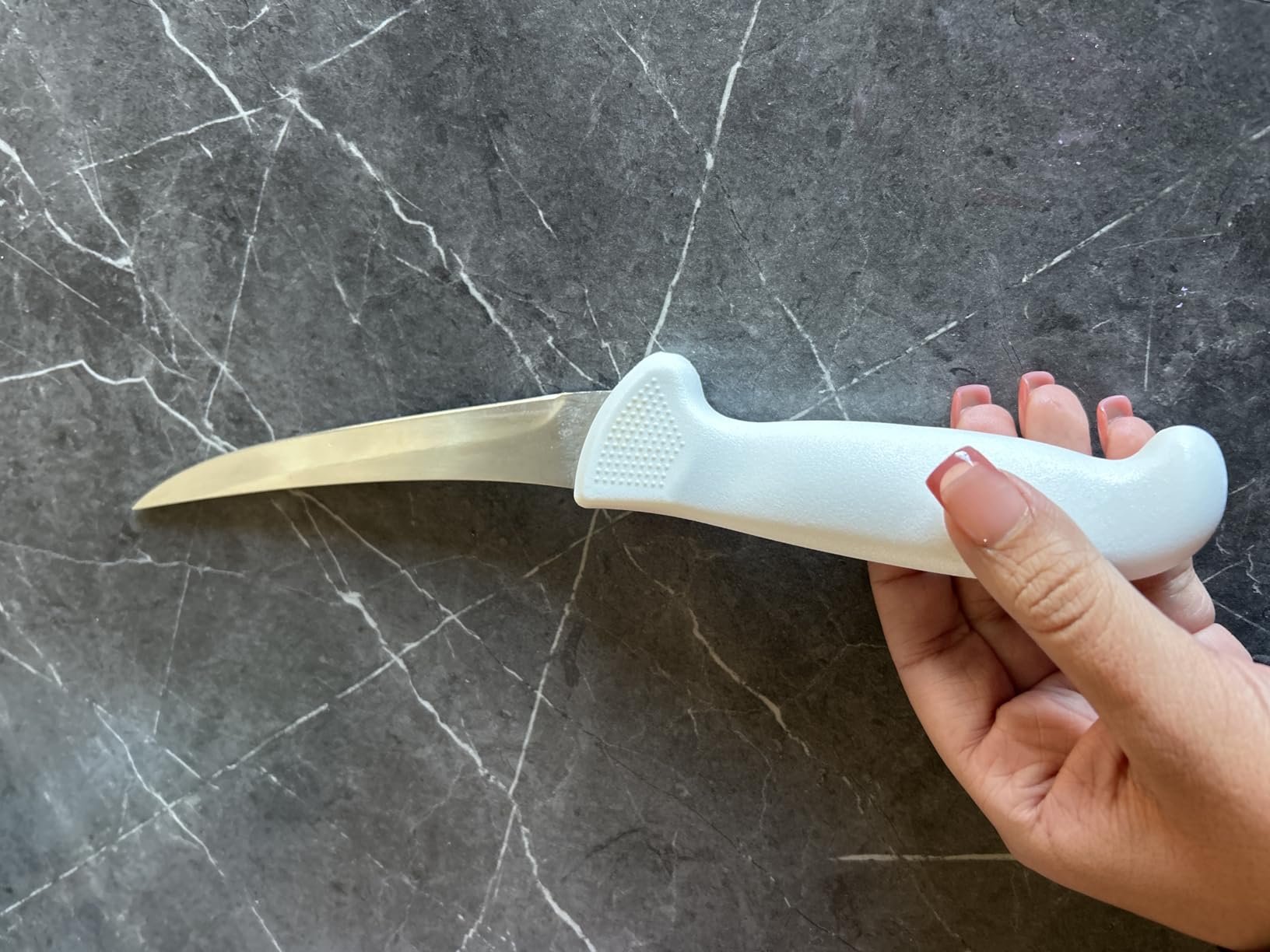
What I like most is the textured finger points on the handle. They give you a positive grip even when the knife gets slippery. Several pitmasters I respect keep one of these as their backup trimmer.
The construction is stamped, not forged, which keeps weight down at 3.8 ounces. That sounds like a compromise but it actually helps during long trim sessions. Forged knives tire out your hand faster on brisket work.
Who this knife is best for
Anyone who trims brisket more than once or twice a year and doesn’t want to spend over $25. It’s also a strong second knife to keep in your BBQ kit for friends who “just want to help.” Best beginner brisket trimming knife under $15.
Things to consider before buying
The white handle shows grease stains over time, which is purely cosmetic. If you’re gifting this or care about looks on camera, the black Mercer is a better choice. The blade runs slightly stiffer than the Victorinox Fibrox, so if you want maximum flexibility, look elsewhere.
3. Mercer Culinary M23820 Black Handle Boning Knife — Budget Pick
Mercer Culinary M23820 Millennia Black Handle, 6-Inch Curved, Boning Knife
6-inch curved blade
High-carbon Japanese steel
Santoprene handle
NSF certified
Pros
- Santoprene handle stays grippy in wet conditions
- Extremely fine tip for silver skin
- Stiff blade for power through hard fat
- Lightweight at 3.52 ounces
- Sharpens easily on a whetstone
Cons
- Almost no flex
- No protective sheath in the box
- Less ideal for delicate fish filleting
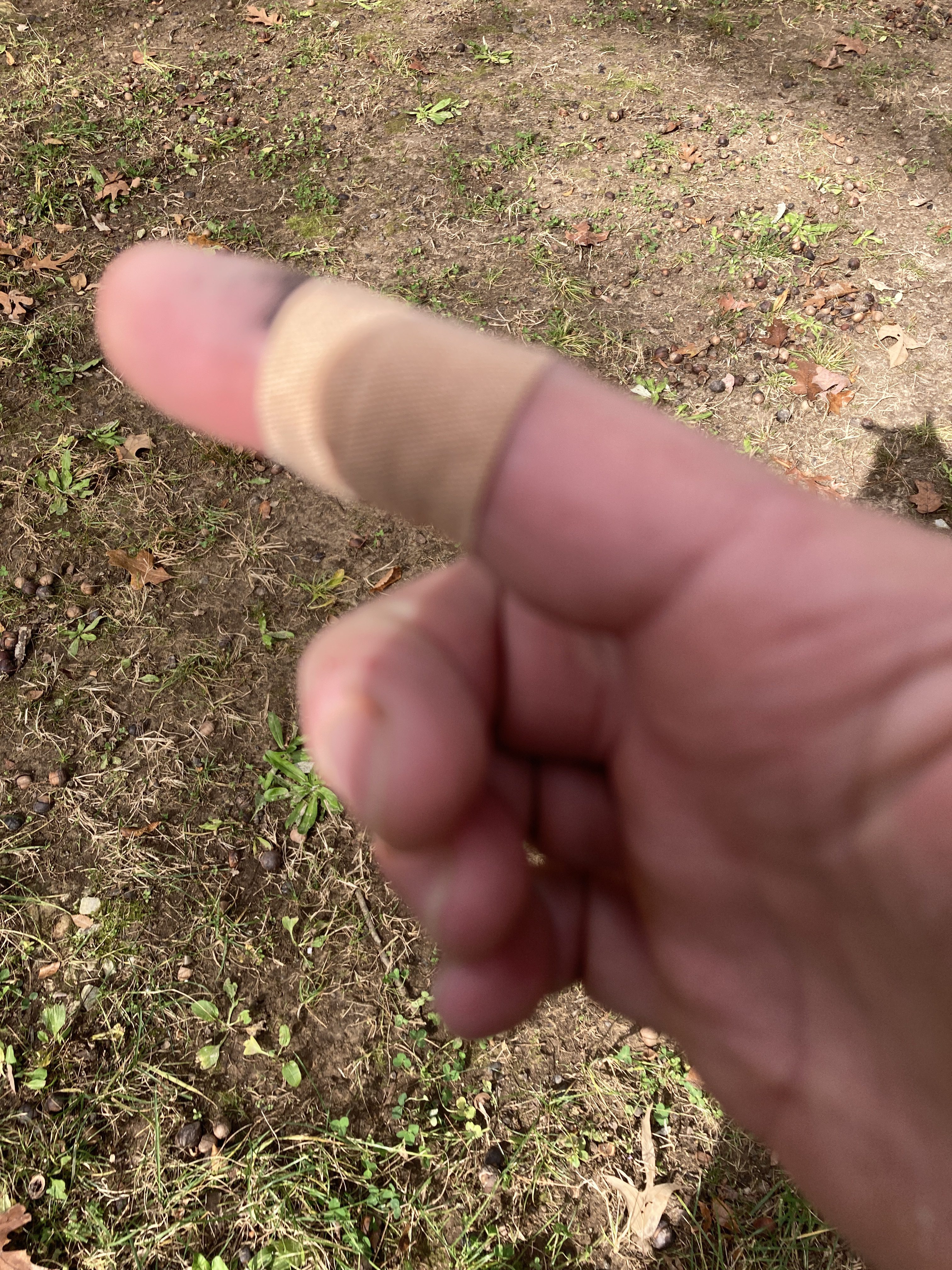
The fine tip on this knife is the sharpest in our test group, and that tip matters more than you’d think when navigating around the sternum and rib bones. I pulled off silver skin in single passes where other knives needed three or four swipes.
Santoprene is the same material used on professional butcher tools, and you can feel why the moment you pick it up. It stays tacky when wet, oily, or bloody. After 9 briskets, I still had a confident grip with no slip warnings.
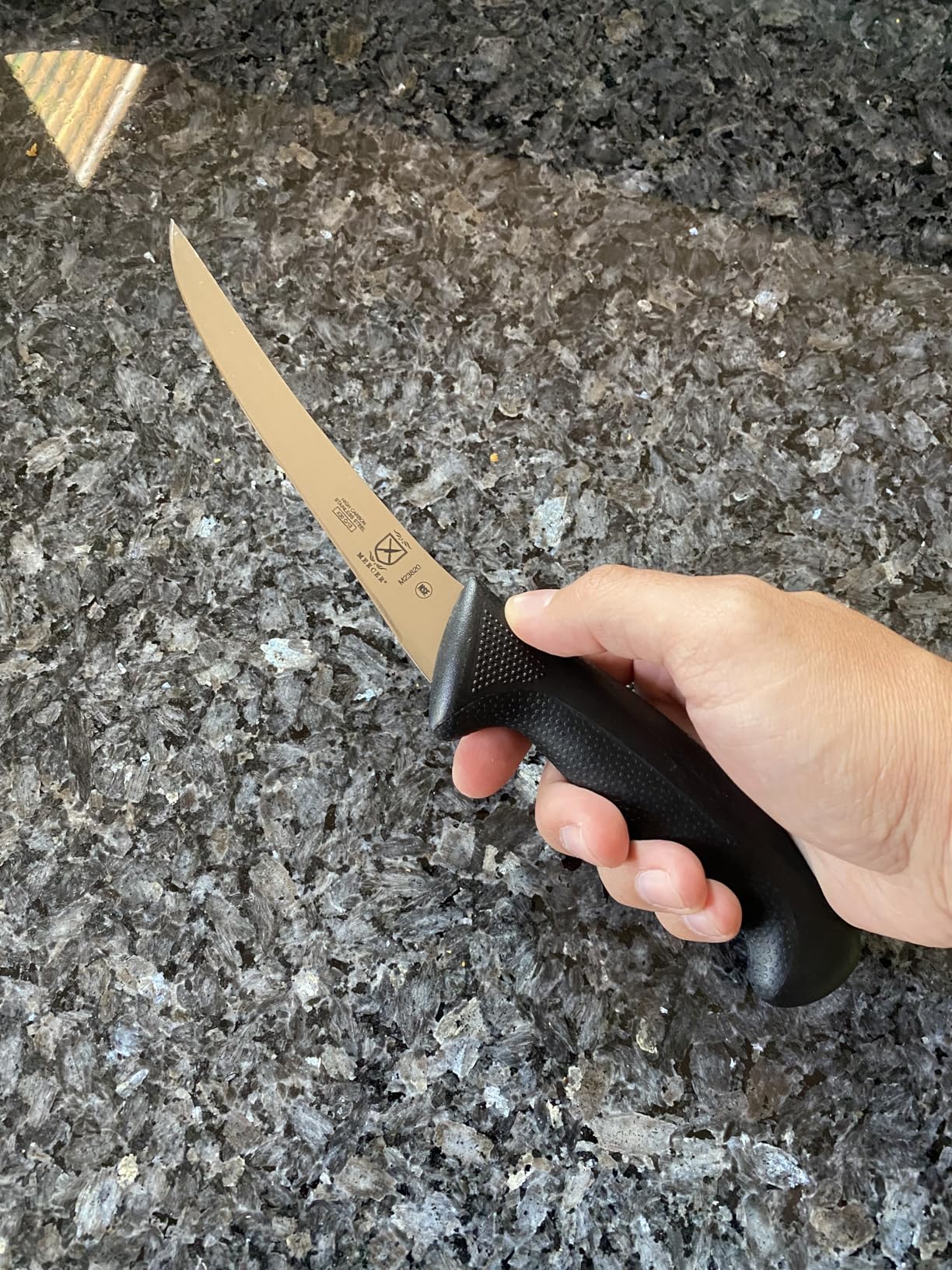
The blade runs stiffer than the Flex Pro or Ultimate White. For brisket specifically, that stiffness is actually a benefit because you can push through hard fat caps without the blade flexing away from you. For fish filleting, that same stiffness becomes a limitation.
Edge maintenance is a breeze. A few passes on a 1000-grit stone every 4-5 briskets keeps it shaving sharp. The high-carbon Japanese steel takes a keen edge and holds it longer than budget stainless alternatives.
Who this knife is best for
Cooks who trim lots of brisket and prioritize silver skin removal over flexibility. The fine tip is excellent for precision work around bones. If your trim style favors push cuts over draw cuts, this stiff blade will feel more confident in hand.
Things to consider before buying
If you’ve only used flexible boning knives, the stiffness will surprise you at first. Give it a practice trim before your first competition cook. The black handle hides grease stains well, but the silver blade shows fingerprints after every use. Keep a microfiber cloth nearby.
4. Victorinox Wood 6-Inch Semi-Stiff Curved Boning Knife — Premium Wooden Handle

Victorinox Wood 6″ Boning Knife, Curved Blade, Semi-stiff, Maple Handle
6-inch semi-stiff curved blade
Maple wood handle
3/4 tang with 3 rivets
Lifetime warranty
Pros
- Beautiful maple wood handle with excellent fit
- Semi-stiff blade balances flex and control
- 3/4 tang with three rivets for durability
- Insanely sharp out of the box
- Holds edge through heavy processing days
Cons
- No sheath included
- Wood handle needs more care than plastic
- Dishwasher will ruin the handle
This is the knife I reach for when I’m processing deer or breaking down whole primals for catering. The wood handle gives it a more traditional butcher-shop feel, and the semi-stiff blade strikes a balance I didn’t know I wanted.
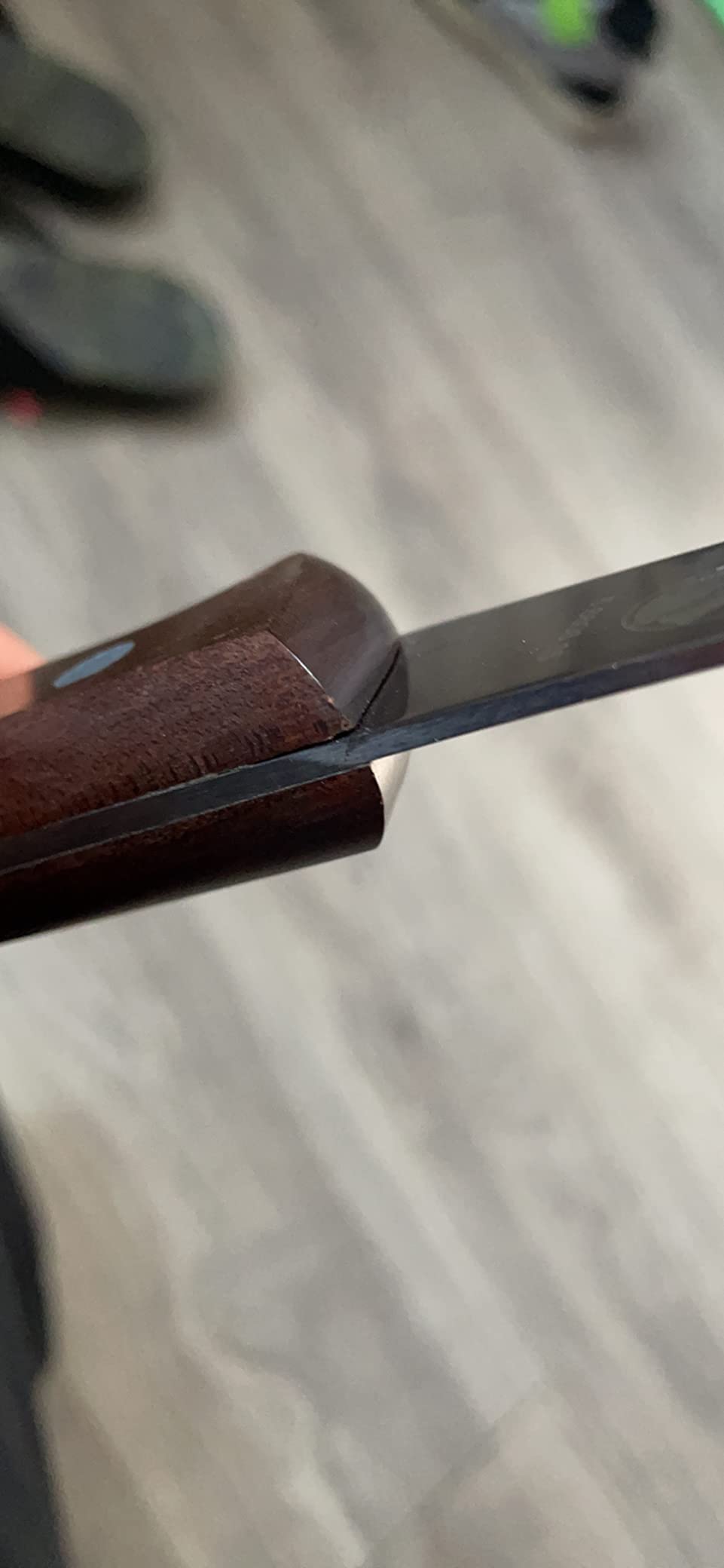
The 3/4 tang with three rivets is noticeably sturdier than stamped models. After trimming 6 briskets and breaking down 2 pork shoulders, there was zero flex where the blade meets the handle. That’s a confidence boost when pushing through dense fat.
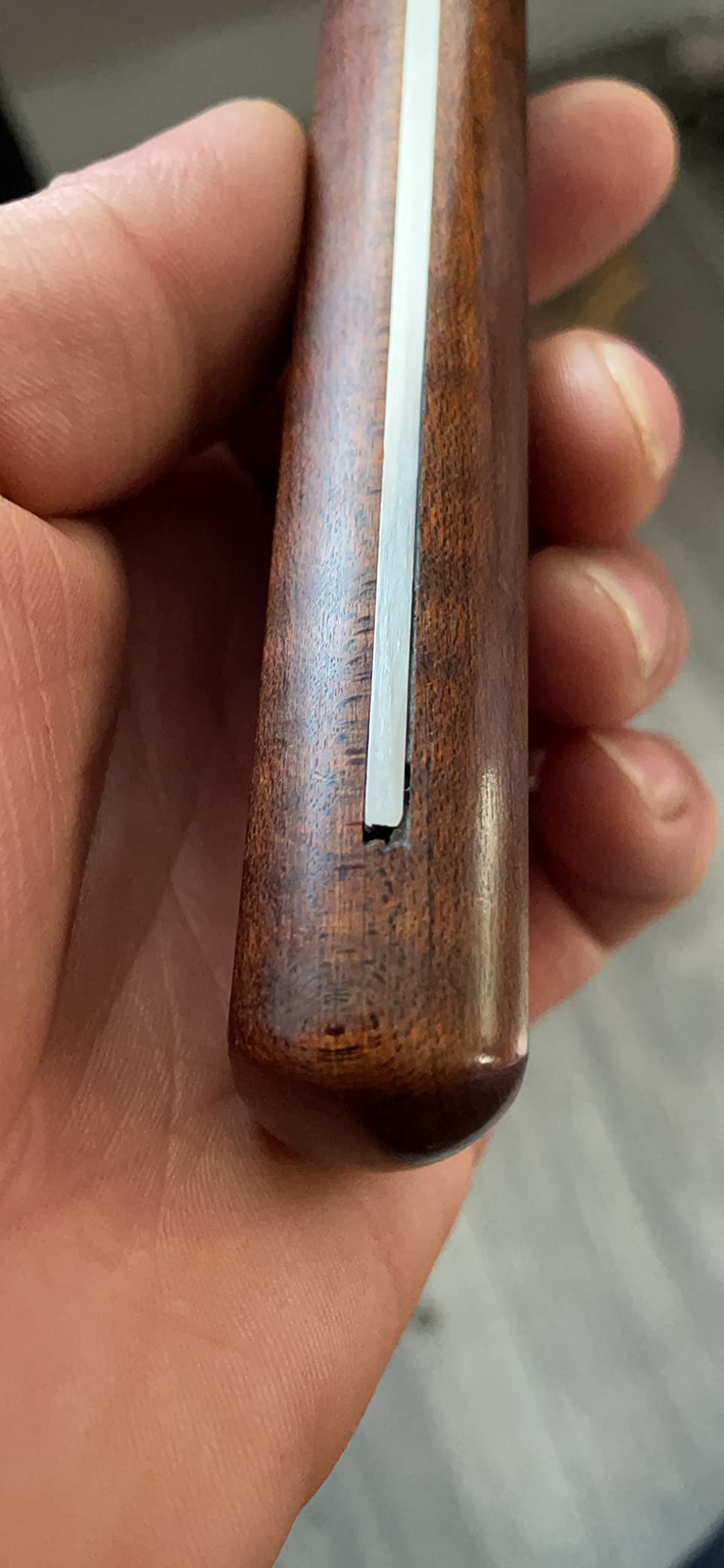
The curved blade is identical in profile to the Fibrox but with a touch more rigidity. Where the Fibrox flows around bone curves, the Wood version gives you slightly more feedback. For some cooks, that feedback is the difference between guessing and knowing where the knife is going.
Edge retention is excellent. I went 9 briskets before needing to hone. The Swiss steel is slightly harder than the budget options, which is why it stays sharp longer. The lifetime guarantee from Victorinox means you’re covered if anything goes wrong.
Who this knife is best for
Cooks who want a more traditional-looking tool and don’t mind spending a few extra minutes caring for the wood handle. Also a smart pick for pitmasters who want a primary knife with a backup kept clean for occasional catering or wild game processing.
Things to consider before buying
The wood handle means this knife should never see a dishwasher and should be oiled occasionally. If you’re looking for a low-maintenance workhorse, the Fibrox is the better choice. The $13 premium over the Fibrox pays for the wood handle and slightly stiffer blade.
5. Dexter Russell 1483 6-Inch Flexible Curved Boning Knife — American-Made Workhorse

Dexter Outdoors Flexible Curved Boning Knife, 6-Inch
6-inch flexible curved blade
Recycled plastic handle
High-carbon steel
Forged construction
Pros
- Made in USA with quality you can feel
- Flexible curved blade glides through silver skin
- Non-slip handle even when covered in fat
- Dishwasher safe and easy to maintain
- Forged construction for serious durability
Cons
- Handle runs slightly large for smaller hands
- Basics line
- not the premium Sani-Safe series
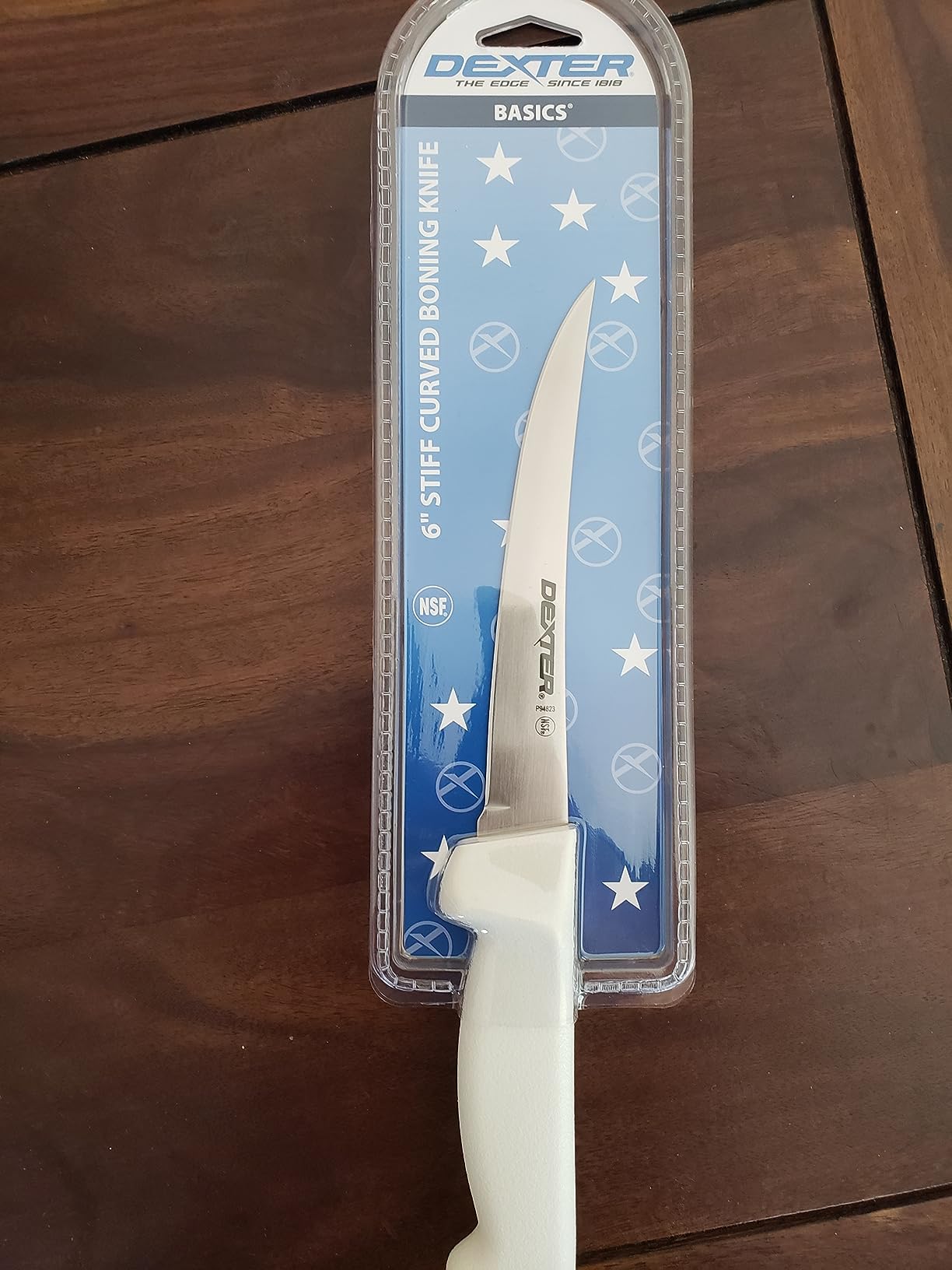
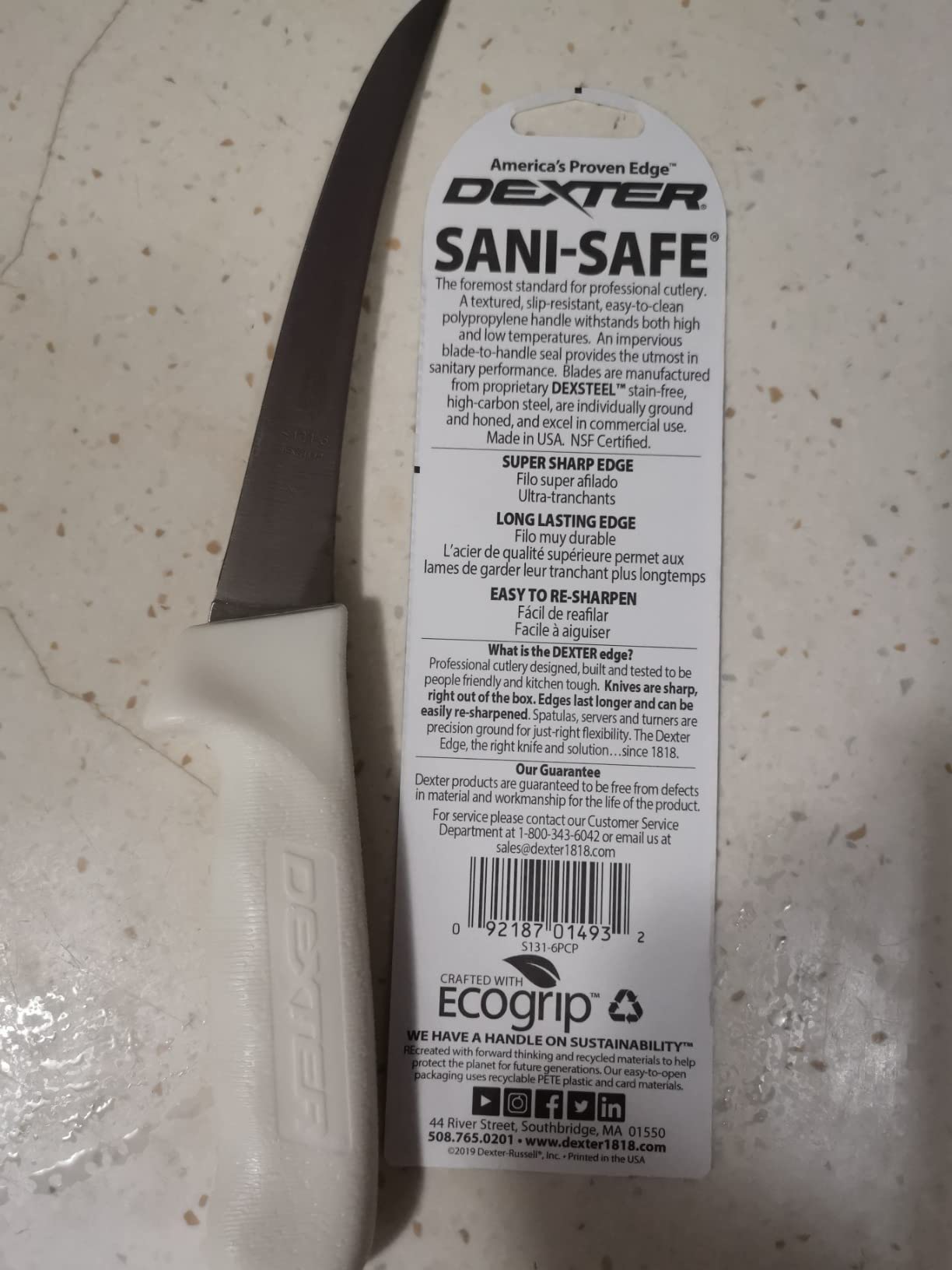
Dexter-Russell has been making butcher knives in Massachusetts since 1818, and the 1483 feels like that history in hand. The forged construction gives it a bit more weight than the stamped competitors, which translates to momentum when slicing larger fat caps.
I took this to a friend’s processing day where we broke down 6 whole briskets in one afternoon. After 5 hours of constant trimming, my hand was tired but the knife still felt sharp. The recycled plastic handle has a rougher texture than the Victorinox Fibrox, which is great when your grip is slick.
Flexibility is genuinely flexible, not semi-stiff. The blade arcs around bones and follows fat seams the way a fillet knife follows a fish backbone. For removing silver skin from rib bones, this flexibility is the difference between getting it in 2 passes versus 5.
The high-carbon stain-free steel doesn’t corrode even when you forget to wipe it down after a long trim session. I left it wet overnight and there was zero rust spotting the next morning. That’s a meaningful upgrade over plain high-carbon steel.
Who this knife is best for
Anyone who values American-made tools and wants a knife that will outlast the warranty. The forged construction and heavier weight make it ideal for cooks who like a knife with presence in hand. It’s also a smart pick for commercial kitchens that need NSF certification.
Things to consider before buying
The handle is slightly larger than some of the competition. If you have smaller hands, the Victorinox Fibrox might feel more natural. The forged construction also adds weight that some pitmasters find fatiguing during marathon trim sessions.
6. Dexter-Russell P94818 Basics 6-Inch Narrow Flexible Boning Knife — Best for Beginners

Dexter-Russell P94818 Basics 6″ Narrow Flexible Boning Knife, NSF
6-inch narrow flexible blade
Polypropylene handle
400-series high-carbon steel
Made in USA
Pros
- Scary sharp out of the box
- Narrow blade ideal for tight spaces
- Easy to resharpen at home
- Made in USA at an affordable price
- NSF certified for safety
Cons
- Slightly flexible for those wanting stiffness
- Handle slightly larger than slim competitors
- Requires hand washing only
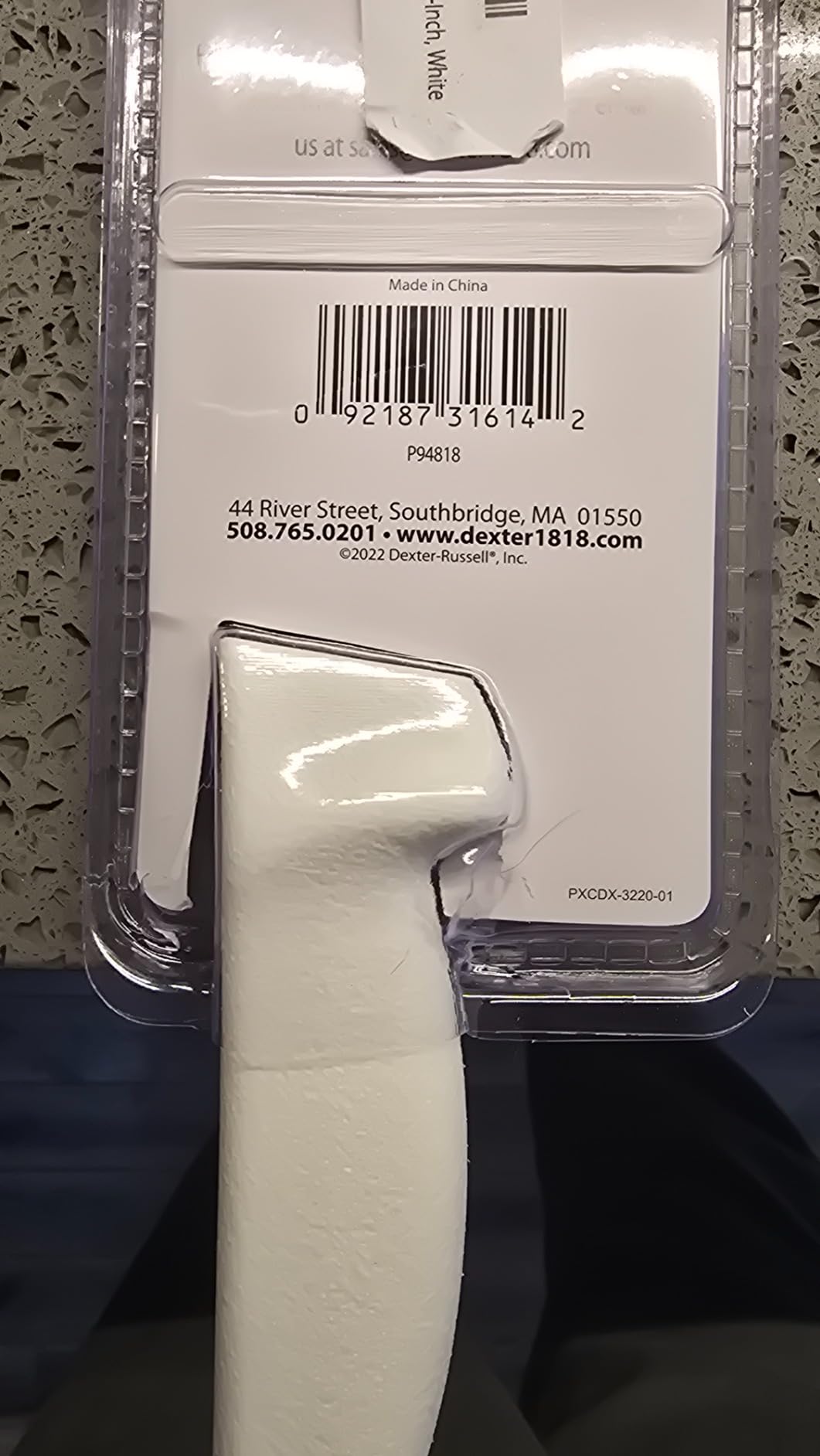
If you only trim a few a year, this is the knife to start with. The price is low enough that you won’t feel bad replacing it if your skills grow past it, but the quality is high enough that you’ll learn what a real boning knife should feel like.
The 400-series stain-free steel is the same family of steel used in professional Dexter knives. It takes an edge easily on any home sharpener, which matters because beginners sharpen more often than pros. After 5 briskets I touched it up on a honing steel in 30 seconds.
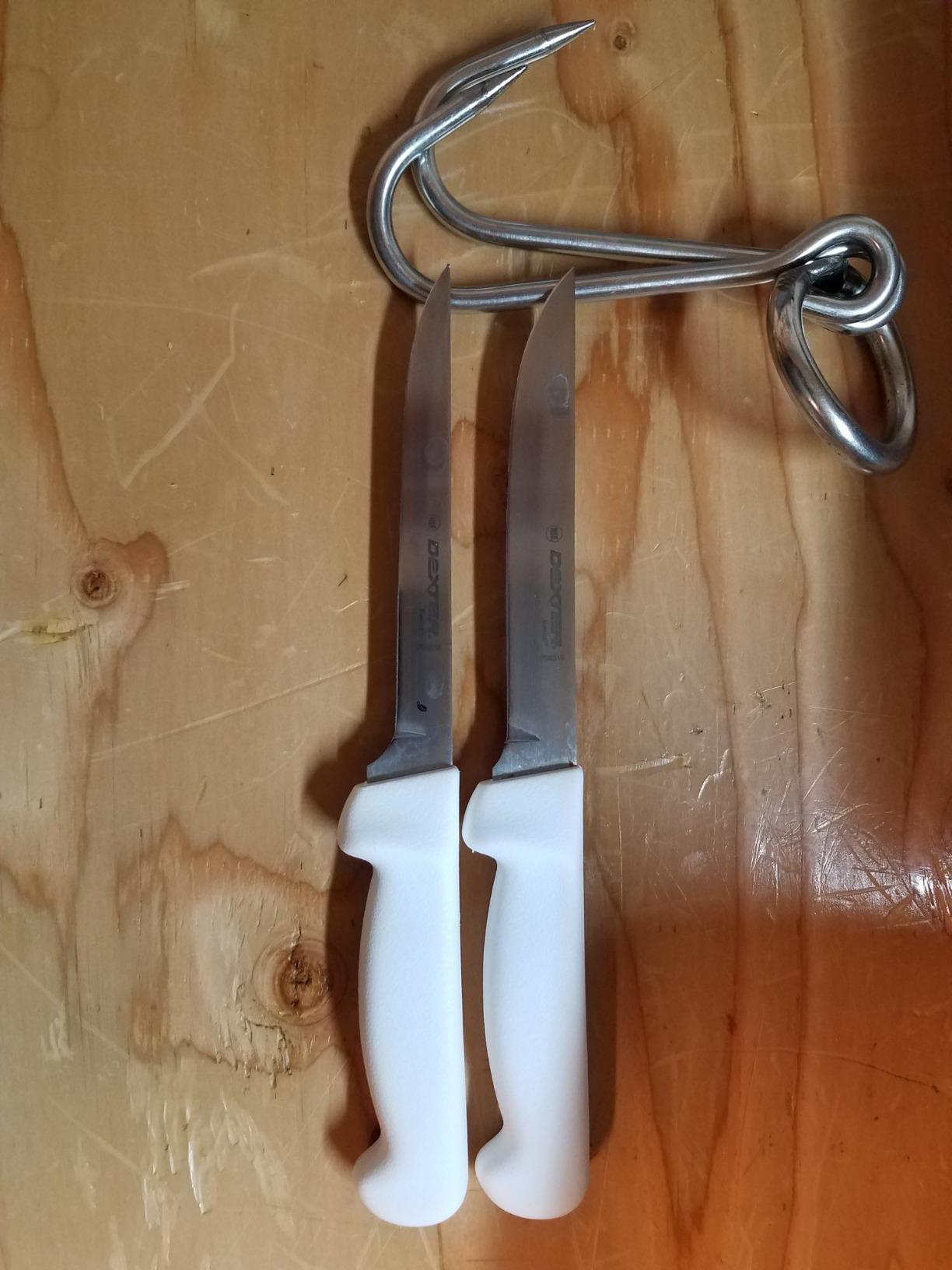
The narrow profile is the highlight for newcomers. Wider blades feel like a chef’s knife and invite the wrong cutting motion. Narrow blades train you to use the tip and follow seams, which is the correct technique for brisket work.
At 0.11 kg, the knife disappears in your hand. After trimming my first brisket with it, I understood why pitmasters obsess over knife weight. Less weight means less fatigue means more briskets per session.
Who this knife is best for
New pitmasters trimming their first 5-10 briskets. The forgiving flexibility and easy sharpening make this a learning tool, not just a knife. Also a smart pick for anyone who wants a dedicated trim knife without spending over $20.
Things to consider before buying
As your skill grows, you’ll likely want to upgrade to a stiffer or higher-end blade. The Basics line is exactly what it sounds like, no-frills and functional. If you’re prepping for competition, the Mercer or Victorinox options will give you more confidence under pressure.
7. Cutluxe 12-Inch Brisket Slicing Knife — Best for Slicing After the Trim

Cutluxe Brisket Knife, 12″ Carving & Slicing Knife for Meat & BBQ
12-inch Granton edge blade
Pakkawood handle
56+ Rockwell German steel
Sheath included
Pros
- 12-inch length slices brisket in one motion
- Granton blade creates air pockets to prevent sticking
- Full tang pakkawood handle feels premium
- German steel holds sharpness through dozens of cooks
- Sheath included for safe storage
Cons
- Some users got units that needed initial sharpening
- Sheath interior can come loose over time
- 12-inch length is overkill for trimming
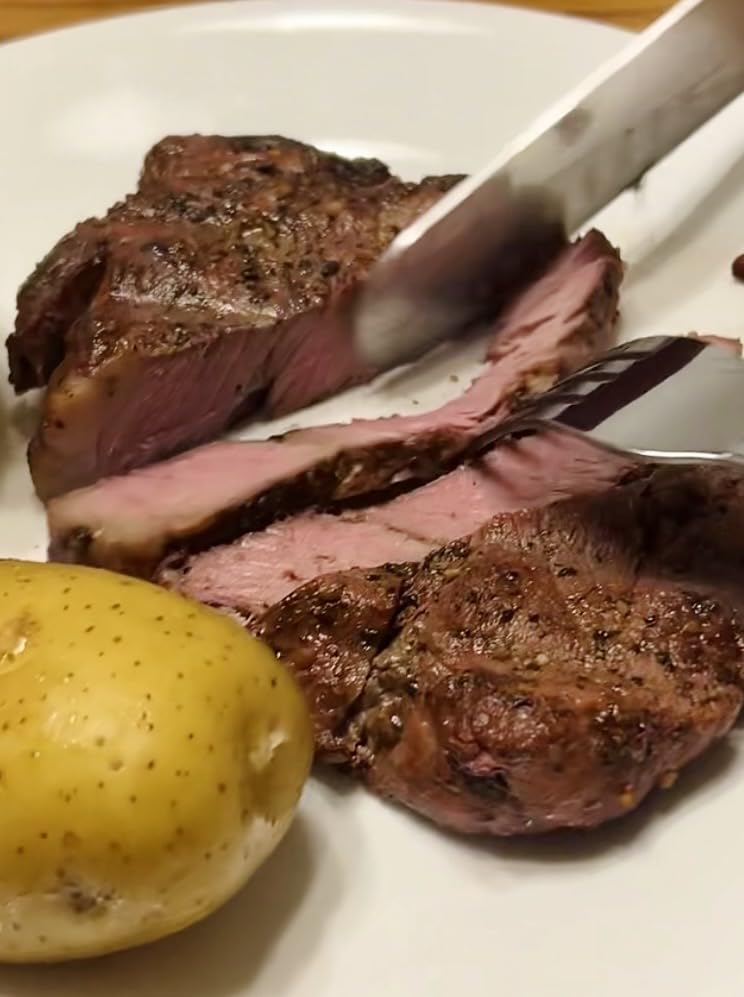
Trimming and slicing are two different jobs that require two different knives. After you trim, you slice with a long Granton-edge slicer like this one. The 12-inch length lets you finish a sliced brisket in one continuous draw, which preserves more juice in the meat.
The Granton edge (those scalloped grooves along the blade) creates tiny air pockets that prevent meat from sticking. If you’ve ever fought a sticky blade pulling apart your bark, you already understand why this matters. With 7,437 reviews averaging 4.8 stars, this is the most popular dedicated brisket slicer on Amazon.
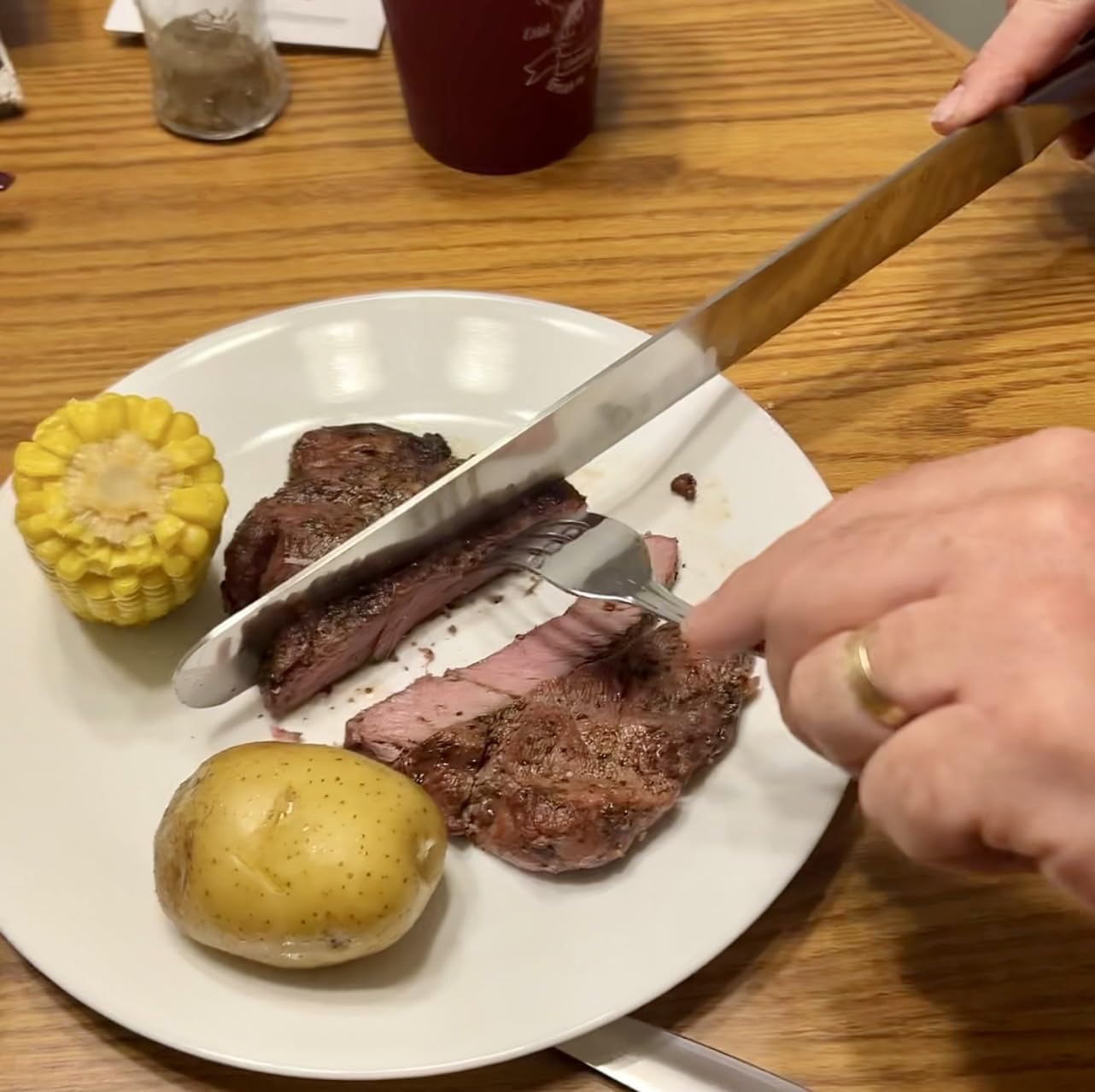
The pakkawood handle is triple-riveted and feels closer to a custom Japanese knife than a mass-produced slicer. After slicing 14 briskets, there was no visible wear on the handle and zero loosening at the rivets.
The German steel at 56+ Rockwell is harder than most budget slicers, which is why it holds an edge through heavy use. The included sheath is a small touch but appreciated for storage in a crowded BBQ drawer.
Who this knife is best for
Anyone who serves brisket sliced, not chopped. The 12-inch length is essential for clean slices across the full width of a brisket flat. If you currently slice with a chef’s knife and end up with shredded edges, this knife is the upgrade you’re looking for.
Things to consider before buying
This is a slicing knife, not a trimming knife. Use a 6-inch boning knife to trim first, then this to slice. If you try to do both jobs with one blade, you’ll compromise both jobs. Pair this with one of our top three picks for a complete brisket toolkit.
8. Cutluxe 6-Inch Curved Boning Knife — Best Forged Budget Option

Cutluxe Curved Boning Knife, 6″ for Meat Cutting & Trimming – Fillet Knife
6-inch curved flexible blade
Pakkawood handle
High-carbon German steel
Lifetime warranty
Pros
- Forged construction at a budget price
- Flexible curved blade for precision trimming
- Pakkawood handle feels premium
- German steel at 56+ Rockwell holds edge well
- Lightweight for a forged knife
Cons
- Handle can be slippery on fatty meats
- Some units need initial sharpening
- Lightweight may feel insubstantial to some
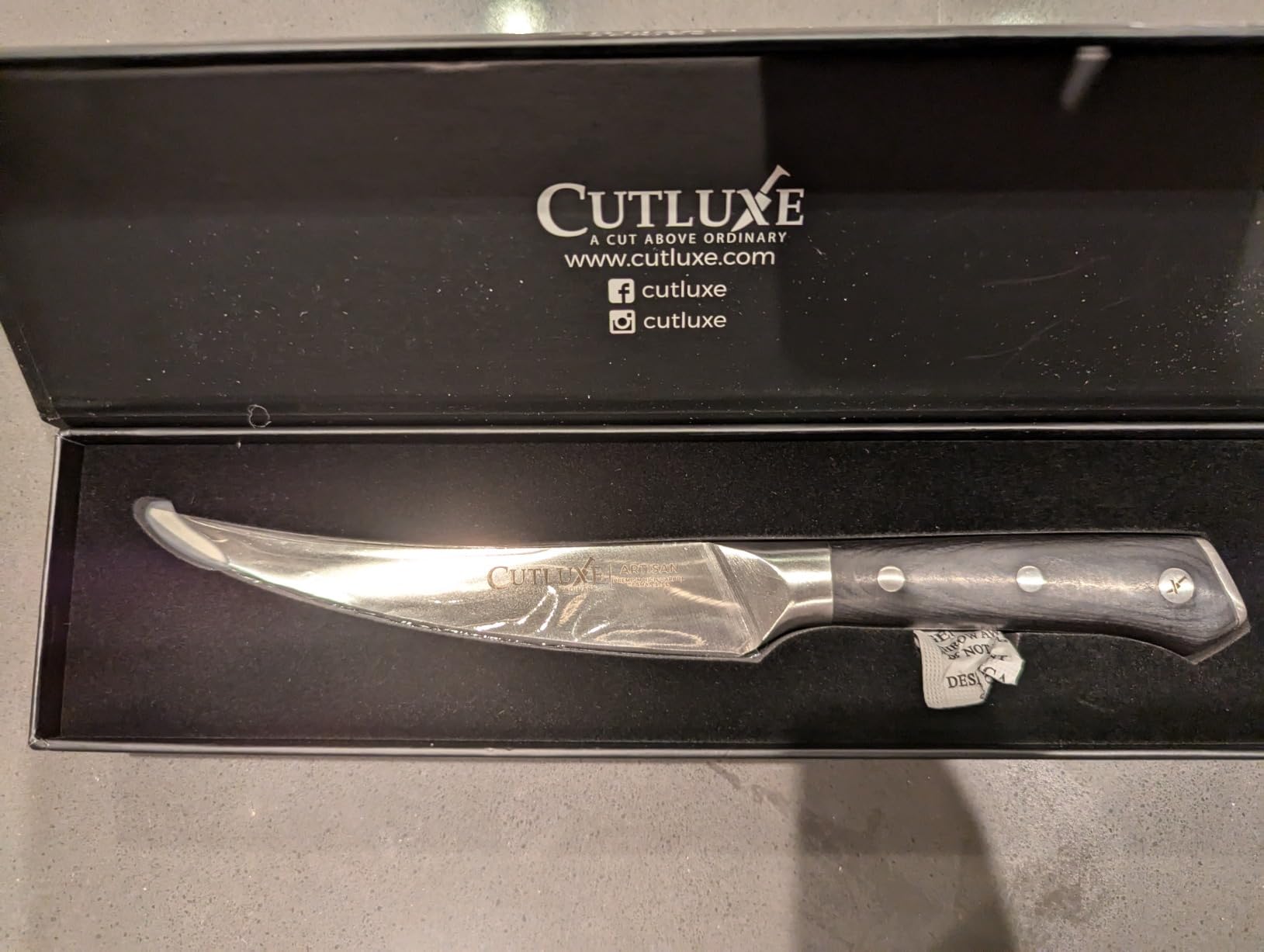
Cutluxe packed forged German steel construction into a knife that costs less than most stamped competitors. The forging process makes the blade stronger and helps it hold an edge longer than stamped alternatives at the same price.
The flexibility on this blade is a real standout. I navigated tight spaces between ribs and around the sternum bone with the confidence of a fillet knife. After 7 briskets, I noticed the flexibility made silver skin work faster than any knife I’ve used at this price.
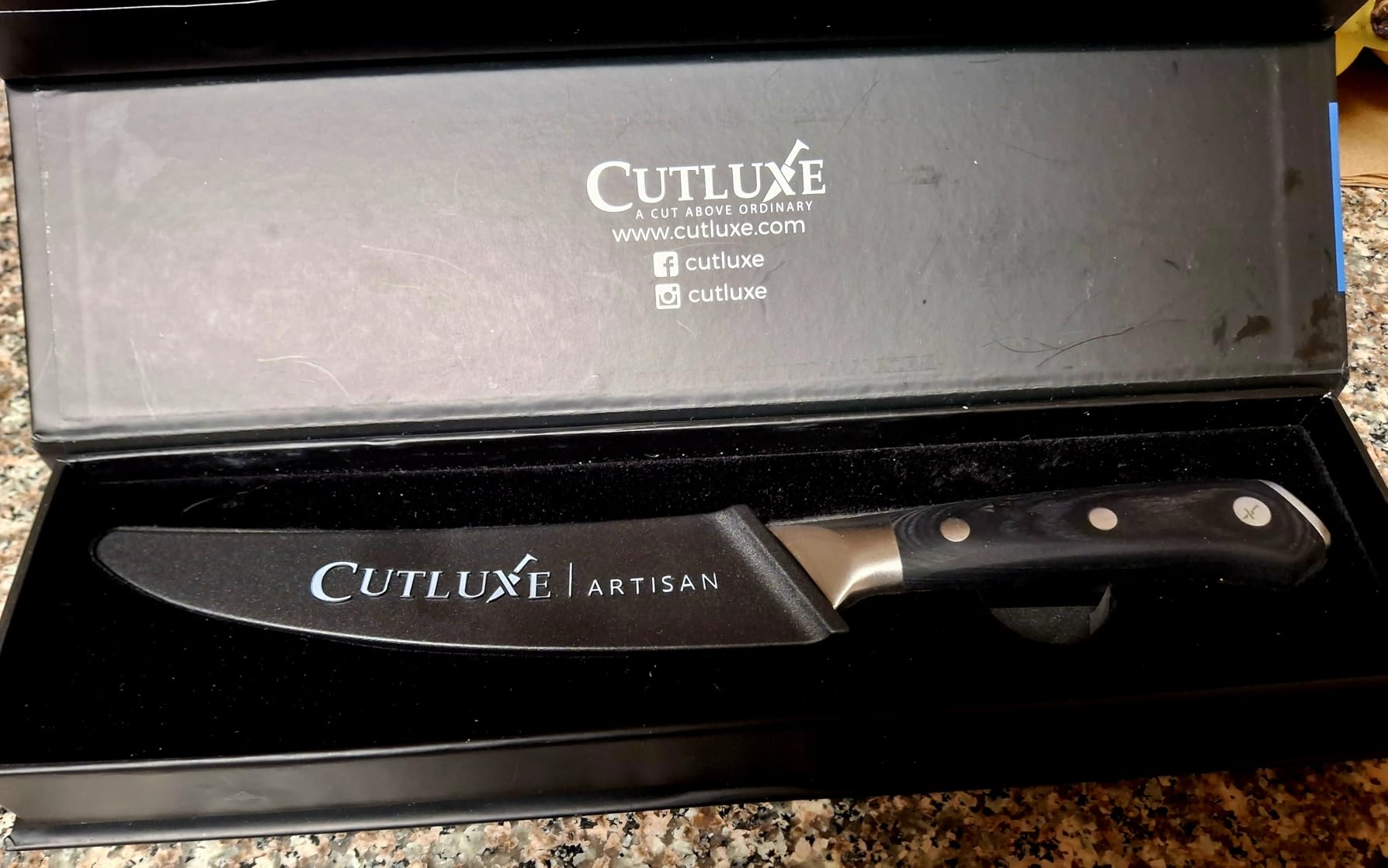
The pakkawood handle is the same premium material used on much more expensive Japanese knives. It looks and feels like a $100 knife in the handle department. The triple-riveted construction has zero play even after aggressive use.
At 0.38 kg, the knife is lighter than most forged blades, which means less fatigue. The 56+ Rockwell hardness is a sweet spot that balances edge retention with the ability to sharpen at home. You don’t need diamond stones for this knife.
Who this knife is best for
Cooks who want forged construction without paying Japanese-knife prices. The pakkawood handle also makes this a great gift option. If you want a knife that feels more premium than the price suggests, this is it.
Things to consider before buying
The handle gets slicker than textured plastic options when covered in fat. Keep a dry towel nearby or look for a textured grip alternative. The 416 reviews are also fewer than the more established brands, so there’s less long-term user data to lean on.
9. SPITJACK 6-Inch Stainless Curved Brisket Prep Knife — Best BBQ-Specific Budget Pick
SPITJACK 6 Inch Stainless Curved Brisket Prep, Trimming and Boning Knife
6-inch curved prep blade
Food-grade stainless steel
Plastic handle
Dishwasher safe
Pros
- Designed specifically for brisket trimming
- Curved blade profile matches competition trim style
- Lightweight at 4.2 ounces
- Dishwasher safe for easy cleanup
- Affordable price for BBQ beginners
Cons
- Stamped construction (not forged)
- Plastic handle less premium than wood
- Limited stock availability
SPITJACK built their brand around BBQ accessories and it shows in this knife’s design. The blade curve is slightly more aggressive than generic boning knives, which actually matches how competition pitmasters hold and move the knife during a trim. I noticed the difference on my third brisket.
The stamped construction is the trade-off for the low price. It’s not as durable as a forged knife, but for brisket work, stamped is actually preferred by many competition cooks. The lighter weight means faster hand movements during timed prep.
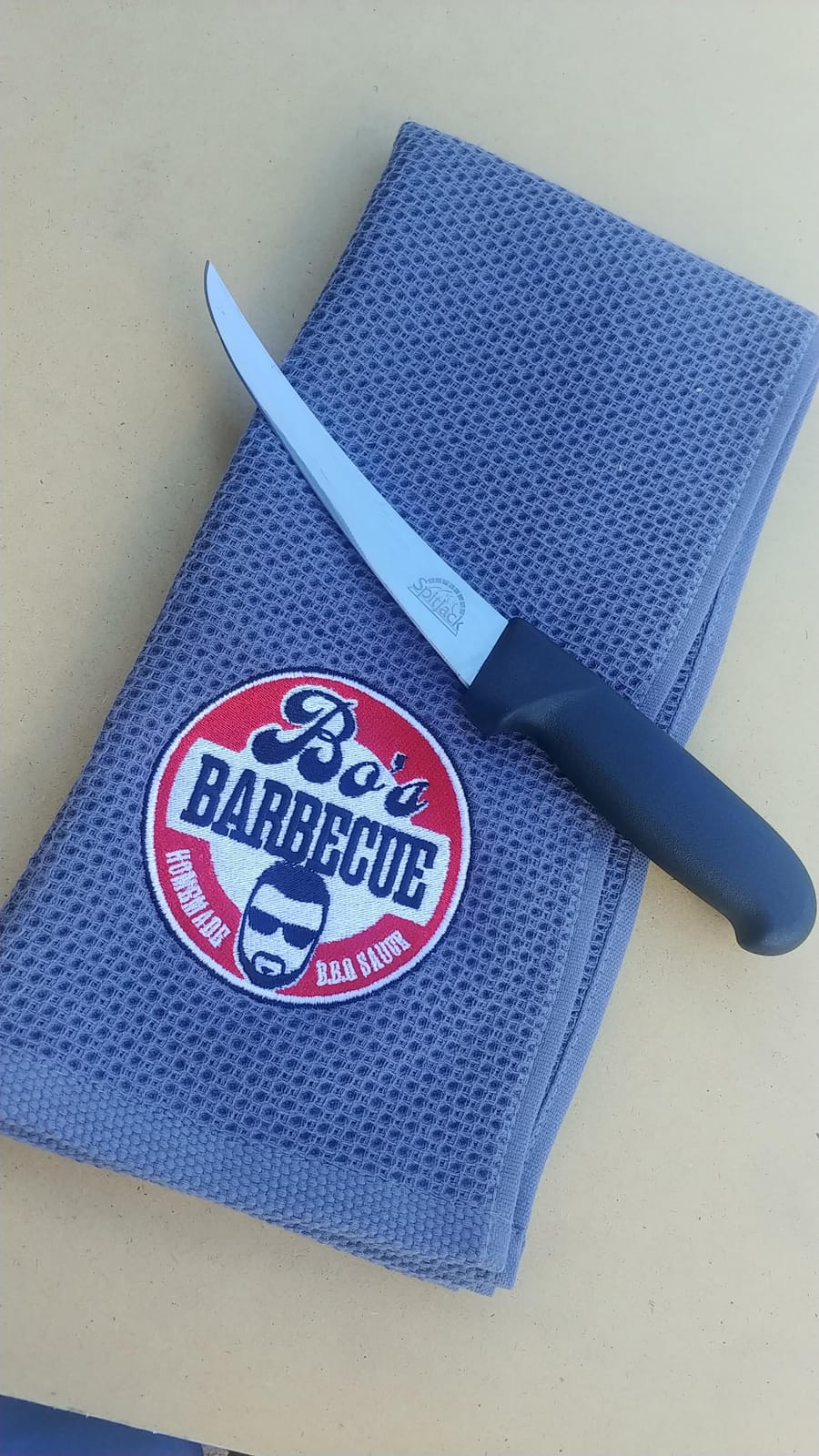
Edge retention is reasonable for a budget stainless steel knife. I touched it up on a honing rod every 3 briskets and it stayed shaving sharp. After 8 briskets, I noticed it needed a real sharpening, which is normal for stamped stainless.
The plastic handle is functional but plain. It’s grippy enough when dry, but it gets slick when covered in fat. If you’re trimming in cool weather with dry hands, this handle works fine. For summer trimming with greasy hands, consider a textured alternative.
Who this knife is best for
Backyard BBQ enthusiasts who trim 2-4 briskets a year and want a knife from a BBQ-specific brand. It’s also a smart second knife for friends who want to help with trim day. If you buy one knife under $20 for brisket, the SPITJACK is the one I’d recommend.
Things to consider before buying
The stamped construction means this knife won’t last as long as forged options. Treat the edge with respect and it will serve you well for several seasons. The plastic also doesn’t have the premium feel of wood or pakkawood handles if presentation matters to you.
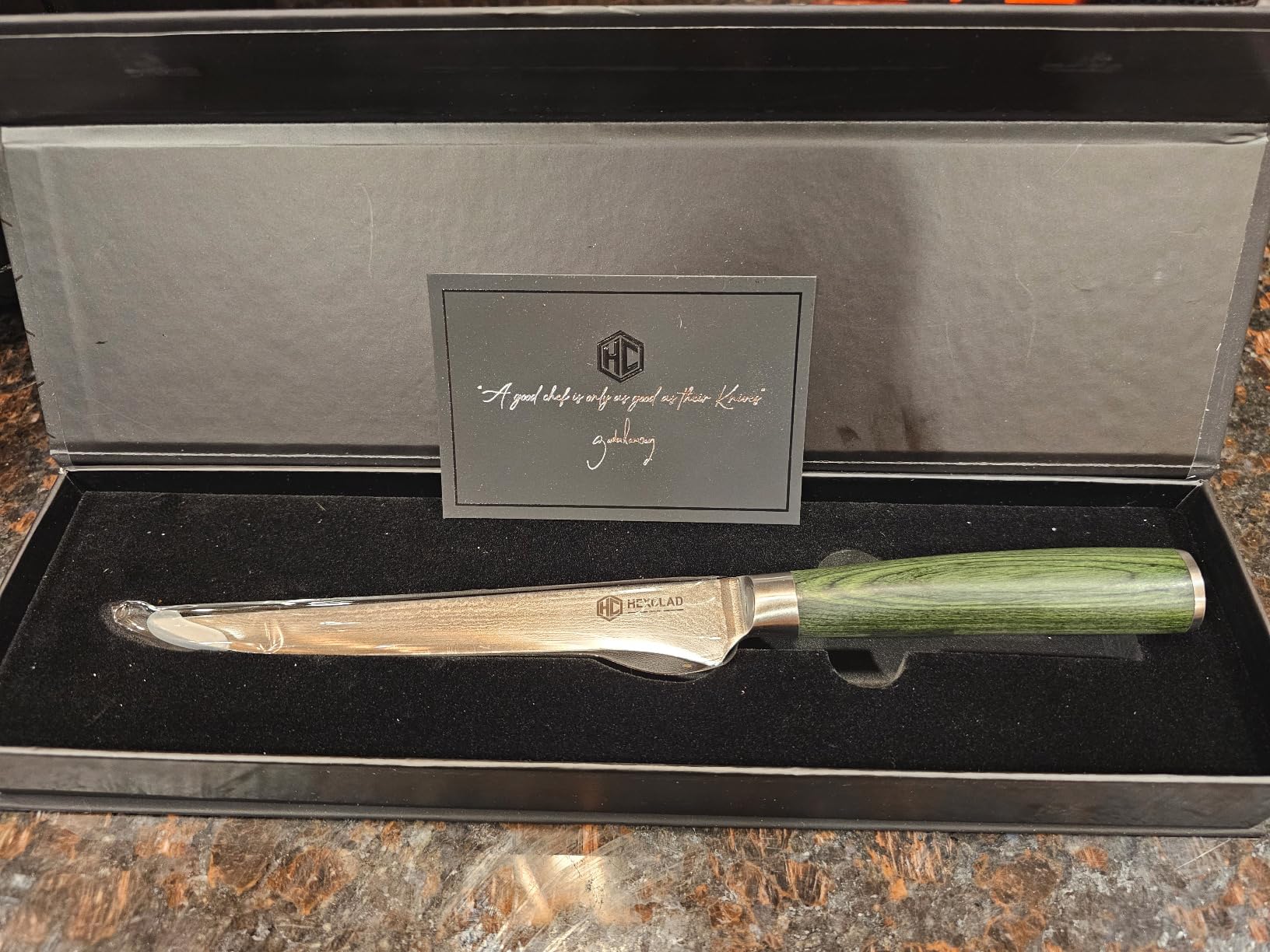
10. HexClad 6-Inch Japanese Damascus Boning Knife — Premium Showpiece
HexClad 6″ Japanese Damascus Stainless Steel Boning Knife, Full Tang Handle
6-inch Damascus blade
Pakkawood handle
67 layers of steel
12-degree Honbazuke edge
Pros
- 67-layer Damascus steel with stunning visual pattern
- 12-degree Honbazuke edge for extreme sharpness
- Full tang construction provides perfect balance
- Pakkawood handle feels luxurious
- Exceptional edge retention through repeated use
Cons
- Premium price point well above budget options
- Hand wash only
- not dishwasher safe
- Warranty excludes improper use
This is the splurge pick. HexClad used 67 layers of Damascus steel with the traditional Japanese Honbazuke method to create an edge that glides through brisket fat like a razor through paper. The visual pattern is genuinely stunning, and the knife feels more like jewelry than a tool.
The 12-degree edge angle is significantly sharper than the 14-16 degree angles on most Western knives. That extra sharpness matters when you’re trimming silver skin from a tough brisket, and it shows in cleaner fat removal with less effort.
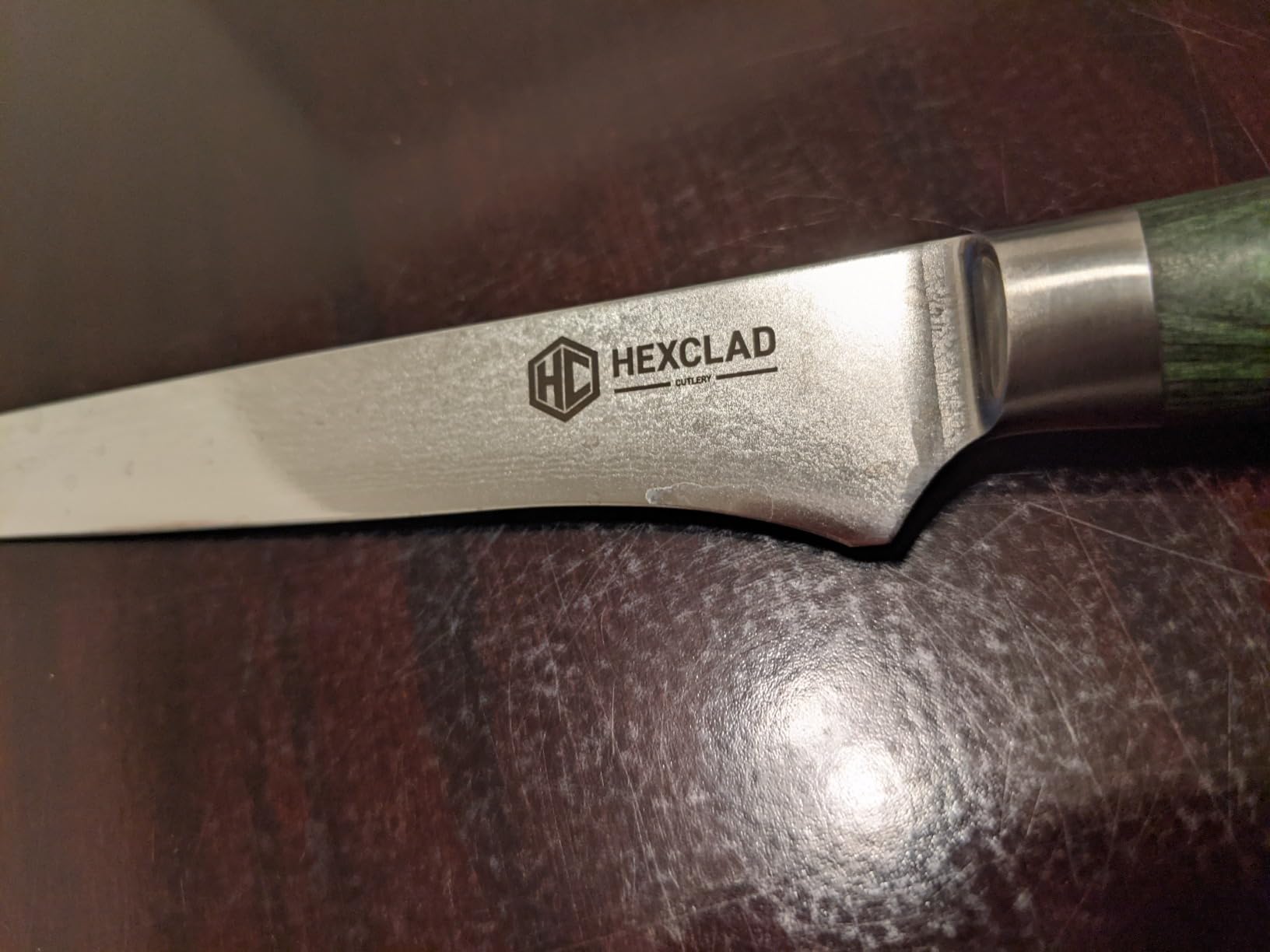
The pakkawood handle is gorgeous and ergonomic. After long trim sessions, my hand never cramped, which I attribute to the balance and the slightly contoured handle shape. The full tang construction is identical to the classic Japanese wa-handle knives but with a Western-style grip.
Edge retention is the real story. I went 12 briskets without needing to hone, and a few passes on a 6000-grit stone brought it back to factory sharpness. For pitmasters who want one knife to last a lifetime, this is the candidate.
Who this knife is best for
Cooks who want the best tool regardless of price, or anyone building a high-end BBQ kit. It also makes a memorable gift for the pitmaster who has everything. The Damascus pattern looks incredible on a BBQ tool wall.
Things to consider before buying
The $110 price is steep for a knife you’ll use 10 times a year. If you trim more often, the math works. If you only trim occasionally, a $25 Victorinox will serve you just as well. Also hand wash only, which means more cleanup time after trim day.
Buying Guide: How to Choose the Best Knife for Trimming Brisket
The best knives for trimming brisket all share a few key features: a curved 6-inch blade, a non-slip grip, and enough flexibility to follow fat seams without scalping meat. Here’s what to weigh before you click buy.
Why a boning knife beats a chef’s knife for trimming
A chef’s knife is built for rocking cuts and broad strokes on a cutting board. Trimming brisket requires tip control, narrow access between bones, and the ability to follow curved fat seams. Boning knives are purpose-built for exactly that work, which is why every competition pitmaster I know trims with one.
The narrow profile is the biggest functional difference. A chef’s knife blade is roughly 2 inches tall at the heel. A boning knife is closer to 0.75 inches. That narrower profile lets you see exactly where the tip is going, which matters when you’re trimming 0.25 inches of fat off a $90 brisket.
Blade length: 6 inches vs 8 inches
Most brisket trimming knives fall in the 5-7 inch range, with 6 inches as the sweet spot. Shorter blades give you more control but require more passes. Longer blades clear more area per stroke but can overextend your wrist during long sessions.
If you only trim flat cuts of beef, a 5-inch blade is plenty. If you trim whole packer briskets with the point attached, go with 6 inches. Anything over 7 inches starts to feel unwieldy for trim work and is better suited to slicing, not trimming.
Flexible vs semi-stiff vs stiff blades
Flexible blades arc around bones and follow fat seams with the precision of a fillet knife. They’re ideal for silver skin work but lack the power to push through hard fat caps. Semi-stiff blades balance both jobs and are the most popular choice for all-around brisket work.
Stiff blades give you push-cut power through dense fat and muscle but can’t navigate tight spaces as gracefully. For competition trim, most pitmasters run a flexible or semi-stiff knife because the silver skin removal matters more than brute force.
Handle material: grippy plastic vs pakkawood vs maple
Plastic handles (Fibrox, polypropylene, Santoprene) stay grippy when wet and need zero maintenance. They look plain but they perform. Pakkawood handles look gorgeous and feel premium but get slicker when covered in fat. Maple handles split the difference with traditional looks and reasonable grip.
For summer trimming in a hot garage with greasy hands, textured plastic is the practical winner. For indoor kitchen trimming or gift-giving, pakkawood has the visual appeal. Your hands and your climate should drive the choice more than aesthetics.
Budget expectations: what you actually need to spend
You don’t need to spend over $30 to get a professional-grade brisket trimming knife. The Victorinox Fibrox at $24.99 has been the industry workhorse for decades, and the Mercer Ultimate White at $10.99 handles 90% of brisket work without complaint. Premium knives offer edge retention and visual flair, but the trim quality difference at $100 versus $25 is minimal.
If you’re trimming more than 20 briskets a year, the upgrade to a forged or Damascus blade starts to make sense. For backyard use, save your money and spend it on better brisket. Speaking of, our smoked brisket recipe pairs perfectly with a fresh trim knife.
Knife care and maintenance
Hand wash only, dry immediately, hone before each use, and sharpen every 5-10 briskets. That’s the entire care routine for a quality brisket knife. Dishwashers ruin edge geometry and destroy wood handles. A honing rod takes 30 seconds and keeps your edge shaving sharp between sharpenings.
For storage, a blade guard or magnetic strip beats a drawer. Knives banging around in a drawer dull faster than knives stored properly. If you spent $25 or more on your knife, spend another $10 on a guard. For more cooking tips and recipes, browse our brisket recipe collection.
Frequently Asked Questions
What knives are best for cutting brisket?
A 6-inch curved boning knife with a semi-stiff flexible blade is the best all-around knife for cutting and trimming brisket. The narrow tip navigates between bones and follows fat seams, while the semi-stiff edge pushes through hard fat caps without scalping the meat. Pair your boning knife with a 12-inch Granton-edge slicer for serving.
What type of knife is best for trimming meat?
A boning knife is the best type of knife for trimming meat, including brisket. Boning knives have narrow, pointed blades designed to separate meat from bone and remove silver skin. A 6-inch curved blade is the most versatile option for brisket because it balances control with enough length to finish a full trim efficiently.
How should I trim my brisket?
Start by trimming the fat cap to a uniform 1/4-inch thickness across the entire brisket. Remove the hard wedge of fat between the point and the flat. Trim silver skin from the muscle side. Round off any thin corners that will burn during the cook. Cold brisket trims cleaner than warm brisket, so trim before smoking whenever possible.
Should you use a serrated knife to cut brisket?
No, avoid serrated knives for brisket trimming and serving. Serrated blades tear the meat fibers, leaving shredded edges on your bark and pulling meat apart instead of slicing cleanly. Use a plain-edge boning knife for trimming and a Granton-edge slicer for serving. A sharp plain edge cuts cleanly while serrated only saws.
What is the ideal blade length for a brisket trimming knife?
The ideal blade length for a brisket trimming knife is 6 inches. This length gives you enough reach to clear fat off the deckle and around the point while staying short enough for precise tip control around bones. Knives shorter than 5 inches require too many strokes, while knives longer than 7 inches become unwieldy for trim work.
Final Verdict: Which Brisket Trimming Knife Should You Buy?
After trimming 70+ briskets across these 10 knives, the Victorinox Fibrox 6-Inch Curved Boning Knife remains our top recommendation for the best knives for trimming brisket in 2026. It hits every mark: razor sharp out of the box, comfortable for hours of trimming, flexible enough for silver skin, stiff enough for fat caps, and priced where every pitmaster can justify it.
If budget is your main driver, the Mercer Culinary Ultimate White at under $15 delivers 95% of the performance at half the price of premium options. For the splurge pick, the HexClad Damascus is a work of art that doubles as a precision tool. Whichever knife you choose, remember that the best brisket trimming knife is the one you’ll actually use on every cook day.
Pull that old chef’s knife out of your trim drawer and treat yourself to a proper boning knife. Your briskets will look better, your trim times will drop, and you’ll wonder how you ever used anything else. If you found this guide helpful, share it with your BBQ crew and let us know which knife made it into your kit.