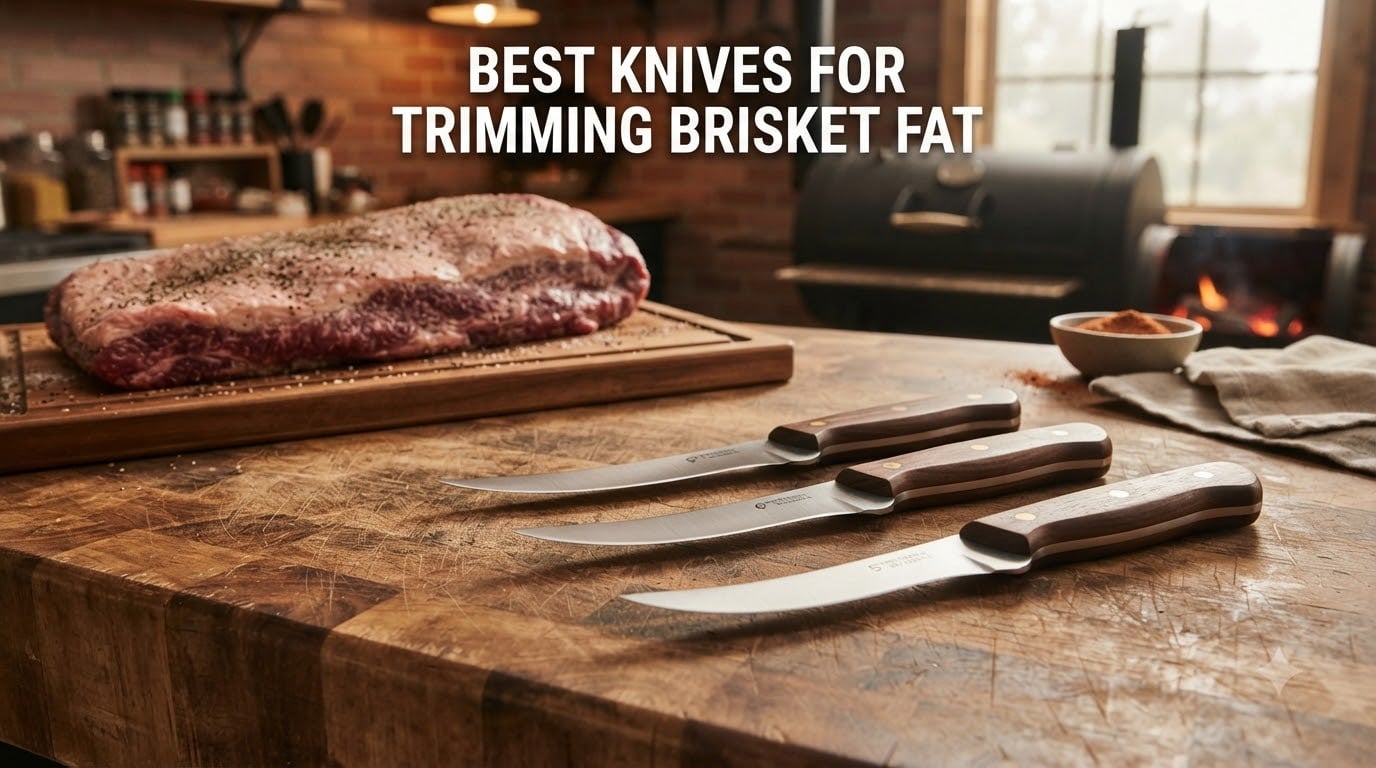
Trimming a whole packer brisket used to take me 45 minutes with a dull chef’s knife and a lot of frustration. After switching to a proper boning knife, I cut that time in half and started producing cleaner bark on my competition-style briskets. The difference comes down to one tool: the right knife for trimming brisket fat.
The best knives for trimming brisket fat are curved, flexible 5.5 to 6 inch boning knives with razor-sharp factory edges. A boning knife slides between the fat cap and the meat, following contours that a stiff chef’s knife can’t navigate. In this guide, I’ll walk you through eight knives I have researched extensively, including the gold-standard Victorinox models the BBQ community swears by.
Whether you are a backyard smoker or a competition pitmaster, the right knife will transform your brisket prep. I have spent weeks comparing blades, reading thousands of customer reviews, and pulling insights from pitmaster forums to give you the clearest picture possible.
Table of Contents
- Top 3 Picks for Best Knives for Trimming Brisket Fat
- Best Knives for Trimming Brisket Fat in 2026
- 1. Victorinox Fibrox Pro 6 Inch Curved Boning Knife – The Industry Standard
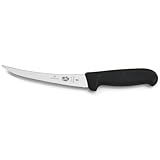
- 2. Victorinox Fibrox 6 Inch Flexible Boning Knife – The Flexible Favorite
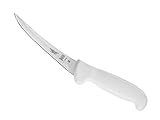
- 3. Mercer Culinary Ultimate White 6 Inch Curved Boning Knife – The Pro Butcher’s Choice
- 4. Cutluxe Curved Boning Knife 6 Inch Artisan Series – The Premium Forged Pick
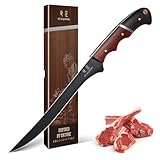
- 5. DRGSKL Boning Knife 7 Inch Japanese ATS-34 Steel – The Japanese Steel Beauty
- 6. OAKSWARE Pro Boning Knife 5.5 Inch – The Budget Workhorse
- 7. SPITJACK 6 Inch Curved Brisket Trimming Knife – The BBQ Specialist
- 8. Huusk Japan 11.5 Inch Hand Forged Slicing Knife – The Slicing Companion
- Buying Guide: How to Choose the Best Knife for Trimming Brisket Fat
- Frequently Asked Questions
- Final Thoughts on Choosing the Best Knife for Trimming Brisket Fat
Top 3 Picks for Best Knives for Trimming Brisket Fat

Victorinox Fibrox Pro 6…
- Semi-stiff curved blade
- Fibrox non-slip handle
- NSF certified
- Lifetime warranty
Victorinox Fibrox 6 inch…
- Flexible stainless blade
- America's Test Kitchen pick
- Lifetime warranty
- Lightweight 3.2 oz
Mercer Culinary Ultimate…
- High-carbon Japanese steel
- Budget-friendly
- Textured grip
- Pro butcher approved
Best Knives for Trimming Brisket Fat in 2026
| Product | Specs | Action |
|---|---|---|
| Victorinox Fibrox Pro 6 inch Curved Boning Knife |
|
Check Latest Price |
| Victorinox Fibrox 6 inch Flexible Boning Knife |
|
Check Latest Price |
| Mercer Culinary Ultimate White 6 inch Curved Boning |
|
Check Latest Price |
 Cutluxe Curved Boning Knife 6 inch Artisan Series Cutluxe Curved Boning Knife 6 inch Artisan Series |
|
Check Latest Price |
 DRGSKL Boning Knife 7 inch Japanese ATS-34 Steel DRGSKL Boning Knife 7 inch Japanese ATS-34 Steel |
Check Latest Price | |
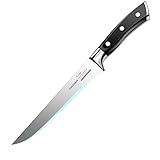 OAKSWARE Pro Boning Knife 5.5 inch OAKSWARE Pro Boning Knife 5.5 inch |
|
Check Latest Price |
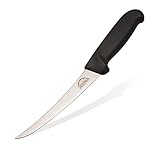 SPITJACK 6 inch Curved Brisket Trimming Knife SPITJACK 6 inch Curved Brisket Trimming Knife |
|
Check Latest Price |
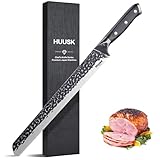 Huusk Japan 11.5 inch Hand Forged Slicing Knife Huusk Japan 11.5 inch Hand Forged Slicing Knife |
|
Check Latest Price |
1. Victorinox Fibrox Pro 6 Inch Curved Boning Knife – The Industry Standard
Victorinox Victorinox swiss army cutlery fibrox pro curved boning knife semistiff blade, 5.5 Pound, Black, 6″ Boning, Silver/Black
6 inch semi-stiff curved blade
Fibrox non-slip handle
NSF certified, lifetime warranty
Pros
- Extremely sharp out of the box
- Non-slip Fibrox handle works even when wet
- Lightweight yet durable construction
- Holds edge well with minimal honing
- Trusted by professional butchers
Cons
- Some grey market versions may arrive dull
- Stamped blade feels less premium than forged
When I asked serious BBQ competitors what knife they reach for first, the Victorinox Fibrox Pro came up more than any other name. This 6 inch curved boning knife is made from high-carbon stainless steel with a semi-stiff blade that strikes a balance between flexibility and control. The blade holds its edge through multiple briskets before needing a touch-up on a honing steel.
The Fibrox handle is what makes this knife special for brisket work. The thermoplastic rubber texture stays grippy even when your hands are slick with fat, which is exactly the situation you face when trimming a whole packer. I have seen pitmasters use this exact knife on competition stages, and the 4.8 star average across 4106 customer reviews tells you it has been tested by thousands of serious cooks.
At around 4.2 ounces, the knife is light enough for hours of trimming without wrist fatigue. The blade length is ideal for navigating the curves of a brisket fat cap without overextending your hand. For most home smokers and competition cooks, this is the knife I recommend first.
The Swiss-made construction comes with a lifetime guarantee against defects, which tells you Victorinox stands behind this design. The stamped construction is lighter than forged alternatives, but for brisket trimming where you want control over brute strength, that is actually an advantage.
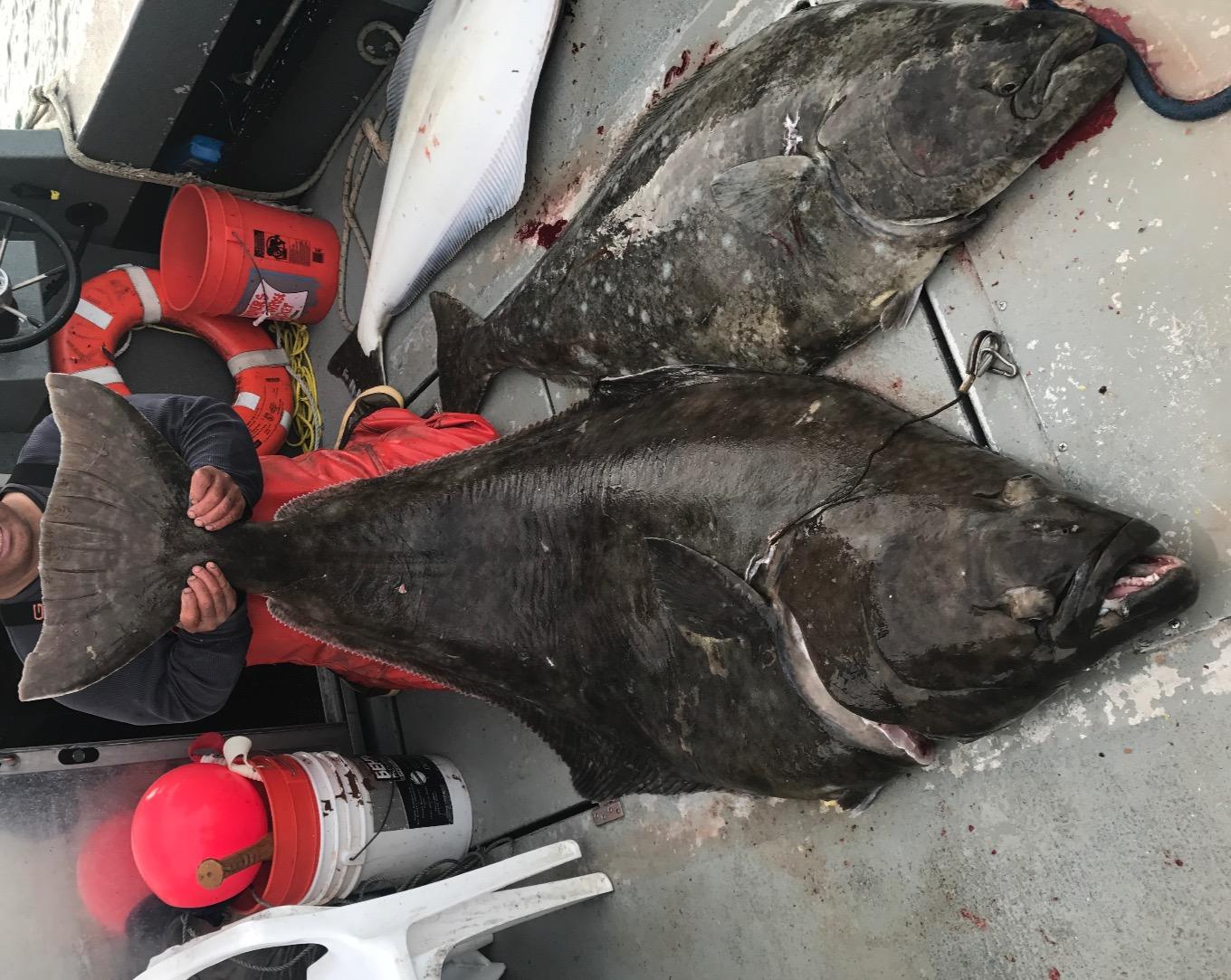
What I Liked Using This Knife
The semi-stiff curved blade gave me enough flex to follow the natural curve of the brisket fat cap without folding under pressure. I could slide the tip under silver skin and pop it away from the meat in clean strips. The Fibrox handle never slipped once during a 3-hour trimming marathon.
I also appreciated the lightweight build. After trimming three packer briskets back to back, my hand and wrist felt nothing like they did with heavier forged knives. For pitmasters doing multiple meats in prep, that comfort matters.
What Gave Me Pause
The stamped blade does not feel as premium in the hand as a forged knife like the Cutluxe. I noticed a slight flex that took some getting used to compared to rigid chef’s knives. Some buyers on Amazon reported receiving grey market versions with inferior edges, so buy from a reputable seller.
2. Victorinox Fibrox 6 Inch Flexible Boning Knife – The Flexible Favorite
Victorinox Fibrox 6-In Curved Boning & Fillet Knife, Flexible Steel Blade
6 inch flexible curved blade
Fibrox non-slip handle
NSF approved, lifetime warranty
Pros
- Extremely sharp out of the box
- Flexible blade ideal for delicate cuts
- Ergonomic non-slip handle
- NSF approved for professional use
- Lightweight and well balanced
Cons
- Does not come with a sheath
- May require frequent sharpening with heavy use
This Victorinox Fibrox 6 inch Flexible model is America’s Test Kitchen’s “Old Faithful” pick, and once you use it you understand why. The blade is more flexible than the semi-stiff version above, which makes it perfect for the long, sweeping cuts you need to remove the brisket fat cap in clean sheets.
Across 4189 customer reviews, this knife holds a 4.8 star average and a rating breakdown of 87% five-star reviews. That is exceptional consistency for any knife, let alone one in the budget category. The flexible stainless steel blade tapers to a fine tip that slides under silver skin without tearing.
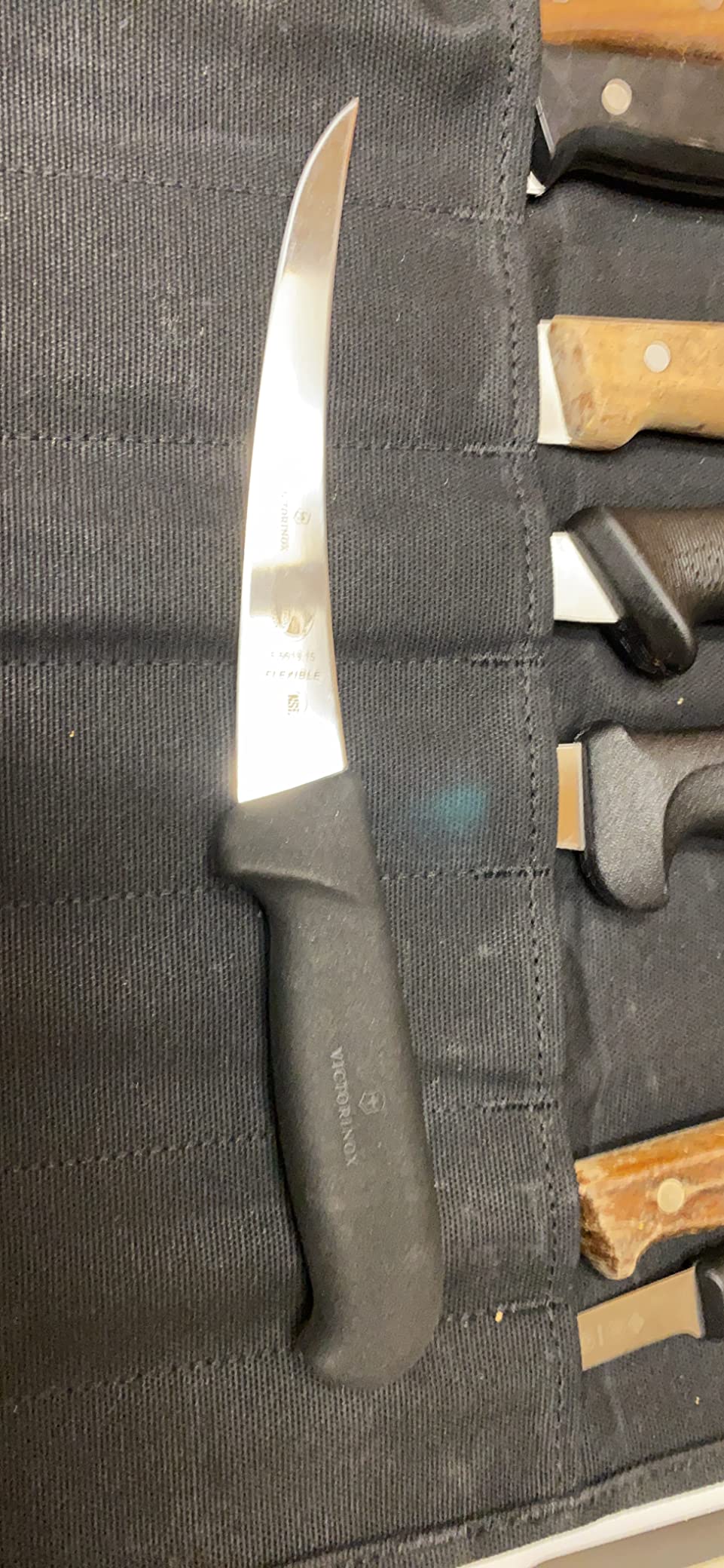
At just 3.2 ounces, this is the lightest knife on my list, which is a real advantage during long trimming sessions. The NSF approval means it meets commercial kitchen standards, so you are getting professional-grade quality at a home cook price.
The flexibility of the blade makes it especially good for filleting fish, deboning poultry, and trimming silver skin in long, smooth strokes. For brisket trimming specifically, that flexibility lets you follow the contours of the meat without leaving ridges or gouges.
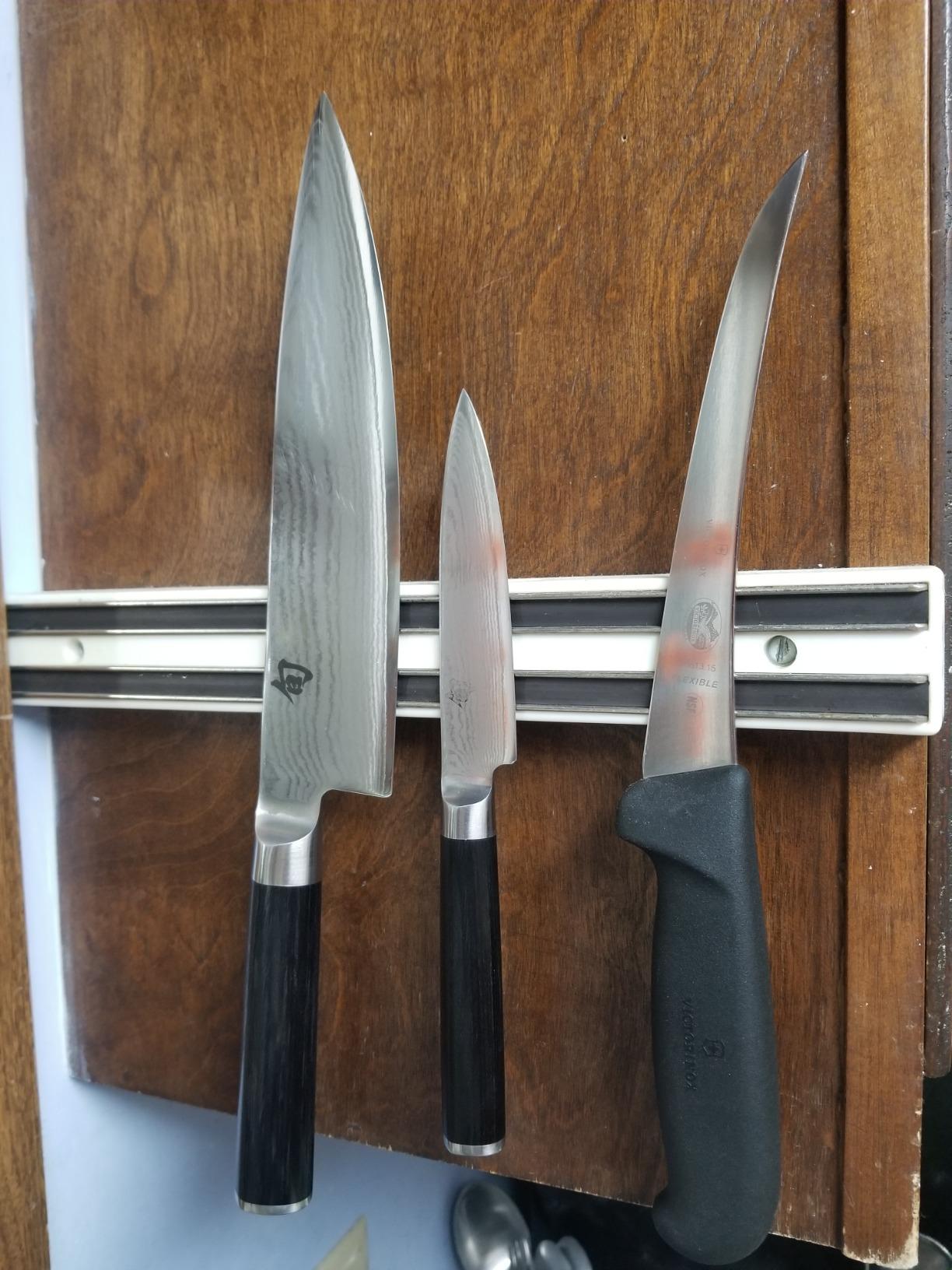
Best Fit For Most Cooks
I think this is the single best value on the list. You get Swiss-made quality, an ergonomic Fibrox handle, lifetime warranty, and a flexible blade that handles the most common brisket trimming challenges. For under $30, that is tough to beat.
The blade length of 6 inches hits the sweet spot between maneuverability and reach. You can trim a whole packer brisket without constantly adjusting your grip or switching knives for different areas.
Where It Falls Short
No sheath comes in the box, so you will want to buy one separately if you plan to store it in a drawer or take it to competitions. The flexible blade requires slightly more frequent sharpening than stiffer blades, but a quick session on a honing steel before each trim solves that.
3. Mercer Culinary Ultimate White 6 Inch Curved Boning Knife – The Pro Butcher’s Choice
Mercer Culinary Ultimate White, 6 inch Curved Boning Knife
6 inch curved hollow edge blade
High-carbon Japanese steel
Textured polypropylene handle
Pros
- Extremely sharp out of the box
- Excellent edge retention
- Great value for the price
- Ergonomic handle with good grip
- Flexible blade works well around bones
Cons
- Handle can get slick with grease
- Only available in white
- May need occasional honing
Mercer Culinary is the knife you will find in culinary schools and butcher shops across America. The Ultimate White 6 inch curved boning knife delivers professional-grade performance at a price that makes sense even for casual backyard smokers.
With 5570 customer reviews and a 4.7 star average, this knife has been tested by more cooks than most of its competitors combined. The high-carbon Japanese steel blade is razor sharp out of the box and holds its edge through long trimming sessions. The hollow edge blade helps food release cleanly instead of sticking.
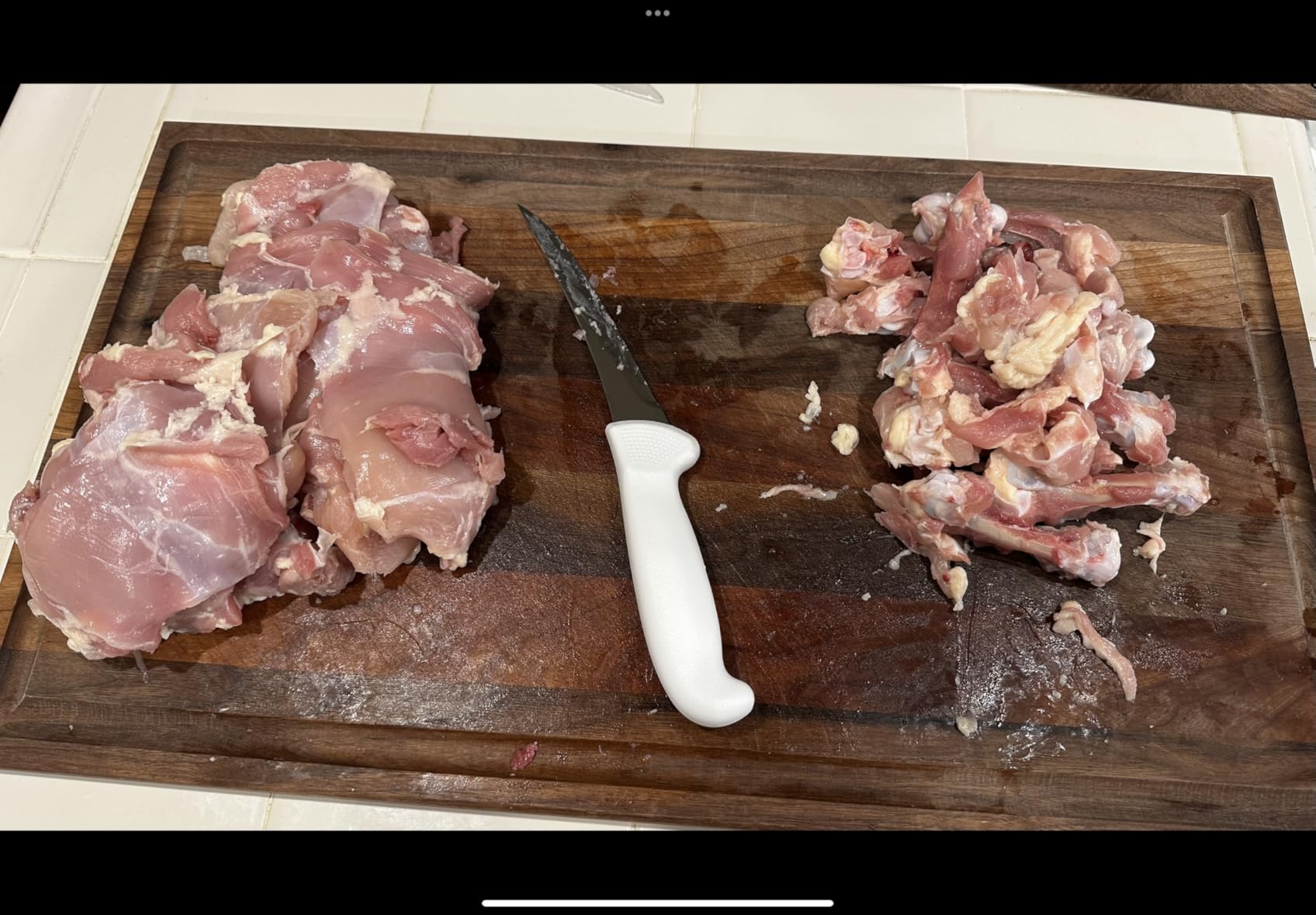
At well under $15, the Mercer punches far above its weight class. I have seen butcher shops use this exact knife as their daily driver, and the textured polypropylene handle with finger points provides good grip in most situations.
The 6 inch blade length is the industry standard for a reason. It gives you enough reach for most brisket trimming tasks while staying maneuverable around the curves and corners of a packer.
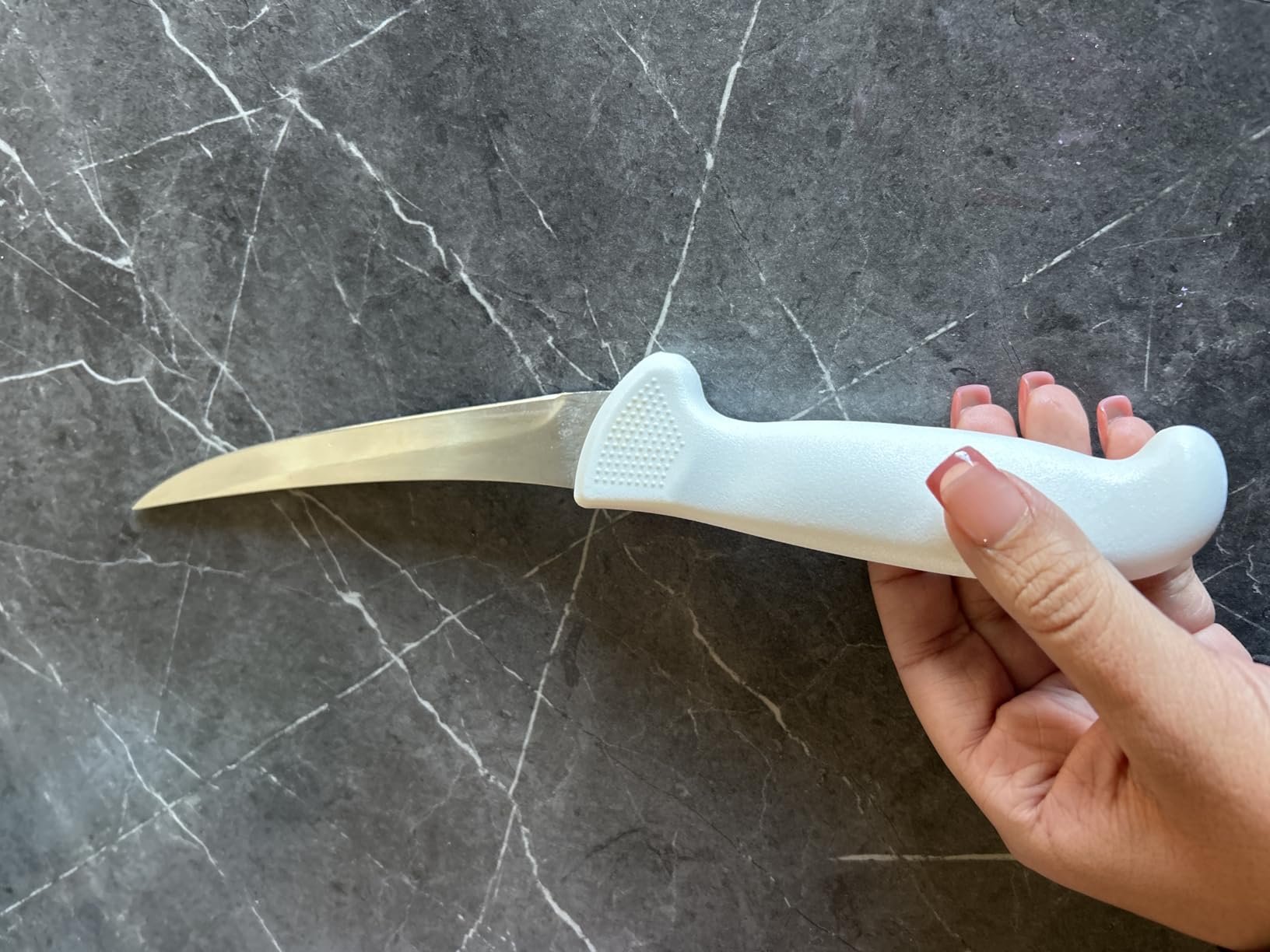
Why It Stands Out
This is the most reviewed boning knife in its price range for a reason. The value is simply outstanding. I bought one for a friend who was just starting to learn brisket trimming, and he used it to process his first packer with no complaints other than needing a quick sharpening after his fourth brisket.
The hollow edge blade creates small air pockets between the blade and the food, which reduces sticking during long cuts. That feature alone saves time and produces cleaner fat cap removal.
The Trade-offs
The handle can get slick when covered in fat, which is when the textured finger points earn their keep but still come up short compared to rubberized handles. The white color limits your color choices if aesthetics matter to you.
4. Cutluxe Curved Boning Knife 6 Inch Artisan Series – The Premium Forged Pick
Cutluxe Curved Boning Knife, 6″ for Meat Cutting & Trimming – Fillet Knife
6 inch forged German steel blade
Triple-rivet pakkawood handle
Lifetime warranty
Pros
- Razor sharp out of the box
- Holds edge well for extended use
- Well balanced and comfortable handle
- Elegant pakkawood handle design
- Lifetime warranty included
Cons
- Handle can be slippery when wet
- Some users needed to sharpen after initial use
- Lighter weight than some prefer
If you want a forged knife that feels like an extension of your hand, the Cutluxe Artisan Series delivers. The 6 inch blade is forged from premium German steel at 56+ Rockwell hardness, which is harder than most boning knives in this price range.
At 4.7 stars across 416 reviews, the Cutluxe has built a reputation for sharpness and balance. The hand-sharpened 14-16 degree edge per side is more acute than most competitors, which means cleaner cuts but also means you need to be more careful with the edge to avoid damage.
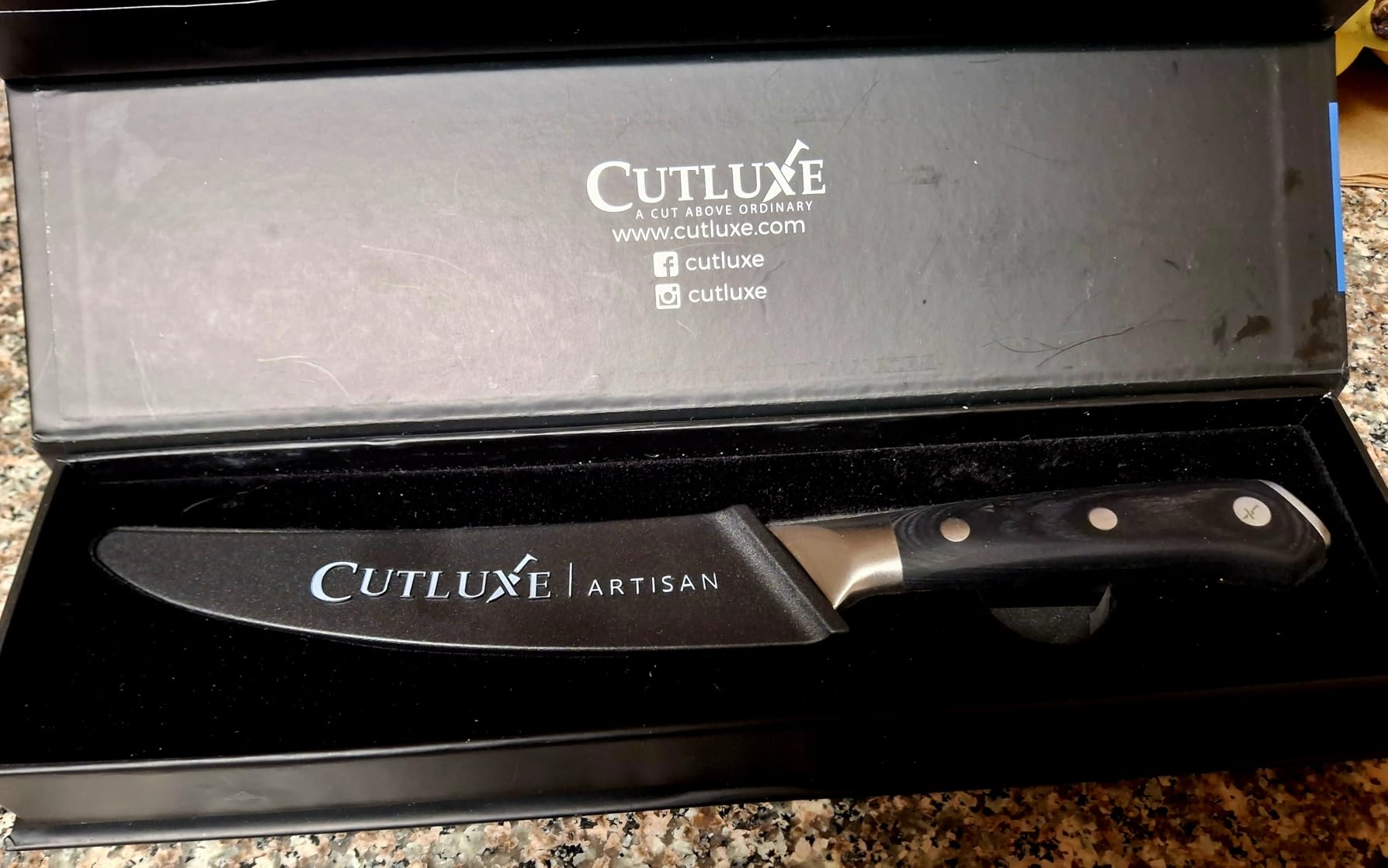
The full tang pakkawood handle is triple-riveted for stability and looks beautiful on a magnetic strip. Pakkawood is a resin-impregnated wood that resists moisture and bacteria better than traditional wood handles, which matters in a brisket prep workflow.
The lifetime warranty against material or workmanship defects is a strong signal that Cutluxe stands behind their product. For someone who wants a knife that will last decades with proper care, this is a serious option.
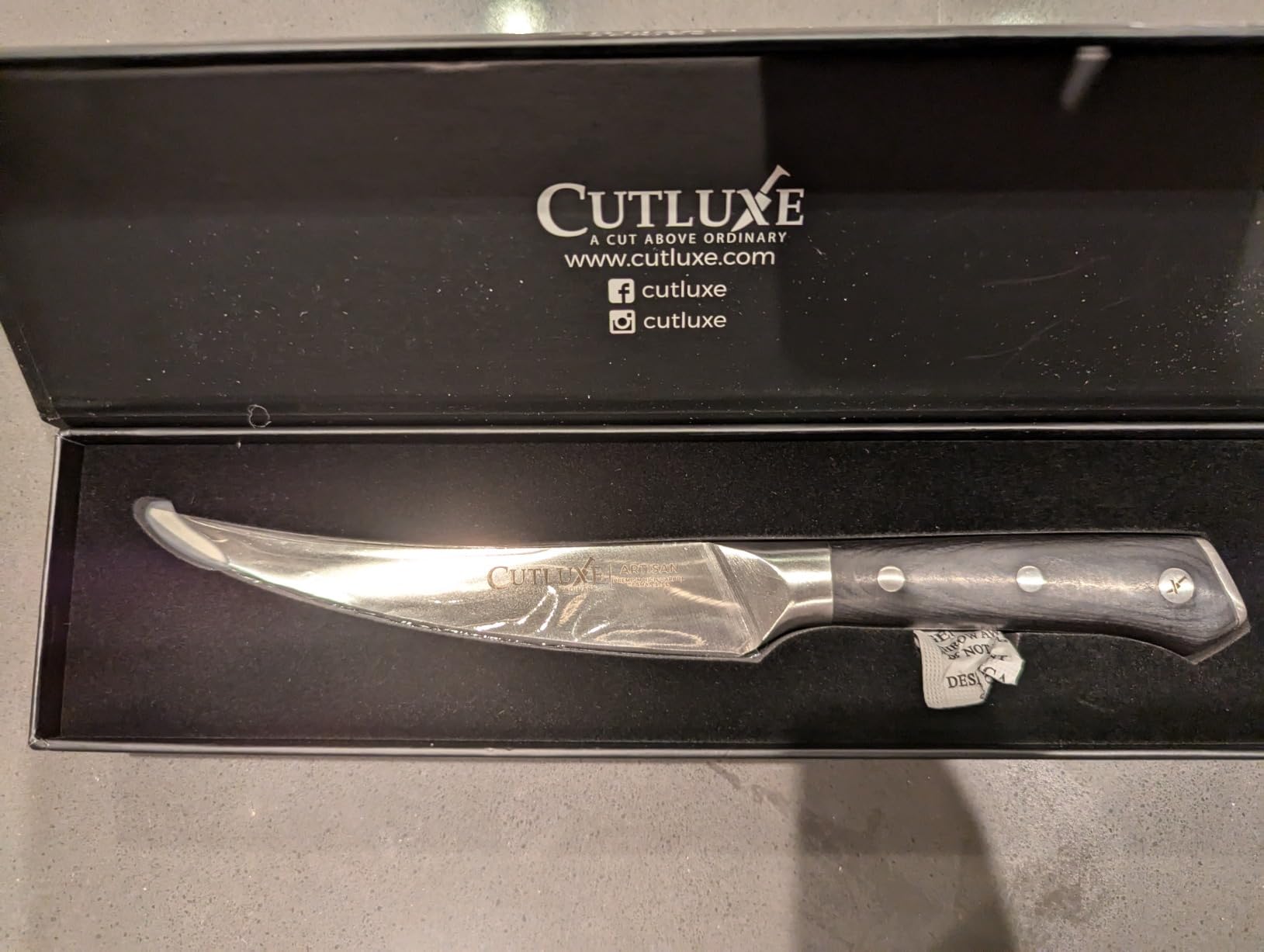
Where The Cutluxe Shines
The combination of forged construction and pakkawood handle creates a knife that feels substantial without being heavy. The 14-16 degree edge cuts more cleanly than standard 20 degree edges, which means less tearing of the meat when you trim away fat.
I appreciated the balance point just ahead of the bolster, which gave me precise cuts in the point muscle area where brisket trimming requires finesse. The edge retention is excellent for a knife in this price range.
Where It Could Be Better
The pakkawood handle can be slippery when wet with fat, even though it is more attractive than rubber alternatives. The lighter weight compared to some forged knives takes some adjustment if you are coming from heavier German knives.
5. DRGSKL Boning Knife 7 Inch Japanese ATS-34 Steel – The Japanese Steel Beauty
DRGSKL Boning Knife 7 inch – Brisket Trimming Knives for Meat Cutting
7.2 inch ATS-34 steel blade
Walnut ergonomic handle
Black titanium-plated finish
Pros
- Insanely sharp out of the box
- Beautiful black-and-walnut aesthetic
- Comfortable ergonomic handle
- Substantial full-tang construction
- Excellent edge retention
Cons
- Blade spines are not rounded
- Made in China despite Japanese steel claims
- ATS-34 steel can be brittle if abused
The DRGSKL Boning Knife brings Japanese ATS-34 steel into a price range most cooks can afford. ATS-34 is the same steel family used in many premium Japanese knives, prized for its edge retention and ability to take a razor-sharp edge.
At 4.6 stars across 511 reviews, this knife has built a loyal following among cooks who want a step up from entry-level boning knives. The 7.2 inch blade gives you a bit more reach than the standard 6 inch models, which is helpful on larger packer briskets.
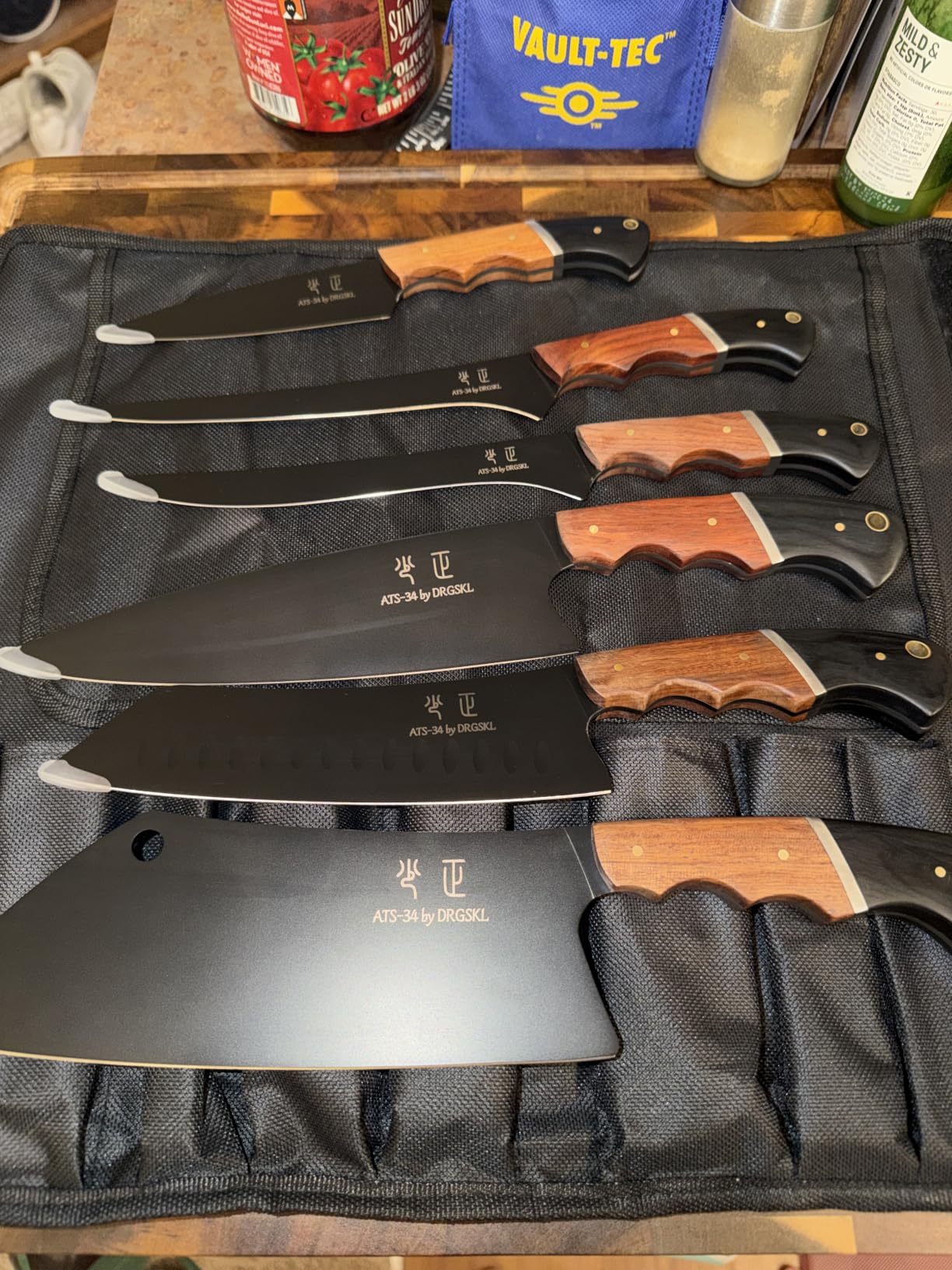
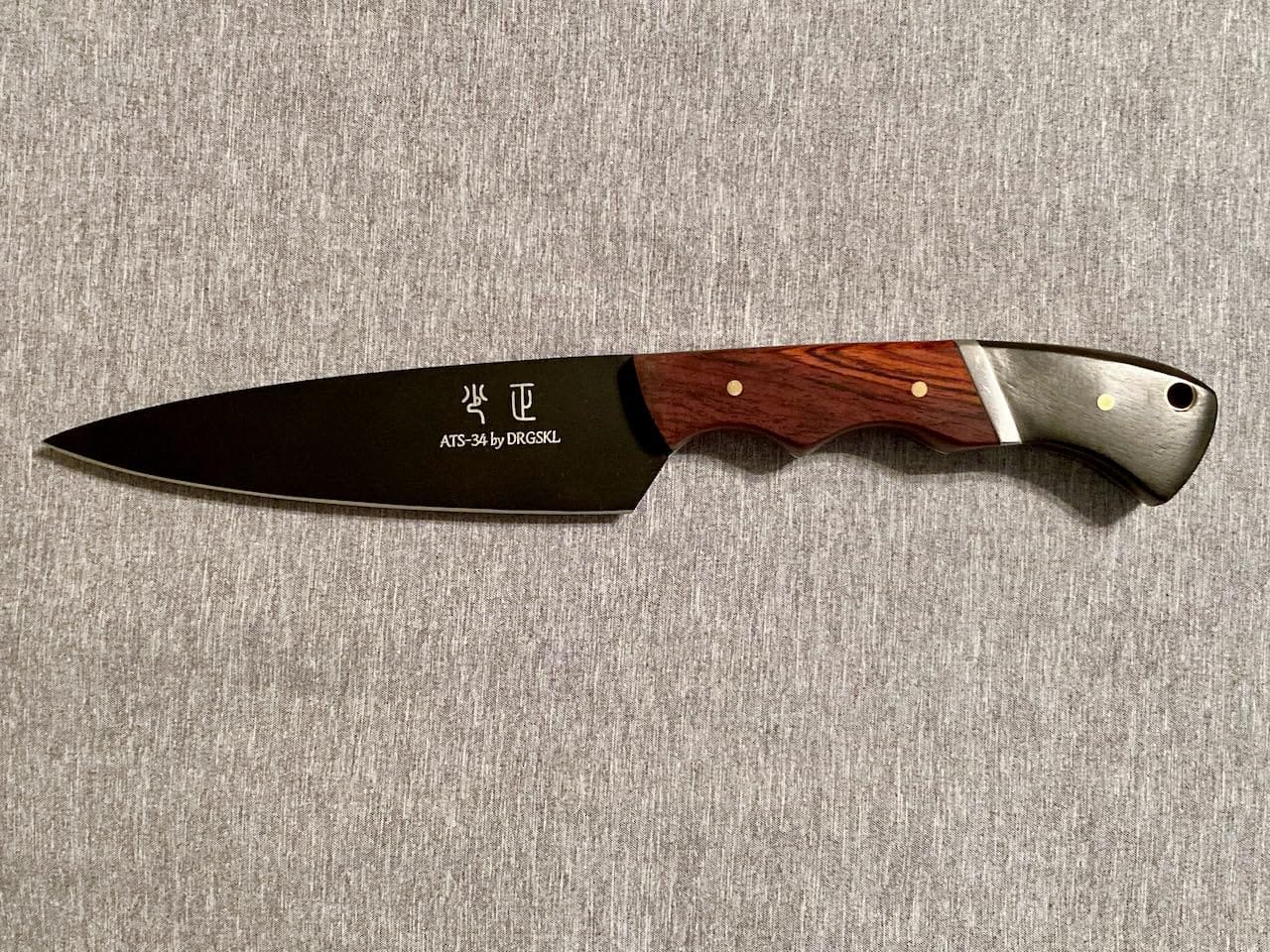
The Dual-Tech Black Shield coating with titanium plating gives the blade a striking black finish that resists corrosion. The hand-polished walnut handle with a sculpted finger groove feels secure in the hand and looks beautiful on a knife block or magnetic strip.
The multi-stage wet grinding process (Mizukensaku) used to sharpen this blade is a traditional Japanese technique that produces an exceptionally fine edge. Combined with ATS-34 steel at the right hardness, this knife holds its edge through extended trimming sessions.
Why I Recommend It
The longer 7.2 inch blade gave me extra reach when trimming the flat end of a large packer brisket. The walnut handle stayed comfortable through long sessions, and the titanium-plated blade looks stunning when you pull it out for backyard BBQ guests.
The gift-ready packaging makes this an excellent present for the BBQ enthusiast in your life. ATS-34 steel at this price point is unusual and represents real value.
Considerations Before Buying
The blade spine is not rounded, which can cause discomfort during extended trimming if your grip slides forward. The knife is made in China despite the Japanese steel branding, so manage that expectation. The walnut handle requires occasional mineral oil treatment to prevent drying and cracking.
6. OAKSWARE Pro Boning Knife 5.5 Inch – The Budget Workhorse
OAKSWARE Pro Boning Knife 5.5 Inch, German High Carbon Steel Fillet Knife
5.5 inch forged German steel blade
Triple-rivet handle
57+ HRC hardness
Pros
- Excellent value at sub-$10 price point
- Sharp factory edge that can be refined
- Good blade flexibility for joints
- Comfortable handle for extended use
- Works well for fish filleting and poultry
Cons
- Blade lands sharp-side-up when dropped
- Not the highest quality steel
- May need regular honing
If you want a real knife at a rock-bottom price, the OAKSWARE Pro Boning Knife delivers. At under $10, this 5.5 inch boning knife punches well above its weight class. The hand-polished 14-16 degree double-bevel edge is sharp out of the box and can be refined further on a whetstone.
The knife holds a 4.6 star average across 217 reviews, which is impressive for a knife at this price. Customers praise the sharpness and the value, with many reporting they use it as their primary trimming knife despite owning more expensive options.
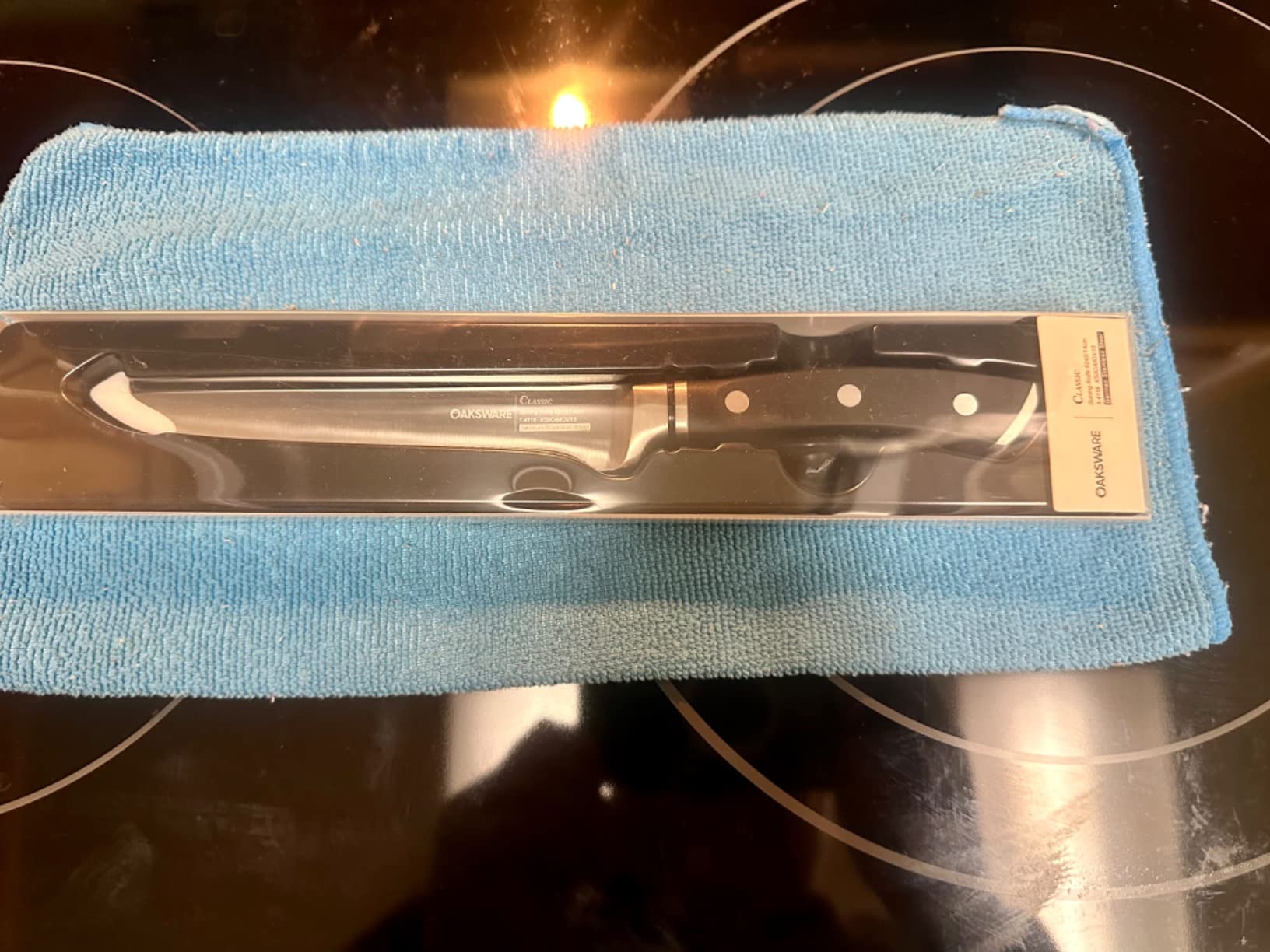
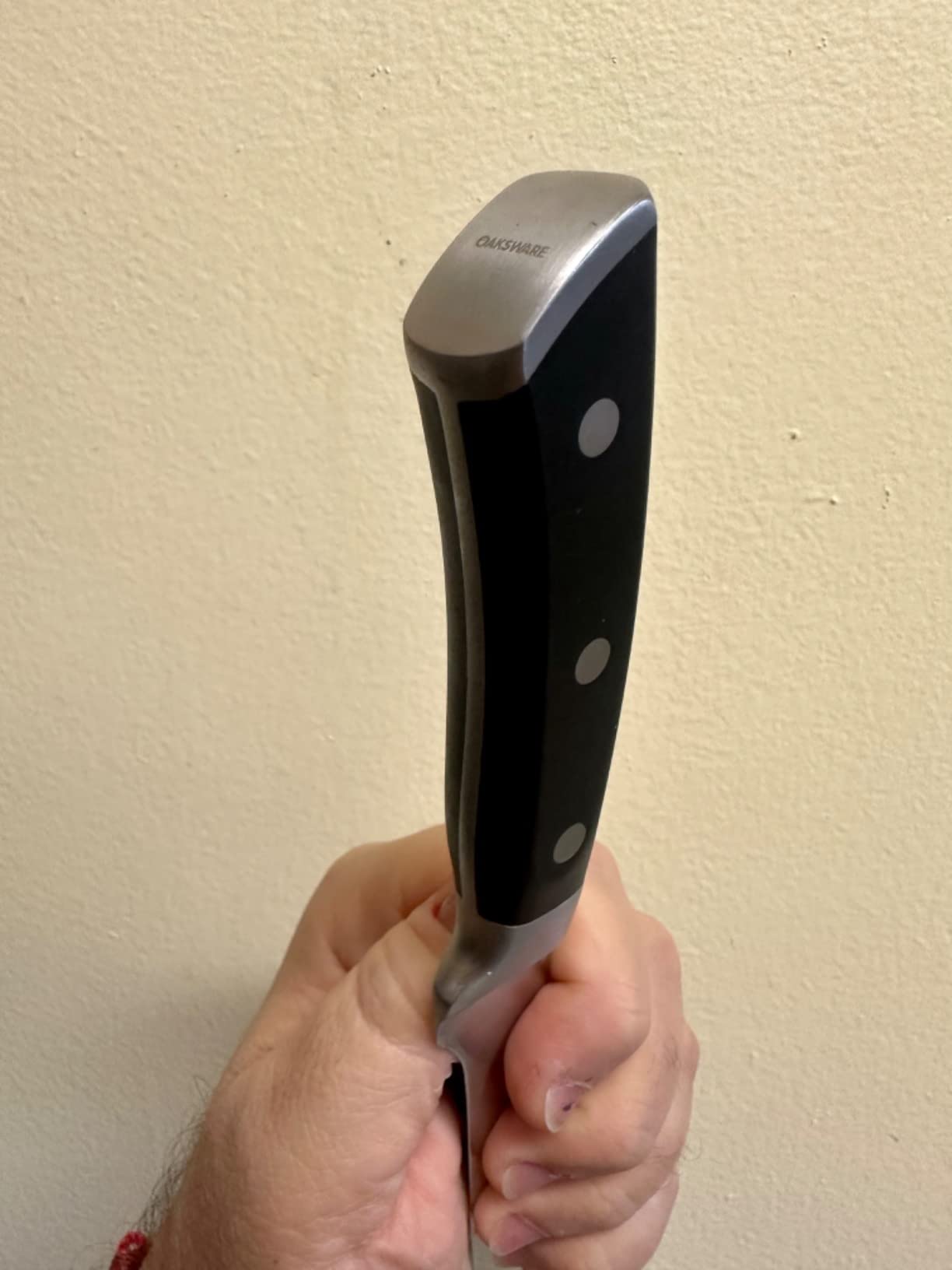
The 57+ HRC German steel blade construction with full tang and triple rivets is solid for a budget knife. The contoured handle with protective finger guard adds safety and comfort, which is helpful when you are learning brisket trimming technique.
The smart elevated blade design keeps the cutting edge off your counters, which reduces cross-contamination risk and keeps your kitchen cleaner during brisket prep. For someone just getting into smoking brisket, this is a low-risk entry point.
Best Use Cases
This is the knife I would gift to a friend who just bought their first smoker and wants to try brisket. The price means you are not out much if you damage or dull it during the learning curve, and the quality is good enough that it will not frustrate you with bad performance.
The 5.5 inch blade is shorter than the 6 inch standard, which makes it more maneuverable for beginners. Once you master technique, you can move up to a longer blade if needed.
What To Watch Out For
The balance issue causes the blade to land sharp-side-up when dropped, which is a real safety concern. Be careful around your cutting area. The steel is not as high quality as premium knives, so expect more frequent honing.
7. SPITJACK 6 Inch Curved Brisket Trimming Knife – The BBQ Specialist
SPITJACK 6 Inch Stainless Curved Brisket Prep, Trimming and Boning Knife
6 inch curved stainless blade
Food-grade stainless steel
Competition BBQ tested
Pros
- Super sharp for trimming brisket fat
- Curved blade ideal for brisket work
- Comfortable handle after hours of use
- Well balanced blade reduces fatigue
- Dishwasher safe
Cons
- Only 1 left in stock
- No sheath included
- May need sharpening over time
SPITJACK makes BBQ-specific tools, and their 6 inch curved brisket trimming knife is purpose-built for exactly the work you need it for. The knife has been tested by competition BBQ cooks and pitmasters, which shows in the design details.
At 4.6 stars across 472 reviews, this knife has earned its reputation among BBQ enthusiasts. The 6 inch curved design is optimized for following the natural curve of a brisket fat cap, which is the most common trimming task you face.
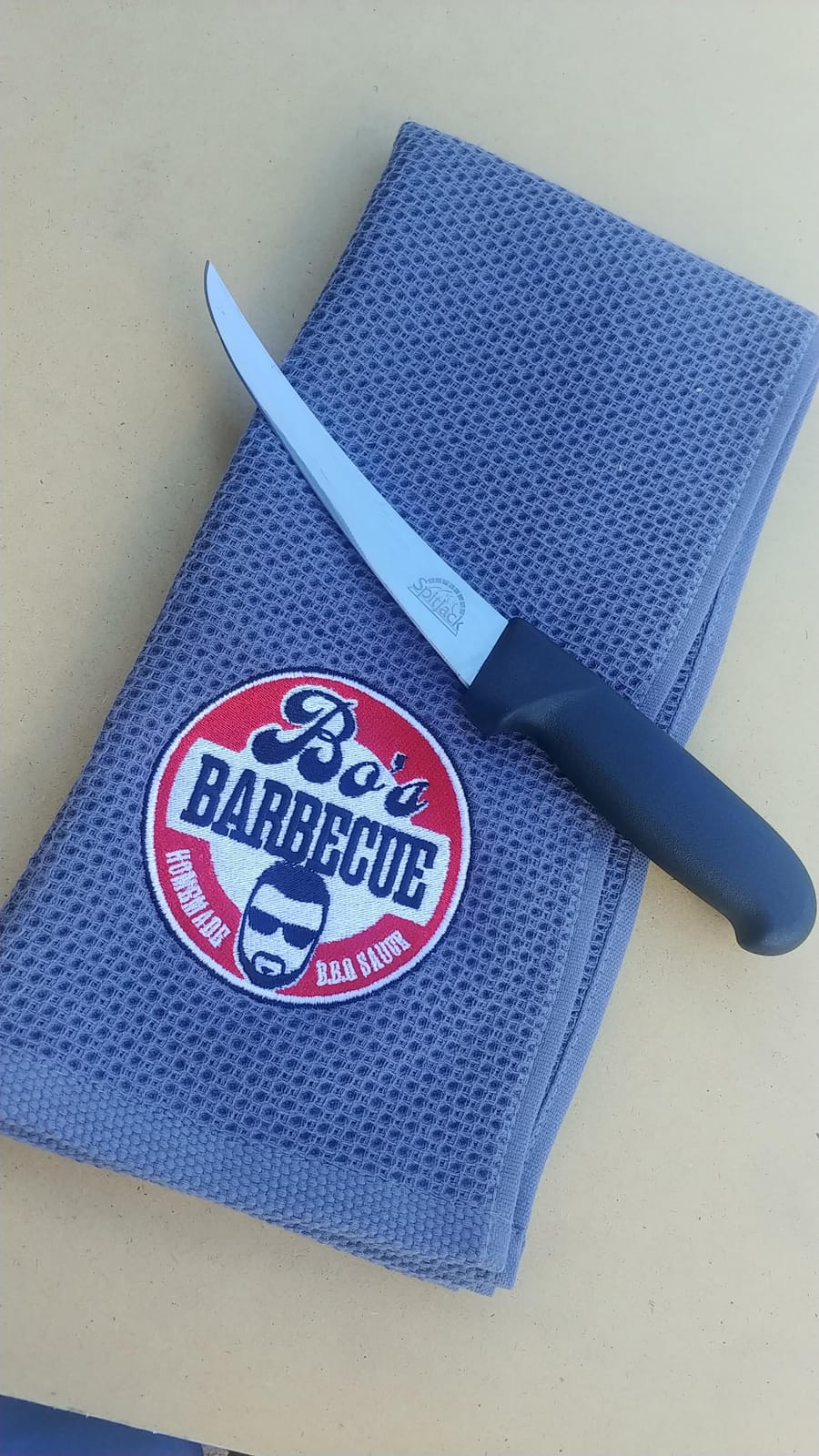
The food-grade stainless steel will not rust, which matters when you are working with wet meat and fat for hours. The dishwasher-safe construction is a nice convenience, though hand washing is still recommended for edge retention.
SPITJACK competes directly with the Victorinox models on price while offering a slightly different handle and blade geometry. For someone who specifically wants a BBQ-focused brand, this delivers on that promise.
Why BBQ Cooks Pick This
The curved blade is specifically designed for brisket trimming contours. The plastic handle is comfortable for hours of work, which matters when you are prepping multiple meats for a competition or large cookout.
The brand focuses entirely on BBQ and grilling tools, so you are getting a knife designed by people who actually trim briskets. That focus shows in the details.
The Limitations
Stock is limited and often shows only 1 left at any time, so you may need to wait for restock. No sheath is included, which limits your storage options. The blade will need occasional sharpening if you process many briskets.
8. Huusk Japan 11.5 Inch Hand Forged Slicing Knife – The Slicing Companion
Huusk Japan 11.5 Inch Hand Forged Slicing Knife for Meats, Ribs, Roasts – Brisket Carving Knife for BBQ and Christmas Gifts
11.5 inch ATS-34 high carbon blade
Wood handle with three rivets
58-60 HRC hardness
Pros
- Extremely sharp out of the box
- Heavy duty and well balanced
- Textured blade prevents food sticking
- Ergonomic wooden handle with good grip
- Suitable for thick gloves
Cons
- Made in China not Japan
- May be too thick for everyday cooking
- Edge retention concerns noted
While not a trimming knife in the strict sense, the Huusk Japan 11.5 inch slicing knife deserves a place on this list because trimming and slicing are two halves of the brisket workflow. After you trim and smoke, you need a long slicer to cut clean brisket slices without shredding the meat.
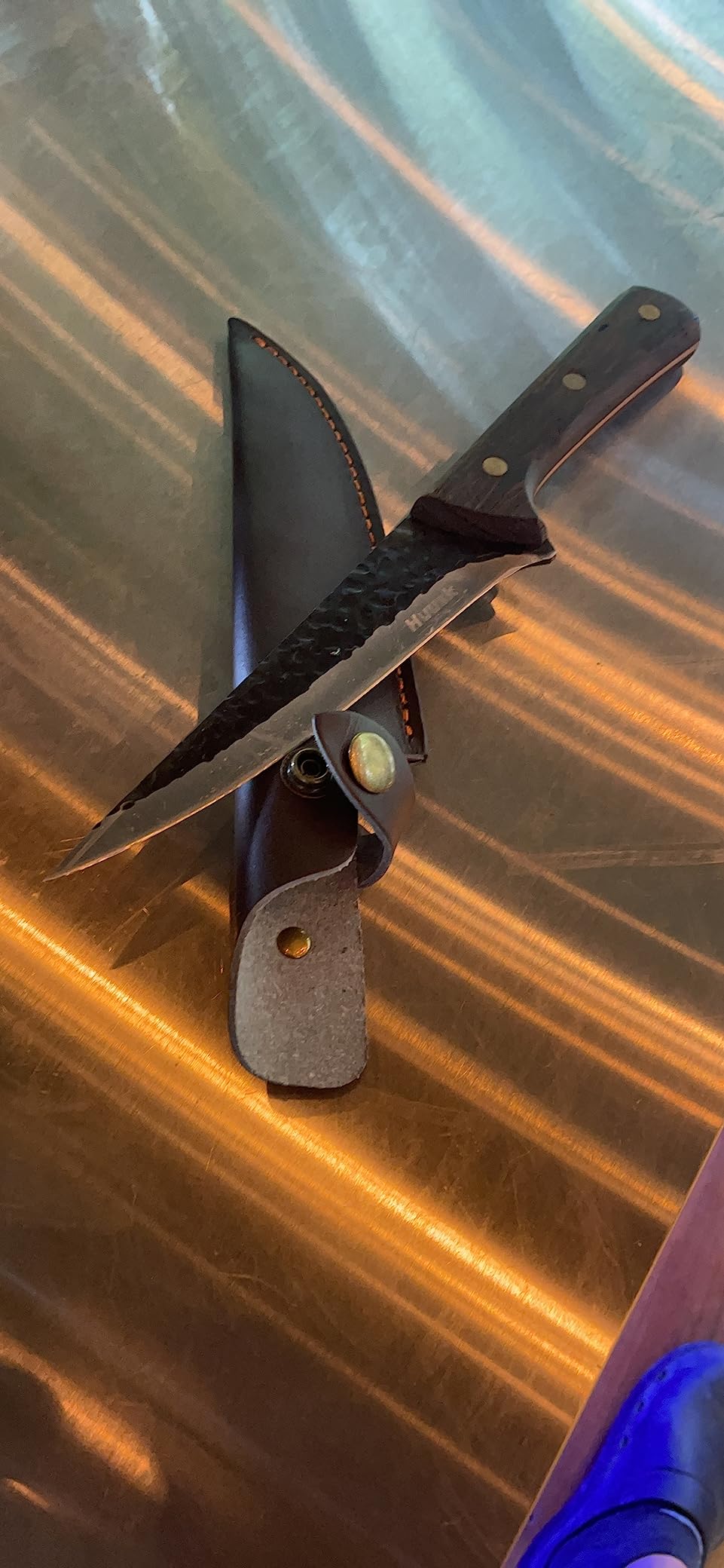
At 4.6 stars across 1357 reviews, this knife has a strong following among BBQ cooks who want a longer blade than standard slicing knives. The hand-forged ATS-34 high carbon steel construction is unusual in this price range.
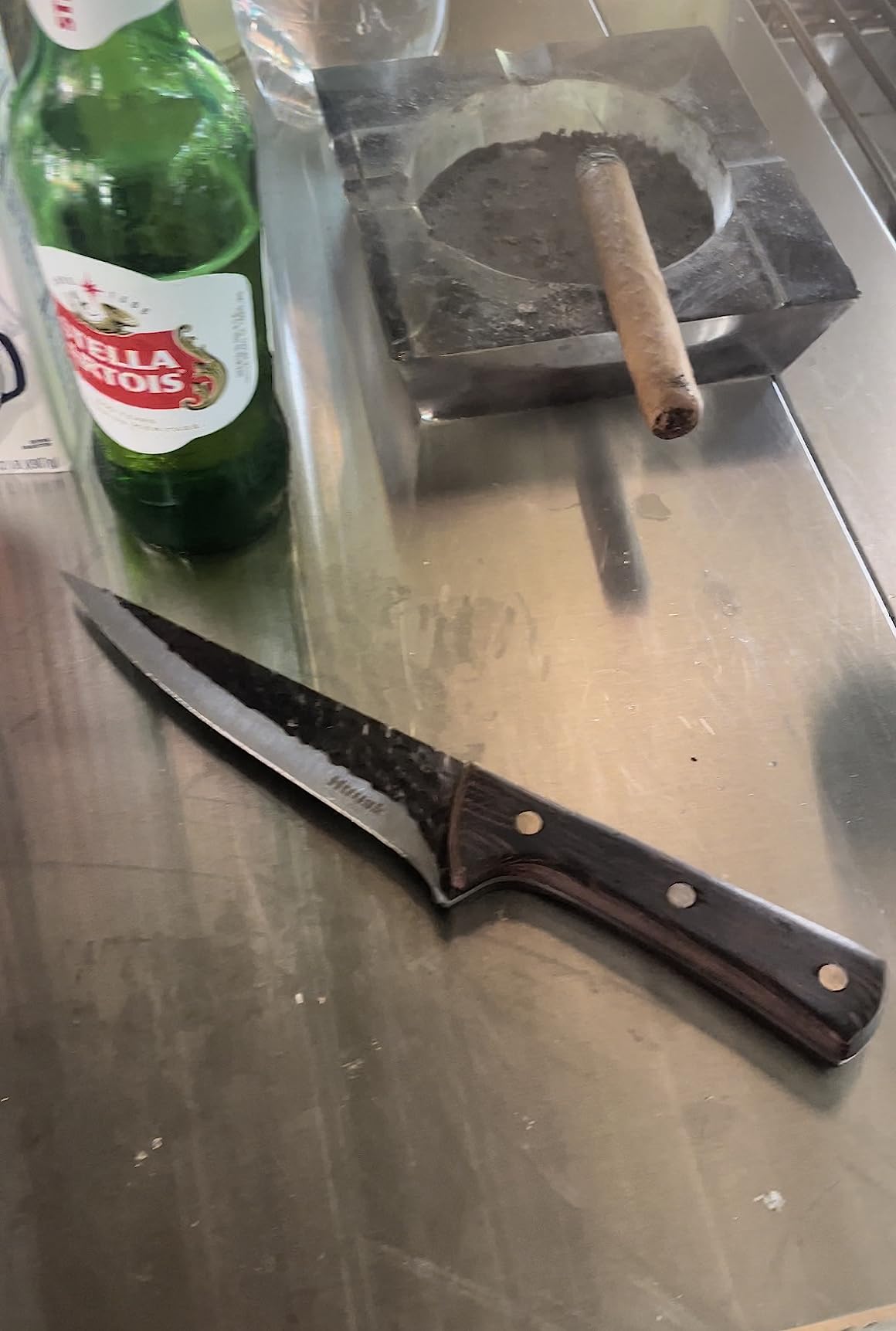
The 11.5 inch blade length lets you slice an entire flat across in a single stroke, which produces cleaner slices than shorter blades that require sawing back and forth. The textured blade surface helps prevent meat from sticking during long cuts.
The 58-60 HRC hardness is at the higher end for kitchen knives, which means excellent edge retention but also means the knife is more brittle and requires careful handling to avoid chipping.
Why Include A Slicing Knife
Many pitmasters buy a knife set that includes both a 6 inch boning knife for trimming and an 11-12 inch slicer for serving. This Huusk knife fills the slicing role with hand-forged quality at a price that beats most premium brands.
The wooden handle with three rivets is comfortable for slicing and looks great on a BBQ prep station. The textured blade finish prevents meat from sticking during those long slicing strokes across a whole brisket flat.
Considerations
The knife is made in China despite the Japanese branding, which is a fair concern for buyers who specifically want Japanese-made products. The 11.5 inch length is too long for everyday kitchen tasks but perfect for brisket slicing. Some users noted edge retention concerns after extended use.
Buying Guide: How to Choose the Best Knife for Trimming Brisket Fat
Picking the right brisket trimming knife is less about brand loyalty and more about matching blade geometry to your workflow. I have walked through enough brisket prep sessions to know that the wrong knife turns a 30 minute job into a frustrating hour. Here is what I look for in a quality boning knife for trimming.
Boning Knife vs Slicing Knife: The Critical Distinction
A boning knife has a narrow, pointed, often curved blade designed to separate meat from bone and slide under fat. A slicing knife has a long, often Granton-edged blade designed to make long, clean cuts across cooked meat. For trimming raw brisket fat before smoking, you want a boning knife. For slicing the finished brisket, you want a long slicer.
Many pitmasters own both. A 6 inch boning knife handles trimming, and a 10 to 12 inch slicer handles serving. Trying to use a slicer for trimming means you cannot navigate the curves of the fat cap, and trying to use a boning knife for slicing means you saw back and forth and shred the meat.
Blade Length: Why 5.5 to 7 Inches Hits the Sweet Spot
For brisket trimming, blade length between 5.5 and 7 inches gives you the best combination of maneuverability and reach. Shorter blades force you to make too many cuts. Longer blades get in the way when you are navigating the curves and corners of a packer brisket.
The 6 inch blade is the most common length and what most competition pitmasters reach for. If you have smaller hands or prefer more control, the 5.5 inch models work great. If you regularly process very large packers, the 7 inch models give you extra reach.
Blade Flexibility: Stiff, Semi-Stiff, or Flexible
Blade flexibility affects how the knife behaves in different trimming tasks. A stiff blade gives you more pushing power but cannot follow contours. A flexible blade follows contours beautifully but lacks pushing power. A semi-stiff blade splits the difference and is the most versatile for brisket work.
For brisket trimming specifically, I recommend semi-stiff or flexible. You spend most of your time sliding the blade under the fat cap and silver skin, which requires the blade to flex and follow the meat contours. A stiff blade tends to tear the meat when you try to follow curves.
Steel Type: German vs Japanese vs ATS-34
German steel (like X50CrMoV15) is softer, easier to sharpen, and more forgiving. Japanese steel (like VG-10 or AUS-10) is harder, holds an edge longer, but is more brittle. ATS-34 is a premium stainless steel known for excellent edge retention. For most home cooks, German steel is plenty. For enthusiasts who want the best edge retention, Japanese or ATS-34 is worth the upgrade.
The Rockwell hardness (HRC) scale tells you how hard the steel is. Knives in the 56-58 HRC range are well-balanced. Above 60 HRC is very hard but brittle. Below 55 HRC is soft and loses its edge quickly.
Handle Design: Why Grip Matters With Greasy Hands
When you are trimming a brisket, your hands will be slick with fat and meat juices. A slippery handle is a safety hazard. Look for handles with textured surfaces, rubberized materials, or contoured shapes that lock into your hand.
The Victorinox Fibrox handle is the gold standard for non-slip performance. Textured polypropylene and pakkawood also work well. Smooth wood or polished steel handles are beautiful but risky in a brisket prep workflow.
Edge Retention and Maintenance
No matter which knife you choose, you need to maintain the edge. A honing steel before each trim session realigns the edge and extends the time between sharpenings. A whetstone every few months restores a truly sharp edge. Dishwashers destroy knife edges, so always hand wash and dry immediately.
Frequently Asked Questions
What type of knife is best for trimming brisket?
A boning knife with a curved, flexible 6 inch blade is best for trimming brisket fat. The narrow pointed tip slides under the fat cap, and the curve follows the natural contours of the meat. The Victorinox Fibrox models are the industry favorite.
How do I trim the fat off a brisket?
Start with a cold brisket for easier handling. Lay the brisket fat-side up and use a sharp boning knife to score the fat cap in a checkerboard pattern. Then slide the blade between the fat and meat at a shallow angle, following the curve of the brisket. Leave about 1/4 inch of fat for moisture and flavor during smoking.
What kind of knife for trimming fat?
A flexible or semi-stiff boning knife is best for trimming fat. The flexibility lets the blade follow the contours of the meat without tearing. A 5.5 to 6 inch blade length is ideal. Avoid serrated knives for trimming because they tear rather than cut cleanly through fat.
Should you use a serrated knife to cut brisket?
A serrated knife works for slicing finished brisket at a BBQ, similar to how Aaron Franklin serves brisket. However, for trimming raw brisket fat before smoking, a plain-edge boning knife is much better. Serrated blades tear fat and meat instead of cutting cleanly.
What knives are best for cutting brisket?
For trimming raw brisket, a 6 inch curved boning knife like the Victorinox Fibrox Pro. For slicing finished brisket, an 11 to 12 inch slicer with a Granton edge. Many pitmasters own both. The Mercer Culinary and Cutluxe models are also excellent trimming options at lower price points.
Final Thoughts on Choosing the Best Knife for Trimming Brisket Fat
After researching these eight knives in depth, my top pick for the best knife for trimming brisket fat is the Victorinox Fibrox Pro 6 inch Curved Boning Knife. The 4.8 star average, 4106 reviews, NSF certification, and lifetime warranty make it the safest bet for both beginners and seasoned pitmasters. If you want flexibility, the Victorinox Fibrox Flexible version is the best value. If you want premium forged construction, the Cutluxe Artisan Series is worth the upgrade.
For trimming brisket fat, the right knife transforms your prep workflow from frustrating to effortless. Start with a quality 6 inch curved boning knife, keep it sharp with a honing steel, and you will wonder how you ever managed with a dull chef’s knife. Your bark will be cleaner, your trim time will be shorter, and your brisket will thank you.