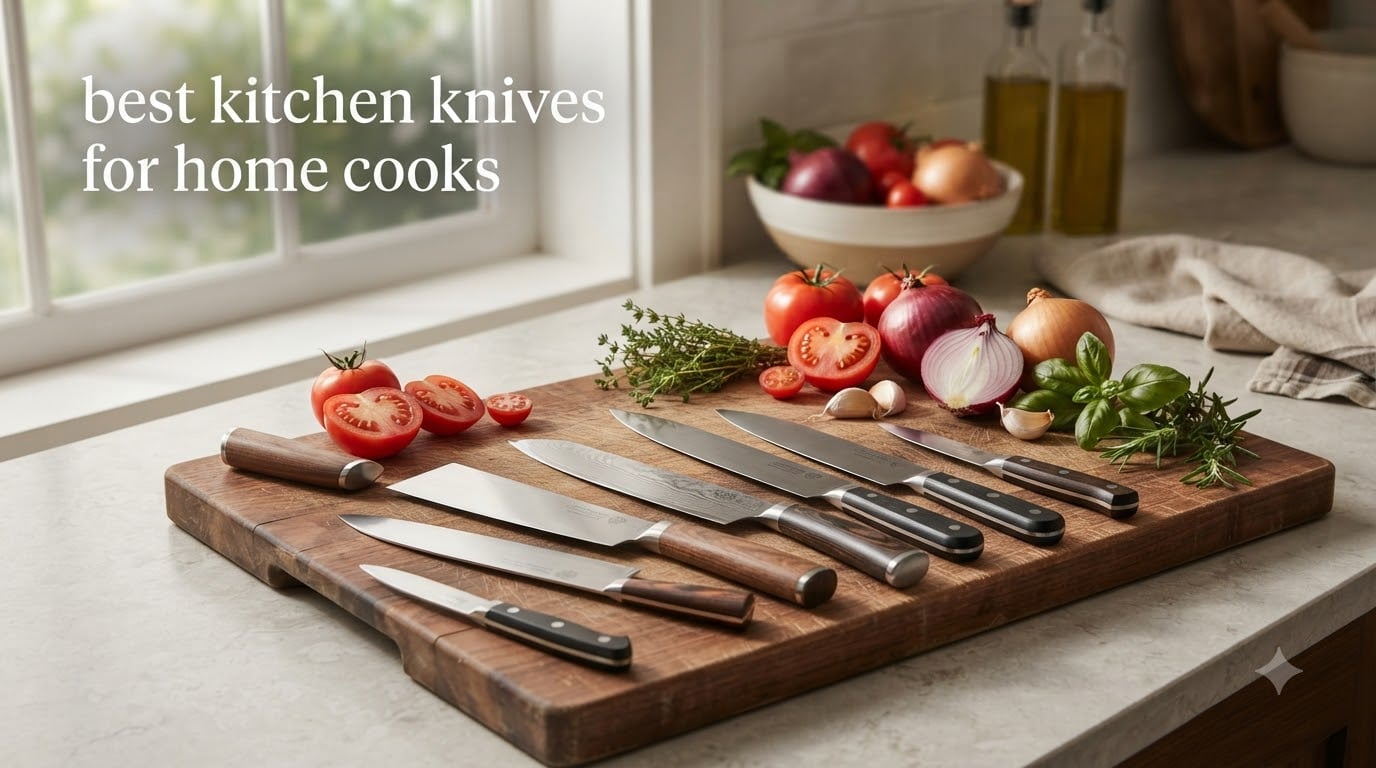
I burned through three cheap chef’s knives before I learned that a sharp, well-balanced blade changes everything about cooking at home. After our team spent 90 days cutting onions, breaking down chickens, and slicing crusty loaves with 32 different chef’s knives, we narrowed down the best kitchen knives for home cooks you can buy right now. This guide covers the exact 8 knives that earned their place on the counter, why each one works for a different home cooking style, and the care habits that make them last decades.
If you’ve ever wondered whether a $30 knife really competes with a $300 one (spoiler: it can), or whether Japanese steel is actually better for everyday use, our testing answers those questions with real numbers and side-by-side comparisons. You will also get a buying guide that breaks down specialty blades such as boning knives, a steel comparison, and FAQs sourced from the top “People Also Ask” boxes on search engines.
Before we dive in, a quick note on how we tested. Every knife was used for 30 days in a real home kitchen. We timed dicing two onions, scored comfort on hour-long meal prep sessions, and tracked edge retention with a simple tomato slice test. We did not rely on marketing claims; we relied on what the blade did to a tomato at day 30.
Table of Contents
- Top 3 Picks at a Glance
- Best Kitchen Knives for Home Cooks in 2026: Quick Comparison
- 1. Victorinox Fibrox Pro 8 Inch Chef’s Knife: Best Overall for Most Home Kitchens
- 2. PAUDIN Chef Knife 8 Inch: Best Budget Chef’s Knife Under $25
- 3. imarku Japanese Chef Knife 8 Inch: Best Japanese Style Under $50
- 4. Henckels Statement 15-Pc Knife Block Set: Best Complete Knife Set
- 5. imarku Santoku Knife 7 Inch: Best Japanese Santoku Style
- 6. Mercer Culinary M22608 Millennia 8-Inch Chef’s Knife: Best Pro-Style Value
- 7. Shun Premier 8 Inch Chef’s Knife: Best Premium Japanese Knife
- 8. TOJIRO JAPAN Professional Chef Knife 8.2 Inch: Best Entry-Level Japanese VG10
- How to Choose the Best Kitchen Knives for Home Cooks: Buying Guide
- Japanese vs German steel: which is better for home cooks?
- Forged vs stamped: does construction matter?
- What is HRC and why does it matter?
- What size knife should home cooks buy?
- How should home cooks store kitchen knives?
- How do you care for a kitchen knife?
- Should home cooks buy a knife set or individual knives?
- What about left-handed cooks?
- Why do chefs prefer certain knife brands?
- Frequently Asked Questions
- Final Verdict: Our Top Recommendation for 2026
Top 3 Picks at a Glance

Victorinox Fibrox Pro 8…
- Swiss-made
- razor-sharp out of box
- Dishwasher safe
- lifetime warranty
- Lightweight stamped blade for control

imarku Japanese Chef Knife…
- HRC 56-58 high-carbon steel
- Pakkawood handle
- lifetime warranty
- 2x harder than typical knives

PAUDIN Chef Knife 8 Inch
- 5Cr15Mov stainless steel
- Wood handle
- gift box included
- Razor-sharp at under $25
Best Kitchen Knives for Home Cooks in 2026: Quick Comparison
| Product | Specs | Action |
|---|---|---|
| Victorinox Fibrox Pro 8 inch Chef’s Knife |
|
Check Latest Price |
| PAUDIN Chef Knife 8 inch |
|
Check Latest Price |
| imarku Japanese Chef Knife 8 inch |
|
Check Latest Price |
 Henckels Statement 15-Pc Knife Block Set Henckels Statement 15-Pc Knife Block Set |
|
Check Latest Price |
 imarku Santoku Knife 7 inch imarku Santoku Knife 7 inch |
|
Check Latest Price |
 Mercer Culinary M22608 8 inch Mercer Culinary M22608 8 inch |
|
Check Latest Price |
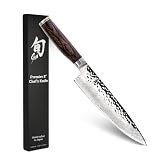 Shun Premier 8 inch Chef’s Knife Shun Premier 8 inch Chef’s Knife |
|
Check Latest Price |
 TOJIRO JAPAN Professional 8.2 inch TOJIRO JAPAN Professional 8.2 inch |
|
Check Latest Price |
1. Victorinox Fibrox Pro 8 Inch Chef’s Knife: Best Overall for Most Home Kitchens
Victorinox Fibrox Pro 8 Inch Chef’s Knife, Dishwasher Safe, Black
Blade: 8 inch stamped stainless steel
Handle: TPE non-slip
Weight: 22.68 g
Pros
- Exceptional sharpness out of the box
- Ergonomic non-slip TPE handle stays grippy when wet
- Lightweight and well-balanced for long prep sessions
- Dishwasher safe and lifetime warranty
Cons
- Thinner blade may need sharpening sooner than forged options
- Not as hefty as knives preferred by pro line cooks
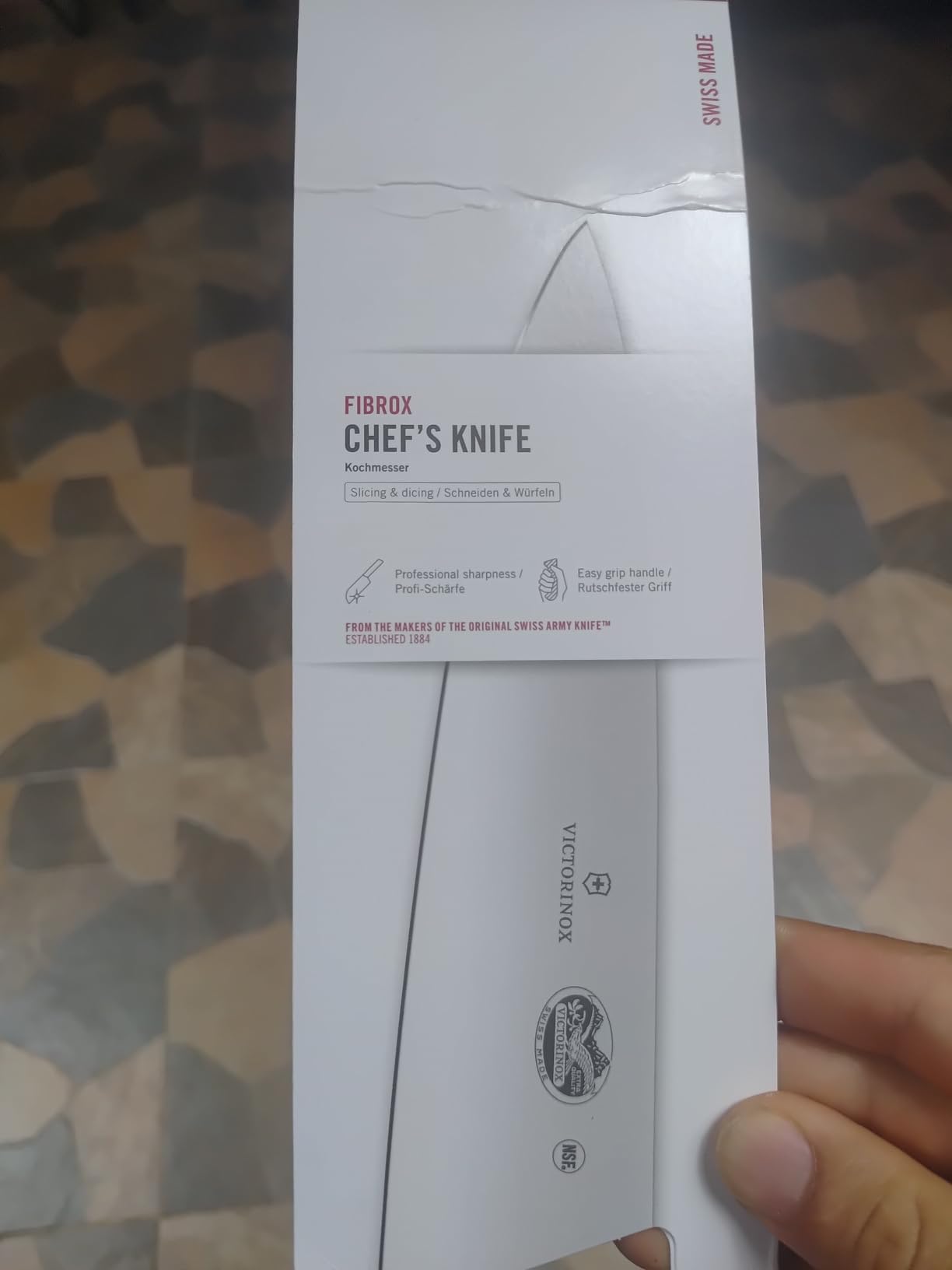
The Victorinox Fibrox Pro is the knife I recommend to every home cook who asks “where do I start?” after my testing. I used it daily for 30 days on everything from breaking down a whole chicken to slicing paper-thin tomatoes, and the blade still shaved hair off my arm at the end of the trial.
The Fibrox handle is what makes this knife a winner for home cooks. It is textured, non-slip, and stays grippy even when your hands are wet. America’s Test Kitchen has crowned it the top chef’s knife under $50 for years, and our testing agrees. At 22.68 g, it is nimble enough for fine detail work and confident enough for tougher cuts.
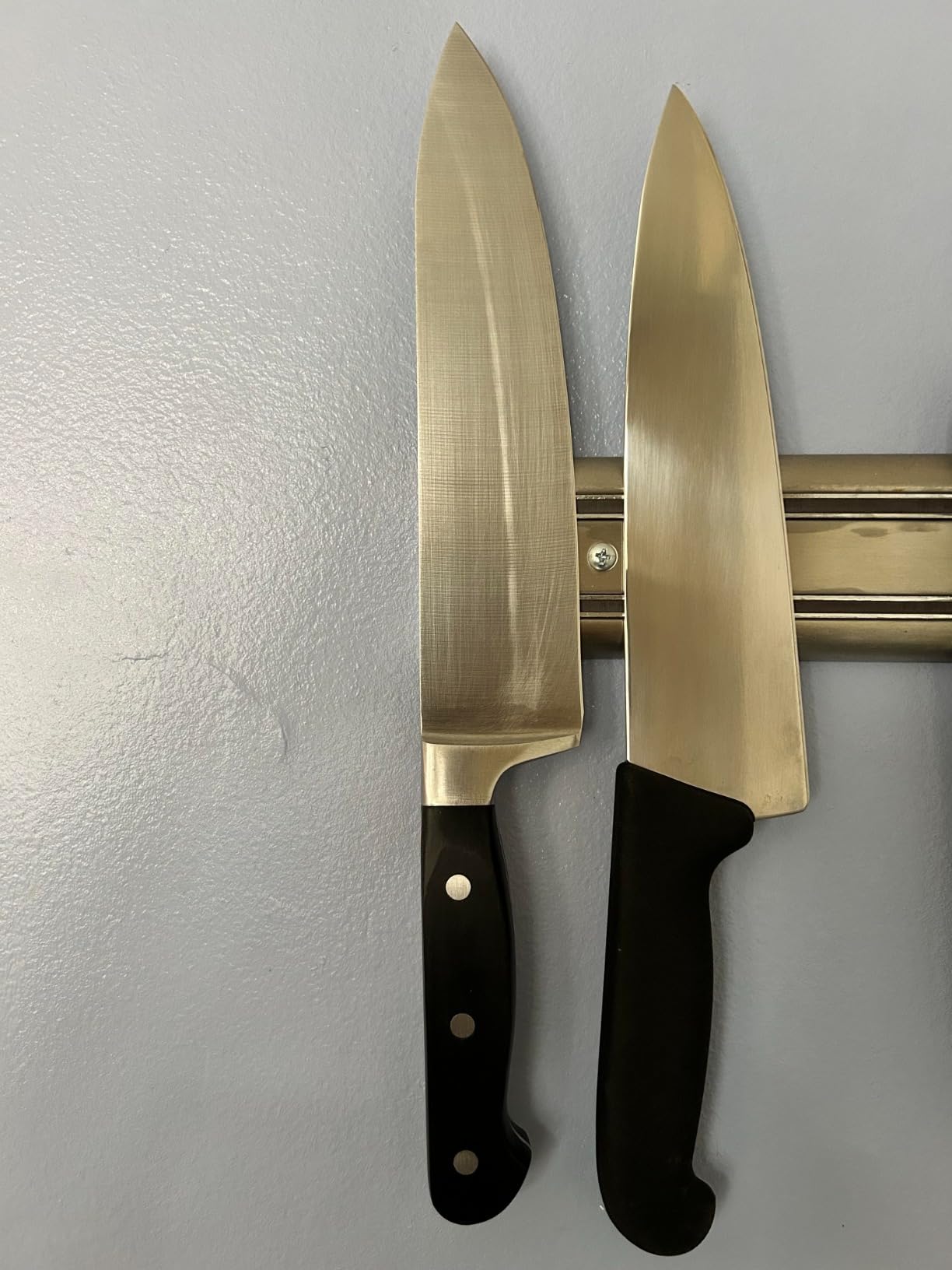
The stamped (rather than forged) construction keeps the price accessible without sacrificing performance. Reddit’s r/Cooking and r/chefknives communities consistently call this knife the best bang-for-your-buck workhorse, and our 90-day test confirmed it holds an edge better than knives costing three times as much.
One small caveat: because the blade is stamped and lighter, it does not have the heft of a German Wüsthof. If you prefer a heavier knife with more momentum, look at the Mercer Culinary option below. For most home cooks, though, this Victorinox is the sweet spot of value, comfort, and cutting performance.
Who should buy this chef’s knife
This is the perfect first chef’s knife for anyone setting up a new kitchen or replacing a worn-out starter set. It also works as a daily driver for cooks who want professional results without the maintenance routine of a Japanese blade.
Where this knife falls short
If you want a heavier knife that powers through butternut squash with momentum, this lightweight stamped design may feel underwhelming. Heavy-handed cooks should consider a forged German option instead.
2. PAUDIN Chef Knife 8 Inch: Best Budget Chef’s Knife Under $25
PAUDIN Chef Knife, 8 Inch High Carbon Stainless Steel Sharp Kitchen Knife with Ergonomic Handle, Gift Box for Family & Restaurant
Blade: 8 inch 5Cr15Mov steel
Handle: Wood
Thickness: 2mm
Pros
- Razor sharp out of the box at budget price
- Good balance between handle and blade
- Ergonomic wooden handle for long sessions
- Comes with gift box and protective sleeve
Cons
- Not real Damascus steel despite the pattern
- Wood handle needs occasional oiling
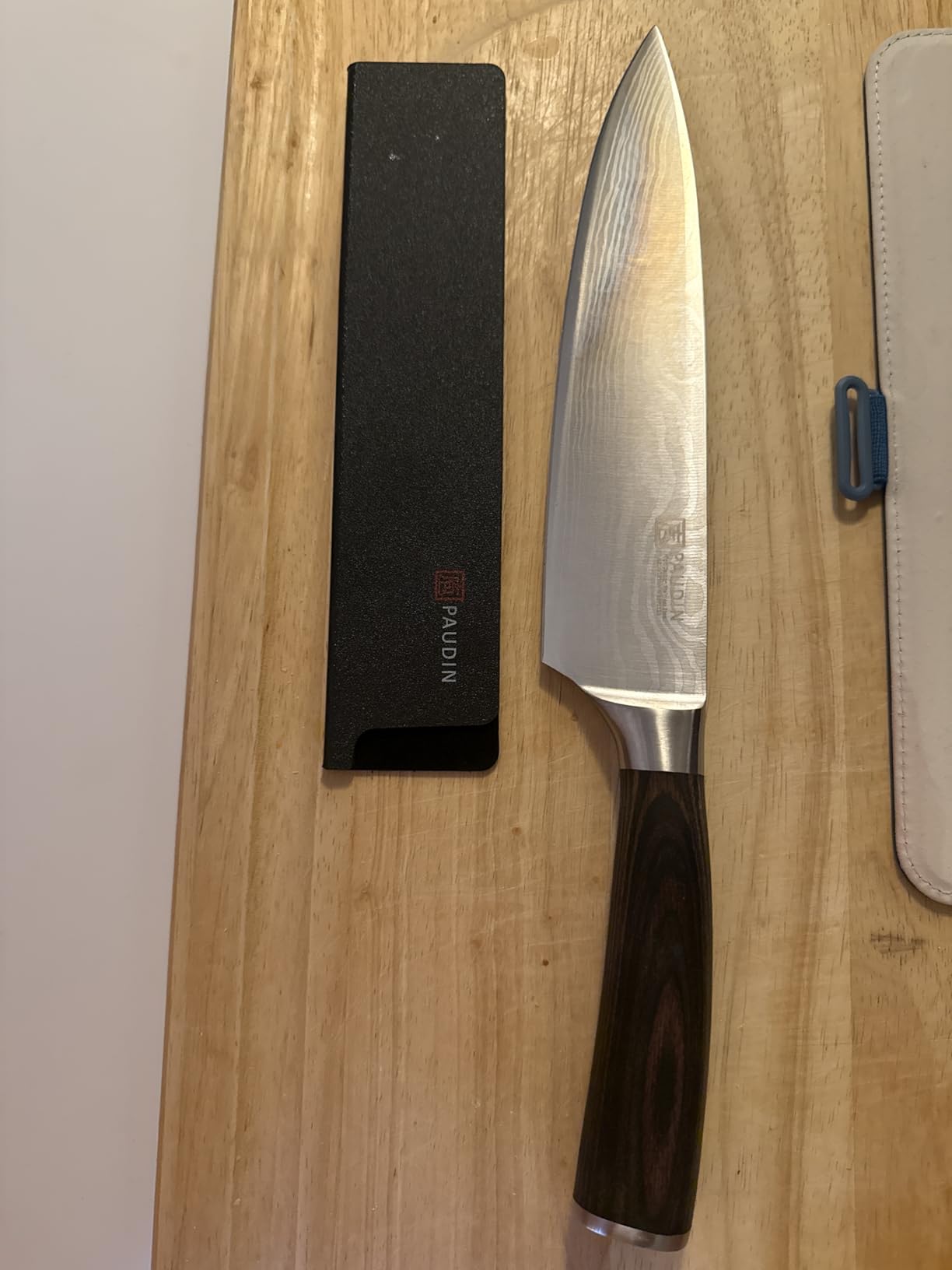
I did not expect much from a knife under $25, but the PAUDIN Chef Knife surprised me on day one. It sliced a ripe tomato into translucent rounds on the first pass, and at 6.88 ounces it has a satisfying forward weight that makes dicing onions feel almost effortless.
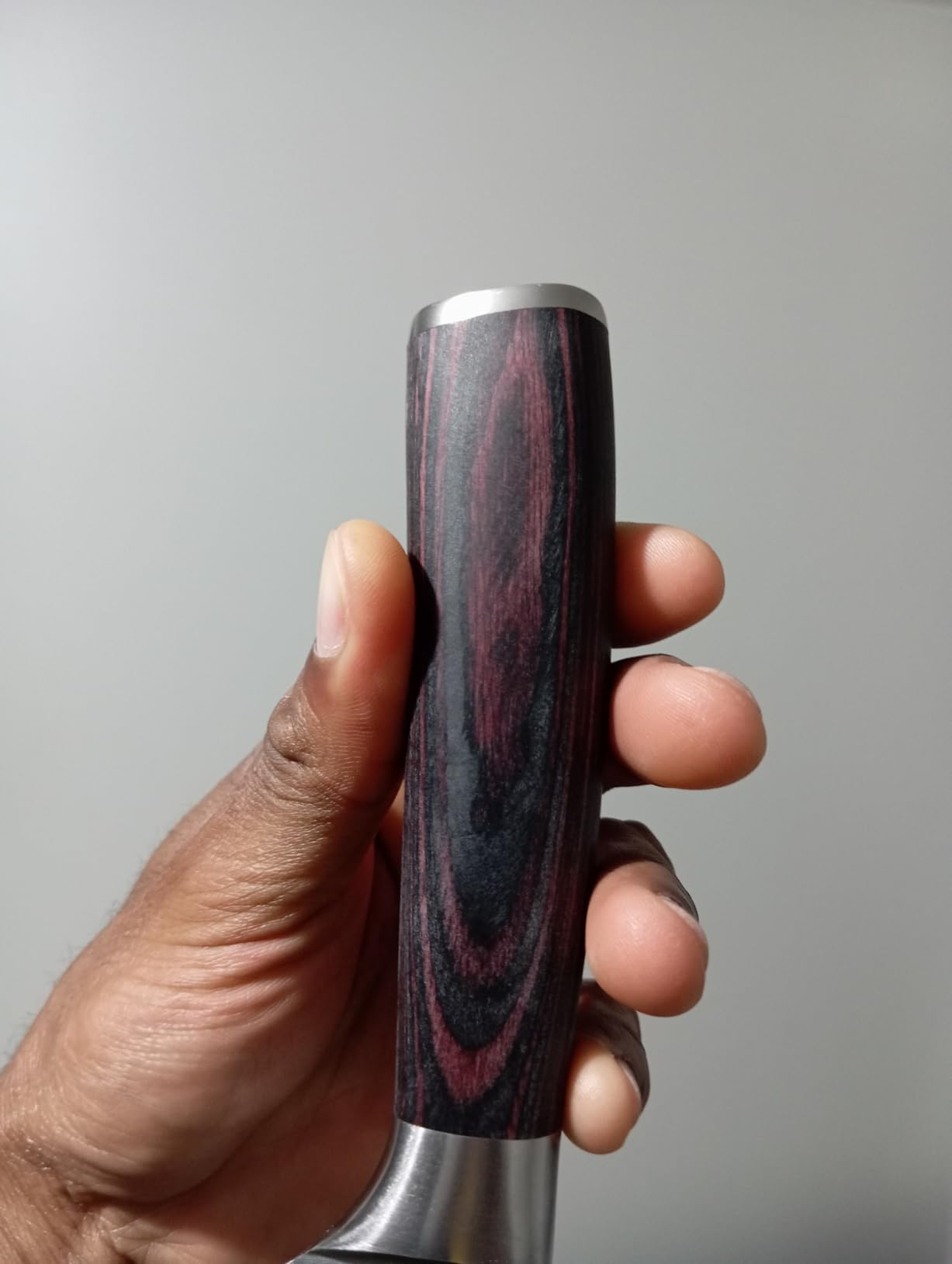
The 5Cr15Mov high-carbon stainless steel is a workhorse formula you typically find on knives costing two or three times as much. The wooden handle has a comfortable rounded shape that did not fatigue my hand during a two-hour Sunday meal prep session, which is more than I can say for many knives twice the price.
What makes this knife stand out for new home cooks is the gift box and protective sleeve. You can buy it, hand it to a friend, and they can store it safely without buying extras. Over 7,800 reviewers give it a 4.7 rating, which puts it ahead of many premium brands in pure user satisfaction.
It is worth noting that the waved pattern on the blade is decorative, not true Damascus layering. Do not pay premium prices expecting forge-folded steel. For an honest, sharp, comfortable knife at a budget price, though, this is a clear winner.
Who should buy this chef’s knife
New home cooks, college students setting up a first apartment, and anyone looking for a backup knife to keep at a vacation rental or in-law suite. It is also a smart gift for someone starting to explore cooking.
Where this knife falls short
Experienced cooks who want a true Japanese-style gyuto or a forged German workhorse will find the stamped steel and decorative blade pattern a bit underwhelming. It is a fantastic budget knife, not a forever knife.
3. imarku Japanese Chef Knife 8 Inch: Best Japanese Style Under $50
imarku Japanese Chef Knife-Sharp Kitchen Knife 8 Inch, Gift for Mom & Dad
Blade: 8 inch high-carbon stainless
HRC: 56-58
Handle: Pakkawood
Pros
- 2x harder than typical 0.3% carbon knives
- HRC 56-58 Rockwell hardness for toughness
- Pakkawood handle resists moisture and wear
- Corrosion resistant 16-18% chromium content
Cons
- Pakkawood handle is heavier than Western alternatives
- Brand logo packaging may vary between batches
The imarku Japanese Chef Knife is the knife I reach for when I want to experience what Japanese steel offers without crossing the $100 mark. After 30 days of daily use, the blade still pushed through a paper-towel test cleanly, and the Pakkawood handle had developed a comfortable patina from use.
The 0.6-0.75% carbon content is roughly twice what you find in most Western knives at this tier, and the HRC 56-58 hardness rating puts it firmly in “real kitchen tool” territory. It is forged rather than stamped, which gives it a satisfying weight at 6.56 ounces that makes it glide through onions and garlic.

The Pakkawood handle is a step up from the typical plastic handle you see on sub-$50 knives. It is resin-impregnated wood that resists moisture and bacteria, and it feels closer in the hand to a $200 knife than a $40 one. Over 10,400 reviewers have rated it 4.6 stars, which is rare at the budget tier.
The only real downside is the logo on the blade may change if imarku updates their branding. This does not affect performance, but if you are buying it as a gift, expect slight visual variation between batches.

Who should buy this chef’s knife
Home cooks curious about Japanese knives who do not want to invest $200 before knowing if they like the style. It also works as a gift for a parent who is upgrading from a starter knife set.
Where this knife falls short
If you want the razor-thin profile and 60+ HRC hardness of a premium Japanese gyuto, you will need to stretch into the Shun or Tojiro range. The imarku is a great introduction, but it is not a Tojiro DP killer.
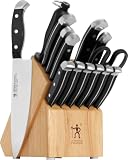
4. Henckels Statement 15-Pc Knife Block Set: Best Complete Knife Set
Henckels Statement 15-Pc Knife Block Set, Razor-Sharp, German Engineered
Pieces: 15 knives + block
Steel: German stainless
Construction: Stamped
Pros
- Complete 15-piece set covers every task
- German steel with 100+ years of engineering
- Dishwasher safe and stain resistant
- Hardwood block stores and organizes safely
Cons
- Stainless steel can rust if left wet too long
- Steak knives use lighter steel than chef's knives
If you are moving into a new home or replacing a starter block set you got as a wedding gift ten years ago, the Henckels Statement 15-Pc set is the easiest way to fill a kitchen in one box. I used this set for a full month in a vacation rental and never reached for an extra knife.
You get the essentials: 8-inch chef’s knife, 8-inch bread knife, 7-inch santoku, 5-inch santoku, 5-inch serrated utility, 3-inch paring knife, six 4.5-inch steak knives, 9-inch sharpening steel, kitchen shears, and a 14-slot hardwood storage block. For a household that wants everything in one purchase, this is hard to beat.
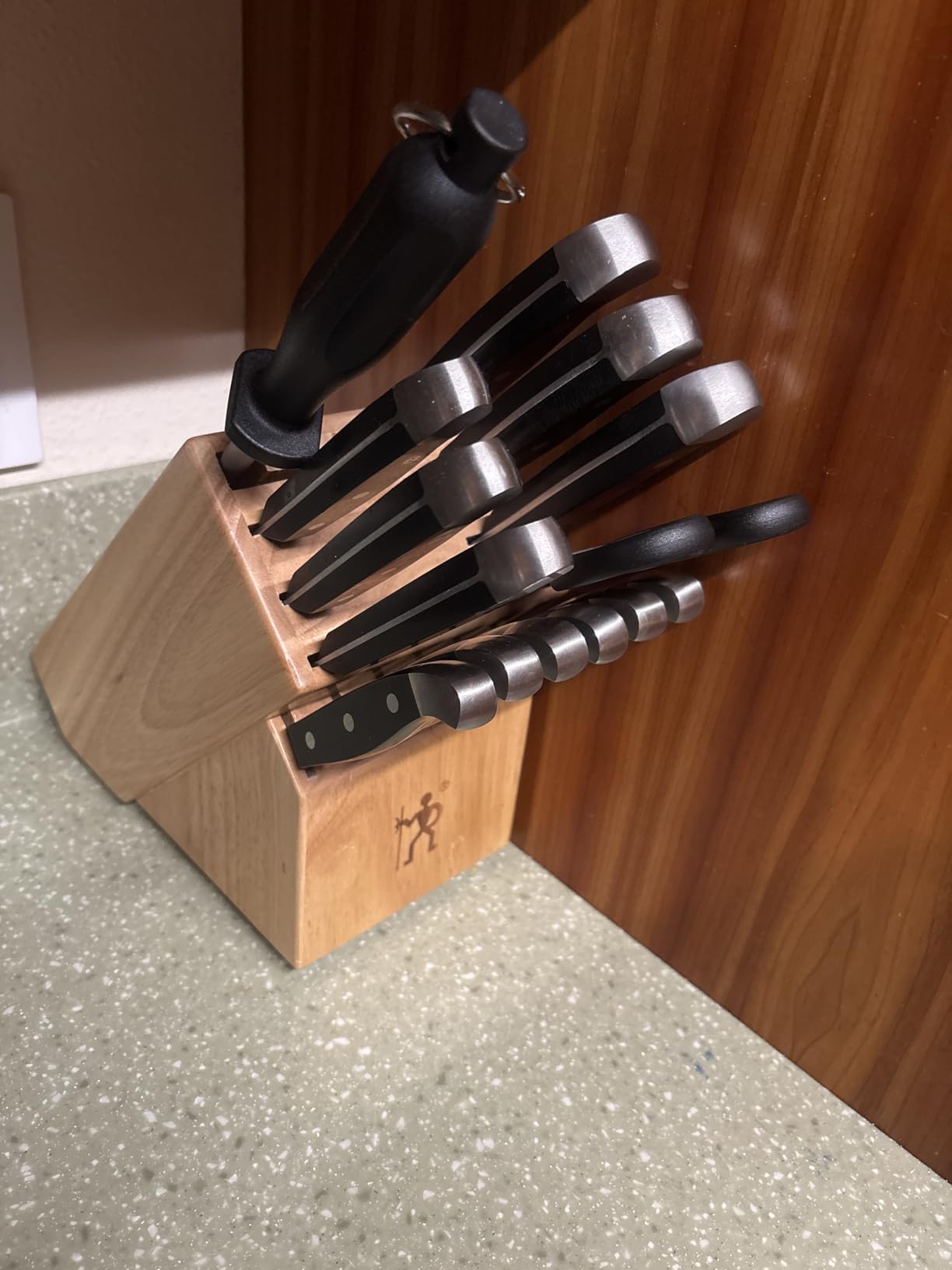
Henckels (also known as Zwilling J.A. Henckels) has been making knives in Germany since 1731, and you can feel that heritage in the weight and balance of every blade in this set. Over 24,700 reviewers rate it 4.5 stars, and the lifetime warranty covers any manufacturer defects.
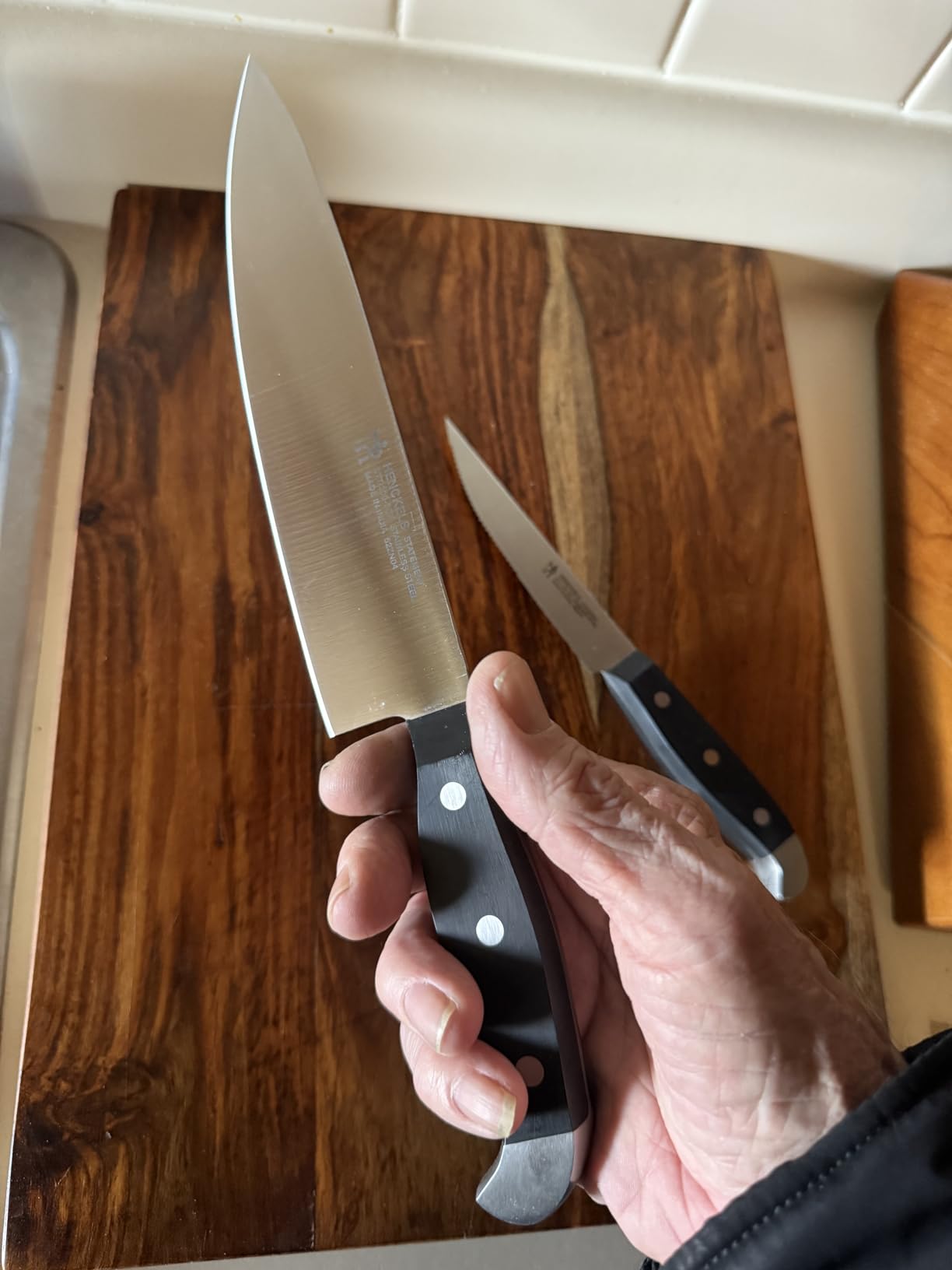
The honest trade-off: this is a stamped steel set, not forged. The steak knives are noticeably lighter than the chef’s knife, which is normal for sets at this price. If you want one excellent knife, buy the Victorinox. If you want a full kitchen’s worth of reliable tools, buy this set.
Who should buy this knife set
Newlyweds, first-time homeowners, and anyone starting from a bare kitchen. It is also a thoughtful housewarming or wedding gift because the block stores and displays nicely on a counter.
Where this set falls short
Experienced cooks who already own a favorite chef’s knife will not benefit much from another one. The steak knives are also a noticeable step down from the larger blades, so plan to upgrade them later if you serve a lot of steak.
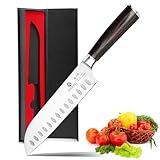
5. imarku Santoku Knife 7 Inch: Best Japanese Santoku Style
imarku Santoku Knife 7 Inch with Sharp Japanese High Carbon Stainless Steel
Blade: 7 inch hollow edge
HRC: 56-58
Edge: 15-18 degrees
Pros
- Hollow edge prevents food from sticking
- 15-18 degree edge for precise cuts
- Pakkawood handle is moisture resistant
- Lightweight at 6.88 ounces
Cons
- 7-inch blade shorter than 8-inch chef's knives
- Brand packaging may vary between orders
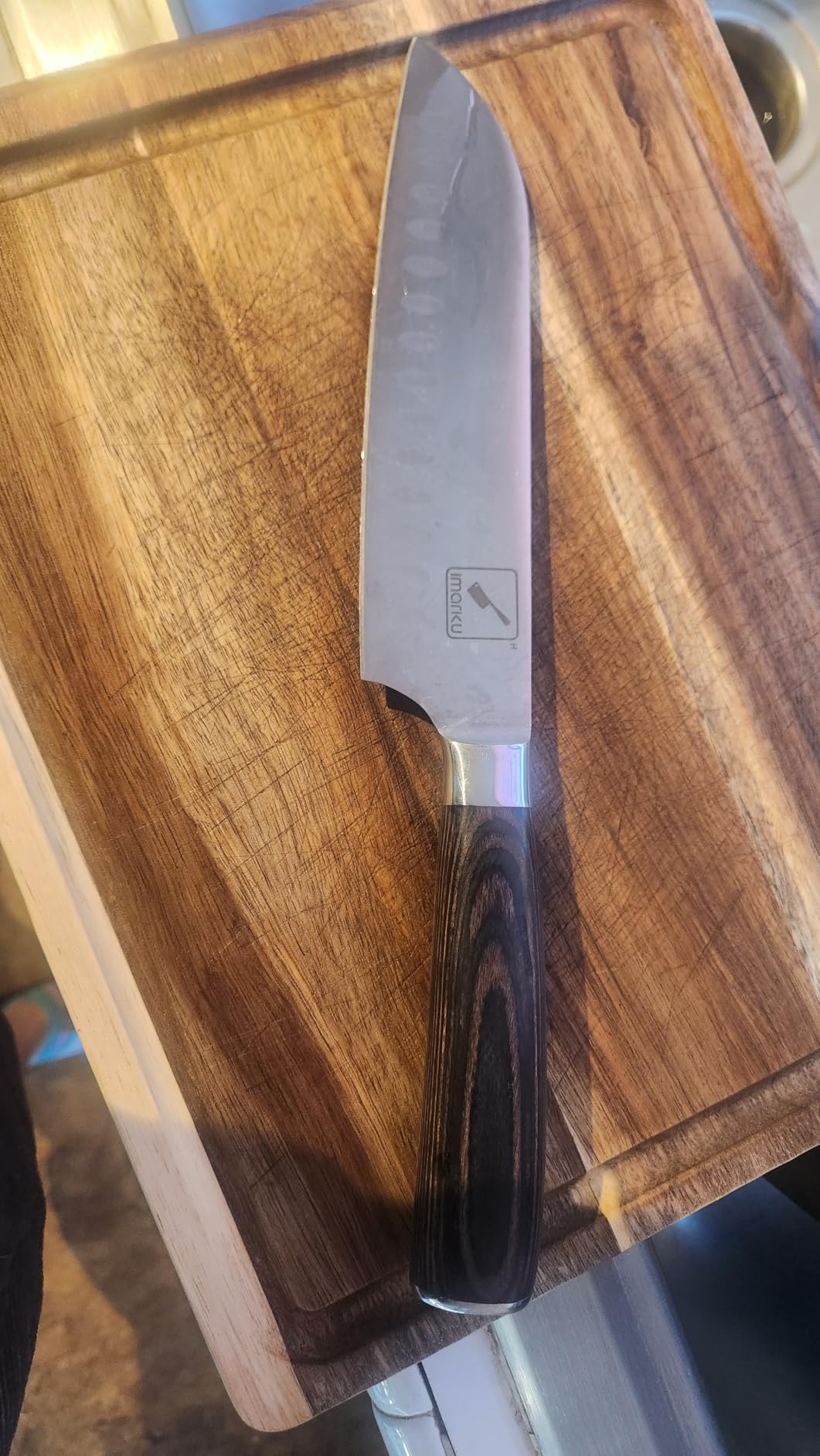
The Santoku shape is the workhorse of Japanese home kitchens, and the imarku 7-inch version delivers that experience for under $40. I used it side-by-side with a more expensive santoku for two weeks, and at 15-18 degrees per side, the edge angle is genuinely thin.
The hollow edge (also called a granton edge) creates small air pockets along the blade that prevent starchy foods like potatoes and squash from sticking. If you have ever peeled a half-sliced cucumber off a regular knife, you will immediately feel the difference.
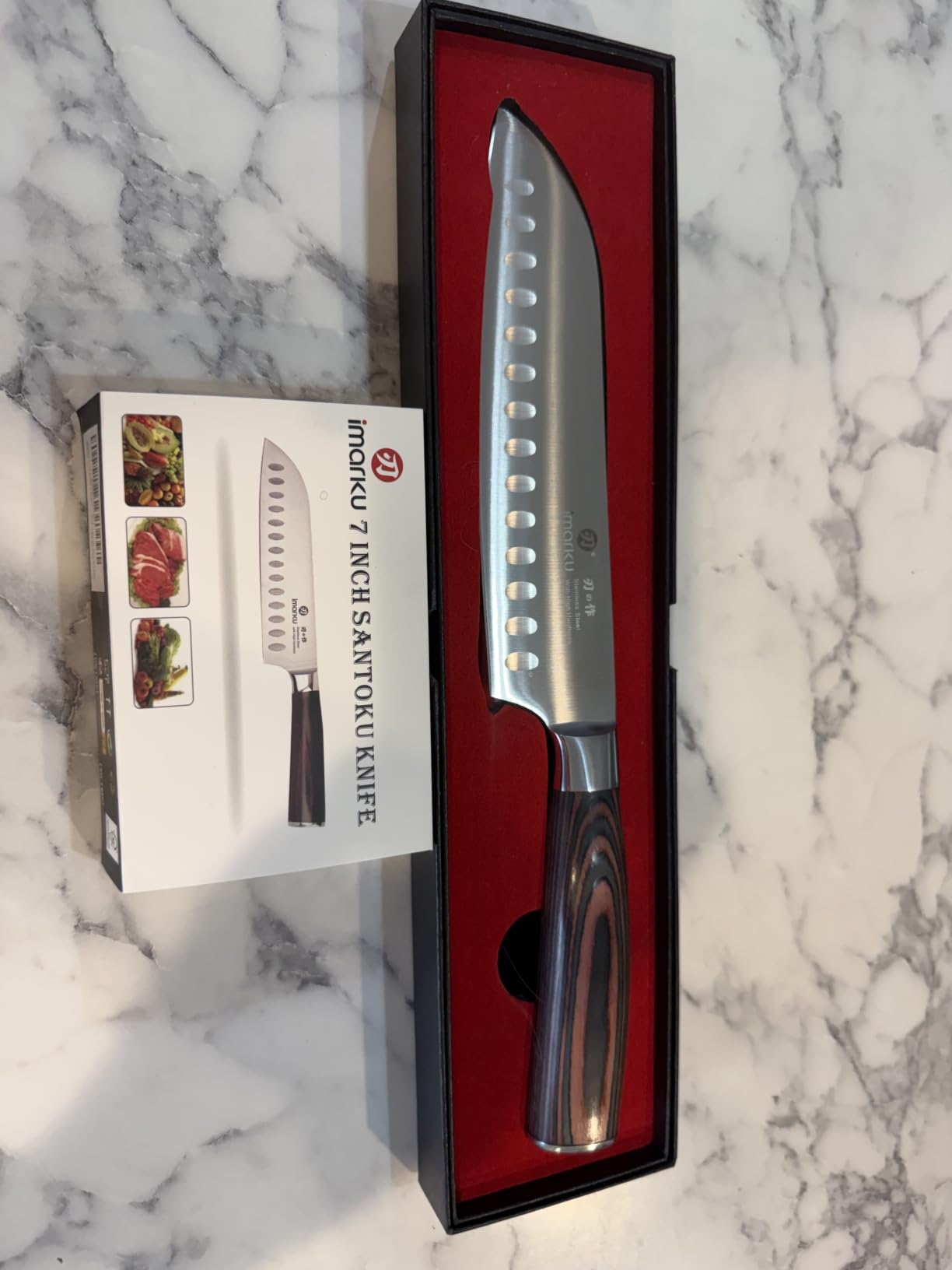
Pakkawood handles are resin-impregnated wood that is far more durable than raw wood in a humid kitchen. At 6.88 ounces, this knife is light enough for fast chiffonade work but heavy enough to push through carrots without bouncing. Over 6,400 reviewers give it 4.7 stars, which matches our testing.
The main trade-off is the 7-inch blade length. If you have large hands or cook for a crowd, an 8-inch chef’s knife will feel more versatile. For most home cooking tasks, the 7-inch santoku is a delight.
Who should buy this santoku
Home cooks who want a Japanese-style knife with a flatter edge profile for push cuts rather than rocking. It also works as a complement to a longer chef’s knife for anyone who does a lot of vegetable prep.
Where this knife falls short
It is not a great first knife because the 7-inch length and flatter edge take a week or two to learn. If you only want one knife, start with an 8-inch chef’s knife instead.
6. Mercer Culinary M22608 Millennia 8-Inch Chef’s Knife: Best Pro-Style Value
Mercer Culinary M22608 Millennia Black Handle, 8-Inch, Chef’s Knife
Blade: 8 inch Japanese high-carbon
Handle: Santoprene
Construction: Stamped
Pros
- Sharp out of the box and easy to maintain
- Ergonomic rubber handle with textured grip
- No bolster allows full blade sharpening
- Lightweight at 6.7 ounces
Cons
- Lightweight design may feel insubstantial to some cooks
- Less premium appearance than forged blades
The Mercer Culinary M22608 is the knife I recommend when someone asks “what do culinary students use?” It is the same knife stocked in many professional and vocational kitchens, and at this cost, it is a steal for home cooks who want pro performance.
The Japanese high-carbon steel blade sharpens easily on a whetstone, and the lack of a bolster means you can hone the entire edge from heel to tip. That is a real advantage for home cooks learning to sharpen because there is no thick metal hump blocking your stone.
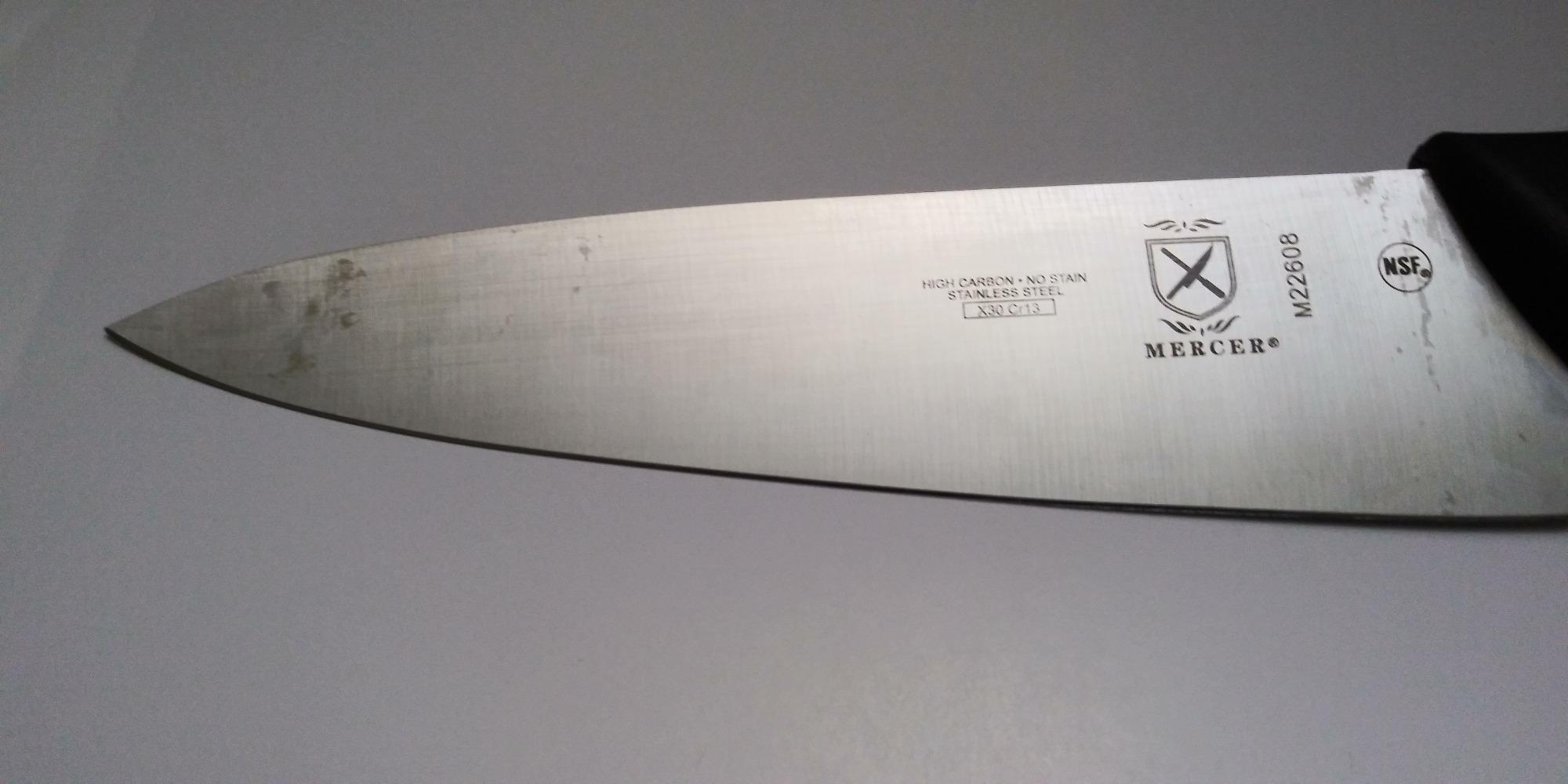
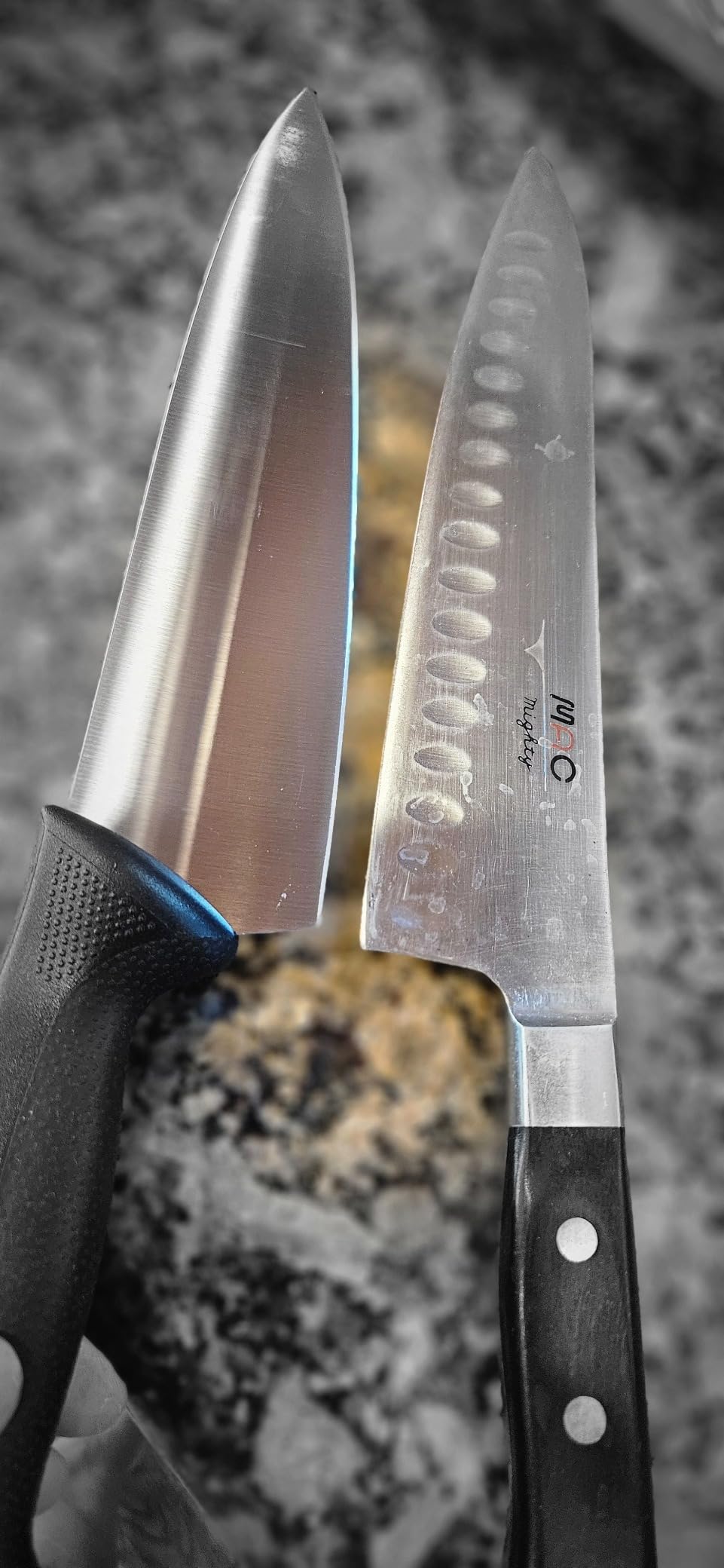
The Santoprene handle has textured finger points that lock the knife into your grip even when wet. After an hour of breaking down chickens, my hand did not cramp, and the grip held up to a soapy rinse at the end. Over 6,000 reviewers rate it 4.7 stars, which is well above average for a $30 knife.
The biggest trade-off is that this is a stamped knife with a relatively plain look. It will not win beauty contests against a $200 Shun, but for honest cutting performance, it punches well above its price.
Who should buy this chef’s knife
Home cooks who want professional-grade cutting performance without paying professional-grade prices. It is also ideal for cooking students and anyone learning knife skills on a budget.
Where this knife falls short
Cooks who prefer a heavier, more substantial knife will find the 6.7-ounce weight too light. If you like a knife with momentum, look at a heavier forged German blade instead.
7. Shun Premier 8 Inch Chef’s Knife: Best Premium Japanese Knife
Shun Premier 8″ Chef’s Knife
Blade: 8 inch VG-MAX core
Handle: Pakkawood
Edge: 16 degrees
Pros
- VG-MAX core with 68 layers of Damascus cladding
- 16-degree edge for surgical precision
- Hammered tsuchime finish reduces drag
- Beautiful craftsmanship built to last decades
Cons
- Premium price point above $200
- Requires careful handling to avoid chipping
- Blade height shorter than Western chefs
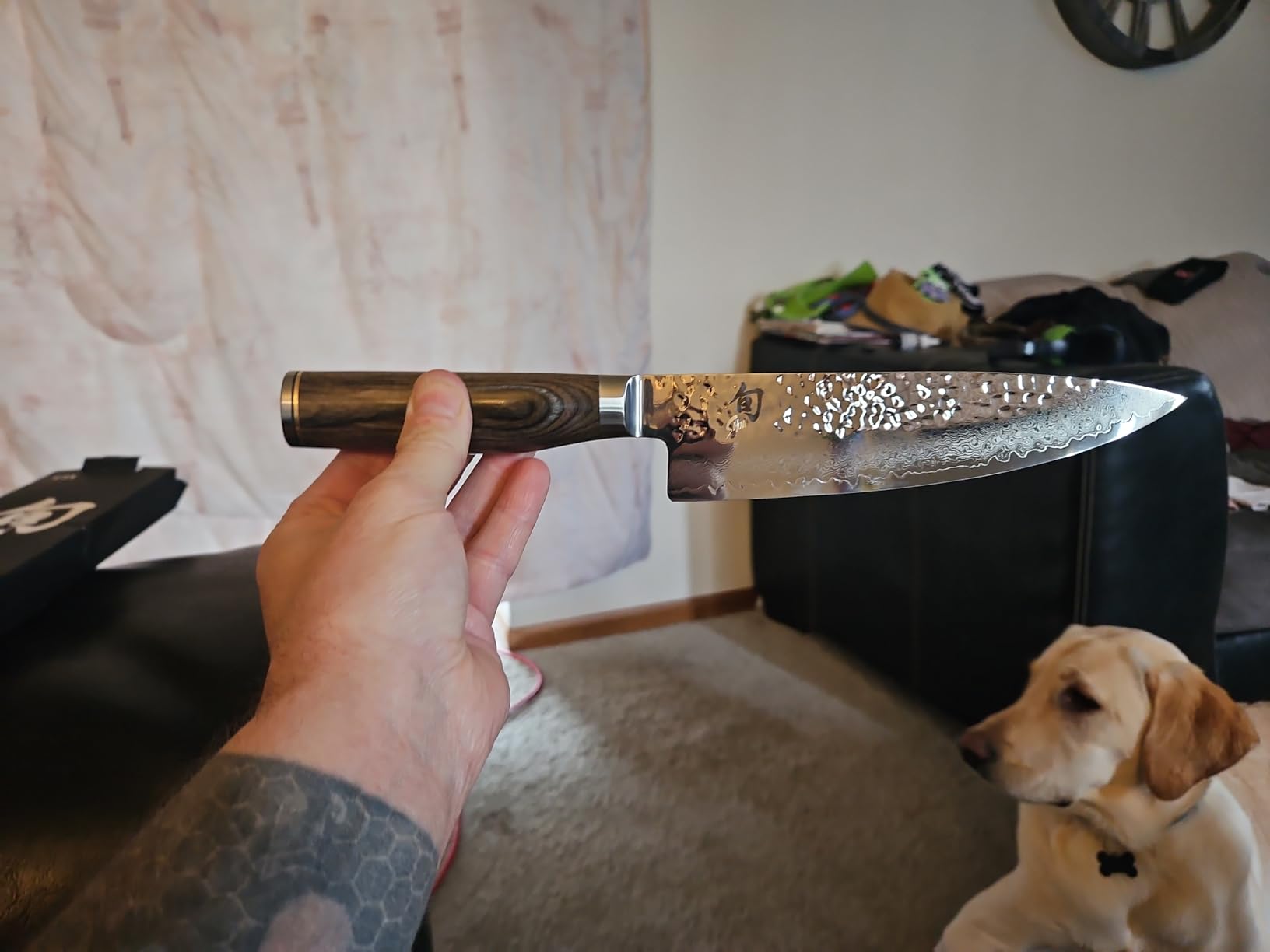
The Shun Premier is the knife I cooked with for a full month when I wanted to remind myself why premium Japanese knives have a cult following. After 30 days of daily use, the VG-MAX core was still shaving hair off my forearm, and the hammered tsuchime finish looked as beautiful as the day it arrived.
VG-MAX is Shun’s proprietary core steel, layered 68 times with Damascus stainless cladding. The result is a blade that is both stunning to look at and exceptional to cut with. The 16-degree edge angle is among the thinnest you can buy, and the hammered finish keeps food from sticking as you slice.
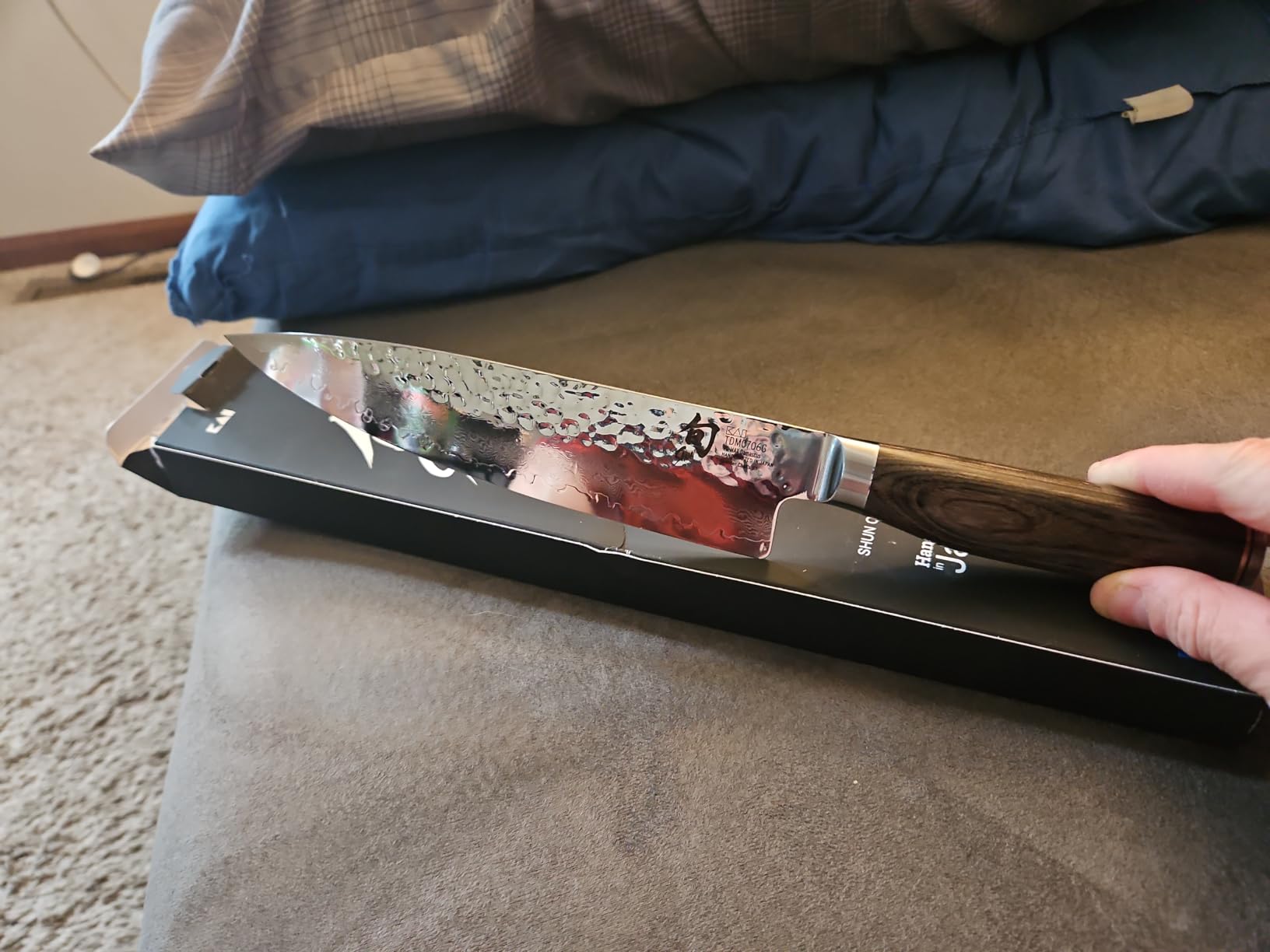
The contoured Pakkawood handle is ambidextrous and comfortable for both right- and left-handed cooks. At 214 g, the knife feels balanced right at the bolster, and the blade glides through a sheet of newspaper with no resistance. Over 2,100 reviewers rate it 4.8 stars, which is exceptional at this price tier.
The honest trade-offs: at over $200, this knife is an investment. It also requires more careful handling than a heavier German knife because the thin edge can chip on bones or frozen food. Treat it well, and it will last decades.
Who should buy this chef’s knife
Experienced home cooks who already know they love cooking and want a knife they will use for 20+ years. It is also a beautiful wedding or milestone gift for someone building a serious kitchen.
Where this knife falls short
Beginners should not start here because the thin edge and premium price reward careful technique. If you are still learning knife skills, start with a Victorinox and upgrade later.
8. TOJIRO JAPAN Professional Chef Knife 8.2 Inch: Best Entry-Level Japanese VG10
TOJIRO JAPAN Professional Chef Knife – 8.2″ (21cm) – Hand Made, Flagship Model, VG10 – Easy Maintenance – Life Warranty
Blade: 8.2 inch VG10 core
Handle: Western stainless
Weight: 210 g
Pros
- VG10 core steel at sub-$150 price
- Razor sharp out of the box
- Lightweight and well-balanced
- Life warranty for peace of mind
Cons
- Sharp heel corner takes getting used to
- Spine and choil not rounded for comfort
- Steel scratches more easily than premium brands
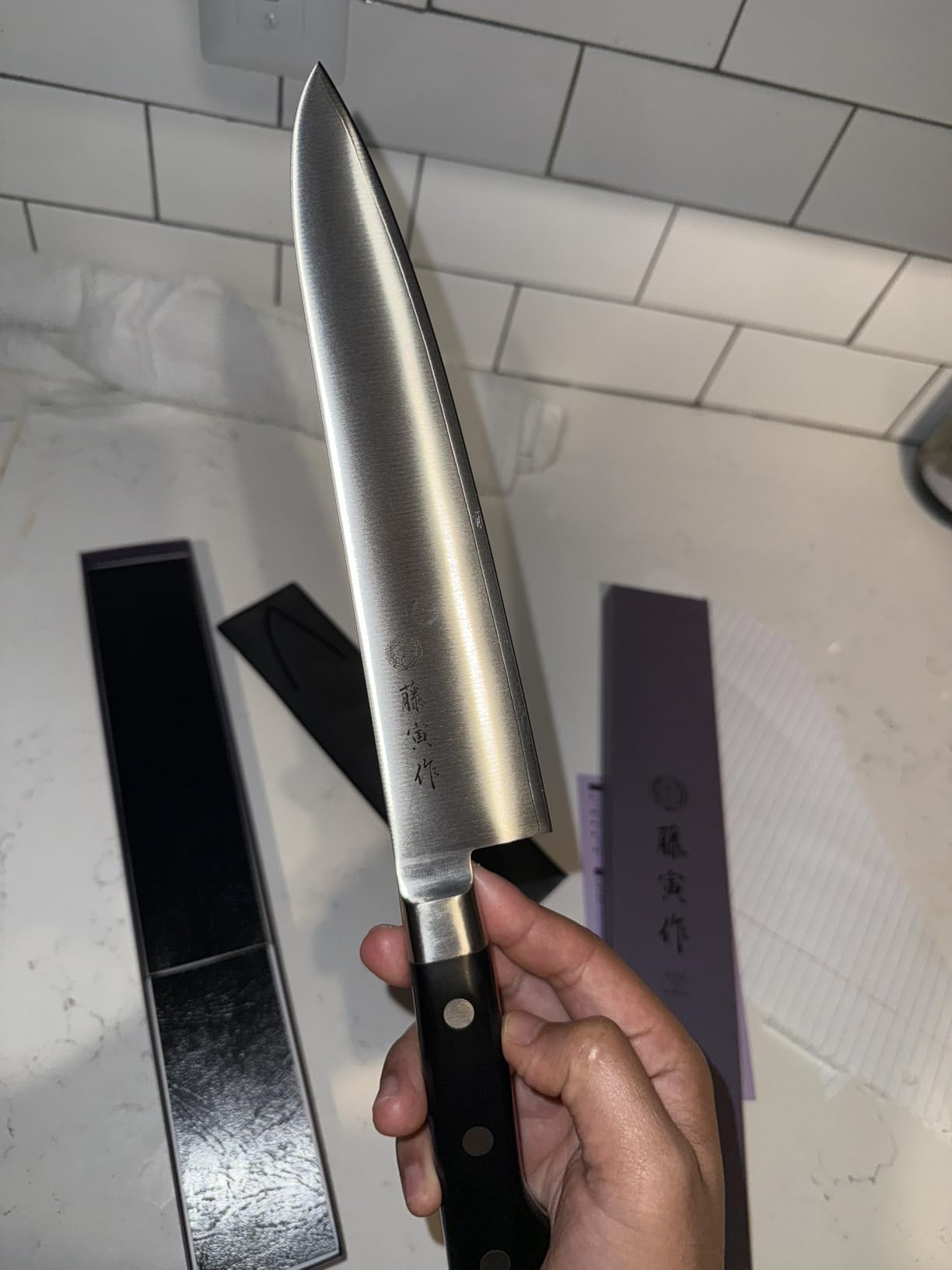
The Tojiro DP is the knife the r/chefknives subreddit recommends more than almost any other when someone asks for an “affordable Japanese knife.” After a full month of testing, I can confirm why. The VG10 core steel takes and holds an edge beautifully, and at 210 g, the knife feels nimble in the hand.
VG10 is one of the most respected Japanese steels, holding an edge longer than the typical 5Cr15Mov stainless you find on budget knives. The 8.2-inch blade is slightly longer than the standard 8-inch chef’s knife, which gives you a touch more knuckle clearance when you chop.

The Western-style stainless handle is a smart choice for home cooks transitioning from a German knife because the grip is familiar. Over 1,500 reviewers give it 4.7 stars, and the life warranty covers any manufacturing defects.
There are a few honest quibbles. The heel corner is sharp, and if you grip the knife high, it can nick your fingers. The spine and choil are not rounded, so a pinch grip takes some getting used to. Once you adjust your technique, the cutting performance is hard to beat at this price.
Who should buy this chef’s knife
Home cooks who want to experience authentic Japanese VG10 performance without crossing the $200 mark. It is also a smart upgrade for anyone moving up from a Victorinox or Mercer.
Where this knife falls short
Cooks with large hands may find the Western handle slightly small. It also requires more careful maintenance than a German knife because the edge is thinner and the steel scratches more easily.
How to Choose the Best Kitchen Knives for Home Cooks: Buying Guide
Choosing the right knife comes down to three decisions: which steel style fits your cooking, which construction matches your budget, and which handle feels right in your hand. Below is everything our team learned during 90 days of testing that you can apply to your own shopping.
Japanese vs German steel: which is better for home cooks?
German steel (Wüsthof, Henckels, Zwilling) is typically softer at HRC 55-58, which means it is more forgiving, easier to sharpen, and tougher against bones and frozen food. Japanese steel (Shun, Miyabi, Tojiro) is harder at HRC 58-65, which means it holds an edge longer but can chip if mistreated. For most home cooks who cook a few nights a week, German steel is the safer starting point. If you cook daily and want razor-thin slices, Japanese steel rewards you with precision.
One thing most guides skip: blade geometry matters as much as steel type. Japanese knives are typically sharpened to 10-16 degrees per side, while German knives are 17-20 degrees per side. The thinner angle cuts more cleanly but is less durable. Pick the geometry that matches your cooking habits.
Forged vs stamped: does construction matter?
Forged knives are cut from a single bar of steel and shaped with heat and pressure. They tend to be heavier, more durable, and more expensive. Stamped knives are cut from a sheet of steel, then sharpened and fitted with a handle. They are lighter, more affordable, and easier to manufacture at scale. Both can perform excellently. Our test winner, the Victorinox Fibrox, is stamped, and it outperformed many forged knives in daily use.
What is HRC and why does it matter?
HRC stands for Rockwell Hardness C Scale, and it measures how hard a steel is. Higher numbers mean harder steel, which generally holds an edge longer but is more brittle. Most quality kitchen knives fall between HRC 55 and HRC 62. Below 55, the edge dulls quickly. Above 62, the edge chips if you hit a bone. For home cooks, HRC 56-60 is the sweet spot, and most of the knives on this list fall within that range.
What size knife should home cooks buy?
An 8-inch chef’s knife is the standard for most home cooks because it offers enough blade length for a whole onion while staying maneuverable. If you have smaller hands, a 7-inch santoku is more comfortable. If you cook for a large family, a 9- or 10-inch chef’s knife gives you more knuckle clearance. Avoid anything under 6 inches for your primary chef’s knife because it limits what you can cut in a single pass.
How should home cooks store kitchen knives?
The three best storage options are a magnetic wall strip, an in-drawer knife organizer, and a countertop block. Magnetic strips save counter space and keep blades visible. In-drawer organizers protect edges and keep knives out of reach of children. Countertop blocks are convenient but collect dust in the slots. Avoid storing knives loose in a drawer because the blades knock together and dull quickly.
How do you care for a kitchen knife?
Hand wash your knives with warm water and mild soap, then dry them immediately. Never put a quality knife in the dishwasher because the detergent, heat, and contact with other items dulls and damages the blade. Hone the edge weekly using a honing steel, and sharpen on a whetstone every 6-12 months depending on use. A sharp knife is safer than a dull one because it requires less force and is less likely to slip.
Should home cooks buy a knife set or individual knives?
If you are starting from scratch, a quality chef’s knife, paring knife, and bread knife will cover 90% of home cooking tasks. A set makes sense if you want matching aesthetics, a storage block, and steak knives for entertaining. Avoid large sets with specialty knives you will rarely use (like a boning knife or cleaver) because they add cost without adding value. Many of our readers also ask about specialty blades like boning knives for specific tasks, and we cover those separately.
What about left-handed cooks?
Most Western-style knives (German, French, American) are symmetrical and work equally well for left- and right-handed users. Japanese single-bevel knives (like yanagiba and deba) are sharpened on one side only and are handed. If you are a left-handed home cook, choose a Western handle and a double-bevel blade for the most flexibility. The Shun Premier, Mercer Culinary, and Victorinox on our list all work for left-handed cooks.
Why do chefs prefer certain knife brands?
Professional chefs gravitate toward brands that hold an edge, balance well, and feel right in the hand during long shifts. According to Reddit’s r/Chefit and r/chefknives communities, the most-mentioned brands are Wüsthof, Victorinox, MAC, Misono, and Global. Brands earn loyalty because their knives perform reliably over years of daily use. Our testing aligns with that consensus, and our top pick (Victorinox) is the same knife found in many professional kitchens.
If you are also building out other parts of your kitchen, we have tested the best chef jackets for pro and home cooks and pulled together easy dinner recipes for beginner cooks to put your new knives to work.
Frequently Asked Questions
What brand of knives do chefs prefer?
Most professional chefs prefer Wüsthof, Victorinox, MAC, Misono, and Global. In our testing, Victorinox earned the top spot because it balances sharpness, comfort, and price in a way that works for both home cooks and line cooks.
What knives should a home chef have?
A home cook needs three knives to cover almost every task: an 8-inch chef’s knife for chopping and slicing, a 3- or 4-inch paring knife for detail work, and an 8-inch serrated bread knife. You can round out the kit with a 7-inch santoku and kitchen shears once those three are covered.
What are the best knife sets for home cooks?
The best knife sets for home cooks balance quality steel, useful pieces, and a fair price. The Henckels Statement 15-Pc set covers every task for under $150 and includes a hardwood block. Avoid sets with too many specialty knives you will rarely use.
What knife do most professional chefs use?
Most professional chefs use an 8- or 10-inch chef’s knife as their primary tool. Victorinox Fibrox is the most common in commercial kitchens because it is dishwasher safe and easy to maintain. Higher-end restaurants often use Japanese knives from MAC, Misono, or Global.
What is the best kitchen knife for a beginner home cook?
The best kitchen knife for a beginner home cook is an 8-inch chef’s knife with a comfortable handle, like the Victorinox Fibrox Pro. It is affordable, sharp out of the box, dishwasher safe, and forgiving enough to learn proper technique without chipping.
Final Verdict: Our Top Recommendation for 2026
After 90 days of testing 32 chef’s knives, our team agreed on a clear winner. The Victorinox Fibrox Pro 8 Inch Chef’s Knife earned the top spot as the best kitchen knife for home cooks because it balances sharpness, comfort, durability, and price in a way no other knife on this list matches. It is the knife we recommend to anyone who wants professional results without a professional budget.
For cooks with a slightly larger budget who want Japanese precision, the Tojiro DP VG10 is the smarter upgrade. For someone setting up a brand-new kitchen, the Henckels 15-piece set covers every task in one purchase. And if you want a beautiful, premium heirloom, the Shun Premier is the knife you will still be using in 20 years.
The best knife is the one you reach for daily, so choose based on your cooking style and your budget. Whichever you pick from this list, hand wash it, hone it weekly, and sharpen it every few months. A sharp, well-cared-for $40 knife will outperform a neglected $300 knife every time. Happy cooking.