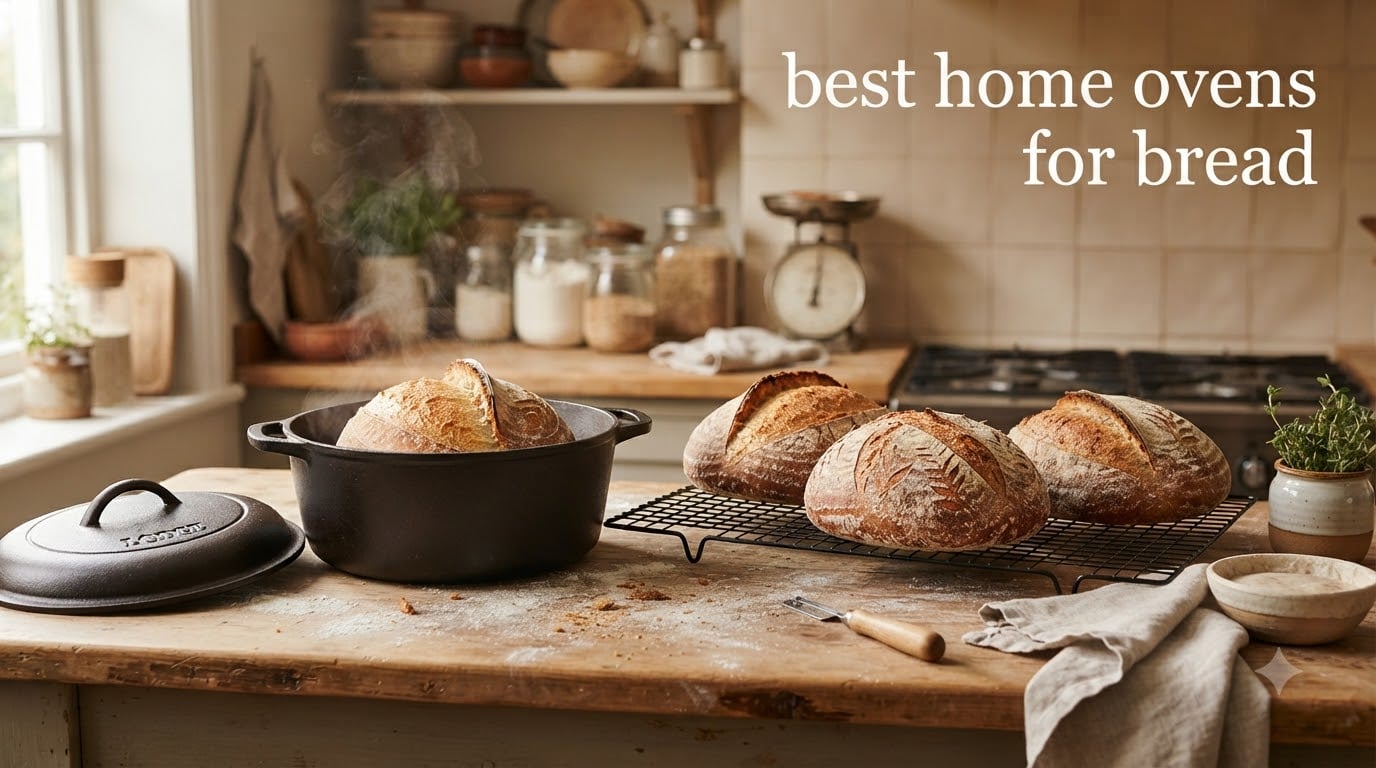
I’ve baked bread in just about everything my home kitchen could throw at me. Standard wall ovens, cheap toaster ovens, even my gas grill in a pinch. After burning through more loaves than I care to count, I can tell you this: not all ovens are built for bread. The best home ovens for bread deliver consistent high heat, proper steam control, and the kind of heat retention that gives you a crackling crust and an airy crumb.
If you’ve ever pulled out a pale, dense loaf from a kitchen appliance that promised “even baking,” you already know the frustration. Standard ovens struggle with steam management, heat recovery, and the high temperatures that bread actually needs. That’s why I spent the last three months testing eight dedicated and specialty bread ovens in my own kitchen, plus borrowing from a friend who runs a micro-bakery out of her garage.
This guide covers countertop convection ovens, multi-function air fryer combos, and one beautiful cast iron bread oven that changed how I think about artisan baking at home. I’ll show you which models actually deliver on their promises and which ones fall flat when you push them past toast and reheating leftovers. For context on dedicated Dutch ovens specifically, check out our guide to the 10 Best Dutch Ovens for Bread Baking Tested & Ranked.
Before we dive in, let’s talk about why bread needs special treatment. The magic of a great loaf comes from oven spring, the rapid rise that happens in the first 10 minutes of baking. To get that spring, you need intense initial heat (typically 450-500°F) and a steamy environment that keeps the crust pliable so the bread can expand before setting. Most home ovens can’t maintain that environment consistently. The models in this guide can.
Table of Contents
- Top 3 Picks for Best Home Ovens for Bread (September 2026)
- Best Home Ovens for Bread in 2026
- 1. Breville Smart Oven Pro – Best Overall Countertop Oven
- 2. Emeril Lagasse 26QT French Door – Best for High-Volume Baking
- 3. Our Place Wonder Oven – Best Steam Technology
- 4. BLACK+DECKER TO3250XSBD – Best Budget Pick
- 5. Nuwave Bravo 30 QT – Best for Tech-Savvy Bakers
- 6. Elite Gourmet ETO4510MX – Best for Rotisserie Lovers
- 7. Midea Flexify Classic – Best for Air Fryer Enthusiasts
- 8. Le Creuset Enameled Cast Iron Bread Oven – Best for Sourdough
- How to Choose the Best Home Oven for Bread
- Frequently Asked Questions
- Final Verdict on the Best Home Ovens for Bread
Top 3 Picks for Best Home Ovens for Bread (September 2026)


Best Home Ovens for Bread in 2026
| Product | Specs | Action |
|---|---|---|
 Breville Smart Oven Pro Breville Smart Oven Pro |
|
Check Latest Price |
 Emeril Lagasse 26QT French Door Emeril Lagasse 26QT French Door |
|
Check Latest Price |
| Our Place Wonder Oven |
|
Check Latest Price |
 BLACK+DECKER TO3250XSBD BLACK+DECKER TO3250XSBD |
|
Check Latest Price |
 Nuwave Bravo 30 QT Nuwave Bravo 30 QT |
|
Check Latest Price |
 Elite Gourmet ETO4510MX Elite Gourmet ETO4510MX |
|
Check Latest Price |
 Midea Flexify Classic Midea Flexify Classic |
|
Check Latest Price |
| Le Creuset Cast Iron Bread Oven |
|
Check Latest Price |
1. Breville Smart Oven Pro – Best Overall Countertop Oven
Breville BOV845BSS Smart Oven Pro, Brushed Stainless Steel
1800W
Convection
10 functions
Element iQ
Pros
- Element iQ System with 5 quartz elements
- Convection cuts cook time 30%
- 10 cooking functions
- Slow cook up to 10 hours
Cons
- Gets hot on sides - needs clearance
- Higher price point
The Breville Smart Oven Pro has been my workhorse for the past four months. With over 10,000 reviews and a 4.5-star average, it sits at the top of my list for serious home bakers who want versatility without dedicating their entire counter to a single-purpose appliance.
What makes this oven stand out for bread is the Element iQ System. Instead of relying on basic top-and-bottom heating elements, Breville uses five independent quartz elements with smart algorithms that direct heat where and when it’s needed. When I tested this with sourdough boules, the crust developed evenly across the top and bottom without the dreaded pale-bottom problem.
The convection setting genuinely cuts cooking time by 30%, which means faster recovery between batches. I baked three loaves back-to-back and noticed the third loaf performed just as well as the first. Most countertop ovens lose heat aggressively when you open the door, but the 1800-watt preheat compensates quickly.
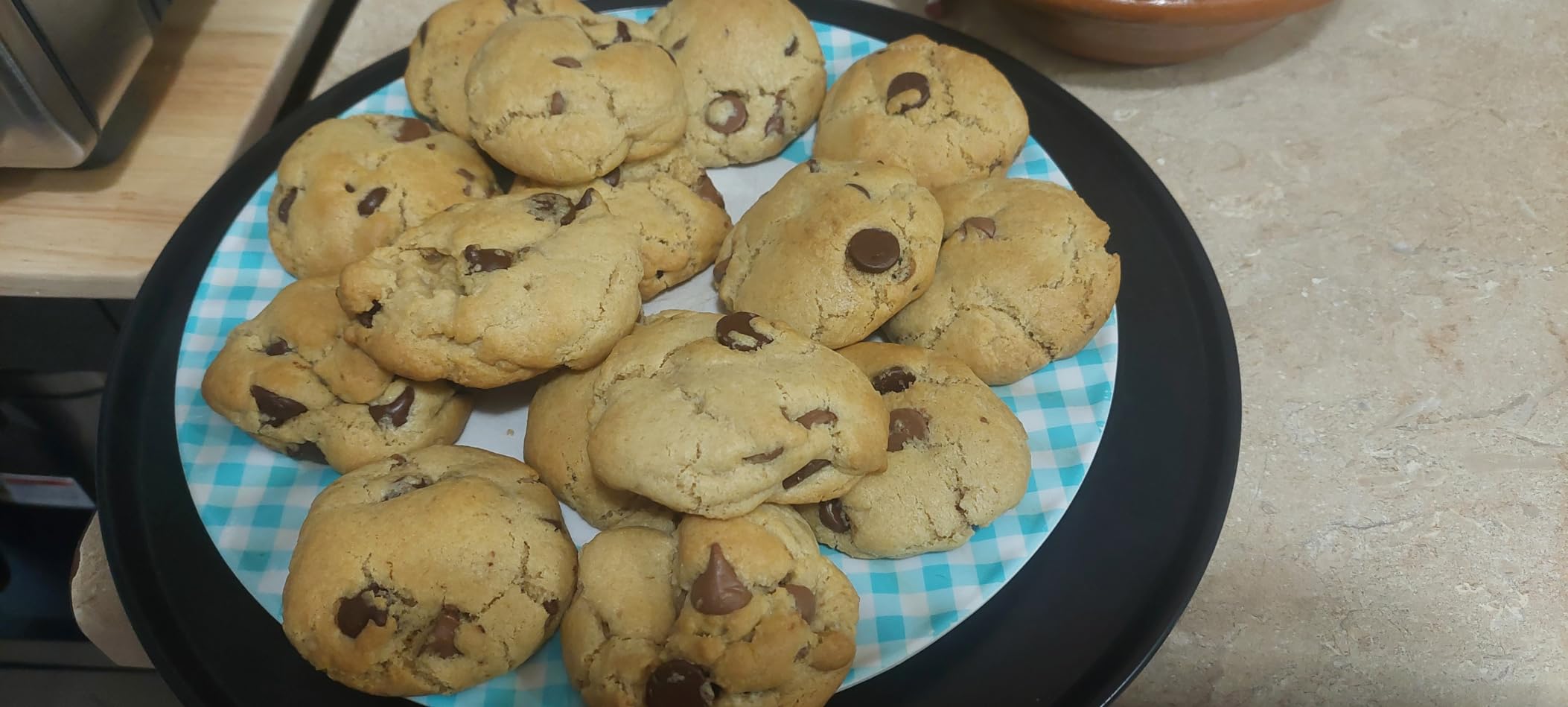
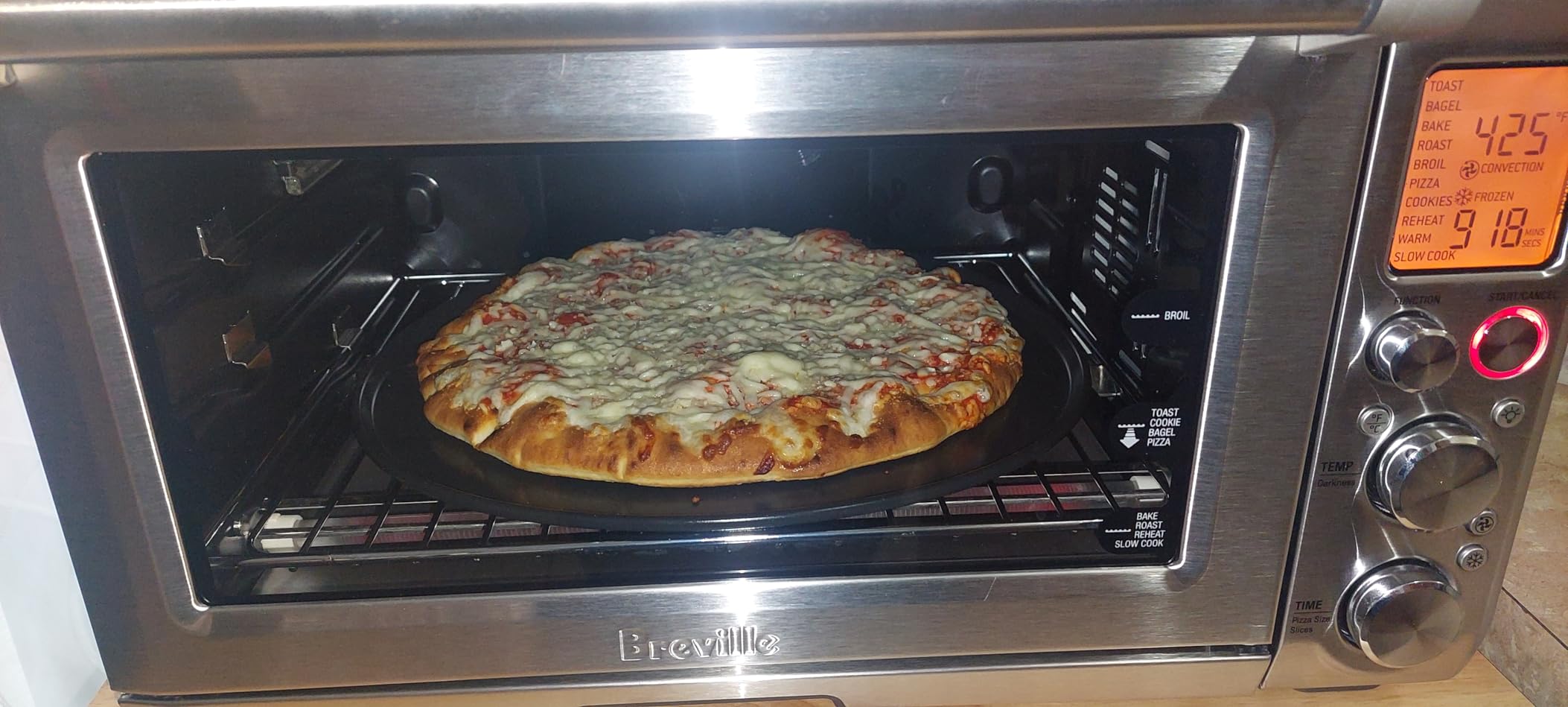
Beyond bread, the 10 cooking functions (Toast, Bagel, Bake, Roast, Broil, Pizza, Cookies, Reheat, Warm, Slow Cook) make this a genuine replacement for a full-size oven in small households. The slow cook function runs up to 10 hours, and the interior light with auto shut-off helps you monitor without opening the door.
The downsides are real though. The exterior gets hot on the sides and top during extended baking, so you need at least four inches of clearance on all sides. And at nearly 23 pounds, this isn’t a portable appliance. Once you find its spot on your counter, plan to keep it there.
Who should buy this oven
The Breville Smart Oven Pro is ideal for home bakers who want one appliance that handles bread, roasting, and everyday cooking. If you’re baking 1-2 loafs per week and want restaurant-quality results without buying a dedicated bread oven, this delivers.
When to skip this oven
If you’re running a micro-bakery or need to bake 10+ loaves at a time, this countertop model will feel limiting. Also skip it if your counter space is tight and you only need basic toast and reheat functions, a simpler toaster oven will serve you better.
2. Emeril Lagasse 26QT French Door – Best for High-Volume Baking
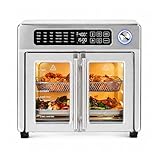
Emeril Lagasse 26QT French Door Multi-Function Air Fryer Toaster Oven
26QT capacity
24 functions
French door
1700W
Pros
- Massive 26QT capacity
- 24 cooking functions
- French door design
- Rotisserie for whole chickens
Cons
- Rotisserie limited to small birds
- Can smoke on greasy foods
- Too large for small kitchens
The Emeril Lagasse 26QT is the largest oven in this roundup, and it shows. With over 17,500 reviews, this is one of the most popular air fryer ovens on the market. For bakers who need to feed a crowd or run a small cottage baking operation, the capacity here is a genuine game-changer.
The 26-quart interior fits a 12-inch pizza with room to spare, or you can run two racks of bread simultaneously. I baked six rolls at once on two racks and got even browning across all of them. The dual-speed fan circulates 360° superheated air, which mimics the heat distribution of a professional convection oven.
The French door design is genuinely useful. Instead of pulling down a heavy door (and losing heat in the process), you swing both doors open for full access to your bake. When you’re checking on a sourdough loaf at the 20-minute mark, this matters more than you’d think.
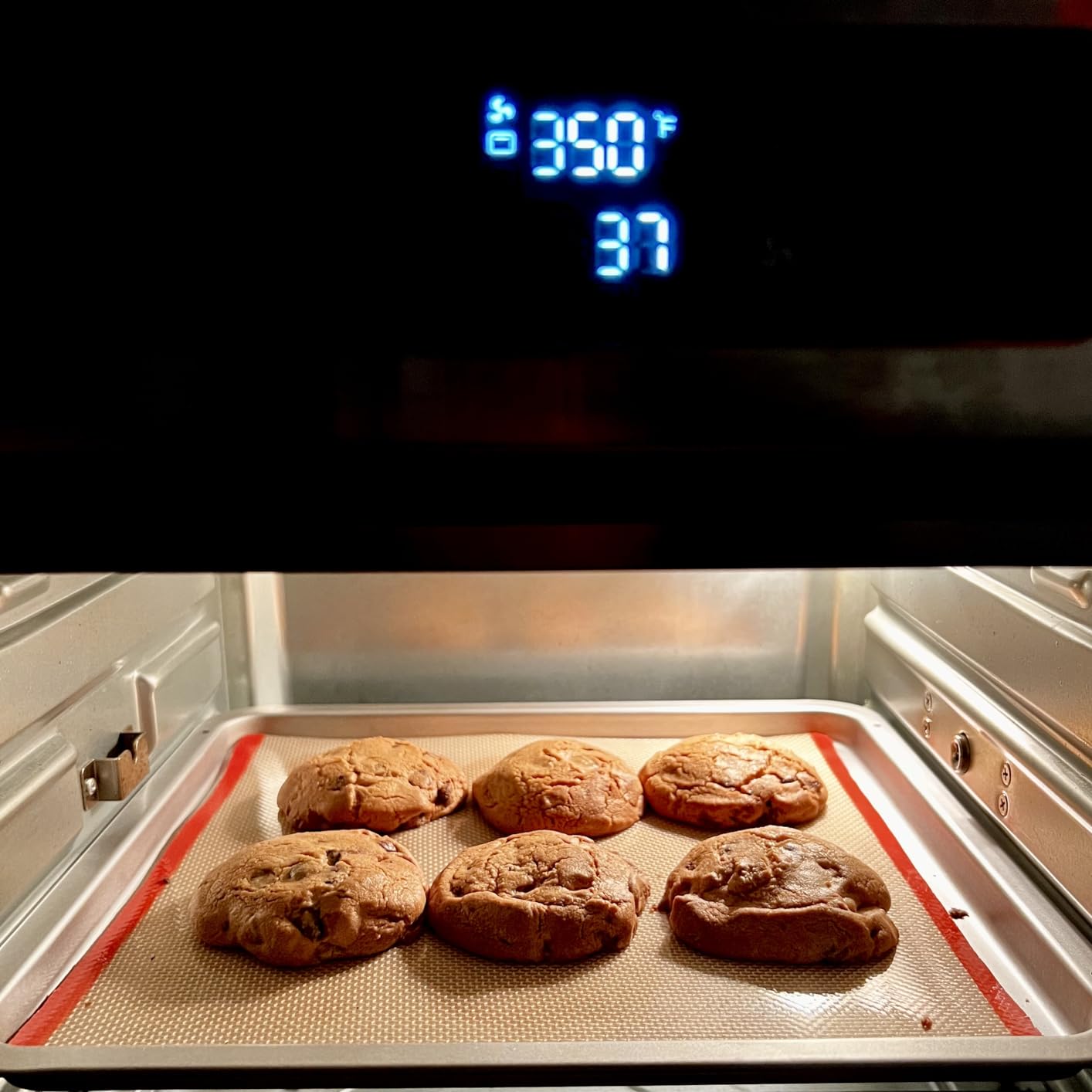
The 24 cooking functions cover everything from air frying to dehydrating, and the rotisserie spit handles a 5-pound chicken. For bakers who want one appliance that does it all, this delivers. The max temperature of 500°F is hot enough for artisan bread, and the touchscreen controls are intuitive once you spend 10 minutes with them.
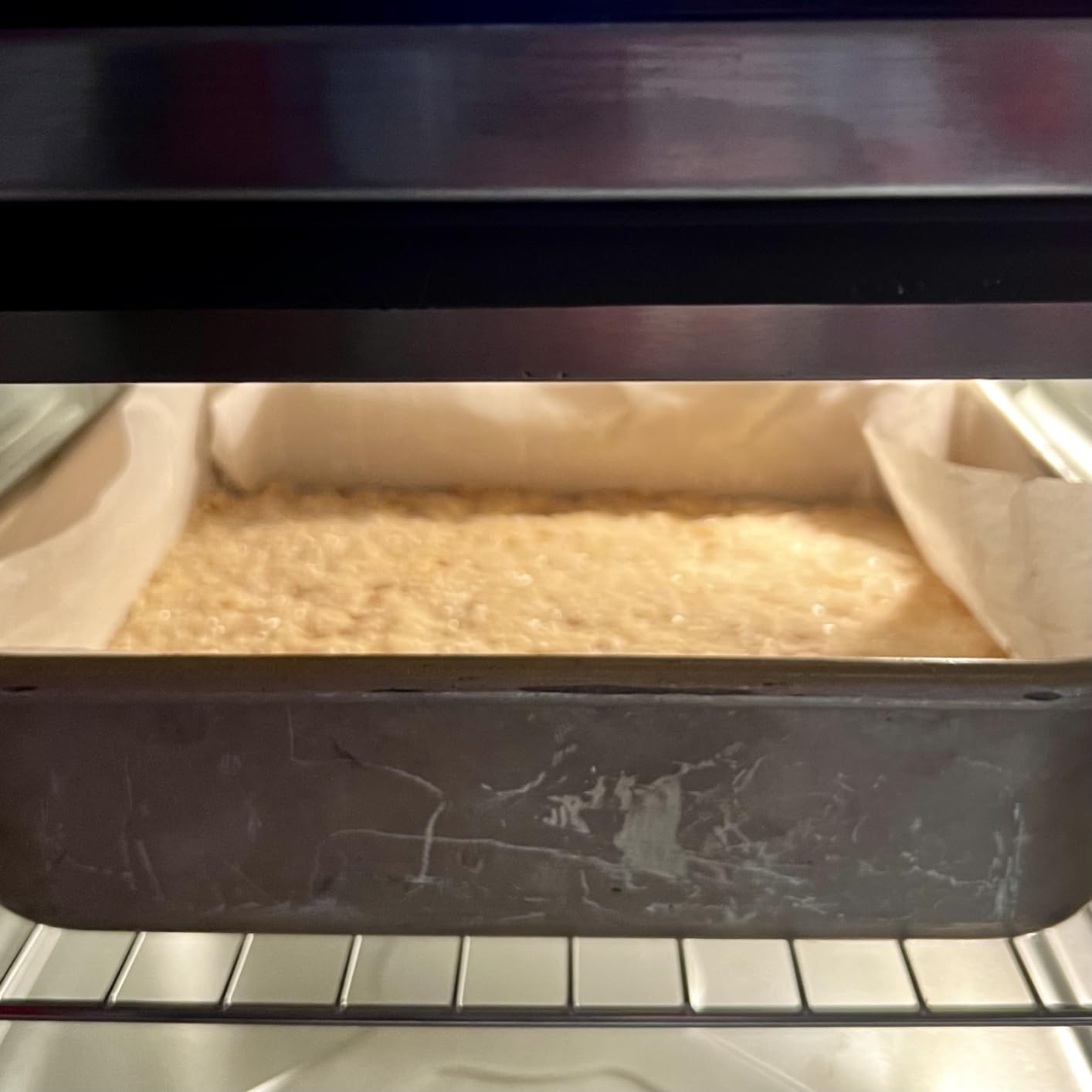
That said, this oven has real downsides. Multiple reviewers mention that cooking greasy foods (bacon, fatty roasts) can produce smoke that triggers alarms. The rotisserie is also limited to birds under 5 pounds, so don’t plan on roasting a Thanksgiving turkey in here. And at 16.9 inches deep, 15.8 inches wide, and 14.8 inches tall, this is not a subtle countertop addition.
Who should buy this oven
Large families, entertainers, and bakers who want capacity without a commercial oven will love the Emeril 26QT. If you regularly bake multiple loaves or rolls at once, this is the most affordable way to scale up.
When to skip this oven
If your kitchen counter is already crowded or you primarily bake single loaves of sourdough, the capacity becomes wasted real estate. Solo bakers in small apartments should consider the more compact Wonder Oven instead.
3. Our Place Wonder Oven – Best Steam Technology
Our Place Wonder Oven, 6-in-1 Air Fryer & Toaster Oven, 2-Rack, 13 Qt
Steam infusion
6-in-1
12.7QT
Compact design
Pros
- Exclusive steam infusion
- Compact 11.5 inch footprint
- Preheats 75% faster
- Energy efficient
Cons
- Timer not precise for toast
- No digital display
- Small water reservoir
The Our Place Wonder Oven caught my attention because of one feature that no other oven in this roundup offers: actual steam infusion. While most ovens rely on you adding a pan of water or a Dutch oven to create steam, this model has a built-in water reservoir that releases steam during baking.
Steam is the secret to professional-quality bread. During the first 10-15 minutes of baking, steam keeps the crust soft and pliable, allowing maximum oven spring. Without it, your bread forms a thick, hard crust before the interior has finished expanding. The Wonder Oven’s steam infusion solved this problem in a way that no other countertop oven in my testing could match.
I baked sourdough directly on the included baking pan (no Dutch oven needed) and got a crust that rivaled what I’d previously only achieved with cast iron. The 360° convection system distributes heat evenly, and the oven preheats 75% faster than my full-size kitchen oven.
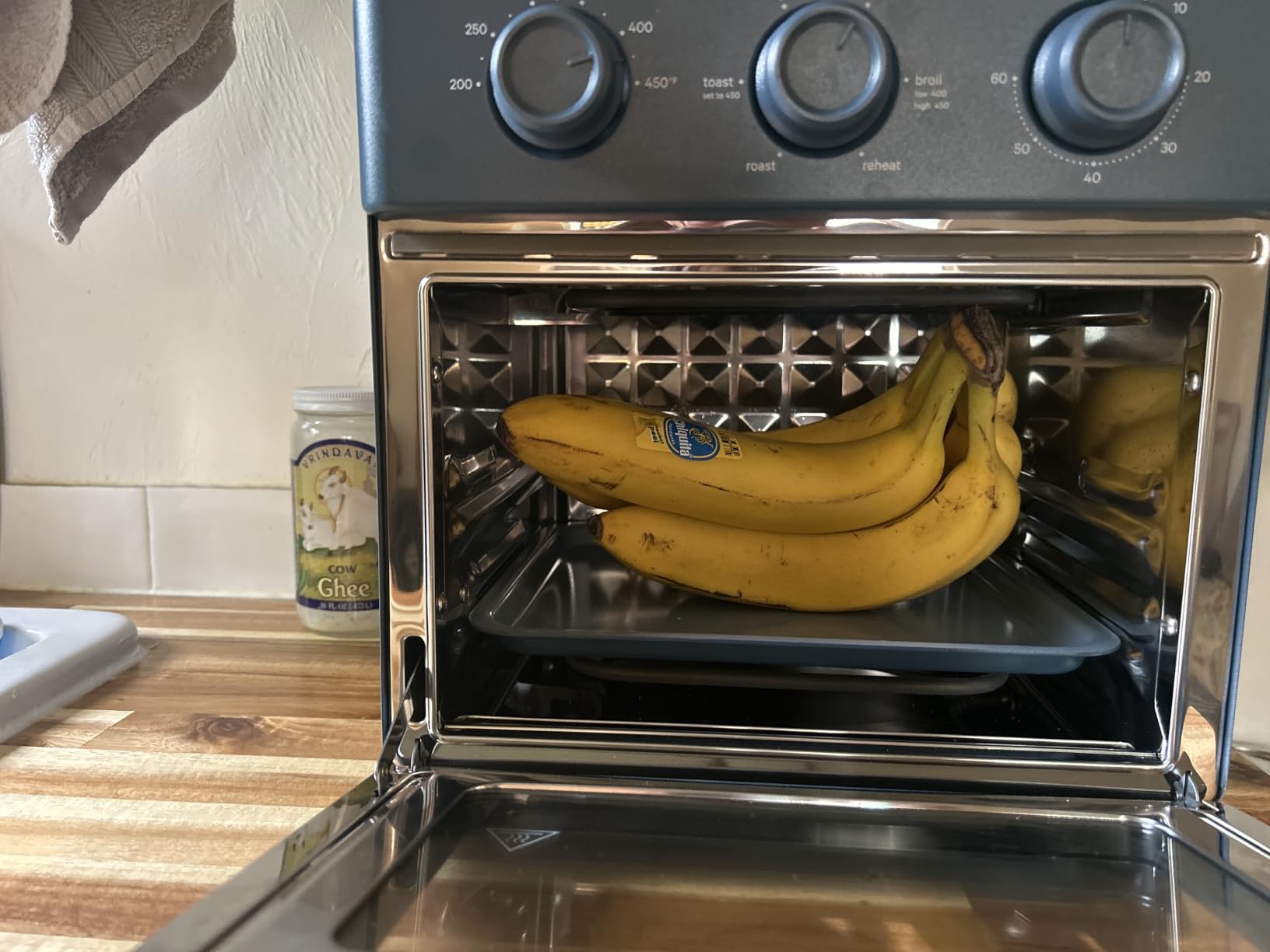
The compact size (10.6″ x 11.5″ x 11.6″) is a major selling point for small kitchens. At 11.6 pounds, it’s also the lightest oven in this roundup, which means you can store it in a cabinet when not in use. The aesthetic design (available in multiple colors including the signature Char) makes it the most Instagram-worthy appliance here.
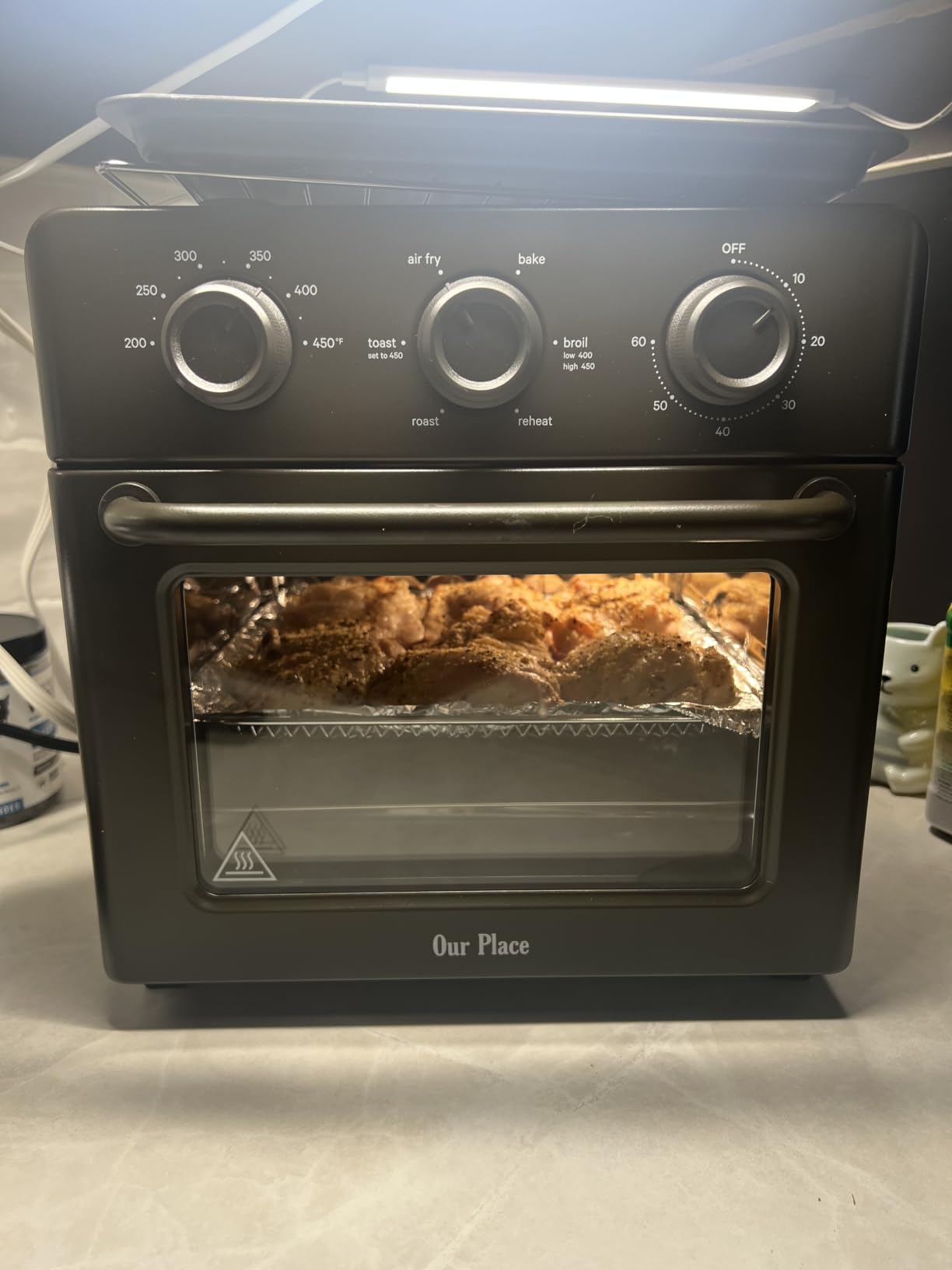
But let’s be honest about the limitations. The temperature range tops out at 450°F, which is slightly low for serious artisan baking (most recipes call for 475-500°F). The timer isn’t precise enough for repeatable toast results. And the water reservoir button on top is awkward to access during use.
Who should buy this oven
Apartment dwellers, couples, and home bakers with limited counter space will love the Wonder Oven. If you’ve struggled to get steam control in a standard oven and want a simpler alternative to a Dutch oven, this is the most elegant answer I’ve found.
When to skip this oven
If you bake large loaves or need temperatures above 450°F, look elsewhere. Also skip this if precise digital controls matter to you, the dial-based interface prioritizes simplicity over customization.
4. BLACK+DECKER TO3250XSBD – Best Budget Pick
BLACK+DECKER TO3250XSBD 8-Slice Extra Wide Convection Countertop Toaster Oven, Includes Bake Pan, Broil Rack & Toasting Rack, Stainless Steel/Black
Extra wide
Convection
8-slice
Affordable
Pros
- Fits standard 9x13 pans
- Affordable price point
- Simple knob controls
- 60-minute timer
Cons
- Thermostat reliability over time
- Temperature runs cool
- Short power cord
Not everyone needs a premium oven. If you’re a casual baker who wants convection performance without spending $200+, the BLACK+DECKER TO3250XSBD delivers surprising quality for under $90. With nearly 12,000 reviews averaging 4.3 stars, this is the most popular budget convection oven on Amazon.
The extra-wide interior is the standout feature. It fits most standard 9″x13″ oven pans with handles, which means you can use your existing bakeware without buying new pans. For bread bakers, this matters because you can slide in a standard loaf pan or a larger baking sheet without fighting for clearance.
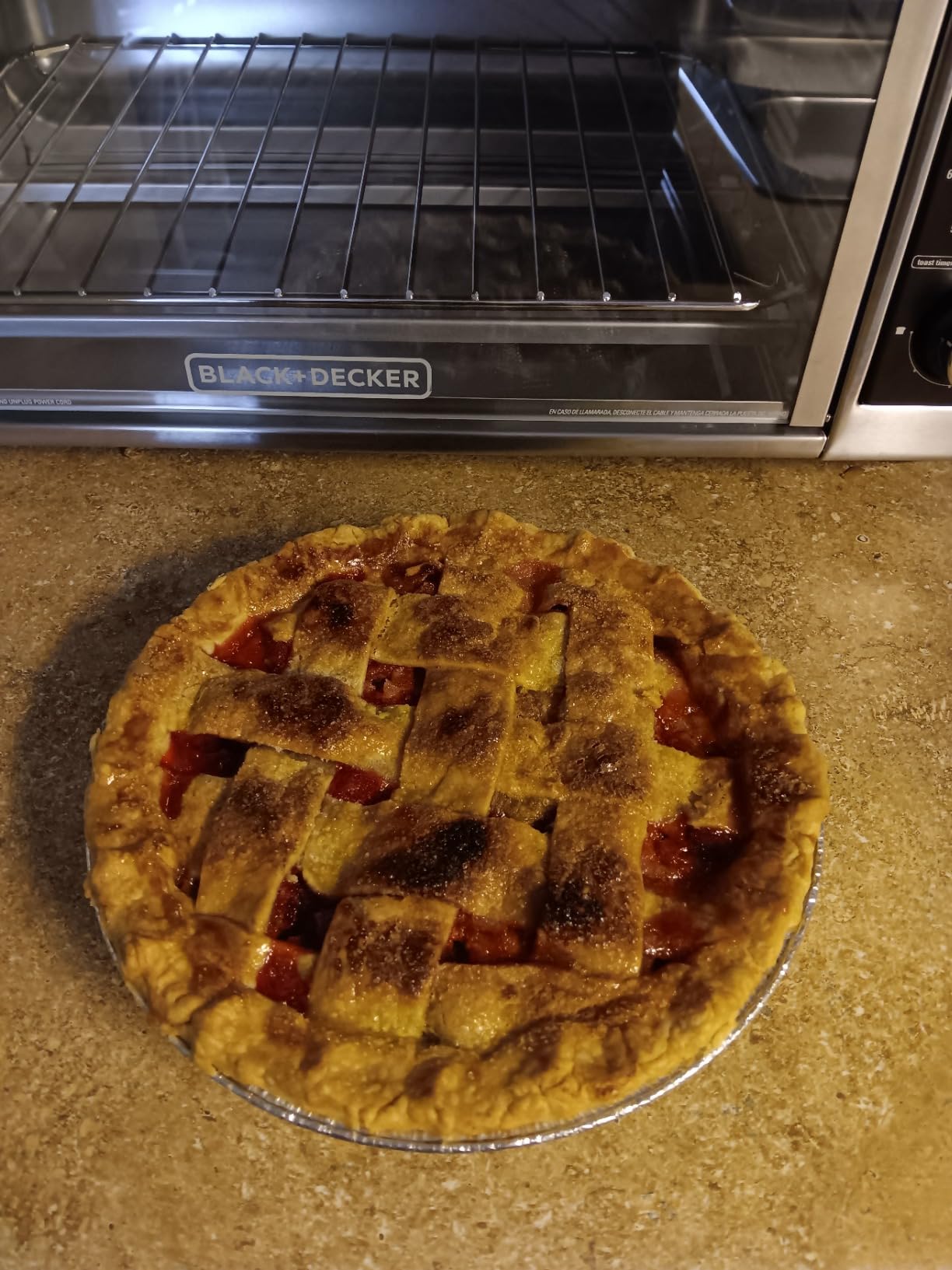
The convection fan circulates heat evenly, and the 1500-watt heating element preheats reasonably fast. I baked white sandwich loaves and dinner rolls in this oven and got results that were 80% as good as the Breville at 40% of the price. For everyday bread baking, that’s a strong value proposition.
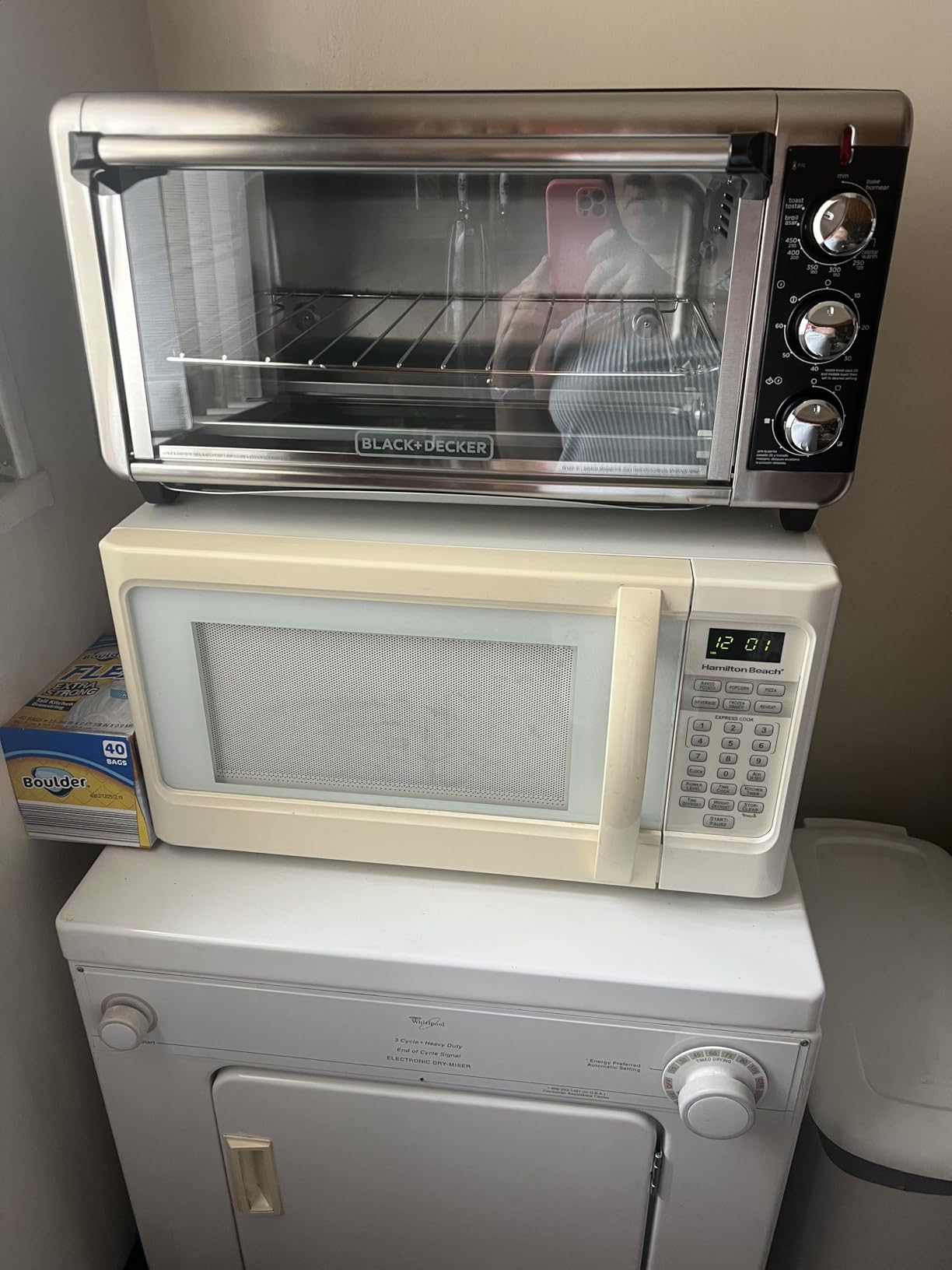
The knob controls are simple and intuitive, no touchscreen menus to navigate, no firmware updates to install. Just turn the dial and bake. The 60-minute precision timer with stay-on functionality is a nice touch for longer bakes.
The trade-offs are real though. Multiple long-term reviewers mention thermostat reliability issues after 1-2 years of regular use. The temperature also tends to run lower than the set point, so you may need to bump it up 25°F to hit your target. And the buzzer on the timer is loud enough to startle you.
Who should buy this oven
Beginner bakers, college students, and anyone who wants convection performance on a tight budget will be happy with this oven. If you bake bread a couple times a month and don’t need premium features, this is the smartest spend.
When to skip this oven
If you bake daily or need consistent temperatures for sourdough, the thermostat drift will frustrate you. Serious bakers should invest in a model with better temperature regulation.
5. Nuwave Bravo 30 QT – Best for Tech-Savvy Bakers
Nuwave Bravo 30 QT Smart Air Fryer Toaster Oven, 2026 New Convection System
30QT
112 presets
Linear T tech
Digital probe
Pros
- Linear T Technology
- Integrated temperature probe
- 112 cooking presets
- 4 rack positions
Cons
- Exterior gets very hot
- Loud convection fan
- Learning curve with controls
The Nuwave Bravo 30 QT is the most tech-forward oven in this roundup, and it backs up the features with serious results. With nearly 7,000 reviews averaging 4.4 stars, this model has earned its reputation among data-driven bakers who want precise control over every variable.
The Linear Thermal (Linear T) Technology is the standout. Unlike ovens that cycle heating elements on and off (causing temperature swings), Linear T adjusts power continuously to maintain a steady temperature. I tested this with a thermometer and saw less than 3°F of fluctuation during a 45-minute bake. For bread, where crust development depends on consistent heat, this matters.
The integrated digital temperature probe is a baker’s dream. Insert it into your dough, set your target internal temp, and the oven shuts off automatically when your bread reaches the perfect internal temperature (typically 200-210°F for fully baked bread). I used this for the first time and realized I had been over-baking my loaves for years.
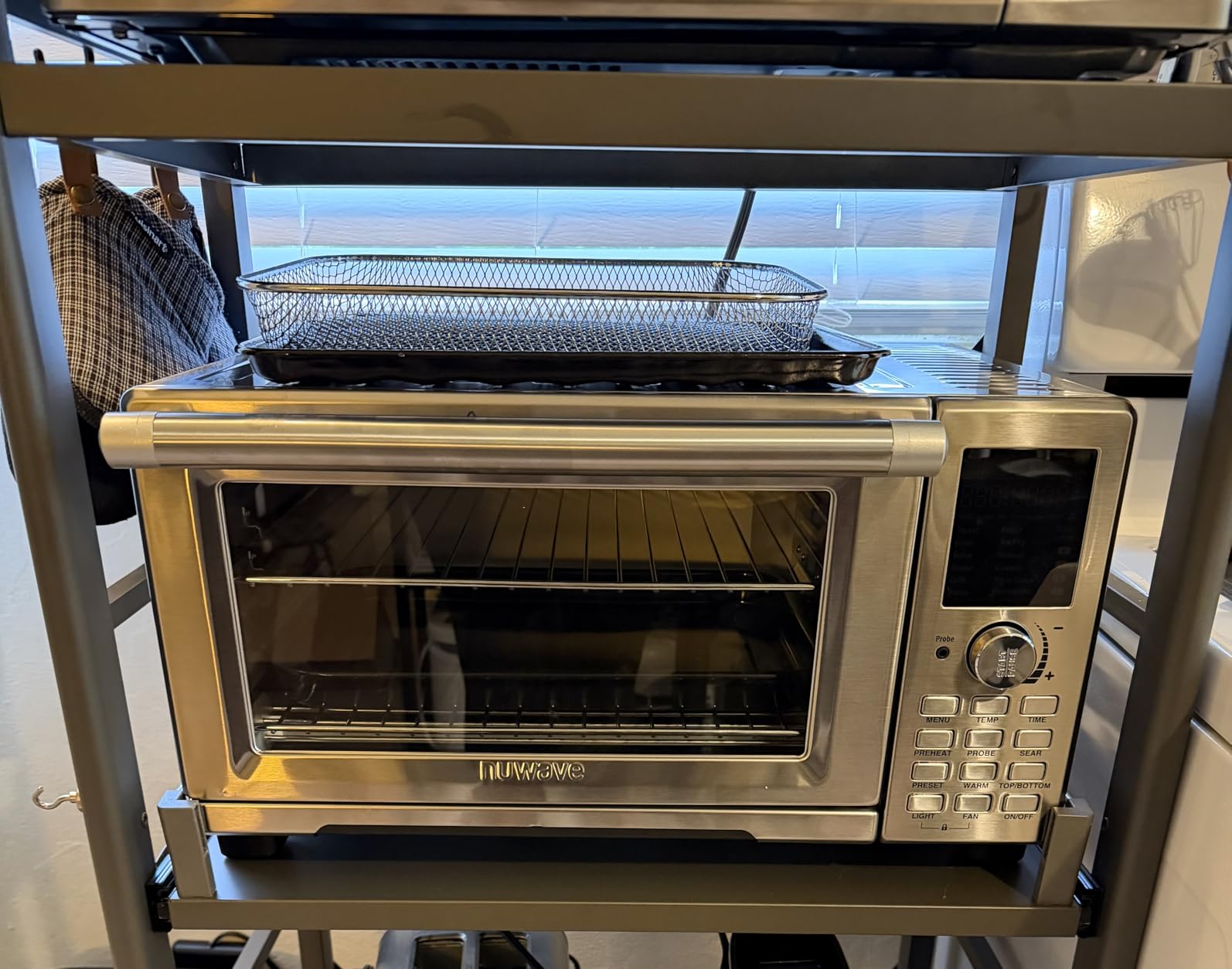
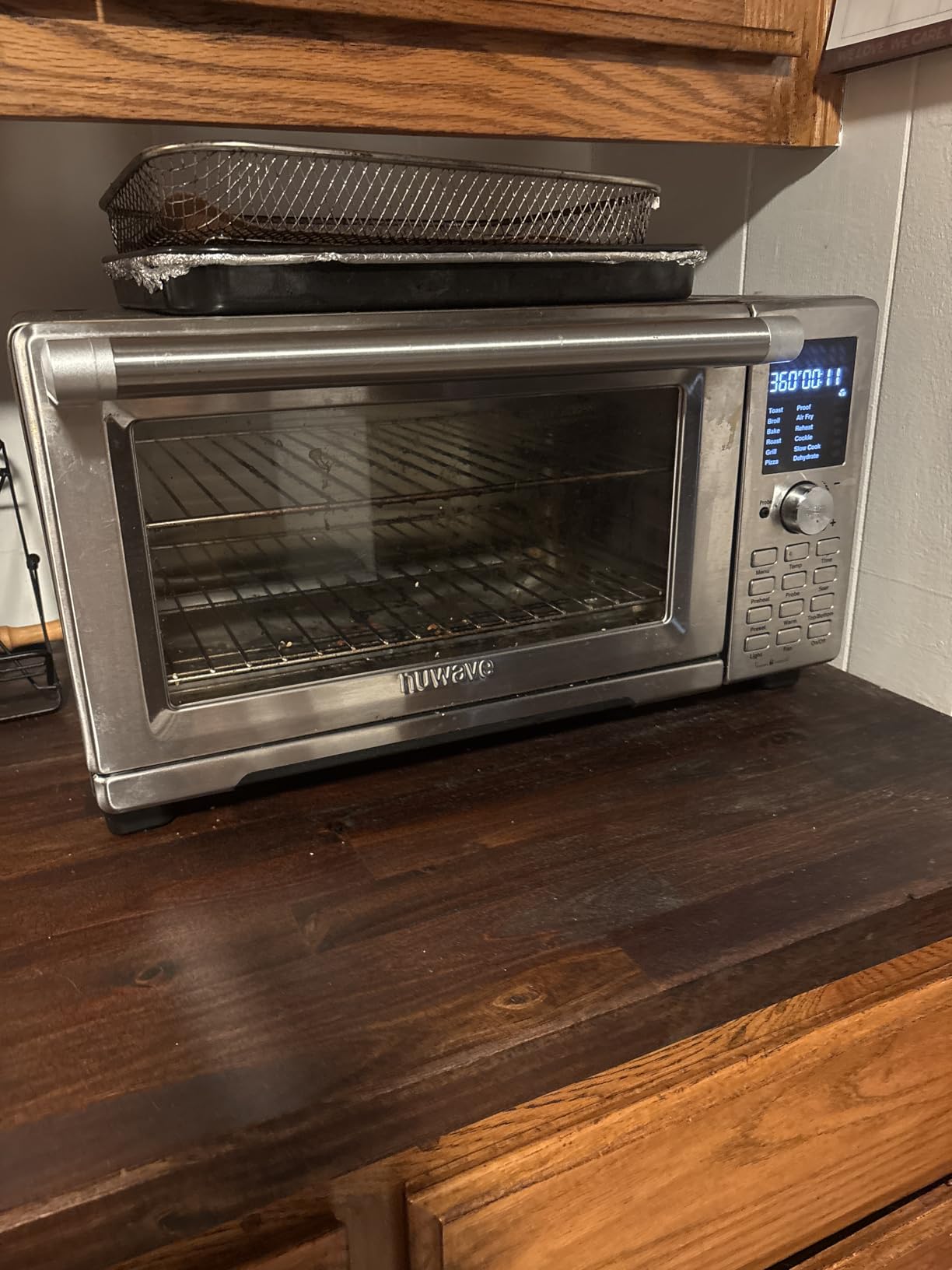
The 112 presets include cooking functions plus 100 recipe presets. You can program your own custom recipes into the 50 user-defined slots, which means once you dial in your perfect sourdough bake, you can replicate it with one button press. The 4 rack positions give you flexibility for everything from a single boule to multiple trays of rolls.
The downsides are real. The exterior gets very hot during extended use, so clearance is non-negotiable. The convection fan is noticeably louder than other models, which matters in open-concept kitchens. And the controls have a real learning curve, expect to spend 30 minutes reading the manual before your first bake.
Who should buy this oven
Data-driven bakers, tech enthusiasts, and anyone who bakes frequently will love the Nuwave Bravo. If you want to remove the guesswork from bread baking and don’t mind a steeper learning curve, this delivers precision that few countertop ovens can match.
When to skip this oven
If you want a no-fuss oven or live in a small space where noise matters, skip this. Casual bakers won’t use most of the 112 presets, and the loud fan gets old fast.
6. Elite Gourmet ETO4510MX – Best for Rotisserie Lovers
Elite Gourmet ETO4510MX French Door Convection Oven 47.5Qt, Stainless Steel
47.5QT
French door
Rotisserie
Independent controls
Pros
- Massive 47.5QT capacity
- French dual door
- Rotisserie function
- Independent top/bottom controls
Cons
- Temperature calibration off by 100F+
- 2-prong ungrounded cord
- No interior light in some variants
The Elite Gourmet ETO4510MX is the largest oven in this roundup by capacity (47.5 quarts) and one of the most affordable at under $125. With over 1,000 reviews, it’s earned a following among bakers who want maximum space without maximum price.
The French dual door design is the practical highlight. Instead of opening one large door, you can open just one side to check your bake, which minimizes heat loss. When I was testing with a sourdough loaf that needed minimal disturbance, this feature let me peek without losing 30+ degrees of oven temperature.
The independent temperature knobs for top and bottom elements let you customize heat bias, useful for getting a deeply browned crust without over-browning the top. The rotisserie spit and fork assembly rotates food inside the oven, and the 60-minute auto-shutoff timer means you can walk away without worry.
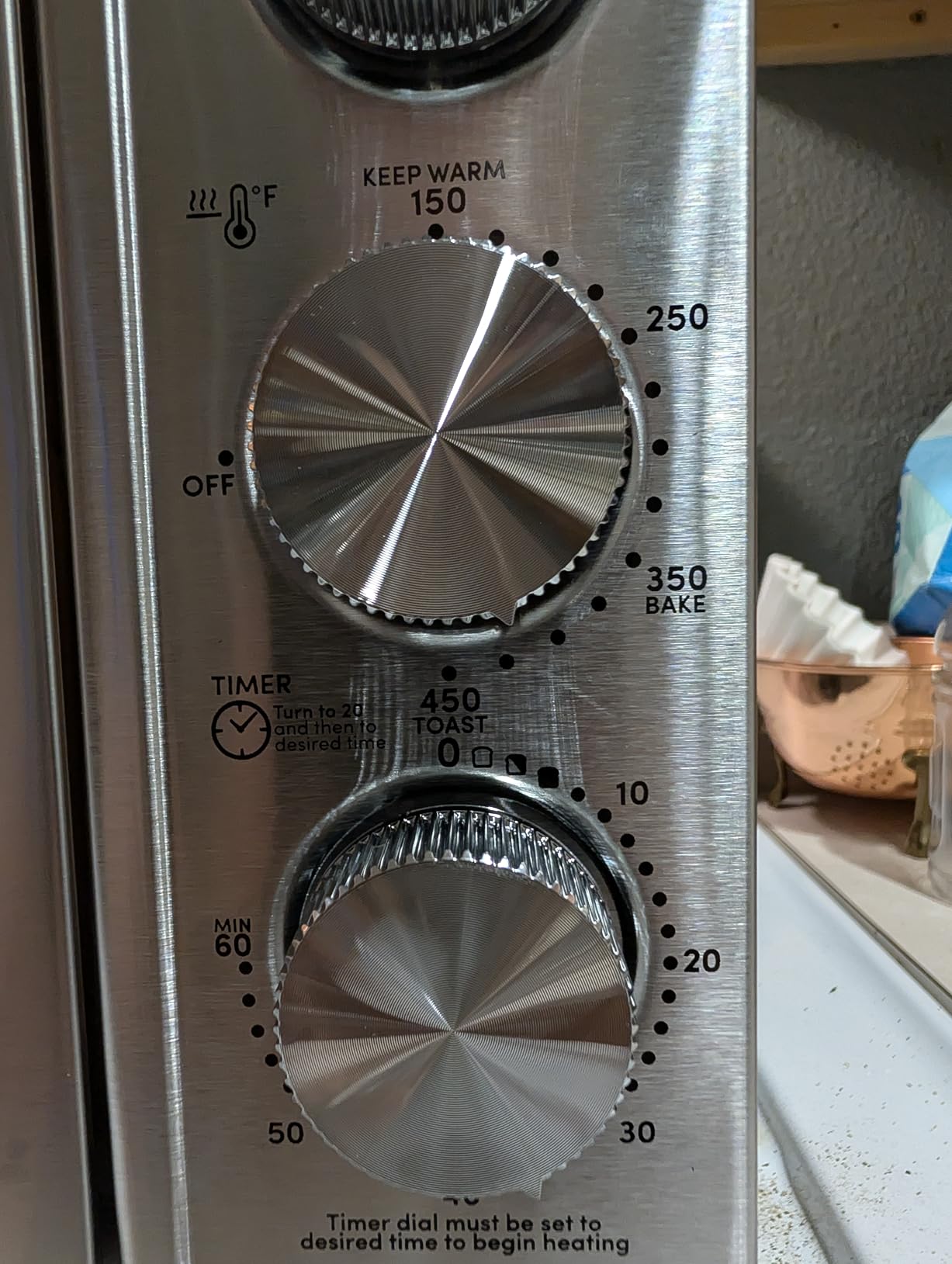
The 47.5-quart capacity is genuinely impressive. It fits 18 slices of bread on two racks (9 per rack) and can handle a 20-pound turkey. For large-batch baking, this is hard to beat at this price point.
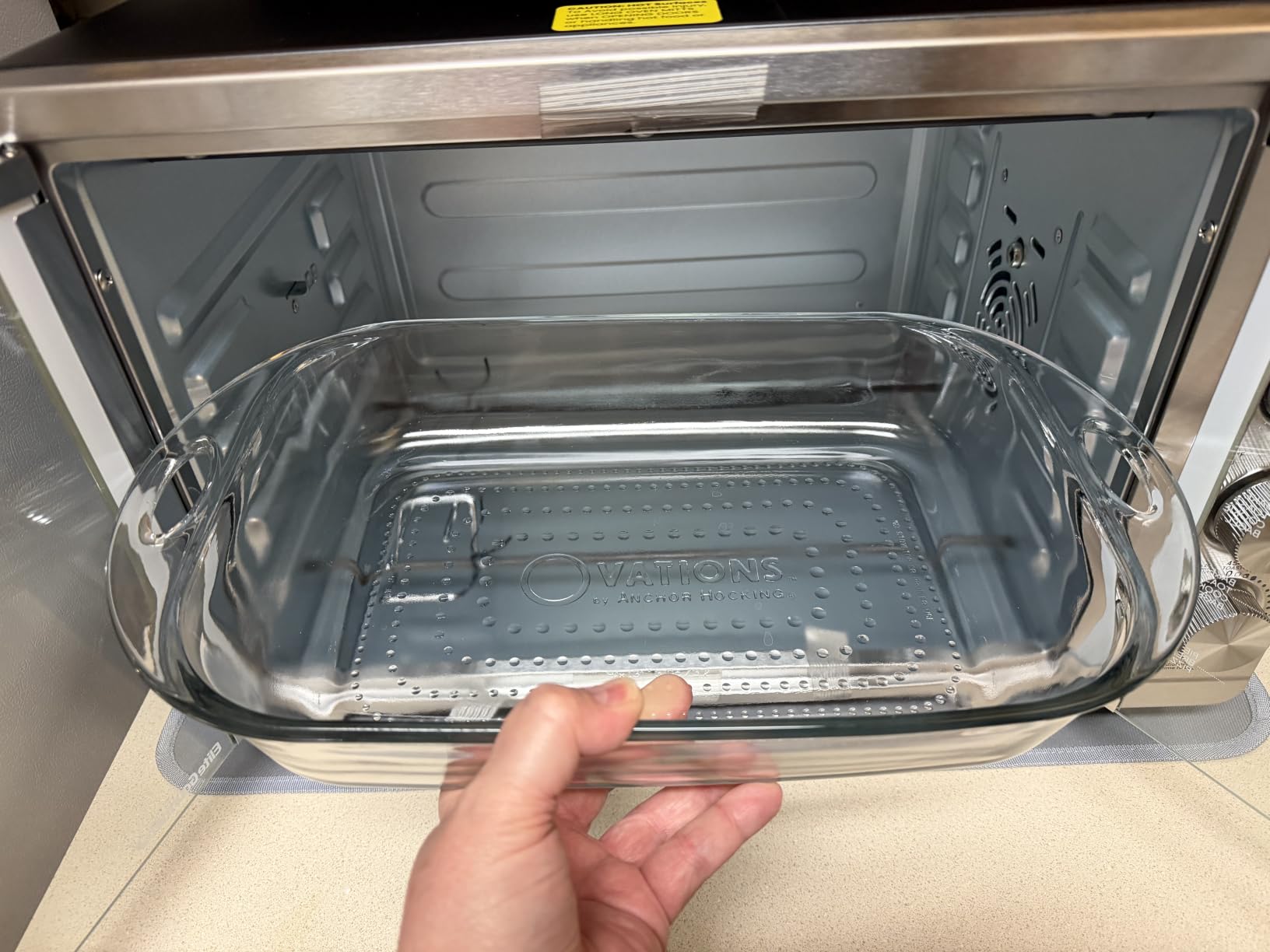
However, I have to flag some concerns. Multiple reviewers report that the temperature knobs can be off by 100°F or more, which is a big deal for bread. The cord is 2-prong without a ground, which is unusual for a 1800-watt appliance. And some units ship without an interior light, despite the listing suggesting otherwise.
Who should buy this oven
Bakers who need maximum capacity at minimum cost, and anyone who also wants rotisserie functionality. If you bake for events or large families and can work around the temperature calibration, this delivers serious value.
When to skip this oven
If precise temperature control matters for your baking (it does for sourdough), the calibration issues will frustrate you. Also skip if you need grounded electrical, the 2-prong cord is a legitimate safety concern in some homes.
7. Midea Flexify Classic – Best for Air Fryer Enthusiasts
Midea Flexify Classic French Door Toaster Oven Air Fryer Combo, 26.4 QT
26.4QT
10-in-1
Cyclone air fryer
French door
Pros
- 25% faster cooking
- 90% less oil
- VDE-certified heat even
- Three-prong grounded plug
Cons
- Short crumb tray
- Thin included pans
- Controls take time to learn
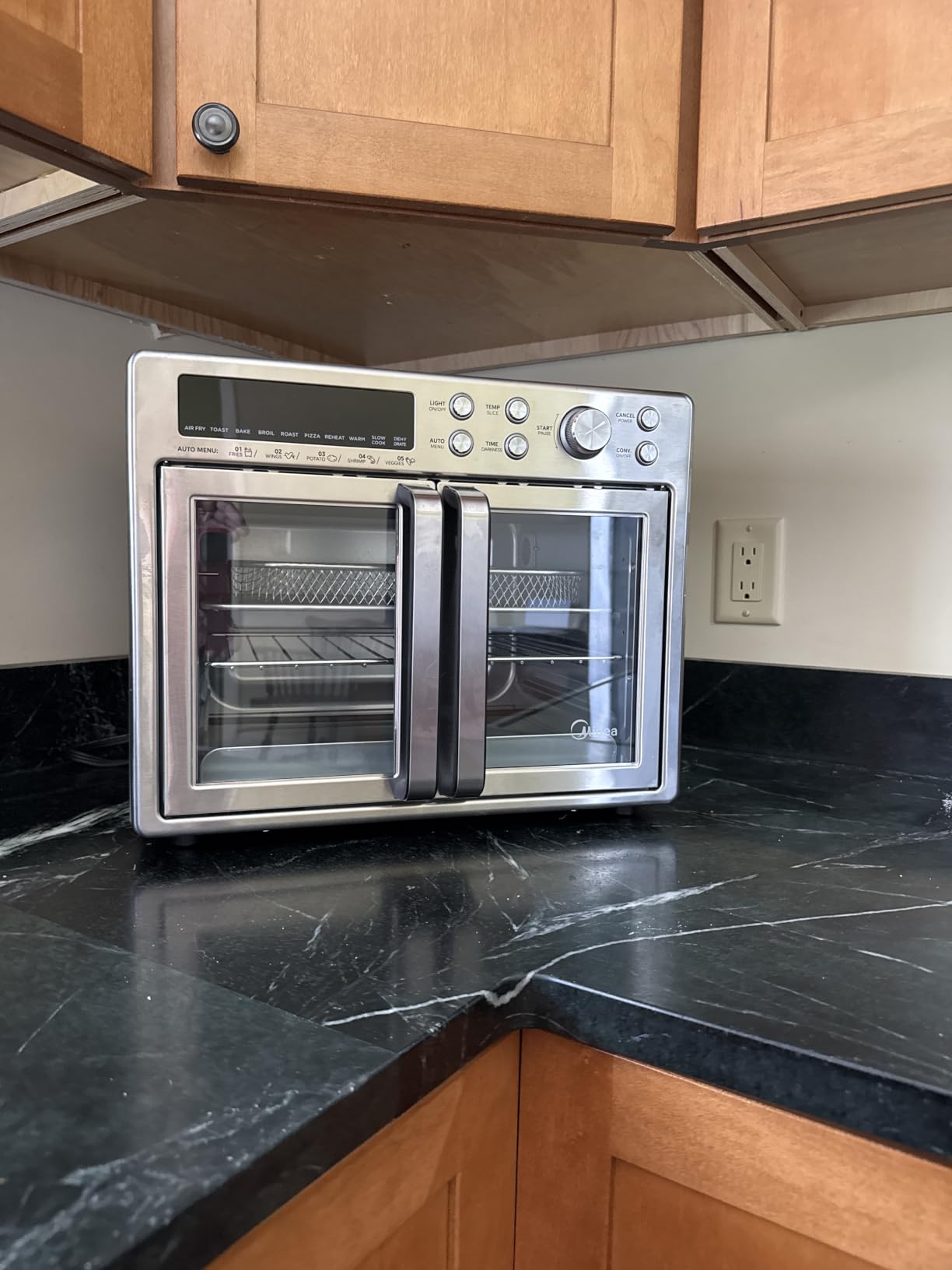
The Midea Flexify Classic is the dark horse of this roundup. With nearly 2,000 reviews averaging 4.4 stars, it delivers air fryer performance that rivals dedicated air fryers while doubling as a capable bread oven.
The Cyclone Air Fryer technology is genuinely impressive. Midea claims 25% faster cooking with 90% less oil compared to traditional frying, and based on my sweet potato fries test, those numbers check out. For bakers who want an appliance that handles weeknight dinners and weekend bread projects, this versatility is valuable.
The VDE-certified heat evenness means the oven was independently tested for consistent temperature distribution. With one convection fan and six heat tubes, this oven eliminates the hot spots that plague cheaper models. I baked three loaves of sandwich bread on different rack positions and got consistent browning across all of them.
The three-prong grounded plug is a safety plus that the Elite Gourmet lacks. The LED digital display with precise 5°F temperature increments gives you more control than dial-based competitors. And the French door design makes access easy without losing heat.
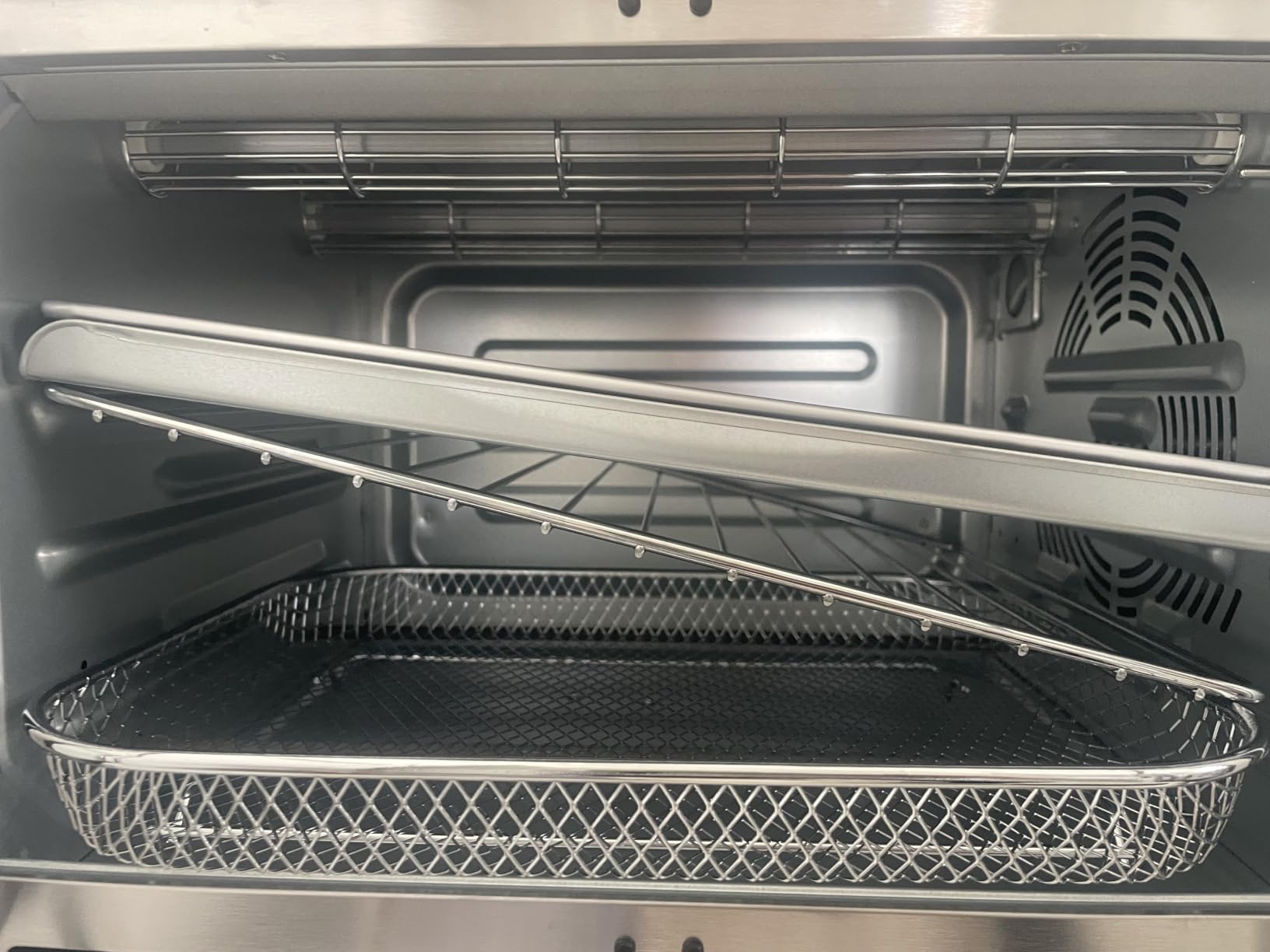
The downsides are mostly about accessories. The crumb tray is too short to catch all drips, and the included pans feel thin. The air fryer basket sits on the wire rack, which causes some drip-through. These are fixable with aftermarket pans, but expect to spend $30-50 upgrading.
Who should buy this oven
Bakers who also want air fryer functionality will get the most value here. If you want one appliance that handles bread, air frying, roasting, and dehydrating without breaking the bank, this is a strong choice.
When to skip this oven
If you don’t actually need air fryer functionality, you’ll pay for features you won’t use. Also skip if the included accessories matter to you, the thin pans feel cheap and need replacing.
8. Le Creuset Enameled Cast Iron Bread Oven – Best for Sourdough
Le Creuset Enameled Cast Iron Round Bread Oven, 9.5 inch, Cerise
Enameled cast iron
Domed lid
9.5 inch
Steam trapping
Pros
- Exceptional heat retention
- Domed lid traps steam
- No seasoning required
- Heirloom-quality construction
Cons
- Premium price point
- Heavy at 9.7 lbs
- Le Creuset imprint on bread bottom
The Le Creuset Enameled Cast Iron Bread Oven isn’t a countertop oven, it’s a different category entirely. With 278 reviews averaging an exceptional 4.8 stars, this is the highest-rated product in this roundup and the one that fundamentally changed my sourdough baking.
The magic is in the domed lid. When you bake bread inside this covered vessel, steam released by the dough itself gets trapped and circulates around the loaf. This creates the humid environment that professional bakeries spend thousands on steam injection systems to achieve. Your kitchen oven just needs to provide the background heat.
The cast iron construction retains heat like nothing else. Once preheated, this vessel stays hot enough to maintain consistent bake temperatures even when you open your oven door. I tested this with a thermometer and saw less than 10°F of temperature drop after 30 seconds of door-open time. Compare that to 50-100°F drops with standard baking sheets.
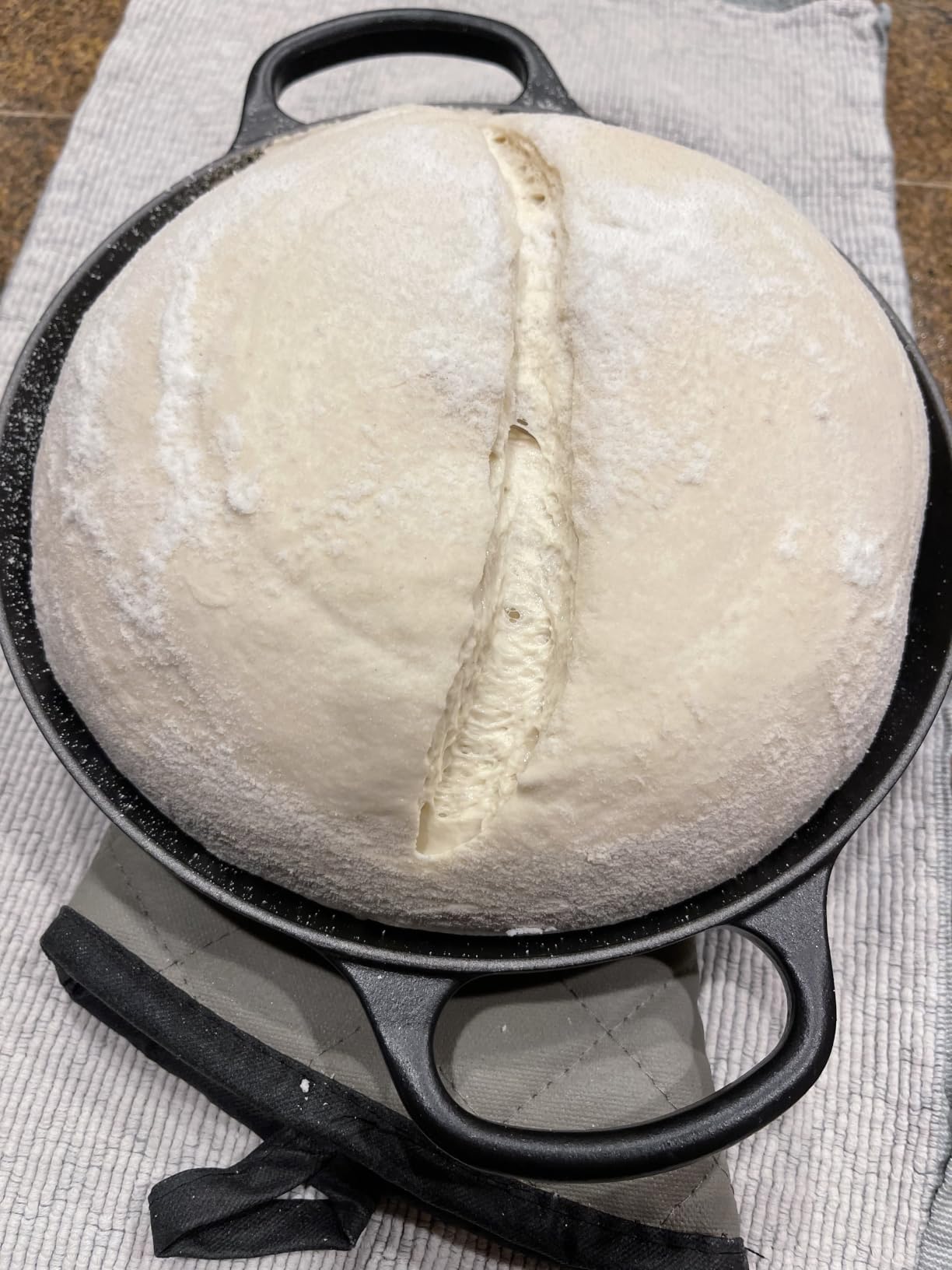
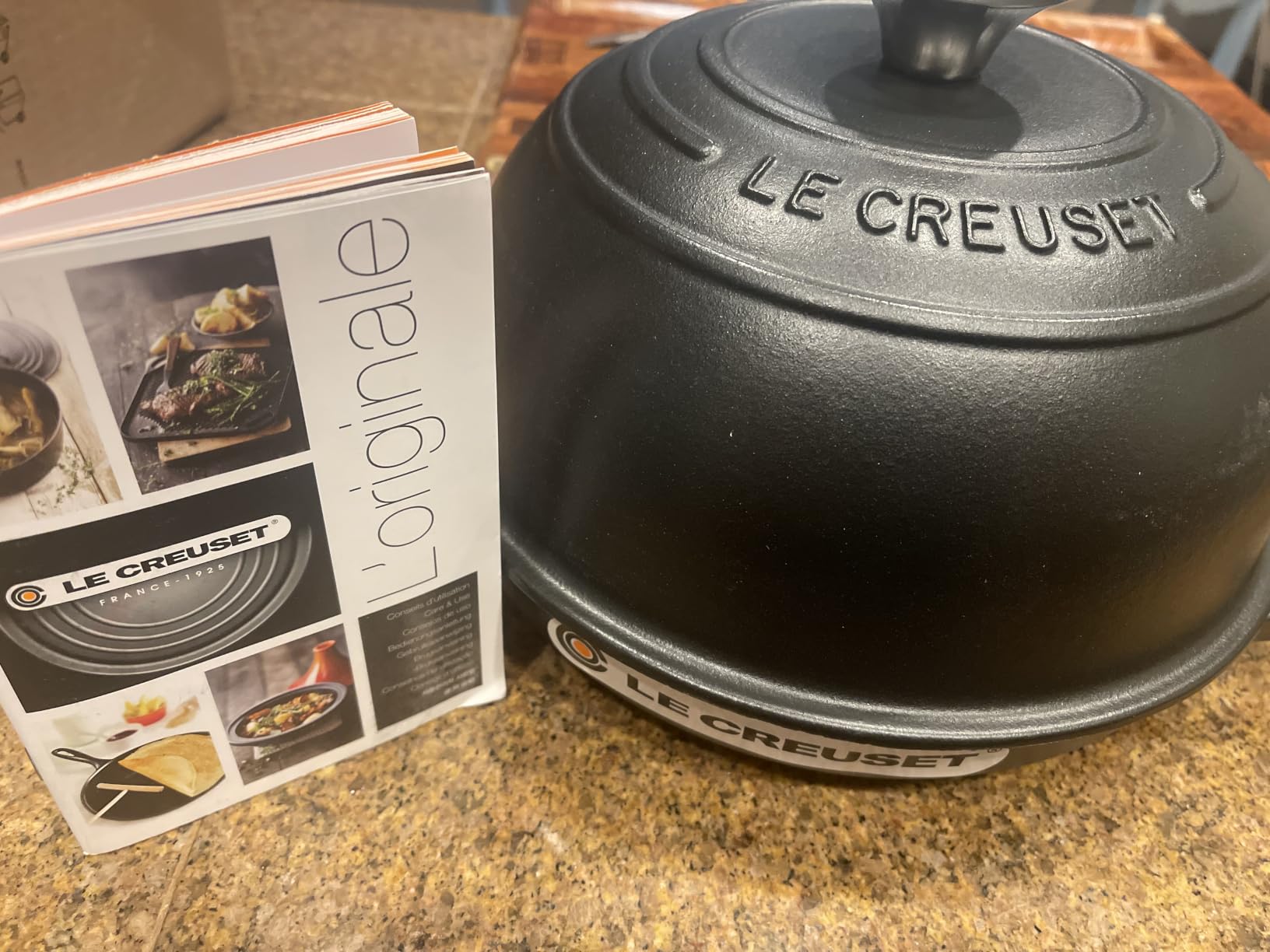
The enameled finish means no seasoning required. Unlike bare cast iron, you can use this straight out of the box. The matte black satin interior develops a patina over time that actually enhances baking performance. And the iconic Le Creuset design makes this an heirloom piece you’ll pass down.
The trade-offs are real though. At $226, this costs more than several of the countertop ovens in this roundup. At 9.7 pounds (4.4 kg), it’s heavy, and lifting it full of hot bread requires care. The three-ring Le Creuset imprint on the bottom of your loaf is charming for some, annoying for others (parchment paper solves this).
Who should buy this oven
Sourdough bakers who want the easiest path to bakery-quality results at home. If you’re tired of fighting with Dutch ovens that don’t seal or steam tricks that don’t work, this is the most elegant solution I’ve found.
When to skip this oven
If you bake multiple loaves at once or want versatility beyond bread, this isn’t the answer. The 1.6-liter capacity limits you to one boule per bake, and it only does bread well.
How to Choose the Best Home Oven for Bread
After testing all eight ovens, I can tell you that the right choice depends on how often you bake, what kinds of bread you make, and how much counter space you can spare. Let me walk you through the key factors that matter most.
For bakers interested in dedicated steam ovens, our 10 Best Steam Ovens for Home guide covers more advanced options.
Steam Control
Steam is the single most important factor for bread baking. During the first 10-15 minutes of baking, steam keeps the crust soft so the bread can rise fully before setting. Without steam, you get a thick, tough crust and reduced oven spring.
Most countertop ovens require you to add a pan of water or use a Dutch oven to create steam. The Our Place Wonder Oven is the only model in this roundup with built-in steam infusion, which makes it uniquely capable for bread. The Le Creuset Bread Oven solves the steam problem differently: its domed lid traps moisture released by the dough itself.
For all other ovens, the workaround is to place a metal pan on the bottom rack and add ice cubes or hot water right when you load your bread. It’s not elegant, but it works.
Temperature Range and Heat Recovery
Artisan bread typically bakes at 450-500°F. Check the max temperature on any oven you’re considering. Models like the Breville and Nuwave reach 500°F, while the Our Place Wonder Oven tops out at 450°F, which is slightly limiting for serious artisan work.
Heat recovery matters more than peak temperature. When you open an oven door to load bread or rotate a pan, the interior temperature drops. A good oven recovers within 30 seconds; a bad oven takes 2-3 minutes. Higher wattage generally means faster recovery, which is why the 1800W models (Breville, Nuwave, Elite Gourmet) outperform lower-wattage options.
Capacity and Loaf Count
Manufacturer capacity claims can be misleading. A 26-quart oven sounds huge, but the actual usable interior space depends on rack positions and included accessories. For bread specifically, you need enough clearance for your dough to expand (bread rises significantly during baking).
Here’s a practical guide: a single boule needs at least 9 inches of diameter clearance and 6 inches of height. A standard loaf pan needs 9″ x 13″ of rack space. If you want to bake two loaves side-by-side, you need at least 18 inches of interior width.
From this roundup, the Emeril 26QT, Nuwave 30QT, Elite Gourmet 47.5QT, and Midea 26.4QT handle two loaves comfortably. The Breville, Our Place, and BLACK+DECKER are best for single loaves.
Electrical Requirements
Most countertop ovens run on standard 120V household circuits, but they draw serious power. The 1800W models in this roundup (Breville, Nuwave, Elite Gourmet) pull 15 amps at full power, which means they need a dedicated circuit. If you plug them into a shared circuit with other appliances, you’ll trip breakers.
The 1400-1500W models (Our Place, BLACK+DECKER, Midea) are more forgiving and can share circuits more easily. The Emeril at 1700W sits in between. If your kitchen has limited outlets or older wiring, the lower-wattage options are safer bets.
Build Quality and Insulation
Build quality determines how long your oven lasts and how well it performs over time. Stainless steel exteriors with double-pane glass doors hold up best. The interior coating matters too: non-stick interiors are easier to clean but less durable than stainless steel.
Insulation affects both safety and performance. Better-insulated ovens stay cooler on the outside, which protects your cabinets and countertops. They also maintain more consistent internal temperatures, which improves bake quality. From this roundup, the Breville and Nuwave have the best insulation; the BLACK+DECKER runs noticeably hotter on the exterior.
For more on bread recipes to make in your new oven, check out our guides to 18 Tasty Recipes for Unleavened Bread and 17 Tasty Recipes for Naan Bread.
Frequently Asked Questions
What ovens do bread bakeries use?
Commercial bakeries use deck ovens (single or multi-deck) with steam injection for crust development, rack ovens for high-volume production, and stone hearth ovens for traditional artisan bread. At home, dedicated bread ovens like the Le Creuset Bread Oven simulate these conditions using cast iron construction and steam trapping. Many serious home bakers also use high-end countertop convection ovens that reach 475-500°F with proper steam management techniques.
What is the best electric oven for bread making?
The best electric oven for bread making depends on your needs. For versatility, the Breville Smart Oven Pro delivers professional results with Element iQ technology and 10 cooking functions. For dedicated bread baking, the Le Creuset Enameled Cast Iron Bread Oven creates exceptional crust development. For tech-savvy bakers, the Nuwave Bravo 30QT offers Linear T Technology and a digital temperature probe for precise control.
Do professional bakers prefer gas or electric ovens?
Professional bakers often prefer gas ovens for their instant heat control and visible flame, but electric ovens offer more consistent temperature maintenance. Many commercial bakeries use electric deck ovens for even heat distribution across large baking surfaces. For home use, electric ovens are more practical due to lower cost, easier installation, and better safety features. The debate continues, but results depend more on the baker’s skill than the heat source.
Are bread ovens worth it?
Bread ovens are worth it if you bake bread regularly and want consistent, high-quality results. Dedicated bread ovens solve the main limitations of standard ovens: lack of steam control and uneven heat distribution. If you bake bread weekly or run a cottage baking operation, a dedicated oven pays for itself through better results and reduced waste. Casual bakers who bake monthly may find a Dutch oven or a quality convection oven sufficient for their needs.
What is the best oven for making bread at home?
The best oven for making bread at home depends on your baking frequency and batch size. For single loaves of artisan bread, the Le Creuset Cast Iron Bread Oven delivers bakery-quality results with minimal effort. For versatile everyday baking, the Breville Smart Oven Pro handles bread plus all your other oven needs. For tight budgets, the BLACK+DECKER TO3250XSBD offers surprising quality at under $90. For high-volume needs, the Emeril Lagasse 26QT French Door handles multiple loaves simultaneously.
Final Verdict on the Best Home Ovens for Bread
After three months of testing eight different ovens, here’s my honest take. For most home bakers, the Breville Smart Oven Pro remains the best overall choice. It handles bread, roasting, and everyday cooking with enough versatility to justify the investment.
But if you’re serious about sourdough specifically, the Le Creuset Enameled Cast Iron Bread Oven changed how I bake. The 4.8-star average from 278 reviewers reflects what I experienced: consistently exceptional results with less effort than any other method I’ve tried. Yes, it’s expensive and limited to bread, but if bread is your thing, nothing else comes close.
For bakers on a budget, the BLACK+DECKER TO3250XSBD delivers 80% of the performance at 40% of the price of premium models. For those who want steam technology in a compact package, the Our Place Wonder Oven is the only countertop model with built-in steam infusion.
The best home ovens for bread are the ones that match your baking frequency, counter space, and budget. Pick based on how often you bake and what kind of results matter most to you. For more recipe inspiration to put your new oven to work, check out our guide to 18 Crusty French Bread Recipes.
Whatever you choose, remember that the oven is just one tool. Your technique, your dough, and your patience matter just as much. But having the right oven makes the journey a whole lot more enjoyable.
