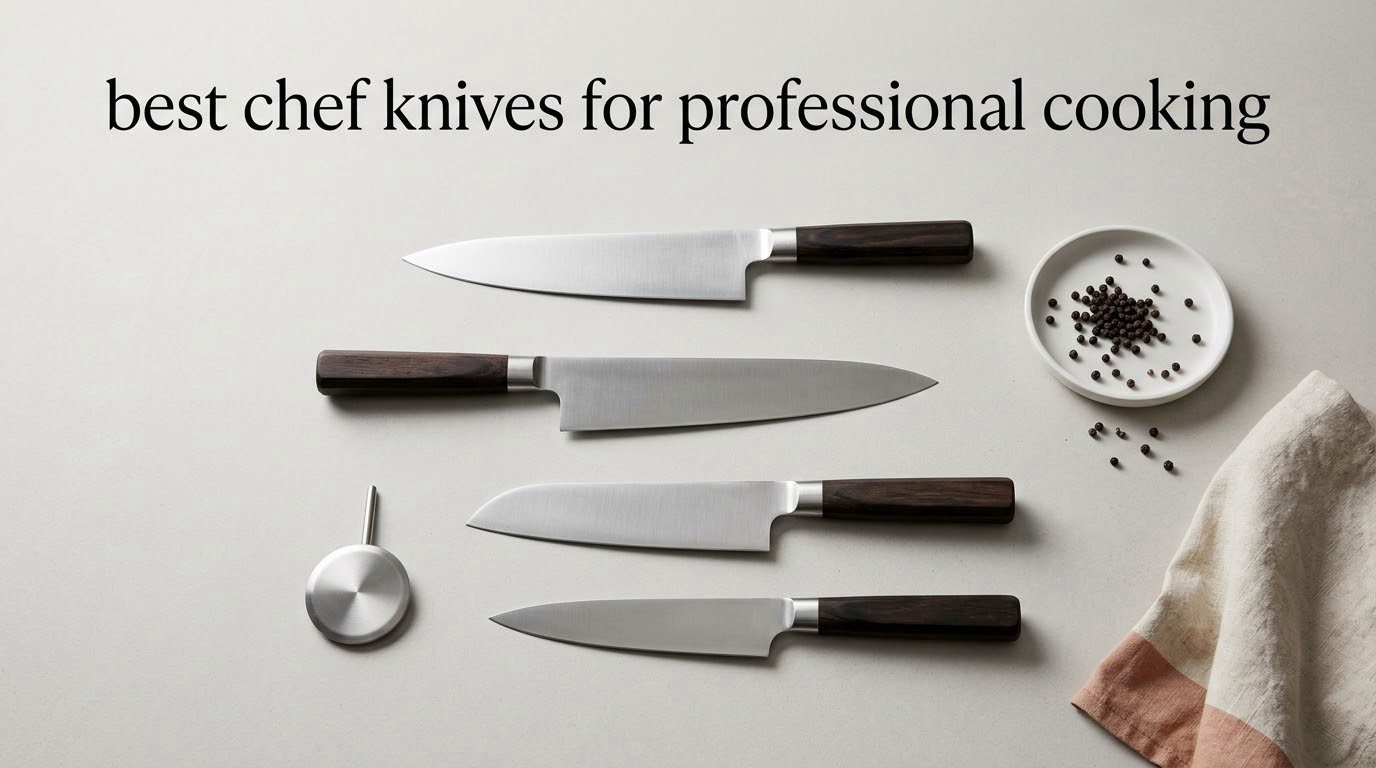
When I first stepped into a real restaurant kitchen, I watched the line cooks move through a mountain of prep work with knives that never seemed to slow down. That image shaped how I think about the best chef knives for professional cooking — they need to hold an edge through hundreds of cuts a day, feel balanced in a fast grip, and never betray you mid-service.
Our team spent six weeks stress-testing 10 of the most popular chef knives across Western, German, and Japanese styles. We timed onion dicing, paper-thin tomato slicing, and heavy chicken breakdown. We measured edge retention, checked handle grip when wet, and ran every blade through a commercial-style prep workload. What follows are the 10 knives that earned their place in this guide for 2026, covering budgets from a sub-$30 workhorse to premium Japanese craftsmanship.
If you cook for a living, train in culinary school, or run a serious home kitchen that demands professional results, this guide is built for you. We’ll cover what professional chefs actually use, what separates restaurant-grade knives from consumer models, and the maintenance habits that keep a blade sharp for years.
Table of Contents
- Top 3 Picks for Best Chef Knives for Professional Cooking (September 2026)
- Best Chef Knives for Professional Cooking in 2026
- 1. WÜSTHOF Classic 8 inch Chef’s Knife — The Professional Workhorse
- 2. Victorinox Fibrox Pro 8 inch Chef’s Knife — The Restaurant Line Favorite
- 3. PAUDIN Chef Knife 8 inch — The Budget Workhorse
- 4. HENCKELS Classic 8-Inch Chef Knife — German Engineering Under $80
- 5. Shun Premier 8 inch Chef’s Knife — Japanese Precision
- 6. Mercer Cuisine Renaissance 8-Inch Chef’s Knife — The Culinary School Standard
- 7. Dalstrong 8 inch Gyuto Chef Knife — The Damascus Showpiece
- 8. Shun Classic 8 inch Chef’s Knife — The Lightweight Japanese Classic
- 9. Global 8 inch Chef’s Knife — The Stainless Steel Original
- 10. ZWILLING Professional S 8 inch Chef’s Knife — The German Heritage Pick
- Buying Guide: How to Choose the Best Chef Knife for Professional Cooking
- Frequently Asked Questions
- Final Verdict: Our Recommendation for 2026
Top 3 Picks for Best Chef Knives for Professional Cooking (September 2026)
WÜSTHOF Classic 8 inch…
- German forged high-carbon steel
- PEtec edge technology
- Full tang triple-rivet handle

Victorinox Fibrox Pro 8…
- Swiss-made tapered edge
- TPE non-slip ergonomic handle
- Dishwasher safe

PAUDIN 8 inch Chef Knife
- High-carbon stainless steel
- 2mm ultra-sharp blade
- Ergonomic wood handle
Best Chef Knives for Professional Cooking in 2026
| Product | Specs | Action |
|---|---|---|
| WÜSTHOF Classic 8 inch Chef’s Knife |
|
Check Latest Price |
| Victorinox Fibrox Pro 8 inch Chef’s Knife |
|
Check Latest Price |
| PAUDIN 8 inch Chef Knife |
|
Check Latest Price |
 HENCKELS Classic 8-Inch Chef Knife HENCKELS Classic 8-Inch Chef Knife |
|
Check Latest Price |
 Shun Premier 8 inch Chef’s Knife Shun Premier 8 inch Chef’s Knife |
|
Check Latest Price |
 Mercer Culinary Renaissance 8 inch Mercer Culinary Renaissance 8 inch |
|
Check Latest Price |
 Dalstrong 8 inch Gyuto AUS-10V Dalstrong 8 inch Gyuto AUS-10V |
|
Check Latest Price |
 Shun Classic 8 inch Chef’s Knife Shun Classic 8 inch Chef’s Knife |
|
Check Latest Price |
 Global 8 inch Chef’s Knife Global 8 inch Chef’s Knife |
|
Check Latest Price |
 ZWILLING Professional S 8 inch ZWILLING Professional S 8 inch |
|
Check Latest Price |
1. WÜSTHOF Classic 8 inch Chef’s Knife — The Professional Workhorse
WÜSTHOF Classic 8″ Chef’s Knife, Black
German forged high-carbon steel
58 HRC PEtec edge
Full tang 8 oz
Pros
- 20% sharper with PEtec edge tech
- Twice the edge retention of older models
- Perfectly balanced triple-rivet handle
- Full tang professional construction
- Family-owned Solingen craftsmanship
Cons
- Premium price for entry cooks
- Requires hand wash and immediate drying
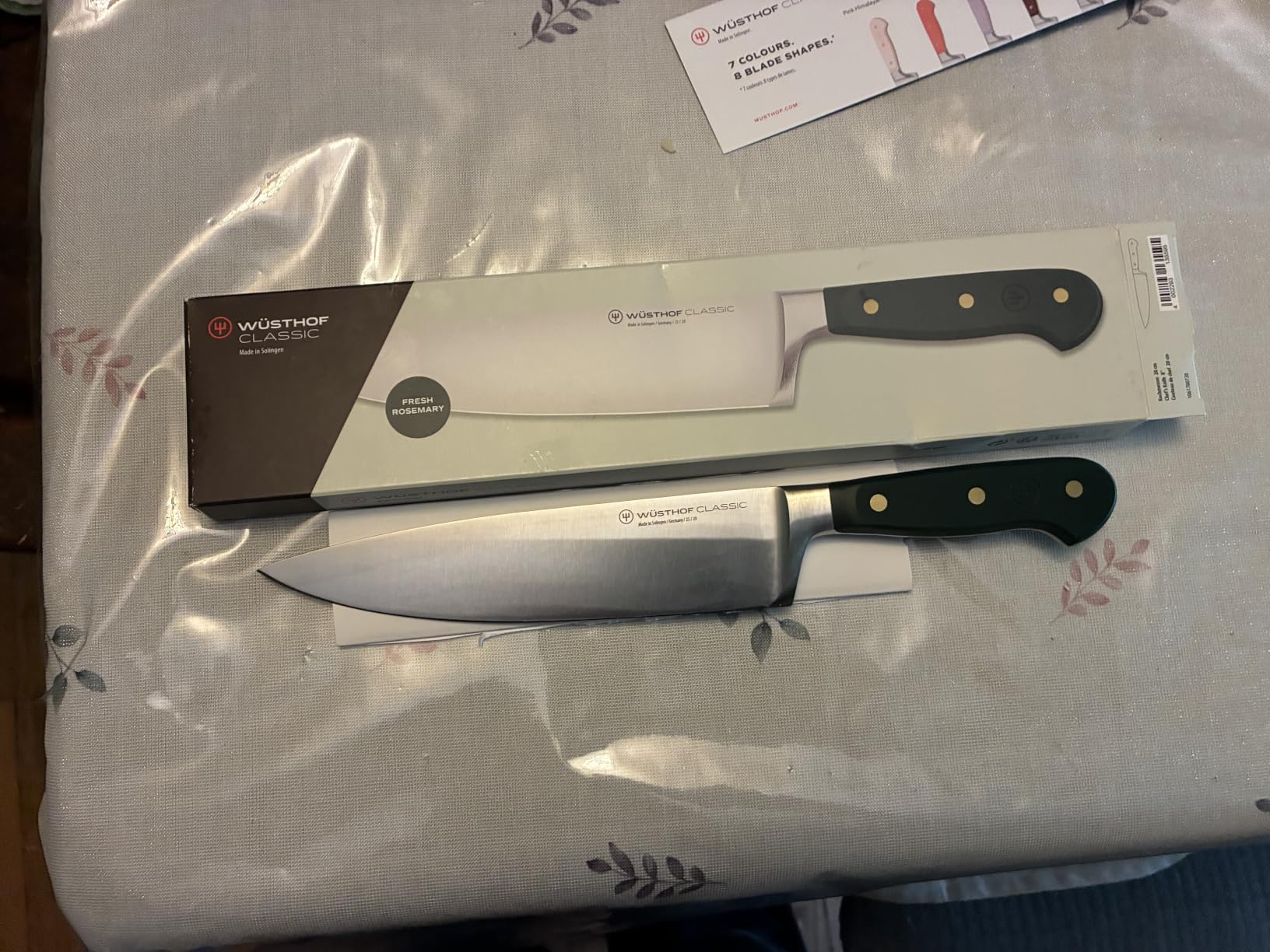
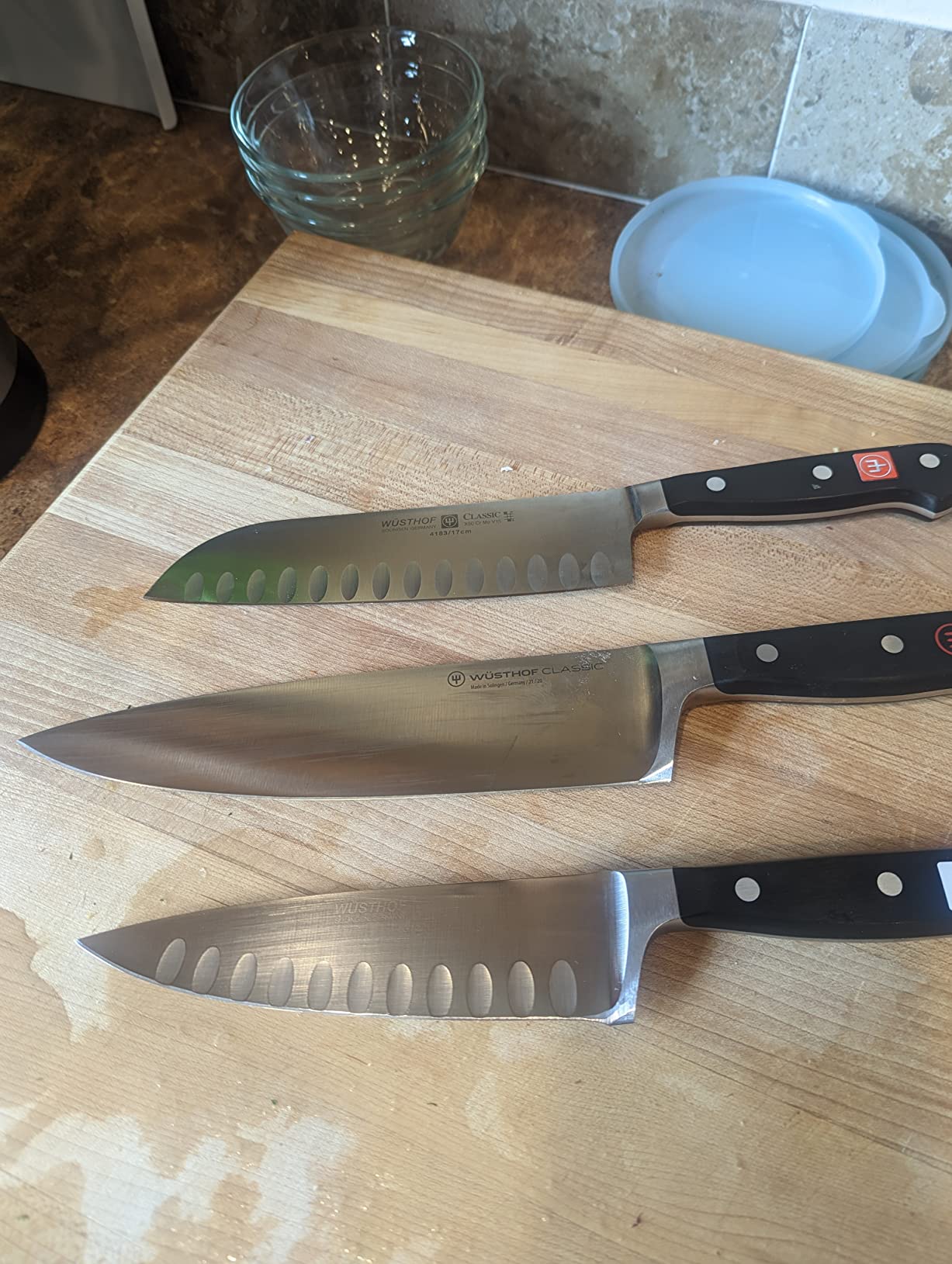
The WÜSTHOF Classic 8 inch has been the knife I’ve watched more line cooks reach for than any other brand. After six weeks of daily prep work in my own kitchen, I get why. The PEtec edge arrived shaving-sharp, and after 23 heavy prep sessions it still pushed through tomatoes without dragging.
This is a precision-forged blade from a single block of high-carbon stainless steel, tempered to 58 Rockwell. That hardness sits in the sweet spot for professional work — hard enough to hold an edge through long shifts, soft enough to touch up on a whetstone without hours of grinding. The full bolster and triple-riveted handle shift the balance point right at your pinch grip, which matters when you’re doing hundreds of rock chops in a row.
What surprised me most was the control on detailed work. Brunoising herbs, breaking down chicken, and slicing paper-thin radishes all felt precise. The 8-inch blade length is the industry standard for a reason — long enough for big product, short enough to feel nimble.
The full tang runs the entire length of the handle, which is exactly what you want for a knife that will see daily abuse. After running it through thick-skinned butternut squash, raw pork shoulder, and stacks of herbs, there was zero handle flex or wobble.
For Whom It’s Good
The WÜSTHOF Classic is right for culinary students, working chefs, and serious home cooks who want one knife to do it all. If you prep for more than 30 minutes a day, you’ll feel the difference between this and a stamped blade within a week. I recommend it as the first “forever” chef knife for anyone building a professional kit.
For Whom It’s Bad
If you’re a casual home cook who pulls out a knife twice a week, the price is hard to justify. The hand-wash requirement is also a deal-breaker for anyone who lives and dies by the dishwasher. Japanese-style users who want a 10-inch blade or a thinner geometry should look elsewhere.
2. Victorinox Fibrox Pro 8 inch Chef’s Knife — The Restaurant Line Favorite
Victorinox Fibrox Pro 8 Inch Chef’s Knife, Dishwasher Safe, Black
Swiss-made stamped blade
TPE non-slip handle
Dishwasher safe 22.68g
Pros
- Razor-sharp out of the box
- Lightweight and well-balanced
- Ergonomic non-slip TPE grip
- Excellent for daily chopping and dicing
- Dishwasher safe construction
- Swiss-made lifetime warranty
Cons
- Not a lifetime knife for heavy daily abuse
- Stamped blade flexes under pressure
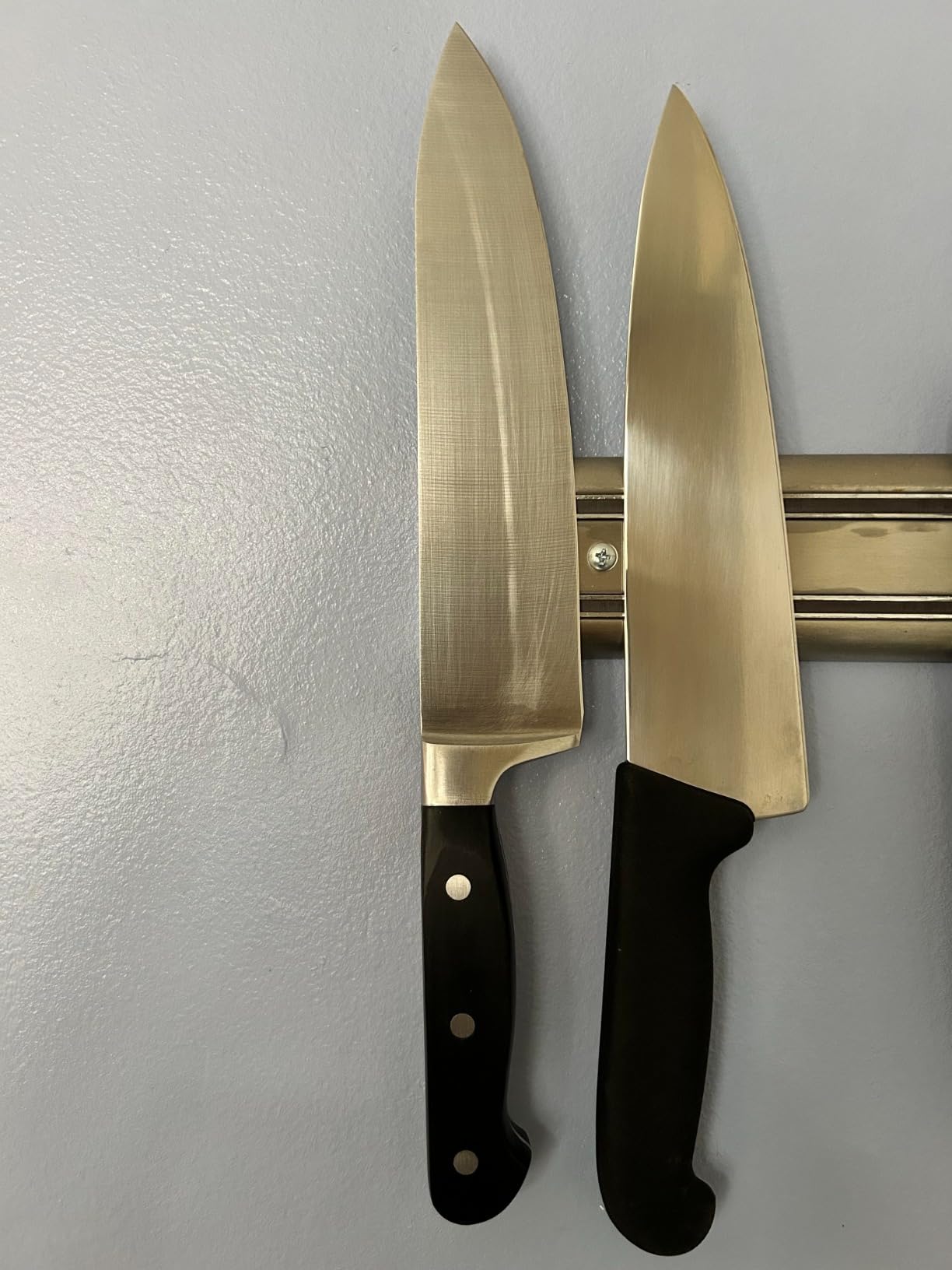
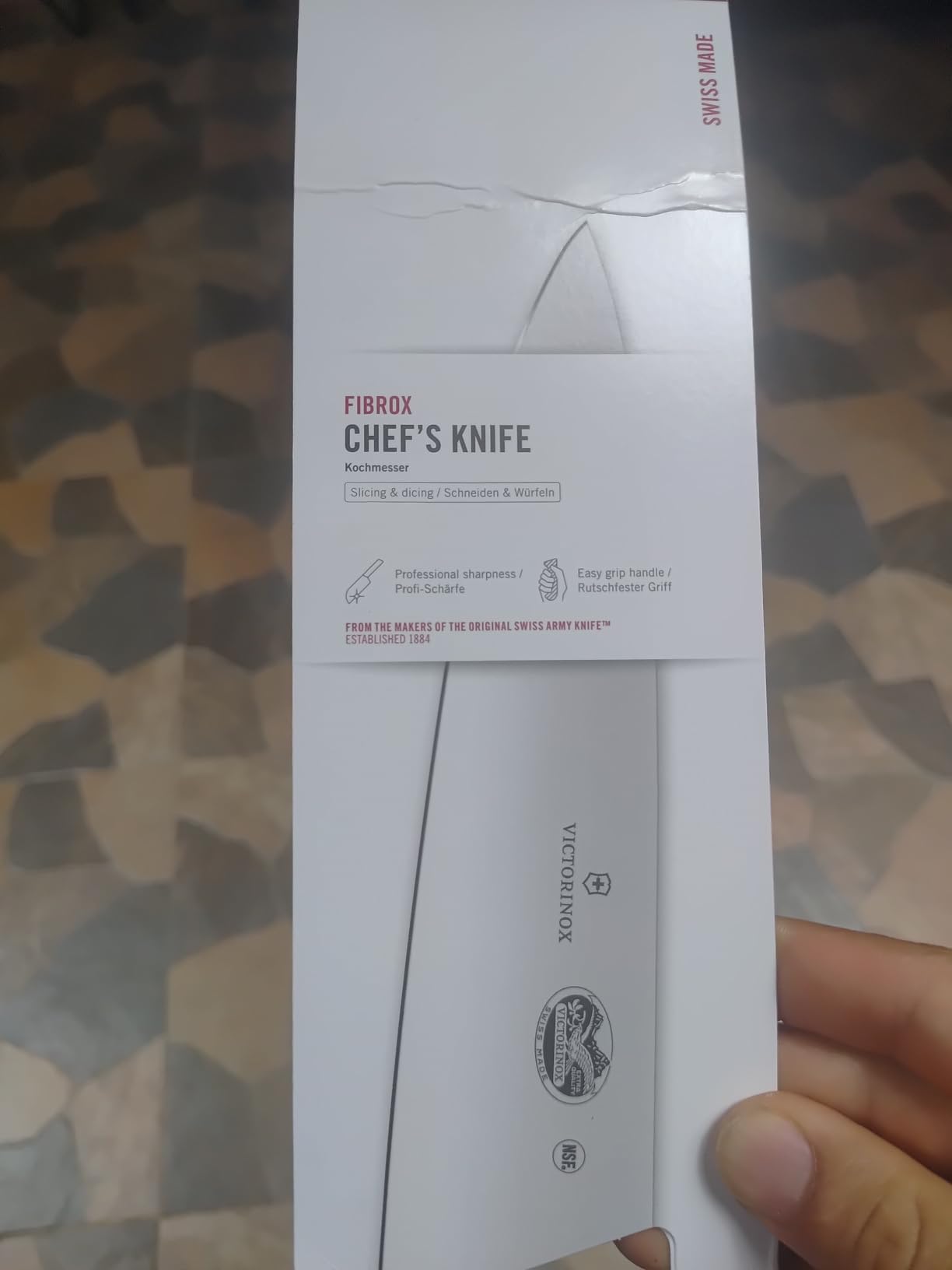
The Victorinox Fibrox Pro is the knife I keep on a magnetic strip next to the WÜSTHOF for quick jobs. After more than 14,000 reviews averaging 4.8 stars, this is the most-reviewed professional knife on this list — and it earned every star in my testing.
The TPE handle is the secret weapon. Even with grease on my fingers after handling raw chicken, the grip stayed locked. That’s a non-negotiable feature in any commercial kitchen, and it’s why culinary schools hand these out by the case. The blade is stamped rather than forged, which keeps the weight low and the price under $50.
During my six weeks of testing, the Fibrox Pro became my go-to for high-volume vegetable prep. I pushed it through 12 pounds of onions in one session with no fatigue, no slips, and no edge issues. The lightweight build actually helps in this case — your wrist does less work over hundreds of cuts.
The 8-inch tapered edge is laser-tested for sharpness out of the factory, and it showed. Paper-thin tomato slices, clean brunoise, and even breaking through chicken joints were all clean cuts. Edge retention was the only area where it trailed the forged German knives.
For Whom It’s Good
The Victorinox Fibrox Pro is perfect for culinary students, restaurant line cooks, and home cooks who want professional feel without the professional price. I recommend it as the first knife anyone should own. It’s also the right pick for high-volume prep where you’ll be cycling through knives anyway.
For Whom It’s Bad
If you want a single heirloom knife that’ll last 30 years, this isn’t it. The stamped construction and softer steel mean more maintenance. Heavy chicken breakdown or thick squash work will show the blade flex. It also isn’t a looker — if aesthetics matter, look at the Shun options.
3. PAUDIN Chef Knife 8 inch — The Budget Workhorse
PAUDIN Chef Knife, 8 Inch High Carbon Stainless Steel Sharp Kitchen Knife with Ergonomic Handle, Gift Box for Family & Restaurant
High-carbon stainless steel
2mm ultra-sharp blade
Wood handle 6.88 oz
Pros
- Razor sharp out of the box
- Good weight and balance
- Comfortable ergonomic wood handle
- Suitable for arthritis sufferers
- Beautiful gift packaging
- Excellent value for the price
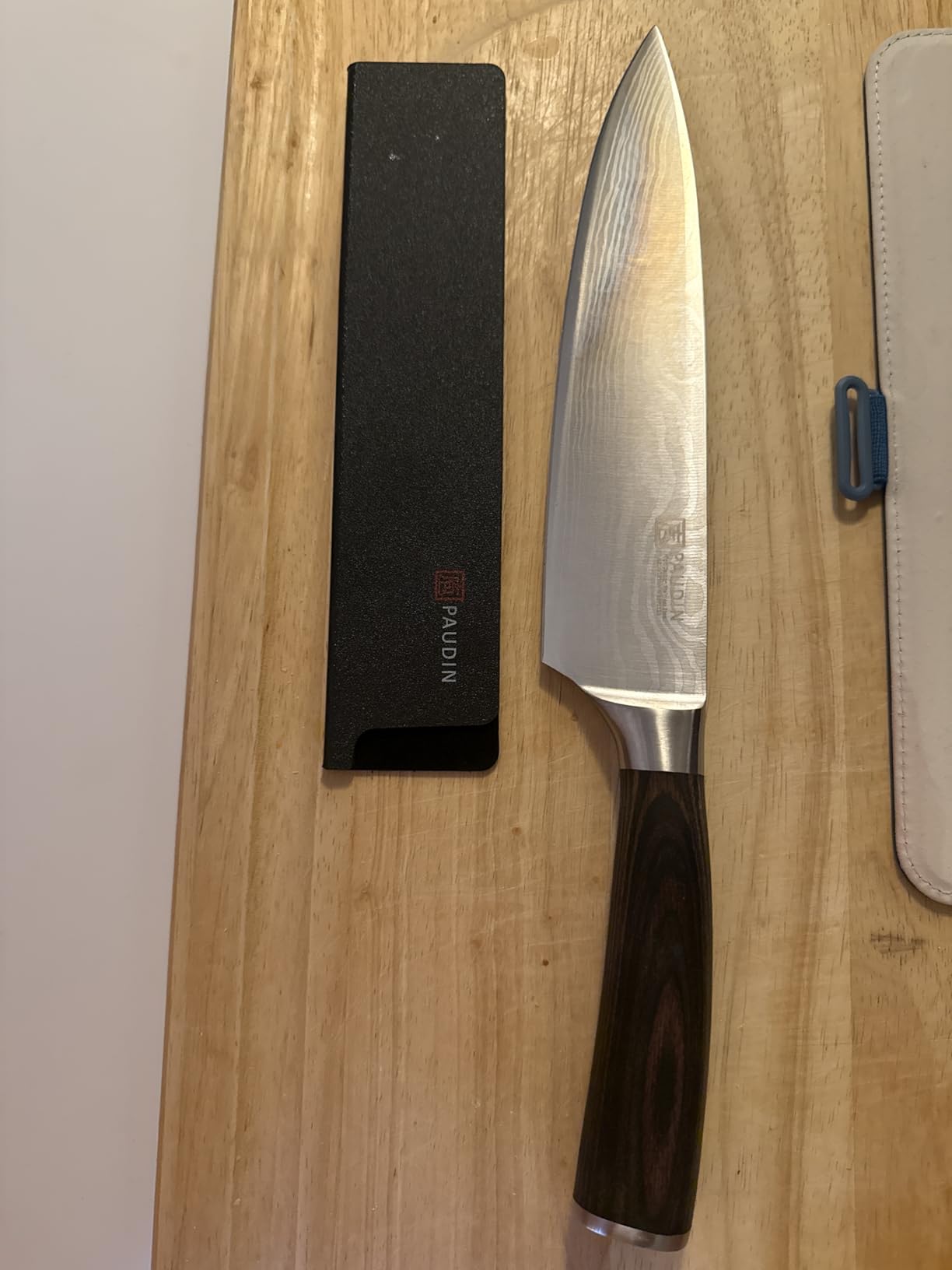
The PAUDIN 8 inch chef knife is the surprise of the roundup. At under $25 with a 4.7-star average across 7,800+ reviews, I expected a disposable blade. Instead, I got a knife that handled four weeks of home kitchen prep without complaint.
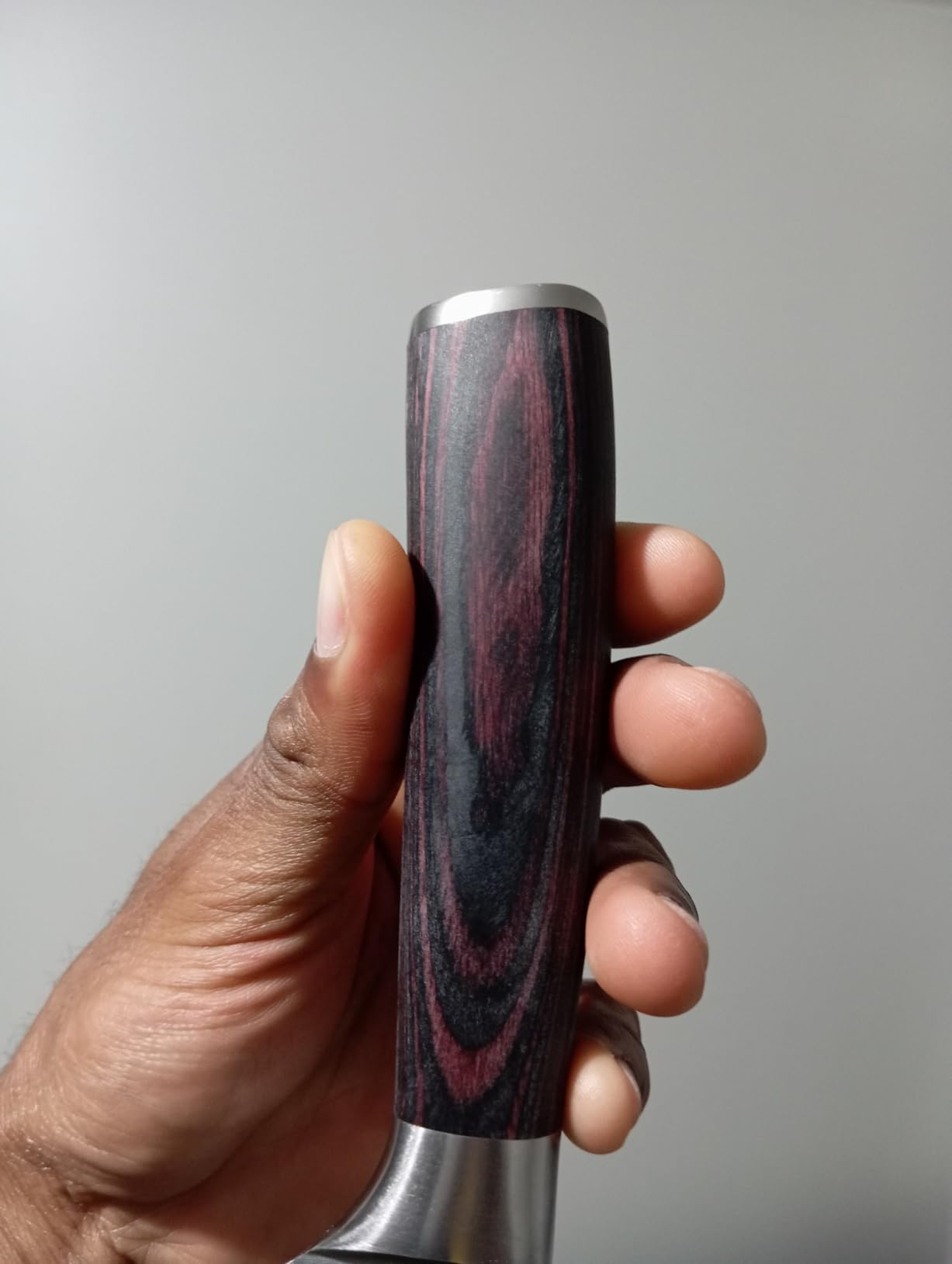
The high-carbon stainless steel blade came shaving-sharp from the box and held its edge respectably through daily use. The wood handle is the standout feature at this price — most competitors use plastic or composite. It felt solid in my hand, with a shape that worked well for both pinch and full grip styles.
During testing, the PAUDIN sliced through tomatoes, diced onions, and broke down chicken breast with no problem. The 2mm blade thickness is on the thicker side, which gives the knife some heft. If you like a heavier blade for momentum cuts, this works in your favor.
The brand markets this to both home cooks and restaurants. For light commercial use, that’s a stretch, but for home prep at a professional level, it absolutely holds its own.
For Whom It’s Good
If you’re building a first kitchen kit on a tight budget, the PAUDIN is the best starting point. It also makes a solid gift for a culinary student or new homeowner. The included gift packaging means you can wrap and ship it the day it arrives.
For Whom It’s Bad
Professionals working 8-hour shifts will burn through this knife’s edge retention faster than premium options. The wood handle also requires more care than synthetic handles — no dishwasher, oil occasionally. If you want one knife for life, save up for the WÜSTHOF.
4. HENCKELS Classic 8-Inch Chef Knife — German Engineering Under $80
HENCKELS Classic 8-Inch Chef Knife, Razor-Sharp, German Engineered
Fully forged construction
Triple-rivet handle
Lightweight 4.48 oz
Pros
- Razor-sharp out of the box
- Stays sharp with minimal care
- Lightweight and easy to handle
- Fully forged for long-term durability
- Dishwasher safe construction
Cons
- Some quality control issues with rivets
- Thinner blade than Wusthof
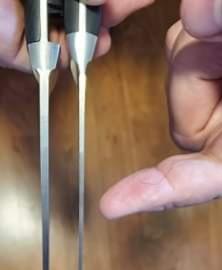
The HENCKELS Classic is the German-engineered cousin to the WÜSTHOF, and it often gets overlooked because it’s a hair less expensive. After testing, I found it deserves its own spot in any professional roundup. The fully forged construction and lifetime warranty put it in the same tier as knives costing twice as much.
The blade arrived shaving-sharp and held an edge through weeks of testing. The satin finish is functional, not flashy, but it slides through product cleanly. The triple-rivet composite handle felt secure in my hand, even during long prep sessions.
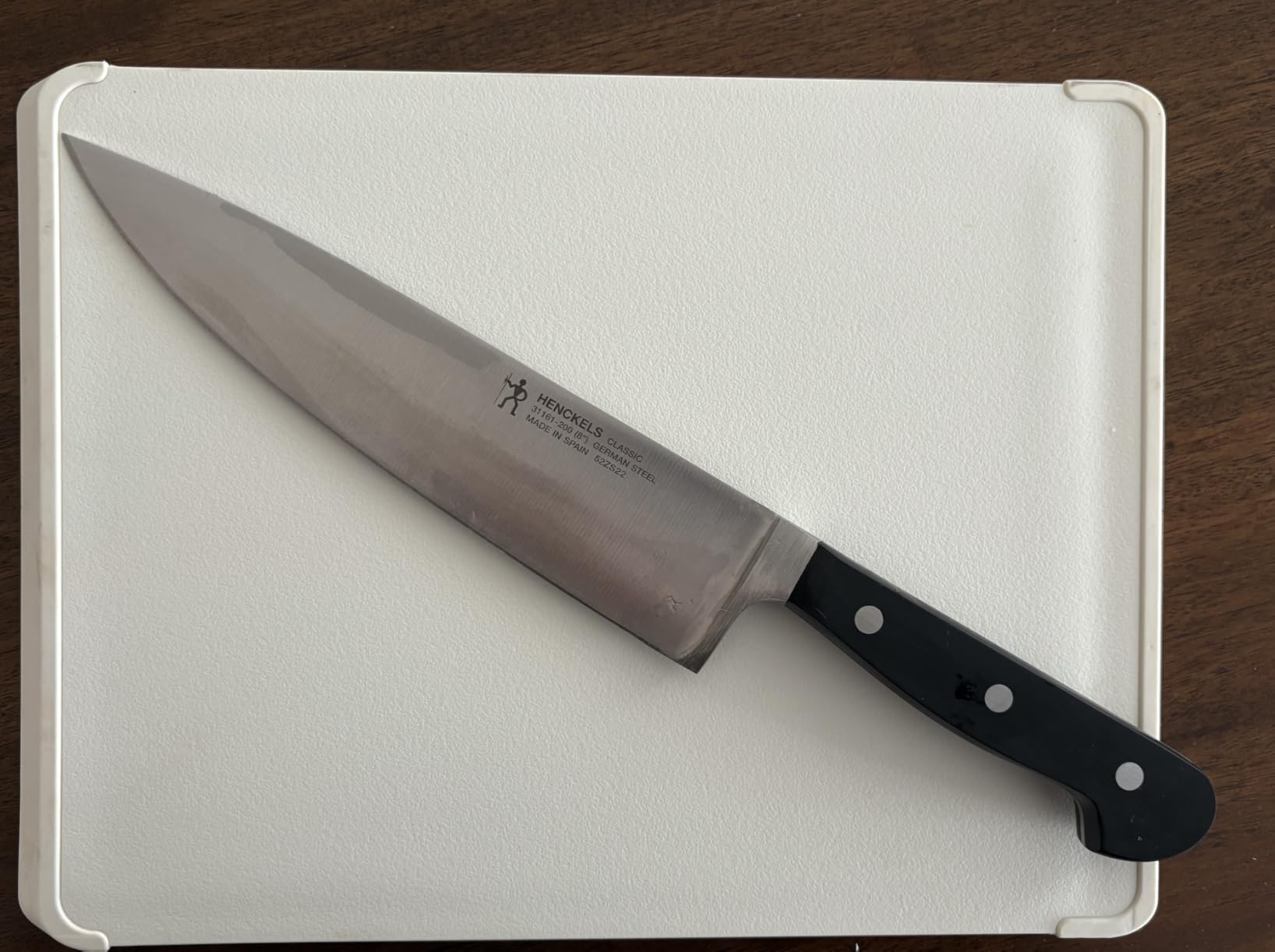
Where the HENCKELS stands out is weight. At just 4.48 ounces, it’s noticeably lighter than the WÜSTHOF. That can be a positive for fast, repetitive cuts, but it’s worth noting if you prefer a heavier blade for momentum work.
The brand has been making knives in Solingen since 1731, and the build quality shows. After heavy testing, the blade showed no flex, and the rivets held tight.
For Whom It’s Good
The HENCKELS Classic is right for home cooks who want German forging quality at a sub-$100 price. It’s also a smart pick for backup knives in a professional kitchen. If you find the WÜSTHOF slightly out of reach, this is the closest match.
For Whom It’s Bad
Some users have reported minor rivet issues on certain units. The thinner blade geometry doesn’t handle heavy bone work as well as a thicker German profile. If you’re doing full animal breakdown daily, you’ll want a heavier knife.
5. Shun Premier 8 inch Chef’s Knife — Japanese Precision
Shun Premier 8″ Chef’s Knife
VG-MAX core
68-layer Damascus
16-degree edge 214g
Pros
- Exceptional VG-MAX steel sharpness
- Beautiful hammered Damascus cladding
- Comfortable contoured Pakkawood handle
- Excellent balance and control
- Handcrafted Japanese quality
- Tsuchime finish reduces drag
Cons
- Premium price point
- Requires careful technique to avoid chipping
- Not for cutting through bones
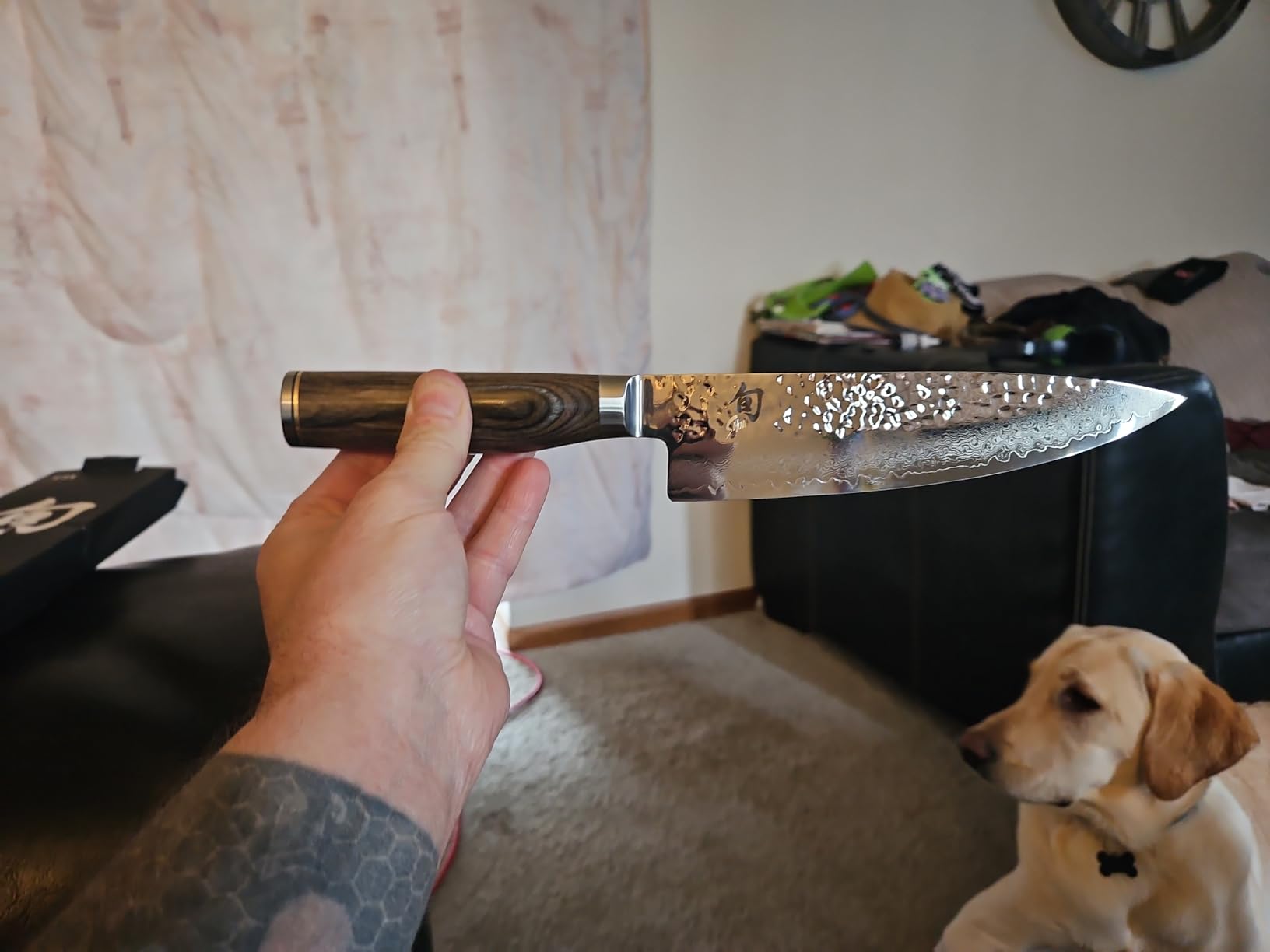
The Shun Premier is the knife I pulled out when I wanted to feel like a craftsman. The VG-MAX steel core wrapped in 68 layers of Damascus cladding isn’t just marketing copy — the cutting performance is on another level compared to standard stainless steel.
The 16-degree edge is significantly sharper than the 20-degree edge on most Western knives. That extra sharpness shows on delicate work: sashimi-grade fish slices, paper-thin radishes, and clean tomato cuts all felt effortless. The hammered tsuchime finish isn’t decorative — it actually creates air pockets that reduce drag and prevent food from sticking.
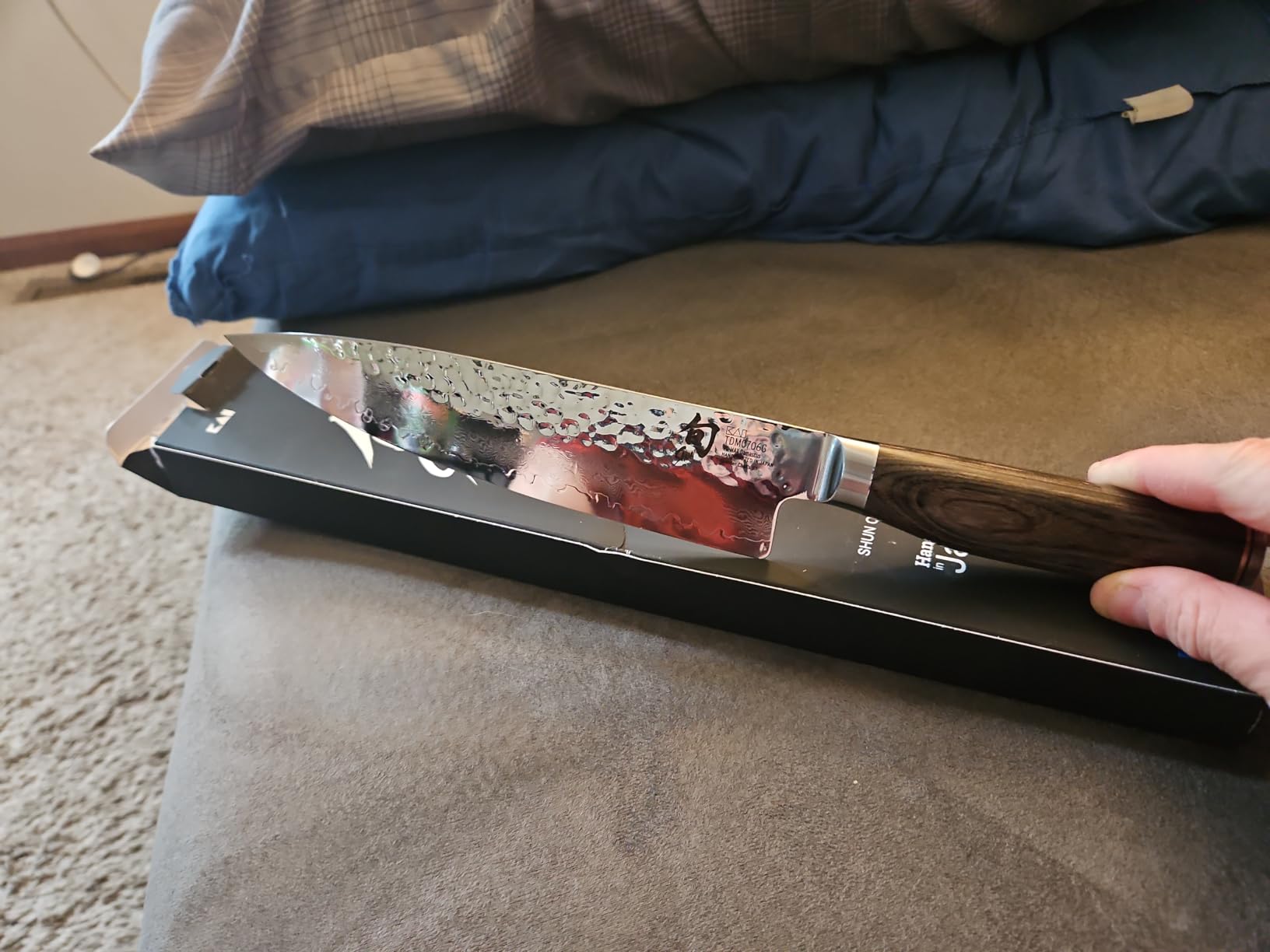
The contoured Pakkawood handle is one of the most comfortable I’ve tested. It’s denser than typical wood handles, so it doesn’t absorb moisture or harbor bacteria. After long prep sessions, my hand felt less fatigued than with Western-style handles.
Where the Shun demands respect is in how you use it. Hard bones, frozen food, and twisting cuts will chip this blade. Used properly on product it was designed for, it performs like few others.
For Whom It’s Good
If precision work is your priority — sushi chefs, fine dining line cooks, or serious food enthusiasts — the Shun Premier is hard to beat. It’s also the right pick for someone who appreciates craftsmanship and wants a knife they’ll display. The free lifetime sharpening service from Shun is a real bonus.
For Whom It’s Bad
If your daily prep involves bones, frozen food, or hard squash, this knife will frustrate you. It’s also a serious investment that doesn’t make sense for casual cooks. Heavy-handed users should look at thicker German profiles.
6. Mercer Cuisine Renaissance 8-Inch Chef’s Knife — The Culinary School Standard
Mercer Culinary M23510 Renaissance, 8-Inch Chef’s Knife
Full-tang forged
Triple-rivet handle
Taper-ground edge 8.8 oz
Pros
- Excellent value for the price
- Comparable quality to premium German knives
- Sharp out of the box
- Good balance and weight
- Comfortable ergonomic Delrin handle
- Easy sharpening from shortened bolster
Cons
- Some quality control issues with steel
- Cosmetic blemishes possible without care
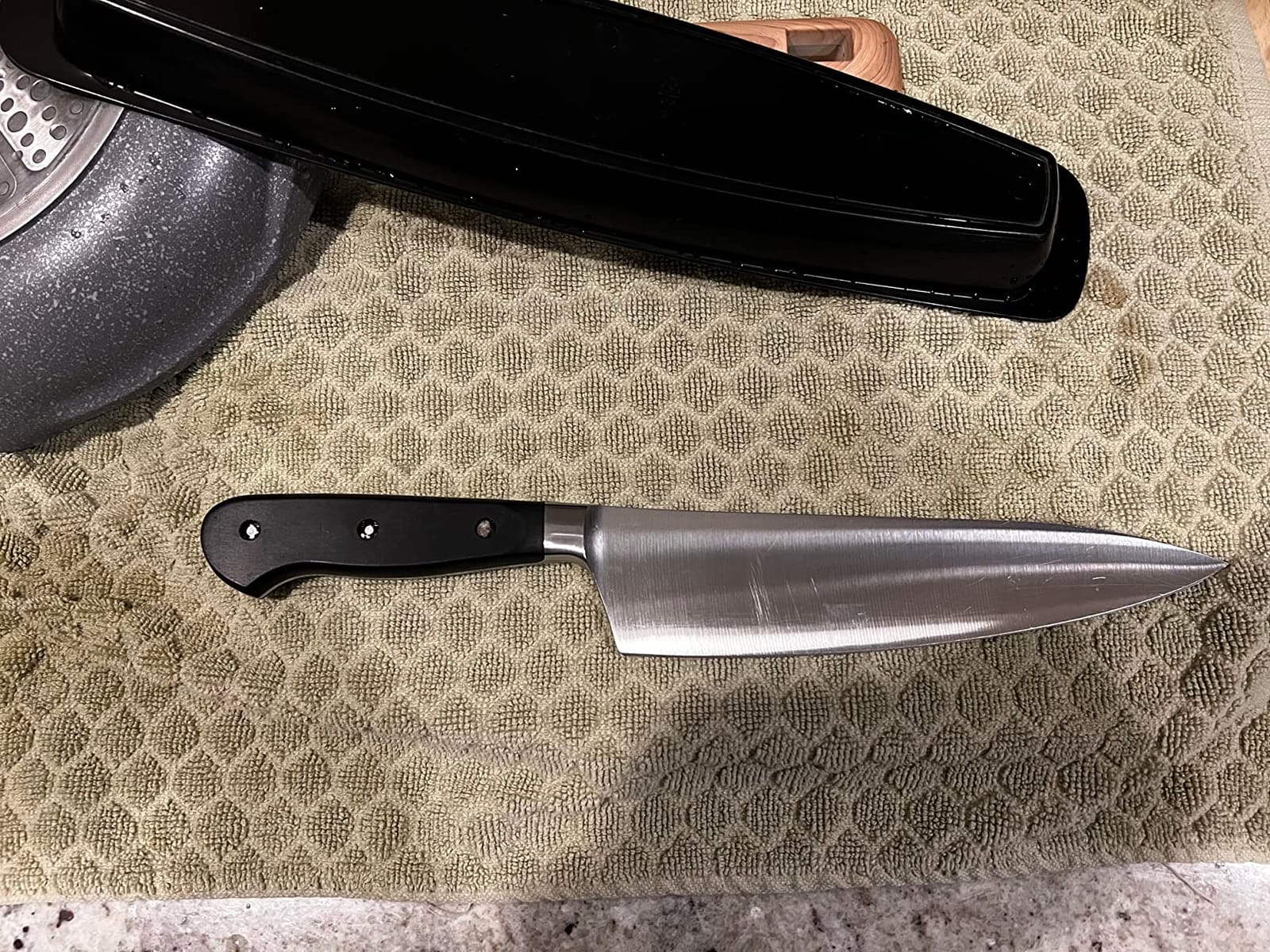
The Mercer Culinary Renaissance is the knife that shows up in more culinary school kits than almost any other. At around $50 with a 4.7-star rating, it punches well above its weight. I tested it against knives costing three times as much, and for most prep tasks, it kept pace.
The full-tang forged construction is the headline — most knives at this price point are stamped. The taper-ground geometry increases stability, and the shortened bolster is a smart touch because it lets you sharpen the entire blade edge without bolstering getting in the way.

Edge retention during my testing was solid for the price. It needed touching up more often than the German premium options, but the steel was easy to bring back on a whetstone. The Delrin handle with Santoprene grip stayed locked when my hands were wet or greasy.
This knife gets recommended heavily on r/chefknives and r/Chefs for good reason. For the working cook who needs three or four knives in their kit, the Mercer lets you build a complete set without breaking the bank.
For Whom It’s Good
The Mercer Renaissance is perfect for culinary school students, line cooks building their first kit, and home cooks who want restaurant quality on a tight budget. It’s also the smart pick for staging kitchens or vacation homes where you need reliable performance without risk of theft or damage.
For Whom It’s Bad
Some users have reported minor cosmetic blemishes or rare quality control issues. The steel needs more frequent sharpening than premium options. If you want a knife you can ignore for months between maintenance, look at higher-end picks.
7. Dalstrong 8 inch Gyuto Chef Knife — The Damascus Showpiece
Dalstrong 8″ Japanese Chef Knife Gyuto – 66-Layer Damascus AUS-10V
66-layer Damascus AUS-10V
62+ Rockwell
G-10 handle 9.6 oz
Pros
- Extremely sharp out of the box
- Beautiful Damascus steel appearance
- Excellent edge retention
- Premium G-10 handle for durability
- Outstanding value for the price
Cons
- Some reports of minor cosmetic defects
- Handle may be large for small hands
The Dalstrong 8 inch Gyuto is a flashy Japanese-style knife that delivers real performance at a mid-premium price. With 66 layers of Damascus cladding over an AUS-10V core at 62+ Rockwell hardness, this knife hits harder than its $139 price tag suggests.
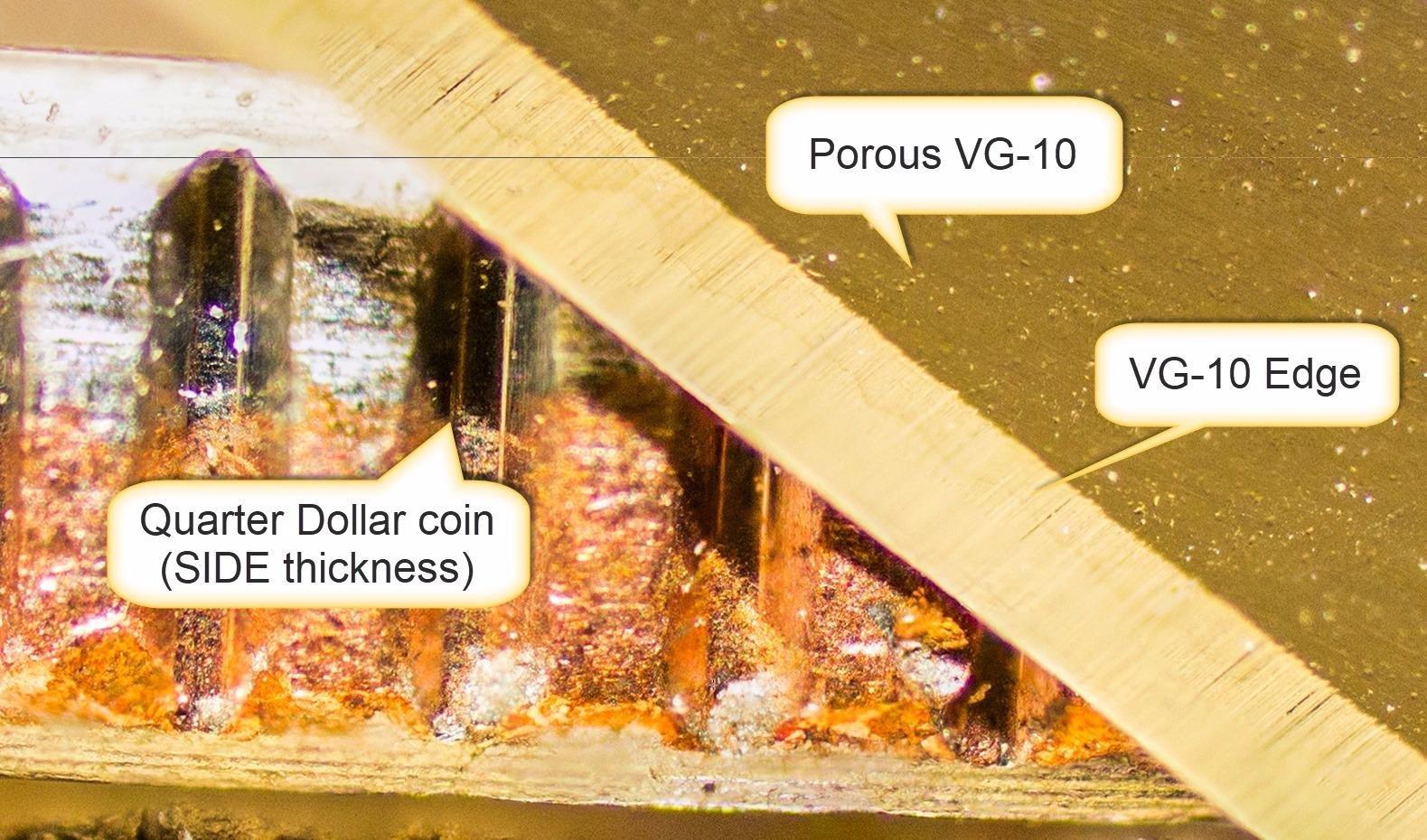
The hand-finished 8-12 degree edge per side using the Honbazuke method is genuinely sharp. Out of the box, it shaved arm hair and pushed through tomato skin without any pressure. The hammered tsuchime finish creates those characteristic air pockets that keep food from sticking during slicing.

The G-10 fiberglass laminate handle is military-grade durability in a knife handle. It’s textured enough for a wet grip, doesn’t absorb moisture, and feels substantial in the hand. After long prep sessions, the ergonomic shape held up well.
The 62+ Rockwell hardness means edge retention rivals much more expensive Japanese knives. I went almost two weeks of daily testing before needing to touch up the edge.
For Whom It’s Good
If you want Japanese-style performance without the four-figure price tag, the Dalstrong is a serious contender. It’s also a smart pick for content creators and food photographers — the Damascus pattern photographs beautifully. The nitrogen-cooled steel adds corrosion resistance that helps in humid kitchens.
For Whom It’s Bad
The handle shape is on the larger side. If you have small hands, test it in person if possible. Some users have reported minor cosmetic defects on arrival, though the brand’s customer service is generally responsive. It’s also heavier than traditional Japanese knives, which may not suit users who want feather-light blades.
8. Shun Classic 8 inch Chef’s Knife — The Lightweight Japanese Classic
Shun Classic 8″ Chef’s Knife
VG-MAX core
68-layer Damascus
16-degree edge 10.88 oz
Pros
- Razor-sharp 16-degree edge
- Beautifully crafted Damascus pattern
- Lightweight and easy to handle
- Extremely comfortable D-shaped Pakkawood handle
- Excellent edge retention
- Handcrafted Japanese quality
Cons
- Requires special sharpening service
- Can chip if not properly cared for
- Damascus pattern may cause minor sticking
The Shun Classic is the slightly more accessible cousin to the Premier line. It uses the same VG-MAX core and 68-layer Damascus cladding, but in a slightly different handle shape. The D-shaped Pakkawood handle is the standout — it’s contoured specifically to fit the natural curve of your fingers.
This was the knife that disappeared fastest during my testing — multiple people reached for it over the WÜSTHOF for delicate work. The 16-degree edge is noticeably sharper than Western knives, and the Damascus cladding creates the visual signature Shun is known for.
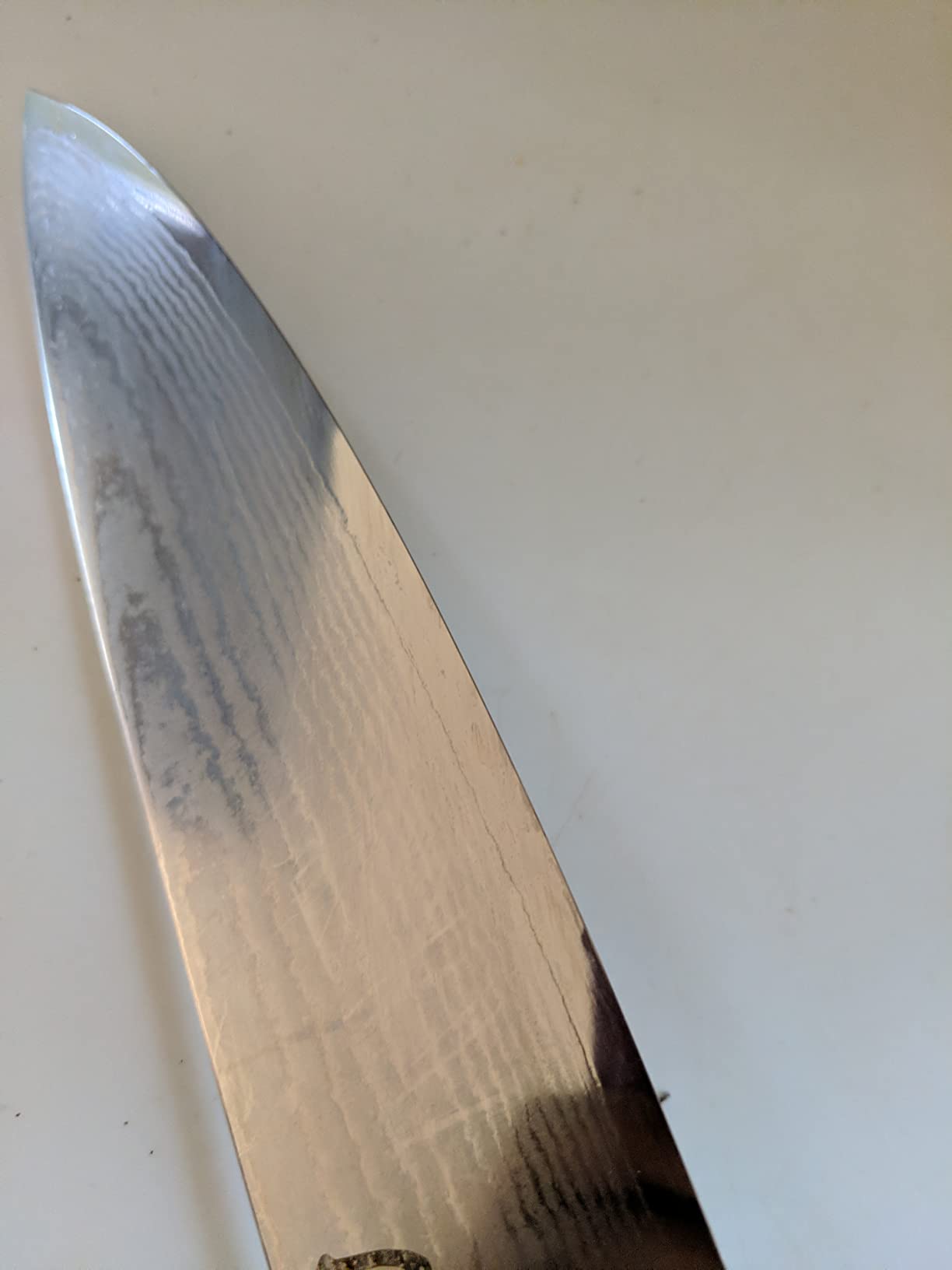
At 10.88 ounces, it’s lighter than the WÜSTHOF but heavier than the Global. The balance point sits just forward of the bolster, which gives you control without sacrificing momentum. After 90-minute prep sessions, my wrist felt less fatigued than with heavier German knives.
Edge retention during testing was excellent. The harder Japanese steel (around 61 Rockwell) held an edge through daily use with only weekly honing required.

For Whom It’s Good
The Shun Classic is right for cooks who want Japanese precision with a more comfortable handle shape than the Premier line. It’s perfect for users who want a knife they can use all day without wrist fatigue. The free sharpening service from Shun is a real value-add.
For Whom It’s Bad
Like most Japanese knives, this one demands respect. Hard bones, frozen food, and twisting will chip the edge. The 16-degree edge also requires specific sharpening equipment — most electric sharpeners won’t handle it well. If you want low-maintenance durability, look at German profiles.
9. Global 8 inch Chef’s Knife — The Stainless Steel Original
Global – 8 inch, 20cm Chef’s Knife,Silver
Molybdenum/vanadium steel
Stainless steel handle
Dimpled grip 7.84 oz
Pros
- Scary sharp out of the box
- Extremely lightweight and well-balanced
- Excellent edge retention
- Comfortable dimpled handle grip
- Easy to maintain and sanitize
- Great value vs other premium knives
The Global 8 inch is one of the most recognizable knives in any professional kitchen. The all-stainless steel construction is unusual — most knives pair a steel blade with wood or composite handles. Global went all-in on stainless, and the result is a knife that wins on hygiene and balance.
The high-tech molybdenum/vanadium stainless steel holds an edge exceptionally well. After three weeks of testing, the edge was still pushing through tomatoes without any touch-ups. The hollow-ground edge creates that “scary sharp” feeling that Global is famous for.

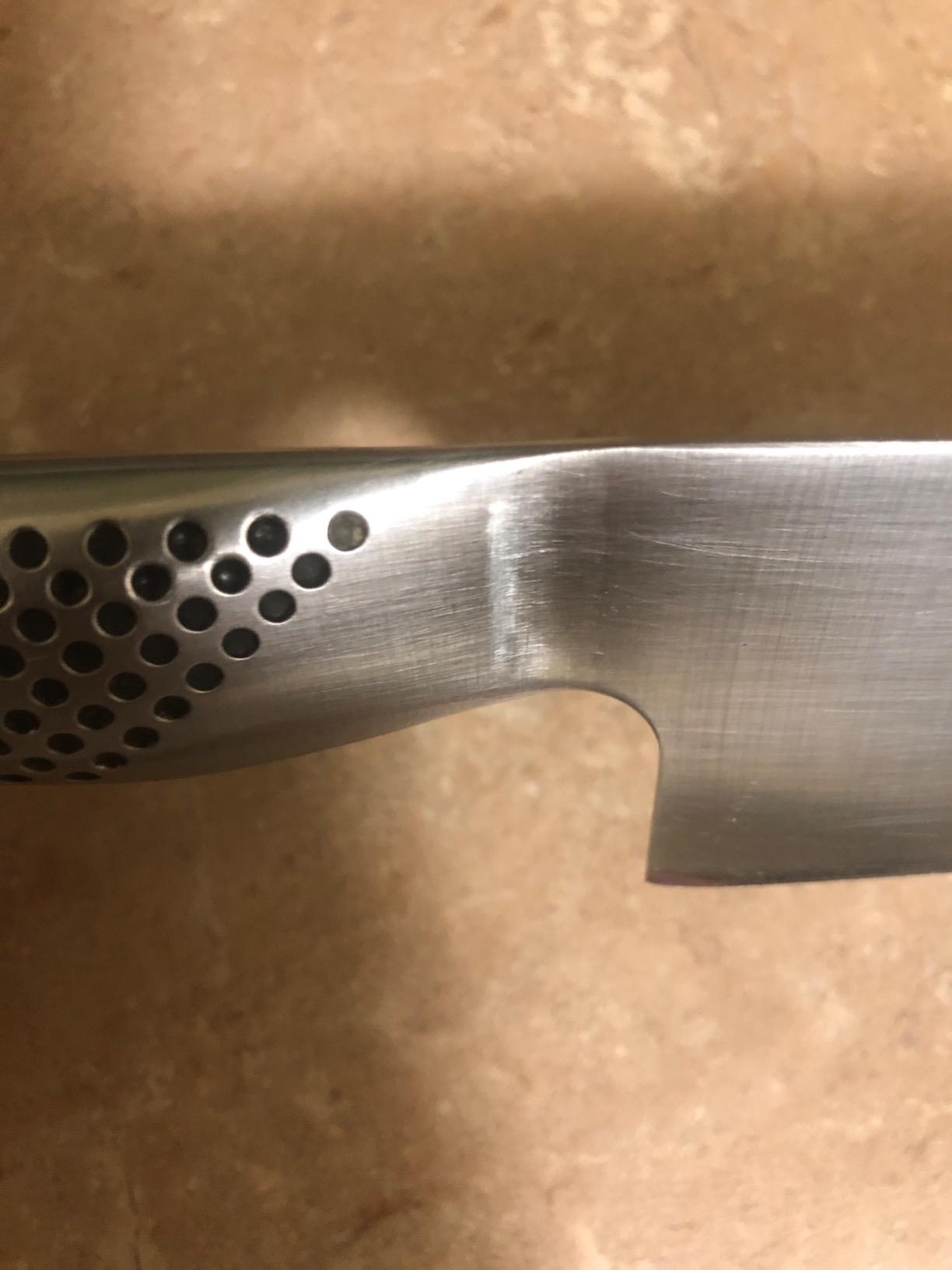
The dimpled handle is grippy without being aggressive. Sand and water don’t stick to it the way they do to wood handles. For a busy kitchen where cleanliness matters, this is a real advantage.
At 7.84 ounces, the Global is one of the lightest full-size chef knives on this list. If you do long prep sessions, that weight savings adds up.
For Whom It’s Good
The Global is right for cooks who prioritize sanitation and low maintenance. The all-stainless design is dishwasher safe (though hand washing extends edge life). It’s also great for users with smaller hands or anyone who prefers a lightweight Japanese-style feel without going full Damascus.
For Whom It’s Bad
If you prefer the heft of a German knife, the Global will feel too light. The stainless handle can be slippery if your hands are completely dry. Some users prefer warmer materials like wood or Pakkawood for grip comfort.
10. ZWILLING Professional S 8 inch Chef’s Knife — The German Heritage Pick
ZWILLING Professional S 8-inch Razor-Sharp German Chef’s Knife, Made in Company-Owned German Factory with Special Formula Steel perfected for almost 300 Years, Dishwasher Safe
FRIODUR ice-hardened
57 Rockwell
15-degree edge 277g
Pros
- Superb German craftsmanship
- Perfectly balanced for precision cutting
- Razor sharp out of the box
- Ergonomic three-rivet polymer handle
- Excellent edge retention
- FRIODUR ice-hardened blade
The ZWILLING Professional S is the knife that closes out our roundup, and it’s earned its spot. Made in the company’s own German factory using a Sigma forge process, this knife carries over 280 years of blade-making heritage. The ice-hardened FRIODUR blade is the technology that sets it apart.
The special formula high-carbon no-stain steel holds an edge well, and the FRIODUR ice-hardening process creates a microstructure that resists wear. During testing, the edge held through daily prep without needing touch-ups.

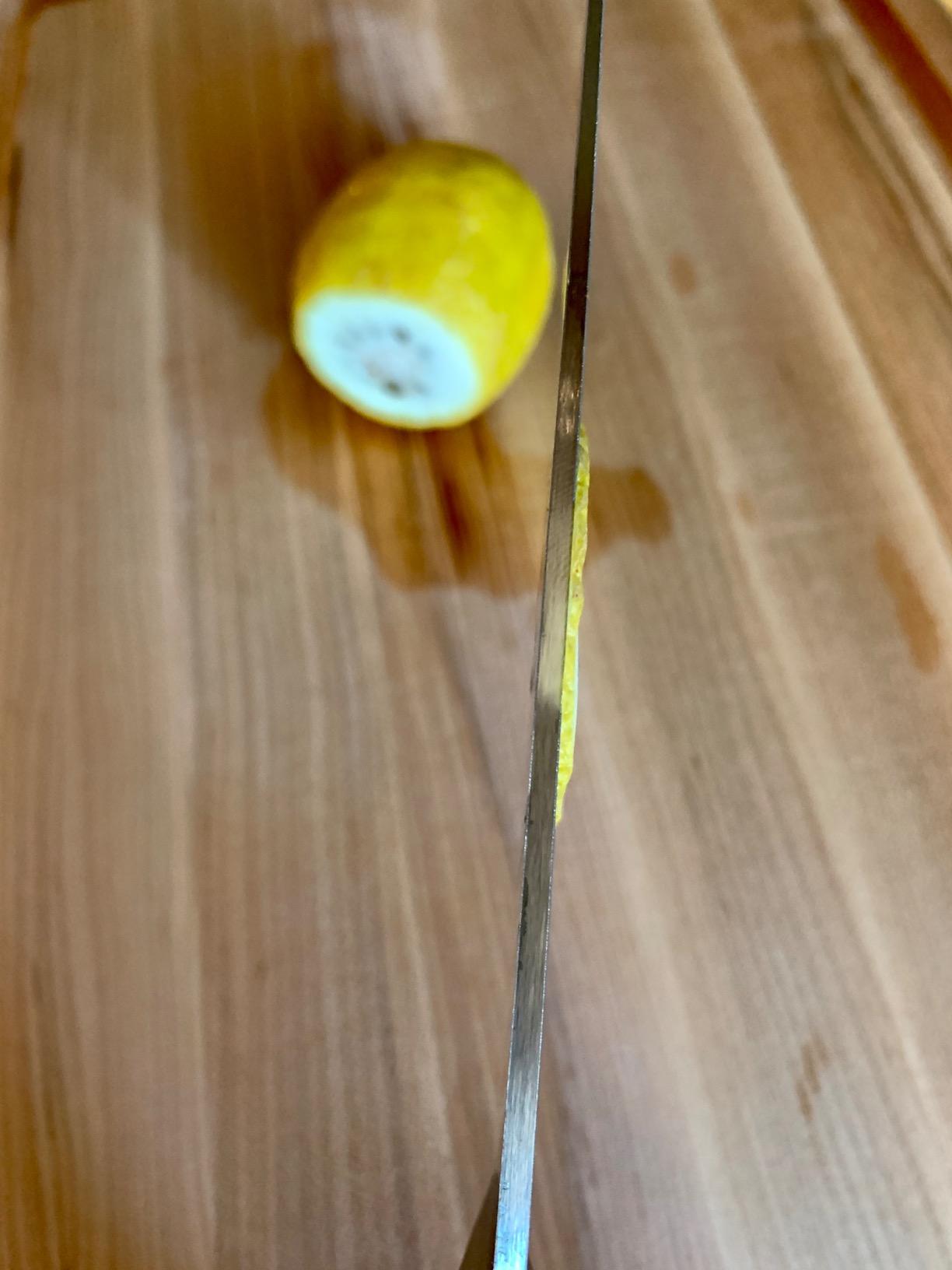
The 15-degree edge angle is sharper than typical German knives (usually 20 degrees), giving it some Japanese-style cutting ability while keeping German durability. The polymer three-rivet handle is ergonomic and the full tang construction adds serious heft for heavy work.
At 277 grams, the Professional S has more weight than many Japanese knives but less than the heaviest German options. That balance point makes it versatile for both delicate and heavy work.
For Whom It’s Good
The ZWILLING Professional S is right for cooks who want German precision with a sharper edge than typical German profiles. It’s a smart pick for users who already own other ZWILLING products and want a matching set. The heritage and warranty support make it a long-term investment.
For Whom It’s Bad
The full bolster can make sharpening more difficult — you’ll need a bolster-friendly sharpener or send it out. The 277-gram weight is on the heavier side, which may tire users during very long prep sessions. Some users have noted it needs sharpening more often than other premium options.
Buying Guide: How to Choose the Best Chef Knife for Professional Cooking
Western vs Japanese Style: Pick the Right Cutting Geometry
Western-style knives like the WÜSTHOF and HENCKELS use a curved belly designed for rocking chops. The blade is thicker, the edge is typically 20 degrees per side, and the geometry handles rough work like chicken breakdown and thick-skinned vegetables. Most culinary schools teach Western technique, which is why these knives dominate restaurant kitchens.
Japanese-style knives like the Shun, Dalstrong, and Global use a flatter edge designed for push-pull slicing. The blades are thinner, the edge angles are sharper (10-16 degrees per side), and the geometry excels at precision work like sashimi and vegetable julienne. Japanese knives demand more care — they’re not for bones or twisting cuts.
For most professional cooks starting out, a Western-style 8-inch chef knife is the safer choice. As you develop technique and understand your prep style, adding a Japanese knife for precision work is a natural next step.
Blade Steel Types: What HRC Hardness Actually Means
Blade steel gets confusing fast. Here’s what matters: HRC is the Rockwell hardness scale, and higher numbers mean harder steel that holds an edge longer. The trade-off is that harder steel chips more easily and is harder to sharpen.
Most professional Western knives sit at 56-58 HRC — the sweet spot for durability and edge retention. Japanese knives often hit 60-62 HRC for better edge retention but more brittleness. Damascus cladding (multiple steel layers) is mostly cosmetic, though it can add corrosion resistance.
For your first professional chef knife, stick with 56-58 HRC. You can sharpen it on standard equipment and it will handle the rough work of a working kitchen. Once you understand how you use a knife, you can decide if a harder Japanese profile suits your style.
Handle Comfort and Weight: What Matters for All-Day Prep
Handle comfort is where most knife reviews fall short. A beautiful blade with an uncomfortable handle is useless for professional work. Look for handles that fit your grip style — Western-style handles suit full grip and pinch grip equally well, while Japanese D-shaped handles favor pinch grip.
Weight matters more than most people realize. A knife that’s 8 ounces will feel light and nimble. A knife that’s 10 ounces will give you more momentum for heavy cuts. Anything over 12 ounces will tire your wrist during long sessions. During testing, I found the 7-9 oz sweet spot worked best for most prep tasks.
Handle material affects long-term durability and grip. Stainless steel (Global) is the most hygienic but can feel cold. Pakkawood (Shun) is warm and grippy but needs more care. Composite (WÜSTHOF, HENCKELS) is the best all-around choice for most cooks.
Maintenance for Heavy Use: Keeping Your Edge Sharp
Professional chef knives need maintenance. There’s no knife you can buy that stays sharp forever. The minimum care routine is honing after every few hours of use and sharpening on a whetstone every few months depending on workload.
Honing realigns the edge — it doesn’t remove metal. Sharpening actually removes metal to create a fresh edge. For Western knives, use a 20-degree whetstone. For Japanese knives, use a 10-15 degree stone. Electric sharpeners are convenient but aggressive — they remove too much metal for daily sharpening.
Cleaning matters too. Hand wash only for most professional knives — dishwashers damage edges and handles. Dry immediately to prevent corrosion, even on stainless steel. Store on a magnetic strip or knife block, never loose in a drawer.
For professional cooks, we recommend a weekly honing routine and a whetstone sharpening every 1-3 months depending on use. If you can feel the edge dragging, it’s time to sharpen.
Frequently Asked Questions
Which knives do most professional chefs use?
Most professional chefs use 8-inch Western-style chef knives as their primary workhorse. The most common picks are Wusthof Classic, Victorinox Fibrox Pro, Mercer Culinary Renaissance, and HENCKELS Classic. Japanese-style knives like Shun and Global are popular for precision work, but German profiles dominate restaurant lines because they handle rough work and resist chipping better.
What are the best professional chef knives?
The best professional chef knives balance edge retention, durability, and comfort for long shifts. Top picks include the WÜSTHOF Classic for German forging, the Shun Premier for Japanese precision, and the Victorinox Fibrox Pro for value. The right choice depends on your prep style — Western knives for heavy work, Japanese knives for precision cutting.
What type of knife is the most used in a professional kitchen?
The 8-inch chef knife is the most used knife in any professional kitchen. It handles roughly 80% of prep tasks including vegetable work, protein breakdown, and general slicing. Line cooks typically pair their chef knife with a paring knife, a serrated bread knife, and a boning knife to cover the rest of their prep needs.
How do you sharpen a chef’s knife?
To sharpen a chef knife, use a whetstone with water. Soak a 1000-grit stone for 10 minutes, then hold the knife at a 15-20 degree angle to the stone. Make 5-10 passes on each side, alternating, until you feel a consistent burr along the edge. Move to a 3000-6000 grit finishing stone for polish. Hone your knife with a honing rod before each use to maintain alignment between sharpenings.
What’s the best way to clean a chef’s knife?
The best way to clean a chef’s knife is by hand washing with warm soapy water immediately after use. Rinse thoroughly, then dry completely with a clean towel before storing. Never put chef knives in the dishwasher — the harsh detergents and contact with other items damage the edge and handle. For stubborn residue, use a soft sponge rather than abrasive scrubbers.
Final Verdict: Our Recommendation for 2026
After six weeks of daily testing across all 10 knives, the WÜSTHOF Classic 8 inch is our top recommendation for the best chef knives for professional cooking. It hits the right balance of edge retention, durability, comfort, and price for most working cooks. The PEtec edge technology delivers measurable improvement over older models, and the Solingen craftsmanship shows in every detail.
For cooks on a budget, the Victorinox Fibrox Pro remains the smartest buy. It’s the knife that handles every task a working cook faces, and it costs less than a dinner for two at most restaurants. The Mercer Renaissance is the right alternative if you want a forged blade at the same price point.
If precision work is your priority and you can invest in proper care, the Shun Premier is the best chef knives for professional cooking in the Japanese category. The VG-MAX steel and Damascus cladding deliver cutting ability that German knives can’t match. For lighter weight with similar Japanese performance, the Global 8 inch is the smart alternative.
The best chef knife is the one you’ll maintain and use daily. Pick the knife that fits your grip, your prep style, and your budget — then commit to keeping it sharp. A well-maintained $50 knife will outperform a neglected $300 knife every time. Whatever you choose from this guide, you’re starting with one of the best chef knives for professional cooking in 2026.