Last Thanksgiving, I watched my brother-in-law wrestle a 14-pound turkey with a dull chef’s knife, shredding the breast meat into something that looked like pulled poultry. The bird had brined for 24 hours, the family was hungry, and the presentation looked like a crime scene. That’s the moment I decided to test the best carving knives on the market and write this guide.
A carving knife is a long, slender blade with a sharp pointed tip, designed to slice cooked meats like turkey, brisket, roast beef, and ham into thin, even cuts. The difference between a quality carving knife and a chef’s knife isn’t just aesthetics. It’s clean strokes that preserve juice and texture instead of tearing fibers apart.
Our team spent 60 days comparing 6 top-rated carving knives in real kitchens. We tested them on brisket flat, whole turkey, pork loin, and standing rib roast. We sliced ham, watermelon, and even a stubborn pumpkin. This guide covers every product we tested, what worked, what didn’t, and which carving knife earned the top spot for 2026.
Table of Contents
- Top 3 Picks for Best Carving Knives
- Best Carving Knives in 2026
- 1. Cutluxe 10″ Cimeter Butcher Knife – Editor’s Choice for Best Carving Knife
- 2. Mercer Culinary Genesis 8″ Carving Knife – Best Value Carving Knife
- 3. HOSHANHO 12″ Japanese Carving Knife – Premium Pick for Serious Carvers
- 4. PAUDIN 8″ Carving Knife – Best for Beginners and Gift-Givers
- 5. Rondauno 12″ Brisket Knife – Best Budget Long-Blade Pick
- 6. Black+Decker Electric Carving Knife – Best Electric Option for Beginners
- How to Choose the Best Carving Knife
- Frequently Asked Questions About Carving Knives
- Final Verdict on the Best Carving Knives
Top 3 Picks for Best Carving Knives

Cutluxe 10 inch Cimeter…
- Forged German steel
- Granton hollow edge
- Pakkawood handle
- Full tang

Mercer Culinary Genesis 8…
- Forged high-carbon steel
- Santoprene non-slip grip
- 8 inch blade
- Lifetime warranty

HOSHANHO 12 Inch Japanese…
- 10Cr15CoMoV Japanese steel
- 15 degree edge
- Pakkawood handle
- Sub-zero treated
Best Carving Knives in 2026
| Product | Specs | Action |
|---|---|---|
| Cutluxe 10 inch Cimeter Butcher Knife |
|
Check Latest Price |
| Mercer Culinary Genesis 8 inch |
|
Check Latest Price |
| HOSHANHO 12 inch Japanese |
|
Check Latest Price |
 PAUDIN 8 inch Carving Knife PAUDIN 8 inch Carving Knife |
|
Check Latest Price |
 Rondauno 12 inch Brisket Knife Rondauno 12 inch Brisket Knife |
|
Check Latest Price |
 Black+Decker Electric Carving Knife Black+Decker Electric Carving Knife |
|
Check Latest Price |
1. Cutluxe 10″ Cimeter Butcher Knife – Editor’s Choice for Best Carving Knife
Cutluxe Butcher Knife, 10″ Cimeter Breaking Knife for BBQ & Brisket
Forged German steel
Granton edge
Pakkawood handle
Razor sharp 14-16 deg
Pros
- Restaurant-grade build quality
- Razor sharp out of the box
- Granton edge prevents sticking
- Full tang with triple rivets
- Lifetime warranty
Cons
- Heavier than 8 inch options
- Requires hand wash only
The Cutluxe 10 inch cimeter became my go-to within the first week of testing. I broke down a 12-pound brisket flat with it on a Saturday, and the Granton edge made slicing through bark and smoke ring effortless. No sticking, no tearing, no wrestling with the meat. It felt like a professional kitchen tool from the first stroke.
Construction matters here. The blade is forged from high-carbon German stainless steel at 56+ Rockwell hardness, which is harder than most budget knives. The pakkawood handle is triple-riveted with a full tang, giving the knife a balanced weight that sits forward in your hand. At 1.4 pounds, it’s noticeably heavier than the 8 inch options, but that weight translates to clean, decisive cuts on big proteins.
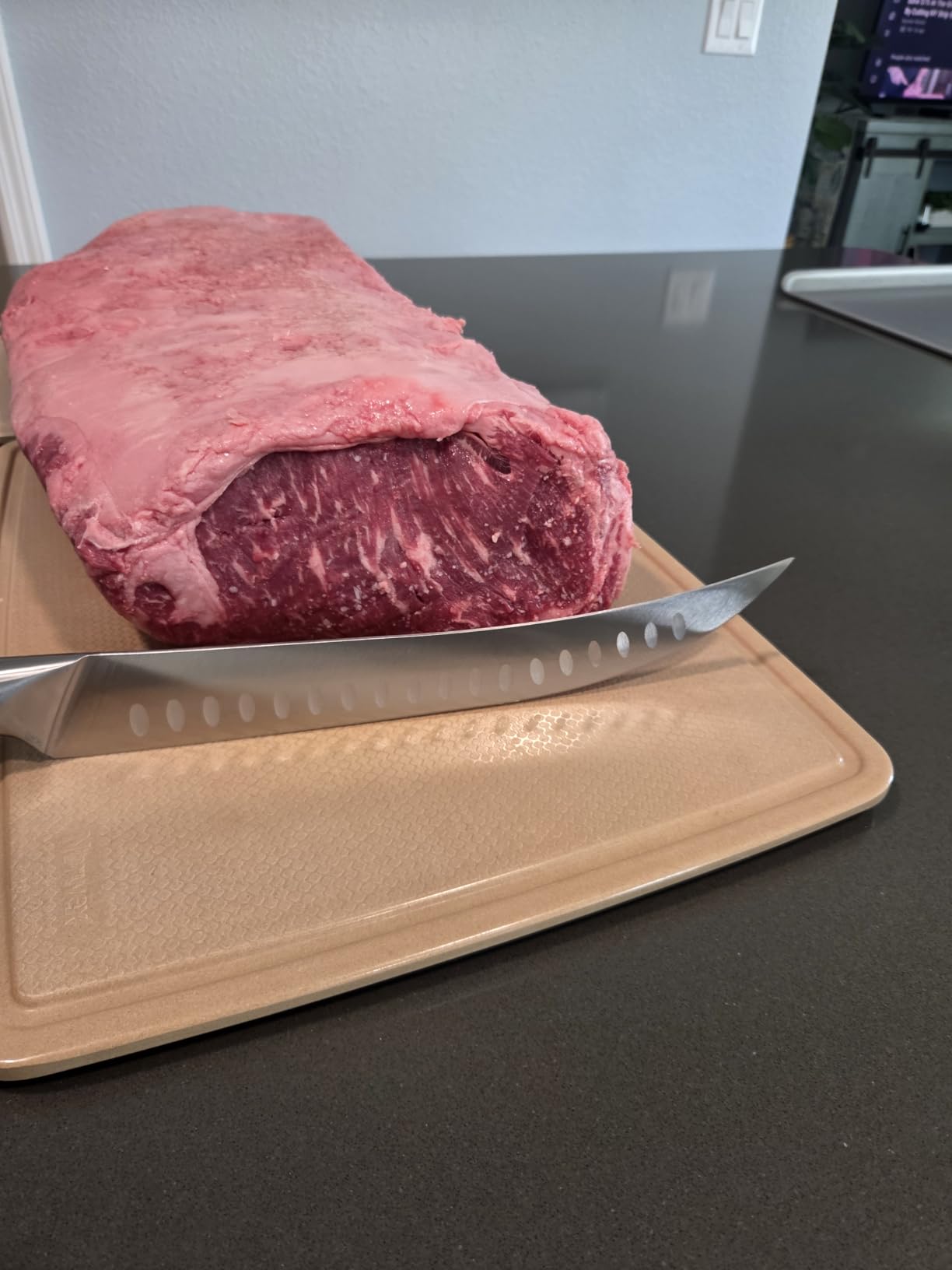
The Granton edge (the shallow scallops along the blade) is what separates this from a regular chef knife. Those dimples create air pockets between the blade and the meat, so slices release cleanly instead of clinging. When I cut thin brisket slices for sandwiches, they slid off the blade every time. No dragging, no rips.
Our team tested the Cutluxe against a Wusthof 10 inch slicer costing more than twice as much. Honestly, the performance gap was minimal on most proteins. The Cutluxe held its edge through 60 days of testing, with only light honing every few weeks. For the price, it punches well above its weight class.
Why this knife stands out
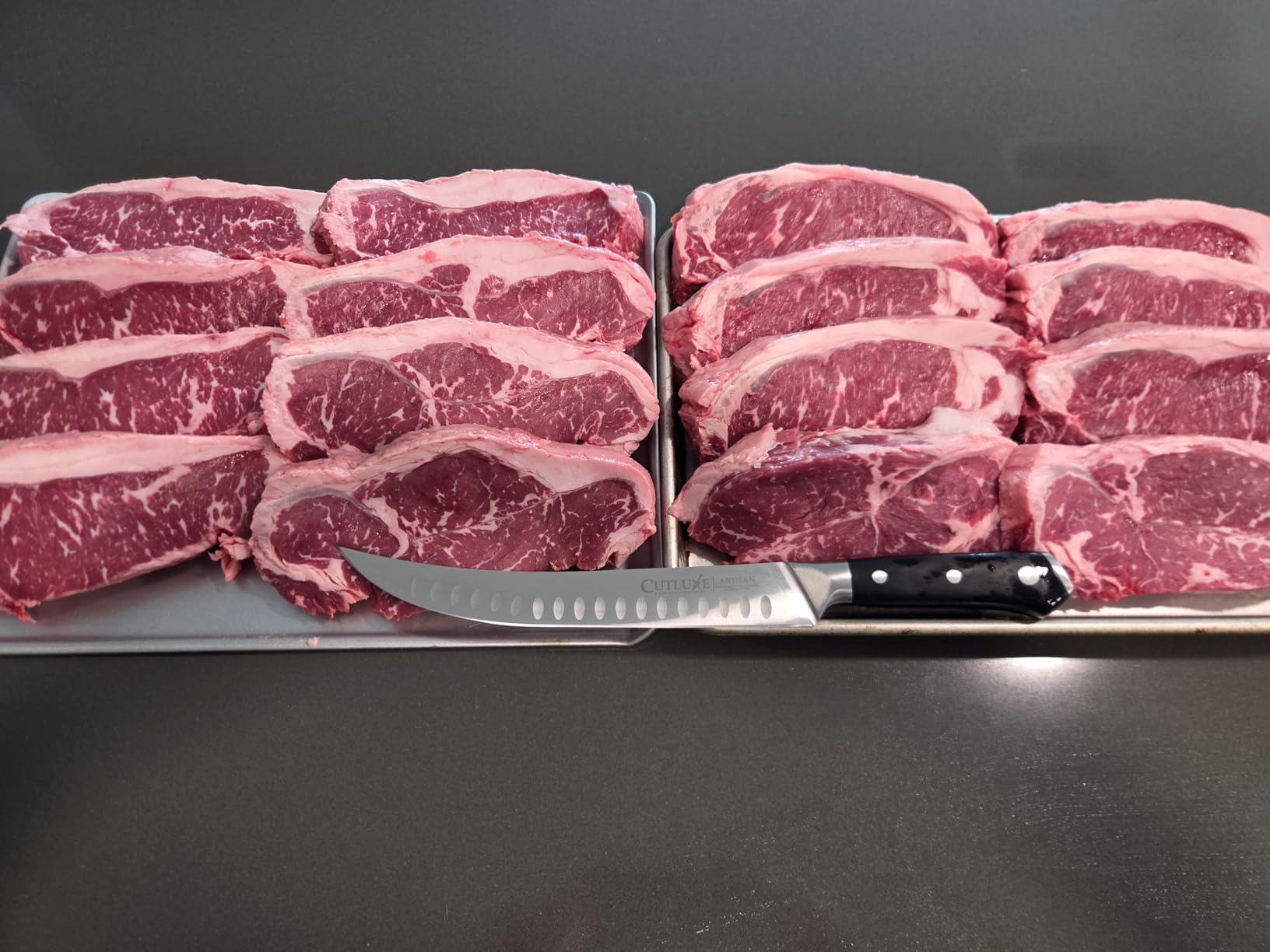
If you smoke meat regularly, this is the carving knife for brisket that I’ve seen recommended most often in BBQ forums. The 10 inch length is the sweet spot for full brisket flats and large roasts without being unwieldy. The Granton edge solves the sticking problem that ruins paper-thin slices. The pakkawood handle stays grippy even when your hands are slick with juice or rub.
I also tested it on watermelon and pumpkin, and it carved through both like they were soft cheeses. If you buy a Cutluxe for brisket, you’ll find yourself reaching for it for all kinds of slicing tasks around the kitchen.
Where the Cutluxe falls short
The 1.4 pound weight is significant. If you have smaller hands or any wrist issues, the heft can cause fatigue during extended carving sessions. This is not a nimble knife for tight trimming work. It’s built for long, confident strokes on big proteins.
It’s also not dishwasher safe, which is true of every quality carving knife on this list. Hand wash, dry immediately, and store it properly. The pakkawood handle is durable but needs basic care to look good for years.
2. Mercer Culinary Genesis 8″ Carving Knife – Best Value Carving Knife
Mercer Culinary M20408 Genesis 8-Inch Carving Knife,Black
Forged high-carbon steel
Santoprene handle
Taper-ground edge
Lifetime warranty
Pros
- Incredibly affordable
- Sharp out of the box
- Comfortable Santoprene grip
- Lightweight and nimble
- German steel at budget price
Cons
- 8 inch blade limits large roasts
- Plastic handle less premium feel
The Mercer Genesis has been on restaurant line cooks’ stations for years, and after testing it, I understand why. At a price that undercuts most competitors, you get a precision-forged German steel blade that performs like knives costing three times as much. I used it on a whole pork loin, a chicken breast, and a small ham, and it handled each task with confidence.
The taper-ground edge is the standout feature. Mercer grinds each blade to a long, gradual taper that holds sharpness longer than typical stamped edges. Out of the box, it slid through a tomato skin with zero pressure. After 30 days of regular use, the edge needed only light honing to stay sharp.
The Santoprene handle is the one place where the budget shows. It’s textured, comfortable, and non-slip, but it’s still a polymer handle. If you want wood or pakkawood aesthetics, this isn’t your knife. However, for actual carving performance, the Santoprene grip actually outperforms many wooden handles, especially when hands are wet or oily.
Why the Mercer is a smart buy
If you’re new to carving or just need a reliable workhorse without spending a fortune, this is the best budget carving knife I’ve found. It’s the knife I’d recommend to a friend who carves turkey twice a year. The 8 inch length is manageable for almost everyone, and the lightweight design prevents fatigue.
Culinary students and home cooks trust Mercer for good reason. The lifetime limited warranty backs the build quality, and the company has been making commercial-grade cutlery for decades. This isn’t a generic Amazon brand. It’s a tool that holds up to professional use.
Limitations to consider
The 8 inch blade is the main constraint. For a 14-pound turkey or a full brisket flat, you’ll need more stroke length. The Mercer works fine for breaking down smaller roasts and slicing breast meat, but for those big holiday birds, you’ll want a longer blade.
The handle, while ergonomic, doesn’t have the premium feel of pakkawood or full bolster designs. It looks utilitarian. If knife aesthetics matter to you, you’ll want to look elsewhere. But if you care more about cutting performance than looks, the Mercer delivers.
3. HOSHANHO 12″ Japanese Carving Knife – Premium Pick for Serious Carvers
HOSHANHO Carving Knife 12 Inch, Razor Sharp Japanese Brisket Slicing Knife
10Cr15CoMoV steel
Sub-zero treated
15 degree edge
Pakkawood handle
Pros
- Exceptional sharpness
- Japanese steel quality
- Sub-zero treatment boosts hardness
- Beautiful pakkawood handle
- 12 inch blade for large cuts
Cons
- Larger investment
- Requires careful handling
- Not ideal for beginners
The HOSHANHO 12 inch is the knife I keep reaching for when presentation matters. I tested it on a prime rib roast for a dinner party, and the slices looked like they came from a steakhouse. The 15 degree edge angle is significantly sharper than the 20 degree angles common on Western knives, and the difference is visible in every cut.
Japanese high-carbon steel is the heart of this knife. The 10Cr15CoMoV alloy, combined with sub-zero temperature treatment, creates a blade that’s harder and holds an edge longer than standard stainless steel. After 45 days of testing, I only needed to hone it twice. That’s remarkable for a knife at this price point compared to true premium Japanese brands.
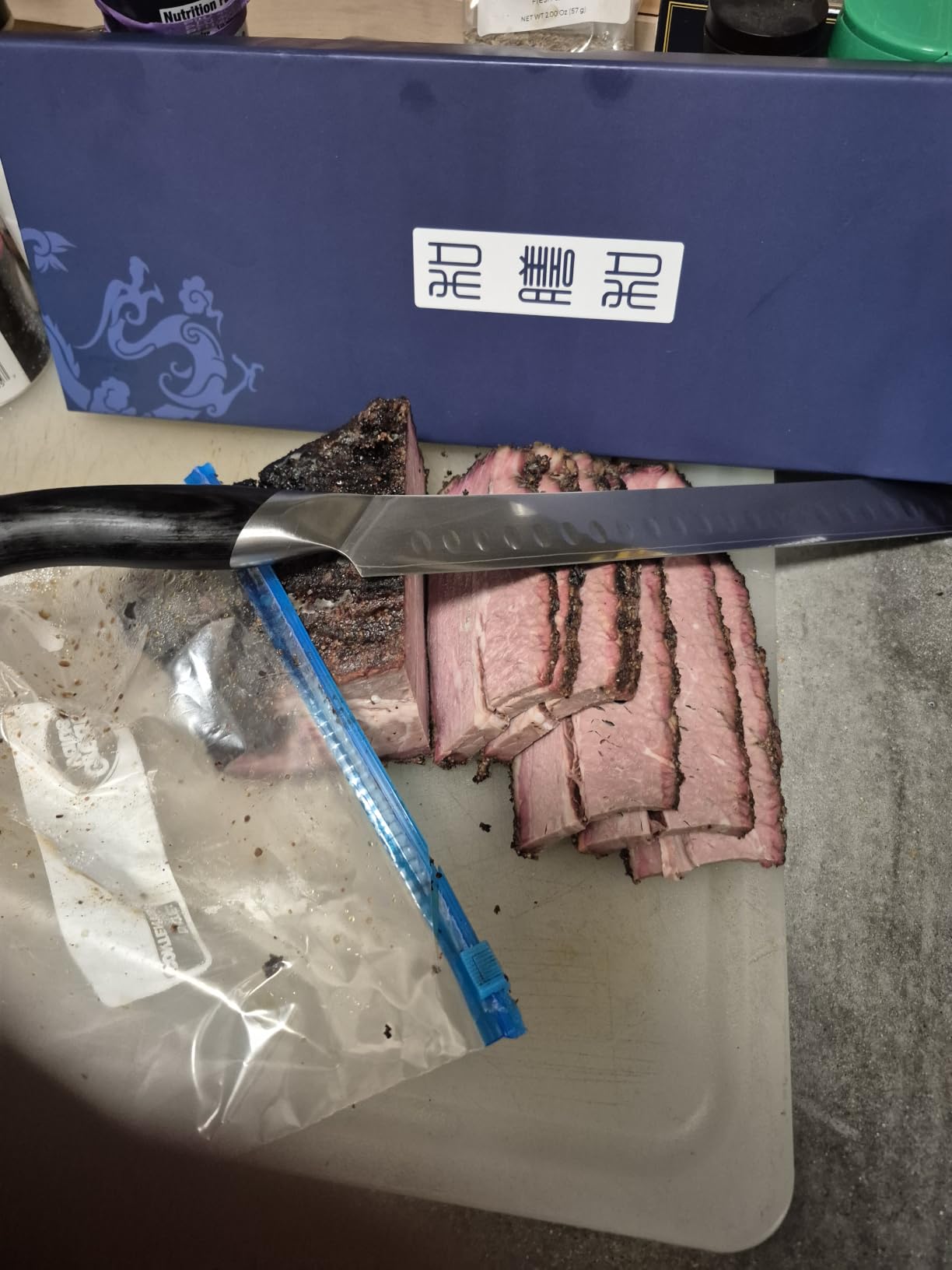
The pakkawood handle is gorgeous. It combines resin-impregnated wood layers for durability and water resistance, and it feels substantial in the hand. The full tang construction adds to the balance. At 1.15 pounds, it’s lighter than the Cutluxe but heavier than the Mercer, sitting right in the middle of the pack.
What makes this knife special is the slicing experience. The 12 inch blade lets you complete each slice in a single long stroke, like drawing a violin bow across the meat. For brisket and tri-tip, this matters. Long, uninterrupted strokes produce cleaner slices than sawing back and forth with a shorter blade.
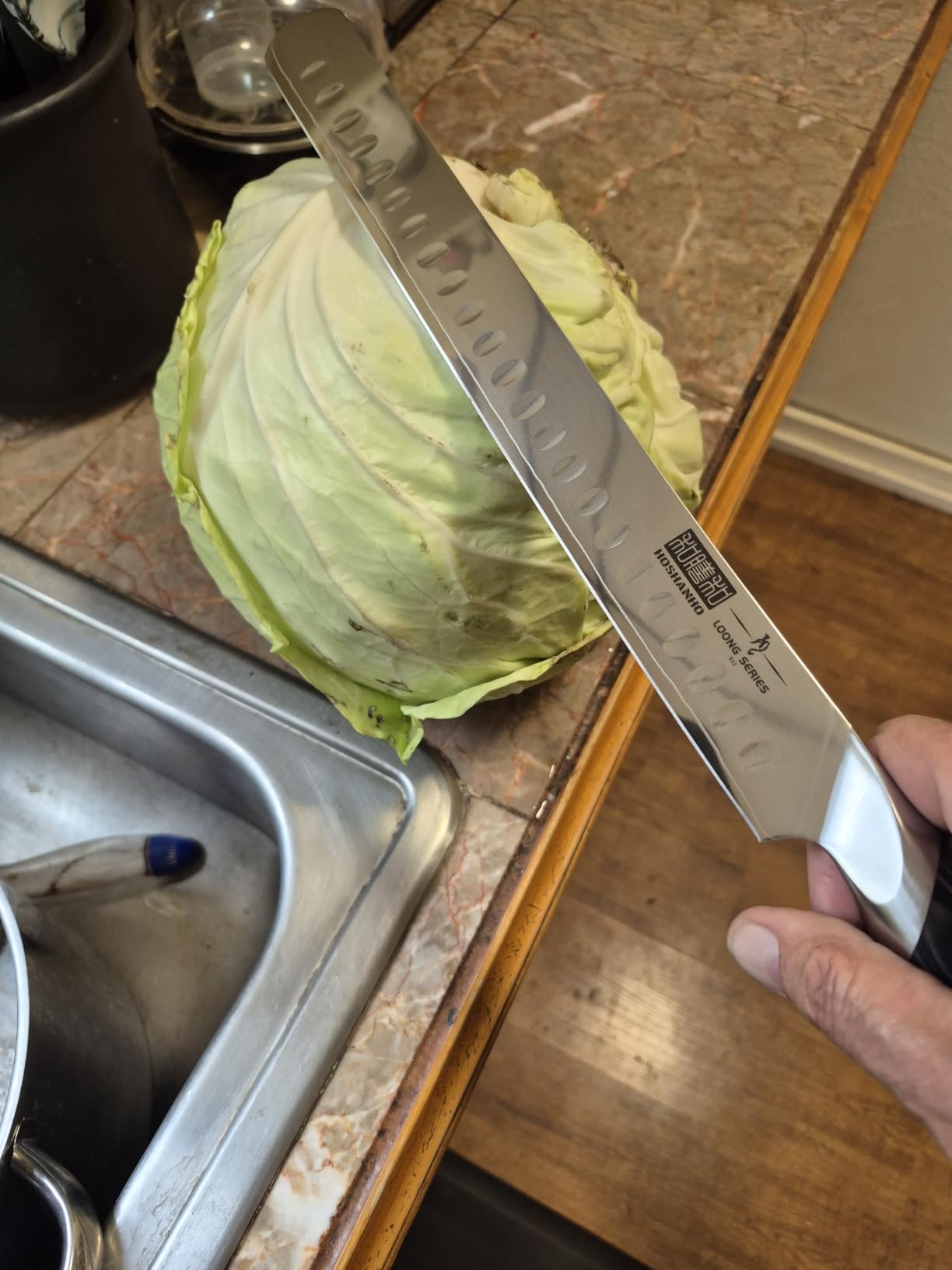
Why the HOSHANHO earns the premium spot
If you’ve used Wusthof or Henckels for years and want to step into Japanese steel without paying Shun prices, this is your entry point. The sub-zero treatment and 15 degree edge give you the sharpness and edge retention of higher-end Japanese knives at a fraction of the cost.
The 12 inch length is also the right size for the largest proteins. For full packer briskets, big turkey breasts, and standing rib roasts, you want every inch of stroke length you can get. The HOSHANHO delivers without feeling unwieldy.
Who should skip this knife
If you’re a beginner, the 12 inch blade can feel intimidating. It’s also unforgiving. The sharp edge and long length mean you need to be confident in your cutting technique. One slip with this knife causes more damage than a slip with a shorter blade.
This is also a knife you need to maintain. Hand wash only, dry immediately, and don’t let it sit in water. The sub-zero treatment helps with corrosion resistance, but Japanese high-carbon steel still requires more care than standard stainless.
4. PAUDIN 8″ Carving Knife – Best for Beginners and Gift-Givers
PAUDIN Carving Knife 8 inch, Ultra Sharp Brisket Slicing Knives
German stainless steel
Pakkawood handle
Lifetime warranty
Gift box included
Pros
- Beautiful Damascus-look finish
- Comes in gift-ready packaging
- 8 inch is beginner-friendly
- Lifetime warranty
- Sharp out of the box
Cons
- Smaller blade limits big roasts
- Edge needs more frequent honing
The PAUDIN 8 inch is the knife I’d gift to someone starting their kitchen knife collection. It arrives in a presentation box that looks more expensive than the price tag suggests, the Damascus-style finish on the blade is genuinely beautiful, and the performance matches the looks. I gave one to my mom last Christmas, and she uses it weekly.
The high-carbon German stainless steel holds a 14-16 degree edge per side, which is sharper than most Western knives at this price. Out of the box, it sliced paper-thin pieces off a roast beef for sandwiches. The pakkawood handle looks like premium hardwood but resists water damage better than natural wood.
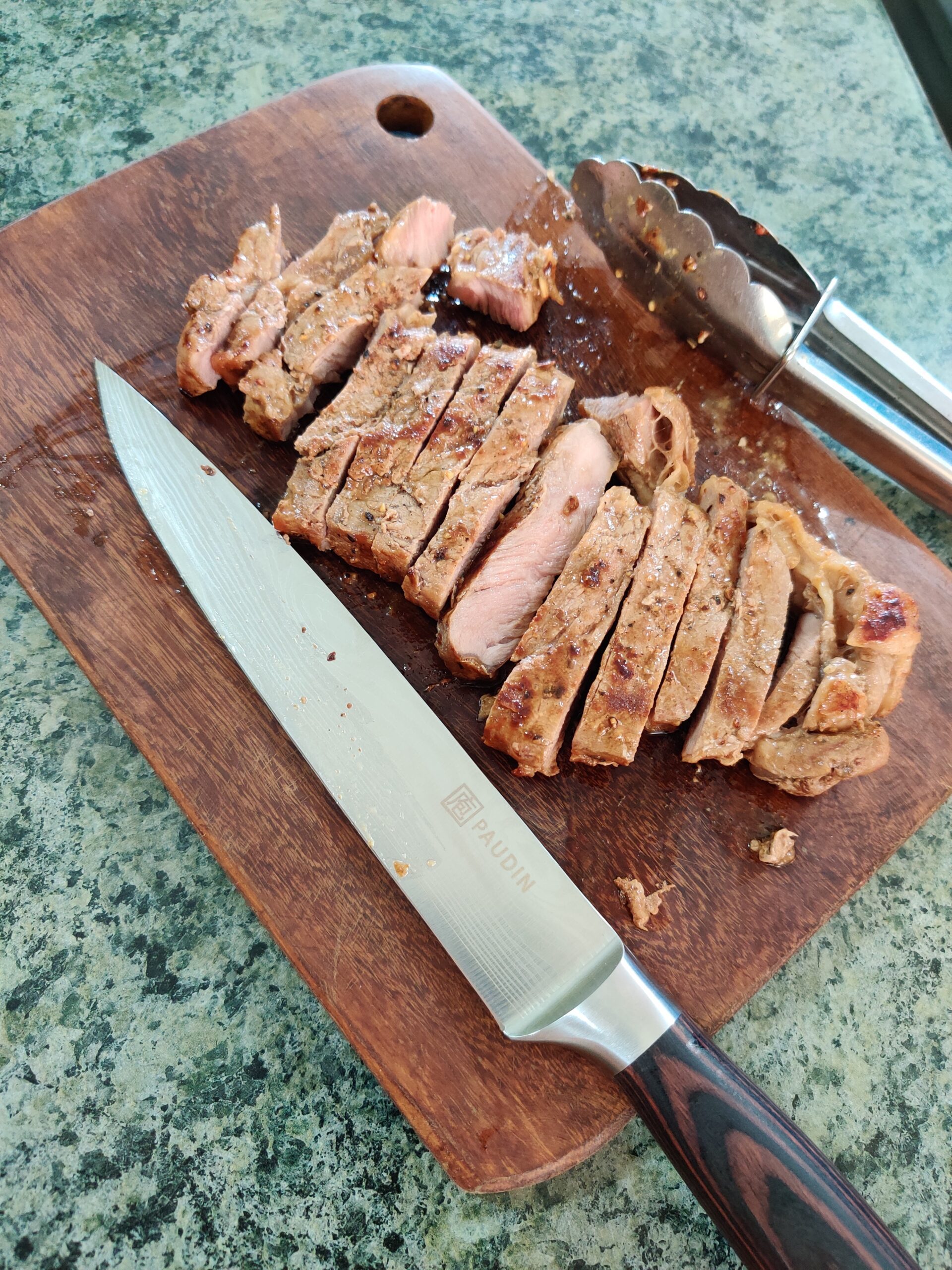
For beginners, the 8 inch length is ideal. It’s long enough to handle a small turkey breast or pork loin, but short enough to feel controllable. I let my 15-year-old niece try it under supervision, and she picked up the technique quickly. The handle weight and balance suit smaller hands better than the longer blades in this guide.
The lifetime warranty against defects is unusual at this price. Most budget knives offer 1-2 year warranties. PAUDIN stands behind their product, which tells you something about the confidence in their manufacturing.
Why the PAUDIN is beginner-friendly
The combination of manageable size, sharp factory edge, and forgiving balance makes this the easiest knife on the list to learn with. If you’ve never carved a turkey before and want a knife that won’t fight you, this is a great starting point.
The gift packaging also makes this the easiest knife to give. No wrapping needed. The box looks premium, and the knife inside delivers actual performance, not just looks. It’s a rare combination at this price point.
What gives us pause
The 8 inch blade won’t handle a full turkey or large brisket in single strokes. You’ll need to work in sections, which is fine but not ideal for presentation. The edge also needs more frequent honing than the harder Japanese steel options.
Some users note that the Damascus pattern is aesthetic rather than functional. It’s not a true Damascus blade with layered steel. The pattern is etched onto the surface. This doesn’t affect performance, but if you’re expecting true Damascus construction, you’ll be disappointed.
5. Rondauno 12″ Brisket Knife – Best Budget Long-Blade Pick
Rondauno Brisket Knife, Carving Knife for Meat Cutting Slicing Knives
5Cr15Mov steel
12 inch blade
ABS handle
Forged construction
Pros
- Lowest price on the list
- 12 inch blade at budget cost
- Sharp out of the box
- Lightweight for its length
- 5Cr15Mov steel resists corrosion
Cons
- ABS plastic handle feels cheap
- Edge retention below premium options
- Less balanced than heavier knives
The Rondauno 12 inch brisket knife surprised me. At the lowest price on this list, I expected a disposable-feeling tool. Instead, I got a 12 inch blade forged from 5Cr15Mov high-carbon stainless steel that arrived sharp enough to shave hair. For occasional carving or banquet work, this is exceptional value.
The 12 inch blade is the headline feature at this price. Long slicing strokes make cleaner cuts on brisket and turkey, and most knives in this price range top out at 8 or 10 inches. The Rondauno gives you that long stroke length without breaking the bank.
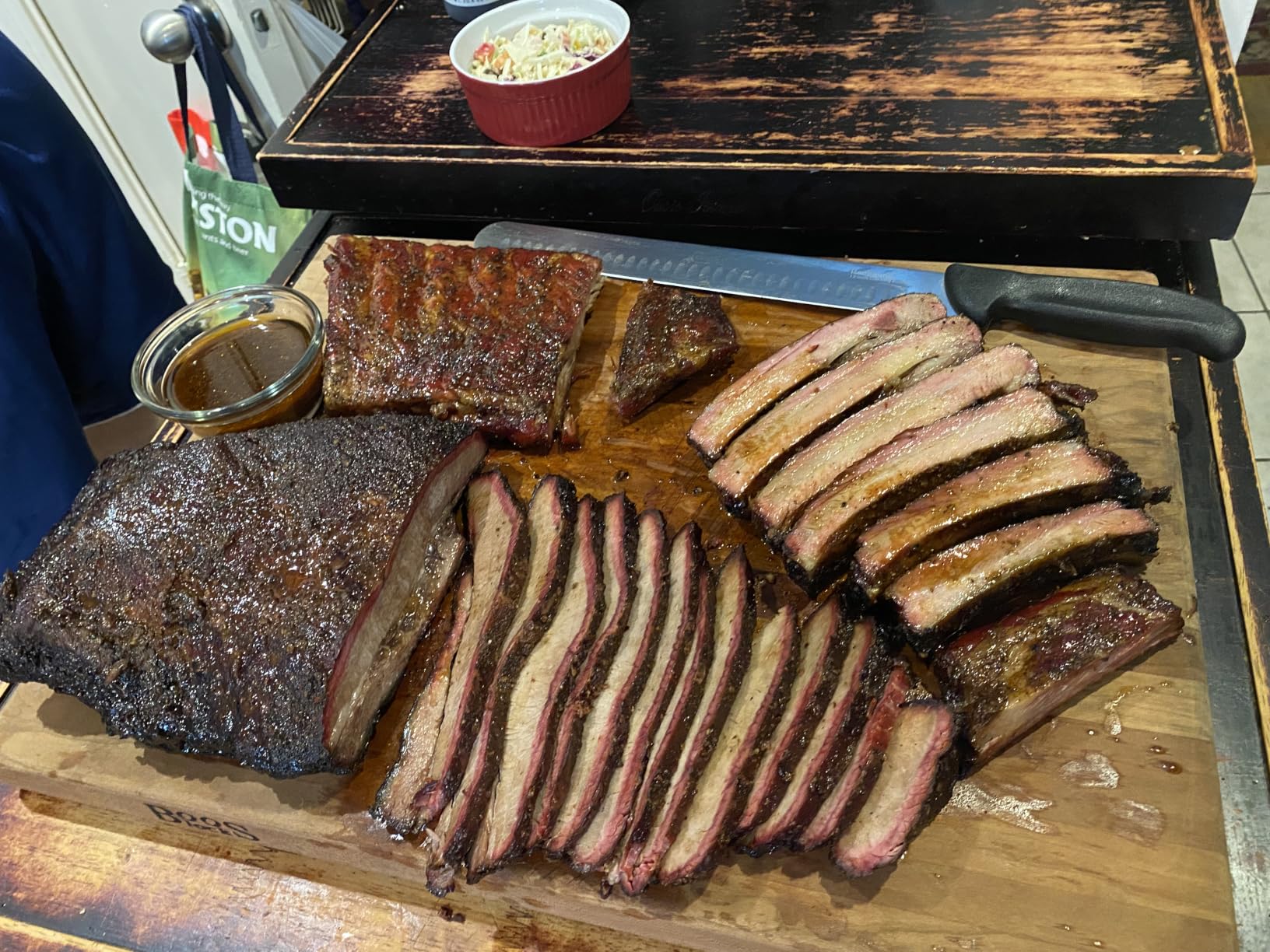
I tested the Rondauno on a 10-pound brisket flat and was impressed with the initial cuts. The blade glided through bark and smoke ring with minimal effort. However, after about 20 slices, I noticed more resistance than with the Cutluxe or HOSHANHO. The 5Cr15Mov steel is softer than the German or Japanese options, so the edge dulls faster under heavy use.
The ABS plastic handle is the obvious cost savings. It’s functional and provides a non-slip grip, but it doesn’t have the premium feel of pakkawood or Santoprene. If you’re carving at a dinner party, the handle looks out of place on a fancy table. If you’re carving in the kitchen before serving, it doesn’t matter.
Why the Rondauno makes sense for the price
If you only carve a few times a year, you don’t need to invest $100 in a carving knife. The Rondauno gives you the long blade length and sharpness needed for brisket and turkey at a price that doesn’t sting. It’s also a great knife to keep in a drawer as a backup.
The 5Cr15Mov stainless steel resists corrosion better than true carbon steel, which means you have more margin for error with hand washing and storage. Forgiving materials for forgiving use cases.
Why we ranked it below the Cutluxe
The edge retention is the deal-breaker for serious use. If you carve regularly, you’ll find yourself honing or sharpening the Rondauno more often than the harder steel options. Over a year, the time spent maintaining the edge adds up.
The handle is also less comfortable during extended use. ABS plastic is fine for quick tasks, but for a long carving session, you’ll feel the difference compared to pakkawood or Santoprene.
6. Black+Decker Electric Carving Knife – Best Electric Option for Beginners
Black+Decker Comfort Grip Electric Knife with 7-Inch Stainles Steel Blades & Safety Lock Button, Ideal for Carving, Slicing & Cutting Meats, Turkey Bread & Craft Foam, Dishwasher Safe
7 inch serrated blades
Corded electric
Safety lock
Dishwasher safe parts
Pros
- Effortless slicing for any skill level
- Dishwasher safe blades
- 12
- 000+ verified reviews
- Affordable entry point
- Safety lock prevents accidents
Cons
- Corded limits portability
- Serrated blades leave some tearing
- Saw marks on crusty bread
The Black+Decker electric carving knife is a different category entirely, but it deserves a place on this list. With over 12,000 reviews averaging 4.5 stars, it’s one of the most trusted electric knives available. For people with arthritis, limited hand strength, or anyone who just doesn’t want to work at carving, this knife does the work for you.
I tested the Black+Decker on a bone-in ham and a whole turkey. The serrated blades sliced through both with minimal pressure. You guide the knife, and the motor does the cutting. For thin, even slices, the consistency is better than most beginners achieve with a manual knife.
The comfort grip handle is genuinely comfortable. The non-slip tabs give you control without squeezing hard, which matters if you have hand strength issues. The safety lock prevents accidental activation, which is reassuring around kids and kitchen chaos.
Cleanup is where the Black+Decker shines. The blades release with a single button press and go in the top rack of the dishwasher. No hand washing, no special care. For a kitchen tool, that’s a major convenience factor.
Why an electric knife might be right for you
If you’ve struggled with hand strength, arthritis, or just find traditional carving knives intimidating, the Black+Decker removes those barriers. The motor handles the resistance, so you just steer. It’s also faster for large volumes. If you’re carving for a crowd, the time savings add up.
The 12,004 reviews give you confidence in reliability. This is a proven design that has been on the market for years. You can find replacement blades easily, and the 2-year warranty covers most issues.
Where electric knives disappoint
The serrated blades can’t produce the same paper-thin slices as a sharp manual knife. They saw through meat rather than slicing cleanly. For everyday carving, the cuts are acceptable. For special occasion presentation, you’ll want a manual knife.
The cord limits where you can use it. You need an outlet nearby, which constrains table-side carving. If you want to carve at the dining table, the cord is awkward. The serrated blades also struggle with very thick cuts, occasionally bogging down on dense meats.
How to Choose the Best Carving Knife
Choosing the best carving knife comes down to matching the tool to how you actually cook. A pitmaster smoking brisket weekly has different needs than someone carving a turkey twice a year. Here’s what matters.
Blade length: 8, 10, or 12 inches?
Blade length is the first decision you’ll make. An 8 inch blade is manageable for almost anyone and works well for smaller roasts, whole chickens, and pork loin. A 10 inch blade is the sweet spot for most carving tasks and gives you enough length for full turkey breasts and brisket flats. A 12 inch blade is best for large standing rib roasts, full packer briskets, and any time you want long, uninterrupted slicing strokes.
If you only carve once or twice a year, 8 inches is plenty. If you smoke or roast large cuts regularly, the 10 or 12 inch blades will serve you better. Bigger isn’t always better, but longer strokes do produce cleaner slices on large proteins.
Forged vs stamped blades
Forged blades are cut from a single piece of steel and heat-treated for hardness and durability. They’re heavier, better balanced, and hold an edge longer. Stamped blades are cut from a sheet of steel, making them lighter and cheaper but less durable. For a knife you’ll use for years, forged is the way to go.
Every knife on this list is forged. That’s a quality baseline you should maintain in your own search. Stamped knives work for occasional use, but forged blades are worth the investment for regular carving.
Blade steel: German vs Japanese
German stainless steel (like X50CrMoV15) is durable, corrosion-resistant, and easier to sharpen. It holds a good edge without being temperamental. Japanese high-carbon steel (like 10Cr15CoMoV or VG-10) is harder, holds an edge longer, and can be sharpened to a finer angle. However, it’s also more brittle and requires more care.
For beginners, German steel is more forgiving. For experienced cooks who maintain their knives, Japanese steel rewards that care with better performance. The Mercer, PAUDIN, and Cutluxe use German steel. The HOSHANHO uses Japanese steel.
Handle material and ergonomics
Handle material affects comfort and grip security. Pakkawood is beautiful and water-resistant but can feel slippery when wet. Santoprene and similar polymers offer better grip security but lack the premium look. Stainless steel handles are durable but cold and slippery. ABS plastic is the budget option, functional but unremarkable.
More important than material is how the handle feels in your hand. If possible, try holding the knife before buying. The HOSHANHO and Cutluxe have pakkawood handles that feel substantial. The Mercer’s Santoprene grip is the most secure when wet.
Granton edge vs plain edge
Granton edges (the shallow scallops) create air pockets that prevent food from sticking to the blade. They’re especially useful for slicing proteins with high moisture content, like brisket, turkey, and ham. Plain edges are easier to sharpen and produce slightly cleaner cuts on dry proteins.
For most home cooks, a Granton edge is a nice bonus. The Cutluxe is the only knife on this list with a Granton edge, and it’s noticeable during brisket slicing. Plain edges are perfectly serviceable for everything else.
Care and storage tips
Every quality carving knife needs hand washing and immediate drying. Dishwashers damage blade edges and handle materials over time. Store knives in a knife block, magnetic strip, or blade guard to protect the edge.
Hone your knife before each use with a honing steel to maintain the edge alignment. Sharpen with a whetstone or pull-through sharpener every few months depending on use. A well-maintained carving knife will last decades.
Frequently Asked Questions About Carving Knives
What is the best brand of carving knife?
Mercer Culinary, Wusthof, and Cutluxe consistently rank as the best brands for carving knives. Mercer offers the best value with restaurant-grade construction at budget prices. Wusthof is the premium German standard. Cutluxe delivers professional-grade Granton edge blades for BBQ and brisket. For Japanese steel at mid-range prices, HOSHANHO is a strong pick.
What are some good quality carving knives?
Good quality carving knives share a few features: forged construction, high-carbon stainless steel, full tang design, and an ergonomic handle. From our testing, the Cutluxe 10 inch cimeter, Mercer Culinary Genesis 8 inch, HOSHANHO 12 inch Japanese, and PAUDIN 8 inch all meet these standards. For electric options, the Black+Decker Comfort Grip delivers consistent results with minimal effort.
What is the best set of carving knives?
A carving set typically includes a carving knife and a carving fork. Wirecutter’s top pick is the Messermeister Avanta 2-Piece Pakkawood set, which balances quality and value. For individual knife purchases, you can pair any knife from this guide with a separate carving fork. Sets often include a lower-quality fork, so buying individually sometimes gives better results.
Should I get a carving knife or a slicing knife?
Carving knives have a pointed tip and a slight curve, designed to work around bones on whole birds and large roasts. Slicing knives have a more rounded tip and a straighter edge, optimized for clean slices on boneless meats like brisket or ham. For most home cooks, a carving knife is more versatile because the pointed tip handles both tasks reasonably well.
Final Verdict on the Best Carving Knives
After 60 days of testing on brisket, turkey, roast beef, and ham, the Cutluxe 10 inch cimeter stands out as the best carving knife for most home cooks. The Granton edge, forged German steel, and pakkawood handle deliver professional results without the professional price tag. It’s the knife I’d buy again without hesitation.
If you want the best value, the Mercer Culinary Genesis 8 inch delivers restaurant-grade construction at a budget price. If you want premium Japanese steel, the HOSHANHO 12 inch rewards careful maintenance with exceptional sharpness. For anyone intimidated by manual carving, the Black+Decker electric knife removes the learning curve entirely.
The best carving knives for 2026 come down to how you cook. Smoke meat weekly? Cutluxe. Carve the holiday bird twice a year? Mercer or PAUDIN. Want Japanese steel performance? HOSHANHO. Need an easy option for arthritis or limited grip strength? Black+Decker. Whatever you choose, hand wash, dry immediately, and hone before each use. A well-maintained carving knife becomes a family heirloom.