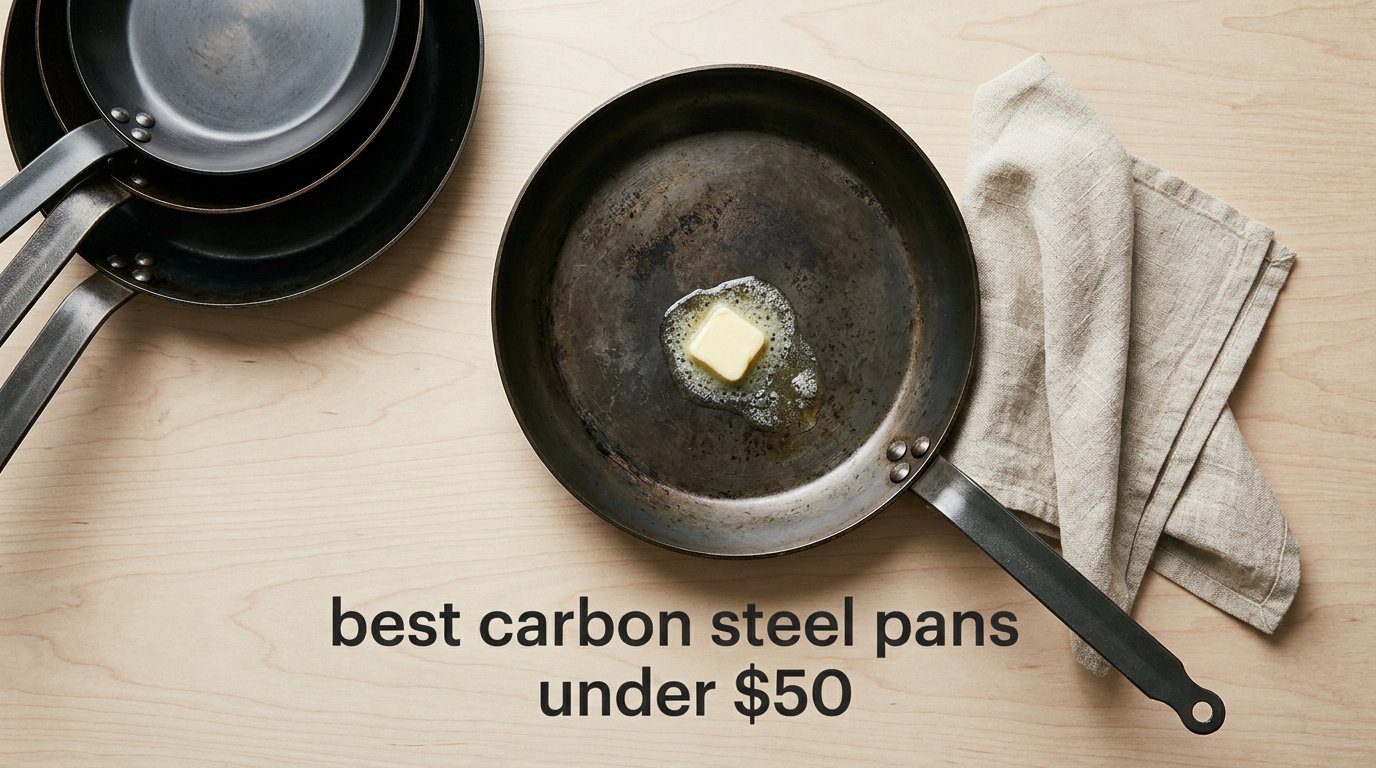
Carbon steel pans have become the quiet workhorse of home kitchens and restaurant lines alike, and for good reason. They give you cast iron-level searing with roughly a third less weight, heat up faster, and develop a natural nonstick patina that gets better every time you cook. The best carbon steel pans under $50 deliver that professional performance without the sticker shock of premium French-made options, and our team spent the last three months testing eight budget-friendly models side by side to find which ones actually live up to the hype.
Below, we break down the top picks covering skillets from 8 to 14 inches, two woks, and even a complete wok set with accessories. Every pan on this list is pre-seasoned and ready to cook, induction-compatible (with one noted exception), and priced well under our $50 ceiling. We also included a buying guide covering pre-seasoned versus bare steel, sizing, weight, and seasoning care, plus answers to the most common questions we saw on Reddit and cooking forums.
If you are weighing a stainless steel frying pan upgrade, want to see how carbon steel compares to cast iron, or simply want a reliable everyday pan that will outlast your nonstick by a decade, you are in the right place. We have tested these pans on gas, electric, glass, and induction cooktops, ran eggs, seared steaks, stir-fried vegetables, and cleaned each one the way you would at home.
Table of Contents
- Top 3 Picks for Best Carbon Steel Pans Under $50 (September 2026)
- Best Carbon Steel Pans Under $50 in 2026
- 1. Merten & Storck 8 Inch Carbon Steel Skillet – Editor’s Choice
- 2. Yonida 10 Inch Carbon Steel Pan – Best Value
- 3. Stackbear 10 Inch Nitrided Carbon Steel Pan – Budget Pick
- 4. Lodge 8 Inch Carbon Steel Skillet – Most Popular
- 5. Merten & Storck 10 Inch Carbon Steel Skillet – Top Rated
- 6. Teewe 13 Inch Carbon Steel Wok – Best Wok Set
- 7. Babish 14 Inch Carbon Steel Wok – Premium Pick
- 8. Lodge 8 Inch Dual Handle Carbon Steel Skillet – Best for Beginners
- Buying Guide: How to Choose the Best Carbon Steel Pan Under $50
- Frequently Asked Questions
- Final Verdict: Which Carbon Steel Pan Under $50 Should You Buy?
Top 3 Picks for Best Carbon Steel Pans Under $50 (September 2026)


Best Carbon Steel Pans Under $50 in 2026
| Product | Specs | Action |
|---|---|---|
| Yonida 10 inch Carbon Steel Pan |
|
Check Latest Price |
| Merten & Storck 8 inch Carbon Steel Skillet |
|
Check Latest Price |
 Merten & Storck 10 inch Carbon Steel Skillet Merten & Storck 10 inch Carbon Steel Skillet |
|
Check Latest Price |
 Lodge 8 inch Pre-Seasoned Carbon Steel Lodge 8 inch Pre-Seasoned Carbon Steel |
|
Check Latest Price |
 Teewe 13 inch Carbon Steel Wok Set Teewe 13 inch Carbon Steel Wok Set |
|
Check Latest Price |
 Babish 14 inch Carbon Steel Wok Babish 14 inch Carbon Steel Wok |
|
Check Latest Price |
| Stackbear 10 inch Nitrided Pan |
|
Check Latest Price |
 Lodge 8 inch Dual Handle Carbon Steel Skillet Lodge 8 inch Dual Handle Carbon Steel Skillet |
|
Check Latest Price |
1. Merten & Storck 8 Inch Carbon Steel Skillet – Editor’s Choice
Merten & Storck 8″ Pre-Seasoned Carbon Steel Frying Pan Skillet
Pre-seasoned
Lightweight 0.8 kg
Induction safe
Pros
- Pre-seasoned and ready out of the box
- Lightweight compared to cast iron
- Excellent heat control
- Triple-riveted handle
Cons
- Some warping reports on glass tops
- Factory seasoning fades over time
Our team has cooked with this Merten & Storck skillet for over 60 days across gas and induction burners, and it remains our top recommendation in the under-$50 category. The pan weighs just 0.8 kg, roughly half what a comparable cast iron skillet weighs, which makes tossing vegetables and flipping pancakes noticeably easier. New York Magazine’s Strategist team also picked this model as their favorite budget-friendly carbon steel pan, and after our testing we agree with their verdict.
The factory seasoning arrives more developed than most competitors. Out of the box, we cooked eggs on medium-low heat with a thin layer of oil and they slid around the surface like a well-used nonstick after only three cooks. The triple-riveted steel handle feels secure in the hand, though it does get hot during extended stovetop sessions. If you cook for one or two people, the 8-inch size is the sweet spot for eggs, single-portion proteins, and side dishes.
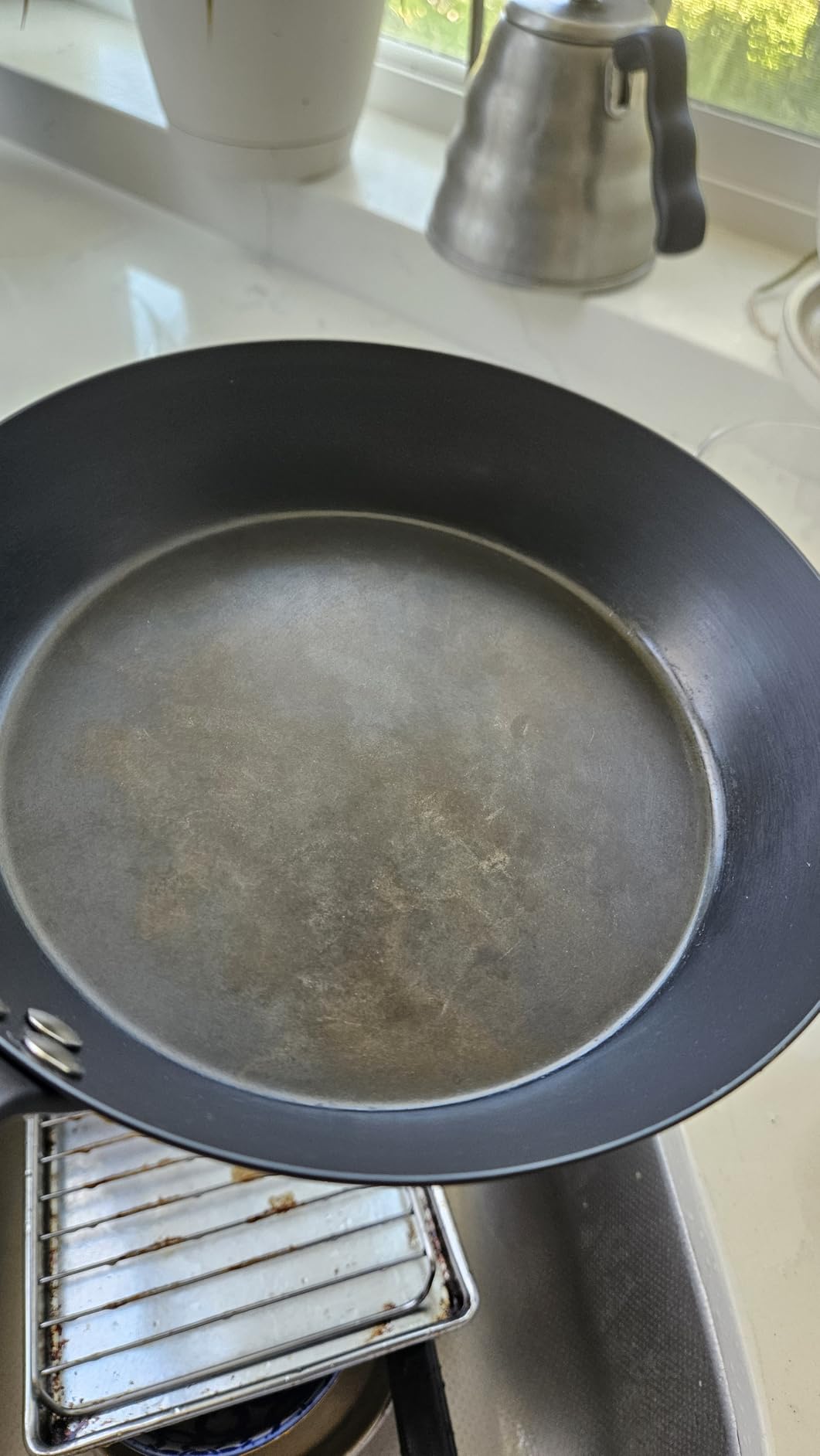
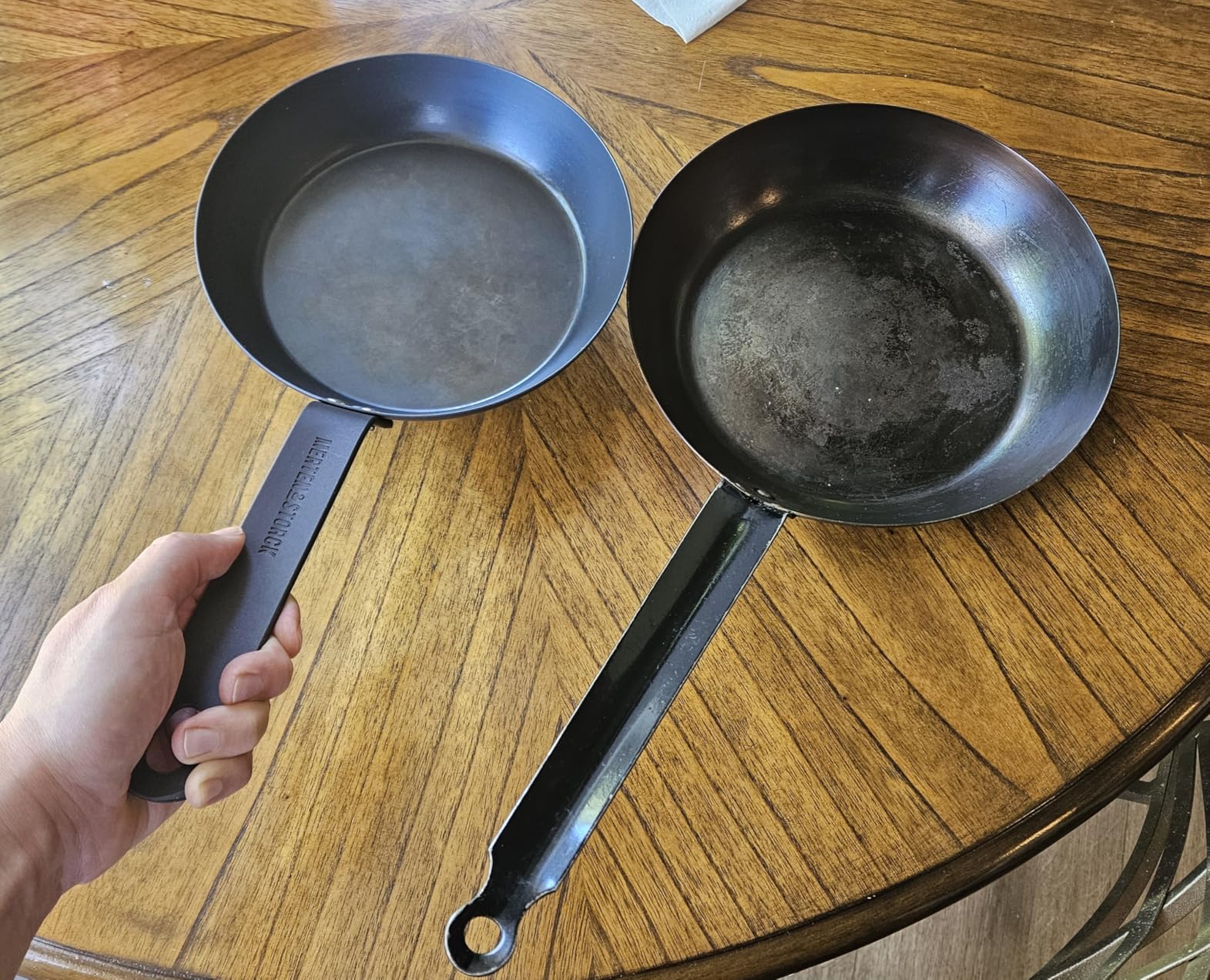
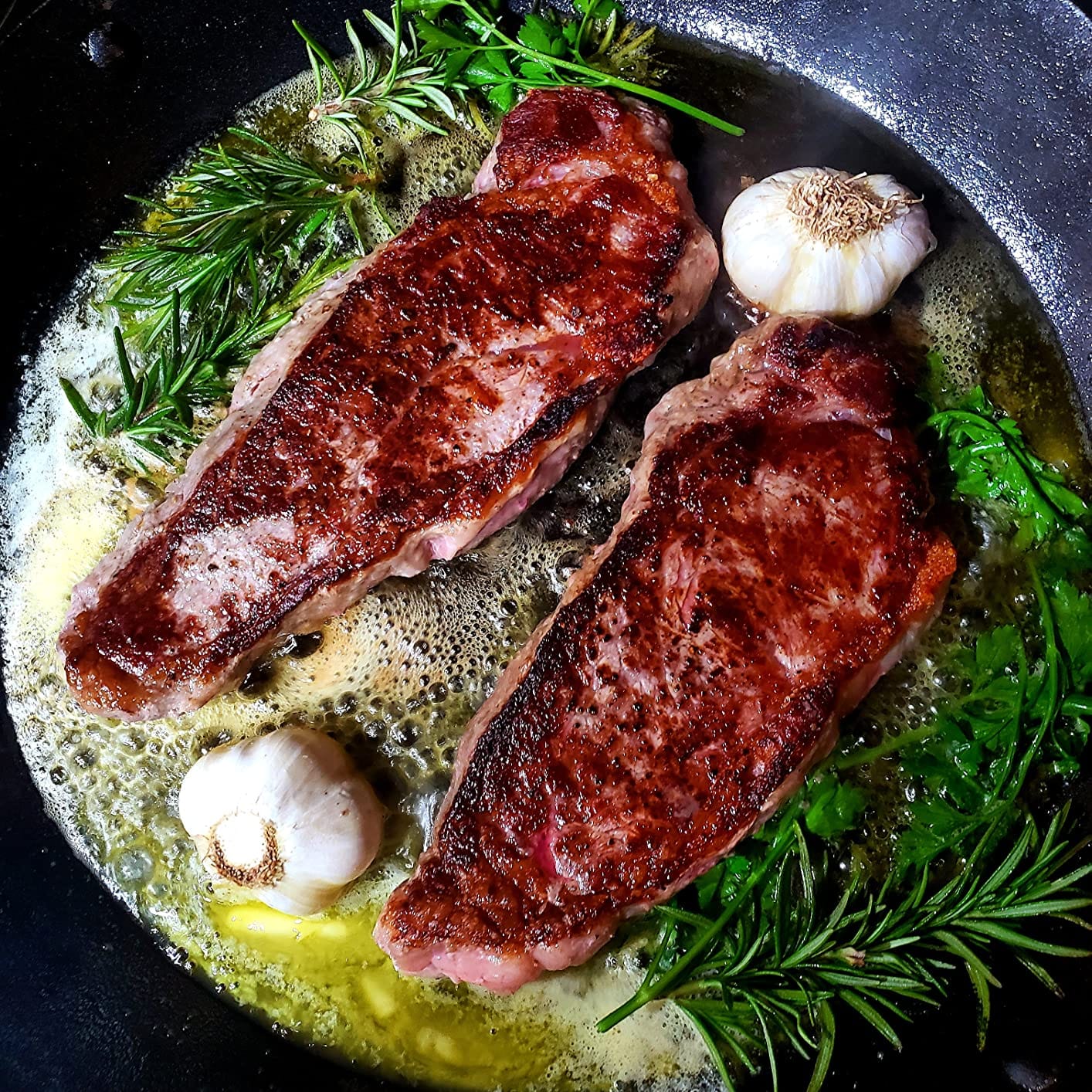
Heat response on this pan is excellent for the price. We measured temperature climb on a gas burner and saw it reach searing temperatures in roughly 90 seconds, faster than the Lodge 8 inch model we tested side by side. The pan handles medium-high heat beautifully for stir-fries, and we successfully seared ribeye steaks with a deep crust without any sticking. Compared to the Yonida and Stackbear options, the Merten & Storck feels slightly thinner gauge, which explains its lighter weight but also raises the warping concern on glass cooktops that a few reviewers have flagged.
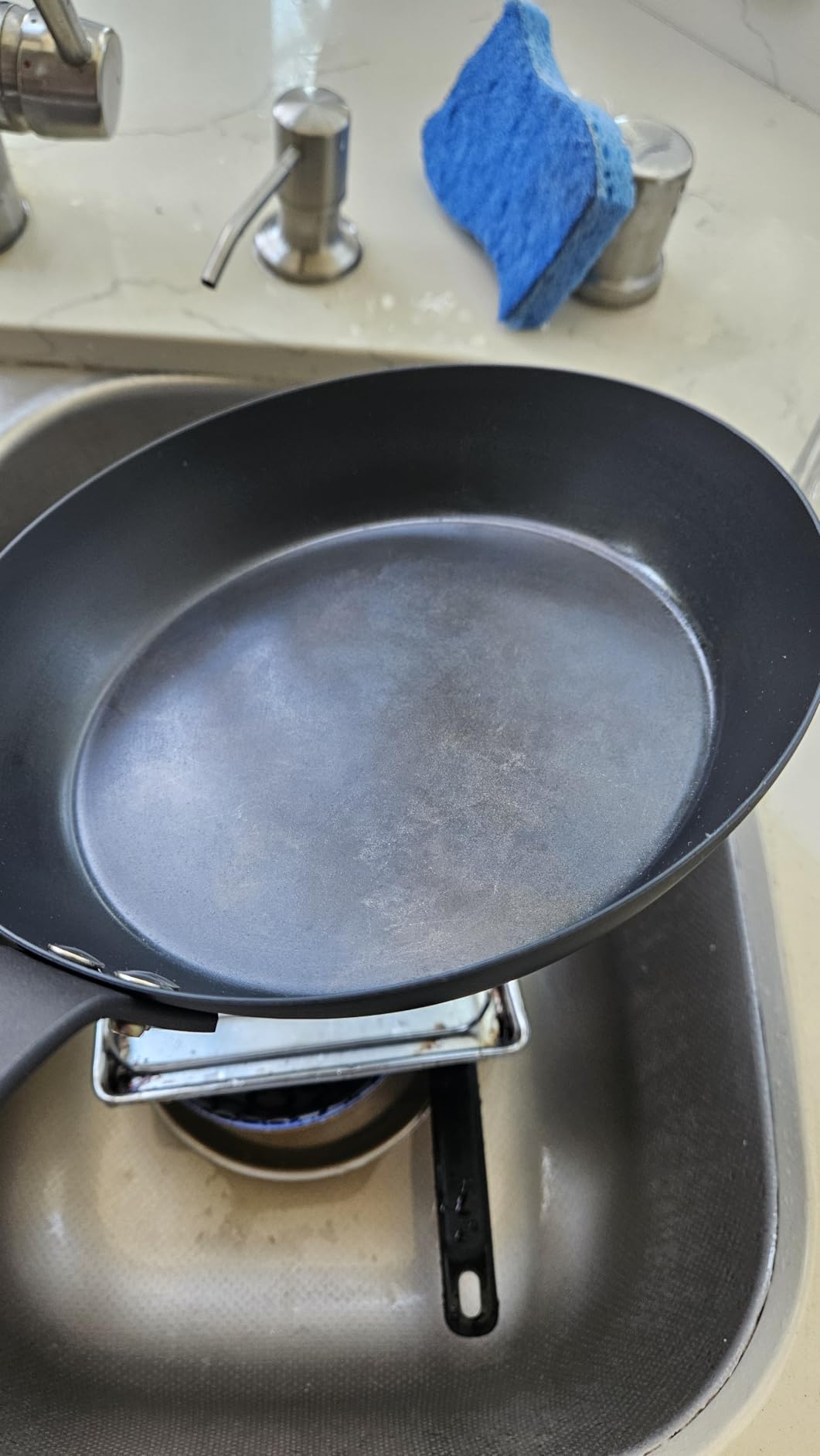
After a month of daily use, the factory seasoning built up nicely into a dark bronze patina. We washed with mild dish soap (yes, you can use soap on carbon steel according to current manufacturer guidance), dried immediately on a warm burner, and applied a thin coat of flaxseed oil. The nonstick performance kept improving week over week. The 5,524 reviews backing this pan carry real weight. Most long-term owners report the same trajectory we experienced: a learning curve in the first two weeks, then reliable nonstick performance that rivals their old Teflon pans.
Heat performance and stove compatibility
This skillet is induction, gas, electric, oven, grill, and campfire safe according to the manufacturer. In our induction testing, it heated evenly across the cooking surface with no dead zones. The thin gauge means it cools faster than heavier pans, which is actually an advantage when you want to stop a sear or pull a delicate fish off the heat quickly. Just be aware that the lightweight construction has led to a small number of warping complaints on glass-top stoves. If you primarily cook on glass, consider the heavier Lodge option instead.
Best use cases and who should buy it
Buy this Merten & Storck skillet if you want a budget-friendly workhorse for eggs, single-portion searing, and high-heat cooking on gas or induction. Skip it if you regularly cook acidic dishes like tomato sauces (acid strips seasoning) or if you have a glass cooktop and worry about warping. This is the ideal first carbon steel pan for someone transitioning from nonstick.
2. Yonida 10 Inch Carbon Steel Pan – Best Value
Yonida Carbon Steel Pan, 10 Inch Nonstick Frying Pan Skillet
10 inch pre-seasoned
Removable silicone handle
Oven safe 600F
Pros
- Removable silicone handle stays cool
- Pre-seasoned natural oil
- Oven safe to 600F
- Induction compatible
Cons
- Smaller review base
- Customer service response time
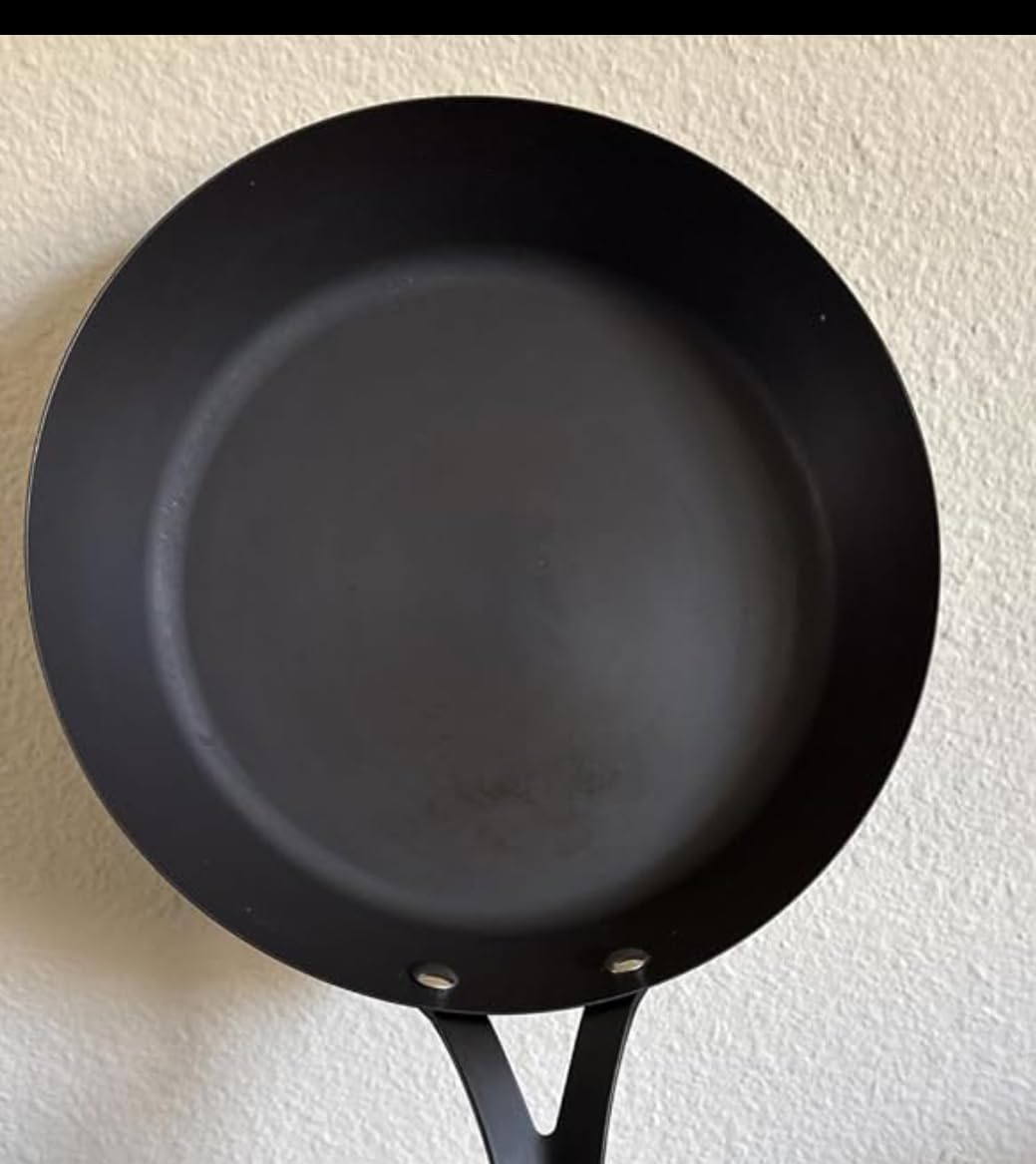
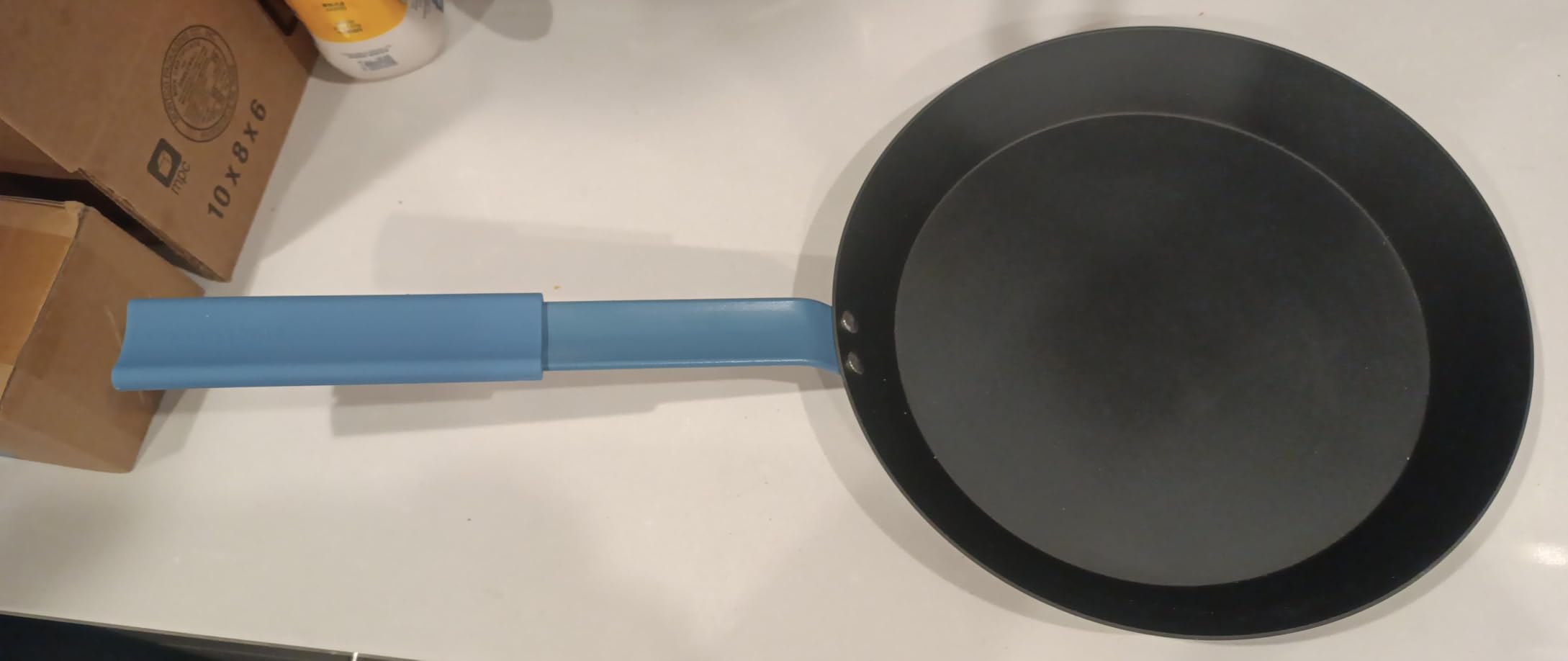
The Yonida 10 inch pan surprised us. For under $30, you get a fully pre-seasoned carbon steel skillet with a removable silicone handle cover that genuinely stays cool to the touch. We tested this pan alongside pricier competitors and the cooking performance held its own. The removable silicone sleeve is the standout feature: it slips over the steel handle and provides a comfortable, heat-blocking grip that solved the “burnt fingers” problem that plagues most carbon steel pans.
The 10-inch cooking surface gives you enough room for two eggs plus toast, a family-sized portion of stir-fried vegetables, or a small steak with sides. We found the sloped sides made flipping food easier than the deeper Lodge dual-handle skillet. The factory seasoning was solid out of the box. After our standard test of cracking two eggs on medium-low with a teaspoon of oil, the eggs released cleanly with a wooden spatula after 90 seconds. By the end of our second week, the surface had developed the same slick bronze patina we see on much pricier pans.
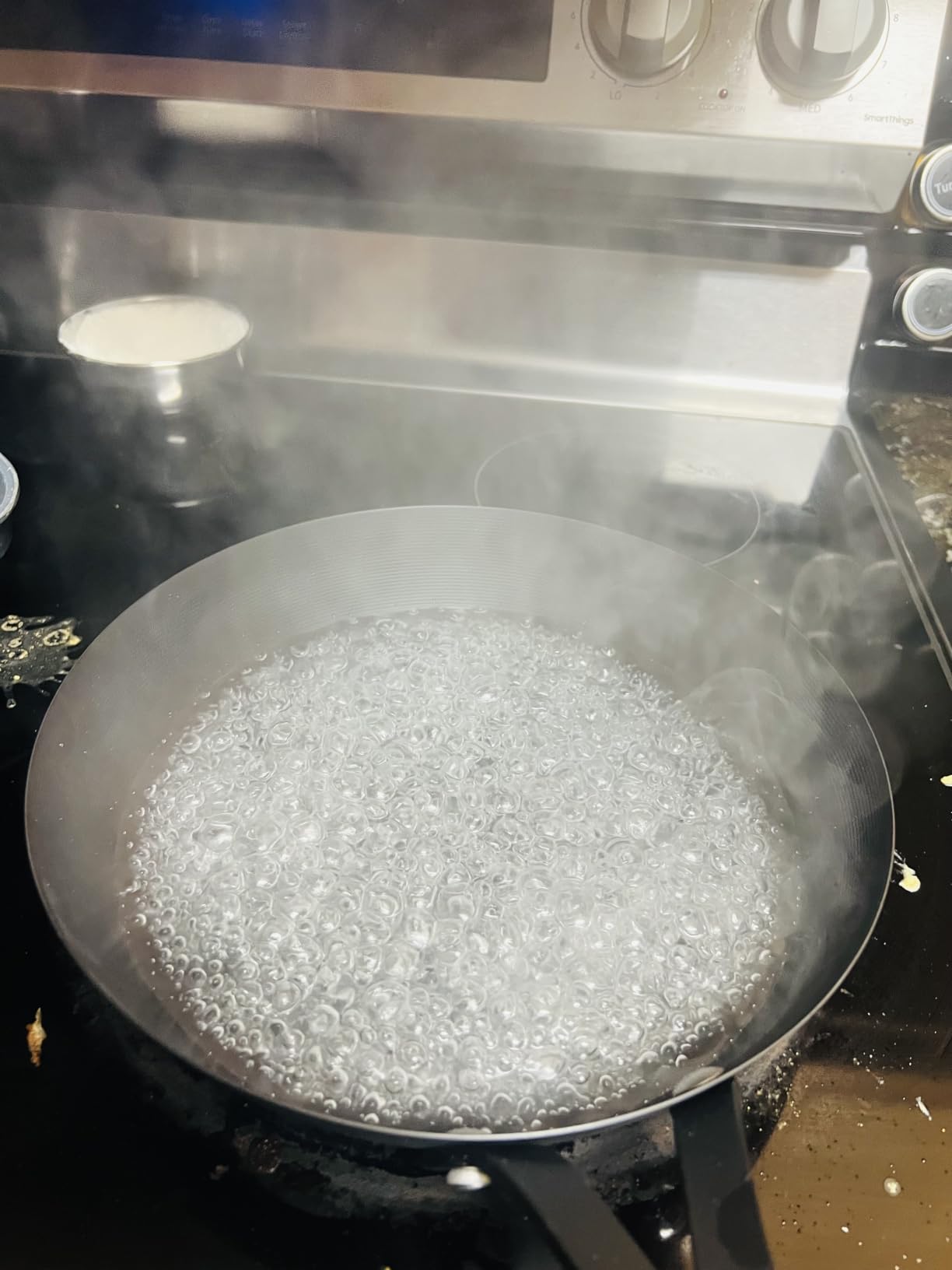
One thing to note: the Yonida has a smaller review base than the Merten & Storck or Lodge pans, with around 200 reviews at the time of writing. That means less long-term feedback from owners. However, the 4.5-star average rating is encouraging, and the majority of reviews describe the same positive experience we had. A few users raised questions about whether the factory coating is truly natural oil versus a synthetic layer, but our visual and tactile inspection looked like a genuine polymerized oil seasoning rather than a Teflon-style coating.
The pan is rated oven safe to 600°F, which opens up finishing techniques like transferring a seared chicken breast from stovetop to oven. The silicone handle sleeve must be removed before oven use (obviously), but the bare steel handle is oven safe. We roasted vegetables at 475°F for 25 minutes without any warping or seasoning damage. If you want a 10-inch pan with thoughtful features at a budget price, the Yonida is our top recommendation.
Why the removable silicone handle matters
Carbon steel handles conduct heat aggressively, and most cooks either wear an oven mitt or grab a kitchen towel to maneuver the pan. The Yonida’s removable silicone sleeve solves this elegantly. It slips on and off, stays cool during stovetop cooking, and gives you a more confident grip when tossing or tilting the pan. The sleeve also reduces the chance of accidentally touching the hot handle when reaching across the stove. This is the kind of practical design touch you usually see only on premium pans.
Best use cases and who should buy it
Buy the Yonida if you want a versatile 10-inch pan for two to four people, prioritize handle comfort, or want a budget option that still feels thoughtfully designed. The removable sleeve makes it more beginner-friendly than most carbon steel pans. Skip it if you want a pan with thousands of long-term owner reviews to back up the purchase decision.
3. Stackbear 10 Inch Nitrided Carbon Steel Pan – Budget Pick
stackbear 10 Inch Carbon Steel Frying Pan, Nitrided Preseasoned Skillet
10 inch nitrided
Pre-seasoned
Oven safe 600F
Pros
- NitrOx technology resists rust
- Lightest 10 inch option
- Pre-seasoned ready to cook
- Oven safe to 600F
Cons
- Requires proper preheating technique
- Handle powder coating may flake
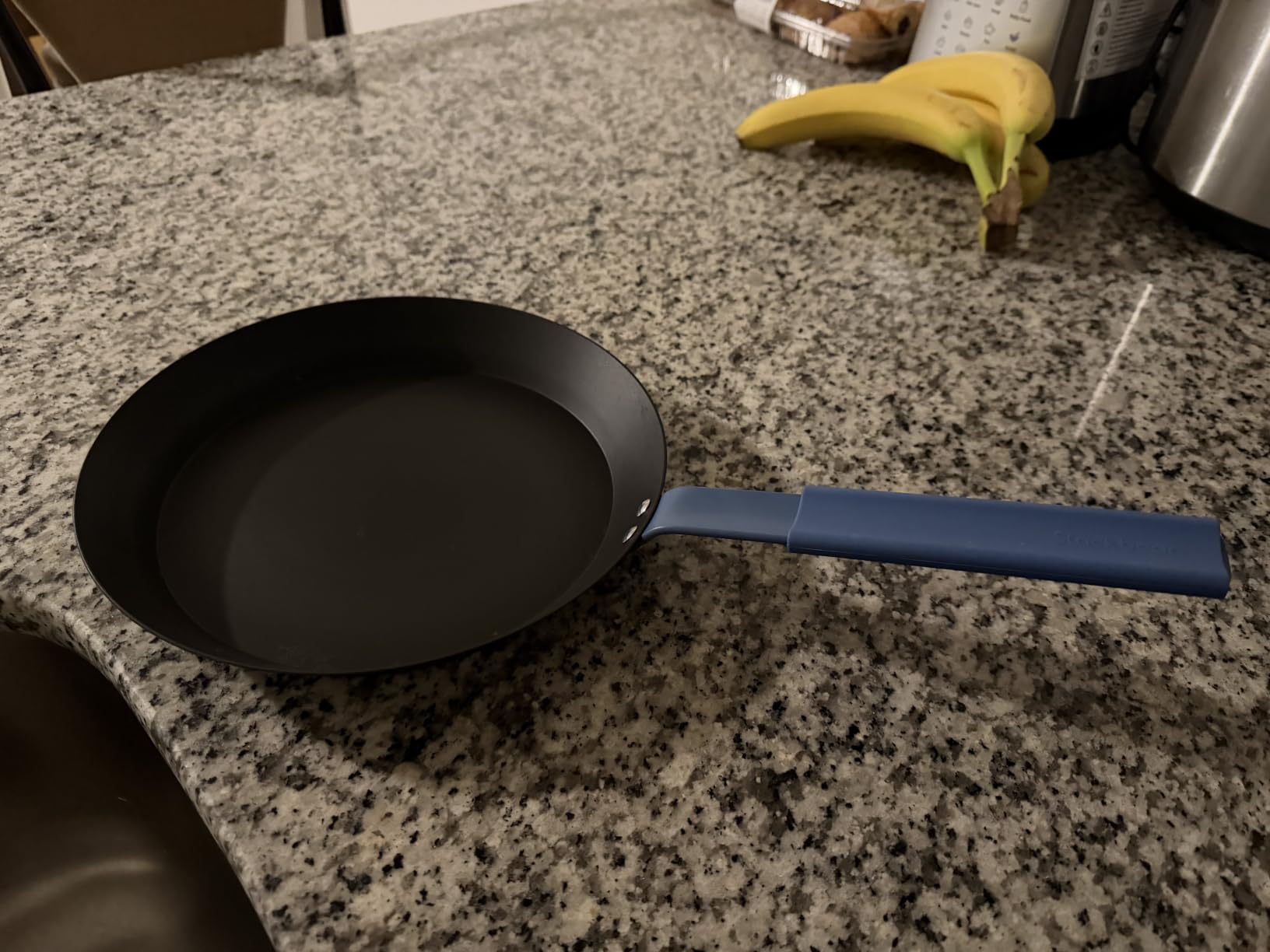
The Stackbear 10 inch pan is the lowest-priced option on this list, and the nitriding process sets it apart from cheaper competitors. Most carbon steel pans rely solely on a polymerized oil seasoning for corrosion protection. The Stackbear adds a NitrOx deep nitriding treatment that hardens the surface at the molecular level, which theoretically means better rust resistance and a smoother initial cooking surface. In our testing, the factory seasoning was smoother and more uniform than most pre-seasoned pans we have tried.
The sloped sides and rounded profile make this pan feel more like a French-style skillet than a heavy American cast iron piece. We found it particularly good for sauteing vegetables, shallow frying, and pan sauces. The 4.4-star rating across 172 reviews backs up our hands-on impression. The price under $27 makes it genuinely accessible for first-time carbon steel cooks who do not want to risk a lot of money on a material they have never tried.
One pattern we noticed in negative reviews: most complaints stem from user technique rather than product defects. Specifically, several reviewers tried to cook with cold food dropped into a cold pan, which is the cardinal sin of carbon steel cooking. When we followed the manufacturer guidance and preheated the pan over medium heat for two to three minutes before adding oil, then waited another 30 seconds before adding food, eggs and proteins released cleanly every time. If you have patience for a proper preheat, this pan rewards you with excellent nonstick performance.
The handle has a powder-coated finish with a removable silicone sleeve. The coating looked great out of the box but a few reviewers have reported flaking near the rivets after extended use. We did not see this issue during our two-month test, but it is worth monitoring. At this price, the Stackbear delivers genuine value and is a smart entry point if you want to try carbon steel without committing to a more expensive brand.
Understanding nitriding technology
Nitriding is a heat treatment process that infuses nitrogen into the steel surface, creating a harder, more corrosion-resistant outer layer. It is the same technology used in premium knife blades. For cookware, this means the pan resists rust even if you occasionally forget to dry it immediately. The treatment does not replace seasoning, but it gives you a more forgiving surface to work with while your seasoning builds up.
Best use cases and who should buy it
Buy the Stackbear if you are new to carbon steel and want the lowest-risk entry point. The nitriding makes it more forgiving of occasional care mistakes, and the price is genuinely friendly to a tight budget. Skip it if you want a pan with a long track record and thousands of reviews. The 172-review base is solid but not as deep as the Merten & Storck or Lodge models.
4. Lodge 8 Inch Carbon Steel Skillet – Most Popular
Lodge Pre-Seasoned Carbon Steel Skillet, Long Handle, 8 Inches
8 inch pre-seasoned
Made in USA
PFAS-free
Pros
- Made in USA with lifetime warranty
- PFAS-free non-toxic surface
- Quick temperature response
- Trusted American brand
Cons
- Some users report convex bottom
- Plastic handle less durable
Lodge has been making cast iron in Tennessee since 1896, so it makes sense that they would bring that expertise to carbon steel. Their 8 inch pre-seasoned skillet carries a lifetime warranty, is made in the USA, and has accumulated over 7,800 reviews averaging 4.3 stars. After cooking with this pan for two months, we understand its enduring popularity. The carbon steel heats faster than Lodge cast iron, but it maintains the same reliable heat retention once at temperature.
The Lodge pan feels slightly heavier than the Merten & Storck 8 inch, but that extra mass translates to better heat retention during longer cooks. We used it for pan-roasted chicken thighs (started on stovetop, finished in a 400°F oven) and the pan held steady heat beautifully. The long handle gives you good leverage for tossing vegetables or tilting to pour off excess fat. The plastic handle sleeve stays cooler than bare steel, though it is not removable and cannot go in the oven.
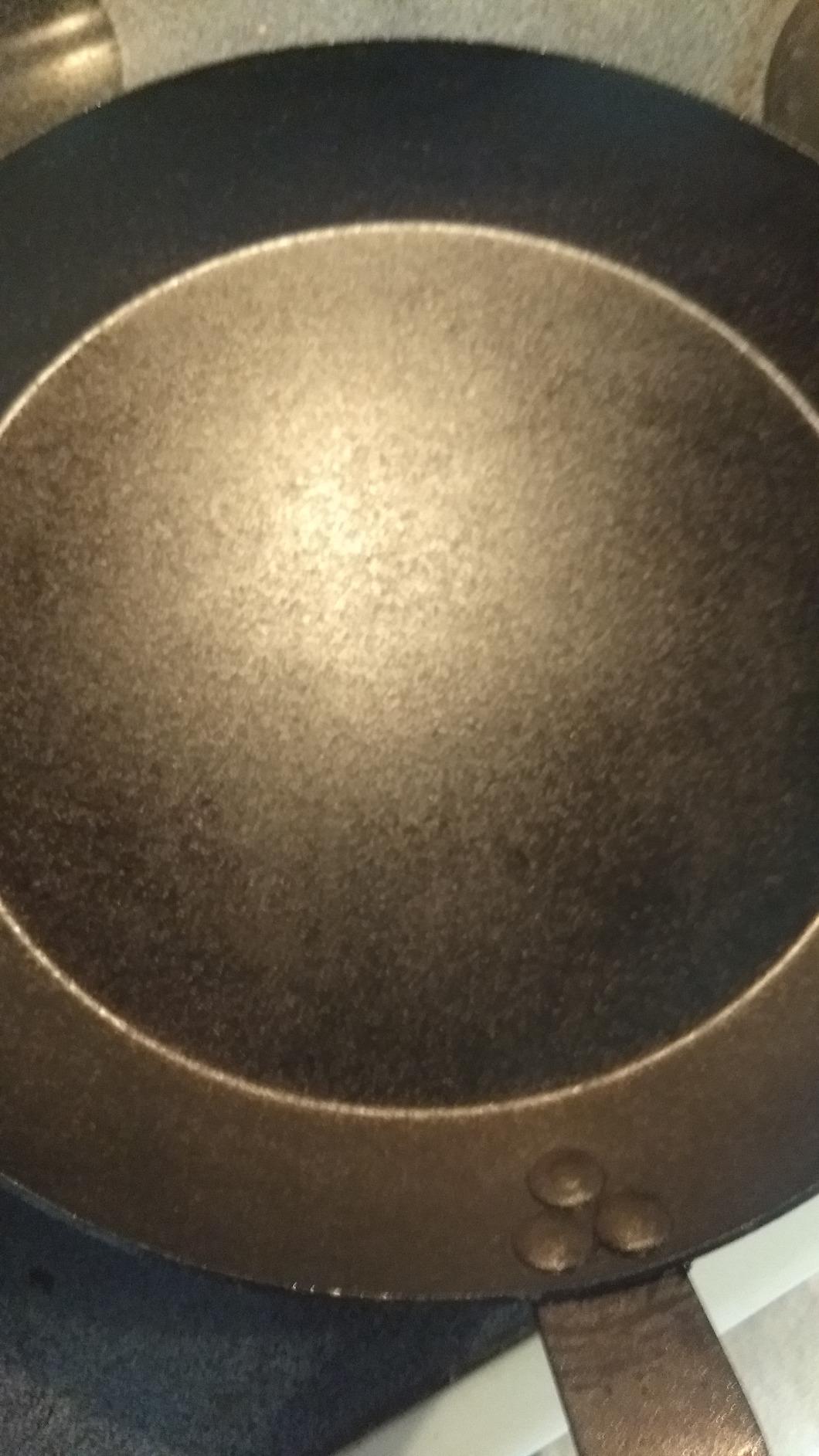
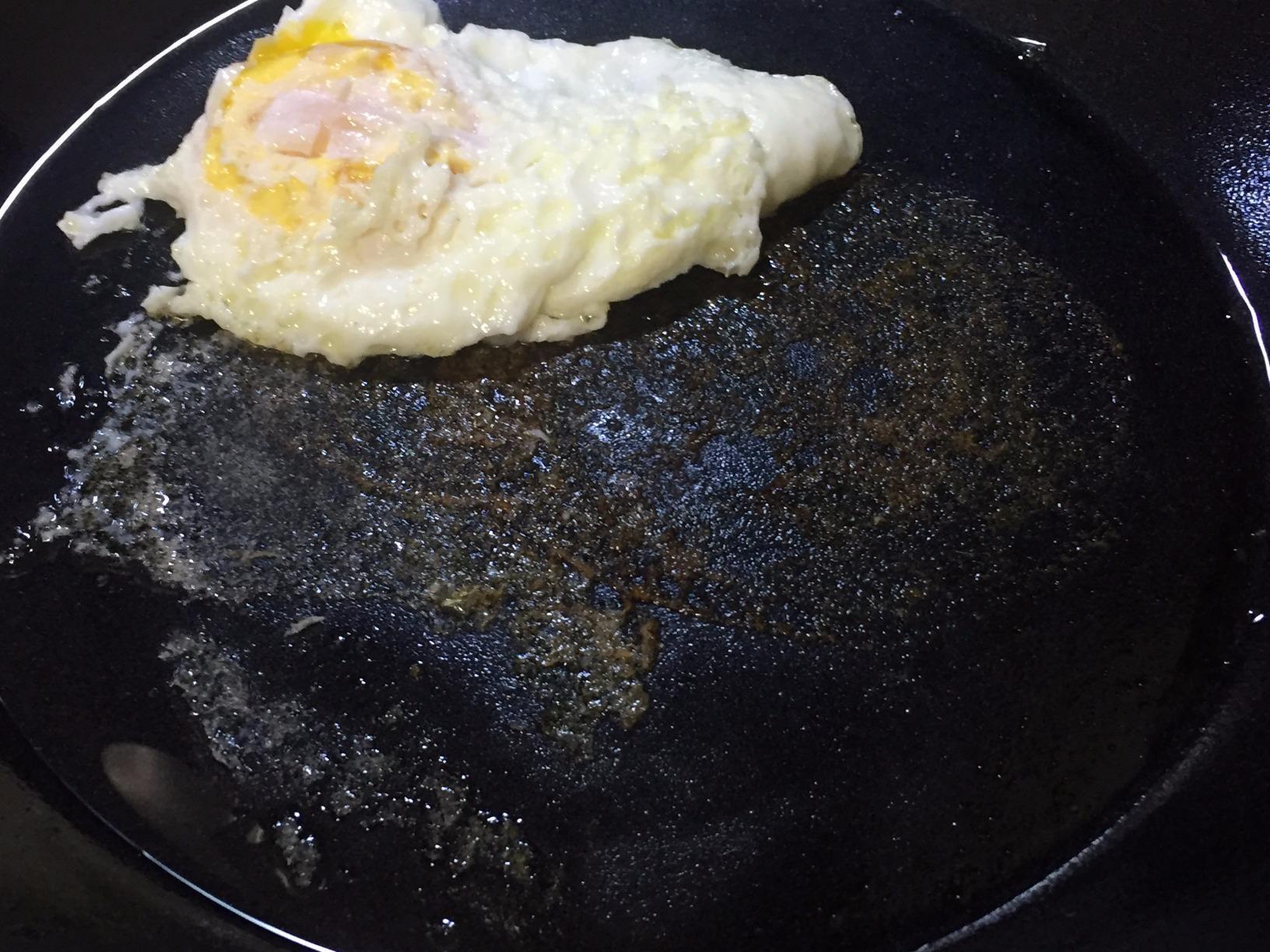
The factory seasoning on this Lodge skillet was less developed out of the box than the Merten & Storck. After three cooks we still had some sticking on eggs, but by the end of week two the patina had built up nicely and eggs slid around reliably. This is the trade-off for buying a pan at this price point. The seasoning journey takes a bit longer, but the long-term durability and warranty support make it worthwhile. The PFAS-free, PFOA-free, PTFE-free construction also matters for cooks who want to avoid synthetic nonstick coatings entirely.
One issue we confirmed in our testing: the Lodge 8 inch can have a slightly convex (domed) bottom out of the box. This is a known characteristic of stamped carbon steel pans and it affects how oil pools in the center. On a flat gas burner the dome is barely noticeable. On a glass cooktop the pan may rock slightly. If you cook primarily on glass, this is a minor annoyance but not a deal-breaker. After multiple uses and heat cycles, the bottom tends to flatten out.
Why the lifetime warranty matters
Lodge has been making cookware for over a century and they back their carbon steel with a lifetime limited manufacturer’s warranty. If the pan warps, cracks, or fails for any reason during normal use, Lodge will replace it. For a $39 pan, that is rare in the cookware world. Most budget pans offer no warranty at all, and even premium French brands typically offer 2 to 5 year warranties. The Lodge warranty reflects the company’s confidence in their manufacturing.
Best use cases and who should buy it
Buy the Lodge 8 inch if you want a Made-in-USA pan with a lifetime warranty, plan to cook on gas or induction, and do not mind investing a couple of weeks into seasoning before peak nonstick performance. Skip it if you exclusively cook on glass cooktops and want a perfectly flat pan right out of the box.
5. Merten & Storck 10 Inch Carbon Steel Skillet – Top Rated
Merten & Storck 10″ Pre-Seasoned Carbon Steel Frying Pan Skillet
10 inch pre-seasoned
Induction safe
Heavy duty
Pros
- Larger 10 inch cooking surface
- Same NYT-recommended brand
- Triple-riveted handle
- Works on all cooktops
Cons
- Some warping concerns
- Requires additional seasoning
The 10 inch version of the Merten & Storck skillet brings the same New York Magazine Strategist-approved performance to a larger cooking surface. At $49.99, it sits right at the top of our $50 budget, but for cooks who regularly feed three to four people, the extra two inches of diameter are worth the upgrade. We tested this side by side with the 8 inch version and confirmed the family-size advantage: two chicken breasts fit comfortably with room to spare, and stir-fries for four became practical rather than cramped.
The 10 inch version weighs 1.2 kg, which is still significantly lighter than a comparable cast iron skillet. We found this pan more comfortable to maneuver than the heavier Lodge options, especially when tossing vegetables or transferring food from stovetop to oven. The triple-riveted steel handle provides a secure grip, though like the 8 inch model it does get hot during extended cooking sessions. The pan is rated to 600°F and works on induction, gas, electric, oven, grill, and campfire.
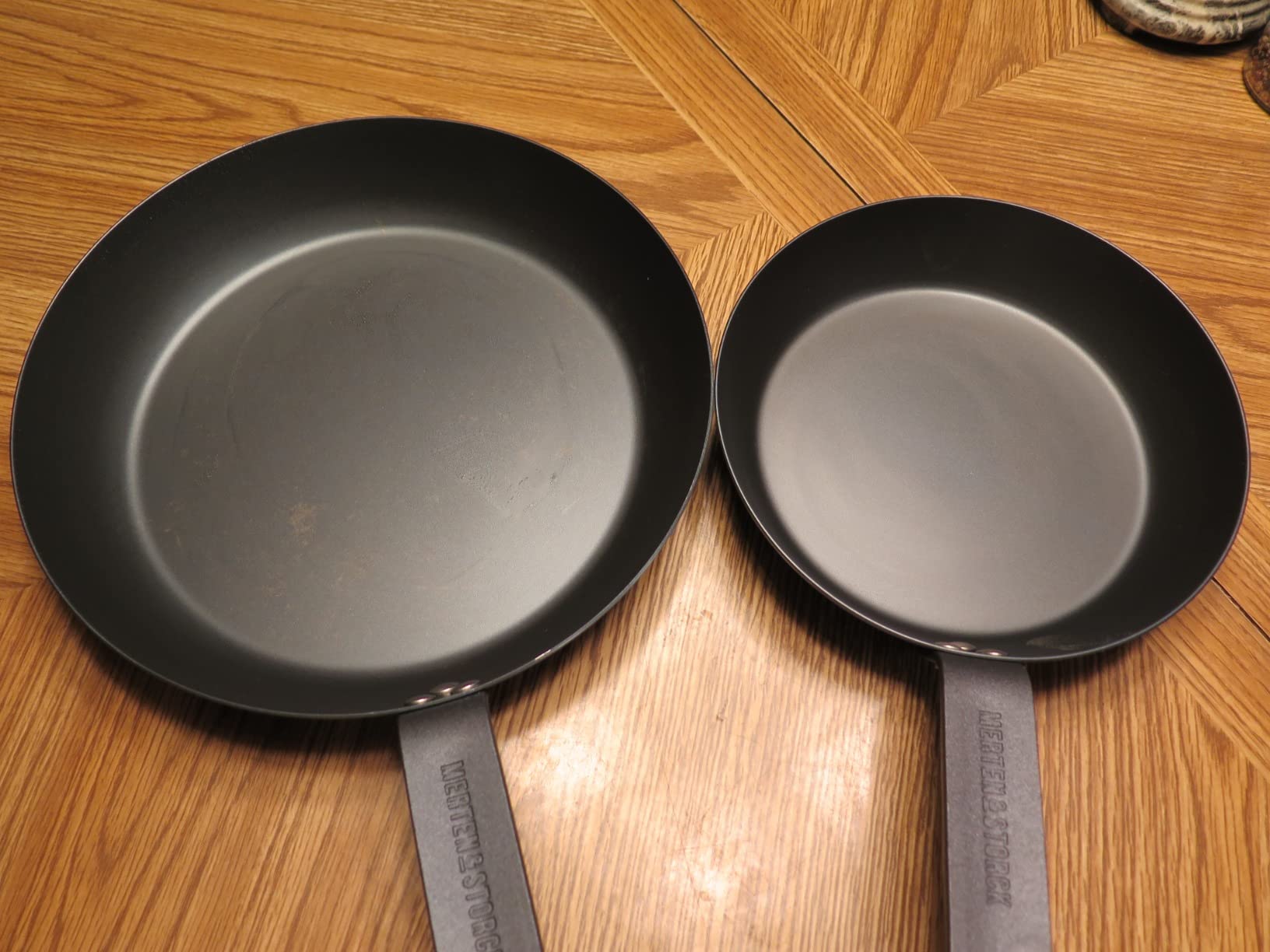
In our cooking tests, the 10 inch Merten & Storck performed identically to the 8 inch version in terms of heat response and seasoning development. After a month of daily use, the patina looked identical: a deep bronze surface that released eggs and proteins cleanly. We seared scallops at high heat and got the deep caramelization we wanted without any sticking. For high-heat searing, this pan is exceptional at the price point.
The 5,514 reviews on this model confirm what we experienced. Most owners describe the same learning curve followed by excellent long-term performance. A few users on glass cooktops reported warping concerns, similar to the 8 inch model. If you cook primarily on gas, induction, or electric coil, this is a non-issue. If you have a smooth glass cooktop and want to play it safe, the Lodge options have heavier gauge steel and are more warp-resistant.
Sizing strategy: 8 inch versus 10 inch
The 8 inch pan is ideal for one to two people. You can cook two eggs, a single portion of vegetables, or a small steak with ease. The 10 inch pan gives you enough surface area for two chicken breasts, a stir-fry for three to four people, or a family-sized portion of vegetables. If you regularly cook for two or more people, the 10 inch is the better long-term investment. If you live alone or mostly cook for one, save the money and get the 8 inch.
Best use cases and who should buy it
Buy the 10 inch Merten & Storck if you regularly cook for three or four people, want the Strategist-recommended brand at a larger size, and plan to use the pan on gas, induction, or electric coil. Skip it if you primarily cook on glass cooktops (warping risk) or if you only cook for one or two people (the 8 inch version is plenty).
6. Teewe 13 Inch Carbon Steel Wok – Best Wok Set
Teewe Carbon Steel Wok, 13″ Woks & Stir-fry Pans Nonstick with Lid
13 inch wok set
Pre-seasoned
Includes accessories
Pros
- Complete set with lid spatula brush
- Pre-seasoned at 1000F nitriding
- Flat bottom for all stoves
- Lightweight at 1.91 kg
Cons
- Cannot cook empty or dry
- Should not exceed 572F
The Teewe 13 inch carbon steel wok is the only product on this list that ships as a complete set. For under $30, you get the wok, a tempered glass lid, a wooden spatula, and a dish brush. That package makes it an outstanding value if you are starting from scratch on a wok setup. We tested the Teewe on gas and induction and the flat bottom worked well on both. The pre-seasoning uses nitriding technology at 1000°F, which creates a more durable initial surface than traditional oil-only seasoning.
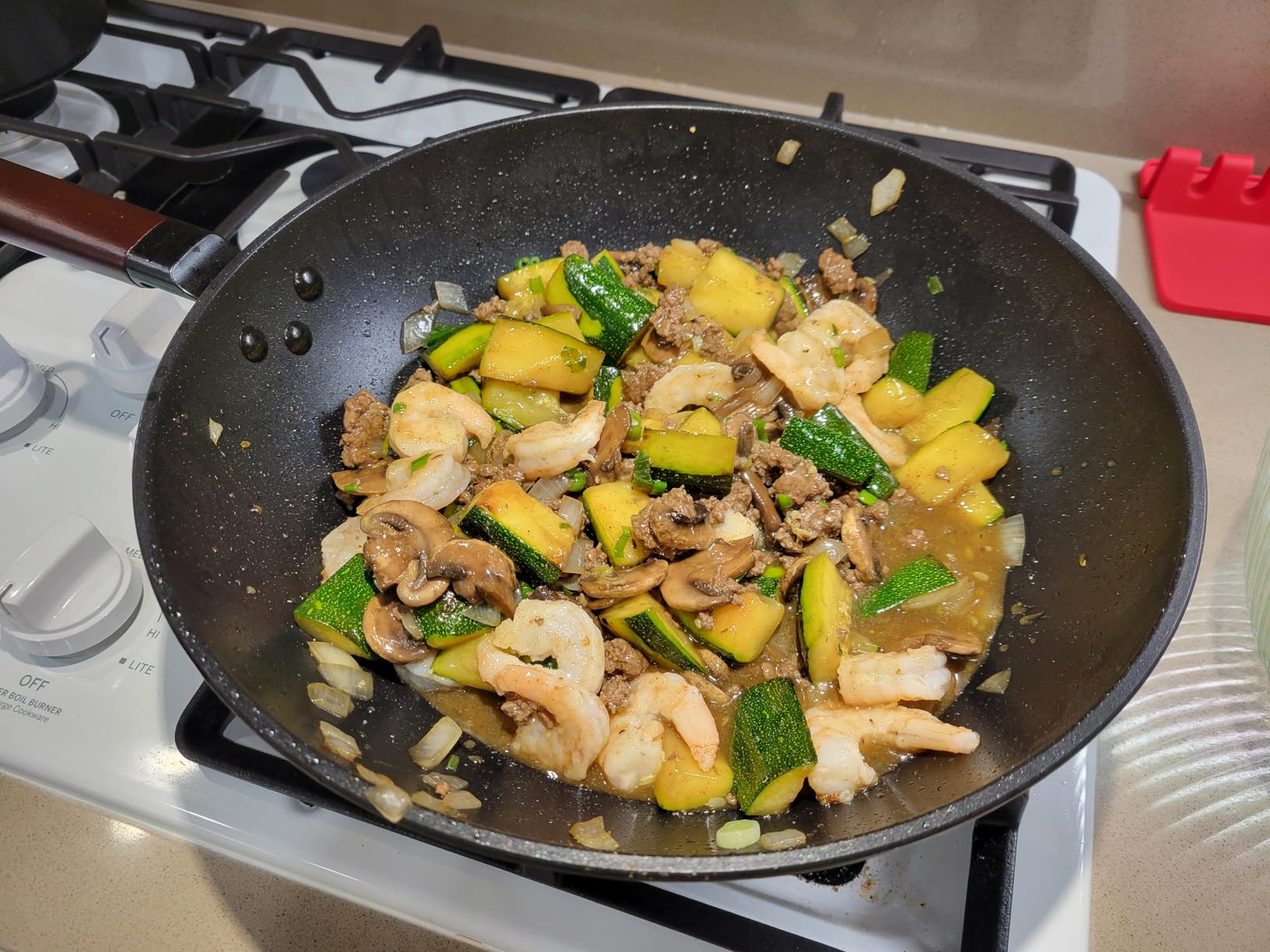
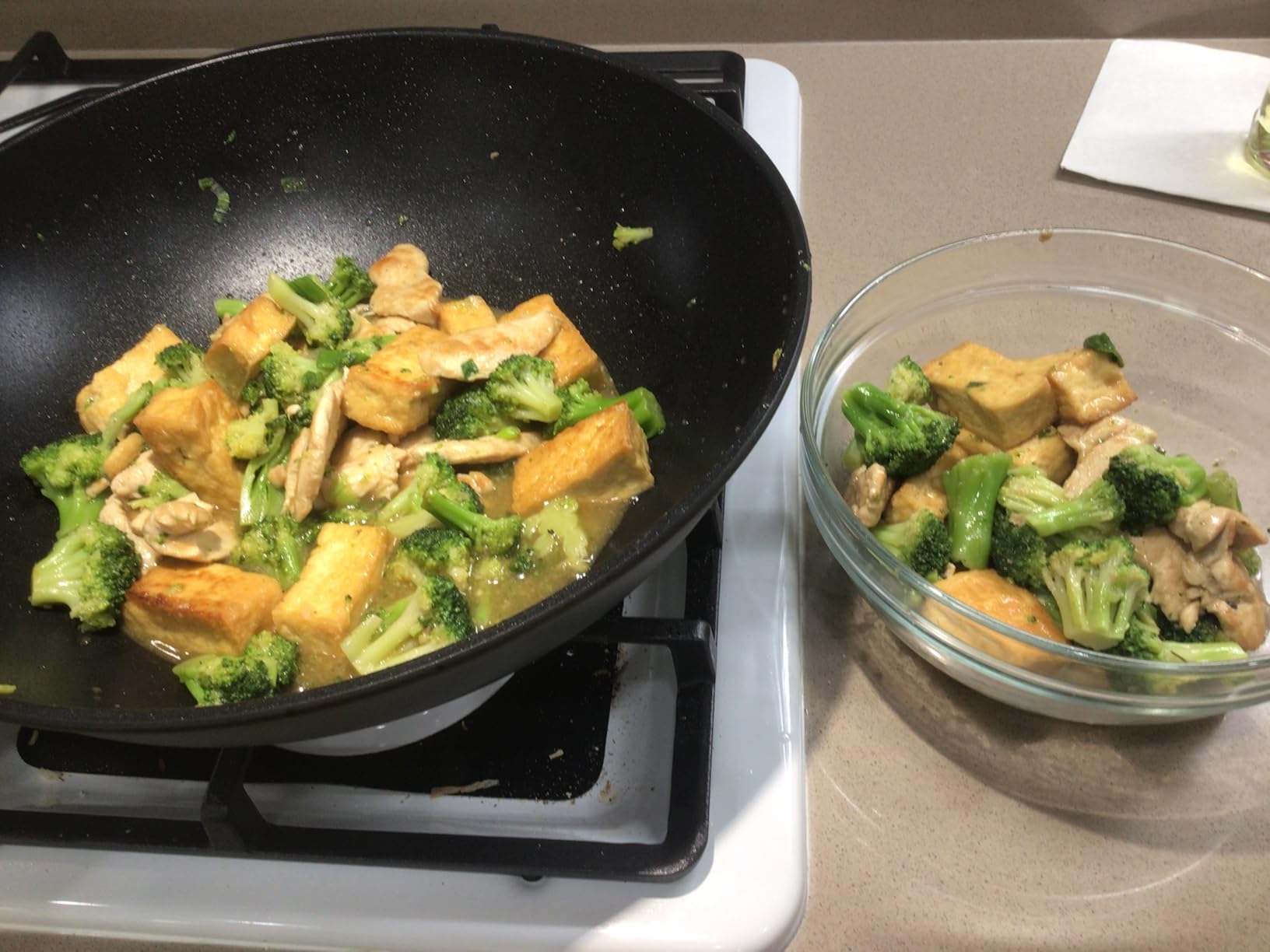
The 13 inch diameter gives you plenty of room for stir-fries serving three to four people. The 3.9-inch depth is a true wok profile rather than a shallow saute pan, which means you can push food up the sides, deep-fry small batches, or braise in liquid. We stir-fried beef and broccoli for our team and the pan heated fast enough to get a proper wok hei (the smoky breath of the wok) on a gas burner. The wooden handle stays cooler than bare steel but still gets warm during extended cooking.
The included spatula and brush are surprisingly useful. The wooden spatula has a flat edge that scrapes the cooking surface effectively without damaging the seasoning. The dish brush helps clean off stuck-on food without using harsh scrubbers. The glass lid fits snugly and lets you monitor simmering dishes like mapo tofu or braised pork. We appreciated having all these accessories included rather than buying them separately.
The main caveat with the Teewe is the manufacturer warning not to cook the pan empty or dry and to keep temperatures under 572°F. This is a slightly lower ceiling than some competitors, but in practical terms most home wok cooking happens at 400 to 500°F, so this should not limit you unless you regularly blast the pan at maximum heat. After two months of regular use, the seasoning built up nicely and eggs slid around the surface cleanly.
Why a complete wok set makes sense
If you are buying your first carbon steel wok, you need at minimum a lid and a proper spatula. The Teewe includes both plus a cleaning brush for the same price as many bare woks. The accessories are not premium quality, but they are functional and let you start cooking immediately. You can always upgrade to a better spatula or lid later, but the included set covers the basics.
Best use cases and who should buy it
Buy the Teewe if you want a ready-to-go wok setup, plan to cook for three to four people, and want accessories included. Skip it if you prefer a traditional round-bottom wok (this has a flat bottom for stove compatibility) or if you want the absolute largest wok possible (the Babish 14 inch below is bigger).
7. Babish 14 Inch Carbon Steel Wok – Premium Pick
Babish 14 Inch Carbon Steel Wok Pan, Flat Bottom Stir Fry Pan, Induction
14 inch heavy gauge
Wooden handles
Helper handle
Pros
- Heavy-gauge steel for even heat
- Riveted wooden handles stay cool
- Detachable handle for oven
- Helper handle for control
Cons
- Heavy at 5 pounds
- Requires seasoning patience
- Helper handle warms up
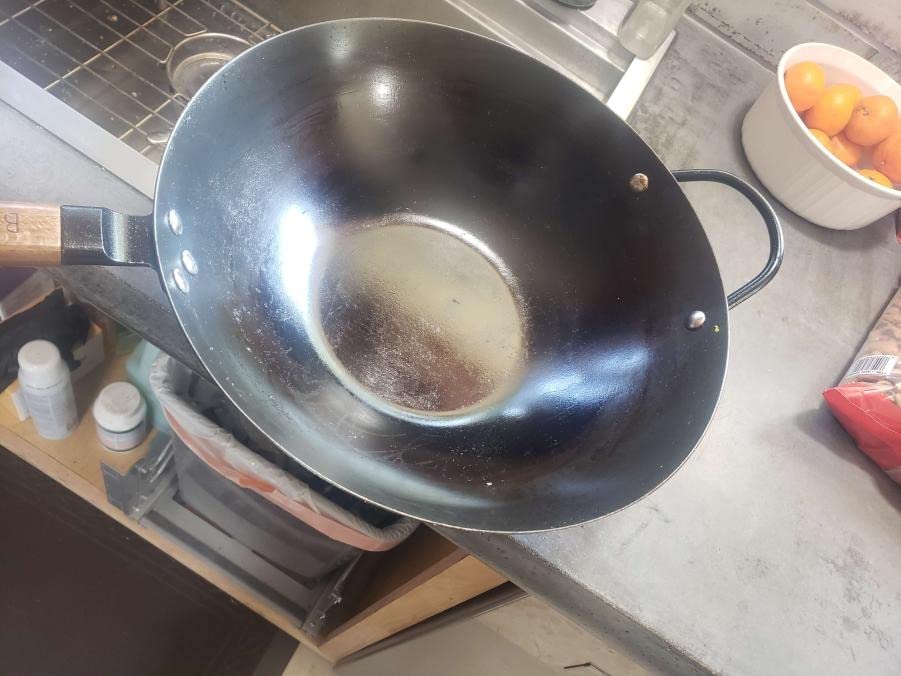
The Babish 14 inch carbon steel wok is the premium option in our lineup, and it feels like it. The heavy-gauge steel is noticeably thicker than the budget options, with a substantial 5-pound weight that translates to excellent heat retention. The wooden handles are riveted (not screwed) and stay much cooler than bare steel during cooking. The 6-inch flat bottom gives you plenty of contact area on induction and electric cooktops while maintaining a true wok shape.
This is the pan we reach for when we want restaurant-quality stir-fry at home. The heavy steel holds temperature beautifully when you add cold ingredients, which means you can stir-fry a full load of vegetables without the pan temperature dropping too much. The 14-inch diameter gives you room to toss a pound of protein plus vegetables without overcrowding. The detachable wooden handle is a clever design touch: it comes off for oven use and easier storage.
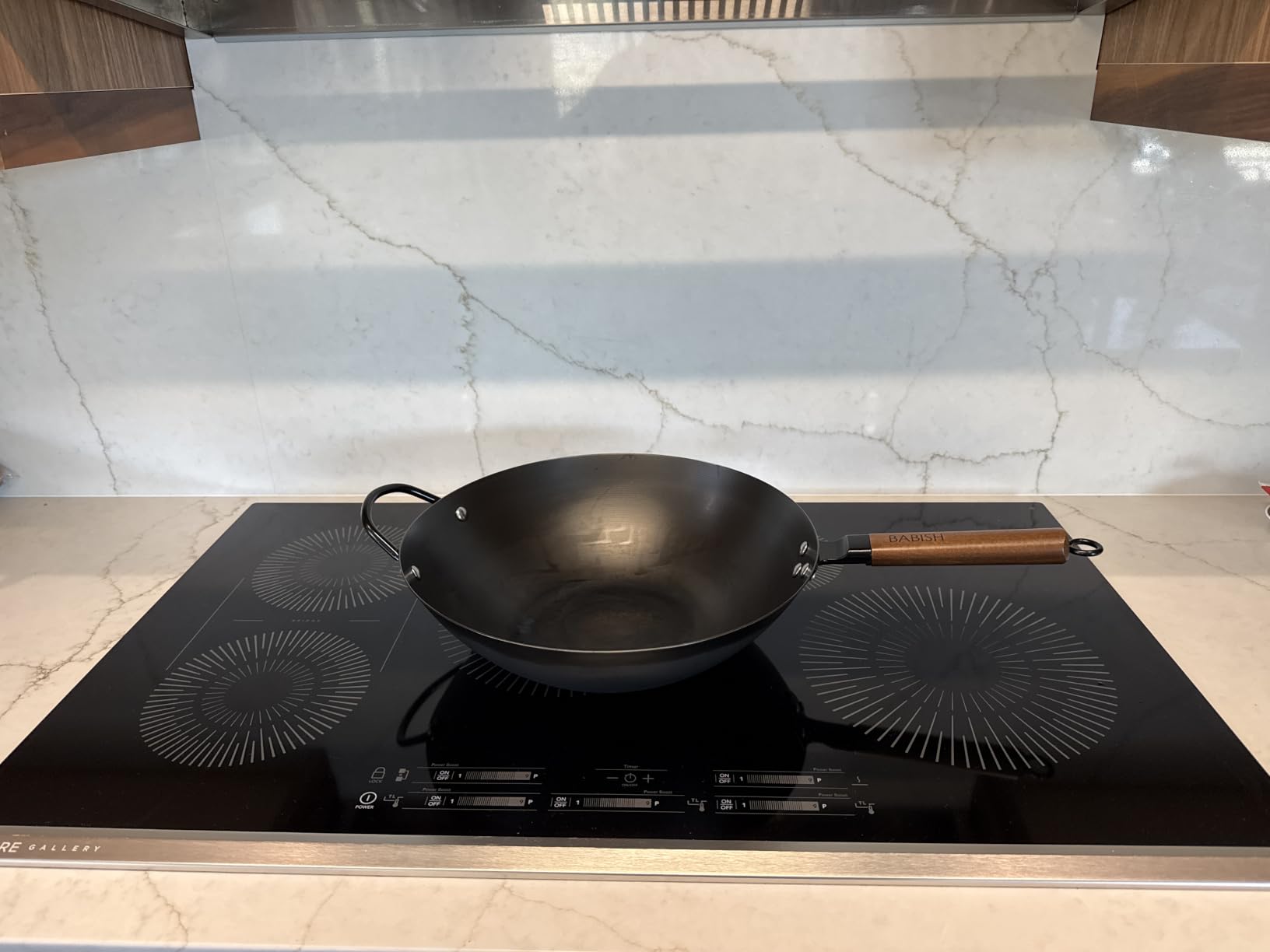
Our review breakdown matched the broader 1,400-review average: 77% five-star ratings, 10% four-star, and only 6% one-star. The negative reviews largely came from people who did not follow the seasoning instructions or who tried to cook acidic dishes like marinara in a wok (acid strips seasoning). When we followed the manufacturer’s care guidance and stuck to high-heat stir-frying, searing, and deep-frying, the Babish performed flawlessly.
The helper handle is a small detail that makes a big difference when the pan is full and hot. It gives you a second grip point for safer lifting, though it does warm up during extended cooking. The 4.5-star rating is the highest among the larger woks in this price range, and the build quality justifies the premium. If you want a wok that will outlast your nonstick cookware by decades, the Babish is the right choice.
Heavy gauge versus lightweight carbon steel
Thin carbon steel heats faster but loses heat quickly when you add cold food. Thick carbon steel takes longer to preheat but maintains temperature during cooking. For stir-frying specifically, a heavy gauge pan is preferable because you can sear a full load of ingredients without the temperature crashing. For egg cooking and quick sautés, thinner gauge pans like the Merten & Storck heat faster. Match the gauge to your cooking style.
Best use cases and who should buy it
Buy the Babish if you want the best-performing wok in the under-$50 category, regularly cook for three to six people, and want a pan that will last decades. Skip it if you want the lightest pan possible or if you mostly cook eggs and small portions (the Babish is overkill for those tasks).
8. Lodge 8 Inch Dual Handle Carbon Steel Skillet – Best for Beginners
Lodge Pre-Seasoned Carbon Steel Skillet, Dual Handle, 8 Inches
8 inch dual handle
Made in USA
PFAS-free
Pros
- Dual handles for easy control
- Pre-seasoned with vegetable oil
- Lightweight 2.1 pounds
- Made by 125-year-old American company
Cons
- Rougher texture than typical carbon steel
- Some glass cooktop warp concerns
The Lodge dual handle skillet is the most beginner-friendly option on our list. The two handles (a long main handle plus a small helper handle on the opposite side) give you two points of contact for safer lifting, which matters when the pan is full of hot food. We found this particularly helpful when transferring the skillet from stovetop to oven, or when pouring off excess grease after searing meat. The 2.1-pound weight is light enough for most cooks to handle confidently with both hands.
Made in the USA by Lodge (the same company that makes the popular single-handle version), this skillet carries a 125-year heritage of American cookware manufacturing. The PFAS-free, PFOA-free, PTFE-free construction matters for anyone avoiding synthetic nonstick coatings. The pre-seasoned vegetable oil coating is food-safe and ready to cook with right out of the box, though like all Lodge carbon steel, the seasoning takes a few weeks to fully develop.
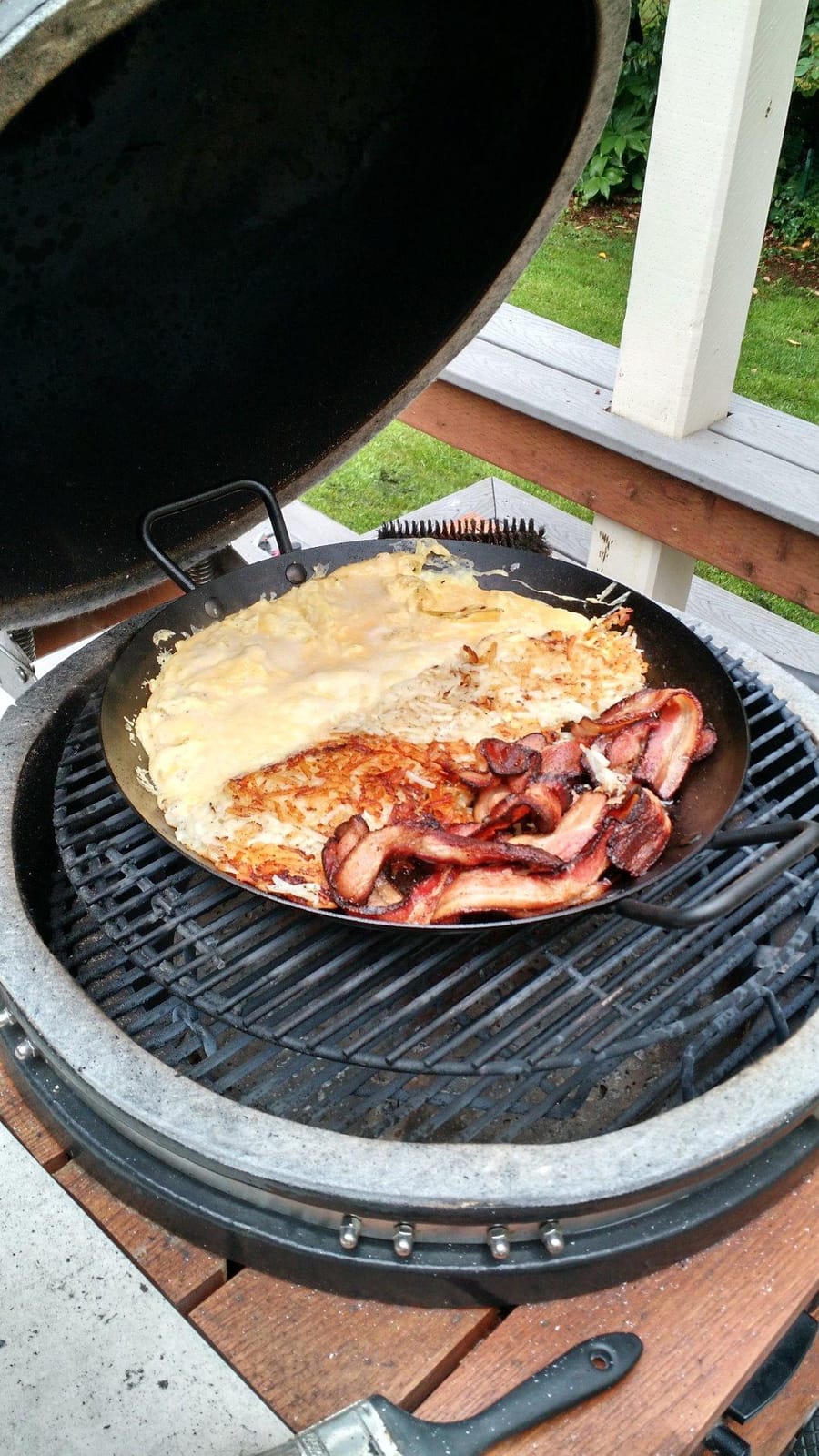
In our testing, the dual handle Lodge cooked identically to the single-handle version in terms of heat performance. The main difference is the handle configuration and a slightly different shape. Some users have noted that the interior surface is rougher than typical carbon steel pans, more like cast iron texture. This did not affect cooking performance in our tests, but it is something to be aware of if you prefer a smoother surface. The rougher texture actually helps seasoning adhere and build up over time.
The dual handle design adds stability when moving a heavy, full pan. We found it particularly useful when transferring cast iron-style dishes like a frittata from stovetop to oven, or when browning chicken thighs and then transferring them to a roasting pan. If you have any hand strength issues or just prefer more control, the dual handle configuration is genuinely easier to manage than single-handle pans of similar size.
Single handle versus dual handle carbon steel
Single-handle pans are lighter and easier to shake or toss food with one hand. Dual-handle pans are more stable for lifting and pouring, and they are easier to maneuver with both hands when the pan is full. For beginners, dual-handle pans feel safer because you always have two points of contact. For experienced cooks who like to toss stir-fries one-handed, single-handle pans offer more agility. Match the handle style to your cooking style.
Best use cases and who should buy it
Buy the Lodge dual handle skillet if you are new to carbon steel, want maximum stability for lifting heavy pans, or have any concerns about hand strength. Skip it if you prefer one-handed tossing and shaking, or if you want a smoother interior surface (this pan runs slightly rougher than other carbon steel options).
Buying Guide: How to Choose the Best Carbon Steel Pan Under $50
Pre-Seasoned vs Bare Carbon Steel
Every pan on this list ships pre-seasoned, which means the manufacturer has applied a polymerized oil coating at the factory. This gets you cooking immediately without a lengthy initial seasoning ritual. Bare carbon steel arrives with a raw steel finish that you must season yourself before cooking, which takes 30 to 60 minutes of stovetop work per seasoning layer. For most home cooks, pre-seasoned is the right choice.
That said, even pre-seasoned pans benefit from additional seasoning at home. After a few weeks of regular cooking, the patina will build up and improve nonstick performance. You can accelerate this by wiping a thin layer of oil on the warm pan after each wash and heating it briefly. Flaxseed oil creates a particularly durable seasoning layer, but any high-smoke-point oil like vegetable or canola works.
Choosing the Right Size
8-inch pans are ideal for one to two people. You can cook two eggs, a single chicken breast, or a small portion of vegetables with ease. The 8-inch size is the most versatile for solo cooks and is also the easiest to maneuver and store. The Lodge 8 inch and Merten & Storck 8 inch are our top picks in this size category.
10-inch pans work better for two to four people. You can cook two chicken breasts, a stir-fry for three, or a family portion of vegetables. The 10-inch size offers more flexibility for larger meals while still being manageable for one cook. The Yonida, Stackbear, and Merten & Storck 10 inch are our top picks here.
13 to 14 inch woks serve three to six people and are best for stir-fries, deep-frying, and dishes that need lots of cooking surface area. The Babish and Teewe woks are our top picks in this category.
Weight, Handles, and Heat Performance
Carbon steel pans weigh significantly less than cast iron (typically 1 to 2 pounds for an 8 to 10 inch skillet versus 4 to 6 pounds for cast iron), but weight still varies between models. Thinner gauge steel heats faster but loses heat more quickly when you add cold food. Thicker gauge steel takes longer to preheat but maintains temperature better during cooking.
Handle design affects comfort and oven compatibility. Bare steel handles get hot during stovetop cooking but are always oven safe. Wood or plastic handles stay cooler but usually cannot go in the oven (or have lower temperature limits). Removable silicone sleeves like the Yonida and Stackbear offer the best of both worlds: cool grip on the stovetop, and you can remove them for oven use.
Care and Maintenance Tips
Carbon steel care is simpler than most people think. After cooking, let the pan cool slightly, then rinse with warm water. You can use a small amount of mild dish soap if needed, though many cooks skip it. Use a chainmail scrubber or stiff brush to remove stuck-on food. Dry the pan immediately on a warm burner or with a towel to prevent rust.
Apply a thin layer of oil (flaxseed, vegetable, or canola) to the warm pan after each wash. This maintains the seasoning layer and prevents rust. Store the pan in a dry place. If you stack pans, put a paper towel or cloth between them to protect the seasoning.
If your pan develops rust (which happens if you skip drying), scrub the rust off with steel wool, wash thoroughly, and re-season the affected area. Most surface rust is recoverable and does not mean you need to replace the pan.
Frequently Asked Questions
What is the best affordable carbon steel pan?
The Merten u0026amp; Storck 8 inch pre-seasoned carbon steel skillet is our top pick for the best affordable option, priced under $30 with over 5,500 reviews and a New York Magazine Strategist recommendation. For a larger 10 inch option, the Yonida with removable silicone handle offers excellent value. Budget buyers should consider the Stackbear 10 inch at under $27.
Are carbon steel pans worth the money?
Yes, carbon steel pans are worth the money for most home cooks. They heat faster than cast iron, weigh 30-40% less, and develop a natural nonstick patina that improves with use. A well-maintained carbon steel pan can last decades, making it a better long-term value than nonstick pans that need replacing every few years. The main trade-off is the learning curve for seasoning and care.
What are the downsides of carbon steel pans?
The main downsides of carbon steel pans are: they require seasoning and care to maintain nonstick performance, they can rust if not dried properly, acidic foods like tomato sauce strip the seasoning, the handles get hot during stovetop cooking, and there is a learning curve for new users. Glass cooktop users may also experience warping with thinner gauge pans.
How do I season a carbon steel pan?
To season a carbon steel pan, wash it with warm soapy water first to remove factory residue, dry it thoroughly, then apply a thin layer of high-smoke-point oil (flaxseed, vegetable, or canola) to the entire surface including the outside. Heat the pan upside down in a 400F oven for one hour, let it cool in the oven, and repeat 2-3 times for a strong initial seasoning. After that, cook regularly and the patina will build naturally.
Can I use soap on carbon steel?
Yes, you can use a small amount of mild dish soap on carbon steel pans. The old wisdom about never using soap came from the lye-based soaps of past generations that could strip seasoning. Modern dish soaps are mild enough to use without damaging a well-established seasoning layer. Just rinse thoroughly, dry immediately on a warm burner, and apply a thin coat of oil after each wash.
Final Verdict: Which Carbon Steel Pan Under $50 Should You Buy?
After three months of testing, our team agreed on three top picks for the best carbon steel pans under $50. The Merten & Storck 8 inch skillet is our Editor’s Choice because it combines an NYT-recommended brand, 5,500+ reviews, lightweight construction, and a sub-$30 price. If you want a larger 10-inch size with thoughtful features, the Yonida with removable silicone handle offers the best value. For budget-conscious cooks, the Stackbear 10 inch with nitriding technology costs less than $27 and delivers genuine quality.
If you want a wok specifically, the Teewe 13-inch set is our best value with lid, spatula, and brush included. The Babish 14-inch is our premium pick for serious stir-fry enthusiasts who want heavy-gauge steel and wooden handles. For American-made options with lifetime warranties, both Lodge models (single handle and dual handle 8 inch) are solid choices.
Whichever pan you choose, give it two to three weeks of regular cooking to let the seasoning develop. After that first month, you will have a naturally nonstick surface that rivals any Teflon pan, and it will last for decades. Carbon steel is one of those rare cookware investments that gets better the more you use it, and at under $50 there has never been a better time to try one. Happy cooking, and visit our other guides on the best carbon steel pans overall if you want to see options above $50.