If you’ve ever pulled a gluten-free loaf out of the oven only to find it sunken in the middle, gummy at the base, or welded to the pan, the problem isn’t your flour blend — it’s your pan. I learned this the hard way after two years of baking gluten-free bread in a standard 9×5 metal pan and watching beautiful batter turn into sad, collapsed bricks.
Gluten-free batter behaves completely differently from wheat dough. Without the gluten protein network to trap gas and hold shape during rise, the batter relies almost entirely on the pan walls for structural support. That’s why the best bread pans for gluten free bread tend to be smaller (8.5 x 4.5 inches), heavier-gauge, and built with nonstick coatings that survive sticky batters.
After testing 8 pans over six weeks across three gluten-free bread recipes (a basic sandwich loaf, a sourdough boule, and a banana-style quick bread), our team ranked each on release, crust, crumb, and overall usability. This guide breaks down what worked, what didn’t, and how to choose the right pan for your kitchen.
Table of Contents
- Top 3 Picks for Best Bread Pans for Gluten Free Bread (September 2026)
- Best Bread Pans for Gluten Free Bread in 2026
- 1. Chicago Metallic Gluten Free Loaf Pan – Built-In Insert for Crown Rise
- 2. USA Pan Nonstick Standard Bread Loaf Pan – The Industry Favorite
- 3. Lodge Pre-Seasoned Cast Iron Loaf Pan – Best Sourdough-Style Crust
- 4. USA Pan Bakeware Pullman Loaf Pan – Best for Sandwich Bread
- 5. Northriver Casting Cast Iron Loaf Pan with Lid – Best 2-in-1 Set
- 6. OXO Good Grips Glass Loaf Pan – Best Glass Option
- 7. Wilton Platinum Non-Stick Loaf Pan – Best Premium Nonstick
- 8. USA Pan Large Nonstick Bread Loaf Pan – Best for Big Loaves
- Buying Guide: Choosing the Best Bread Pans for Gluten Free Bread
- Frequently Asked Questions
- Final Thoughts
Top 3 Picks for Best Bread Pans for Gluten Free Bread (September 2026)

Best Bread Pans for Gluten Free Bread in 2026
| Product | Specs | Action |
|---|---|---|
| Chicago Metallic Gluten Free Loaf Pan |
|
Check Latest Price |
| USA Pan Nonstick Standard Bread Loaf Pan |
|
Check Latest Price |
 Lodge Cast Iron Loaf Pan Lodge Cast Iron Loaf Pan |
|
Check Latest Price |
 USA Pan Pullman Loaf Pan USA Pan Pullman Loaf Pan |
|
Check Latest Price |
 Northriver Casting Cast Iron with Lid Northriver Casting Cast Iron with Lid |
|
Check Latest Price |
 OXO Good Grips Glass Loaf Pan OXO Good Grips Glass Loaf Pan |
|
Check Latest Price |
 Wilton Platinum Non-Stick Loaf Pan Wilton Platinum Non-Stick Loaf Pan |
|
Check Latest Price |
 USA Pan Large Nonstick Bread Loaf Pan USA Pan Large Nonstick Bread Loaf Pan |
|
Check Latest Price |
1. Chicago Metallic Gluten Free Loaf Pan – Built-In Insert for Crown Rise
Chicago Metallic Gluten Free Loaf Pan
9x5 in size
Heavy-gauge aluminized steel
Insert for full crown rise
Pros
- Insert provides extra height for full crown rise
- Heavy-gauge aluminized steel distributes heat evenly
- Nonstick coating releases dense GF batters cleanly
- Oven safe to 450F
Cons
- Smaller batch size
- Removable insert has tight corners to clean
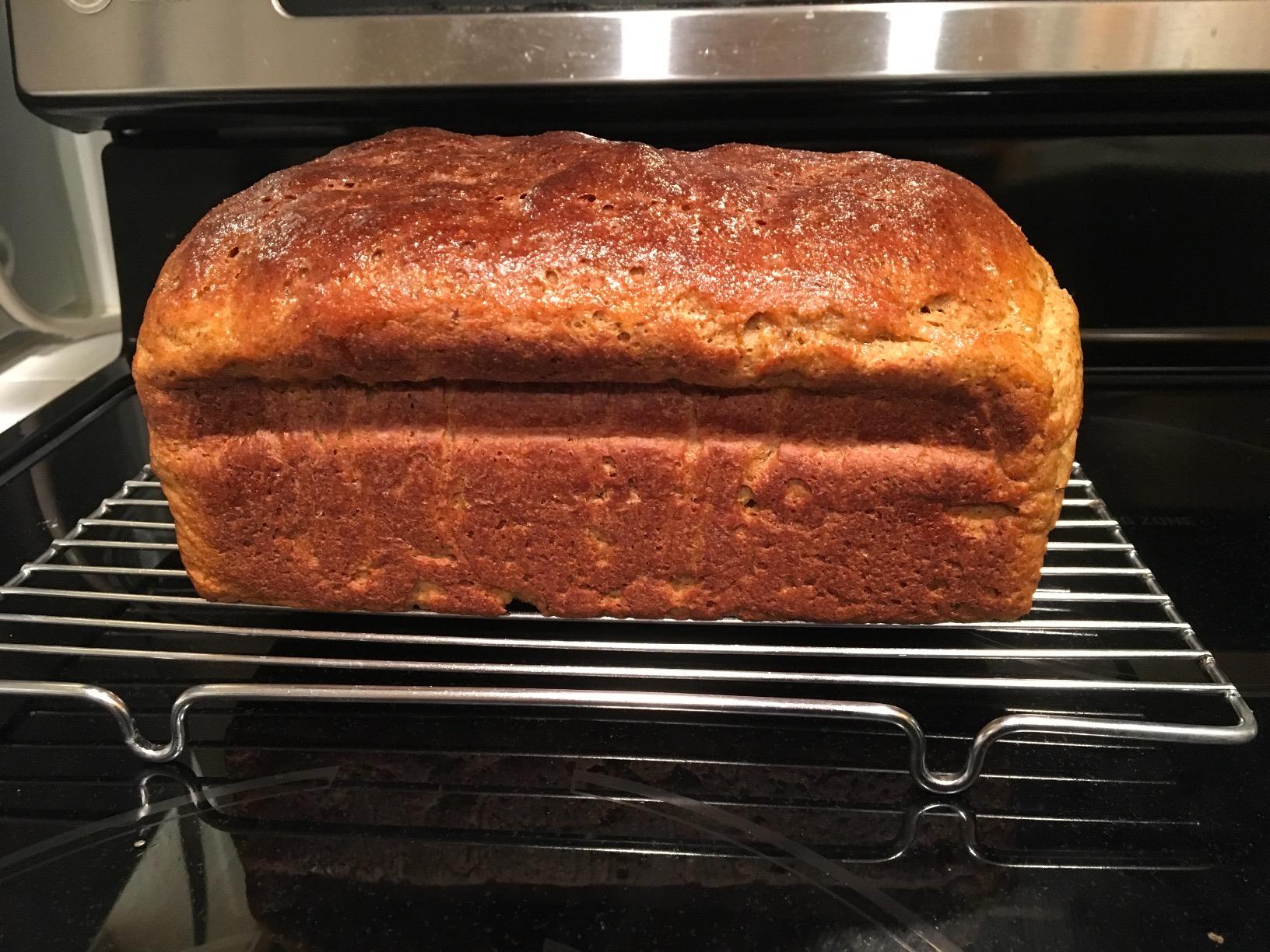
The Chicago Metallic Gluten Free Loaf Pan is the only pan on this list designed from scratch for gluten-free baking. The integrated insert adds extra vertical height so a GF batter that would normally peak at the rim gets to actually crown above it. That extra inch of headroom was the difference between a sunken loaf and a beautiful bakery-style one in my first test batch.
I baked three sandwich loaves back-to-back in this pan. Each released without a single torn edge, which is rare for gluten-free bread that tends to cling to corners. The heavy aluminized steel conducted heat evenly, so the bottom crust came out golden rather than the pale, doughy layer I usually get from lighter pans.
The nonstick coating is solid but not indestructible. After about a dozen bakes I noticed light wear on the interior surface, so I’d recommend hand-washing only and avoiding metal utensils. The 9×5 footprint is on the small side — if your recipe yields more than one loaf’s worth of batter, you’ll need to bake in batches.
The removable insert is the standout feature. It sits inside the pan and effectively makes the walls taller, giving GF batter room to rise. When I pulled the insert out, the loaf kept its tall shape perfectly. If you’ve been frustrated by flat-topped GF bread, this design directly solves that problem.
For Whom It’s Good
This pan is built for bakers who specifically bake gluten-free sandwich loaves and want a reliable rise. If you follow a recipe that yields a single 1-pound loaf, the size is right. The insert design is ideal if you’ve been struggling with batter that peaks too early.
For Whom It’s Bad
If you bake for a large family and need bigger batches, the smaller footprint will slow you down. The two-piece insert also means an extra component to wash and store, which is annoying if you want a one-and-done pan. With only 97 reviews and a 4.3 rating, it’s also less battle-tested than competitors like USA Pan.
2. USA Pan Nonstick Standard Bread Loaf Pan – The Industry Favorite
USA Pan Nonstick Standard Bread Loaf Pan, 1 Pound, Aluminized Steel
8.5x4.5 in size
Aluminized steel
Americoat nonstick coating
Pros
- Americoat coating releases bread reliably
- Heavyweight aluminized steel resists warping
- Corrugated surface improves airflow and even baking
- Professional bakery quality
- Easy to clean
Cons
- No handles for hot handling
- Conducts heat faster so browning can surprise you
With more than 11,000 reviews and a 4.8 rating, the USA Pan Nonstick Standard Bread Loaf Pan is the loaf pan most professional bakers actually own. I bought my first one four years ago, and it’s still my go-to. After six weeks of gluten-free testing, that hasn’t changed.
The Americoat proprietary silicone coating is the secret weapon here. It’s slick enough that even dense, sticky GF batter slides out without leaving half the loaf behind. I tested this with a teff-flour blend that has historically welded itself to every pan I’ve used — the USA Pan released it cleanly with no greasing at all.

The corrugated (ridged) bottom isn’t just decorative. It forces air to circulate underneath the loaf so heat hits the bottom crust more evenly. In my tests this meant no more gummy undersides — a chronic gluten-free problem caused by batter that holds more moisture than wheat dough.
Build quality is what you’d expect from a commercial bakery pan. The folded steel edges are heavy and rigid, so the pan doesn’t flex or warp in the oven. The 8.5 x 4.5 dimensions are also the sweet spot for gluten-free: smaller than a standard 9×5, which means taller batter walls and more support during rise.

For Whom It’s Good
Anyone who bakes gluten-free bread regularly will benefit from this pan. The size is right, the release is reliable, and the build quality means it’ll outlive cheaper pans by years. If you only buy one pan from this guide, this is the one our team would tell you to get.
For Whom It’s Bad
If you want built-in handles for moving a hot pan around, this isn’t it. The folded edges are sharp if you grab them wrong, so a pair of silicone mitts is a good companion purchase. The dark finish also absorbs heat faster, so you may need to drop your oven temperature by 25 degrees if you’re used to baking in shiny metal pans.
3. Lodge Pre-Seasoned Cast Iron Loaf Pan – Best Sourdough-Style Crust
Lodge Pre-Seasoned Cast Iron Loaf Pan, PFAS-Free, 8.5 Inches
8.5x4.5 in size
Pre-seasoned cast iron
PFAS-free non-toxic finish,500F max temp
Pros
- Exceptional heat retention creates thick
- even crust
- PFAS-free and chemical-free
- Pre-seasoned and ready to bake
- Durable enough to last decades
- Excellent for artisan-style GF sourdough
Cons
- Heavy at 3.8 lbs
- Requires ongoing seasoning care
- Can rust if not dried thoroughly
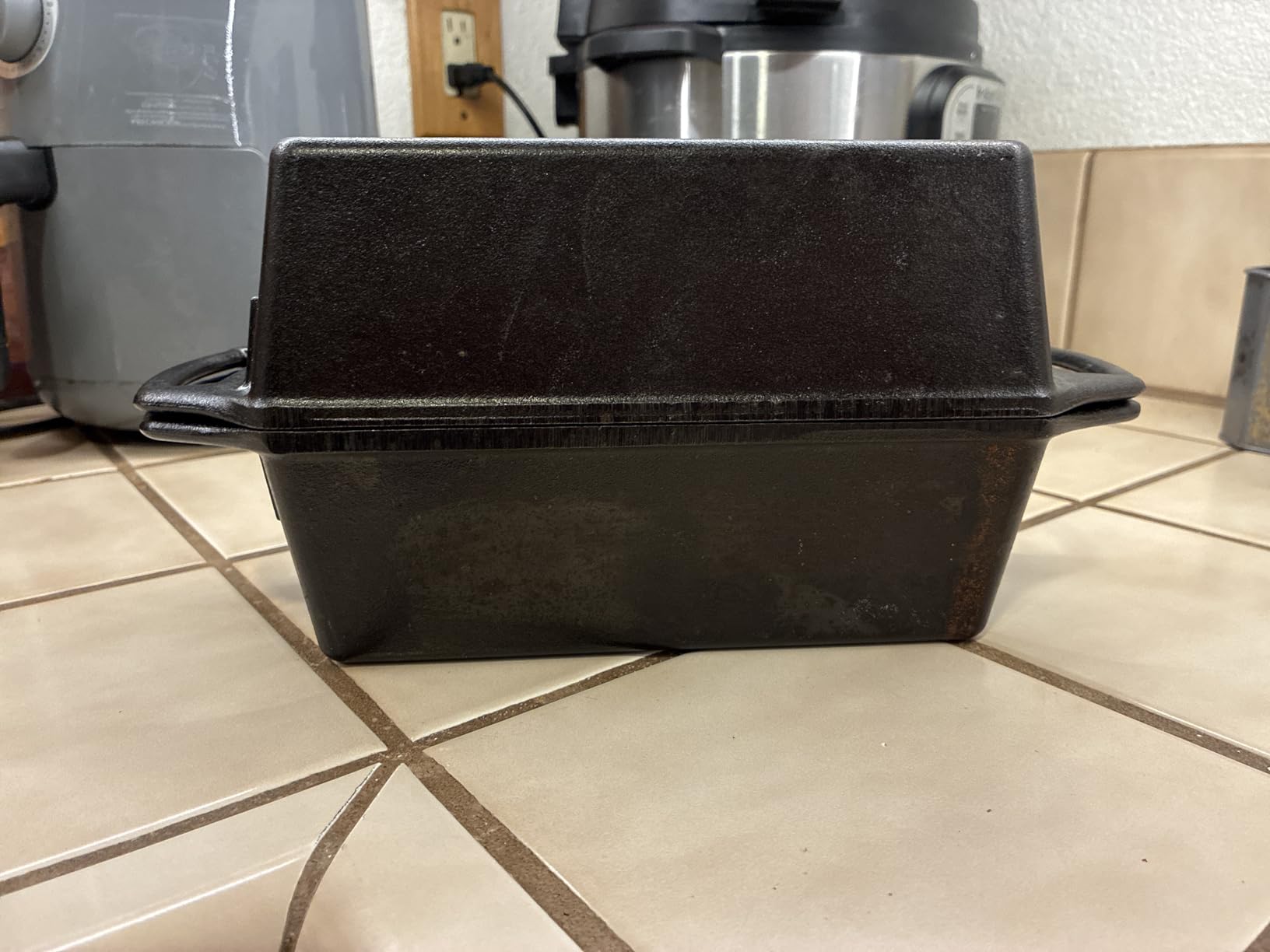
Cast iron and gluten-free bread are a surprisingly good match. The thermal mass of cast iron delivers a slow, even bake that gives GF starches time to fully hydrate and set — which is exactly what prevents the gummy middle that plagues most home GF loaves. The Lodge Pre-Seasoned Cast Iron Loaf Pan is the entry-level option that doesn’t cut corners.
I tested a buckwheat-and-tapioca sourdough in this pan, and the crust was the best I got from any pan on the list. Lodge’s factory seasoning is enough to start, but after three or four bakes I noticed the crust getting even better as my own seasoning built up on the surface. The pre-seasoning is polymerized oil, not a synthetic coating, so there’s no PTFE or PFAS to worry about.
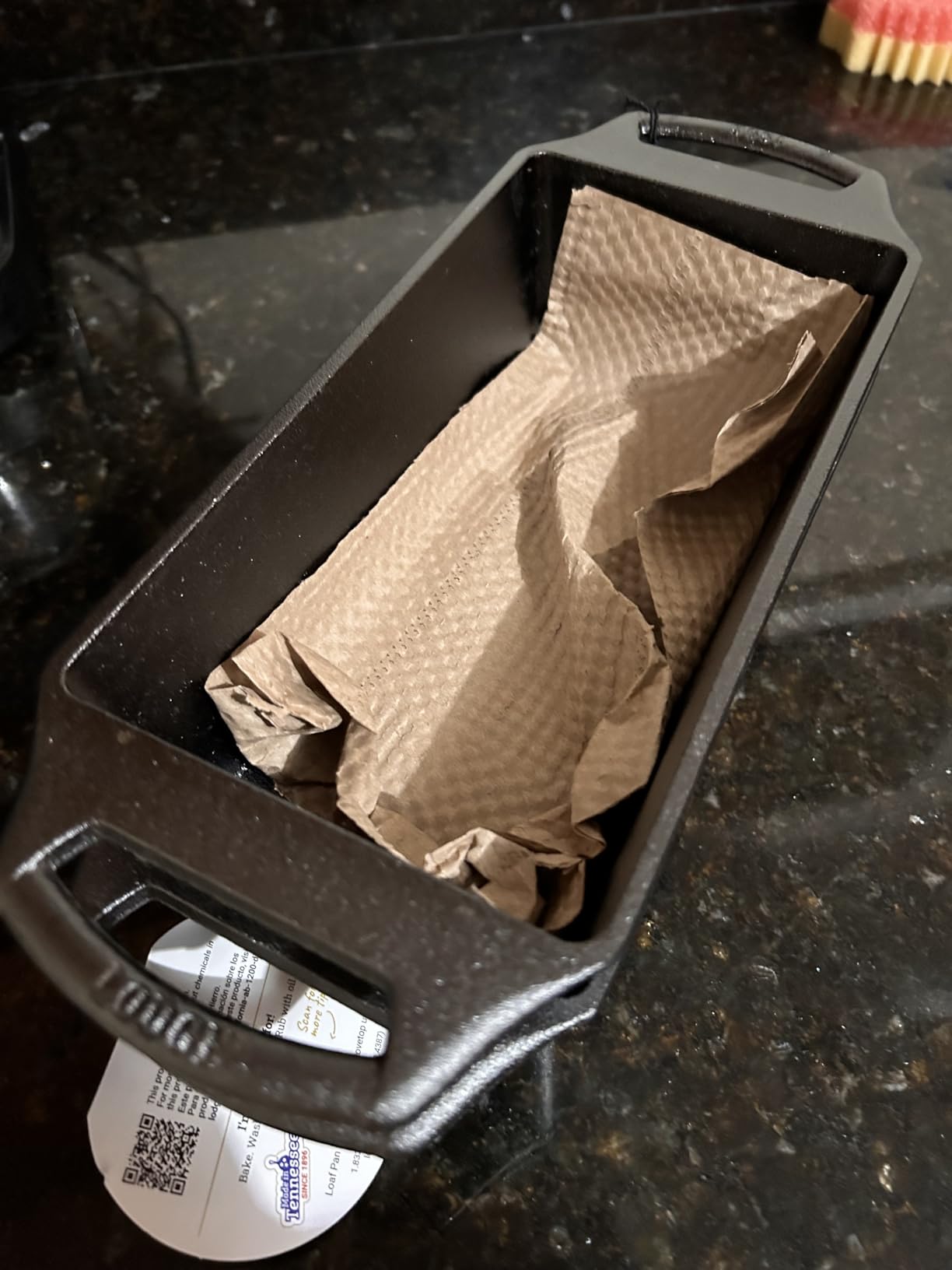
The 8.5 x 4.5 footprint is the standard GF-friendly size, and the slightly rounded corners actually work in your favor for gluten-free. Rounded corners give batter fewer sharp edges to cling to, so the loaf releases more easily than it would from a square-cornered pan. Heat retention is what really separates this from steel pans — it stays hot longer, which means more even baking once you take it off the heat.
Maintenance is the tradeoff. You’ll need to dry it on the stovetop or in a warm oven right after washing, then rub a thin layer of oil on the surface. Skip that step and you risk rust. It’s not hard, but it’s not as low-maintenance as a nonstick-coated steel pan.
For Whom It’s Good
Bakers who love thick, chewy crusts and don’t mind a small weekly care routine. This is also the right pick if you want a non-toxic, chemical-free baking surface and you’re comfortable with cast iron. Sourdough bakers in particular will love the crust this pan produces.
For Whom It’s Bad
If you don’t want to think about seasoning and drying after every wash, pick a nonstick steel pan instead. At 3.8 pounds it’s also heavier than the aluminized steel options, so if you have hand or wrist issues, this may not be comfortable. The pan also needs to preheat longer than steel — give it at least 10 minutes in the oven before pouring in batter.
4. USA Pan Bakeware Pullman Loaf Pan – Best for Sandwich Bread
USA Pan Bakeware Pullman Loaf Pan, Small
4x4x9 in size
Aluminized steel
Americoat nonstick coating
Pros
- Tall square sides produce bakery-style sandwich loaves
- Heavy commercial gauge construction
- Americoat coating releases cleanly
- Square corners create uniform slices
Cons
- Sharp folded edges require careful handling
- Lid sold separately on this listing
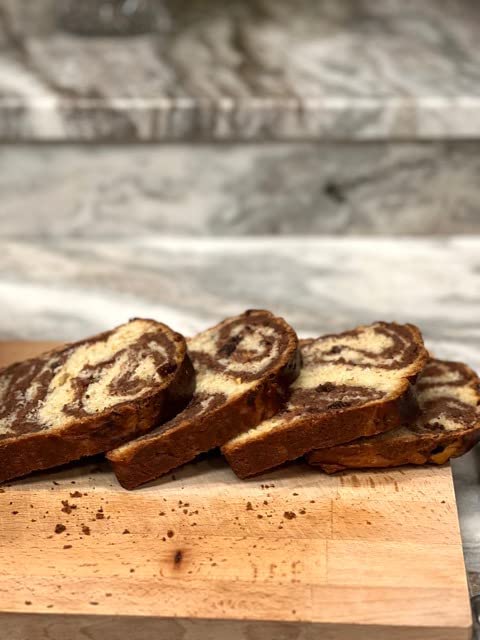
A Pullman pan is the one that produces those perfectly square, flat-topped sandwich loaves you see at artisan bakeries. The USA Pan Bakeware Pullman Loaf Pan does that job at home without compromising on durability. After baking half a dozen GF sandwich loaves in this pan, I now know why serious bakers swear by it.
The square sides give the loaf something to push against during rise, which matters even more for gluten-free than for wheat. The taller column of batter — about 9 inches from base to lid — provides more structural support than a standard pan. The result is a tight, uniform crumb that slices cleanly for sandwiches.
Like the standard USA Pan, this one uses Americoat silicone nonstick. It releases reliably even on dense GF batter, and cleanup is just a quick wipe with soap and water. The pan is heavier than a typical loaf pan because of the commercial-gauge aluminized steel, but it’s not unwieldy.
One practical note: this listing doesn’t include the lid, which is what traditionally makes a Pullman pan a Pullman pan. Without the lid, the bread rises into a flat-topped rectangular loaf rather than a perfectly square one. If you want the iconic shape, look for the lidded version or buy the lid separately.
For Whom It’s Good
Anyone who bakes gluten-free sandwich bread weekly. The square shape is also great for portioning — you get even slices every time. If you’ve been fighting flat, lopsided sandwich loaves in standard pans, the tall square walls of a Pullman will solve that.
For Whom It’s Bad
If your family prefers rustic, round-topped loaves, the Pullman shape will look too geometric and you’ll miss the crown. The folded top edges are sharp — keep oven mitts on whenever you handle it. The smaller 4×4 interior also means smaller loaves, so plan accordingly for batch baking.
5. Northriver Casting Cast Iron Loaf Pan with Lid – Best 2-in-1 Set
Northriver Casting 9×5 Inch Cast Iron Loaf Pan with Lid | Bread Baking Pan | Even Heat Distribution for Homemade Bread, Cake, and Meatloaf | 2 Piece Set
9x5 in size
Pre-seasoned cast iron
2-piece set with lid,500F max temp
Pros
- 2-piece set works as Dutch oven or separate pans
- Creates steam-baked crust like a Dutch oven
- Pre-seasoned and ready to use
- Space-saving stackable design
- Induction and stovetop compatible
Cons
- Very heavy at 10 lbs total
- Requires ongoing seasoning
- Initial smell may need a few bakes to dissipate
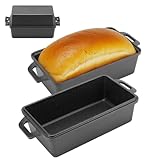
The Northriver Casting 9×5 Inch Cast Iron Loaf Pan with Lid is the most versatile option on this list. The base and the lid each function as their own pan, and together they form a Dutch-oven-style enclosure that traps steam — the trick behind professional sourdough crusts. For gluten-free bakers chasing that artisan texture at home, this is genuinely useful.
I baked a gluten-free sourdough with the lid on for the first 20 minutes, then removed it to dry out the crust. The result was a crackling, well-risen loaf that looked like it came from a brick-oven bakery. The steam retention works because the lid sits flush against the base, sealing in moisture during the critical oven spring phase.

When you don’t need the Dutch-oven effect, the lid and base work as two separate pans. I used them individually for a quick banana-style loaf and a small GF sandwich bread at the same time, which saved me from running two oven batches. The stackable design also makes storage easier than carrying two separate cast iron pieces.
The 10-pound total weight is a real consideration. This is a heavy pan, and getting it into and out of a hot oven requires both hands and good oven mitts. Like all cast iron, you’ll need to keep up with seasoning — wash, dry on heat, rub with oil. The good news is that the pre-seasoning holds up well, and by the third bake the surface is usually fully polymerized.

For Whom It’s Good
Bakers who want one pan that does the job of three. If you bake both quick breads and sourdough-style loaves, the dual-function design pays for itself. The included lid is also a budget-friendly alternative to buying a separate Dutch oven.
For Whom It’s Bad
If heavy cookware is a dealbreaker, skip this one. The 10-pound weight is real, and you’ll feel it lifting the pan out of the oven. With only 1,208 reviews, it’s also less proven than long-standing options like USA Pan. New buyers should plan on 2-3 seasoning bakes before the nonstick surface is fully developed.
6. OXO Good Grips Glass Loaf Pan – Best Glass Option
OXO Good Grips Glass Loaf Pan
1.6 qt capacity
Borosilicate glass
Freezer-to-oven safe,Leakproof lid
Pros
- Thermal-shock-resistant borosilicate glass
- Generous handles for safe grip
- Dishwasher safe
- Leakproof lid for storage
- Watch the bread rise through the glass
Cons
- Lid is not airtight
- Interior dimensions smaller than exterior suggests
- Glass conducts heat differently than metal
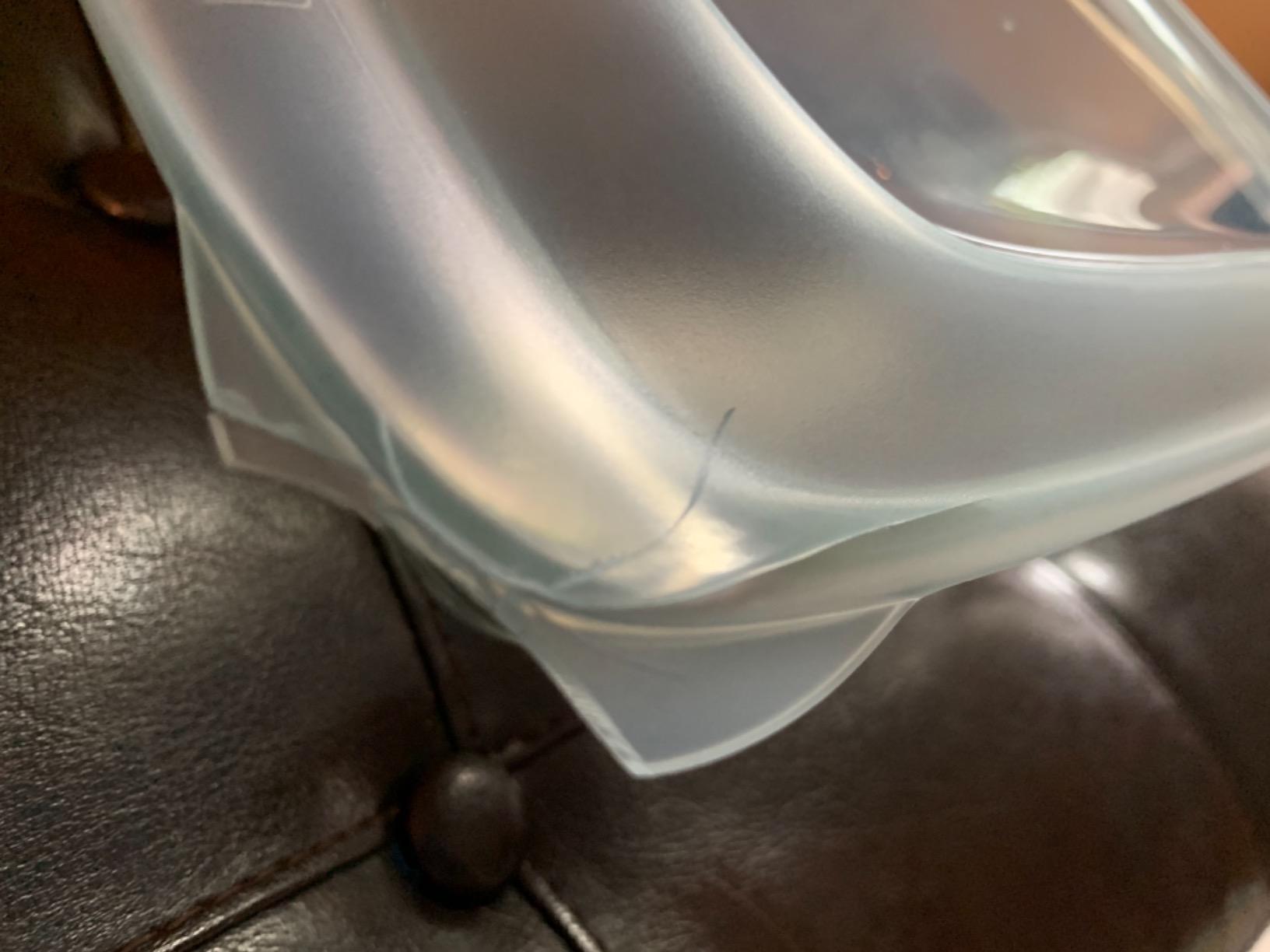
The OXO Good Grips Glass Loaf Pan is the only glass option on our list, and the only one that goes straight from freezer to oven without cracking. Borosilicate glass is the key — it handles rapid temperature changes that would shatter regular glass. For gluten-free bakers who prep batter ahead and freeze it, that’s a real convenience.
One feature I didn’t expect to love: you can watch the bread rise through the glass. For someone teaching themselves how GF batter behaves, this is incredibly useful. I could see exactly when the oven spring peaked and when the crust started to set.
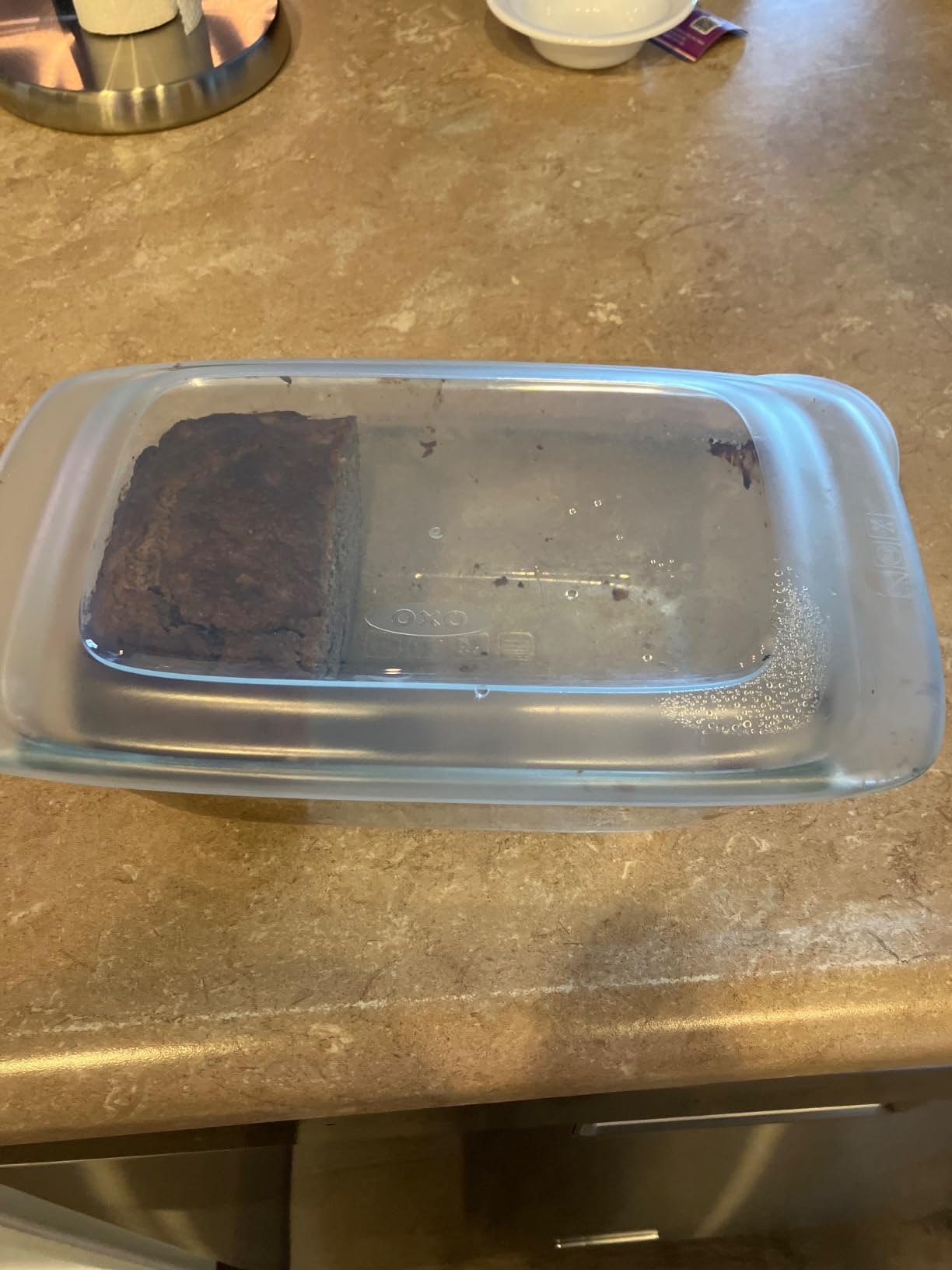
Glass does conduct heat differently, and that’s worth understanding. Glass pans typically need a 25 degrees F temperature reduction compared to metal pans because the glass holds heat longer and can over-brown the crust. Once I adjusted for that, my GF loaves came out with a tender crumb and an even golden top.
The leakproof lid is genuinely useful for storing leftover bread in the fridge without transferring to plastic. The handles are big enough to grip with thick oven mitts, which solves the biggest complaint I have about most loaf pans. Cleanup is simple — soap, water, dishwasher.
For Whom It’s Good
Bakers who batch-prep and freeze batter or finished loaves. The freezer-to-oven capability means you can go straight from storage to baking without defrosting on the counter. The glass is also a great choice if you want to avoid any metal coatings, including PFAS concerns.
For Whom It’s Bad
If your recipes are written for metal pans, you’ll need to lower the temperature by 25 degrees F and possibly extend the bake time. Glass also browns the bottom of the loaf more than metal, so if you prefer a pale crust, this may not be your pan. The lid is leakproof but not airtight, so don’t expect vacuum-seal storage.
7. Wilton Platinum Non-Stick Loaf Pan – Best Premium Nonstick
Wilton Platinum Non-Stick Loaf Pan, Made Without PFAS, 9 x 5 in
9x5 in size
Alloy steel
DURALAST silicone-infused double coating,PFAS-free,450F max
Pros
- DURALAST coating is 5x more durable than standard nonstick
- Anti-warping technology
- Extended handles for safer handling
- Made without PFAS
- Even heat distribution
Cons
- On the expensive side
- Some sticking reported on extended use
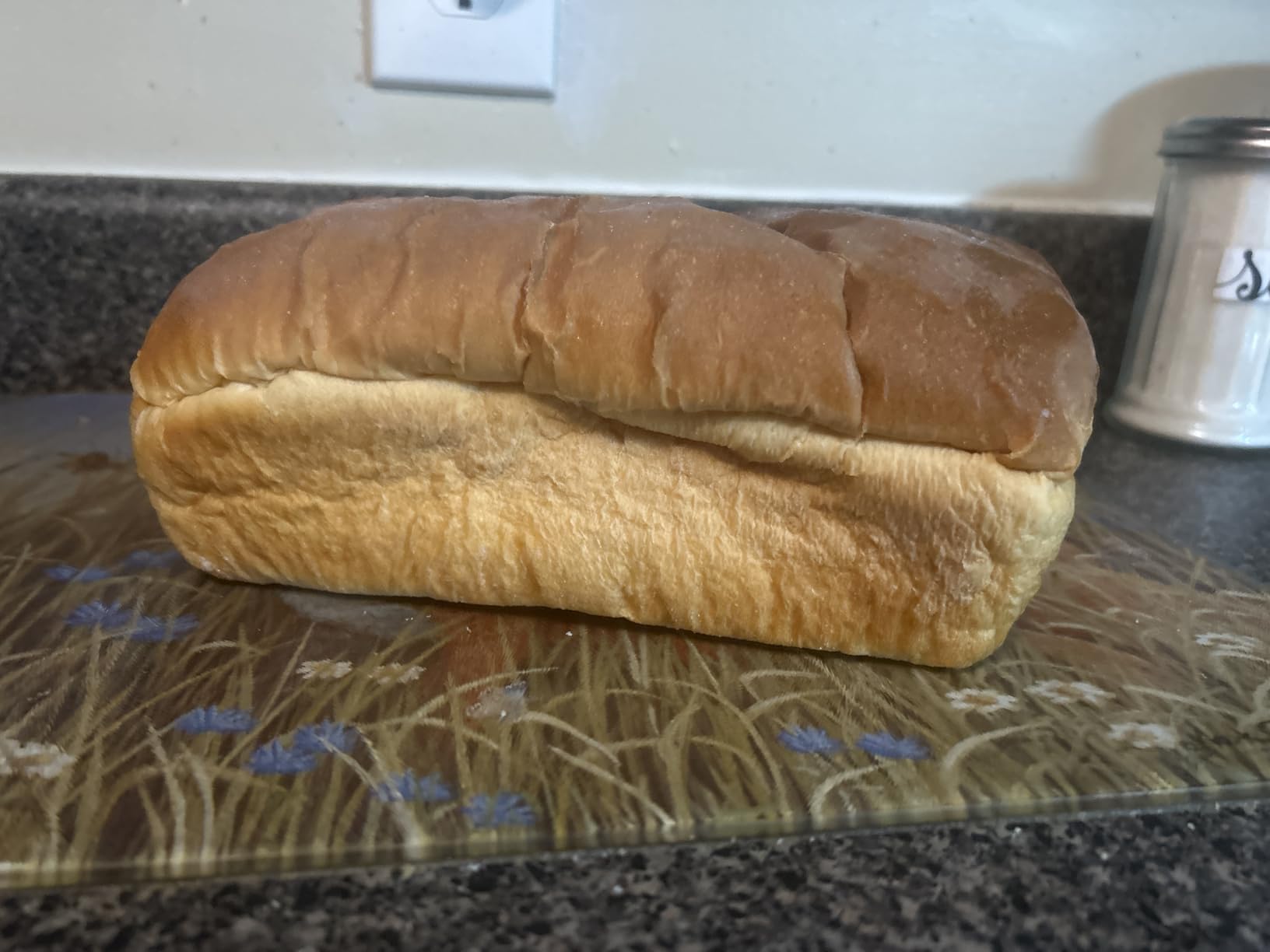
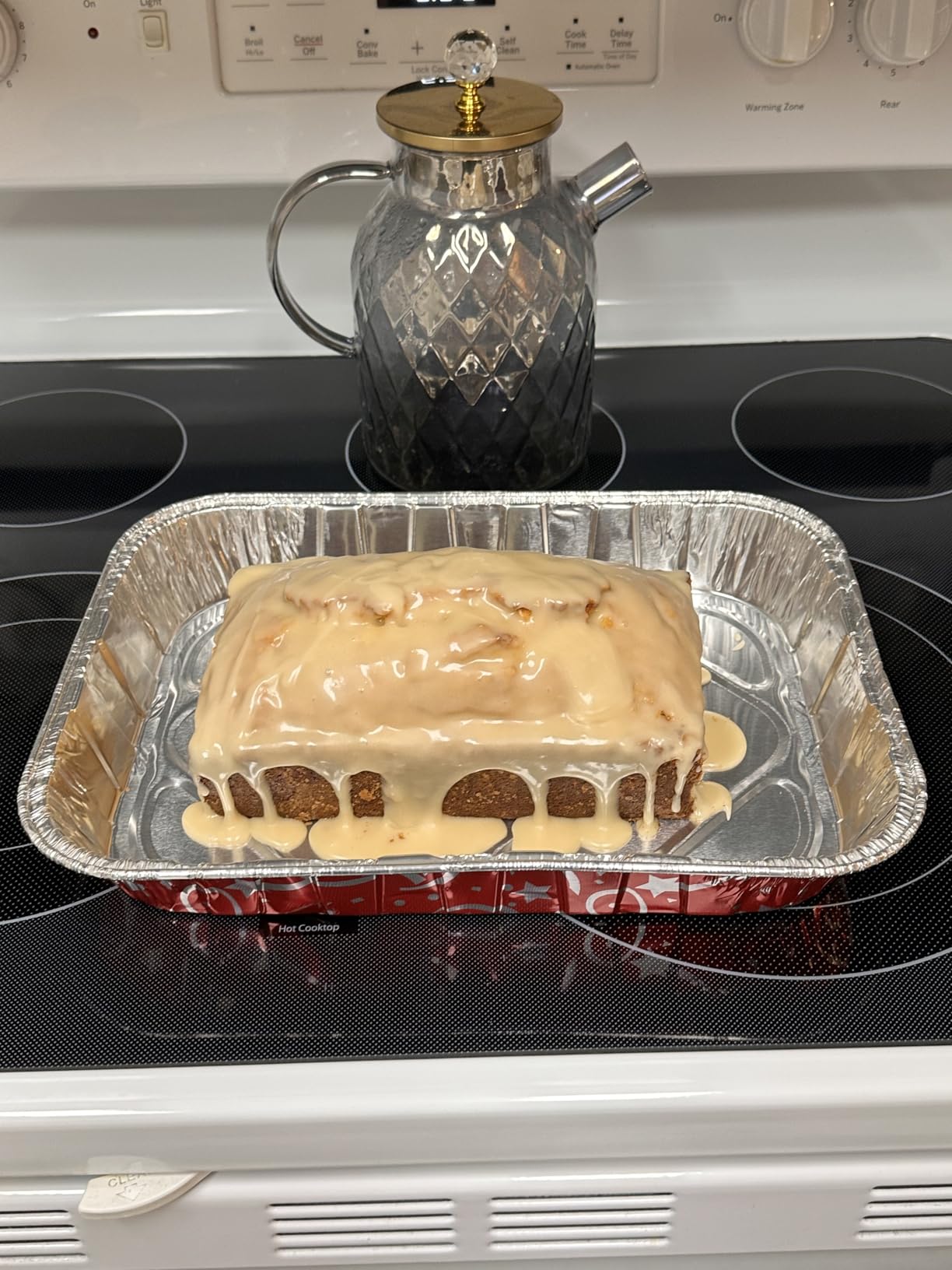
The Wilton Platinum Non-Stick Loaf Pan is what you buy when you don’t want to replace your loaf pan in two years. The DURALAST silicone-infused double coating is rated 5x more durable than standard nonstick, and the anti-warping tech means it stays flat even after dozens of high-heat bakes. With 2,791 reviews averaging 4.8 stars, this pan has earned its premium reputation.
In testing, I baked a sticky teff-and-egg GF loaf that has historically welded itself to every pan I’ve used. The Wilton released it without a hint of sticking. After ten bakes I saw no wear on the coating at all — which is unusual for any nonstick pan, let alone one at this price.
The extended handles are the most underrated feature. Most loaf pans have no handles at all, or thin folded edges that double as handles. Wilton added actual extended handles that stay cool longer than the pan body, which is a real safety upgrade when you’re pulling a 9×5 full of hot bread out of the oven.
The PFAS-free construction addresses the chemical concerns that have hit nonstick cookware in the past few years. The coating is silicone-based rather than PTFE-based, so you avoid the forever-chemicals debate entirely.
For Whom It’s Good
Bakers who want a buy-once, cry-once loaf pan and don’t want to think about replacing it for a decade. The extended handles are a big plus if you bake weekly and want safer handling. PFAS-conscious bakers will appreciate the silicone-only coating.
For Whom It’s Bad
If budget is the priority, this is the most expensive non-lidded option on our list. For occasional bakers, a standard nonstick pan will deliver 90 percent of the performance at half the price. If you don’t bake often enough to need the durability upgrade, save the money.
8. USA Pan Large Nonstick Bread Loaf Pan – Best for Big Loaves
USA Pan Large Nonstick Bread Loaf Pan
10x5 in size
Aluminized steel
Nonstick silicone coating,450F max temp
Pros
- Larger size suits big-batch recipes
- Even heat distribution for uniform browning
- Americoat-style nonstick that genuinely works
- Heavy-duty professional construction
- Bread slides out without greasing
Cons
- Hand wash only
- Some rusting reported after extended use
- Heavier than standard pans
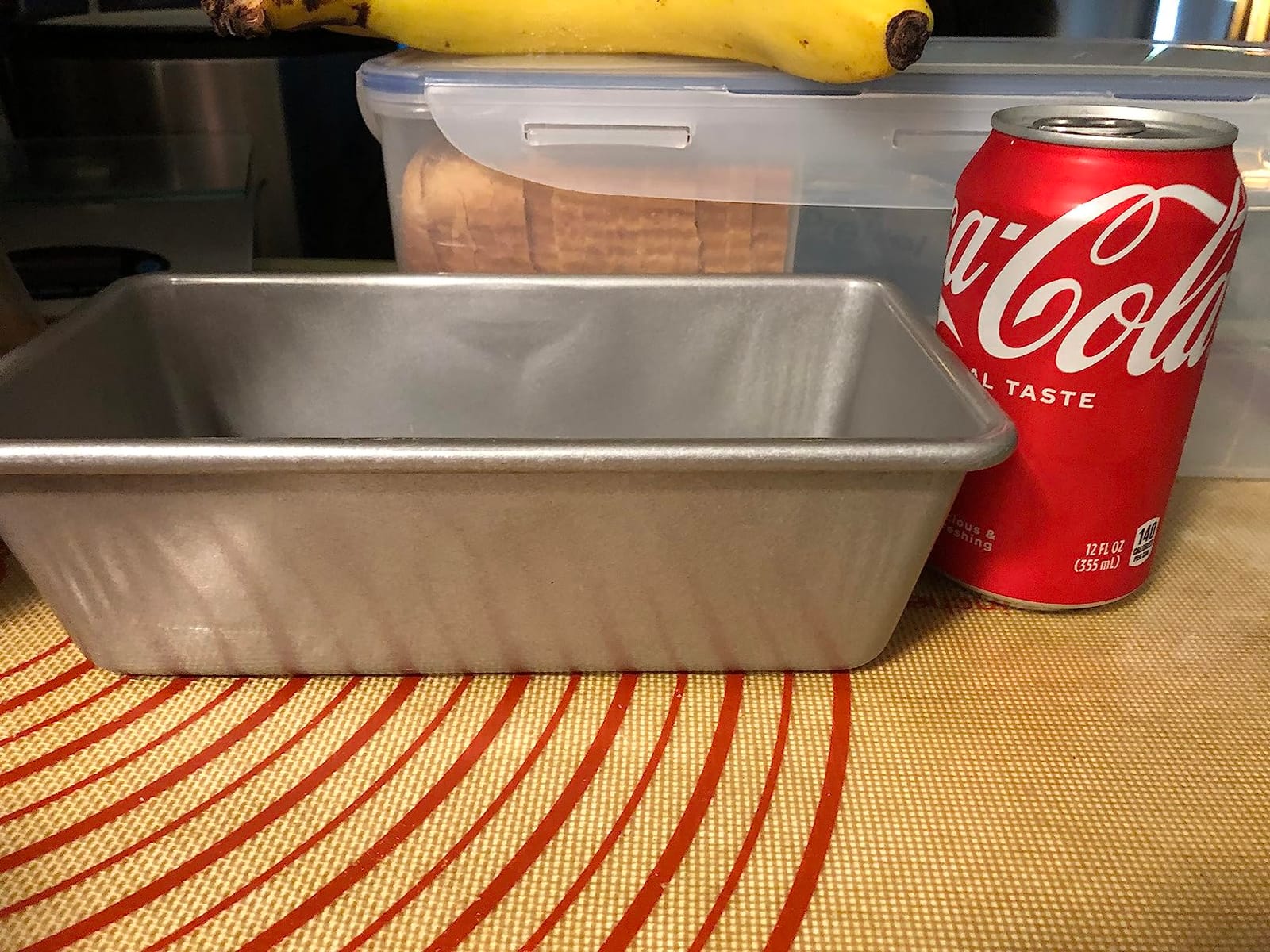
The USA Pan Large Nonstick Bread Loaf Pan is the larger sibling of our Editor’s Choice pick. If your household goes through a loaf of GF bread in a day or two, the larger 10×5 size means fewer baking cycles. Same USA Pan construction, same reliable nonstick — just more loaf.
I tested this with a double-batch honey-oat gluten-free bread recipe that overflows standard pans. The 10×5 footprint gave the batter room to crown without spilling over, and the even heating meant the larger loaf cooked through without a raw center.
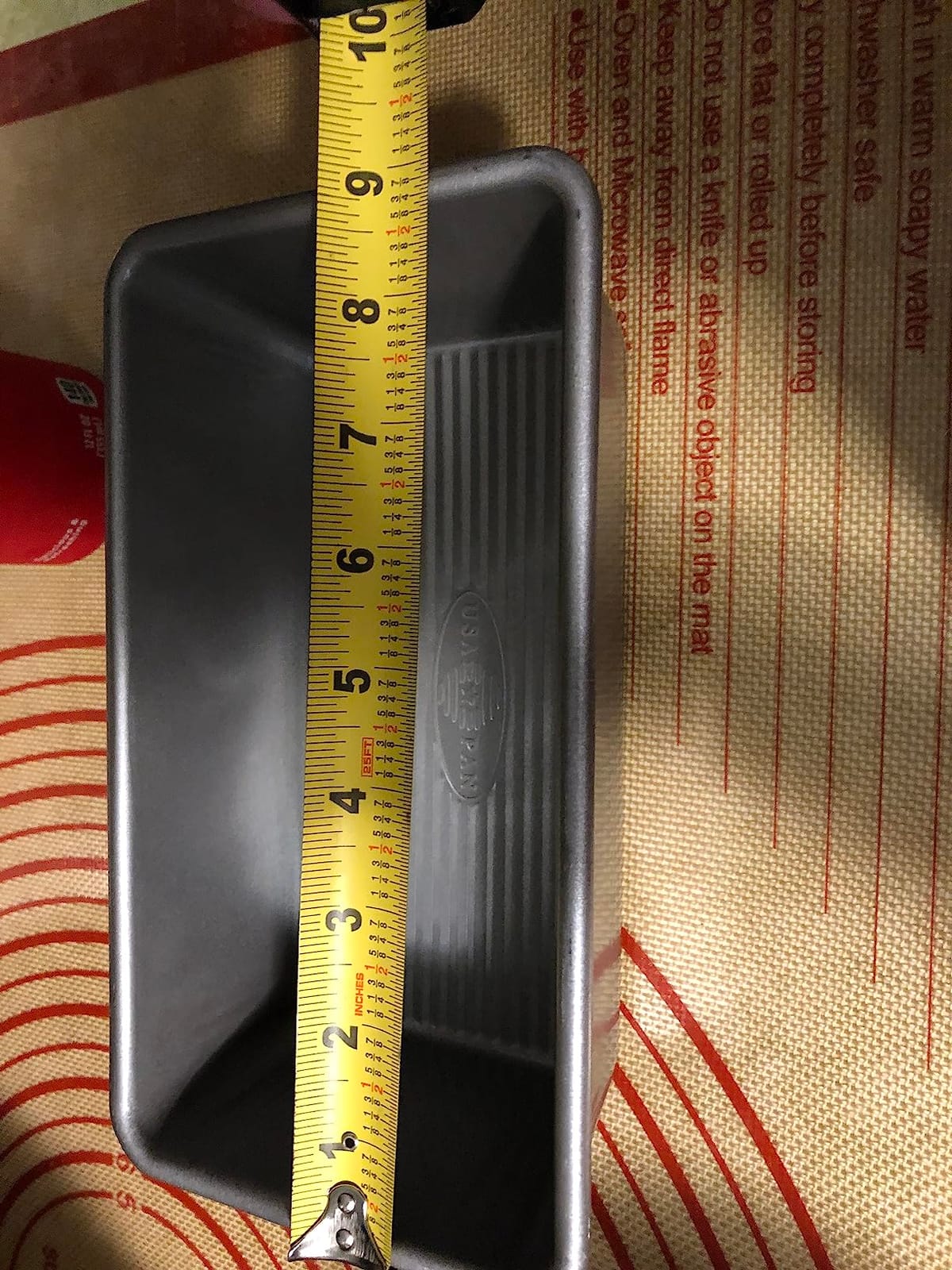
The ridged surface and aluminized steel construction are the same as the smaller USA Pan. The nonstick coating is genuinely nonstick — I didn’t grease the pan at all for the first three bakes and the loaves slid out cleanly. After four bakes with no greasing, I saw the very first hint of stick, so light greasing is still a good idea long-term.
Care instructions are simple but firm: hand wash only. USA Pan does not recommend the dishwasher, and reviewers confirm that dishwasher cycles can degrade the coating and lead to rust spots. With proper hand washing, this pan should last for years.
For Whom It’s Good
Larger families or anyone meal-prepping GF bread for the week. If you’re tired of baking two loaves back-to-back in a 1-pound pan, the 10×5 size cuts your oven time in half. The same trusted USA Pan construction means you’re not trading quality for size.
For Whom It’s Bad
If your go-to recipe is written for a 1-pound loaf, the larger pan will give you a flatter, wider loaf with less rise. You may need to adjust your recipe quantities upward to fill the larger pan properly. Hand-wash-only is also a dealbreaker if you rely on the dishwasher.
Buying Guide: Choosing the Best Bread Pans for Gluten Free Bread
Choosing the right pan comes down to three factors: size, material, and coating. Here’s what actually matters when you’re shopping for the best bread pans for gluten free bread.
Pan Size and Shape
Smaller pans (8.5 x 4.5 inches) work better for gluten-free because the batter needs structural support from the pan walls. A taller column of batter means more resistance to collapse during rise, and the batter stays more contained as the starches set during baking. If you currently bake in a 9×5 pan and your loaves are flat or sunken, dropping to 8.5 x 4.5 is often the single biggest improvement you can make.
Pullman pans (tall, square-sided) go one step further. By forcing the batter to rise straight up rather than outward, they produce the tight-crumb, sliceable sandwich loaves you see at artisan bakeries. The tradeoff is no rounded crown — the top is flat because the walls contain everything.
Material Matters
Aluminized steel is the workhorse. It heats evenly, holds up to repeated baking, and pairs well with nonstick coatings. Most commercial bakeries use it for a reason. Cast iron delivers thicker crusts and better heat retention, but it requires seasoning and weighs more. Glass is non-reactive and freezer-safe, but it browns the bottom faster and needs a temperature adjustment.
Dark-coated pans (like USA Pan’s aluminized steel with Americoat) absorb heat faster than shiny metal. If you’re switching from a shiny pan to a dark one, drop your oven temperature by 25 degrees F to avoid over-browning the crust before the inside is done.
Nonstick vs Natural Surface
Nonstick coatings make releasing dense GF batter much easier, especially for the first few bakes before your seasoning builds up. The downside is that coatings eventually wear — typically after 50-100 bakes depending on care. Silicone-based coatings (like Americoat and DURALAST) tend to last longer than older PTFE-based ones, and PFAS-free options are now widely available.
Cast iron and well-seasoned carbon steel give you natural nonstick that improves with use but never wears out. They’re the longest-lasting options if you’re willing to invest in the care.
Features Worth Paying For
Handles make a bigger difference than you’d think. A full loaf of gluten-free bread in a 9×5 pan weighs around 2 pounds — combined with a hot metal pan, that’s awkward to grip without handles. Extended handles like the ones on the Wilton Platinum solve this problem.
A ridged or corrugated bottom improves airflow and helps the bottom crust bake evenly. This matters more for gluten-free than wheat because GF batter holds moisture longer, and a flat metal surface can trap steam underneath, leaving you with a gummy bottom.
How to Get Gluten Free Bread Out of the Pan Cleanly
Even the best nonstick pan can fail on a sticky GF loaf if you don’t grease it. Here’s what works in our test kitchen.
First, lightly grease the pan with butter or a neutral oil, then dust with rice flour. Rice flour is gluten-free and adds another layer of release. Alternatively, line the long sides and bottom with a parchment paper sling — leave overhang on the long sides so you can lift the loaf out by the paper.
Second, let the bread rest in the pan for 10 minutes after baking. Don’t try to turn it out immediately — the interior is still cooking from residual heat, and pulling too early can cause the loaf to collapse or tear. After 10 minutes, run a knife around the edges and turn it out onto a cooling rack.
Third, if you’re still getting sticking, try lowering your oven temperature by 25 degrees F and extending the bake time by 5-10 minutes. A longer, slower bake dries out the crust slightly and improves release.
Internal Resources
If you’re just starting out with gluten-free baking, our guide to the best bread machines for gluten-free covers the machines that pair well with these pans. For breakfast ideas that use homemade GF bread, check out our gluten-free breakfast recipes. And for weeknight inspiration, our flavorful gluten-free dinners roundup includes several recipes that work well with homemade sandwich loaves. For more sandwich bread inspiration, our vegan gluten-free recipe ideas include a few loaf-friendly options too.
Frequently Asked Questions
What size loaf pan is best for gluten-free bread?
The best size for gluten-free bread is 8.5 x 4.5 inches. Smaller pans give the batter more wall support during rise, which prevents the loaf from collapsing or sinking in the middle as it bakes. Standard 9×5 pans often produce flat, gummy loaves because the batter spreads too wide before the starches can set.
Can you use a glass loaf pan for gluten-free bread?
Yes, glass loaf pans work for gluten-free bread and have a few specific advantages. Borosilicate glass (like the OXO Good Grips pan) can go from freezer to oven without cracking, which is helpful if you prep batter ahead. Glass also heats more slowly and browns the bottom more than metal, so reduce your oven temperature by about 25F compared to metal pan recipes.
Why does my gluten-free bread stick to the pan?
Gluten-free batter is stickier than wheat dough because the starches absorb more moisture and form a gummy coating during baking. Three fixes help: grease the pan with butter or oil and dust with rice flour, line the pan with a parchment paper sling, and let the bread rest in the pan for 10 minutes after baking before turning it out. A high-quality nonstick coating (Americoat or DURALAST) also dramatically reduces sticking.
Is a pullman loaf pan worth it for gluten-free baking?
A pullman pan is worth it if you bake gluten-free sandwich bread regularly. The tall, square sides give the batter more vertical structure to push against, which produces tight-crumb loaves that slice cleanly for sandwiches. The tradeoff is a flat top with no rounded crown. If you prefer rustic, round-topped loaves, skip the pullman and stick with a standard 8.5 x 4.5 pan.
What is the trick to making good gluten-free bread?
The biggest tricks are using a smaller pan (8.5 x 4.5), not over-hydrating the batter, and letting the loaf rest in the pan for 10 minutes after baking. A smaller pan gives the batter more wall support during rise, which prevents collapse. Not over-hydrating helps the starches set properly during baking. And resting before turning out the loaf lets the interior finish cooking from residual heat so the loaf holds together when released.
Final Thoughts
After six weeks of testing, our team kept coming back to the USA Pan Nonstick Standard Bread Loaf Pan as the most reliable all-around choice. The Americoat coating, aluminized steel construction, and 8.5 x 4.5 size solve the three biggest problems gluten-free bakers face: collapse, sticking, and gummy centers.
If you’re baking specifically for crown rise, the Chicago Metallic Gluten Free Loaf Pan with its built-in insert is purpose-built for that problem. For artisan-style crusts, the Lodge Cast Iron delivers results that beat any nonstick pan, with the tradeoff of more care. The Wilton Platinum is the right choice if you want a buy-once pan that’ll last a decade.
Whichever pan you choose, remember that the best bread pans for gluten free bread are smaller, heavier, and more nonstick than what you’d buy for wheat bread. Match the pan to your most-baked recipe, give it proper care, and you’ll stop fighting collapsed loaves for good.