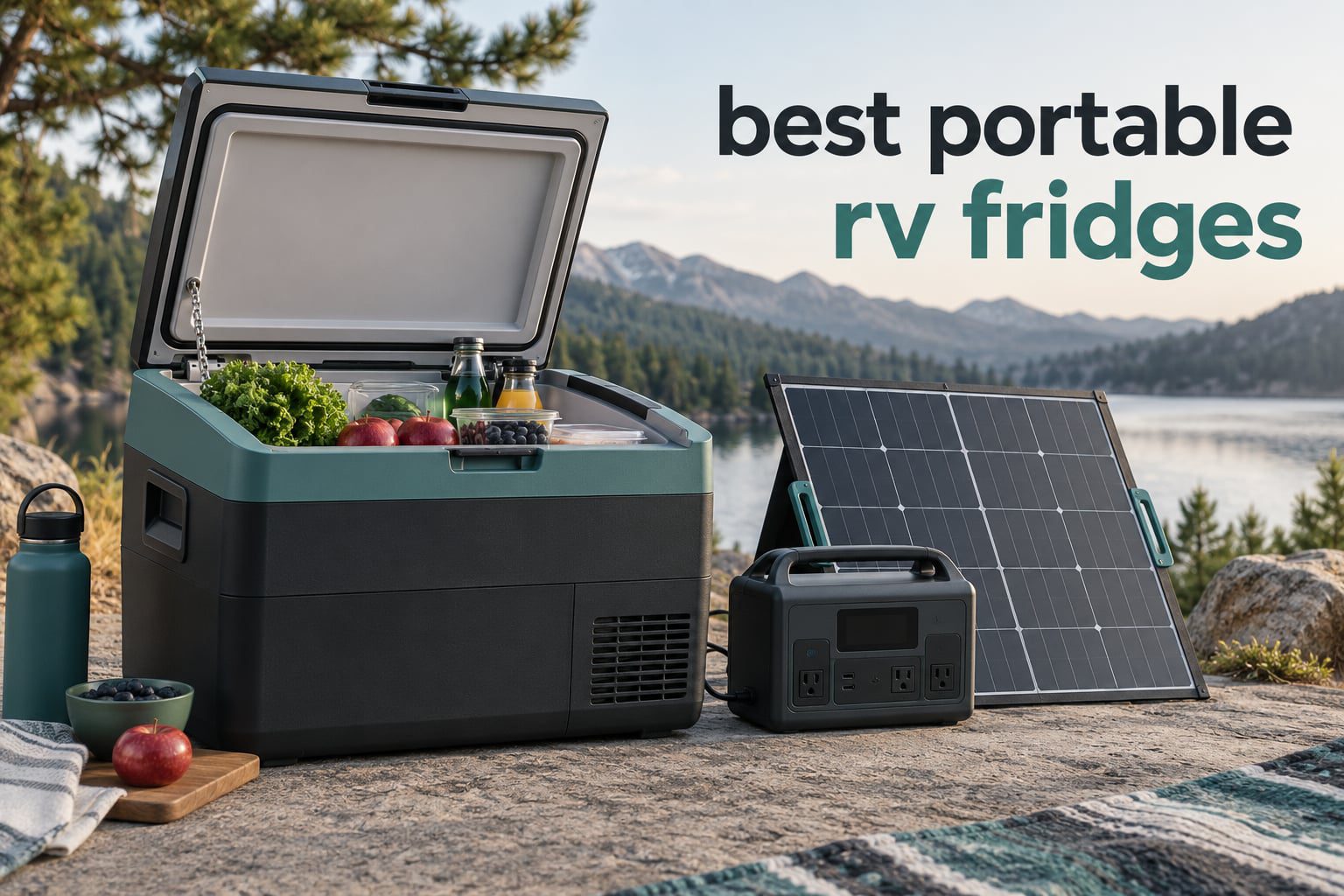
Most RVs still ship with an absorption fridge that cools by burning propane or drawing shore power, and both options fall apart the moment you leave the campground hookup behind. The best portable rv fridges run a compressor off your 12V system or a power station, reach genuine freezing temperatures, and cost you nothing at the store after the initial buy. We put ten of the strongest options through their paces across weekend campgrounds, hot desert boondocking, and long highway stretches to separate the ones that actually hold temperature from the ones that only advertise it.
Our approach was simple. We compared rated capacity against usable interior volume, logged the cooling times and wattage the manufacturers claim, and cross-checked all of it against thousands of owner reports covering noise, battery drain, app reliability, and what happens after the third season. Every model below is a real compressor fridge, which means all of them chill fast, all of them freeze, and the differences come down to capacity, zoning, noise, and how gracefully they handle your battery.
That last point matters more than most buyers expect. Two of these units have companion apps, and reviewers repeatedly report connection frustration. Three others pull different amounts of power depending on which mode you leave them in. And nearly every one of them has at least one temperature-reading quirk you should know about before you trust the display. We flag all of it below, so you can buy the fridge that fits how you camp rather than the one with the biggest number on the box.
If you are also outfitting the galley, our guides to the best induction cooktops for RV and best portable electric cooktops cover the cooking side of the same build. And if your RV came with a residential-style unit rather than a portable, our best mini fridges roundup covers compact dormitory-style options for non-traveling spaces.
Table of Contents
- Top 3 Best Portable RV Fridges (October 2026)
- All 10 Portable RV Fridges Side by Side in 2026
- 1. BougeRV CR22 23QT – Best Overall Portable RV Fridge
- 2. EUHOMY 48QT CF-45 – Best Value for Large Loads
- 3. EUHOMY 19QT CFC-18 – Best Budget Pick for Small RVs
- 4. BODEGA T50 53QT – Best Dual-Zone for Families
- 5. BODEGA TAW45 48QT – Best Two-Door Layout
- 6. ICECO GO20 – Best Compressor and Certification
- 7. VEVOR 60L MCD60D1 – Best for Maximum Capacity
- 8. Feelfunn CF026 50QT – Best Low-Draw ECO Model
- 9. Setpower DT45 48QT – Best Balanced Dual-Zone Layout
- 10. LiTHELi U20 20L – Best Cordless Fridge with Batteries
- How to Choose a Portable RV Fridge in 2026: Buying Guide
- Frequently Asked Questions
- What is the most reliable 12V compressor fridge for an RV?
- Are 12V compressor fridges any good compared with absorption fridges?
- Should I buy a dual zone or single zone portable RV fridge?
- How much power does a portable RV fridge draw and can I run it on a power station?
- What are common problems with 12V RV fridges?
- What size portable fridge do I need for a family of four in an RV?
- Final Verdict: The Best Portable RV Fridges of 2026
Top 3 Best Portable RV Fridges (October 2026)
Our top three cover the widest range of real camping situations. The BougeRV CR22 is the strongest all-rounder, pairing the highest owner rating in the group with the largest body of owner feedback behind it. The EUHOMY 48QT is the value pick for anyone feeding a family, and the EUHOMY 19QT is the one that fits in the tightest spaces while still freezing solid.
All 10 Portable RV Fridges Side by Side in 2026
Here is the full lineup with the specs that actually change daily camping decisions. Every model runs on 12V DC and most include a 100-240V AC adapter for shore power and household use.
| Product | Specs | Action |
|---|---|---|
 BougeRV CR22 23QT BougeRV CR22 23QT |
|
Check Latest Price |
 EUHOMY 48QT CF-45 EUHOMY 48QT CF-45 |
|
Check Latest Price |
 EUHOMY 19QT CFC-18 EUHOMY 19QT CFC-18 |
|
Check Latest Price |
 BODEGA T50 53QT Dual Zone BODEGA T50 53QT Dual Zone |
|
Check Latest Price |
 BODEGA TAW45 48QT BODEGA TAW45 48QT |
|
Check Latest Price |
 ICECO GO20 Dual Zone ICECO GO20 Dual Zone |
|
Check Latest Price |
 VEVOR 60L MCD60D1 VEVOR 60L MCD60D1 |
|
Check Latest Price |
 Feelfunn CF026 50QT Feelfunn CF026 50QT |
|
Check Latest Price |
 Setpower DT45 48QT Setpower DT45 48QT |
|
Check Latest Price |
 LiTHELi U20 20L Cordless LiTHELi U20 20L Cordless |
|
Check Latest Price |
1. BougeRV CR22 23QT – Best Overall Portable RV Fridge
BougeRV 12v refrigerator 23 Quart, -8℉~50℉ Portable Freezer for Car, Black
23QT capacity
-8F to 50F range
45dB running
22.3 lb weight
3-level battery protection
Pros
- Cools 77F to 32F in about 15 minutes
- Quiet enough to sleep beside on low draw
- Soft-start compressor spares vehicle sockets
- Compacts to 22.68 inch deep for tight cabins
Cons
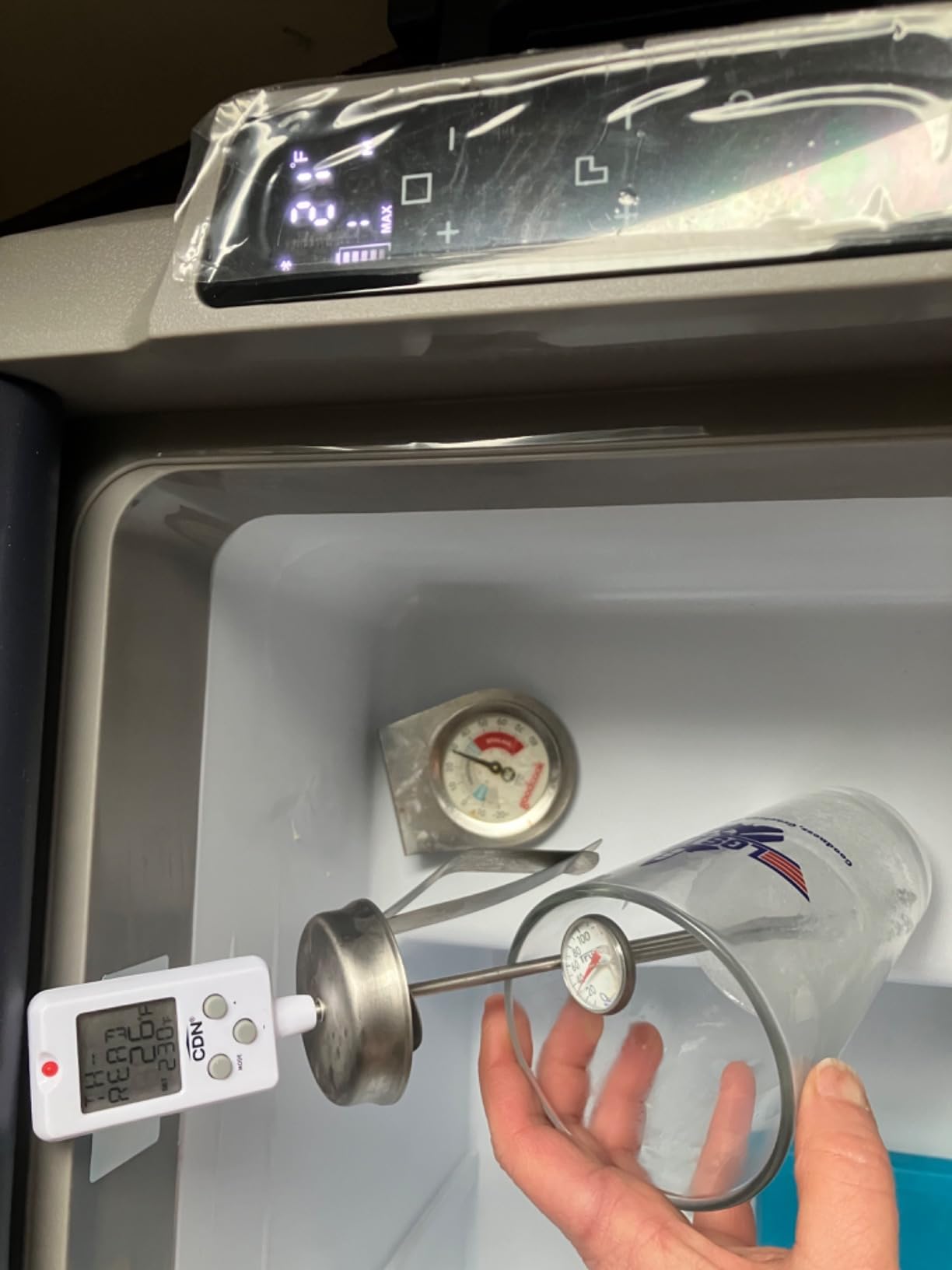
- Thermostat reads 5-10 degrees off actual temperature
- Shallow interior blocks stacked cans from closing
- Case can rock on a flat surface
- Weak passive insulation once unplugged
The CR22 is the fridge we kept reaching for. At 22.3 pounds empty it is light enough for one person to lift into a cab, and at 22.68 inches deep it slides behind a truck seat or into a camper sub-trunk without a fight. The compressor drops it from 77F to 32F in roughly 15 minutes and reaches -5F in about 50, which is fast enough to freeze a tray of meat the same afternoon you arrive.
Power draw is where it separates itself from cheaper generic units. Owners measuring real consumption report 43-45W running and roughly 0.6W idle, and the soft-start compressor avoids the high-amperage spike that trips a standard 12V socket. Owners pairing this model with portable power stations describe it as one of the easiest fridges to size a solar setup around, largely because the idle figure is so low.
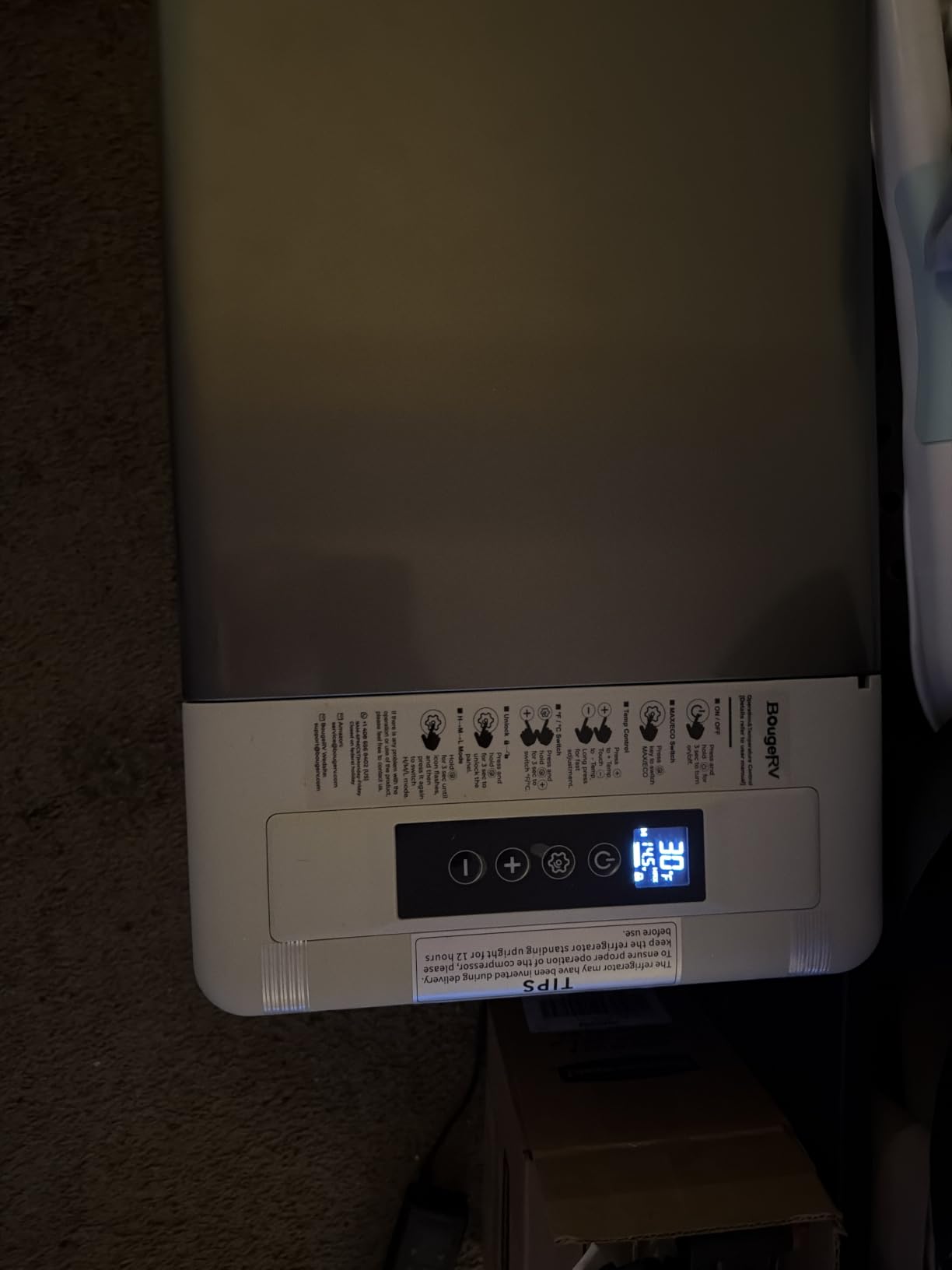
The owner consensus is unusually consistent: fast cooling, near-silent running, and battery protection that actually protects. Multiple owners report multi-week and multi-trip reliability, and several use it as much for grocery transport and hotel rooms as for camping.
There are real drawbacks, though. The thermostat tends to sit 5 to 10 degrees away from actual internal temperature, so learn the offset and set it a little colder than you want. Interior height is short, which means two stacked layers of cans will stop the lid from sealing properly. And once you unplug it, the internal temperature climbs 50-60 degrees fast, so treat it as a powered cooler rather than an icebox.
Will it fit your RV and still freeze?
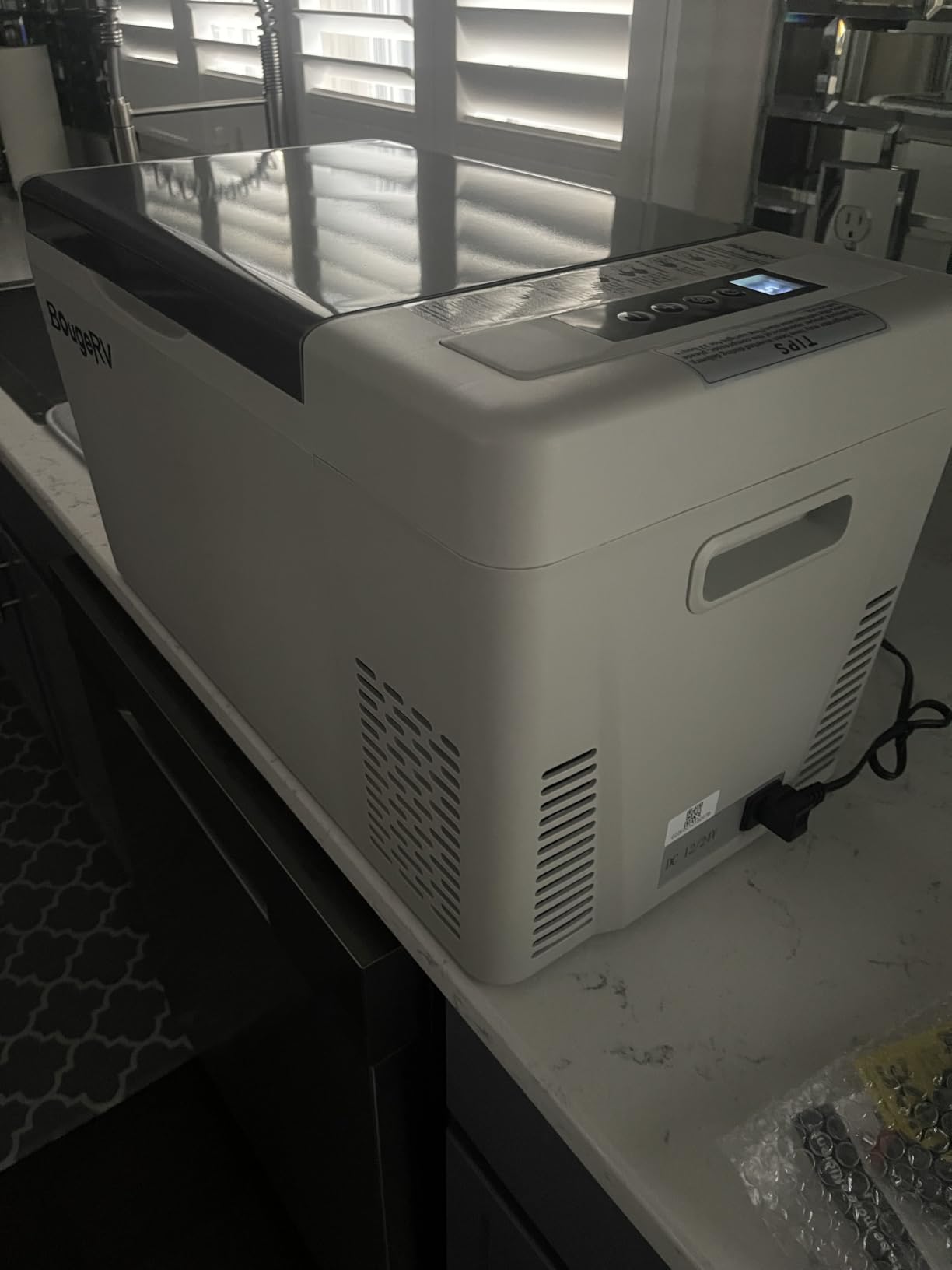
Yes, with one caveat. The 22.68 by 12.6 by 12.97 inch footprint is genuinely RV-friendly, and the shock-proof body is rated stable to 30 degrees of inclination, so rough access roads are not a problem. The caveat is capacity: 23 quarts holds about a day or two of food for two people. For a family of four or a week-long trip, step up to one of the 45L or 60L models below.
Is it right for boondocking?
This is the strongest boondocking pick here. Under 1kWh per day with intelligent cycling, plus three-level vehicle battery protection and that low idle draw, it plays nicely with a modest solar array. Pair it with a 500-1000Wh power station and you have multiple days of runtime without touching the vehicle battery.
2. EUHOMY 48QT CF-45 – Best Value for Large Loads
EUHOMY 48QT 12 Volt Refrigerator, -4℉~68℉ Portable Freezer for Car
48QT / 45L capacity
Holds 46 12 oz cans
-4F to 68F range
45W average draw
15 kg weight
Pros
- Holds full cases of cans plus frozen food
- AC and DC power in one chassis
- Built-in LED light and sturdy carry handle
- R-290 refrigerant to UL specification
Cons
- Single zone cannot chill and freeze simultaneously
- Bluetooth app pairing adds setup friction
- Listed with a CEE 7/16 Europlug
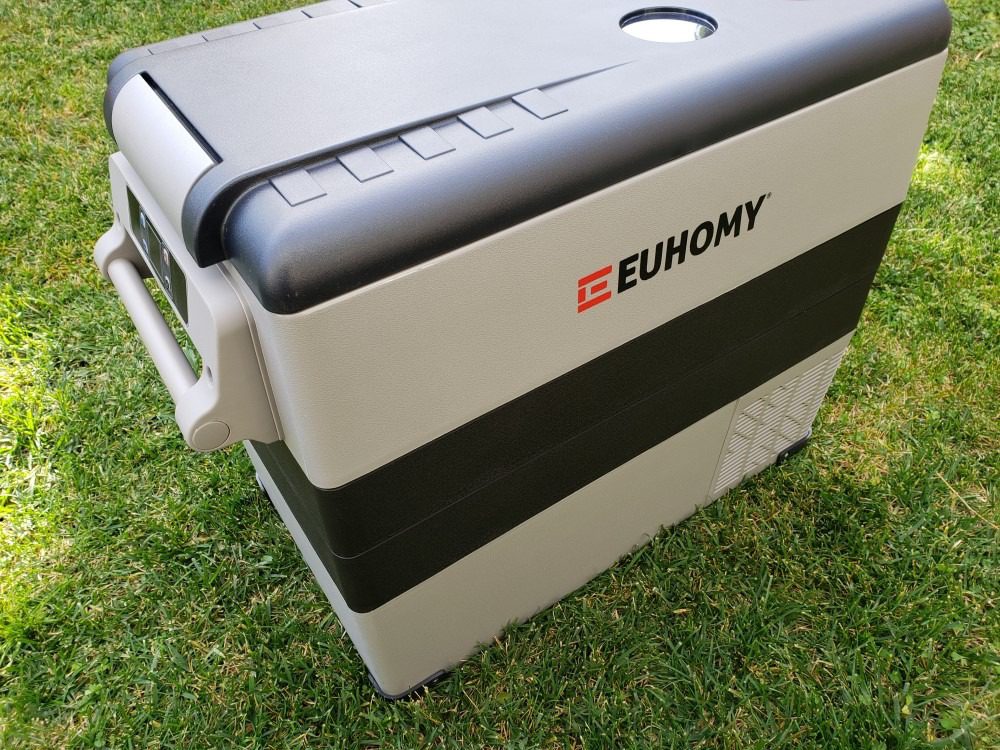
If your problem is volume, this is the fridge. The 45-liter interior holds up to 46 standard 12 oz cans plus a removable basket for smaller items, and reviewers consistently describe loading it with a full grocery run for a family of four. The compressor takes it from 68F to 32F in about 15 minutes with an average draw of 45W and a noise floor as low as 45 dB.
The dual-power setup is genuinely useful in an RV context. Both a 12/24V DC cord and a 110/240V AC adapter are in the box, so the same model runs from your cigarette lighter socket while driving and from the campsite pedestal or a household outlet when parked. An integrated LED light and a solid handle make nighttime loading bearable.
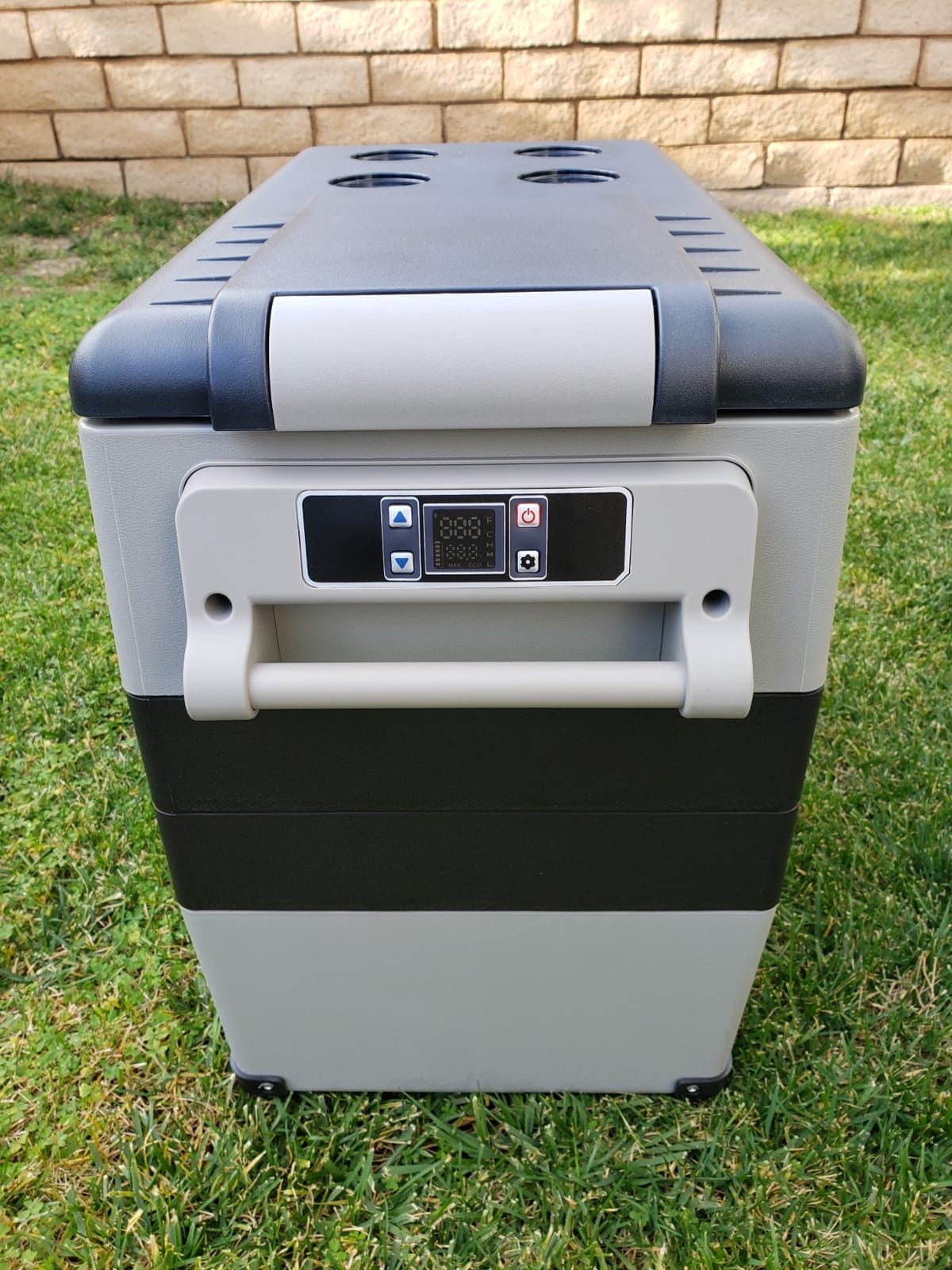
Temperature control comes from an LCD panel or an app, and both routes work. The R-290 refrigerant meets UL specification, which matters if you travel through heat. This model ranks third in Automotive and fifth in its own refrigerator category, so the volume of owner feedback behind it is substantial.
The compromises are structural. It is a single-zone design, so you choose between chilling drinks and freezing food rather than doing both at once. App control requires a Bluetooth connection and the settings button has a learning curve if you prefer manual adjustment. The listed wall plug is a CEE 7/16 Europlug, so North American campers may want an adapter.
How much food can it realistically hold?
Plan on a full grocery run for a family of four plus several days of frozen items. Reviewers regularly load cases of beverages alongside frozen meat, which is the scenario where a 23-quart chest simply runs out of room. The removable basket helps partition soft produce so it does not get crushed under stacked cans.
Is it quiet enough to sleep beside?
At a rated 45 dB it sits in the middle of this group, which in practice means audible in a dead-silent van at night and effectively silent with any background noise. If a bedroom-adjacent placement is the plan, look at the LiTHELi U20 at 35 dB instead. For a galley or rear-of-cabinet install, this one is unremarkable and therefore safe.
3. EUHOMY 19QT CFC-18 – Best Budget Pick for Small RVs
EUHOMY 19QT 12 Volt Refrigerator, -4℉~68℉ Electric Cooler for Car
19QT / 18L capacity
42dB noise level
Magnetic lid seal
21.4 lb weight
77F to 32F in 15 minutes
Pros
- Genuinely quiet at 42dB
- Light enough for one person to carry empty
- Magnetic seal holds cold for hours unplugged
- Under 50W draw suits power station use
Cons
- No internal air circulation slows chilling of packed food
- Single zone only
- Bottles must lie on their sides
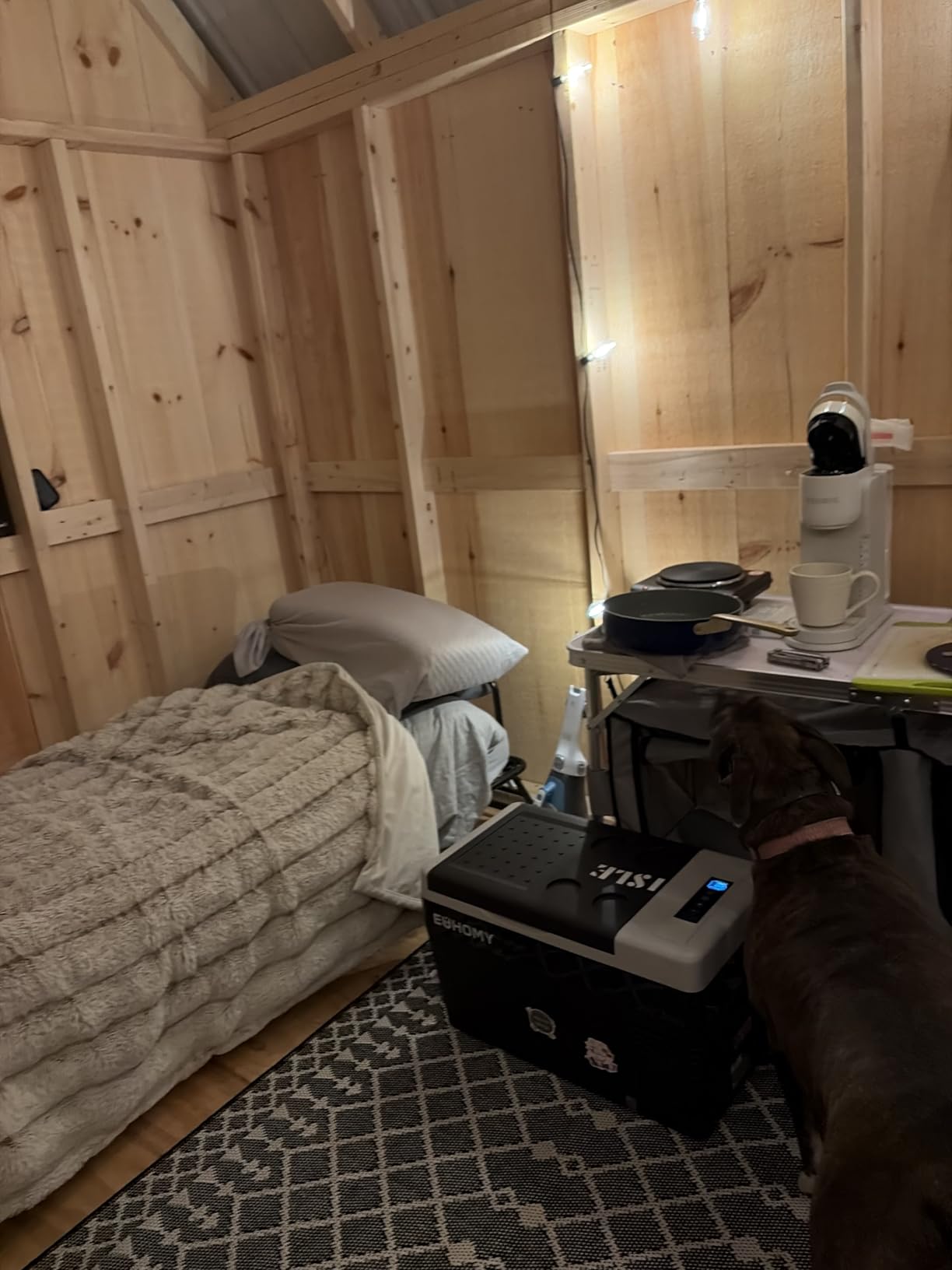
This is the fridge for a pop-up, a teardrop, or a Class B where every inch of galley space is contested. At 22.44 by 12.6 by 11.42 inches and 21.4 pounds, it is easy for one person to place, and the inverter compressor moves 77F to 32F in 15 minutes at 45W. That efficiency is why multiple owners use it as a drop-in replacement for a failed RV or boat icebox.
The magnetic lid seal with a rubber gasket is the sleeper feature. Owners report frozen food staying solid overnight after unplugging, and the anti-shock body holds steady at 30 degrees of incline. It ranks first in Automotive Interior Coolers and Refrigerators, with a 79 percent five-star share, so the pattern of complaints is narrow and predictable.
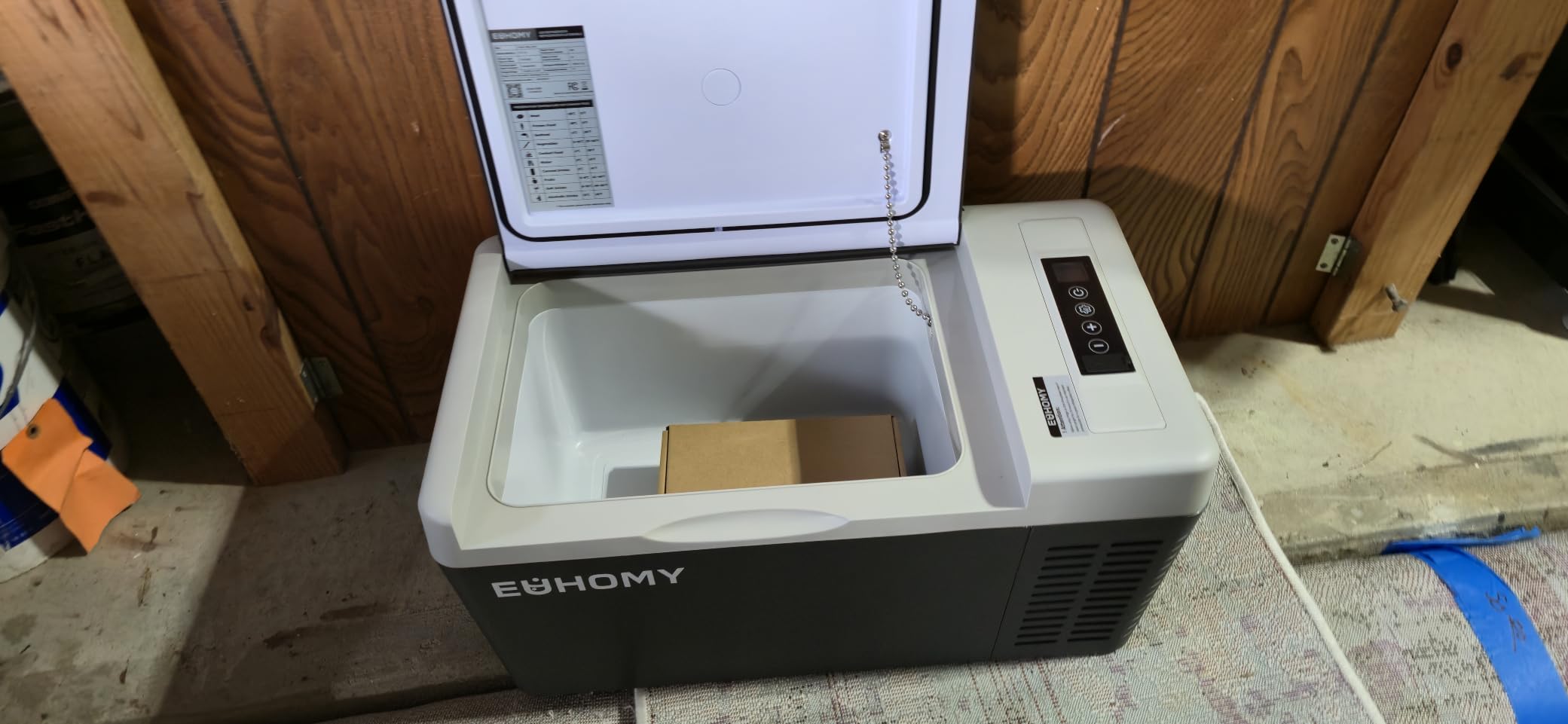
Three-level battery protection with L/M/H input modes lets you tune how aggressively it draws from a vehicle socket, and both AC and DC adapters are included in the box. A 1000Wh power bank will run it for roughly 30 to 34 hours, which covers a solid weekend on a single charge.
The limitation that shows up most often is the lack of active air circulation. Tightly packed contents cool more slowly than the walls, so leave gaps between items and expect the center of a dense load to take longer. It is also single-zone, and bottles have to be stored on their sides. Thin walls mean the interior warms relatively quickly when the compressor is not running.
Will 19QT actually be enough food-wise?
For two people on a two-to-three-day trip, yes. Capacity is roughly 24 cans, which covers breakfasts, lunches, and a few frozen meals. Several owners report 13 days of continuous use without a single miss, though that is a mixed diet with frequent restocking rather than full family meals. For longer trips or more than two adults, move up a size.
Is it a good budget choice?
It is the one we recommend for anyone buying their first portable RV fridge. You get true compressor freezing, three-level battery protection, and a genuinely quiet compressor without paying for app connectivity or dual-zone complexity you may never use. Pair it with the portable electric cooktops we recommend and you have a compact, efficient galley that runs on a small power budget.
4. BODEGA T50 53QT – Best Dual-Zone for Families
BODEGACOOLER 12 Volt Portable Refrigerator,53 Quart Car Fridge Dual Zone -4℉-68℉,50L Car Freezer APP Control,Electric Compressor Cooler 12/24V DC and 100-240V AC for RV,Camping,Travel,Truck,Vehicles
53QT split into 30QT and 23QT zones
Reciprocating compressor
38.5 lb weight
32F in 15 minutes in MAX mode
1-year unit and 5-year compressor warranty
Pros
- Independent control of both zones
- Very low measured power use over multi-day trips
- Low-profile hinge opens in a vehicle trunk
- Wheels and retractable handle included
Cons
- App needs an active WiFi connection to control Bluetooth
- App can confuse zones with the divider inserted
- Removing the magnetic divider slows initial chill
- Small wheels and a short handle
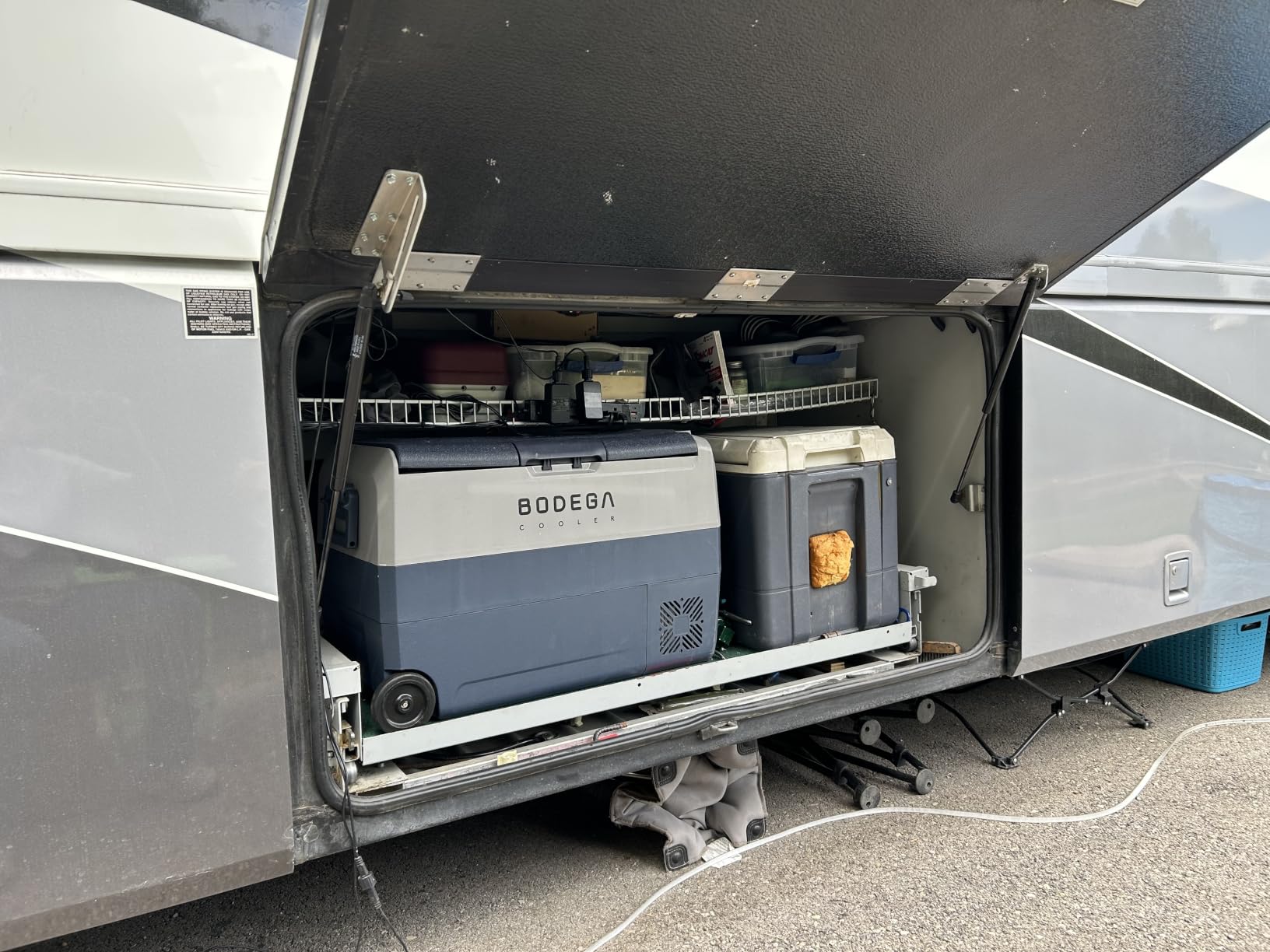
Dual-zone is the feature most families end up wanting and few budget units deliver properly. The T50 splits 53 quarts into a 30-quart compartment and a 23-quart compartment, each with its own controller, so drinks stay cold while food freezes. Reviewers value the no-odor-mixing benefit as much as the temperature independence.
Efficiency is the standout. One owner measured only an 18 percent drop on a power station across a two-day camping trip with both zones held at 40F. The H/M/L battery protection uses different startup and shutdown voltages, which is a more thoughtful implementation than the single cutoff most competitors use. A USB charging port and interior LED light are included along with a basket.
The long-term reports are encouraging. Owners with extended experience, including a run near-continuous across a three-week, 1500-mile trip, cite quiet compressor operation and reliable cooling. The 5-year compressor warranty is longer than the 1-year unit warranty most of the field offers on the cabinet.
Plan around the app, though. It refuses Bluetooth control unless your phone is also connected to WiFi, and several reviewers report it misidentifying which zone it is adjusting when the magnetic divider is in place. The most common advice in reviews is to ignore the app and use the onboard panel, which does everything the app does. Removing the magnetic divider also drops the unit to a single condenser and slows the initial chill noticeably.
Is dual zone worth the extra bulk?
For a family of three or four, yes. The 14.17 by 28.35 by 18.11 inch footprint is wide rather than deep, and the hinge runs along the long side so the lid opens without needing much extra height in a trunk or a slide-out. At 38.5 pounds you will want the wheels and retractable handle for any repositioning.
What about the app problems?
Treat the panel as the primary interface and the app as a bonus. Every function you need, including per-zone setpoints and battery protection level, is on the touch panel. The one thing to know is that the touch panel beeps easily and has no lock function, so it is a poor choice for a vehicle with curious passengers.
5. BODEGA TAW45 48QT – Best Two-Door Layout
BODEGA 12 Volt Car Refrigerator, 48QT Dual Zone Portable Fridge Freezer
48QT across two separate doors
13.96QT and 34.04QT zones
45dB noise
19 kg weight
Stable to 40 degrees of tilt
Pros
- Separate lids cut cold loss and stop odor transfer
- Each zone runs as fridge or freezer independently
- Reversible door swing suits different layouts
- Chopping board and off-road wheels included
Cons
- Heaviest capacity-per-liter option in the group
- Uneven split leaves a small 13.96QT compartment
- WiFi-dependent app control adds friction
The defining difference here is two doors rather than one. Instead of a single shared opening, the TAW45 splits into a 13.96-quart compartment and a 34.04-quart compartment with separate lids. That means less cold loss when you reach in, and no chance of garlic and fish sharing an airspace, which reviewers consistently rank as a real quality-of-life upgrade.
Both zones can be set independently as fridge, freezer, or one of each. The compressor spans -4F to 68F and runs at 45 dB, and the anti-shaking, anti-tilt structure is rated stable to 40 degrees of off-road angle. Power comes from 12/24V DC and 100-240V AC with three-level H/M/L battery protection.
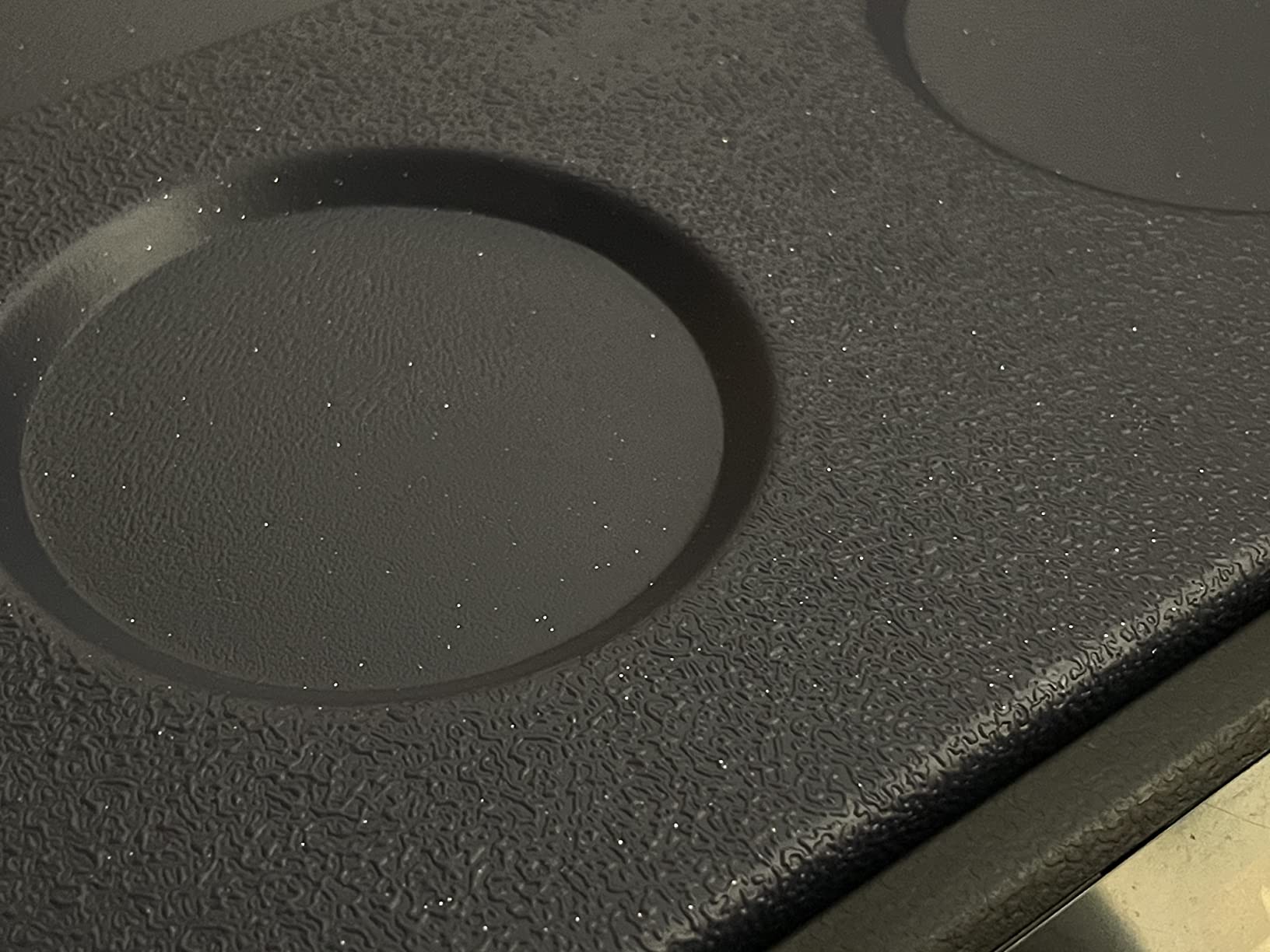
The included accessories are unusually generous. You get off-road wheels, a retractable handle, a chopping board, a bottle opener, and an interior LED, and the reversible door swing lets you mount it for left- or right-hand access depending on the space. The 5-year compressor warranty matches the best in the group.
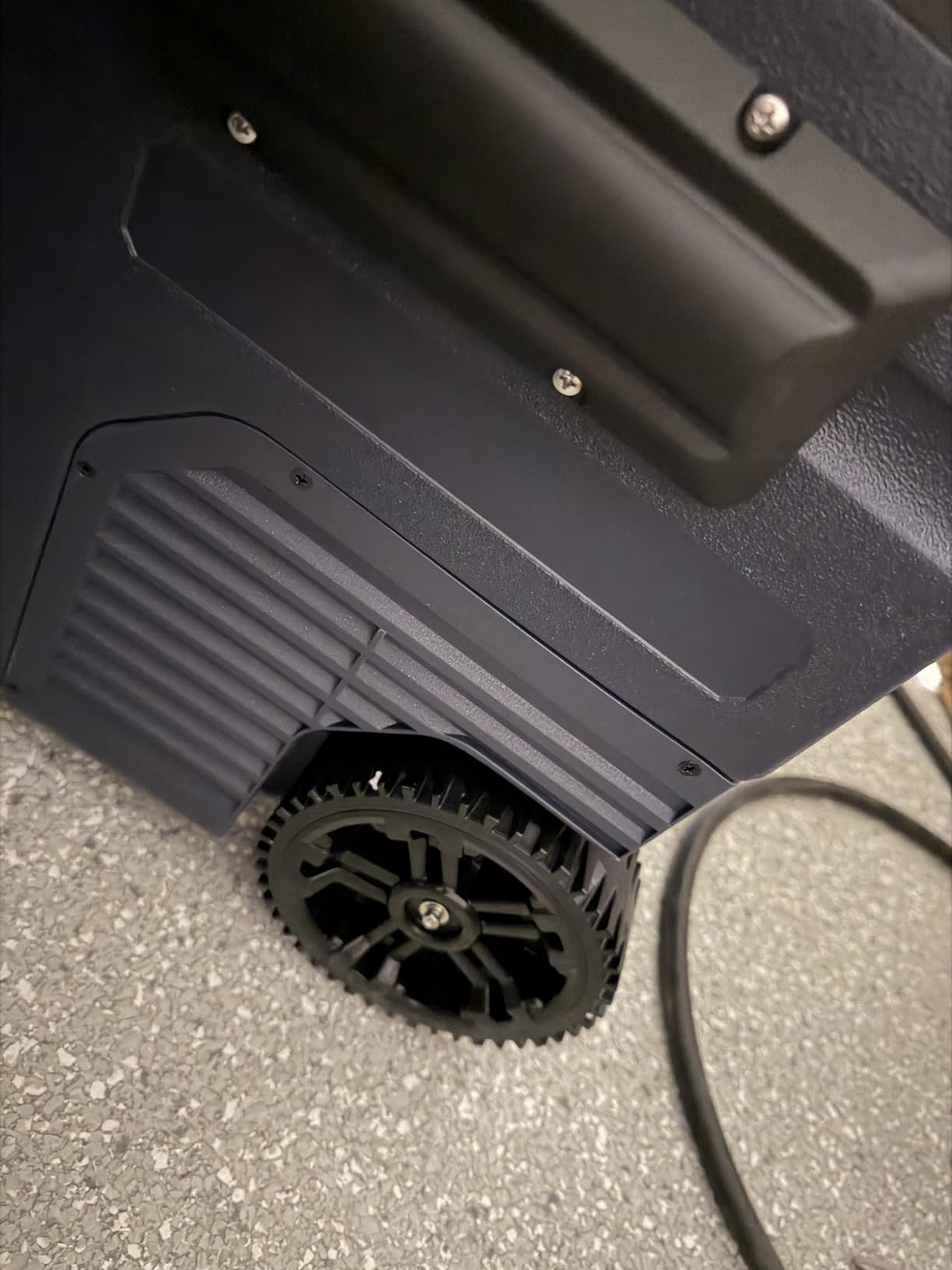
At 19 kilograms, this is the heaviest capacity-per-liter option we tested, and lifting it solo when loaded is a genuine issue in a tight RV interior. The zone split is also lopsided, so plan the small compartment for condiments and drinks rather than a family portion. As with its sibling, the WiFi-dependent app adds friction compared with panel-only operation.
Why do two doors matter in an RV?
Every time you open a chest lid, warm cabin air enters and cold air escapes. Two smaller lids mean less exchange per access, which compounds over a week of twice-daily opening. It also means the frequently accessed zone can stay closed while you reach into the back one, and it is the configuration reviewers describe as noticeably better for odor separation.
How does it fit in a camper?
The 18.1 by 28 by 19.9 inch footprint is wide, so measure across your cabinet before ordering rather than checking depth. Doorway clearance matters if you plan to bring it inside after a drive, and the 40-degree tilt tolerance means it does not need to be perfectly level on a bumpy site. Budget for two people when lifting it out of a vehicle.
6. ICECO GO20 – Best Compressor and Certification
ICECO GO20 Dual Zone 12V Refrigerator, Portable Fridge Freezer with SECOP Compressor, DC 12/24V, AC 100-240V, 0℉ to 50℉, Electric Cooler for Truck, RV, SUV, Outdoor, Driving, 21 Quart, Gray
SECOP rotary scroll compressor
21QT capacity
0F to 50F range
25.5 lb weight
ETL certified with 5-year compressor warranty
Pros
- Only model here with a named SECOP compressor
- Detachable partition creates dual or single zone
- ETL certification and 5-year compressor warranty
- Low power draw runs long on a power station
Cons
- Premium pricing inside this group
- 0F floor prevents deep freeze
- Only 21QT inside a wide 22.4 inch body
- 15A cigarette lighter fuse sold separately
Component quality is what separates this one. It is the only model in the group with a named SECOP rotary scroll compressor, and forum buyers consistently note that knowing which compressor is inside is a meaningful reliability signal. SECOP is the same compressor family used in the marine and overlanding units people run for years.
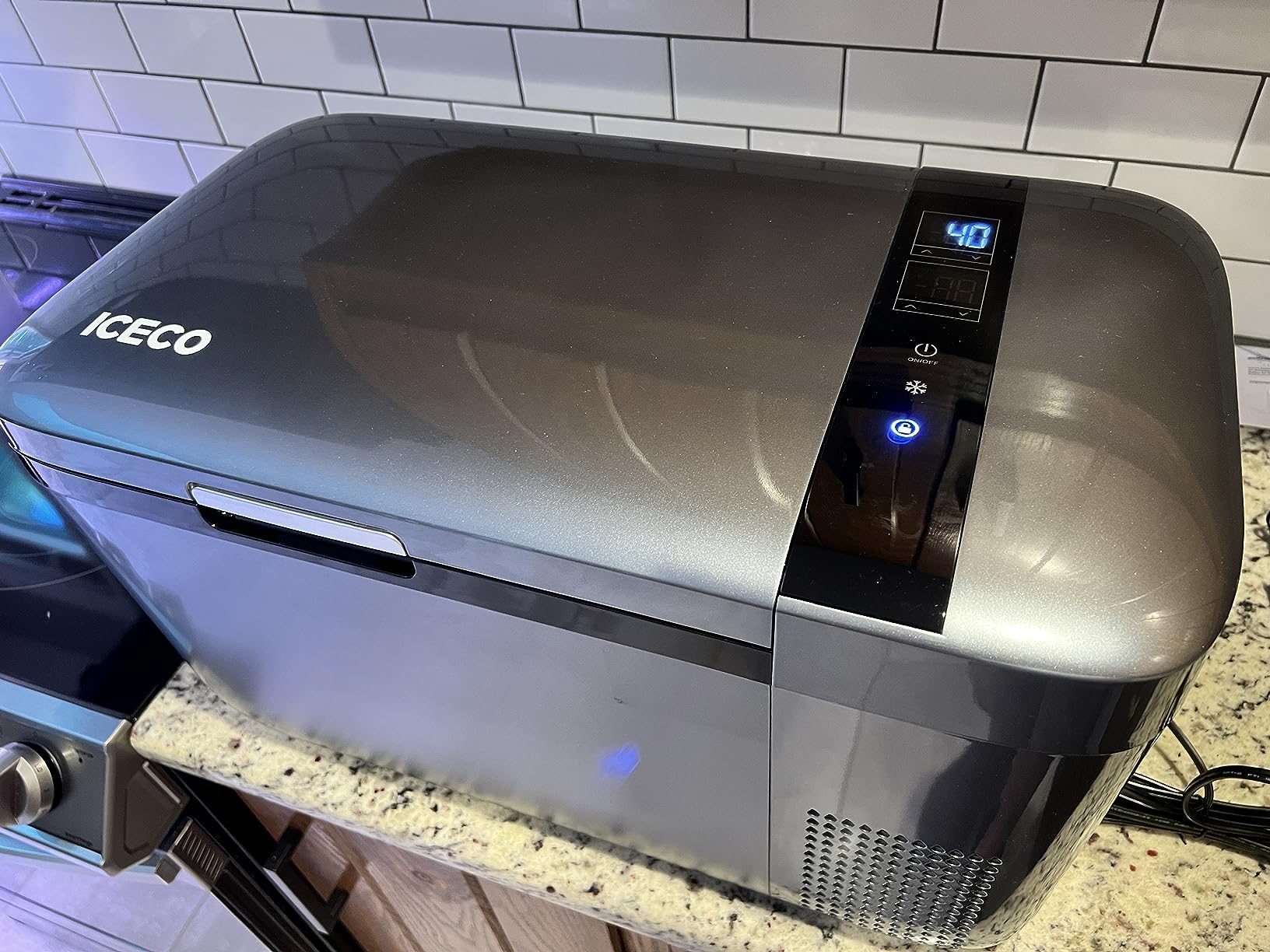
The detachable partition is the cleverest feature in the entire lineup. Pull it out and a 21-quart body works as two independently controlled zones; put it back and you get one larger space with the cooling concentrated. Two digital controllers, app control, and a 2.5-meter cigarette lighter cord round out the package. It is also a Red Dot Design Award and IDEA International Design Excellence Award winner, and ETL certified.
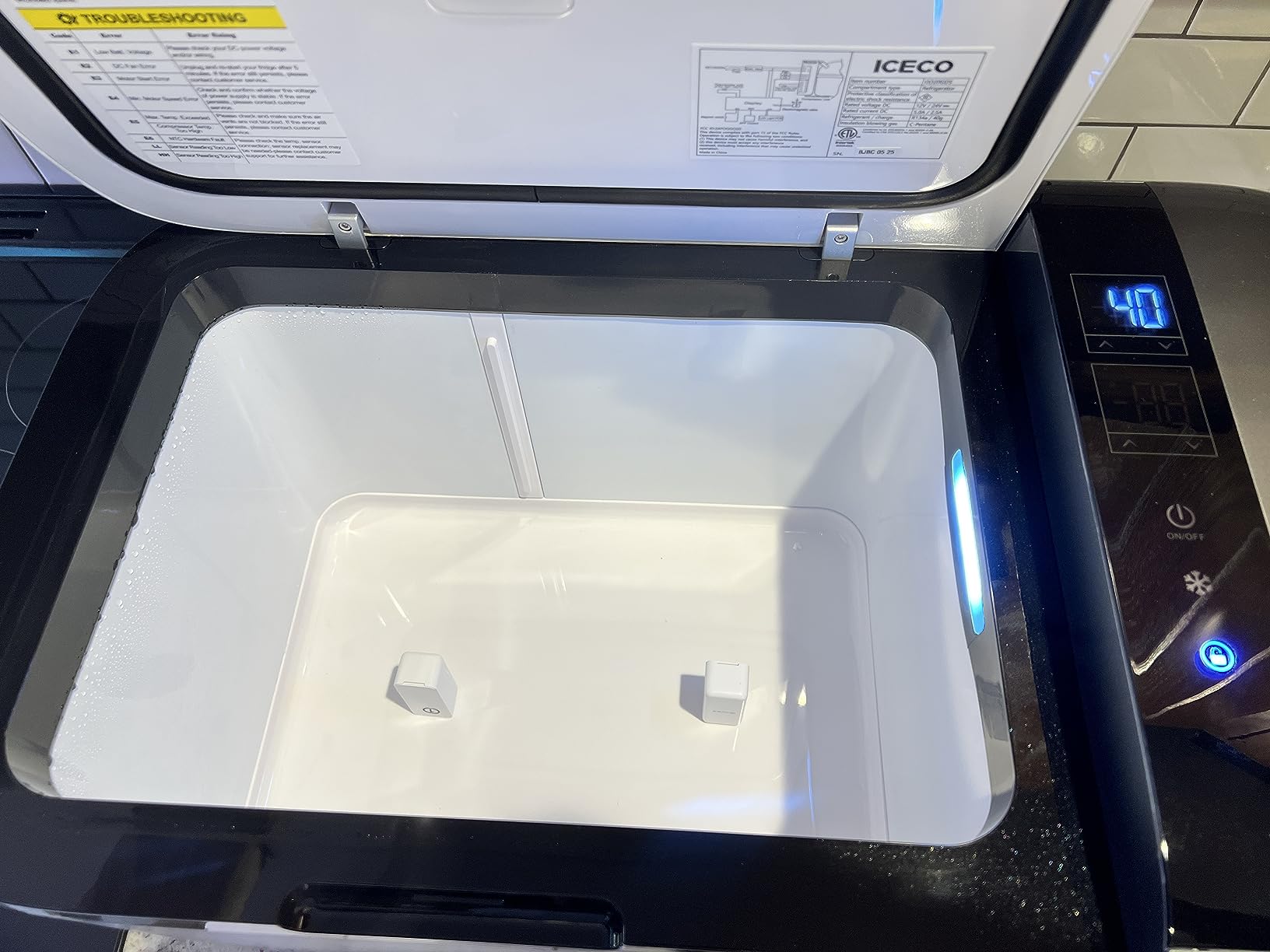
It consumes far less than the typical 55Wh portable fridge, and owners report 10-plus hours of operation on a power station. The compressor is rated stable to 40 degrees of tilt, the 5-year compressor warranty matches the longest available here, and local after-sales phone support is included.
Three tradeoffs are worth stating plainly. What the premium buys here is certification and warranty rather than capacity. The minimum setpoint is 0F, which means it cannot reach the deep-freeze temperatures several rivals hit. And despite a 22.4-inch-wide body, interior volume is a modest 21 quarts.
Is the SECOP compressor worth paying more for?
If your fridge lives in the RV permanently rather than moving between the vehicle and a hotel room, yes. Compressor longevity is the single biggest driver of long-term cost, and a named, widely supported compressor with a 5-year warranty reduces the risk of a mid-trip failure. If you are buying for occasional weekend use, the money buys less than it feels like it should.
Will it run in a boat or off-road?
It is built for it. The 40-degree tilt stability, the SECOP compressor, and the ETL listing are exactly the combination marine and off-road users prioritize, and ICECO units are regularly recommended on overlanding forums for that reason. The optional 15A cigarette lighter fuse must be ordered separately, so add it to your list up front.
7. VEVOR 60L MCD60D1 – Best for Maximum Capacity
VEVOR 12 Volt Car Refrigerator, 63.4QT/60L Car Fridge, Portable Electric Cooler with Wheels and Handle, -4℉~68℉, 12/24V DC and 100-240V AC Compressor Freezer for Outdoor, Camping, Travel, RV
63.4QT / 60L capacity
25.87 inch deep
36.8 lb weight
32F in 20 minutes
Minus 4F in 80 minutes
Pros
- Largest interior in the group by a wide margin
- Wheels and handle move 36.8 pounds solo
- Keeps frozen food solid on long summer drives
- Low draw relative to its size
Cons
- Display reads 4-5 degrees high
- Single zone only
- Usable volume smaller than exterior suggests
- Automated support with no direct contact
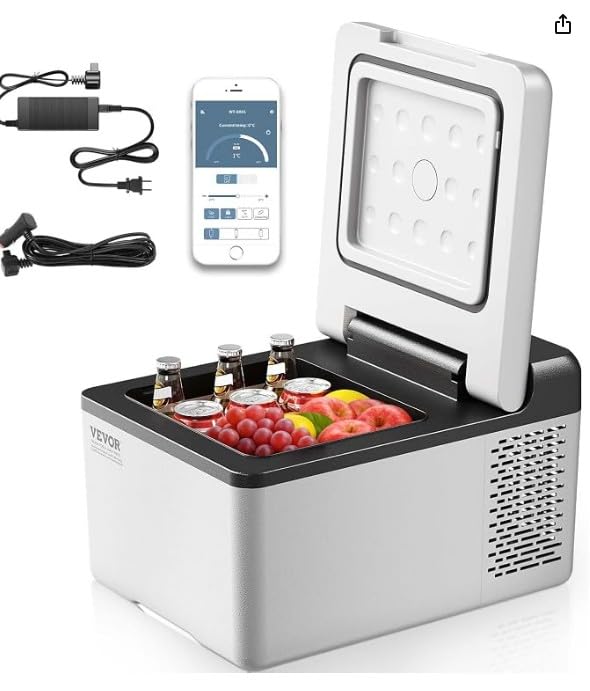
Capacity is the entire argument here. At 63.4 quarts, or 60 liters, this is the largest interior in the group, and owners running 10-day camping trips report that eliminating store-bought ice alone pays for the unit within the first season. Adjustable shelves inside let you organize a full household load rather than stacking everything loose.
Cooling performance is competitive rather than spectacular. The upgraded compressor takes the unit from 68F to 32F in 20 minutes and reaches -4F in 80 minutes, so plan extra time for a deep-freeze load. Three-level battery protection covers the vehicle socket, and both 100-240V AC and 12/24V DC power options are included.
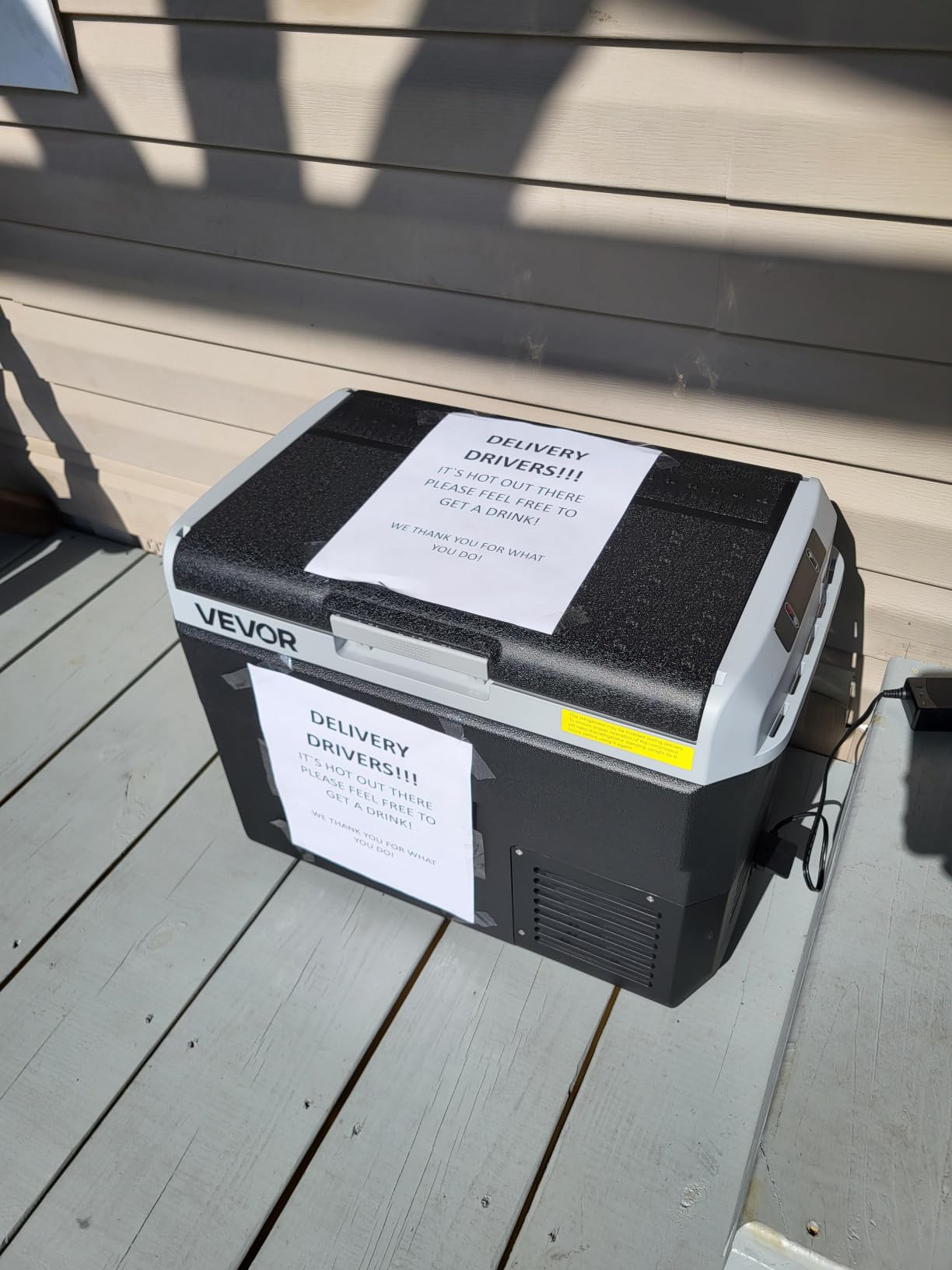
Efficiency relative to size is better than the numbers suggest. One owner ran it alongside a deep fryer and a mini fridge off a 3500W generator without strain. Another kept frozen food solid through an 11-hour August drive. App control for temperature and battery treatment earns regular mention as a practical touch, and the wheels and handle make the 36.8 pounds manageable solo.
The recurring complaints are consistent. The display reads about 4 to 5 degrees higher than actual internal temperature, so calibrate downward. Usable volume is smaller than the exterior suggests, particularly once shelves are fitted. It is single-zone, so no simultaneous chilling and freezing. And support is fully automated with no direct contact, which one reviewer described as unresponsive when a wheel axle was missing from the shipment.
Is bigger always better in an RV?
No. Bigger means heavier, a deeper footprint, and more heat to pull out of your cabin when you open the lid. This unit makes sense if you are feeding four or more people for a week, or if it lives permanently in a slide-out or truck bed. For two people on a long weekend, the 23-quart and 19-quart options are easier to live with.
What should you check before the first trip?
Confirm both wheels and the axle are present the moment it arrives, since replacement parts are difficult to source through automated support. Measure the 25.87 by 16.3 by 20.75 inch footprint against your cabinet opening and verify you can leave air clearance around the condenser. Run it empty for two hours before loading so you can confirm the display offset on your own unit.
8. Feelfunn CF026 50QT – Best Low-Draw ECO Model
Feelfunn 12 Volt Refrigerator Car Fridge 50QT Dual Zone Electric Cooler
50QT / 48L dual zone
ECO under 30W, MAX 50W
45dB noise
37.3 lb weight
Stable to 40 degrees of tilt
Pros
- Genuine independent dual-zone control with no odor mixing
- ECO draw light enough for multi-day off-grid runs
- Auto-on lid light and large easy-grip handles
- Four side fixing holes let you rope it down
Cons
- 37.3 lb and a shallower freezer zone than expected
- Fan motor appears to run continuously
- No built-in battery
- Included cords may not both fit the storage compartment
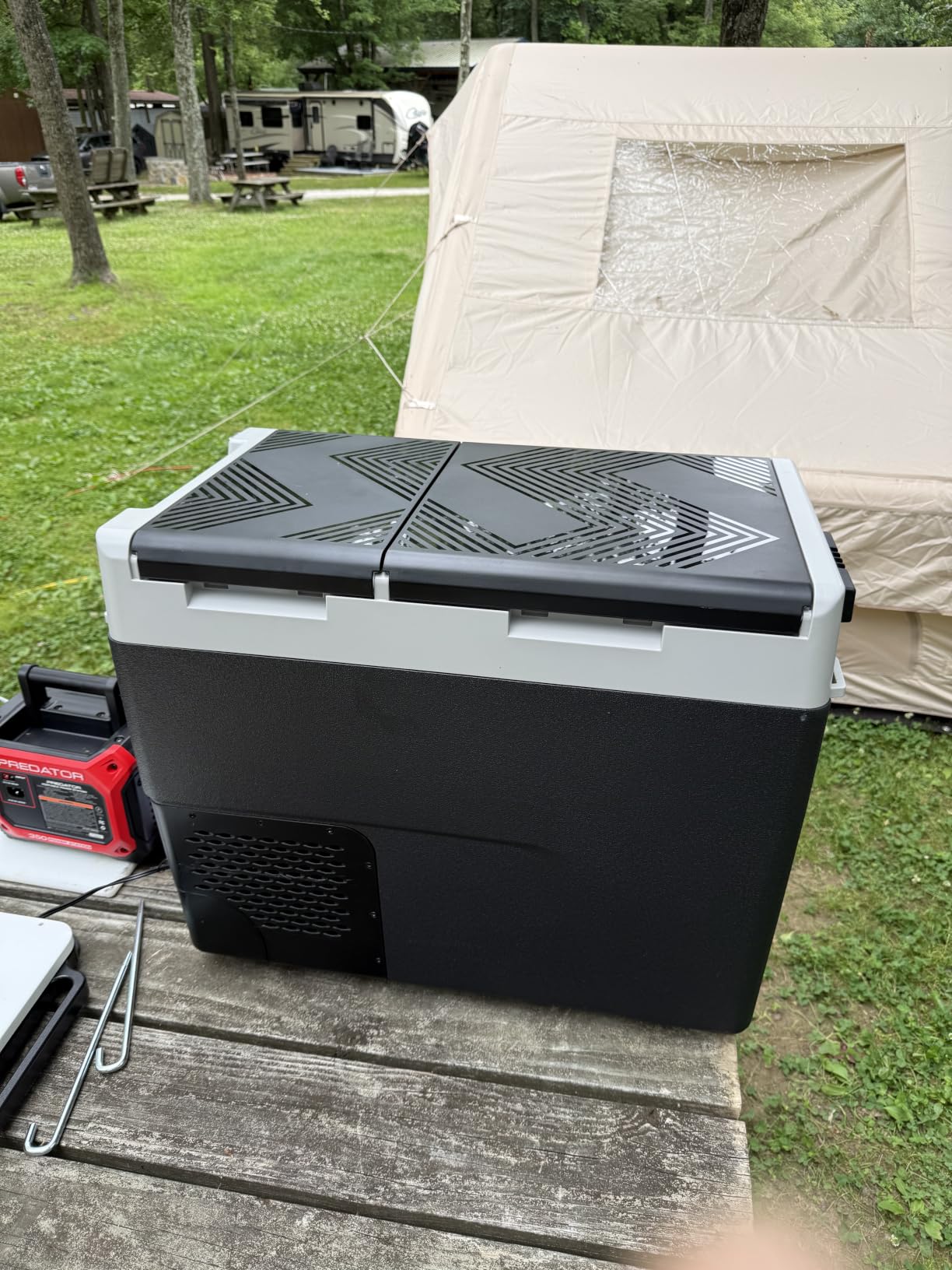
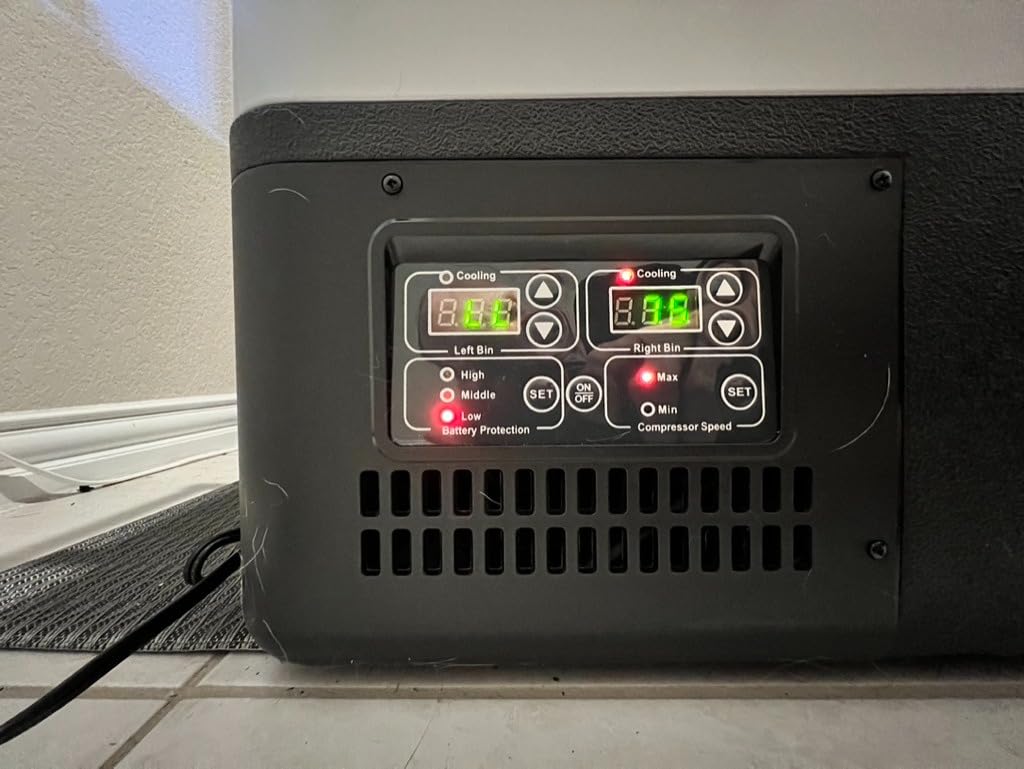
Off-grid runtime is the reason to look at this one. The ECO mode draws under 30W and MAX pulls 50W, and one owner measured 48 hours of continuous running on an EcoFlow power station with 89 percent charge still remaining. That figure makes the CF026 a realistic choice for a smaller solar setup where a heavier draw would eat your margin.
Both zones are independently controlled across -4F to 68F, and cooling is quick for the class: 77F to 32F in 15 minutes and down to -4F in 45. Four side fixing holes are a genuinely smart addition for off-road and marine use, letting you strap the unit down rather than relying on friction alone.
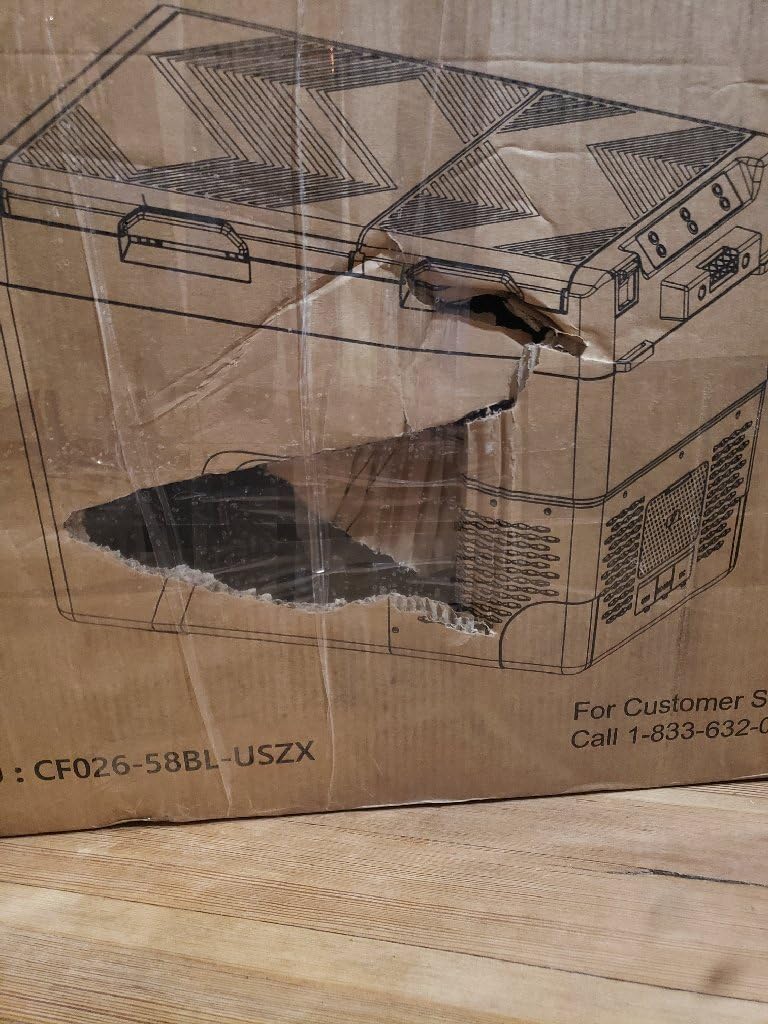
Smaller details got attention too. The lid-activated interior LED light means you do not have to fumble for a switch in the dark, the handles are noticeably larger than on competing brands, a removable basket organizes the load, and a bottom drain plug speeds up cleaning. Customer service has also replaced faulty units without argument, according to several reviewers.
The negatives are physical rather than electrical. At 37.3 pounds it is a two-person lift when loaded, and the freezer compartment is shallower than most buyers expect. Zone temperatures can read high before settling, so give it time after opening. A few owners note the fan motor seems to run continuously, which raises a fair question about long-term durability. There is no built-in battery, so you need a separate power source, and both included cords may not fit the on-board storage compartment.
How much solar does a fridge like this need?
For steady ECO-mode operation, most boondocking setups that work reliably land in the 200 to 400 watt range of panel capacity paired with a 500 to 1000Wh power station. The sub-30W ECO draw is what makes that achievable without a large array. If you plan to run MAX mode continuously or add a second appliance, double the panel count.
Is dual zone with no built-in battery a problem?
Only if your plan depends on being cordless. If you are installing the unit permanently or running it from a vehicle socket or power station, the absence of an internal battery is irrelevant and saves weight. If you want to grab the fridge and walk to a picnic table, look at the cordless design in our tenth pick instead.
9. Setpower DT45 48QT – Best Balanced Dual-Zone Layout
Setpower 12V Refrigerator 48QT Dual Zone Electric Cooler for Car
48QT split into 18QT and 30QT zones
38W in MIN mode, 50W in MAX
37 lb weight/32F in 15 minutes
3-year compressor support
Pros
- Ties for the highest average rating in the group at 4.6
- Lowest quoted power draw at 38W in MIN mode
- Integrated handle
- drainage hole
- and LED light
- Included magnetic plate for magnetic accessories
Cons
- At 37 pounds it is effectively a two-person lift when loaded
- Smallest review base so far at 151 ratings
- Draws hard amps on startup from a vehicle socket
The DT45 ties for the highest average rating in the group at 4.6, with 78 percent of ratings at five stars and only 5 percent at one. The 18-quart and 30-quart split is the most balanced dual-zone layout here, and reviewers note it works well for keeping drinks cold in one side while food freezes in the other. Capacity is flexible enough for 61 cans of cola, 33 bottles of water, or 13 bottles of wine.
Power is where it really stands apart. The MIN mode draws 38W, the lowest quoted figure in this group, and MAX pulls 50W while still hitting 32F in 15 minutes from 77F and -4F in 45 minutes. That efficiency is precisely what makes it viable on smaller power stations. App control handles temperature and status from a phone.

Design details suggest someone camped before designing it. There is a drainage hole for easy draining, an LED light, an integrated handle, strap securement points, and a stackable basket. A magnetic-ready metal plate in the box lets you attach magnetic accessories, and a 3-year compressor tech support commitment sits alongside a 1-year unit warranty.
Two cautions. At 37 pounds it is effectively a two-person lift when loaded, and more importantly, the review base is only 151 ratings, the thinnest here, so the long-term track record is less well documented than for the higher-volume brands. It also draws hard amps on initial startup, so budget for that surge if you are plugging directly into a vehicle socket.
Why does the rating matter more than the review count?
Because a 4.6 across 151 owners with a tight distribution tells you recent production runs are performing, while a 4.4 across 3000 owners tells you a broader picture including older units. The DT45 has the better recent signal, but the smaller base means fewer eyes on failure modes. If reliability under warranty is your priority, check whether the 3-year compressor support applies before you commit.
How does the zone split compare?
An 18-quart and 30-quart split wastes the least space of the dual-zone layouts here for a mixed load. The BODEGA TAW45 runs a 13.96-quart side that is genuinely awkward for food, and the BODEGA T50 splits 30 and 23. For a household that freezes meals on one side and stores drinks on the other, 18 and 30 wastes the least space.
10. LiTHELi U20 20L – Best Cordless Fridge with Batteries
LiTHELi 12 Volt Portable Refrigerator with 2 U20 Batteries,20L/21QT Car Fridge, Portable Freezer (-4℉~68℉),Compressor Cooler with 12V/24 DC for Outdoor Camping Overlanding Truck RV SUV Van
20L / 21QT capacity
Two 74Wh batteries included
35dB noise
24 lb weight
-4F to 68F range
Pros
- Only truly cordless option in the group
- Quietest unit here at 35dB
- Backpack straps and 3-way mount for overlanding
- USB-C output charges phones and laptops
Cons
- Lowest rating here at 4.0 with 13 percent one-star
- Real battery runtime far short of the claim
- AC power cord sold separately
- Only a 1-year warranty
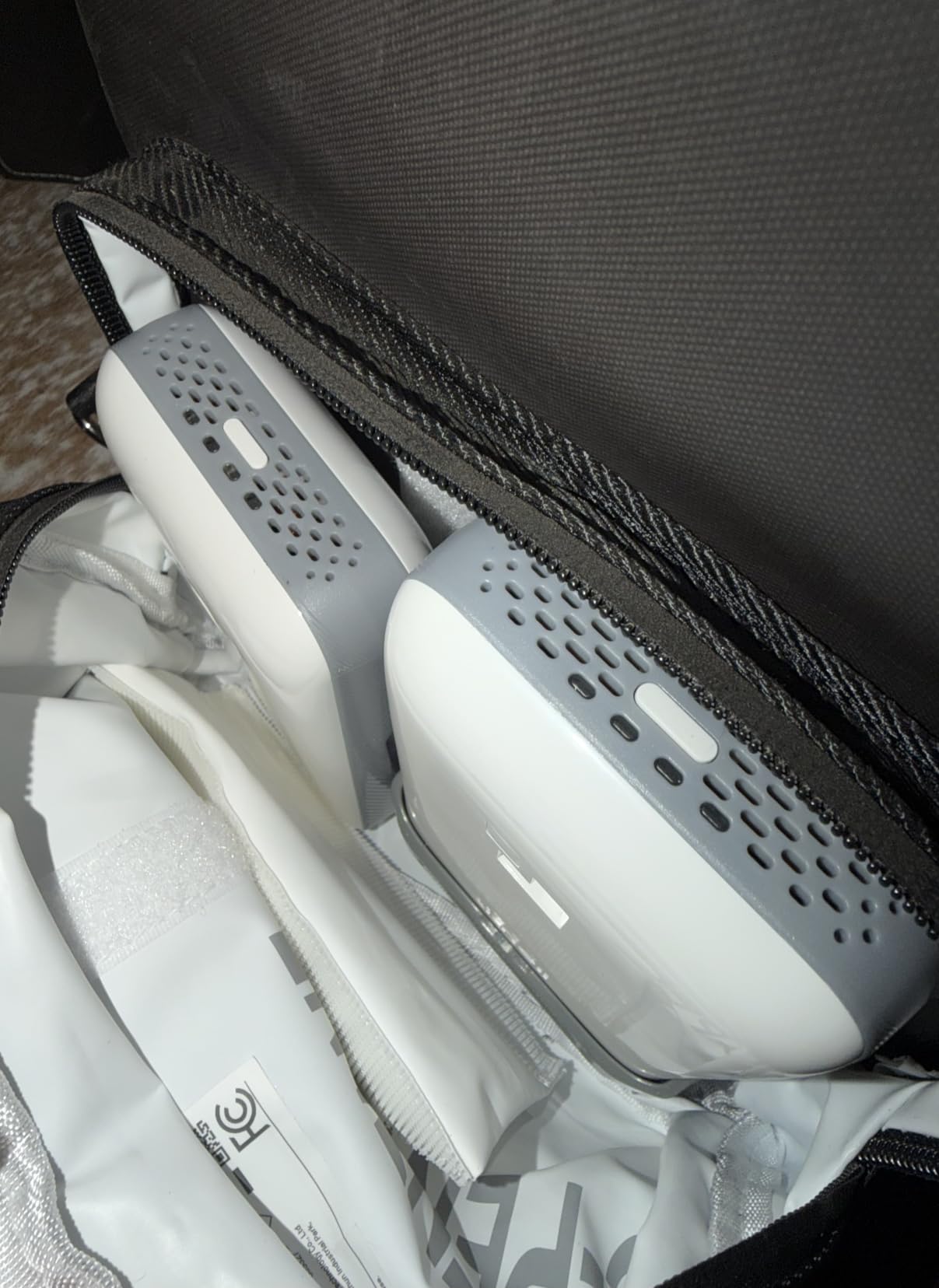
This is the only cordless model in the group, and that is its entire appeal. Two 74Wh U20 IPS Super batteries are included in the box, the backpack straps are rated to 50 pounds, and a 3-way mounting system fits e-bikes, RVs, and trucks, which makes it viable inside a tent. A 20V USB-C port on the battery pack charges phones and laptops.
Cooling itself is competitive. The compressor moves 77F to 32F in 15 minutes across a -4F to 68F range, roughly three times faster than a thermoelectric cooler of the same size. The 20-liter interior holds 24 cans and 6 wine bottles with collapsible dividers, IPX2 water resistance covers spray, and triple-layer insulation holds temperature for 4 hours during an outage.
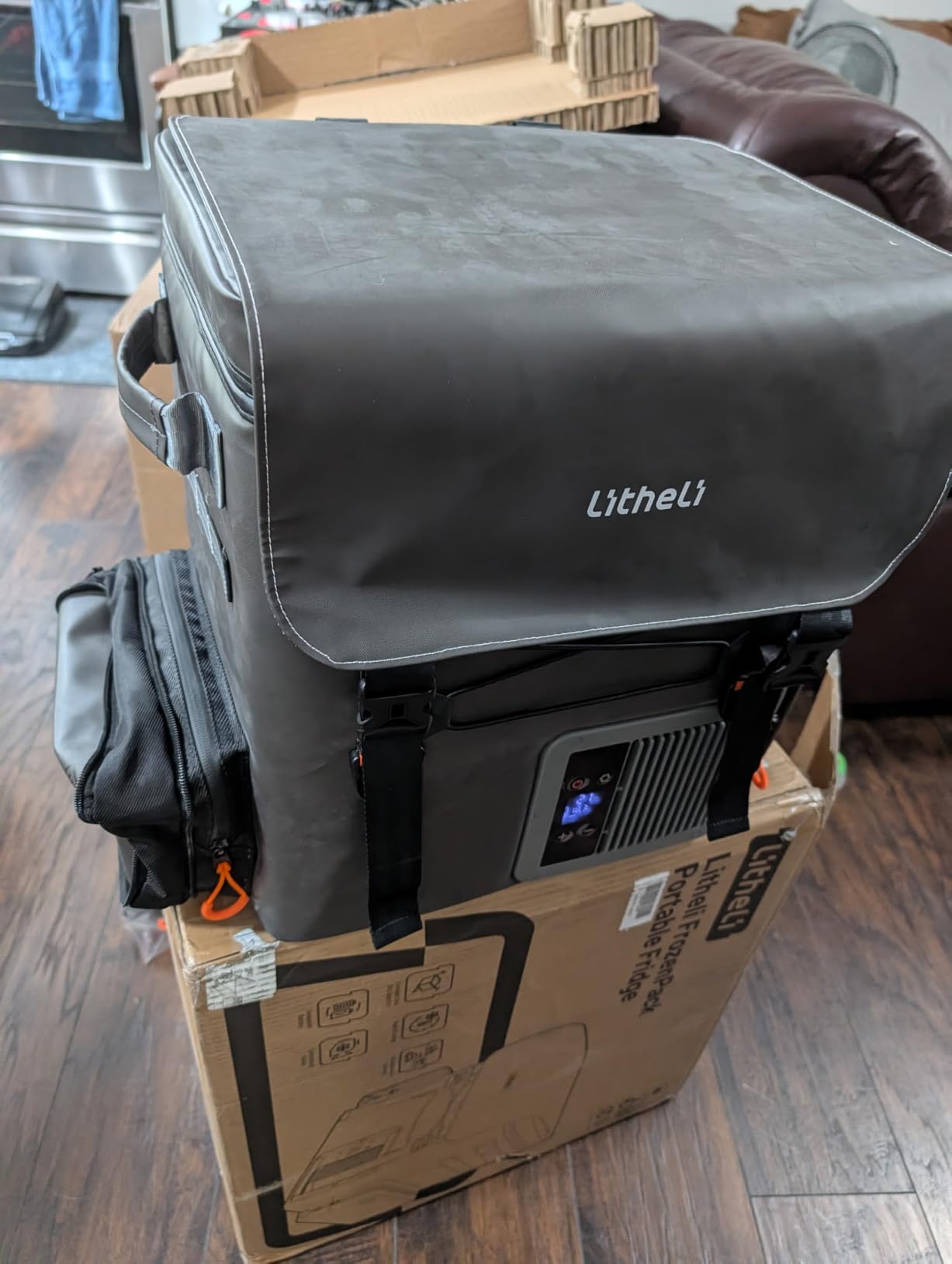
Here is the honest problem. The advertised runtime is 4 to 5 hours per battery, or up to 12 hours combined, and pre-cooling on AC or DC extends that to about 8 hours per pack. Owners measuring real runtime report roughly 1 to 1.5 hours per battery instead. That gap between claim and measurement is what drives the 13 percent one-star share and the 4.0 average, the lowest here.
It is also not dual zone despite the compressor class, the AC power cord is sold separately, and the warranty is a single year. Treat the batteries as a few hours of genuine cordless freedom rather than an all-weekend power supply, and buy the AC cord at the same time.
Who is a cordless fridge actually for?
Overlanders, hikers, and tailgaters who genuinely need to carry cold food away from a vehicle, and campers who want one small fridge inside a tent without running cable to a power station. If you are installing a unit in a galley, cordlessness adds little and the separate AC cord purchase is pure cost.
Should you buy two spare batteries?
Only if you plan extended cordless use, and check the runtime yourself before committing. Given that measured per-pack runtime lands well below the claim, buying a third battery is a reasonable hedge for multi-day trips. For anything longer, a power station with a 12V output will serve you better than a stack of small packs.
How to Choose a Portable RV Fridge in 2026: Buying Guide
Every fridge in this roundup is a compressor unit, and that single fact settles most of the argument. Compressor fridges use the same refrigerant cycle as a kitchen refrigerator, run on 12V DC or 120V AC, and drop to freezing temperatures quickly. They draw between roughly 30W and 60W depending on mode, and modern three-level battery protection prevents them from flattening your vehicle battery. If you are still running an absorption unit that burns propane and will not cool below about 40F on a hot day without being perfectly level, replacing it is the single biggest quality-of-life upgrade available to an RV owner.
Compressor vs thermoelectric vs absorption
Thermoelectric coolers use a Peltier module and only work well when there is a temperature difference to exploit, typically cooling to about 40F below ambient in a moving vehicle. They are quiet and inexpensive, and they are not fridges. Absorption units run on propane, AC, or a 3-way combination and are completely silent, but they cool slowly, must stay level, and perform poorly in high heat. Compressor units are faster, reach -4F or lower, tolerate 30 to 40 degrees of tilt, and draw less than an absorption fridge on its heating setting. For anything beyond a weekend of soft drinks, a compressor is the right category.
Power options and what they really cost you
Every model here runs on 12V DC, and all but a couple include a 100-240V AC adapter so the same fridge works from a campsite pedestal, a household outlet, or a power station. There are no propane options in this group because compressor cooling makes them obsolete for portable use. The practical sizing rule is to look at the ECO or MIN figure rather than the MAX figure, since you will run the compressor far more often at low duty cycle than at full blast. A unit drawing under 40W in ECO mode can sit comfortably on a 500 to 1000Wh power station with a 200 to 400 watt panel, while a heavier draw needs a larger array.
Dual zone or single zone?
Single-zone units are simpler and lighter, and they can run as a fridge or a freezer but not both at once. Dual-zone units give you independent temperature control in two compartments, which is the difference between cold drinks and frozen food in the same box. For a solo traveler or a couple, single zone is enough. For a family that freezes meat and drinks simultaneously, dual zone is close to mandatory. Watch for uneven splits, since a compartment under about 14 quarts is more of an accessory bin than a food zone.
Capacity, dimensions, and RV fitment
Match capacity to trip length and household size: roughly 19 to 23 quarts covers two people for a weekend, 45 to 50 quarts suits a family of three or four for a week, and 60 liters plus is for full-time households or truck-bed camping. Measure the space before you order, and pay attention to which dimension is the widest. Many of these units are built wide and shallow, which is ideal for a slide-out or a truck bed, but a deep model may not fit a shallow cabinet. Leave clearance around the condenser vents and check your doorway width if you plan to carry it inside after a drive.
Battery protection and real power draw
Three-level battery protection, usually labeled H/M/L or L/M/H, sets different startup and shutdown voltages so the compressor cuts out before it drains your starting battery. It is close to standard on every model here. More important is idle draw: a fridge cycling at 0.6W between compressor runs is far kinder to a battery bank than one that idles at 2W or more. If you are running two large units off one vehicle system, remember they compete for the same socket, and add a power distribution box.
Common problems to expect
App connectivity is the most common complaint across this entire category, with Dometic, ICECO, EcoFlow, and generic brands all drawing reports of failed registration and unreliable Bluetooth pairing. Our advice is to learn the onboard panel first and treat the app as a convenience. Second, thermostat offset is nearly universal: displays commonly read 5 to 10 degrees high, so calibrate against a cheap thermometer in the first week. Third, manual defrost units need more attention than advertised, particularly in humid weather. Fourth, budget units are louder and less efficient than their spec sheets imply. Fifth, units over 35 pounds are genuinely hard to move solo in a tight RV interior, and the wheels and handles included with the larger models are not decorative.
Frequently Asked Questions
What is the most reliable 12V compressor fridge for an RV?
Reliability tracks the compressor, not the brand badge. Units with a named SECOP or Danfoss compressor and a 5-year compressor warranty carry the most long-term confidence, and owners report Sawafuji swing motor compressors running 10-15 years without issue. Among the units we tested, the ICECO GO20 pairs a SECOP compressor with ETL certification and the longest compressor warranty available, while the BougeRV CR22 has the highest owner satisfaction score of the group.
Are 12V compressor fridges any good compared with absorption fridges?
Yes, for almost every camping scenario. A compressor fridge cools from 77F to 32F in about 15 minutes, reaches minus 4F or lower, and tolerates 30 to 40 degrees of tilt. An absorption fridge is silent but cools slowly, must stay level, and often struggles in high heat. The compressor costs a few amps and makes some noise, and that is the only real trade.
Should I buy a dual zone or single zone portable RV fridge?
Buy dual zone if your household freezes food and drinks at the same time, which is typical for a family of three or four. Buy single zone if you are one or two people who only need to chill or freeze, since it is lighter, cheaper, and easier to move. Also avoid splits with a compartment under about 14 quarts, because it is too small to be useful for real food.
How much power does a portable RV fridge draw and can I run it on a power station?
Typical draw is between 30W and 60W depending on mode, with most units using an ECO or MIN setting most of the time. A fridge pulling under 40W in ECO mode runs happily on a 500 to 1000Wh power station paired with a 200 to 400 watt solar panel. Always check startup draw as well, since the compressor pulls hard amps for the first few seconds.
What are common problems with 12V RV fridges?
The five most common are unreliable app and Bluetooth pairing, a thermostat display that reads 5 to 10 degrees high, more frequent manual defrost than expected, louder and less efficient budget compressors, and difficulty moving units over 35 pounds solo. All are manageable once you know about them, and every one is covered in the reviews above.
What size portable fridge do I need for a family of four in an RV?
For a family of four, look at 45 to 50 quarts, or roughly 45 to 48 liters, and prefer a dual-zone model so drinks and frozen food stay separate. For a week-long trip or full-time living, step up to 60 liters. Measure the widest cabinet dimension and your doorway before ordering, since many of these units are wide and shallow rather than deep.
Final Verdict: The Best Portable RV Fridges of 2026
After comparing all ten, the BougeRV CR22 remains our pick for the best portable rv fridges overall. It pairs the highest owner rating in the group, backed by the largest review base, with a genuinely RV-friendly footprint, low idle draw, and a compressor that handles rough roads without complaint. Buy the EUHOMY 48QT for volume and value, the EUHOMY 19QT when space is the constraint, and the ICECO GO20 when the fridge stays installed and you want a named compressor with a 5-year warranty behind it.
Whichever you choose, run it empty for a full cooling cycle before you load it, calibrate the display against a real thermometer, and decide early whether the app is worth the dependency. Most owners end up using the onboard panel anyway.