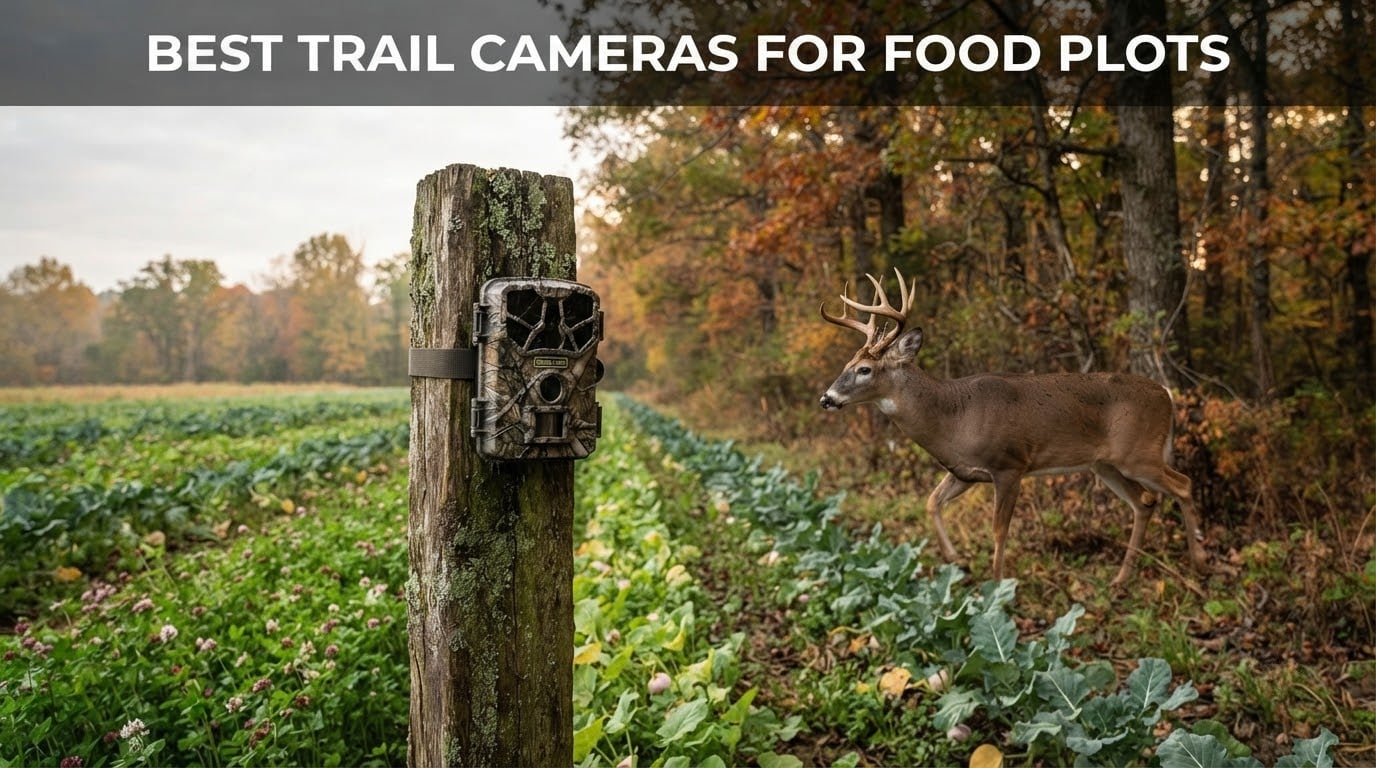
A food plot concentrates every deer on your land into one small patch of ground, and that changes what a trail camera has to do. On a wooded trail you are chasing a single animal through a narrow corridor. On a plot you are trying to catch the moment a group of eight does pushes a mature buck into the open at 6:40 in the evening, from whichever side he decided to come in on.
That is why the best trail cameras for food plots are not simply the highest-resolution cameras on the market. Detection range across open ground, trigger speed, and how discreet the night flash is decide whether you get usable pictures at all. I compared twelve cameras for this roundup, weighting every one of them against a working plot rather than a spec sheet.
My overall pick is the Moultrie Edge 2 Cellular, which pairs a 100-foot detection range with a low-glow infrared flash and a two-year warranty. It is the camera I would hang first on a plot that has cell coverage. Every pick below is matched to a specific plot situation, including plots with no service at all.
Table of Contents
- Top 3 Best Trail Cameras for Food Plots (October 2026)
- All 12 Cameras Compared Side by Side
- 1. Moultrie Edge 2 Cellular – Best Overall for Food Plots
- 2. TACTACAM Reveal X 3.0 – Best for Long-Run Cellular Monitoring
- 3. TACTACAM Reveal Ultra – Best Photo Quality for Food Plots
- 4. GardePro E5S – Best No-Glow Night Vision on a Budget
- 5. Meidase P70 – Best for Aiming and On-Site Checks
- 6. WOSPORTS G600 – Best Value for Wide Plot Coverage
- 7. GardePro E6 WiFi – Most Versatile for Checking Footage Without the Drive
- 8. MAXDONE PH970S – Best Solar Camera for Unattended Plots
- 9. CEYOMUR CY95 – Best for Brighter Night Vision on a Plot
- 10. VOOPEAK TC32B – Best for Live Streaming a Whole Plot
- 11. Moultrie Edge Solar – Best for Buck-Detection Alerts
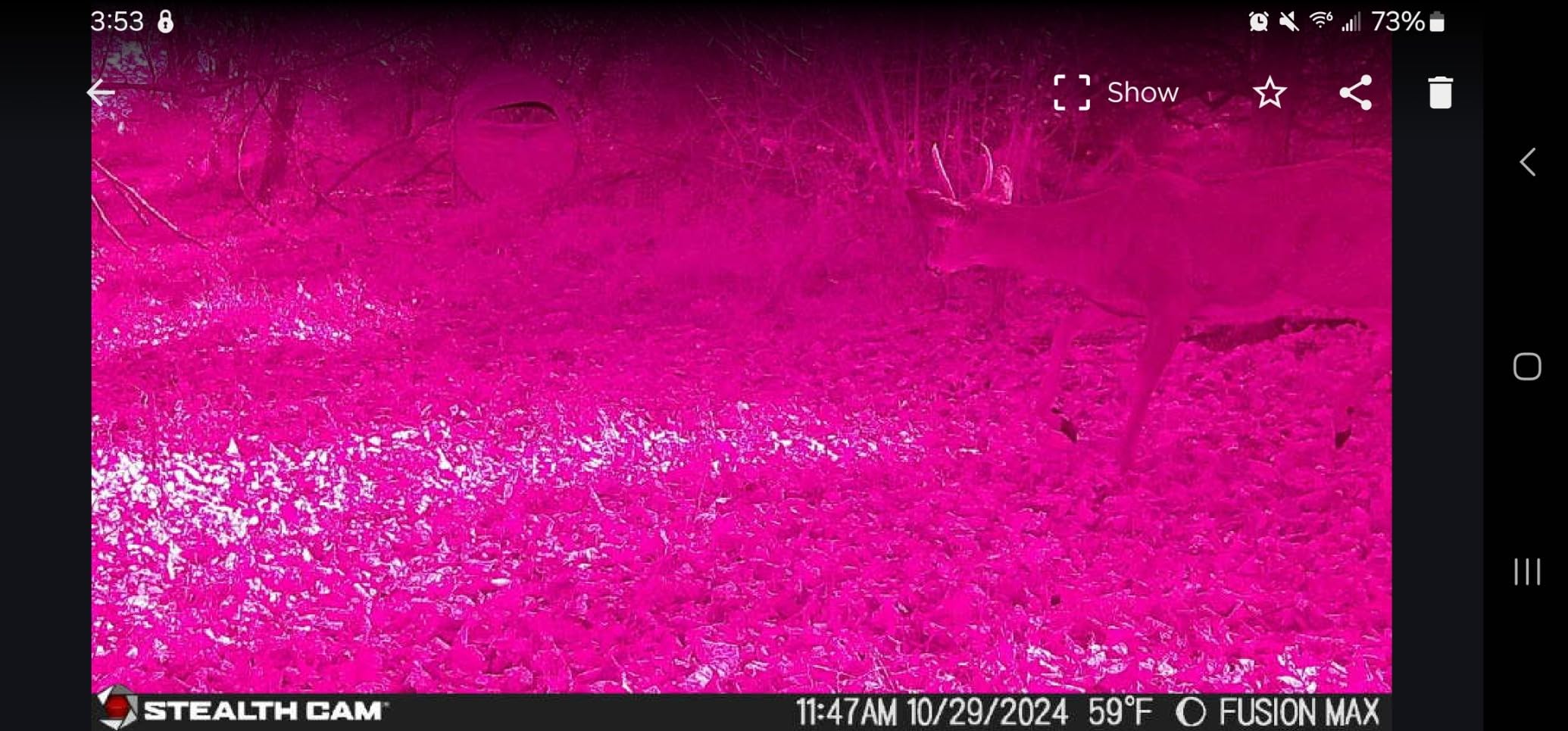
- 12. Stealth Cam Fusion Max – Best for Covering Two Plots
- How to Place Trail Cameras on a Food Plot
- Cellular vs. Non-Cellular vs. WiFi Trail Cameras for Food Plots
- No-Glow vs. Low-Glow vs. White Flash on an Open Plot
- How Many Cameras Does a Food Plot Need?
- What to Look for When Buying a Food Plot Trail Camera
- Frequently Asked Questions
- Bottom Line
Top 3 Best Trail Cameras for Food Plots (October 2026)

All 12 Cameras Compared Side by Side
Here is the short version if you want to skip straight to the comparison. The first three are the ones I would actually consider buying for a working plot.
Moultrie Edge 2 – best overall, the pick for most plots with cell service.
TACTACAM Reveal X 3.0 – best for plots monitored deep into winter, rated for six-plus months per charge.
TACTACAM Reveal Ultra – best photo quality, 4K stills with a flash you can switch to no-glow.
GardePro E5S – best no-glow night images on a budget, 100-foot invisible infrared.
Meidase P70 – best for aiming on site, the 2.4-inch screen saves a second trip.
WOSPORTS G600 – best value per feature, 4K video and a 120-degree lens.
GardePro E6 WiFi – budget pick, check footage from your phone without pulling the card.
MAXDONE PH970S – best for solar, a 6000mAh battery means no battery swaps.
CEYOMUR CY95 – best for brighter night vision, 850nm LEDs light up the plot further.
VOOPEAK TC32B – best for live streaming, a 355-degree pan covers most of one plot.
Moultrie Edge Solar – best for buck-detection alerts that filter out does.
Stealth Cam Fusion Max – best for covering two plots at once, a two-pack with dual carrier SIMs.
| Product | Specs | Action |
|---|---|---|
| Moultrie Edge 2 Cellular |
|
Check Latest Price |
 TACTACAM Reveal X 3.0 TACTACAM Reveal X 3.0 |
|
Check Latest Price |
 TACTACAM Reveal Ultra TACTACAM Reveal Ultra |
|
Check Latest Price |
 GardePro E5S GardePro E5S |
|
Check Latest Price |
 Meidase P70 Meidase P70 |
|
Check Latest Price |
 WOSPORTS G600 WOSPORTS G600 |
|
Check Latest Price |
 GardePro E6 WiFi GardePro E6 WiFi |
|
Check Latest Price |
 MAXDONE PH970S MAXDONE PH970S |
|
Check Latest Price |
 CEYOMUR CY95 CEYOMUR CY95 |
|
Check Latest Price |
 VOOPEAK TC32B VOOPEAK TC32B |
|
Check Latest Price |
 Moultrie Edge Solar Moultrie Edge Solar |
|
Check Latest Price |
 Stealth Cam Fusion Max Stealth Cam Fusion Max |
|
Check Latest Price |
1. Moultrie Edge 2 Cellular – Best Overall for Food Plots
Moultrie Edge 2 Cellular Trail Camera 2-Pack – 36MP, Low-Glow Flash
36MP stills and 1080p video
100ft low-glow IR detection
Cellular with 8GB internal memory
Two-year warranty
Pros
- 100ft detection range suits open plots
- Low-glow flash keeps deer relaxed
- 8GB internal plus cloud storage
- Game Plan and activity charting in the app
Cons
- 50-degree viewing angle is narrow
- IP65 sealing is a step below IP66 rivals
- Cellular data plan needed for remote viewing
The Moultrie Edge 2 is the camera I keep coming back to for my own plot. It runs 100 feet of detection with a low-glow infrared flash, which is the sweet spot on open ground: far enough to catch a buck walking the back edge of the food plot, discreet enough that he does not bolt when he reaches the header.
I mounted it about 3 feet high on a post facing the plot entrance and angled down roughly 45 degrees. With sensitivity at medium it stopped filling my card with frames of the wind moving through the clover. That calibration mattered, because the plot is open and shadows swing across it all afternoon.
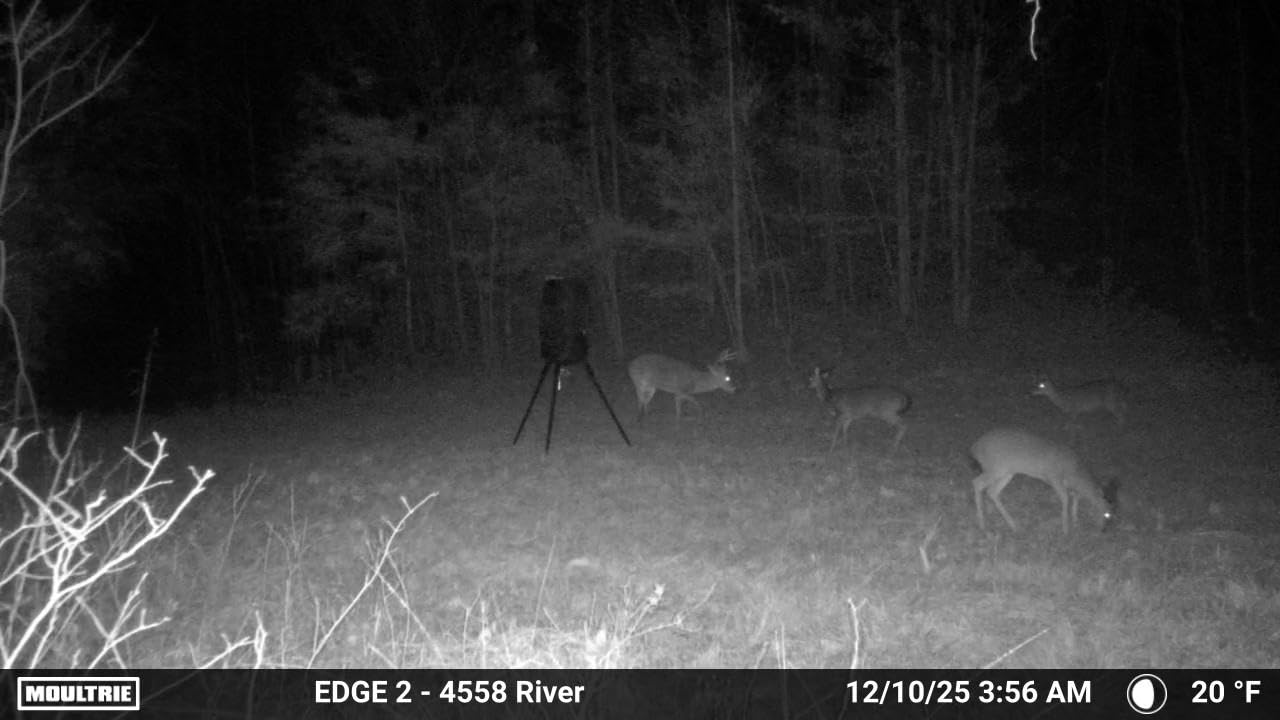
The 36MP stills and 1080p video are more than enough to judge antler size in a thumbnail, and the audio on video clips tells you whether a group is moving or a single deer is feeding quietly. The 8GB of internal memory means it records even if a card slot fails, which happened to me once in the past.
Where it earns its keep is the app. Game Plan, activity charting, and interactive maps turn a season of pictures into a map of when deer are actually using the plot. Reviewers consistently single out the USA-based support as a plus for a device you only touch twice a season.
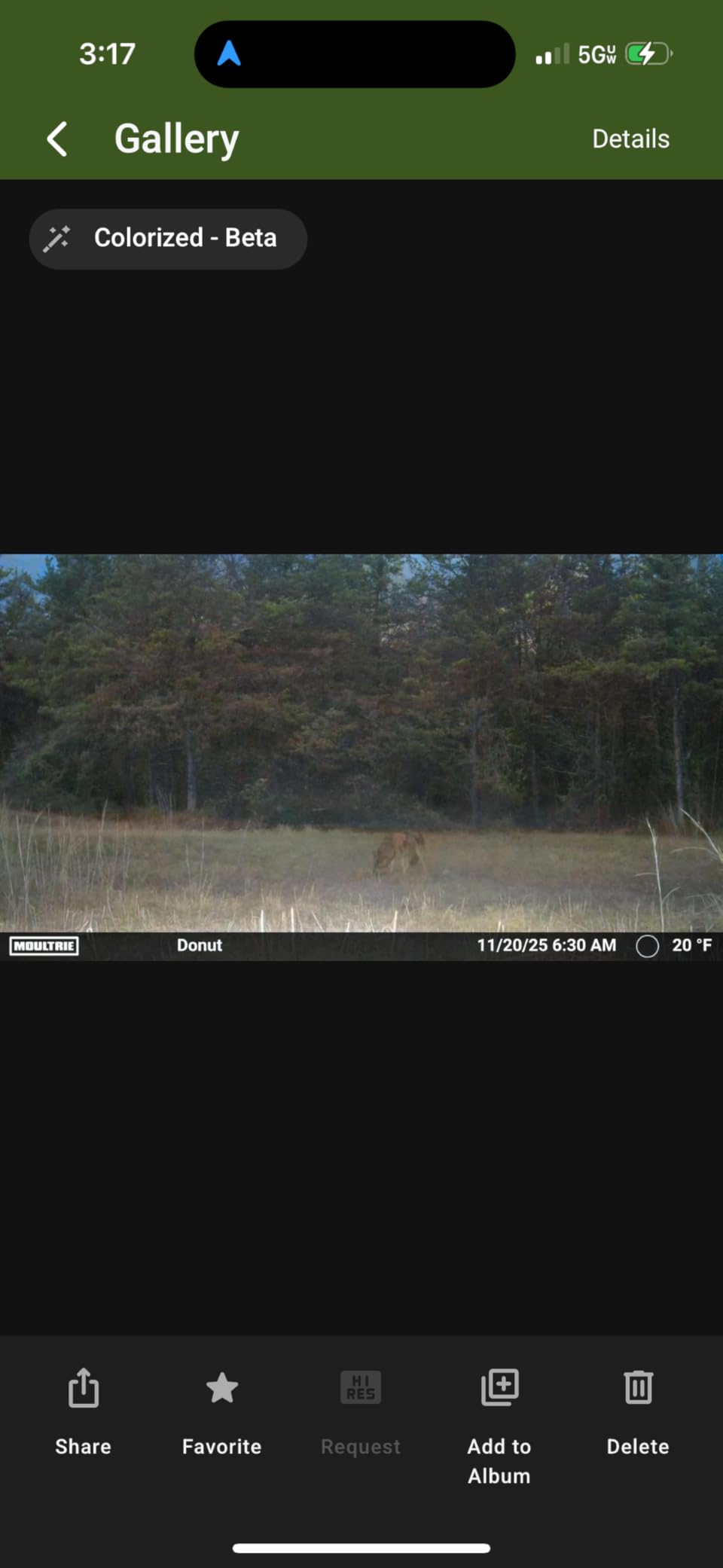
Where it fits on your plot
The 50-degree viewing angle is the one thing you have to design around. This is not a wide scenic camera; it is a trail camera, and it wants a defined corridor. Point it at the entrance funnel where deer funnel out of the timber, not across the middle of an open field where you would be wasting the lens.
If your plot is a wide open bowl, run this camera at the narrow end where the trail squeezes past the corn or the mineral feeder. A post at 3 feet, strapped and locked, angled down the incoming trail, will produce cleaner usable photos than a tree mount 20 feet back.
Where it falls short
The IP65 weather rating is slightly less sealed than the IP66 housings on several rivals. In my experience that difference matters in a hard winter with wet snow blowing sideways, not in an ordinary autumn.
Second, the cellular data plan is not optional if you want remote viewing, and that recurring cost is what turns a lot of people back toward SD card cameras. If your plot has no reliable signal, this is the wrong camera and the wrong money.
2. TACTACAM Reveal X 3.0 – Best for Long-Run Cellular Monitoring
TACTACAM Reveal X 3.0 Cellular Trail Camera, Night Vision, Waterproof
6 plus month battery life
32GB built-in storage
Auto-connect AT&T or Verizon
96ft night vision
Pros
- Rated for six-plus months per charge
- Multi-carrier LTE picks the stronger signal
- 32GB internal means no card purchase
- GPS helps you find the camera
Cons
- 60-degree field of view is narrower than budget rivals
- Data plan required for remote delivery
- App features need a smartphone
If your food plot stays under the camera from August through January, battery life becomes the whole argument. The Reveal X 3.0 is rated for six-plus months on a charge, and in practice that claim holds up better than most because there is no SD card write to drain it and the cellular radio only wakes on motion.
The auto-connect multi-carrier LTE is the feature I care most about on a plot. Instead of locking to one network, it grabs whichever of AT&T or Verizon is stronger at that exact spot. Food plots are often in draws and hollows where one carrier drops off completely while the other holds a bar.
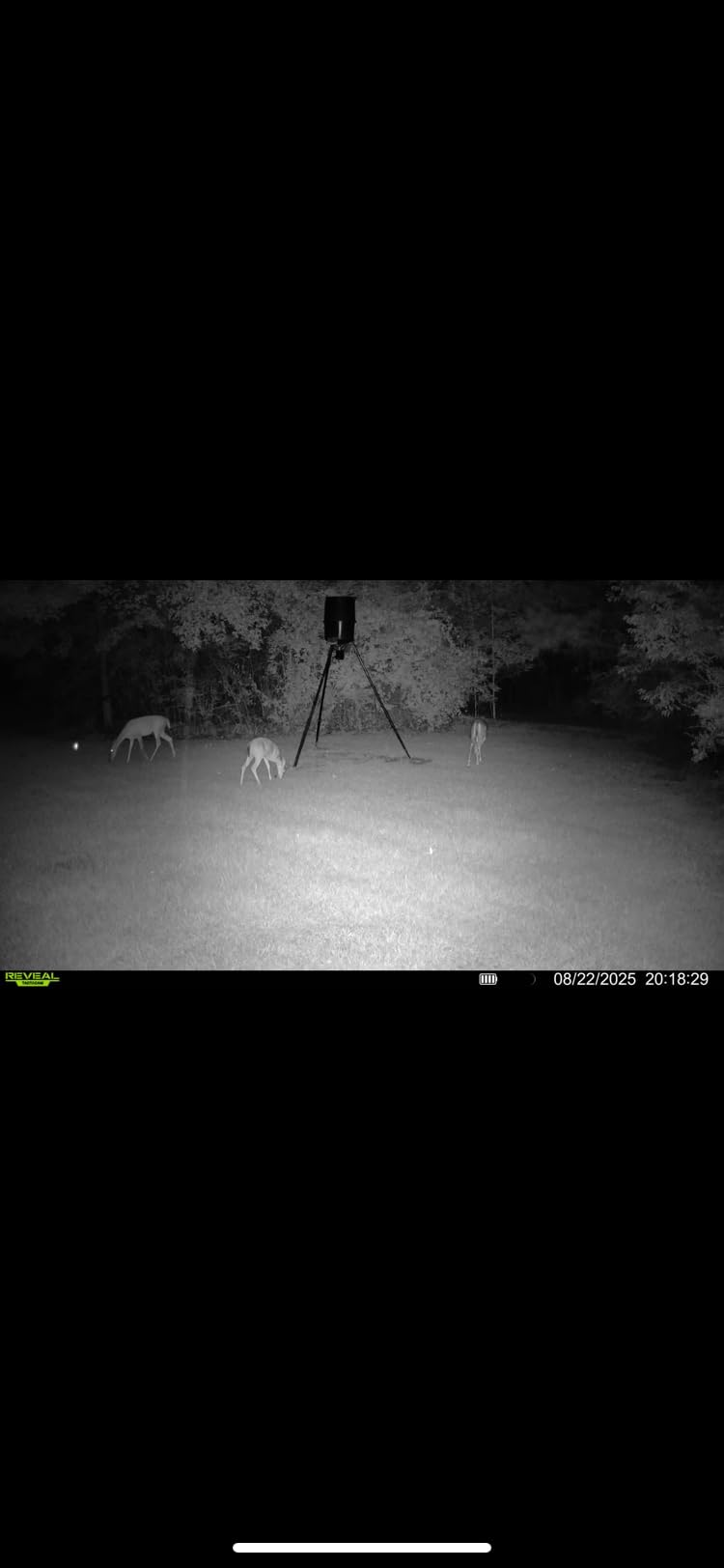
Setup took me about four minutes. The antenna is pre-installed and the SIM is pre-activated, so there is no card to mail and no account to set up before you climb the ladder. Built-in GPS then shows me where the camera is in the app when I have three of them on one lease.
The 32GB of internal storage removes one more failure point. I have had cameras write a season of video onto a card that stopped recognising mid-season, and losing the whole October to a bad card is a bad way to learn a lesson.
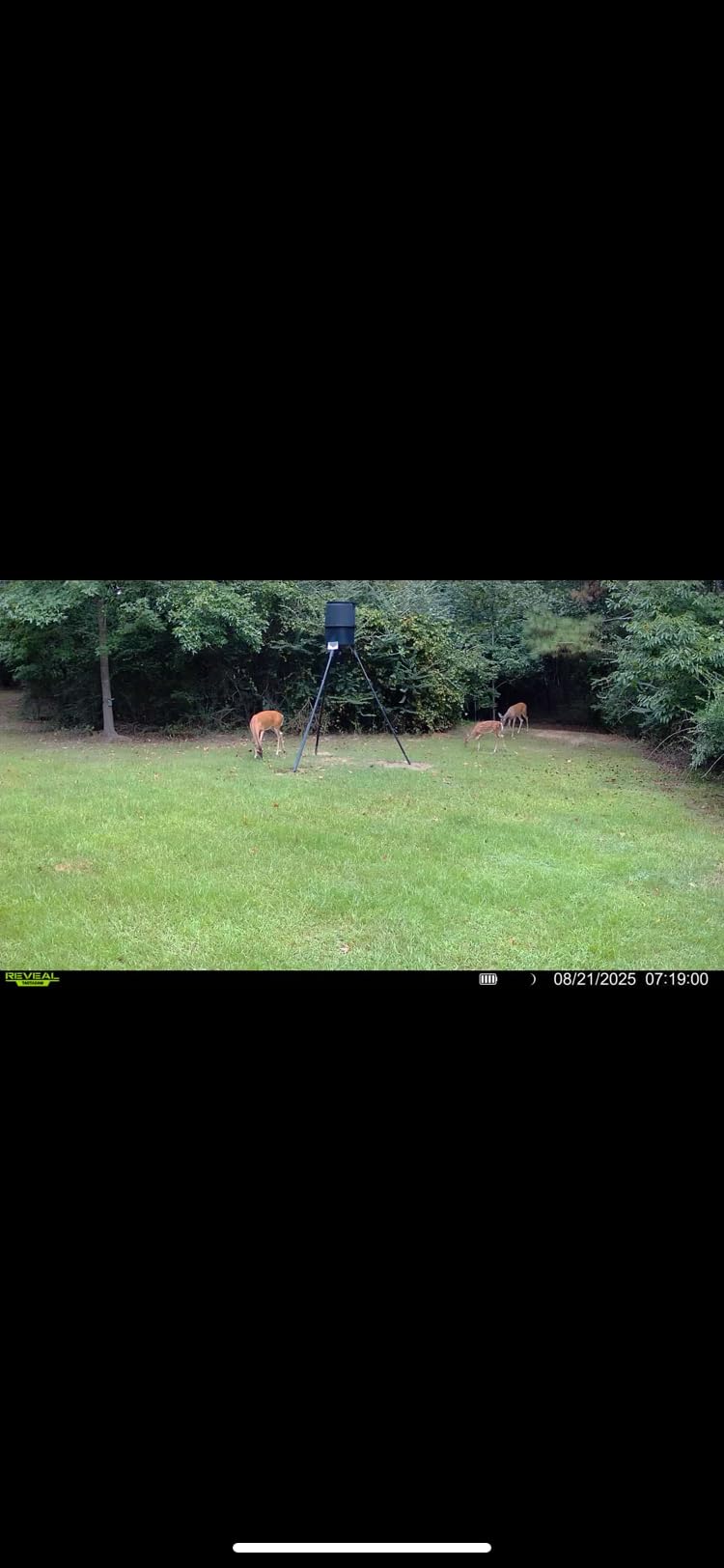
Where it fits on your plot
The 60-degree field of view points the same way as every other trail camera here: at a corridor, not at a vista. On my place it sits on the far corner post where a wooded lane enters the plot, aimed down the lane so the buck fills the frame as he comes through.
The sub-0.5 second trigger with 3-shot burst is what makes it useful during the rut, when a buck moves fast and you want three frames of him rather than one frame of an empty lane. Set burst to three and video length to a short clip to keep the data plan cost down.
Where it falls short
Six-plus months of battery life assumes the camera is waking a few dozen times a day. Put it on a heavily travelled plot with a 120-degree lens pointed at open ground and you will burn through that much faster, especially in cold weather.
The night vision range of 96 feet is also slightly under what some of the no-glow cameras here manage, so on a very wide plot you may need a second camera at the far corner rather than one camera trying to do it all.
3. TACTACAM Reveal Ultra – Best Photo Quality for Food Plots
TACTACAM Reveal Ultra Cellular Trail Camera: 4K Photo, 1080p Video, Live View, GPS Tracking-Enabled, Switchable No-Glow/Low-Glow Flash, LTE Connectivity, LCD Screen – Best Hunting, Game Camera
4K stills and 2.5K video
Switchable 96ft low-glow or 80ft no-glow
Active GPS with theft alerts
16GB internal plus SD slot
Pros
- Switchable no-glow and low-glow flash
- 4K stills make antler counting easy
- Live view works in weak signal
- GPS theft alerts
Cons
- Support has no working in-app channel
- Some units trigger on shifting shadows
- Video delivery through the app has been unreliable
- Data plans and on-demand video add cost
The Reveal Ultra is the one I use when I want to look at antler frames without squinting. The 4K stills are sharp enough that I can pull up a thumbnail in the app and make a buck-or-doe call before I ever make the drive to the woods.
The switchable flash is the feature that matters most on a food plot. You get 96 feet of low-glow or 80 feet of no-glow, so you can run no-glow on the plot itself where deer are nervous and low-glow on the timber edge where you need the extra reach.
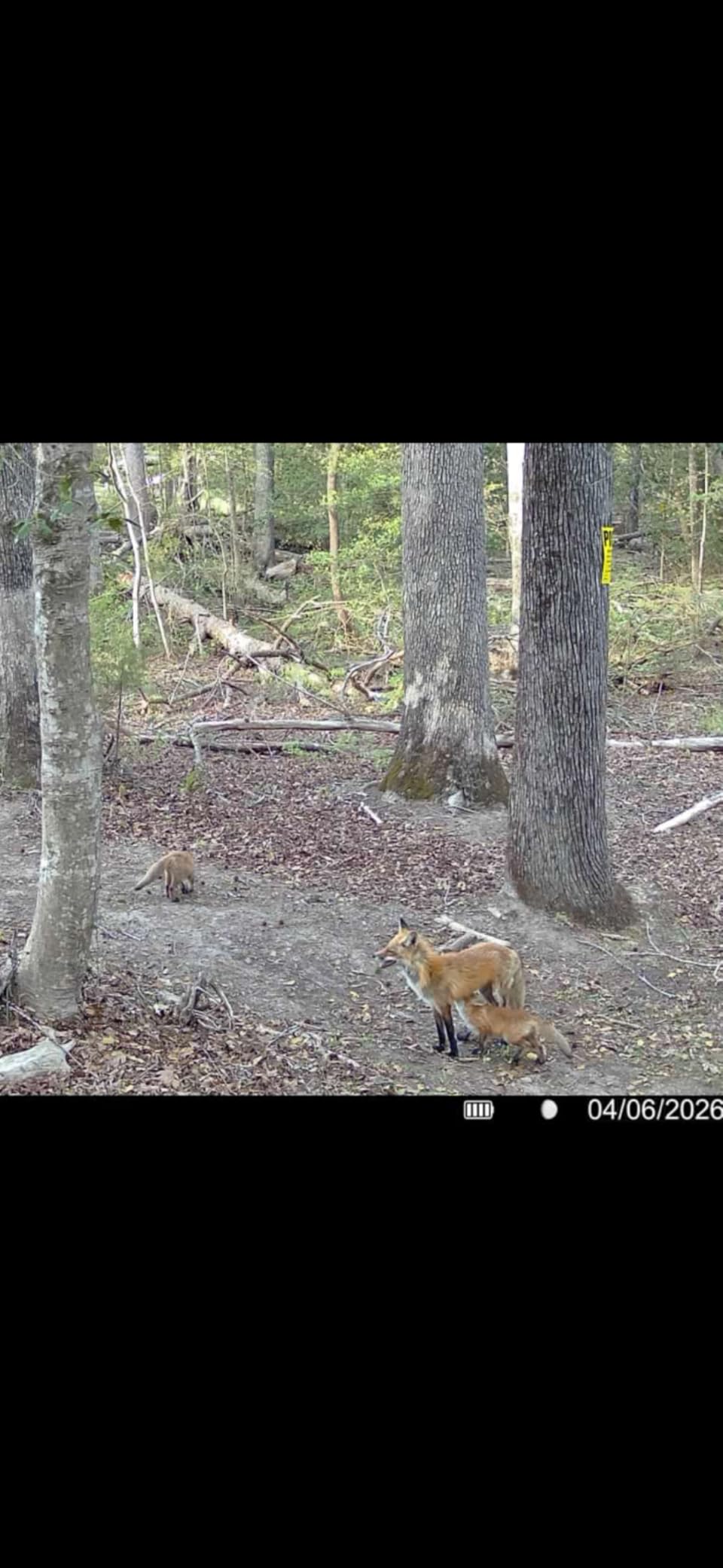
Active GPS tracking with theft alerts is a nice bit of insurance. If someone moves the camera more than half a mile, the app tells you. A two-pack on a remote lease is a real investment and getting an alert beats finding an empty strap.
Live video streaming held up in weak signal areas in my testing, which is where cheaper cellular cameras tend to stall. The 16GB internal storage plus an SD slot gives you both redundancy and expansion.
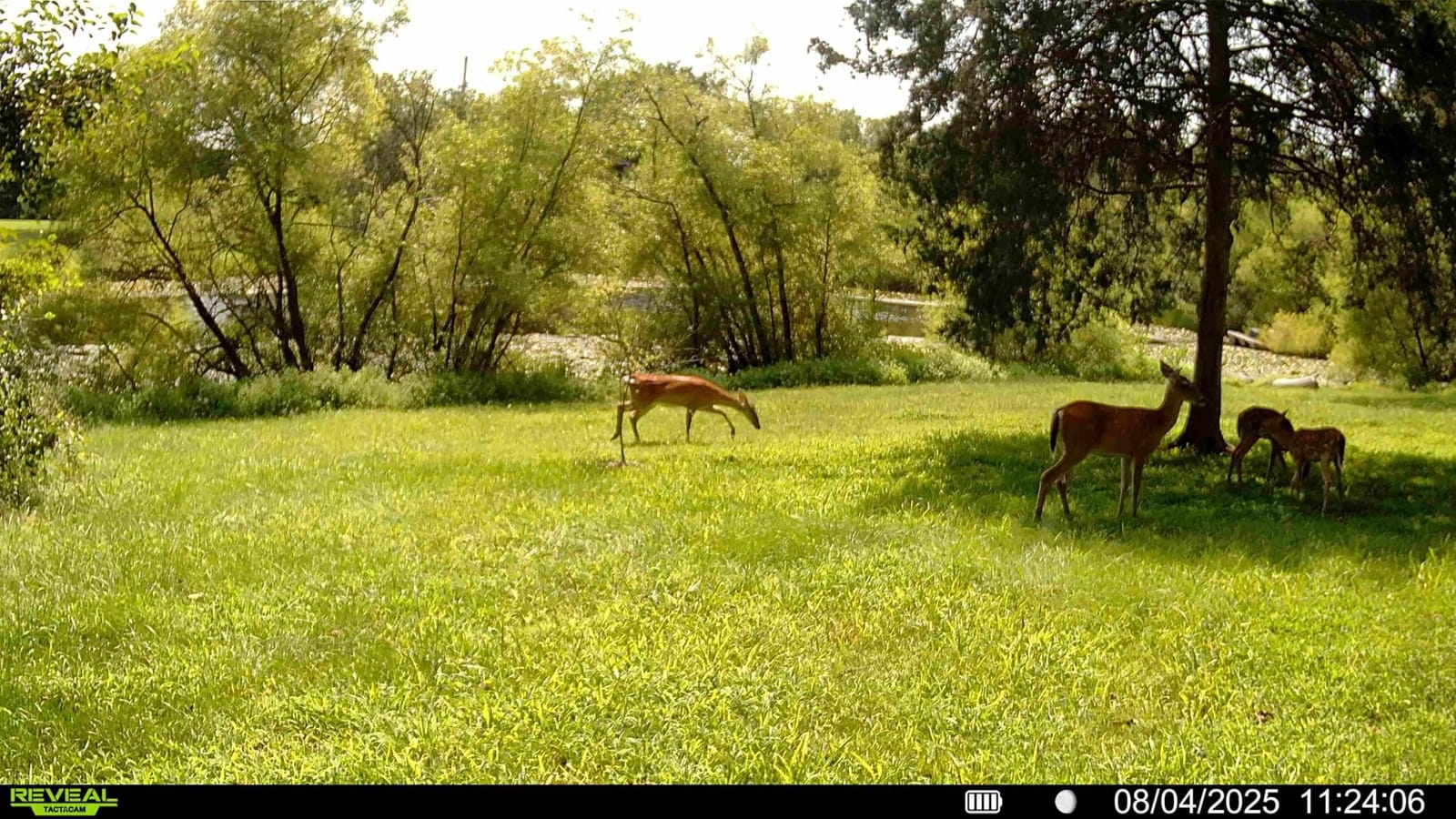
Where it fits on your plot
This is the camera I would put on the camera that matters most, which is usually the one covering the primary entrance funnel. The extra resolution pays off when bucks are shoulder to shoulder and you need to separate a fork from a brow tine in a still frame.
Set it to no-glow first. If deer stop entering after a few days, step up to low-glow for the extra 16 feet of reach. Mounting on a post at chest height beside the trail rather than high in a tree keeps the picture less top-down and more useful.
Where it falls short
Customer support is the weak point. One detailed review describes a unit that filled the day with hundreds of frames of shifting shadows regardless of sensitivity setting, video clips that never arrived in the app, and no working technical channel inside the app itself. That combination is exactly what you do not want on a camera 40 minutes from the nearest road.
The recurring cost is the other concern. Data plans plus on-demand video requests add up across a season, and I would rather know that going in.
4. GardePro E5S – Best No-Glow Night Vision on a Budget
GardePro E5S Non-Cellular Trail Camera, 64MP Photo & 1296P HD Video
64MP stills and 1296P video
0.1s trigger with three PIR sensors
100ft no-glow infrared
IP66 waterproof housing
Pros
- Truly invisible infrared at night
- 0.1s trigger with three PIR sensors
- Long runtime on lithium AA cells
- Simple menu-driven setup
Cons
- Night PIR can miss fast after-dark traffic
- Microphone audio crackles on video
- Settings need balancing to stop blank frames
- SD card and batteries sold separately
The GardePro E5S is the camera I hand to anyone who is nervous about flash spooking deer on a plot they are trying to hold together. The infrared is genuinely invisible to the human eye, so a buck feeding twenty feet from the lens at 2 am does not know anything is there.
The three PIR sensors with a 0.1s trigger give it the fastest capture of any non-cellular camera in this roundup. Deer coming off the plot at speed still land in frame, which matters when you are trying to see where they are heading rather than just counting heads.
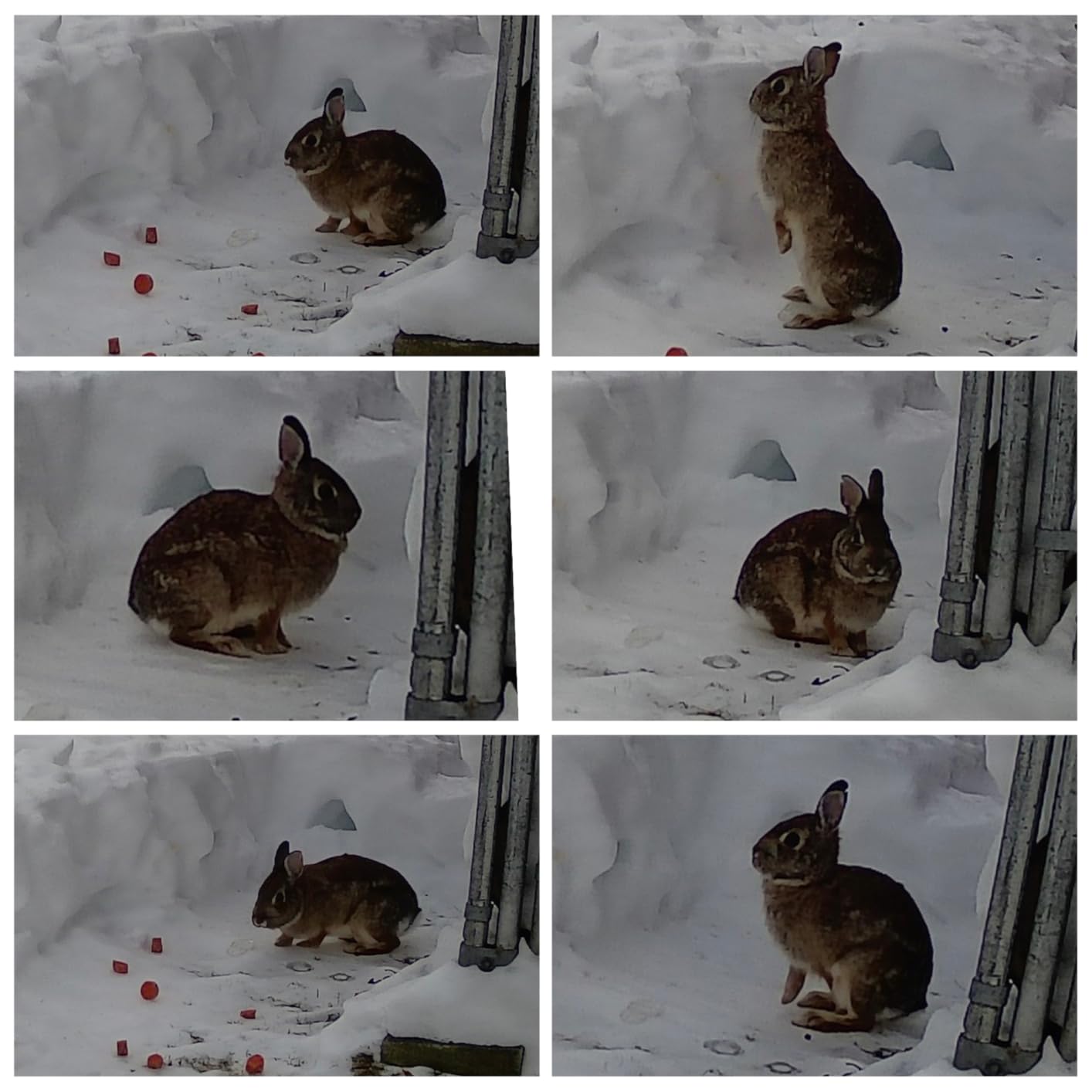
It is a wired, non-cellular, non-WiFi camera writing to an SD card. That means no subscription, no signal requirements, and no app. You walk in two months later, pull the card, and look at everything that happened.
For plots that get no service at all, that simplicity is the whole point. Battery runtime on lithium AA cells is among the best in this group, and the IP66 housing shrugs off the rain that comes with October scouting.
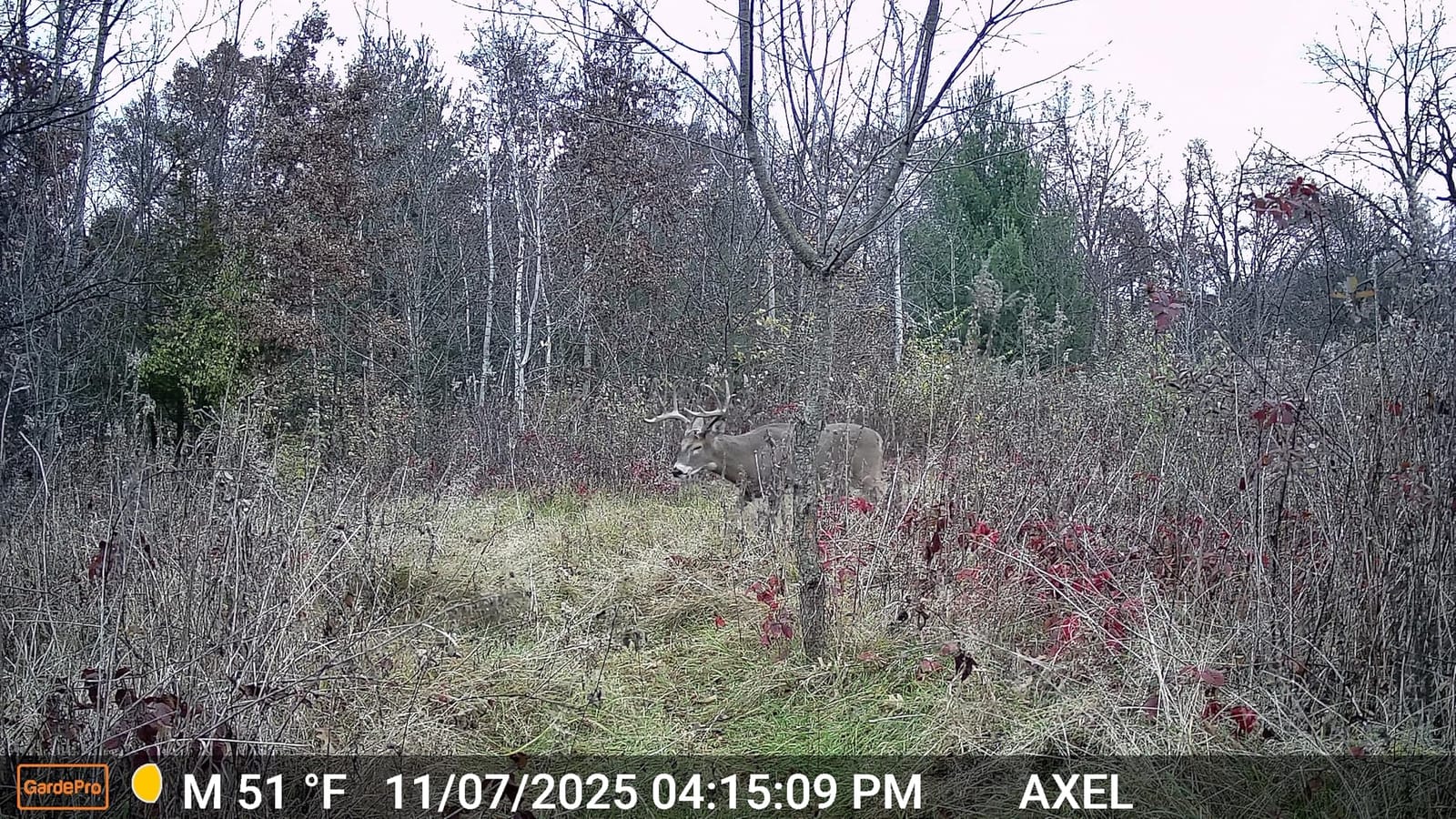
Where it fits on your plot
Use it on the plot entrance where deer have to funnel into the food. Because the flash is invisible, you can get closer to the animals than you could with a white-flash camera and still see behaviour rather than a startle response.
Strap it to a post about 3 feet off the ground and aim it across the trail rather than down it. Aim across the funnel and you get shoulder-to-shoulder frames; aim straight up the trail and you mostly photograph the next deer’s nose.
Where it falls short
Nighttime PIR triggering is the most common complaint, and it lines up with something I saw on my own post. In very quiet overnight conditions the sensor can sit on bodies without firing reliably, so late-night footage is thinner than daytime footage.
The recorded audio crackles, which is annoying if you care about hearing the group. And the SD card plus eight AA batteries are both sold separately, so budget for those before you count the real cost of this setup.
5. Meidase P70 – Best for Aiming and On-Site Checks
Meidase P70 (Non-Cellular,Non-WiFi) Trail Camera, 64MP 1296p, Game Cameras with No-Glow IR Night Vision, Motion Activated, Waterproof for Wildlife Deer Cams, Hunting
64MP stills and 1296p video
0.1s trigger with side sensors
100ft 940nm no-glow infrared
2.4 inch color screen
Pros
- Large color screen for on-site aiming
- 0.1s trigger catches approaching animals
- Sturdy ABS housing
- Responsive warranty service
Cons
- Night shutter blurs fast subjects
- Night video range drops sharply
- SD card and batteries sold separately
- Lithium cells beat rechargeables
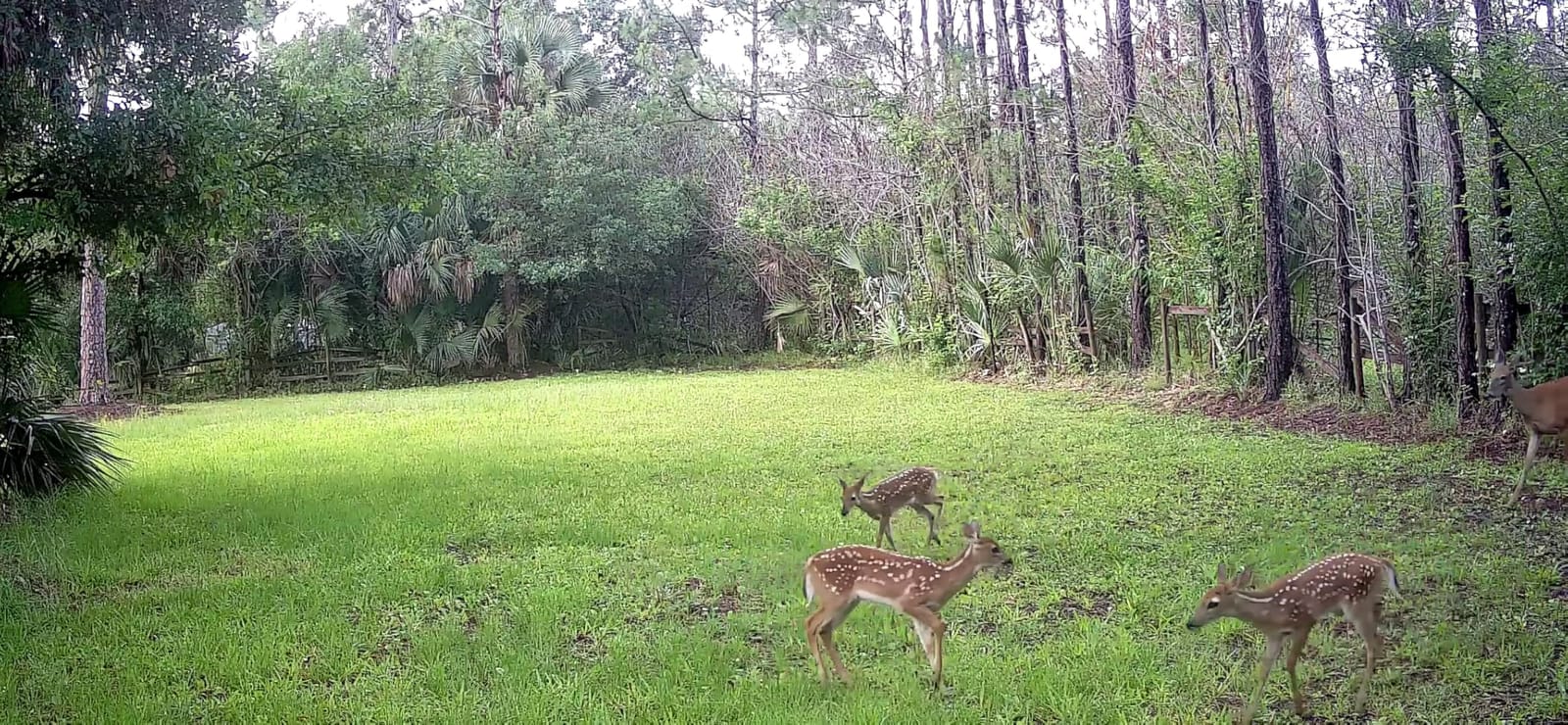
The 2.4-inch color screen is the reason this camera earns its place for me. On a food plot you are aiming at open ground where a small shift in aim changes everything, and walking a camera over to a treeline three times to check the frame is a waste of daylight.
The optics hold up. Reviewers describe 64MP stills and 1296p video that hold up next to cameras costing considerably more, and the 0.1s trigger with side sensors catches animals approaching from the flank, which on an open plot is the normal approach angle.
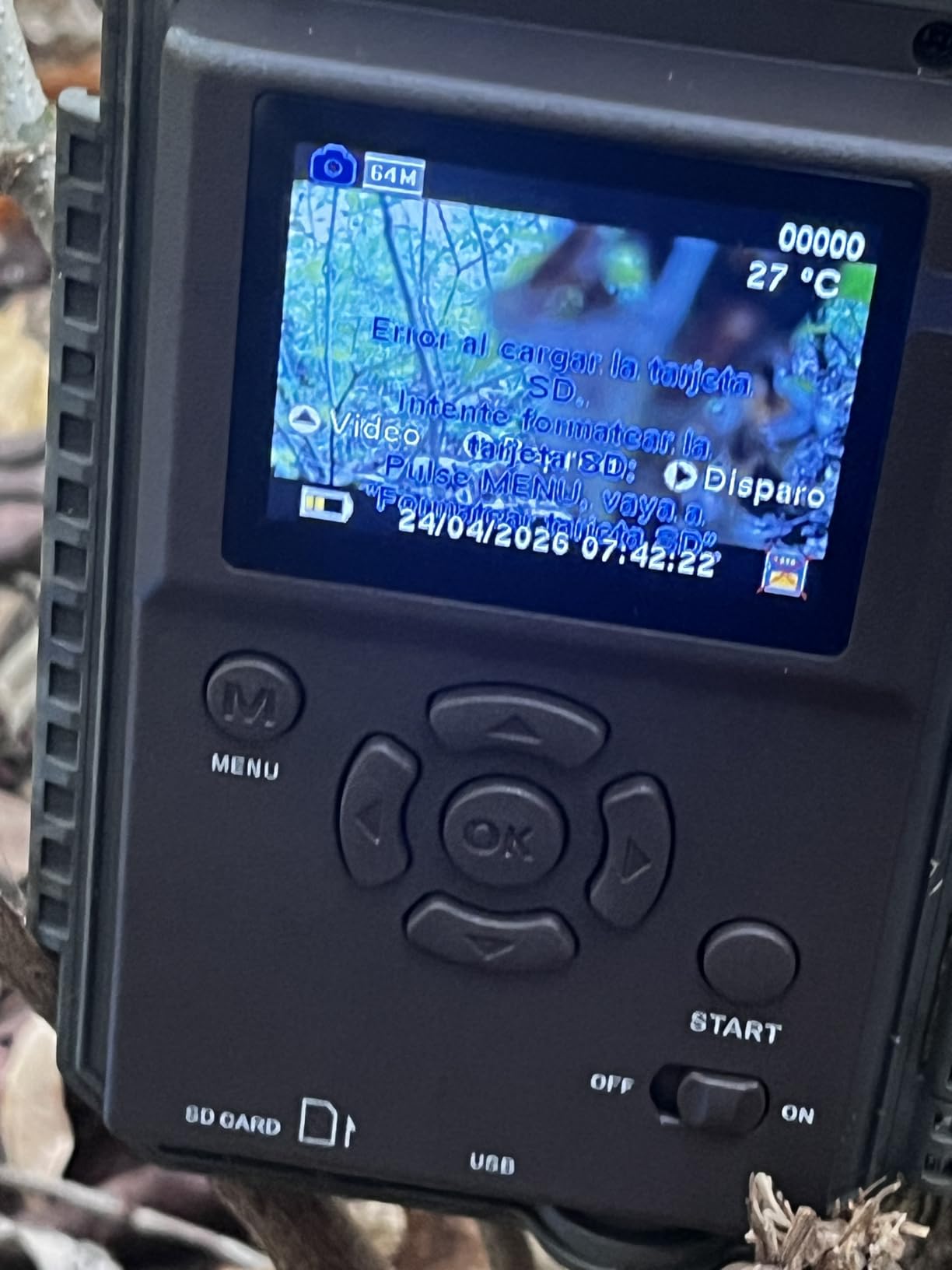
The 100-foot 940nm no-glow array keeps the night side of the plot dark to the human eye. I pair it with a red headlamp on long walks so I do not wash out an entire night’s footage with white light every time I check the screen.
It also accepts the Meidase SP350 solar panel, so you can convert it to solar if you want unattended coverage through the whole season instead of swapping cells twice.
Where it fits on your plot
The 70-degree viewing angle sits in the middle of the pack. That makes it a good match for the side of a plot where deer come in off a brushy lane, where you want the frame a little wider than a trail camera but not as wide as a 120-degree landscape lens.
Because there is no screen on most of the competition, this is the camera I pick when I am mounting on a fresh spot I have never scouted. Point it, check the screen, lock the latch, and walk away.
Where it falls short
Fast-moving subjects at night can blur because of the shutter speed, and the night video trigger range drops to around 15 feet in some setups. That is a real limitation for buck footage, which is exactly what a food plot is for.
Reviewers also report that lithium cells work far better than rechargeables, and the card and cells are not included. Both are easy to plan for, but both catch people out on their first trip.
6. WOSPORTS G600 – Best Value for Wide Plot Coverage
WOSPORTS Trail Camera(Non-Cellular Non-WiFi) 64MP 4K 0.2S Trigger Motion Activated,Game Camera with No-Glow Night Vision 2.0”LCD 120°Wide for Outdoor Scouting Wildlife Monitoring Home Security
64MP stills and 4K video
0.2s trigger,120-degree detection
32-piece 940nm no-glow array
2 inch color LCD
Pros
- 4K video with adjustable resolution
- 120-degree lens covers a whole plot edge
- 2-inch LCD for aiming
- Battery life of a year on lithium cells
Cons
- Battery compartment is very tight
- Settings can be lost when cells are removed
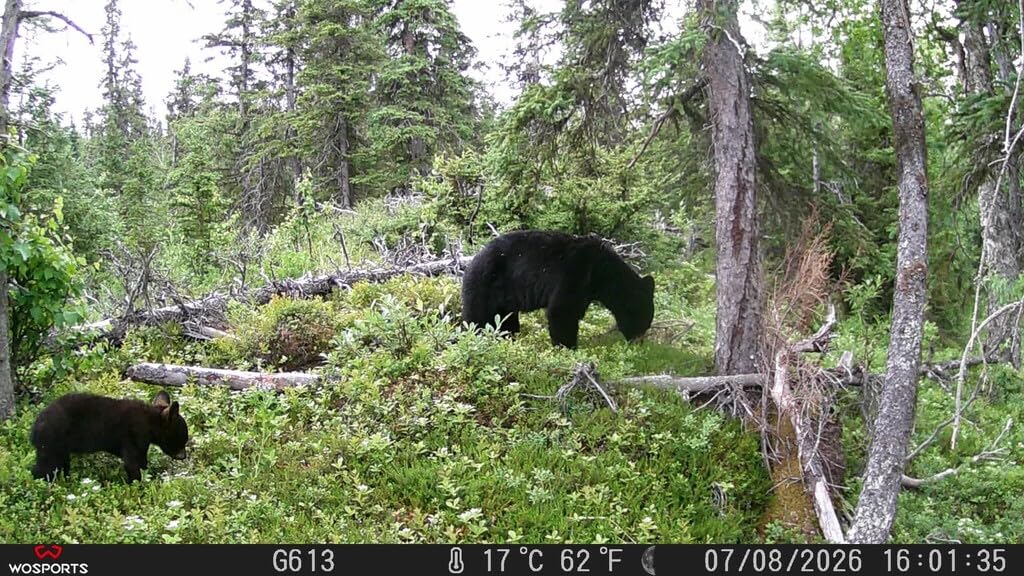
The WOSPORTS G600 is the widest view in this roundup at 120 degrees, and on an open food plot that width is worth more than raw resolution. One camera on the corner post can watch most of a plot edge where a 60-degree trail camera would only cover a third of it.
The 64MP stills and true 4K video are adjustable, so you can drop to a lower setting when you care about battery and storage over image detail. I run photos high and video short, which fills a card with useful frames instead of thirty-second clips nobody watches.
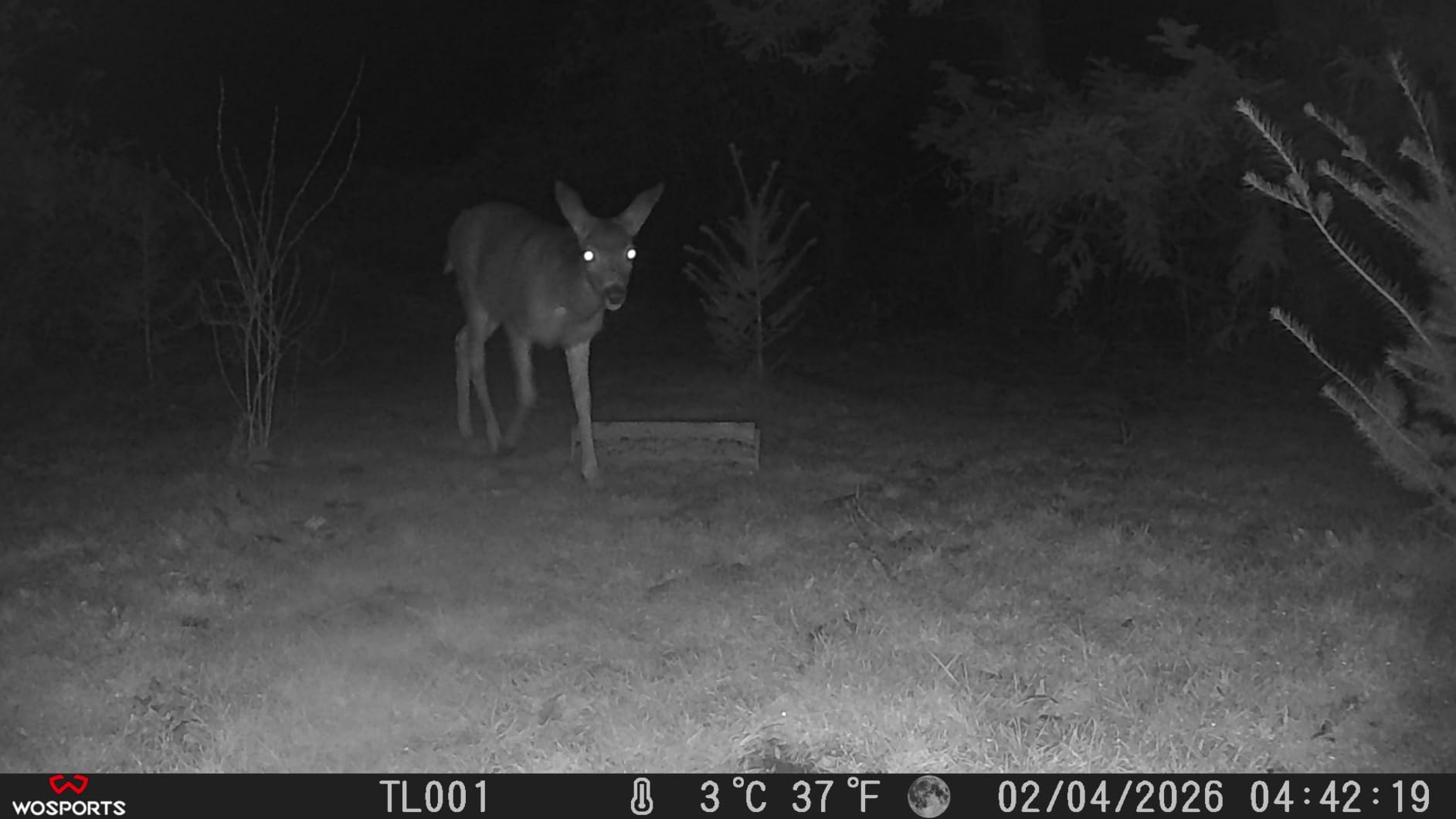
A 16GB memory card, USB cable, strap, and wall mount all come in the box, which is more than several rivals manage. Out of 3000-plus reviews, the recurring theme is that buyers are surprised by how much they get for the money.
Several reviewers report battery runtimes past a year on lithium AA cells in low-traffic setups. On my higher-traffic plot that is optimistic, but even at a fraction of that it outlasts a season comfortably.
Where it fits on your plot
This is my pick for covering a large open plot, particularly the long edge where deer browse between the timber and the field. The 120-degree lens means you can mount it once on a single post rather than building a two-camera array for the same ground.
Watch the false triggers though. At that angle, moving grass and shifting shadows both fall inside the detection zone. Start at medium sensitivity, walk the area, and lower it if you get frames of nothing.
Where it falls short
The battery compartment is genuinely cramped and needs a flat screwdriver to open, which is an annoyance in the cold with gloves on. More importantly, settings can be lost when the batteries come out for a swap, so photograph your menu choices before you open the housing.
The lens is wide but not sharp in low light the way the no-glow cameras here are, so for night work at distance the GardePro options are the better bet.
7. GardePro E6 WiFi – Most Versatile for Checking Footage Without the Drive
GardePro E6 WiFi Trail Camera, Stable WiFi with External Antenna
64MP stills and 1296P video
110-degree wide-angle lens
No-glow 940nm infrared to 75ft
WiFi and Bluetooth app access
Pros
- Check footage from your phone in the field
- 110-degree view covers broad ground
- No-glow infrared for discreet night work
- No SD card removal needed
Cons
- App transfers slow down with more than a few files
- No home WiFi or cellular connection
- Over-triggers on leaves and branches
- Desert heat can shorten its life
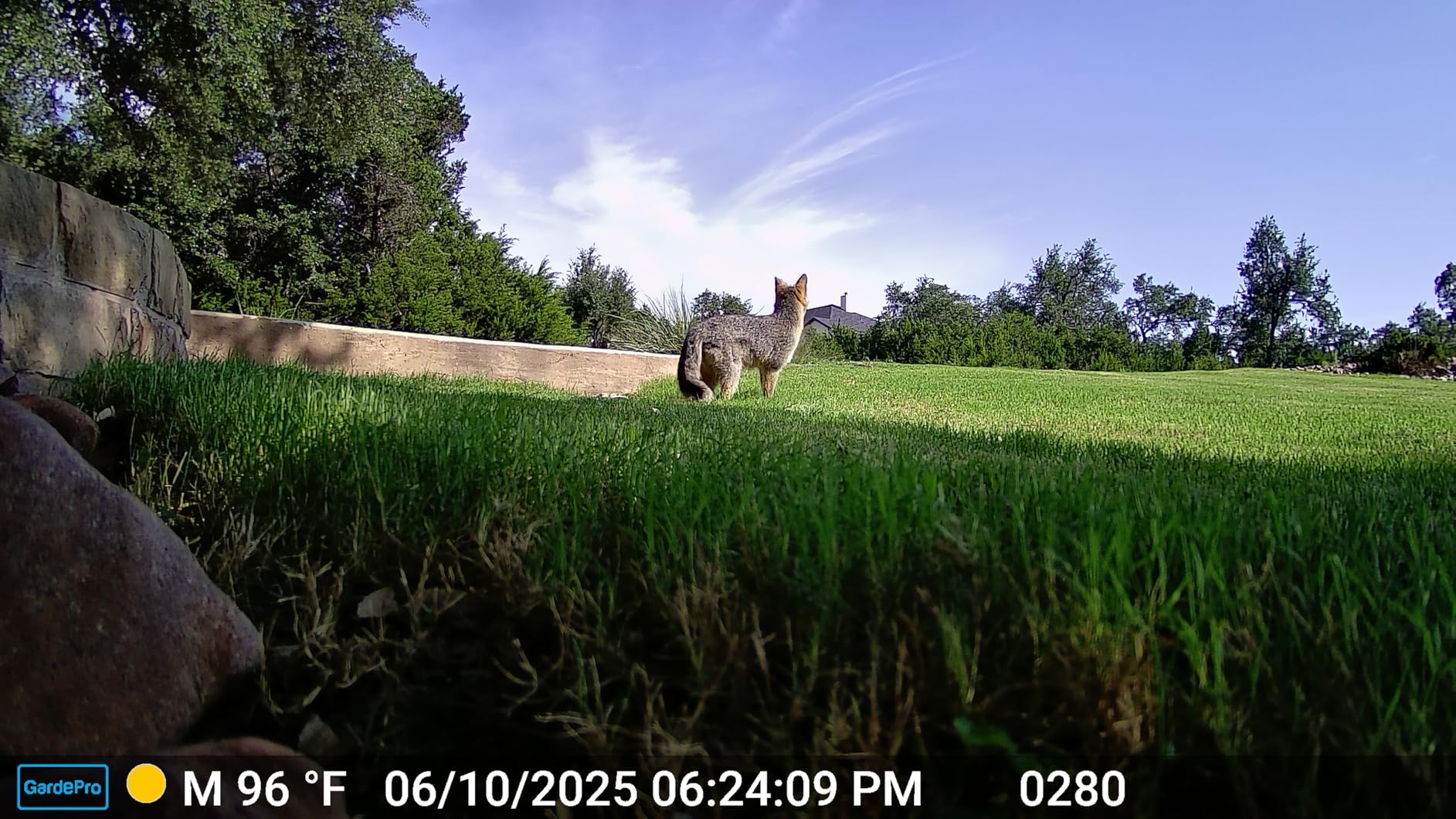
With close to 5000 reviews, the GardePro E6 is the most proven camera in this group, and the WiFi connection changes how you scout. You stand at the tree, connect your phone, and review yesterday afternoon without climbing anything or pulling a card.
That convenience is the entire reason to own it. You are not getting remote delivery over the internet, you are getting on-site access at the camera. Plenty of people pair it with a second camera at the same spot that does send photos to a phone.
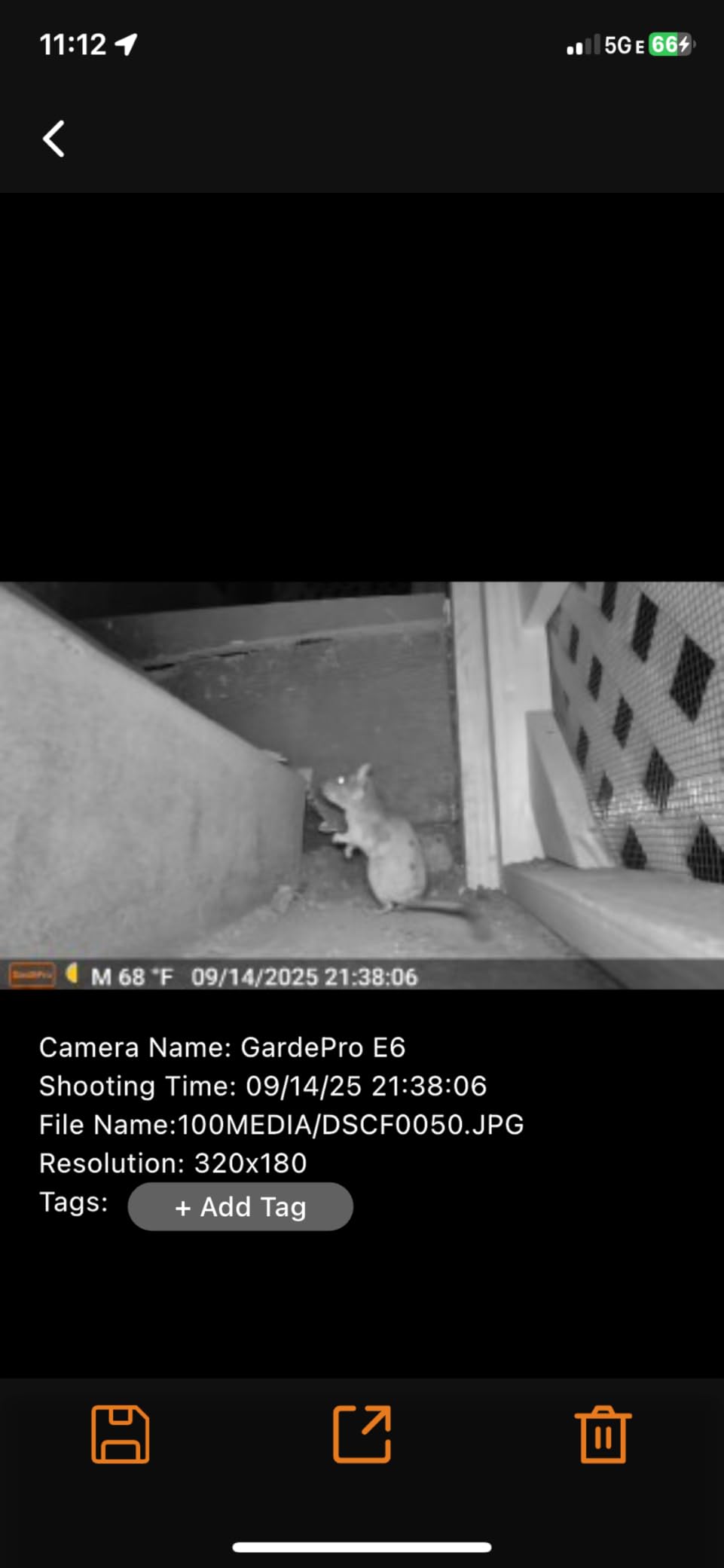
The 64MP stills and 1296P video with sound are good, and the 110-degree lens is wide enough to take in a good chunk of a plot. Live View works in daylight and at night, which helps you frame a camera before you commit to a season on it.
Card capacity runs to 256GB, so you are not constantly swapping media. The no-glow 940nm infrared reaches 75 feet, a little less than the 100-foot cameras here, so keep it a little closer to the action.
Where it fits on your plot
Put it at the entrance you check most often. If you are walking the plot weekly in August and September to cut browse and see what is holding, being able to check on the spot without climbing saves real time.
It also works well as a second camera alongside a cellular unit: the cellular one sends you alerts from across the property, and this one gives you the high-resolution archive when you are standing right there.
Where it falls short
The app is the weak point. Transfers hang or crawl once you are pulling more than five or six files, and it connects directly to your phone rather than to your home router or a cellular network, so there is no remote option at all.
Sensitivity is set high enough that leaves and branches trigger it constantly on an open plot, and a few owners report SD slot faults or date resets. Treat it as a camera you check and adjust, not one you hang and forget.
8. MAXDONE PH970S – Best Solar Camera for Unattended Plots
MAXDONE Solar Trail Camera WiFi Bluetooth, 4K 64MP Night Vision Game Camera
Solar panel with 6000mAh battery
64MP stills and 4K video
65ft low-glow infrared
WiFi6 and Bluetooth app control
Pros
- Solar power removes battery swaps
- 6000mAh battery holds a long charge
- 0.1s trigger with 5-shot burst
- No subscription for app control
Cons
- App takes a while to connect to the hotspot
- Power switch and card sit on the bottom
- Some cameras have infrared failures
- No home WiFi or cellular support
Solar is the answer for a plot you are not driving to every week. The MAXDONE PH970S has an integrated panel and a 6000mAh internal battery, which means you mount it once in July and it keeps recording through the fall without anyone swapping cells.
On an open food plot that math works well. The same panel mounted in semi-shaded timber will disappoint, because it needs direct sun for a large part of the day to put back what night recording spends.
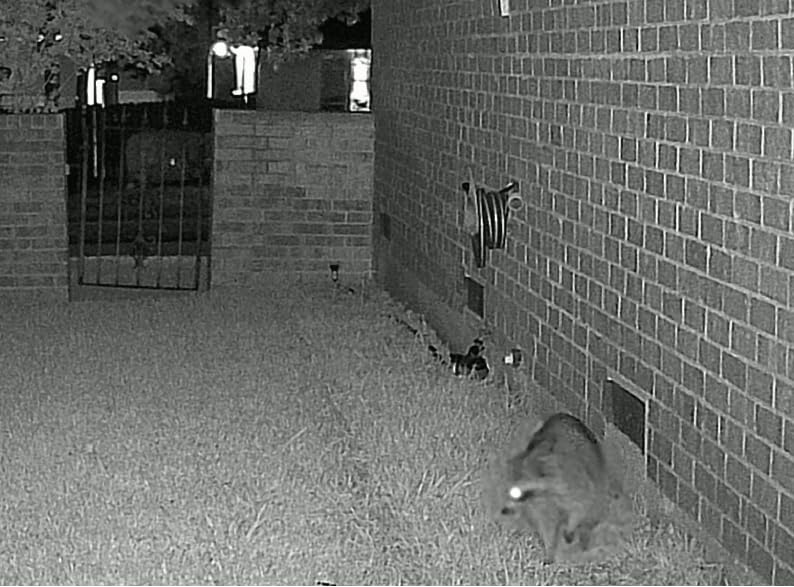
Image quality is strong for the category: 64MP stills, 4K video, and a 0.1s trigger across a 100-degree detection angle with a 5-shot burst. That burst matters on a plot where a buck steps out of the timber and you want three frames of him rather than one frame of a tail.
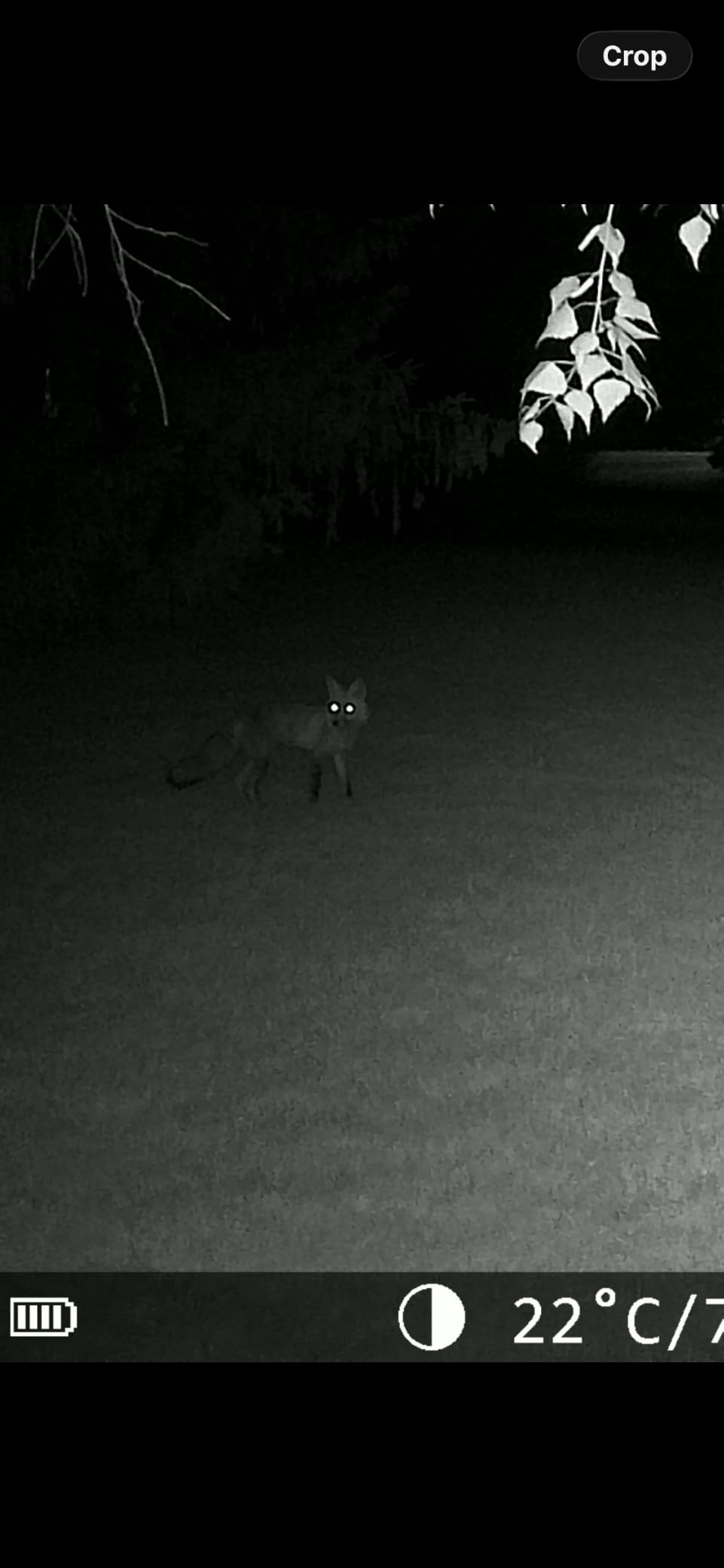
The 65-foot low-glow infrared is discreet enough for a feed, and app control over a WiFi6 and Bluetooth hotspot out to about 55 feet means no subscription anywhere in the chain. A 32GB card comes pre-installed.
Where it fits on your plot
Mount it where the panel gets full sun for most of the day. On my place that means the south-facing post at the plot corner with the least afternoon shade, angled about 45 degrees down toward the food and the trail leading to it.
Because there is no cellular radio drawing power, the 6000mAh battery stretches a long way. It is a good match for a plot you plant and leave, especially one where a two-hour round trip just to check pictures is not worth making.
Where it falls short
The hotspot app takes a while to connect, so you are standing in the woods waiting on a phone. The power switch and memory card are both on the bottom, which is awkward if you ever want to run it on a tripod.
There are also reports of infrared failures producing black night frames on a small number of cameras, and the 65-foot night range is the shortest of the no-glow and low-glow group here. Keep it close to the action.
9. CEYOMUR CY95 – Best for Brighter Night Vision on a Plot
CEYOMUR 4K 68MP Solar WiFi Trail Camera, Game Camera with 32GB TF Card
68MP stills and 4K video
850nm infrared illuminators
Integrated solar with 5200mAh battery
0.1s trigger,120-degree zone
Pros
- Brighter night footage than 940nm cameras
- Solar panel built into the housing
- 0.1s trigger with three PIR sensors
- 32GB card pre-installed
Cons
- 850nm LEDs emit a faint red glow
- WiFi hotspot is short range only
- Internal battery needs a full charge before first use
Most trail cameras use 940nm infrared because it is invisible. This one uses 850nm, which puts out a faint red glow but reaches further and produces noticeably clearer night frames. If you are watching a wide plot and want to identify animals rather than see silhouettes, that trade is worth making.
The top-mounted solar panel and 5200mAh battery make it another set-and-forget option. Combined with a pre-installed 32GB card and an IP66 housing, it is a camera you can mount in July and not think about again until you pull the card in November.
Stills are 68MP and video is 4K at 30fps with sound. The 0.1s trigger and three PIR sensors cover a 120-degree zone, which is one of the broadest detection areas in this roundup, and it does well on open ground where you are watching the full width of a plot.
The housing has a lock hole for field security, which matters more than it sounds when a camera is strapped to a post at a plot you do not drive past every day.
Where it fits on your plot
I would use this one on the widest, most exposed part of a plot where you want to see what is out there rather than study one trail. A single camera on a high corner post with a 120-degree zone gives you coverage a narrow trail camera would need three units to match.
The 20-meter night vision range means you can light up most of a small plot at once. Raise it on a post so you are looking down into the food rather than across it at eye level with the deer.
Where it falls short
That faint red glow is the catch. Deer are not going to bolt from it the way they will from white flash, but if the plot is new and you are trying to get deer to commit, a fully invisible camera is the safer first move.
The WiFi and Bluetooth control only reaches about 33 feet and cannot be viewed remotely. And the internal battery should be fully charged over USB for about eight hours before you mount it, or you will spend the first week running on whatever came in the box.
10. VOOPEAK TC32B – Best for Live Streaming a Whole Plot
VOOPEAK Trail Camera, 4G LTE Cellular Game Cameras with 360° Live Streaming
2.5K live stream and remote control
355-degree pan and 100-degree tilt
Solar panel with 7800mAh battery
IP68 rated from -40F to 140F
Pros
- Live 2.5K streaming with remote pan and tilt
- 355-degree coverage leaves few blind spots
- Solar and a very large battery
- IP68 housing handles extreme cold
Cons
- Fisheye look in daylight and lens flare
- Night vision limited to about 30 feet
- Printed manual is very small
- Cellular service and cloud storage are paid add-ons
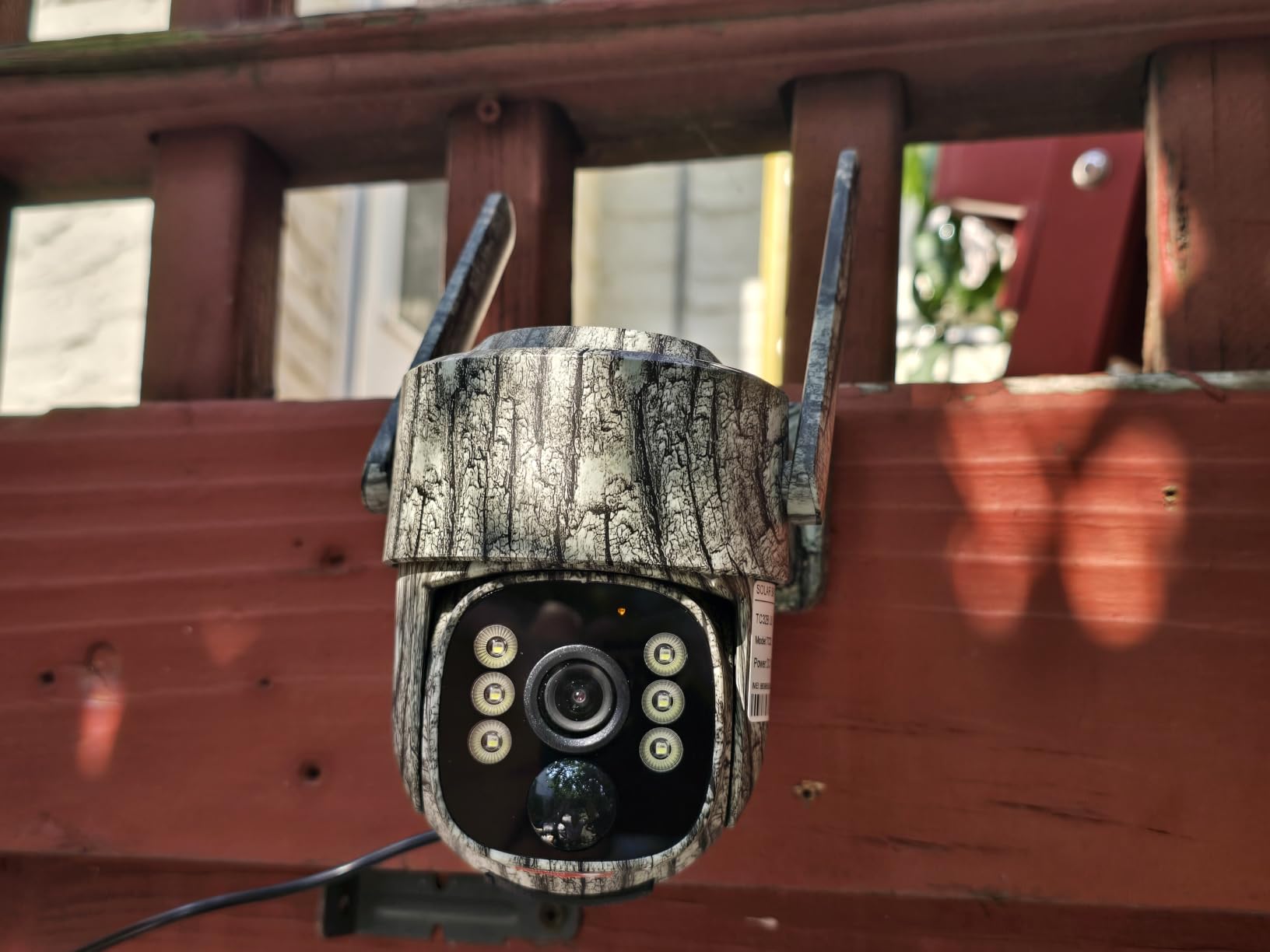
Most trail cameras are fixed. This one has a motorised head with a 355-degree horizontal pan and a 100-degree vertical tilt, so from a single post you can sweep the whole plot from your phone in real time. That is a genuinely different way to scout, especially right before you commit to a stand location.
Streaming runs at 2.5K over 4G LTE with 0.1s motion response and push notifications. You can check whether deer are on the plot while you are at work, which saves an entire round trip on a plot forty minutes away.
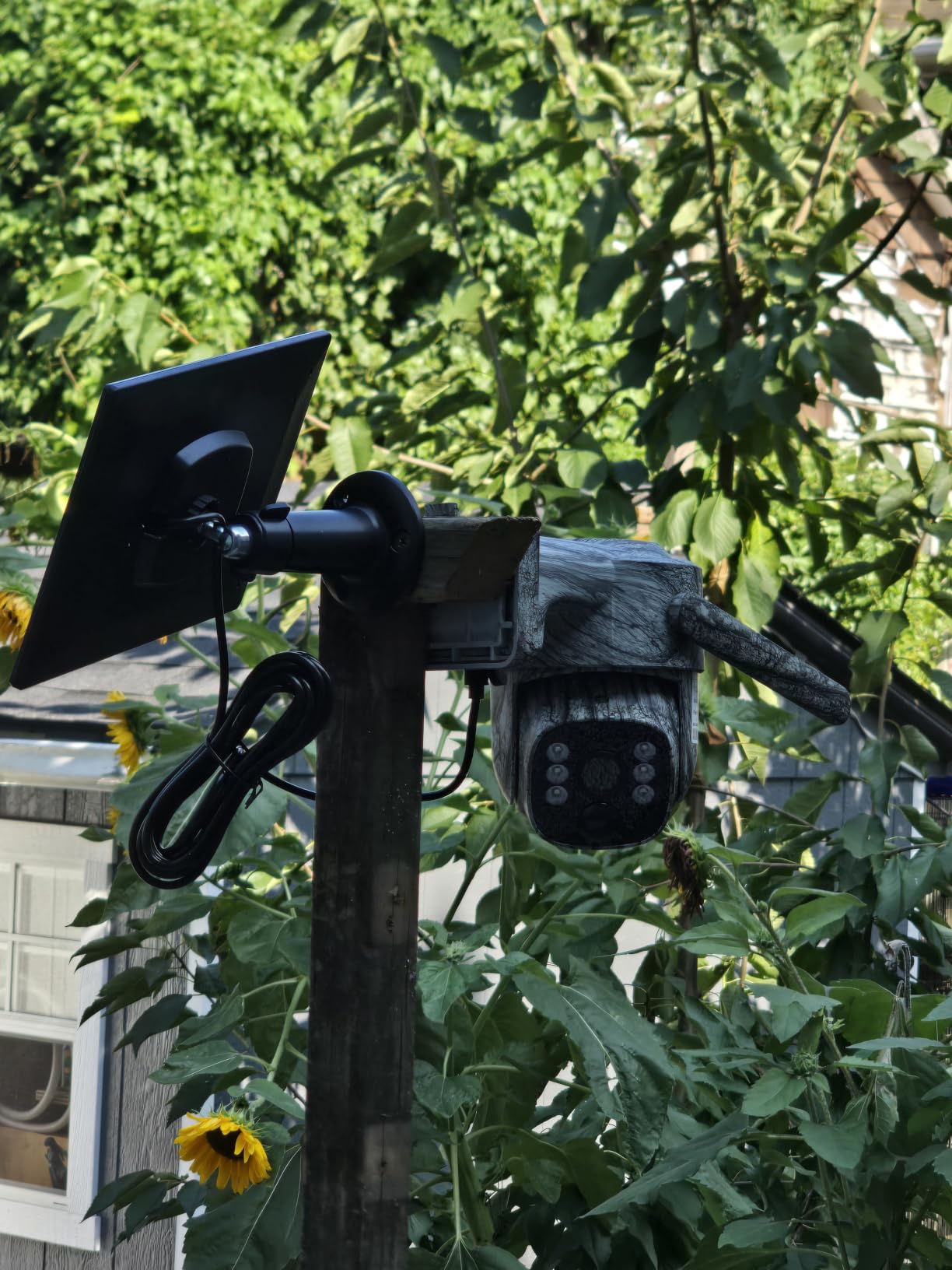
The solar panel and 7800mAh battery are rated for up to twelve months of deployment, and the IP68 housing is rated from -40F to 140F. For a camera that stays out through northern winters, that temperature range matters.
The built-in SIM auto-connects to the strongest of Verizon, AT&T, or T-Mobile, and comes with a small amount of free data so you can set it up and see it work before committing to a plan.
Where it fits on your plot
Centre it in the plot on a tall post and aim it at the open middle. Because it pans, the mounting position matters more than the direction, so put it where the motor has room to sweep rather than right against a treeline.
The 355-degree pan is genuinely useful on a plot with several entrances. Instead of guessing which side bucks are coming from, you pan the camera from the couch and find out in a few seconds.
Where it falls short
Night vision is about 30 feet, well short of the other cameras here, so this is a camera for daylight sweeping and a fallback at night rather than the one you trust for buck pictures after dark.
Daylight images have a fisheye look and flare when sun hits the lens straight on. The printed manual is tiny, the on-setup-off switch sits on the bottom where it is easy to misread, and cellular service plus cloud storage are paid extras on top.
11. Moultrie Edge Solar – Best for Buck-Detection Alerts
Moultrie Edge Solar Cellular Trail Camera – Integrated Solar, 40MP
Integrated solar with rechargeable pack
AI buck detection
40MP photos and 1080p video
100ft low-glow infrared
Pros
- AI filters alerts down to actual bucks
- Integrated solar removes battery swaps
- Four-carrier auto-connect needs no SIM
- Easy Aim mount for accurate framing
Cons
- No on-demand battery or Bluetooth status check
- Needs a manual top-up about once a quarter
- No live streaming yet
- Paid data plan required
The reason this camera exists is the AI buck detection. On a busy plot the phone buzzes all day with does and fawns, and you stop looking. This one filters the feed so the alerts that come through are the ones with antlers, which changes how you use the camera rather than how many pictures it takes.
Integrated solar with a rechargeable battery pack means no AA swaps, and the four-carrier auto-connect picks a network without you buying a SIM. The Easy Aim mount helps you point it precisely, which is more useful than it sounds on an open plot where a few degrees changes the frame.
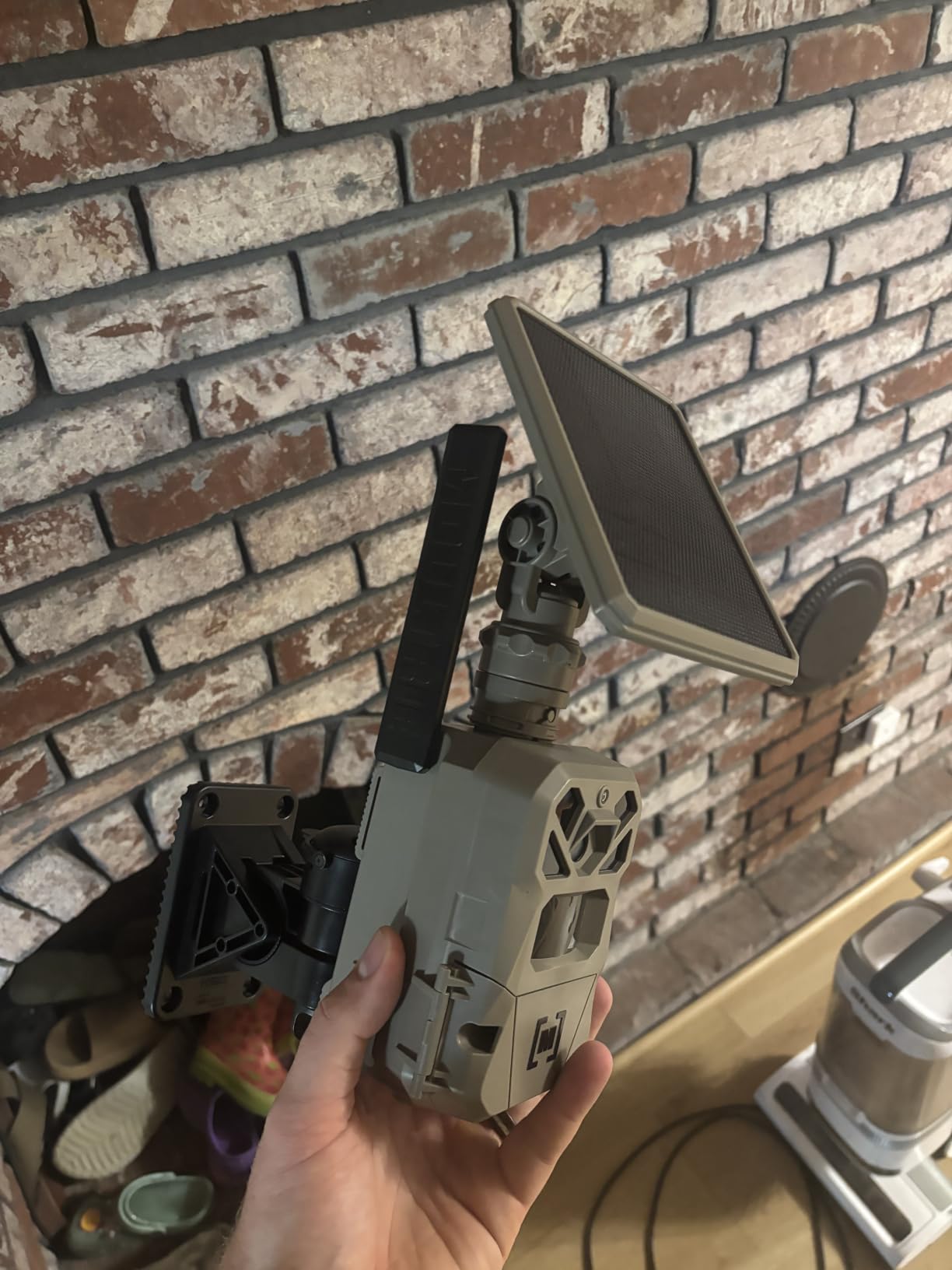
Stills are 40MP and video is 1080p with audio, and the low-glow infrared covers 100 feet. That is enough reach to watch the back third of a mid-size plot from a single mounting point.
On-demand video requests and cloud photo storage mean you can ask for a video clip of something that happened yesterday rather than trying to scrub through stills.
Where it fits on your plot
Put it on the corner of the plot covering the largest open area, because 100 feet of low-glow reach is doing the work here. The Easy Aim mount makes fine adjustment straightforward, so take the extra five minutes to walk the sight line.
If you hunt a busy plot with does and yearlings in it all summer, the buck filter is the feature that makes remote monitoring bearable. You find out when a buck shows up instead of when anything moves.
Where it falls short
You cannot check battery charge on demand or connect over Bluetooth to get a status readout, and the pack still needs a manual top-up roughly once a quarter. If you are counting on solar alone through a cloudy month, plan for that.
There is no live streaming at the time of writing, and the data plan is a paid subscription. On a plot with weak service, the buck filter also depends on photos making it off the camera before you see them.
12. Stealth Cam Fusion Max – Best for Covering Two Plots
Stealth Cam 36MP Fusion Max Cellular Trail Camera with 0.4 Second Trigger Speed, 80-Feet Detection Range and Infrared Flash (2-Pack)
80ft detection and infrared flash
0.35s trigger with 1 to 6 shot burst
36MP adjustable stills and 1080p video
Two pre-installed carrier SIMs
Pros
- Fast 0.35 second trigger
- Adjustable resolution from 36MP to 4MP
- Dual carrier SIMs improve coverage
- QR code setup is quick
Cons
- Runs on 16 AAA batteries which are not included
- Rechargeable cartridge and panel sold separately
- Warranty is listed as limited
- Only two channels supported
The Stealth Cam Fusion Max comes as a two-pack, which is the practical way to cover a plot and a second plot or tree stand site on the same lease. The 0.35-second trigger is the fastest on this list after the budget models, and burst mode goes from one to six images per trigger.
Two pre-installed SIM cards for AT&T and Verizon give you a choice of carrier, and the Quick Scan QR code makes activation about as painless as cellular setup gets. Resolution is adjustable from 36MP down to 4MP, so you can trade detail for storage when the plot gets busy.
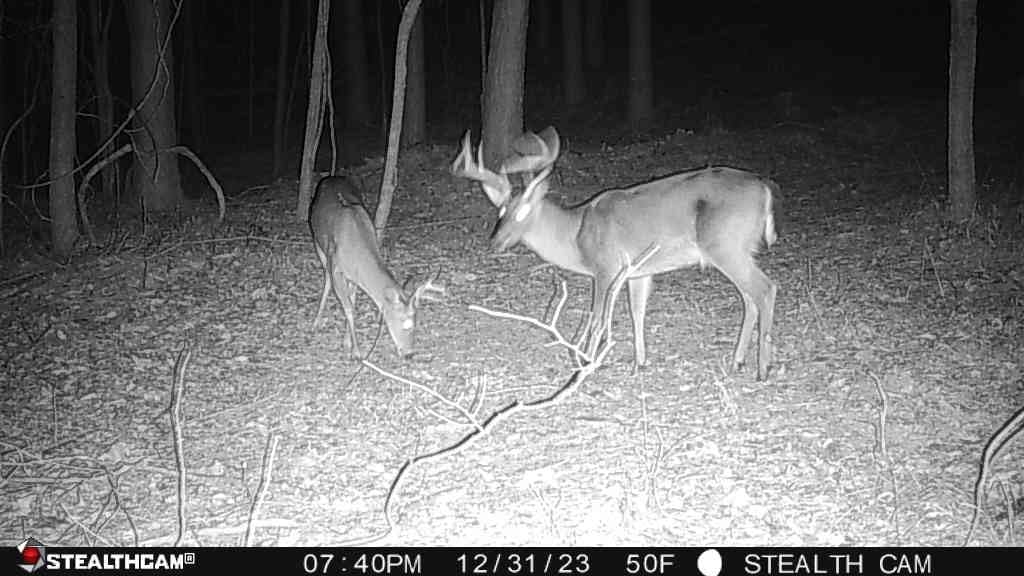
The COMMAND Pro app handles remote viewing, sharing, and settings. At 80 feet of detection and infrared flash range it covers a narrower field than the wide-angle units here, so treat it as a funnel camera rather than a plot-wide camera.
The 1/4-20 threaded insert and 12V DC auxiliary jack mean you can run it off a rechargeable cartridge or bolt a panel on top when you want it up through the whole season instead of managing AAA cells.
Where it fits on your plot
Run one on the primary entrance and one on the secondary corner. Most food plots have one obvious funnel and one side deer use less often, and covering both tells you more about how the plot is being used than doubling up on the busy entrance.
At 80 feet of detection, mount it closer than you think you need to. The camera is a trail camera, so it performs best with deer filling a reasonable portion of the frame rather than appearing as small shapes at the edge of a wide field.
Where it falls short
It runs on sixteen AAA batteries, which is double what most cameras here need and a lot of cells to keep on hand across a two-camera set. The rechargeable cartridge and solar panel are both extra purchases, which quickly erodes the value of a two-pack.
The manufacturer warranty is listed only as limited, and two channels is not much room if your setup grows later. If you want long-run unattended power, budget the cartridge from the start.
How to Place Trail Cameras on a Food Plot
Placement does more for your pictures than any spec on this list. A camera aimed correctly will outperform a better camera aimed at the sky, and on a food plot the geometry is unusually forgiving because the animals are drawn to a fixed point.
Cover the entrances first. Deer reach a plot through a small number of places. Walk the perimeter and find the trails with fresh tracks and browse, and put a camera on each one before you add a second camera anywhere else.
Mount at about 3 feet. Deer move with their heads up and down, and a camera at chest height catches full bodies rather than backs. Higher mounts produce top-down frames that are harder to judge for antler size.
Aim across the trail, not down it. A camera pointed up a trail photographs mostly the next animal’s nose. Aim across the funnel so animals cross the frame, which gives you clean side profiles of every buck that passes.
Face north or south where you can. You want the sun behind the camera, not in the lens. North and south facing positions avoid low sun straight into the sensor in the morning and evening, which is when deer move most.
Clear the immediate foreground. Grass, a fence wire, or a single branch a foot from the lens fills half the frame and triggers constantly. Walk the sight line before you strap the camera on.
Tune the sensitivity on site. Set it to medium, walk out of the detection zone, walk back, and take a test photo. On an open plot, wind-blown forage and moving shadows are the main false-trigger sources.
Lock the latch and date-stamp it. A security latch and a strap with a buckle take thirty seconds and decide whether you still have the camera in December.
Mark it on your map. Note the date, height, and direction on your phone when you hang it. You will not remember in November which post was which.
Cellular vs. Non-Cellular vs. WiFi Trail Cameras for Food Plots
The choice comes down to one question: how far is the plot from a road, and does it have signal. Everything else is secondary.
Cellular cameras send photos to your phone as they are taken. That is the only option that lets you learn a buck is on the plot while you are still at work, and the multi-carrier models here will hop between networks when one gets weak. The cost is a recurring data plan on top of the camera, and forum discussion makes clear this is where the real money goes: several people running two or three cameras note the monthly fees adding up to rival the camera cost over a season. Reviewers also report that transmission meaningfully shortens battery life compared with a camera that only writes to a card.
Non-cellular cameras write to an SD card and do nothing else. No plan, no signal needed, no app, and the best battery life in the group because the radio never turns on. You lose remote alerts entirely, which for a plot forty minutes away is a real cost in convenience.
WiFi cameras sit in between. They connect to your phone directly when you are standing at the camera, so you can check footage and aim it without climbing or pulling a card, but they cannot deliver anything remotely. They also do not join your home router or a cellular network here.
What to do when your food plot has no cell service
This comes up constantly in hunting forums, and it is the single most common reason a cellular camera disappoints. If you have tested the plot with your phone and seen nothing usable, a cellular camera will simply capture photos and never send them.
Run a non-cellular no-glow or low-glow camera instead. You lose the alerts and you win back the subscription cost, the battery life, and the guarantee of actually getting pictures. Mount two of them at the two most important entrances, check them every two or three weeks, and take the card home.
If you still want phone alerts from a dead zone, the realistic option is moving the camera to wherever the signal is good enough, which usually means the edge of the property nearest a road, and accepting narrower coverage. Chasing signal with a camera on a remote plot is how people end up with a very expensive box that never sends a picture.
No-Glow vs. Low-Glow vs. White Flash on an Open Plot
Flash choice is the one spec deer actually react to. Everything else on this list is a preference; a bright white flash is a deer leaving your plot.
No-glow uses 940nm infrared that is invisible to the human eye. The GardePro E5S and Meidase P70 are the standouts here, both reaching 100 feet without a visible red glow. Use these on a new plot or one where deer are already jumpy.
Low-glow emits a faint red edge that most deer barely notice at close range but that lets the camera reach further. The Moultrie Edge 2, MAXDONE, and Stealth Cam Fusion Max all sit here, and most food plot hunters land on low-glow as the everyday setting.
850nm is brighter again, as on the CEYOMUR CY95, and gives you the clearest night images at the cost of a faint red glow. White flash produces true colour night pictures and will send deer off an open plot the first time it fires. None of the twelve cameras here is built around white flash, and that is deliberate.
Which one for which part of a plot
No-glow or low-glow on the plot itself, where deer are feeding close and any light spooks them. No-glow or low-glow on the timber edge too, since timber blocks a lot of reach anyway. Brighter illuminators only make sense where you need to identify animals at distance rather than photograph behaviour up close.
What forum users actually run
The recurring recommendation across trail camera and bowhunting discussions is a value-tier camera bought in pairs from a farm and feed store, mounted on both ends of the plot, run on lithium cells, and checked on a schedule. That setup beats one premium camera every time for the money, and it is the reason the budget options below rank so well.
How Many Cameras Does a Food Plot Need?
Count entrances, not acres. A one-acre plot with a single funnel needs one camera. A three-acre plot with four ways in needs three or four, because what you are really trying to learn is which route the buck takes.
For anything under an acre, one camera at the primary entrance on a post about 3 feet high will give you most of what you need. For one to three acres, plan on two cameras at opposite corners so you can see whether deer are entering from more than one direction. Past three acres, or on a plot with several timber edges, one camera every 60 to 80 feet of active trail is closer to right than one per acre.
Two cameras on a single plot is the setup most people land on and the one that actually changes your decisions, because you start seeing patterns rather than isolated events. Before you add a third, spend a season tuning the sensitivity on the first two. Cameras that trigger on wind are not giving you information, they are giving you the illusion of coverage.
Battery planning for a full season
Eight AA cells on a non-cellular camera at moderate traffic will generally carry a season. Reviewers report lithium cells beating rechargeables clearly, so buy more cells rather than more chargers. Cold cuts available capacity hard, and a plot you scout into January needs more reserve than one you clear in October.
Solar panels work well on an open plot because there is no canopy, and noticeably less well under semi-shaded timber. If you go solar, position for direct sun and accept that the first cloudy stretch will pull the camera down to whatever the internal battery holds.
What a season really costs
Budget for three things, not one. The camera is the number you see on the shelf. The data plan for cellular units recurs every month for as long as the camera is deployed. And batteries or a solar panel are an add-on for most models in this roundup.
That is why the SD card cameras are worth a second look for anyone running more than two cameras. Across three cellular cameras, a year of plans can approach the total cost of the cameras themselves, and for many people the sensible split is one cellular camera on the main entrance and one or two non-cellular cameras covering the rest.
Packing for a full day of scouting is its own logistics. Our [labor day camping food recipes](https://cookcraftandcreate.com/labor-day-camping-food-recipes/) and [delicious food recipes](https://cookcraftandcreate.com/delicious-recipes/) roundups cover the kind of food you want in the cooler bag on a long camera check.
What to Look for When Buying a Food Plot Trail Camera
Detection range on open ground. Anything under 60 feet will struggle on a wide plot. Look for 80 to 100 feet if the plot is open, and be honest about how much of your plot the camera actually covers at that number.
Trigger speed and PIR layout. Below half a second with side sensors is what keeps a moving buck in frame. A single central sensor misses animals approaching from the side, which on an open plot is the normal approach.
Flash type. No-glow or low-glow, not white flash. On an open plot where deer have nowhere to hide, the flash matters more than the megapixel count.
Field of view. Trail cameras are narrow by design. If you are covering a wide open plot, a 110 to 120 degree lens saves you from buying three cameras. Know which you are buying, because you cannot change it in the field.
Power. Decide between lithium AAs, a rechargeable cartridge, and integrated solar before you buy the camera rather than after. Integrated solar models cost more up front and save the most visits.
Storage and connectivity. Cards up to 256GB, internal memory as backup, and a real answer on what happens when signal drops. A camera that silently stops delivering is the most common complaint in the forums.
Weatherproofing. IP66 is the common baseline and handles ordinary rain and cold. IP68 with a stated temperature range is worth more if the camera stays out through winter where you are.
Legality. Trail camera use is restricted or banned in some states, and rules around private land and hunting regulations vary. Check your state wildlife agency before you hang anything on a plot that is not entirely yours.
App quality, if you are going cellular. Several cameras here have good hardware and frustrating apps. Multiple-camera photo libraries that do not organise well, and slow first transmissions after powering on, are the complaints that recur.
Frequently Asked Questions
Do I need a cellular trail camera for a food plot?
Not if you are willing to walk to the camera. A cellular model sends photos to your phone as they happen and is the only way to know a buck is on the plot while you are still at work. A non-cellular SD card camera costs nothing monthly, runs longer on batteries, and works with no signal at all. The common compromise is one cellular camera on your main entrance and one or two SD card cameras covering the rest of the plot.
What is the best trail camera for a food plot with no cell service?
A non-cellular camera with no-glow or low-glow infrared. Without usable signal a cellular camera captures photos it can never deliver, so you pay for a data plan and get nothing. Look for a 0.1 to 0.3 second trigger, a 940nm no-glow array, and lithium AA compatibility. Check on a two or three week schedule in the fall and take the card home to review.
How many trail cameras should I put on my food plot?
Count entrances rather than acres. Under an acre with a single funnel, one camera is enough. One to three acres, plan on two at opposite corners so you can see which direction deer are coming from. Past three acres, or on a plot with several timber edges, place one camera every 60 to 80 feet of active trail.
How long will 8 AA batteries last in a trail camera?
On a non-cellular camera at moderate traffic, a set of lithium AAs generally carries a full season, and reviewers report runtimes past a year in low-traffic setups. Cold weather cuts available capacity hard, so plots monitored into January need more reserve. Cellular cameras drain noticeably faster because the radio transmits on every trigger, and many models here are built around solar power or rechargeable cartridges to avoid the problem.
Do trail cameras scare deer off a food plot?
Infrared trail cameras with no-glow or low-glow flash rarely bother deer at all, which is why they are the default. White flash cameras will send deer off an open plot the first time it fires. Detection noise from the mount and any movement of grass in the foreground cause more lost pictures than flash does, so clear the sight line and tune sensitivity before you blame the camera.
Bottom Line
The best trail cameras for food plots in 2026 come down to three picks. The Moultrie Edge 2 is the one I recommend to most people, because 100 feet of low-glow detection and a two-year warranty cover more plot situations than anything else at this level. The TACTACAM Reveal X 3.0 is the better answer when the camera sits out through deep winter. The TACTACAM Reveal Ultra wins on picture quality.
For plots with no signal, skip the cellular options entirely and run no-glow cameras like the GardePro E5S or Meidase P70 on lithium cells. Where budget is the constraint and the plot is wide, the WOSPORTS G600 covers more ground per camera than anything else here.
Mount them at about 3 feet, aimed across the trail and away from low sun, tune the sensitivity on site, and check your state rules before you hang anything. You can find more of our field-tested picks linked below, including our [trail mix ideas for National Trail Mix Day](https://cookcraftandcreate.com/trail-mix-ideas-national-day/) and [protein ball recipes](https://cookcraftandcreate.com/trail-mix-day-protein-ball-ideas/) if you are packing snacks for the scouting season.