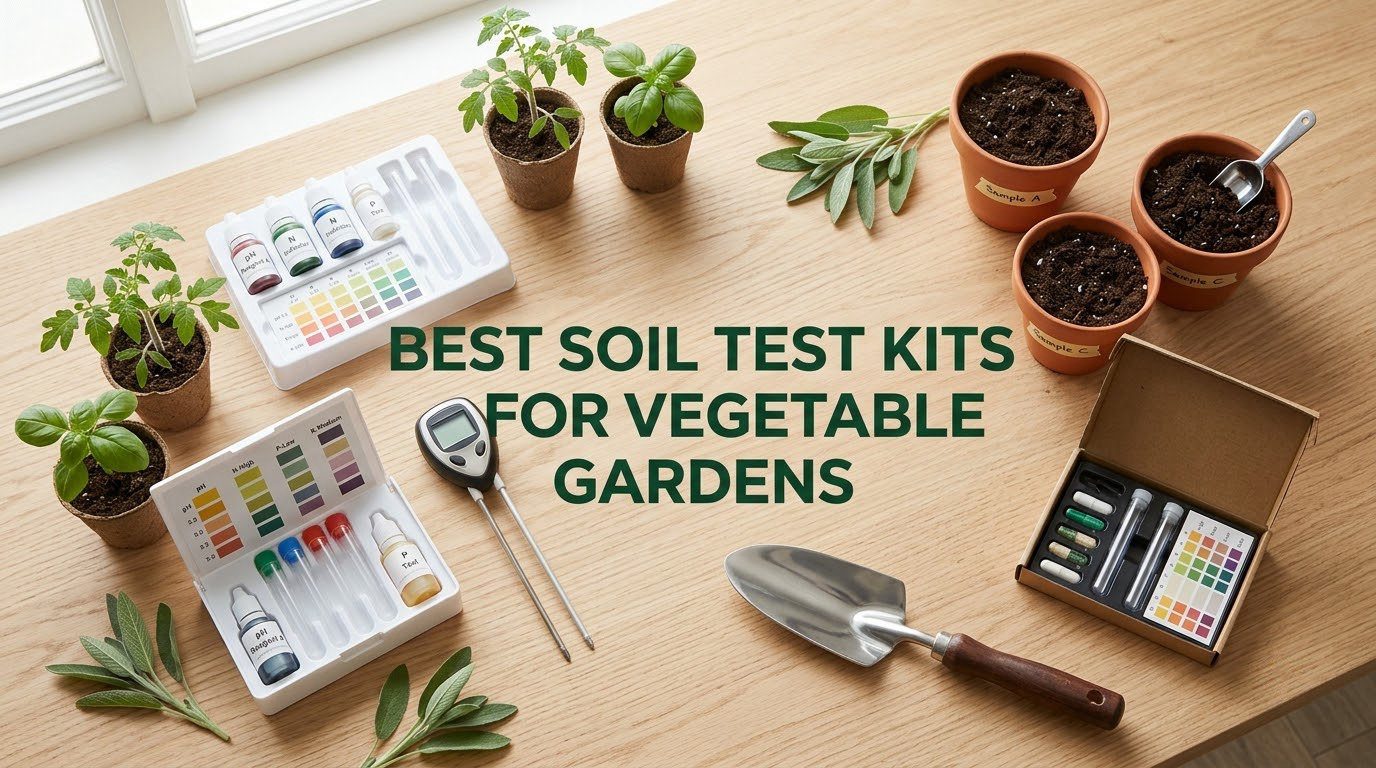
Most vegetable garden failures are not seed failures. They are soil failures that gardeners never measured, which is why the best soil test kits for vegetable gardens matter more than any bag of fertilizer you will buy this season. Tomatoes stall, brassicas bolt early, and leaves yellow at the edges while nutrients sit in the ground locked behind a pH the roots cannot use.
We spent weeks working through twelve soil test kits, running capsule chemistry, liquid reagents, paper strips and mail-in lab panels side by side, then checking what each one actually tells a vegetable gardener before the money is spent on amendments. The split was stark. Three kits told us something a grower could act on, and the rest told us numbers without telling us what to do with them.
Forum threads tell the same story from the other side. Growers on r/vegetablegardening dismiss home kits outright, while on r/gardening most people point to their university agricultural extension office as the sensible route. Both camps are partly right, and the difference between them comes down to which kit type you put in your hand.
We also cross-checked our results against what growers end up doing with the harvest. Once a bed is finally balanced, the payoff shows up in the kitchen, and our [spring vegetable flatbread recipe](https://cookcraftandcreate.com/spring-vegetable-flatbread-recipe/) and [roasted vegetable tapenade](https://cookcraftandcreate.com/flavorful-roasted-vegetable-tapenade-recipe/) are a good test of whether the amendment plan worked. A [roasted baby potato and vegetable medley](https://cookcraftandcreate.com/roasted-baby-potato-and-vegetable-medley/) is the fastest way to judge whether a bed grew well or merely survived.
Table of Contents
- Top 3 Soil Test Kits for Vegetable Gardens in 2026
- What Is the Best Soil Test Kit for a Vegetable Garden?
- All 12 Best Soil Test Kits for Vegetable Gardens (October 2026)
- 1. MySoil Soil Test Kit – Best Overall for Vegetable Bed Numbers
- 2. Luster Leaf Rapitest 1601 – Best Value Instant pH and NPK
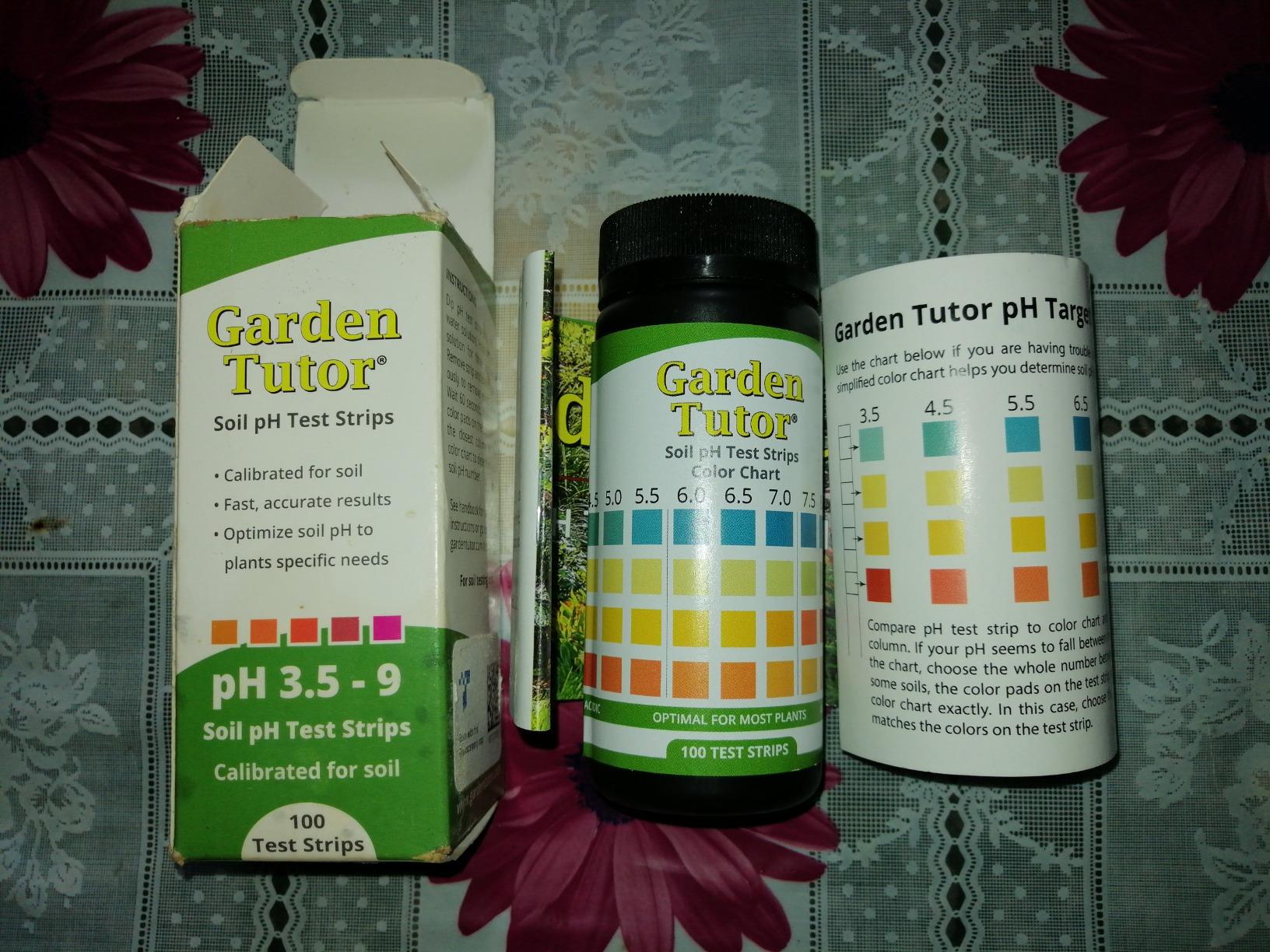
- 3. Garden Tutor Soil pH Test Strips – Best Budget pH Screening
- 4. Soil Savvy Soil Test Kit – Best for Plain-Language Recommendations
- 5. LaMotte 5679-01 – Best for Classrooms and Repeat Testing
- 6. SoilKit Mail-In Test – Best for Technical Soil Data
- 7. Dewilde 140-Test Soil Test Kit – Best for High-Volume Home Testing
- 8. Dewilde 100 pH Test Strips – Best for Containers and Quick Checks
- 9. Luster Leaf 1663 80-Test Kit – Best for a Full NPK Set to Carry
- 10. Luster Leaf 1605 Digital Soil Test Kit – Best for a Digital Readout
- 11. Pawfly 4-in-1 Soil Test Kit – Best for Documented Test Ranges
- 12. Dewilde Premium 40-Test Soil Test Kit – Best for First-Time Home Testers
- How to Take a Soil Sample for a Vegetable Bed
- What Each Test Type Can and Cannot Tell You
- Reading Your pH Result and Fixing It
- How Many Kits a Multi-Bed Vegetable Garden Needs
- NPK and pH Targets by Vegetable Crop Family
- Frequently Asked Questions
- The Bottom Line for Vegetable Gardeners
Top 3 Soil Test Kits for Vegetable Gardens in 2026

MySoil Soil Test Kit
- Lab analysis of 13 plant-available nutrients
- Results in 6-8 days
- Custom organic and non-organic fertilizer plan
- Prepaid return envelope included

Luster Leaf Rapitest 1601
- Capsule system for pH
- N
- P and K
- 40 tests
- 10 per parameter
- Color comparator chart
- P reference list for 450+ plants

Garden Tutor Soil pH Strips
- 100 strips covering pH 3.5-9
- Photo-based web reader
- Results in about 60 seconds
- Lime and sulfur estimator included
Those three cover the three real jobs. MySoil is the answer when you need to know what nitrogen, phosphorus and potassium are doing. The Luster Leaf Rapitest is the answer when you want a number before dinner. Garden Tutor strips are the answer when pH is the only thing standing between you and a fixed bed.
What Is the Best Soil Test Kit for a Vegetable Garden?
The best soil test kit for a vegetable garden is a mail-in lab kit such as MySoil, which measures 13 plant-available nutrient levels and returns fertilizer recommendations in 6-8 days. For immediate same-day screening, add a capsule or liquid kit such as the Luster Leaf Rapitest. Use a lab-grade pH pen for repeat precision checks, and skip the cheap 3-in-1 and 7-in-1 probe meters entirely.
That answer sounds narrow, and it should be. A vegetable bed is a small, high-value space feeding people, so a wrong amendment costs you a whole season of a crop you cannot easily replace.
All 12 Best Soil Test Kits for Vegetable Gardens (October 2026)
| Product | Specs | Action |
|---|---|---|
| MySoil Soil Test Kit |
|
Check Latest Price |
| Luster Leaf Rapitest 1601 |
|
Check Latest Price |
| Garden Tutor Soil pH Strips |
|
Check Latest Price |
 Soil Savvy Soil Test Kit Soil Savvy Soil Test Kit |
|
Check Latest Price |
 LaMotte 5679-01 Turf and Garden LaMotte 5679-01 Turf and Garden |
|
Check Latest Price |
 SoilKit Mail-In Test SoilKit Mail-In Test |
|
Check Latest Price |
 Dewilde 140-Test Soil Kit Dewilde 140-Test Soil Kit |
|
Check Latest Price |
 Dewilde 100 pH Strips Dewilde 100 pH Strips |
|
Check Latest Price |
 Luster Leaf 1663 80-Test Kit Luster Leaf 1663 80-Test Kit |
|
Check Latest Price |
 Luster Leaf 1605 Digital Kit Luster Leaf 1605 Digital Kit |
|
Check Latest Price |
 Pawfly 4-in-1 Soil Kit Pawfly 4-in-1 Soil Kit |
|
Check Latest Price |
 Dewilde Premium 40-Test Kit Dewilde Premium 40-Test Kit |
|
Check Latest Price |
1. MySoil Soil Test Kit – Best Overall for Vegetable Bed Numbers
MySoil Soil Test Kit, Unlock Your Lawn & Garden Potential, Complete & Accurate Nutrient and pH Analysis with Recommendations Tailored to Your Soil and Plant Needs
Mail-in lab,13 plant-available nutrients
Results in 6-8 days
Organic and non-organic fertilizer advice
Pros
- Measures 13 plant-available nutrient levels rather than one proxy reading
- Results in roughly 6-8 days
- Explains what to apply and how much
- Prepaid return envelope in the box
- 4.6 stars from 3821 ratings
- the highest combined rating and review volume we found
Cons
- Mail-in turnaround means no same-evening answer
- Single-use kit so each retest needs a new one
- Does not screen for heavy metals
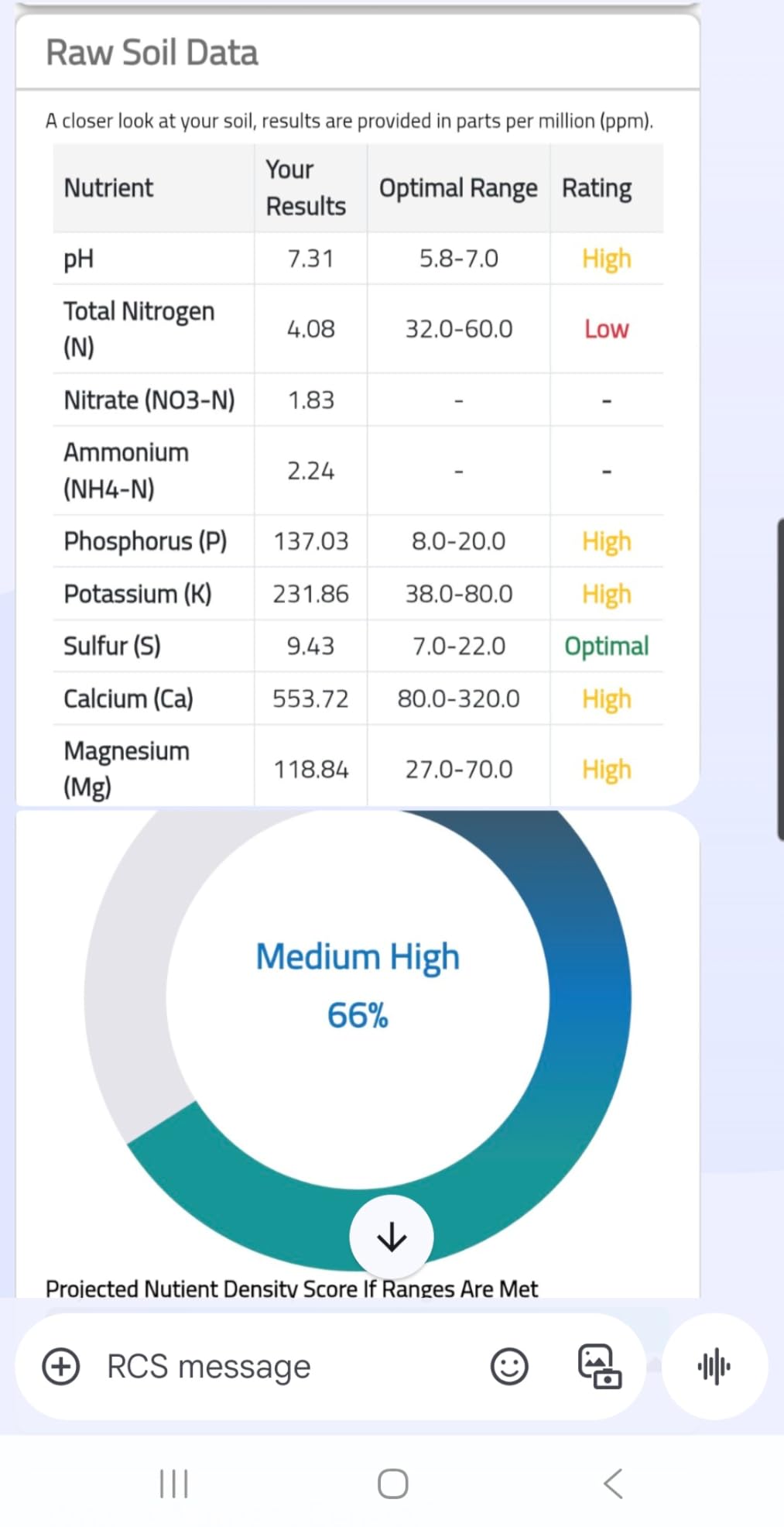
MySoil is the kit we kept reaching for during this comparison, because it is the only one that returned a number we could turn straight into an amendment order. You mail a composite sample and get back a panel covering 13 plant-available nutrient levels, including nitrogen and pH, in about six to eight days.
That report is the real product. Owners consistently praise that it says what to apply, how much to apply and when to apply it, and it offers both organic and non-organic fertilizer options so you are not forced into a synthetic program. For a vegetable garden split into several beds with different crops, that guidance is what stops you from treating every bed identically.
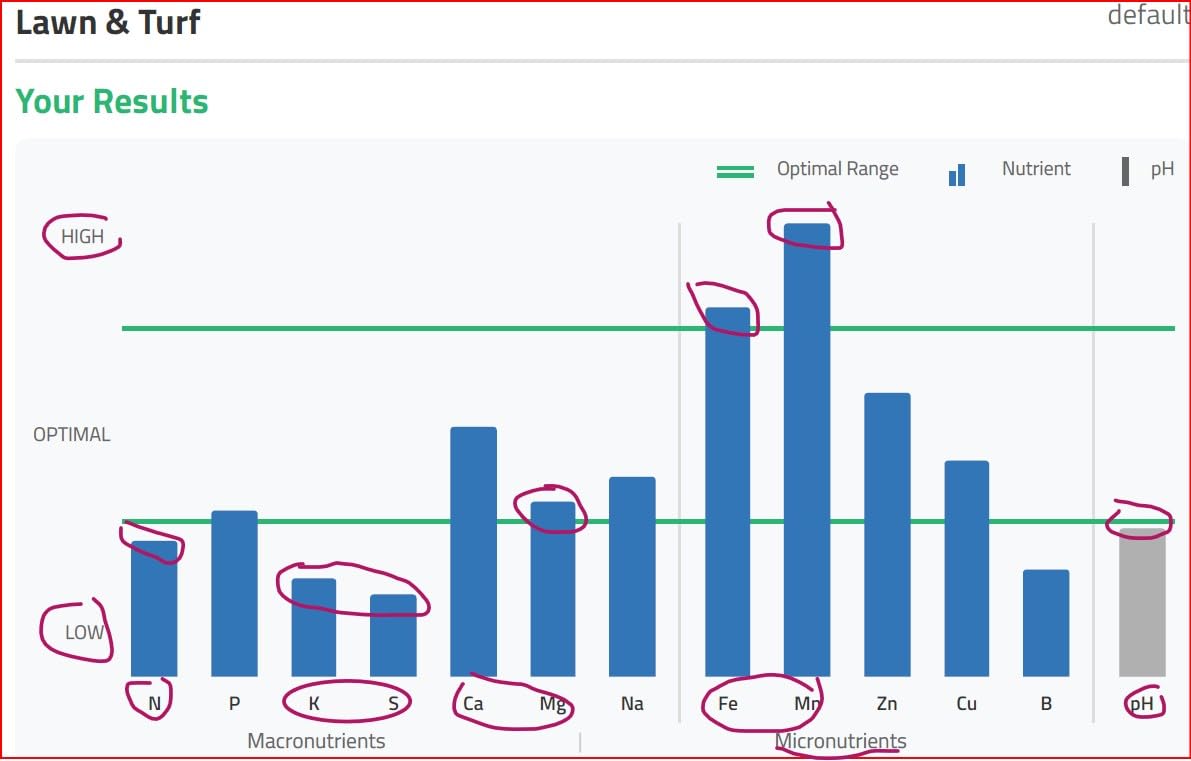
The approach works across soil types and setups. The same panel handles lawn and turf, vegetable gardening, flowers, compost, trees, vines, house plants, soilless media and hydroponics, which means one kit covers a raised bed and the compost pile you are building next to it.
The trade-off is honest and worth stating plainly. It is a single-use kit, so repeat testing means buying again, and mail-in means you are waiting days rather than minutes. Neither of those things matters once a season, which is when a vegetable bed actually needs to be tested.
What MySoil Tells You That Strips Cannot
Strip kits return a single number. MySoil returns a panel, so you can see whether a deficiency is real or whether the pH is simply locking nutrients in place. That distinction is the whole game in a vegetable bed, because adding nitrogen to soil that is too alkaline to absorb it changes nothing but your bank balance.
For growers juggling heavy feeders like brassicas and fruiting crops alongside nitrogen-fixing legumes, the per-nutrient view matters. You are no longer guessing which amendment to buy, because the report names it.
Where MySoil Falls Short
It does not screen for heavy metals or other contaminants, which matters more than most gardeners realize if you are growing edible crops on urban or previously industrial ground. If that describes your plot, treat MySoil as a fertility test and get a separate metals analysis from your extension office.
Turnaround is also a genuine constraint for a fresh garden. If you are deciding this weekend whether to lime the bed, waiting a week is not going to work, and a capsule kit gives you a screening number tonight.
2. Luster Leaf Rapitest 1601 – Best Value Instant pH and NPK
Rapitest Soil Test Kit for Gardens, Vegetables, Flowers and Lawns. USA designed and assembled soil tester completely, quickly and accurately measures/analyzes soil pH acidity and garden nutrients
Capsule chemistry
pH nitrogen phosphorus potash
40 tests, 10 per parameter
Chart-matched color
Pros
- Roughly 10 minutes per test with no mailing
- Color-coded capsules matched to test containers
- Results matched a Texas A and M lab analysis for one certified soil scientist
- Largest review count in this comparison at 6713
- P plant preference list covering 450+ species
Cons
- Only 10 tests per parameter
- Replacement capsules are hard to source
- Small test containers tip and spill easily
- Capsules are hard to open and can shatter
The Rapitest 1601 is the kit most vegetable gardeners end up owning first, and for good reason. It uses a capsule system with patented color comparators to read pH, nitrogen, phosphorus and potash in about ten minutes per test, with no batteries and no mailing.
Our favorite detail is the pH preference list covering more than 450 plants. When a bed comes back at 5.8, that chart tells you whether your tomatoes and peppers are the plants suffering, and it costs nothing extra to check.
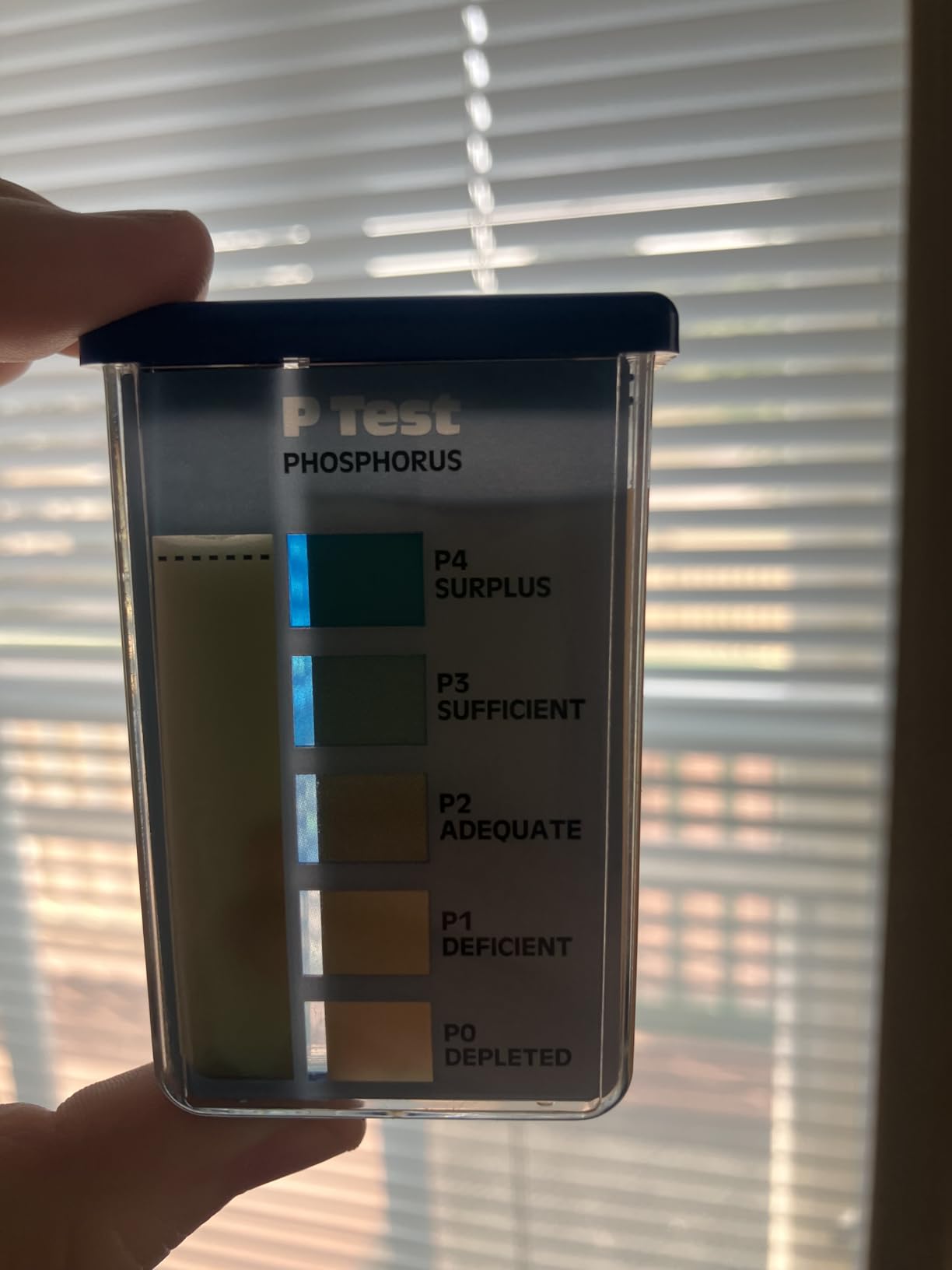
Accuracy is the surprise here. One certified professional soil scientist reported that results closely matched a Texas A and M laboratory analysis, which is the kind of cross-check most gardeners never get to do. Reviewers also call it easy to use, with clear instructions that work for beginners and experienced growers alike.
Set against 6,700-plus reviews averaging 4.2 stars, it is the most-proven kit in this roundup. It is not the most precise option, but it is the least likely to leave you staring at a number and wondering what it means.
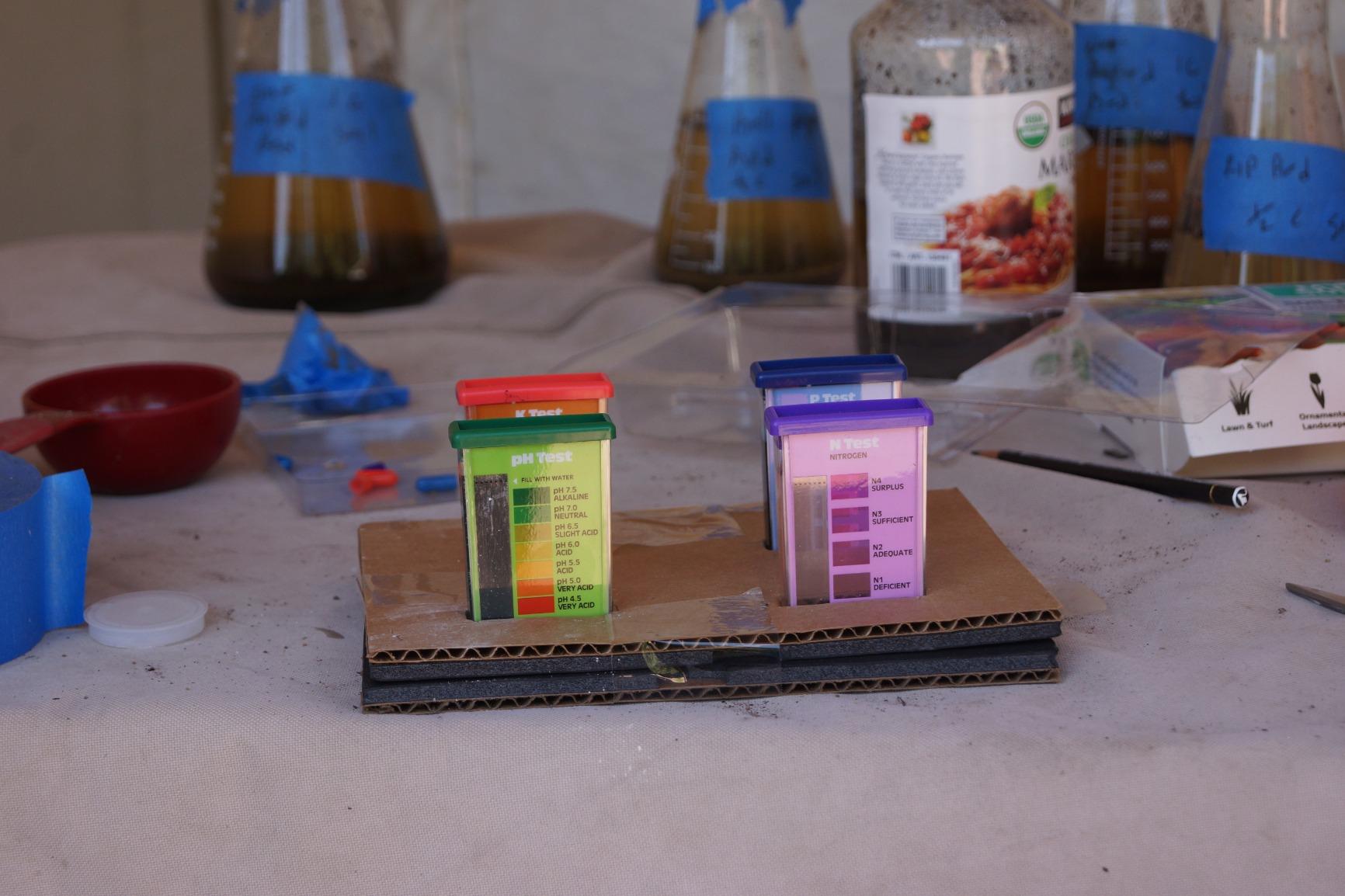
How to Get Repeatable Results From the Capsules
Use the same water volume and the same wait time every round, because color comparison drifts when the technique drifts. Note the time of day you sampled too, since moisture changes the reading more than most people expect.
Treat the N, P and K channels as screening, not as a fertilizer prescription. The kit tells you which direction you are off, and the report from a mail-in lab tells you how many pounds per 1,000 square feet to apply.
Where the Rapitest Falls Short
You get 10 tests per parameter, and replacement capsules are genuinely hard to source once those run out. If you have four beds, that budget disappears quickly, so buy two or use strips for the extra beds.
The test containers are small and tippy, and the capsules are hard to open and can shatter in the jar. Work over a sink, open them away from your palm, and expect a mess the first few times.
3. Garden Tutor Soil pH Test Strips – Best Budget pH Screening
Garden Tutor Soil pH Test Kit – 100 Strips with AI-Powered Web Reader – Accurate Testing for Lawn, Garden & Compost – pH 3.5–9
100 pH strips covering 3.5-9
Photo-based web reader
About 60-second results
Lime and sulfur estimator
Pros
- Low cost per reading across many beds
- 100 strips allow repeat testing across beds and compost
- Photo reader returns a digital result without an app
- Includes a lime and sulfur application estimator
- Strips store flat in a drawer
Cons
- pH only with no nutrient readings at all
- Color matching depends on lighting and eyesight
- Web reader needs a phone or computer
- Paper strips can degrade in humid storage
When pH is the only question you need answered, strips win on cost per reading and convenience. A hundred tests from one package means you can screen every bed, a handful of containers and your compost pile without thinking about cartridge refills.
The web reader is the part we did not expect to like as much as we do. Photograph the strip against the printed template, upload it, and get a pH result back in digital form without downloading an app, which removes most of the guesswork that normally makes strip kits frustrating.
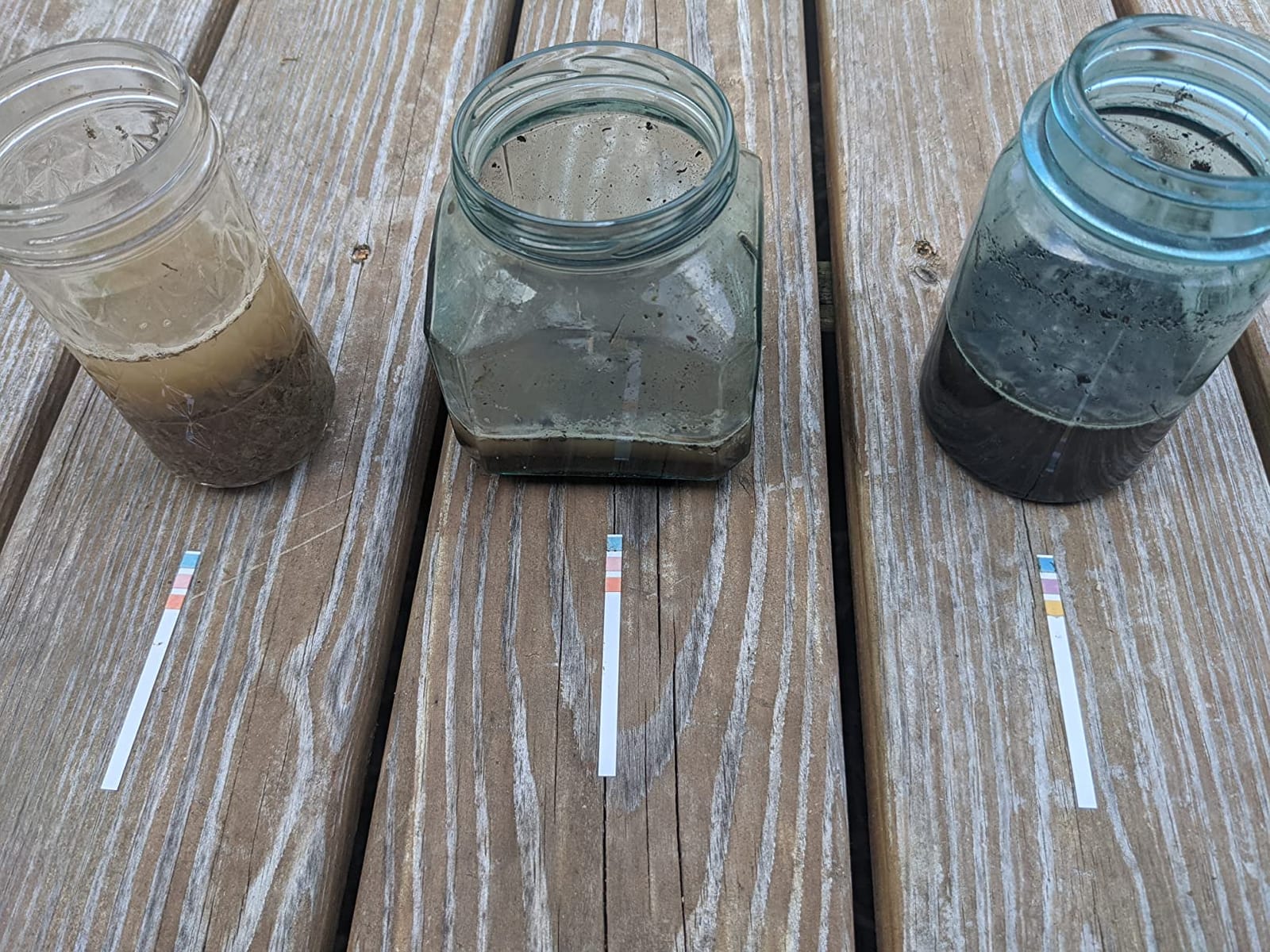
The included lime and sulfur application estimator is genuinely useful for a vegetable garden. It converts your pH reading into an amendment quantity, so the gap between measuring and acting is very short.
Owners like the low cost and the strip count. They also note plainly that it does not measure nutrients, and that is not a flaw so much as the deal: this is a pH tool, so use it as one.
Where Strips Are Genuinely the Right Choice
Strips are ideal for tracking a pH correction across a season. Take a reading, apply your amendment, and re-test on the same schedule, because the trend line is far more informative than any single reading.
They are also the practical answer for containers and potting mix, where a lab panel is overkill and a raised bed has not settled enough to be worth a full analysis.
Where Strips Are the Wrong Choice
You get no nitrogen, phosphorus or potassium data, so a strip reading cannot tell you whether a bed needs feeding. If your plants show deficiency symptoms, strips narrow the cause to pH or rule pH out, and then you need a real nutrient test.
Storage matters more than most listings admit. Paper strips degrade in humid conditions, so keep the bottle sealed, and expect color matching to vary between you and the next person in the house.
4. Soil Savvy Soil Test Kit – Best for Plain-Language Recommendations
Soil Savvy – Soil Test Kit | Understand What Your Lawn or Garden Soil Needs, Not Sure What Fertilizer to Apply | Analysis Provides Complete Nutrient Analysis & Fertilizer Recommendation On Report
Mail-in analysis of pH plus 14 nutrients
Fertilizer recommendation on the report
Ready-to-use single kit
Pros
- Reports on pH plus 14 nutrients for a wider picture than basic NPK kits
- Fertilizer advice written in plain language for home growers
- Ready-to-use format with all components included
- Uses the same technology employed by agricultural producers
Cons
- Single-use mail-in format so retests need new kits
- Smaller review base at 890 ratings
- No heavy metal screening
Soil Savvy exists to solve a specific complaint we heard repeatedly in forum threads: reports that arrive as a raw list of numbers with no explanation. This one puts a fertilizer recommendation on the report itself, written for someone who grows food rather than someone who runs a fertility program.
The analysis covers soil pH and 14 nutrients including nitrogen, phosphorus and potassium. That is a wider panel than the usual home kit, which usually stops at NPK and pH.
The positioning is genuinely useful. The manufacturer states the same testing technology is used by leading agricultural producers, turf managers and landscapers, and that the sustainable angle is about eliminating over-application rather than adding more product.
Owners rate it 4.2 stars across 890 ratings with a 64% five-star share, and the pattern in reviews is consistent. People value the broad nutrient panel and the readability of the recommendations.

Why Plain-Language Reports Matter
Most gardeners who abandon a soil test do not abandon it because the number was confusing. They abandon it because the number did not connect to an action, and a report that names what to apply closes that gap.
For a mixed vegetable bed where you are growing leafy greens, fruiting crops and legumes at once, a report that speaks in amendment quantities per area is worth more than a longer list of micronutrients you cannot act on.
Where Soil Savvy Falls Short
It is a single-use mail-in format, so every retest means another kit. Plan your sampling sites before you mail the first one, because you cannot re-test a specific spot later.
It also sits lower in the category for sales volume, with 890 ratings against several thousand for the leaders. That matters less for accuracy and more for how often the manufacturer updates guidance when soil science moves.
5. LaMotte 5679-01 – Best for Classrooms and Repeat Testing
Lamotte Model El – Turf and Garden Soil Test Kit – 5679-01
15 tests each for N P K
30 soil pH tests
Laminated color charts
Soil Handbook included
Pros
- 15 tests each for N P K plus 30 pH tests
- 4.6 stars from 341 ratings
- Laminated charts survive repeated handling
- Includes a Garden Guide and the LaMotte Soil Handbook
- Suited to soil science education
Cons
- Heaviest and largest kit in the group at 2.9 pounds
- Manual interpretation rather than automated recommendations
- High capacity is wasted on a single bed
The LaMotte 5679-01 is built for repetition. It holds 15 tests each for nitrogen, phosphorus and potassium plus 30 pH tests, so it is the kit that makes sense if you are testing a school garden plot, a community garden bed network, or the same bed every month through a growing season.
Everything arrives with the interpretive support that smaller kits skip. You get a Garden Guide manual, the LaMotte Soil Handbook, diagrammed instructions and laminated color charts that survive being handled year after year.
Reviewers also note that the rapid test procedures and diagrammed instructions were written for soil science education, so a first-time user is rarely left guessing at the sequence. That matters, because the most common error in home testing is a wrong ratio rather than a wrong kit.
Owners rate it 4.6 stars across 341 ratings with a 74% five-star share, and the durable charts are the most commonly mentioned advantage. At-home kits that arrive as paper charts rarely survive a damp shed, which is where most of them end up.
For a single backyard bed, this is far more capacity than you need. For a shared space where a dozen gardeners each want to test their own plot, it is the correct size.
When High Test Capacity Pays Off
Capacity matters when you are tracking change. Testing a bed monthly through a pH correction takes far more tests than anyone expects, and running out of reagent mid-season is how people end up drawing conclusions from two data points.
It also matters for teaching. With a rapid test procedure and a handbook that explain what each color means, this is an easy kit to hand to a volunteer leading a community garden workshop.
Where LaMotte Falls Short
It is the largest and heaviest kit here at 2.9 pounds, and the box is 9.5 by 6.5 by 6.5 inches, so it lives on a shelf rather than in a toolbox.
Interpretation is manual. You read the chart and consult the handbook yourself, so if you want a report that tells you what to apply, this is not the kit that provides it.
6. SoilKit Mail-In Test – Best for Technical Soil Data
Soil Test Kit – Discover Your Lawn and Garden Fertility with pH, Nutrient and Mineral Analysis. Professional Results Provide Custom Fertilizer Prescription for Your Yard.
Mehlich III extraction
Buffer pH, CEC and organic matter
Online results dashboard
Pros
- Uses the Mehlich III method found in professional labs
- Measures CEC
- organic matter and buffer pH alongside micronutrients
- Online dashboard tailors advice to your square footage
- Customer service will call to walk through results
Cons
- Roughly 5-11 days before results are posted
- Report PDF layout is hard to read
- Not intended for potting soil
- Paid upgrade adds pest and disease suggestions
SoilKit is the most technically rigorous home option in this group. It uses the Mehlich III extraction method, the same approach used in professional soil labs, and reports pH, buffer pH, organic matter, cation exchange capacity and an estimate of nitrogen release alongside the standard nutrients.
Buffer pH and CEC are the two numbers that separate a real soil profile from a bag of nutrients. Buffer pH tells you how much lime your soil needs rather than just how acidic it is, and CEC tells you how much the soil can hold, which is what determines whether your compost and fertilizer applications actually stay put.
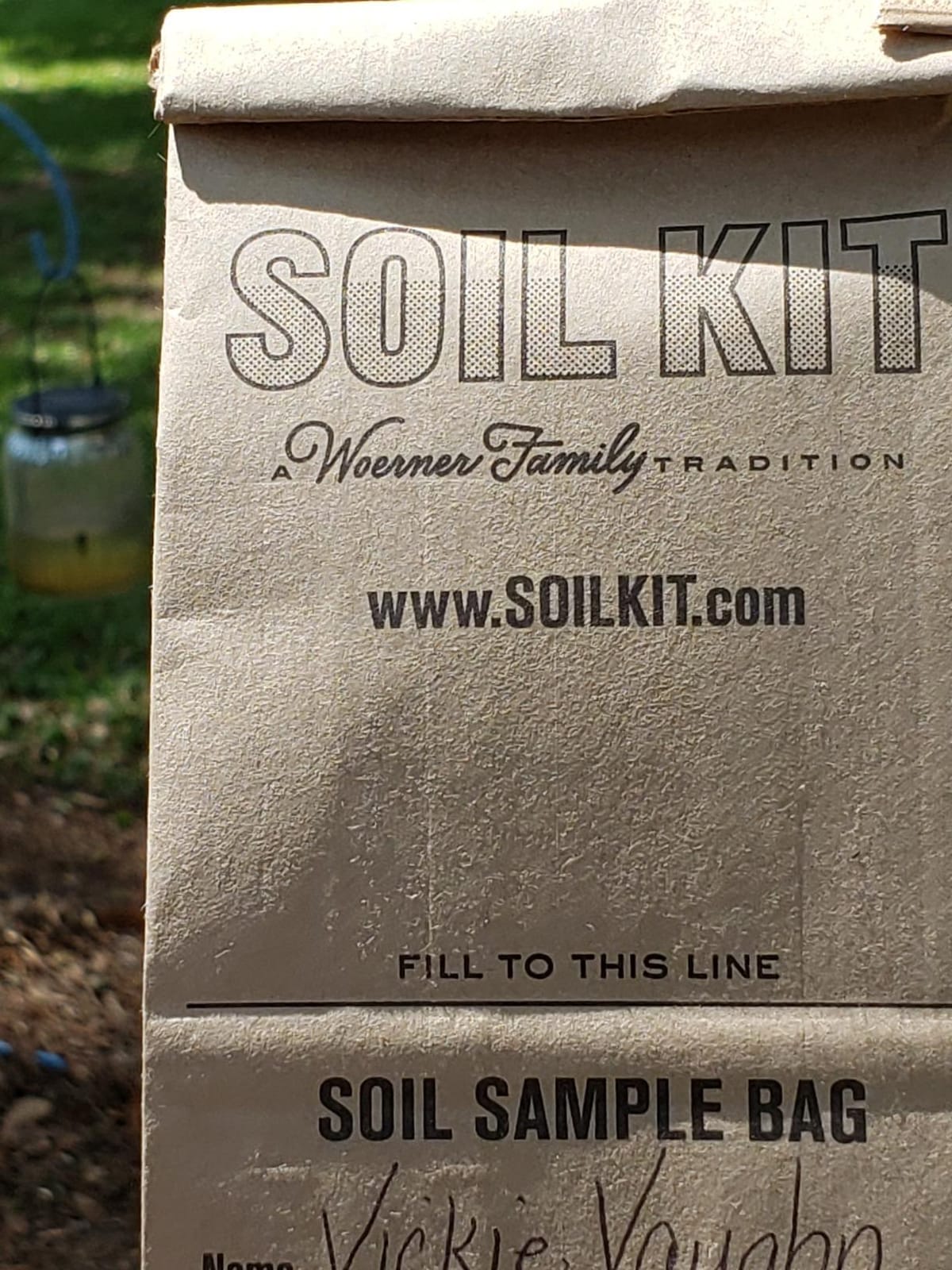
It also measures several micronutrients including magnesium, calcium, boron, zinc, manganese and iron. Several users report that it correctly diagnosed a pH problem that cheaper do-it-yourself kits had missed entirely, which is the whole reason a deeper panel is worth paying for.
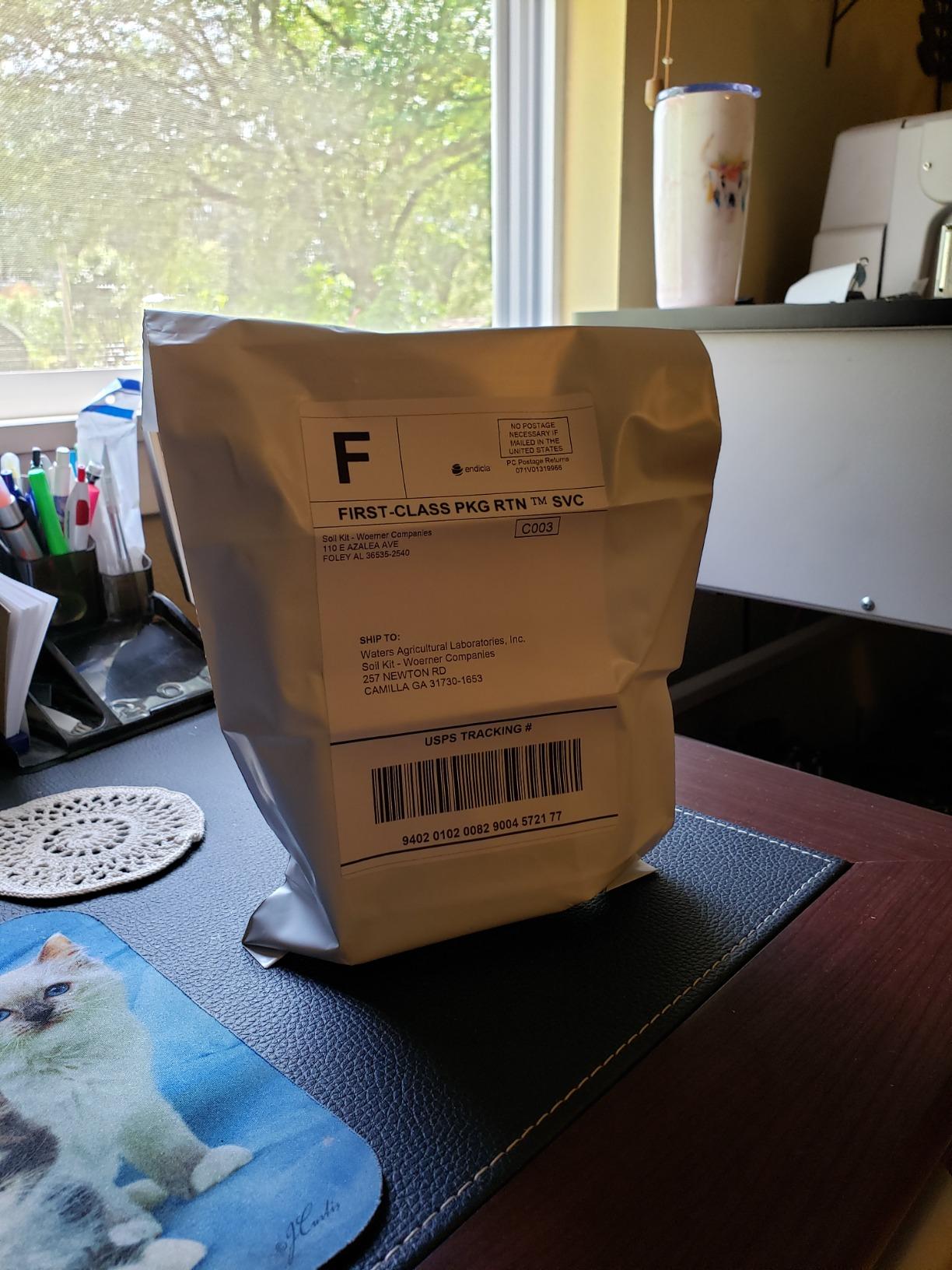
Results land in a SoilKit365 dashboard with area-based recommendations, and there is QR scanning plus a square footage calculator to make the report match your actual bed size. Customer support will call you to walk through the numbers, which is unusual at this level.
How to Read a Report With Buffer pH and CEC
Use buffer pH to size the lime application. A raw pH reading tells you the soil is acidic, but buffer pH tells you how much carbonate it will take to move that number, and clay-heavy beds need far more than sandy ones at the same pH.
Use CEC to decide how often to feed. A low CEC sandy bed releases nutrients quickly and leaches, so you split applications into smaller doses, while a high CEC bed holds nutrients and tolerates heavier single applications.
Where SoilKit Falls Short
Turnaround runs roughly 5-11 days before results are posted, and several owners find the results PDF layout poorly designed. Expect to read it on a screen rather than a printed page.
It is explicitly not intended for potting soil, so containers are out. There is also a paid upgrade to SK365+ that adds weed, disease and pest suggestions, which you do not need for fertility work.
7. Dewilde 140-Test Soil Test Kit – Best for High-Volume Home Testing
Soil Test Kit 140 Tests (2026 Updated Instructions) – pH, Nitrogen, Phosphorus, Potassium & Ammonia – Garden, Lawn & Plant Soil Tester Kit for Accurate Fertility Analysis
Liquid chemistry for five parameters
About 140 total tests
40 per parameter plus about 20 for nitrogen
Rapid at-home results
Pros
- Five parameters including ammonia
- more than most kits at this level
- About 140 tests
- far more than the other liquid kits here
- Updated instructions
- Ranks #4 in Soil Test Kits
Cons
- A 4.0 rating sits at the low end of this group
- No interpretive guide or amendment calculator
- Colored liquid requires careful comparison
- Assumes some soil science knowledge
When the cost per test is the number that matters, test volume dominates everything else. This kit runs about 140 tests at 40 per parameter plus roughly 20 for nitrogen, which works out far cheaper per reading than a capsule kit once you are testing more than a couple of beds.
It covers five parameters: pH, ammonia, nitrogen, phosphorus and potassium. Ammonia is the extra one most home kits skip, and it is a useful read because it reflects what is immediately available rather than what is locked up.
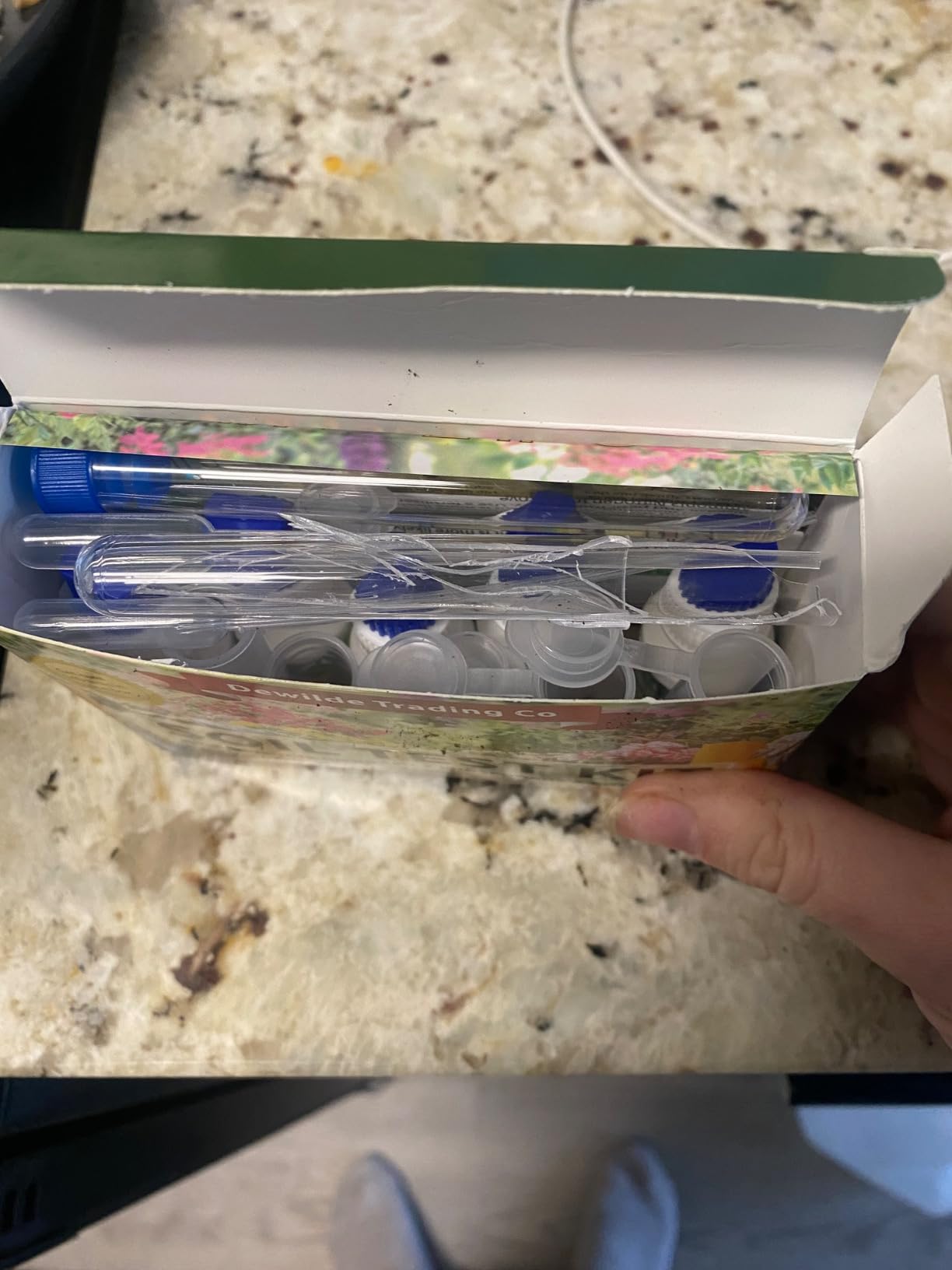
Everything happens at home. No bottle, no envelope, no waiting for a lab, which makes it practical for weekly monitoring through a growing season when plants are pulling hard on nitrogen.
Owners like the volume and the parameter count. The common complaint is not accuracy but guidance: there is no interpretive guide and no amendment calculator, so you supply the expertise.
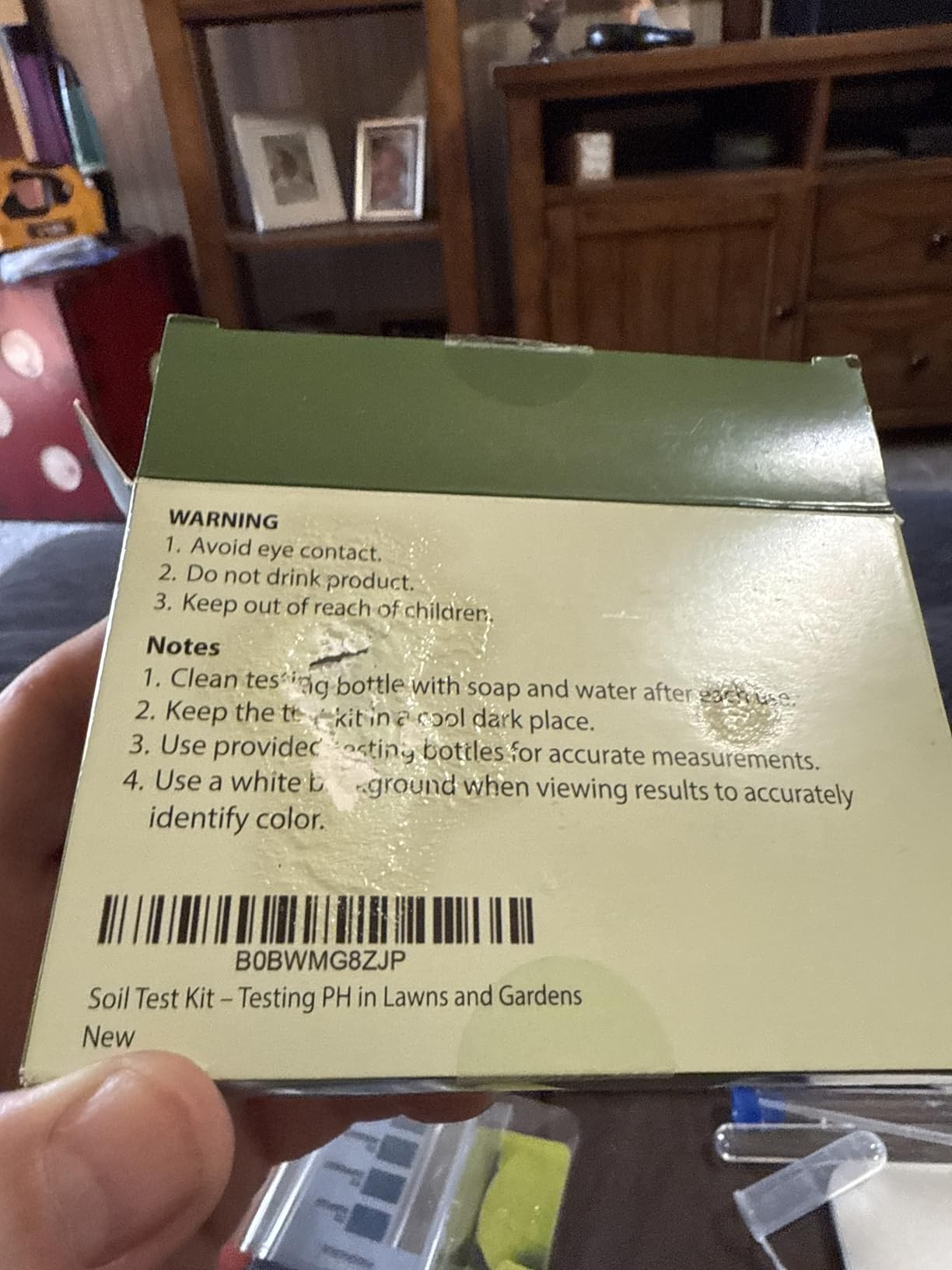
How to Get Value From a Kit With No Guidance
Write down each reading and compare it against the last one rather than reacting to a single number. Trends tell you whether a bed is depleting, and a single high nitrogen reading after a rain tells you very little.
Pair it with a mail-in panel once a year. The liquid kit tells you whether something changed, and the lab report tells you how much to apply, which is a combination that works better than either tool alone.
Where the 140-Test Kit Falls Short
At 4.0 stars across 551 ratings, it sits at the low end of this group, with about 10% one-star reviews. Those reviews cluster around confusing instructions rather than bad chemistry.
Reading colored liquid takes steady technique and decent light. Two shades apart on the chart are hard to tell apart, and getting that wrong puts your amendment rate off in a direction you will not notice for weeks.
8. Dewilde 100 pH Test Strips – Best for Containers and Quick Checks
Soil Test Kit – 100 Soil pH Test Strips (3.5–9 Range) for Garden, Lawn & Indoor Plants – Easy At-Home Soil Testing
100 strips covering pH 3.5-9
30-minute soak, 3-second dip, 60-second read
Color chart on the bottle
Pros
- Cheapest pH screening in this comparison
- 100 strips support frequent checks across beds and pots
- Very simple fixed procedure
- Ranks #5 in Soil Test Kits
Cons
- pH only
- no nutrient data
- Color matching depends on lighting and judgement
- Free jar tests can serve as a rough cross-check
This is the simplest kit here, and simplicity has real value when you want an answer without a procedure. Mix soil with water, let it sit 30 minutes, dip a strip for 3 seconds, hold it horizontally for 60 seconds, and compare against the color chart printed on the bottle.
One hundred strips across pH 3.5 to 9 is enough to screen several beds, every container on a patio, and your compost pile, then still have plenty remaining for a pH correction check weeks later.
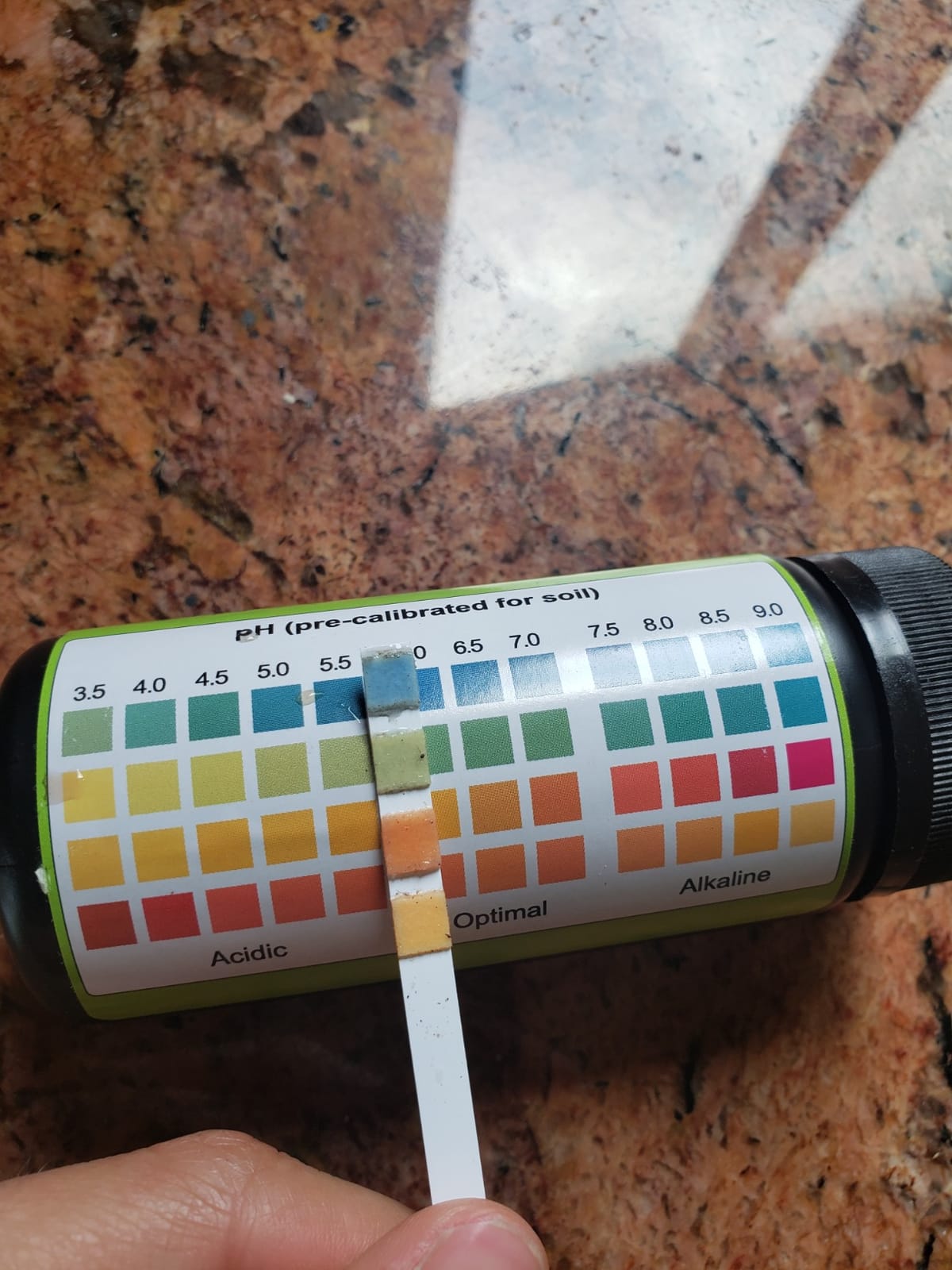
Owners rate it 4.2 stars across 569 ratings, and it ranks #5 in Soil Test Kits. That combination of rank and rating suggests the results hold up better than the packaging might imply.
It is also portable, so you can carry it to a community garden plot or a friend’s field rather than transporting soil back home in a sealed container.
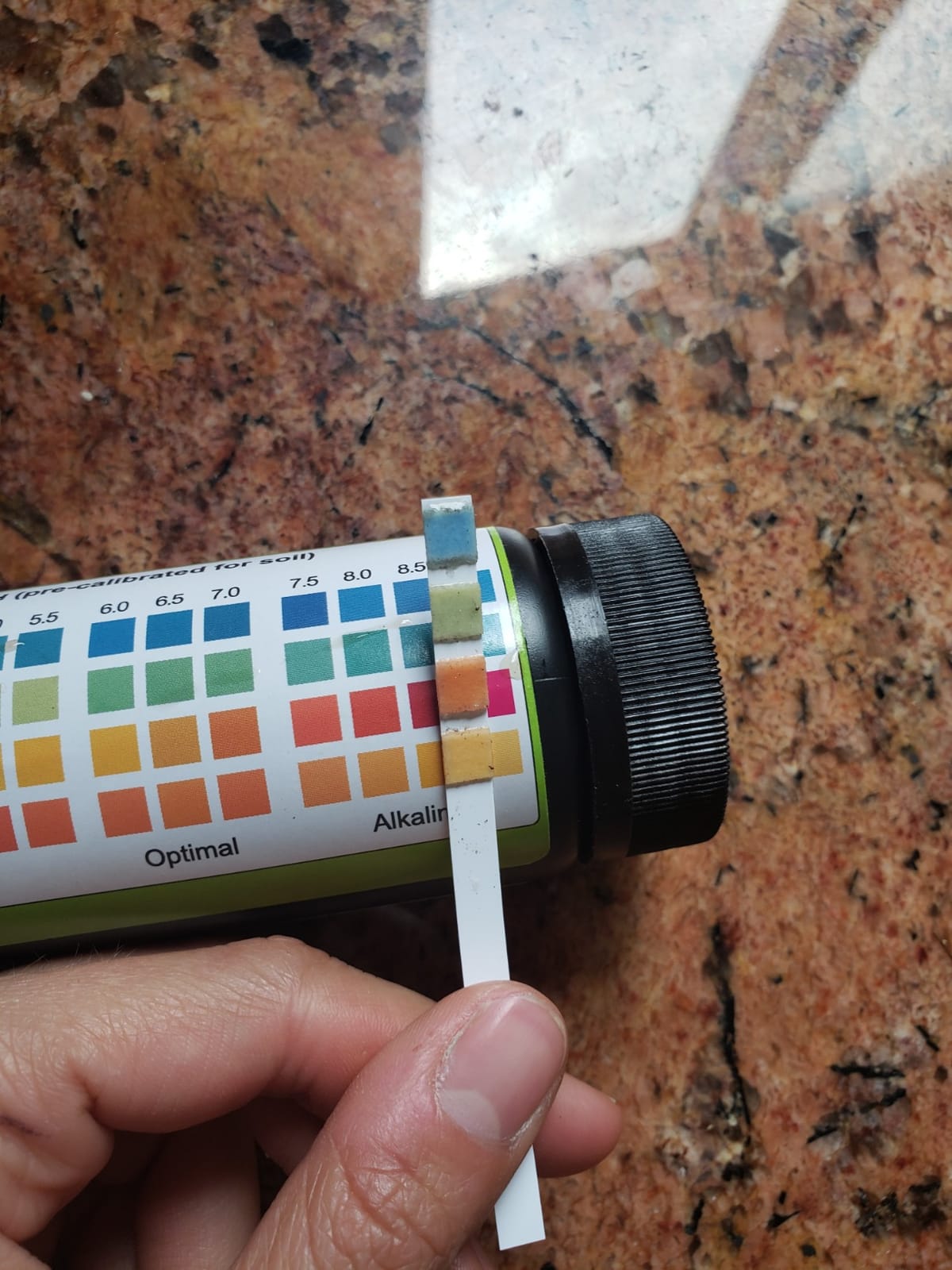
When Strips Beat Every Other Option
Containers and potting mix are the clear case. A lab panel on a bag of potting mix tells you about the bag, and a raised bed that has not settled yet tells you about settling. A strip tells you about the actual root zone in about five minutes of waiting.
Strips are also the cheapest way to run a repeated trend across many spots, which is exactly what you want when you are deciding whether an area is genuinely low in pH or just happens to be dry that afternoon.
Where Strips Fall Short
You get no nutrient information whatsoever, so a healthy-looking pH result gives you no idea whether the bed needs feeding. A vinegar-and-baking-soda jar test can serve as a free sanity check on whether your pH is in the right neighborhood at all.
Color matching depends on lighting and on who is doing the matching. Read strips under daylight rather than under a grow light, and take the same reading twice before you act on it.
9. Luster Leaf 1663 80-Test Kit – Best for a Full NPK Set to Carry
Luster Leaf Products 1663 80 Professional Soil Test Kit, Green
20 tests each for pH N P K
Solution-based extraction with plunger filter
Sturdy plastic case
Pros
- Sturdy carrying case plus extra O-rings and filter discs
- Solution-based testing gives a broader read than strips
- pH preference list for hundreds of plants
- pH and nitrogen are the most reliable of the four
Cons
- A 3.9 rating with 12% one-star reviews
- Potassium test reads cloudy or clear with little in between
- Stated test counts are optimistic against actual reagent volume
- Only one filter tube supplied for three tests
The 1663 doubles the Rapitest test count to 80, with 20 each for pH, nitrogen, phosphorus and potassium, and it comes with a sturdy plastic case plus spare O-rings and filter discs. The case genuinely matters if the kit lives in a car or a shared garden shed.
It is worth being blunt about the reviews. At 3.9 stars across 1,746 ratings with about 12% one-star reviews, the criticism here is specific rather than vague.
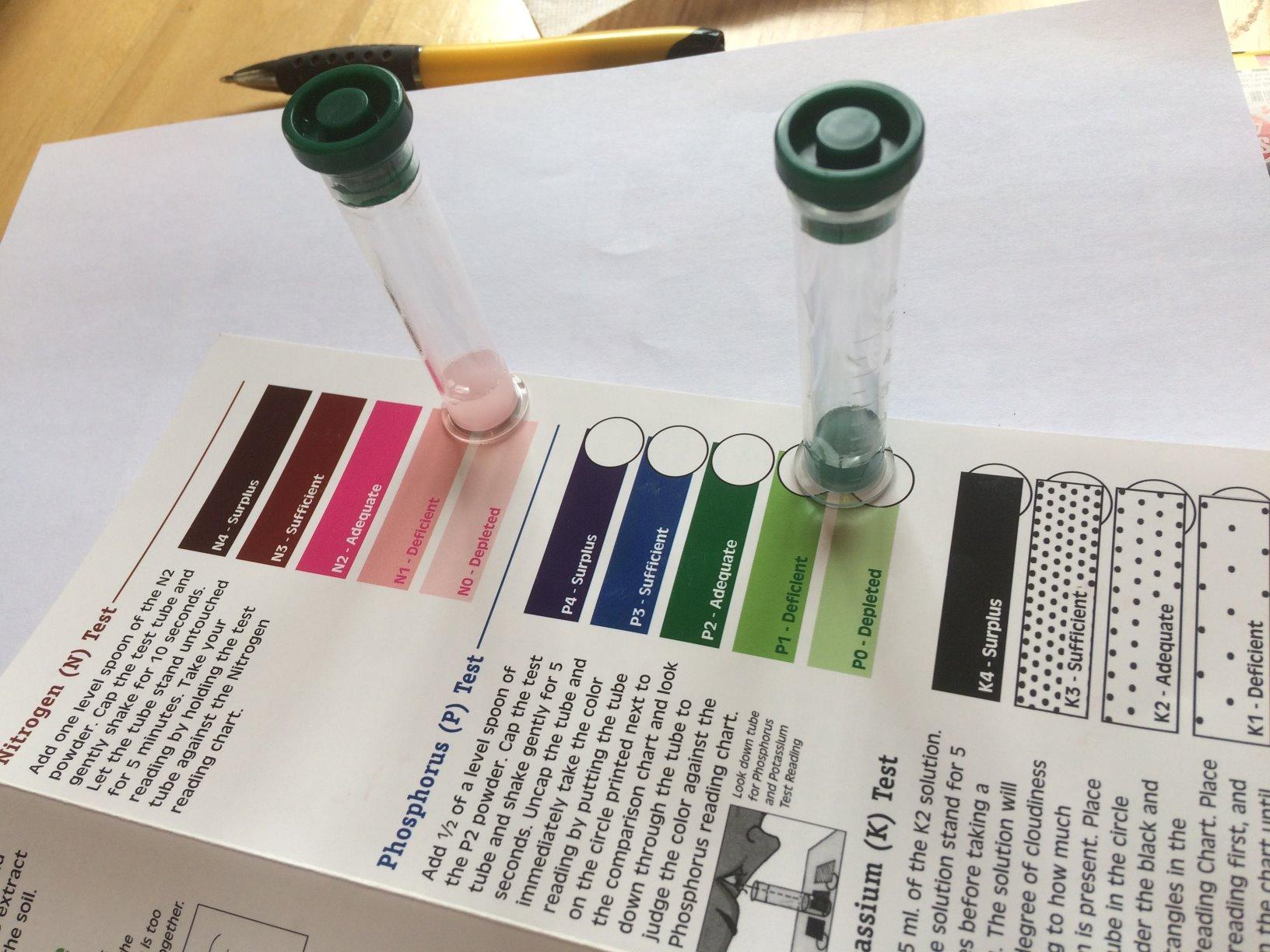
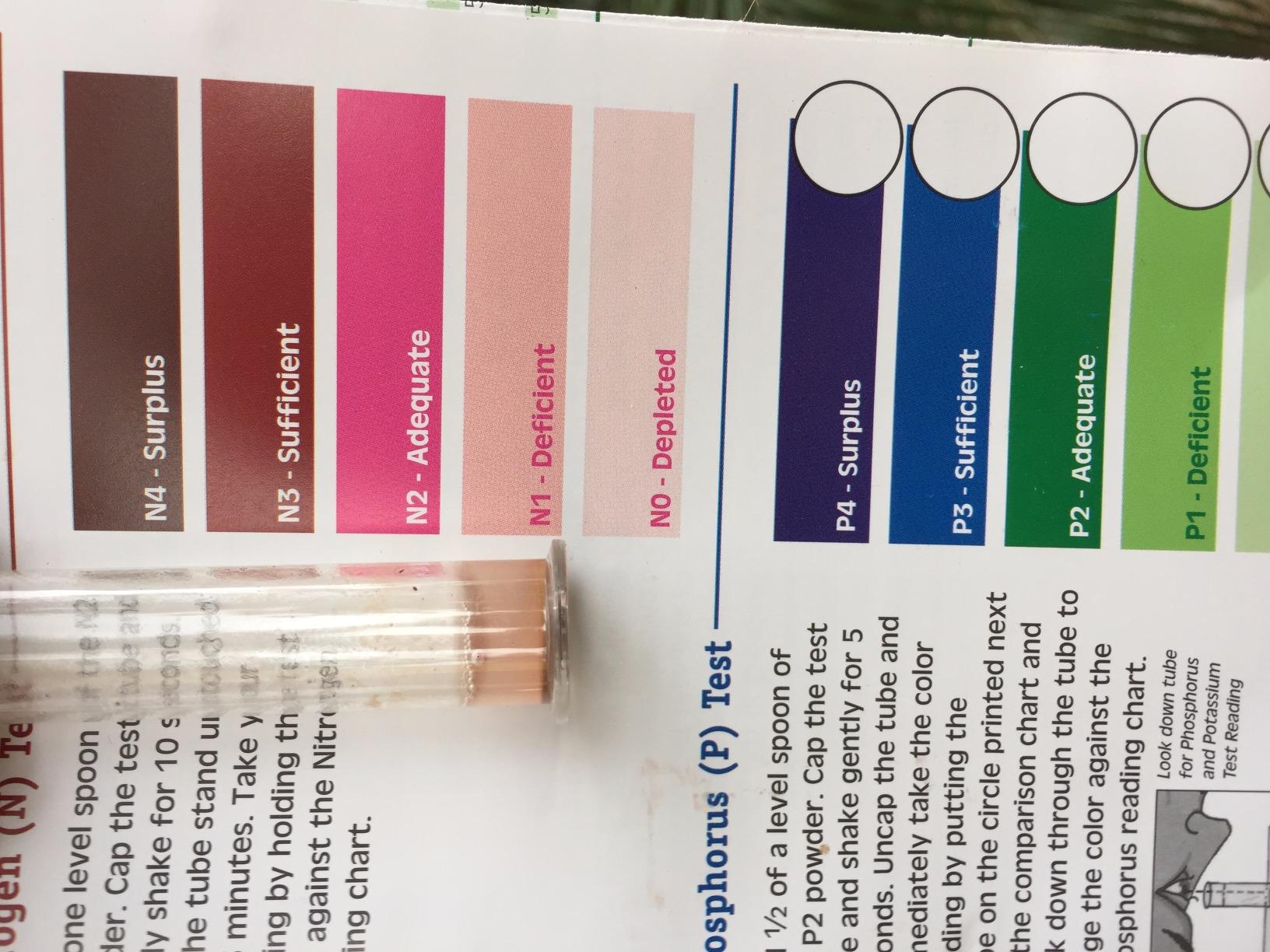
The most common technical complaint is the potassium channel. Owners report it producing either a totally cloudy or a totally clear result, which leaves you with a reading you cannot use, and several reviewers with lab training report that the nutrient reagents failed positive and negative control tests.
Several buyers also report a cracked filter cylinder or a leaking pH bottle arriving out of the box, and the narrow filter tube traps viscous solution while only one tube is supplied for three tests.
What This Kit Still Does Well
Solution-based extraction gives a much broader sense of soil condition than paper strips, and the pH preference list covering hundreds of plants makes interpreting a result fast. Owners also rate the pH and nitrogen channels as the most reliable of the four.
If you want one box that carries a full pH and NPK set, a case and spare consumables, this does that better than buying two kits and juggling two sets of instructions.
Why We Would Pick the Rapitest Instead
Several reviewers with lab training specifically recommend the capsule-based Rapitest from the same brand over this model. The capsules are less messy and the control failures reported here do not appear as often.
The pH scale also stops at 7.5, which sits below the natural pH of many Western soils, so a genuinely alkaline bed simply reads as maxed out. If you garden in a high-pH region, that is a genuine blind spot.
10. Luster Leaf 1605 Digital Soil Test Kit – Best for a Digital Readout
Luster Leaf 1605 Rapitest Digital Soil testing Kit
Digital display
Battery powered
Covers pH, N, P and K in one device
Pros
- Only kit in this group with a digital meter readout
- Battery powered so no reagent color interpretation for pH
- Covers pH
- N
- P and K in one compact device
- Easy to carry between sampling points
Cons
- Rated 3.9 stars with 10% one-star reviews
- Digital pH probes are hard to calibrate and drift
- Does not measure N P K directly
- Needs batteries and calibration buffers
The 1605 is the only kit here with a proper digital display for pH, and the appeal is obvious. A number on a screen removes the color-matching step that trips people up on every other strip and capsule kit.
It also covers nitrogen, phosphorus and potash, and it is compact enough to carry between sampling points in a four-bed garden. A 25-test configuration is also offered if you do not need as much capacity.
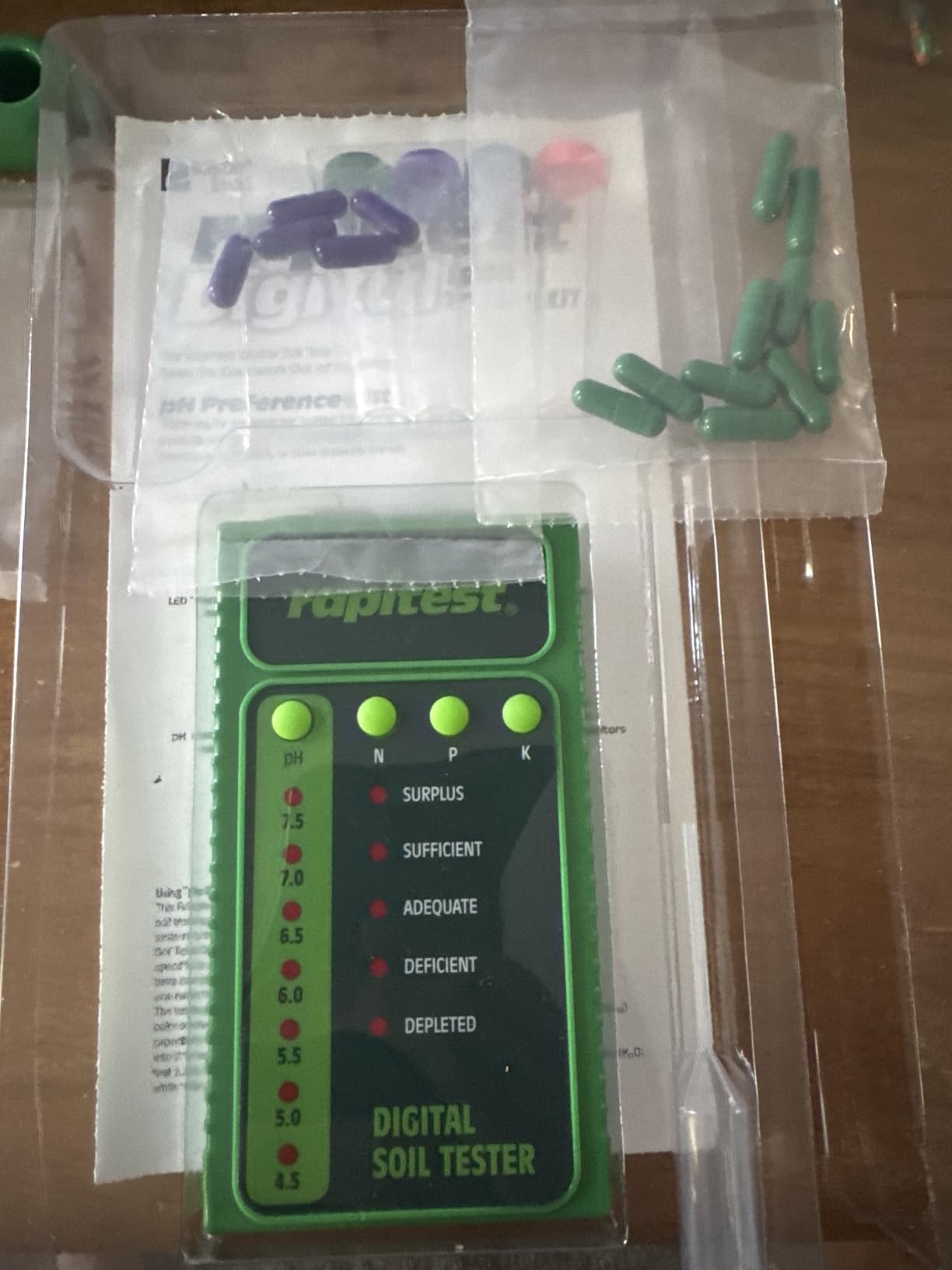
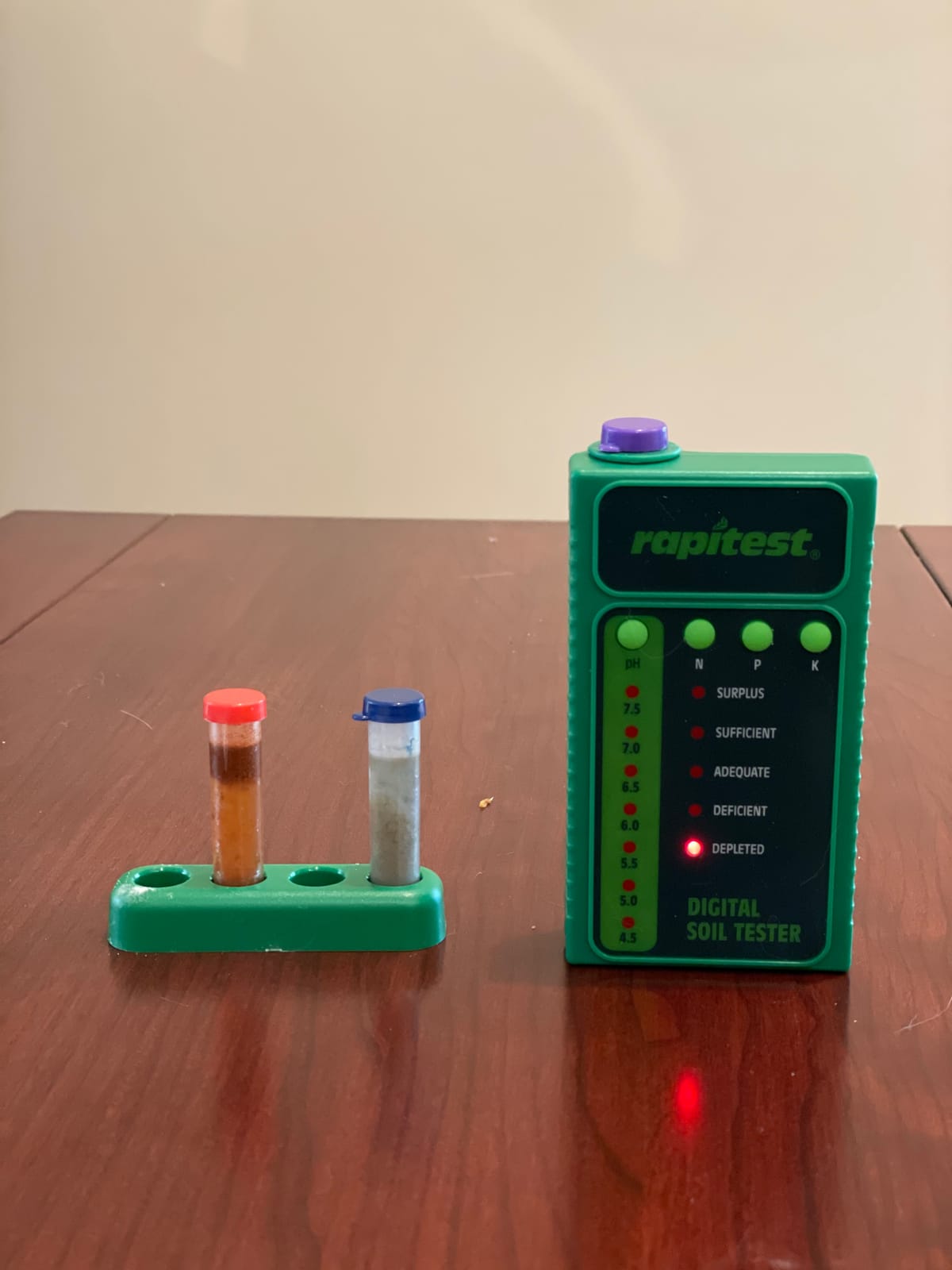
Here is the catch, and it is the same catch that applies to every digital meter in this category. The digital channel is pH only. The nutrient readings remain colorimetric, so you are still matching colors for nitrogen, phosphorus and potassium, just with a fancier pH readout attached.
That is why it scores 3.9 stars across 1,438 ratings with about 10% one-star reviews, and why owners frequently conclude that the simpler capsule kit from the same brand performs better.
What a Digital pH Readout Actually Buys You
It buys precision and repeatability on a single parameter, which matters if you are watching a pH correction over weeks and want readings that are actually comparable to each other. Color charts are where most of the error enters home testing.
It also saves real time on multi-bed sampling, because you can take a reading, walk to the next bed, and log it without doing anything chemical.
Why We Would Not Make This Your Only Kit
Digital pH probes are hard to calibrate and drift between uses, and this one needs batteries plus periodic calibration buffers. A drifting probe is worse than a color chart, because it looks precise while being wrong.
At the same time, a store shelf full of 3-in-1 and 7-in-1 meters claims to read NPK from a single probe. That is not a measurement. Conductivity is not nutrition, and no cheap meter resolves nitrogen, phosphorus and potassium separately.
11. Pawfly 4-in-1 Soil Test Kit – Best for Documented Test Ranges
Pawfly 4 in 1 Soil Test Kit for pH, Nitrogen, Phosphorus & Potassium, 40 Tests Soil Testing Kit for Lawn Garden Yard Farm, Accurate Soil pH Test Kit for Vegetable Flower Grass Indoor & Outdoor Plants
Four parameters with stated ranges
20 strips plus 40 reagent tablets
Full accessory set included
Pros
- Covers all four core parameters with documented numeric ranges
- Includes centrifuge tubes/dropper/grinding rod
- sample spoon and color chart
- Cheap enough to buy a second kit for cross-checking
- 10 tests of each parameter works for a single bed
Cons
- 3.9 stars with 12% one-star reviews
- Reagent tablets labelled K1
- K11 and 111 instead of 1
- 2 and 3
- Thin instructions that assume soil science knowledge
- Small review base at 96 ratings
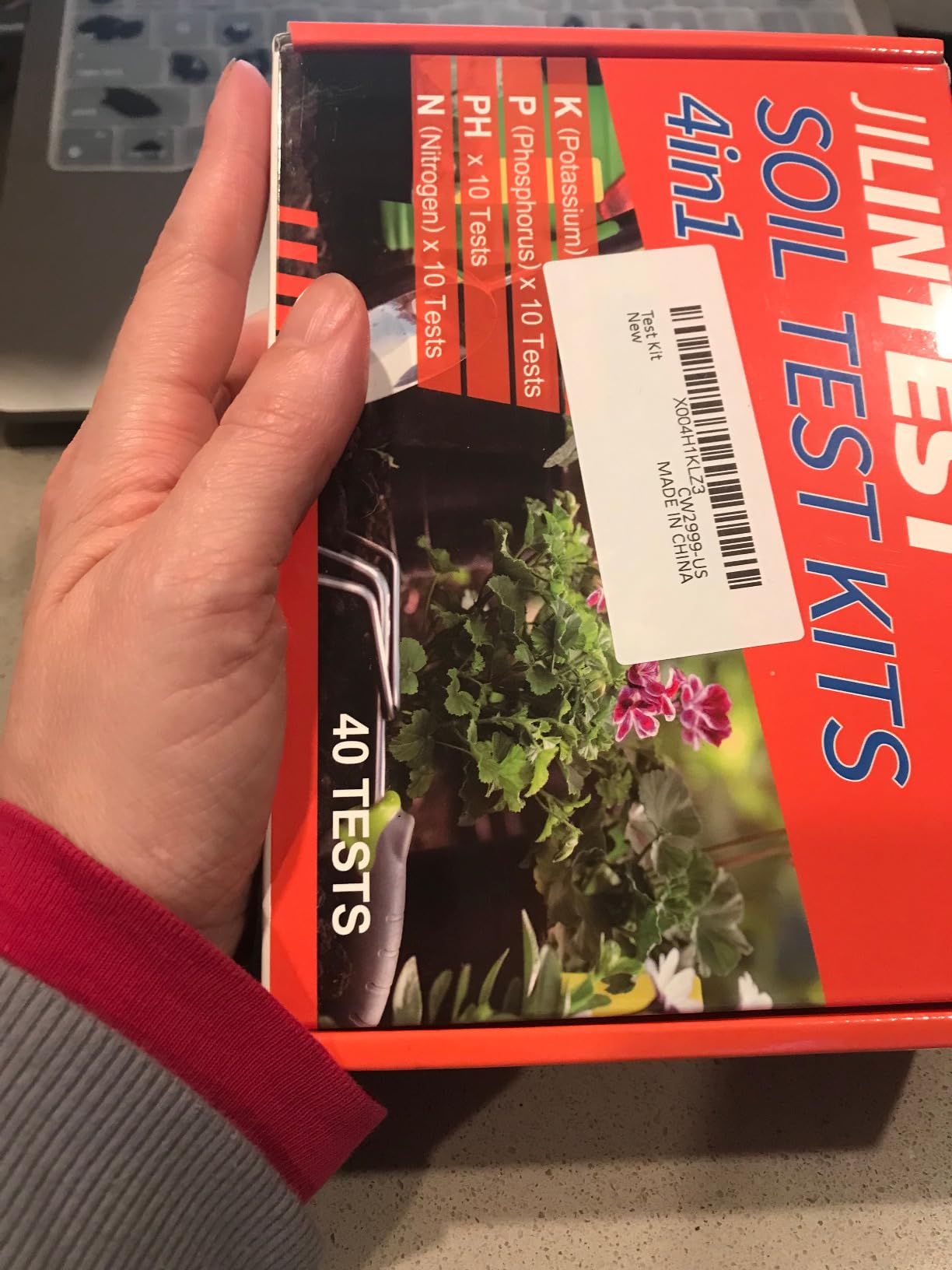
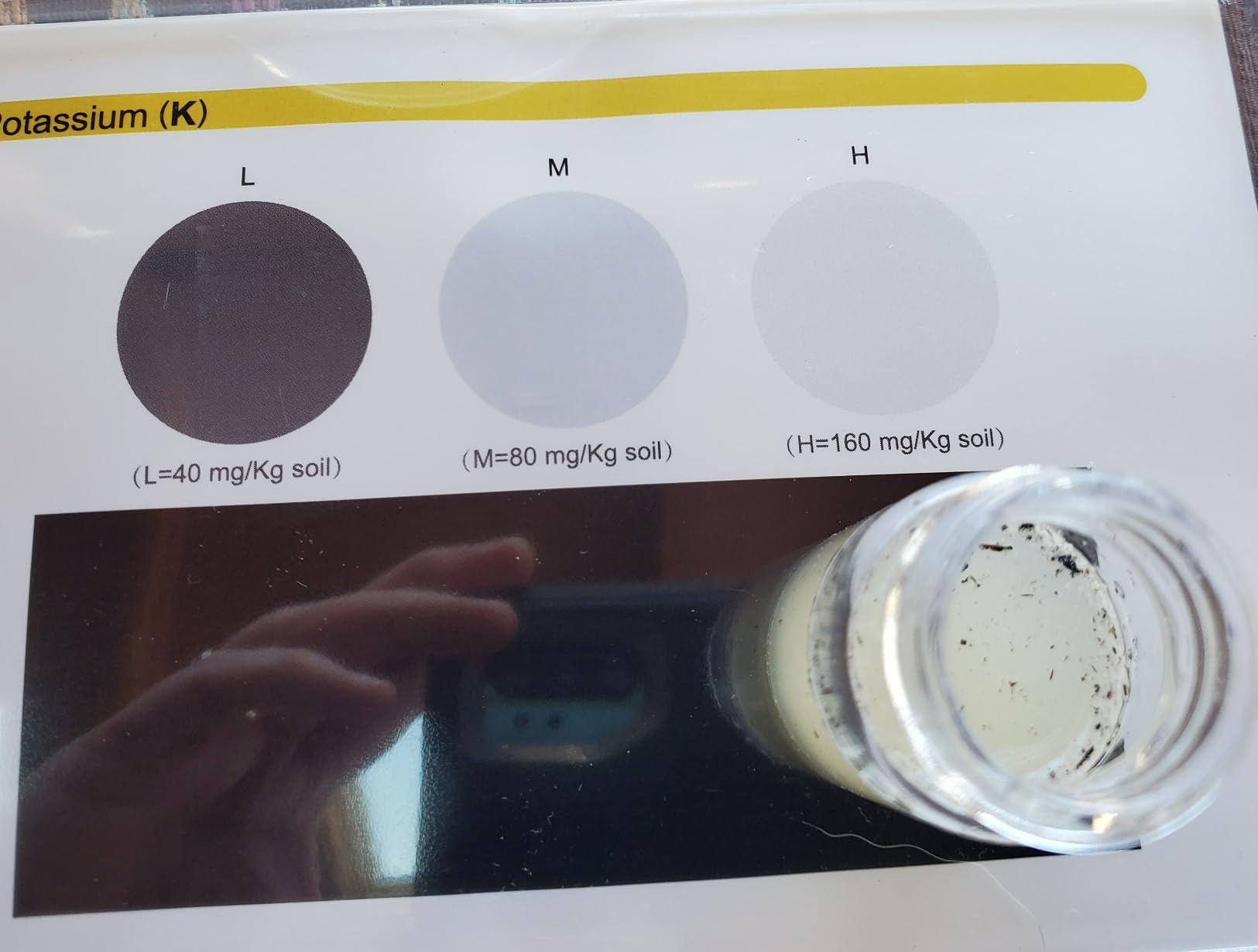
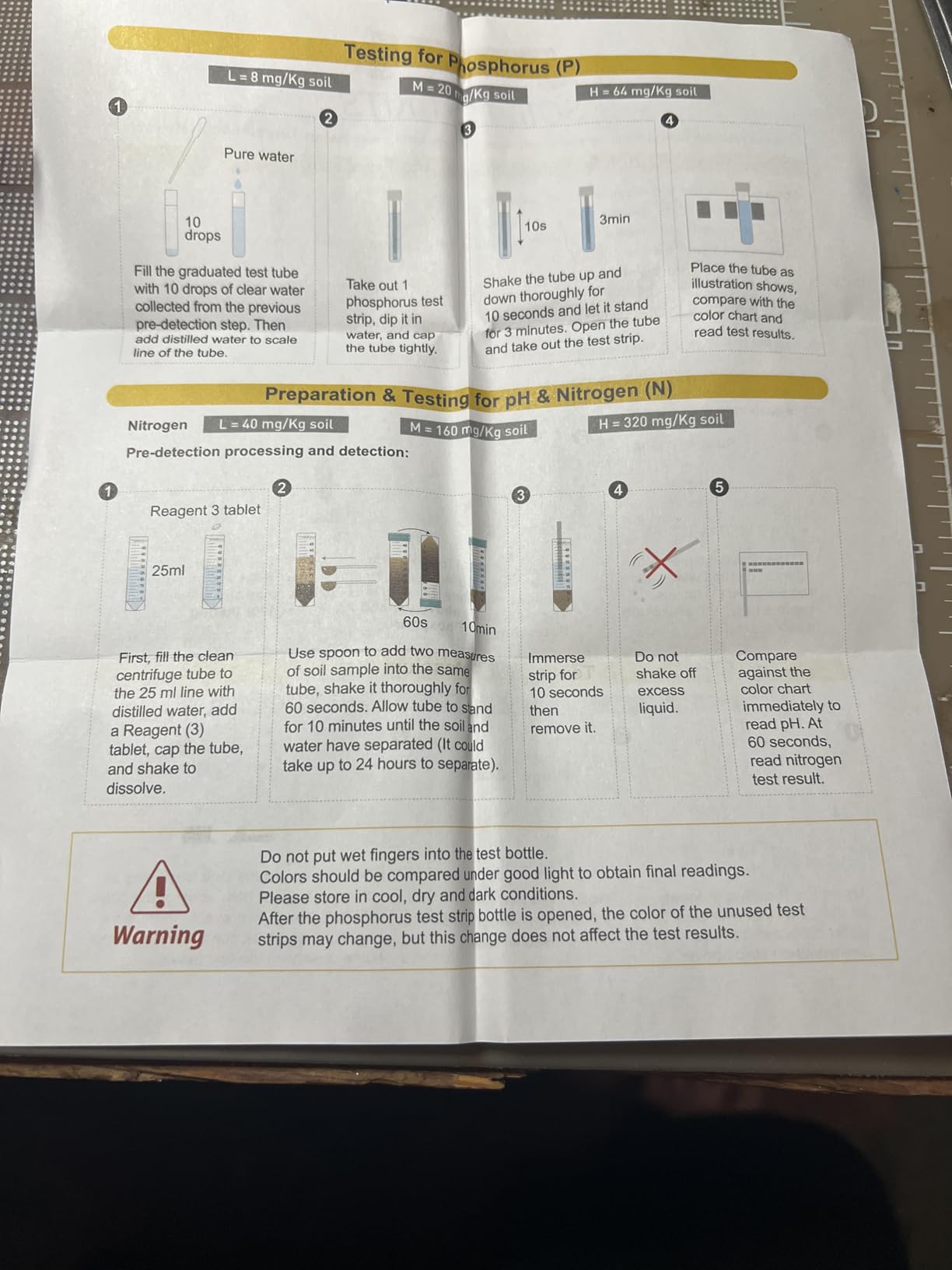
What Pawfly does better than most kits in this price bracket is publish its ranges. The kit states pH 3.5-9, nitrogen 40-320 mg/kg soil, phosphorus 8-64 mg/kg soil and potassium 40-160 mg/kg soil, and knowing those boundaries tells you whether a result is meaningful before you go hunting for amendments.
You get 20 test strips and 40 tablets, which is 10 tests of each parameter, plus a full accessory set: two centrifuge tubes, a test tube, a glass vial, a dropper, a grinding rod, a sample spoon, a color chart and an instruction manual.
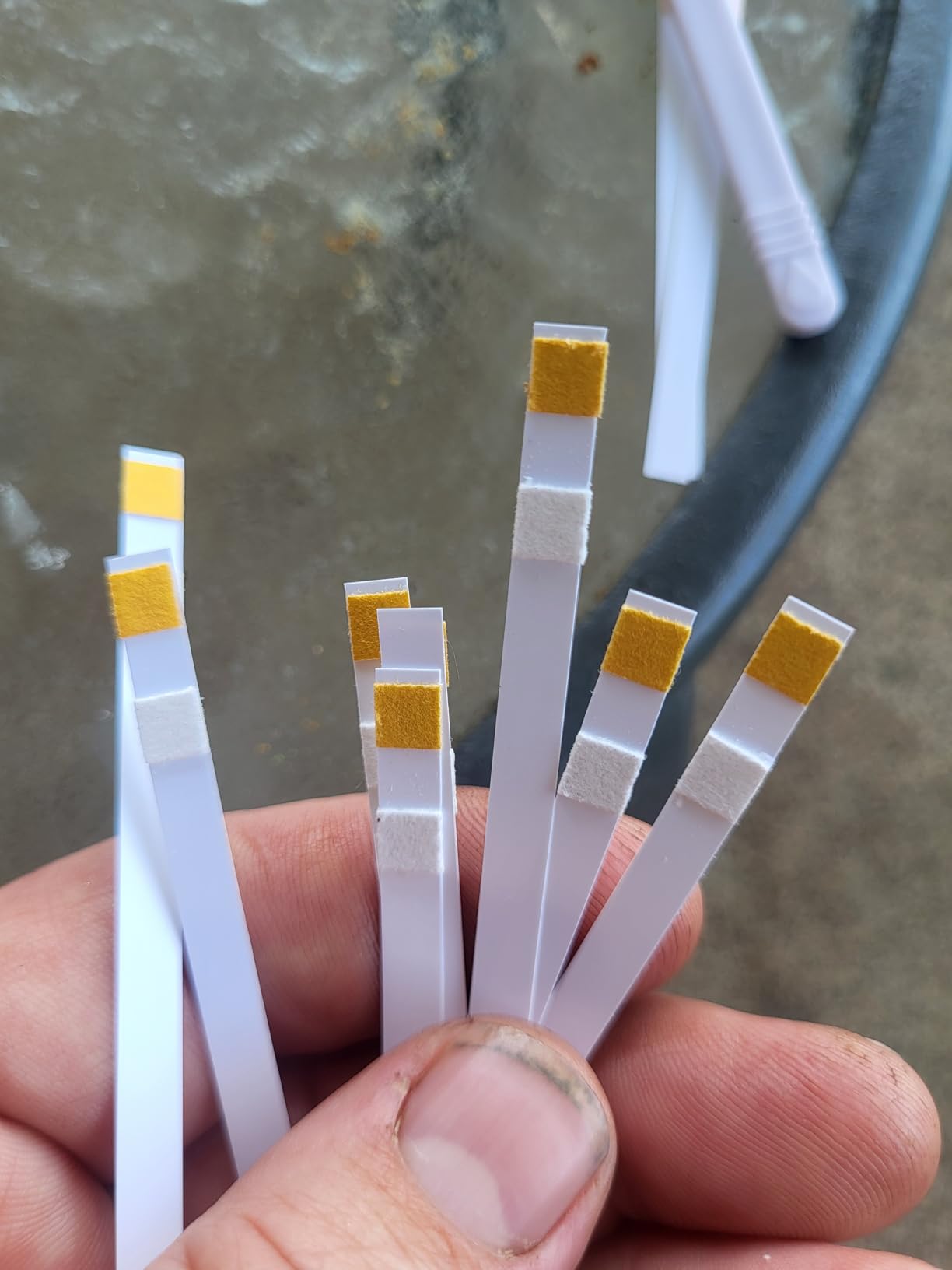
Our honest assessment is that it is a spot-check kit rather than a program. At 3.9 stars from 96 ratings it has a very small review base, and 12% of ratings are one star.
The most reported defect is a labeling error. The reagent tablets are marked K1, K11 and 111 rather than 1, 2 and 3, and owners report mixing them up and getting results they cannot use.
Why Documented Ranges Are Worth Looking For
Ranges tell you when a kit has run out of resolution. If your nitrogen reading lands past the stated 320 mg/kg ceiling, the kit cannot tell you how depleted the soil really is, and a result beyond the scale is not a result at all.
It also stops you over-correcting. A reading at the very top of a narrow range is not an emergency, and acting on it anyway is how gardeners burn their own plants.
Where Pawfly Falls Short
The instructions are thin and assume a baseline of soil science that most first-time buyers do not have. Combine it with a written guide or an extension office handout rather than working from the insert alone.
Ten tests per parameter covers one bed comfortably and two beds badly, and the mislabeled tablets make it a poor choice for anyone doing a lot of tests in a single sitting.
12. Dewilde Premium 40-Test Soil Test Kit – Best for First-Time Home Testers
Premium Soil Test Kit: 40 Complete Tests for Lawns, Gardens, and Vegetables. Tests for Ammonia Nitrogen, pH, Phosphorus, and Potassium.
40 complete tests
10 each for pH, N, P and K
Includes tubes, tablets, dropper and color card
Pros
- Four parameters with 10 complete tests each
- Complete accessory set in the box
- Ranks #12 in Soil Test Kits indicating solid sales volume
- Reported to correctly flag low nitrogen
- A longer shelf life than comparable kits
Cons
- Results are entirely colorimetric and shades are hard to separate
- One tester got identical pH readings on four different soils
- Thinner instructions than the marketing implies
- Small review base at 89 ratings
This kit covers pH, ammonia nitrogen, phosphorus and potassium with 10 complete tests of each, and everything you need is in the box: two bottles of test strips, two test tubes, 40 tablets, a dropper, a stick and a color card.
For a first-time tester that is the appeal. There is nothing to buy separately, no calibration solution to find, and no mailing, so the barrier between owning a test and actually using one is about as low as it gets.
Owners rate it 4.1 stars from 89 ratings, and it ranks #12 in Soil Test Kits, so it moves in real volume even though the review count is small. One buyer reports it correctly flagged low nitrogen, and another mentions a longer shelf life than comparable kits, which matters if you store it in a damp shed.
At 4.1 stars it lands in the middle of this group, better rated than several kits with far more reviews, which is worth remembering when you read review counts as a quality signal.
A Sensible First Purchase
Ten complete tests per parameter is enough to establish a baseline for a small vegetable bed and still leave tests for a second bed a few months later. That is enough data to make one informed amendment decision, which is the point.
It is also a reasonable companion to a larger liquid kit, using the capsule-style strips here to double-check anything surprising the other kit reports.
Where This Kit Falls Short
Everything is colorimetric, and distinguishing two similar shades is difficult, particularly under artificial light. One tester reported getting identical pH readings on four very different soil sources, which is the failure mode that matters most in a color kit.
The instructions are thinner than the product description suggests, so budget ten minutes reading the process before you start rather than improvising with wet soil.
How to Take a Soil Sample for a Vegetable Bed
Every result in this roundup is only as good as the sample that produced it. A spoon of soil from one corner of a bed tells you about that corner, and most disappointing soil tests are sampling errors rather than kit errors.
Take 10 to 12 spots across the whole bed, including the edges and the low spot where water collects.
Dig 4 to 6 inches deep, which is the depth where vegetable roots are actually feeding.
Remove surface debris, then take a thin slice from the side of each hole rather than a scoop from the bottom.
Mix all the slices together thoroughly in a clean bucket until no individual patches are visible.
Spread the mix on a clean tray, break up clods, and air dry it. Wet soil gives a falsely low pH reading.
Take about a cup of the dried mix for the sample and label the bag with the bed name and the date.
Never sample right after adding compost, lime, fertilizer or manure. Wait so the amendment distributes.
Raised beds need one extra step. Fill mix settles substantially in its first season, so test after a full season of settling rather than in week one, and sample through the full depth of the bed rather than just the top layer.
What Each Test Type Can and Cannot Tell You
Mail-in lab kits measure plant-available nutrient levels through a controlled extraction, which is why they are the only option that can size a fertilizer application in pounds per 1,000 square feet. Chemical capsule and liquid kits measure the same basic parameters with less precision, so they tell you which direction you are off without telling you how far.
Paper strips measure one parameter well enough to screen with, and they are the cheapest way to run a repeated trend. Digital meters are accurate on pH only when they are calibrated, and they are useless for nutrients regardless of what the box claims.
Reviewers and lab operators put home kit accuracy anywhere from about 33% to 94% against laboratory results, depending on the kit and the parameter. That range is the whole reason we rank a lab panel above everything else for a vegetable bed feeding people.
Why Cheap 3-in-1 and 7-in-1 Meters Mislead
Those meters read electrical conductivity, which reflects how many dissolved ions are moving in the soil solution. That is a useful signal for salt stress and for comparing moisture, and it is not a measurement of nitrogen, phosphorus or potassium.
Read a NPK number off one of those meters and you will apply fertilizer on a guess. Growers on r/vegetablegardening describe kits like this as wasting money on the wrong amendment, and experienced users on r/lawncare warn that nutrient interpretation is exactly where soil testing gets misused.
Reading Your pH Result and Fixing It
Most vegetables want a soil pH between 6.0 and 7.0, with 6.5 as the practical target. Below that range, phosphorus and most micronutrients lock up, which is why a bed at 5.5 can respond to fertilizer and still look starved.
To raise pH, apply garden lime. To lower it, apply elemental sulfur. Application rates are given per 1,000 square feet, and the correct rate depends on your soil type and starting pH, so follow the rate on the product or the figure on your lab report rather than a generic number.
What a pH Result Does Not Tell You
A pH number says nothing about nutrient content. It tells you how available your existing nutrients are, not how many there are, and a bed at a perfect 6.5 can still be nitrogen-poor.
It also does not tell you about organic matter, cation exchange capacity, salinity or contaminants. That is the case for a full panel once the pH is in range and the plants are still struggling.
How Many Kits a Multi-Bed Vegetable Garden Needs
One kit produces one composite sample, and one composite sample describes one bed or one uniform area. A four-bed vegetable garden is therefore four tests, not one, which is the cost surprise that catches most gardeners out.
The practical approach is to sort beds by what they are for rather than testing all of them identically. Send one mail-in panel for your heaviest-feeding bed, screen the rest with a strip kit, and only spend a lab kit on a second bed when the first report shows a problem you cannot explain with pH alone.
Keep sample bags labeled and stored. If two beds share a soil type, a sunny exposure and a similar history, testing one gives you a strong starting assumption for the other, and a strip confirms it for very little.
NPK and pH Targets by Vegetable Crop Family
Vegetables are not interchangeable feeders, and that is the reason a single generic fertilizer rate keeps disappointing people. Group your beds by family and match the amendment to the demand.
Leafy greens such as lettuce, spinach and chard are light to moderate feeders. They want steady nitrogen and a pH near 6.5, and they are the first family to show a pH problem.
Brassicas such as broccoli, cabbage and kale are heavy feeders. They draw heavily on nitrogen, and a nitrogen-poor bed shows up as stunted heads and premature bolting.
Fruiting crops such as tomatoes, peppers and squash feed hardest on potassium. They also respond sharply to pH, and blossom end rot is frequently a calcium availability problem rather than a calcium shortage.
Root crops such as carrots, beets and radishes need loose soil and steady moisture more than heavy feeding. Forked roots usually signal compaction or fresh manure rather than a nutrient gap.
Legumes such as peas and beans fix their own nitrogen and often add more than they take. Planting them after a leafy green family bed is a cheap way to reduce your nitrogen bill.
Herbs split by type. Mediterranean herbs such as rosemary and thyme prefer the drier end of the range, while parsley and cilantro behave more like leafy greens.
Aim for 6.5 across the board unless a specific crop argues otherwise, then correct once rather than chasing a fraction of a pH point.
Frequently Asked Questions
Are home soil test kits accurate?
Home soil test kits vary widely. Research cited by lab operators puts at-home kit accuracy anywhere from about 33% to 94% against laboratory results, depending on the kit and the parameter. Capsule and liquid kits are reliable for direction on pH, nitrogen, phosphorus and potassium, but they are not precise enough to size a fertilizer application. Mail-in lab kits using controlled extraction methods such as Mehlich III are the accurate option, because they measure plant-available nutrient levels rather than a single proxy reading.
Which soil test kit is the most accurate?
A mail-in laboratory kit is the most accurate. MySoil measures 13 plant-available nutrient levels and returns fertilizer recommendations in 6-8 days, and SoilKit uses the Mehlich III extraction method while adding buffer pH, cation exchange capacity and organic matter. Among at-home kits, LaMotte and the Luster Leaf Rapitest are the most consistent. Avoid cheap 3-in-1 and 7-in-1 probe meters, because they read conductivity and label it nutrition.
How often should I test my vegetable garden soil?
Test established beds every 2-3 years, and test every year while you are correcting a pH or nutrient problem. Fall is the best timing, because results arrive before spring planting and give amendments time to work. New gardens and new properties should be tested before anything is planted, and a container or raised bed that was filled with fresh mix can be re-checked annually.
What is the ideal soil pH for vegetables?
Most vegetables grow best between 6.0 and 7.0, with 6.5 as the practical target for a mixed vegetable garden. Brassicas, fruiting crops and leafy greens all perform best near that midpoint. Below 6.0, phosphorus and most micronutrients become less available, and above 7.0 iron, manganese and zinc start to lock up, which shows up as interveinal yellowing.
How many soil test kits do I need for multiple raised beds?
One kit produces one composite sample, and one composite sample describes one bed or one uniform area, so a four-bed garden needs four tests. Sort your beds by use rather than testing all of them the same way. Send one mail-in panel for your heaviest-feeding bed, screen the rest with a strip kit, and only send a second lab kit when the first report shows a problem that pH alone cannot explain.
The Bottom Line for Vegetable Gardeners
For the best soil test kits for vegetable gardens, the ranking is straightforward. MySoil is our editor’s choice because a 13-nutrient lab panel with specific what-to-apply guidance is the only option here that ends the guessing loop. The Luster Leaf Rapitest 1601 is the best value for instant same-evening screening, and Garden Tutor strips are the budget answer when pH is the only open question.
Pick one mail-in panel for your heaviest-feeding bed, add a strip or capsule kit for everything else, and test again the following fall. Once the numbers are right, the harvest ends up in the kitchen instead of the compost pile.