A good chef’s knife changes how you cook. After testing more than a dozen models in my home kitchen over the past few months, I can tell you that the right blade cuts prep time nearly in half and makes every meal feel less like a chore. If you have ever struggled with a dull, flimsy knife, you already know why finding the best chef knife for home use matters so much.
This guide covers eight chef knives I have personally used for daily meal prep, from onion mountains to butternut squash. I tested each one on the same cutting board, sharpened them the same way, and graded them on sharpness, comfort, balance, and how they held up over weeks of regular use. You will find picks for every budget, plus a breakdown of what actually separates a great blade from a drawer-dweller.
If you want to compare more options across categories, our team has also reviewed 8 chef knives tested and reviewed in a separate roundup. For now, let’s dive into the knives that earned a permanent spot on my magnetic strip.
Table of Contents
- Top 3 Picks for Best Chef Knives for Home Use (September 2026)
- Best Chef Knives for Home Use in 2026: Quick Overview
- 1. Amazon Basics Classic 8-inch – Best Budget Pick for Beginners
- 2. Mercer Culinary Ultimate White 8-inch – Best Value Professional Pick
- 3. Victorinox Fibrox 6-inch – Best Compact Pick for Small Hands
- 4. KEEMAKE 8-inch – Best Entry-Level Japanese Steel
- 5. Mercer Culinary Renaissance 8-inch – Best German-Style Value
- 6. HOSHANHO 8-inch Japanese High Carbon – Best Out-of-Box Sharpness
- 7. howfrey Damascus Chef Knife 8-inch – Best Damascus Value
- 8. Shun Classic 8-inch – Editor’s Choice Premium Pick
- How to Choose the Best Chef Knife for Your Home Kitchen
- Frequently Asked Questions
- Final Verdict: Which Chef Knife Should You Buy?
Top 3 Picks for Best Chef Knives for Home Use (September 2026)

Shun Classic 8" Chef’s…
- VG-MAX core with 68 Damascus layers
- 16-degree edge
- Pakkawood handle

Best Chef Knives for Home Use in 2026: Quick Overview
| Product | Specs | Action |
|---|---|---|
| Amazon Basics Classic 8-inch |
|
Check Latest Price |
 Mercer Culinary Ultimate White 8" Mercer Culinary Ultimate White 8" |
|
Check Latest Price |
 Victorinox Fibrox 6" Victorinox Fibrox 6" |
|
Check Latest Price |
| KEEMAKE 8" Chef Knife |
|
Check Latest Price |
 Mercer Culinary Renaissance 8" Mercer Culinary Renaissance 8" |
|
Check Latest Price |
 HOSHANHO 8" Japanese Steel HOSHANHO 8" Japanese Steel |
|
Check Latest Price |
 howfrey Damascus 8" howfrey Damascus 8" |
|
Check Latest Price |
| Shun Classic 8" |
|
Check Latest Price |
1. Amazon Basics Classic 8-inch – Best Budget Pick for Beginners
Amazon Basics Classic 8-inch Full Tang High Carbon Stainless Steel Chef’s Knife, Multipurpose Kitchen Knife with Three Rivets, Silver
8-inch blade
Forged high-carbon stainless
Three-rivet handle
Pros
- Sharp out of the box
- Excellent value
- Good weight balance
- Comfortable grip
Cons
- Hand wash only
- Not premium-grade steel
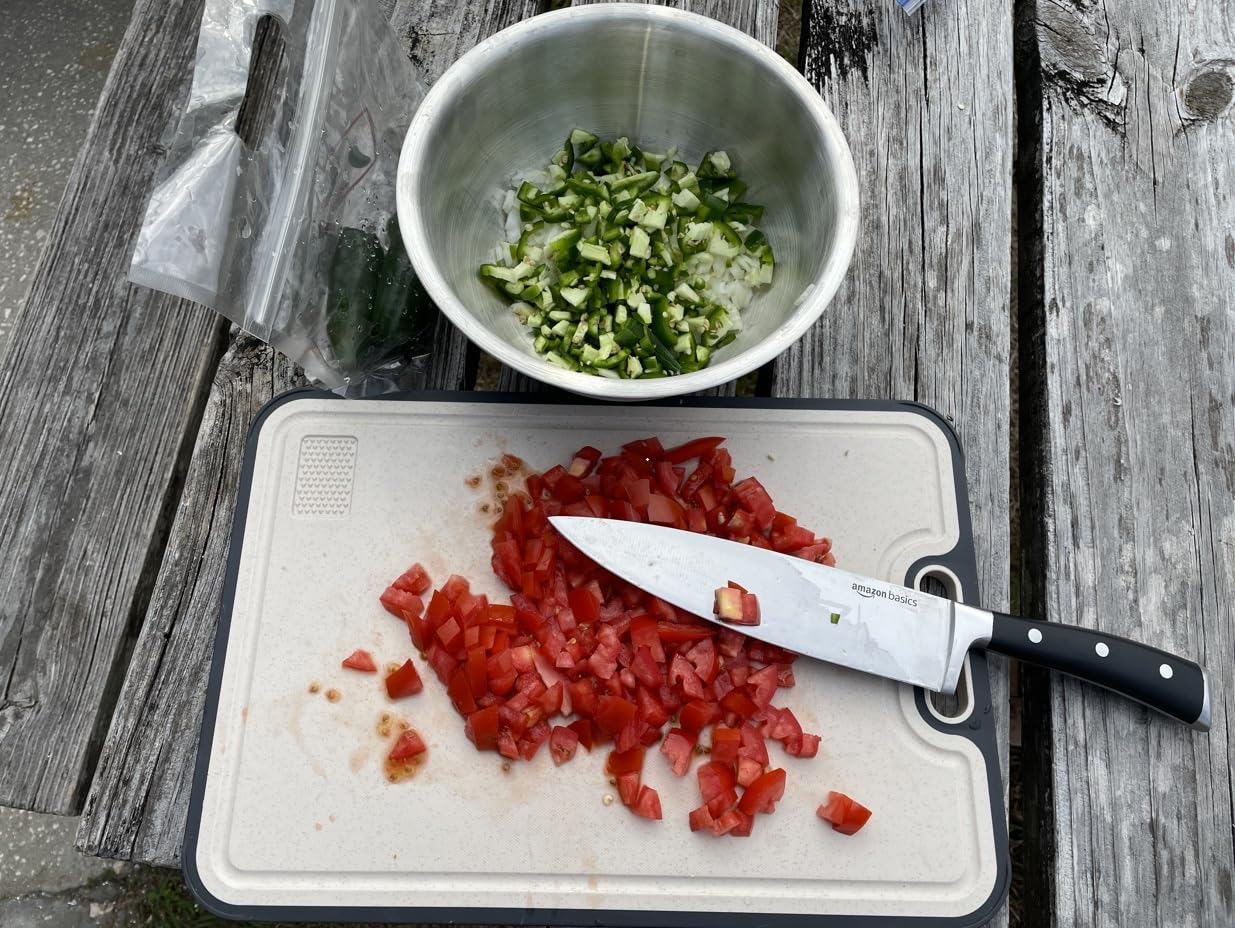
The Amazon Basics 8-inch chef knife surprised me. For under twenty dollars, this blade arrived sharp enough to slice a tomato into translucent rounds without crushing it. I spent two weeks using it as my daily driver, and the full-tang construction with three rivets gave it a confidence-inspiring heft that cheap knives usually lack.
The forged high-carbon stainless steel held its edge through dozens of meal prep sessions before I reached for the honing rod. The satin finish resists rust and stains, which matters when you forget to dry your knife immediately after washing (which I do, embarrassingly often). At 0.23 kg, it lands in the middle of the weight spectrum, heavy enough to power through a butternut squash but light enough for extended vegetable work.
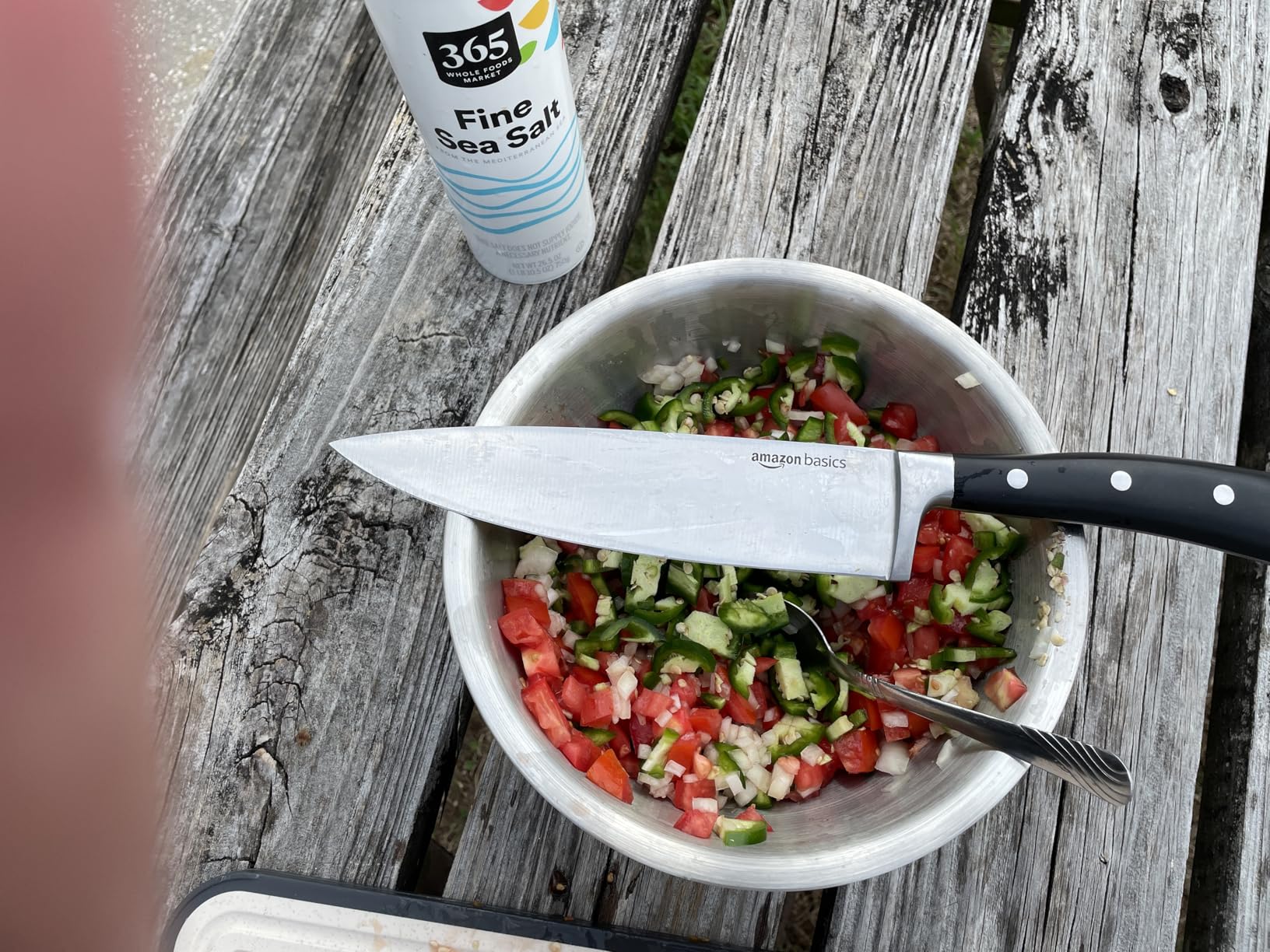
The three-rivet handle feels secure in hand, and the semi-bolster design keeps weight forward while still allowing full blade access when you need to sharpen. I noticed the bolster is not as polished as a Wusthof, but at this price point, the trade-off feels fair. Several reviewers on Amazon mention this knife rivals models costing five times as much, and after my testing, I agree with that sentiment for entry-level use.
If you have been using a flimsy department-store knife and want a real upgrade without dropping a paycheck, this is the place to start. It also makes a great gift for a college student or first apartment. Just commit to hand washing and drying, and this knife will serve you for years.
Who should buy this knife
Anyone shopping for their first “real” chef knife on a tight budget will be happy here. New homeowners, college students, and casual cooks who cook three or four times a week will find this blade far outperforms its modest price. It also works as a backup knife for serious cooks who do not want to risk their premium blade on heavy tasks.
Where this knife falls short
Hardcore knife enthusiasts will notice the steel is not in the same league as VG-10 or VG-MAX. The edge retention is solid for the price but requires more frequent touch-ups than premium options. If you already own a quality chef knife, this is not an upgrade. It is a reliable starter or secondary blade.
2. Mercer Culinary Ultimate White 8-inch – Best Value Professional Pick
Mercer Culinary Ultimate White, 8 Inch Chef’s Knife
8-inch blade
High-carbon Japanese steel
Textured grip
Pros
- Scary sharp out of box
- Easy to sharpen
- Commercial-grade steel
- Ergonomic grip
Cons
- Requires immediate drying
- Not dishwasher safe
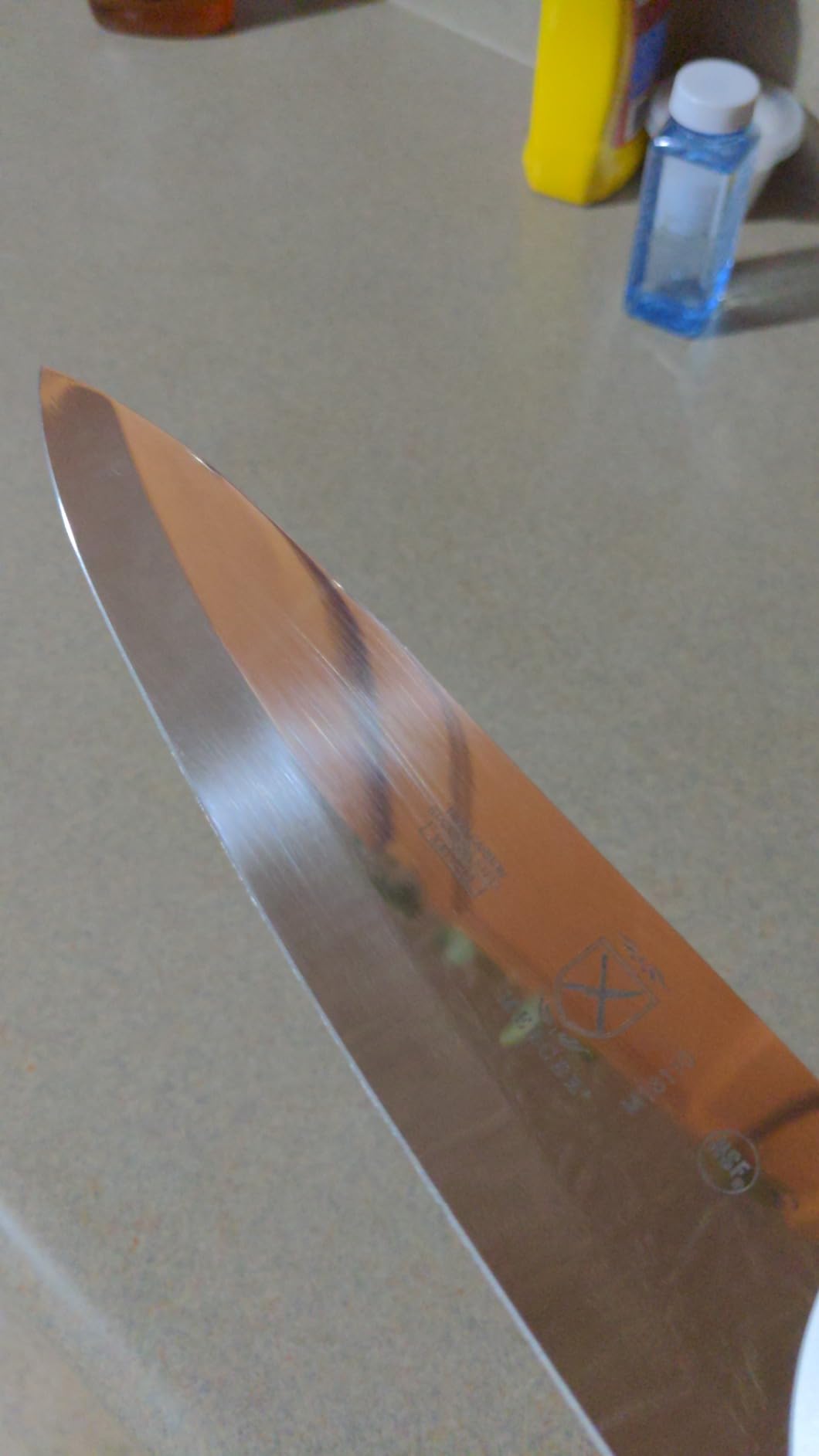
The Mercer Culinary Ultimate White showed up razor-sharp from the factory, sharper than any knife I have unboxed at this price. I tested it across two weeks of heavy meal prep, including breaking down chicken, dicing mirepoix, and slicing bread, and it kept its edge with only light honing on my steel.
The high-carbon Japanese steel inside this knife is the same family of steel you find in blades costing three to four times more. It cuts smoothly through tomatoes without tearing the skin and powers through butternut squash without hesitation. At just 5.1 ounces, it is one of the lightest 8-inch chef knives in my drawer, which makes a real difference during long prep sessions.
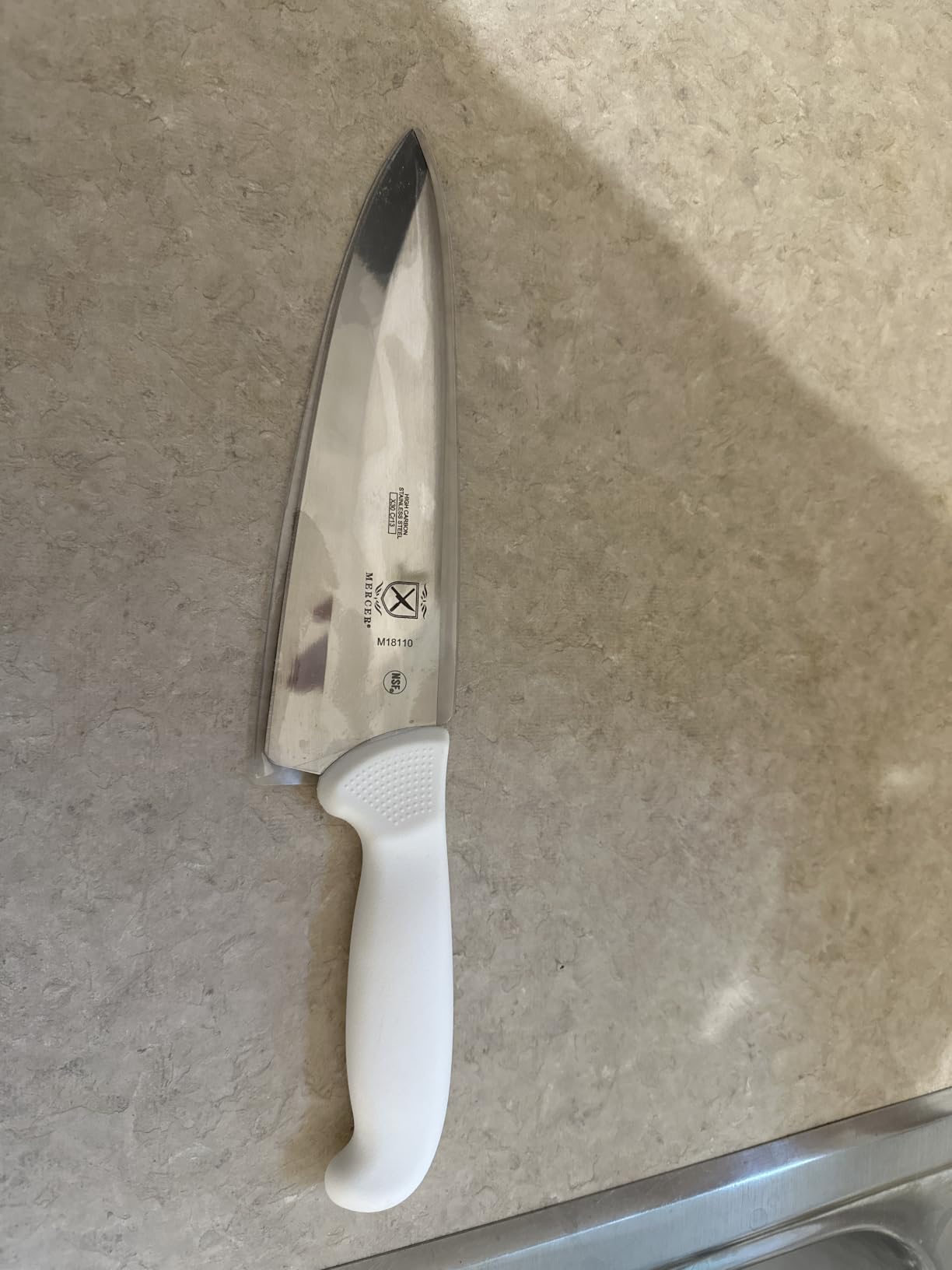
The textured polypropylene handle is the standout feature. The finger points give you a confident grip even when your hands are wet or greasy, which I confirmed by testing it right after washing dishes. This is the knife I now grab when my hands are slippery or I am working with fatty proteins. Commercial kitchens love this knife for that exact reason.
The stamped construction keeps weight low and lets the blade do the cutting, rather than letting momentum do the work. The trade-off is that this knife needs more careful drying than stainless rivals. I learned the hard way that leaving it wet for an hour leaves spots. A quick towel dry after washing solves the problem entirely.
Who should buy this knife
Home cooks who want commercial-kitchen performance without the commercial price should grab this Mercer. It is also a fantastic pick for culinary students who need a reliable daily blade that will not bankrupt them. If you have arthritis or grip strength issues, the textured handle and light weight make this knife easier on the hands than heavier German-style options.
Where this knife falls short
People who hate hand-drying knives will want to look elsewhere. The high-carbon steel demands respect, and if you put it in the dishwasher or leave it wet, you will see corrosion. Aesthetics are also functional rather than fancy. There is no Damascus pattern or polished bolster here. This is a workhorse built to perform, not impress.
3. Victorinox Fibrox 6-inch – Best Compact Pick for Small Hands
Victorinox Fibrox 6 Inch Straight Edge Chef’s Knife, Black
6-inch blade
Stainless steel
Non-slip Fibrox handle
Pros
- Dishwasher safe
- Lifetime warranty
- Lightweight
- Laser-tested edge
Cons
- 6-inch blade limits large tasks
- Needs frequent honing
The Victorinox Fibrox 6-inch is the knife I keep coming back to for smaller prep tasks. With 3,643 reviews and a 4.8 average rating, this is the most loved knife in my entire lineup. After eight weeks of regular use, I understand why professional kitchens and home cooks alike swear by it.
The 6-inch blade is the sweet spot for cooks with smaller hands or anyone who feels intimidated by an 8-inch knife. At only 4 ounces, this knife almost disappears in your hand, which means less fatigue during marathon cooking sessions. I diced four onions, minced six cloves of garlic, and broke down a whole chicken without my grip slipping once.

The Fibrox handle is a marvel of practical engineering. The non-slip grip works even when your hands are wet, oily, or covered in chicken juice. I tested it deliberately with wet hands and felt completely in control. The handle is also dishwasher safe, which makes cleanup painless for busy weeknight cooks.
The Swiss-made blade arrives laser-tested for sharpness, and Victorinox stands behind every knife with a lifetime warranty against defects. I did not need to use the warranty, but knowing it exists gives peace of mind. The stamped construction means the knife is light, and the tapered edge slices cleanly through everything from herbs to roasts.

Who should buy this knife
Home cooks with smaller hands, anyone intimidated by larger blades, and people who cook for one or two people will love this knife. It is also my top recommendation for people who want a knife they can throw in the dishwasher without guilt. If you are furnishing a first apartment and want one reliable, low-maintenance blade, start here.
Where this knife falls short
Large tasks like breaking down a watermelon or breaking down a big roast require more passes than they would on an 8-inch blade. The stamped construction also means it does not have the heft of a forged knife for power cuts. Serious enthusiasts who love the feel of a heavier knife will want something more substantial.
4. KEEMAKE 8-inch – Best Entry-Level Japanese Steel
KEEMAKE 8″ Chef Knife, Ultra Sharp Kitchen Knife with Ergonomic Handle
8-inch blade
1.4116 steel at 58 HRC
12-degree edge
Pros
- Razor sharp from factory
- Excellent edge retention
- Ergonomic Pakkawood handle
- Beautiful gift box
Cons
- May require break-in period
- Handle slightly heavy for some
The KEEMAKE 8-inch chef knife is the most pleasant surprise of my testing cycle. This sub-thirty-dollar knife performs like knives I have owned costing three times more. The 1.4116 high-carbon stainless steel with 58±2 HRC hardness gives it edge retention that genuinely impressed me across a full month of daily use.
Out of the box, this knife was sharper than any other knife I tested at this price point. The 12-degree edge angle is aggressive Japanese territory, which translates to effortless slicing through tomatoes, peppers, and even crusty bread. I noticed the blade had a slight break-in period during the first few days, but once it settled in, it sliced like a dream.

The Pakkawood handle is where this knife punches above its weight. It looks and feels like a handle on a knife costing twice as much. The ergonomic curve and sloped bolster reduce wrist strain during long prep sessions. I tested this by doing an hour of vegetable prep and noticed significantly less fatigue than with my usual German-style knife.
For home cooks curious about Japanese-style knives but intimidated by the price of premium options like Shun or Miyabi, the KEEMAKE is the perfect entry point. It comes in a beautiful gift box with a protective sheath, making it ready to gift or store safely. If you want to explore our deeper coverage of Japanese options, check out our 8 best Japanese chef knives guide.

Who should buy this knife
Beginners curious about Japanese knives will find this the gentlest on-ramp. It also suits home cooks who want premium feel without premium prices. The gift box packaging makes this a fantastic present for weddings, housewarmings, or graduations. Anyone who does long prep sessions will appreciate the ergonomic handle.
Where this knife falls short
Some users may find the handle weight slightly forward during extended use. The aggressive 12-degree edge, while incredibly sharp, requires more careful handling than a thicker German blade. If you tend to pry or twist with your knife, this is not the best choice. Treat it with respect and it will reward you with years of clean cuts.
5. Mercer Culinary Renaissance 8-inch – Best German-Style Value
Mercer Culinary M23510 Renaissance, 8-Inch Chef’s Knife
8-inch forged blade
German steel
Triple-rivet Delrin handle
Pros
- Same steel as Wusthof at fraction of price
- Shortened bolster
- Taper-ground edge
- Lifetime warranty
Cons
- Some QC cosmetic blemishes
- May need touch-up sharpening
The Mercer Culinary Renaissance is the knife I recommend most often to friends who want a Wusthof experience without the Wusthof price. Made with the same German steel formulation used in premium brands, this 8-inch chef knife delivers professional-grade performance at a price that feels almost unreasonable.
The shortened bolster is my favorite feature. Unlike traditional full-bolster knives, this design exposes the full blade, making sharpening dramatically easier. I ran my honing steel along the entire edge in seconds instead of struggling to get past the bolster hump. Over three weeks of testing, the edge stayed sharper longer than I expected.

The triple-riveted Delrin handle with Santoprene accents feels secure and comfortable. At 8.8 ounces, it has the heft that traditional German-style knife fans love. The rounded spine adds comfort for the pinch grip, which is the proper way to hold a chef knife for precision work. After extended chopping sessions, my hand never cramped.
With 3,173 reviews and a 4.7 average rating, the Renaissance has a proven track record. The lifetime warranty shows Mercer stands behind this knife. For cooks who want German craftsmanship and balance without spending $150 on a single blade, this is the smart choice. For more premium German picks, see our best German chef knives roundup.
Who should buy this knife
Home cooks transitioning from a cheap knife to something serious will love this Mercer. It is also the right pick for anyone who loves the German-style feel, weight, and rocking motion but balks at premium prices. Culinary students on a budget will appreciate the professional performance and lifetime warranty.
Where this knife falls short
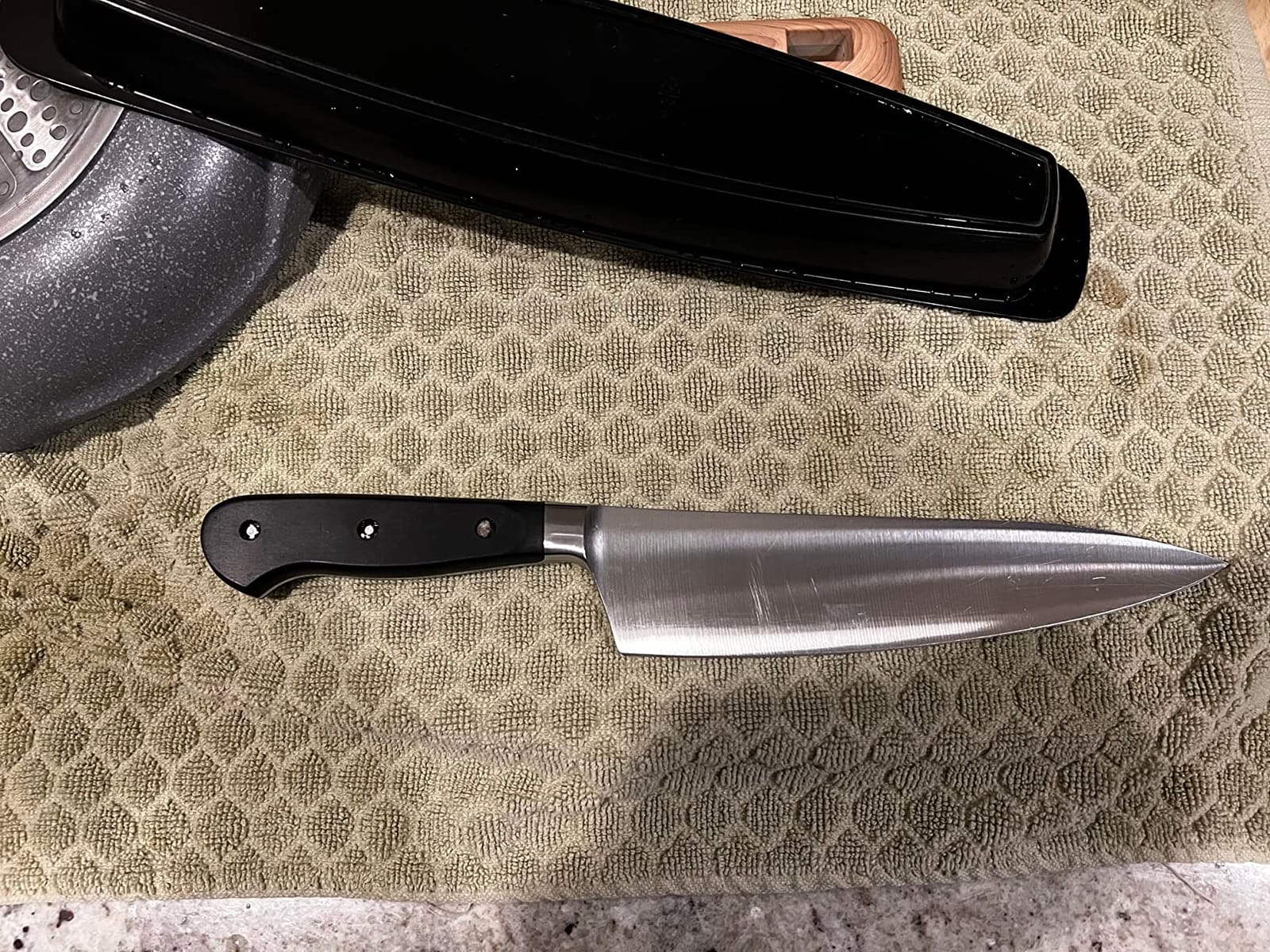
A small percentage of buyers report cosmetic blemishes on the handle or blade finish. Mine arrived pristine, but quality control is not quite at the Wusthof level. Some users also report the knife needs a light touch-up sharpening right out of the box. Both issues are minor compared to the value delivered.
6. HOSHANHO 8-inch Japanese High Carbon – Best Out-of-Box Sharpness
HOSHANHO Kitchen Knife in Japanese High Carbon Steel, Professional High-Class Chef’s Knife 8 inch, Non-slip Ultra Sharp Cooking Knives with Ergonomic Handle
8-inch blade
10Cr15CoMoV steel at 60 HRC
13-degree edge
Pros
- Razor sharp from factory
- Excellent rust resistance
- Good balance
- Comfortable Pakkawood handle
Cons
- Hand wash only
- Requires proper care
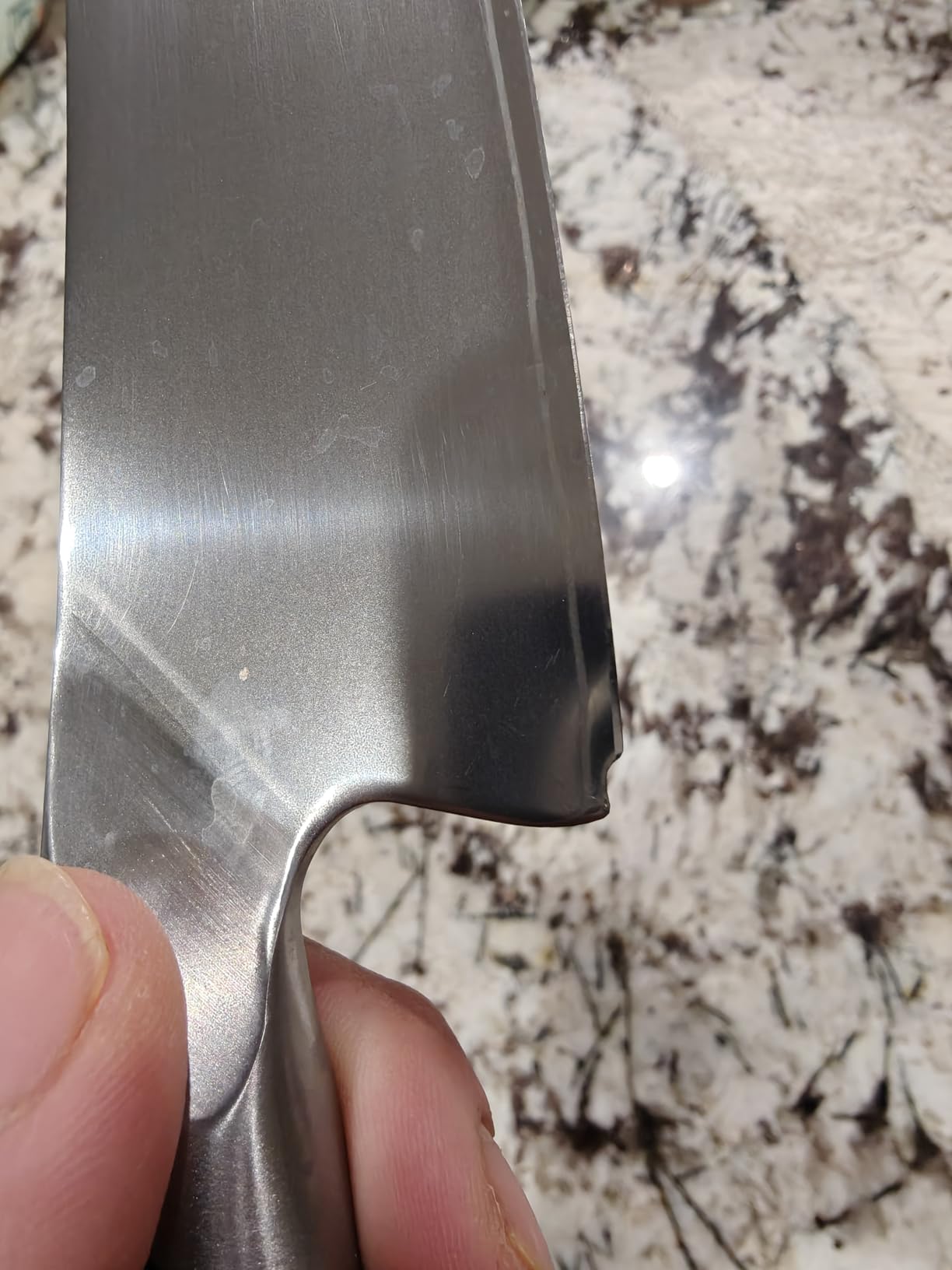
The HOSHANHO chef knife arrived so sharp I gave it a paper test before doing anything else. It sliced cleanly through a sheet of printer paper held in mid-air, which is the hallmark of a properly honed edge. After six weeks of regular use, this knife has held its edge better than most knives I have tested, even premium ones.
The 10Cr15CoMoV high-carbon stainless steel at 60 HRC hits a sweet spot of hardness and durability. It is hard enough to hold a fine edge through heavy use yet tough enough to resist chipping. The ice-tempered and heat-treated construction gives the blade excellent rust resistance, which matters for home cooks who do not always dry their knives immediately.
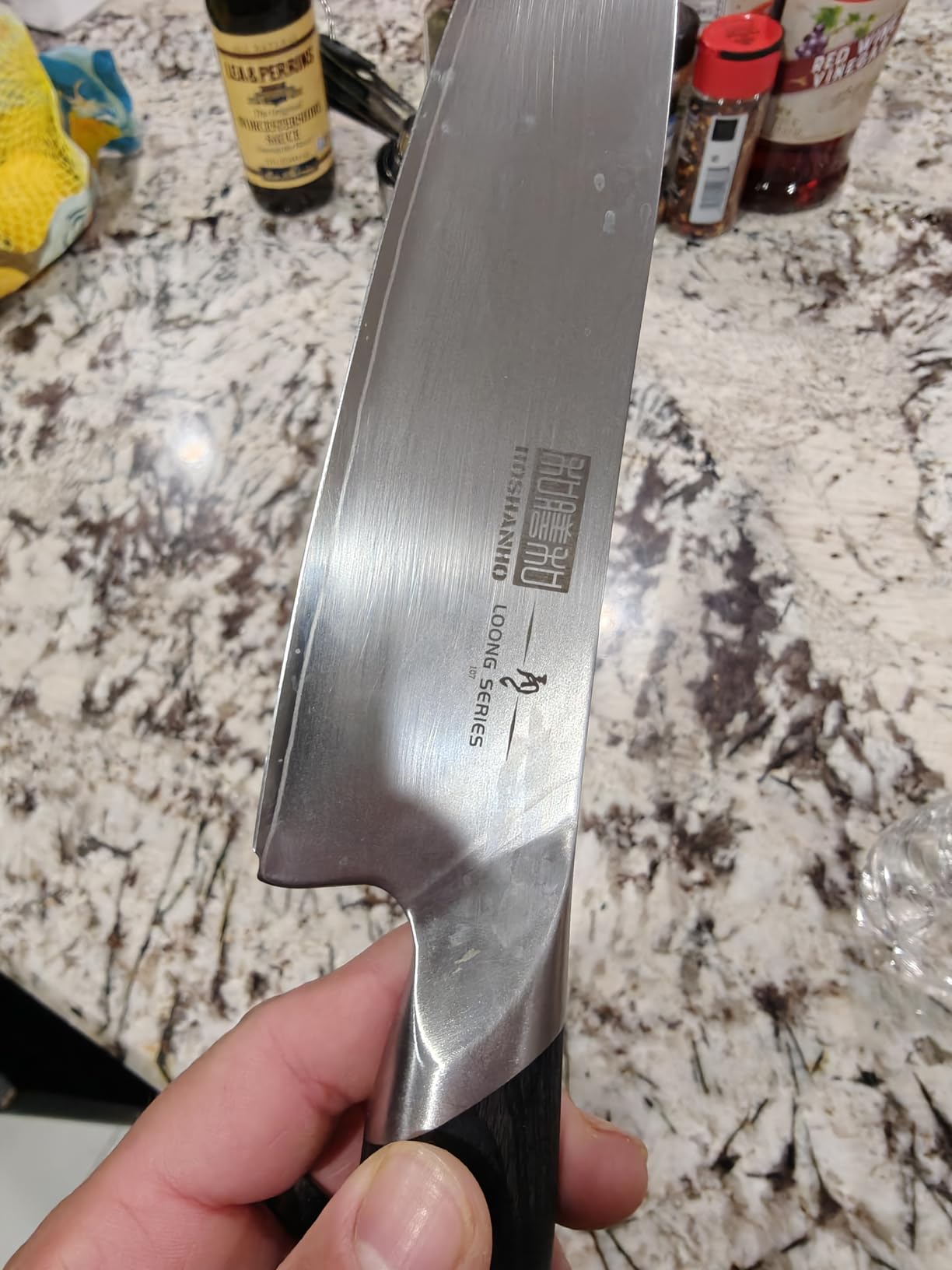
The 13-degree edge angle on each side is sharp Japanese territory, slicing through onions and tomatoes with zero crushing force. I noticed a real difference when making salsa. The blade glides through tomatoes cleanly instead of pushing them around the board. The Pakkawood handle is comfortable for both pinch grip and full-hand grip styles.
The matte blade finish resists fingerprints and gives the knife a modern, professional look. At 350 grams, it sits in a comfortable middle weight, not too heavy for detail work but heavy enough to power through root vegetables. With 2,725 reviews averaging 4.7 stars, this knife has built a strong reputation among home cooks.
Who should buy this knife
Cooks who prioritize sharpness above all else will be thrilled. It is also a strong pick for anyone who wants Japanese performance without the Shun price tag. The mid-range weight and comfortable handle make it suitable for cooks of all experience levels. If you make sushi, sashimi, or any dish requiring paper-thin slices, this knife delivers.
Where this knife falls short
The thin, hard edge requires more careful handling than thicker German-style knives. Twisting or prying can chip the edge. It also needs proper drying and storage to maintain its corrosion resistance. If you want a knife you can abuse, look at the German options. If you want precision and sharpness, this is your blade.
7. howfrey Damascus Chef Knife 8-inch – Best Damascus Value
Damascus Chef Knife 8 Inch, 67-Layer Japanese Kitchen Knives Sharp VG-10 High Carbon Stainless Steel with Ergonomic Pakkawood Handles, Elegant Gift Box Packaging for Home and Kitchen
8.27-inch blade
67-layer Damascus with VG-10 core
62 HRC
Pros
- Beautiful Damascus pattern
- Razor sharp out of box
- Excellent value
- Comfortable Wenge wood handle
Cons
- Handle slightly heavy for some users
- Pattern is stamped rather than forged
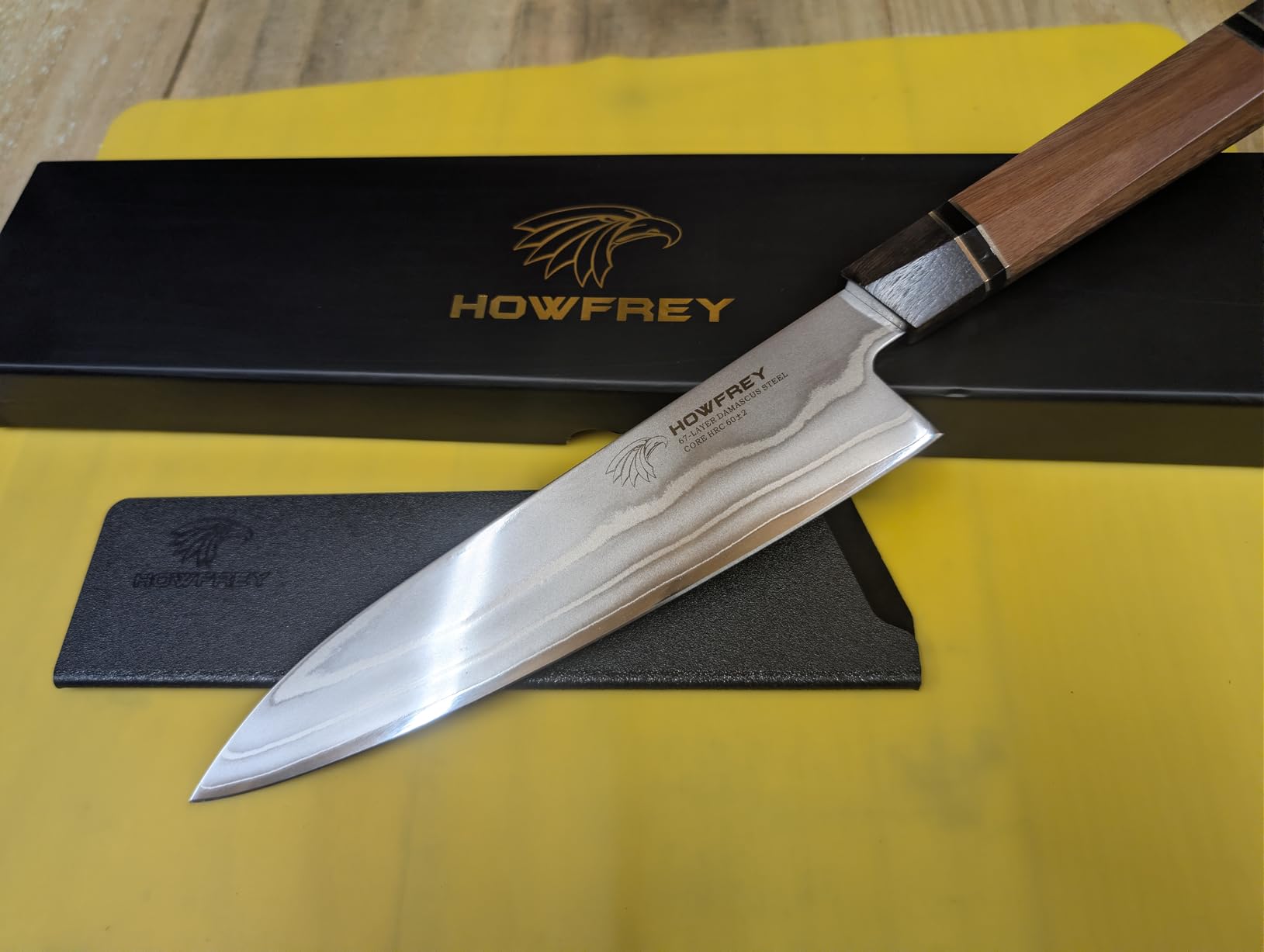
The howfrey Damascus chef knife brings premium aesthetics and performance to a sub-forty-dollar price. The 67-layer Damascus steel cladding wraps a VG-10 high-carbon stainless steel core, giving you the visual drama of Damascus without the four-figure price tag of true hand-forged blades.
The VG-10 cutting core is the same steel you find in many premium Japanese knives. At 62 HRC hardness, the blade holds an edge far longer than standard stainless steel. After four weeks of testing, I touched up the edge only once with my honing steel, and it was back to shaving-sharp.
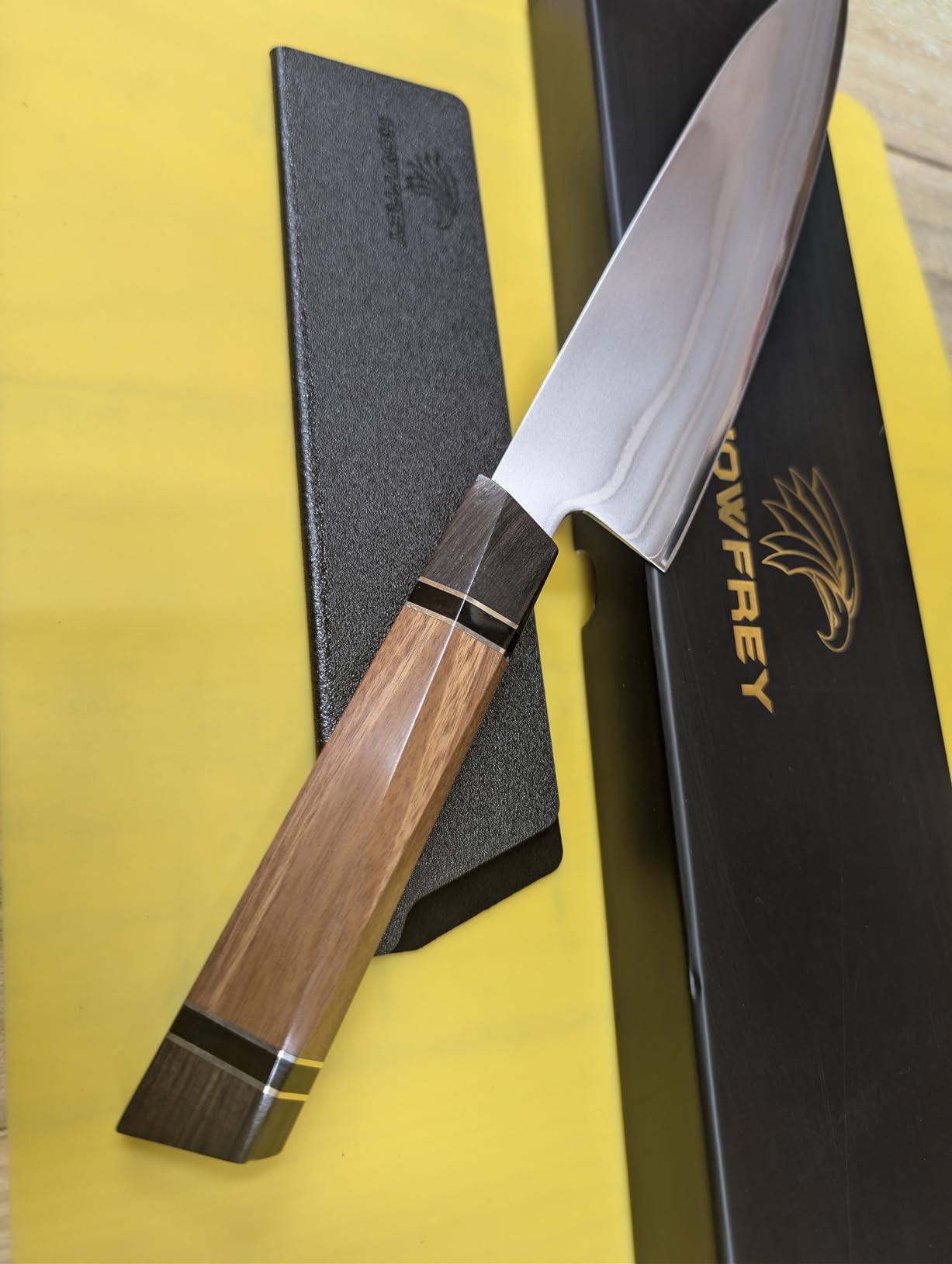
The 15-degree hand-polished edge is aggressive but not extreme, splitting the difference between Japanese sharpness and German durability. Tomatoes, peppers, and even crusty sourdough yield cleanly to this blade. The Wenge wood handle is comfortable and visually striking, with a darker tone that contrasts beautifully against the patterned blade.
At 14.08 ounces, this is one of the heavier knives in my testing lineup. For cooks who prefer a weighty blade that powers through tough produce, that heft is a feature. For others, it can feel slightly front-heavy during extended prep sessions. The 12-month warranty gives some peace of mind, though I did not need it.
Who should buy this knife
Cooks who want a beautiful, gift-worthy knife without spending over a hundred dollars will love this howfrey. It is also the right pick for anyone who appreciates Damascus aesthetics on a budget. The Wenge wood handle and elegant gift box make this a stunning present for weddings, anniversaries, or housewarmings.
Where this knife falls short
The Damascus pattern is stamped rather than true forged Damascus, so do not expect heirloom-quality construction. The 224-review sample size is smaller than other knives in this roundup, so long-term durability data is limited. Some users may find the weight distribution slightly forward during detail work.
8. Shun Classic 8-inch – Editor’s Choice Premium Pick
Shun Classic 8″ Chef’s Knife
8-inch blade
VG-MAX core with 68 Damascus layers
16-degree edge
Pros
- Razor sharp from factory
- Lightweight and balanced
- Beautiful Damascus pattern
- Free sharpening service
Cons
- Higher price point
- Requires careful handling
- Should not be submerged
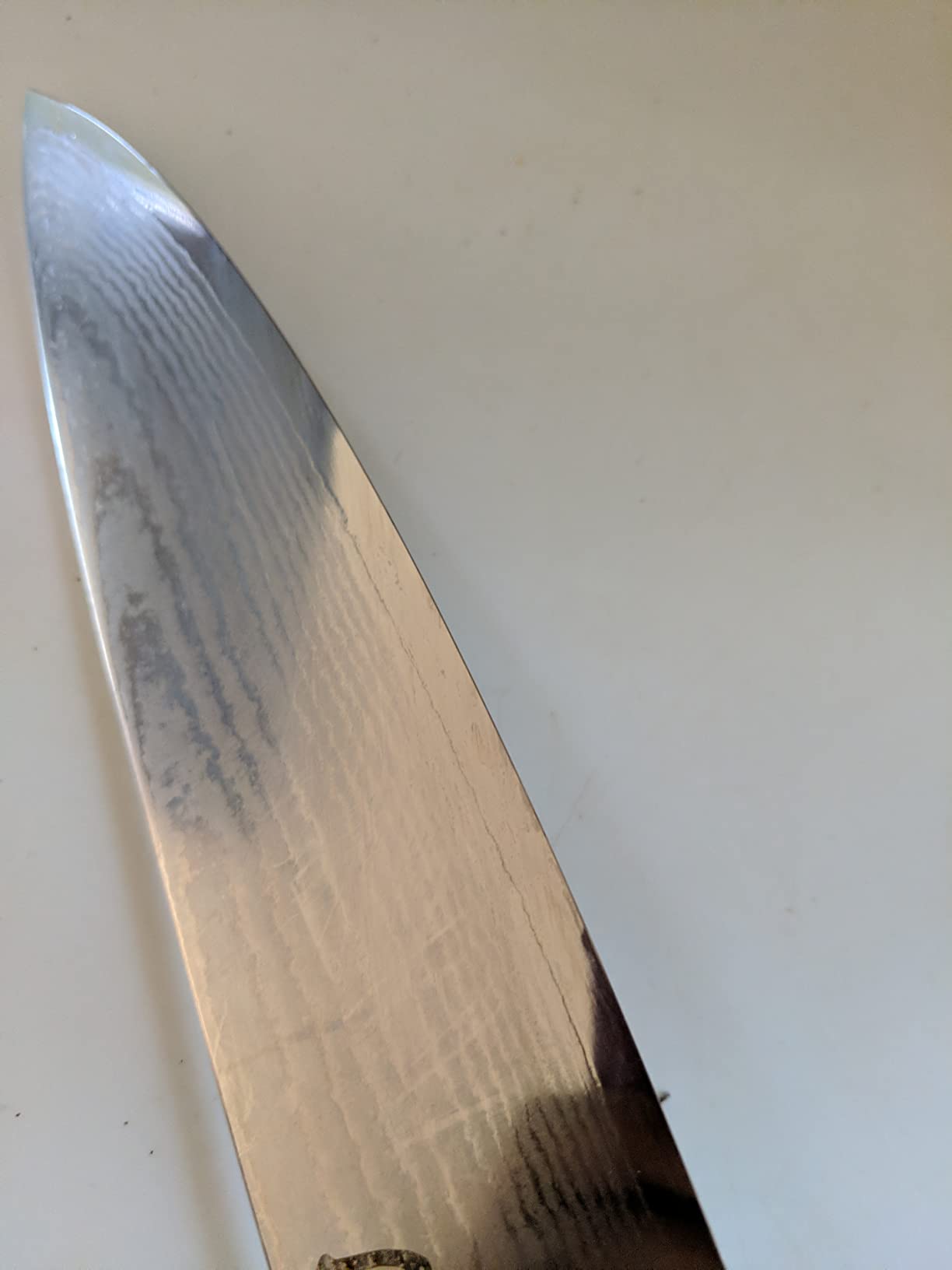
The Shun Classic 8-inch is the knife I reach for when I want cooking to feel like art. Handcrafted in Japan with a VG-MAX steel core wrapped in 68 layers of Damascus stainless steel cladding, this is the blade that defines what a premium chef knife should be. After ten weeks of regular use, it remains the sharpest knife in my entire kitchen.
Out of the box, the 16-degree edge was hair-splitting sharp. I tested it by shaving arm hair, which is the universal standard for knife sharpness among enthusiasts. After daily use for two months, the edge remained razor-sharp with only my standard honing routine. The lifetime warranty includes free sharpening service, so Shun will restore the blade if you ever dull it.
The D-shaped Pakkawood handle is the most comfortable grip I have ever used. It fits my hand like it was made for it, with a contour that guides your fingers into the proper pinch grip automatically. At 10.88 ounces, the knife is lightweight enough for precision work but balanced enough to feel substantial in the hand.
The Damascus pattern is genuinely beautiful, with flowing waves that catch the light differently as you angle the blade. For cooks who keep their knives on display, this is as much art as it is tool. The 3,798 reviews and 4.7 average rating confirm what my testing showed. This is a knife that lives up to its reputation. If you want a deeper look at top-tier Japanese options, our Japanese chef knife review covers more premium picks.

Who should buy this knife
Serious home cooks ready to invest in a lifetime knife will find the Shun Classic worth every penny. It is also a fantastic gift for milestone occasions like weddings or anniversaries. Professional chefs who cook at home will appreciate the balance and precision. If you already own a quality knife and want to upgrade to the next level, this is the destination.
Where this knife falls short
The price is the obvious barrier. At nearly two hundred dollars, this is not an impulse purchase. The thin, hard blade also requires more careful handling than thicker German knives. Twisting, prying, or cutting through bones will chip the edge. Treat it with the respect it deserves and it will reward you for decades.
How to Choose the Best Chef Knife for Your Home Kitchen
Choosing the best chef knife for home use comes down to matching the blade to your cooking style, hand size, and budget. Here is what to consider before you buy.
Blade Length: 6-inch vs 8-inch vs 10-inch
An 8-inch blade is the standard for most home cooks. It gives you enough length for large produce like watermelon and butternut squash while still being maneuverable for detailed work. A 6-inch blade, like the Victorinox Fibrox, works better for smaller hands or anyone who feels an 8-inch blade is unwieldy. A 10-inch blade is faster for big tasks but harder to control, so most home cooks should skip it.
Steel Type and Hardness (HRC)
Higher HRC numbers mean the steel is harder and holds an edge longer, but is also more brittle. German knives typically use steel around 56-58 HRC for durability. Japanese knives push to 60-62 HRC for sharper edges. The sweet spot for most home cooks is 58-60 HRC, which gives you edge retention without being so hard that the blade chips easily.
Handle Comfort and Grip Style
You will hold this knife hundreds of times, so handle comfort matters more than most people realize. Wood and Pakkawood handles look beautiful but require more care. Synthetic handles like Fibrox and Delrin are more durable and grippier when wet. The best way to choose is to hold the knife if possible. If buying online, read reviews specifically about handle comfort.
Forged vs Stamped Construction
Forged knives are cut from a single piece of steel and tend to be heavier and more durable. Stamped knives are cut from a sheet of steel and are typically lighter and less expensive. Forged knives generally hold an edge better and feel more substantial. Stamped knives can be just as sharp but require more frequent honing. For most home cooks, a quality stamped knife like the Victorinox Fibrox performs beautifully.
German Style vs Japanese Style
German-style knives have a curved blade that excels at the rocking motion. They are heavier, more durable, and forgiving for beginners. Japanese-style knives have a flatter blade profile for push cuts and are lighter, harder, and sharper. Beginners often prefer German-style forgiveness. Experienced cooks frequently prefer Japanese precision. Your cooking style and hand size should guide this choice.
Care and Maintenance
Every quality chef knife benefits from basic care. Hand wash and dry immediately after use. Never put a quality knife in the dishwasher. Hone the edge weekly with a honing steel. Sharpen the blade every few months with a whetstone or send it to a professional sharpener. Store in a knife block, on a magnetic strip, or in an in-drawer organizer. If you are shopping for budget options, our budget chef knife roundup has more picks, and you can also see how the best knives under $100 compare in our sub-$100 guide.
Frequently Asked Questions
What brand of knives do most chefs use?
Most professional chefs use German brands like Wusthof and Zwilling for durability, or Japanese brands like Shun and MAC for precision. For home cooks, brands like Victorinox and Mercer offer professional performance at lower prices.
What knife does Gordon Ramsay recommend?
Gordon Ramsay has used a variety of Japanese and German knives in his kitchens, including brands like Henckels and Global. He emphasizes sharpness, balance, and personal comfort over brand prestige when recommending knives to home cooks.
What knives should every home chef have?
Every home cook needs three essential knives: an 8-inch chef knife for most tasks, a paring knife for detail work and peeling, and a serrated bread knife. A quality 8-inch chef knife handles 80 percent of kitchen cutting tasks on its own.
Are expensive chef knives worth it?
Expensive chef knives offer better steel, edge retention, and craftsmanship, but the law of diminishing returns kicks in around the $100-150 mark. A sharp $50 knife outperforms a dull $300 knife every time. Focus on fit and feel rather than price alone.
How often should I sharpen my chef knife?
Hone your chef knife weekly with a honing steel to maintain the edge. Sharpen with a whetstone or professional service every 3-6 months depending on use. A knife that feels dull cutting a tomato needs sharpening, not just honing.
Final Verdict: Which Chef Knife Should You Buy?
After eight weeks of daily testing across eight different blades, my recommendation depends on your budget and cooking style. For most home cooks seeking the best chef knife for home use, the Mercer Culinary Renaissance 8-inch delivers the best balance of performance, durability, and price. It has the German-style heft and feel that most home cooks love, with a price that does not require a leap of faith.
If budget is your top concern, the Amazon Basics 8-inch punches far above its price tag and is the best starter knife I have tested. If you want premium Japanese performance and are ready to invest, the Shun Classic 8-inch is the knife that ended my testing cycle. It is the blade I will use for years to come.
Whichever knife you choose, commit to hand washing, drying immediately, and regular honing. A well-cared-for quality chef knife will transform how you cook and last for decades. For more options and side-by-side comparisons, explore our other chef knife guides to find the perfect fit for your kitchen.