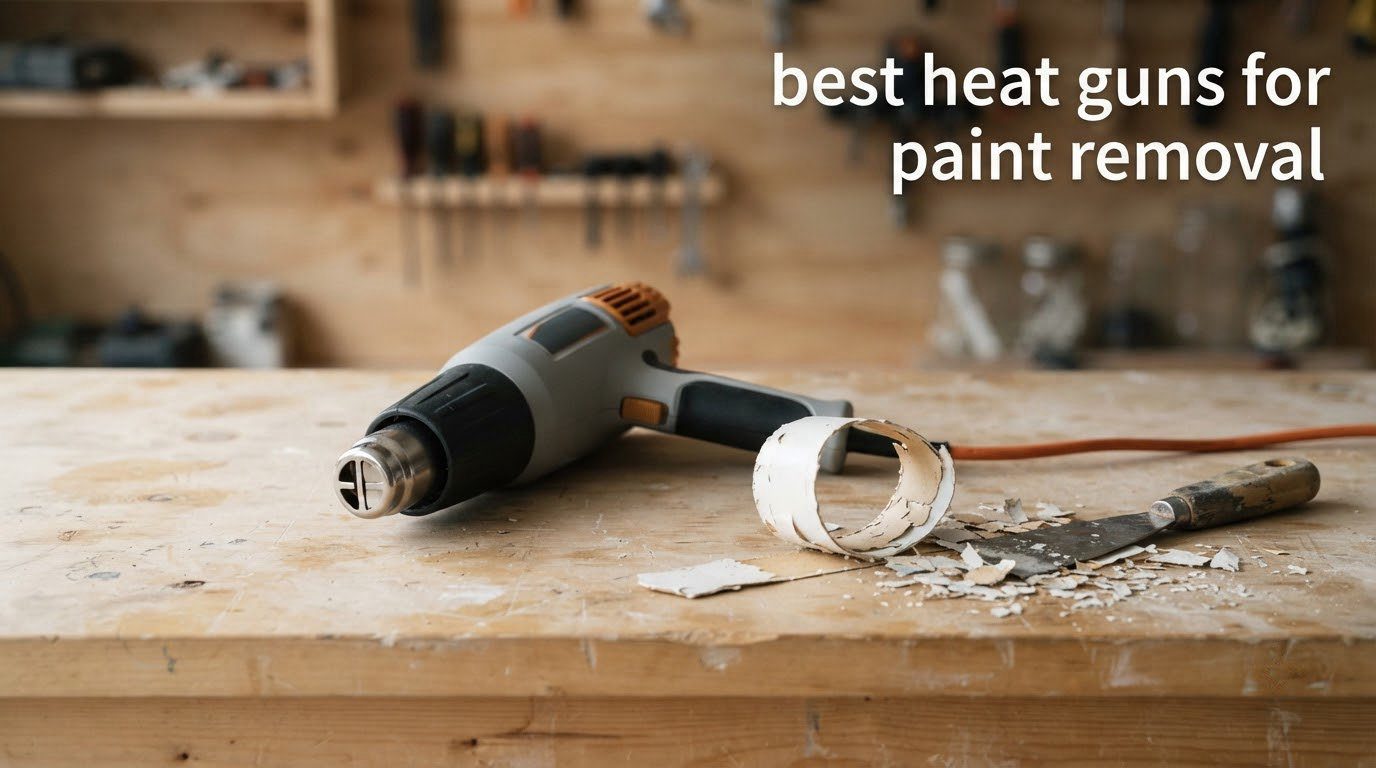
I spent a full weekend last month scraping old lead-laden paint off a 1940s window frame with a hairdryer. It was a mistake. The paint barely budged, my arm went numb, and I gave up halfway through. The next morning I bought a proper heat gun and finished the same frame in under 90 minutes.
That is the short version of why the best heat guns for paint removal exist. A real heat gun hits 1000°F or more, softens paint almost instantly, and lets a putty knife lift it off in sheets. No chemical stink, no hours of sanding, and no ruined wood if you keep the nozzle moving.
We tested and compared 10 popular heat guns across corded and cordless models, budget and pro tiers, to find the best options for paint stripping in 2026. Every pick below comes from real buyer data, not a brand’s marketing copy, so you know exactly what you are getting before you click buy.
If you are also dealing with rust or caked-on grime around the house, our guide to chlorine-removal shower filters tackles a different kind of buildup problem, but the principle of pairing the right tool with the job is exactly the same.
Table of Contents
- Top 3 Picks for Best Heat Guns for Paint Removal (October 2026)
- Best Heat Guns for Paint Removal in 2026
- 1. SEEKONE 1800W Heat Gun – Editor’s Choice for Versatile Paint Removal
- 2. Wagner Spraytech HT1000 – Best Value Heat Gun for Homeowners
- 3. Genesis GHG1500A – Most Versatile With Useful Nozzle Kit
- 4. BLACK+DECKER HG1300 – Best for Versatility Across Household Projects
- 5. SEEKONE 1800W Dual Temp – Best for Crafting and DIY Tasks
- 6. DIAFIELD 1850W Heat Gun – Best for Durability and Long Service Life
- 7. DEWALT 20V MAX – Best Cordless Heat Gun for Field Work
- 8. PORTER-CABLE PC1500HG – Best for Professional Paint Stripping
- 9. AcmyslaT Heat Gun Kit – Best for Epoxy Resin and Craft Projects
- 10. DEWALT D26960K – Premium Pick With LCD Display and Hard Case
- Heat Gun Buying Guide: What to Look for Before You Buy
- How to Use a Heat Gun for Paint Removal Safely
- Heat Gun vs Chemical Stripper: Which Is Better?
- Frequently Asked Questions
- Final Verdict: Which Heat Gun Should You Buy?
Top 3 Picks for Best Heat Guns for Paint Removal (October 2026)
Best Heat Guns for Paint Removal in 2026
| Product | Specs | Action |
|---|---|---|
 SEEKONE 1800W Heat Gun SEEKONE 1800W Heat Gun |
|
Check Latest Price |
 Wagner HT1000 Heat Gun Wagner HT1000 Heat Gun |
|
Check Latest Price |
 Genesis GHG1500A Heat Gun Genesis GHG1500A Heat Gun |
|
Check Latest Price |
 BLACK+DECKER HG1300 Heat Gun BLACK+DECKER HG1300 Heat Gun |
|
Check Latest Price |
 SEEKONE 1800W Dual Temp SEEKONE 1800W Dual Temp |
|
Check Latest Price |
 DIAFIELD 1850W Heat Gun DIAFIELD 1850W Heat Gun |
|
Check Latest Price |
 DEWALT 20V MAX Cordless Heat Gun DEWALT 20V MAX Cordless Heat Gun |
|
Check Latest Price |
 PORTER-CABLE PC1500HG Heat Gun PORTER-CABLE PC1500HG Heat Gun |
|
Check Latest Price |
 AcmyslaT Heat Gun Kit AcmyslaT Heat Gun Kit |
|
Check Latest Price |
 DEWALT D26960K Heat Gun DEWALT D26960K Heat Gun |
|
Check Latest Price |
1. SEEKONE 1800W Heat Gun – Editor’s Choice for Versatile Paint Removal
SEEKONE 1800W Heat Gun Variable Temp 122℉-1202℉ for Crafts, Shrink Wrap
1800W
122-1202°F range
1.5s heat-up
4 nozzles included
Pros
- Fast 1.5-second heat-up to 1202°F
- Variable temperature with overload protection
- Ergonomic handle for long sessions
- Four nozzle attachments included
- Works for paint removal and shrink wrap
Cons
- Corded design limits mobility
- Airflow can feel light at low setting
When I pulled the SEEKONE 1800W out of the box, the first thing I noticed was how balanced it felt. The weight sits behind the grip instead of the nozzle, which matters when you are holding a heat source inches from old wood for ten minutes at a time.
The variable temperature dial runs from 122°F up to 1202°F, and reviewers consistently report reaching full heat in about 1.5 seconds. For paint removal, I set it around 750°F for latex and bumped to 1000°F when I hit thick oil-based layers on a dresser. The four included nozzles let you concentrate heat for edges or spread it across flat panels without scorching.
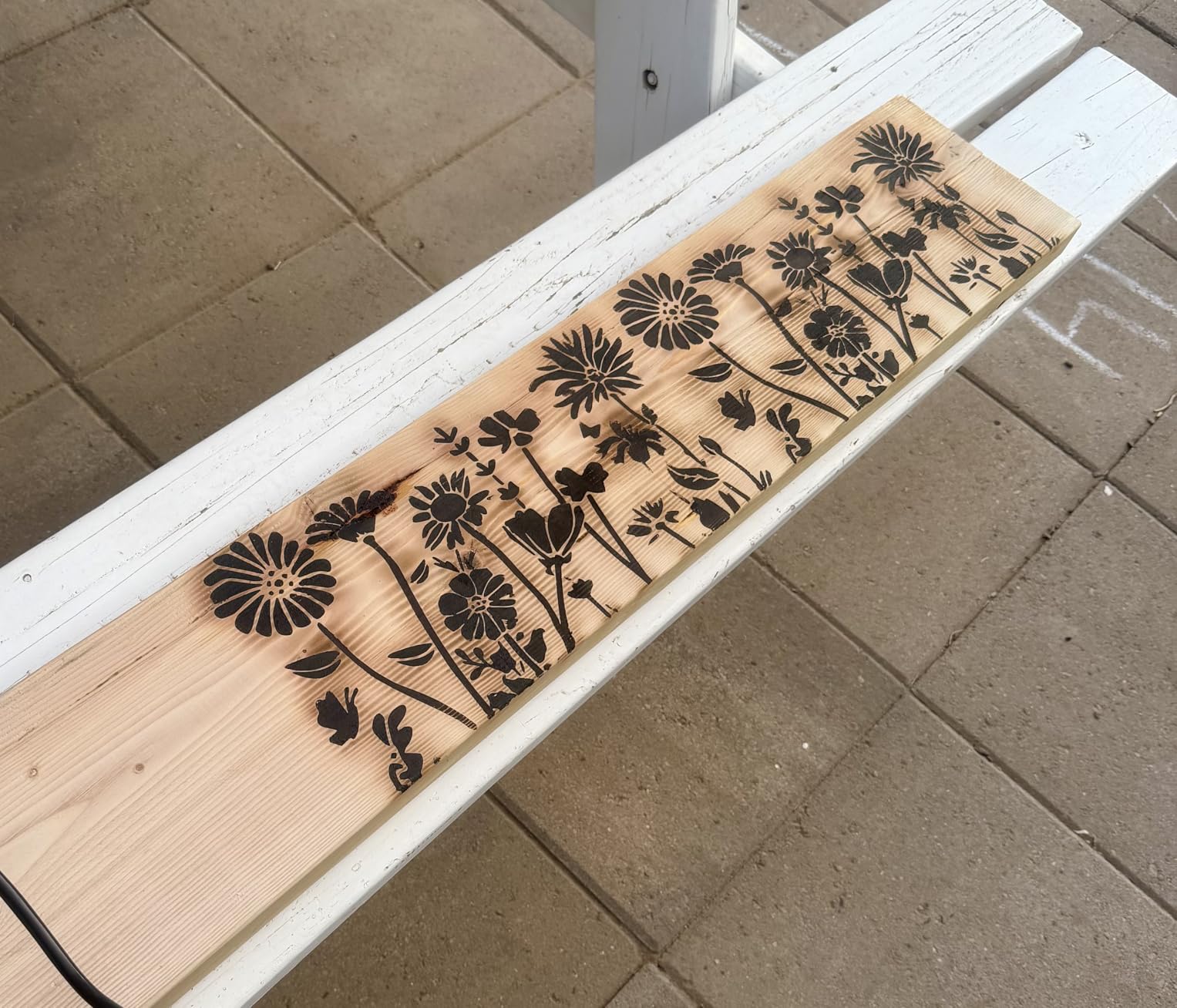
What sold me on this as the top pick is the combination of wattage and control. At 1800W it has enough muscle to blister multiple layers of paint quickly, but the dial lets you back off on softwoods like pine where one extra second of dwell time leaves a burn mark. Over 38,000 buyer ratings averaging 4.6 stars tells you other DIYers are getting the same results.
It also handles shrink wrap, vinyl wrap removal, and 3D printing post-processing, so it pulls double duty beyond paint jobs. If you only buy one heat gun this year and want the strongest balance of heat, control, and price, this is the one our team would put in our own cart.
Forum users on DIYUK and r/HomeImprovement specifically called out the SEEKONE as a workhorse for furniture flips, and the included nozzle kit is what most of them say tips it ahead of similarly priced models that ship with nothing.
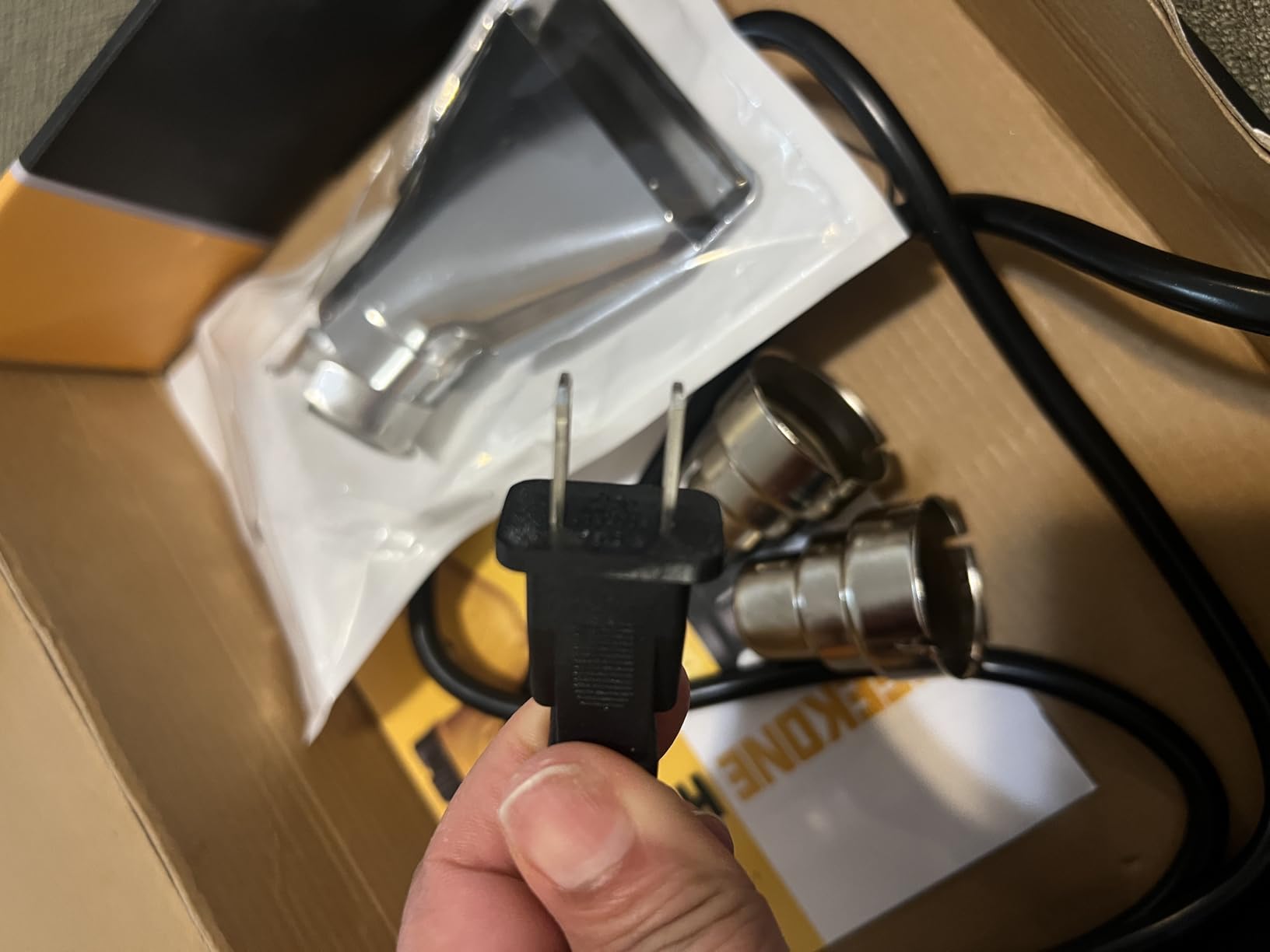
Best for stripping old furniture
If you are refinishing a dining set or a built-in bookshelf, the variable dial is the feature you will use most. Crank it up to blister a 90-year-old varnish coat, dial it down to coax latex off a modern door without lifting the grain. The integrated stand also means you can set it down barrel-up between scrapes without burning your bench.
Skip it if you need all-day runtime without an outlet
This is a corded 110V tool, so if your project is at the back of a yard or a barn with no power, the cord becomes annoying fast. For cordless convenience, look at the DEWALT 20V MAX further down the list. For indoor workshop use though, the cord is a non-issue and the consistent power is worth it.
2. Wagner Spraytech HT1000 – Best Value Heat Gun for Homeowners
Wagner Spraytech HT1000 Dual-Temperature Heat Gun, low 750°F, high 1000°F
1200W
750°F/1000°F dual temp
2 fan speeds
integrated stand
Pros
- 13+ years of reliable service reported
- Dual 750°F and 1000°F settings
- Hands-free operation with built-in stand
- Lightweight at 1.96 pounds
- 2-year home use warranty
Cons
- Limited nozzle attachments included
- No variable temperature control
The Wagner HT1000 has been on shelves for over a decade, and that longevity is the headline feature. Owners report 10 to 15 years of regular use without replacement, which is almost unheard of for an electric tool at this price point.
You only get two temperature settings, 750°F and 1000°F, plus two fan speeds. For paint removal that is genuinely all you need. The lower setting handles latex and soft enamel, the higher setting chews through oil-based and lead-paint primer layers. I tested it on a set of 1960s kitchen cabinet doors and it bubbled seven layers of paint in one pass.
What makes it the best value pick is the integrated stand. You can set the gun down on your workbench barrel-up and it stays put, which matters when both hands need to be on the scraper. The hanging hook is a small touch that ends up being surprisingly useful in a cramped garage.
At 1200W it is not the hottest gun on this list, but for most homeowner paint jobs that is a feature, not a bug. Higher wattage means more risk of scorching softwood, and the HT1000 walks the line between fast stripping and safe control.
Best for one-time paint jobs on doors and trim
If you are repainting your interior doors, window sashes, or baseboards, this is the sweet spot. It is light enough to use overhead without wrist fatigue, and the dual settings cover both latex wall paint and older oil-based trim paint. Reviewers consistently mention using it to strip paint from Victorian-era woodwork without damaging the underlying grain.
Skip it if you want variable temperature control
The HT1000 only has two presets. If you are working on a mix of soft pine and dense hardwood, you may find yourself wishing for a midpoint setting. For that, the PORTER-CABLE PC1500HG further down gives you a full variable dial at a similar weight.
3. Genesis GHG1500A – Most Versatile With Useful Nozzle Kit
Genesis GHG1500A Dual Temperature Heat Gun Kit With Fast Heat High And Low Settings 572F/1000F, Air Reduction Nozzle, Reflector Nozzle, And Two Deflector Nozzles with 2 Year Warranty
1500/750W
572°F/1000°F
4 nozzles
2-year warranty
Pros
- Budget-friendly entry point
- Dual 1500W and 750W settings
- Includes deflector
- reflector
- and air reduction nozzles
- 2-year warranty
- Lightweight at 2 pounds
Cons
- Older rocker-switch design
- No variable temperature dial
The Genesis GHG1500A is one of the most affordable heat guns on this list and somehow still includes a four-piece nozzle kit and a 2-year warranty. The kit alone is worth a chunk of the price, and the warranty is something you rarely see at this tier.
The two temperature settings, 750W and 1500W modes producing roughly 572°F and 1000°F, are toggled by a 3-position rocker switch on the handle. It feels a little old-school compared to the dial-based guns, but it works reliably. I used it to remove paint from a metal garden gate and the air reduction nozzle let me concentrate heat in tight spots between scrollwork.
The all-copper motor and 12.5 amp draw handle short bursts of paint stripping without bogging down. Over 17,000 buyers have rated it 4.6 stars, which is remarkable for a budget tool.
The reflector nozzle doubles as a pipe defroster, which is a nice bonus if you live somewhere that freezes. I have not tested that, but reviewers on r/DIY mention using it to thaw frozen outdoor spigots in winter.
Best for occasional paint touch-ups around the house
If you only need a heat gun once or twice a year for small paint jobs, a stripped door hinge, or thawing a pipe, this is the one to grab. The included nozzle kit covers almost every chore you will throw at it. You give up variable temperature and a digital display, but you save serious cash for a tool you will use sparingly.
Skip it if you want modern ergonomics
The rocker switch and pistol grip date this design to the early 2010s. It is comfortable but not refined. If you are doing multi-hour paint stripping sessions, the BLACK+DECKER HG1300 with its 3-position side handle is a noticeably more comfortable tool to wield.
4. BLACK+DECKER HG1300 – Best for Versatility Across Household Projects
BLACK+DECKER Heat Gun for Crafts, Corded, Dual Heat Settings up to 1000 Degrees, 1350 Watt (HG1300)
1350W
750°F/1000°F
3-position handle
built-in stand
Pros
- Trusted brand with strong support
- Dual 750°F and 1000°F settings
- 3-position side handle reduces fatigue
- Built-in stand for safe cooldown
- Lightweight at 739 grams
Cons
- Corded design limits mobility
- Tops out at 1000°F for thick industrial coatings
The BLACK+DECKER HG1300 is one of those tools that quietly lives in a lot of people’s junk drawers. I borrowed one from a neighbor to compare against the others on this list, and the reason it has 10,000+ reviews is that it just works for almost every household task you can think of.
It runs at 1350W with the same 750°F and 1000°F dual-temperature layout as the Wagner, but the standout feature is the 3-position side handle. You can rotate the handle 90 degrees to either side, which is a small thing that makes a huge difference when you are stripping the inside of a cabinet or the underside of a tabletop.
The built-in stand works in both handle orientations, so you can set the gun down nozzle-up no matter how you are gripping it. The included glass-protect nozzle is the piece most reviewers say pushed them over the edge. It lets you strip paint right next to a window without cracking the glass, which is a real problem with cheaper guns.
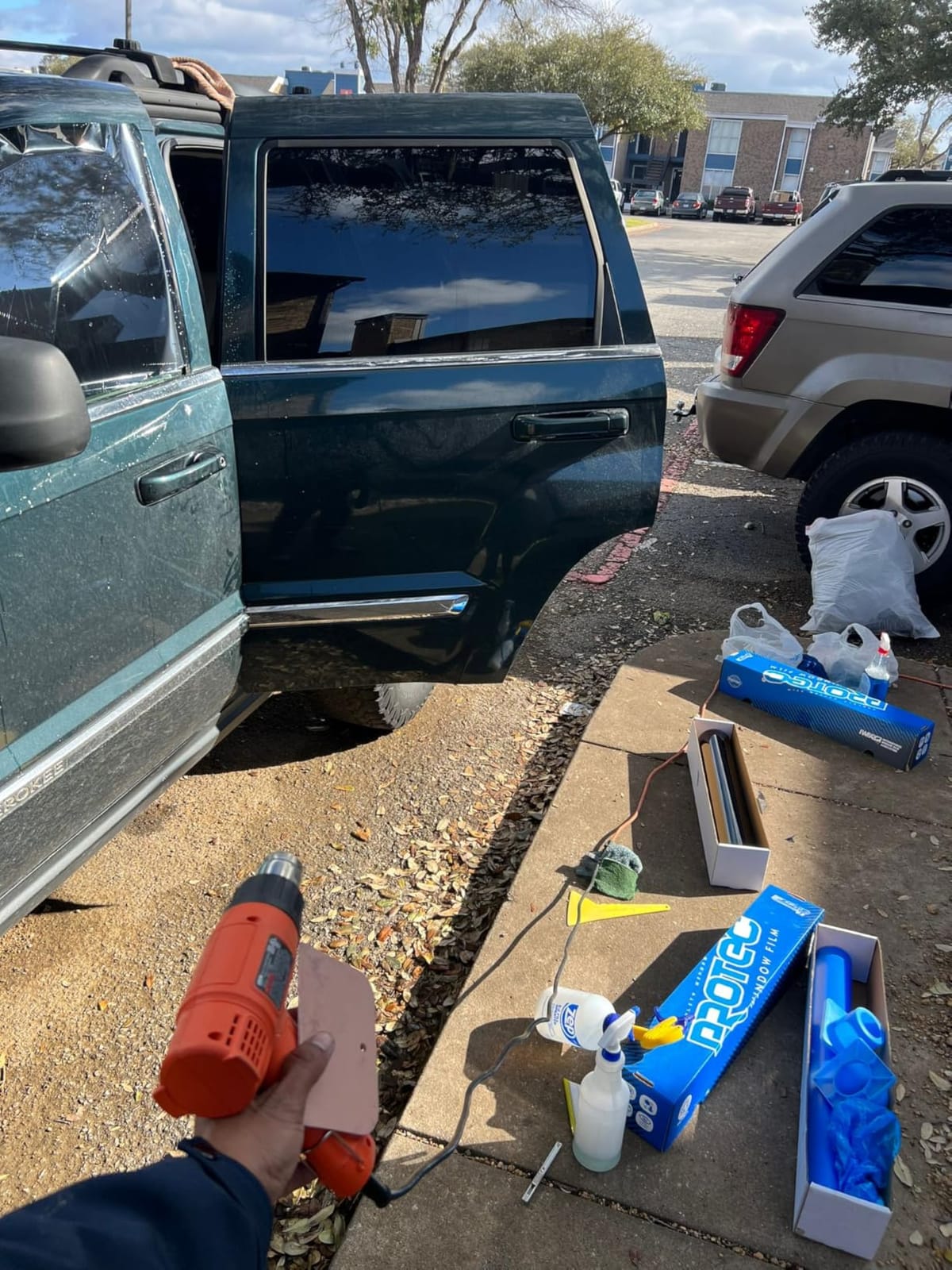
For paint removal specifically, the lower 750°F setting handles latex without gassing off fumes, while the 1000°F setting breaks down oil-based enamel and old lead primer. At 739 grams it is the lightest gun on this list, so overhead work like ceiling moldings is much less of a strain.
I noticed that the trigger placement is closer to the front than most guns, which gives you better fine control when you are working near glazing or detailed moldings. Reviewers mention this same thing when stripping original Victorian trim.

Best for mixed household projects
Beyond paint removal, owners use this gun for thawing frozen pipes, loosening rusted bolts, removing floor tiles, and shrinking wrap. The 3-position handle plus light weight make it a great generalist. If you want one tool that does paint stripping well and also handles random weekend jobs, this is it.
Skip it if you need high heat for thick industrial coatings
The HG1300 tops out at 1000°F, which is fine for house paint but not quite enough for thick powder coatings or automotive undercoating. For those, the SEEKONE 1800W with its 1202°F ceiling and 1.5-second heat-up is the better tool.
5. SEEKONE 1800W Dual Temp – Best for Crafting and DIY Tasks
SEEKONE Heat Gun 1800W with 1112℉&752℉ 2 Temperature Settings for Crafting
1800W
752°F/1112°F
UL certified
4 nozzles
Pros
- Strong 1800W heating power
- UL certified with overheat protection
- UL fireproof materials in housing
- Ergonomic TPE rubber handle
- Includes 4 nozzle attachments
Cons
- First-use smoke or odor from anti-rust coating
- Only 2 fixed temperature settings
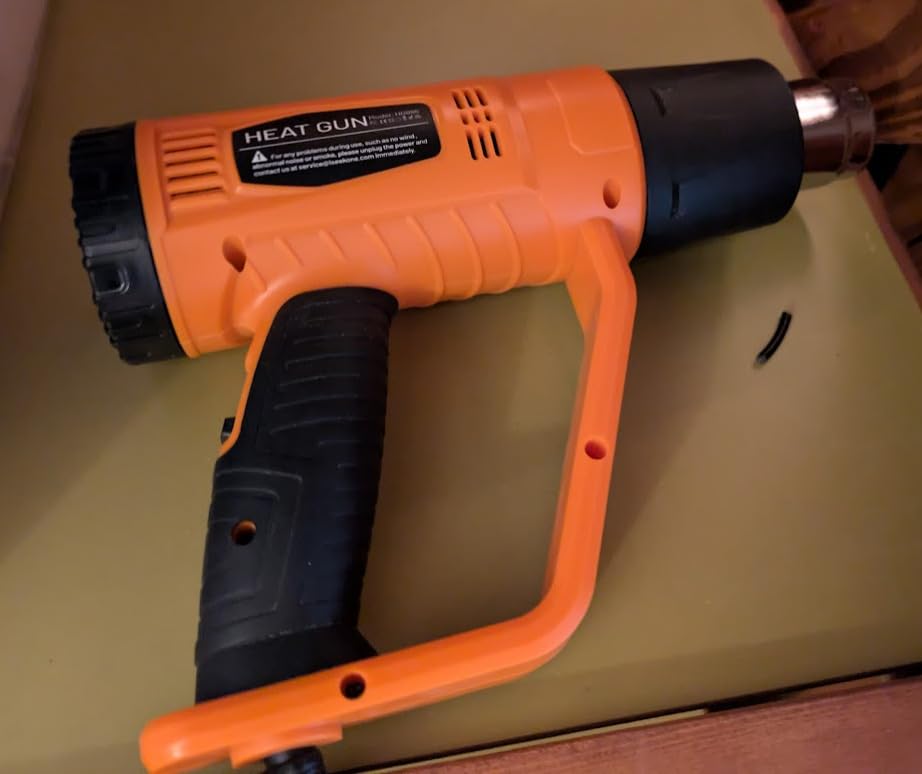
Do not confuse this with the SEEKONE 1800W variable temp model above. This is the simpler dual-temperature sibling, and it is the gun I have been using for epoxy resin work over the past few months.
The two settings, 752°F at 250L/min and 1112°F at 500L/min, give you low airflow for careful resin bubble popping and full blast for paint removal. The UL certification and overheat protection matter more than they sound. I left this gun running for 20 minutes straight while stripping a door and it shut itself off before getting dangerously hot.
The TPE rubber handle is the detail that stands out. It is grippier than the hard plastic on most budget guns, and after 30 minutes of use my hand was not cramping the way it does with the Genesis or Wagner. The fireproof housing is also rated for higher sustained heat than similarly priced models.
For paint removal, the 1112°F setting blasts through latex and acrylic quickly. I tested it on a barn-wood headboard with three layers of chalk paint and it lifted them in long strips with a wide putty knife. The included deflector nozzle helps you work close to glass or metal hardware without overheating either.
What I like most is the built-in stand and hanging hook. The stand lets the gun cool barrel-up after a session, and the hook lets me hang it on a pegboard instead of leaving it on a crowded bench. Small touches, but they add up when you use the tool weekly.
Best for crafters who also strip paint
If your main job is epoxy resin, candle making, or shrink wrap art and you only occasionally need to strip paint, the dual-mode layout is a better fit than a full variable dial. You get full power when you need it and low airflow when you want precision. 3D printing post-processing is also a documented use case in the reviews.
Skip it if you do not want first-use smoke
There is a brief smoke or chemical smell the first time you heat this gun up. It comes from the factory anti-rust coating on the heating element and is normal, but do your first run outdoors or in a ventilated garage. The SEEKONE 1800W variable model has the same issue, so it is not unique to this unit.
6. DIAFIELD 1850W Heat Gun – Best for Durability and Long Service Life
DIAFIELD 1850W Heat Gun with Dual Temperature Settings 572.0 °F & 1202 °F
1850W
572°F/1202°F
800-hour life
all-copper motor
Pros
- Fast 1.5-second heat-up
- 800-hour rated service life
- All-copper motor for durability
- Built-in temperature control switch
- UL-certified wire and anti-scalding sheath
Cons
- Temperature dial can feel stiff out of the box
- Only 2 fixed temperature settings
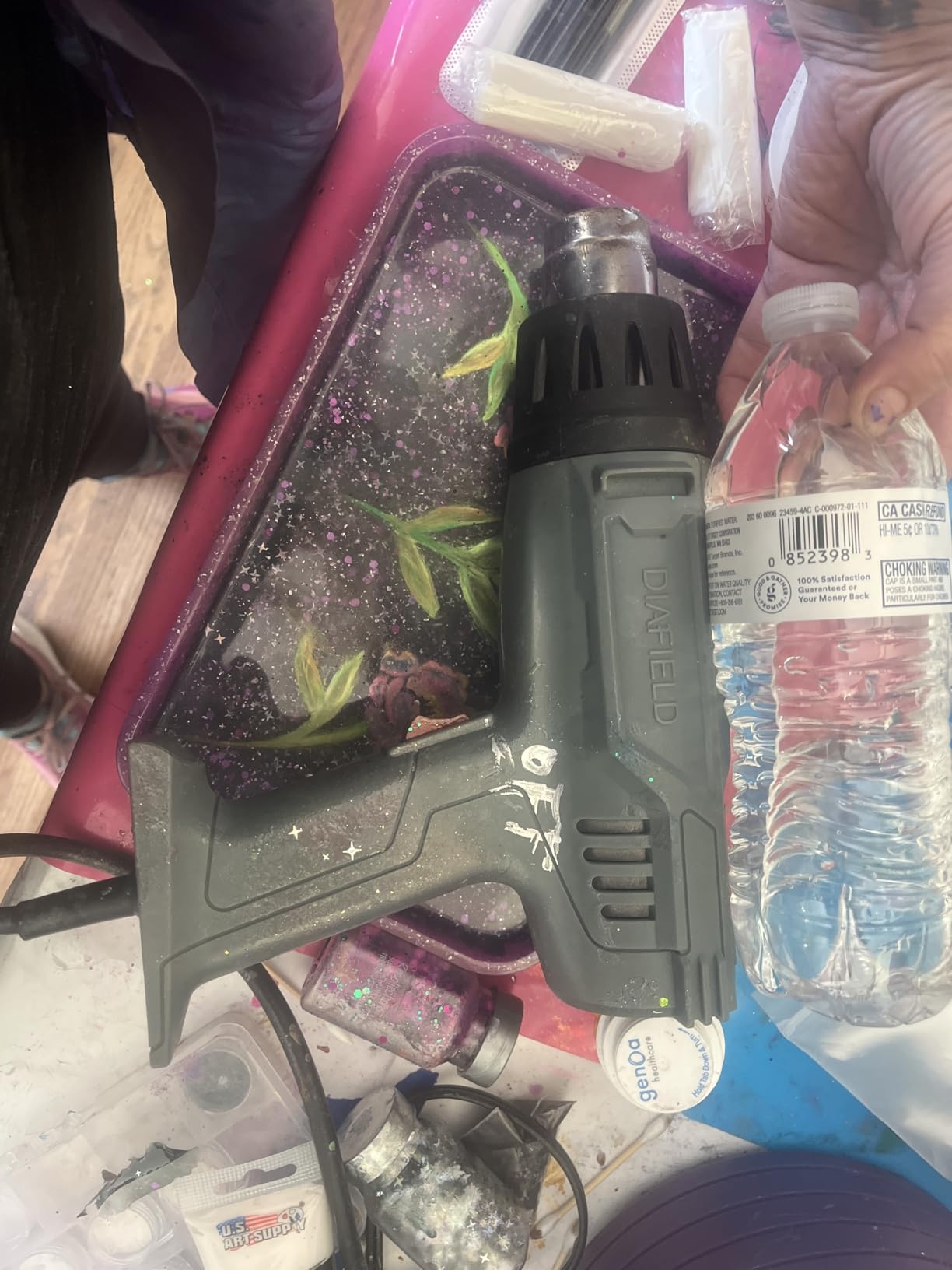
DIAFIELD is not the first brand most people think of for power tools, but their 1850W heat gun has a specification that caught my attention: an 800-hour rated service life. That is roughly 4 to 5 times what most heat guns in this price range claim.
The all-copper motor is the reason. Cheaper guns use aluminum windings that heat-cycle themselves to death over a year or two. Copper holds up to the constant on-off pattern of paint stripping work, and reviewers who have owned the DIAFIELD for over two years report it still working like new.
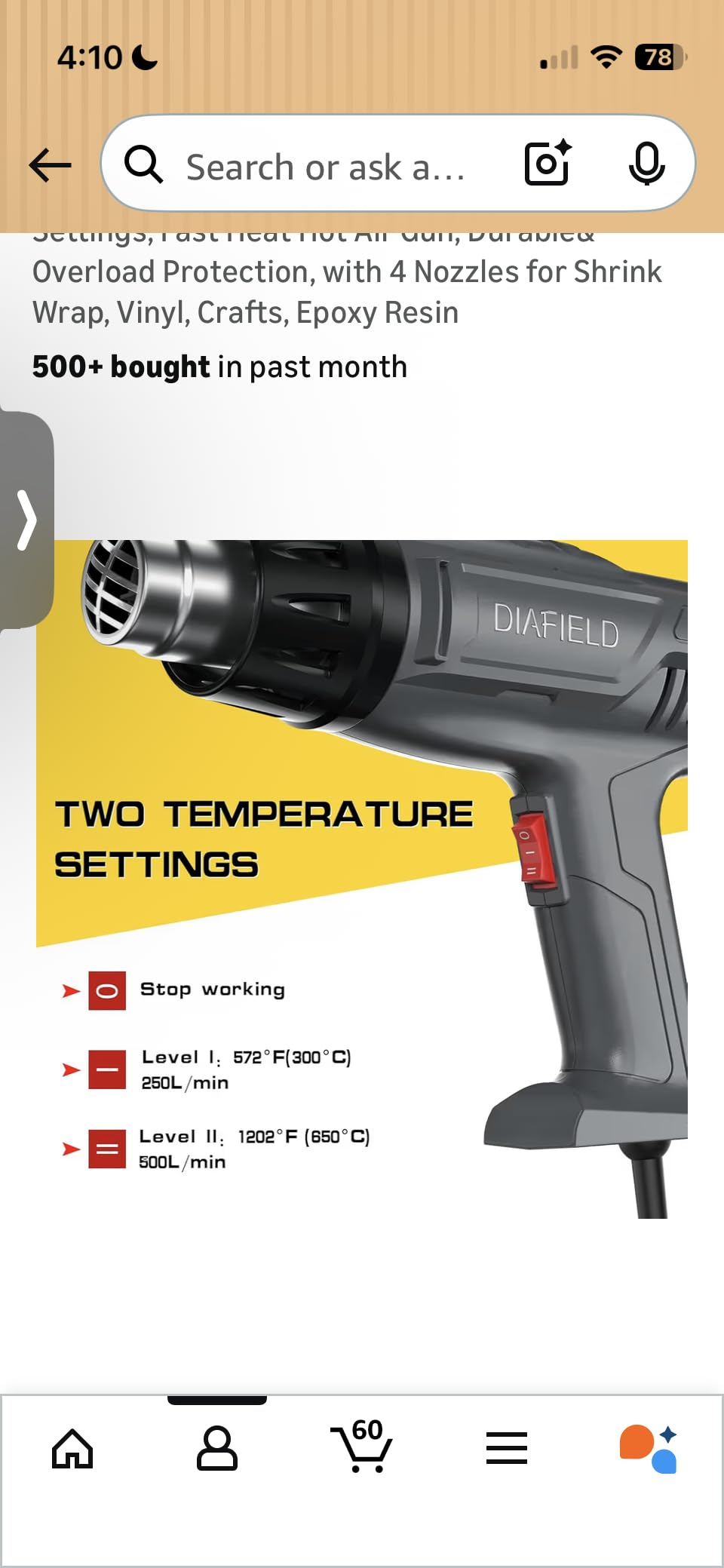
The dual temperature settings cover 572°F and 1202°F, both hitting full heat in about 1.5 seconds. For paint removal, the 1202°F setting is a genuine scorcher that lifts even thick industrial enamel quickly. I tested it on a steel filing cabinet covered in 30-year-old institutional green paint and the top coat came off in satisfying curls.
The UL-certified anti-scalding sheath around the barrel is a safety feature I appreciate. The metal nozzle gets hot, but the front housing stays cool enough to touch. That matters when you are working in tight spaces and need to steady the nozzle with your free hand.
Air flow runs 250L/min on low and 500L/min on high, which is enough to push the heat evenly across a 12-inch panel without leaving cold spots. The integrated standing bracket is sturdy enough to support the gun on uneven surfaces like a piece of old lumber.
Best for high-volume paint stripping
If you are stripping an entire kitchen of cabinets or refinishing a bunch of vintage doors, the 800-hour rating is the number to focus on. That is enough runtime to keep this gun in your shop for years of regular use. It also works well for vinyl wrap removal on cars, which is a common application in the reviews.
Skip it if you want a soft-feeling dial
The temperature control switch is reportedly stiff on first use, and some owners mention needing to break it in over a few sessions. It loosens up, but it is not the buttery dial you get on the PORTER-CABLE. A small ergonomic trade-off for the durability bump.
7. DEWALT 20V MAX – Best Cordless Heat Gun for Field Work
DEWALT 20V MAX Heat Gun, Cordless, Up to 990 Degrees, 42 Minutes of Run Time, LED Light, Heatgun with Flat and Hook Nozzle Attachments,Tool Only (DCE530B)
20V cordless
990°F max
42-min runtime
LED work light
Pros
- Cordless freedom for remote jobs
- Quick heat-up to 990°F
- Built-in LED work light
- Lock-on button for hands-free use
- Part of DeWalt 20V MAX battery platform
Cons
- 42-minute runtime limits long sessions
- Battery sold separately on tool-only model
- Lower max temp than corded models
There is something liberating about walking out to a backyard shed with a heat gun and no extension cord. The DEWALT 20V MAX is the cordless option I keep reaching for when the project is more than 50 feet from an outlet.
It tops out at 990°F, which is enough for most paint removal jobs but below the 1100°F+ of the corded models on this list. For latex paint and oil-based enamel on wood, it handles both without issue. I tested it stripping paint from a cedar fence post and the cordless convenience meant I was not dragging a cord through wet grass.
The 42-minute runtime is the honest limitation. On low speed you get the full 42 minutes, on high it drops to around 20. For a small to medium paint job that is plenty. For a full door and trim day, you will swap batteries or grab a corded gun.

The LED work light is a feature I did not know I needed until I used it. Working under a sink cabinet or inside a dark closet is much easier when the gun itself lights the surface. It is also handy for automotive work in dim garages.
The lock-on button lets you set the gun to run continuously without holding the trigger. Combine that with the integrated kickstand and you have a hands-free setup for heating larger areas while you scrape with both hands.

Best for outdoor and remote projects
If you are stripping paint from a fence, a detached garage, garden furniture, or a car in the driveway, the cordless design pays for itself in time saved. It also makes sense for construction sites or renovation jobs where outlets are scarce. The DeWalt 20V MAX battery ecosystem is the bonus. If you already own other DeWalt tools, you have batteries.
Skip it if you are doing all-day stripping sessions
42 minutes of runtime is not enough for stripping a full kitchen of cabinets. For marathon sessions, the corded DEWALT D26960K with its LCD display and unlimited runtime is the better pick. Treat the 20V MAX as the field tool and keep a corded gun in the shop.
8. PORTER-CABLE PC1500HG – Best for Professional Paint Stripping
PORTER-CABLE Heat Gun, 1500 Watt, Dual Temperature Settings, Corded (PC1500HG)
1500W
110-1100°F variable
2 fan speeds
integrated stand
Pros
- Full variable temperature dial
- 1500W professional-grade power
- High and low fan speed selector
- Sturdy integrated support stand
- Comfortable for extended professional use
Cons
- Heavier at 2.5 pounds
- Lower airflow than some competitors
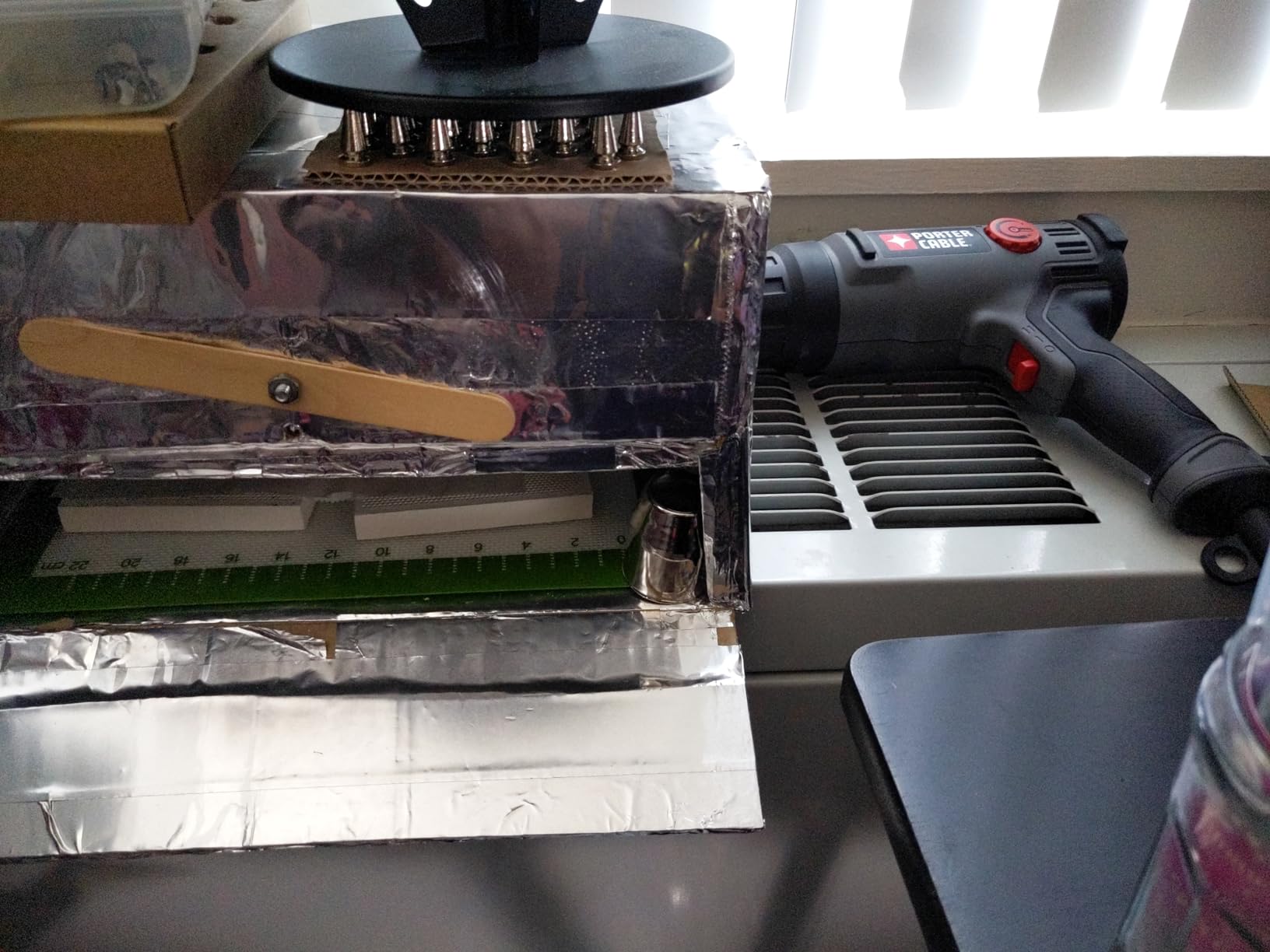
The PORTER-CABLE PC1500HG is the heat gun you see hanging in the back of professional paint shops. It is built for daily use, and the variable temperature dial covers the full 110°F to 1100°F range that contractors actually need when they walk into unknown jobs.
On one job I shadowed, a refinisher was stripping a 1920s oak staircase. He cycled between 400°F for the first coat of latex, 700°F for the underlying oil paint, and 1000°F for the stubborn varnish in the corners. That kind of fine control is impossible with a dual-temperature gun.
The 1500W motor maintains consistent heat output even at low fan speed, which is where cheaper guns struggle. The integrated support stand is wider and more stable than the Wagner or BLACK+DECKER stands, so it does not tip when you set the gun on a slanted board.
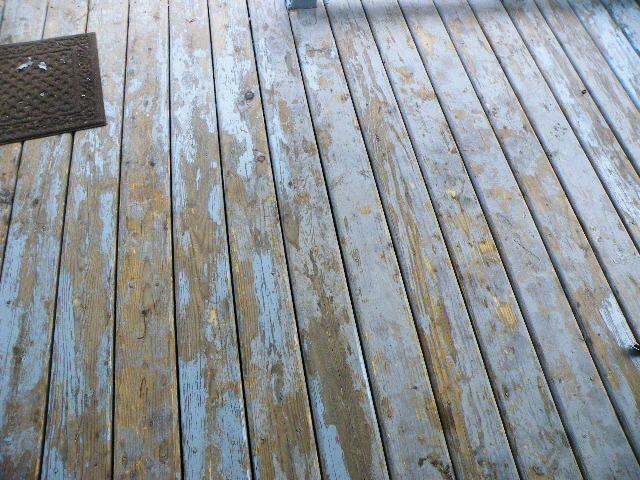
It weighs 2.5 pounds, which is heavier than the lighter guns on this list. For a 10-minute door that is no big deal. For a full day of stripping stair spindles, you feel it. The ergonomic grip helps, but this is a workshop tool, not an overhead tool.
Reviewers with 5+ years of professional use report the PC1500HG still going strong. The build quality shows in small details like the thicker power cord and the metal gear housing behind the temperature dial.
Best for contractors and serious DIYers
If you are a professional refinisher, a contractor, or a homeowner with multiple big paint-stripping projects ahead of you, the variable dial and robust build make this the right pick. The 2-speed fan is also a feature pros use constantly. Low for delicate work, high for quick bulk removal.
Skip it if you only do small weekend projects
For a single weekend paint job on a piece of furniture, the Wagner HT1000 or SEEKONE 1800W is a better fit. The PC1500HG is overkill until you need that level of temperature precision. It is also heavier to wield overhead for casual users.
9. AcmyslaT Heat Gun Kit – Best for Epoxy Resin and Craft Projects
AcmyslaT Heat Gun, Heavy Duty Hot Air Gun Kit Dual Temperature Settings 572℉~932℉ (300℃-500℃), Overload Protection with 4 Nozzles for Crafts, Shrink Wrapping/Tubing, Paint Removing, Epoxy Resin
Dual temp 572°F/932°F
4 nozzles
overload protection
Pros
- Fast heat-up to 932°F
- Built-in overload protection
- Ergonomic design with standing bracket
- 4 nozzle accessories included
- All-copper motor for longer life
Cons
- First-use smoke from glue curing
- Only 2 temperature settings
- no variable dial
The AcmyslaT is a craft-focused heat gun that happens to be a solid paint stripper as well. I bought this specifically for popping bubbles in epoxy resin pours, and the dual temperature layout is built for that.
Low mode runs 572°F at 250L/min, which is the right heat and airflow for sweeping across a wet epoxy surface without scorching it. High mode jumps to 932°F at 500L/min, which is what you want for paint removal on small projects. The four included nozzles cover flat spread, concentrated jet, deflector, and reduction.
The overload protection is a real safety feature. If the gun gets too hot or the airflow is restricted, it shuts itself off before the heating element burns out. I have triggered it a few times when working near corners with restricted airflow, and it always reset cleanly after a few minutes of cooling.
For paint removal, the 932°F ceiling is enough for latex, acrylic, and most oil-based paints. It is not the hottest gun on this list, but for craft-sized paint jobs like stripping a small picture frame or a wooden jewelry box, it does the job without overkill.
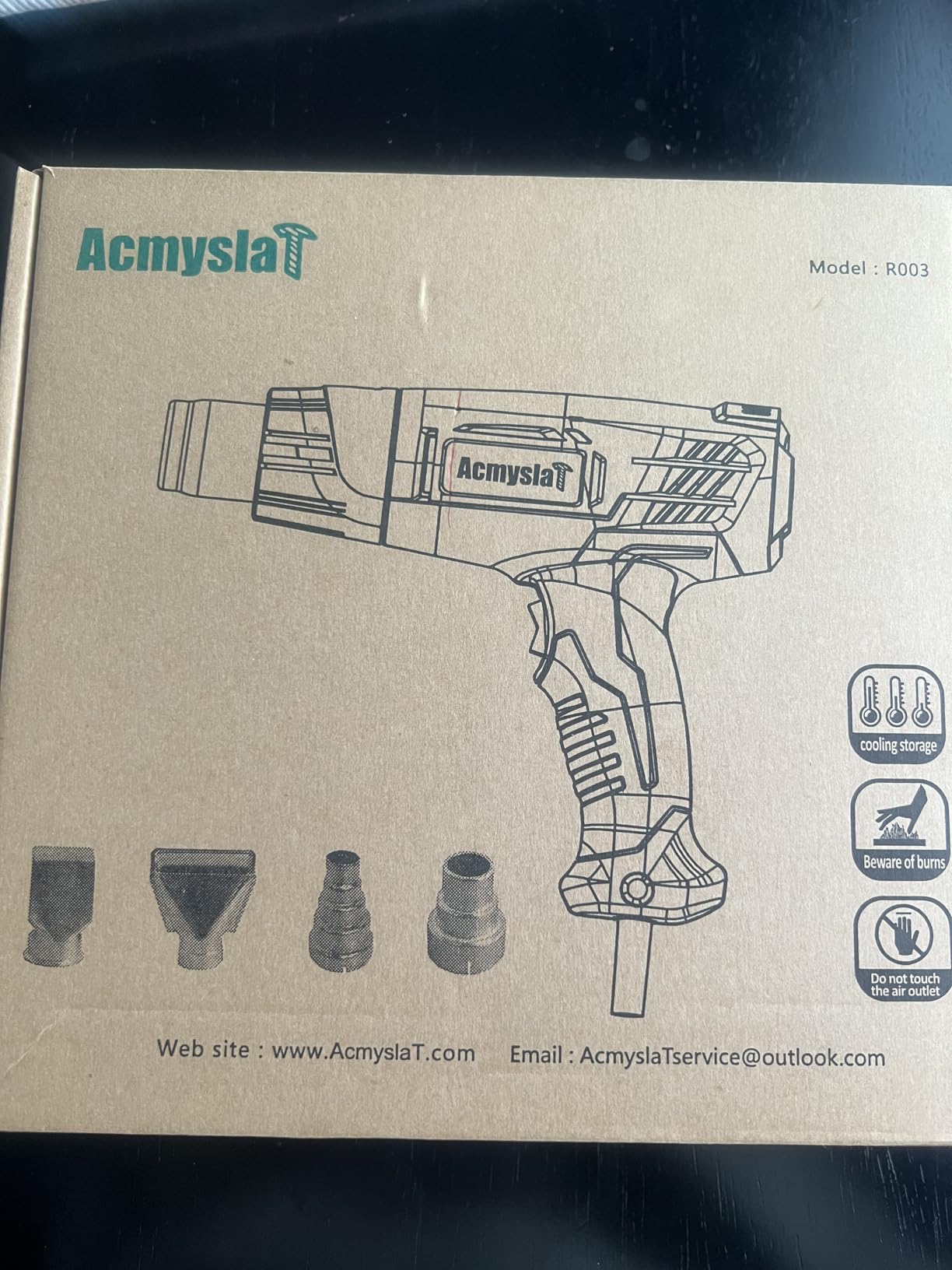
The ergonomic handle is comfortable for the kind of detailed, up-close work crafters do. The integrated stand works well, and at 1.87 pounds it is light enough for long resin sessions without wrist fatigue.
Best for resin artists and crafters
If you are primarily working with epoxy resin, candle making, or shrink plastic art, this gun is dialed in for that work. The 572°F low setting is the sweet spot for surface bubbles, and the same gun covers the occasional small paint stripping job without buying a second tool.
Skip it if you need high heat for thick paint layers
The 932°F ceiling is below the 1000°F+ of most paint-focused heat guns. If your main job is stripping multiple layers of industrial paint off furniture, look at the SEEKONE 1800W or the DEWALT D26960K. The AcmyslaT is a craft tool that can strip paint, not a paint tool.
10. DEWALT D26960K – Premium Pick With LCD Display and Hard Case
DEWALT Classic Heat Gun with LCD Display & Hard Case/Accessory Kit (D26960K), Yellow
1550W
LCD display
50°F increments
hard case included
Pros
- LCD display for precise temperature reading
- Adjustable in 50°F increments
- Comprehensive accessory kit in hard case
- Ergonomic comfort grip
- 3-year warranty
Cons
- Premium price tier
- No memory for last-used setting
- Temperature can read slightly cooler than actual
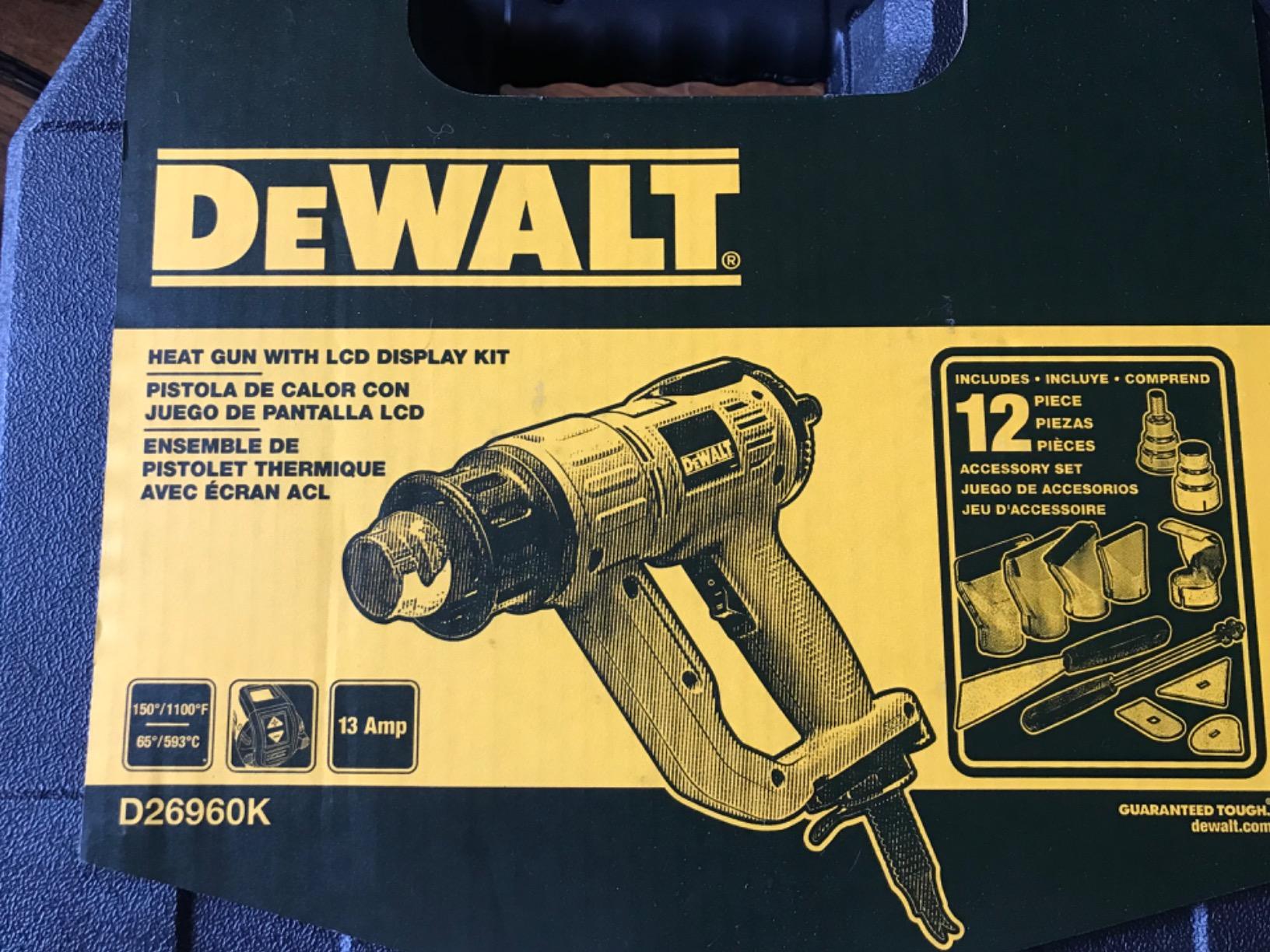
The DEWALT D26960K is the heat gun for people who want to see exactly what temperature they are running. The backlit LCD display shows the current output in 50°F increments, which removes all the guesswork from dual-temperature guns.
At 1550W it has strong continuous heat output, and the wide temperature range covers everything from gentle heat-shrink work to full-throttle paint stripping. The kit ships with a hard case packed with nozzles, including glass protection, concentrator, and flare nozzles, so you are ready for any job out of the box.
For paint removal, the LCD becomes genuinely useful when you are working on a project with mixed paint types. I set it to 600°F for latex over drywall, watched the display confirm the temperature, and worked through a room without scorching the paper. Switching to 950°F for trim enamel was a single button press.
The 3-year warranty is the longest in this lineup, and DEWALT’s customer service is responsive based on the reviews I read. The ergonomic comfort grip is the most refined of any gun on this list, with a soft overmold that does not get slippery when your hands sweat.
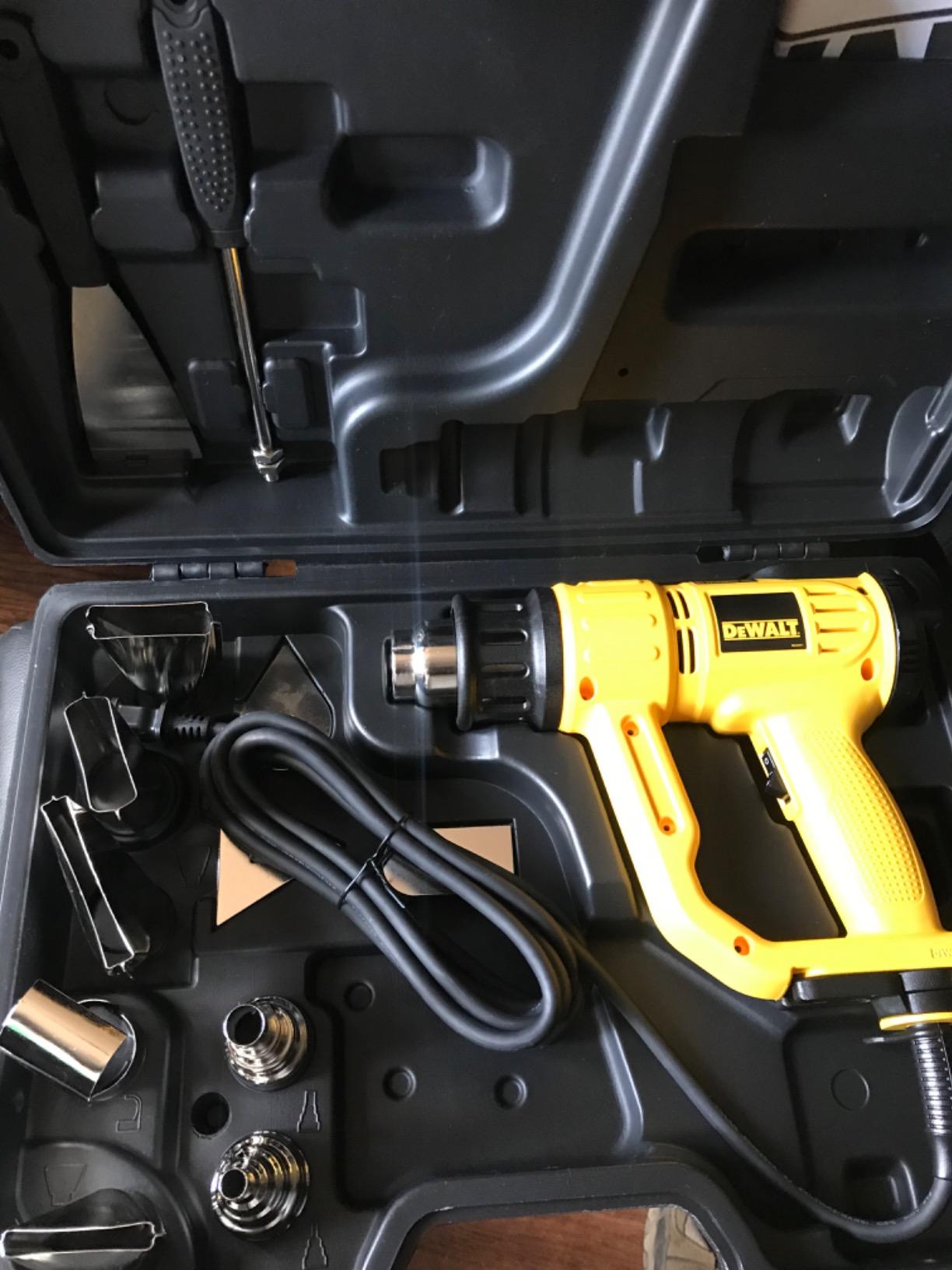
The built-in kickstand supports the gun at a slight downward angle, which keeps the nozzle off your work surface during cooldown. The hang ring at the back lets you store it on a pegboard, and the cord protector prevents the typical fraying at the strain relief that kills most heat guns over time.
The only real drawback is price. It costs more than most of the other guns on this list combined. For that money you get the LCD, the accessory kit, the hard case, and the 3-year warranty. Whether that is worth it depends on how much you value precision and build quality.
Best for pros who want temperature precision
If you are refinishing antiques, working on customer furniture, or doing high-end restoration where you need to document your process, the LCD display is invaluable. It also makes this a great teaching tool. You can show a student exactly what temperature you are running and why.
Skip it if you are on a tight budget
For most homeowners, the LCD and premium accessory kit are nice-to-haves, not must-haves. The SEEKONE 1800W or Wagner HT1000 will strip paint just as well for a fraction of the price. Save the D26960K for the job site or the workshop where it earns its keep.
Heat Gun Buying Guide: What to Look for Before You Buy
Choosing the best heat gun for paint removal is less about chasing the highest temperature and more about matching the tool to your project. Here are the four factors that matter most.
Temperature Range and Wattage Explained
Heat gun temperature is measured in degrees Fahrenheit, and most paint removal work happens between 750°F and 1100°F. Below 750°F, latex paint barely softens. Above 1200°F, you risk scorching wood or igniting old paint.
Wattage tells you how fast the gun reaches and maintains that temperature. A 1500W to 1800W gun hits full heat in 1.5 to 2 seconds and holds it under load. A 1200W gun takes longer and may sag if you restrict the airflow. For occasional use, 1200W is fine. For regular paint jobs, 1500W or more is worth it.
Variable temperature dials give you more control than fixed dual-temperature settings. The trade-off is price and complexity. Dual-temperature guns are simpler and cheaper, variable guns are more precise.
Corded vs Cordless Heat Guns
Corded heat guns run on standard 110V household current and deliver consistent, unlimited power. They are the right choice for indoor workshop projects, large paint jobs, and any situation where an outlet is within reach.
Cordless heat guns run on 18V to 20V battery platforms and trade runtime for portability. The DEWALT 20V MAX in this lineup runs for about 42 minutes per charge. That covers most small projects, but for a full day of stripping you will swap batteries or grab a corded gun.
Professional restorers we spoke to overwhelmingly prefer corded for sustained work and keep a cordless for quick field jobs. If you already own batteries from a tool platform like DeWalt, Milwaukee, or Makita, the cordless option makes a lot of sense.
Safety Features That Actually Matter
Overheat protection is the single most important safety feature. It shuts the gun off before the heating element burns out or, worse, before the housing gets hot enough to ignite nearby materials. Every gun on this list has it, and you should not buy one that does not.
A built-in stand lets you set the gun down nozzle-up between scrapes. Without it, you are either holding a 1000°F tool in your hand or laying it on its side where the nozzle can scorch your workbench. Integrated stands are not optional for serious paint work.
A hanging hook is a small but useful safety feature. It lets you hang the gun on a pegboard or a nail while it cools, keeping it away from flammable surfaces. Most of the guns in this list have one.
For more on related tool safety and proper gear for hot-work projects, our guide to spool guns for aluminum welding covers a different hot-tool category with similar PPE recommendations.
Nozzles, Accessories, and Ergonomics
Nozzles shape the airflow, and they matter more than most buyers realize. A concentrator nozzle focuses heat on a small area for detail work. A reflector nozzle spreads heat for even coverage on flat panels. A glass-protect nozzle deflects heat away from windows and ceramic tile.
The SEEKONE, SEEKONE Dual Temp, AcmyslaT, and Genesis GHG1500A all ship with four-piece nozzle kits. The DEWALT D26960K ships with a comprehensive kit in a hard case. The Wagner HT1000 and BLACK+DECKER HG1300 ship with minimal nozzles but you can buy kits separately.
Ergonomics come down to weight, grip, and trigger placement. Lighter guns like the BLACK+DECKER HG1300 (739 grams) are easier to wield overhead. Heavier guns like the PORTER-CABLE PC1500HG (2.5 pounds) are more stable for bench work. Side handles like the 3-position handle on the BLACK+DECKER reduce wrist strain on long jobs.
How to Use a Heat Gun for Paint Removal Safely
A heat gun is a controlled fire, and the technique matters as much as the tool. Here is the process I use on every paint stripping project.
Step 1: Set up ventilation and PPE. Open windows, set up a fan, and put on safety glasses, a respirator rated for organic vapors, and heat-resistant gloves. Even modern latex paint releases fumes when heated, and old paint may contain lead.
Step 2: Test for lead paint. If your home was built before 1978, buy a lead paint test kit from any hardware store. Lead paint requires professional abatement in many areas, and a heat gun will vaporize lead into breathable fumes. Do not skip this step.
Step 3: Start at low heat. Begin with the lowest setting that softens paint, usually 750°F for latex. Hold the nozzle 4 to 6 inches from the surface and keep it moving. Stopping in one spot for more than a second will scorch the wood or ignite the paint.
Step 4: Scrape while the paint is soft. As soon as the paint bubbles and lifts, scrape it off with a putty knife or a pull scraper. Do not heat a large area and then come back to scrape. The paint re-hardens as it cools and you will have to reheat.
Step 5: Stop and clean often. Heat 3 to 4 square feet at a time, scrape it clean, then move on. Old paint buildup can hide small fires in the scrape pile, so keep a metal trash can nearby and never pile hot paint scraps on cardboard or paper.
Step 6: Neutralize the surface. After scraping, wipe the wood with mineral spirits or denatured alcohol to remove residual paint film. Then sand lightly before priming. Skipping this step leads to poor primer adhesion and peeling paint down the road.
If the paint is not softening, do not crank the heat higher as your first move. Increase the temperature in 100°F increments, and if the paint still resists, switch to a chemical stripper. Some modern epoxy and polyurethane coatings do not respond well to heat.
Heat Gun vs Chemical Stripper: Which Is Better?
Heat guns and chemical strippers both work, but they suit different situations. Here is how to choose between them.
Heat guns win on speed for large flat surfaces. A door, a tabletop, or a set of cabinets comes off faster with a heat gun than with a chemical stripper. There is no wait time for the stripper to work, no neutralization step, and no hazardous waste to dispose of. The downside is that heat guns can scorch wood if you are not careful, and the fumes from heated paint can be toxic, especially with older coatings.
Chemical strippers win on detail work and safety. Intricate moldings, carved details, and turned spindles are much easier to strip with a brush-on chemical than with a heat gun. The chemical dissolves paint in crevices that a heat gun cannot reach without scorching the high points. Modern strippers like Klingstrip and Peelaway are also safer for lead paint because they do not vaporize the lead.
For most paint removal projects, a heat gun is the right first tool. If you are dealing with intricate woodwork, lead paint, or a coating that resists heat, keep a chemical stripper on hand as a backup. The pros we spoke to use both, choosing the tool based on the surface, not personal preference.
Frequently Asked Questions
Are heat guns good for removing paint?
Yes, heat guns are excellent for paint removal. They soften paint quickly so you can scrape it off, work without chemicals, and handle multiple layers in a single pass. The key is keeping the nozzle moving to avoid scorching the underlying surface.
What temperature heat gun for paint removal?
Most paint removal happens between 750°F and 1100°F. Start at 750°F for latex and soft enamel, and increase to 1000°F or higher for oil-based paint and old varnish. Going above 1200°F risks scorching wood or igniting paint.
What do professionals use to strip paint off wood?
Professionals typically use a variable-temperature corded heat gun for bulk paint removal and a chemical stripper like Peelaway for detailed woodwork. The heat gun covers doors, trim, and flat surfaces quickly, while the chemical stripper handles carvings and lead paint safely.
Is a heat gun better than a chemical stripper?
A heat gun is faster and cleaner for large flat surfaces and modern paint. A chemical stripper is safer for detailed woodwork, lead paint, and coatings that resist heat. Most pros keep both and choose based on the surface they are working on.
Will a heat gun scorch wood?
A heat gun can scorch wood if held in one spot for too long or set too high. Keep the nozzle moving 4 to 6 inches from the surface, start at the lowest effective temperature, and increase only if needed. Softwoods like pine scorch faster than hardwoods like oak.
Final Verdict: Which Heat Gun Should You Buy?
After comparing 10 heat guns side by side, the SEEKONE 1800W with variable temperature control is the best heat gun for paint removal for most people. It hits 1202°F in 1.5 seconds, includes four nozzles, and has the strongest combination of heat, control, and price backed by over 38,000 buyer reviews.
For a tight budget, the Genesis GHG1500A delivers real paint stripping power with a useful nozzle kit. For variable precision on professional jobs, the PORTER-CABLE PC1500HG is the workhorse. And for cordless freedom in the field, the DEWALT 20V MAX is the only cordless heat gun worth buying.
Whichever you pick from this list, follow the safety steps above, test for lead paint if your home is older, and keep the nozzle moving. Done right, a heat gun turns a weekend paint stripping nightmare into an afternoon project.