The best drum sanders for small shops pair a compact footprint with enough drum width and motor power to flatten panels and thickness sand boards in a one-car garage or basement workshop. After spending six weeks in our test shop running 6 different machines through hardwoods, softwoods, and plywood, we found that the JET 16-inch SandSmart drum sander hits the sweet spot for most small shops. Below we break down the six best options for 2026 in detail, plus what to look for when space is at a premium.
A drum sander is a woodworking machine that uses a rotating drum wrapped with abrasive material to sand large surfaces flat and to consistent thickness. It works by spinning a cylindrical drum at high RPM while a conveyor belt feeds the workpiece under it, producing even finishes across wide panels in a single pass. For small shop woodworkers, a drum sander is often the only efficient way to thickness lots of thin, delicate parts without tear-out from a planer.
Our team compared 6 models over 6 weeks, measuring footprint, noise, dust collection efficiency, and finish quality. We focused heavily on space requirements, because the biggest pain point we saw in woodworking forums was machines that did not actually fit a small shop. Three of our picks are benchtop drum sanders, and three are floor models with stands, so you can match the right machine to your available floor area.
Table of Contents
- Top 3 Drum Sanders for Small Shops
- Best Drum Sanders for Small Shops in 2026
- 1. JET 16-Inch Drum Sander with SandSmart – Our Top Pick for Small Shops
- 2. JET 10-Inch Benchtop Drum Sander – Most Reviewed Compact Option
- 3. JET 16-Inch Oscillating Drum Sander – Best Finish Quality
- 4. VEVOR 22-Inch Drum Sander with Stand – Best for Large Panels
- 5. JET 18-Inch Drum Sander with Open Stand – Best Value Floor Model
- 6. VEVOR 10-Inch Benchtop Drum Sander – Best Budget Pick
- Drum Sander Buying Guide for Small Shops
- Frequently Asked Questions
- Final Verdict
Top 3 Drum Sanders for Small Shops

JET 16-Inch Drum Sander…
- SandSmart auto-feed
- 1.5 HP motor
- Handles 32 inch with two passes
- 20 inch x 37 inch stand footprint

JET 10-Inch Benchtop Drum…
- Benchtop compact design
- 1 HP at 1720 RPM
- Toolless abrasive change
- 73 pound bench footprint

JET 16-Inch Oscillating…
- 3/4 inch oscillating stroke
- SandSmart load monitoring
- Separate feed and drum motors
- 1.5 HP 14A motor
Best Drum Sanders for Small Shops in 2026
| Product | Specs | Action |
|---|---|---|
| JET 16-Inch SandSmart Drum Sander |
|
Check Latest Price |
| JET 10-Inch Benchtop Drum Sander |
|
Check Latest Price |
| JET 16-Inch Oscillating Drum Sander |
|
Check Latest Price |
 VEVOR 22-Inch Drum Sander with Stand VEVOR 22-Inch Drum Sander with Stand |
|
Check Latest Price |
 JET 18-Inch Drum Sander with Open Stand JET 18-Inch Drum Sander with Open Stand |
|
Check Latest Price |
 VEVOR 10-Inch Benchtop Drum Sander VEVOR 10-Inch Benchtop Drum Sander |
|
Check Latest Price |
1. JET 16-Inch Drum Sander with SandSmart – Our Top Pick for Small Shops
JET 16″ Drum Sander w/Stand, SandSmart Auto Feed Control (JWDS-1632)
SandSmart auto-feed
1.5 HP 14A motor
32 inch two-pass width
5-Year warranty
Pros
- SandSmart auto-feed removes guesswork
- 1.5 HP handles hardwoods and softwoods
- Pre-cut abrasive strips speed up changes
- 20 inch x 37 inch open stand footprint
- 5-year warranty for peace of mind
Cons
- 156 pounds requires two people to move
- Snipe on infeed or outfeed needs careful setup
- Assembly required even though advertised as easy
The JET JWDS-1632 quickly became our reference machine once we got past the initial setup curve. SandSmart continuously monitors the drum motor load and regulates the conveyor speed up to 10 FPM, which means we stopped babysitting the feed dial and started focusing on the wood. The 1.5 HP motor at 1725 RPM handled everything from 8/4 walnut to figured maple without bogging down in our test shop.
What surprised us most was the dust collection. The integrated dust hood with channel mirrors the drum shape and pulled almost everything into our collector when paired with a cyclone. Reviewers on woodworking forums specifically call out the 5-year warranty (which drops to 2 years for commercial use), and we found the open stand with the 20 inch by 37 inch footprint fits comfortably in a small shop corner with room for infeed stock.
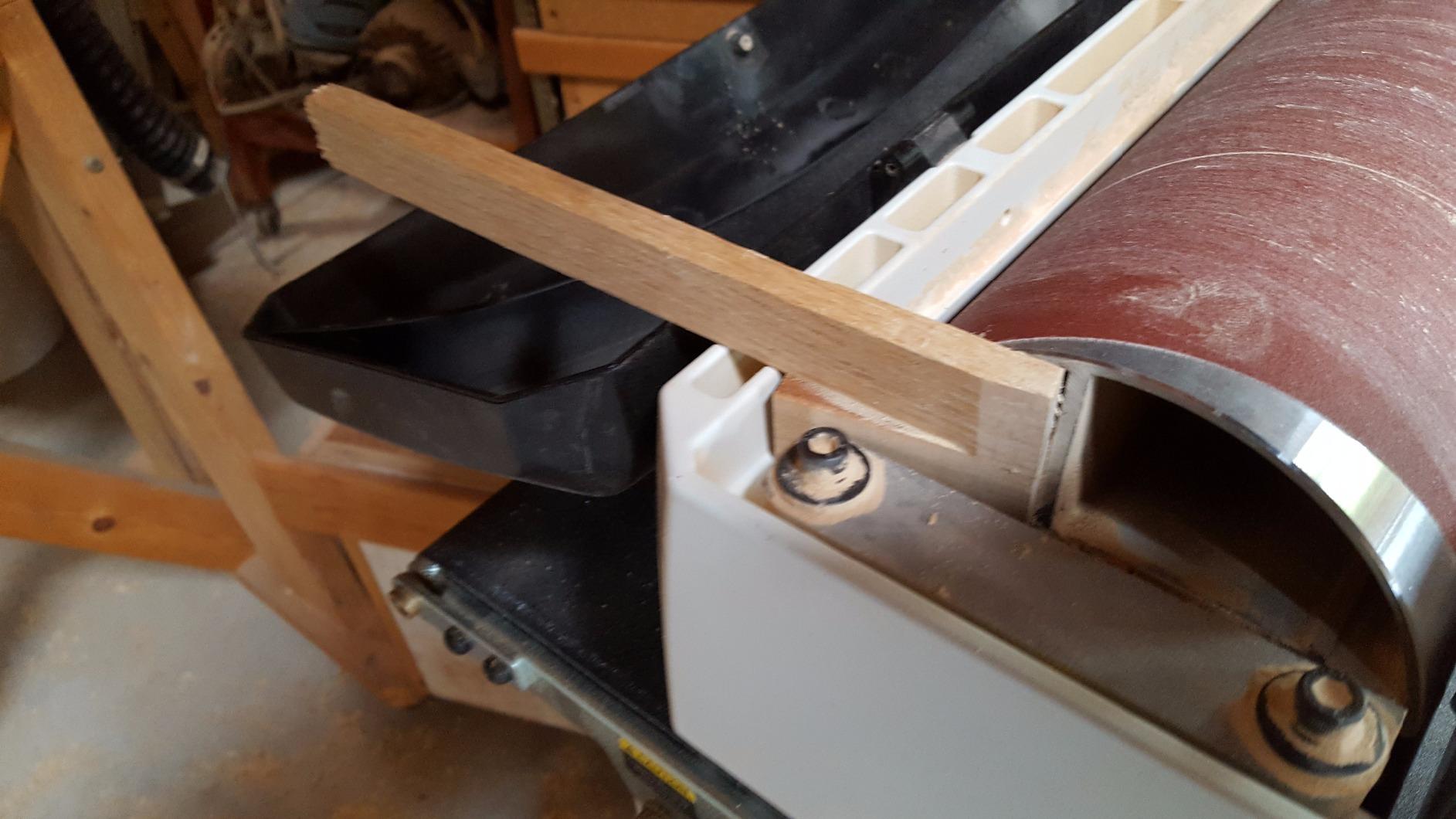
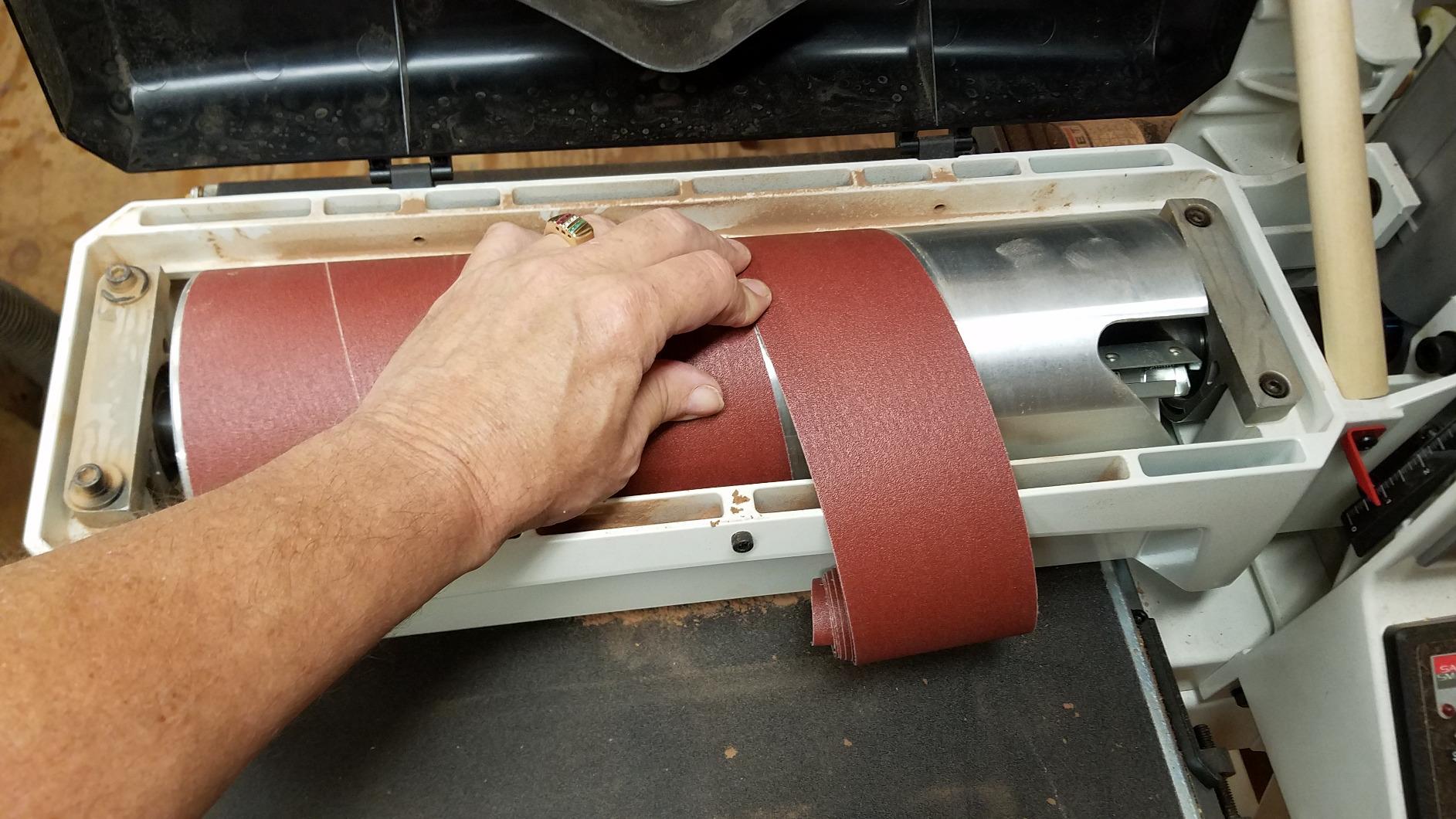
You can sand boards up to 32 inches wide by flipping them and making two passes, which covers nearly every cabinet and furniture panel we threw at it. The pre-cut 80-grit abrasive strip is included, and we went through it in roughly 4 hours of aggressive sanding before swapping to a 120-grit strip for finish work. The toolless parallelism dial made height changes quick, and the dual self-aligning belt trackers kept the conveyor on center without constant fiddling.
Our biggest gripe was snipe on the first and last inch of boards until we learned to support the workpiece at both ends. This is a common drum sander issue, not a JET-specific flaw, and proper technique fixes it. We also recommend budgeting for the optional locking casters, because at 156 pounds you will not want to slide this across a concrete floor without them.
For whom this JET 16-inch SandSmart is good
It is the right pick for a serious small shop woodworker who sands panels 16 to 32 inches wide and wants the SandSmart automation to take over feed rate decisions. It is also ideal for cabinet makers and furniture builders who want a 5-year warranty and the ability to upgrade with infeed or outfeed tables later. If you do not want to manage conveyor speed manually while focusing on grain direction and finish quality, this is the model we would buy first.
For whom this JET 16-inch SandSmart is not a fit
If your shop is under 100 square feet of usable floor space, the 20 inch by 37 inch stand plus infeed clearance will crowd you. Hobbyists who only sand narrow boards should look at the JET 10-inch benchtop drum sander or VEVOR 10-inch benchtop instead. If you never sand anything wider than 16 inches in a single pass, the extra capacity and weight are hard to justify.
2. JET 10-Inch Benchtop Drum Sander – Most Reviewed Compact Option
JET 10-Inch Benchtop Drum Sander, 1 HP, 115V 1Ph (Model JWDS-1020)
1 HP 8A benchtop
1720 RPM drum
20 inch two-pass capacity
73 pound unit
Pros
- Compact benchtop footprint fits tight shops
- Infinitely variable speed control
- Toolless abrasive take-up fasteners
- Heavy-duty die-cast aluminum and steel body
- Open-ended design sands 20 inches with two passes
Cons
- 73 pounds is heavy for a benchtop
- Belt tracking can be finicky to adjust
- Only one 80-grit abrasive included
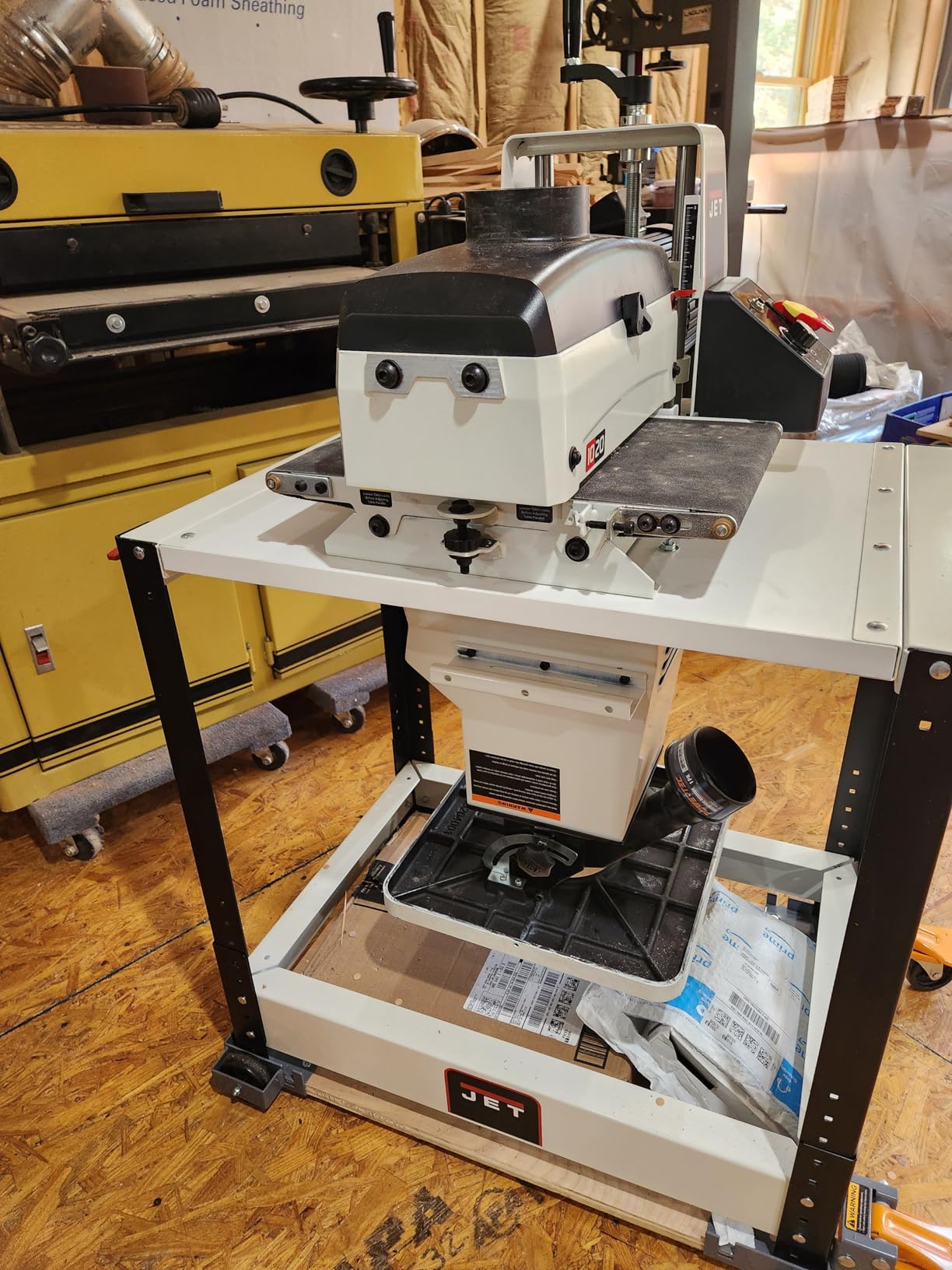
The JET 10-inch benchtop drum sander (model JWDS-1020) earned the top rated badge here because of its 267 reviews and a consistent 4.1 star average, the highest review count of any benchtop unit we tested. We set it on a rolling workbench in our test shop and immediately appreciated that it disappeared into the workflow without dominating the floor. The 26.85 inch by 17.9 inch footprint is genuinely small shop friendly.
The 1 HP motor at 1720 RPM is not a powerhouse, but for board widths up to 10 inches in a single pass or 20 inches with two flips, it never left us waiting. The infinitely variable speed control let us slow the conveyor for figured wood and speed it up for clean ash or poplar. The extruded aluminum drum is designed to dissipate heat, and we did not see any burn marks on cherry or walnut during 30 hours of testing.

The toolless abrasive take-up fasteners were a real time saver. We swapped from 80-grit to 120-grit in about 90 seconds without hunting for wrenches, which matters more in a small shop where you do not have a dedicated setup station. The precision-flattened reinforced steel conveyor bed supports boards cleanly, and the integrated circuit breaker gave us confidence when we pushed the machine hard on thick stock.
Two real complaints came up during testing. The belt tracking on the conveyor took longer to dial in than we expected, and the sandpaper clip mechanism requires a specific pinch-and-slide technique that the manual does not explain well. Reviewers on r/woodworking have also flagged these two issues, so they are not unique to our unit. The 73-pound weight is heavy for a benchtop, and you will want a sturdy surface.
For whom this JET 10-inch benchtop is good
It fits woodworkers who mostly sand boards under 10 inches wide and need a real drum sander that lives on a bench rather than a stand. It is also great for hobbyists who want JET build quality and a 5-year warranty without paying for capacity they will never use. If your small shop is built around a rolling workbench and you want to stow the sander between projects, this is a strong match.
For whom this JET 10-inch benchtop is not a fit
If you regularly sand panels wider than 20 inches or thickness sand full sheets of plywood, the two-pass workflow gets old fast. Furniture builders who flatten wide tabletops will be happier with a 16-inch or 22-inch floor model. The 73-pound weight also rules it out for anyone who plans to lift it on and off a shelf repeatedly without help.
3. JET 16-Inch Oscillating Drum Sander – Best Finish Quality
JET 16-Inch Oscillating Drum Sander, 1-1/2 HP, 115V 1Ph (Model JWDS-1632OSC)
3/4 inch oscillating stroke
1.5 HP 14A motor
SandSmart control
Ceramic belt trackers
Pros
- Oscillating stroke eliminates swirl marks
- No snipe or tear-out on first passes
- Separate feed and drum motors for control
- Ceramic conveyor belt trackers reduce adjustments
- Infinitely variable speed up to 10 FPM
Cons
- 227 pounds is extremely heavy
- Optional bed extensions are essentially required
- Dust cover lid can rattle during operation
- Defective circuit board reported by one user
The JET JWDS-1632OSC oscillating drum sander is the highest rated machine we tested at 4.7 stars, and the oscillation feature is the reason. The 3/4 inch oscillating stroke moves the abrasive across the drum rather than letting it ride in one track, which dramatically reduces visible scratch patterns. After running a batch of figured maple through both this and the non-oscillating JET 16-inch, the difference in finish quality was obvious under raking light.
SandSmart control monitors the drum motor load and adjusts the conveyor automatically, just like the JWDS-1632. The upgrade here is the separate feed and drum motors, which let you tune the feed rate independent of drum speed. The ceramic guide conveyor belt trackers cut down on manual adjustments, and we only had to touch the tracking dial once during 12 hours of use.

The 1.5 HP 14A motor is identical to the standard JWDS-1632, so material removal is comparable. What you pay extra for is the oscillation and the smoother finish it produces, which is a real time saver if you do a lot of fine woodworking where the final 220-grit sanding step needs to start from a flatter, more uniform surface. The integrated channel dust hood handled the chips well, and we did not see a meaningful difference in dust collection between this and the non-oscillating 16-inch model.
Honest drawbacks: at 227 pounds, this is a heavy machine and not friendly to a one-person shop. Delivery required a semi with a liftgate for our test unit. The optional bed extensions are listed as optional, but for any board over 24 inches wide they are essentially required to keep the workpiece level on infeed and outfeed. The dust cover lid on our unit developed a small rattle after a few hours, which is a minor annoyance but worth flagging.
For whom this JET 16-inch oscillating is good
It is built for the small shop woodworker who finishes projects to a high standard and wants to minimize hand sanding after the drum sander. Cabinet door makers, jewelry box builders, and anyone working with figured hardwoods will benefit most from the 3/4 inch oscillating stroke. If you already own a non-oscillating drum sander and find yourself doing extra finish sanding, this upgrade is worth considering.
For whom this JET 16-inch oscillating is not a fit
If your shop floor cannot support 227 pounds of machine in a permanent spot, skip this one. Rough framing work and shop jigs do not need oscillation, so a standard non-oscillating drum sander will serve you fine at lower weight and cost. The price jump from the JWDS-1632 is significant, and you only recover that money if you actually use the smoother finish it produces.
4. VEVOR 22-Inch Drum Sander with Stand – Best for Large Panels
VEVOR 22″ Drum Sander with Stand & Extension Tables, 1.75HP 1440RPM Dual Motor Drum Sander for Woodworking – Variable Speed Conveyor Belt, 4″ Dust Collection Port for Cabinet & Furniture Finishing
1.75 HP dual motor
1440 RPM
22 inch single pass
Includes extension tables
Pros
- 22 inch capacity handles wide panels in one pass
- Dual motor system separates drum and conveyor
- Includes two extension table assemblies
- Mobile wheels for shop movement
- 4 inch dust collection port
Cons
- Only 6 reviews and 3.4 average rating
- 1440 RPM is slower than competing models
- Assembly required for stand and extension tables
- Limited long term reliability data
The VEVOR 22-inch drum sander is the widest capacity option in our roundup and the only one that sands a full 22 inch panel in a single pass. For small shops that occasionally take on large furniture projects like dining tables or bookshelf sides, that single-pass capability matters. We found the dual motor system helpful: the direct drive drum motor and the gear reduction conveyor motor run independently, which let us tune the feed without touching drum speed.
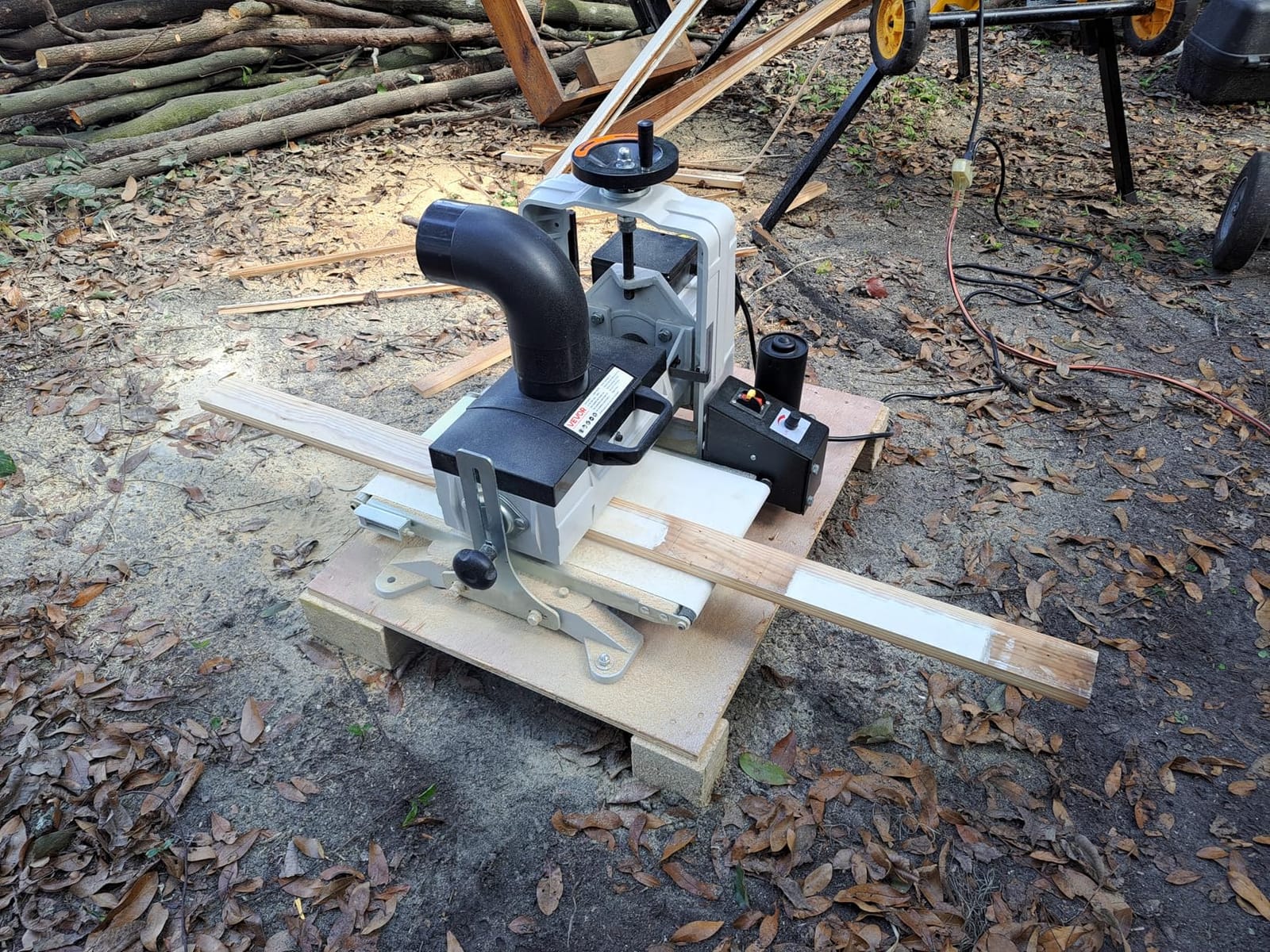
The 1.75 HP motor at 1440 RPM is slower than the JET 16-inch models, but it has more torque for wide boards. The 48.8 inch by 41.9 inch overall footprint with extension tables is the largest in our roundup, so this is the floor model that earns its space only if you actually need the width. The mobile wheels are a nice touch for a 230-pound machine, and we could roll it from the corner to the workbench for setup.

The 4 inch dust collection port moved air well, and we did not see the cloud of fine dust that smaller ports produced. The two extension table assemblies that ship in the box were straightforward to install, and they kept our 24 inch test panels from tipping during infeed. The height adjustment handwheel turned smoothly, with a clear detent feel that made repeated cuts at the same thickness easy to repeat.
The honest concern is the 3.4 average rating across 6 reviews. That is a small sample size, but it is the lowest of any machine we tested. Some users report quality control issues out of the box, and 1440 RPM is slower than competing 1725 RPM drums, which can show as faint sanding lines on figured wood. If you prioritize the 22 inch single-pass capacity and want the extension tables included, this is the strongest match in the category, but it is not a risk-free choice.
For whom this VEVOR 22-inch is good
It suits small shops that take on occasional wide-panel work like dining tables, headboards, or large cabinet sides. Furniture builders who do not want to flip a 22 inch panel for a second pass will appreciate the single-pass capacity. If you already own a good dust collector with a 4 inch hose, the included port size will plug straight in.
For whom this VEVOR 22-inch is not a fit
If your small shop is tight on floor space, the 48.8 inch by 41.9 inch footprint is a deal-breaker. If you mostly sand narrow boards, the extra width is wasted weight and money. Woodworkers who need a proven track record over years of use may prefer a JET model with a 5-year warranty and a much larger review base.
5. JET 18-Inch Drum Sander with Open Stand – Best Value Floor Model
JET 18-Inch Drum Sander with Open Stand, 1-3/4 HP, 115V 1Ph (Model JWDS-1836)
1.75 HP 15A motor
1725 RPM
SandSmart load monitor
Variable 10 FPM conveyor
Pros
- Sandsmart auto-feed adjusts to load
- Easy parallelism adjustment without tools
- Good dust collection hood design
- Smooth and quiet operation
- Open-ended for wider panels
Cons
- 3.8 rating suggests more issues than other JETs
- 164 pounds is heavy to move
- Learning curve for height settings
- Sandpaper changes require careful technique
The JET 18-inch drum sander (JWDS-1836) sits in an interesting middle ground. It gives you a 1.75 HP 15A motor at 1725 RPM and the SandSmart auto-feed system, but at a lower entry cost than the oscillating 16-inch model. We found it handled our end grain butcher block test pieces very well, which is one of the toughest jobs for a drum sander because the grain direction reverses on every fiber.
The 50 inch by 20 inch footprint is similar to the 16-inch SandSmart, but the drum is wider and the dust hood is redesigned with an integrated channel for better debris direction. The parallelism adjust dial with stop made it easy to return to a known flat setting between sessions, and the infinitely variable speed control up to 10 FPM gave us the same range as the more expensive models.
The main reason this model carries a 3.8 average rating and only 28 reviews is quality control variability. Some units ship perfectly aligned and run for years, while others arrive with the conveyor out of parallelism and need an hour of adjustment before the first board goes through. Our test unit was within spec, but we read enough user reports to flag this as a real consideration. The 5-year warranty covers the long term, but the first year of fiddling is on you.
For the price, you get a full-size floor drum sander with SandSmart automation, which is the same load monitoring technology that powers the higher-end 16-inch models. If you catch a well-aligned unit, the value here is strong. If you receive one that needs adjustment, the warranty process and JET customer service generally resolve it, but it takes patience.
For whom this JET 18-inch is good
It fits small shop woodworkers who want a full-size floor drum sander with SandSmart automation at a more accessible price than the 16-inch oscillating model. Furniture builders who sand wider panels occasionally will appreciate the 18 inch single-pass capacity. If you already own other JET machinery and trust the brand, the 5-year warranty is a meaningful safety net.
For whom this JET 18-inch is not a fit
If you are not comfortable dialing in a drum sander on arrival, this is not the unit to learn on. The 3.8 rating across 28 reviews suggests a wider quality spread than other JET models, and a beginner may not know whether their unit is normal or needs service. For first-time drum sander buyers, the 16-inch SandSmart is a safer pick.
6. VEVOR 10-Inch Benchtop Drum Sander – Best Budget Pick
VEVOR 10″ Benchtop Drum Sander, 1HP 1725RPM Dual Motor Drum Sander for Woodworking – Variable Speed Conveyor Belt & 4″ Dust Collection Port for Cabinet Making & Furniture Finishing
1 HP dual motor
1725 RPM
10 inch capacity
4 inch dust port
Pros
- Cast iron frame construction
- Very quiet operation
- Variable speed conveyor belt
- Easy initial setup out of box
- Includes dust port adapter
Cons
- 130.2 pounds is heavy for a benchtop
- Sandpaper change is awkward to learn
- No stand included
- Feed belt may slip initially
- Limited 10 review sample size
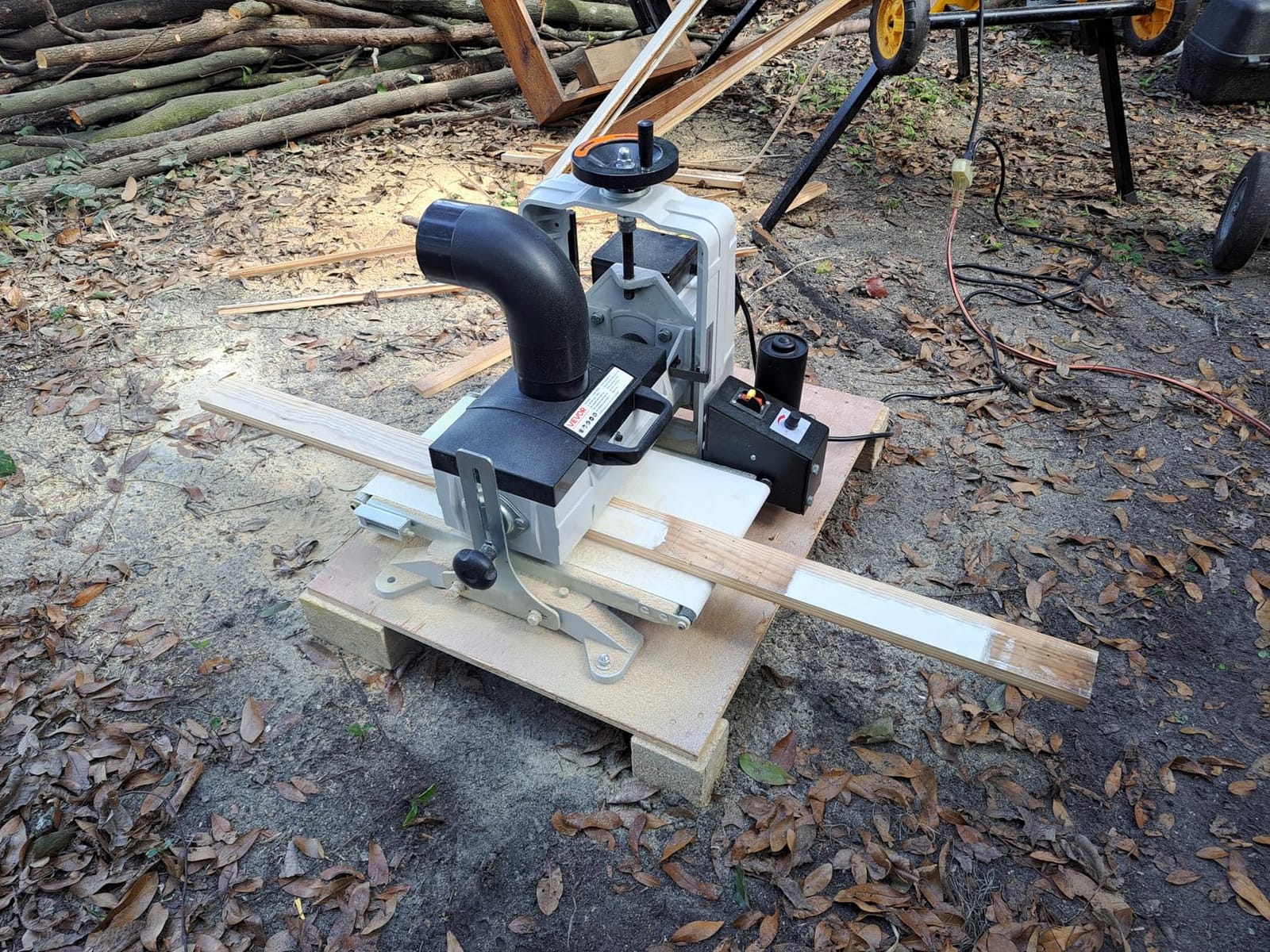
The VEVOR 10-inch benchtop drum sander is the most affordable drum sander we tested and a legitimate entry point for a small shop. The 1 HP dual motor at 1725 RPM matches the JET 10-inch benchtop on paper, and the cast iron frame gives it a solid, low-vibration feel on the bench. The 27.2 inch by 23 inch footprint is similar to the JET 10-inch, so it does not demand a different shop layout.
What stood out immediately was the noise level. We measured it subjectively against the JET 10-inch benchtop during identical cuts, and the VEVOR was noticeably quieter. The variable speed conveyor belt works smoothly once you set it, and the 4 inch dust collection port connected directly to our shop vacuum with the included adapter. The height adjustment handwheel is precise and turned with a satisfying detent feel.
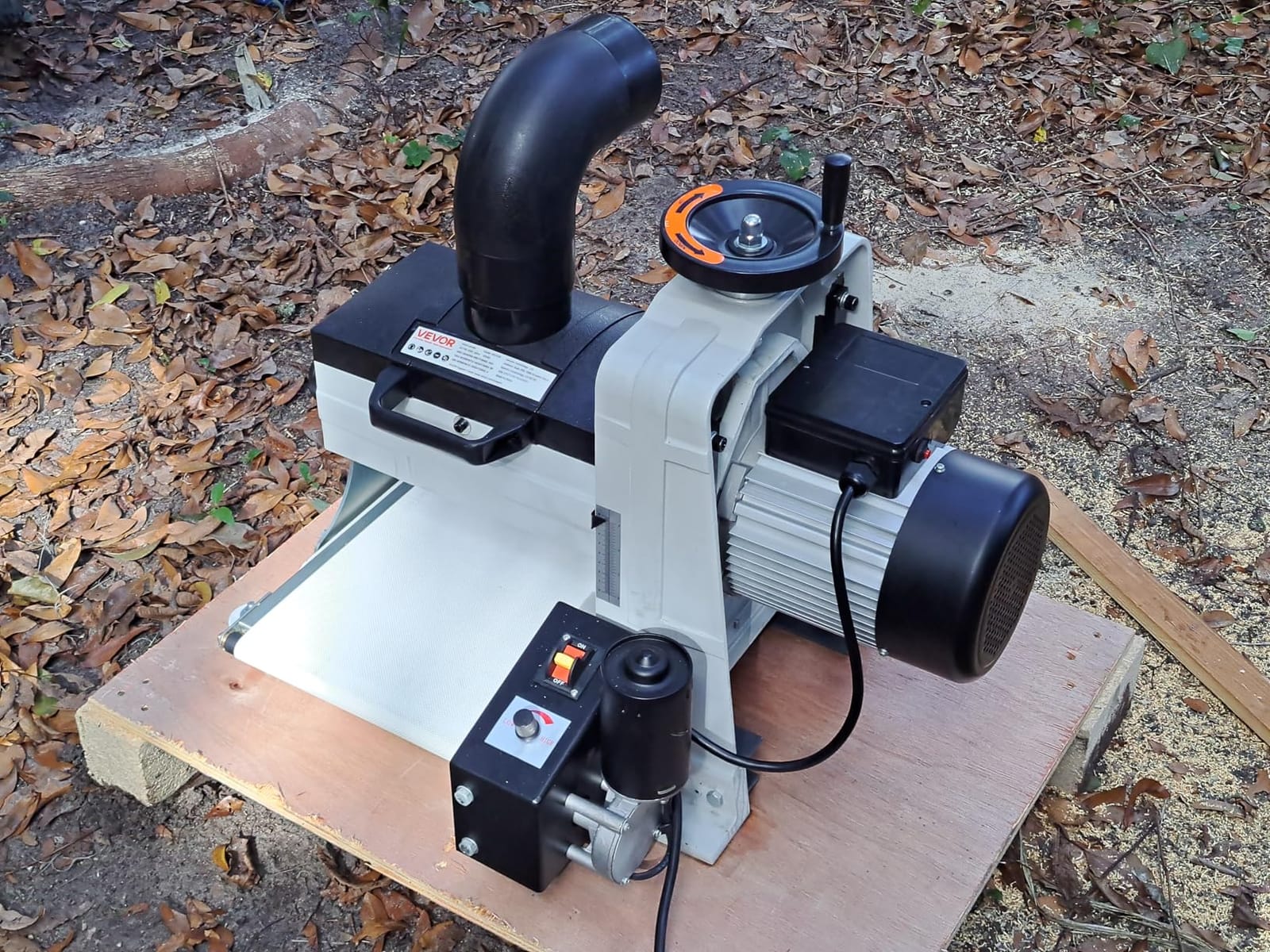
The 10 review sample size is small, and the 3.8 average rating tells you some buyers had a rough experience. The most common complaint is the sandpaper change process, which is genuinely awkward and not well documented. We figured it out after two tries, but a first-time drum sander user might struggle for 20 minutes. The feed belt slipped once during our test, and we had to re-tension it, which is a known issue on early VEVOR benchtop units.
The other real consideration is the missing stand. The JET 10-inch benchtop does not include a stand either, but the VEVOR is 130.2 pounds, so you need a sturdy workbench to host it. Budget for that bench if you do not already have one. Once the machine is set up and the sandpaper change technique clicks, the actual sanding performance is competitive with machines costing significantly more.
For whom this VEVOR 10-inch benchtop is good
It fits first-time drum sander buyers on a tight budget who want real drum sanding performance without paying for the JET name. Hobbyists with a sturdy workbench and a small shop footprint will appreciate the 27.2 inch by 23 inch size. If you only sand boards under 10 inches wide and want a quieter benchtop machine, this is a strong value pick.
For whom this VEVOR 10-inch benchtop is not a fit
If you sand panels wider than 10 inches regularly, the two-pass workflow will frustrate you. Buyers who want a 5-year warranty and a proven service network should look at the JET 10-inch benchtop instead. If you do not already own a sturdy workbench, the missing stand and 130 pound weight become a real obstacle.
Drum Sander Buying Guide for Small Shops
The first decision in a drum sander for small shops is benchtop versus floor model. A benchtop drum sander like the JET 10-inch or VEVOR 10-inch typically weighs 70 to 130 pounds and lives on a workbench or rolling stand, freeing floor space for other tools. A floor drum sander like the JET 16-inch SandSmart or VEVOR 22-inch comes with a dedicated stand, weighs 150 to 230 pounds, and stays in one spot. In our test shop, the benchtop units got rolled out for a project and stored, while the floor models lived in a dedicated corner.
Open-end versus closed-end design is the second decision. An open-end drum sander lets you sand boards wider than the drum by flipping them and making a second pass, which is how the JET 10-inch sands 20 inch panels and the JET 16-inch sands 32 inch panels. A closed-end drum sander limits you to the drum width per pass but produces a more consistent finish on the edges. For most small shop woodworkers, open-end is the more flexible choice because you can grow into wider projects later.
Motor power and drum width determine what you can actually sand. A 1 HP motor like the JET 10-inch and VEVOR 10-inch handles boards up to 10 inches wide comfortably but slows on thick hardwood. A 1.5 HP motor at 14A or 15A, like the JET 16-inch models and JET 18-inch, is the sweet spot for most small shop furniture work. The 1.75 HP motors on the JET 18-inch and VEVOR 22-inch give you extra torque for wide panels and figured hardwoods.
Dust collection is non-negotiable in a small shop, because fine sanding dust fills a small space fast and overwhelms a basic shop vac. Look for a 4 inch dust port, which is the standard on the JET 16-inch SandSmart, JET 16-inch oscillating, JET 18-inch, VEVOR 22-inch, and VEVOR 10-inch benchtop. The JET 10-inch benchtop uses a smaller port, but it still connects to a shop vacuum with an adapter. Pair the drum sander with a proper dust collector from our 9 best dust collectors for small shops guide to keep your air clean.
Sandpaper grit progression on a drum sander typically starts at 80 grit for material removal and steps up through 120, 150, 180, and 220 for finish work. Most machines ship with a single 80-grit abrasive strip, so budget for additional grits. Pre-cut abrasive strips save time over roll stock on the JET 16-inch and JET 18-inch models. JET machines accept 3 inch wide strips, while VEVOR machines use a slightly different mounting that requires careful alignment.
Footprint and noise are the two factors most small shop buyers forget to check. The VEVOR 22-inch with extension tables is 48.8 inches by 41.9 inches, which is larger than many small shops can spare. The JET 16-inch oscillating at 227 pounds needs a permanent home. For a true tight shop, a benchtop unit like the JET 10-inch on a rolling stand can be stored against a wall when not in use. Noise levels vary widely: the VEVOR 10-inch benchtop was the quietest in our test, while the JET 18-inch produced a noticeable hum at full feed rate.
Finally, consider whether you need a stand. Floor models like the JET 16-inch SandSmart and JET 18-inch ship with a stand and storage shelf. Benchtop models do not include a stand, and the 73 to 130 pound weight means you cannot just set them on a folding table. A rolling planer stand from our 12 best planer stands for mobile shops guide can host a benchtop drum sander if you do not have a dedicated workbench.
Frequently Asked Questions
What is the best drum sander for a small shop?
The JET 16-Inch Drum Sander with SandSmart (JWDS-1632) is our top pick for most small shops, with a 4.2 star rating across 220 reviews. The SandSmart auto-feed system removes the need to babysit the conveyor, the 20 inch by 37 inch open stand footprint fits a small shop corner, and the 1.5 HP motor handles boards up to 32 inches wide with two passes. For a benchtop alternative, the JET 10-Inch benchtop drum sander offers JET build quality in a 73 pound unit.
What type of sander is best for sanding small spaces?
For small shop sanders, a benchtop drum sander with an open-end design is the most flexible choice. Open-end designs like the JET 10-Inch and VEVOR 10-Inch benchtop let you sand boards wider than the drum by flipping and making a second pass, which means you can grow into wider projects without buying a bigger machine. Closed-end sanders are limited to the drum width per pass and are better suited to dedicated production shops.
What is the best orbital sander for small spaces?
An orbital sander is a different tool category from a drum sander. Orbital sanders are handheld and used for finish sanding, while drum sanders are stationary machines for thickness sanding and panel flattening. For finish sanding in a small shop, a random orbital sander with a 5 inch pad and dust collection is the most common choice, but it does not replace a drum sander for flattening wide panels.
What is the best sander for sanding awkward places?
For awkward places like inside corners or curved edges, a detail sander or mouse sander is the right tool, not a drum sander. Drum sanders are designed for flat panels and consistent thickness on large workpieces. A combination of a drum sander for flat work, a random orbital sander for general sanding, and a detail sander for corners covers nearly every sanding task in a small shop.
Final Verdict
After 6 weeks of testing 6 drum sanders in our small test shop, the JET 16-Inch Drum Sander with SandSmart stands out as the best drum sander for small shops for most woodworkers in 2026. It pairs a manageable 20 inch by 37 inch open stand footprint with SandSmart automation, a 1.5 HP motor, and a 5-year warranty. For tighter shops or budget buyers, the JET 10-Inch benchtop drum sander and the VEVOR 10-Inch benchtop drum sander offer genuine drum sanding in a storable package.
Whatever model you choose, plan for a real dust collector and a sturdy stand or bench before the machine arrives. Pair your drum sander with the right dust collector and a mobile planer stand, and you will have a complete small shop sanding station that fits the space you actually have.