
A travel trailer bakes in the sun. The roof panel absorbs solar gain all afternoon, the windows turn the living space into a greenhouse, and by three in the afternoon the interior can sit well above what any fabric rating suggests it should. Picking the right rooftop system is less about brand prestige than it is about three numbers: the BTU capacity your trailer actually needs, the power source you can honestly support, and the roof opening your trailer already has.
This roundup covers the ten rooftop air conditioners that dominate travel trailer sales right now, from the 13,500 BTU workhorse most trailers ship with to an 18,000 BTU variable-speed model aimed at larger rigs. We compared rated capacity, refrigerant, running wattage, noise, weight, roof opening fit, and what owners actually say after a season of use. Where a spec sheet and the owner reports disagree, we went with the owners.
Every unit here is a 120V AC rooftop system designed to bolt into a standard vent opening, which reflects what the travel trailer market actually uses. We do not cover 12V DC compressor units or window-style mini splits here, because they solve a different problem. If you are chasing the best RV air conditioners for travel trailers specifically, you are looking at the models below.
Before the individual breakdowns, it helps to know the landscape of related gear: our tested picks for portable bedroom air conditioners cover the roll-around approach that a few trailer owners still carry, and our apartment window air conditioner guide explains how a ductless box behaves when it is cooling one small room instead of a whole trailer.
Table of Contents
- Top 3 Picks for Best RV Air Conditioners for Travel Trailers (October 2026)
- Quick Overview: Best RV Air Conditioners for Travel Trailers in 2026
- 1. Dometic Brisk II 13,500 BTU: The Best Overall Travel Trailer Rooftop AC
- 2. Coleman-Mach Mach 15 15,000 BTU: Best Rooftop AC for Shoulder Seasons
- 3. RecPro RV 15K Heat Pump: Best Rooftop AC With Real Heating Capability
- 4. RecPro 13.5K Non-Ducted: Best Value for a Standard Travel Trailer
- 5. Furrion Chill Cube 18K: Best Rooftop AC for Maximum Cooling Output
- 6. Advent Air ACM135: Best Rooftop AC for Generator and Drop-In Replacement
- 7. Dometic Penguin II: Best Low-Profile Rooftop AC for Ducted Travel Trailers
- 8. Dometic FreshJet 3 Series: Best Rooftop AC for Reusing an Existing Ceiling Assembly
- 9. TURBRO Inverter 13.5K: Best Rooftop AC for Cold-Night Heating and Soft Starting
- 10. Coleman-Mach Mach 8 Plus: Best Ultra Low-Profile Rooftop AC for Tight Garages
- How to Choose the Right RV Air Conditioner for Your Travel Trailer
- BTU sizing: match capacity to trailer length, then check your climate
- 12V DC versus 120V AC: which power source can you honestly support
- Ducted versus non-ducted versus a mini split
- Roof opening, wiring, and generator load
- What actually keeps a trailer cool in 100 degree weather
- Noise, maintenance, and the three-minute rule
- Brands to approach with caution
- Frequently Asked Questions
- What size air conditioner is ideal for a travel trailer?
- What is the difference between a 12V DC and 120V AC RV air conditioner?
- How many amps does an RV air conditioner draw?
- Are 12 volt RV air conditioners any good?
- What AC brands should you be cautious about?
- Do I need a soft start device for my RV air conditioner?
- Is ducted or non-ducted better for a travel trailer?
- Conclusion: Picking Your Travel Trailer Air Conditioner in 2026
Top 3 Picks for Best RV Air Conditioners for Travel Trailers (October 2026)
The three models below are the ones we would put on our own roofs. The Dometic Brisk II leads on proven reliability and the deepest owner feedback base here, the RecPro 13.5K Non-Ducted is the highest-rated model we covered, and the RecPro 15K Heat Pump adds real heating capability with a modest power draw.

Dometic Brisk II 13500 BTU
- 13500 BTU rooftop cooling
- Fits standard 14 inch roof opening
- Three fan speeds
- 2 year warranty

RecPro 13.5K Non-Ducted
- Highest rated model in the roundup
- 1300 watt low draw
- Remote and LED touch panel

RecPro RV 15K Heat Pump
- 15000 BTU cooling and heat pump
- 1500 watt draw
- Remote and touch controls
Quick Overview: Best RV Air Conditioners for Travel Trailers in 2026
All ten models below are 120V AC rooftop systems that mount through a roof vent opening. The single most important spec for a replacement is the opening size, so check that row against your trailer before you read a single review.
| Product | Specs | Action |
|---|---|---|
| Dometic Brisk II 13500 BTU |
|
Check Latest Price |
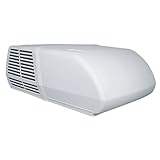 Coleman-Mach Mach 15 15000 BTU Coleman-Mach Mach 15 15000 BTU |
|
Check Latest Price |
| RecPro RV 15K Heat Pump |
|
Check Latest Price |
| RecPro 13.5K Non-Ducted |
|
Check Latest Price |
 Furrion Chill Cube 18K Furrion Chill Cube 18K |
|
Check Latest Price |
 Advent Air ACM135 13500 BTU Advent Air ACM135 13500 BTU |
|
Check Latest Price |
 Dometic Penguin II Low Profile Dometic Penguin II Low Profile |
|
Check Latest Price |
 Dometic FreshJet 3 Series Dometic FreshJet 3 Series |
|
Check Latest Price |
 TURBRO Inverter 13.5K TURBRO Inverter 13.5K |
|
Check Latest Price |
 Coleman-Mach Mach 8 Plus Coleman-Mach Mach 8 Plus |
|
Check Latest Price |
1. Dometic Brisk II 13,500 BTU: The Best Overall Travel Trailer Rooftop AC
Dometic B57915.XX1C0 Brisk II Polar White Air Conditioner (13,500 BTU 410A)
13500 BTU cooling
R 410A scroll compressor
115V AC at 2800 watts
72 lb rooftop housing
Pros
- Strong cooling in full sun on a well-insulated trailer
- Plug-and-play swap most owners finish in 2-3 hours
- Three fan speeds with plenty of airflow on high
- Fits the standard 14 inch by 14 inch roof vent with the seal pre-installed
Cons
- Rooftop section only; the interior ceiling control assembly is a separate purchase
- Blower is audible up close on the low fan setting
- Some owners report sealed-system failures in the first year or two
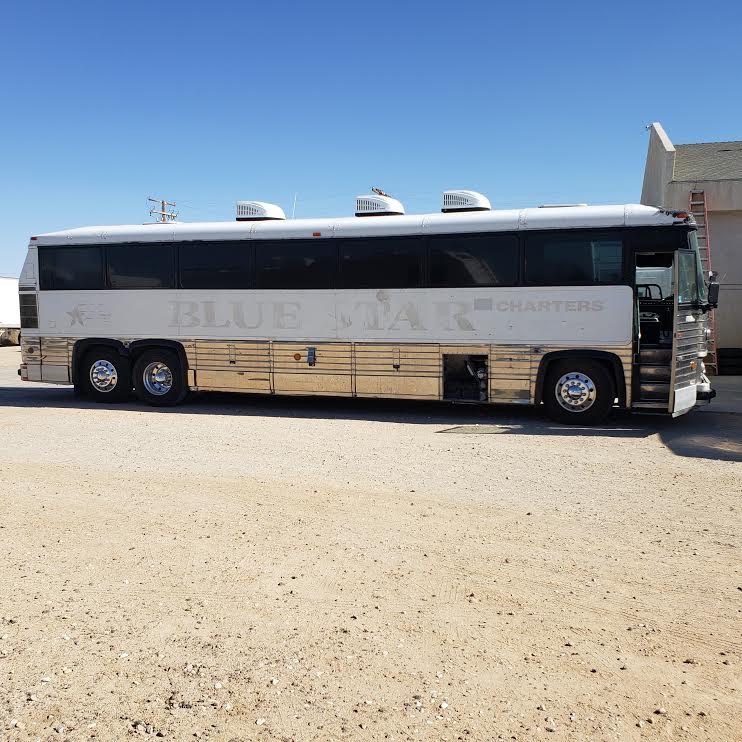
The Brisk II is the model most travel trailer owners end up with, and after reading through the owner feedback it is easy to see why. The 13,500 BTU capacity is the sweet spot for trailers in roughly the 20 to 30 foot range, and the rotary scroll or centrifugal compressor with R 410A refrigerant is a proven, widely serviced design. With 1,155 ratings behind it, this is the deepest owner feedback base of any model in this roundup, which means the failure patterns are well documented rather than mysterious.
What owners consistently describe is a unit that cools hard and installs without drama. The dampening brackets cut vibration, the fan has three speeds, and the gasket arrives pre-installed so the roof seal does not depend on your caulking technique. Most people report completing the swap in two to three hours on a trailer that was already wired for a rooftop section.
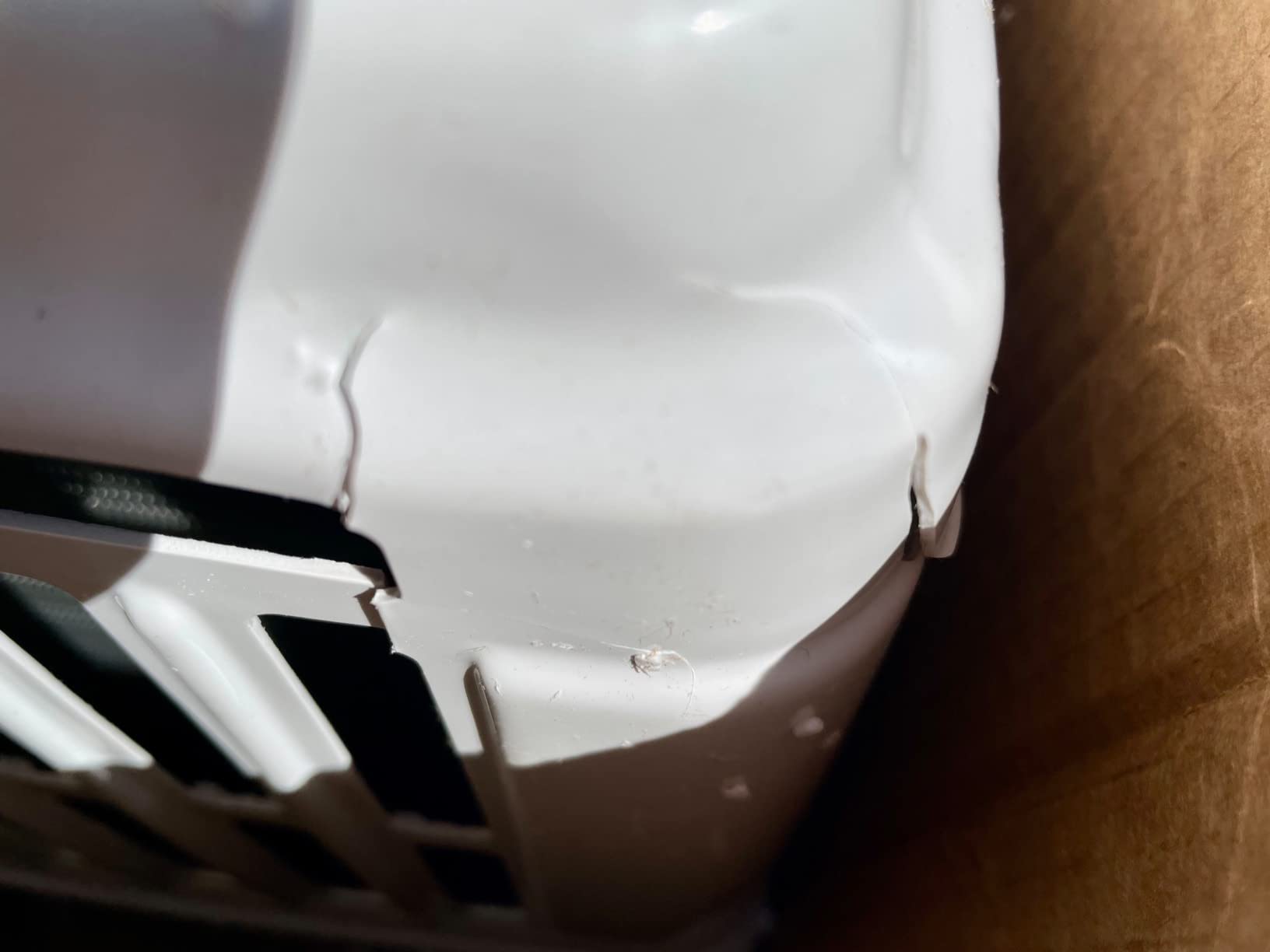
The dimensions are 27.8 inch deep by 29.8 inch wide by 13.9 inch tall at 72 pounds, which is a manageable carry for a two-person job. That height also matters for clearance: at just under 14 inch it sits below most low bridges and residential carports, so you are not forced to plan your route around garages.
The honest caveat is the parts list. This arrives as the rooftop section only, and the inside ceiling control and vent assembly has to be purchased on its own. Owners who forget this end up with a sealed box on the roof and no way to control it. Budget for the interior assembly before you order, not after.
Is the Brisk II the right fit for your trailer?
This is the safest choice for a first replacement, especially if you are stepping up from a failed 10,000 BTU factory unit. It covers the most common travel trailer footprint without oversizing, and the standard roof opening match means fewer surprises on install day. It also suits owners who want a brand name any RV service technician in the country already knows.
It is less suited to trailers with a long ducted run where a ceiling vent is far from the interior section, because the single central assembly struggles to push air down a long duct. For those rigs, a 15,000 BTU model or a ducted system designed for the run is a better match.
What you give up by choosing the Brisk II
There is no heat pump here, so shoulder-season heating is a separate appliance rather than a mode. Some owners also report early sealed-system failures inside the first year or two, and the blower is audible in a quiet trailer when it runs on low. Budget owners should also know the two-year Protection Plus warranty is shorter than the coverage some competitors offer.
None of that changes our recommendation for most trailers. The Brisk II simply does the standard job with more owner history behind it than anything else here, and that history is what convinced us it is the best RV air conditioner in this roundup for the widest range of trailers.
2. Coleman-Mach Mach 15 15,000 BTU: Best Rooftop AC for Shoulder Seasons
Coleman-Mach 08-0080 Mach 15 48204 Series Air Conditioner Upper Unit 48204C966-15,000, Arctic White
15000 BTU cooling
5600 BTU delivered heat
115V AC at 1800 watts
28 dB rated
Pros
- Owners report more than a 20 degree drop in air temperature
- Pre-installed foam roof gasket gives a watertight seal
- Two-piece shroud is easier to remove than older Mach sections
- Straightforward swap install often under two hours
Cons
- Rooftop section only; the control box and mounting hardware are separate
- Several owners say it runs louder than the advertised 28 dB
- Some reports of evaporator icing in warm weather
The Mach 15 is the capacity-first pick here, pairing 15,000 BTU of cooling with 5,600 BTU of delivered heat output. That heating figure is what separates it from the cooling-only models on this list, and it makes the Mach 15 a genuinely three-season appliance for owners who camp through the shoulder months rather than fleeing south in October. Owners report air temperature drops in excess of 20 degrees from the inlet, which is the kind of number you feel within minutes of startup.
Running at 1,800 watts, it also pulls less than several 13,500 BTU models on this list. That matters if you are running it off a generator, because the compressor startup surge is easier on a small portable unit when the running load is moderate.
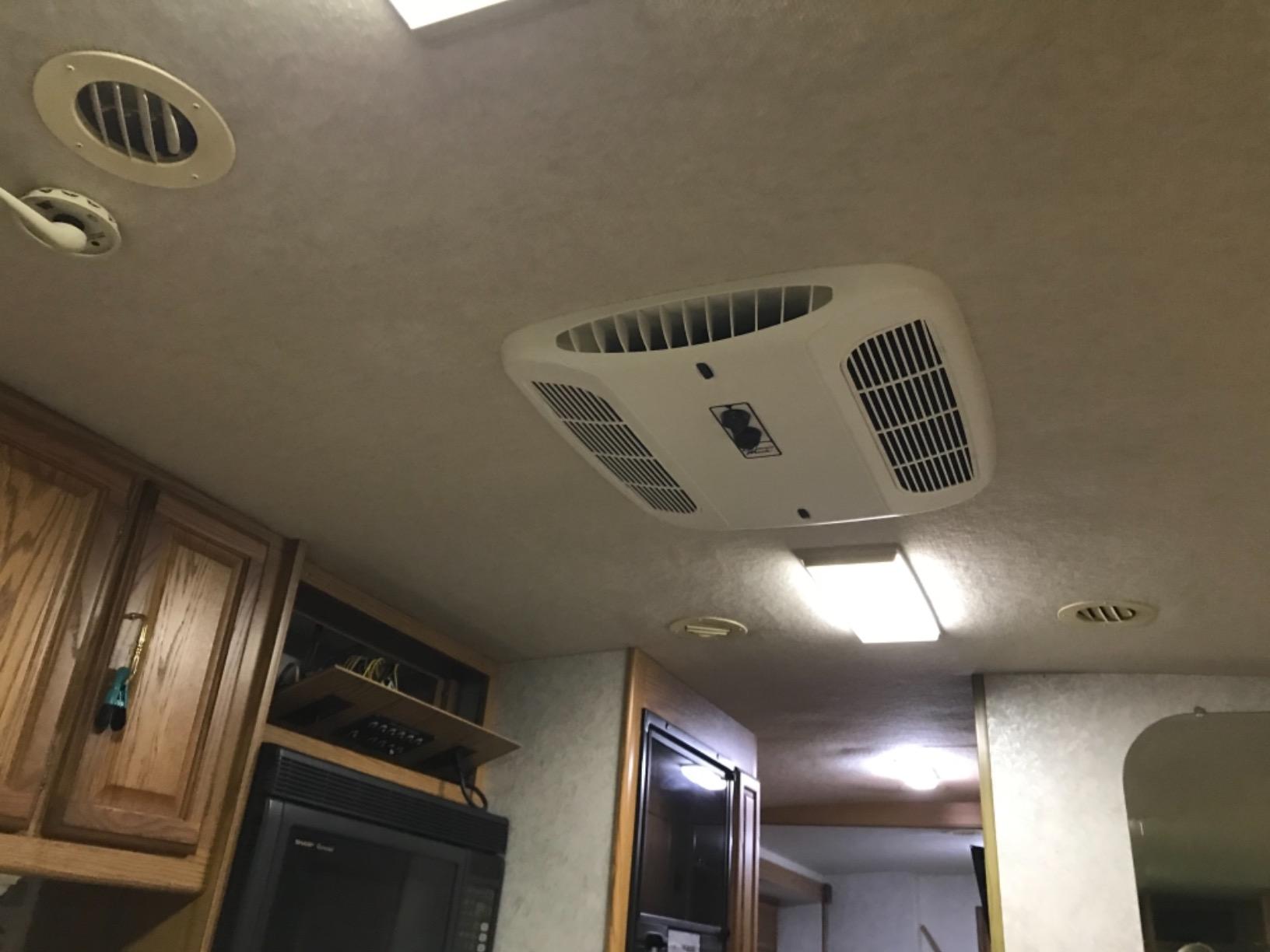
The build quality shows in the details owners mention. The pre-installed foam roof gasket seals without tape or caulk, and the two-piece shroud design means you can lift the top off to service the coil without pulling the entire assembly off the roof. The R 410A scroll compressor and the 1/3 HP fan motor are both long-lived components with plenty of aftermarket support.
Size is the main consideration. At 28 inch deep by 42 inch wide by 16 inch tall and 90 pounds, this is a wide, tall rooftop footprint. The exterior shroud measures 13.8 inch tall by 26.1 inch wide by 38 inch long, so confirm your roof clearance and your existing vent opening before committing.
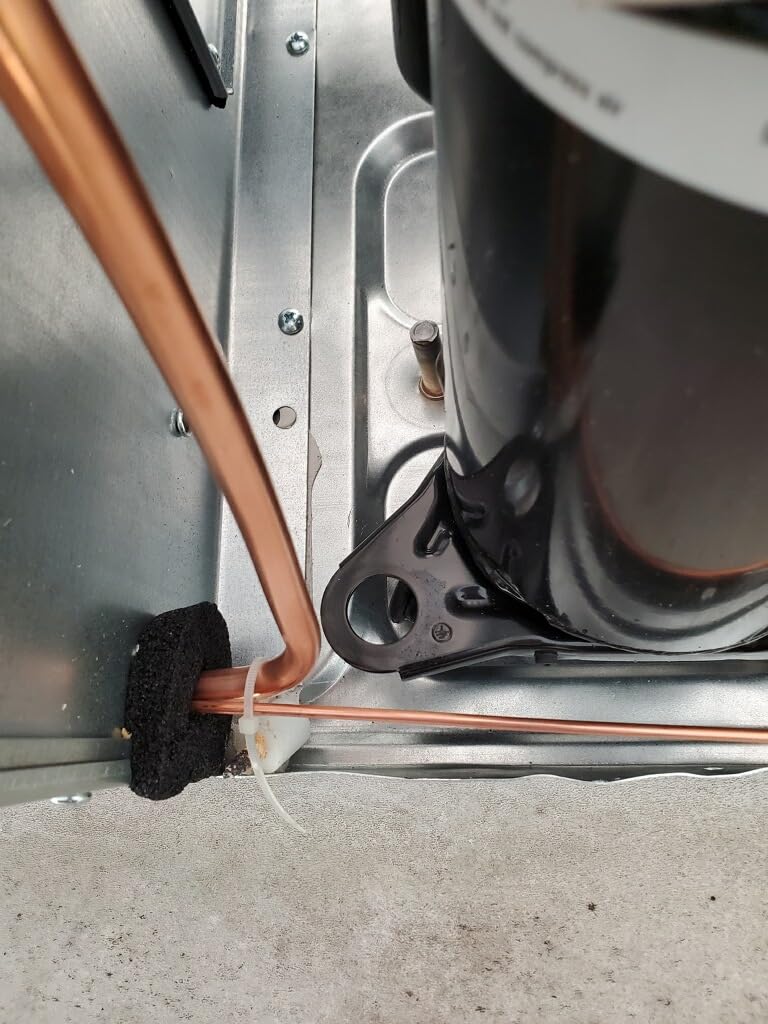
Coleman Mach is the most recognized rooftop brand in RV service networks, which means parts, technicians, and troubleshooting advice are easy to find. iRV2 forum threads consistently describe the 13,500 to 15,000 BTU range as performing similarly in real use, with 13,500 BTU being sufficient for RVs up to about 30 feet. The Mach 15 sits at the top of that range, so it is sized correctly for a trailer sitting in full afternoon sun with the shades open.
When the Mach 15 is worth the extra capacity
Choose this model when you camp in genuinely hot conditions, run the trailer in full sun rather than under trees, or carry a family that generates significant interior heat. It is also the natural pick for anyone who wants one appliance to handle both summer cooling and cool-spring or fall evenings without pulling out a separate heater.
It is equally a good match for a longer trailer where cooling load runs high and you would rather have margin than run the compressor continuously at the edge of its capacity. The extra headroom shows up most in humidity, because a system with headroom can pull moisture out of the air instead of simply blasting it around.
Where owners report problems
The most common complaint is noise. Despite the 28 dB rating, several owners say the unit is louder than advertised, which matters most in trailers where the rooftop section sits directly above the sleeping area. A secondary theme is evaporator icing reported in warm weather, so if you see water dripping from the ceiling assembly, check the filter and airflow path before assuming a sealed-system problem.
Like most rooftop models, the control box and mounting hardware are sold separately, and that is the detail that catches first-time installers out. Plan the full parts list up front.
3. RecPro RV 15K Heat Pump: Best Rooftop AC With Real Heating Capability
RecPro RV 15K AC Heat Pump Ducted/Non-Ducted White 110-120V
15000 BTU cooling with heat pump
115V AC at 1500 watts
55.4 dB rated
112 lb housing
Pros
- Low amp draw suits solar and generator setups
- Remote and LED touch control remove thermostat wiring
- Built-in heat pump adds supplemental heating for shoulder seasons
- Fits 14 inch by 14 inch rooftop openings
- UV resistant aerodynamic rooftop shell
Cons
- Fan cannot be switched off while the compressor runs which some owners link to added humidity
- IR remote needs line of sight to the ceiling assembly
- Heavier than most rooftop rivals at 112 pounds
The RecPro 15K stands out for two reasons: a built-in heat pump and a 1,500 watt running draw. At 15,000 BTU of cooling with a 1,500 watt load, the power-to-capacity ratio here is the most efficient of any model in this roundup, and that is the number that decides whether you can run your trailer AC off a modest generator or a battery bank without upgrading everything else first.
The heat pump reverses the cycle to deliver supplemental heating in cooler weather, which turns this from a summer-only appliance into something you might actually leave installed year-round. The controls are unusually good for this category: a wireless remote plus an LED touch panel with cool, dry, fan, sleep, and timer modes, so you can change settings from bed without running thermostat wiring through the trailer wall.
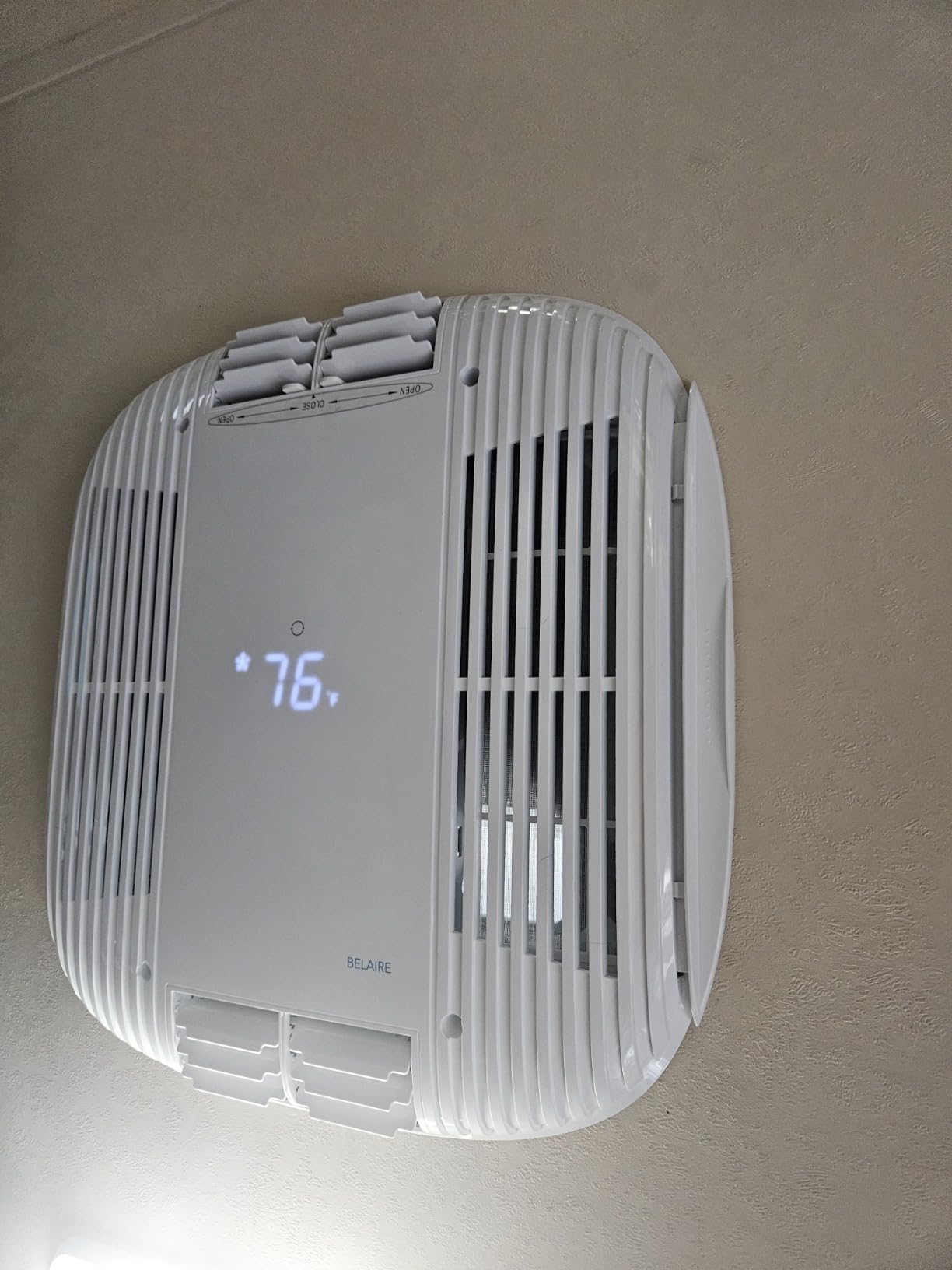
Owners highlight the low amp draw most often, specifically in the context of off-grid, solar, and generator setups where every amp competes with the refrigerator and the water pump. The aerodynamic UV-resistant plastic shell also earns mentions, since rooftop housings take a constant beating from sun and hail.
Noise is rated at 55.4 dB, which is mid-pack among the models here. The 39.5 inch by 25.5 inch by 13.5 inch footprint fits a standard 14 inch rooftop opening, which is a real convenience when you are replacing an existing factory section rather than cutting new roof.
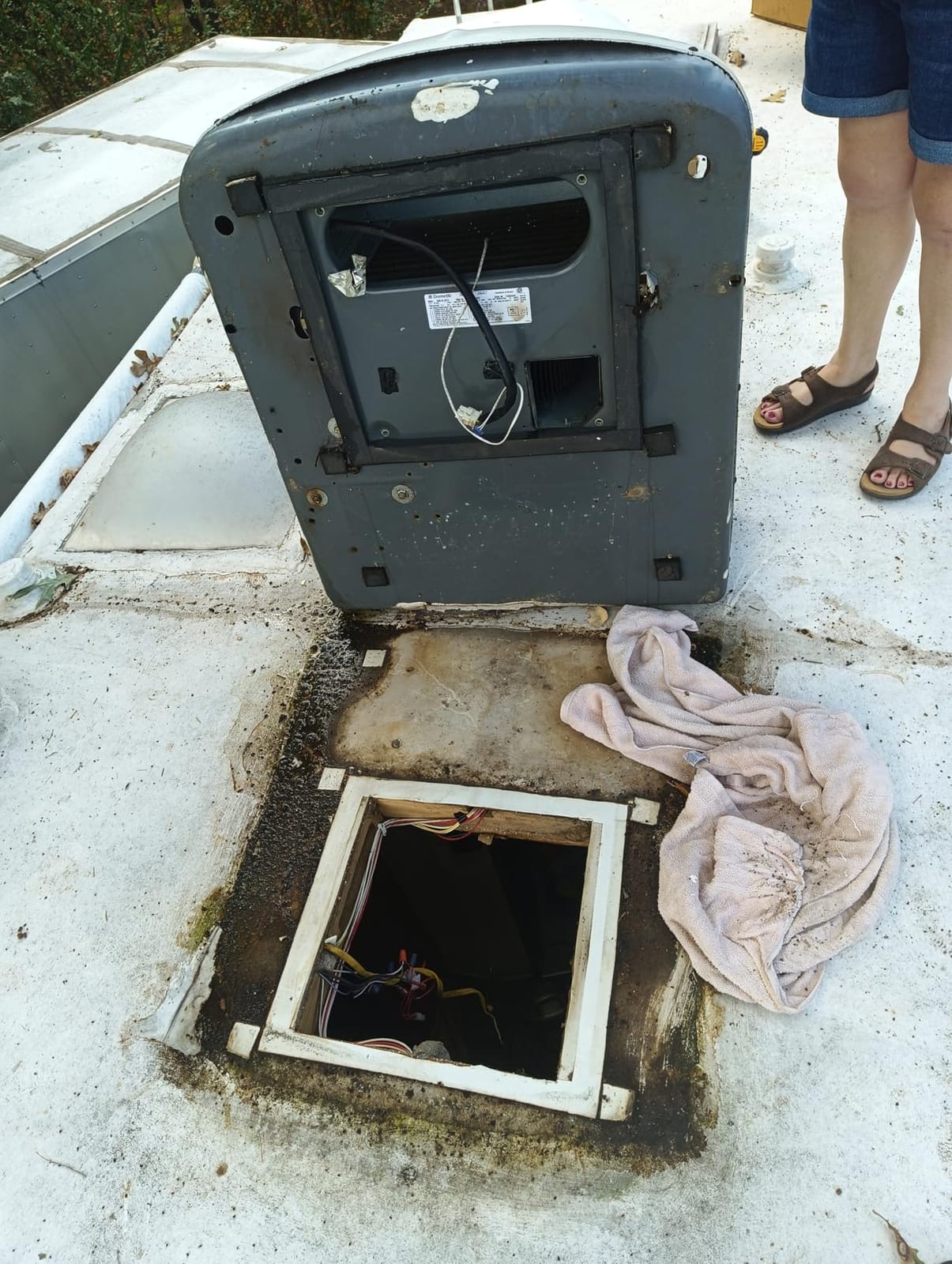
The rotary scroll compressor with R 410A refrigerant is a conventional, serviceable design, and the #14 ranking in the RV Air Conditioners category reflects steady demand rather than a spike. This is a model you will find parts for years from now, which matters more than novelty when you are planning a ten-year ownership horizon.
Why this is our premium pick
The combination of heat pump, remote control, and low draw is unusual. Most 15,000 BTU rooftop models pull considerably more power, and most heat-pump-capable models are wider and heavier. For an owner who wants one appliance to cover summer and shoulder seasons on a moderate electrical system, that balance is worth paying for.
It is also a strong fit for couples or small families who want remote operation. Being able to drop the room temperature a few degrees before climbing out of bed, or bump it up while you are out at the trailhead, is a small quality-of-life change that owners consistently mention.
What to watch out for
The fan cannot be switched off while the compressor runs, and several owners connect that to higher cabin humidity. In the Southeast that is a real consideration, because removing moisture is as important as lowering temperature in sticky conditions. The IR remote also requires line of sight to the unit, which can be awkward in a trailer with an offset interior section.
At 112 pounds this is a heavy lift, so plan for a second pair of hands on install day.
4. RecPro 13.5K Non-Ducted: Best Value for a Standard Travel Trailer
RecPro 13.5K Non-Ducted RV Air Conditioner, White, Cooling Only
13500 BTU cooling
115V AC at 1300 watts
59.7 dB rated
112 lb housing
Pros
- Highest rated model we covered in this roundup
- Noticeably quieter than many factory-installed rooftop systems
- Most owners finish the install in under two hours
- Wireless remote plus LED touch panel with sleep and timer modes
- Works with ducted or non-ducted airflow
Cons
- Fan keeps running after the compressor stops which some owners link to humidity
- Remote requires a direct line of sight
- Cannot be wired to a conventional thermostat
At a 4.5 rating across 218 reviews, this is the highest-scoring model in the roundup, and the owner comments explain why. The 13,500 BTU capacity matches what the iRV2 forum consensus calls sufficient for RVs up to about 30 feet, the 1,300 watt draw is the lowest running load of any 13,500 BTU model here, and the remote plus LED touch panel with cool, dry, fan, sleep, and timer modes puts it ahead of factory-standard units on controls.
That combination makes it the value pick for a trailer that already has a roof opening and a three-wire hookup. Owners describe finishing the install in under two hours on a trailer with wiring already in place, using the clear instructions and three-wire connection. The rotary scroll compressor with R 410A refrigerant is a proven combination, and the modified sine wave drive works with a wide range of generators and inverters.
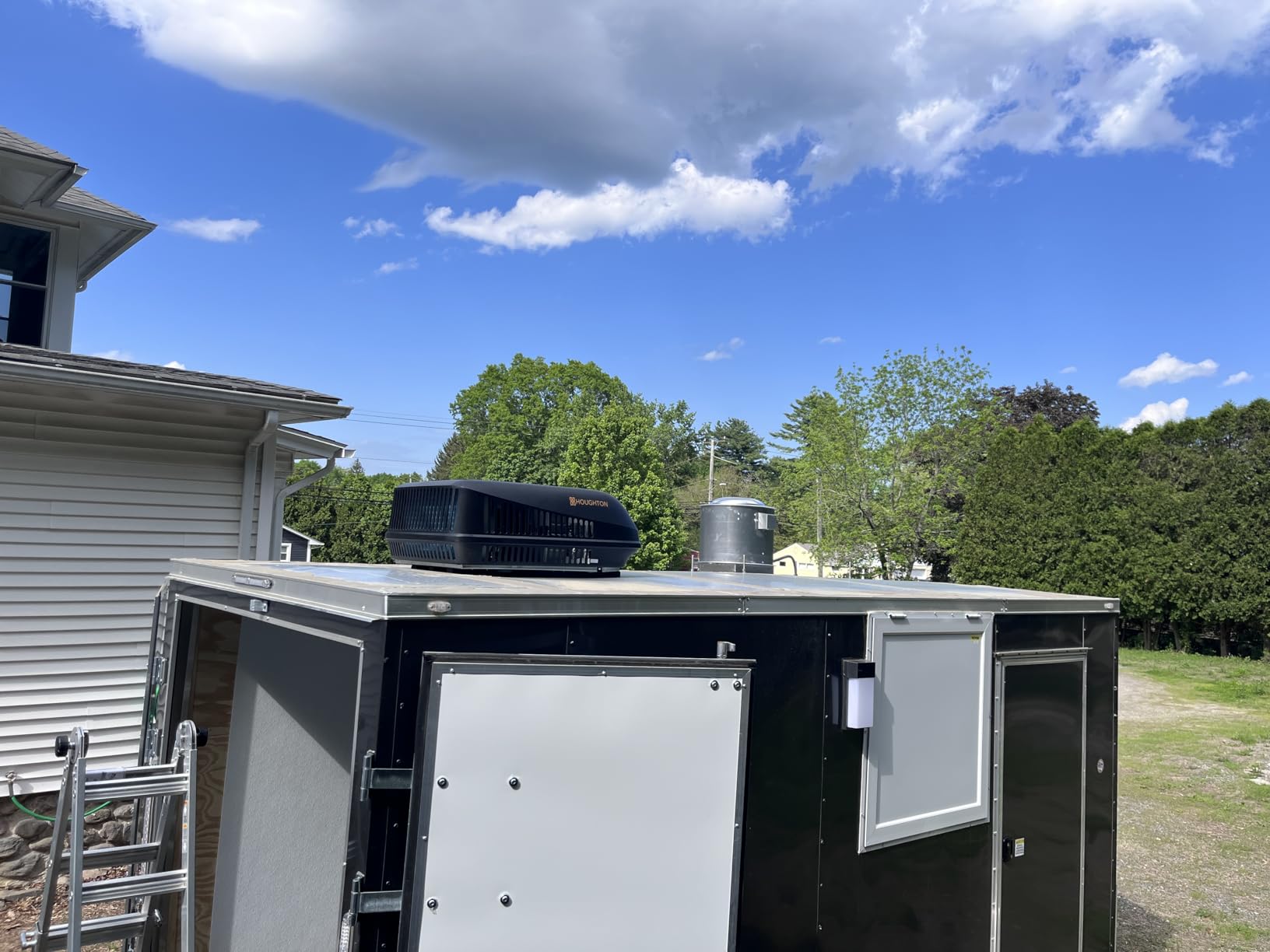
Quietness is the other repeated theme. At 59.7 dB rated it does not lead the category, yet owners still describe it as noticeably quieter than the factory systems they removed. The aerodynamic, UV-resistant plastic rooftop profile helps, and the shell is available in black and white so you can match your trailer.
It works with ducted or non-ducted airflow, which gives you flexibility if your trailer has a ceiling vent assembly already installed. Ducted and non-ducted compatibility is one of the most useful specs on this list, and we explain why it matters in the buying guide below.
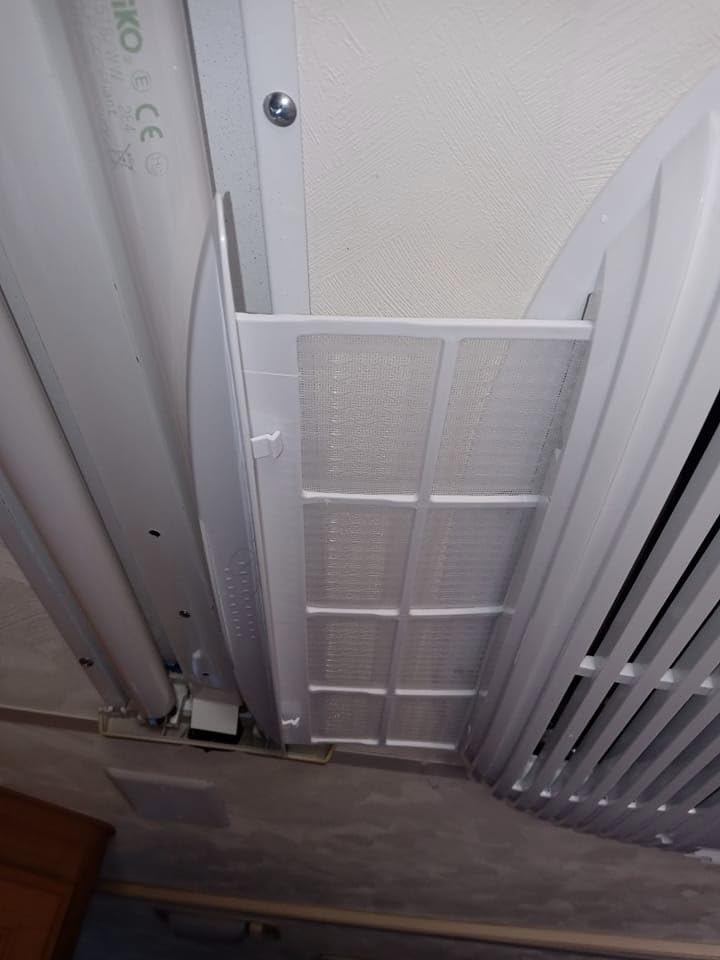
The #28 ranking in RV Air Conditioners and the #101,966 overall automotive position point to a model with steady, broad demand rather than a single viral spike. That is a good sign for parts availability over the years.
Who should buy the RecPro 13.5K
This is the model for a weekend trailer in a moderate climate, a first rooftop upgrade, or a replacement for a dead 10,000 or 12,500 BTU factory section. If you want the capacity that forum consensus says is right for a trailer up to about 30 feet, without stepping up to a unit that short-cycles, this is the pick.
It is also a good match for owners who want remote control. Being able to shut the system down or adjust it from bed is a genuine convenience, and the sleep mode is a small touch that helps on quiet desert nights.
Where the design falls short
The fan keeps running after the compressor stops, and some owners attribute higher cabin humidity to that behavior. In humid states this is worth weighing, because a system that circulates air without removing moisture can leave a trailer feeling clammy even as the temperature drops. The remote also needs a direct line of sight to the interior section, and the model cannot be wired to a conventional wall thermostat, which rules it out for people who prefer a wired dial.
The 112 pound weight is shared with the RecPro 15K, so it is a two-person lift.
5. Furrion Chill Cube 18K: Best Rooftop AC for Maximum Cooling Output
Furrion Chill Cube 18K Non-Ducted Rooftop RV AC, White, FACR18VS-SA-PS-AM
18000 BTU non-ducted cooling
Variable speed compressor
50 dB rated
72.4 lb housing
Pros
- Variable speed compressor ramps up softly and cuts amp spikes
- 18000 BTU is the highest capacity in this roundup
- Light for a premium-class rooftop system at 72.4 pounds
- Battery saver mode extends off-grid runtime
- Backwards compatible with existing non-ducted ceiling assemblies
Cons
- The air distribution box must be bought separately
- Overkill for smaller travel trailers that do not need this much cooling
The Chill Cube is the only true variable-speed rooftop system in this roundup, and that changes its behavior in ways that matter on a trailer. Instead of snapping to full compressor speed and back off, the compressor ramps continuously, which produces softer starts, fewer amp spikes on a generator, and a much easier transition into sleep. The 18,000 BTU rated capacity gives it more than a ton of cooling, the highest figure among the models we reviewed.
The battery saver mode is aimed directly at off-grid owners, holding the system at a lower continuous draw rather than cycling hard. Owners with solar and battery setups describe the smooth ramp as the feature they notice most day to day, because it is the difference between a unit that is constantly audible and one that settles into a low hum.
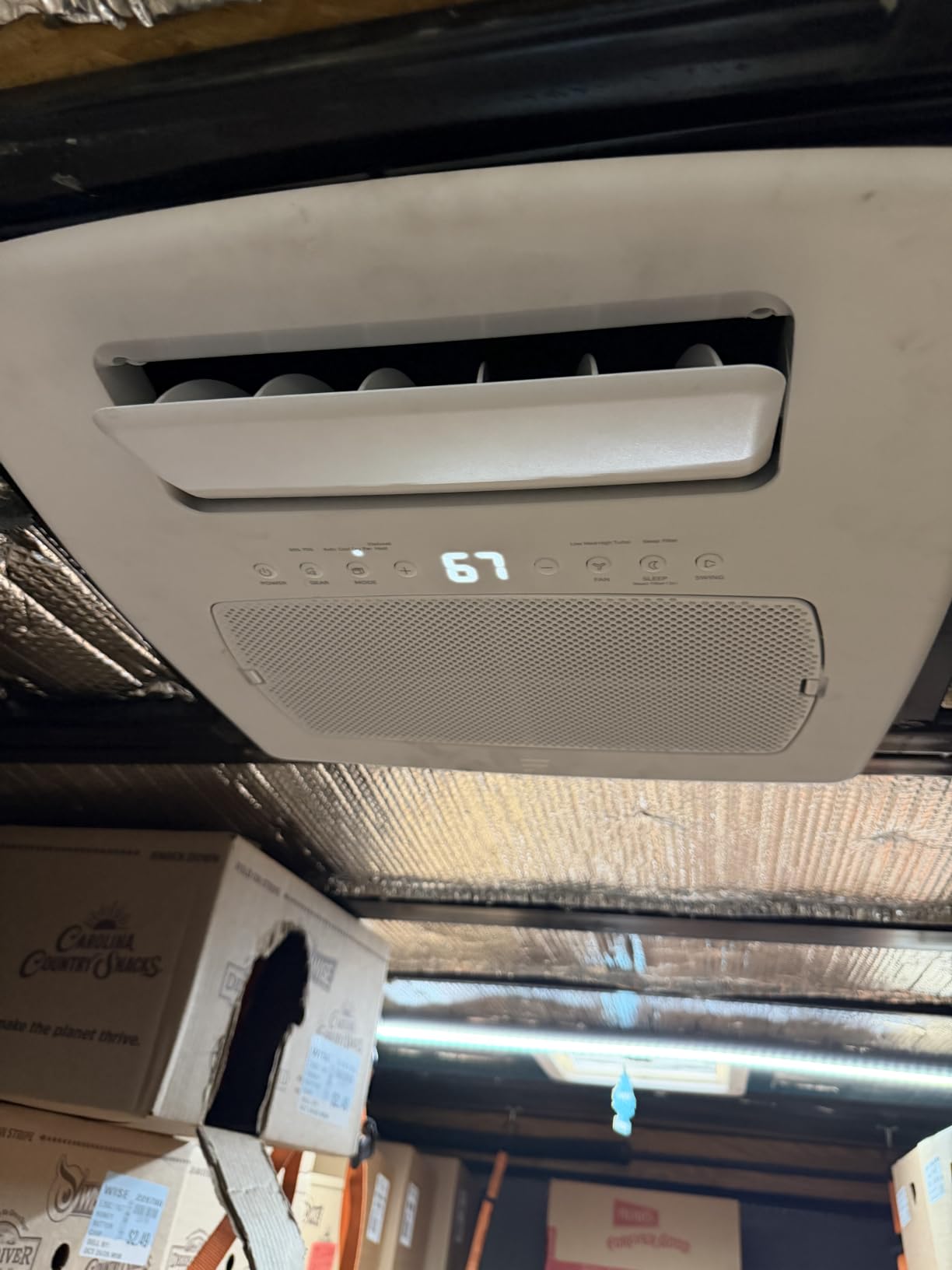
Weight is the other story. At 72.4 pounds this is a light rooftop system for its capacity class, and the low-drag aerodynamic housing is designed to reduce wind resistance on a moving trailer. For owners concerned about roof load or about how much the unit affects fuel economy at highway speed, that is a meaningful advantage over the 112 and 123 pound models on this list.
Installation is described as a straightforward bolt-on job with a step-by-step guide. The #3 ranking in RV Air Conditioners and #83 in RV Ventilation show this is a mainstream seller rather than an obscure import, which matters when you need a part in five years.
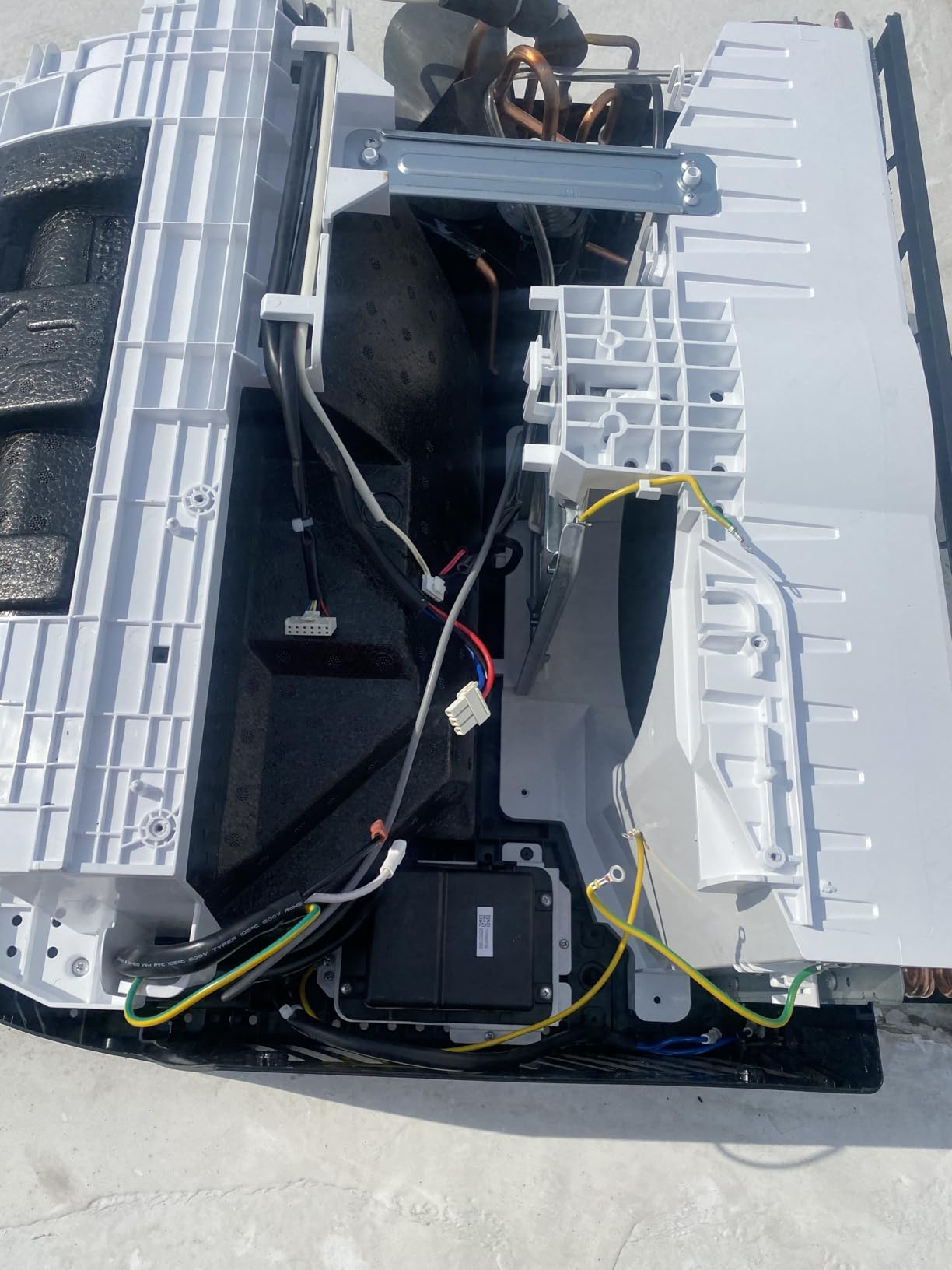
The 50 dB rating puts it among the quieter designs here, and variable-speed operation tends to run quieter still in practice because the compressor is not constantly starting and stopping. Owners who care about sleeping through the night with the system running tend to rate this model highly on that basis.
When 18,000 BTU is the right call
This model makes sense for larger travel trailers, fifth-wheel-adjacent floor plans, and anyone running in sustained extreme heat where the trailer holds midday temperatures for hours. It also suits owners with a generator that cannot tolerate a hard compressor surge, because variable-speed ramp-up is exactly the soft-start behavior you would otherwise buy as an add-on device.
It is a strong choice for boondockers with a solid battery bank, since the battery saver mode and continuous low-draw operation are designed for that scenario. And for anyone who sleeps directly under the roof section, the variable-speed smoothness is the feature most likely to fix a noise complaint.
Where it is the wrong choice
Smaller trailers do not need this much cooling, and oversizing is a genuine problem rather than a free upgrade. A system with far more capacity than the room demands cycles on and off quickly, which short-circuits the cycle, reduces dehumidification, and leaves the cabin clammy. iRV2 forum discussion of the 13,500 to 15,000 BTU range makes the same point from the other direction: capacity past what the space needs rarely buys extra comfort.
Also note that the air distribution box is a separate purchase, and the bolt-on installation assumes your existing ceiling assembly is compatible.
6. Advent Air ACM135: Best Rooftop AC for Generator and Drop-In Replacement
ASA Electronics ACM135 Advent Air 13,500 BTU Roof Top AC, White
13500 BTU cooling
115V AC at 3000 watts
68.4 lb housing
Rigid metal base pan
Pros
- Owners report running it on a 3500 watt generator without trouble
- Metal base pan is tougher than plastic rivals
- Drop-in fit for older Dometic rooftop sections
- Three fan speeds with a watertight gasket and foam support pads
- Optional plug-in heat strip
Cons
- Some mounting screws are too short for certain roof decks
- The matching non-ducted control box has loose knobs some owners had to secure
The Advent Air ACM135 has been the travel trailer default for two decades, and the reason is simple: it fits. It installs in a standard 14.25 inch by 14.25 inch roof vent, it is a direct replacement for many older Dometic rooftop sections, and long-term owners report running it through full Arizona summers on a 3,500 watt generator without drama. Several describe it as quieter and producing more cold air than the units it replaced.
Build quality is the differentiator here. The rigid metal base pan is tougher than the plastic shells used by several competitors, and the unit includes a premium thick watertight vent gasket backed by six dense foam support pads. That seal is the difference between a dry ceiling and a water stain one season later.
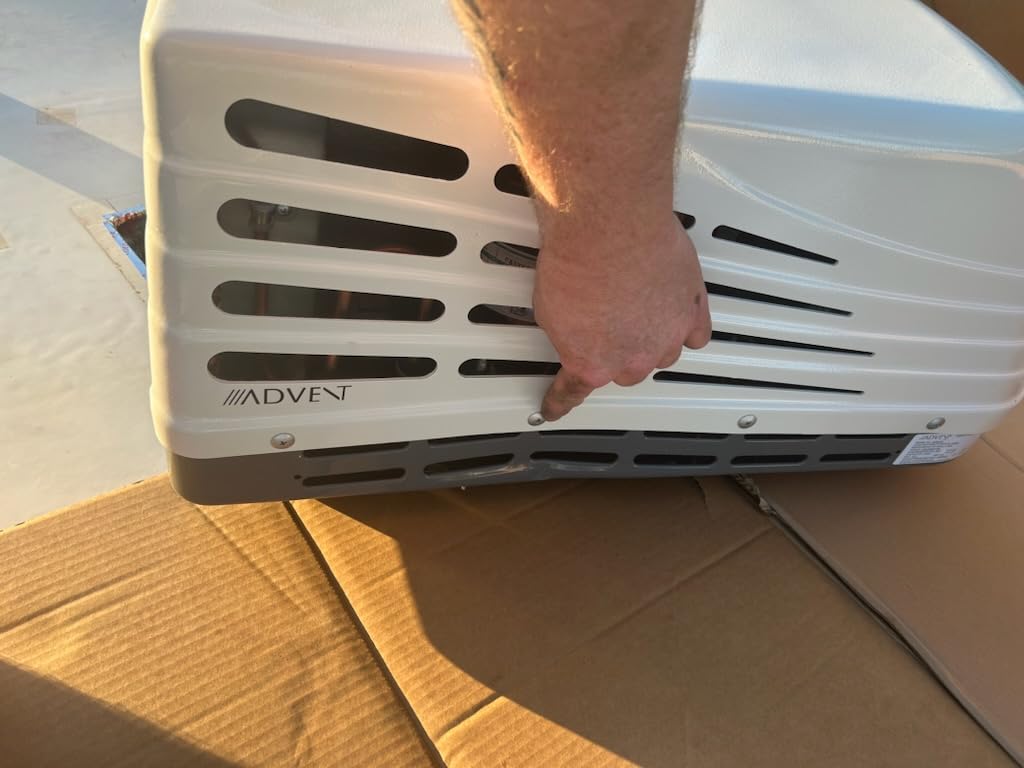
The rotary scroll compressor with R 410A refrigerant and three fan speeds give you the basic control set trailer owners expect, and an optional plug-in heat strip adds heating if you need it. At 68.4 pounds and 25.6 inch by 33.46 inch by 15 inch, it is one of the lighter and more compact options in this roundup.
At 3,000 watts running, this is one of the higher-draw models here, which is why we flag it explicitly for generator use rather than for battery use. It works fine on a 3,500 watt generator according to owners, but it is not the model to pair with an undersized inverter.
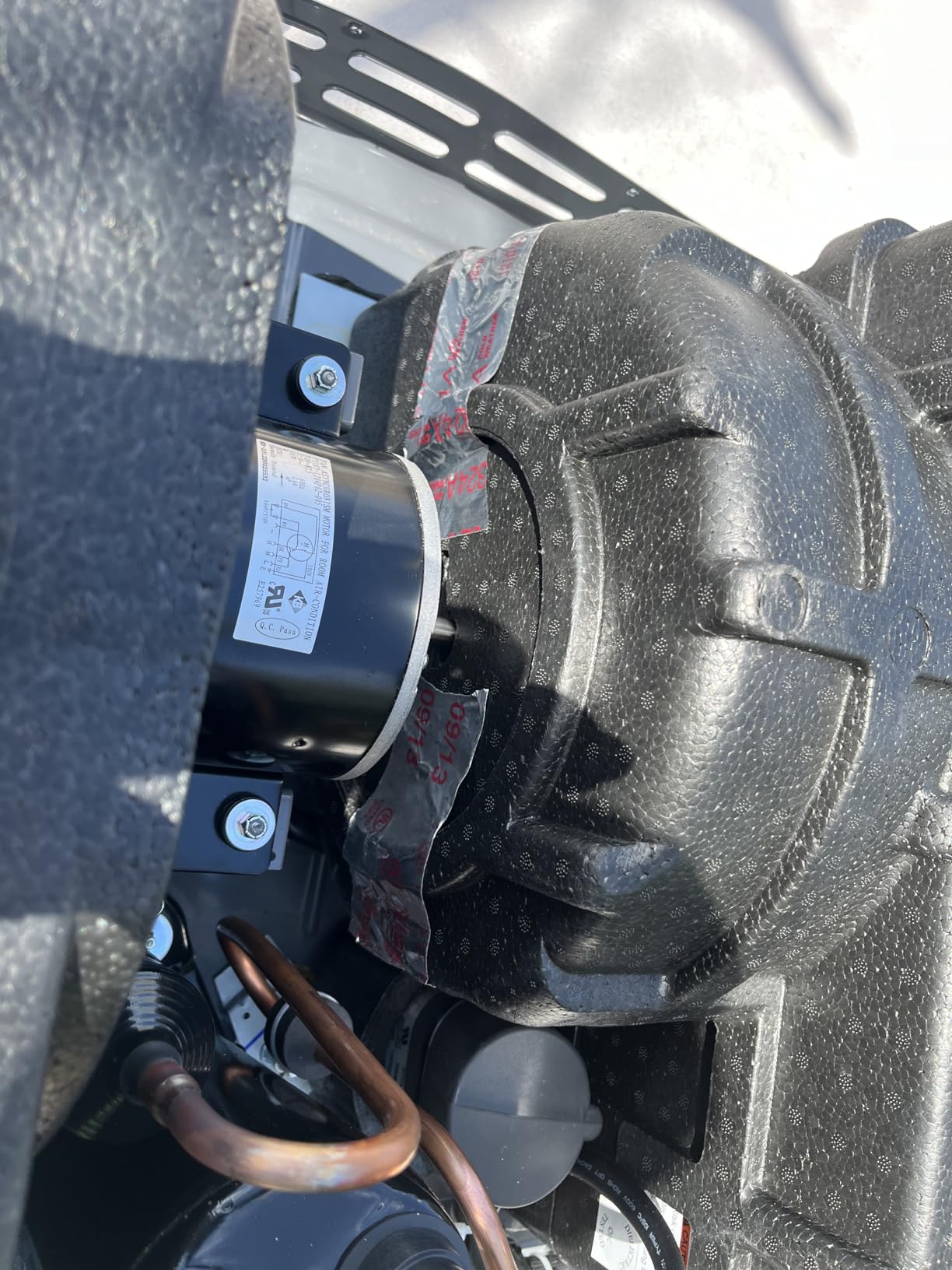
The two-year manufacturer warranty covering parts and shop labor is standard for the category. The #294 category rank reflects a mature, long-running product rather than a new release, which means documentation, parts, and technician familiarity are all easy to find.
Where the Advent Air earns its slot
Choose this model when you are replacing a failed unit and want the least amount of work. The drop-in fit for older Dometic rooftop sections means you are not cutting new roof, relocating wiring, or sourcing a matching interior assembly from a different brand. For a first-time trailer owner replacing a dead factory system, that is the whole ballgame.
It is also the sensible pick for anyone running a modest portable generator at a dry campground. Owner reports of whole seasons on a 3,500 watt unit give you real confidence that the compressor start will not trip the breaker.
What to check before ordering
Some owners received mounting screws that were too short for certain roof decks, so measure your deck thickness before the day of install. The matching non-ducted interior control box also draws complaints, with loose knobs that some owners had to secure themselves. If you are not sure whether your trailer is ducted or non-ducted, resolve that question first, because it determines which interior assembly you need.
The 3,000 watt draw is the one real drawback. If your electrical plan is tight, look at the lower-draw models on this list instead.
7. Dometic Penguin II: Best Low-Profile Rooftop AC for Ducted Travel Trailers
Dometic Penguin II High Efficiency, Low Profile Rooftop Air Conditioner, Ducted or Non-Ducted Application, 13.5K BTU, Polar White, Cool Only, No Pre-Installed Controls
13500 BTU low profile cooling
Only 9.5 inch tall
R 410A refrigerant
99 lb housing
Pros
- Just 9.5 inch tall so it clears low garages and bridges
- EPP foam housing is light for a Dometic and adds some insulation
- Four-bolt replacement for older Dometic rooftop sections
- Pulls well through long ducted runs in bigger trailers
- Works with CCC2 and CT thermostats
Cons
- No controls included; a CCC2 or CT thermostat and hardware are required
- Several owners received models with the blower motor not secured inside
- Blower is noticeably noisy at close range
- Instructions cover 8 to 10 similar models so read carefully
At 9.5 inches tall, the Penguin II solves a problem most trailers never think about until it becomes a problem: clearance. A rooftop unit that tall does not affect your fuel economy, and it fits under the low garage at your storage facility, the residential carport at the campground, or the low bridge on your route. Owners consistently single out the low profile as the deciding factor in their purchase.
It handles ducted or non-ducted applications, which makes it the option here for larger trailers with an existing ceiling duct run. Owners with longer duct runs report good supplemental cooling, and the EPP foam housing is both lighter than a typical metal Dometic shell and slightly insulating, which helps efficiency in direct sun.
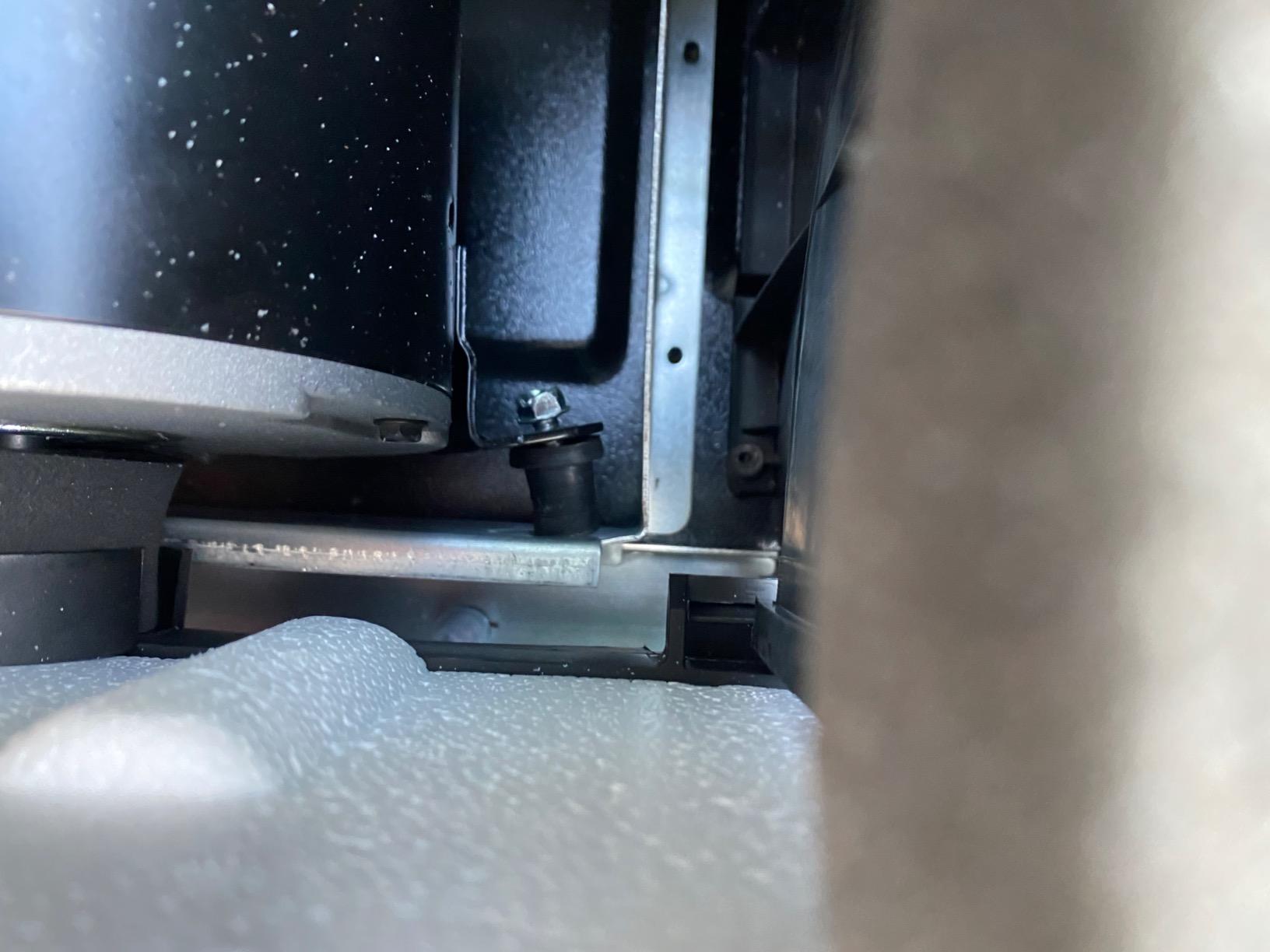
The rib-reinforced base pan is built for the rig, since rooftop units see more vibration than most appliances. At 29 inch deep by 40 inch wide by 9.5 inch tall and 99 pounds, it is a wide but short footprint, so confirm the length of your roof space as well as the height of your clearance.
R 410A refrigerant is the modern choice here, and the high-performance motor and fan are conventional serviceable components. The unit works with CCC2 or CT thermostats, which is a real advantage for owners who already have Dometic controls in the ceiling and want a consistent control scheme across the trailer.
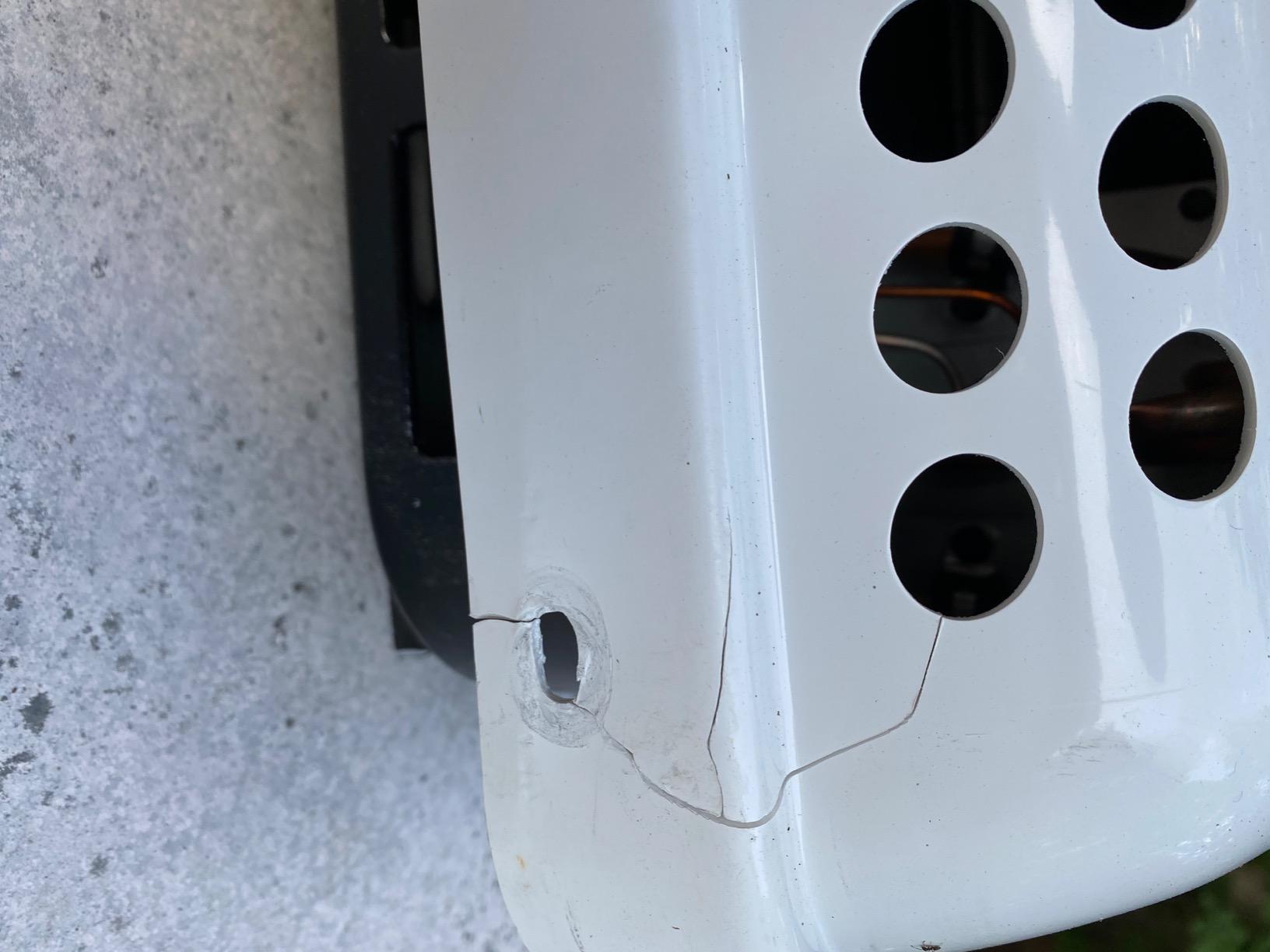
The direct four-bolt replacement path for older Dometic rooftop sections keeps install cost down for the very common scenario of replacing a Penguin or a similar older Dometic with a newer one.
When the low profile is the deciding feature
Buy the Penguin II if you store indoors, if your route includes genuinely low structures, or if roof height and drag matter to you. It is also the right choice for larger trailers where a ducted ceiling run needs a capable blower pushing air a long way, and for owners who want a Dometic control ecosystem with a single thermostat type.
For anyone replacing a Dometic rooftop section already, the four-bolt pattern means minimal disruption. The EPP foam housing also means you are carrying less weight on the roof than with a comparable metal-bodied system.
What the reviews flag
No controls ship with this model. A CCC2 or CT thermostat and the mounting hardware are separate purchases, and the installation instructions cover eight to ten similar models, so read them carefully before starting. Several owners received models with the blower motor not properly secured inside the housing, which is worth inspecting the moment the box opens.
The blower is noticeably noisy at close range, and the 4.0 rating across 141 reviews reflects a unit that performs correctly rather than one that excites people.
8. Dometic FreshJet 3 Series: Best Rooftop AC for Reusing an Existing Ceiling Assembly
Dometic FreshJet 3 Series, 15K BTU RV Rooftop Air Conditioner unit, White
15000 BTU rooftop cooling
65.3 lb design
E-coated evaporator coils
R 410A refrigerant
Pros
- Light at 65.3 pounds which eases the hardest part of a rooftop install
- Reuses an existing non-ducted ceiling assembly and cuts upgrade cost
- E-coated evaporator coils resist corrosion in humid climates
- 15000 BTU in a compact footprint
Cons
- Rooftop section only; the ceiling assembly must already exist or be bought separately
- 58.5 dB is louder than the variable-speed models here
The FreshJet 3 solves a very specific and very common problem. If your trailer already has a working non-ducted air distribution box in the ceiling, this rooftop section is backwards compatible with it, which means you replace the failing outdoor section without replacing the interior assembly, the wiring, or the trim. Owners point out that this cuts most of the upgrade cost compared with buying a matched interior kit.
Weight is the quiet hero here. At 65.3 pounds, this is the lightest rooftop system in the roundup, and the reduced roof load is a genuine benefit for older travel trailers with a bonded or aluminum roof where every pound on the assembly is a consideration. Lighter also means the install itself is easier, which matters for a two-person job on a ladder.
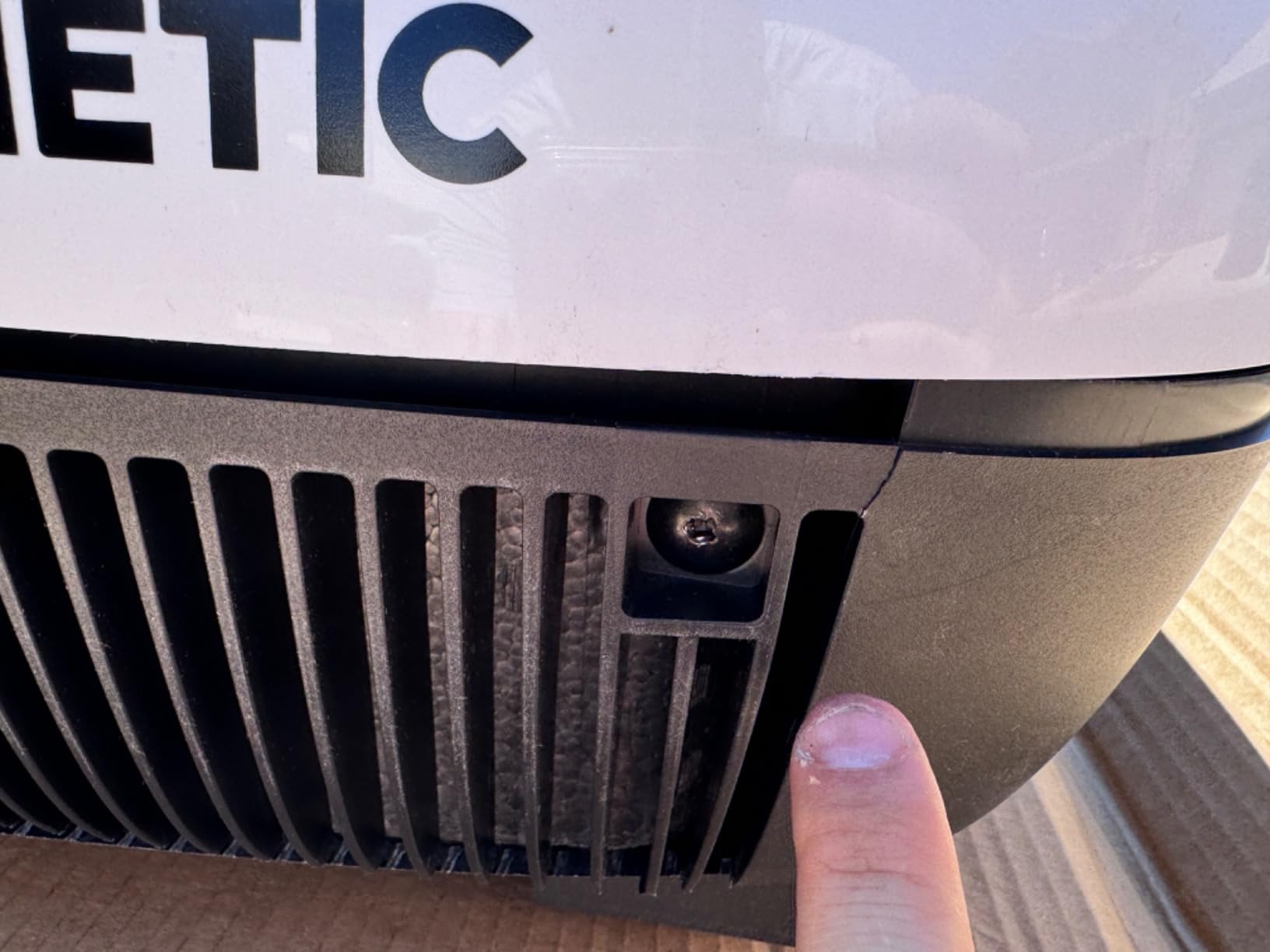
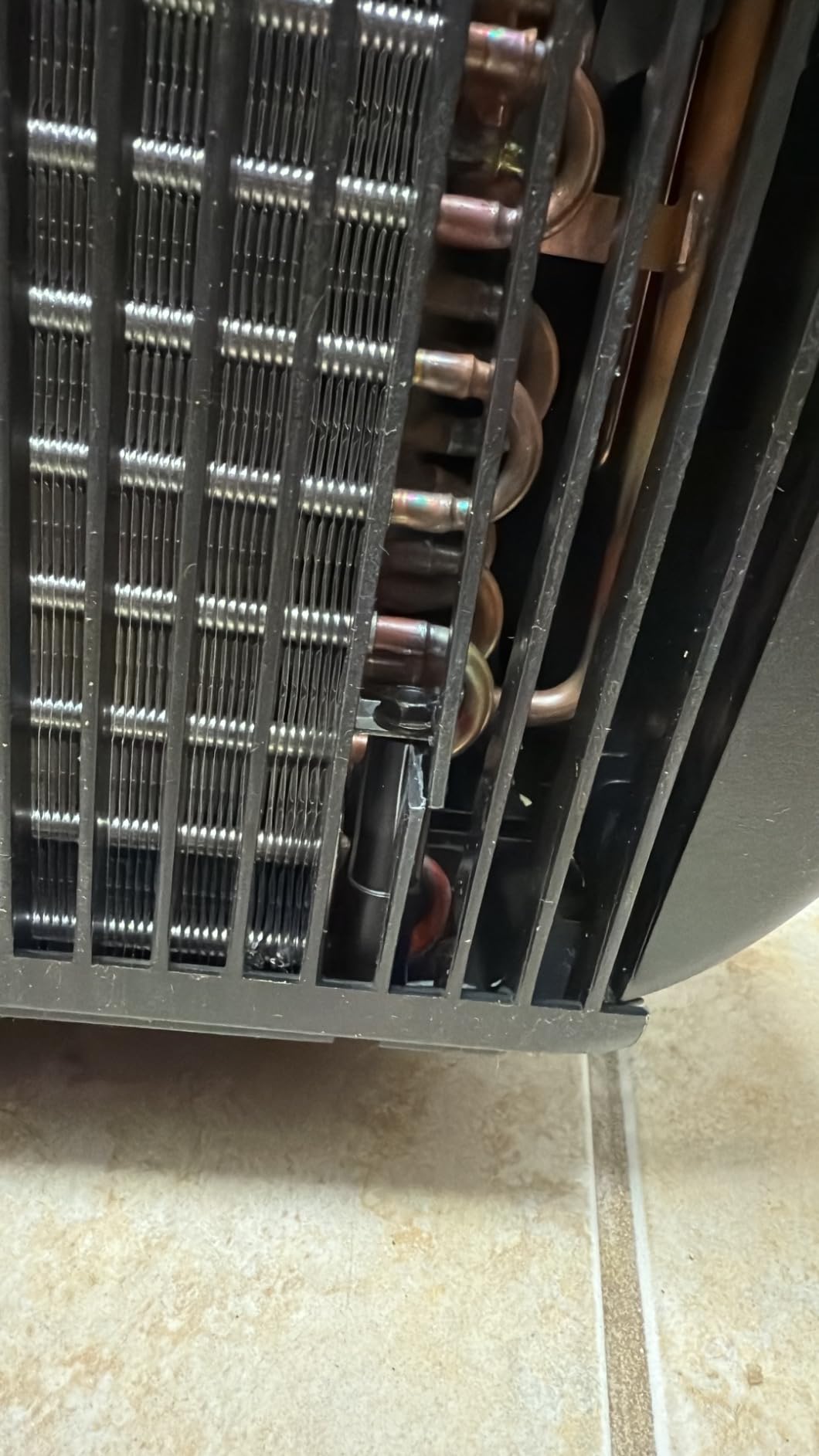
You still get full 15,000 BTU capacity in a compact footprint of 29.5 inch by 27.56 inch by 13.99 inch, and the rotary scroll compressor with R 410A refrigerant is a standard serviceable design. E-coated evaporator coils add real corrosion resistance, which is the detail that matters most if you camp in the Gulf Coast or Florida where humidity and salt air attack bare metal.
The #7 ranking in RV Air Conditioners reflects broad, sustained demand, and the two-year warranty is standard for the category.
Who gets the most out of the FreshJet 3
This is the model for an owner whose rooftop section failed but whose ceiling assembly is still fine. That is a very common situation, because the outdoor section is the part that takes the weather, and the indoor box usually outlasts it. Being able to keep the existing assembly turns a full interior replacement into a roof-only job.
It is also a good fit for older trailers with limited roof load capacity, and for anyone who wants 15,000 BTU of cooling without the height or weight of a larger system. The E-coated coils give coastal campers a longer expected life than a bare-finish coil would.
Where it falls short
The rooftop section is sold alone, so if you do not already have a compatible non-ducted ceiling assembly, you are buying one anyway. Check compatibility before ordering, because a mismatch here means the install does not go as planned.
Noise is the other drawback, and it is the most common complaint. At 58.5 dB it is louder than the variable-speed models in this roundup, so if the rooftop section sits over your bed, read the noise section in the buying guide before you commit to this one.
9. TURBRO Inverter 13.5K: Best Rooftop AC for Cold-Night Heating and Soft Starting
TURBRO Inverter 13.5K BTU RV Air Conditioner with Cooling and Heat Pump
13500 BTU cooling and heating
Inverter compressor
R 32 refrigerant
115V AC at 1440 watts
Pros
- Inverter compressor ramps smoothly and removes the need for a soft starter
- Heat output is roughly four times that of a traditional electric heater
- Operates from 19.4F to 109.4F for shoulder seasons
- Remote and smart app control plus a lit ceiling assembly
- 10 inch slim rooftop profile
Cons
- Heaviest rooftop model we covered at 123.8 pounds
- Lowest rated efficiency here at EER 9
- Some owners report the rooftop section and ceiling assembly arrive separately
The TURBRO Inverter is built around a single idea: smooth power. The inverter compressor ramps up gradually rather than snapping to full speed, and that has three practical consequences. It produces noticeably less startup noise, it eliminates the hard compressor surge that trips small generators and stresses weak electrical connections, and it removes the need for a separate soft-start device, which is money you do not have to spend.
Heating is the second headline. It delivers up to 13,500 BTU of cooling and 13,500 BTU of heating from a 1,440 watt running load, and owners note that the heat output is roughly four times what a traditional electric heater of similar wattage produces because heat pump heat is moved rather than generated. The stated operating range of 19.4F to 109.4F covers both the cold desert night and the hot afternoon.
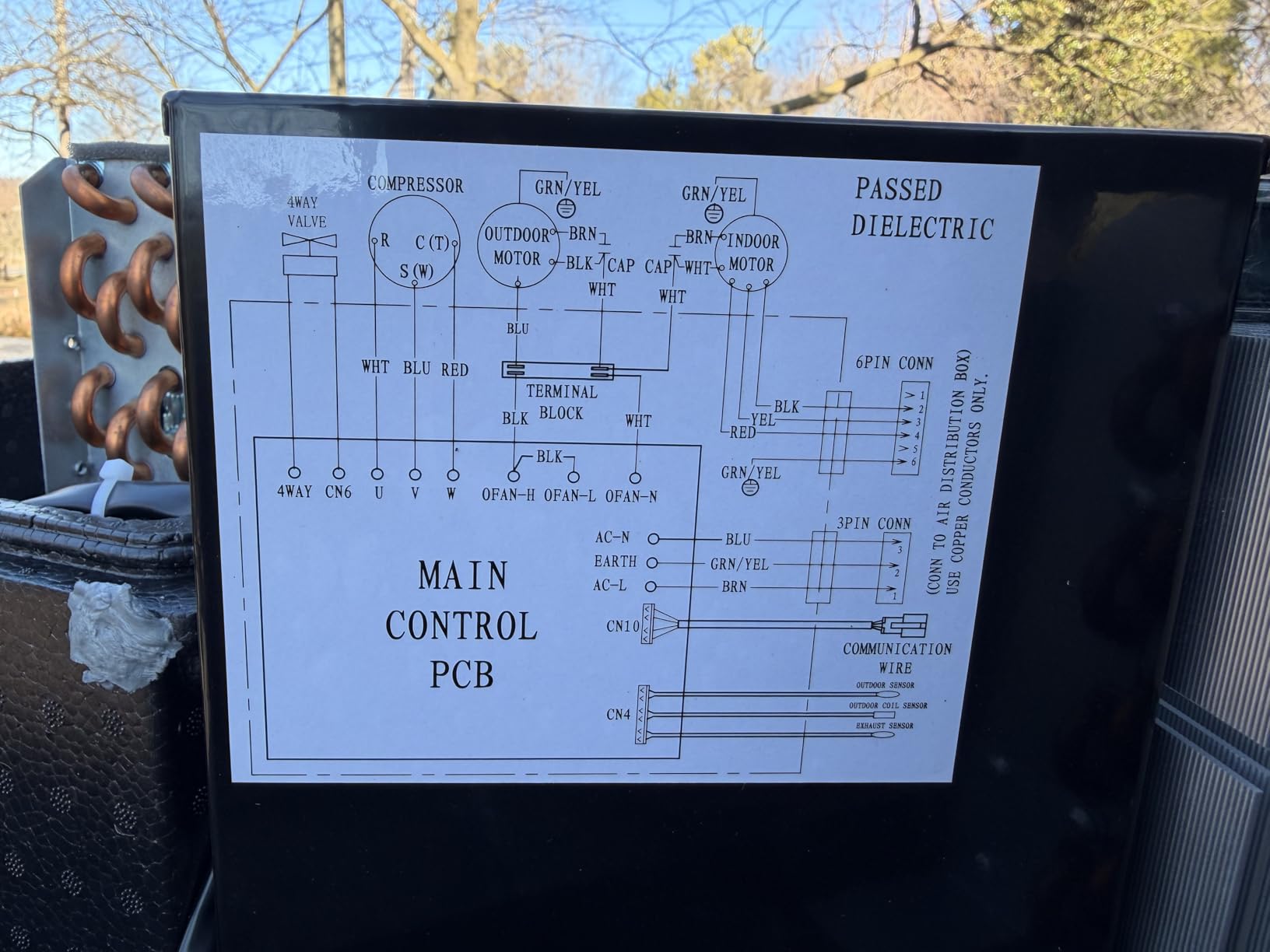
The controls are the best in this roundup by a distance. A wireless remote plus a smart app control the unit, and the included ceiling assembly has blue, yellow, or white atmosphere lighting. It requires a 14.25 inch by 14.25 inch roof opening and fits ceiling thicknesses from 1.02 inch to 3.93 inch, with modular ducting, which makes it unusually tolerant of varied trailer construction.
The 10 inch housing is up to 35 percent thinner than competing designs, which helps with clearance. R 32 refrigerant is a lower-global-warming-potential choice than R 410A, and the inverter drive is rated up to 30 percent greater efficiency than non-inverter systems.
When inverter comfort is worth the trade-offs
Choose this model if you are a shoulder-season camper who needs real heat, if your generator is small enough that a compressor surge is a genuine concern, or if you value quiet operation above raw capacity. The smart app control is also a genuine advantage for owners who want to start cooling remotely before arriving at a site.
It is a good choice for high-elevation camping, where cooler nights and stronger sun both stress a rooftop system, and the wide operating range means one appliance covers conditions that would otherwise require a separate heater.
What the reviews hold against it
Weight is the headline drawback. At 123.8 pounds this is the heaviest rooftop model we covered, and at 46.7 inch wide it also needs a long stretch of roof. Plan the lift with at least one helper and a solid ladder or roof-safe walkway.
Efficiency is the other one. The EER rating of 9 is the lowest among the models here, so while the inverter reduces startup surges, the steady-state efficiency is not class-leading. Some owners also report that the rooftop section and the ceiling assembly arrive as separate pieces, so make sure both are on hand before a weekend install.
10. Coleman-Mach Mach 8 Plus: Best Ultra Low-Profile Rooftop AC for Tight Garages
Coleman-Mach 47024-079 Signature Series MACH 8 Plus Air Conditioner with Heat and Condensate Pump – Wood Skid, 15,000 BTU, Black
15000 BTU ultra low profile
8.3 inch tall
Heat pump and condensate pump
14.2 amps cooling
Pros
- Bolt-hole and connector match for replacing an older Mach 8 with no modifications
- Very quiet once running with strong cold airflow
- Only 8.3 inch tall for low clearance garages and bridges
- Owners report about an hour of install time once the section is on the roof
- Bundled heat pump and condensate pump
Cons
- New mounting points are threaded 1/4-20 so older self-drilling screws will not work
- A few models arrived with cracked frames or shifted compressor mounts
- Ducted installs may need a separate air divider gasket that is not included
At 8.3 inches tall, the Mach 8 Plus is the shortest rooftop system in this roundup, and among the shortest in the category generally. Owners who store in a residential garage or run routes with low bridges consistently cite that as the reason they bought it. The 41.1 inch by 28.4 inch footprint is long but flat, so it consumes roof length rather than roof height.
The other thing this model bundles is unusually useful. It includes an HP2 heat pump and a condensate pump, and both matter in real trailer use. The condensate pump handles the water an evaporator pulls out of humid air, and a rooftop AC in a humid climate produces a surprising amount of it. Having the pump in the package removes a common retrofit and a common source of ceiling damage.
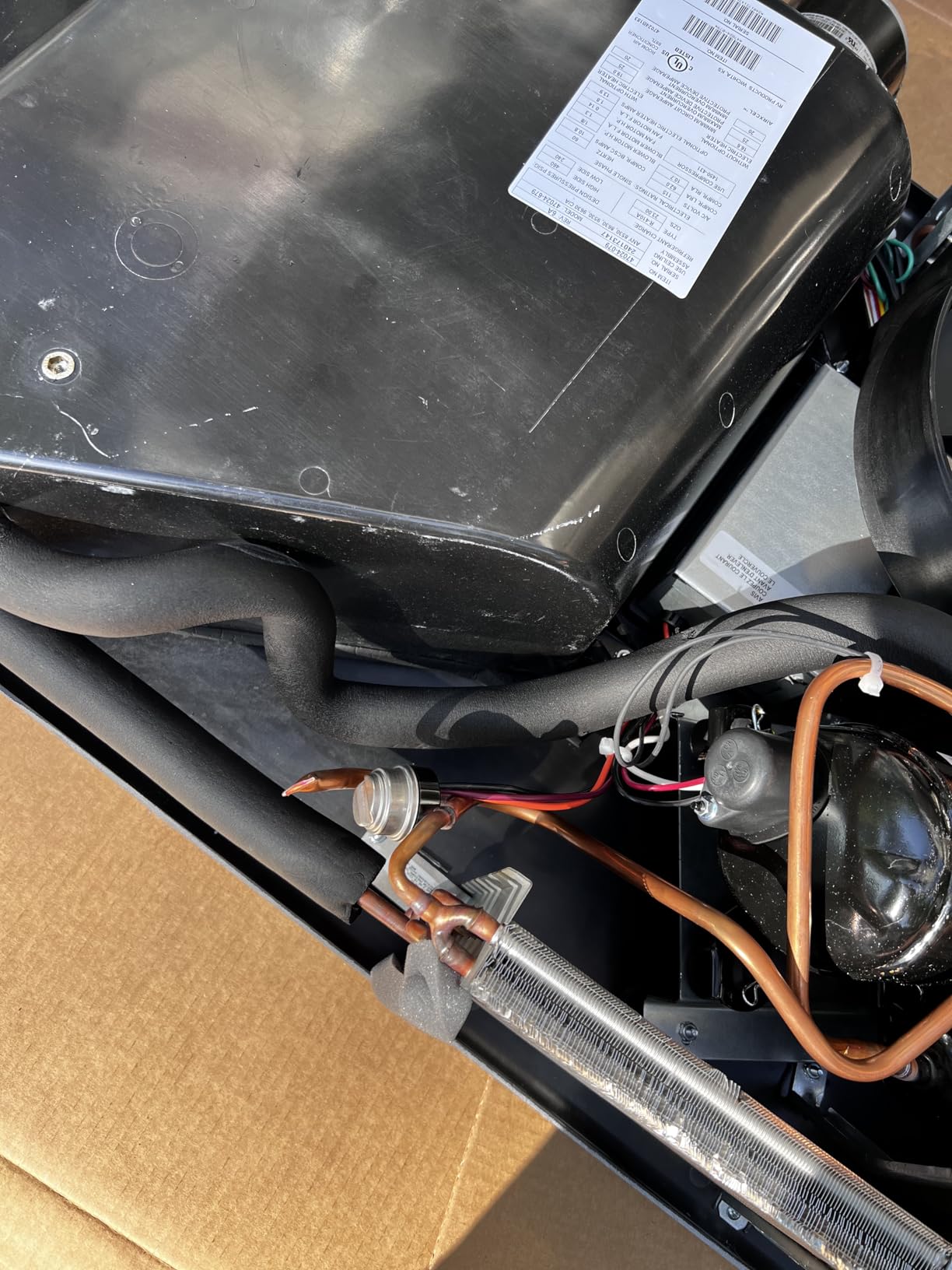
Power draw is well documented: 14.2 amps cooling, 15.2 amps heating, and 18 amps in desert mode. Those numbers make it straightforward to plan an electrical setup, and the desert mode is a high-output setting for the hottest afternoons rather than a marketing label.
The R 410A rotary scroll compressor and textured black finish round out a package that owners upgrading from a Mach 8 rate highly, because the bolt-hole and connector pattern match means no modifications at all. Those same owners report roughly an hour of install time once the section is on the roof.
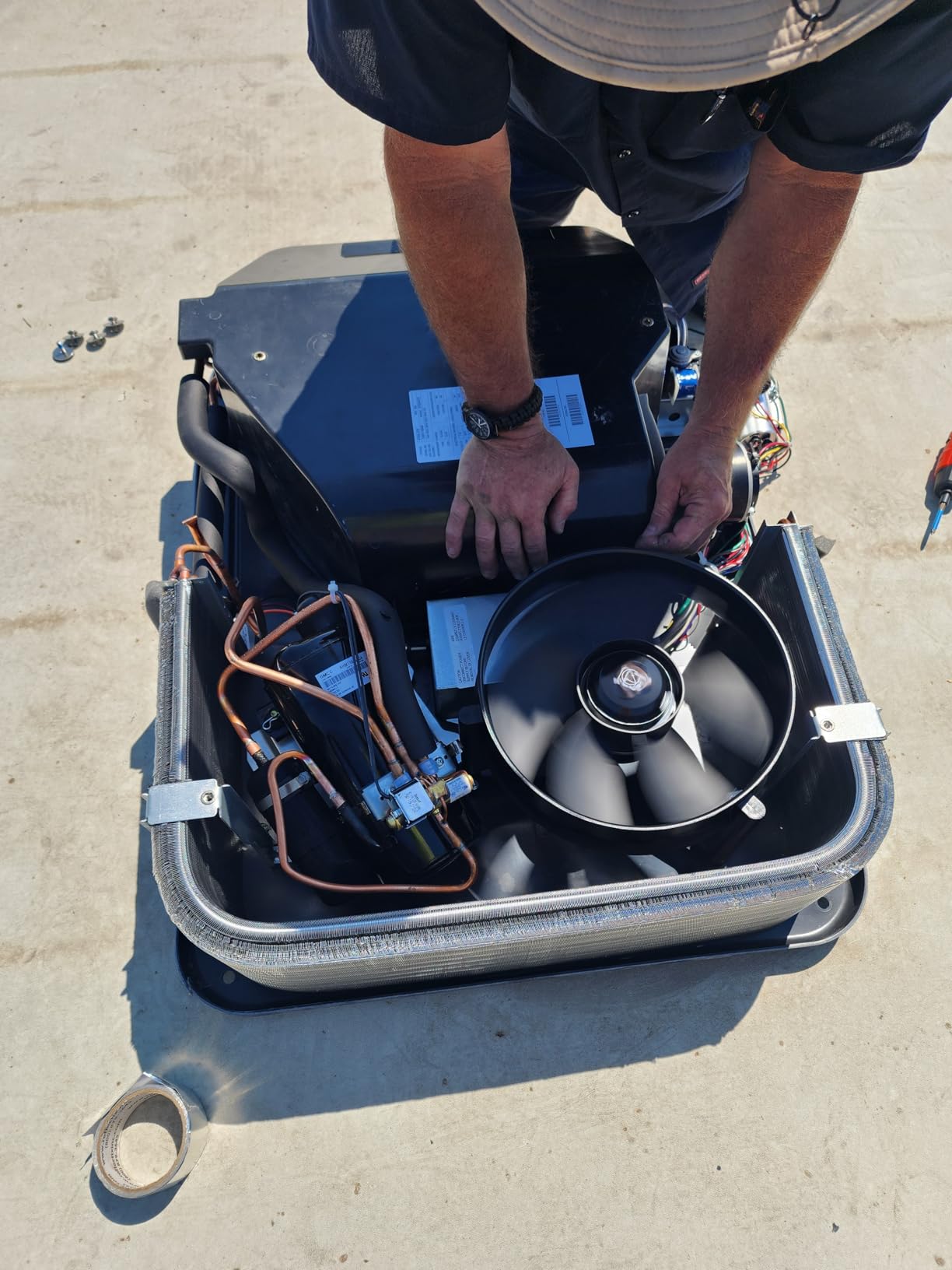
Who this model is built for
Buy the Mach 8 Plus if you are replacing an existing Mach 8 and want a bolt-on swap, if garage clearance rules out anything taller, or if you want heating and a condensate pump in the same package. The exact connector match is the key detail for existing Mach 8 owners, because it means no roof cutting and no wiring changes.
It is also a good fit for humid climates, since the included condensate pump handles the drainage load that makes rooftop systems troublesome in the Southeast. The documented amp figures also make it easier to size a generator than a spec sheet without numbers.
Where it causes headaches
Freight damage is the recurring complaint. A few models arrived with cracked frames or shifted compressor mounts, so inspect the housing and the mounting points before you start, and photograph the packaging. That is worth five minutes.
Hardware changed between generations too. New mounting points are threaded 1/4-20, so the older self-drilling roof screws from a previous Mach 8 will not work and you need the correct fasteners. Ducted installations may also need a separate air divider gasket that is not included, which is the kind of small omission that can stop an install halfway through.
How to Choose the Right RV Air Conditioner for Your Travel Trailer
Every model above will cool a travel trailer. The one that cools yours well, quietly, without electrical drama, comes down to sizing, power source, ductwork, and roof opening. Here is how we would work through those four questions, in order.
BTU sizing: match capacity to trailer length, then check your climate
Rule of thumb for a standard, reasonably insulated travel trailer: roughly 600 BTU per square foot of interior space is a starting point, but trailer length is the more practical shortcut. A 16 to 20 foot trailer typically needs 9,000 to 10,000 BTU, a 21 to 25 foot trailer lands in the 10,000 to 12,000 BTU range, a 26 to 30 foot trailer wants 12,500 to 13,500 BTU, and a 31 to 35 foot trailer should be looking at 15,000 BTU or more.
Two modifiers matter more than the base number. First, the most common trailer in this roundup of sizes is 13,500 BTU, and that is no accident: iRV2 forum discussion consistently finds that 13,500 to 15,000 BTU systems perform similarly in real use, with 13,500 BTU being adequate for RVs up to about 30 feet. Second, if you camp in sustained desert heat, run the trailer in full afternoon sun, or carry pets and children, step up one tier rather than two.
Oversizing is the mistake that costs you the most. A unit with far more capacity than the space needs will cycle on and off in short bursts, and short cycling reduces dehumidification, raises humidity inside the cabin, and adds wear to the compressor. An undersized unit simply runs continuously and never catches up. Both are bad, and the oversized version feels worse because you still get clammy air.
12V DC versus 120V AC: which power source can you honestly support
Every rooftop unit in this roundup runs on 115V to 120V AC, which means shore power or a generator. That is not a limitation; it is the standard for travel trailers, and it is why these units cost and weigh what they do. A rooftop compressor is a large load, and mains power is the efficient way to supply one.
True 12V DC rooftop units exist and they work, but they are a different product class with a different cost profile. Forum discussion on Expedition Portal and the Escape RV Forum finds 12V DC systems are quieter and more efficient than comparable mains-powered rooftop systems, and that a 12V model drawing roughly 670W uses a fraction of the battery capacity of a 1,440W 120V model over the same duty cycle. The catch is that 12V units typically cost two to three times more for less capacity, which is why the mainstream trailer market still runs on 120V.
The practical decision: if you camp at hookup sites, a 120V rooftop unit is cheaper, lighter, and easier to find parts for. If you are a genuine off-grid boondocker, a 12V system can be worth the premium, but plan the battery bank to match. A single 100Ah lead-acid battery is not a realistic overnight power source for a large rooftop AC. Our tested RV induction cooktop picks cover the other end of the same electrical budget, and it is worth seeing the full load picture before deciding.
Ducted versus non-ducted versus a mini split
Look up inside your trailer before you look at any product page. If you have a ceiling vent assembly with one or more supply vents running from the interior section to the living area, you are ducted. If the interior assembly is a single box in a bathroom or bedroom ceiling with no run of vents, you are non-ducted. Many owners do not know which they have, and this single question determines which rooftop sections will physically work.
Non-ducted systems are simpler and cheaper, and they cool the room the interior section sits in fastest. That is exactly what you want in a small trailer where the bedroom is the space you sleep in. Ducted systems take longer to move the cold air but reach the whole trailer, which is why they scale better as the floor plan grows.
A wall-mounted mini split is the option many owners in trailer forums recommend, and the reasons are consistent: more efficient, quieter, and easier to install because the outdoor condenser goes on a wall bracket instead of through the roof. The trade-off is a wall hole to cut and seal, a wall space to lose, and the fact that a ductless box cooling one room behaves more like the apartment units in our window air conditioner guide than a whole-trailer system. If your trailer already has no ductwork, a mini split is a legitimate answer. If it has a working duct run, replacing it with a mini split means abandoning usable infrastructure.
Roof opening, wiring, and generator load
Measure your roof vent opening before ordering anything. The most common standard in this category is 14 inch by 14 inch, and the Advent Air and TURBRO both specify 14.25 inch by 14.25 inch. Roof opening dimensions vary widely between trailer models, and replacement units are not interchangeable across the board. Also measure roof deck thickness, since thicker bonded or aluminum roofs need longer fasteners than the screws that ship in the box.
On the electrical side, check that your circuit and generator can carry the running load plus a startup surge. The models in this roundup run from about 1,300 watts up to just over 4,000 watts, and a conventional compressor start can transiently demand far more than its rated draw. Undersized wiring is the single most common cause of units tripping their low voltage cutout, so if the wire gauge and breaker on your trailer were sized for a smaller factory system, that is the first thing to fix.
A soft-start device is worth considering for a 120V unit on a small generator, and it is worth skipping entirely if you buy an inverter or variable-speed model, since those ramp up on their own. The variable-speed systems here start softly by design, which is precisely the problem a soft starter solves on a conventional compressor.
What actually keeps a trailer cool in 100 degree weather
No rooftop unit overcomes a badly managed trailer. Six things do more for comfort at high temperatures than any difference between two AC models. Reflective window covers or solar shades cut solar gain through the glass, which is the single largest heat source. Insulated and sealed window inserts help even more on older trailers.
Park in shade if you can, and at minimum park nose-in so the shaded side of the trailer faces the afternoon sun. Add a roof-level fan or a screen door to move outdoor air through the trailer during the cooler morning and evening hours, which lets you run the AC less. Interior shades on the windows do the same job from inside. And run the AC early, before the interior hits peak temperature, because a unit starting from 95 degrees is working with the sun all afternoon.
Noise, maintenance, and the three-minute rule
If the rooftop section sits over your bed, noise decides your purchase more than capacity does. Read the measured decibels with skepticism, since owners frequently report louder real-world performance than the rating, and prefer variable-speed or inverter designs that ramp rather than start hard. The Furrion Chill Cube and the TURBRO Inverter are the smoothest-running designs in this roundup for that reason.
On maintenance, the widely repeated three-minute rule is simply this: spend three minutes on the unit every season, and it will last years. Clear debris off the condenser fins, rinse the coil, check the condensate drain for the algae and dirt that cause ceiling stains, and confirm the roof gasket is still seated. That short routine catches the overwhelming majority of problems before they become failures, and unlike most maintenance advice it genuinely takes three minutes.
Brands to approach with caution
The lowest-rated options in the travel trailer AC market tend to be the unbranded imports with thin documentation and no service network. SERP shopping data shows ratings ranging from 2.5 to 5.0 across the category, and the models at the bottom of that range are the ones to walk past. What you lose is not only quality: you lose the ability to get a replacement part, a technical answer, or a technician who has seen the unit before.
Every model in this roundup is from a brand with an established parts channel, which is a deliberate filter we applied. It is also worth noting that the same category mixes genuine 15,000 BTU systems with units whose real-world performance is closer to 10,000 BTU, and a spec sheet is not always a measurement. The Dometic, Coleman-Mach, Furrion, RecPro, ASA Electronics, and TURBRO names all have documentation and support behind them, and that is what separates them from the budget-tier noise.
Frequently Asked Questions
What size air conditioner is ideal for a travel trailer?
For most travel trailers, 13,500 BTU is the right capacity for a 26 to 30 foot trailer, and forum consensus finds 13,500 to 15,000 BTU systems perform similarly. Smaller trailers from 16 to 20 feet usually need 9,000 to 10,000 BTU, a 21 to 25 foot trailer needs 10,000 to 12,000 BTU, and a 31 to 35 foot trailer should look at 15,000 BTU or more. Step up one size if you camp in sustained desert heat or run the trailer in full sun.
What is the difference between a 12V DC and 120V AC RV air conditioner?
A 120V AC unit uses alternating current from shore power or a generator, which is the standard for travel trailer rooftop systems and the approach used by every unit in this roundup. A 12V DC unit uses direct current from a battery bank, which is quieter and more efficient but typically costs two to three times more for less capacity. Running watts tell the story: a 12V system drawing about 670W uses far less battery capacity per hour than a 1440W 120V system.
How many amps does an RV air conditioner draw?
A 120V rooftop air conditioner typically draws between about 11 and 37 amps depending on capacity and settings, and the compressor start causes a brief surge well above the running figure. The 13,500 to 15,000 BTU models in this roundup are rated from roughly 1,300 watts to just over 4,000 watts, and the Coleman-Mach Mach 8 Plus is documented at 14.2 amps cooling, 15.2 amps heating, and 18 amps in desert mode. Undersized wiring is the most common cause of a unit tripping its low voltage cutout.
Are 12 volt RV air conditioners any good?
Yes, when the electrical system is designed around them. Forum owners on Expedition Portal and the Escape RV Forum report that 12V DC rooftop systems are quieter and more efficient than comparable mains-powered units. The trade-off is cost, since 12V systems typically run two to three times the price for less cooling capacity, and they need a battery bank sized for the load rather than a small generator.
What AC brands should you be cautious about?
Be cautious with unbranded imports that have thin documentation, no service network, and ratings that cluster at the low end of the category. Shopping data for travel trailer rooftop air conditioners shows ratings spanning from about 2.5 to 5.0 stars, and the models at the bottom of that range are the ones to pass on. What you really lose is parts availability and technician familiarity, which matters more over a ten-year ownership than the purchase price.
Do I need a soft start device for my RV air conditioner?
Only if you run a conventional single-speed compressor on a small generator or a weak connection. A soft-start device reduces the startup surge that trips breakers and stresses weak wiring. If you buy an inverter or variable-speed model such as the Furrion Chill Cube or the TURBRO Inverter, the compressor ramps up smoothly on its own and a soft starter is unnecessary, which is one of the main reasons to spend more on those designs.
Is ducted or non-ducted better for a travel trailer?
Non-ducted is simpler and cools the room with the interior ceiling assembly fastest, which suits a small trailer where that room is the bedroom. Ducted takes longer to move cold air but reaches the entire trailer, so it scales better as the floor plan grows. Check what you already have first, because a replacement rooftop section must physically match your existing ducted or non-ducted assembly.
Conclusion: Picking Your Travel Trailer Air Conditioner in 2026
For most travel trailer owners in 2026, the Dometic Brisk II remains the best RV air conditioner in this roundup, because 13,500 BTU matches the trailer sizes people actually own, it fits the standard roof opening, and it carries more long-term owner history than any alternative. The RecPro 13.5K Non-Ducted is the value pick if you want the highest rating, remote control, and a lower power draw, and the RecPro RV 15K Heat Pump is the one to buy if shoulder-season heating matters.
Match the capacity to your trailer length, confirm the roof opening dimension before you order, and budget for the interior ceiling assembly if it is not already in place. Those three checks eliminate nearly every regret we saw in the owner feedback.
