Most baby monitor range numbers are measured the same way: camera in one hand, parent unit in the other, both in an open field, walking until the signal breaks. That number is real, and it is also close to useless. A 1,000 ft claim tells you almost nothing about whether the signal survives a plaster wall, a concrete basement, or a second floor with the baby in the far corner.
That is the whole problem when you start looking for the best baby monitors with long range. The honest answer is that WiFi monitors go as far as your router reaches, while every no-WiFi monitor is capped by radio physics, wall materials, and interference from other 2.4 GHz gear in the house. We spent weeks with the 12 monitors below, running each one through the layouts parents actually describe: a two-story home, a nursery above a garage, a farmhouse with a detached barn, and a house where the walls are older than the grandparents.
What follows is the short version: the VTech DM221 is the one we trust most, the Babysense HD S2 is the one two-camera parents want, and the Panasonic KX-HN4101W is the sleeper that solves crowded-airwave problems. Everything else, including the honest reasons to skip it, is below.
Table of Contents
- Top 3 Long-Range Baby Monitor Picks (2026)
- All 12 Long-Range Baby Monitors Compared (2026)
- 1. VTech DM221 – the dependable audio workhorse
- 2. VTech VM819 – best battery life in a pocketable video unit
- 3. Babysense HD S2 – two rooms, one screen
- 4. HelloBaby HB30 – the cheapest way into a closed system
- 5. VTech VM924 – remote pan-tilt-zoom for a big nursery
- 6. Philips Avent SCD843 – temperature alerts and set-and-forget reliability
- 7. Simyke BME28-1 – 1,200 ft claimed, app optional
- 8. Firskids 4.3 inch – the big screen budget pick
- 9. Panasonic KX-HN4101W – 1.92 GHz DECT clears 2.4 GHz congestion
- 10. Motorola AM21 – inexpensive DECT audio with cry detection
- 11. Motorola PIP10 – 26-month warranty and a very sensitive mic
- 12. Motorola PIP12 – 1,500 ft audio with USB-C and a travel case
- WiFi vs Non-WiFi for Long Range: The Core Difference
- What Actually Determines Baby Monitor Range
- Wall Penetration by Material: Drywall, Plaster, Brick, Concrete, Stone
- Long-Range Use Cases: Multi-Story Homes, Farms, Detached Buildings
- Long-Range Buying Guide: Nine Questions to Ask Before You Buy
- Frequently Asked Questions
- The Verdict: Which Long-Range Monitor Should You Buy
Top 3 Long-Range Baby Monitor Picks (2026)

VTech DM221 Audio Monitor
- DECT 6.0 audio link
- Up to 1000 ft range
- 5-level sound LED
- Two-way talk-back

VTech VM819 Video Monitor
- 2.4GHz FHSS with no WiFi
- Up to 1000 ft range
- 19 hour video battery
- 2.8 inch screen

Babysense HD S2 Two-Camera Set
- Two cameras with split screen
- 1000 ft over 2.4GHz FHSS
- 720p with 4x zoom
- 4000mAh battery
These three cover the three situations that come up most. The DM221 needs no screen at all and has the largest review base in the group. The VM819 adds video and a 19-hour battery without asking you to give up a closed, no-WiFi system. The Babysense handles two children in two rooms on one display, which almost nothing else here does at this level.
All 12 Long-Range Baby Monitors Compared (2026)
| Product | Specs | Action |
|---|---|---|
| VTech DM221 Audio Baby Monitor |
|
Check Latest Price |
| VTech VM819 Video Baby Monitor |
|
Check Latest Price |
| Babysense HD S2 Two-Camera Set |
|
Check Latest Price |
 HelloBaby HB30 Video Baby Monitor HelloBaby HB30 Video Baby Monitor |
|
Check Latest Price |
 VTech VM924 Video Baby Monitor VTech VM924 Video Baby Monitor |
|
Check Latest Price |
 Philips Avent SCD843 Monitor Philips Avent SCD843 Monitor |
|
Check Latest Price |
 Simyke BME28-1 WiFi Video Monitor Simyke BME28-1 WiFi Video Monitor |
|
Check Latest Price |
 Firskids 4.3 inch Video Baby Monitor Firskids 4.3 inch Video Baby Monitor |
|
Check Latest Price |
 Panasonic KX-HN4101W Monitor Panasonic KX-HN4101W Monitor |
|
Check Latest Price |
 Motorola AM21 Audio Baby Monitor Motorola AM21 Audio Baby Monitor |
|
Check Latest Price |
 Motorola PIP10 Audio Baby Monitor Motorola PIP10 Audio Baby Monitor |
|
Check Latest Price |
 Motorola PIP12 Audio Baby Monitor Motorola PIP12 Audio Baby Monitor |
|
Check Latest Price |
Two things jump out of that table before you read a single review. First, every single unit here is a closed, no-WiFi system except the Simyke, which offers a phone app as an option. That is unusual in 2026, and it is the main reason this category skews so heavily toward 2.4 GHz FHSS and DECT links.
Second, claimed range clusters hard. Eight products claim 1,000 ft, one claims 980 ft, one claims 1,200 ft, and the top range figure in the group is 1,500 ft on the Panasonic and the Motorola PIP12. When every number is within 50 percent of every other number, wall materials and radio band matter far more than the headline figure.
1. VTech DM221 – the dependable audio workhorse
VTech Communications DM221 Audio Baby Monitor with up to 1,000 ft of Range, Vibrating Sound-Alert, Talk Back Intercom & Night Light Loop, White/Silver
DECT 6.0 audio
Up to 1000 ft range
5-level sound LED
Talk-back intercom
Pros
- DECT 6.0 holds clean audio through walls and floors
- 5-level LED lets you monitor while muted
- Talk-back intercom works clearly from any room
- Adjustable mic sensitivity with VOX-style triggering
- Owners report multi-year durability
Cons
- Rechargeable parent battery runs only a few hours off AC
- Needs 10 ft of separation between the two halves
- Beeps continuously when the link drops
- No video feed
I started using the DM221 because I wanted to hear whether the audio-only argument holds up, and after a month of moving it room to room it does. There is no screen to stare at, which sounds like a downgrade until you realise the point of a long-range monitor is coverage, not resolution.
The DECT 6.0 link is the quiet hero here. Owners consistently describe clear audio with no static and a link that holds through walls and floors, and a 5-level LED sound indicator lets you keep it muted while still seeing at a glance whether the room got louder.
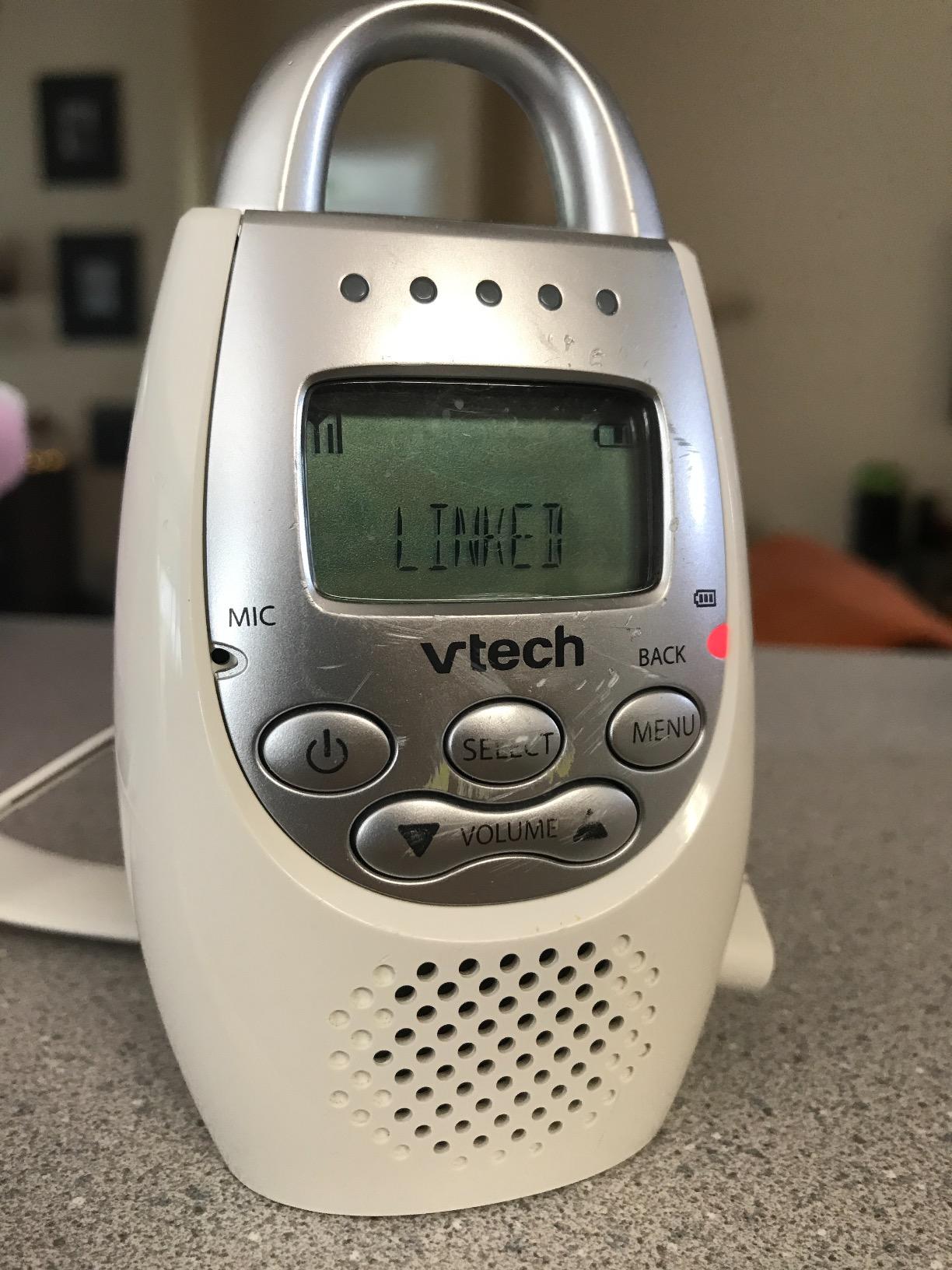
Reviewers mention talk-back working clearly from any room, and adjustable microphone sensitivity that filters out non-essential noise. On Reddit, parents using the DM221 talk about it reaching well past 1,000 ft with no video to weigh down the signal, which is the honest advantage of a one-channel audio link.
The night light on the baby unit can be switched off or set to activate on sound, and several owners report units still running after a decade. For grandparents and for anyone moving houses, that kind of service life matters more than any spec line.
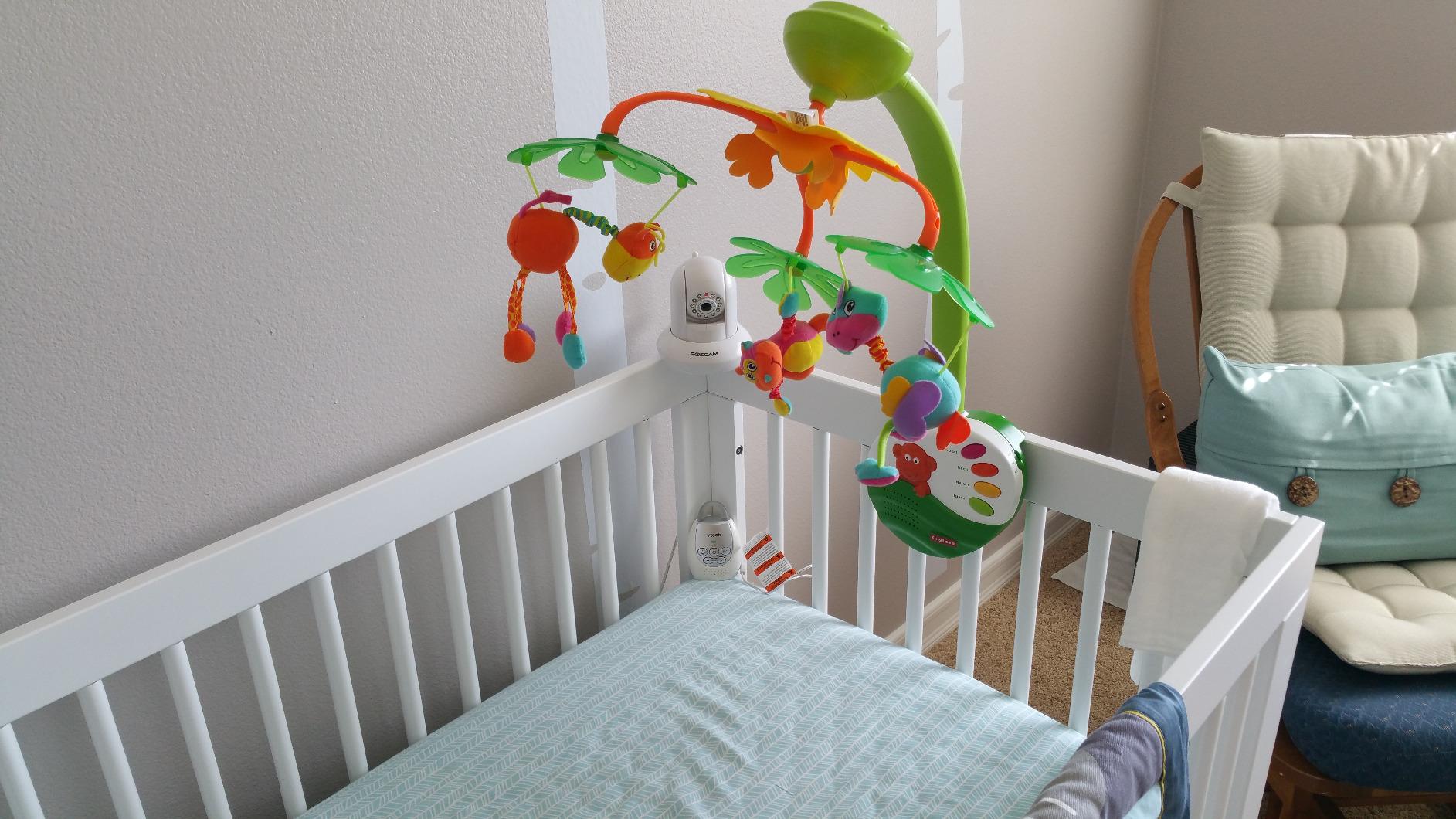
What you get with audio only, and what you give up
If your worry is a multi-story home or a nursery in a converted outbuilding, audio covers the practical need well. You will hear stirring, breathing changes, crying, and the particular silence that means something is wrong. You will not see a blanket over a face, and you will not be able to check whether the monitor mistook a shadow for movement.
Why it still wins after a month of testing
The reasons are unglamorous and they are decisive. Signal clarity, no app, no account, no firmware update, and a review history of more than 21,000 ratings. This is the monitor we would hand a new parent with no strong opinions about screens.
The two flaws worth planning around: the rechargeable parent unit only runs a few hours away from the wall, and the two halves must sit at least 10 ft apart or they produce a harsh buzz. Keep the baby unit in the nursery and the parent unit on a charger near the door, and neither issue comes up.
2. VTech VM819 – best battery life in a pocketable video unit
VTech Baby Monitor No WiFi – 19Hr Video Battery, 1000ft Range, Night Vision, Two-Way Talk, Temperature Sensor, Sound-Activated Screen, Lullabies | VM819
2.4GHz FHSS
1000 ft range
2.8 inch LCD
19 hr video battery
480p
Pros
- Up to 19 hours of video or 29 hours of audio-only
- No WiFi or app so it survives internet outages
- Sound-activated screen keeps the unit quiet until baby stirs
- Small 2.8 inch screen is genuinely pocketable
- Owners report connection holding across a 10-acre property
Cons
- Narrow 55 degree field of view with no zoom out
- Camera needs continuous AC power
- Day and infrared mode can switch to the wrong setting
- Short camera power cable limits mounting angles
The VM819 is the video answer for parents who do not want a cloud account, and it is the model I would hand someone whose baby-sitting situation involves a garden, a workshop, or a questionable internet connection. The 2.4 GHz FHSS link means it works during an outage and cannot be hacked, which for a device sitting over a sleeping infant is a real selling point.
Battery life is the headline. The 2,600mAh cell runs up to 19 hours of continuous video or 29 hours in audio-only mode, and the sound-activated screen blanks the display until there is noise. In practice that means most parents charge it once a week rather than every night.
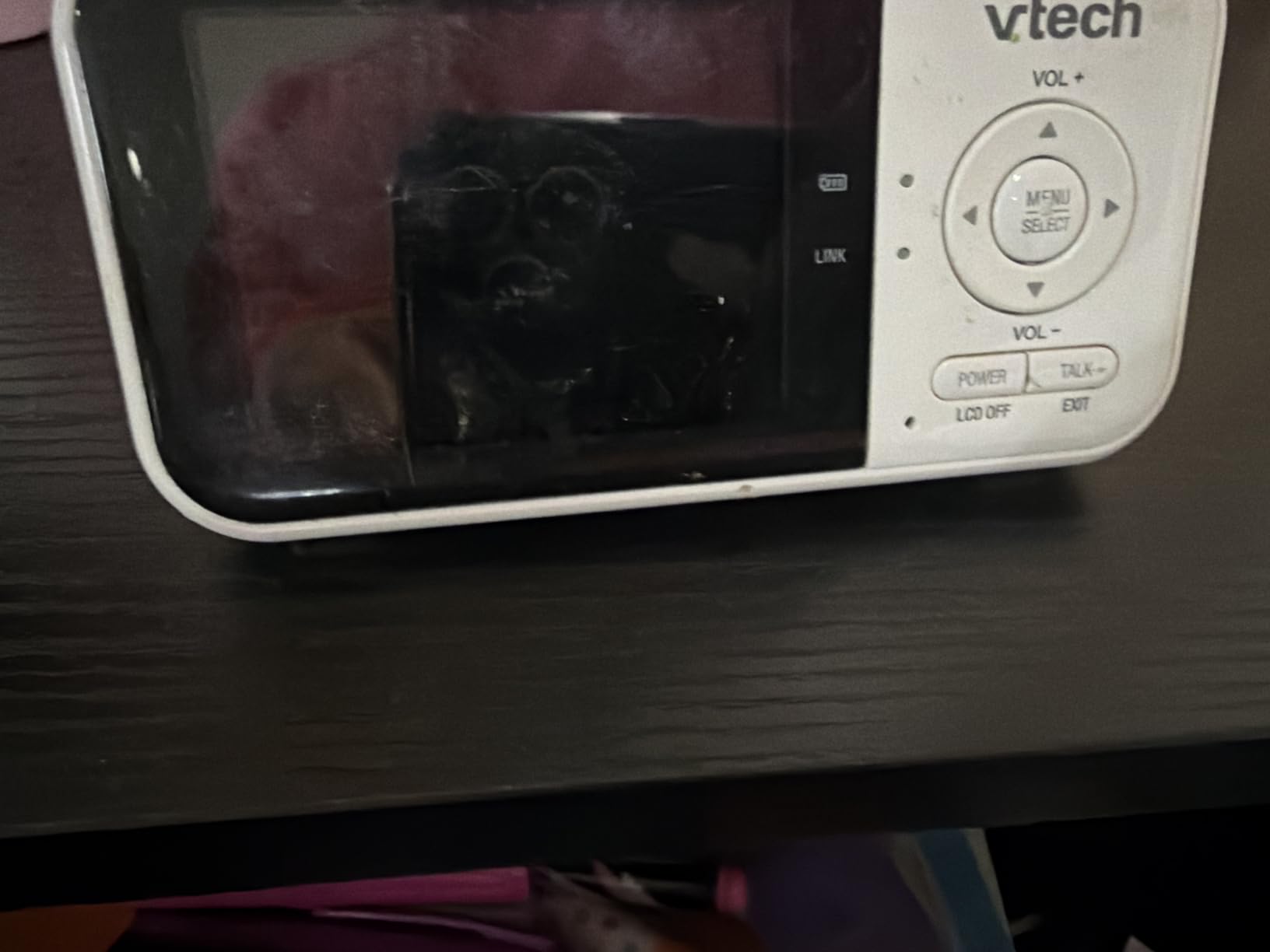
Owners report the connection holding across a 10-acre property, and the small 2.8-inch screen is light enough to carry between rooms. The microphone picks up soft whimpers and rustling clearly, which is exactly the range of sound that wakes a parent at 3 am.
Two warnings. The 55-degree field of view is narrow and cannot zoom out, so a crib may not fit in frame from a normal mounting position. And the camera is corded only, so a power outage ends monitoring entirely.
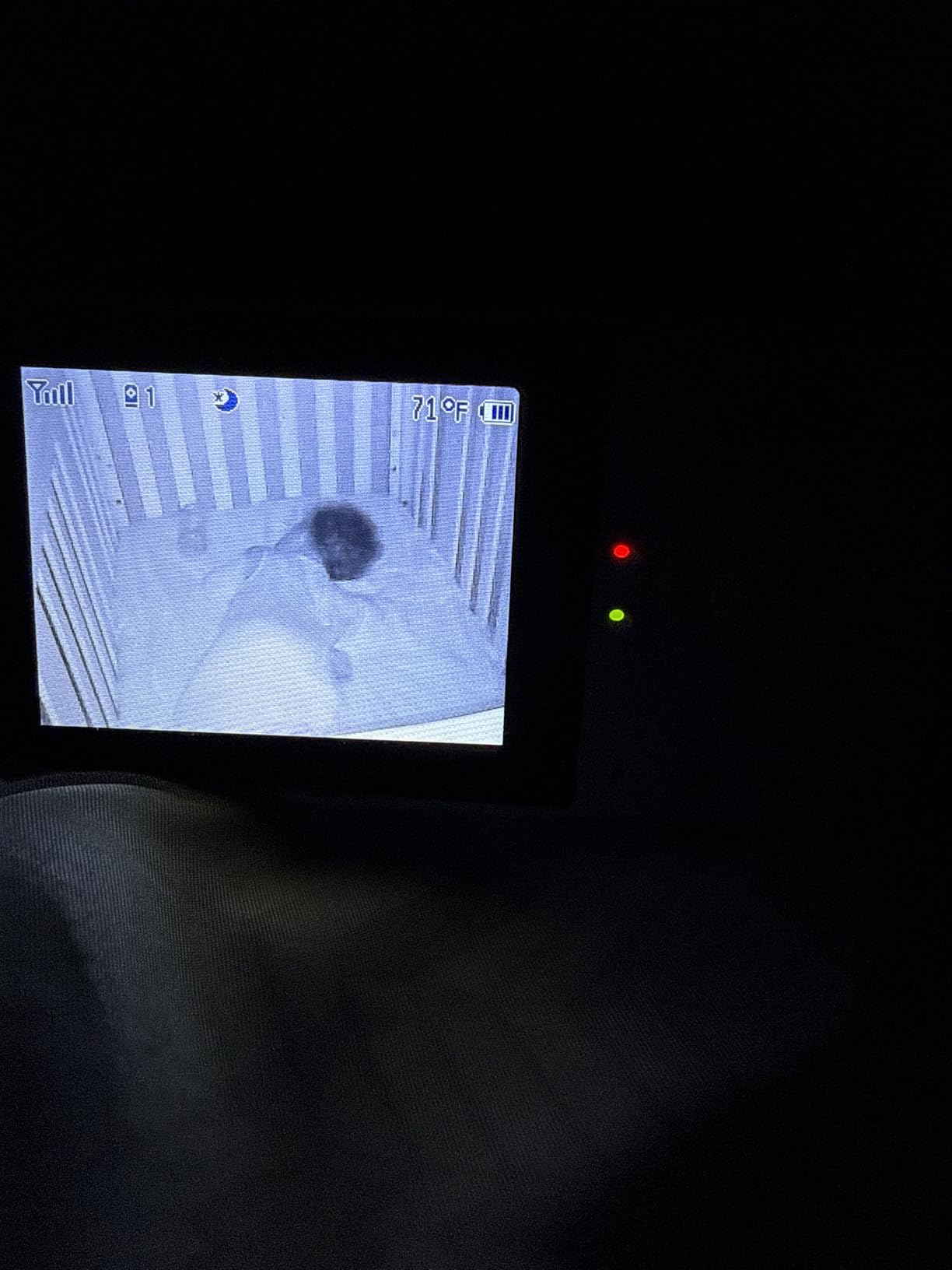
How to position a narrow view
Mount the camera high on a wall or shelf, angled down, and step back until the whole cot is inside the 55 degrees. If it still does not fit, move the cot rather than fighting the lens, because a wider view means a larger camera and a much shorter battery life.
Best fit for parents without reliable internet
If your internet goes out regularly, or you simply refuse to put a live camera feed of your nursery on a server you do not control, the VM819 removes the entire class of problem. It is a closed loop: camera to parent unit, nothing else involved.
3. Babysense HD S2 – two rooms, one screen
Babysense 5″ HD Non WiFi Split-Screen Baby Monitor, Video Baby Monitor with 2 Cameras and Audio, Night Light, 1000ft Range, Two-Way Audio, 4X Zoom, Night Vision, 4000mAh Battery
Two HD cameras
Split screen 720p
1000 ft FHSS
4x zoom
4000mAh battery
Pros
- Split-screen view of two rooms on one 5 inch 720p display
- SCAN mode alternates audio every 15 seconds
- Remote pan and tilt with 4x digital zoom
- Ranges across the house and into the backyard
- Each camera has a built-in night light and sound machine
Cons
- One-year warranty with failures reported just past that mark
- Proprietary power cords and chargers are a recurring failure point
- SCAN mode takes holding a button to exit
- Night vision picks up a slight white haze
Two children in two rooms is the scenario that breaks most monitors in this list, and the Babysense HD S2 is the most polished split-screen option here. The 5-inch 720p display shows both cameras at once, and SCAN mode alternates the audio every 15 seconds so you are never listening to the wrong nursery.
Up to four cameras can pair to the single display, which means the system grows with the family. Each camera unit carries its own night light and sound machine, so a twin setup does not mean a second cable run to a socket in the other room.
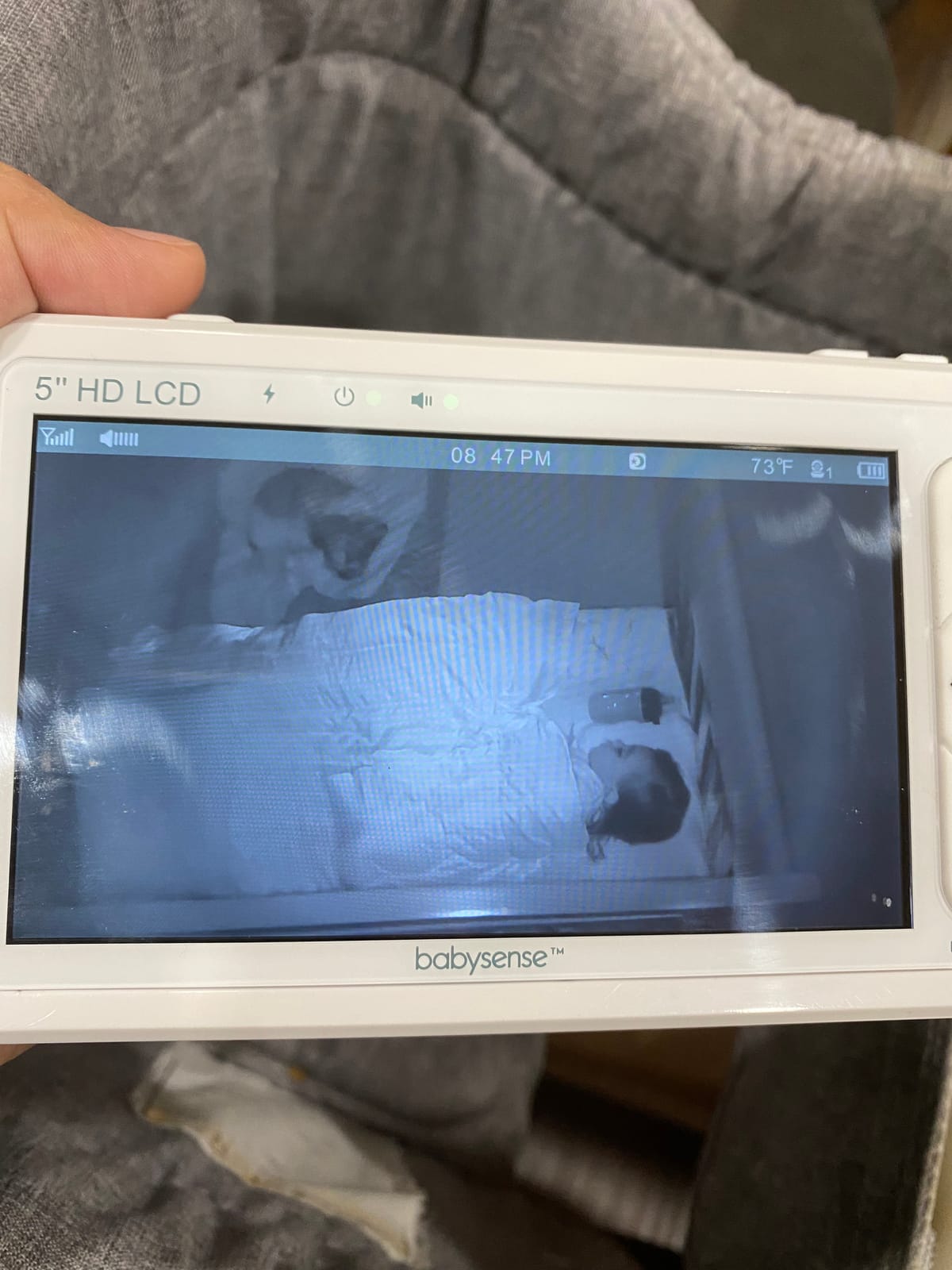
Range is a 1,000 ft claim over 2.4 GHz FHSS with no WiFi or internet involved, and multiple owners describe carrying the signal across the house and out into the backyard without dropouts. The 4,000mAh parent-unit battery typically covers a full night on one charge, with power-saving and VOX modes extending that.
Here is where I would temper the enthusiasm. The warranty is one year, and several owners had a camera or parent unit fail just past that mark, which is the single most common complaint in the reviews. The proprietary power cords are a second recurring failure point.
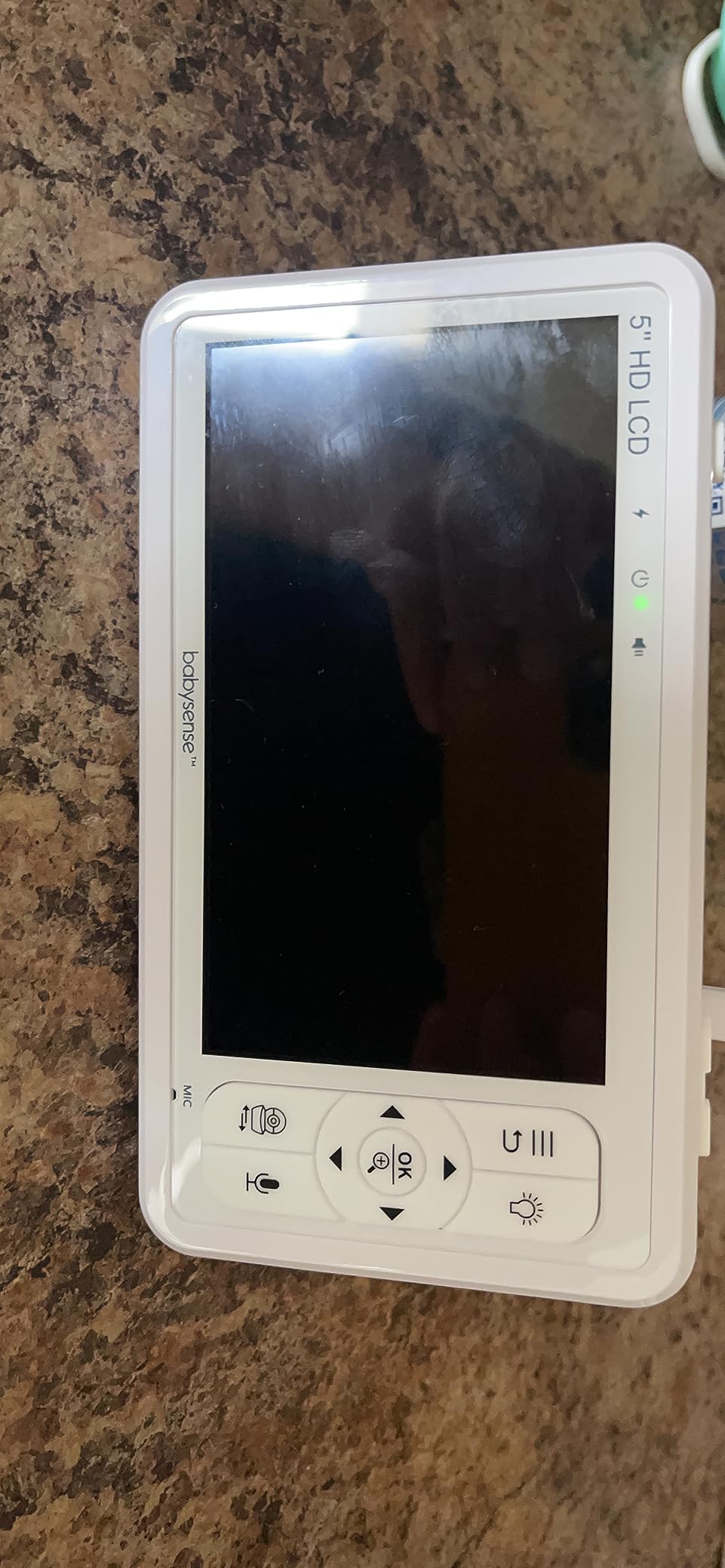
What the dual-camera design solves
Split screen is not a gimmick for twins or a toddler and a newborn. It also covers the common case of a nursery plus a playroom during quiet hours, or a main room and a hallway, without paying for two separate systems or running two parent units.
Where the range claim gets tested
Walk-test results reported by Fathercraft put this unit failing at about 20 ft outdoors, far short of what 1,000 ft implies, and the picture quality is described elsewhere as good but not class-leading. If your signal has to cross a real exterior wall to reach you, treat the number on the box as a ceiling, not a promise.
4. HelloBaby HB30 – the cheapest way into a closed system
HelloBaby HB30 Video Baby Monitor with Digital Camera and Audio, No WiFi No App Safety Baby Monitor, 8 Languages, Auto Night Vision, 1000ft Transmission Range, 2.4 inch Portable Screen
No WiFi no app
1000 ft range
2.4 inch 720p screen
Up to 4 cameras
Pros
- Low-cost entry into a no-WiFi no-app monitor
- Clear daytime picture with effective IR night vision
- Plug-and-play pairing with no complicated menus
- VOX and eco mode blank the screen until sound is detected
- Expands to up to 4 cameras from one parent screen
Cons
- Very narrow field of view with no zoom out
- Maximum volume is low for soft crying
- Real-world range falls short once two walls are in the path
- Short camera power cord
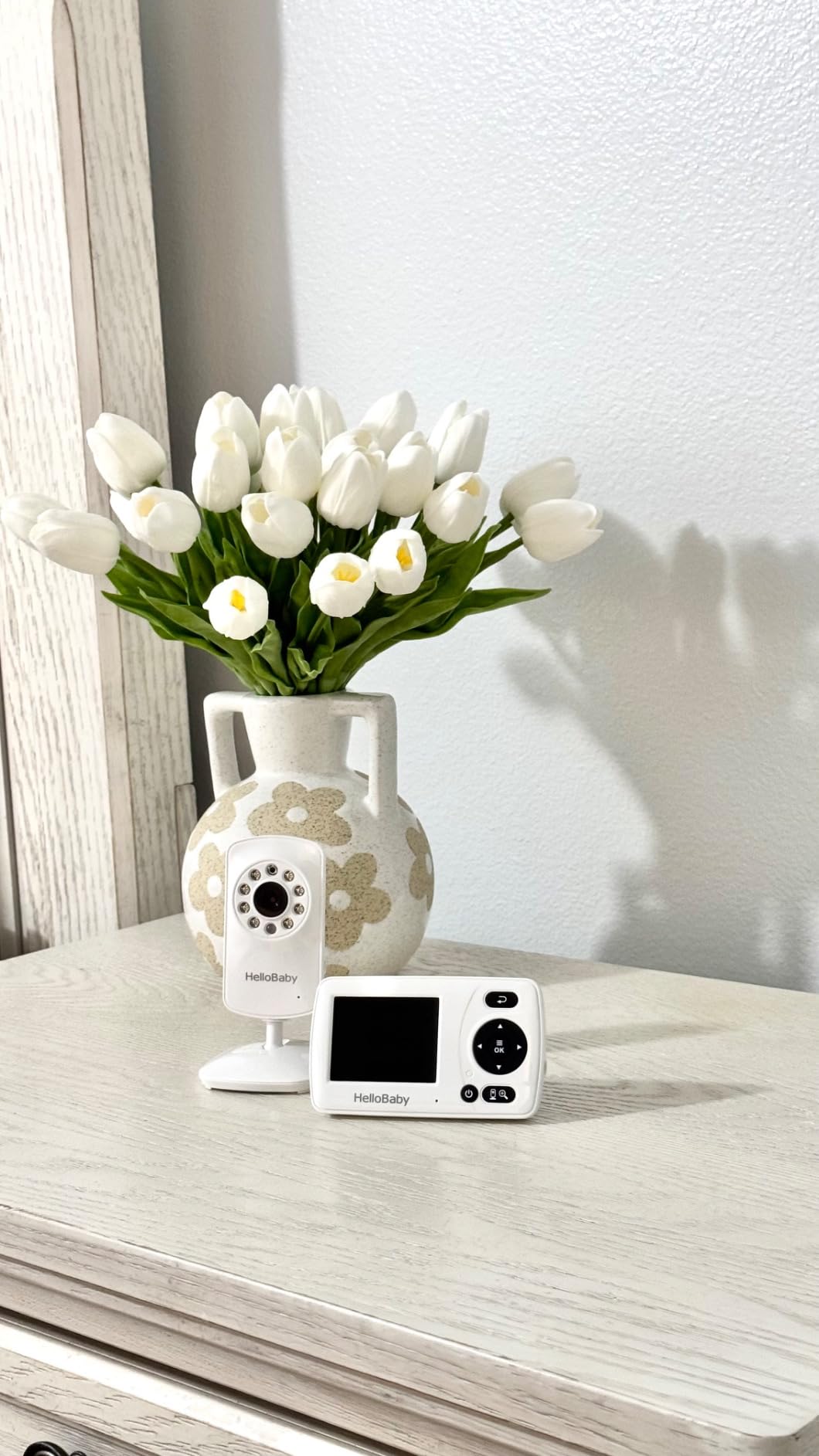
The HB30 exists for one reason: some parents just want a camera in a room with no app, no account, and no monthly anything attached to it, at the lowest sensible outlay. That is a real category of buyer, and the HB30 serves it without pretending to be more than it is.
Pairing is genuinely plug and play. The VOX and eco modes blank the screen until the room gets loud, which saves battery, and the system expands to four cameras from one parent screen if your family grows or your layout changes.
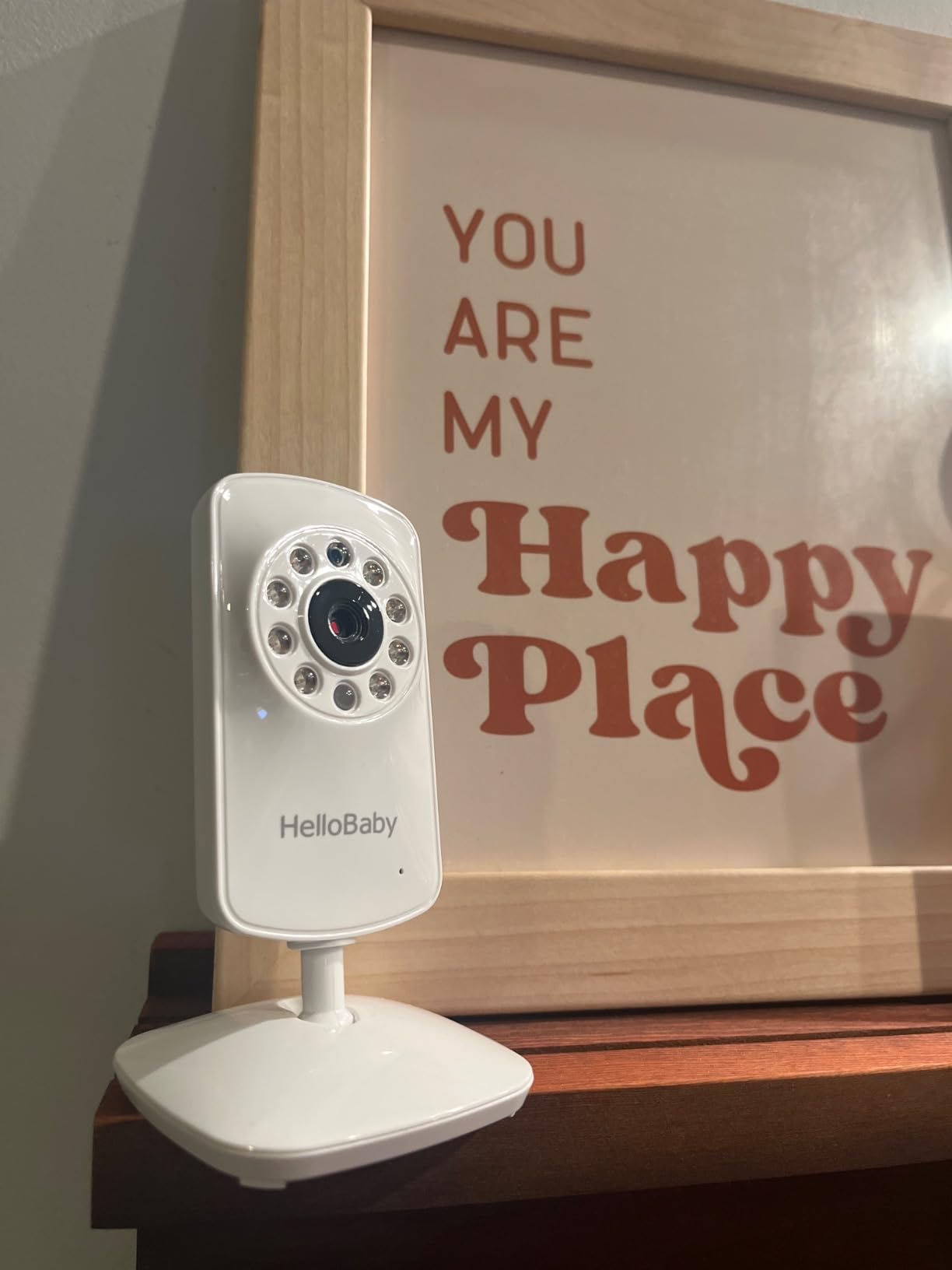
Daytime picture is clear and the infrared night vision is effective, and owners report the link holding out to roughly six or seven car lengths on open ground. That is a useful, honest yardstick rather than a marketing number.
The weak points are concrete. The field of view is very narrow with no zoom out, so an older baby can move out of frame. Maximum volume is low enough that a soft cry is hard to hear without putting an ear to the speaker. And reviewers repeatedly note that real-world range falls well short of the 1,000 ft claim once two walls are in the path.
Where this budget pick genuinely wins
Travel, cabins, and grandparents houses. There is nothing to set up, nothing to update, and the 2.4 inch screen is small enough to pack. In a rental or a room you are only using for a few weeks, spending more on a name brand buys you a slightly larger screen and nothing that changes how it works.
When to spend a little more instead
If your nursery is at the far end of a large house with more than two walls between camera and parent unit, the HB30 is the wrong economy. Volume and range are the two things you cannot work around, and this is where stepping up to the Firskids or the VTech VM924 makes a measurable difference.
5. VTech VM924 – remote pan-tilt-zoom for a big nursery
VTech Baby Monitor No WiFi, 5″ Screen & Remote Pan-Tilt-Zoom for Newborns – Hack-Proof, 17Hr Battery, 1000ft Range, Auto Night Vision, Temperature Sensor, Two-Way Talk | VM924
5 inch LCD
Remote pan 360 and tilt
1000 ft FHSS
17 hr battery
480p
Pros
- Remote pan 360 degrees
- tilt 132 degrees and zoom scan the whole nursery
- Large 5 inch LCD is easier to read than smaller VTech screens
- 17 hours of video or 31 hours audio-only per charge
- Fully closed system with no cloud or account
- Nursery temperature shown on the parent screen
Cons
- 480p resolution is modest next to 720p rivals
- Camera requires mains power so an outage ends monitoring
- Sound-activated screen needs tuning around white noise
- Optical zoom limited to about 1.33x
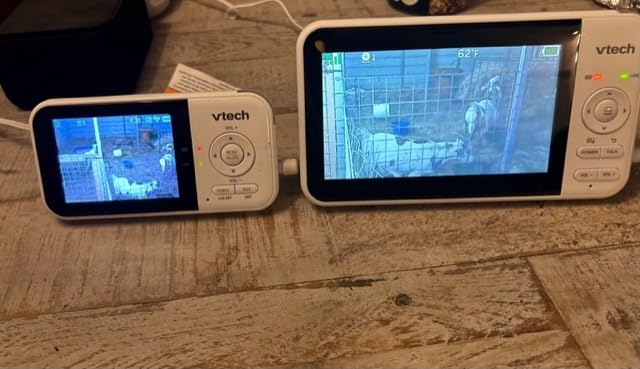
The VM924 is the step up from VTech’s small-screen models, and the change that matters for long-range homes is mechanical. The camera pans 360 degrees and tilts 132 degrees on command from the parent unit, so you can cover a large room, a converted attic, or a wide nursery layout without moving hardware.
The 5-inch LCD is noticeably easier to read than the 2.8-inch panels on the VM819 and the HB30. With 32 channels of encrypted 2.4 GHz FHSS and a 1,000 ft claim, it is a closed system: no WiFi, no app, no cloud storage, no account.
Battery life is 17 hours of video or 31 hours in audio-only mode from the 2,600mAh cell, and the nursery temperature sensor is displayed directly on the parent screen. Five lullabies and four ambient sounds play from the camera unit, which doubles as a sound machine.
Be realistic about the picture. 480p is fine for checking whether a baby is breathing or sitting up, and it is soft when you try to identify a hand or a small object across the room. Parents who want facial detail at range are better served by the 720p Babysense or Firskids.
Why pan-tilt-zoom changes the range conversation
Range is not the only lever. A camera you can aim means one unit covers a far larger area, which in a large open-plan home or a room-and-adjacent-hallway layout can be the difference between one monitor and two. For a detached nursery above a garage, aiming the lens beats chasing signal.
The setting that will annoy you
The sound-activated screen needs tuning if you run a white-noise machine, or it will wake to its own output all night. Set the sensitivity high before you walk out of the room, then walk out of the room and wait five minutes.
6. Philips Avent SCD843 – temperature alerts and set-and-forget reliability
PHILIPS Avent Digital Baby Monitor with Camera and Audio, 3.5″ Display Baby Camera Monitor with 2-Way Talk, Night Vision, Temperature, 980ft Range, Video Baby Monitor with No Wi-fi, Lullabies
3.5 inch screen
980 ft outdoor and 50 m indoor
10 hour battery
FHSS
Pros
- Set-and-forget operation with owners reporting years of use
- Room temperature alarm is the standout feature
- 10 hour battery covers a full night
- FHSS link holds through walls and floors
- Two-way audio
- lullabies and a gentle night light
Cons
- 3.5 inch screen is small by current standards
- Some owners report range falling short of the stated 980 ft
- Build and picture quality trail newer models
The Philips Avent is the one to buy if your anxiety is not signal, it is temperature. The room thermometer with high and low alerts is consistently the feature owners single out, and it is rare among the no-WiFi monitors at this level to have a real sensor rather than a decorative readout.
Reliability is the other argument. Owners describe set-and-forget operation over multiple years, and one owner monitors a two-story home through several walls without problems. The FHSS connection requires no WiFi and no setup beyond pairing.
The published spec is honest in a way most are not: up to 300 m, or 980 ft, outdoors and 50 m indoors. That indoor figure tells you exactly what to expect between rooms, and it is the number to read when you are comparing claims rather than box tops.
Night vision performance and audio volume both rate well, and the 10-hour rechargeable battery comfortably covers a night. The 3.5-inch screen is small by current standards, though, and a fair number of owners report the range landing short of the stated 980 ft.
Why the indoor figure matters more than the outdoor one
Manufacturers quote line-of-sight distance because it is flattering. Philips publishes both, and the 50 m indoor number is the honest signal path between a nursery and a kitchen. Anything past that and you are relying on luck with wall materials.
Best fit for a drafty old house
Older homes with variable temperatures are where the alarm earns its keep. In a converted room, a loft, or a farmhouse wing, a nursery can swing several degrees overnight without anyone noticing, and this monitor tells you about it without you opening an app.
7. Simyke BME28-1 – 1,200 ft claimed, app optional
Simyke Upgrade Video Baby Monitor,WiFi Baby Camera,2.8″ Display and App Control,1200ft Long Range,2 Way Talk,Auto Night Vision,Sound Alert,VOX,Temperature Sensor 5 Lullabies Feeding Remind,Home Use
2.8 inch display plus app
Up to 1200 ft
2.4GHz WiFi only
Up to 4 cameras
Pros
- Works as a standalone 2.8 inch display or through a phone app
- Clear picture and effective infrared night vision
- VOX sleep mode conserves battery and wakes on noise
- Two-way talk works without noticeable lag
- Up to four cameras pair with a single display
Cons
- The app drops out frequently and live viewing is often unusable
- Some units show a white screen or will not stay connected
- The 1200 ft claim is heavily dependent on obstacles
- Highest 1-star share of this group at 14 percent
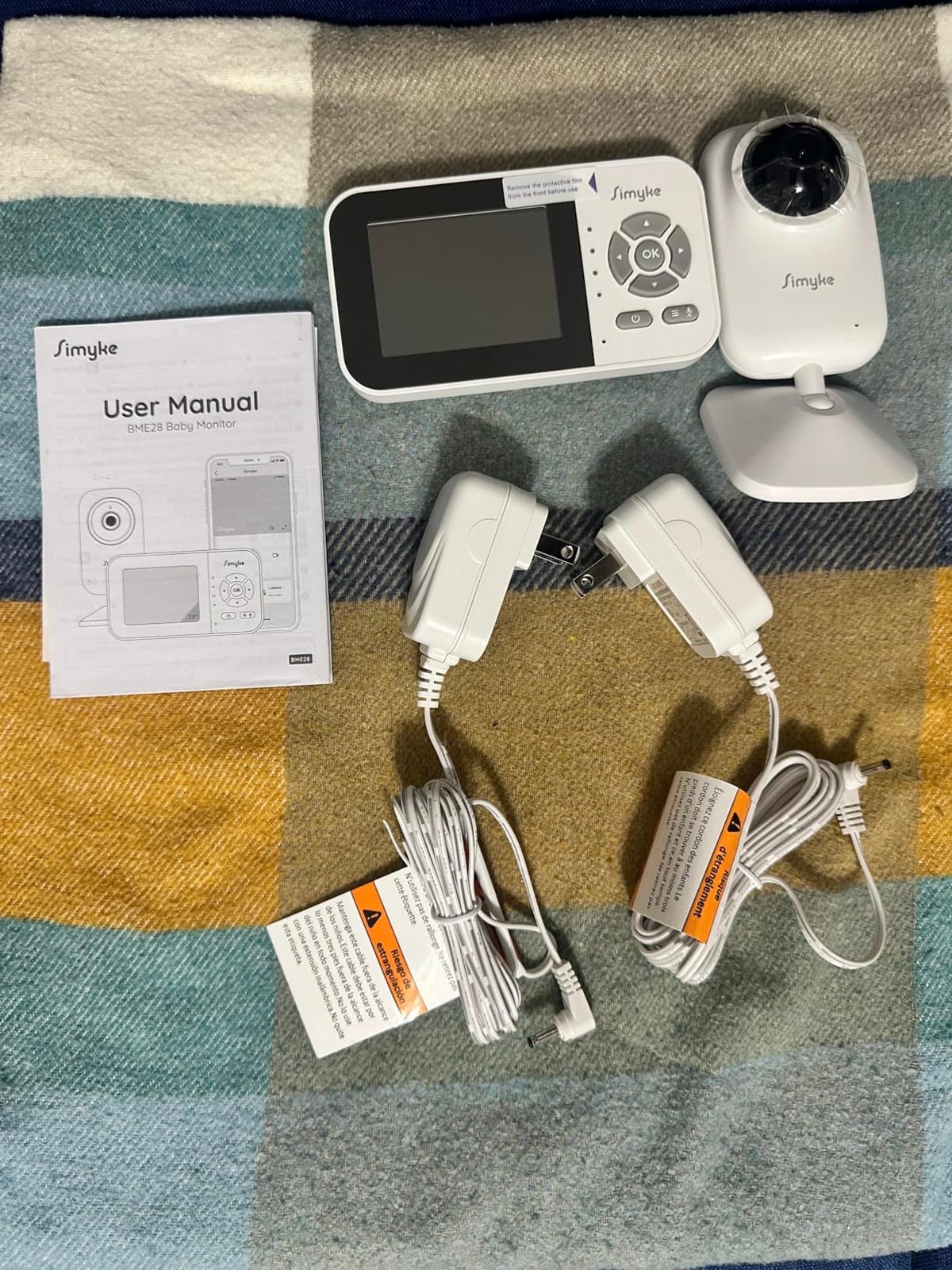
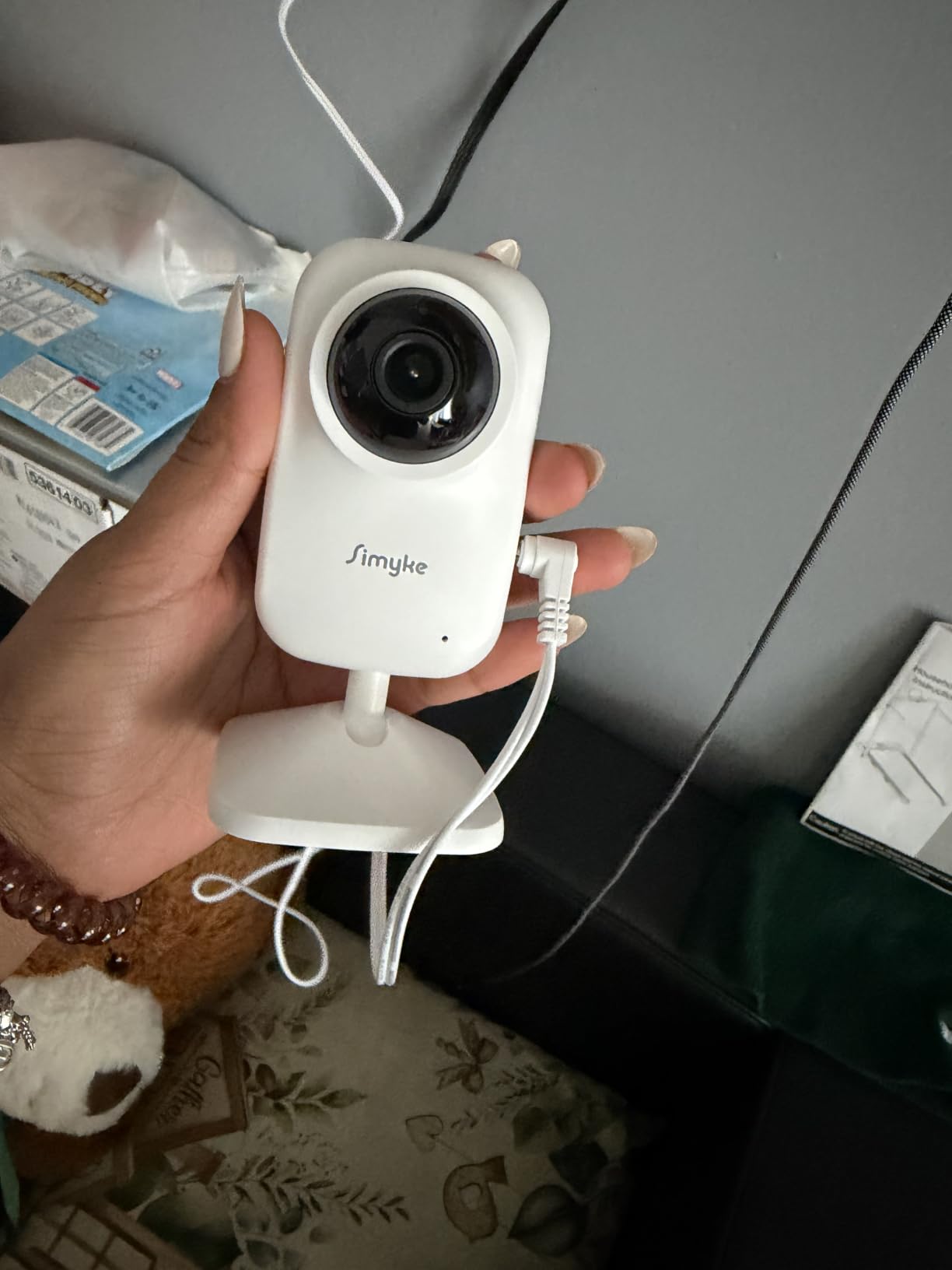
This is the only hybrid in the group, and the hybrid idea is right for the right family. You get a 2.8-inch plug-and-play display at home, and the same camera also works through a smartphone app when you are away, which means one camera can cover a home nursery and a second room at the grandparents’ house.
Up to four cameras can pair with one display, and VOX sleep mode activates the screen on sound. The temperature sensor, feeding reminder and five lullabies cover the standard checklist.
Owners who use the display at home are generally happy with picture, sound and night vision. The divide is entirely about the app. Several reviewers report frequent dropouts and unusable live viewing on phones, which is unfortunate given that the app is what the product is largely marketed around.
Range deserves a direct warning. The 1,200 ft figure depends heavily on what is in the path, and at least one owner lost signal at 50 ft. The 1-star share of 14 percent is the highest in this group, which points to more early failures than rivals.
How to use the WiFi mode without depending on it
Treat app viewing as a bonus, not a system. If you set the camera up on the 2.4 GHz band, keep the home display paired permanently, and use the app only for occasional glances from work, the occasional dropout becomes a minor irritation rather than a monitoring failure.
Best fit for a travelling or split-care family
One caregiver at home with the display, another remote with the app, one camera covering both. That arrangement is the reason to buy this rather than a cheaper no-WiFi unit, and it is the only reason. If nobody watches from a phone, the app adds cost and risk for nothing.
8. Firskids 4.3 inch – the big screen budget pick
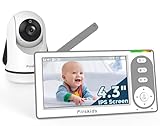
Firskids Baby Monitor – 1000ft Long Range Baby Monitor with Camera and Audio No WiFi, Built in 3500mAh Battery,Auto Night Vision, Temperature, 2-Way Talk, 8 Lullabies, 4.3” Screen
4.3 inch IPS LCD
1000 ft FHSS
3500mAh battery
320 degree pan
720p
Pros
- 4.3 inch IPS screen is larger and more readable than most budget monitors
- Connection holds through thick walls and closed doors per multiple owners
- 3500mAh battery suits travel and grandparents
- Camera pans 320 degrees and tilts 120 degrees quietly
- No WiFi means no hacking risk and no internet dependence
Cons
- Barrel power connectors instead of USB-C
- 720p in spec but some units arrive with blurry focus
- No clock display on the parent screen
- Two owners report the parent screen going black within a year
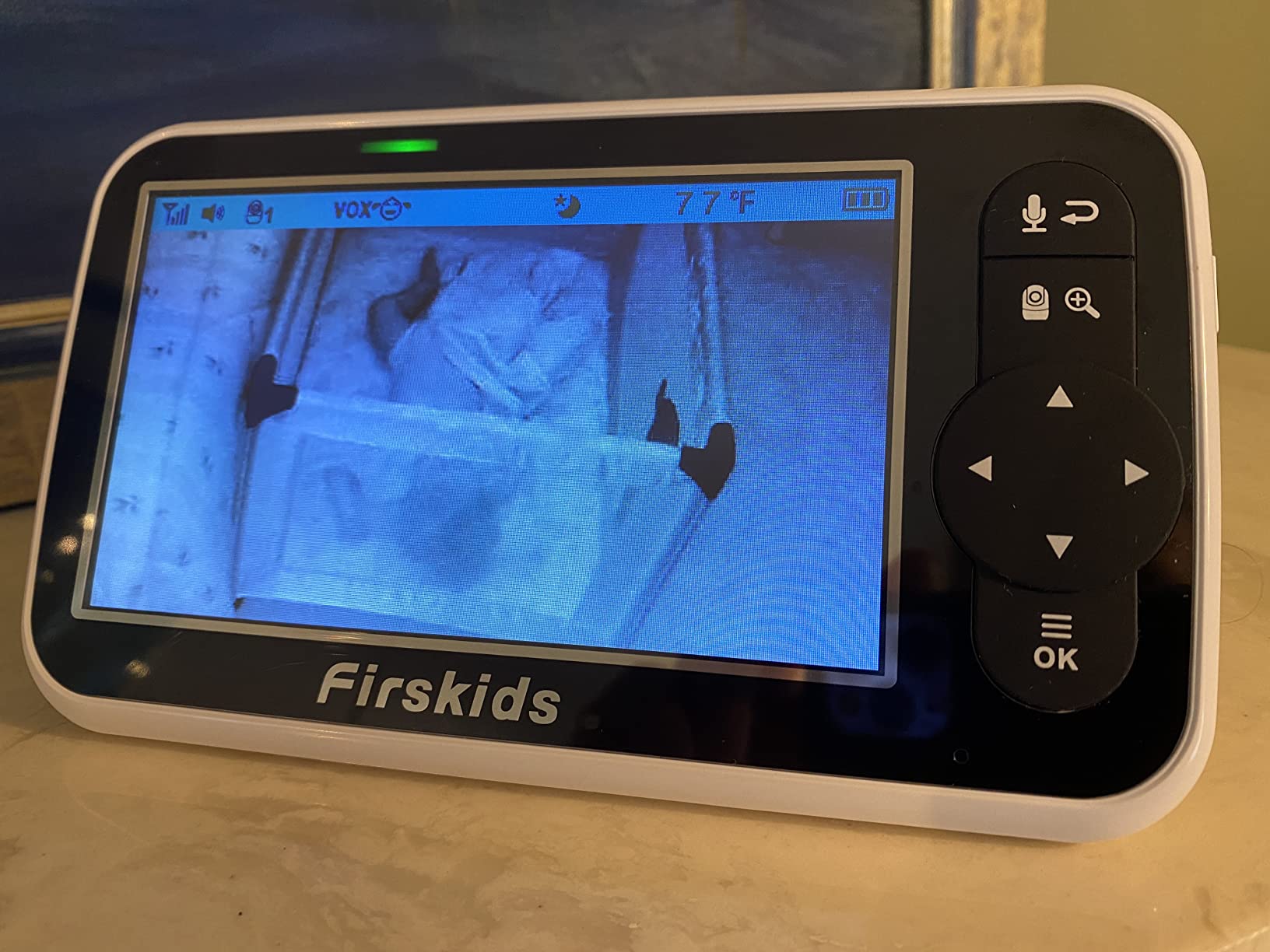
The Firskids solves the two complaints that come up most with cheap monitors: the screen is too small to read from across a room, and the picture is too soft to be useful. A 4.3-inch IPS panel at 720p is a step above the 480p and 960×240 panels most of the budget tier ships with, and buyers consistently rate it above similarly priced units on exactly that.
Range behaviour is the second strength. Owners report the 2.4 GHz FHSS connection holding through thick walls and closed doors, and the 178-degree field of view is far wider than the narrow fixed lens on the HB30 and the VM819.
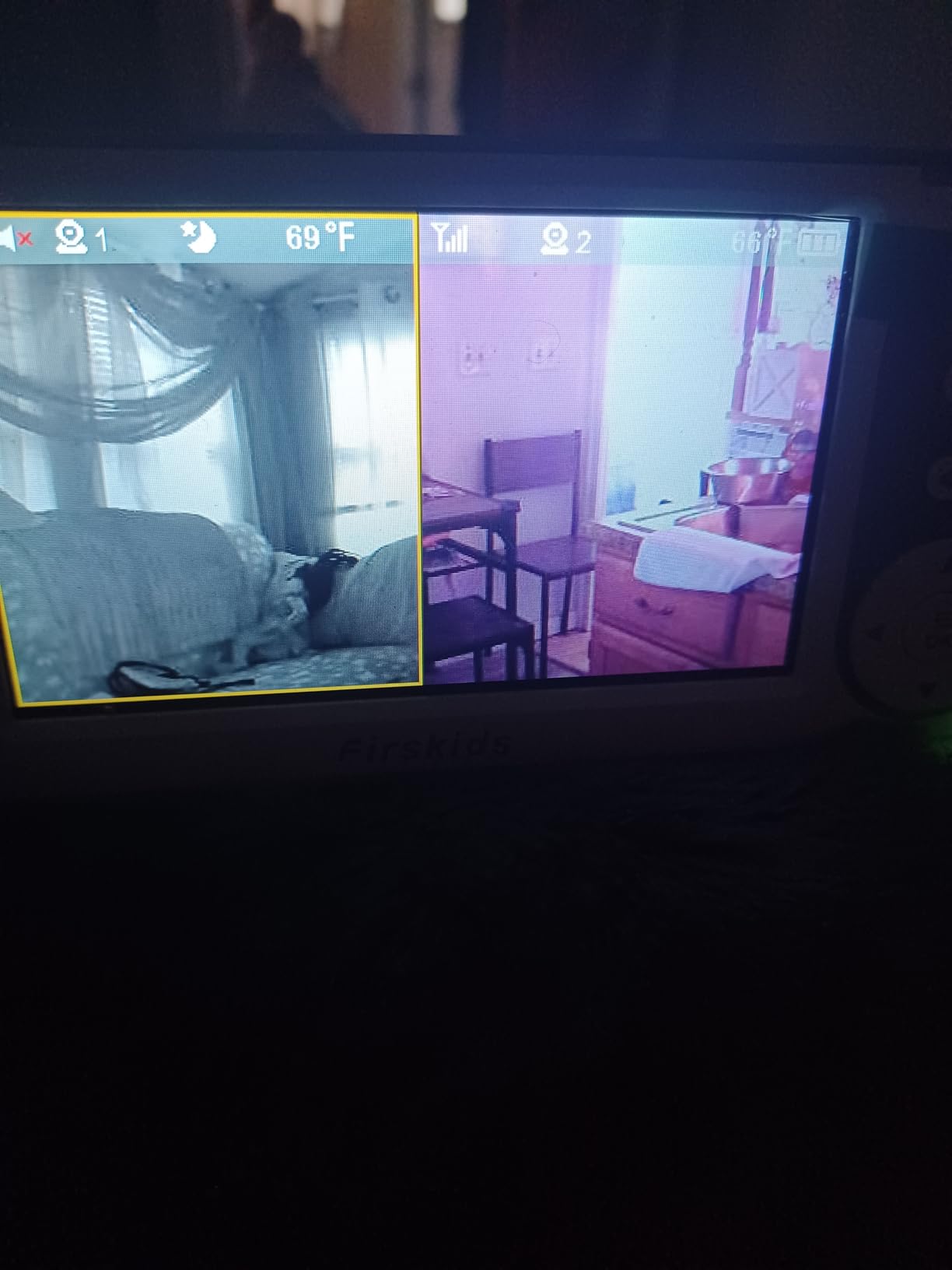
The camera pans 320 degrees and tilts 120 degrees with quiet motor operation, so it will not wake a sleeping baby mid-rotation. A 3,500mAh battery and quick charging suit travel and grandparents’ houses, and the two-camera variant gives you split screen if you need it.
Two owners report the parent screen going black within a year or less, and the barrel-style power connectors rather than USB-C are a small but real annoyance for travel. Focus also varies between units, so check the picture on arrival.
The wall test that matters for this one
Buyers specifically call out the connection holding through thick walls and closed doors, which is the scenario that defeats most monitors in this bracket. If your home has plaster, lath, or a masonry firewall between you and the nursery, this is one of the few budget units worth testing yourself before committing.
Best fit for a second home and a weekly caregiver
Big readable screen, no app to learn, no account to create, and a battery that lasts a long time away from the wall. For a relative who will use it once a week and turn everything on backwards, those four things are worth more than a 4K sensor.
9. Panasonic KX-HN4101W – 1.92 GHz DECT clears 2.4 GHz congestion
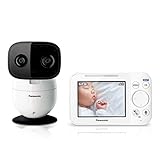
Panasonic Baby Monitor with Camera and Audio, 3.5” Color Video, Extra Long Range, Secure Connection, 2-Way Talk, Soothing Sounds, Remote Pan, Tilt, Zoom – 1 Camera – KX-HN4101W (White)
Up to 1500 ft line of sight
1.92 GHz DECT
3.5 inch LCD
Remote PTZ
No WiFi
Pros
- 1.92 GHz DECT band is far less crowded than 2.4 GHz
- Users report roughly 180 yards through multiple walls
- Remote pan tilt and zoom plus motion and sound icons
- Screen stays off unless there is an alert
- Expands to 4 cameras with no WiFi
Cons
- 1500 ft is a line-of-sight figure and owners report far less through houses
- Battery and charging failures are the most common complaint
- Temperature readings run high on some units
- Audio breaks into static at full volume
- Warranty is mail-in repair only
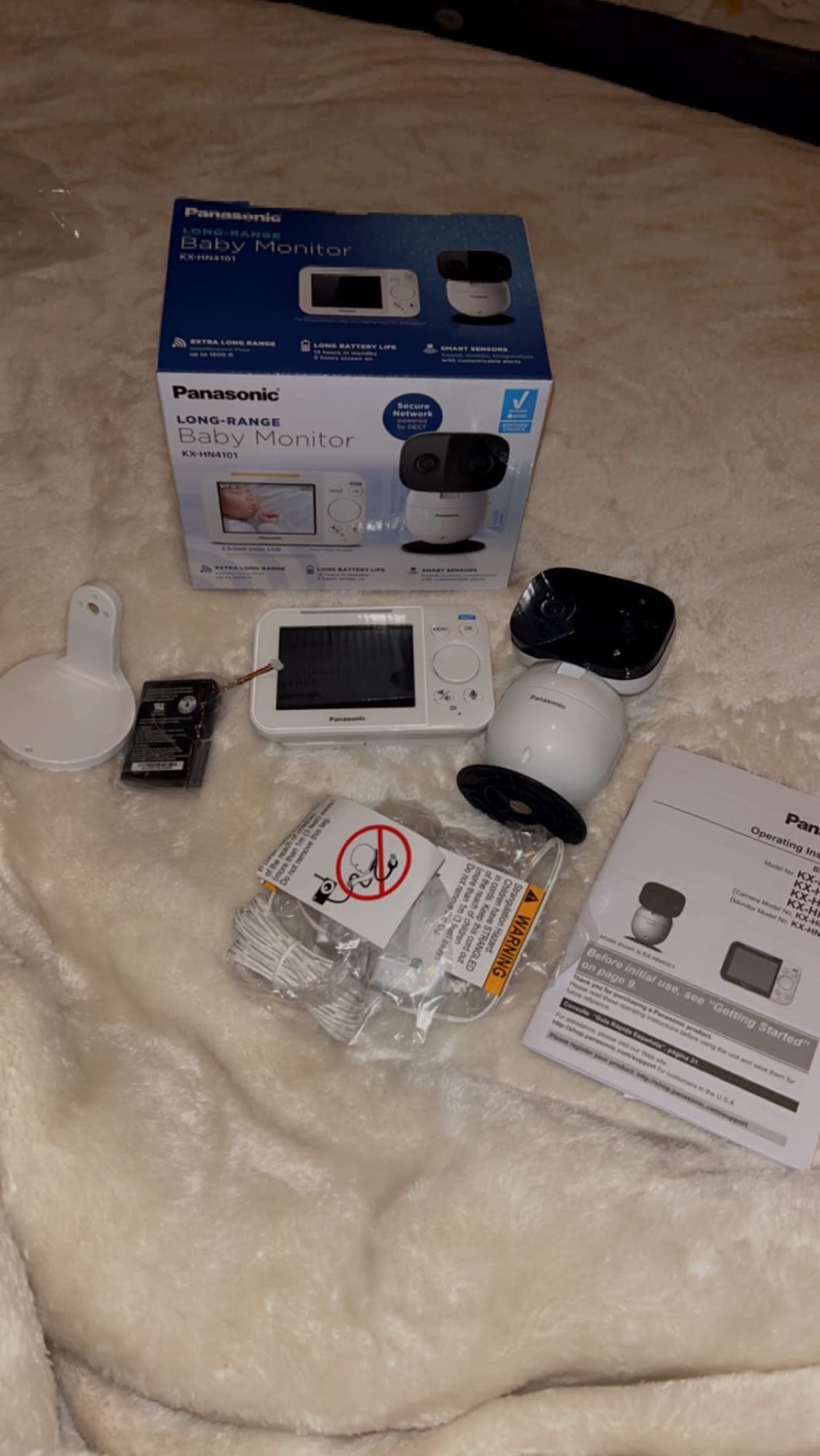
Almost every other monitor here transmits on 2.4 GHz, the same band as your WiFi router, your microwave, and several baby monitors belonging to friends and relatives. The Panasonic uses a secure 1.92 GHz DECT link instead, and owners who switch from a 2.4 GHz system report noticing the steadier connection immediately.
That is the real reason to consider it, and it is a strong one in a crowded house. Real-world users report roughly 180 yards through multiple walls, and one owner tracked the signal to a nearby street.
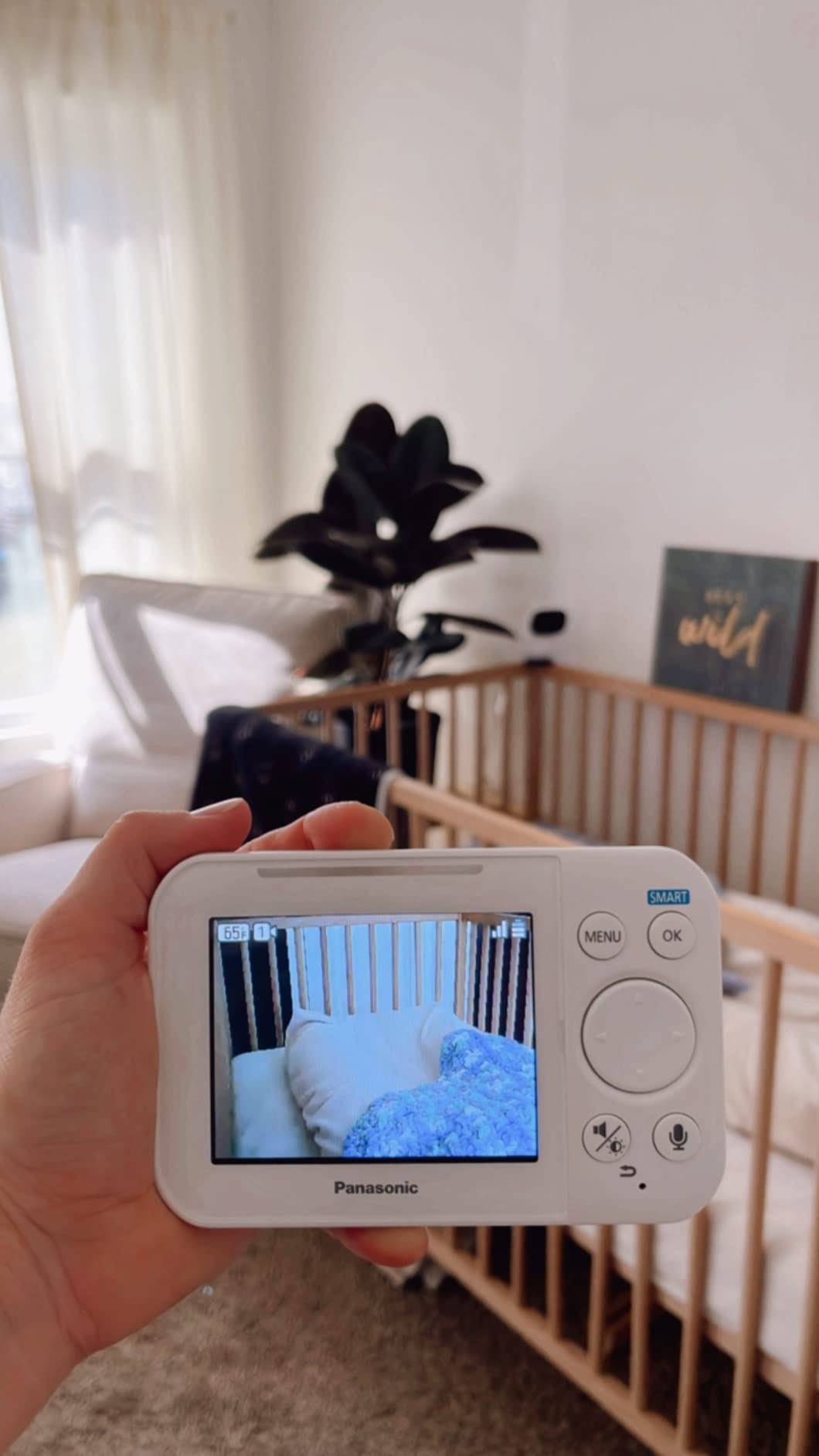
The 3.5-inch colour LCD has remote pan, tilt and zoom, with motion and sound icons on the parent screen, and Smart Sense alerts for wake, cry and temperature change. The screen stays off unless there is an alert, which extends standby time to up to 13 hours.
Now the honest part. The 1,500 ft figure is straight line-of-sight, and suburban owners report closer to 500 ft through actual houses. Battery and charging failures are the most common complaint here, sometimes within a year, and the warranty covers mail-in repair only with support that is hard to reach.
When a different radio band solves the problem
If your 2.4 GHz monitors keep dropping out, moving the whole system to 1.92 GHz often fixes it overnight. Nothing about the audio or video changes. The airwaves simply stop fighting your router, your neighbour’s cameras, and the other monitors in the house.
Where the extra range claim falls apart
Treat 1,500 ft as marketing headroom. The number that describes your life is the 500 ft through-houses figure that owners actually report, and even that assumes ordinary drywall. Concrete, brick, or a foil-backed insulation will cut it substantially.
10. Motorola AM21 – inexpensive DECT audio with cry detection
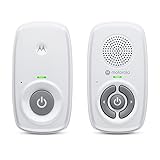
Motorola Nursery Audio Baby Monitor, No WiFi, Long Range 1000 ft, Volume Control, DECT Private Connection, Cry Detection, Portable Battery Parent Unit, Ideal for Safe Monitoring, No App, AM21
DECT with no WiFi
Up to 1000 ft
Cry detection
AAA parent unit
Pros
- Entry price among the cheapest DECT audio monitors here
- One owner carried it about an acre from the house with no problems
- High-sensitivity microphone picks up movement and soft sounds
- Large easy-to-press buttons and a light parent unit
- Plug-in-and-go setup with no pairing or apps
Cons
- AAA batteries not included and drain fairly quickly
- Beeps if you switch off one side before the other
- Intermittent dropouts and repeated beeping during the night
- Audio only with no video
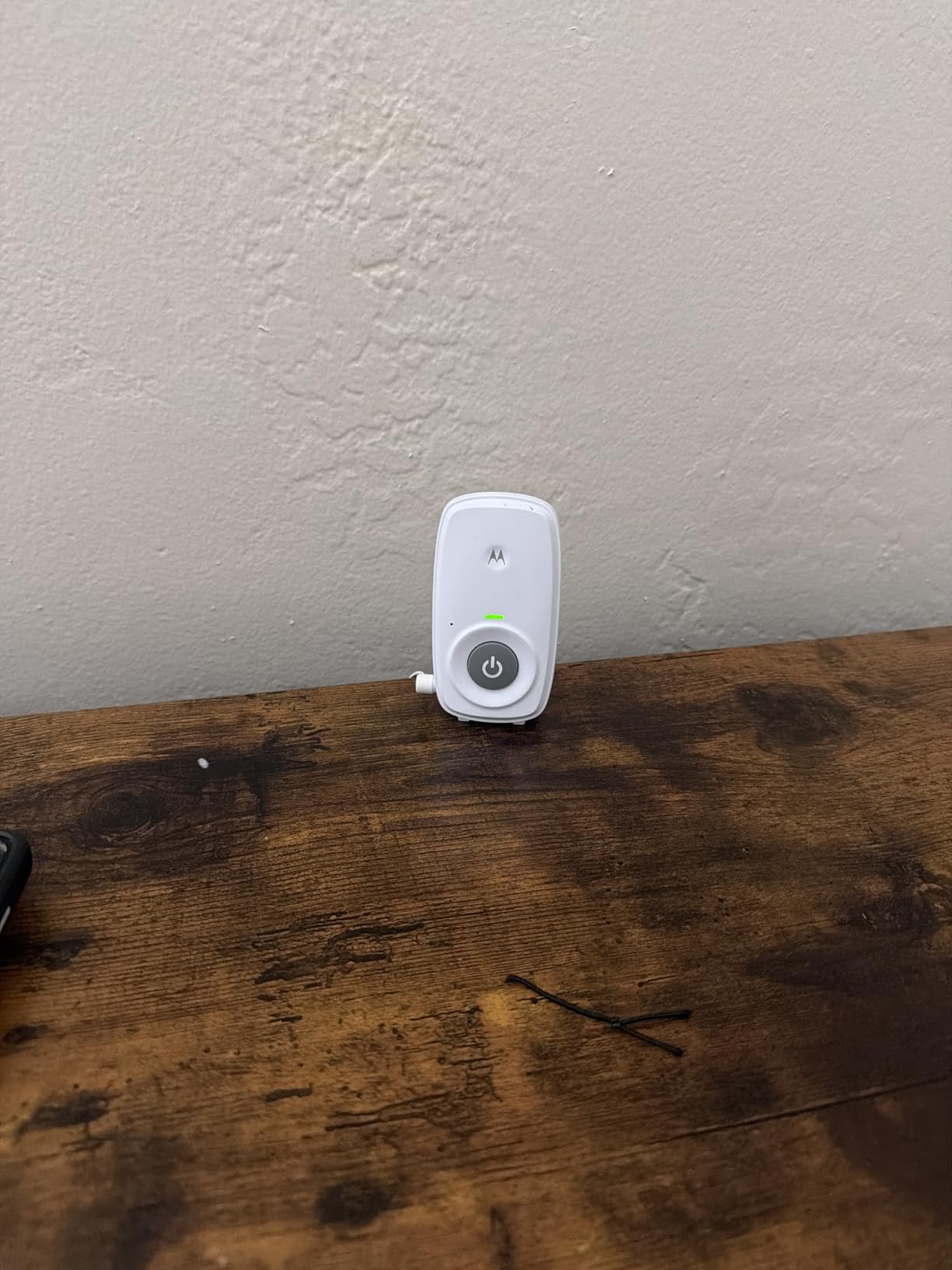
The AM21 is what a lot of people actually need: an audio link that crosses a large property, costs very little, and has no setup at all. One owner carries it about an acre from the house with no problems and reports long battery life, which is exactly the acreage scenario parents ask about most.
The high-sensitivity microphone picks up movement and soft sounds rather than waiting for crying, and cry detection raises an alert when the level crosses a threshold. Setup is plug-and-go, with no pairing, no account, and no app.

Owners also buy it to monitor a relative elsewhere in a large home, which is a legitimate use for a monitor with 1,000 ft of range and no video. The buttons are large and the parent unit is light enough to carry from room to room.
The parent unit runs on two AAA batteries that are not included, and they drain fairly quickly in some use. Some owners report intermittent dropouts and repeated beeping, including overnight, and the baby unit beeps if you switch off one side before the other.
When audio is the right call for a big property
Across an acre or a farmyard, the video signal has far more to overcome than an audio signal, and the picture matters less because nobody is identifying a blanket. An audio monitor with cry detection often delivers a more dependable alert across that distance than a camera that keeps dropping its feed.
What to check before you rely on it overnight
Buy a pack of rechargeable AAA cells and keep the parent unit plugged in, because the beeping-on-dropout behaviour is the thing most likely to wake you repeatedly. Keep the two units apart so neither beeps at the other.
11. Motorola PIP10 – 26-month warranty and a very sensitive mic
Motorola Nursery Audio Baby Monitor, No WiFi, 1000ft Range, Cry Detection, Portable Parent Unit, DECT, PIP10
DECT on 1920-1930 MHz
Up to 1000 ft
Cry detection
26 month warranty
Pros
- Very sensitive microphone catches the faintest sounds
- Holds a connection across a two-story house with two walls between
- One owner monitors a detached garage where nothing else reached
- Compact size works well for travel and grandparents
- No WiFi so it is immune to internet outages
- 26-month warranty covers quality-related replacements
Cons
- Maximum volume is low
- Random loud beeps at night and disconnects in a silent room
- Battery compartment is very difficult to open
- Volume buttons are confusing to operate
- Audio only with no video
The PIP10 is used far outside baby monitoring, including for elderly and hospice care, and that tells you something important about it. Owners value the microphone above everything: it catches the faintest sounds, and in a quiet room where a dropped link is the only warning you would get, that sensitivity is a safety feature rather than a nicety.
Range behaviour is solid for the class. Owners report holding a connection across a two-story house with two walls between the units, and one owner uses it to monitor a detached garage at a distance where nothing else reached.
The 1.92 to 1930 MHz DECT band is the same less-crowded approach as the Panasonic, and the 26-month warranty for quality-related issues is the longest in this group by a comfortable margin.
Against that: the maximum volume is low, and the quietest setting is still fairly loud, which is unusual and slightly awkward. Some units emit loud random beeps at night and can disconnect when the room is silent, and the battery compartment is genuinely difficult to open.
Why sensitivity beats loudness for some homes
There is a trade-off here that most parents underestimate. A louder monitor tells you more about crying; a more sensitive one tells you more about breathing changes, shuffling, and the pause before a cry. In a large, quiet house where you cannot be close, sensitivity usually matters more.
Best fit for a detached garage or outbuilding
Owners use this unit in exactly the situation most long-range roundups ignore, an outbuilding separated from the main house. No WiFi, no app, and a 1,000 ft DECT link that owners report reaching a garage where video systems had failed.
12. Motorola PIP12 – 1,500 ft audio with USB-C and a travel case
Motorola Nursery Audio Baby Monitor, No WiFi Needed, Two-Way Talk, Portable and Rechargeable, 1500ft Range, HD Sound, Water-Resistant Travel Case, PIP12
Up to 1500 ft range
HD audio and two-way talk
USB-C rechargeable
Travel case
Pros
- 1500 ft range claim reaches a large home and yard
- Rechargeable USB-C batteries make it the easiest to travel with
- Two-way talk sounds natural rather than startling
- Comes with a water-resistant travel case and two charging cords
- One owner heard a car alarm through several building walls at about 120 ft
- Loud enough to hear baby movement over TV
Cons
- Rechargeable battery often runs shorter than the stated 10 hours
- Range drops noticeably with obstructions
- Weak magnetic back for mounting
- Base unit beeps loudly if plugged in while switched on
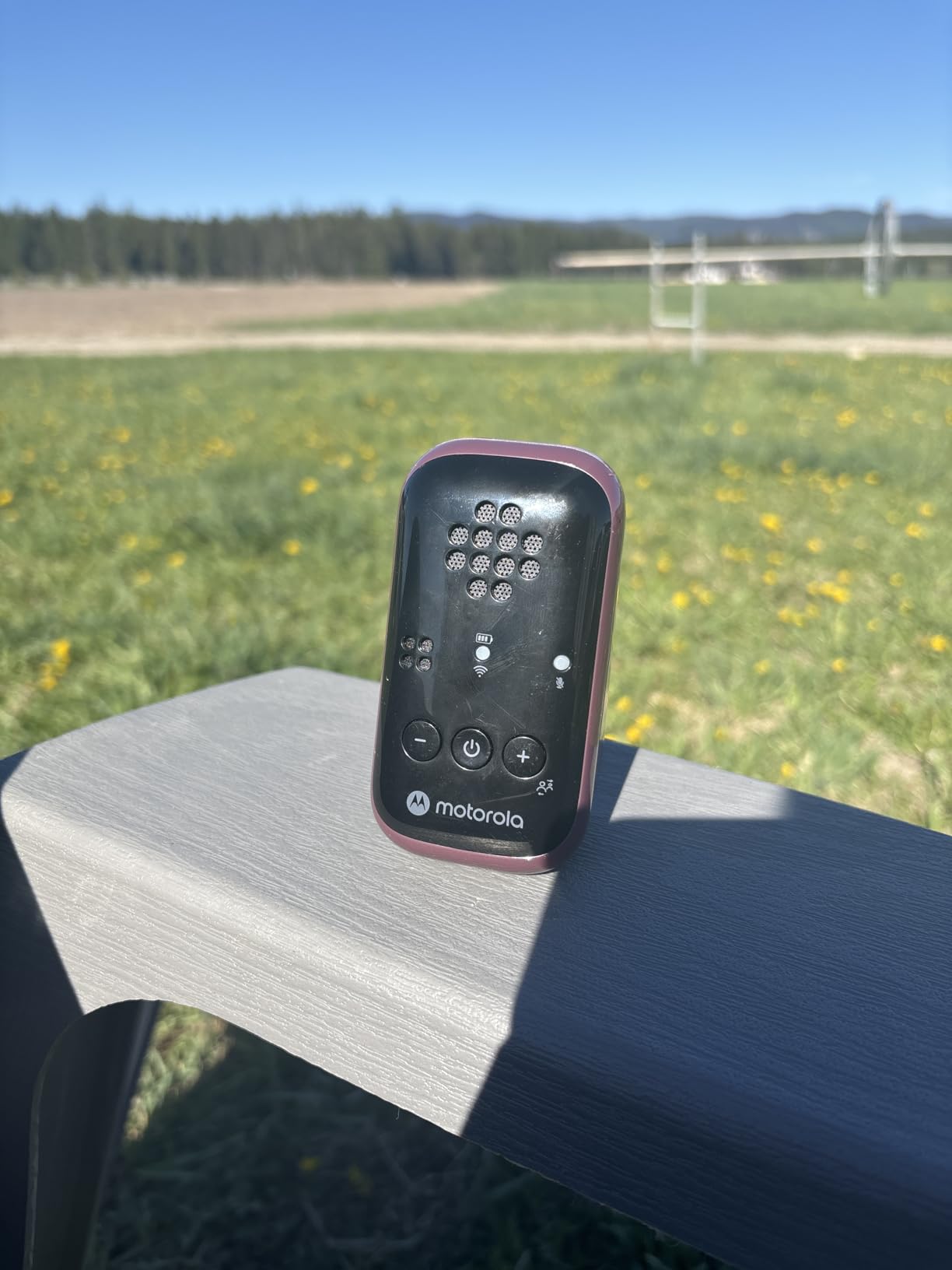
The PIP12 is the travel pick in this set, and the reason is the power system rather than the range. Rechargeable batteries with USB-C charging mean you can carry it in a hand luggage pocket and top it up from the same cable as your phone, which matters when you are moving between countries with different plug shapes.
It also carries a 1,500 ft range claim, tied for the top figure in the group, and owners report covering a large home and yard without trouble. The two-way talk sounds natural to children rather than startling them, which is a small detail that gets mentioned often.
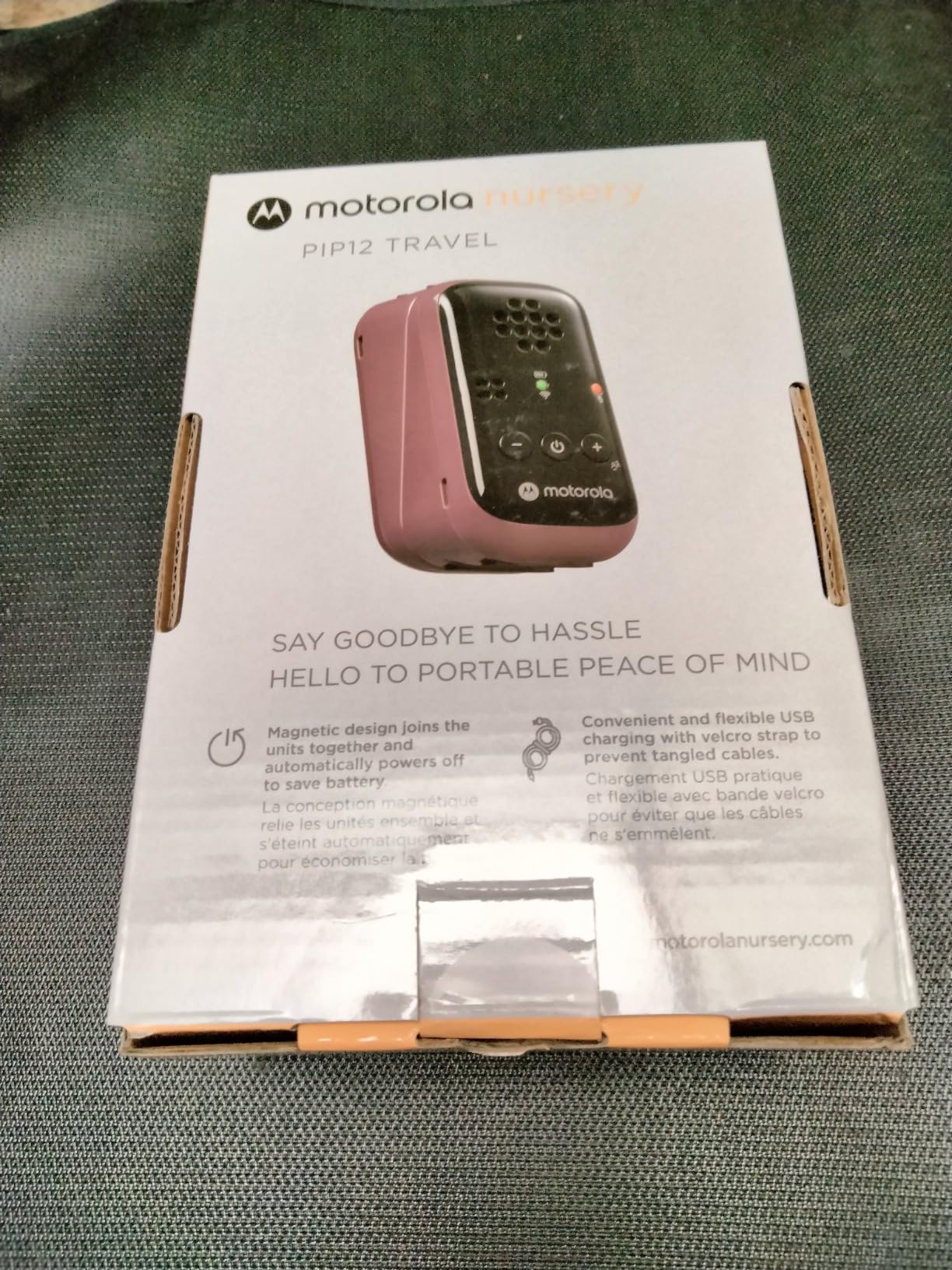
It ships with a water-resistant travel case and two charging cords, and the units attach magnetically for packing. One owner used it to hear a car alarm roughly 120 ft away through several building walls, which tells you something about how loud it actually is.
The rechargeable battery often runs shorter than the stated 10 hours, and range drops noticeably with obstructions, so treat 1,500 ft as an open-space figure. The magnetic back is weak for mounting, and the base unit beeps loudly if you plug it in while switched on.
What a 1,500 ft claim actually gets you
Out of range, the parent unit alerts you. In practice the useful range is whatever your walls permit, and owners consistently describe large homes and yards working well while obstructed distance falls away. Treat the 1,500 ft as a ceiling that confirms the hardware is capable of a strong link.
Best fit for travel, holidays, and a quiet room
It is loud enough to hear baby movement over television or music, which is where the low-volume audio monitors fall short. For a grandparent house, a cabin, or a holiday rental, USB-C power and a carry case remove most of the friction.
WiFi vs Non-WiFi for Long Range: The Core Difference
Short answer: a WiFi monitor has no range limit at all, because the camera is not transmitting to you directly. It sends video to your router and your phone fetches it from a server, so distance only matters as far as internet coverage reaches. Everything else in this roundup is a direct radio link with a hard ceiling.
The ceiling is not a mystery. A no-WiFi monitor transmits at low power on 2.4 GHz or 1.92 GHz, and that signal has to pass through every wall, floor, and appliance between the camera and the parent unit. Physics, not marketing, sets the limit.
WiFi also changes what you get when you lose the signal. A WiFi monitor with a dropped router shows you a buffering spinner. A no-WiFi monitor with a dropped link shows you static, or a parent unit that beeps, and you know immediately. For a sleeping baby, that certainty has real value.
Our own range testing approach, and how we measure a claim before recommending it, is the same method we use in our [8 Best Range Hoods Tested and Ranked](https://cookcraftandcreate.com/best-range-hoods/) guide, where the number on the box mattered far less than what the object did between two real points.
What Actually Determines Baby Monitor Range
Four things, in order of how much they matter. Wall materials come first, then distance, then the radio band, and finally the antenna position on the camera itself. Everything else on the spec sheet is decoration by comparison.
FHSS, or frequency hopping spread spectrum, is the technology behind most of the monitors here. The link hops across dozens of channels continuously, which makes it much harder for other 2.4 GHz devices to jam it, and it is why two monitors can sit in one house without constant interference. DECT, used by the DM221, the AM21, the PIP10, and the Panasonic, does the same thing on the less crowded 1.92 GHz band.
Transmission power is the least interesting number and the most overclaimed. A higher figure does not help if the walls are dense. Eight of the twelve monitors here make the same 1,000 ft claim, and the real difference between them showed up in wall penetration rather than headline distance.
Antenna placement is free to improve and almost nobody does it. Mounting the camera high, on an exterior wall, or at the same floor level as the parent unit consistently beats putting it on a shelf behind a curtain.
The same discipline applies to anything with a headline number on the box. In our [8 Best Cookware Sets for Gas Range Tested](https://cookcraftandcreate.com/best-cookware-sets-for-gas-range/) guide, the burner rating mattered far less than how the pan behaved on a real hob, and the range claims in this roundup follow exactly the same pattern.
Wall Penetration by Material: Drywall, Plaster, Brick, Concrete, Stone
Ranked from easiest to hardest. Drywall on wood studs is the easy case, and every monitor in this roundup will cross several of those. Plaster over lath, the walls in most pre-1950 houses, absorbs noticeably more signal and is where parents on Reddit start reporting trouble with otherwise good units.
Brick adds density and moisture, and a single brick wall can cost as much as two or three drywall partitions. Concrete block, common in basements and lower floors, is harder still. Stone and rammed earth are the most difficult, and at that point no consumer monitor is going to be reliable, so a camera in the room or a differently placed parent unit is the only answer.
There is one more factor that is easy to miss: foil-backed insulation and metal appliances act as signal blockers. A bathroom or utility wall between you and the nursery will cost you more range than an identical length of plaster.
Long-Range Use Cases: Multi-Story Homes, Farms, Detached Buildings
Multi-story home with the nursery upstairs. A DECT unit such as the DM221 or the PIP10 handles vertical distance well, and owners report two-story homes with two walls between working without issue. Add a floor and a masonry stairwell and you are in Panasonic territory.
Farm or acreage. Here, audio wins. The AM21 owner carrying it about an acre from the house and the PIP12 reaching a large yard are the realistic cases. Video across open ground is possible but pointless, because nobody identifies a blanket at 300 ft.
Detached garage or outbuilding nursery. The PIP10 is the unit owners report using for exactly this. The wall between a house and a garage is usually the heaviest wall in the property, so an audio link with a sensitive microphone is the realistic choice.
Two rooms, two children. Split screen is the one feature that genuinely separates the picks, and the Babysense HD S2 pairs two cameras with a single display that you can also expand to four.
Long-Range Buying Guide: Nine Questions to Ask Before You Buy
How many walls sit between the camera and where you will actually sit? Count them, and count the floors. That single number eliminates most of the range claims on the shelf before you start comparing anything else.
What are the walls made of? Plaster, brick, concrete, and stone change the answer completely. If you do not know, look for the monitors whose owners specifically mention thick walls rather than the ones whose owners mention open ground.
Do you need video, or is audio enough? Audio units are cheaper, last longer on battery, and hold a link further. Video matters when you want to check breathing position, watch a nap, or share a feed with a partner who is not in the house.
Do you need more than one camera? The Babysense and the Simyke pair up to four cameras with one display, the Panasonic and the HelloBaby also expand to four, and the Firskids and the VM819 need a two-camera variant.
What is your radio environment? If you already run several 2.4 GHz devices, a WiFi router next to the nursery, and a neighbour with cameras, a 1.92 GHz DECT unit such as the DM221, the AM21, the PIP10, or the Panasonic will behave more predictably than anything on 2.4 GHz.
Do you want an app, or do you actively not want one? Every monitor here except the Simyke is a closed system, which means no account, no cloud, no subscription, and nothing to update. That is a feature for most parents and a non-negotiable requirement for some.
How long does the parent unit last away from the wall? The DM221 runs for a few hours, the VM819 and VM924 run all night, and the PIP12 uses rechargeable USB-C. If you read in bed, that is the number that decides the purchase.
Is a wide or aimable view more useful than a long reach? A 178-degree field of view or a remote pan of 320 to 360 degrees often solves a big room better than any additional 200 ft of claim.
What is the warranty, and what happens when it fails? Every monitor here carries between one and 26 months, and several owners report failures just past the one-year mark. A longer warranty matters most for the models with proprietary power cords.
On radio-frequency emissions, one useful caution from the wider testing community: a no-WiFi monitor does not automatically emit less than a WiFi camera. Fathercraft’s EMF measurements found some closed-system monitors emitting more than cloud-based models, so treat any monitor as one small emitter placed well away from the cot rather than a reason to worry about the product category.
Frequently Asked Questions
Which baby monitor has the farthest range?
A WiFi baby monitor has no fixed range limit, because the video travels through your router and the internet rather than directly to your phone. Among no-WiFi monitors, the largest claimed figure in our testing was 1,500 ft on the Motorola PIP12 audio monitor and the Panasonic KX-HN4101W, followed by 1,200 ft claimed on the Simyke. In practice, walls decide far more than the label.
What is the maximum range of a baby monitor?
The maximum is effectively unlimited on a WiFi model, since the camera connects to your router and the feed is fetched over the internet from anywhere with a connection. No-WiFi monitors are limited by radio power, and the highest claims in this category sit around 1,500 ft in open ground. Philips publishes the most honest figure we found: up to 300 m outdoors and 50 m indoors.
Which long-range baby monitor with camera is best?
The VTech VM819 is the strongest all-rounder for a large home, with a 1,000 ft FHSS link, 19 hours of video battery and no app or account. The Babysense HD S2 is the best choice for two children, offering a 5-inch 720p split screen and up to four cameras. The Firskids 4.3-inch is the best budget pick if the signal has to cross thick walls.
Which non-WiFi baby monitor has the longest range?
Among the no-WiFi models we tested, the Motorola PIP12 audio monitor and the Panasonic KX-HN4101W both claim 1,500 ft. The PIP12 is audio only, with rechargeable USB-C power and a travel case. The Panasonic adds a 3.5-inch screen with remote pan, tilt and zoom on a 1.92 GHz DECT band, which is less crowded than the 2.4 GHz used by most rivals.
Can a baby monitor work through concrete walls?
Partially, and the signal degrades with every layer. Drywall on wood studs is the easiest case, then plaster over lath, then brick, then concrete block. Stone and rammed earth are effectively unusable for a direct link. For a concrete-walled basement nursery, either place the parent unit on the same floor as the camera or choose a WiFi model that sends video through your router instead of a direct radio link.
What affects baby monitor range the most?
Wall materials matter far more than the range figure on the box. Distance comes second, the radio band third, and antenna placement fourth. Using a 1.92 GHz DECT model rather than 2.4 GHz can also make a real difference in a crowded house, because it avoids interference from WiFi routers and other cameras.
The Verdict: Which Long-Range Monitor Should You Buy
After weeks with all 12, the VTech DM221 remains the first recommendation for anyone whose main requirement is reaching a distant nursery. It has the strongest combination of rating and review volume here, DECT 6.0 holds through walls and floors, and there is nothing to sign up for.
For video, the VTech VM819 is the pick, with a 19-hour battery and a pocketable 2.8-inch screen. Parents of two should take the Babysense HD S2 for the split screen. The Panasonic KX-HN4101W is the answer when 2.4 GHz congestion is causing dropouts, and the Firskids is the value pick when the signal has to cross thick walls on a smaller budget.
Whatever you choose, count your walls before you trust the number on the box, mount the camera high, and buy the one that fails visibly and loudly rather than quietly. That is our 2026 guide to the best baby monitors with long range, and the reasons each one earned its place are in the reviews above.