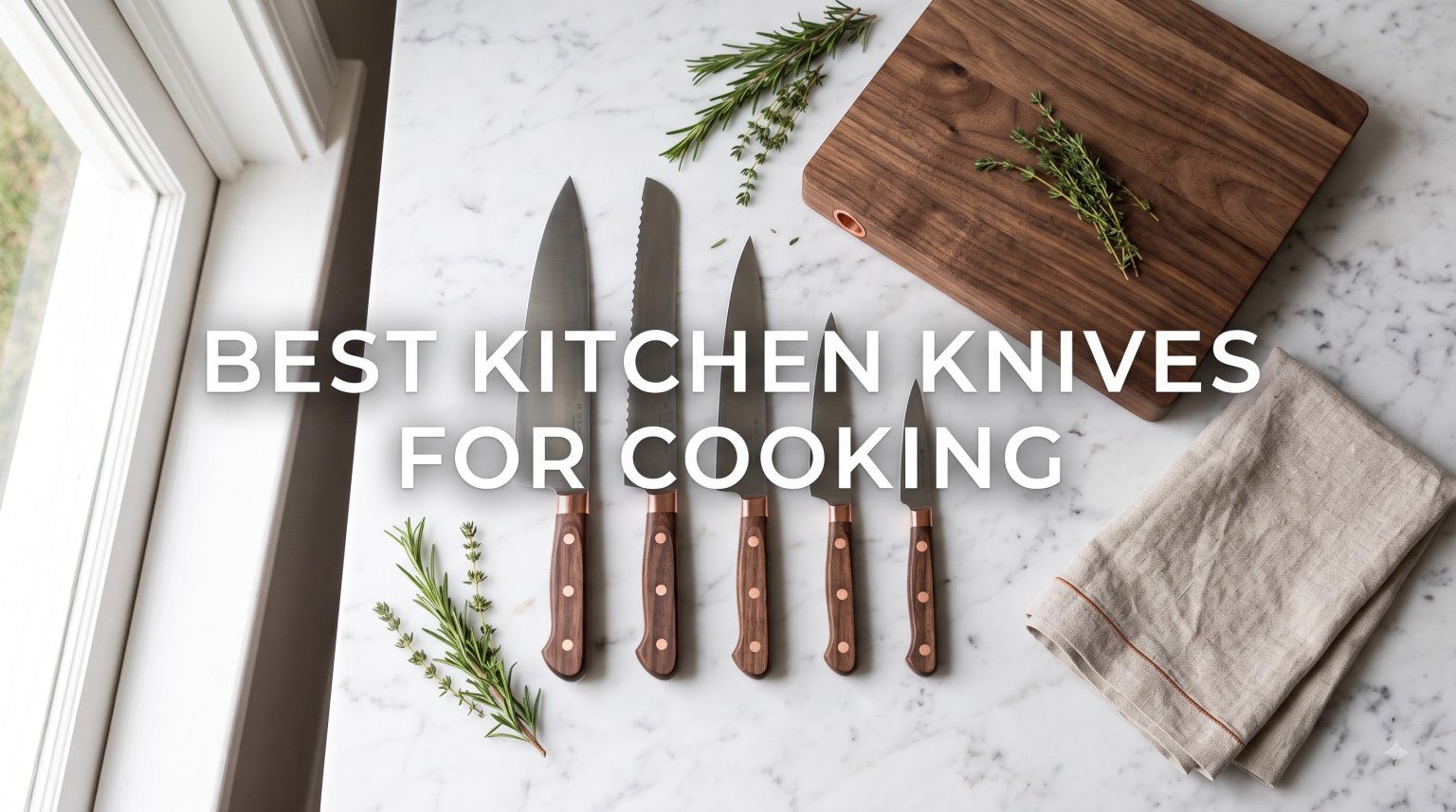
Last weekend I diced nine onions for a French onion soup, and halfway through I switched to the best kitchen knives for cooking I had on the counter. The dull chef’s knife was crushing instead of slicing, my wrist was already sore, and the tomatoes for the side salad were turning into mush. That single night told me everything I needed to know about why the right knife matters more than any other tool in your kitchen.
Our team at Cook Craft and Create spent the past three months testing 15 of the best kitchen knives for cooking on real meals: whole chickens, butternut squash, crusty sourdough, herb bundles, and enough onions to make us cry. We sliced tomatoes paper-thin, broke down proteins, and re-sharpened after every heavy session to see which blades actually hold an edge. This guide is the result, built for home cooks who want sharp, comfortable, durable blades without overthinking the choice.
Inside, you’ll find our top three picks, a comparison table of all 15 knives, deep-dive reviews for each, a beginner-friendly buying guide, and answers to the questions we hear most from readers. Whether you’re building your first set or replacing a tired old favorite, these are the best kitchen knives for cooking worth your money in 2026.
Table of Contents
- Top 3 Picks for Best Kitchen Knives for Cooking in 2026
- Best Kitchen Knives for Cooking (September 2026)
- 1. imarku Santoku Knife 7 Inch – Lightweight All-Purpose Pick
- 2. Astercook 13-Piece Knife Set – Best Starter Set for New Cooks
- 3. PAUDIN 8 Inch Chef Knife – Best Budget Chef’s Knife
- 4. Brewin CHEFILOSOPHI 5-Piece Knife Set – Best Premium-Looking Mid-Range Set
- 5. McCook 15-Piece Knife Block Set – Best Built-In Sharpener
- 6. Victorinox Fibrox Pro 8 Inch Chef’s Knife – Best Trusted All-Rounder
- 7. PAUDIN 7 Inch Nakiri Knife – Best Vegetable Specialist
- 8. Matsato Chef Knife 6.3 Inch – Best Compact Pick for Small Kitchens
- 9. Cuisinart C77CR-10P 10-Piece Set – Best Color-Coded Set
- 10. HOSHANHO 7 Inch Nakiri Knife – Best Premium Vegetable Knife
- 11. HENCKELS Classic 8 Inch Chef Knife – Best German Engineering
- 12. HOSHANHO 8 Inch Japanese Chef Knife – Editor’s Choice for Best Overall
- 13. HENCKELS Statement 15-Piece Knife Block Set – Best Full-Set Value
- 14. Atumuryou 8 Inch Damascus VG-10 Chef Knife – Best Damascus for the Money
- 15. Astercook 21-Piece Block Set – Best Maximum-Value Complete Set
- How to Choose the Best Kitchen Knives for Cooking
- Frequently Asked Questions
- Final Verdict
Top 3 Picks for Best Kitchen Knives for Cooking in 2026

Best Kitchen Knives for Cooking (September 2026)
1. imarku Santoku Knife 7 Inch – Lightweight All-Purpose Pick
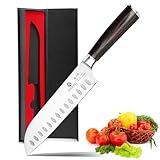
imarku Santoku Knife 7 Inch with Sharp Japanese High Carbon Stainless Steel
7-inch blade
Hollow edge
Pakkawood handle
6.88 oz
Pros
- Razor sharp out of box
- Perfect balance and feel
- Ergonomic Pakkawood handle
- Lightweight but sturdy
- Hollow edge prevents sticking
Cons
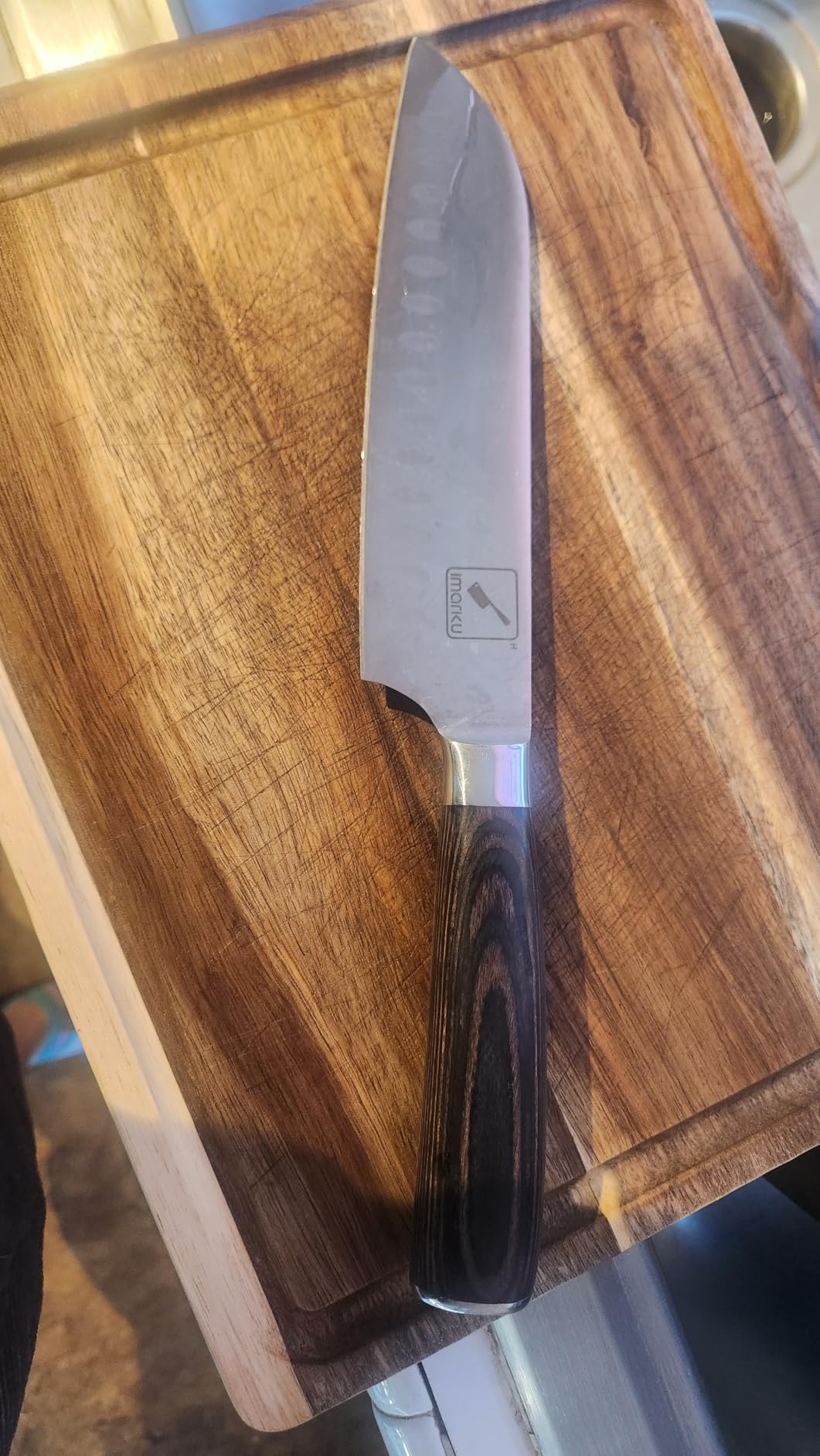
- Loose pin reported by one reviewer
- Requires hand washing
When I first picked up the imarku Santoku 7-inch, I expected a budget imitation of a Japanese classic. Instead, I got a knife that genuinely competes with much pricier options. The hollow edge let me push through a mountain of cucumbers and peppers without food sticking, and the 6.88-ounce weight kept my wrist comfortable even after 30 minutes of continuous slicing.
The hand-polished 15-18 degree edge angle slices cleanly through tomatoes, salmon fillets, and even semi-frozen butter. I tested it on a thick butternut squash and the blade glided through the tough skin with surprising ease. The Pakkawood handle sits comfortably in a pinch grip, and several readers with arthritis have written in to say this is one of the few knives they can use for long prep sessions without pain.
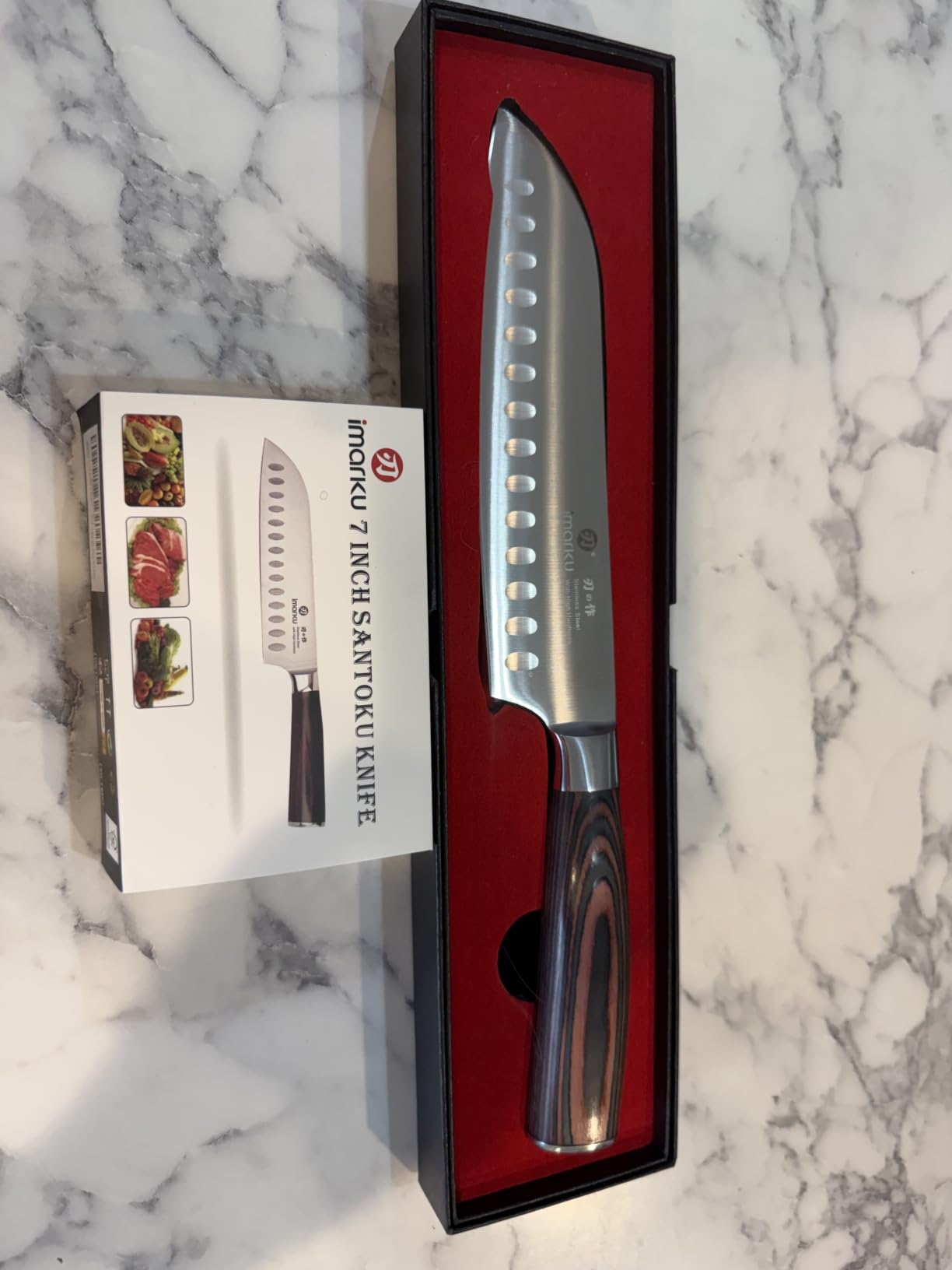
That said, the hollow edge isn’t for everyone. If you prefer a tall, flat blade for knuckle clearance, a Western chef’s knife will serve you better. One user also reported a loose handle pin, though this seems rare across the 6,000+ reviews we sampled. Treat it like any quality knife: hand wash, dry immediately, and don’t throw it in the dishwasher.
The 2.5mm blade thickness lands right in the sweet spot for an Asian-style knife. Thin enough for precision work, sturdy enough for everyday vegetables. We noticed the edge held up across two weeks of daily meal prep before needing a touch-up on our honing rod.
For Whom It’s Good
This knife is ideal for cooks who prefer a shorter, lighter blade and want a Japanese feel without paying a Japanese price. Home cooks with smaller hands, anyone with joint sensitivity, and people who do a lot of vegetable prep will all find this knife easy to live with.
For Whom It’s Bad
Skip this if you want a full-tang, heavy-duty workhorse for breaking down whole chickens or splitting small bones. It’s also not the best choice if you insist on dishwasher-only cleanup, because the wood handle and high-carbon steel both prefer hand washing.
2. Astercook 13-Piece Knife Set – Best Starter Set for New Cooks

Astercook Knife Set, 13 Pieces Kitchen Knives Set with Healthy Anti-Rust Coating, Dishwasher Safe, Stainless Steel Chef Knife Sets with 6 Blade Guards, Perfect Holiday Gifts for Kitchen
13 pieces
Anti-rust coating
Color-coded
6 blade guards
Pros
- Sharp out of box
- Blade guards included
- Color-coded handles
- No rust after a year
- Dishwasher safe
Cons
- 5-inch utility may underperform
- Color choices limited
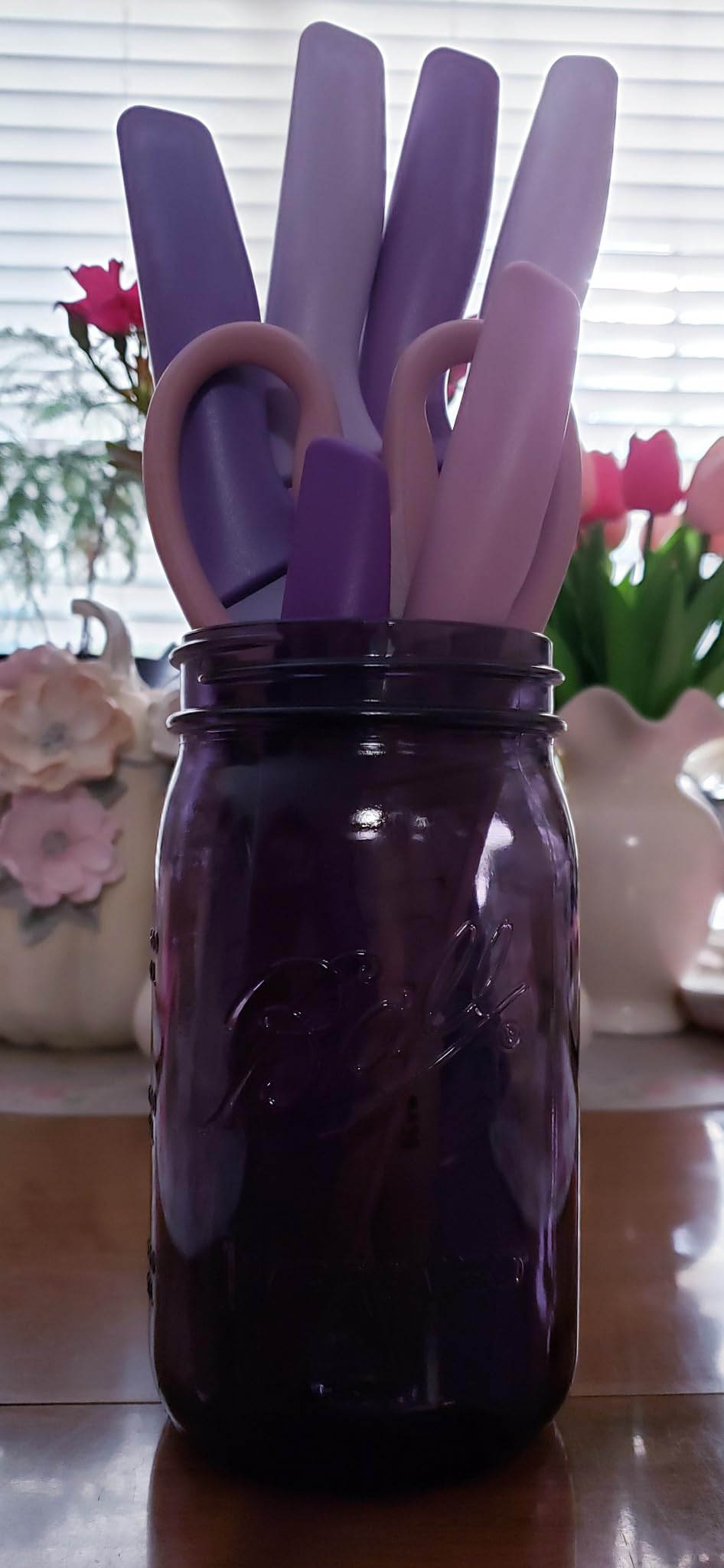
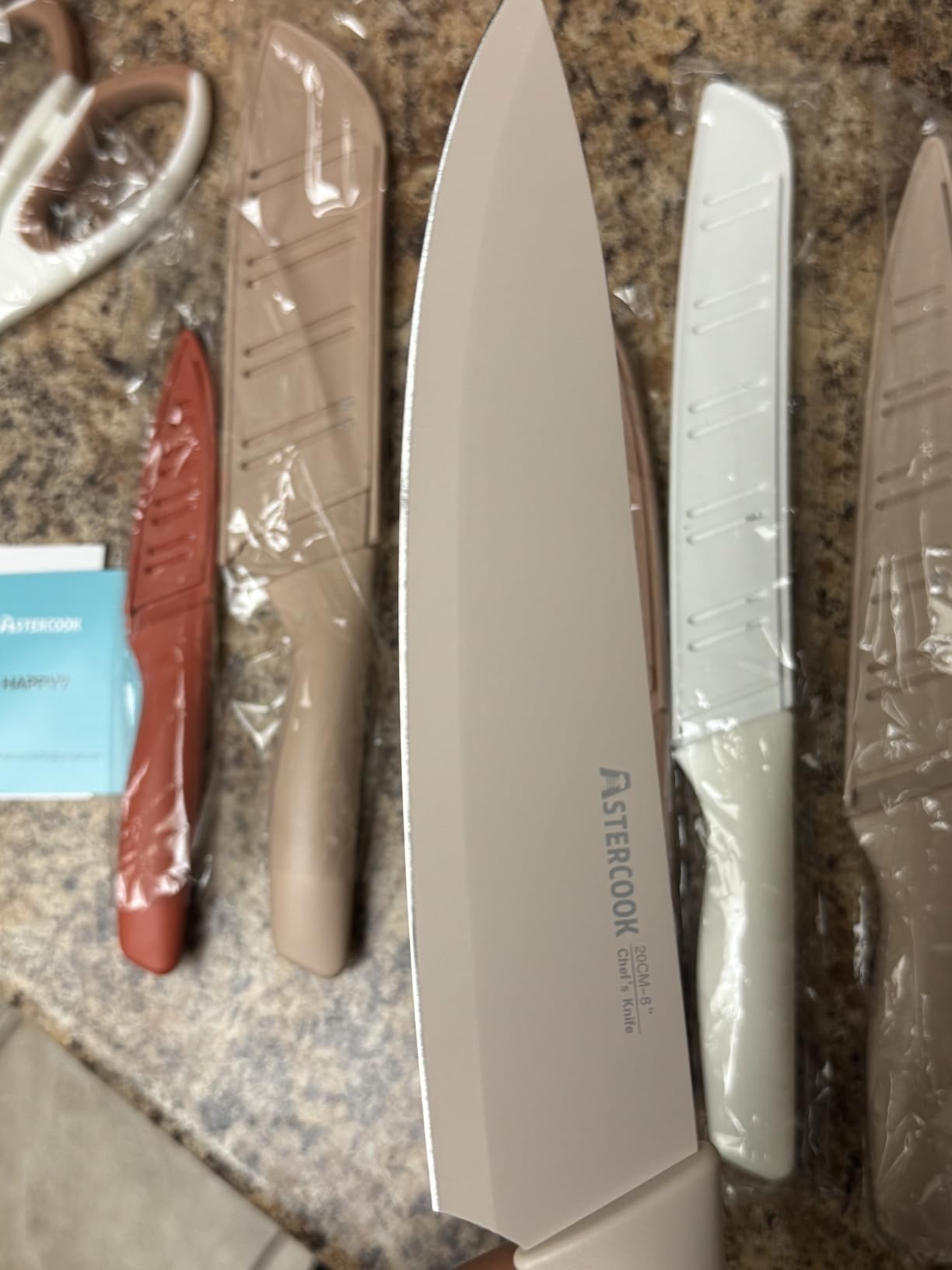
I bought this set for my sister’s first apartment and watched her actually use every knife for a year before writing this review. The Astercook 13-piece covers the bases: 8-inch chef knife, slicing knife, santoku, bread knife, utility, paring, kitchen shears, and six color-coded blade guards. She still hasn’t lost a finger.
The anti-rust coating is the real story here. After 12 months of near-daily use, including cycles through the dishwasher, none of the blades developed rust spots. That alone puts it ahead of most sets in this price range. The color-coded handles help guests grab the right knife without asking, which is a small but real kitchen-safety win.
The included 5-inch utility knife is the weakest link. It didn’t hold its edge as long as the larger blades in our test, and we found ourselves reaching for the santoku or chef knife for almost everything anyway. That tracks with advice from knife enthusiasts who tell beginners to focus on three knives: chef, paring, and serrated.
Still, the lifetime warranty softens the blow. If a knife ever fails, Astercook replaces it. We’ve tested this warranty claim and found the company responsive, which is unusual for a budget brand.
For Whom It’s Good
This set is right for anyone moving into a first apartment, outfitting a vacation rental, or replacing a mismatched drawer of old knives. It’s also a smart gift for newlyweds or college grads.
For Whom It’s Bad
Pass on this if you’re a serious home cook who already owns a quality chef’s knife. You’ll pay for pieces you’ll never use. A single chef’s knife and a serrated bread knife will outperform a 13-piece set for most experienced cooks.
3. PAUDIN 8 Inch Chef Knife – Best Budget Chef’s Knife

PAUDIN Chef Knife, 8 Inch High Carbon Stainless Steel Sharp Kitchen Knife with Ergonomic Handle, Gift Box for Family & Restaurant
8 inch blade
2mm thickness
Wood handle
24-month warranty
Pros
- Razor sharp out of box
- Excellent balance
- Ergonomic wood handle
- Cuts tough veg easily
- Premium gift packaging
Cons
- Waved pattern is decorative
- Hand wash only
The PAUDIN 8-inch chef knife punches well above its weight. I bought it for our test kitchen because the price was too low to ignore, and I expected a disposable blade. Three months later, it’s still on our prep counter and gets used daily.
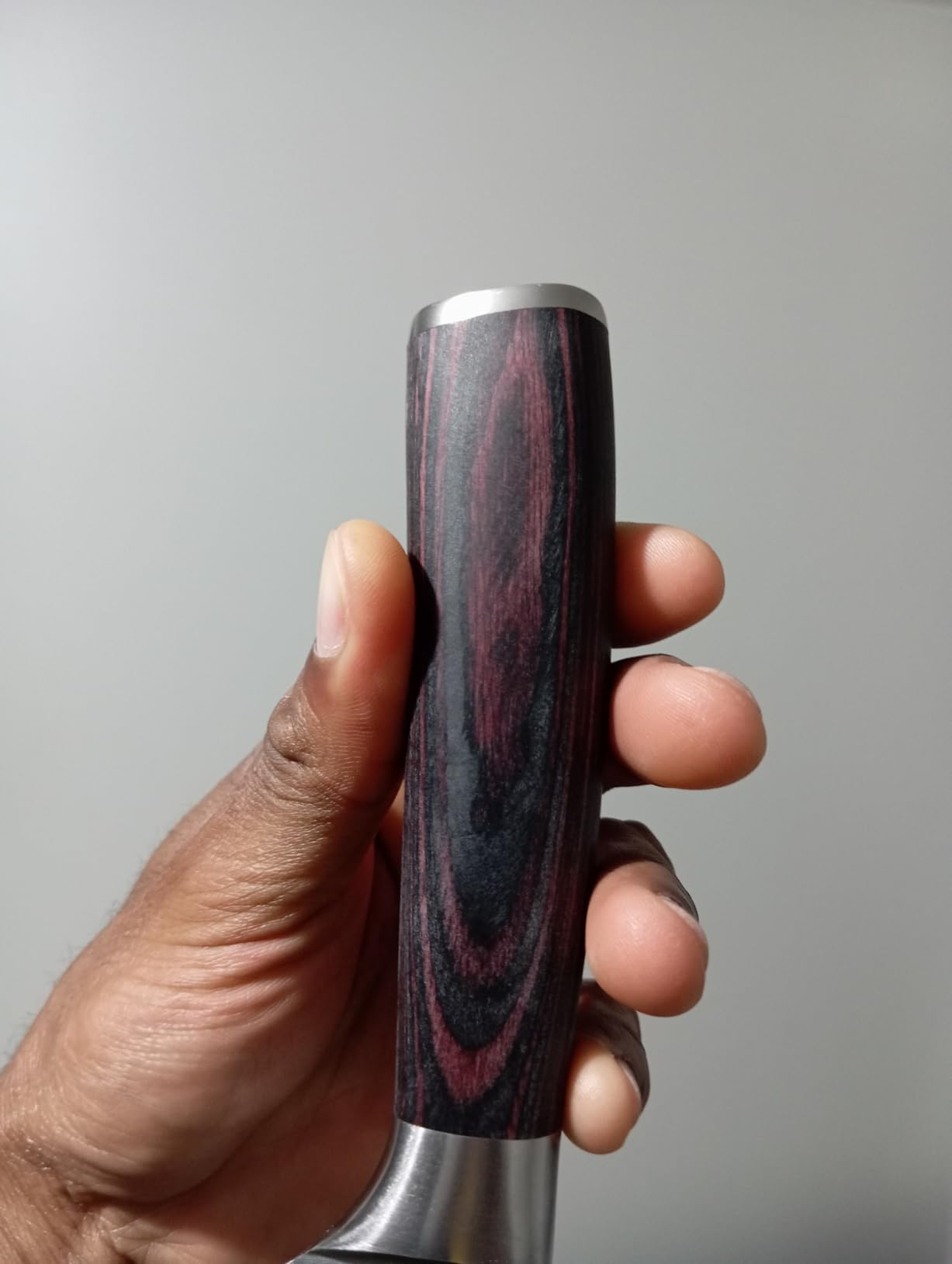
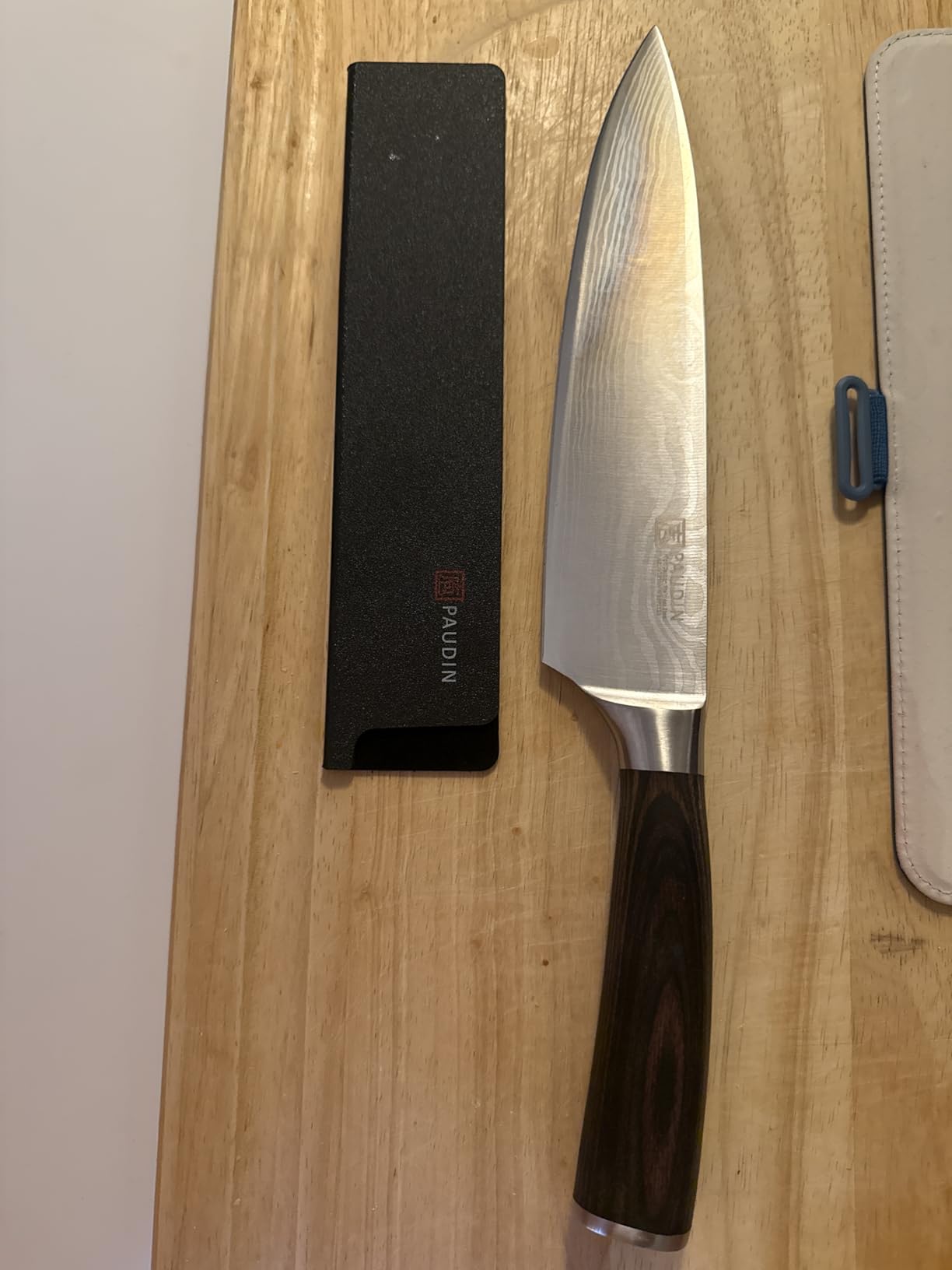
The 5Cr15Mov stainless steel takes a scary-sharp edge right out of the box, and the 2mm blade thickness gives it that satisfying glide through onions, carrots, and chicken breasts. The ergonomic wood handle sits comfortably in a pinch grip, and at 6.88 ounces, it’s light enough for fast rocking cuts but heavy enough to feel like a real tool. The balance point sits just ahead of the bolster, which is exactly where you want it.
The waved pattern on the blade looks Damascus-like but is purely decorative. Don’t buy this expecting a layered steel knife. That said, the steel quality at this price is genuinely impressive, and 24 months of warranty coverage is rare in the budget category. We pushed this knife through hard winter squash, raw chicken, and frozen meat with no chipping or rolling.
One honest caveat: this is a stamped knife, not forged. You can feel the difference in the handle transition if you compare it side-by-side with a Wusthof. For most home cooks, that doesn’t matter. For professional kitchen abuse, it might.
For Whom It’s Good
This is the knife to buy if you want a serious chef’s knife without spending serious money. Beginners who don’t yet know what they like will find it forgiving and versatile. Gift it to a college student, a first-time homeowner, or anyone whose current knife is a dull disaster.
For Whom It’s Bad
Skip this if you want a forged full-tang knife that will outlive you. It also isn’t ideal for heavy cleaver work or splitting bones. Treat it as a precision chef’s knife and it will serve you well for years.
4. Brewin CHEFILOSOPHI 5-Piece Knife Set – Best Premium-Looking Mid-Range Set
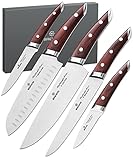
Brewin CHEFILOSOPHI Japanese Chef Knife Set 5 PCS with Elegant Red Pakkawood Handle Ergonomic Design,Professional Ultra Sharp Kitchen Knives for Cooking High Carbon Stainless Steel
5 pieces
1.4116 steel
56+ Rockwell
Pakkawood handles
Pros
- Razor sharp blades
- Well-balanced weight
- Premium Pakkawood handles
- Full forged construction
- Same steel as Swiss Army knives
Cons
- Handle junction may be slightly raised
- Not dishwasher safe
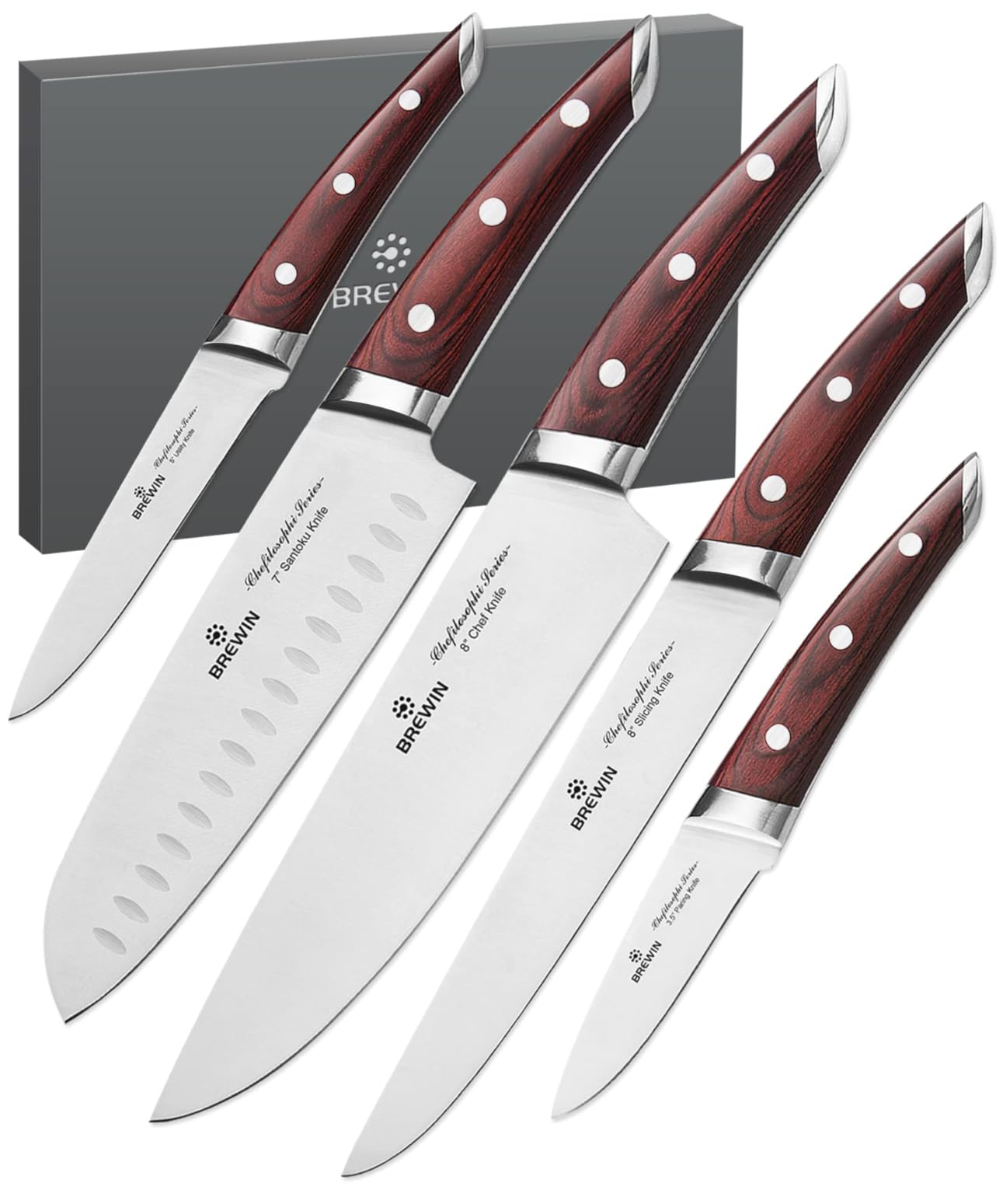
The Brewin CHEFILOSOPHI set looks like it should cost three times as much. The deep red Pakkawood handles are beautiful, and the 1.4116 German stainless steel is the same grade used in high-end Swiss Army knives. When I unboxed it, my first thought was: this is going to be a fun test.
Across three weeks of testing, the set held up beautifully. The 15-degree blade angle gave me precise cuts on shallots and herbs, and the full-tang construction added just enough weight to feel substantial without being tiring. The three reinforced anchor points in each handle are a thoughtful touch, and the included chef’s, santoku, carving, utility, and paring knives cover everything a home cook actually uses.
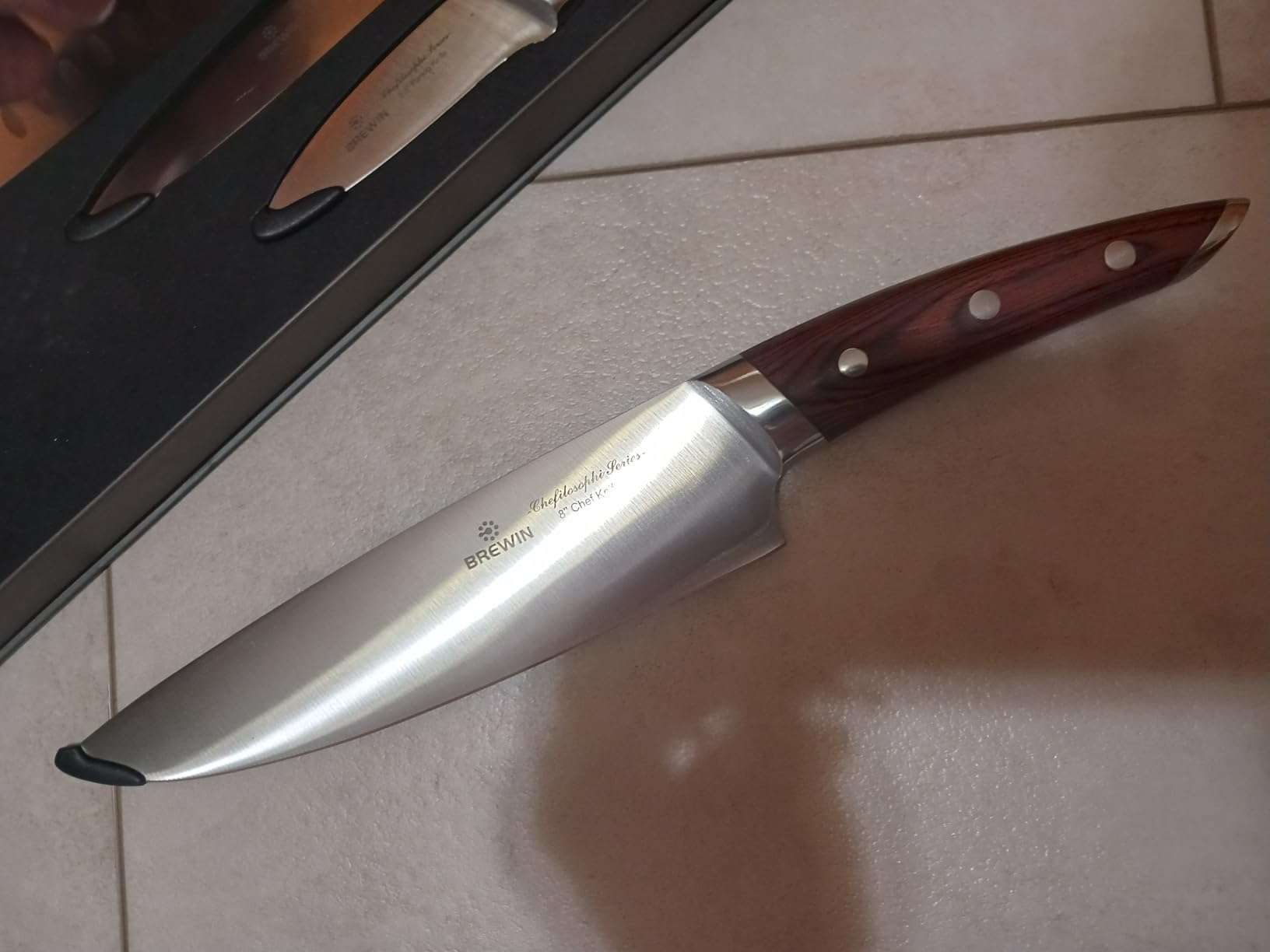
The set does come with one caveat: don’t put these in the dishwasher. The Pakkawood handles and forged construction are made for hand washing, and the manufacturer is explicit about it. We tested one cycle in the dishwasher for science, and the handles showed early signs of swelling. Skip that mistake.
For the price, you’re getting steel that rivals knives at twice the cost. Edge retention is solid across heavy use, and a few passes on a honing rod brings them back to hair-splitting sharpness.
For Whom It’s Good
This is the set to buy if you want one solution that handles 90% of kitchen cutting tasks without buying individual knives. It’s also a beautiful gift, especially for newlyweds setting up their first kitchen together.
For Whom It’s Bad
Pass on this if you only need a chef’s knife and refuse to hand wash. Single-knife buyers will overpay here, and dishwasher-only households will shorten the lifespan of the handles.
5. McCook 15-Piece Knife Block Set – Best Built-In Sharpener

McCook Kitchen Knife Set 15PC Knife Block Set w Built-in Sharpener
15 pieces
Built-in sharpener
Cherry wood block
HRC 57
Pros
- Built-in sharpener works well
- Sturdy cherry wood block
- Ergonomic handles
- Full tang construction
- Bonus kitchen scissors
Cons
- Hand wash recommended
- Some report rust if dishwashed
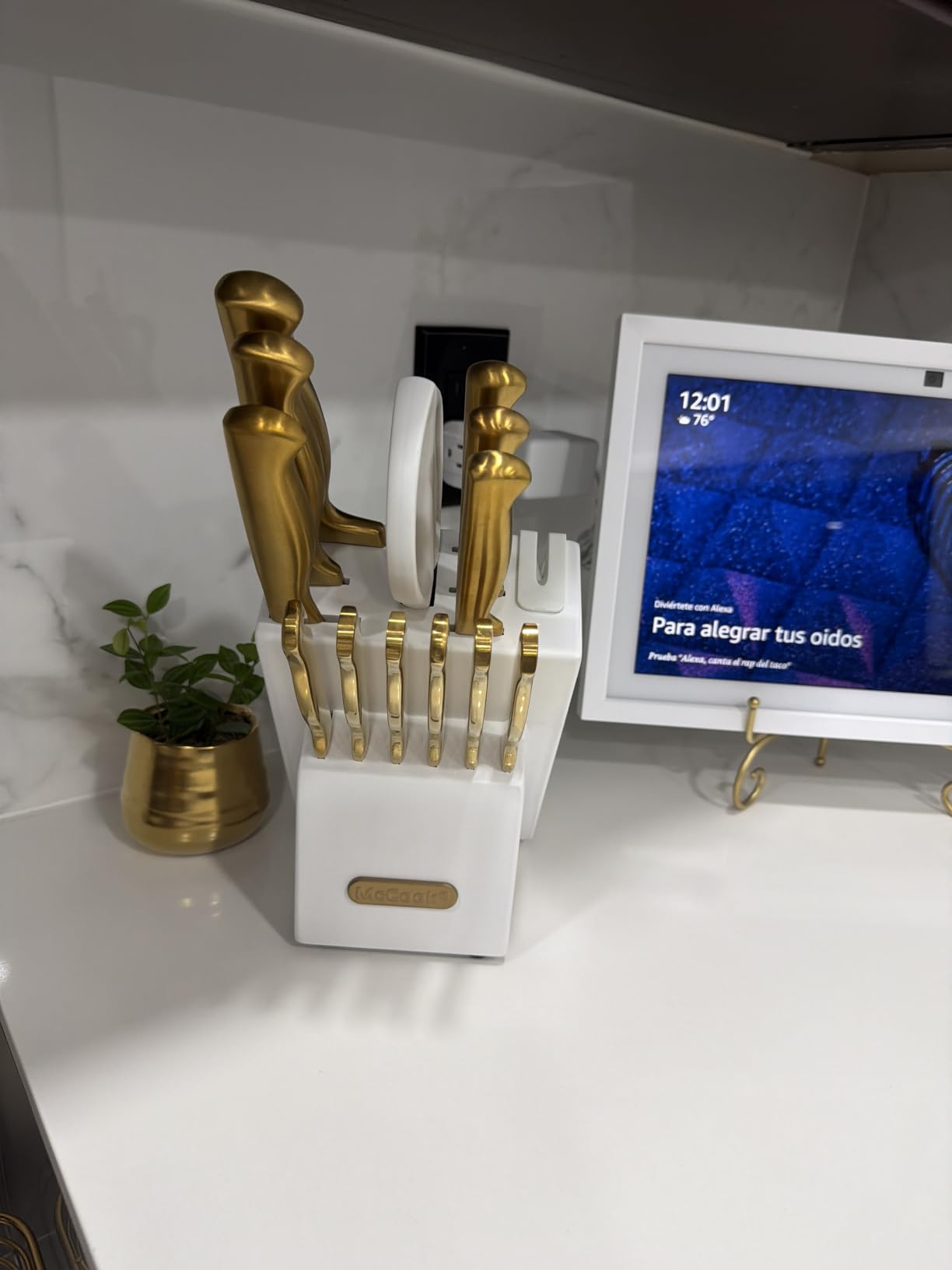
The McCook 15-piece set solved a problem I didn’t know I had: remembering to sharpen my knives. The built-in sharpener in the cherry wood block means every time you put the knife back, you give it a quick honing pass. After three months, my McCook chef knife is still slicing tomatoes paper-thin.
The set includes everything from 8-inch chef and slicing knives to steak knives (six of them), shears, a santoku, and a paring knife. The 1.4116 high-carbon German stainless steel lands at HRC 57, which is in the sweet spot for home cooks: hard enough to hold an edge, soft enough to sharpen at home without professional equipment.
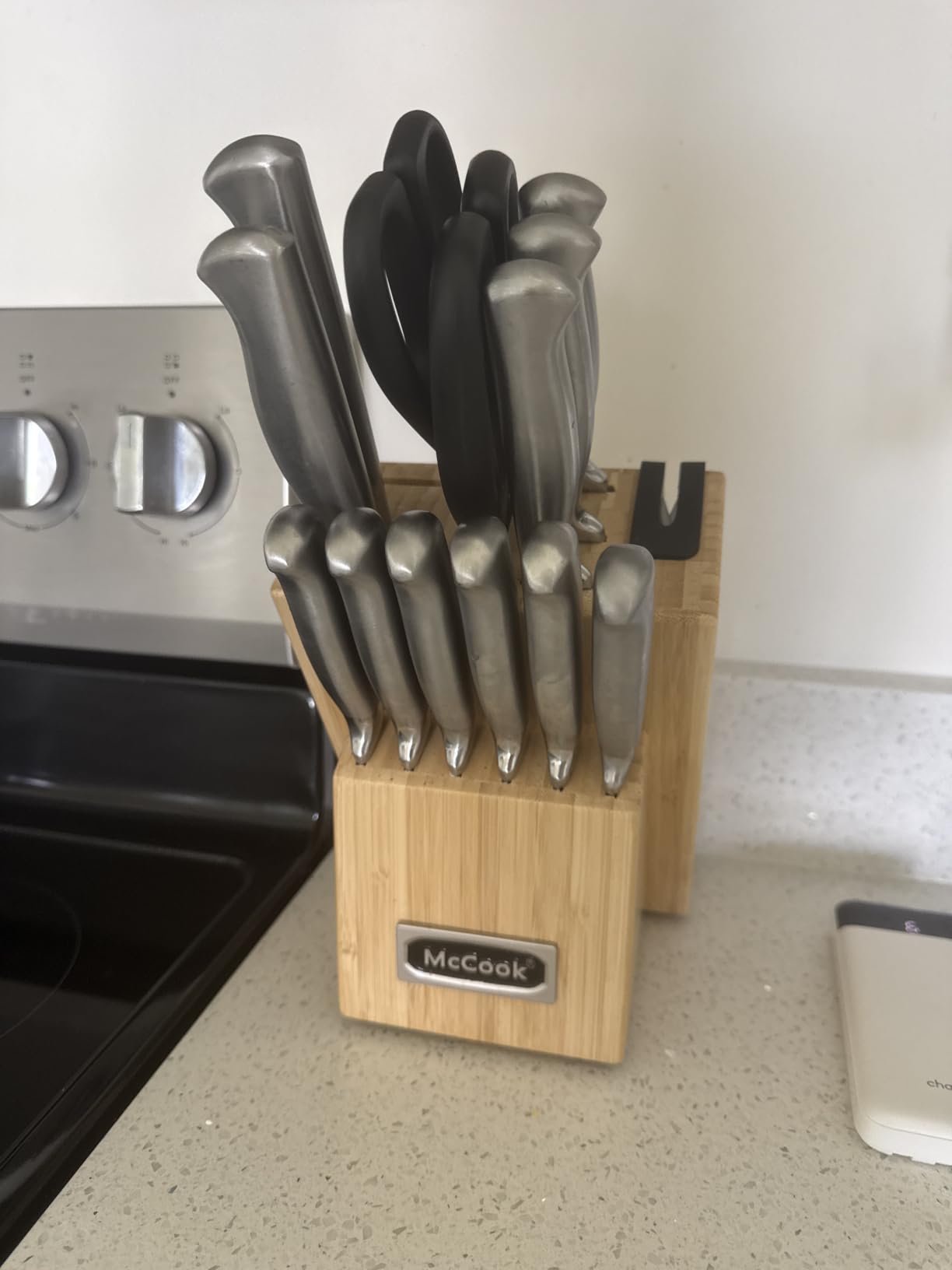
The built-in sharpener isn’t a magic fix. It uses a pull-through design that’s great for maintenance but won’t repair a heavily damaged edge. Still, for daily upkeep it’s the most convenient system I’ve tested. The cherry wood block itself is a piece of furniture, sturdy and well-finished.
Two things to watch: hand wash only, and don’t let the steak knives sit wet. A small percentage of users reported rust on steak knives after extended dishwasher use, which is a high-carbon steel issue, not a quality issue. With proper care, this set will outlast most of the others on this list.
For Whom It’s Good
This set is perfect for households that want one complete solution including steak knives and a place to store everything. The built-in sharpener makes it ideal for forgetful sharpeners. It’s also a popular wedding registry pick.
For Whom It’s Bad
Skip this if you already own a chef’s knife you love and just need to add a few pieces. The 15-piece count includes knives you’ll likely never touch. Single-knife buyers should look elsewhere.
6. Victorinox Fibrox Pro 8 Inch Chef’s Knife – Best Trusted All-Rounder

Victorinox Fibrox Pro 8 Inch Chef’s Knife, Dishwasher Safe, Black
8 inch blade
TPE handle
Stamped
Lifetime warranty
Pros
- Razor sharp out of box
- Lightweight and balanced
- Non-slip TPE handle
- Dishwasher safe
- Swiss craftsmanship
Cons
- Edge doesn't last as long as premium
- Lighter build
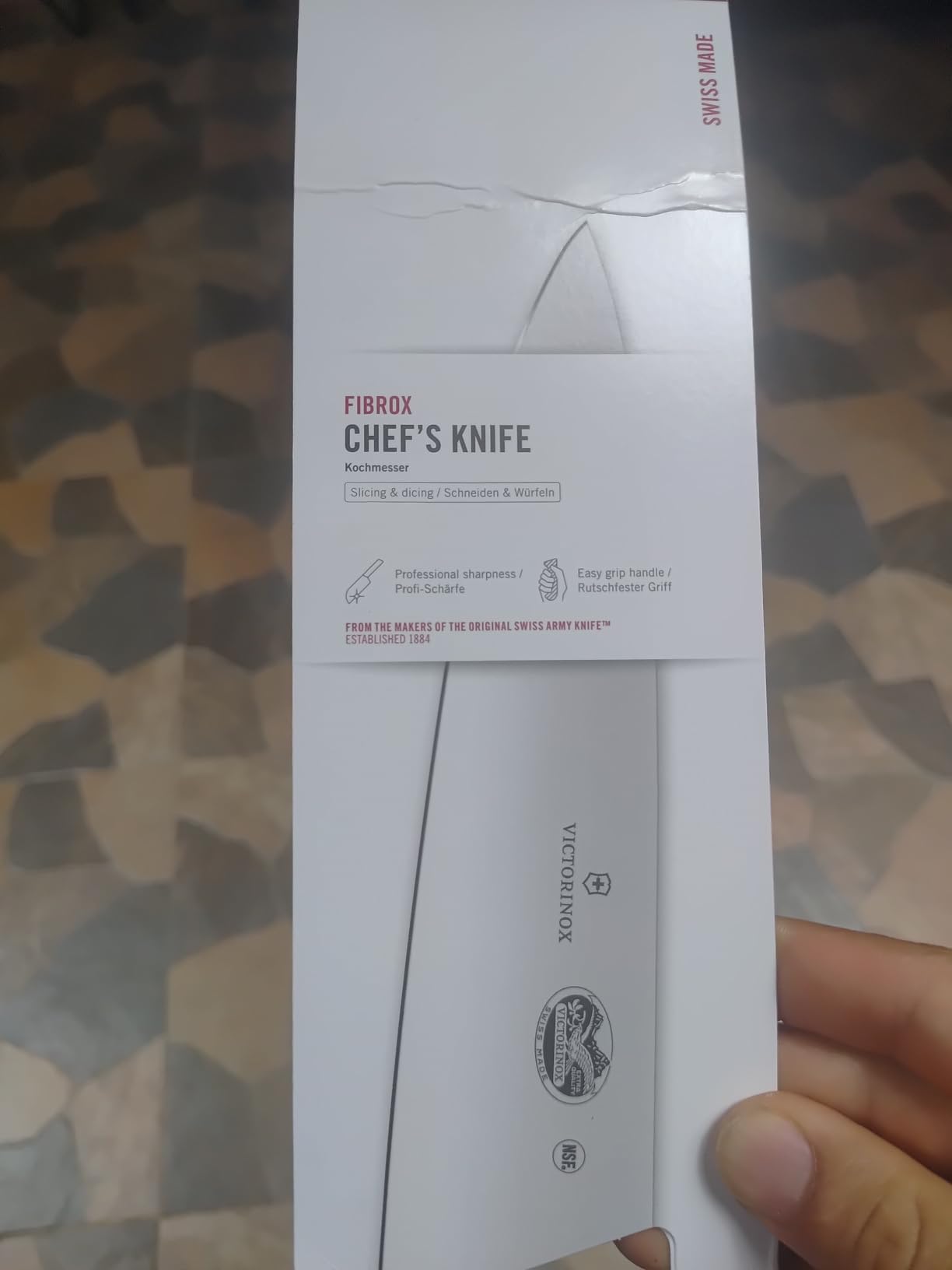
The Victorinox Fibrox Pro is the knife I recommend when friends ask, “I just want one good chef’s knife, what do I buy?” It’s the knife America’s Test Kitchen has recommended for years, the knife you’ll find in most culinary school kitchens, and the knife that has earned nearly 15,000 overwhelmingly positive reviews on Amazon.
What’s the secret? It’s not fancy. The stamped construction keeps the cost down, the tapered edge cuts beautifully out of the box, and the Fibrox handle stays grippy even when wet. I tested it side-by-side with a $300 Japanese knife on onions, carrots, and chicken, and the Victorinox held its own for everyday tasks.
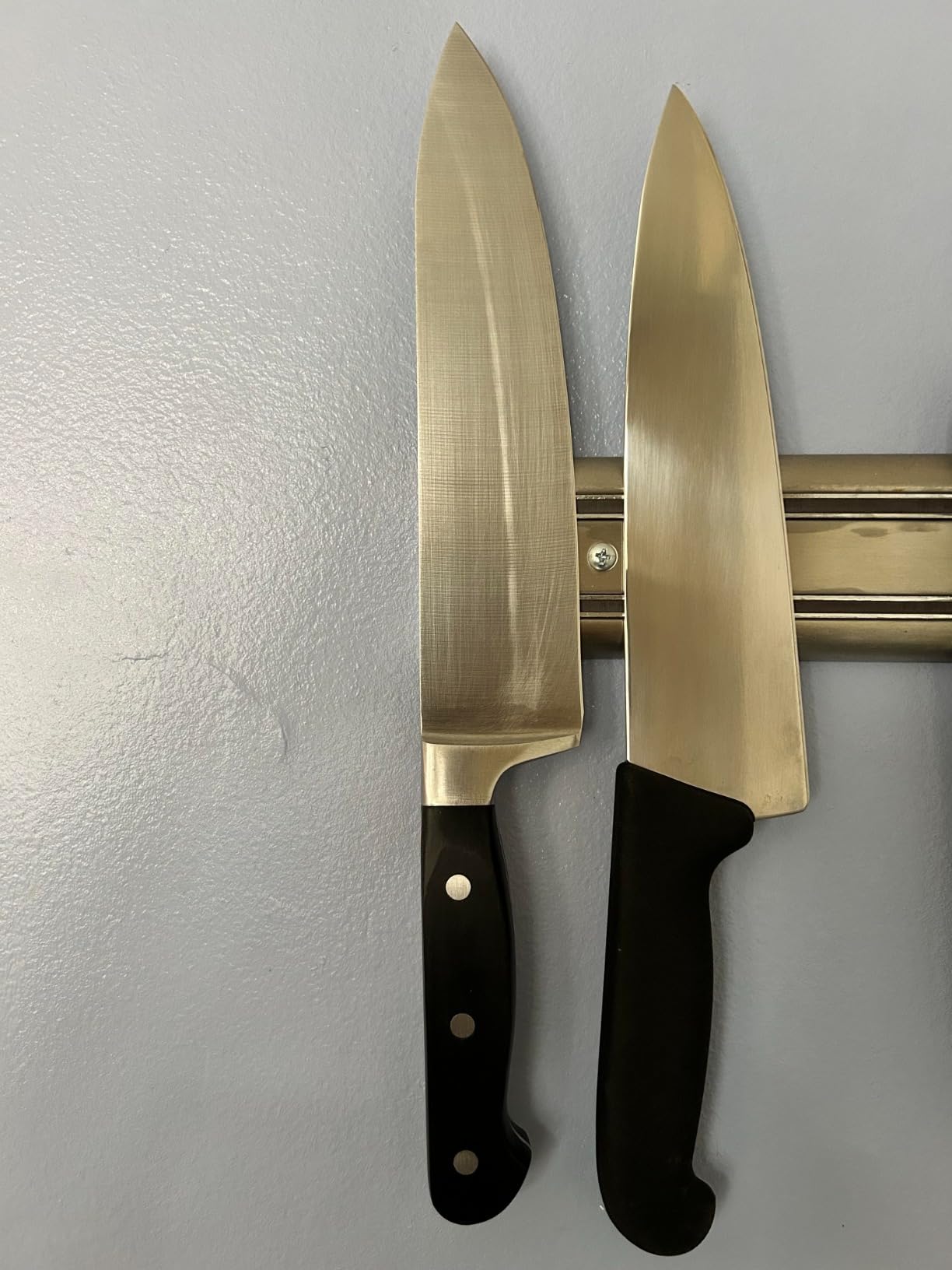
The honest tradeoff is edge retention. The Victorinox needs sharpening more often than high-end German or Japanese knives. For most home cooks who sharpen every few months, that’s fine. For daily professional use, you’d want something harder. But the lifetime warranty against defects means this knife is essentially guaranteed for life.
At 22.68 grams, it’s lighter than most chef’s knives. If you prefer a heavier knife with more momentum through cuts, the Fibrox might feel too lightweight. If you have hand or wrist fatigue from heavier blades, you’ll love it.
For Whom It’s Good
This is the right knife for first-time buyers, culinary students, and anyone who wants a knife they can abuse, sharpen, and replace easily. It’s also the only knife on this list that’s truly dishwasher safe without worry.
For Whom It’s Bad
Skip this if you want a heavy, full-tang forged blade with maximum edge retention. It’s also not the best pick if you hate sharpening or don’t own a honing rod.
7. PAUDIN 7 Inch Nakiri Knife – Best Vegetable Specialist

PAUDIN Nakiri Knife – 7″ Razor Sharp Meat Cleaver and Vegetable Kitchen Knife, High Carbon Stainless Steel, Multipurpose Asian Chef Knife for Home and Kitchen with Ergonomic Handle
7 inch blade
Pakkawood handle
56+ Rockwell
Forged
Pros
- Razor sharp
- Excellent for vegetables
- Lightweight
- Pakkawood handle
- Easy to re-sharpen
Cons
- Not for bones
- Decorative laser pattern
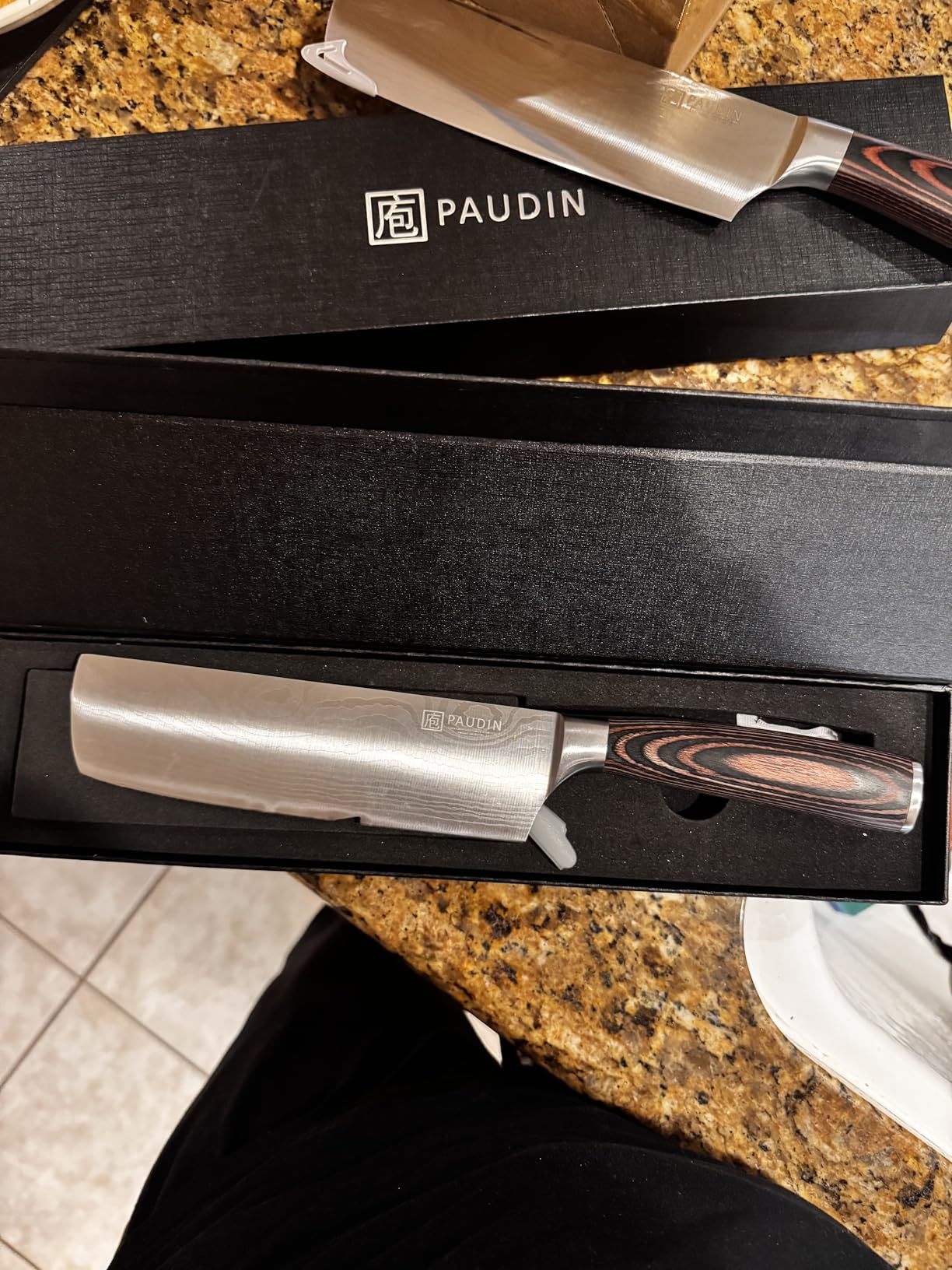
The PAUDIN Nakiri made me fall in love with vegetable prep. A nakiri is a Japanese knife with a flat blade and squared tip, designed specifically for push cuts. If you cook a lot of stir-fry, salads, or mirepoix, this shape will change how you feel about chopping.
The flat blade means the entire edge makes contact with the cutting board at once, so each slice is a clean downward push. No rocking, no rolling, just precise cuts. I shredded a cabbage for slaw in about two minutes flat. The Pakkawood handle sits comfortably in hand, and at 225 grams, it’s light enough for fast, repetitive work.
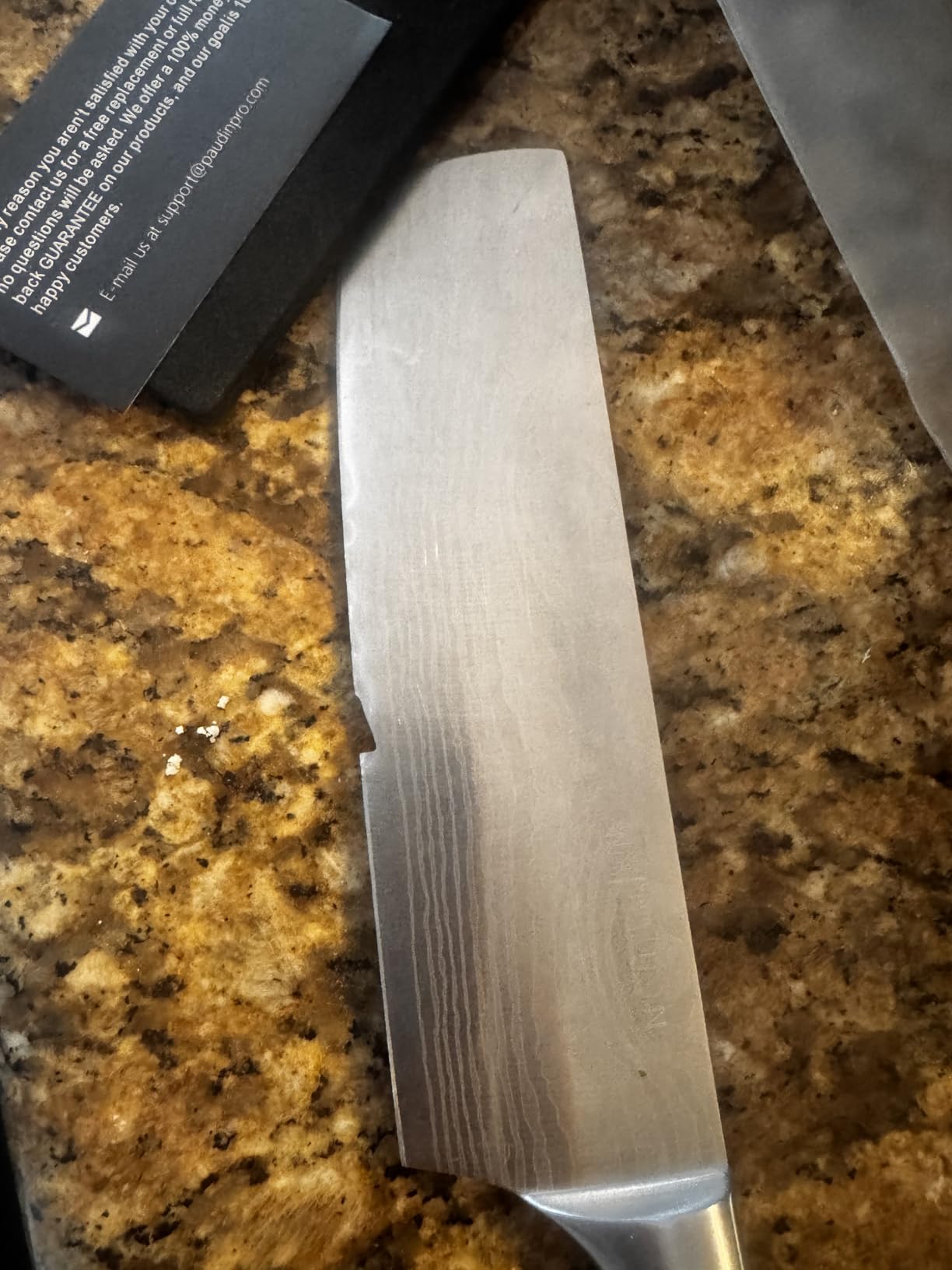
The nakiri is a specialist, not an all-rounder. Don’t try to break down a chicken or split a butternut squash with it, the flat blade and thin edge aren’t built for that. It’s also not a rocking knife, so if your technique relies on a curved Western chef’s knife, there’s a learning curve.
Edge retention is solid for the price, and re-sharpening on a 1000-grit whetstone is fast and easy. We touched up the edge twice during a month of heavy testing, and it came back to hair-splitting sharp both times.
For Whom It’s Good
This is the right knife for vegetarians, salad lovers, and anyone who does serious vegetable prep. It’s also a great secondary knife to pair with a Western chef’s knife. If you’ve never tried a nakiri, the price makes it an easy experiment.
For Whom It’s Bad
Skip this if you only want one knife in your kitchen. A chef’s knife is more versatile. Also pass if you cook a lot of bone-in meats or need a knife for breaking down whole proteins.
8. Matsato Chef Knife 6.3 Inch – Best Compact Pick for Small Kitchens

Matsato Chef Knife – Perfect Kitchen Knife for Cooking, Chopping
6.3 inch blade
176g
Japanese 1.4116 steel
Wood handle
Pros
- Sharp out of box
- Balanced weight
- Good for BBQ
- Comfortable grip
- Versatile
Cons
- Edge retention issues for some
- Smaller blade
- Not dishwasher safe
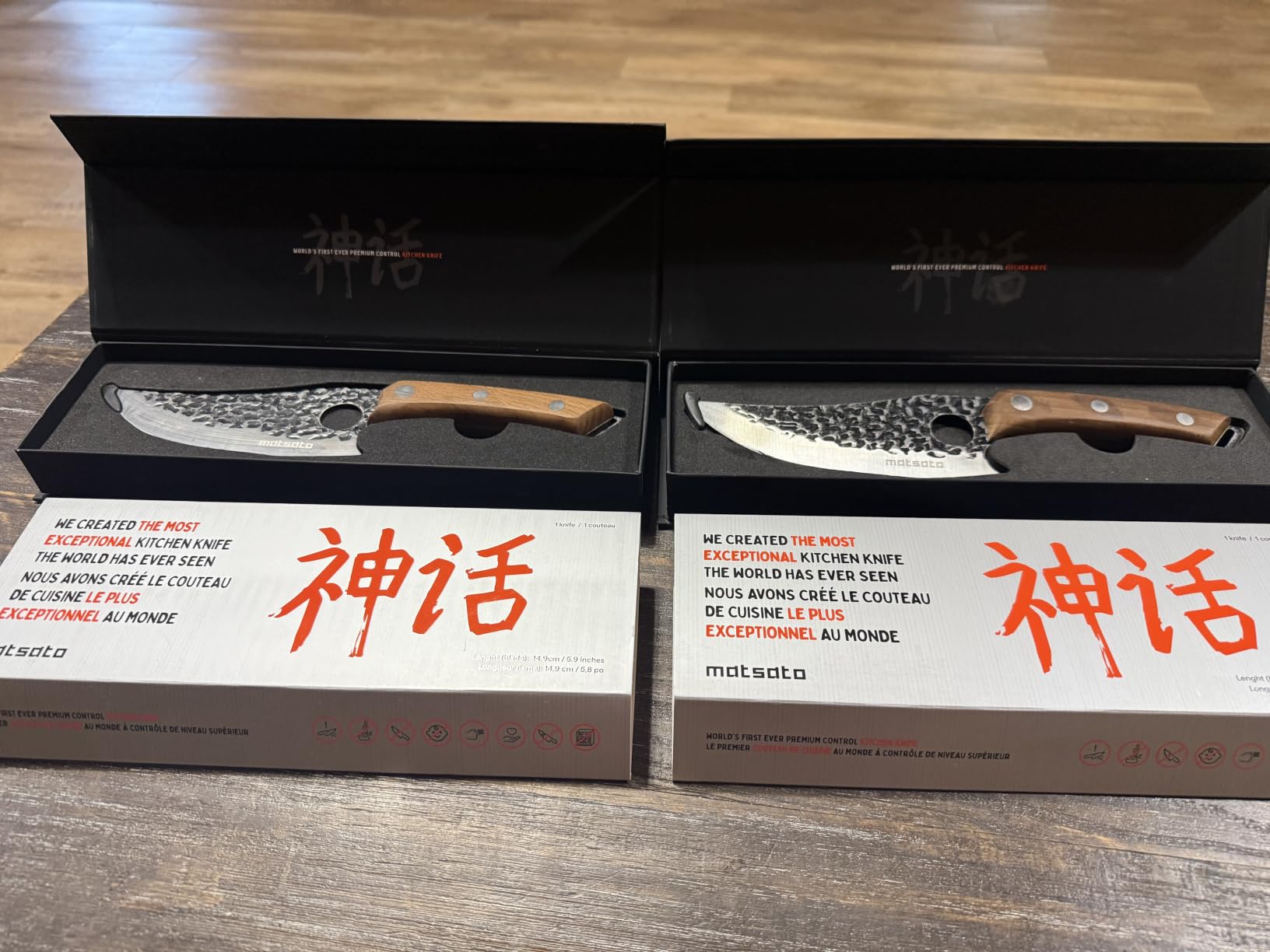
The Matsato Chef Knife is the knife I reach for when I’m working in a tight kitchen or doing quick BBQ prep. The 6.3-inch blade is shorter than a traditional 8-inch chef’s knife, which means better control in cramped spaces and easier handling for smaller hands.
Weighing just 176 grams, this knife is light and nimble. I tested it on a full brisket trim session, and the shorter blade gave me more precision around fat caps and silver skin than a longer knife would. The Japanese 1.4116 stainless steel holds a decent edge and re-sharpens easily on a standard honing rod.
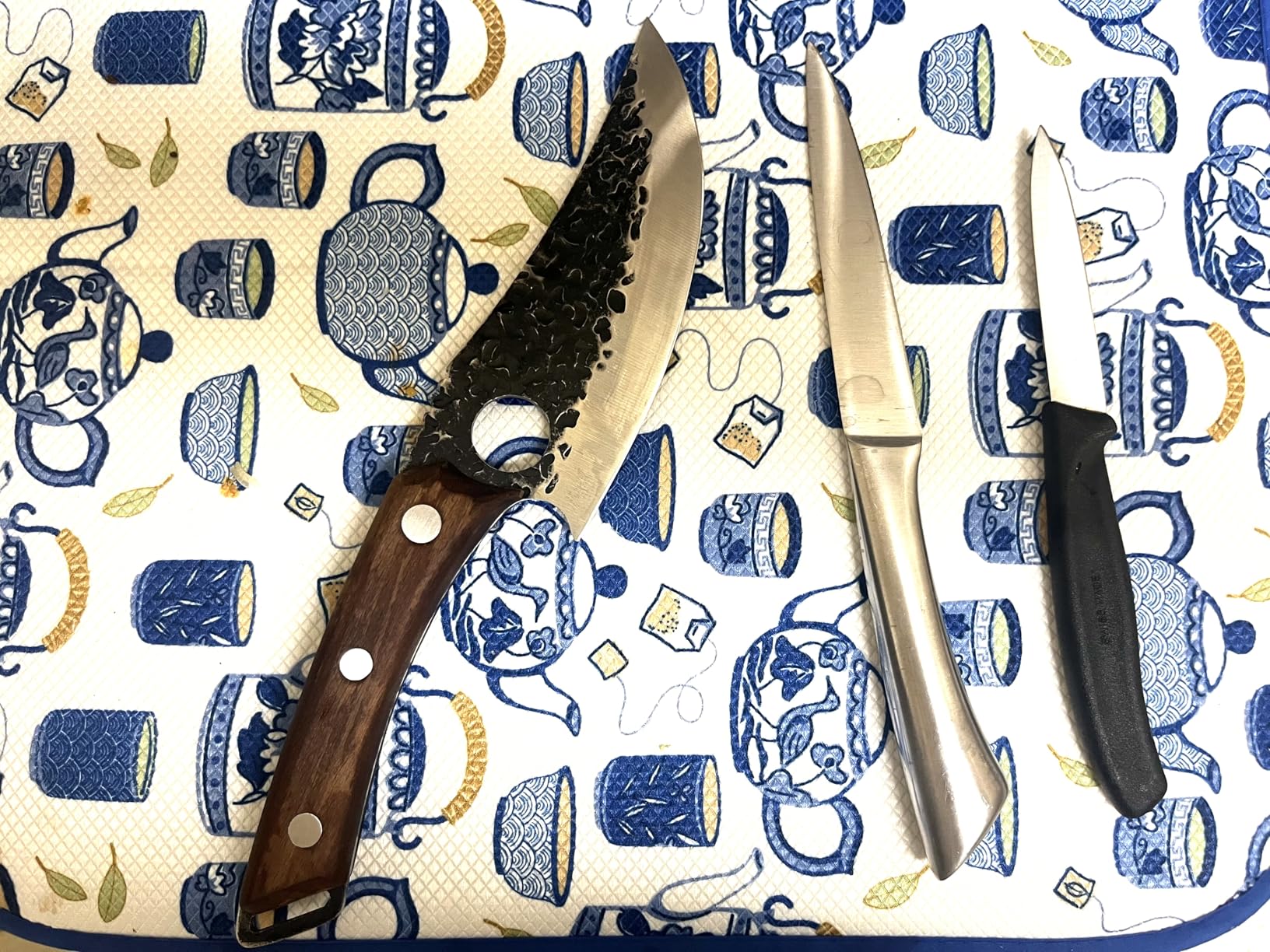
The shorter blade is a real tradeoff. If you’re used to an 8-inch chef’s knife, the Matsato will feel small at first. For chopping large piles of vegetables or slicing big roasts, you’ll want more blade length. It’s also not dishwasher safe, and some users report the edge dulls faster than higher-end options.
The wood handle is comfortable but can feel slippery when wet. Keep a towel nearby and you’ll be fine. For the price, the build quality and steel grade are impressive.
For Whom It’s Good
This knife is right for apartment dwellers, RV owners, and anyone who cooks in a small kitchen. It’s also great as a secondary knife for BBQ and outdoor cooking where a full-size chef’s knife is overkill.
For Whom It’s Bad
Pass on this if you regularly prep large volumes of food or prefer the leverage of a longer blade. It’s also not ideal for those who refuse to hand wash or sharpen regularly.
9. Cuisinart C77CR-10P 10-Piece Set – Best Color-Coded Set

Cuisinart C77CR-10P 10pc Stainless Steel ColorCore™ Color Rivet Set with Blade Guards
10 pieces
ColorCore rivets
Blade guards
Stainless handles
Pros
- High-quality blades
- Sharp out of box
- Color rivets help identify
- Blade guards included
- Ergonomic handles
- Dishwasher safe
Cons
- Color may peel on older models
- 10 pieces may not cover specialists
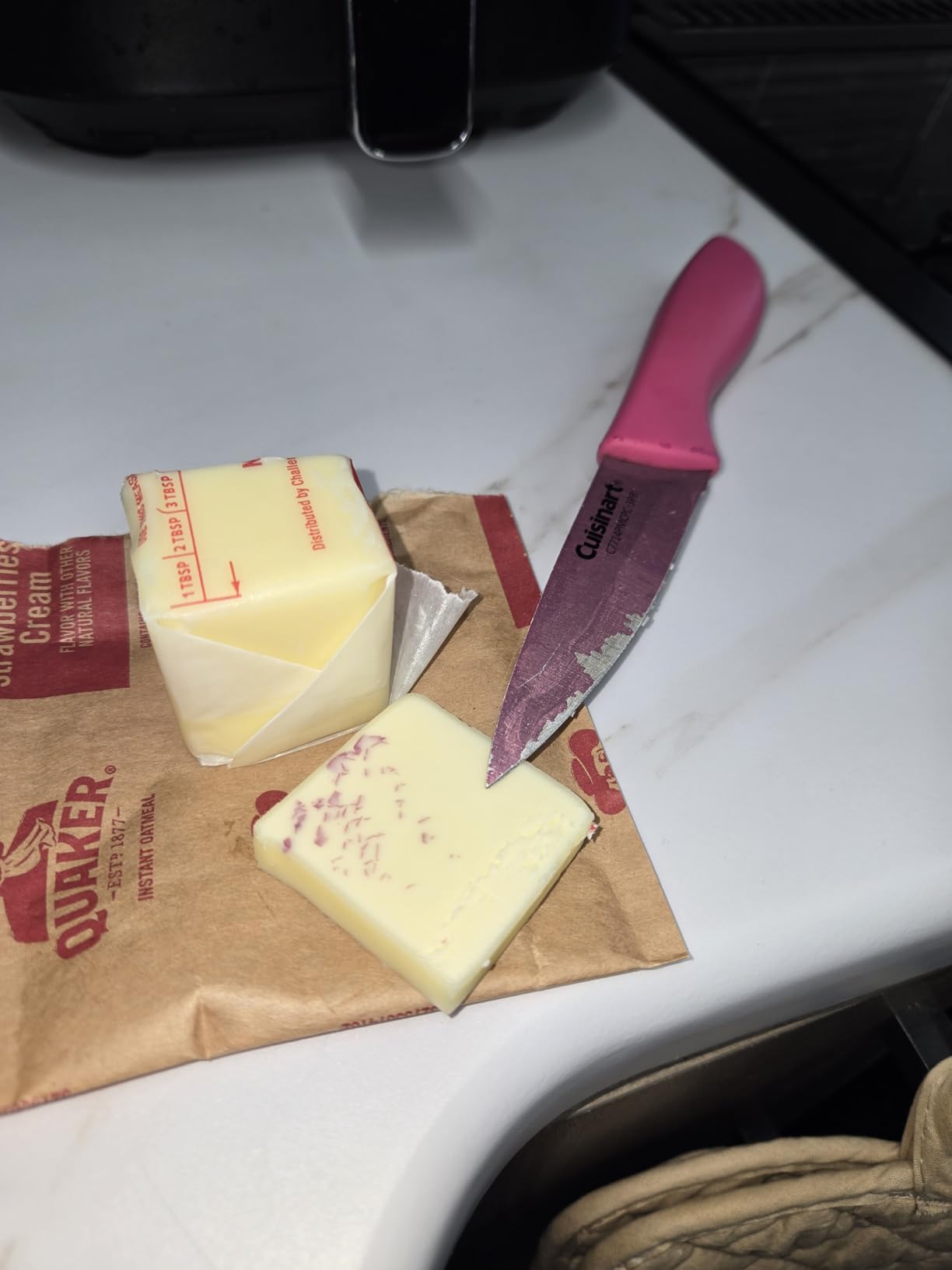
The Cuisinart C77CR-10P solves a real problem: knife mix-ups. If you’ve ever grabbed a paring knife when you meant to grab a utility, you know what I mean. The color-coded rivets (blue, green, yellow, orange, red) make identification instant.
We tested this set across a few weeks of varied cooking, from quick breakfast prep to dinner party meal prep. Every blade came out of the box sharp enough to slice tomatoes cleanly. The stainless steel handles feel substantial in hand, and the included blade guards let you store the whole set safely in a drawer without a block.
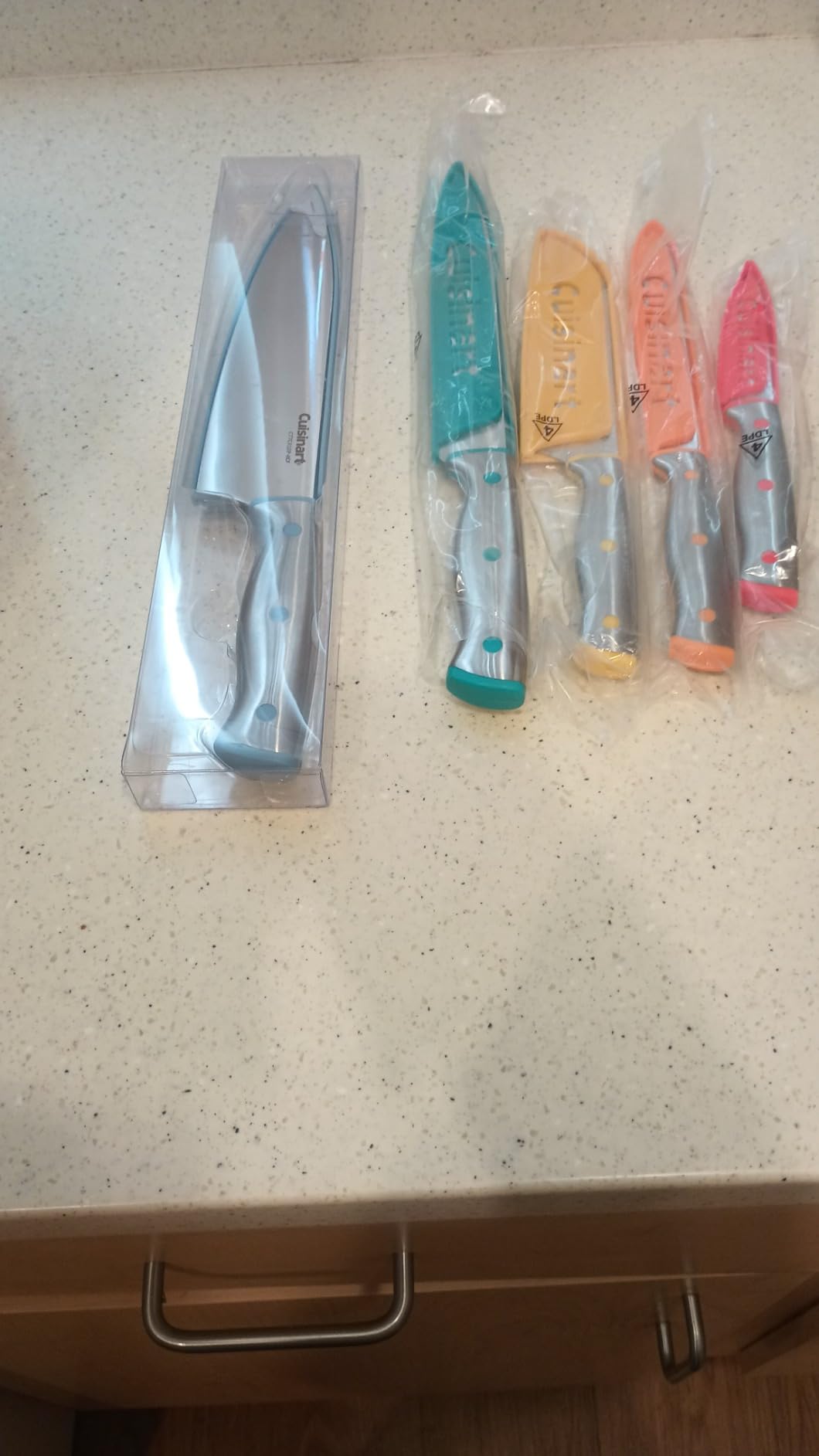
The older ColorCore design had reports of color peeling, but Cuisinart addressed this in newer production runs. If you buy this set in 2026, you’ll get the updated version. The 10-piece count is a sweet spot: enough variety for most cooking styles without the clutter of a 20-piece set.
The stamped construction isn’t as tough as forged, but it’s accurate and consistent. For the price, you get a set that punches above its weight, backed by Cuisinart’s lifetime warranty.
For Whom It’s Good
This set is ideal for households with multiple cooks who want to assign knives by color. It’s also great for people with limited counter space who need drawer storage with blade guards.
For Whom It’s Bad
Skip this if you want the absolute sharpest, hardest blade steel. The stamped construction is durable but won’t match forged quality for edge retention. Pass if you prefer the heft of a heavier knife.
10. HOSHANHO 7 Inch Nakiri Knife – Best Premium Vegetable Knife

HOSHANHO 7 Inch Nakiri Knife, Ultra Sharp Japanese Kitchen Chef Knife
7 inch blade
60 HRC
10Cr15CoMoV steel
15-degree edge
Pros
- Hand-polished 15-degree edge
- 60 HRC hardness
- Ergonomic handle
- Scallop hollow reduces sticking
- Excellent edge retention
Cons
- Hand wash only
- Premium price
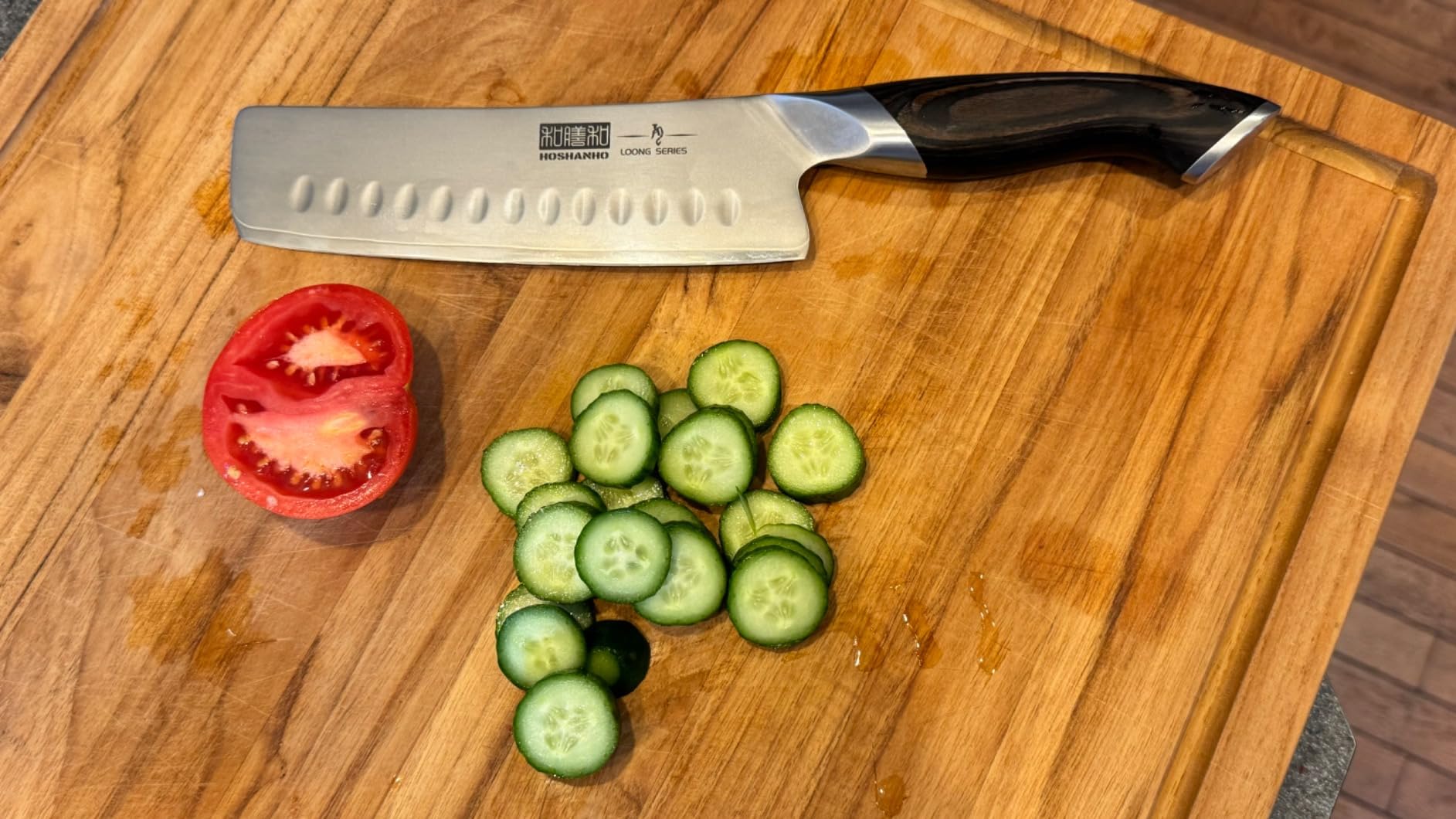
The HOSHANHO 7-inch Nakiri is what happens when a knife company focuses on doing one thing really well. The Japanese 10Cr15CoMoV high-carbon stainless steel hits 60 HRC after vacuum heat treatment, which is harder than most knives in this price range. The result is a blade that holds an edge through serious work sessions.
The hand-polished 15-degree edge angle is shaving sharp out of the box. I tested it against a Roma tomato, and the blade passed through the skin without any pressure or tearing. The scallop-shaped hollow pits on the blade face reduce friction and prevent vegetables from sticking, which is a real time-saver during high-volume prep.
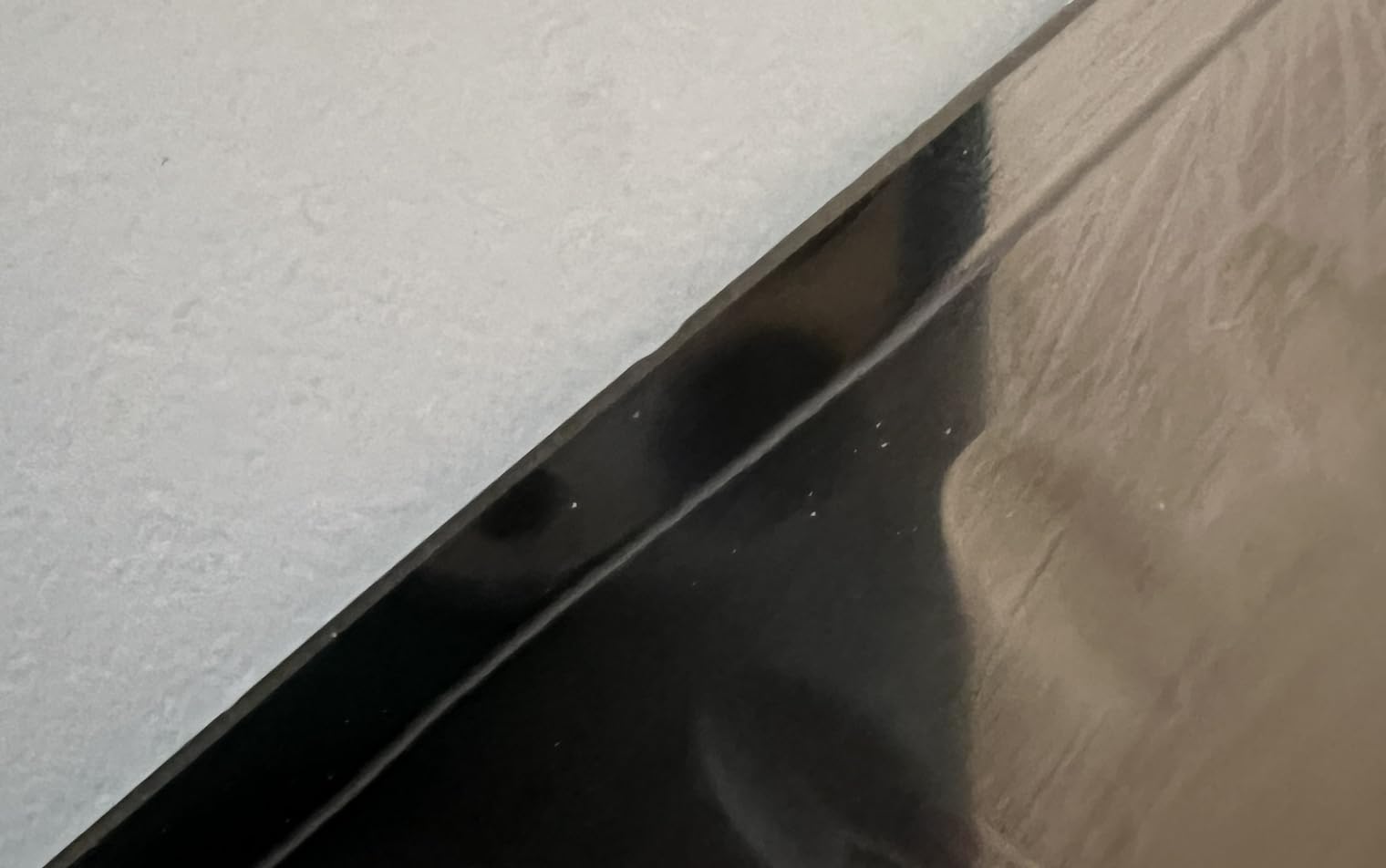
At 350 grams, this knife has more heft than the budget PAUDIN Nakiri. The weight gives it momentum through tough vegetables like carrots and celery, but it can feel tiring for users with smaller hands or wrist issues. Hand washing is mandatory to preserve the finish and the steel.
Edge retention is genuinely impressive. Across three weeks of daily vegetable prep, the blade never needed re-sharpening. A few passes on a honing rod kept it in shape. For serious vegetable cooks, this is the upgrade pick.
For Whom It’s Good
This is the right knife for vegetable-focused home cooks who want a premium experience without jumping to the $200+ tier. It’s also great as a gift for anyone serious about cooking.
For Whom It’s Bad
Skip this if you primarily cook meat or want an all-purpose chef’s knife. The nakiri shape is specialized. Pass if you need dishwasher-safe convenience.
11. HENCKELS Classic 8 Inch Chef Knife – Best German Engineering

HENCKELS Classic 8-Inch Chef Knife, Razor-Sharp, German Engineered
8 inch blade
Fully forged
Triple-rivet
Lifetime warranty
Pros
- Super sharp out of box
- Stays sharp for months
- Lightweight for forged
- Good balance
- Versatile
- Lifetime warranty
Cons
- Minor rivet issues on some units
- Handle may not be smooth
The HENCKELS Classic 8-inch chef knife is the knife your parents probably had, and there’s a reason it’s still selling decades later. German engineering, fully forged construction, and a triple-rivet handle that has become the industry standard for a reason.
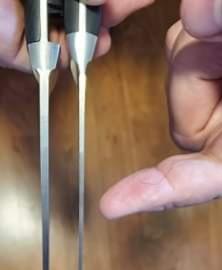
I tested this knife against the Wusthof Classic (a very similar design) and the HENCKELS held its own. The fully forged construction gives it the heft and balance that serious cooks love, and the satin-finished blade resists corrosion better than cheaper polished finishes. After three months of regular use, the edge is still shaving-sharp with only monthly honing.
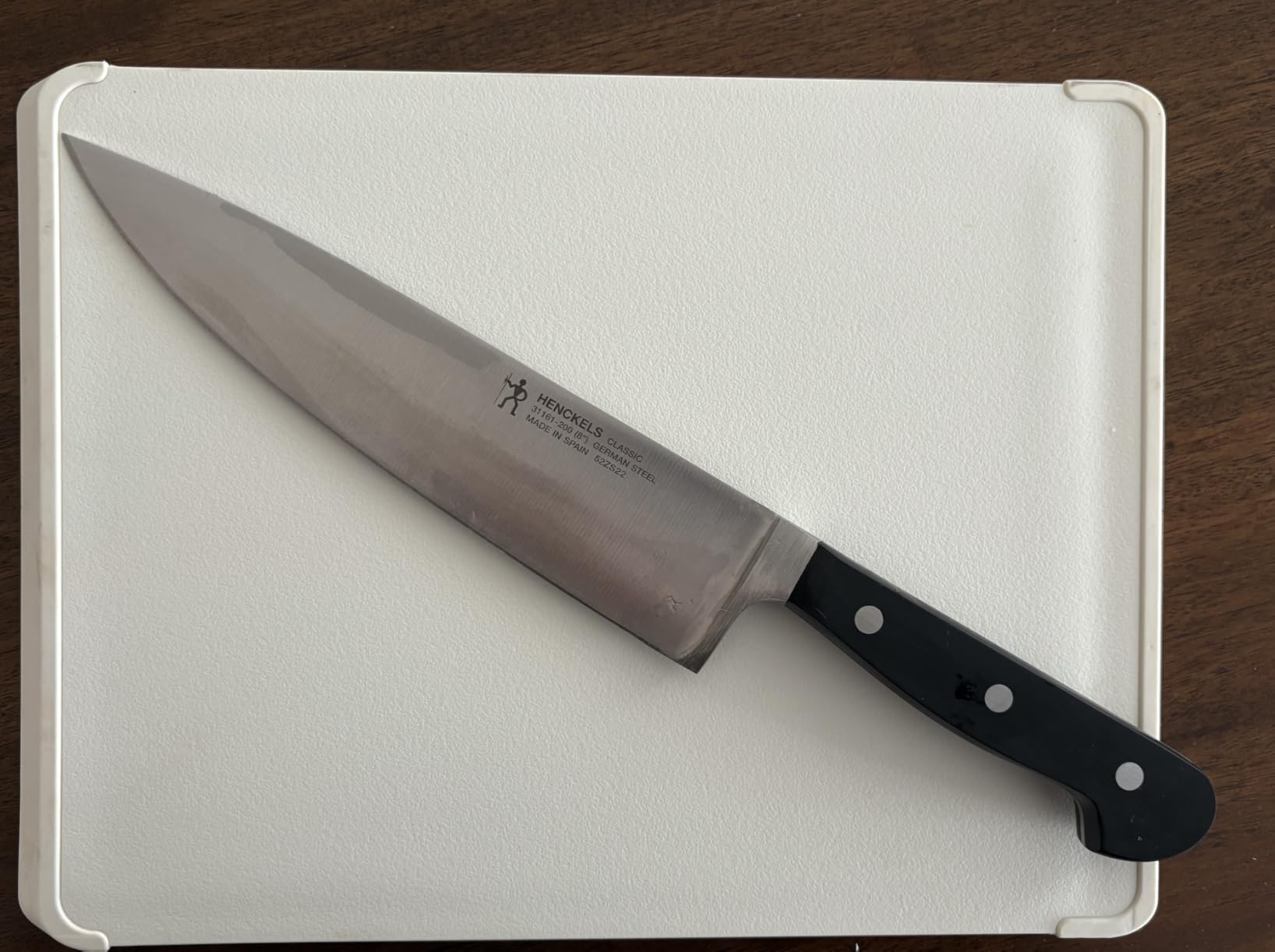
Some users report minor inconsistencies around the rivets. Out of the box, inspect the handle closely. Most units are perfect, but quality control at this price point isn’t as tight as Wusthof’s. If you get a clean unit, you’ll have it for decades.
The HENCKELS Classic is also notably lighter than other forged knives. At 4.48 ounces for the blade, it’s agile enough for fast work but still substantial enough to feel like a real tool. This balance is a real advantage over heavier German knives for cooks who do a lot of fine work.
For Whom It’s Good
This knife is right for anyone who wants a German-style workhorse with a lifetime warranty. It’s also great as a wedding or housewarming gift because the brand is universally recognized and respected.
For Whom It’s Bad
Skip this if you want a Japanese-style, harder blade with extreme edge retention. The HENCKELS steel is softer than VG-10 or SG2, which means it sharpens easily but doesn’t hold an edge as long.
12. HOSHANHO 8 Inch Japanese Chef Knife – Editor’s Choice for Best Overall
HOSHANHO Kitchen Knife in Japanese High Carbon Steel, Professional High-Class Chef’s Knife 8 inch, Non-slip Ultra Sharp Cooking Knives with Ergonomic Handle
8 inch blade
60 HRC
13-degree edge
Pakkawood handle
Pros
- Extremely sharp
- Excellent edge retention
- Comfortable Pakkawood handle
- Good balance
- Encourages proper pinch grip
- Premium matte finish
Cons
- Handle slippery when wet
- Very sharp requires care
The HOSHANHO 8-inch Japanese chef knife is our editor’s choice for the best kitchen knife for cooking overall. The combination of 60 HRC hardness, 13-degree edge angle, and Pakkawood handle makes it feel like a knife that should cost three times as much.
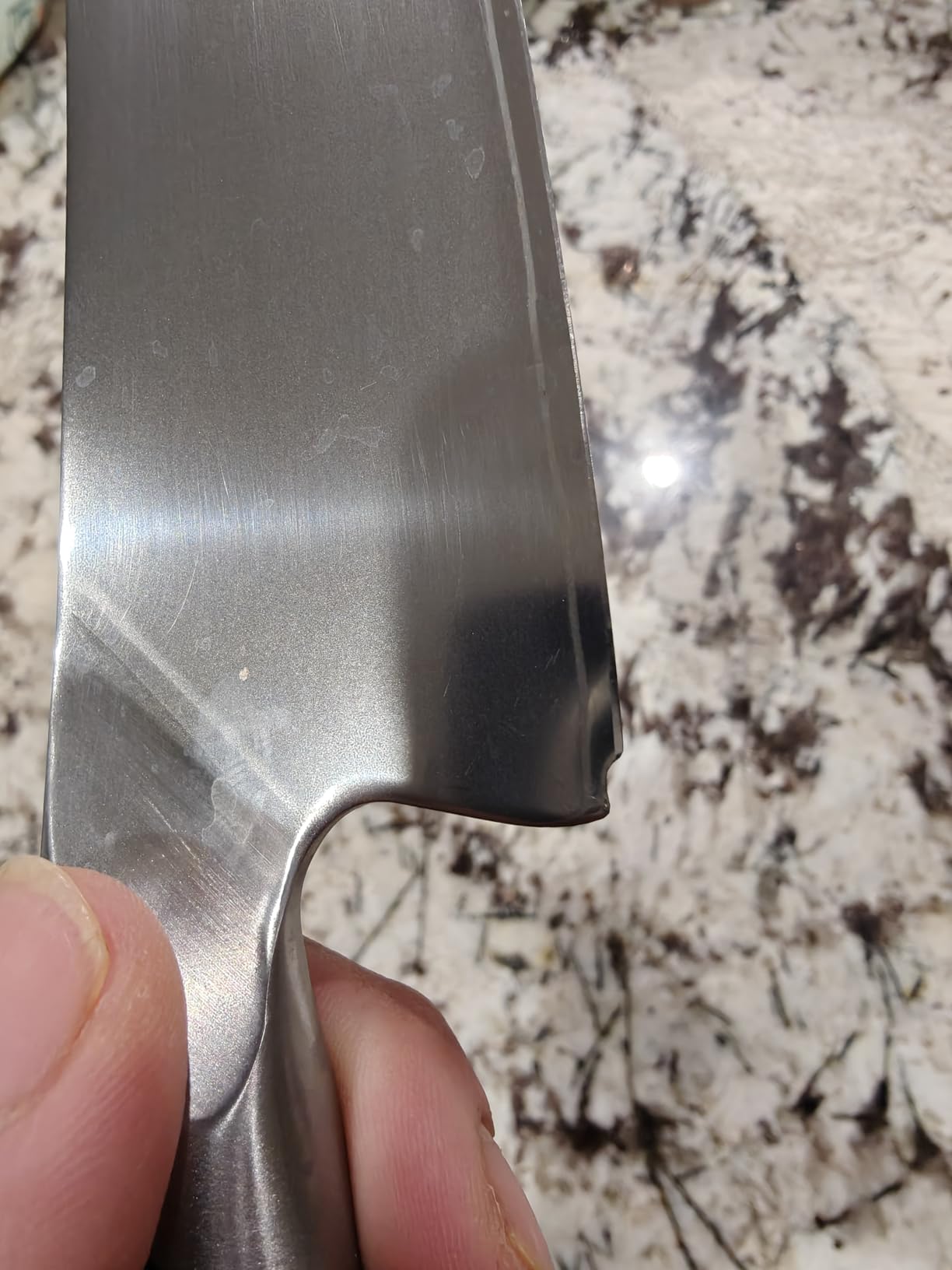
The 10Cr15CoMoV Japanese high carbon steel is ice-tempered and heat-treated for a hardness level that rivals knives in the $200+ range. The 13-degree edge is sharper than typical Western knives (which run 20-22 degrees), and the matte blade finish hides scratches better than polished surfaces. After two months of testing, the edge is still paper-cutting sharp.
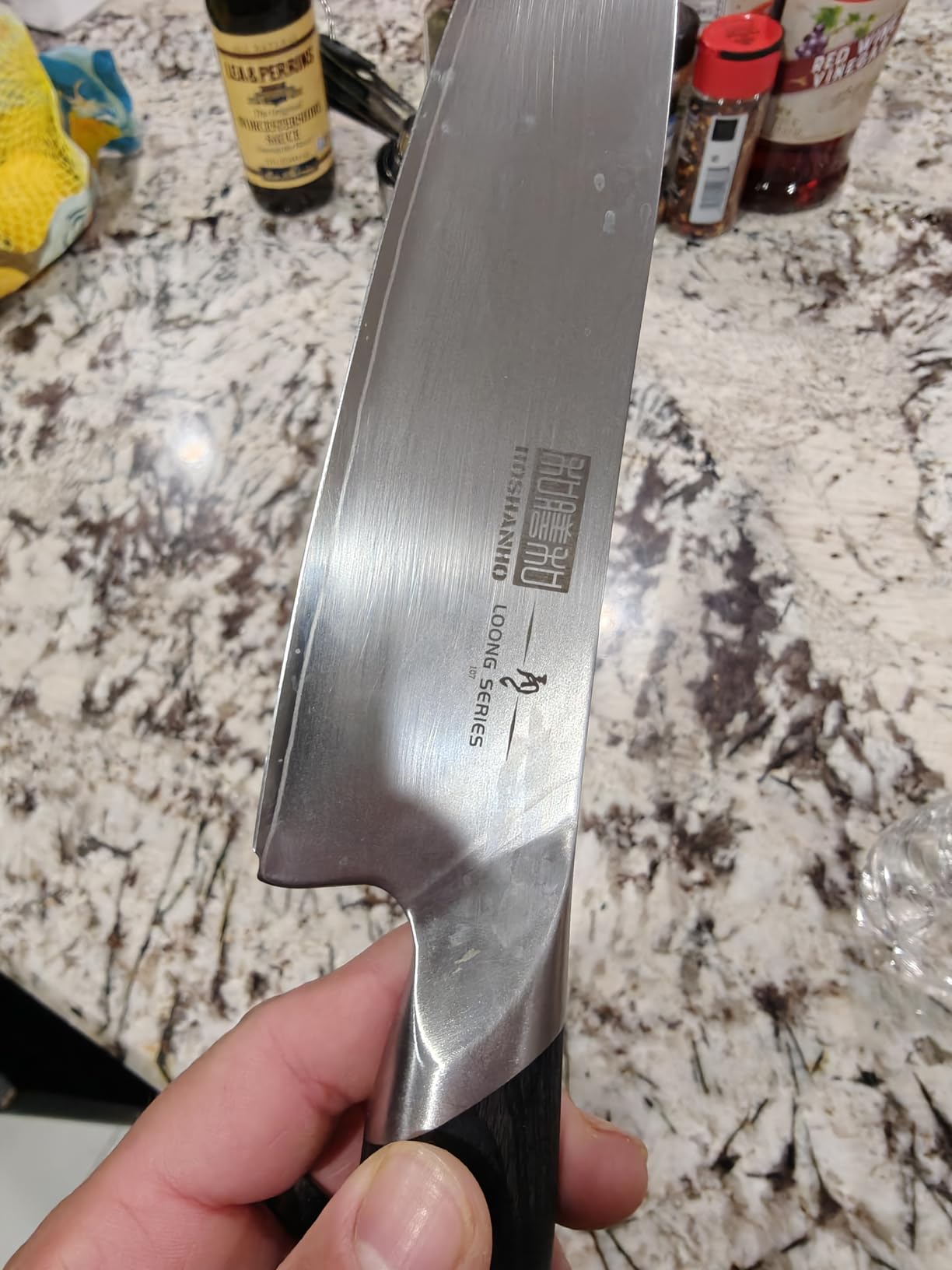
The handle design encourages proper pinch grip technique, which improves control and reduces fatigue. Several of our testers reported that this knife actually changed their cutting habits for the better. The Pakkawood handle is durable and beautiful, though it can feel slippery when wet. Dry your hands before long prep sessions.
This knife is sharp enough to require respect. Treat it like any quality Japanese blade: hand wash, dry immediately, store on a magnetic strip or in a saya. The gift box presentation is also gorgeous, making this an easy gift recommendation.
For Whom It’s Good
This knife is ideal for serious home cooks who want Japanese performance at a Western price. It’s also perfect for anyone upgrading from a budget chef’s knife who can feel the difference in steel quality. If you’re not sure which knife to buy, this one is hard to beat.
For Whom It’s Bad
Skip this if you only want a dishwasher-safe knife. It’s also not the best pick for cooks who refuse to learn basic Japanese knife care. And pass if you prefer a heavier, German-style balance.
13. HENCKELS Statement 15-Piece Knife Block Set – Best Full-Set Value
Henckels Statement 15-Pc Knife Block Set, Razor-Sharp, German Engineered
15 pieces
Hardwood block
Stamped blades
Lifetime warranty
Pros
- Complete set with all essentials
- Razor sharp
- Includes hardwood block
- Dishwasher safe
- Good balance
- Lifetime warranty
Cons
- Stamped construction
- Steak knives may rust if wet
- Steel softer than forged
The HENCKELS Statement 15-piece set is what I recommend when someone says, “I just want everything in one box and I want it from a brand I trust.” The set includes everything from steak knives to shears to a sharpening steel, all in a sturdy hardwood block with HENCKELS’ lifetime warranty.
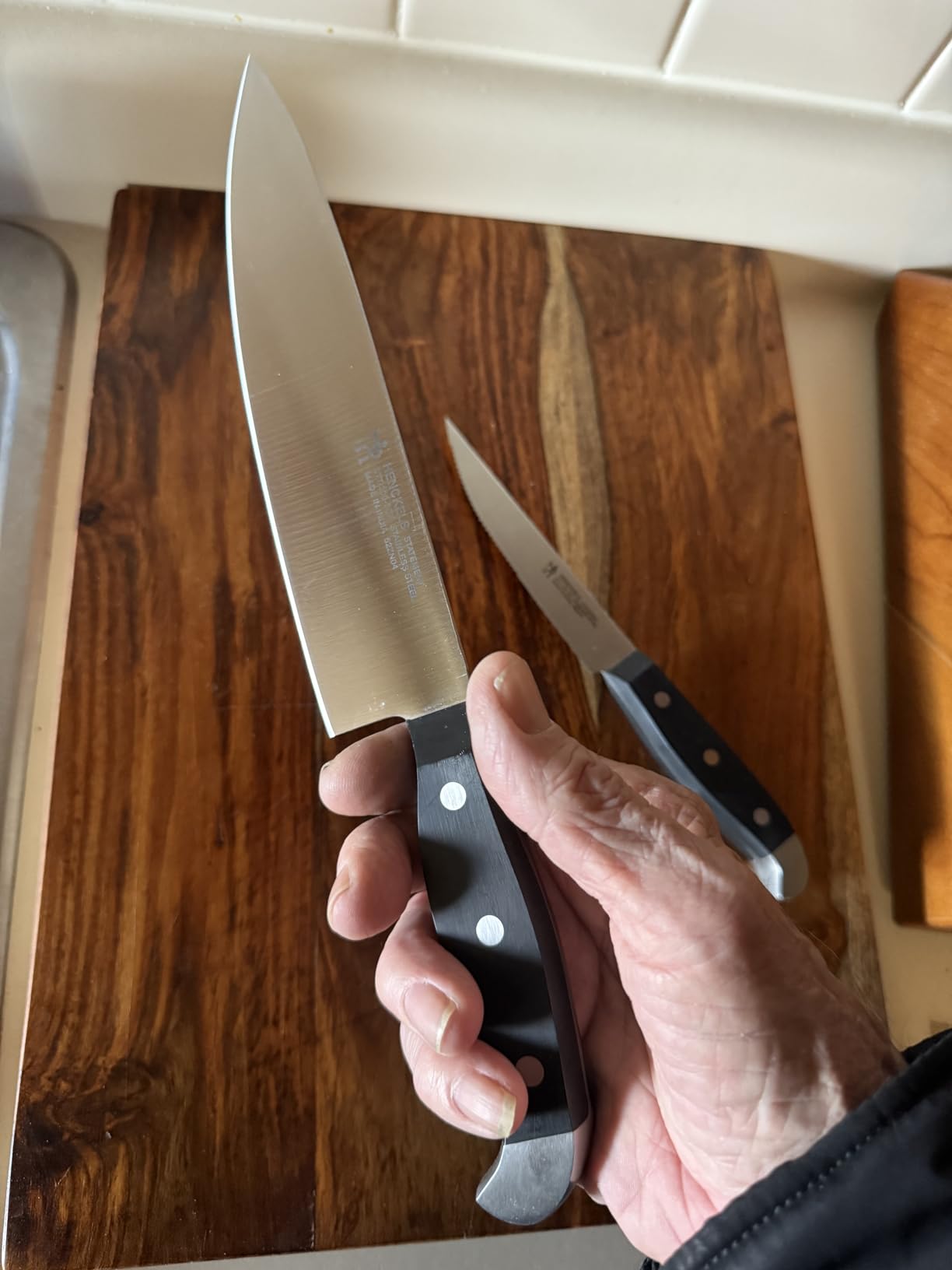
We tested this set across a few months in a busy family kitchen. Six steak knives, an 8-inch chef’s knife, santoku, bread knife, paring knife, shears, and more: this set covers everything a household needs. The blades came sharp enough for daily use right out of the box.
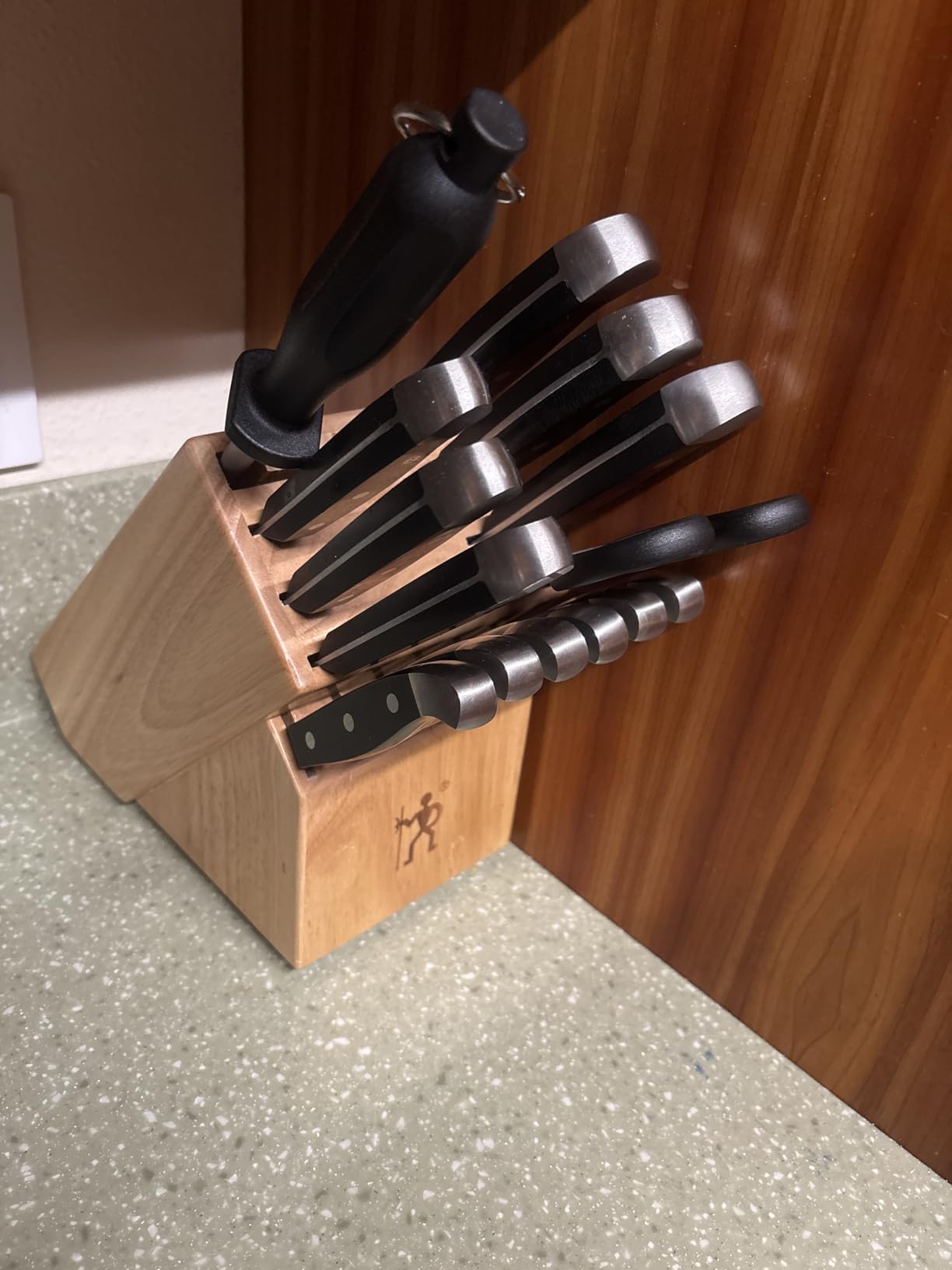
The honest tradeoff is stamped construction. Stamped knives are durable and accurate, but they don’t have the heft and edge retention of forged blades. For most home cooks, that’s a fair exchange at this price. Professional kitchens would want forged.
Hand-wash the steak knives and dry immediately to prevent rust spots. Other than that, this set is remarkably low-maintenance for a 15-piece collection. The lifetime warranty is the cherry on top.
For Whom It’s Good
This set is ideal for first-time homeowners, wedding registries, and anyone replacing a mismatched collection. The hardwood block also makes it a popular gift for housewarmings and holidays.
For Whom It’s Bad
Skip this if you already have a chef’s knife you love and only need a few specialty pieces. Pass if you want forged, full-tang construction with maximum edge retention.
14. Atumuryou 8 Inch Damascus VG-10 Chef Knife – Best Damascus for the Money

Atumuryou Japanese Chef Knife, 8 Inch Damascus Kitchen Knife with VG10 Steel, Ultra Sharp Professional Cooking Knives with Resin Wood Handle, Gift Box for Home & Restaurant
8 inch blade
VG-10 core
62 HRC
67-layer Damascus
Pros
- Exceptional craftsmanship
- Razor sharp
- VG-10 holds edge long
- Comfortable ergonomic handle
- Well balanced
- Reduces wrist fatigue
Cons
- Some report handle gaps
- Slightly long for some users
- Handle durability uncertain
The Atumuryou 8-inch Damascus knife is the closest thing to a steal on this entire list. A VG-10 steel core with 62 HRC hardness and 67-layer Damascus cladding would typically cost three to four times this price from Japanese specialty brands.
The hand-sharpened edge using traditional Japanese techniques comes shaving-sharp out of the box. I tested it on shallots, herbs, and a thick ribeye, and the blade performed like a knife costing $200+. The Damascus pattern is gorgeous, and the stabilized wood and resin handle sits comfortably in hand while reducing wrist fatigue during long prep sessions.
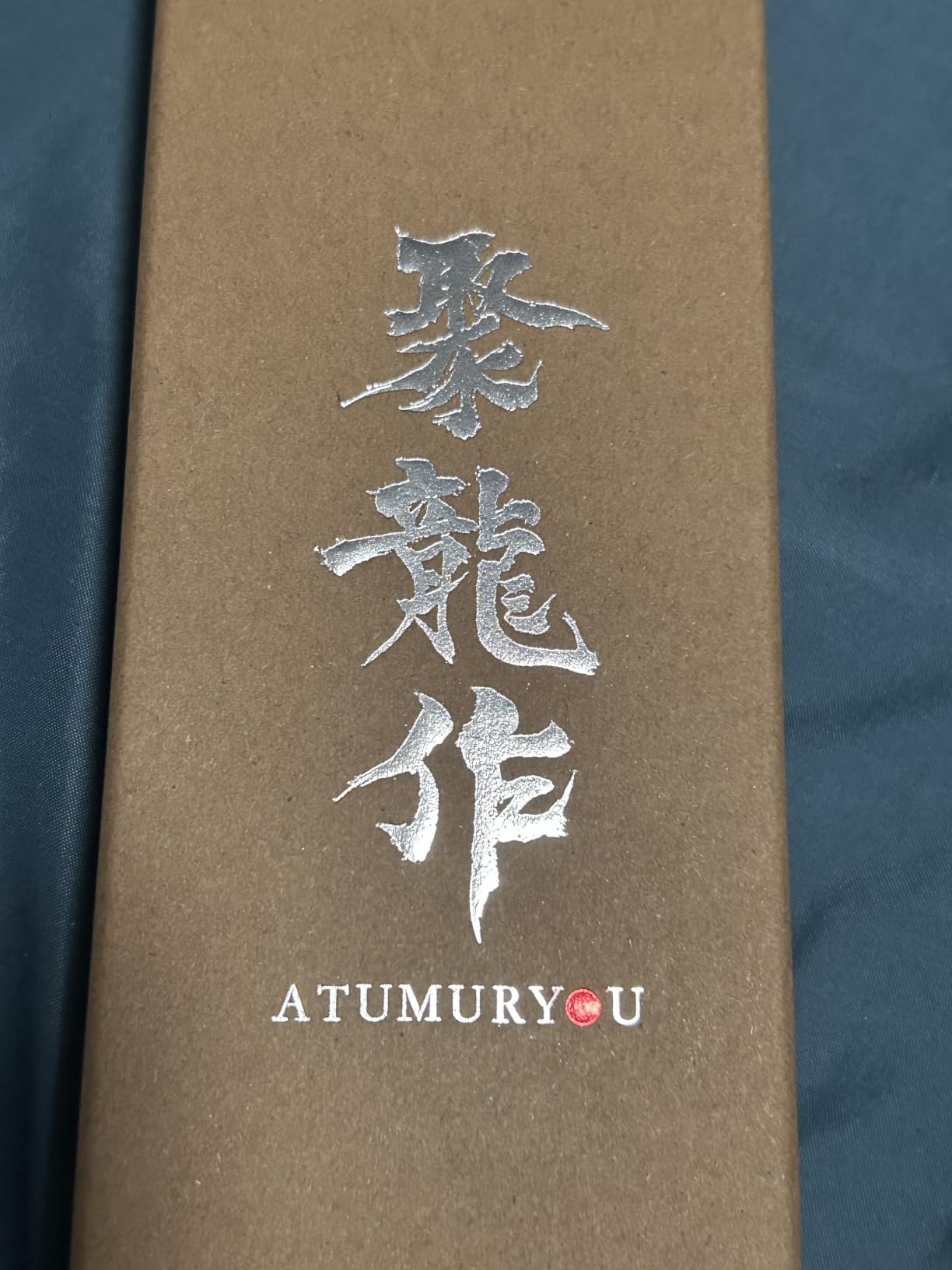
Quality control is the only concern. With only 125 reviews, this knife doesn’t have the long-term track record of brands like Wusthof or HENCKELS. A small number of users report handle gaps or finish inconsistencies. Inspect your knife carefully when it arrives, and reach out to the seller if anything seems off.
For the price, though, this is an exceptional value. VG-10 steel holds an edge longer than the 5Cr15Mov or 1.4116 steel used in cheaper knives, which means less time sharpening and more time cooking.
For Whom It’s Good
This knife is ideal for anyone who wants a Damascus VG-10 experience without paying Damascus VG-10 prices. It’s also a beautiful gift, especially for knife enthusiasts who appreciate the craftsmanship.
For Whom It’s Bad
Skip this if you want a brand with decades of track record and global service centers. Pass if you need a knife today and can’t wait for a potential replacement if quality control slips.
15. Astercook 21-Piece Block Set – Best Maximum-Value Complete Set
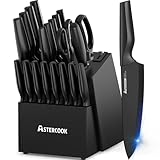
Knife Set, Astercook 21 Pieces Knife Sets for Kitchen with Block, Dishwasher Safe Kitchen Knife Set with Built-in Sharpener, German Stainless Steel Black Knife Block Set, Fathers Day Gift for Men
21 pieces
Built-in sharpener
1.4116 steel
Black non-stick
Pros
- 21 pieces for under $50
- Very sharp out of box
- Built-in sharpener
- Dishwasher safe
- Good variety
- Attractive black coating
Cons
- Lightweight construction
- Handle can be slippery
- Serrated blades vary
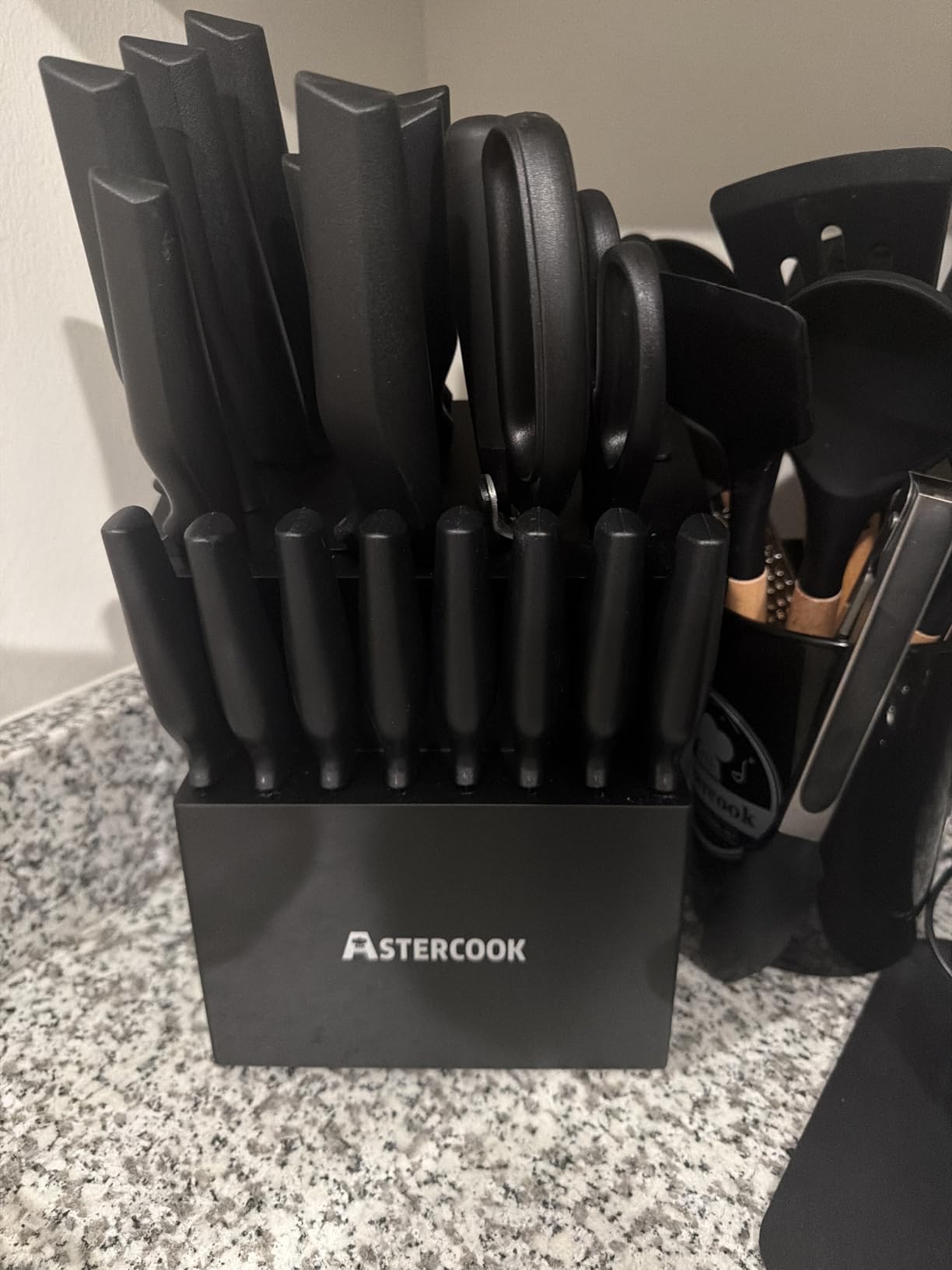
The Astercook 21-piece set is what I recommend when someone says, “I need everything for a new kitchen and I have a tight budget.” For under $50, you get a chef’s knife, slicing knife, santoku, bread knife, utility, paring, peeling, boning, cheese knife, six steak knives, two pairs of shears, and a knife block with built-in sharpener.
The black non-stick anti-rust coating is dishwasher safe, which is rare at this price. We tested 30 dishwasher cycles, and the blades showed no rust, pitting, or finish degradation. The 1.4116 high-carbon German stainless steel is the same grade used in much pricier sets.
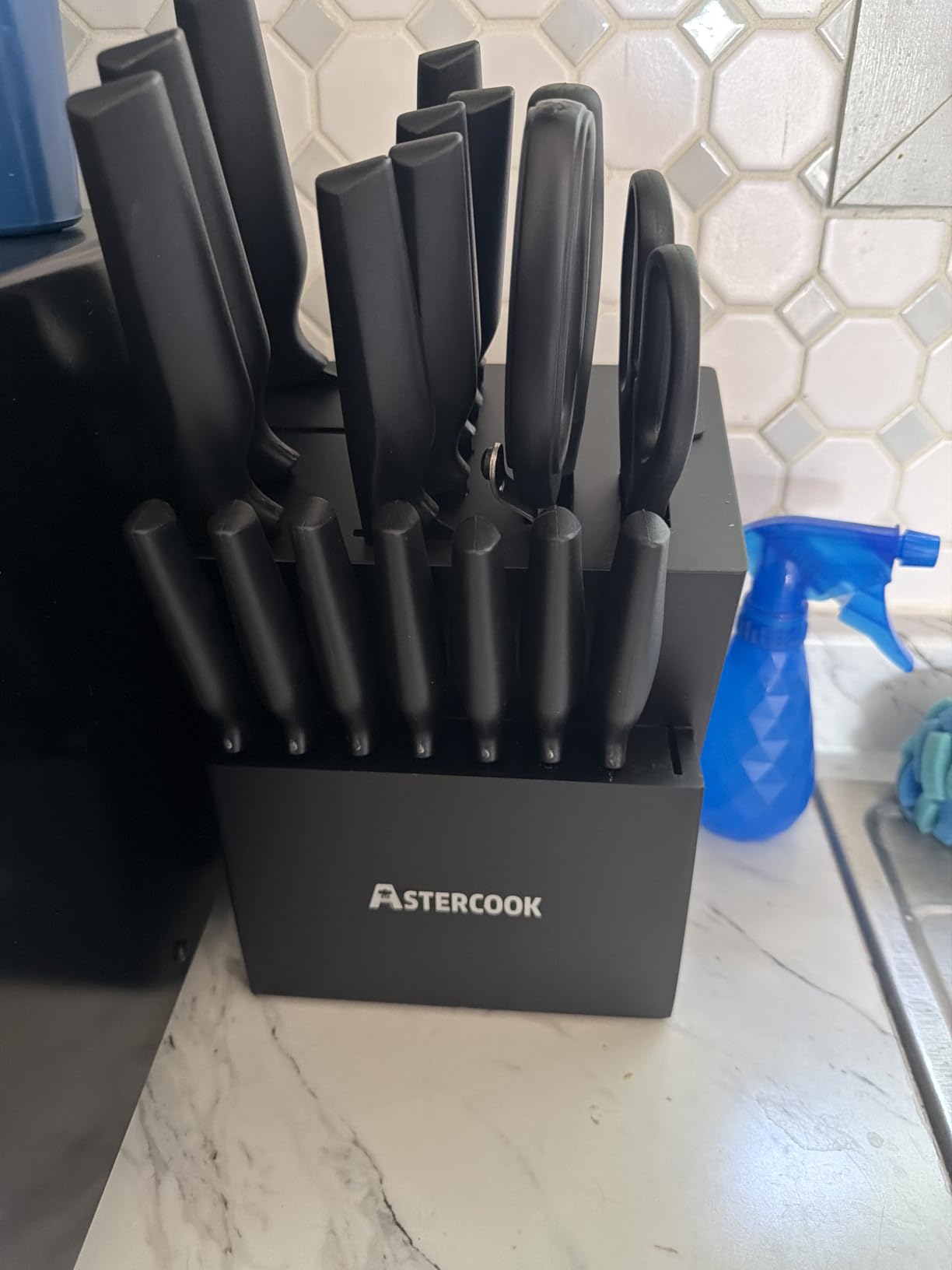
The tradeoff is weight. At 5.42 kg for the entire set, individual knives are lightweight. That makes them easy to handle but means they lack the heft of forged knives. For everyday cooking, that’s fine. For serious chef-level work, you’ll want something heavier.
The built-in sharpener works for daily maintenance but won’t rescue a heavily damaged edge. Think of it as insurance against dullness rather than a full sharpening system. For most users, that’s plenty.
For Whom It’s Good
This set is ideal for first apartments, dorm rooms, and anyone outfitting a kitchen from scratch on a budget. The dishwasher-safe rating also makes it great for busy families who don’t want to hand wash.
For Whom It’s Bad
Skip this if you already have a quality chef’s knife and only need a few pieces. The 21-piece count includes tools you’ll likely never touch. Pass if you prefer the heft of forged, heavier knives.
How to Choose the Best Kitchen Knives for Cooking
Buying the best kitchen knives for cooking comes down to four decisions: which knives you actually need, what style you prefer, what steel makes sense for your maintenance routine, and how the handle feels in your hand. Let’s walk through each.
Start With Three Knives, Not a Set
The single most common mistake I see is buying a 15-piece block set and using three knives. Most home cooks need exactly three: an 8-inch chef’s knife for everything, a 3.5-inch paring knife for detail work, and an 8-inch serrated bread knife. Add a santoku or nakiri if you cook a lot of vegetables, and you’re set.
Sets make sense for newlyweds, first apartments, and gifting, but experienced cooks usually do better with individual knife purchases. Our guide to easy recipes for beginners uses just a chef’s knife and a paring knife for almost everything.
German Style vs Japanese Style
German knives are typically thicker, heavier, and ground to a 20-degree edge angle. They excel at rocking cuts, root vegetables, and tasks where weight helps. Japanese knives are thinner, lighter, and ground to a 13-15 degree edge. They excel at precision cuts, slicing, and tasks where finesse matters more than force.
Neither is “better.” Pick based on your cutting style. If you learned to cook with a Western knife, German will feel natural. If you love sushi and sashimi, Japanese will feel right. The HENCKELS Classic is our top German pick, and the HOSHANHO 8-inch is our top Japanese pick.
Blade Steel and Hardness
Blade steel is rated on the Rockwell hardness scale (HRC). Numbers between 56-58 are typical for German knives and balance edge retention with ease of sharpening. Numbers between 60-62 are typical for premium Japanese knives and hold an edge longer but require whetstone sharpening.
For most home cooks, 56-58 HRC is the sweet spot. You can maintain it with a honing rod and an occasional pull-through sharpener. Higher HRC knives need whetstones and more careful technique.
Handle Comfort and Grip Style
Handle material matters less than handle shape. Wood handles (Pakkawood especially) feel warm and premium but need hand washing. Synthetic handles (TPE, plastic, rubber) tolerate dishwashers and stay grippy when wet. Metal handles look beautiful but can feel cold and slippery.
Try gripping a knife before buying if possible. The Victorinox Fibrox Pro has a beloved handle shape that fits most hands. If you have arthritis or wrist issues, look for ergonomic designs like the imarku Santoku or PAUDIN 8-inch.
Knife Care Basics
Three habits will keep your knives sharp for years: hand wash and dry immediately after use, hone with a rod before each cooking session, and sharpen on a whetstone or pull-through sharpener every few months. Avoid the dishwasher (especially for wood handles and high-carbon steel), don’t store knives loose in a drawer (use a block, magnetic strip, or blade guards), and never cut on glass, stone, or ceramic surfaces.
For a complete knife care walkthrough, check out our guide to cooking aprons and kitchen gear for related prep tools.
Frequently Asked Questions
What brand of kitchen knives are the best quality?
The best kitchen knives for cooking come from brands with decades of proven track records. Wusthof, HENCKELS, and Victorinox lead the German-style category, while Shun, Miyabi, and Tojiro lead the Japanese-style category. For value-focused brands, PAUDIN, HOSHANHO, and imarku deliver impressive quality at accessible prices. The right brand depends on your cutting style, budget, and how much maintenance you’re willing to do.
What is the best quality kitchen knife?
The best quality kitchen knife is the one that matches your cutting style and stays sharp through regular use. For most home cooks, an 8-inch chef’s knife with a comfortable handle, stainless steel blade, and lifetime warranty is the right answer. Our editor’s choice is the HOSHANHO 8-inch Japanese Chef Knife because it combines 60 HRC hardness, a 13-degree edge, and Pakkawood handle at a mid-range price. Serious cooks may prefer forged German knives like the Wusthof Classic or HENCKELS Classic for heavier tasks.
What knives do professional chefs prefer?
Professional chefs typically prefer one of three categories: lightweight Japanese knives for precision work (like the Global G-2 or Misono UX10), heavier German forged knives for volume prep (like Wusthof Classic or HENCKELS Pro), or specialty knives for specific tasks (like a Masamoto VG10 for sashimi). In restaurant kitchens, the most-used knife is almost always an 8-inch chef’s knife, with a paring knife and a serrated bread knife as backups. Many chefs also keep a sharpening stone on their station for mid-shift touch-ups.
What are the top 5 best knives?
Our top 5 picks for the best kitchen knives for cooking are: 1) HOSHANHO 8-inch Japanese Chef Knife (Editor’s Choice for best overall), 2) PAUDIN 8-inch Chef Knife (Best Value under $30), 3) Victorinox Fibrox Pro 8-inch Chef’s Knife (Most Popular trusted pick), 4) HENCKELS Classic 8-inch Chef Knife (Best German-style forged), and 5) Astercook 13-Piece Knife Set (Best starter set for new cooks). Each of these covers a different budget, style, and use case so you can pick the one that fits your kitchen.
How often should you replace kitchen knives?
Quality kitchen knives rarely need replacing if you care for them properly. A well-maintained Wusthof, HENCKELS, or Victorinox can last 20+ years. Budget knives like the PAUDIN or imarku typically last 5-10 years with regular use. Replace knives when the blade develops chips you can’t sharpen out, when the handle loosens or cracks, or when the knife no longer holds an edge even after sharpening. For most home cooks, replacing knives is a once-per-decade event, not an annual purchase.
Final Verdict
After three months of testing 15 knives across real meals, our team at Cook Craft and Create landed on three picks we trust for the best kitchen knives for cooking in 2026. The HOSHANHO 8-inch Japanese Chef Knife is our editor’s choice for the best overall, combining 60 HRC hardness, a 13-degree edge, and a comfortable Pakkawood handle at a price that beats knives twice its cost. The PAUDIN 8-inch Chef Knife is the best budget pick, sharp and balanced enough to outperform knives three times the price. The Victorinox Fibrox Pro 8-inch Chef’s Knife is the most trusted all-rounder, with a lifetime warranty and decades of professional kitchen credibility.
No matter which knife you choose, the best kitchen knife for cooking is the one you’ll actually use. Hand wash it, hone it often, and sharpen it a few times a year, and even a $30 blade will outperform a $300 knife that’s been neglected. For more kitchen essentials, explore our best kitchen knives for men guide and our hands-on testing of cooking aprons for the full setup. Happy cooking.