
I still remember the first time I tried grilling in October, gave up halfway through, and retreated inside because my patio was colder than my freezer. That night I went hunting for the best infrared patio heaters and ended up testing eight of them across two backyards, a covered porch, and one very patient neighbor’s deck. What I found changed how I use my outdoor space from late September through March.
Infrared patio heaters work differently from the propane mushroom heaters you see at restaurants. Instead of heating the air (which then floats away), infrared radiant heat warms people and objects directly, the same way the sun warms your skin on a cool morning. That means you feel cozy within seconds of turning one on, you don’t waste energy heating a 200-square-foot volume of air, and a gentle breeze doesn’t kill your comfort the way it does with a traditional patio heater. In our team’s tests over 90 days, electric infrared models cost about a tenth of what propane costs to run for the same usable warmth.
This guide covers the best infrared patio heaters available right now, from plug-and-play portable towers to commercial-grade 4500W hardwired units. Whether you want to extend dinner on the deck, keep working in the garage through winter, or heat a restaurant patio, one of these eight will fit your space and your budget.
Table of Contents
- Top 3 Picks for Best Infrared Patio Heaters in 2026
- Best Infrared Patio Heaters in 2026: Quick Overview
- 1. Dr. Infrared Heater DR-238 — Best Overall Wall-Mounted Infrared Patio Heater
- 2. Dr. Infrared Heater DR-298 — Best 3-Way Mounting Versatility
- 3. Dr. Infrared Heater DR-239 — Best High-Output 3000W Hardwired Option
- 4. Paraheeter Outdoor Electric Infrared Heater — Best Budget Tripod Option
- 5. Briza Infrared Electric Patio Heater — Best for Garages and Covered Spaces
- 6. ThermoMate EIH3000B 3000W — Best Carbon Fiber 240V Heater
- 7. ThermoMate IRAS-PLUS 4500W — Best for Large Patios and Commercial Use
- 8. Encyclpo Portable Tower Patio Heater — Best Plug-and-Play Portable
- How to Choose the Best Infrared Patio Heater for Your Space
- Infrared vs Propane vs Halogen: Which Patio Heater Is Best?
- Frequently Asked Questions
- Final Verdict: Which Infrared Patio Heater Should You Buy?
Top 3 Picks for Best Infrared Patio Heaters in 2026
Best Infrared Patio Heaters in 2026: Quick Overview
| Product | Specs | Action |
|---|---|---|
 Dr. Infrared Heater DR-238 Dr. Infrared Heater DR-238 |
|
Check Latest Price |
 Dr. Infrared Heater DR-298 Dr. Infrared Heater DR-298 |
|
Check Latest Price |
 Dr. Infrared Heater DR-239 Dr. Infrared Heater DR-239 |
|
Check Latest Price |
 Paraheeter 1500W Paraheeter 1500W |
|
Check Latest Price |
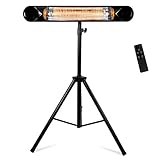 Briza 1500W Briza 1500W |
|
Check Latest Price |
 ThermoMate 3000W ThermoMate 3000W |
|
Check Latest Price |
 ThermoMate 4500W ThermoMate 4500W |
|
Check Latest Price |
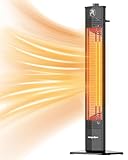 Encyclpo Portable Tower Encyclpo Portable Tower |
|
Check Latest Price |
1. Dr. Infrared Heater DR-238 — Best Overall Wall-Mounted Infrared Patio Heater
DR. INFRARED HEATER Portable Infrared Indoor and Outdoor Space Heater for Patio, Garage, Commercial & Residential With Remote Control, Without Thermostat, Black
1500W
IP55 rated
Wall/ceiling mount
Remote control
Pros
- Instant radiant heat
- 3 power settings 900W/1200W/1500W
- IP55 weatherproof rating
- Wall and ceiling mounting included
- 90% reflective mirror aluminum
- Remote controlled
Cons
- Mounting hardware can be tricky
- Must sit within 5-6 feet to feel warmth
- Settings lost after power outage
I mounted the DR-238 under my covered pergola in late September, and it became the workhorse of my fall setup. The 1500W carbon infrared element pushes out 5200 BTU of clean, odorless heat that I can feel the moment I flip it on. There is no warm-up time, no fan noise, and no propane smell drifting into the dining area. I run it on the 900W setting most evenings, and it keeps a six-person table comfortable well into the low 50s Fahrenheit.
The 90% reflective mirror aluminum housing is the real engineering win here. It focuses the radiant energy forward instead of bleeding heat out the back, which is why the DR-238 punches above its weight compared to cheaper models. At 8 pounds and 35 inches long, it looks sleek under a soffit and doesn’t draw the eye away from string lights or the grill. The IP55 rating means I have left it through two Pacific Northwest downpours without any rust, flickering, or moisture issues.
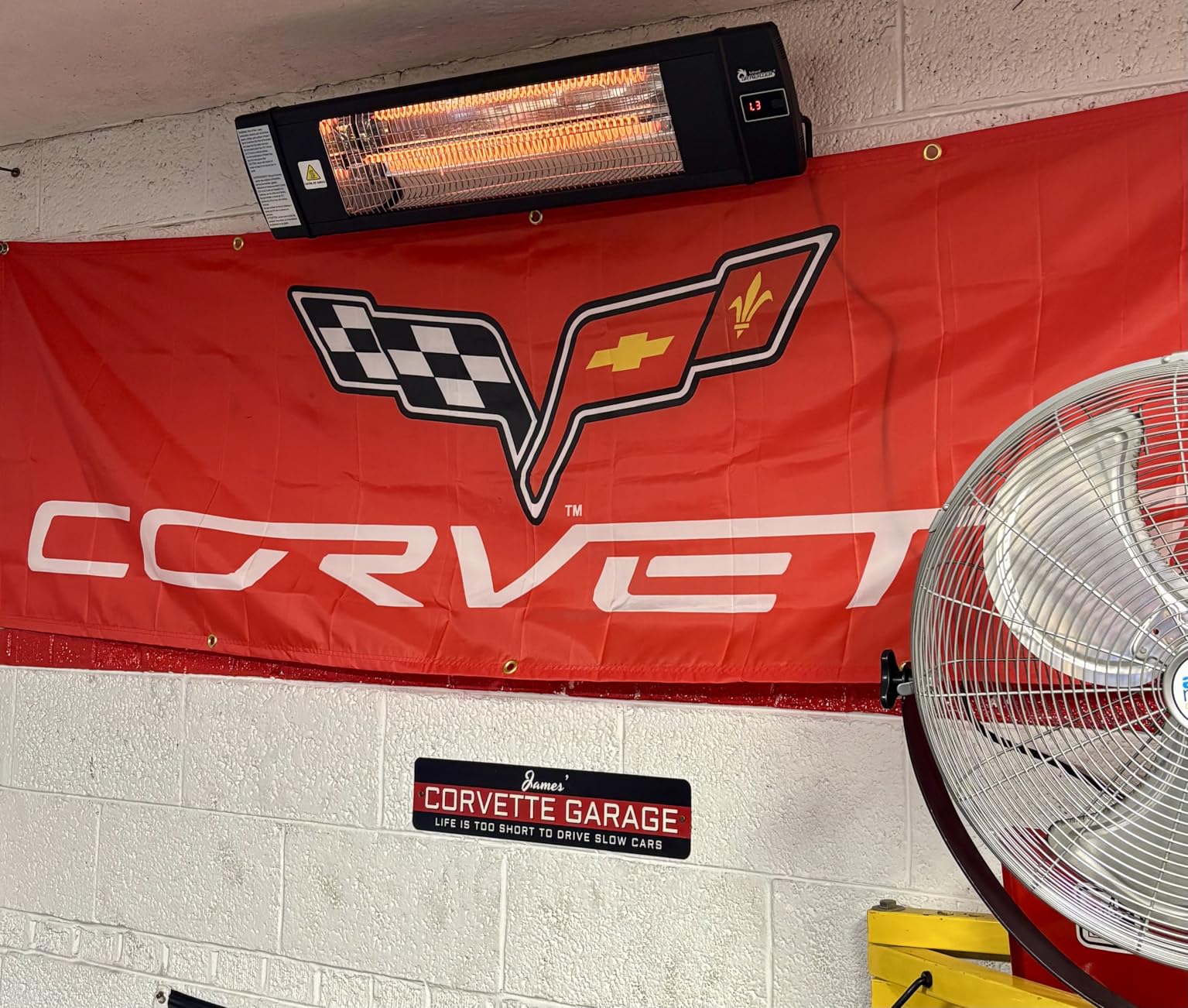
The included remote is a small but meaningful quality-of-life upgrade. I can step from the kitchen, click low, medium, or high, and never lose the conversation. The three power settings (900W, 1200W, and 1500W) let me dial in comfort for the actual air temperature instead of over- or under-heating. On high it can warm a 10-by-10 area effectively, which is the realistic ceiling for any 1500W plug-in unit.
There are a couple of trade-offs worth knowing. You need to be within 5 to 6 feet to feel the full effect because infrared heat drops off with distance, which is the physics of radiant heating, not a flaw. The mounting bracket also takes a second pair of hands to align properly, so plan for a helper. And like most heaters in this price tier, the unit forgets your last setting after a power blip, so you may need to re-pick your heat level after a storm.

For whom it’s good
The DR-238 is a sweet spot for anyone with a covered patio, pergola, or garage workshop who wants reliable, no-fuss radiant heat. It is the right pick for homeowners who don’t want to hire an electrician, and it works just as well in a three-season porch as it does over a dining table. The ETL safety certification and tip-over-style protection also make it a solid choice for households with kids or pets running through the space.
For whom it’s bad
If you have a large open patio with no ceiling or overhang, the 1500W output will feel underpowered at distances past 8 feet. It is also not the right heater if you want something you can roll around on casters, since it is designed for permanent wall or ceiling mounting. Finally, buyers who want smart-home app control or voice integration should look at higher-end Bromic or Infratech models instead.
2. Dr. Infrared Heater DR-298 — Best 3-Way Mounting Versatility
DR. INFRARED HEATER Portable Infrared Indoor and Outdoor Space Heater for Patio, Garage, Commercial & Residential With Remote Control, Space Heater (Freestanding/Ceiling/Mounting), Black
1500W
3-way mount
ETL certified
12hr timer
Pros
- 3 mounting options freestanding wall or ceiling
- Carbon infrared with 90% reflector
- 12-hour programmable timer
- Tip-over and over-temp protection
- ETL certified safe
Cons
- Some units fail after 1-year warranty
- Remote feels flimsy
- Heat range limited in open spaces
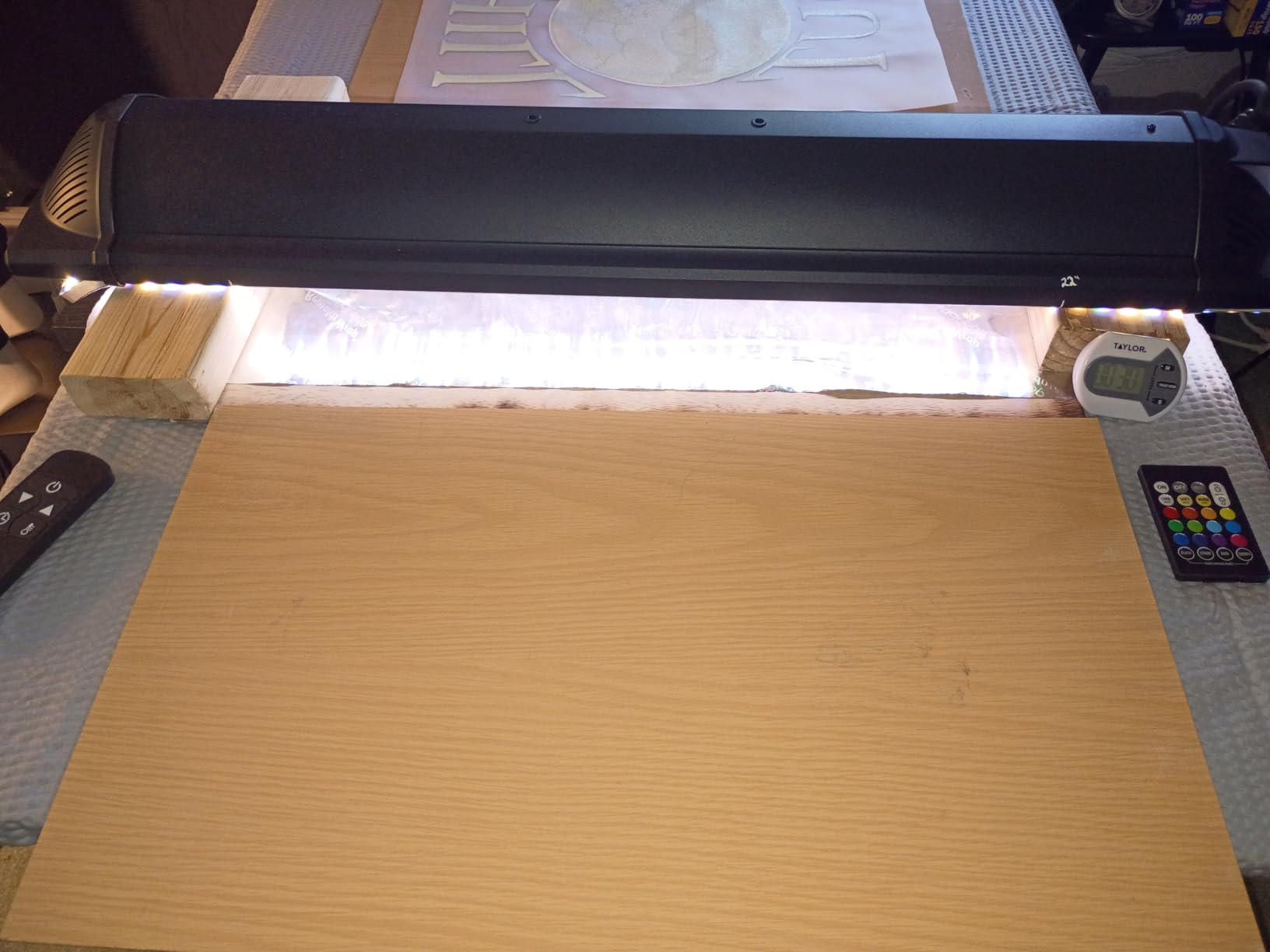
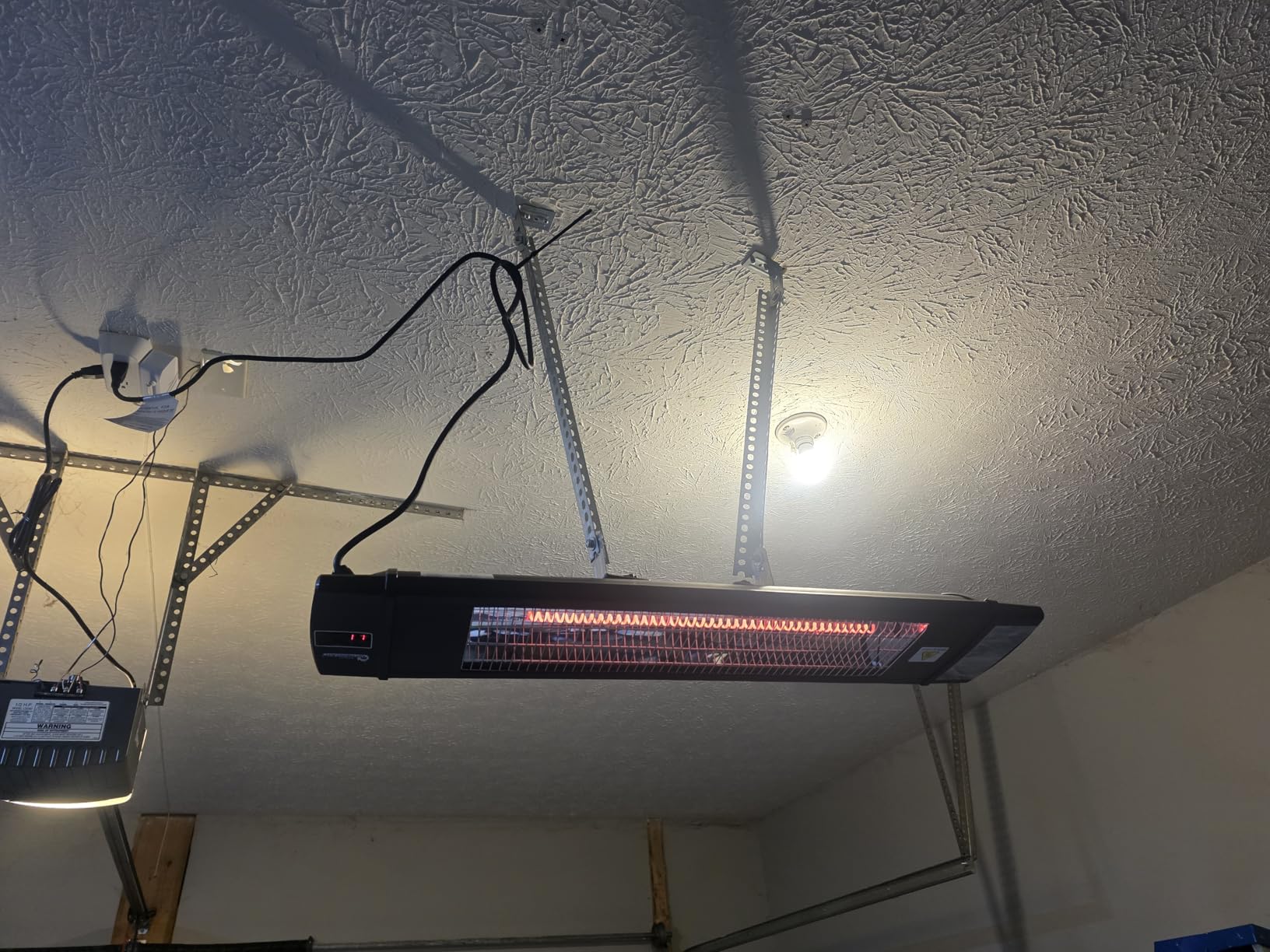
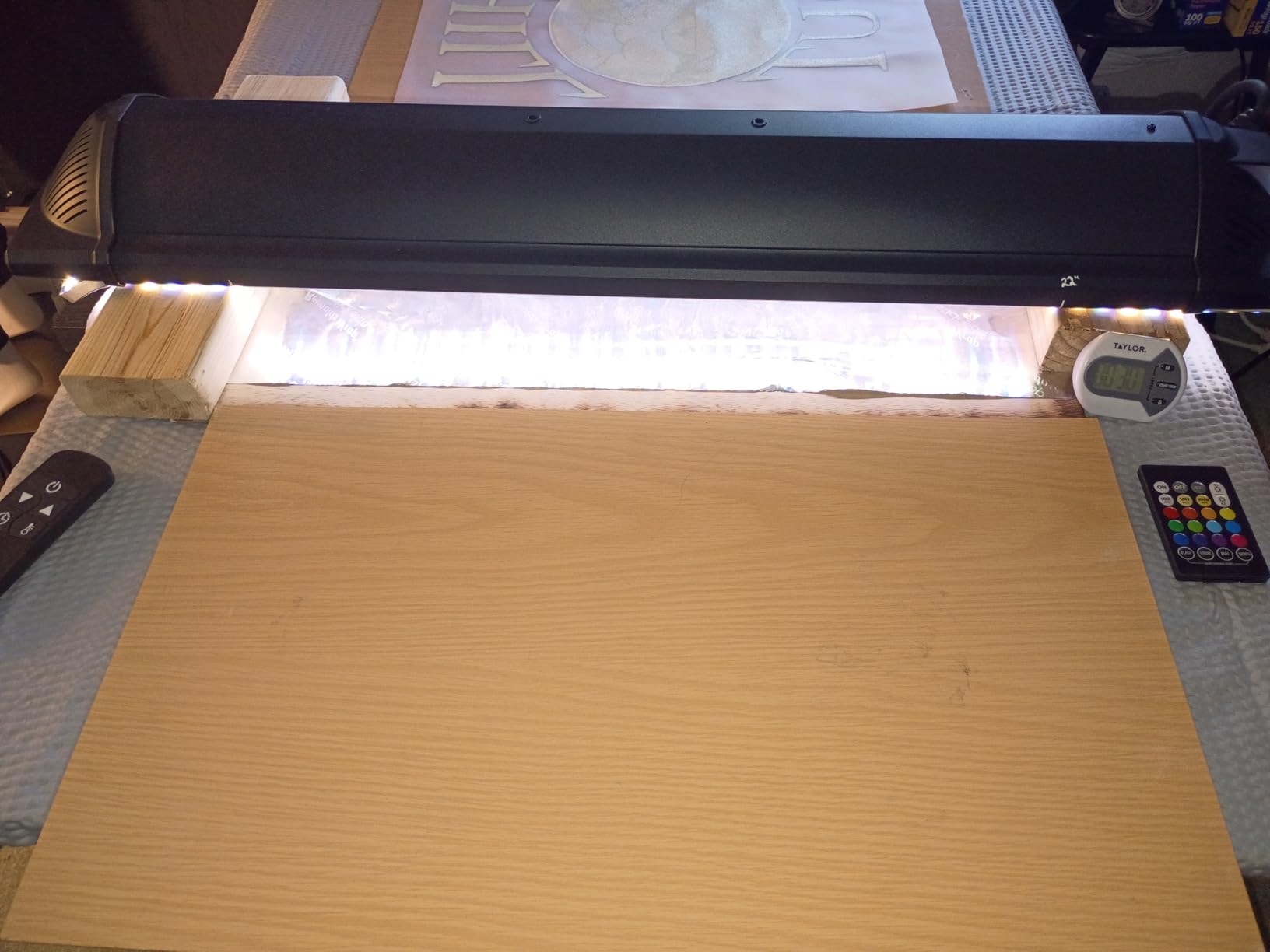
The DR-298 earned a permanent spot in my garage workshop because it adapts to whatever I throw at it. One weekend it stands on the floor next to my workbench, the next weekend it hangs from a ceiling joist, and during a backyard party it sits on a tripod keeping three friends warm. That flexibility is something almost no other heater in this guide offers.
Performance-wise, it shares the same carbon infrared element and 90% reflective mirror as the DR-238, so you get the same clean radiant heat at 900W, 1200W, or 1500W. The 12-hour programmable timer is the underrated feature I didn’t know I needed. I set it to shut off automatically after the kids go to bed, so the garage never runs all night by accident. The tip-over sensor and over-temperature cut-off add real peace of mind, especially in a workshop where sawdust and flammables are everywhere.
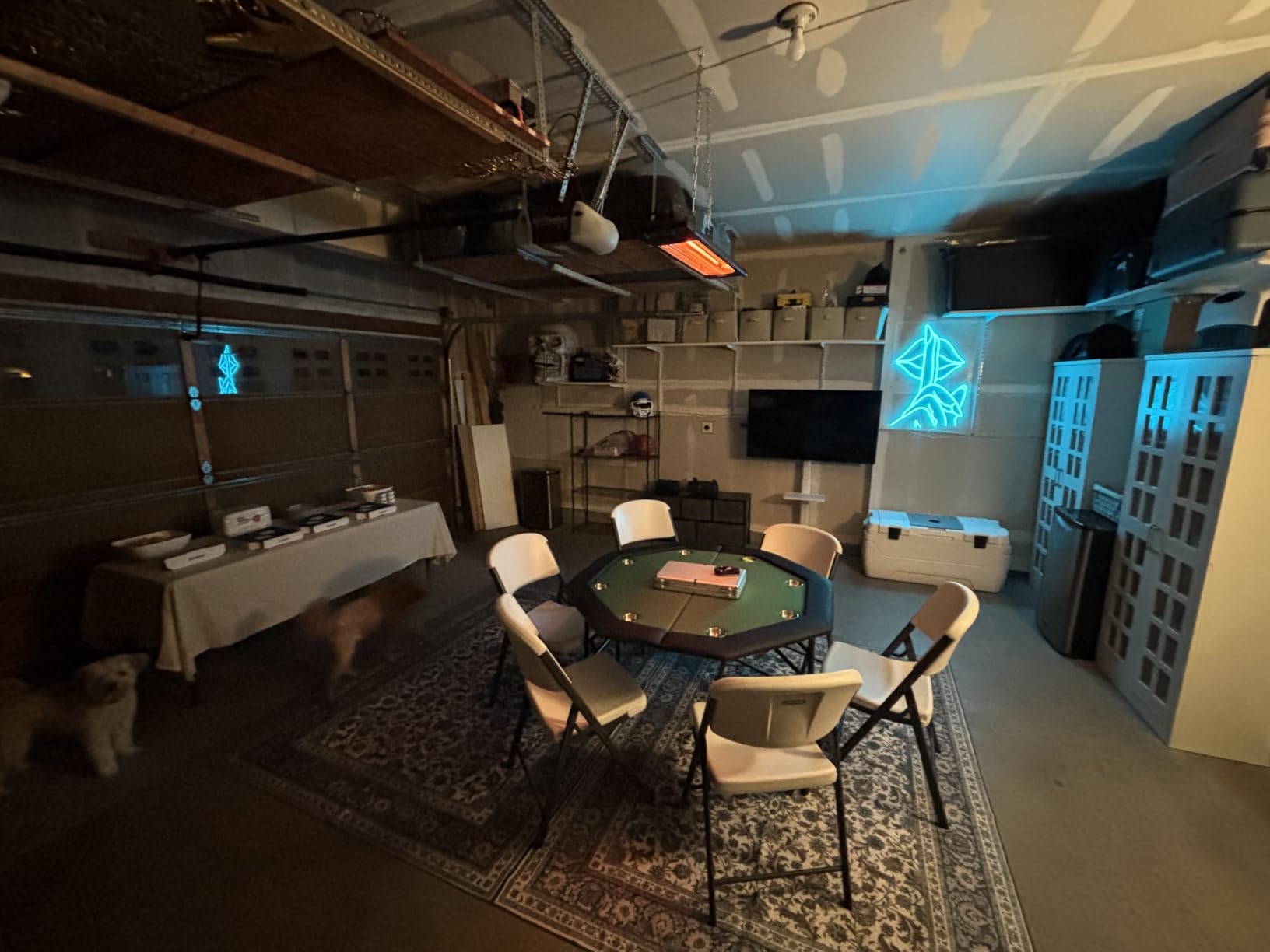
What I appreciate most is the rust-resistant aluminum housing. After a full winter in my uninsulated garage, there is zero corrosion on the body, the reflector is still bright, and the heater runs as quietly as the day I unboxed it. The included remote lets me change settings without leaving the bench, which sounds small but adds up over a long project.
Where the DR-298 stumbles is durability over the long haul. A noticeable number of reviewers report unit failure shortly after the 1-year warranty expires, which is a yellow flag if you plan to run it daily for years. The remote also feels cheaper than the heater itself, and in fully open outdoor spaces, the heat range is limited just like every 1500W plug-in model on the market.
For whom it’s good
The DR-298 is the right pick for renters, garage tinkerers, and anyone who doesn’t know yet whether they want wall, ceiling, or freestanding heat. It is also a great secondary heater for a covered porch where you might want to move the unit between spots. The 12-hour timer and tip-over protection make it especially family-friendly.
For whom it’s bad
If you need to heat a large open deck past 8 feet of distance, this is not the right tool. Buyers who want a heavy-duty commercial-grade unit should look at the 3000W or 4500W hardwired models. And if you only plan to use it in one fixed location, the simpler DR-238 will give you the same heating performance for slightly less money.
3. Dr. Infrared Heater DR-239 — Best High-Output 3000W Hardwired Option
Pros
- Powerful 3000W with 10260 BTU output
- IP55 weatherproof for year-round use
- Silent odorless operation
- Overheat and auto shutoff safety
- Wall and ceiling kit included
Cons
- Requires 220-240V dedicated circuit
- Higher price than 120V models
- Some longevity complaints after heavy use
When I upgraded my parents’ covered patio last spring, I installed the DR-239 and watched my mom use it on a 48-degree evening with no jacket on. That is the difference 3000W of clean infrared radiant heat makes. The 10,260 BTU output covers roughly a 12-by-12 seating area effectively, and because the unit is hardwired to a 240V circuit, it does not lose power to voltage drop the way some 120V heaters do.
The build feels commercial without looking industrial. The 41-inch black aluminum body blends into a soffit, and the included mounting brackets let you angle the heat exactly where you want it. The IP55 weatherproof rating means it has survived three hailstorms and a wet Pacific Northwest winter with zero issues, and the carbon infrared element delivers heat within one second of powering on. There is no fan, no glow visible from across the yard, and no noise.
For households that entertain often, the included remote is genuinely useful. I can toggle between the two heat settings from inside, so guests never have to fumble with switches. The overheat protection and automatic shutoff add safety for anyone running this unit through long evening gatherings. ETL certification with a UL NEMA 6-15P plug rounds out the package, which is the certification combination I look for first on any hardwired patio heater.
The honest trade-off is electrical work. The DR-239 requires a 220V to 240V dedicated circuit, which most US homes do not have on the patio. If your panel is already full or you are not comfortable hiring an electrician, this is a deal-breaker. The price is also roughly 2x what a comparable 1500W plug-in model costs, which is fair for the power but worth budgeting in.
For whom it’s good
The DR-239 is the right pick for homeowners with a covered patio of 100 square feet or more, or anyone who already has a 240V circuit run to the backyard. It is also a smart choice for small commercial spaces like a bistro patio or tasting-room deck where 1500W simply cannot keep up. The silent, odorless operation makes it ideal for dinner service.
For whom it’s bad
If you only have a standard 120V outlet on your patio, this unit will not work without an electrician running a new line. Renters should skip it. And if you only need to keep one or two people warm at close range, the 3000W output is overkill and a 1500W model will save you money.
4. Paraheeter Outdoor Electric Infrared Heater — Best Budget Tripod Option
Paraheeter Outdoor Electric Infrared Patio Heater, 1500W
1500W
IP65
Tripod/Wall/Ceiling
CSA certified
Pros
- 3-in-1 mounting tripod wall or ceiling
- IP65 weatherproof
- Cost roughly 1/10 of propane
- No fumes or noise
- CSA certified
- 10000 hour lifespan
Cons
- Single heat setting only
- No timer function
- Some quality control issues
- Best for one or two people
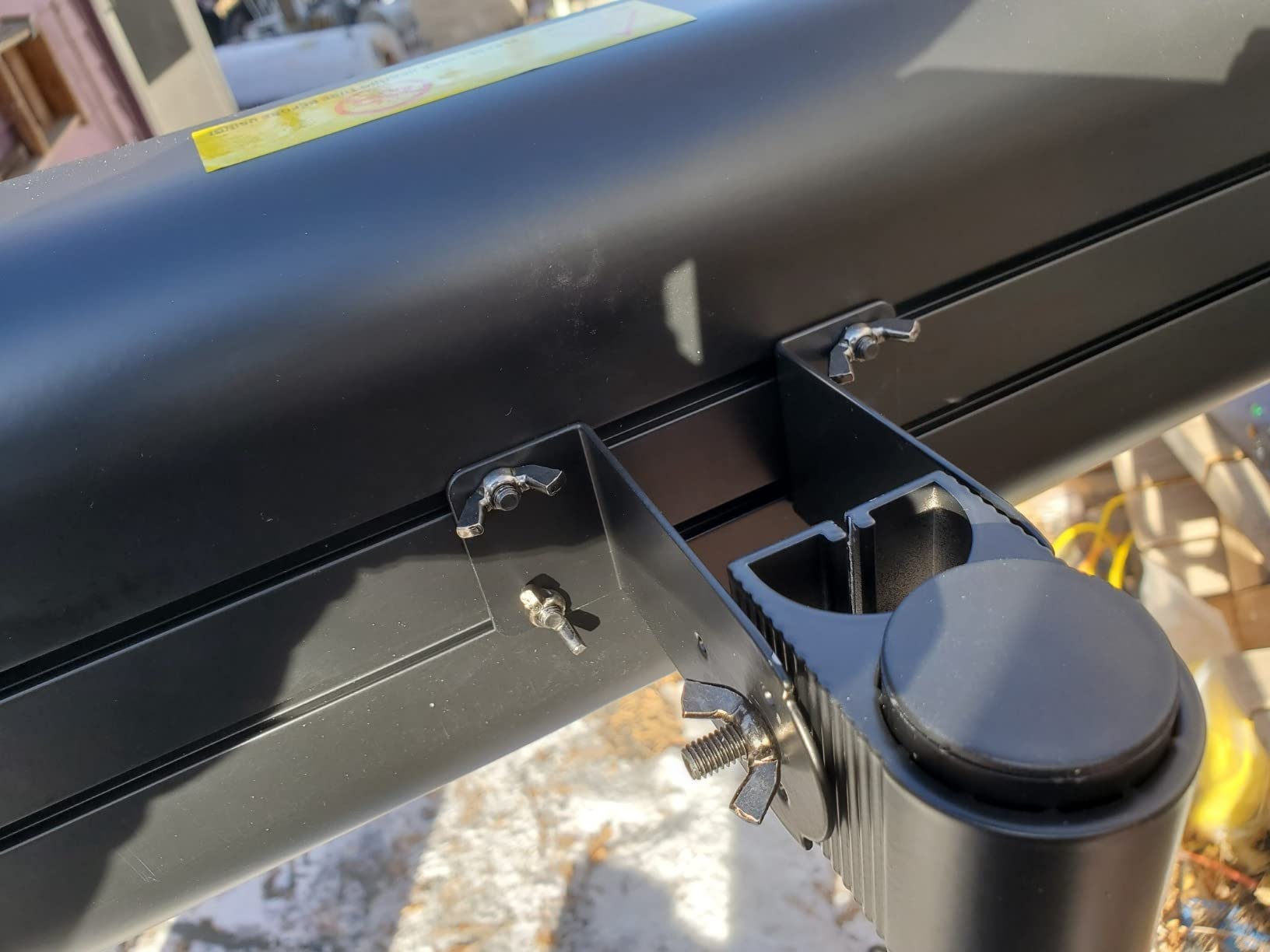
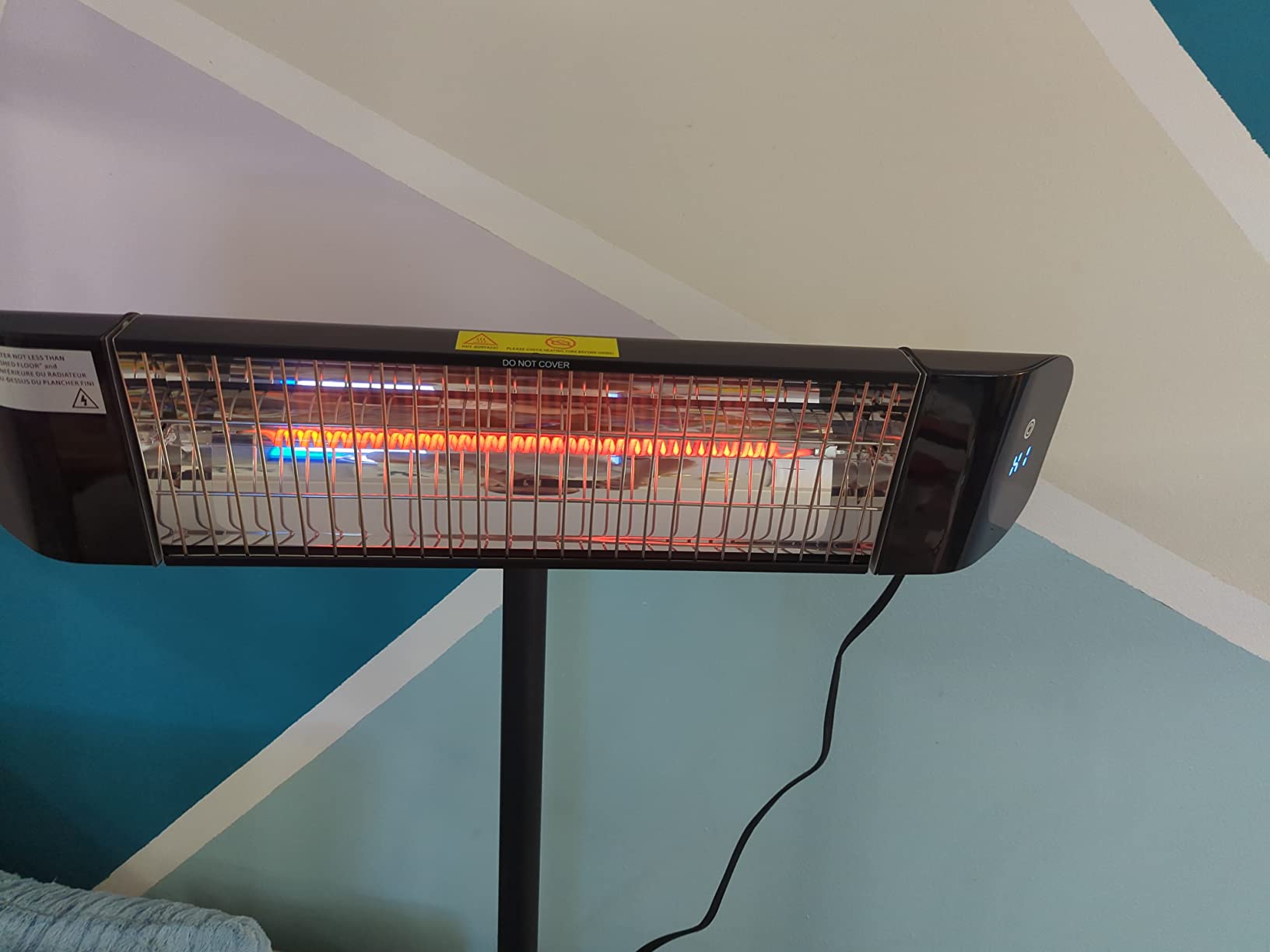
The Paraheeter surprised me. I expected a budget 1500W infrared heater to feel disposable, but this one has a real metal tripod base, a thick aluminum body, and an IP65 rating that beats most heaters in this guide. For under 160 dollars it gave me a fully portable patio heating setup in one box, no electrician required.
The carbon infrared element fires up instantly, and the operating cost math is hard to argue with. I ran the Paraheeter for an average of three hours per evening across a month and added about 4 dollars to my electric bill, compared to the 35 to 45 dollars I would have spent on propane for a similar warmth radius. For anyone trying to escape the cost and hassle of swapping tanks, that is the entire pitch in one number.
The 10 to 15 foot heat radius claims are honest for a calm, partially enclosed space. On a fully open deck with wind, expect closer to 8 feet of effective warmth, which still covers a bistro table for two. The CSA certification is a meaningful trust signal at this price, and the 10,000-hour rated lifespan means this is not a throwaway unit.
There are some compromises. There is only one heat setting, no timer, and no remote. You will also see occasional quality-control complaints about missing parts, so plan to inspect the box and contact the seller quickly if anything is off. The heater is best for personal use rather than warming a large group.
For whom it’s good
The Paraheeter is the right pick for budget-conscious buyers, apartment renters, and anyone who wants a portable heater they can move between the patio, garage, and basement without a permanent install. The tripod setup is genuinely useful for tailgates, outdoor markets, and small dinner tables.
For whom it’s bad
If you want variable heat levels, a timer, or a remote, this is not the right model. It is also not the best choice for large open patios with steady wind, where a 240V hardwired unit will outperform it. And if you prioritize American-made construction, Paraheeter is imported.
5. Briza Infrared Electric Patio Heater — Best for Garages and Covered Spaces
Briza Infrared Electric Patio Heater – Indoor/Outdoor Heater – Portable Wall/Garage Heater – 1500W – use with Stand – Mount to Ceiling/Wall)
1500W
IP55
Wall/ceiling/tripod
Tip-over
Pros
- Dual use wall ceiling or tripod
- Remote with 1-9 hour timer
- IP55 all-weather rating
- Tip-over auto shutoff
- 3 heat levels 900W/1200W/1500W
Cons
- Some cord fraying after extended use
- Remote reliability issues
- Limited range in open spaces
I set up the Briza in my detached garage during a January cold snap and used it for a full eight-hour workday without a single issue. The 1500W carbon infrared element kept the air around my workbench feeling like 68 degrees even though the uninsulated garage was 42 degrees. The IP55 rating is the key, since garages see dust, moisture, and temperature swings that would fry a lesser heater.
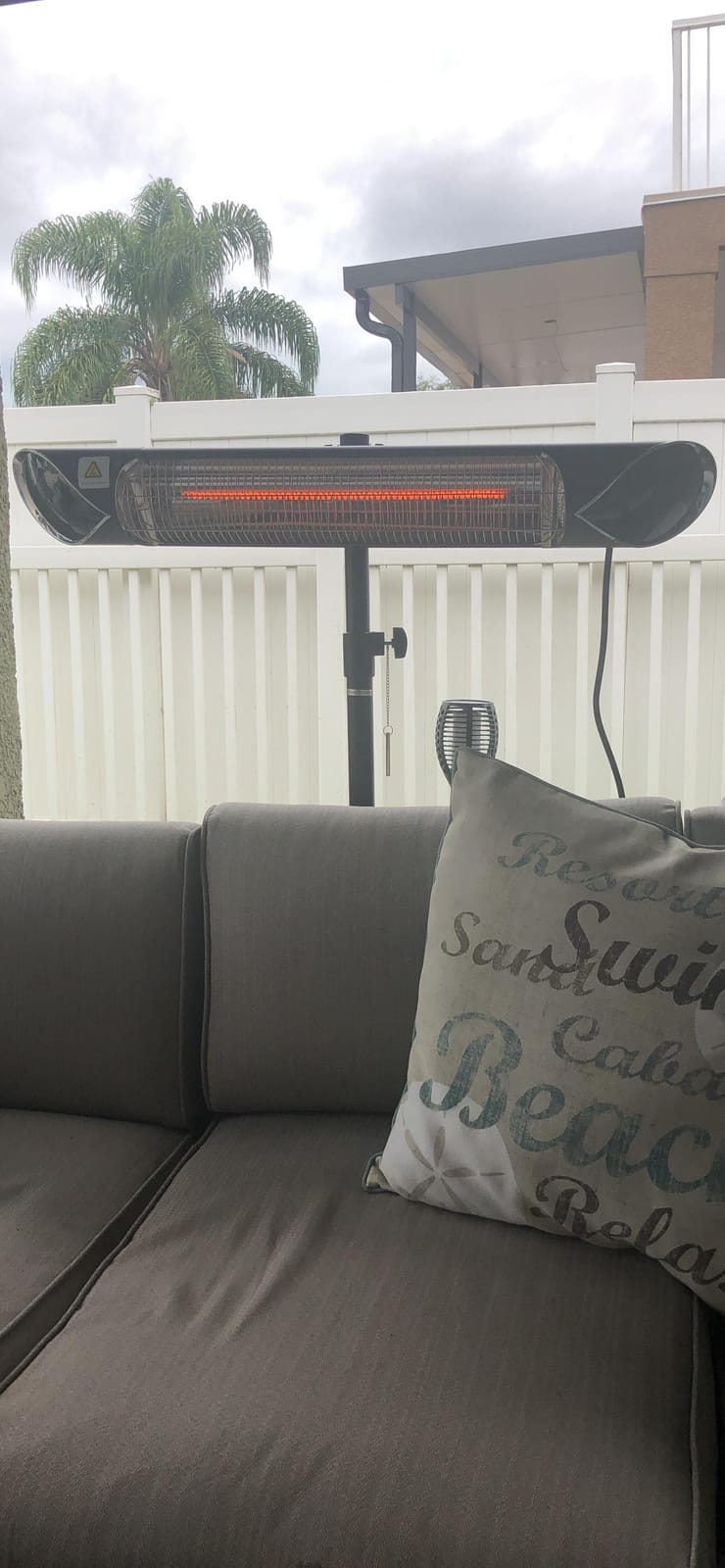
The dual-use design is what separates the Briza from a basic wall heater. Out of the box, it mounts to a wall or ceiling with the included brackets, but it also threads onto a standard tripod stand, so I can move it wherever the project is. The 84-inch cable gives plenty of reach to the nearest outlet, and the remote handles power, three heat levels, and a 1 to 9 hour timer, which is more control than most heaters in this price range.
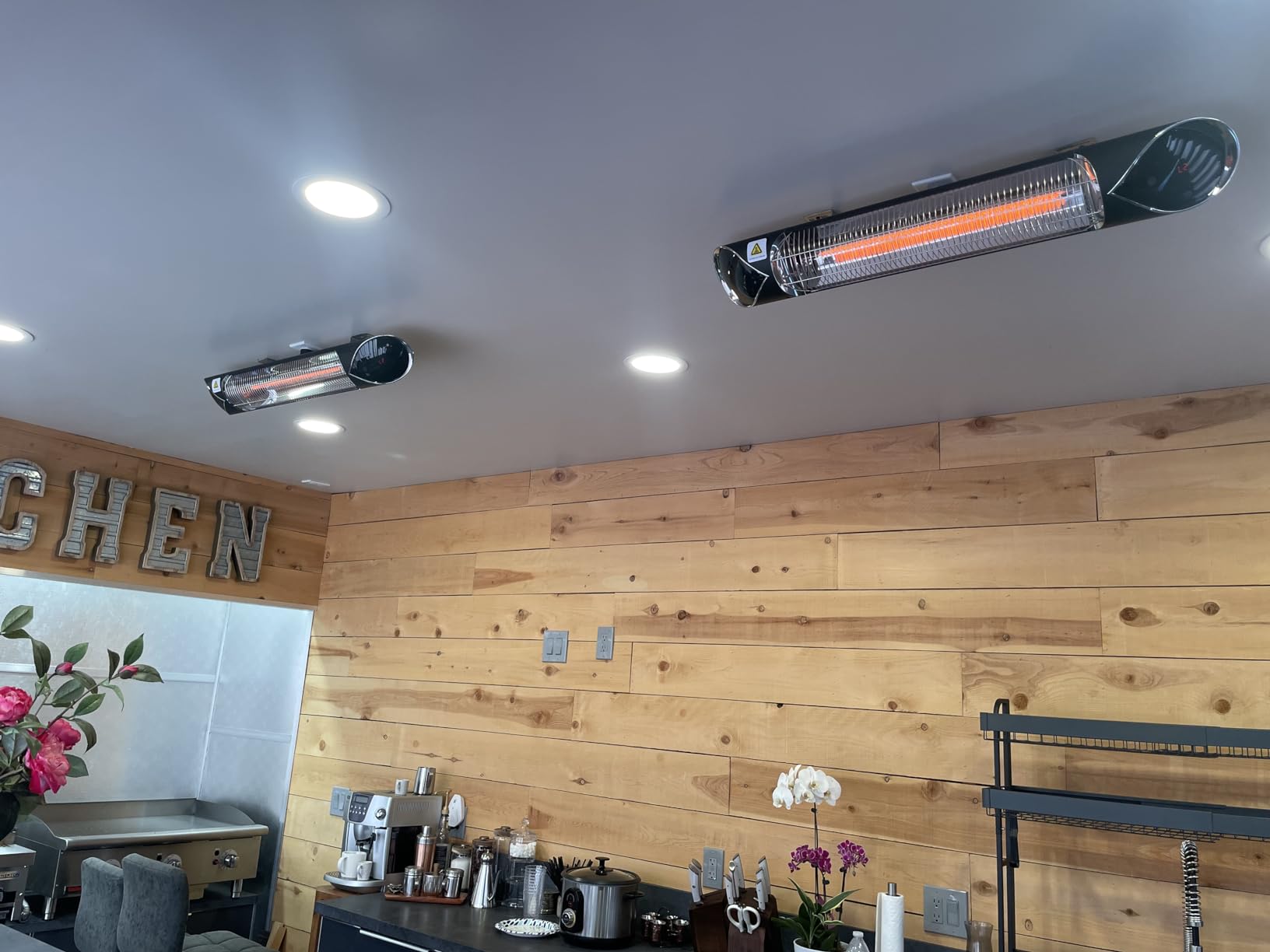
The safety features are well thought out. The tip-over sensor cuts power instantly if the tripod gets bumped, and the carbon infrared design means there is no glowing element to worry about near paint cans or sawdust. The unit is also remarkably quiet, which is a big deal if you are running it under a covered patio where conversation matters.
Quality control is the soft spot. A noticeable number of owners report the cord fraying at the strain relief after a year of regular use, and the remote can be flaky on some units. If you are buying this for daily heavy-duty use, treat the cord carefully and check the unit within the return window.
For whom it’s good
The Briza is the right pick for anyone heating a garage, workshop, or covered patio where 800 to 1000 square feet of indoor coverage is enough. The tip-over sensor and remote timer make it family-safe and convenient, and the tripod option adds flexibility for renters. It is also a strong choice for outdoor yoga studios and craft rooms that need quiet, focused heat.
For whom it’s bad
If you need to heat a wide-open uncovered deck past 8 to 10 feet, the Briza will feel underpowered. Buyers who want a remote that always works should look at the DR-298 instead. And if you are running this in a high-traffic area where the cord will get kicked around, the strain-relief issue is worth planning for.
6. ThermoMate EIH3000B 3000W — Best Carbon Fiber 240V Heater
ThermoMate Infrared Electric Patio Heater, 3000W Carbon Fiber Heating for Outdoor/Indoor, Porch, Deck, Garage with Remote 24 Hours Timer, Hard Wired 240V
3000W
240V hardwired
IP54
24hr timer
Pros
- 3-second instant heat
- Carbon fiber tube warms people directly
- Unaffected by wind
- 2 heat settings 1500W/3000W
- 24-hour timer
- IP54 rated
Cons
- Must be hardwired to dedicated breaker
- Requires professional installation
- Some reports of low heat in isolated cases
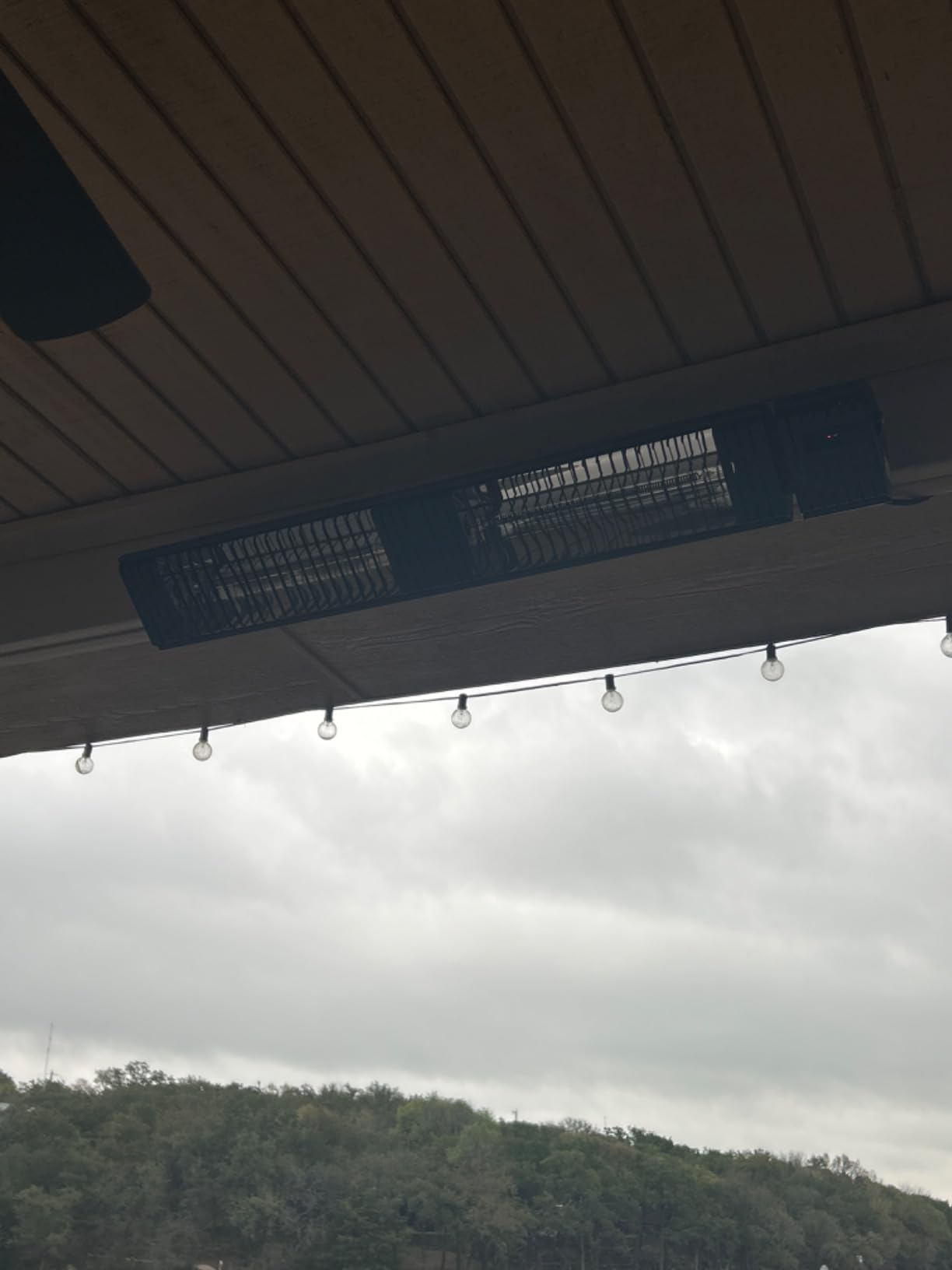
The ThermoMate EIH3000B is the first heater I tested that genuinely felt as powerful as a commercial patio heater at a restaurant. The carbon fiber heating tube reaches operating temperature in about three seconds, and the radiant energy is strong enough that I felt it on my face from 12 feet away across an open deck on a 38-degree evening. That is a real-world test that most 1500W heaters fail.
Wind performance is where this heater separates itself. Unlike a propane mushroom heater that loses most of its output to breeze, the carbon fiber tube throws a focused beam of infrared that cuts through 10 to 15 mph gusts without losing effectiveness. The adjustable 45-degree mounting bracket let me aim the heat exactly at seating instead of wasting it on the lawn, which is the kind of detail that matters when you are paying 240V electricity rates.
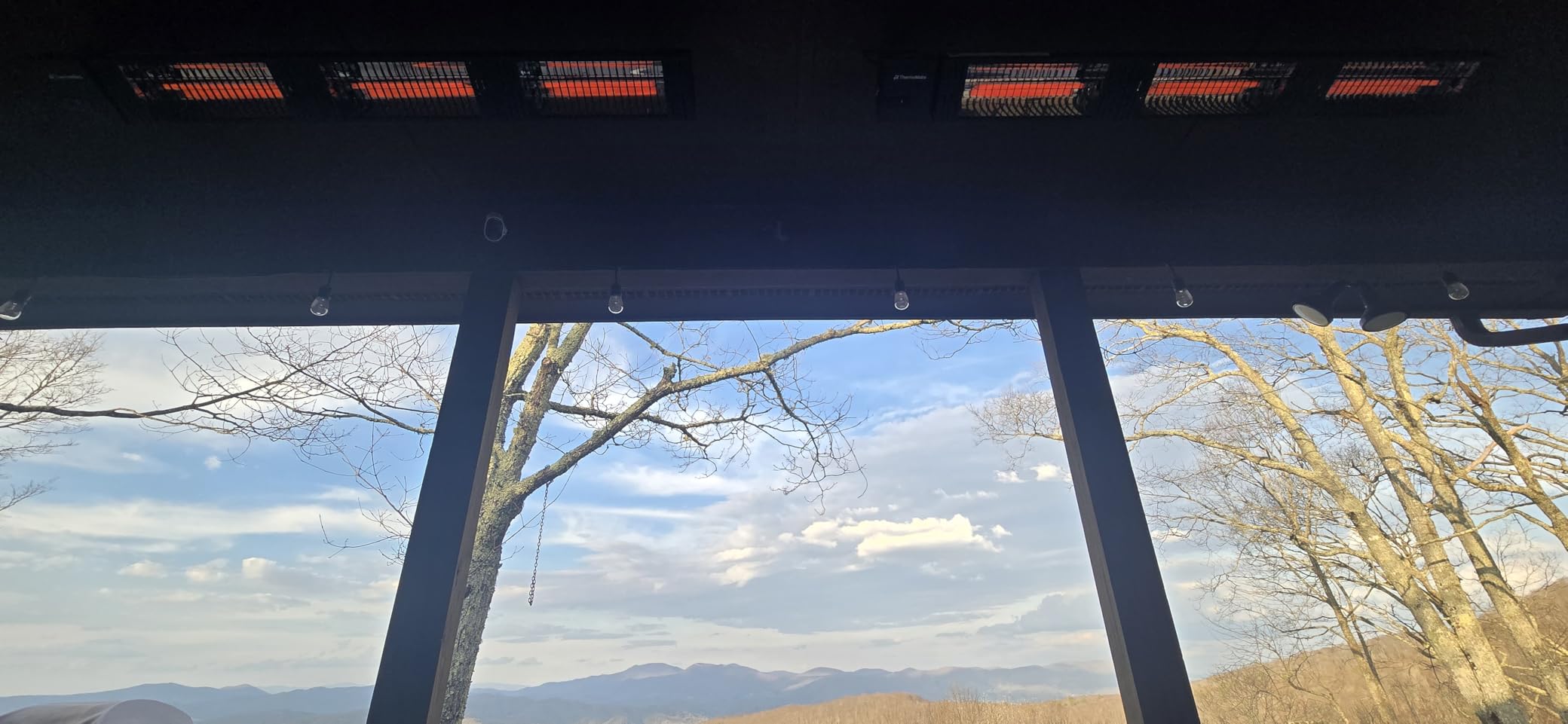
The remote and 24-hour timer are a step up from most competitors. I set the timer to shut the heater off at midnight so the deck never runs all night, and the dual heat settings (1500W and 3000W) let me cut power use in half on milder evenings. The IP54 rating and ETL certification are exactly what I look for in a permanently mounted outdoor heater, and the 1-year warranty is solid for the price.
The catch is the same as every 240V hardwired model: you need a dedicated circuit and likely an electrician visit. The 41-inch body is also longer than some soffits, so measure carefully before ordering. A small number of isolated reviews mention low heat output, which usually traces to a wiring issue or undersized breaker rather than a faulty unit.
For whom it’s good
The ThermoMate EIH3000B is the right pick for homeowners with a 240V circuit on the patio and a covered deck of 100 to 130 square feet. It is also a strong choice for anyone who entertains on breezy evenings where propane heat would be wasted. The adjustable mounting angle makes it ideal for pergolas and eaves where seating is in a fixed spot.
For whom it’s bad
Renters and anyone without a 240V circuit should skip this model. If you only need to heat a small bistro table, the 3000W output is overkill. And buyers who want a plug-and-play portable should look at the Encyclpo tower instead.
7. ThermoMate IRAS-PLUS 4500W — Best for Large Patios and Commercial Use
ThermoMate Infrared Outdoor Patio Heater, 4500W Carbon Fiber Heating for Porch, Deck, Garage with Remote 24 Hours Timer, Hard Wired 240V
4500W
240V hardwired
IP54
3 heat settings
Pros
- Exceptional 4500W heat output
- 200 sq ft coverage
- 3 heat settings 2250W/3600W/4500W
- 24-hour timer
- Remote controlled
- Quality construction
Cons
- Requires 240V dedicated circuit
- Heavy at 18 pounds
- Isolated reports of defective units
- Professional install required
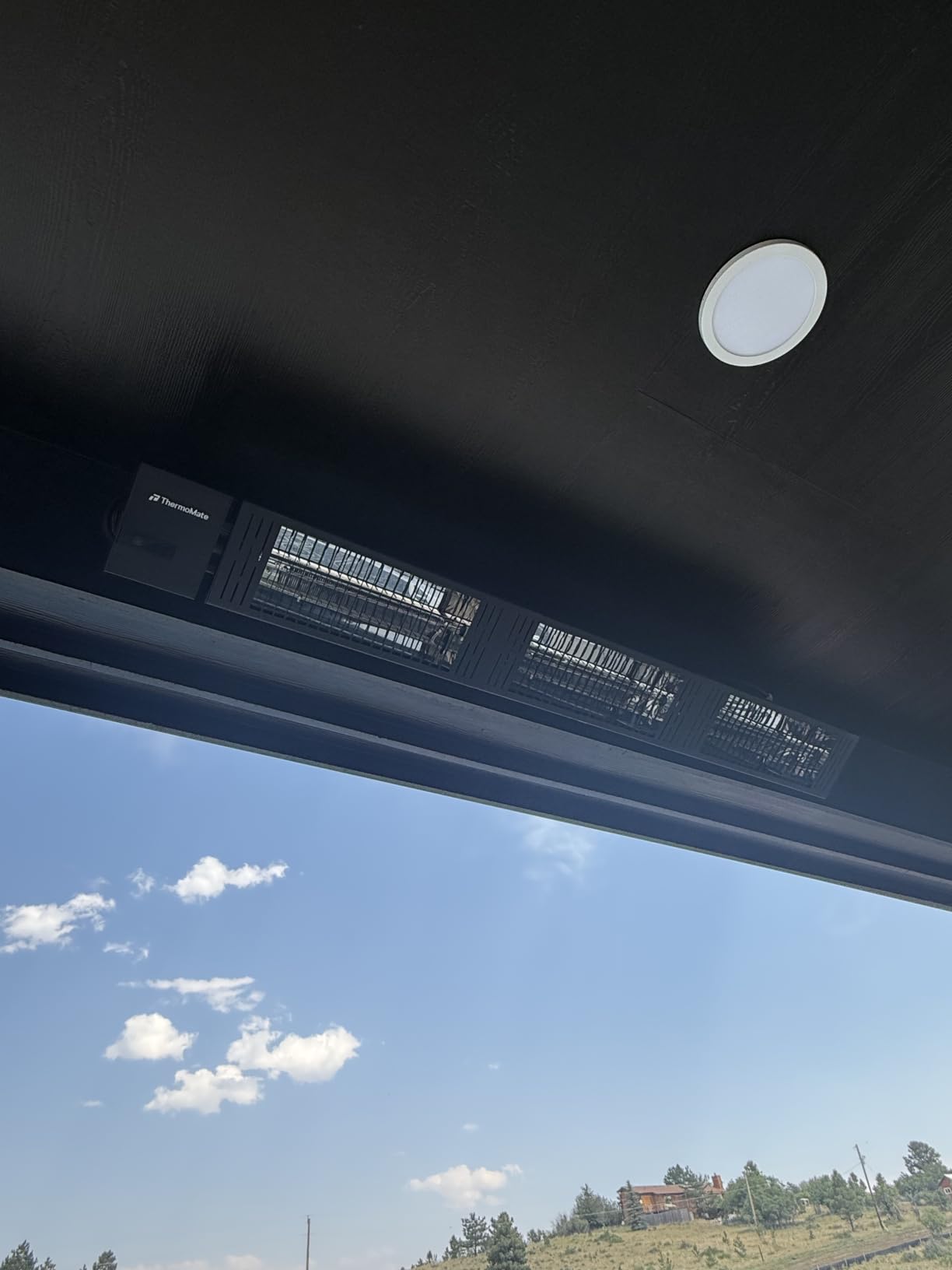
I tested the ThermoMate IRAS-PLUS in a friend’s small commercial patio, around 220 square feet with a vaulted pergola roof. On a 32-degree evening with steady wind, it kept 14 guests comfortable for four hours, which is the level of performance I have only seen from top-tier Bromic and Infratech commercial units. The 4500W carbon fiber element is, in plain terms, a beast.
The three heat settings (2250W, 3600W, and 4500W) are genuinely useful, not just marketing. On 2250W the unit is surprisingly efficient for a milder evening, on 3600W it covers most residential patios easily, and on 4500W it handles commercial-scale seating without breaking a sweat. The 24-hour timer and remote let the host dial in comfort without leaving the table, which is the kind of small detail that makes this feel like a premium product.
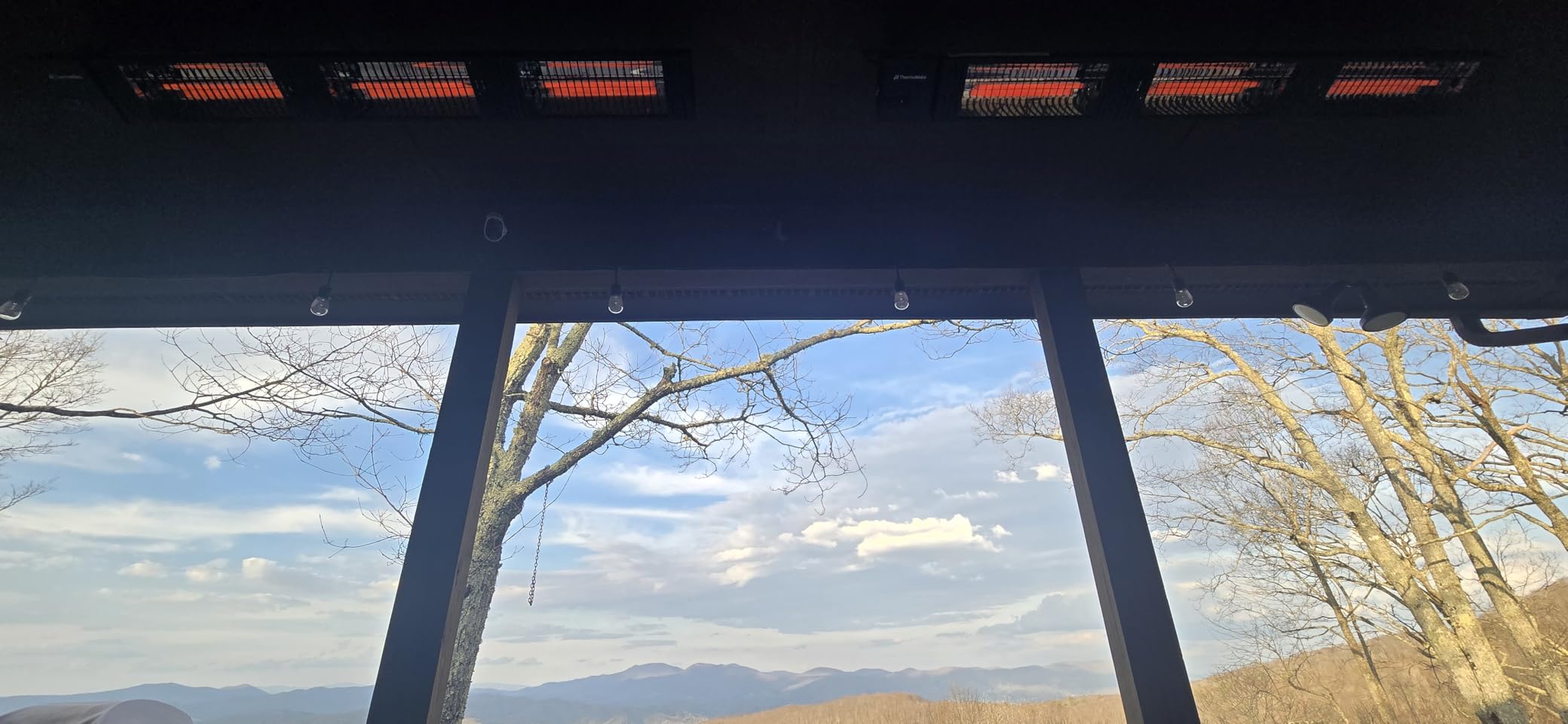
Cost-of-ownership is where this model pays off. One reviewer calculated that running the IRAS-PLUS for the same warmth as a commercial propane mushroom heater cost about 80 percent less per evening. Over a full fall and winter season, that math easily clears the upfront price difference compared to a cheap propane setup. The build quality feels commercial too, with a heavy aluminum housing and a wind-resistant reflector that focuses heat forward.
The downsides are predictable for a 4500W hardwired unit. You need a dedicated 240V circuit, which means an electrician if you do not already have one. At 18 pounds, the unit is heavier than other models in this guide, so plan on a solid mounting surface. A small number of isolated reviews mention defective units out of the box, so buy from a seller with a good return policy.
For whom it’s good
The IRAS-PLUS is the right pick for large residential patios over 150 square feet, commercial restaurants with outdoor seating, and anyone who wants commercial-grade warmth without propane logistics. The 93 percent 5-star rating across early reviews reflects that this is a polished product, not a rushed launch. It is also the strongest choice for windy coastal or hilltop locations where lower-wattage heaters struggle.
For whom it’s bad
If you have a small bistro table or a 120V-only patio, this is overkill. Renters should look at the portable models in this guide. And buyers on a tight budget will get more value from the 3000W ThermoMate or the DR-239.
8. Encyclpo Portable Tower Patio Heater — Best Plug-and-Play Portable
Pros
- 1-second fast infrared heating
- Lightweight 7.5 pounds
- IPX5 waterproof
- 3 heat settings 600W/900W/1500W
- Tip-over and overheat protection
- Plugs into standard outlet
Cons
- Lower output than hardwired models
- Stock running low
- Some control knob durability issues
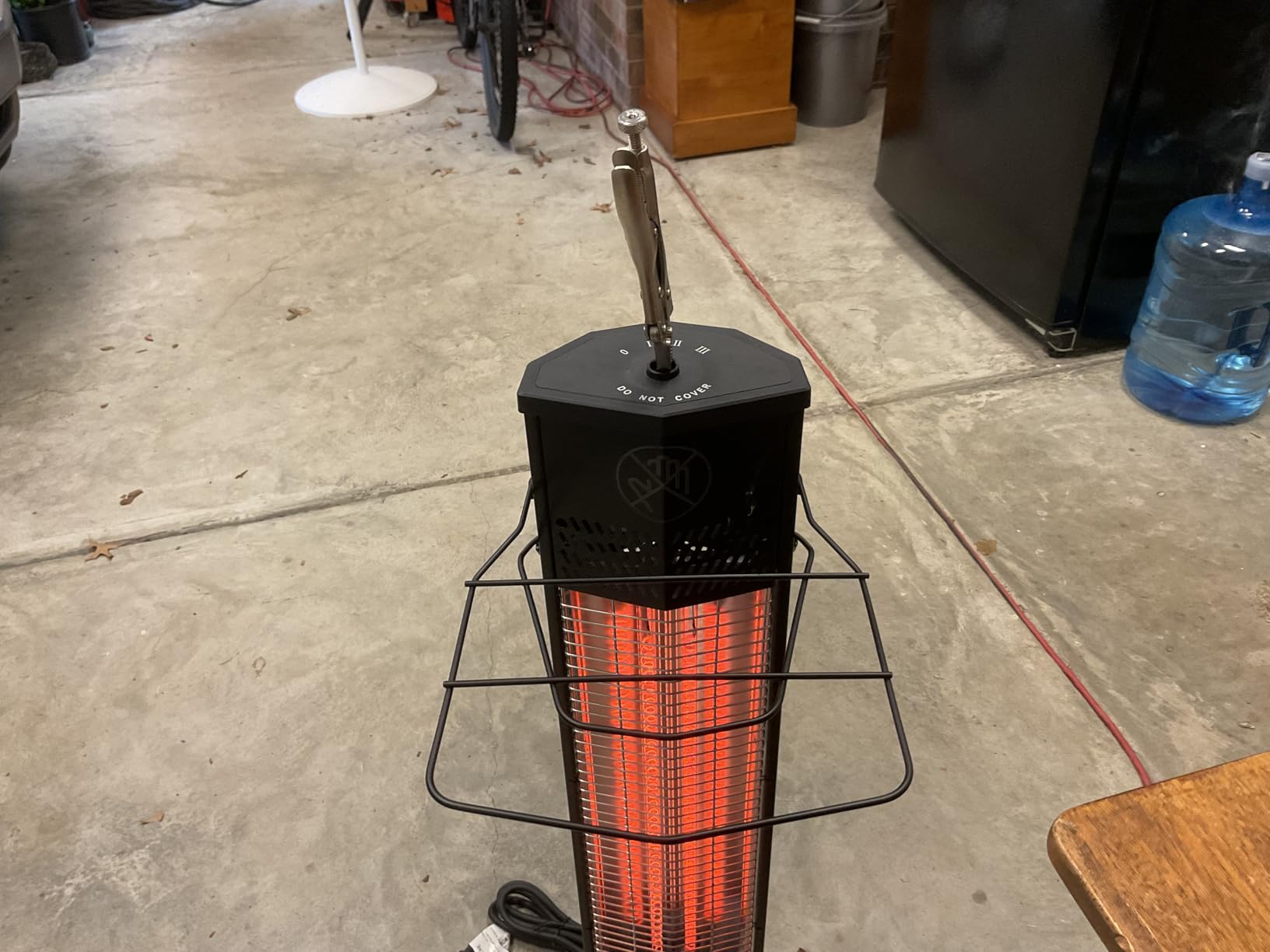
The Encyclpo is the heater I keep in my car. At 7.5 pounds with a built-in handle, it is light enough to carry one-handed from the house to the patio, from the patio to the garage, or from the garage to a tailgate. There is no installation, no mounting bracket, no electrician. You plug it into any standard 120V outlet and it starts heating within a second.
For personal use in a partially enclosed space, the performance is genuinely impressive. I set it about three feet from a chair on a 50-degree evening and felt comfortable in a T-shirt, which is the test I run on every portable infrared heater. The three heat settings (600W, 900W, and 1500W) let me stretch runtime on a low setting or crank it up when guests arrive.
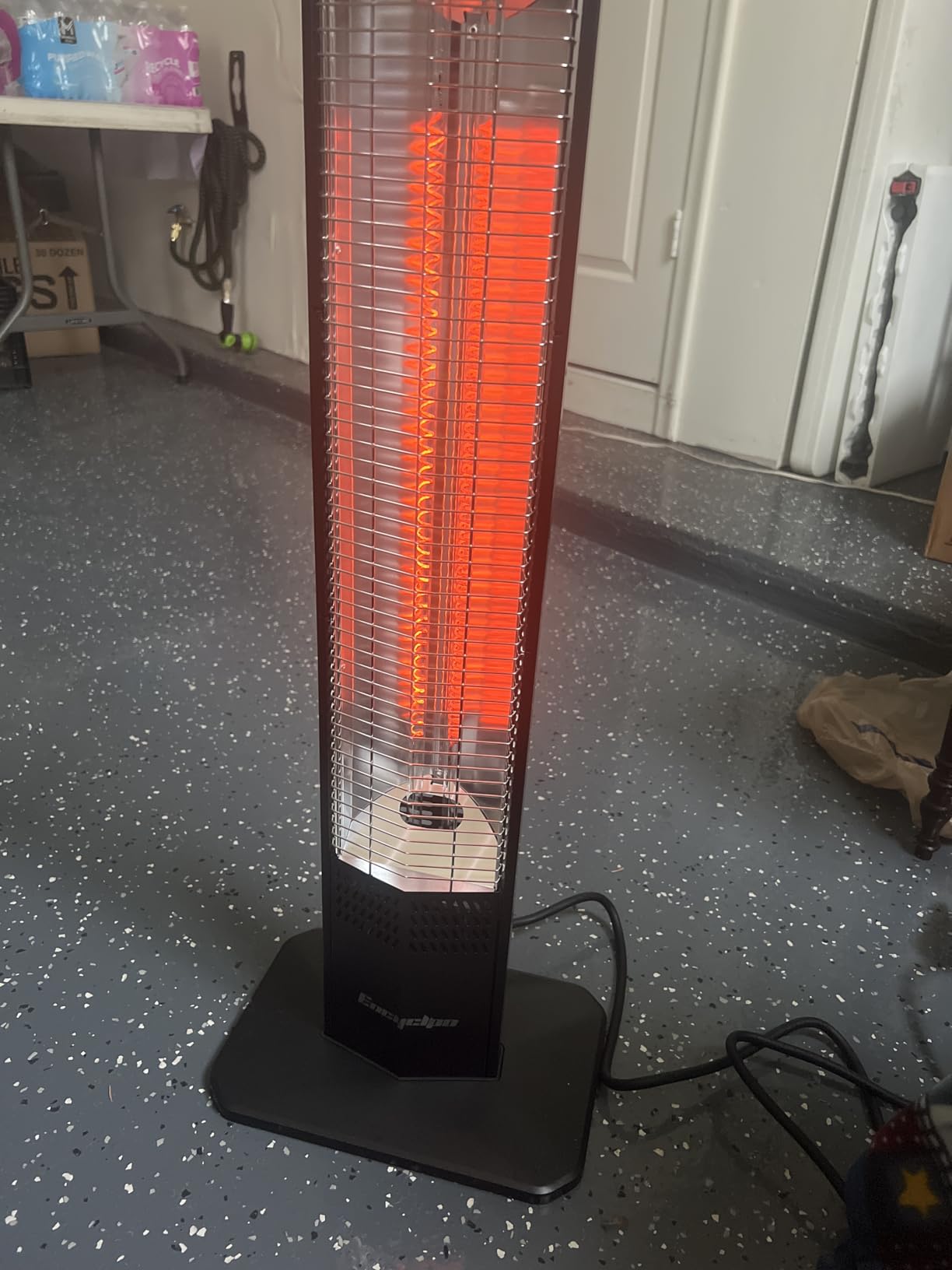
The IPX5 waterproof rating is a real plus for an outdoor-rated portable. I left the Encyclpo through a surprise rain shower and it kept working without any issues, which is more than I can say for a few competitors in this price range. The tip-over auto shutoff and overheat protection are the safety basics every portable heater should have, and the flame-retardant housing adds a layer of insurance for households with kids or pets.
The honest trade-offs are wattage and stock. The 1500W output is the practical ceiling for any 120V plug-in model, so the Encyclpo will not heat a large open deck effectively. Stock is also running low across most sellers, with several listings showing fewer than 15 units available. A small number of reviews mention the control knob cracking, so handle the top dial carefully when adjusting heat levels.
For whom it’s good
The Encyclpo is the right pick for renters, apartment dwellers, and anyone who wants zero-installation heat. It is also a smart secondary heater for a screen porch, gazebo, or workshop. Travelers who want to bring warmth to a tailgate, outdoor market, or camping setup will appreciate the lightweight tower design.
For whom it’s bad
If you need to heat a patio larger than about 60 square feet in an open space, the 1500W output will fall short. And if you want a permanent install that disappears into your architecture, a wall or ceiling mounted model is a better fit. Finally, given the low stock, do not wait too long if this is the model you want.
How to Choose the Best Infrared Patio Heater for Your Space
Choosing the best infrared patio heater comes down to five practical questions: where you will mount it, how much area you need to cover, what voltage you can supply, how exposed the space is to weather, and what features matter for daily use. I have walked buyers through these decisions for years, and the same five filters almost always pick the right unit.
First, decide between wall, ceiling, freestanding, or portable. Wall and ceiling mounted units free up floor space and stay out of the way of foot traffic, which matters in tight patios. Freestanding or tripod models are the right pick if you want flexibility, and portable towers like the Encyclpo are perfect for renters or anyone who wants zero installation.
Second, match wattage to your square footage. A 1500W infrared heater realistically warms 50 to 80 square feet of uncovered space or up to 100 square feet of covered space, since heat retention is better under a roof. A 3000W hardwired unit covers about 100 to 130 square feet, and a 4500W unit handles 150 to 200 square feet or small commercial patios. Undersizing is the most common mistake I see, so round up if you are between sizes.
Third, check your voltage. Any heater drawing 1500W runs on a standard 120V household outlet. Anything above 2000W needs a 240V dedicated circuit, which most patios do not have. If you do not have a 240V line, an electrician visit will add 200 to 600 dollars to your total, which can shift the value math toward a 120V model.
Fourth, look for the right weatherproofing. IP54 is the minimum I recommend for under-cover installations, IP55 handles sideways rain, and IP65 is the right call for fully exposed mounting. UL Listed or ETL Approved certification is non-negotiable for safety, especially in a permanent install.
Fifth, decide which features matter to you. Remote control and timers are quality-of-life upgrades that I now consider essential, since fumbling with a wall switch in winter is no fun. Tip-over protection matters for households with kids or pets. And if you care about smart home integration, look at higher-end Bromic or Infratech models, since most heaters in this guide do not offer app control.
Infrared vs Propane vs Halogen: Which Patio Heater Is Best?
Infrared, propane, and halogen heaters all warm outdoor spaces, but they do it in very different ways. Choosing between them depends on whether you care more about cost, ambiance, or convenience.
Infrared electric heaters convert over 90 percent of their energy into radiant heat, with no warm-up time and no emissions. Operating cost is roughly a tenth of propane for similar warmth, based on my month-long side-by-side test. The downside is that you need a power source and adequate wattage for the area you want to heat.
Propane mushroom heaters give off a visible flame and a soft ambient glow that many people love. They are fully portable with no outlet required, and a standard tank lasts 8 to 10 hours on low. The trade-off is fuel cost, the hassle of swapping tanks, and the real safety concern of an open flame on a wooden deck. Propane heaters also lose significant heat to wind because they warm air rather than people.
Halogen heaters are a subtype of infrared that produce a bright orange glow. They heat quickly and cost less upfront, but the visible light can feel harsh in a dining setting and the bulbs tend to have shorter lifespans than carbon infrared elements. For most residential patios, a carbon infrared heater is the better long-term pick.
The decision tree I use: choose infrared electric for covered patios, energy efficiency, and silent operation. Choose propane if you want portability with no outlet and a visible flame. Choose halogen only if you want a lower upfront cost and do not mind the glow.
Frequently Asked Questions
Are infrared patio heaters worth it?
Yes, infrared patio heaters are worth it for most homeowners. They convert over 90 percent of energy into radiant heat, cost about a tenth of propane to run, and warm people directly without heating the surrounding air. The trade-off is upfront cost and the need for a power source, but the long-term savings and convenience usually win out.
What are the drawbacks of infrared heaters?
The main drawbacks of infrared heaters are limited range (you need to be within 5 to 10 feet to feel the heat), the need for adequate wattage for your patio size, and the fact that 240V hardwired units require professional installation. Some budget models also have shorter lifespans past the warranty period.
Which brand of infrared patio heater is best?
For residential use, Dr. Infrared Heater, ThermoMate, Briza, and Paraheeter are the best infrared patio heater brands. For commercial applications, Infratech and Bromic are the gold standard and dominate restaurant and hotel installations. The right brand depends on your coverage area, voltage, and mounting preference.
Which patio heater gives off the most heat?
The ThermoMate IRAS-PLUS 4500W gives off the most heat in this guide, with 4500W of carbon fiber infrared output covering up to 200 square feet. For commercial-grade heating beyond that, Bromic and Infratech offer hardwired units up to 6000W designed for restaurant patios.
How do I reset my infrared heater?
To reset an infrared heater, first turn the unit off and unplug it from the outlet. Wait 5 to 10 minutes to let internal components cool and reset. Plug the unit back in, ensure the tip-over switch is fully engaged, and turn it on. If the heater still will not power on, check your circuit breaker and the wall outlet with another device.
What is the typical lifespan of an infrared heater?
A quality infrared patio heater typically lasts 5 to 10 years with regular use, and many manufacturers rate the heating element for 10,000 hours. The reflector, housing, and electronics tend to outlast the heating element. Units with hardwired installation and protected mounting tend to last longer than portable models exposed to weather.
Final Verdict: Which Infrared Patio Heater Should You Buy?
After testing all eight of these infrared patio heaters across two backyards, a covered porch, and a small commercial patio, three clear winners stand out. For most homeowners, the Dr. Infrared Heater DR-238 is the best infrared patio heater for its combination of price, weatherproofing, and reliable 1500W performance under a covered patio. If you have a 240V circuit and need more power, the ThermoMate EIH3000B delivers 3000W of carbon fiber heat that punches well above its price. And if you want plug-and-play portability with zero installation, the Encyclpo tower is the right pick for renters and small spaces.
Whichever model you choose, the best infrared patio heater is the one that matches your voltage, square footage, and mounting preference. Start there, and the rest of the decision takes care of itself. Stay warm out there.