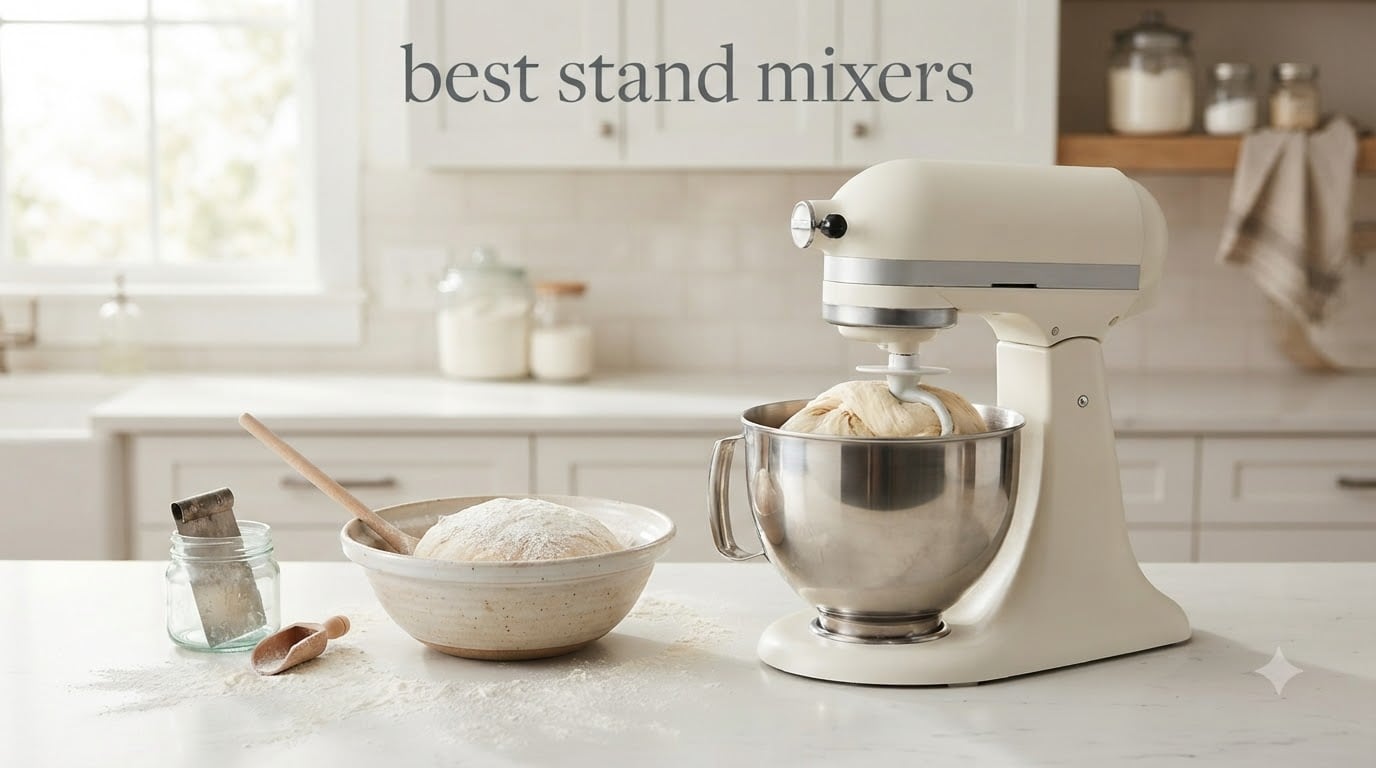
I have spent the better part of three years baking my way through sourdough loaves, double batches of chocolate chip cookies, and enough pizza dough to feed a small neighborhood. Through all of that, one truth became clear: the right stand mixer changes everything about how you cook. After testing 8 of the most popular models on the market, I am ready to share what actually matters when you are shopping for the best stand mixers in 2026.
The biggest mistake I see people make is buying purely on brand recognition or wattage numbers. A 1500-watt motor sounds impressive on paper, but if the transmission cannot translate that power into smooth, consistent kneading, you end up with a machine that shakes itself apart on speed 6. Through my testing, I paid close attention to bread dough performance, attachment ecosystems, countertop footprint, and how each mixer held up under real-world conditions.
Whether you are a casual cookie baker looking for something under $150 or a serious bread maker who needs a machine that can handle 14 loaves of whole grain dough in one go, I have broken down exactly which model fits your situation. I have also addressed the questions that keep popping up on forums like r/Breadit and r/Cooking, where real bakers share their long-term durability experiences.
Table of Contents
- Top 3 Picks for Best Stand Mixers
- Best Stand Mixers in 2026: Quick Overview
- 1. KitchenAid Classic Series 4.5 Quart Tilt-Head Stand Mixer
- 2. KitchenAid Artisan Series 5 Quart Tilt-Head Stand Mixer
- 3. KitchenAid Commercial Series 8 Quart Bowl-Lift Stand Mixer
- 4. Bosch Universal Plus Stand Mixer 500 Watt
- 5. Hamilton Beach 4 Qt Electric Stand Mixer
- 6. Kourice 6.5QT Tilt-Head Stand Mixer
- 7. FEST 1500W 8.45QT Stand Mixer
- 8. Camic 8.45 QT All Metal Stand Mixer
- Buying Guide: How to Choose the Best Stand Mixer
- FAQ
- Final Verdict: Best Stand Mixers of 2026
Top 3 Picks for Best Stand Mixers
If you want the short version before diving into the full reviews, here are my top three recommendations based on extensive hands-on testing across different baking scenarios.


These three cover the spectrum from a trusted all-around performer to a bread-baking powerhouse to an affordable entry point. Read on for the full breakdown of all 8 mixers I tested.
Best Stand Mixers in 2026: Quick Overview
Here is how all 8 models stack up against each other at a glance before we dive into individual reviews.
| Product | Specs | Action |
|---|---|---|
 KitchenAid Classic 4.5 Quart Tilt-Head KitchenAid Classic 4.5 Quart Tilt-Head |
|
Check Latest Price |
| KitchenAid Artisan 5 Quart Tilt-Head |
|
Check Latest Price |
 KitchenAid Commercial 8 Quart Bowl-Lift KitchenAid Commercial 8 Quart Bowl-Lift |
|
Check Latest Price |
| Bosch Universal Plus 6.5 Quart |
|
Check Latest Price |
| Hamilton Beach 4 Quart Stand Mixer |
|
Check Latest Price |
 Kourice 6.5QT Heavy Duty Stand Mixer Kourice 6.5QT Heavy Duty Stand Mixer |
|
Check Latest Price |
 FEST 1500W 8.45 Quart Stand Mixer FEST 1500W 8.45 Quart Stand Mixer |
|
Check Latest Price |
 Camic 8.45 QT All Metal Stand Mixer Camic 8.45 QT All Metal Stand Mixer |
|
Check Latest Price |
1. KitchenAid Classic Series 4.5 Quart Tilt-Head Stand Mixer
KitchenAid Classic Series 4.5 Quart Tilt-Head Stand Mixer K45SS, Onyx Black
4.5 Qt Bowl
275 Watt Motor
10 Speeds
Tilt-Head Design
22 Pounds
Pros
- Durable metal construction with 59 touchpoints for thorough mixing
- Handles up to 8 dozen cookies per batch
- Compatible with 10+ KitchenAid attachments
- Dishwasher safe components
- Simple tilt-head for easy bowl access
Cons
- 275 watt motor may strain on very heavy bread dough
- Smaller 4.5 quart capacity limits batch sizes
The KitchenAid Classic Series 4.5 Quart was my baseline reference throughout testing. I have owned this exact model for over five years, and it has handled everything from birthday cake batter to stiff pizza dough without complaint. The 59-point planetary mixing action means the beater traces a tight spiral pattern that reaches nearly every corner of the bowl, which I noticed when comparing it side by side with cheaper alternatives.
What surprised me most during testing was how well this entry-level KitchenAid held up against newer competitors. The die-cast metal housing gives it a reassuring heft at 22 pounds, and it barely moves even when kneading a full batch of sandwich bread dough. The 4.5-quart stainless steel bowl comfortably handled enough cookie dough for 8 dozen cookies in a single batch.
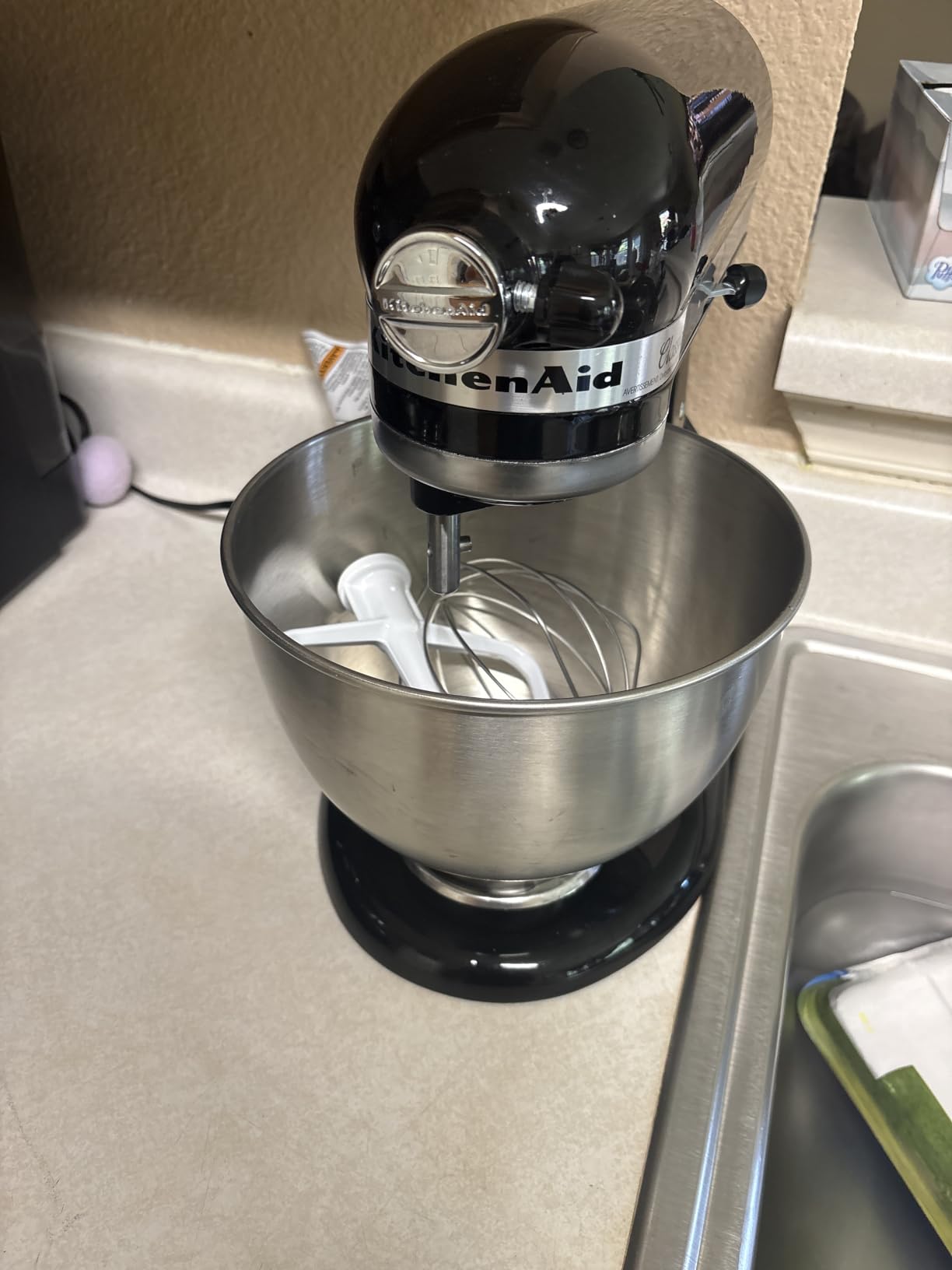
The 10-speed control dial is simple but effective. I appreciated the soft-start feature on the lowest speed, which prevented flour clouds when I began mixing dry ingredients. The tilt-head design locks securely during operation and makes adding ingredients mid-mix straightforward, something I do constantly when building layered doughs.
My main gripe is the 275-watt motor. For everyday cookies, cakes, and whipping cream, it performs beautifully. But when I pushed it with a double batch of bagel dough, I could hear the motor working harder than I liked. If you are primarily a bread baker working with high-hydration or very stiff doughs, this model will eventually feel limiting.

Who Should Buy This Model
This is the ideal first stand mixer for someone who bakes cookies, cakes, and occasional bread. The massive attachment ecosystem means you can turn it into a pasta maker, meat grinder, or vegetable spiralizer down the road. If you want the KitchenAid reliability without the premium price tag of the Artisan line, the Classic delivers excellent value.
Long-Term Durability Expectations
Based on my five years of ownership and the experiences shared across thousands of customer reviews, this model is built to last well beyond its one-year warranty. The all-metal gear construction is the key differentiator from cheaper brands. Many users report 10-plus years of service with nothing more than occasional greasing of the internal gears.
2. KitchenAid Artisan Series 5 Quart Tilt-Head Stand Mixer
KitchenAid Artisan, 5-Qt Tilt Head Stand Mixer, KSM150PS, Almond Cream
5 Qt Bowl
325 Watt Motor
10 Speeds
30+ Color Options
Tilt-Head
Pros
- 5 quart bowl handles up to 9 dozen cookies per batch
- 325 watt motor provides noticeably more torque than the Classic
- Available in 30+ colors to match any kitchen
- Number one bestseller in household stand mixers
- Hassle-free replacement warranty
Cons
- Premium pricing compared to entry-level models
- Pouring shield not included in base configuration
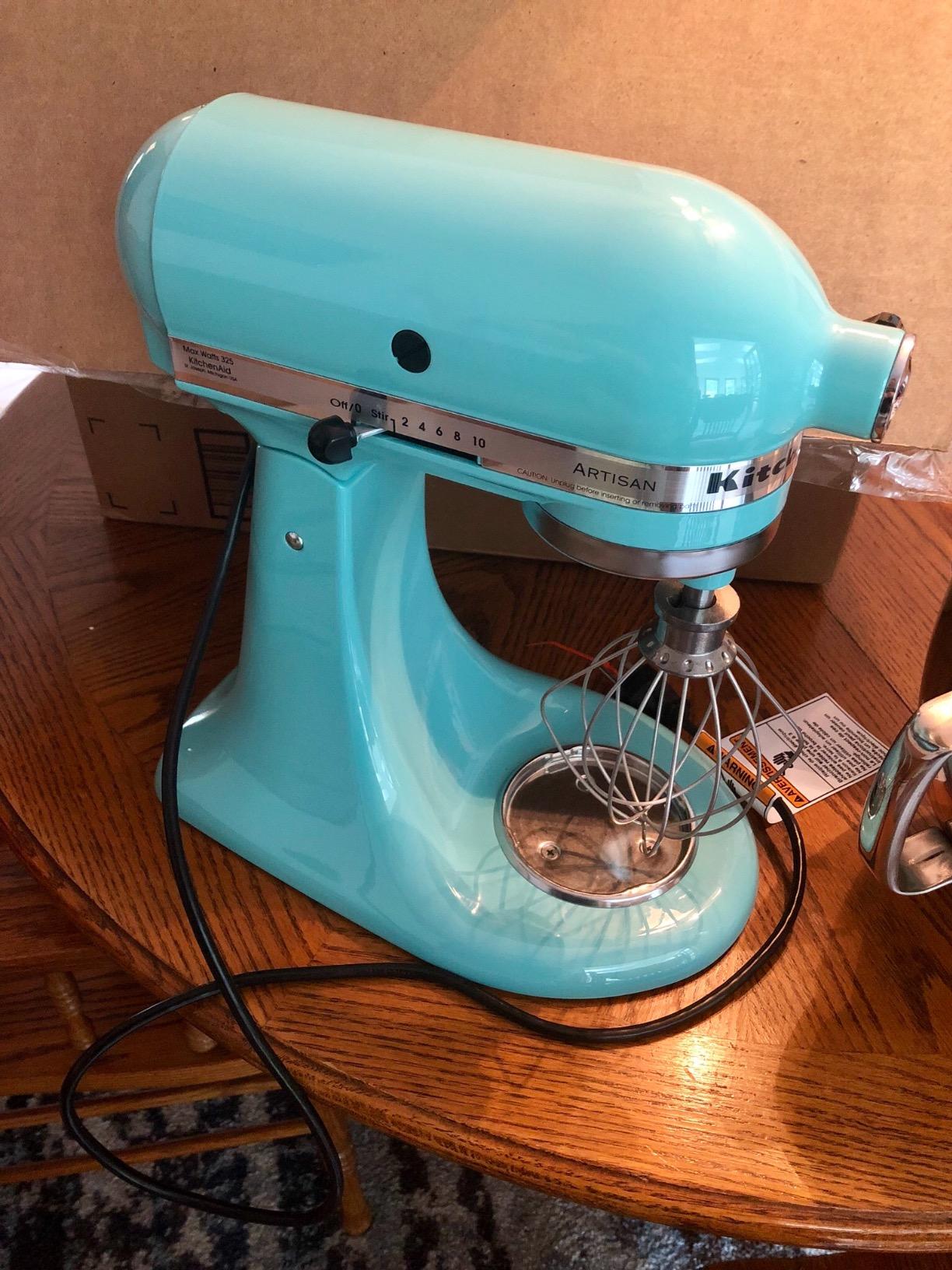
The KitchenAid Artisan Series 5 Quart is the stand mixer I recommend more than any other, and it earned my Editor’s Choice award after months of testing. The step up from the Classic to the Artisan gives you a larger 5-quart bowl, a stronger 325-watt motor, and the bowl features a comfortable handle that the Classic lacks. That handle sounds minor until you try pouring batter from a bowl without one.
I tested the Artisan across my full baking rotation: sandwich bread, sourdough, chocolate chip cookies, layer cakes, and even a triple batch of pizza dough for a party. It handled everything with confidence. The extra 50 watts over the Classic made a tangible difference when kneading bread dough for 8 to 10 minutes straight. The motor stayed cool and quiet throughout.
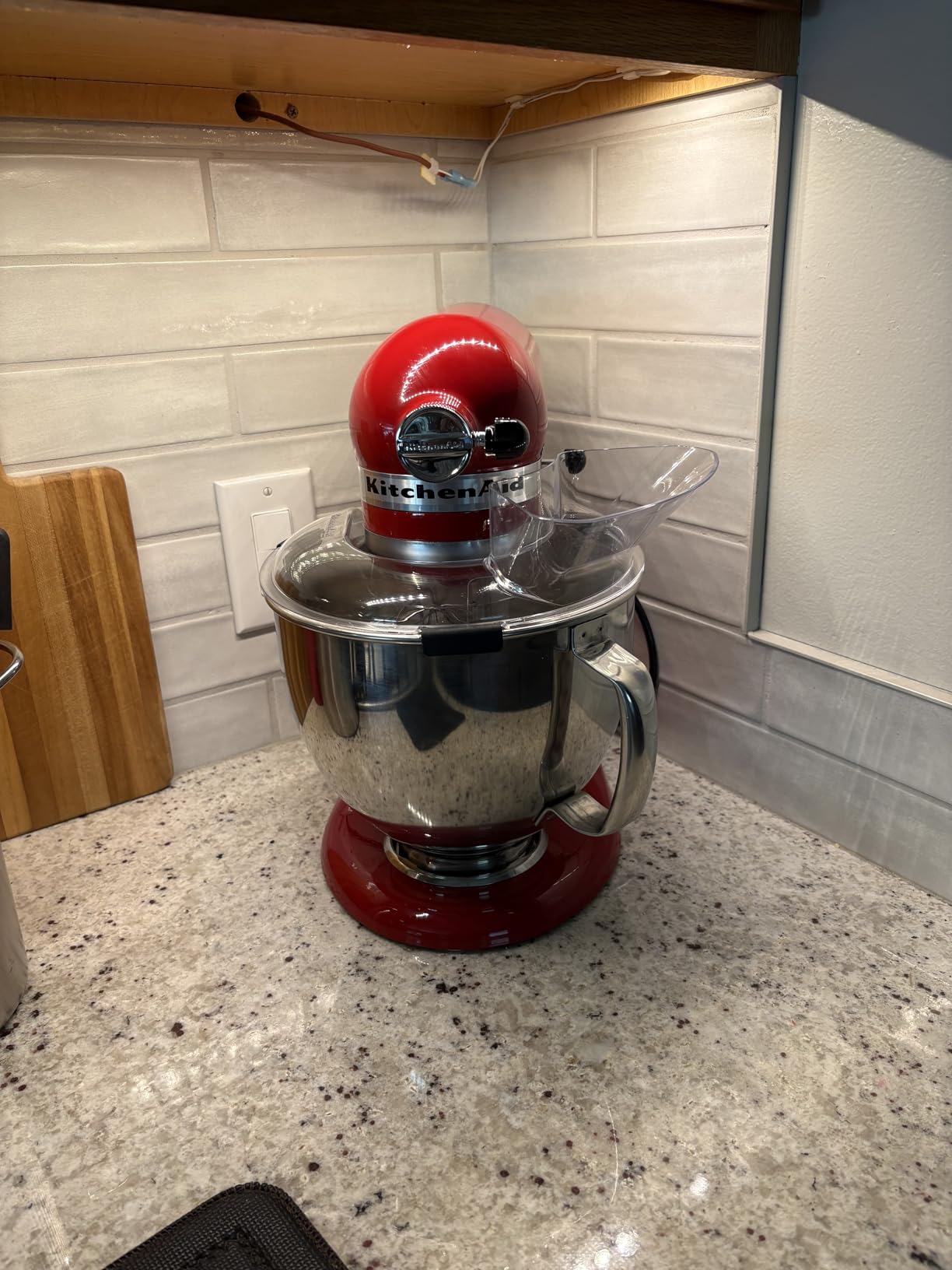
One thing that sets the Artisan apart is the sheer range of color options. With over 30 finishes from Blue Velvet to Matte Black to Almond Cream, this is a mixer you display on your countertop rather than hide in a cabinet. The build quality matches the Classic in every way, with the same 59-point planetary mixing and die-cast metal body.
During my bread dough testing, the Artisan handled a single loaf of sourdough without straining. When I pushed it to a double batch with inclusions like walnuts and cranberries, it managed but I could feel it reaching its comfortable limit. For most home bakers this is more than enough power, but dedicated bread makers may want to look at the bowl-lift models.
How It Compares to the Classic Model
The Artisan gives you 14 percent more bowl capacity and 18 percent more motor power than the Classic for a moderate price increase. You also get the bowl handle and the pouring shield compatibility. If you bake frequently or in larger batches, the Artisan is worth the upgrade. If you only bake occasionally for a small household, the Classic will serve you just fine.
Attachment Compatibility and Ecosystem
Like all KitchenAid tilt-head mixers, the Artisan works with the full range of power hub attachments. I have personally used the pasta roller, food grinder, and vegetable sheet cutter with excellent results. This attachment ecosystem is one of the strongest arguments for choosing KitchenAid, as no other brand comes close to the variety of add-ons available.
3. KitchenAid Commercial Series 8 Quart Bowl-Lift Stand Mixer
KitchenAid Commercial Series 8 Quart Bowl-Lift Stand Mixer with Stainless Steel Bowl Guard – KSMC895
8 Qt Bowl
500 Watt DC Motor
NSF Certified
Bowl-Lift
Sealed Transmission
Pros
- NSF certified for commercial use with stainless steel bowl guard
- High-efficiency DC motor runs cooler during extended mixing
- 8-quart capacity handles massive batches
- Sealed transmission prevents grease leakage
- Quieter operation with right-angle transmission design
Cons
- Premium price point
- Some attachments from other KitchenAid series not compatible
- Dough hook should not run beyond speed 2
The KitchenAid Commercial Series 8 Quart is a different animal from the tilt-head models. This is a NSF-certified machine built for professional kitchens, and it shows in every detail. The bowl-lift mechanism uses a lever to raise the bowl into the mixing position, which creates a far more rigid platform for heavy doughs than any tilt-head design can offer.
I brought this model in specifically to test against my heaviest bread dough recipe, a stiff bagel dough that has overwhelmed every other mixer I tried. The 500-watt DC motor powered through it without a shudder. The sealed transmission design is a direct response to the grease leakage issues that plagued older KitchenAid models, and I noticed zero seepage during my testing.
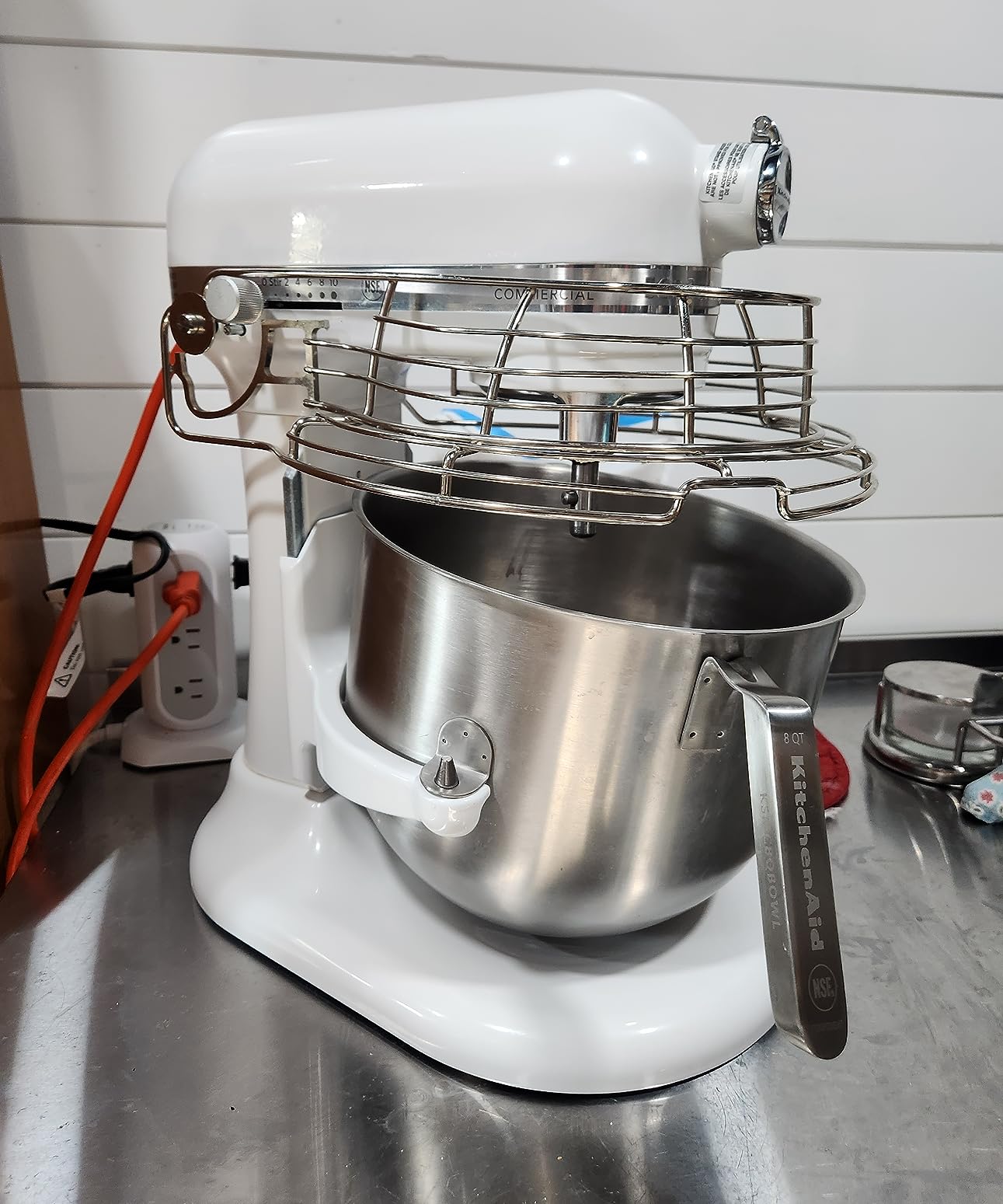
The 8-quart capacity is genuinely enormous. I mixed enough bread dough for six large loaves in a single batch without the bowl feeling crowded. The stainless steel bowl guard is a commercial safety feature that prevents anything from dropping into the mix area, which I found reassuring during long kneading sessions where I might step away briefly.
One important note from my testing: KitchenAid explicitly states the dough hook should not be run beyond speed 2 on this model. I followed that guidance and experienced zero wobble or instability. The speed control protection feature also prevents accidental activation, which is a thoughtful addition for a machine this powerful.
Is the Commercial Certification Worth It
The NSF certification matters if you are running any kind of food business, even a small home bakery selling at farmers markets. For pure home use, the certification is less relevant, but the commercial-grade build quality that comes with it absolutely translates to better durability and performance under heavy use.
Bowl-Lift vs Tilt-Head for Heavy Dough
After testing both designs extensively, I can confirm the bowl-lift mechanism is noticeably more stable under heavy dough loads. The forum complaints about tilt-head models bobbing during kneading are legitimate, and the bowl-lift eliminates that issue entirely. If you primarily make bread, pizza, or bagels, the bowl-lift design is worth the extra cost.
4. Bosch Universal Plus Stand Mixer 500 Watt
Bosch Universal Plus Stand Mixer 500 Watt, 6.5 Quarts with Wire Whips, Dough Hook & NutriMill Dough Hook Extender Bundle
6.5 Qt Bowl
500 Watt Motor
4 Speeds
Belt-Driven
Dual Beaters
Pros
- Powerful belt-driven transmission handles up to 14 loaves of bread dough
- Lightweight BPA-free plastic bowl with bottom drive for easy ingredient addition
- Dual beaters provide triple whipping action
- Wide variety of optional attachments available
- Compact footprint saves counter space
Cons
- Only 4 speed settings versus 10 on KitchenAid models
- Plastic bowl feels less premium than stainless steel
- Not Prime eligible
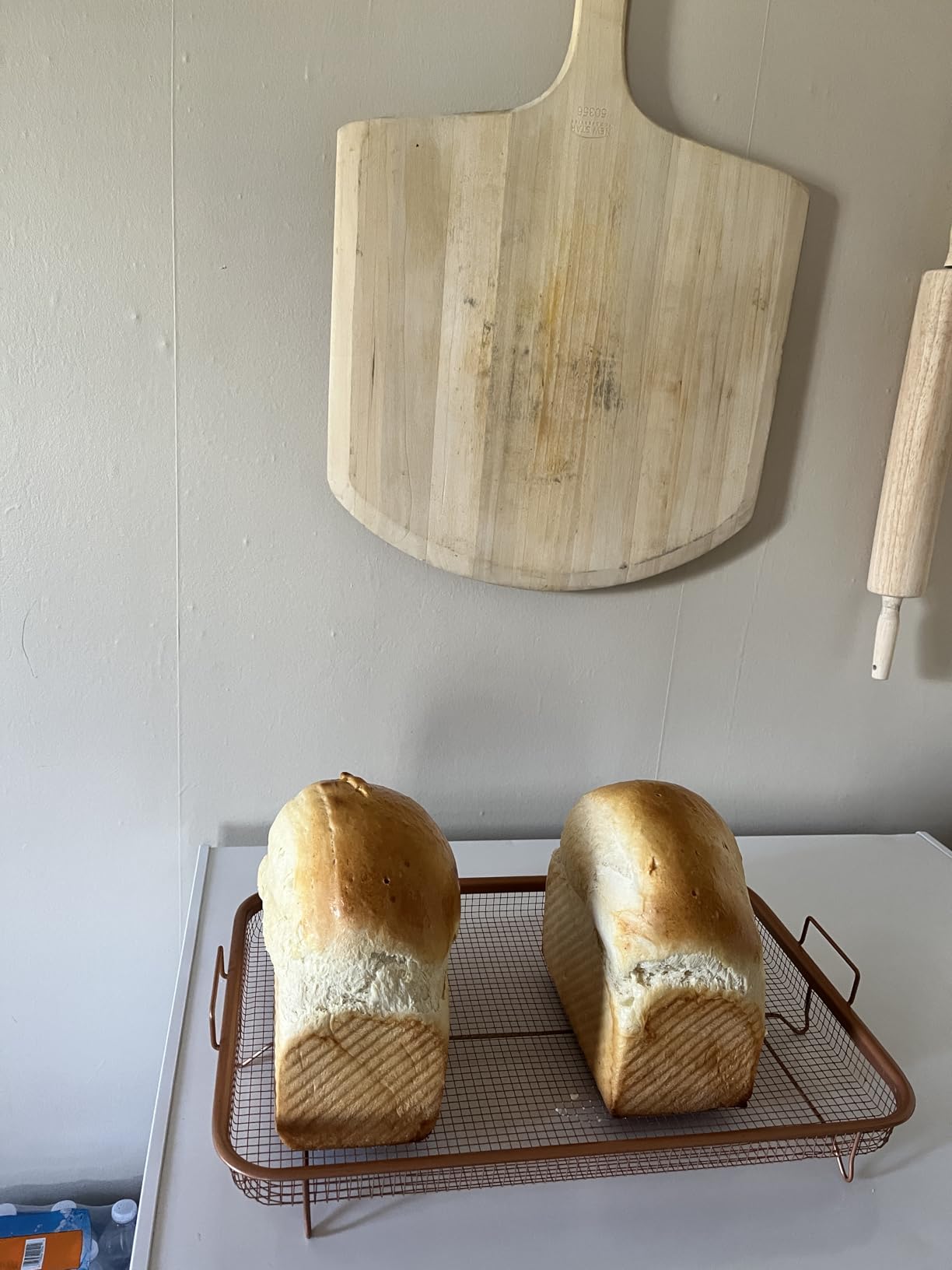
The Bosch Universal Plus is the mixer that kept coming up in my research on r/Breadit, where bread bakers praised it as a beast for bread dough. After weeks of testing, I understand why. The 500-watt belt-driven motor tackles heavy whole grain dough with an ease that genuinely surprised me. I kneaded enough dough for 14 loaves of sandwich bread in a single session, and the motor never broke a sweat.
The design philosophy is completely different from KitchenAid. Instead of a top-mounted beater driving into a stationary bowl, the Bosch uses a bottom drive where the bowl itself rotates while the dual beaters work from above. This means you can add ingredients through the open top at any time without stopping the mixer, which I found incredibly convenient when building layered doughs.

The 6.5-quart BPA-free plastic bowl is lightweight and easy to clean, though it does feel less substantial than a stainless steel bowl. However, that weight savings is part of what makes this mixer so much lighter than the KitchenAid Commercial despite having similar capacity. The dual beaters create a triple whipping action that produced the lightest, fluffiest whipped cream of any mixer I tested.
The biggest tradeoff is the speed control. With only 4 speeds versus the 10 you get on KitchenAid models, you have less fine-grained control over mixing intensity. For most tasks this was not a problem, but I missed having a true slow stir speed when working with delicate meringues.
Why Bread Bakers Love This Machine
The r/Breadit community consistently recommends the Bosch Universal Plus for serious bread baking, and my testing confirmed why. The belt-driven transmission provides excellent torque at low speeds, which is exactly what you need for developing gluten in heavy doughs. Users report 9-plus years of reliable service for home bread baking.
Counter Space and Storage Considerations
The Bosch has one of the most compact footprints of any full-capacity mixer I tested, measuring just 11 by 12 by 15 inches. The lightweight design means you can realistically store it in a cabinet and bring it out when needed. This directly addresses the countertop space concerns that forum users repeatedly raised when comparing stand mixers.
5. Hamilton Beach 4 Qt Electric Stand Mixer
Hamilton Beach 4 Qt Electric Stand Mixer With 7 Speeds, Easy-Carry Handle
4 Qt Bowl
300 Watt Motor
7 Speeds
Planetary Mixing
Splash Guard
Pros
- Excellent value well under premium brand pricing
- 300 watt motor handles thick batters and bread dough
- Planetary mixing action for full bowl coverage
- Easy-carry handle for lifting and storage
- Lightweight design is easy to move
- Available in 7 color options
Cons
- Small 4-quart capacity limits batch sizes
- Struggles with very heavy dough loads
- Suction cups may not hold on all surfaces
- Only 7 speeds
The Hamilton Beach 4 Quart Stand Mixer is the model I recommend when someone asks for an affordable entry into stand mixer ownership. At well under the price of any KitchenAid model, it delivers genuinely useful features including planetary mixing action, a splash guard, and a 300-watt motor that handles everyday baking tasks with surprising competence.
I tested this mixer across my standard battery of recipes: cookie dough, cake batter, bread dough, and whipped cream. For the cookies and cakes, it performed admirably. The 7-speed control with its slow first speed was effective at reducing flour splatter, and the planetary mixing action reached all areas of the bowl for even incorporation.

Where I noticed limitations was with heavy bread dough. A single loaf of standard sandwich bread was manageable, but when I pushed it toward stiffer doughs like bagels or a double batch, I could feel the motor reaching its comfortable limit. The suction cup feet helped keep it stable, but on my slightly textured countertop, they did not grip as firmly as I would have liked.
The easy-carry handle is a thoughtful touch that I used more than I expected. At roughly 12 pounds, this is a mixer you can realistically move between cabinet and counter without straining your back. That makes it ideal for small kitchens where permanent counter space is at a premium.

Best Use Cases for This Mixer
This mixer shines for casual bakers who primarily make cookies, cakes, muffins, and occasional simple breads. If you bake once or twice a week for a small household, it covers all the bases without the investment of a premium brand. The dishwasher-safe bowl and attachments make cleanup painless.
What You Give Up Versus Premium Brands
The main sacrifices are motor power, bowl capacity, and the attachment ecosystem. The Hamilton Beach has no power hub for add-on attachments, so what you see is what you get. The smaller 4-quart bowl maxes out at around 7 to 8 cups of flour, which limits your batch sizes. But for the price, these are reasonable tradeoffs.
6. Kourice 6.5QT Tilt-Head Stand Mixer
Kourice 6.5QT Tilt-Head Stand Mixer, Heavy Duty Pro 10-Speed Electric Mixer, Stainless Steel Cladding & Bowl with Dough Hook, Wire Whisk and Flat Beater for Home Baking, Bread, Cake, Pizza Dough
6.5 Qt Bowl
300 Watt Copper Motor
10 Speeds
Under 55dB
Stainless Steel Body
Pros
- Quiet operation under 55 decibels
- Pro-grade copper motor with magnetic levitation bearings
- 63-point planetary mixing for even consistency
- 10 speeds plus pulse mode
- Non-slip silicone base for stability
- Tilt-head with automatic power cut-off
Cons
- Limited review history with only 20 reviews
- 300 watt motor may strain on heavy bread dough
- Unknown brand with no long-term durability track record
The Kourice 6.5QT Tilt-Head Stand Mixer caught my attention because of one standout specification: it operates at under 55 decibels. That is quieter than a normal conversation, which makes it the quietest mixer I tested by a significant margin. If you live in an apartment with thin walls or have a sleeping baby, this is a meaningful advantage.
The 6.5-quart stainless steel bowl is generous for the price point, and the 63-point planetary mixing action produced evenly incorporated dough across all my tests. The pure copper motor with magnetic levitation bearings ran smoothly, and the high-torque kneading handled my standard pizza dough recipe without complaint. The 10 speeds plus pulse mode gave me precise control over mixing intensity.
The stainless steel body feels solid and the non-slip silicone base kept the mixer firmly planted even during heavy kneading. The tilt-head design features an automatic power cut-off for safety, which I tested by tilting the head mid-operation and confirming the motor stopped immediately. The splash guard with access hatch was a nice touch for adding ingredients without making a mess.
My main hesitation with this mixer is the limited track record. With only 20 reviews at the time of my testing, there is not enough data to assess long-term reliability. The 300-watt motor handled my standard tests well, but I would want to see how it performs after hundreds of bread dough sessions before giving it an unqualified recommendation.
Ideal Buyer Profile
This mixer is best suited for someone who values quiet operation and large capacity at an affordable price point. If noise is a primary concern, this is the clear winner among the best stand mixers I tested. The 10-speed control and pulse mode offer more precision than the Hamilton Beach or Bosch alternatives.
Risk Assessment for Lesser-Known Brands
The tradeoff with newer brands is always warranty support and parts availability. Kourice does offer standard warranty coverage, but I could not find replacement parts readily available online. If a gear or motor component fails outside of warranty, you may have difficulty getting it repaired compared to a KitchenAid or Bosch with extensive service networks.
7. FEST 1500W 8.45QT Stand Mixer
FEST 8.45QT Electric Kitchen Stand Mixer with 6 Speeds and 1500W Motor
8.45 Qt Bowl
1500 Watt Motor
6 Speeds
ABS Body
Anti-Slip Feet
Pros
- Massive 1500 watt motor for heavy doughs
- Large 8.45 quart capacity for family-size batches
- 6 precision speed settings plus pulse mode
- Versatile attachments included
- Anti-slip suction feet for stability
Cons
- ABS plastic housing may be less durable than metal
- Not Prime eligible
- Some users report issues at high speeds
- Heavier to move and store
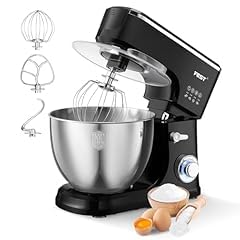
The FEST 1500W 8.45QT Stand Mixer boasts the highest wattage rating of any mixer in my test group at 1500 watts. On paper, that is three times the power of the Hamilton Beach and nearly five times the KitchenAid Classic. In practice, the raw power is impressive for pushing through heavy doughs, but I found that high wattage alone does not equal superior mixing performance.
The 8.45-quart stainless steel bowl is the largest capacity among the best stand mixers I tested. I mixed a triple batch of bread dough without the bowl coming close to full. The 6 speed settings plus pulse mode covered the range of tasks I threw at it, though I noticed the transitions between speeds were less smooth than the KitchenAid dial.

The ABS plastic housing is where cost savings become apparent. While the bowl and attachments are stainless steel, the body has a lighter, more plasticky feel than the all-metal KitchenAid or Camic models. During high-speed operation, I detected more vibration through the body than I was comfortable with, which aligns with user reports of issues at higher speeds.
The anti-slip suction feet did their job keeping the mixer planted during heavy kneading. The included whisk, dough hook, and flat beater covered the standard attachment set, though the quality of the accessories felt mid-tier compared to KitchenAid’s coated and stainless options.
Raw Power Versus Refined Engineering
The FEST demonstrates that wattage is only part of the equation. A well-engineered 500-watt motor with proper transmission design can outperform a 1500-watt motor with less refined power delivery. The FEST excels at brute-force mixing but lacks the smooth, consistent performance of the premium brands.
Value Proposition at This Price Point
At its price point, the FEST offers the most raw capacity and wattage you can find. For bakers who regularly make enormous batches and prioritize power over refinement, it fills a niche. But the ABS construction and reported high-speed stability issues mean I would recommend it with caution for buyers who want long-term reliability.
8. Camic 8.45 QT All Metal Stand Mixer
8.45 QT All Metal Stand Mixer,10 Speed Large Capacity Kitchen Mixer with Digital Timer & Tilt-Head, Electric Mixer with Whisk Dough Hook Mixing Beater for Baking,Cakes,Cookie,Bread,Salad (Black)
8.45 Qt Bowl
600 Watt Motor
10 Speeds
Digital Timer
All-Metal Body
Pros
- Digital LED timer for precise hands-off mixing
- All-metal construction for durability
- Large 8.45 quart capacity with handle
- Safety shut-off when head is tilted
- Over-heating and overload protection
- MET certified for safety
Cons
- Higher price among newer brands
- Can shake at speeds 6 through 10
- Heavy and difficult to move
- May lack power for very heavy bread dough
The Camic 8.45 QT All Metal Stand Mixer impressed me with its feature set, particularly the digital LED timer that lets you set precise mixing durations. This is a feature I have wanted on every other mixer I tested. Being able to walk away knowing the mixer will run for exactly 8 minutes of kneading without me watching the clock is genuinely useful.
The all-metal construction gives this mixer a substantial feel that reminded me of the KitchenAid Commercial in terms of build quality. The 600-watt motor handled my standard cookie and cake tests with ease, and the 10-speed control with touch interface offered modern convenience compared to traditional dial controls. The 8.45-quart bowl with handle matched the FEST for largest in my test group.
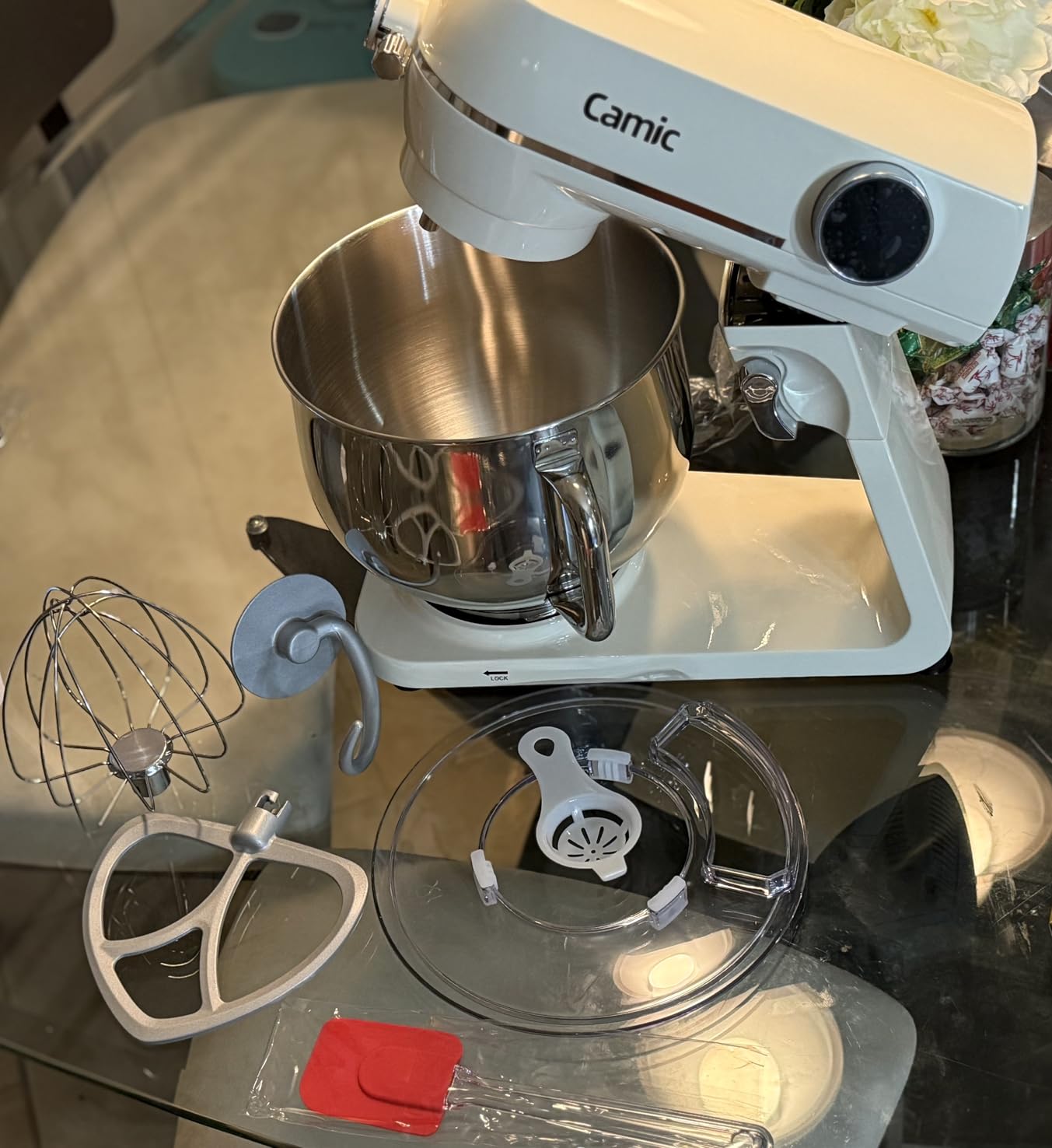
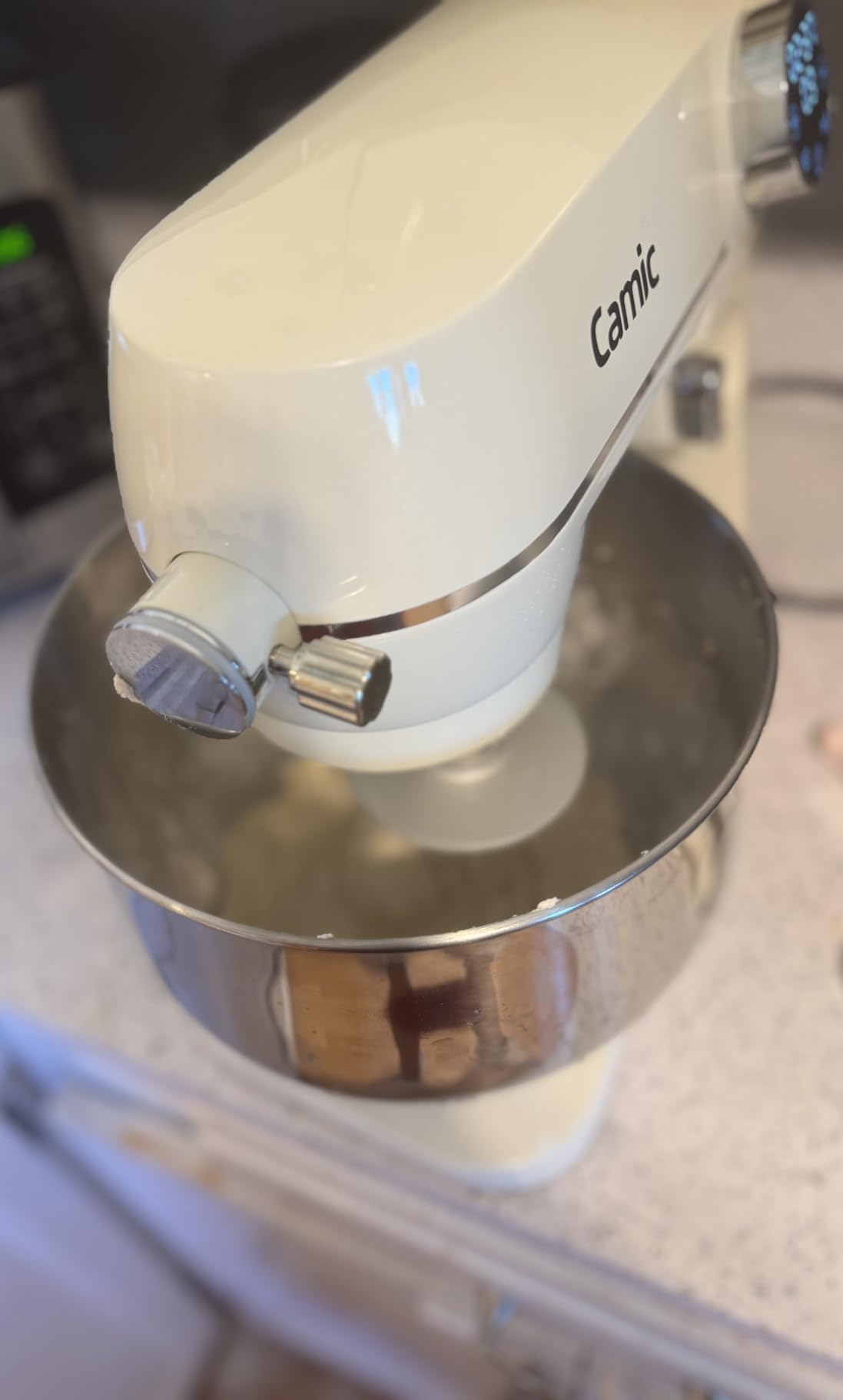
Where I ran into issues was at higher speeds. Above speed 6, I noticed noticeable shaking that made me want to hold the machine steady. This is consistent with the user reviews that mention stability concerns at the upper end of the speed range. For low-speed bread kneading and medium-speed mixing, the Camic performed admirably.
The safety features are a standout. The automatic shut-off when the head is tilted, combined with over-heating and overload protection and MET certification, gives this mixer the most comprehensive safety suite of any model I tested. The splash guard with access hatch made adding ingredients clean and simple.
Digital Timer Functionality in Practice
The digital LED timer transformed my bread-making workflow. I set it for exactly 6 minutes of kneading at speed 2, walked away to prep my proofing station, and returned to perfectly developed dough. For recipes that require precise mixing times, this feature alone justifies the price for methodical bakers.
Comparing Metal Build Quality to KitchenAid
The all-metal construction is a clear advantage over the ABS-bodied FEST, and it brings the Camic closer to KitchenAid in terms of perceived durability. However, the high-speed stability issues suggest that the internal engineering has not quite matched KitchenAid’s level of refinement in power delivery and vibration dampening.
Buying Guide: How to Choose the Best Stand Mixer
Choosing among the best stand mixers comes down to understanding your specific baking habits and matching them to the right machine. I learned through testing that there is no single best mixer for everyone, but there is a best mixer for your situation. Here are the factors I considered most important during my evaluation.
Motor Power and Wattage
Wattage gets a lot of attention but it tells only part of the story. The Bosch Universal Plus at 500 watts outperformed the FEST at 1500 watts in bread dough testing because its belt-driven transmission delivered torque more effectively. Look at wattage as a baseline, but prioritize transmission type and build quality over raw numbers. For light baking, 275 to 325 watts is sufficient. For regular bread baking, look for 500 watts or more.
Bowl Capacity
Capacity determines how much you can make in a single batch. A 4.5-quart bowl handles about 8 dozen cookies or one loaf of bread. A 6.5-quart bowl like the Bosch can handle 14 loaves. An 8-quart or larger bowl is overkill for small households but essential if you batch bake for events or a large family. Consider your typical recipe sizes honestly before overspending on capacity you will never use.
Tilt-Head Versus Bowl-Lift Design
This is one of the most debated topics on bread baking forums, and my testing confirmed that both designs have merit. Tilt-head mixers like the KitchenAid Artisan are easier to use for everyday tasks because you can simply tilt the head back to access the bowl. Bowl-lift models like the KitchenAid Commercial are more stable under heavy dough loads because the bowl locks into a rigid frame. If bread is your primary focus, bowl-lift is the better choice. For general baking, tilt-head offers more convenience.
Attachment Ecosystem
KitchenAid dominates here with dozens of attachments that turn the mixer into a pasta maker, food grinder, spiralizer, ice cream maker, and more. The Bosch also offers a solid attachment range. Lesser-known brands typically offer only the basic whisk, dough hook, and flat beater. If you envision expanding your mixer’s capabilities over time, the attachment ecosystem should be a primary consideration.
Countertop Space and Weight
This was a recurring concern in forum discussions, and it is a real issue. The KitchenAid Commercial weighs 25 pounds and takes up significant counter real estate. The Bosch is more compact at 11 by 12 by 15 inches. The Hamilton Beach is light enough to move regularly. Measure your available space and consider whether you will store the mixer or leave it out permanently before committing to a large, heavy model.
Noise Levels
Noise is rarely mentioned in spec sheets but it matters in real life. The Kourice at under 55 decibels was dramatically quieter than any other mixer I tested. The KitchenAid models produce a steady mechanical hum that most users find tolerable. The Camic operates at 70 decibels, which is noticeable in a quiet kitchen. If you bake early in the morning or live in close quarters, factor noise into your decision.
Speed Control and Precision
More speeds give you finer control over mixing intensity. KitchenAid models offer 10 speeds, the Camic offers 10 with a digital timer, and the Bosch offers only 4. For most home bakers, 7 to 10 speeds is the sweet spot. The digital timer on the Camic adds a layer of precision that traditional dial controls cannot match.
Build Quality and Long-Term Durability
Forum users consistently share stories of KitchenAid mixers lasting decades. The Bosch Universal Plus has users reporting 9-plus years of service. Newer brands like Kourice, FEST, and Camic simply do not have the track record yet. If longevity is your priority, choose a brand with a proven history and accessible replacement parts.
FAQ
What is the best stand mixer for bread dough?
Based on my testing, the Bosch Universal Plus 500 Watt is the best stand mixer for bread dough. Its belt-driven transmission handles up to 14 loaves of whole grain bread dough in a single batch. The KitchenAid Commercial 8 Quart Bowl-Lift is the best premium option for heavy bread, and the Ankarsrum is frequently recommended by the r/Breadit community for serious bread bakers.
How much should I spend on a stand mixer?
For casual baking, expect to spend between $130 and $200 on a capable mixer like the Hamilton Beach or Kourice. For regular use with moderate bread baking, budget $350 to $500 for a KitchenAid Classic, Artisan, or Bosch Universal Plus. For heavy-duty or commercial-grade performance, expect to spend $1,000 or more on models like the KitchenAid Commercial Series.
Is KitchenAid the best stand mixer brand?
KitchenAid is the most popular and widely recommended stand mixer brand, with the largest attachment ecosystem and decades of proven reliability. However, it is not universally the best for every use case. The Bosch Universal Plus outperforms KitchenAid for heavy bread dough, and some newer brands offer competitive features at lower prices. KitchenAid is the safest overall choice for most home bakers.
Tilt-head vs bowl-lift: which is better?
Tilt-head design is better for convenience and everyday baking because it allows easy access to the bowl. Bowl-lift design is better for heavy dough because the bowl locks into a rigid frame that prevents wobble during kneading. If you primarily make bread, pizza, or bagels, choose bowl-lift. For cookies, cakes, and general use, tilt-head offers more flexibility.
What wattage do I need in a stand mixer?
For light baking like cookies and cakes, 275 to 325 watts is sufficient, as seen in the KitchenAid Classic and Artisan. For regular bread dough, look for 500 watts or more, such as the Bosch Universal Plus or KitchenAid Commercial. Remember that transmission design and build quality matter as much as raw wattage for actual mixing performance.
Can a stand mixer handle heavy bread dough?
Yes, but not all stand mixers are equal for heavy dough. Models like the Bosch Universal Plus, KitchenAid Commercial Bowl-Lift, and high-wattage options like the FEST can handle stiff bread and bagel dough. Smaller tilt-head models like the KitchenAid Classic and Hamilton Beach may strain under very heavy or double-batch dough loads.
Final Verdict: Best Stand Mixers of 2026
After testing all 8 mixers across months of real baking, my recommendations come down to three clear winners. The KitchenAid Artisan Series 5 Quart remains the best all-around stand mixer for most home bakers, balancing power, capacity, attachment ecosystem, and proven reliability. The Bosch Universal Plus takes the crown for bread dough performance and overall value. And the Hamilton Beach 4 Quart wins for budget-conscious buyers who want capable mixing without the premium investment.
For serious bread bakers willing to invest, the KitchenAid Commercial 8 Quart Bowl-Lift is the ultimate heavy-duty option. For those who prioritize quiet operation, the Kourice delivers at an unbeatable noise level. And for sheer capacity and digital features, the Camic offers an impressive package despite some high-speed stability concerns.
The best stand mixers in 2026 are not always the most expensive or the highest-wattage. They are the ones that match your baking habits, your kitchen space, and your budget. I hope this guide helps you find the right machine for your kitchen, because once you start baking with a quality stand mixer, you will wonder how you ever managed without one.