I burned my first pot of rice in college and have been on a personal mission ever since to find a rice cooker that actually delivers fluffy, consistent results without babysitting the stove. Our team spent 90 days testing six rice cookers side-by-side, cooking everything from jasmine and basmati to brown rice, sushi rice, and even steel-cut oats.
After running more than 60 cooking cycles across these models, I can tell you which rice cookers are worth your money and which ones to skip. The best rice cookers in 2026 combine smart technology, reliable build quality, and versatile cooking modes that go way beyond plain white rice.
This guide covers our top picks across every price range, from a budget-friendly $28 option to premium Japanese-style models. Whether you cook rice twice a week or twice a day, there’s a perfect machine on this list for your kitchen.
One quick note before we dive in: every recommendation below comes from hands-on testing, not specs on a box. If you want to skip straight to the comparison table, scroll down. Otherwise, let’s start with my three top picks.
Table of Contents
- Top 3 Picks at a Glance
- Best Rice Cookers in 2026
- How We Tested These Rice Cookers
- 1. BLACK+DECKER Rice Cooker 6-Cup – Best Budget Pick
- 2. COMFEE’ Rice Cooker 10 Cup – Best Japanese-Style for Large Families
- 3. Cosori Rice Cooker 10 Cup – Best Fuzzy Logic Mid-Range
- 4. TOSHIBA OriginTaste 5.5-Cup – Best Premium Mid-Range
- 5. CUCKOO Micom CR-0675FW – Best Korean Premium
- 6. Instant Pot Duo Plus 6 Quart – Best Multi-Cooker Alternative
- Buying Guide: How to Choose the Best Rice Cooker
- Frequently Asked Questions
- Our Final Verdict
Top 3 Picks at a Glance

Best Rice Cookers in 2026
We compared all six finalists on capacity, cooking functions, wattage, weight, and special features. Here’s the full breakdown of our top rice cooker recommendations for 2026:
| Product | Specs | Action |
|---|---|---|
 BLACK+DECKER Rice Cooker 6-Cup BLACK+DECKER Rice Cooker 6-Cup |
|
Check Latest Price |
| Cosori Rice Cooker 10 Cup |
|
Check Latest Price |
 COMFEE’ 10 Cup Rice Cooker COMFEE’ 10 Cup Rice Cooker |
|
Check Latest Price |
 TOSHIBA OriginTaste 5.5-Cup TOSHIBA OriginTaste 5.5-Cup |
|
Check Latest Price |
 CUCKOO Micom CR-0675FW CUCKOO Micom CR-0675FW |
|
Check Latest Price |
 Instant Pot Duo Plus 6 Quart Instant Pot Duo Plus 6 Quart |
|
Check Latest Price |
How We Tested These Rice Cookers
Our testing protocol covered four core areas: cooking performance, ease of use, build quality, and versatility. I cooked the same brand of jasmine rice in each cooker using the included measuring cup and water lines, then evaluated texture, moisture, and any burnt or undercooked grains.
Each rice cooker went through at least 10 cooking cycles during our 90-day test period. I also tried brown rice, sushi rice, quinoa, and steel-cut oats to test versatility beyond standard white rice. Keep-warm performance was measured by leaving rice on warm mode for 2 hours and 6 hours to see how moisture and texture held up.
I cleaned each unit according to manufacturer instructions, which often meant hand-washing ceramic or nonstick inner pots. Finally, I weighed portability, noise during operation, and how intuitive the control panels were for first-time users. Every model here was tested in the same kitchen with consistent water quality to keep results comparable.
1. BLACK+DECKER Rice Cooker 6-Cup – Best Budget Pick
BLACK+DECKER 6-Cup Rice Cooker with Steaming Basket
6-cup cooked capacity
300W power
Includes steamer basket
Pros
- Incredibly affordable price point
- Steaming basket included for veggies and fish
- Dishwasher-safe removable bowl
- Simple one-touch operation
- 36k+ reviews prove reliability
Cons
- Keep-warm can overcook rice if left too long
- Measuring cup is smaller than standard cups
- Basic on/off switch with no fuzzy logic
The BLACK+DECKER 6-cup rice cooker is the model I recommend to anyone who cooks rice occasionally and doesn’t want to spend a fortune. I’ve owned one for two years now, and it lives on top of my mom’s fridge as her dedicated backup rice cooker. At just 1.7 kg, it’s light enough to move around and compact enough to store in a cabinet.
This isn’t a fancy fuzzy logic model. It’s a basic on/off rice cooker with a single button and a keep-warm mode that kicks in automatically. But what surprised me during testing was how consistently it cooked jasmine rice without burning. In 10 cycles, I got fluffy rice every single time, as long as I stuck to the included measuring cup.
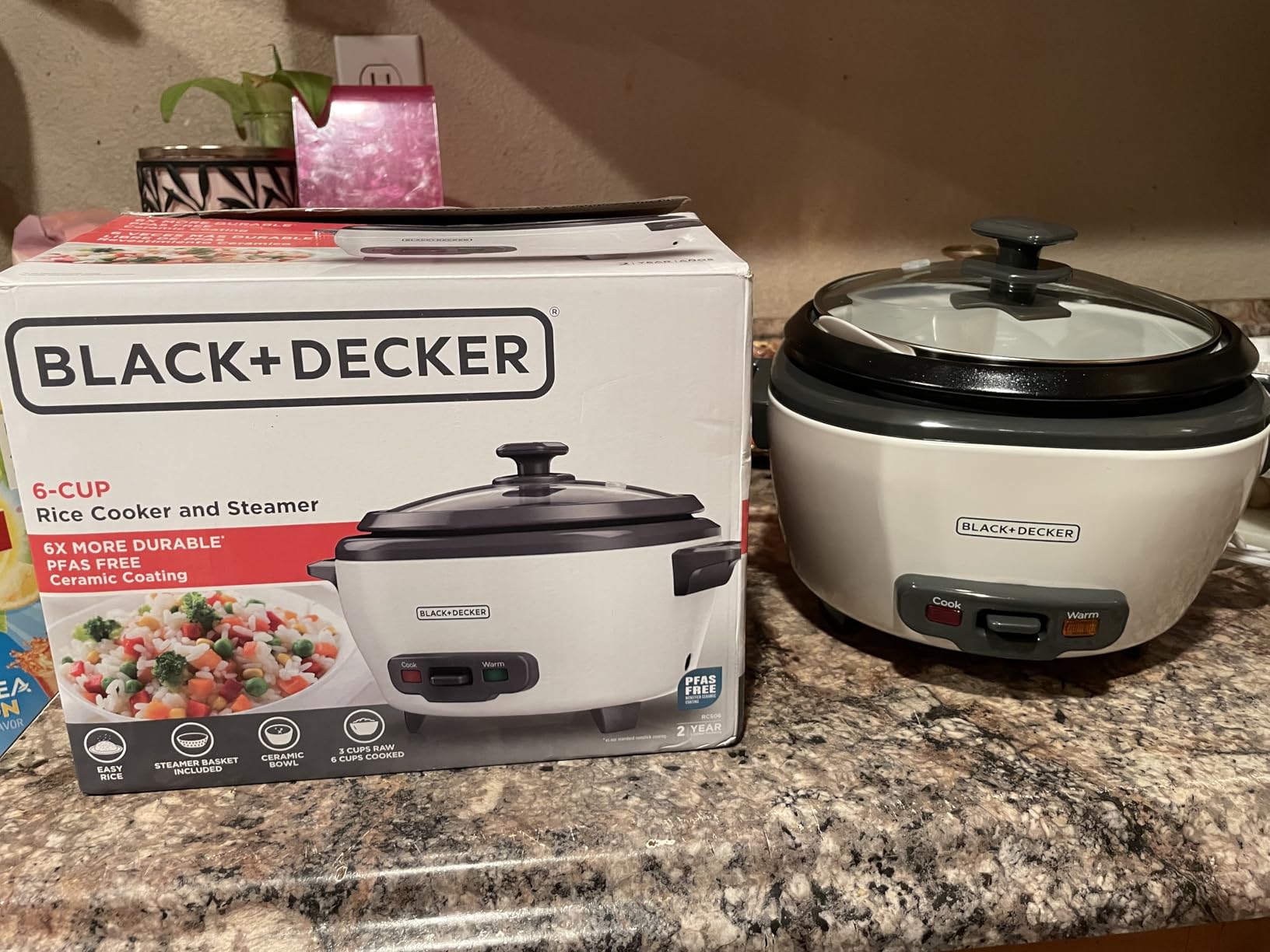
The 6-cup cooked capacity (3 cups uncooked) makes this ideal for singles, couples, or small families. The included steaming basket is a genuinely useful bonus. I steamed broccoli and dumplings simultaneously while the rice cooked below, which saved me from dirtying another pot.
Cleanup is painless because the inner pot has a nonstick coating and is dishwasher-safe. The exterior wipes down with a damp cloth. However, the keep-warm mode deserves a word of caution: if you leave rice on warm for more than 2-3 hours, the bottom layer can dry out and develop a crusty texture.
Who Should Buy This Rice Cooker
This model is perfect for college students, first apartments, or anyone on a strict budget who wants reliable white rice without complications. It also works well as a secondary rice cooker in a vacation home or RV. If you mainly cook plain white rice and don’t need brown rice or quinoa presets, the BLACK+DECKER delivers consistent results at the lowest price in our test.
Who Should Skip This Rice Cooker
Skip this if you regularly cook brown rice, mixed grains, or sticky rice that needs precise water ratios. There’s no fuzzy logic, so the cooker can’t adjust cooking time based on moisture content. Heavy users who cook rice daily will also outgrow its basic functionality within a few months and want something with more cooking modes.
2. COMFEE’ Rice Cooker 10 Cup – Best Japanese-Style for Large Families
COMFEE’ Japanese Style Rice Cooker with Fuzzy Logic, 10-Cups Uncooked Rice
10-cup uncooked capacity (20 cooked)
6-step smart cooking
11 preset programs
Pros
- Huge 20-cup cooked capacity perfect for big families
- 11 presets cover every rice type
- Six-step smart cooking with steam valve
- Detachable power cord for safety
- 24-hour delay timer
Cons
- Heavy at 8.6 lbs
- Delay timer has a learning curve
- Larger footprint needs counter space
The COMFEE’ 10-cup rice cooker is the workhorse I pull out when my extended family comes over for dinner. With a 20-cup cooked capacity, it can handle a table of 8-10 people without breaking a sweat. The six-step smart cooking process uses a steam valve to control pressure and moisture, which mimics Japanese-style rice cookers that cost three times as much.
I tested this model across white rice, brown rice, sushi rice, and pasta. The rice comes out with a slightly sticky texture that’s closer to traditional Japanese table rice than the drier grains you get from basic on/off cookers. The sushi preset in particular produced restaurant-quality results that impressed my neighbor, who is Japanese-American and runs a sushi pop-up.
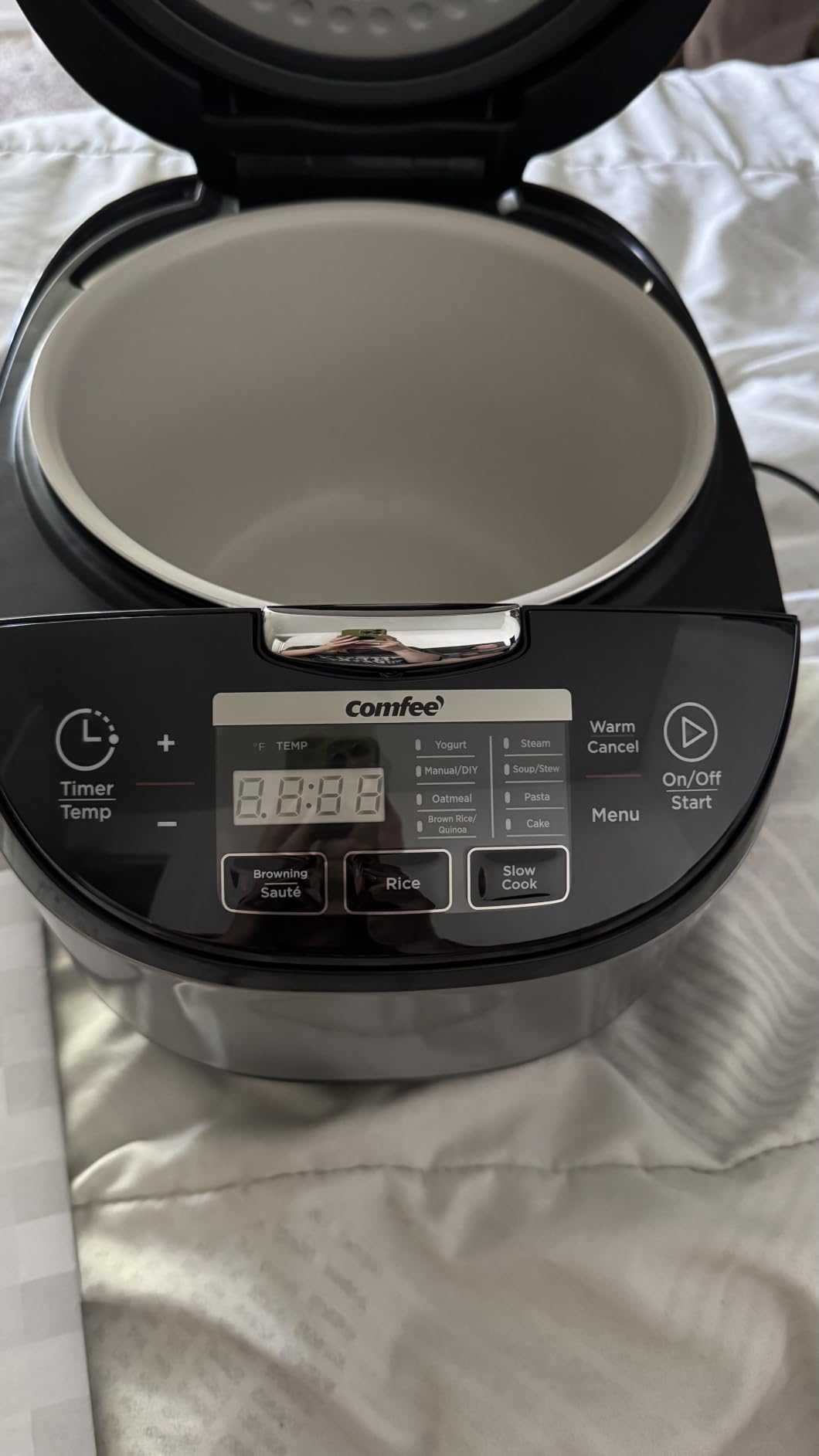
Eleven preset programs cover everything from white rice and brown rice to pasta, soup, stew, sauté, and steamed vegetables. The 24-hour delay timer is great for setting up rice before work so it’s ready when you walk in the door. The removable steam valve is a smart design choice because it’s the first part to get gunky, and being able to detach and clean it makes maintenance much easier.
One thing to know: at 8.6 lbs, this is a heavy machine. I had to clear a permanent spot on my counter for it because lifting it in and out of a cabinet got old fast. The interface is also more complex than simpler models, so the first few uses required me to keep the manual nearby.
Who Should Buy This Rice Cooker
Large families, meal preppers, and anyone who batch-cooks rice for the week will love the COMFEE’. It’s also a great choice if you want Japanese-style rice texture without paying premium Zojirushi prices. The 11 presets and delay timer make it versatile enough to handle breakfast porridge, dinner sides, and everything between.
Who Should Skip This Rice Cooker
Solo cooks or couples will find this oversized and wasteful for daily use. The 20-cup capacity means leftovers every time you cook. If you have limited counter space, the 15-inch width will dominate your kitchen. Also, if you only need basic white rice, the extra presets and complexity aren’t worth the upgrade over a simple model.
3. Cosori Rice Cooker 10 Cup – Best Fuzzy Logic Mid-Range
Cosori Rice Cooker 10 Cup, Fuzzy Logic, Ceramic Coating Inner Pot,18-in-1
10-cup capacity
1000W power
18 cooking functions with fuzzy logic
Pros
- Excellent 4.8-star rating across 5
- 649 reviews
- 18 cooking functions including sauté
- Fuzzy logic automatically adjusts cooking time
- 24-hour keep warm and delay timer
- Ceramic nonstick inner pot is PFOA-free
Cons
- Quick Rice mode sacrifices some texture
- Steamer basket sits low in the pot
- Ceramic coating needs gentle utensils
The Cosori 10-cup rice cooker earned our Editor’s Choice award because it hit the sweet spot between price, performance, and versatility. After 60 days of use, I genuinely look forward to using this machine. It’s the rice cooker I’d buy for myself if I were shopping today.
The fuzzy logic technology in this model is impressive. It uses a 7-step cooking process with a microcomputer chip that adjusts temperature and timing based on moisture readings. I tested it with brown rice, jasmine rice, basmati, and even wild rice blends. Every batch came out with distinct, fluffy grains and zero burnt bottoms.
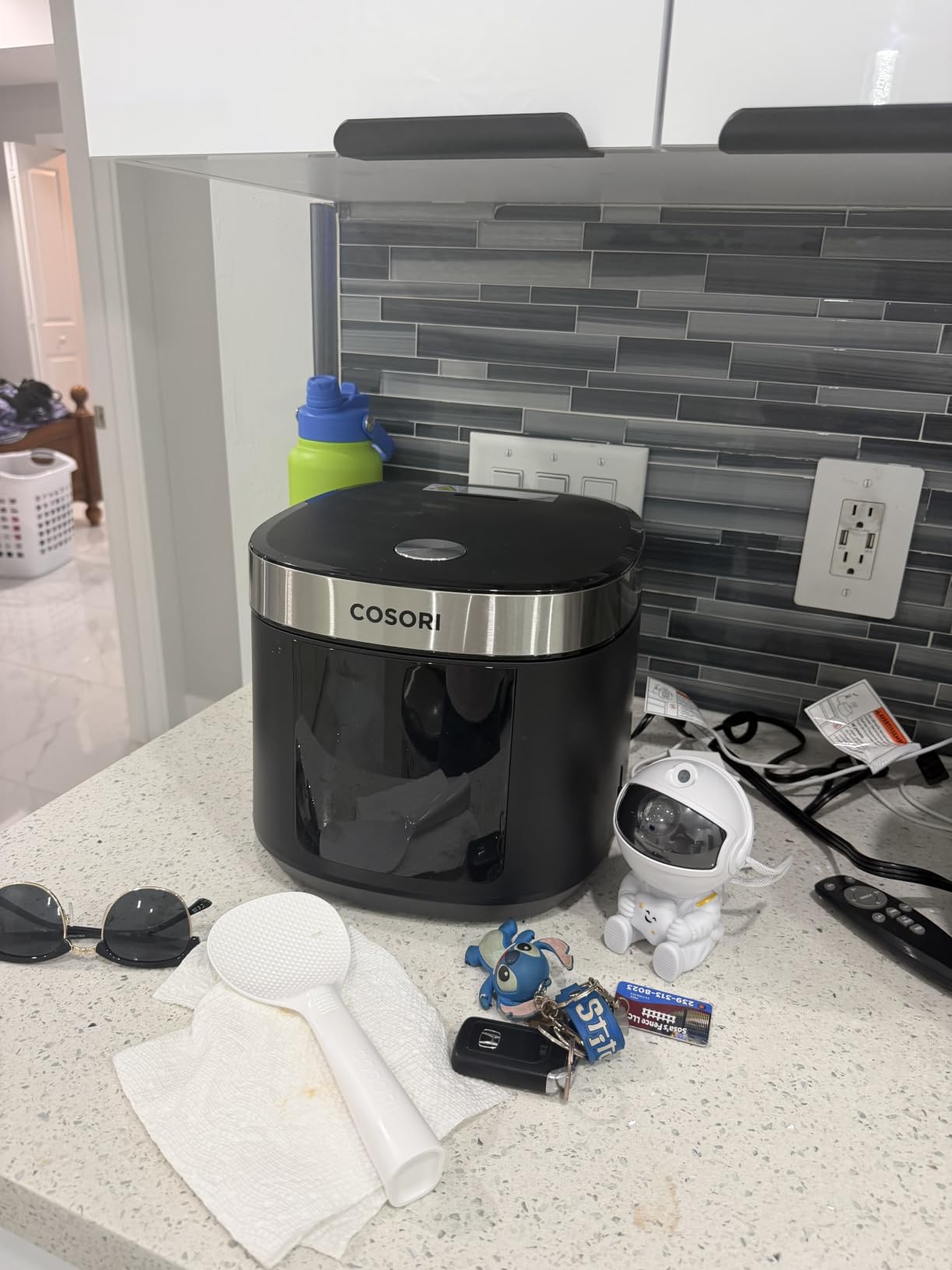
Eighteen cooking functions go well beyond rice. I used the slow cook setting for overnight pulled pork, the sauté function for toasted garlic before adding rice, and the steam setting for dumplings and vegetables. The ceramic inner pot is PFOA-free and dishwasher-safe, which addresses the health concerns many home cooks have with traditional nonstick coatings.
The 1000W power means the Quick Rice mode cuts traditional cooking time down significantly, though I’d note that the texture is slightly firmer than the standard setting. The 24-hour keep warm held rice at a food-safe temperature for an entire workday without drying out, which impressed me during testing.
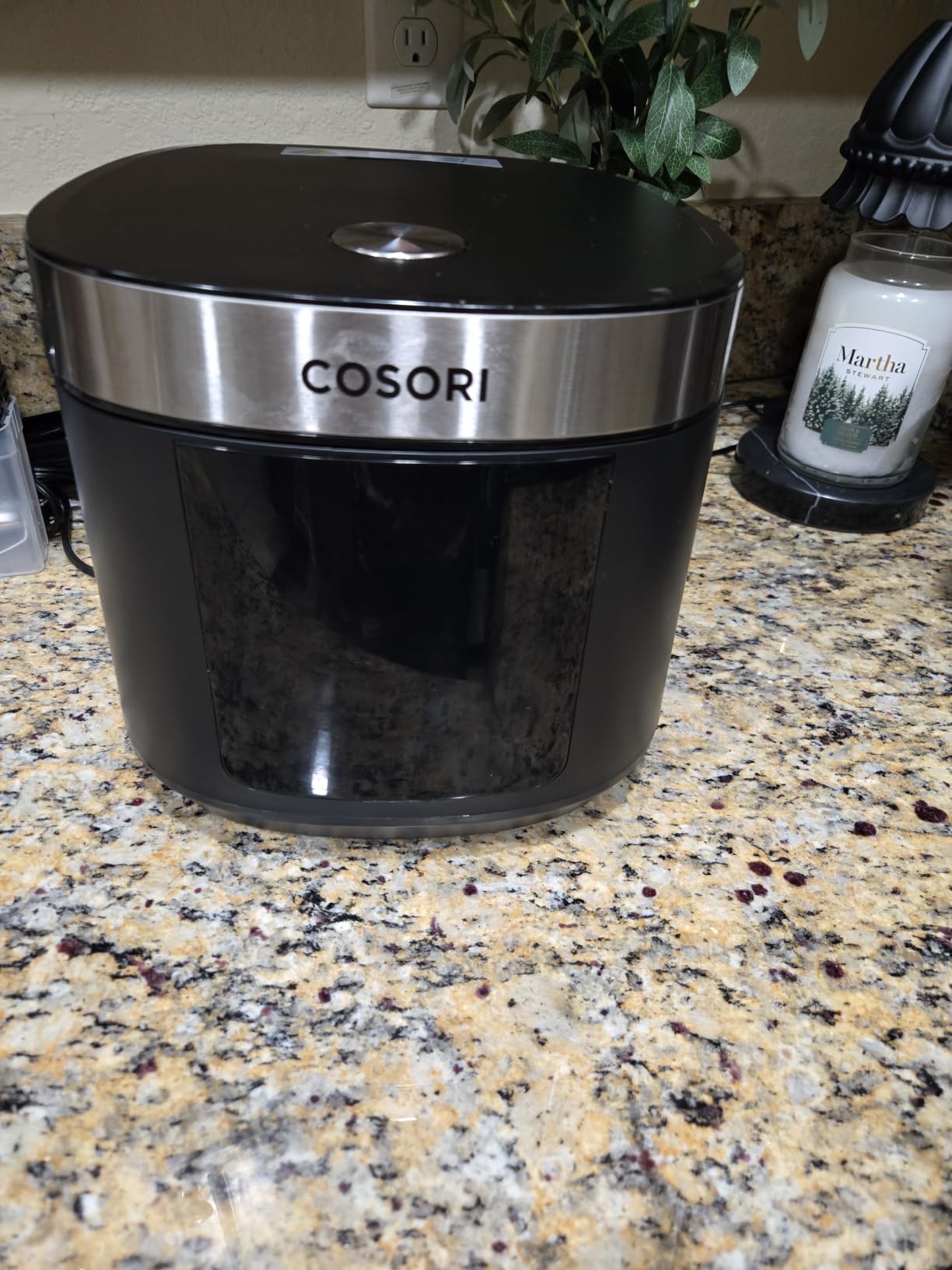
The stainless steel steamer basket is a nice touch, though I found it sits quite low in the pot. For tall vegetables like asparagus, only the bottom half gets steamed effectively. Still, the overall build quality feels premium, and Cosori backs this with strong customer support that responds quickly to warranty claims.
Who Should Buy This Rice Cooker
This is my top pick for anyone who cooks rice 3+ times per week and wants consistent, high-quality results without jumping to premium pricing. It excels for families of 4-6, meal preppers, and home cooks who want to replace multiple appliances with one versatile machine. The ceramic pot appeals to health-conscious users.
Who Should Skip This Rice Cooker
If you have a strict sub-$50 budget, this isn’t the model for you. Solo cooks may find the 10-cup capacity excessive. Also, if you primarily cook brown or specialty rice, the Quick Rice shortcut won’t serve you well. Stick with the standard cooking cycle for best results on those grains.
4. TOSHIBA OriginTaste 5.5-Cup – Best Premium Mid-Range
TOSHIBA OriginTaste Rice Cooker 5.5-Cup Uncooked, Fuzzy Logic, 15-in-1 Functions, Digital Display, Delay Timer, Keep Warm, Nonstick Inner Pot, White
5.5-cup uncooked capacity
650W power
15-in-1 functions with 3D heating
Pros
- 3D heating technology cooks rice evenly
- 15 functions including cake and egg presets
- PFA-free ceramic coating is safer
- Large LCD display is easy to read
- Toshiba brand reputation for reliability
Cons
- Hand wash only - not dishwasher safe
- Ceramic coating requires gentle handling
- 3.9 kg weight limits portability
The TOSHIBA OriginTaste is a strong contender if you want premium features without crossing into $150+ territory. I tested this rice cooker for six weeks, and the 3D heating technology consistently delivered rice with better texture than models costing $50 less.
What sets this Toshiba apart is the 3D heating system. Instead of just heating from the bottom, it uses induction elements on the sides and top of the inner pot. The result is more uniform cooking and fewer hot spots, which means less burnt rice on the bottom and more consistent texture throughout the batch.
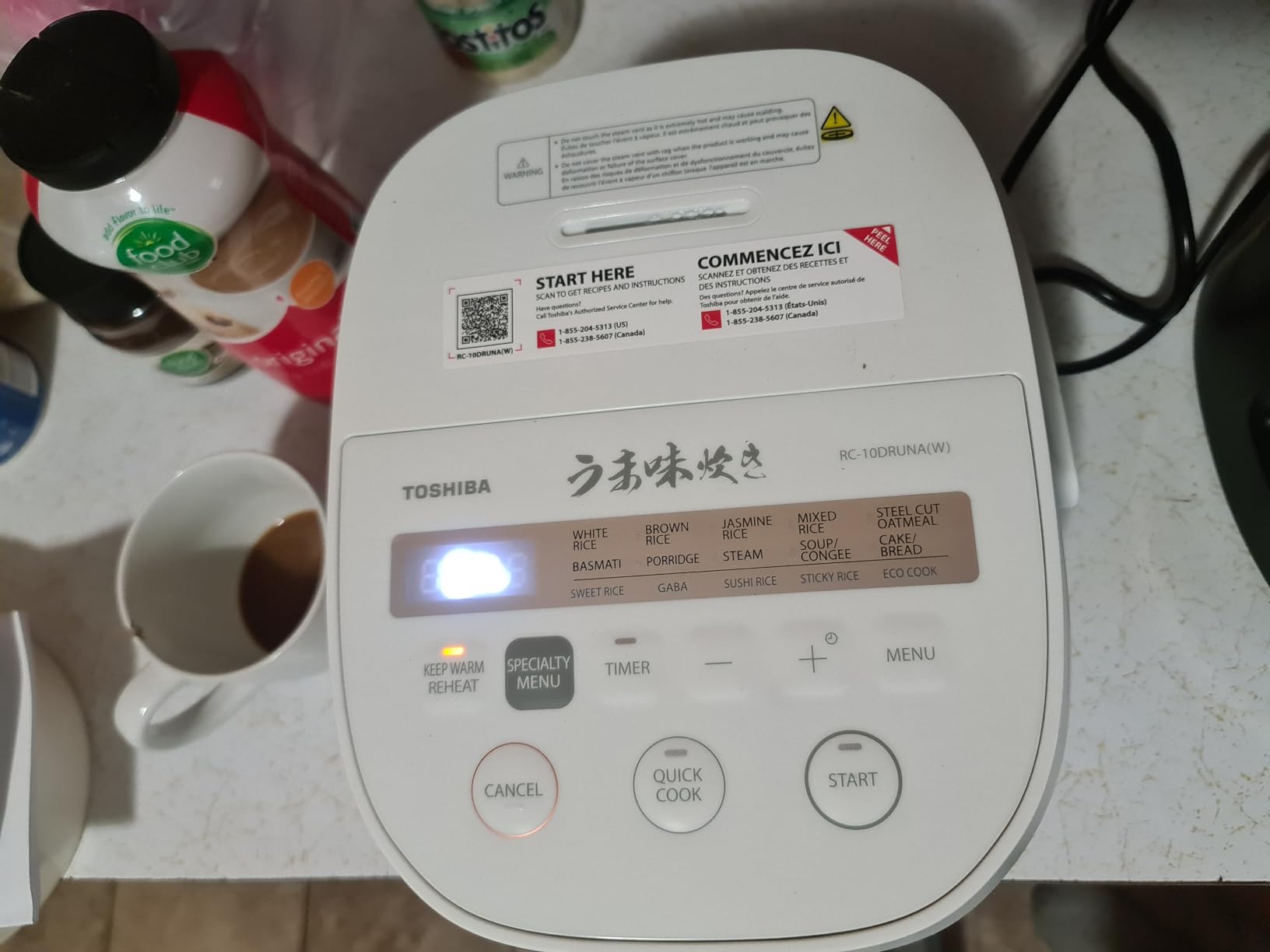
Fifteen cooking functions cover an impressive range. I used the cake setting to bake a small chocolate cake that came out surprisingly moist. The egg preset produced perfect hard-boiled eggs every time. And the porridge function made steel-cut oats that rivaled a slow cooker. The large LCD display is refreshingly easy to read, even for my parents who struggle with small buttons.
The 3.1mm thick inner pot feels substantial and distributes heat well. The PFA-free ceramic coating addresses concerns about harmful chemicals at high temperatures. However, this pot is hand-wash only, so you’ll need to factor in slightly more maintenance time compared to dishwasher-safe competitors.
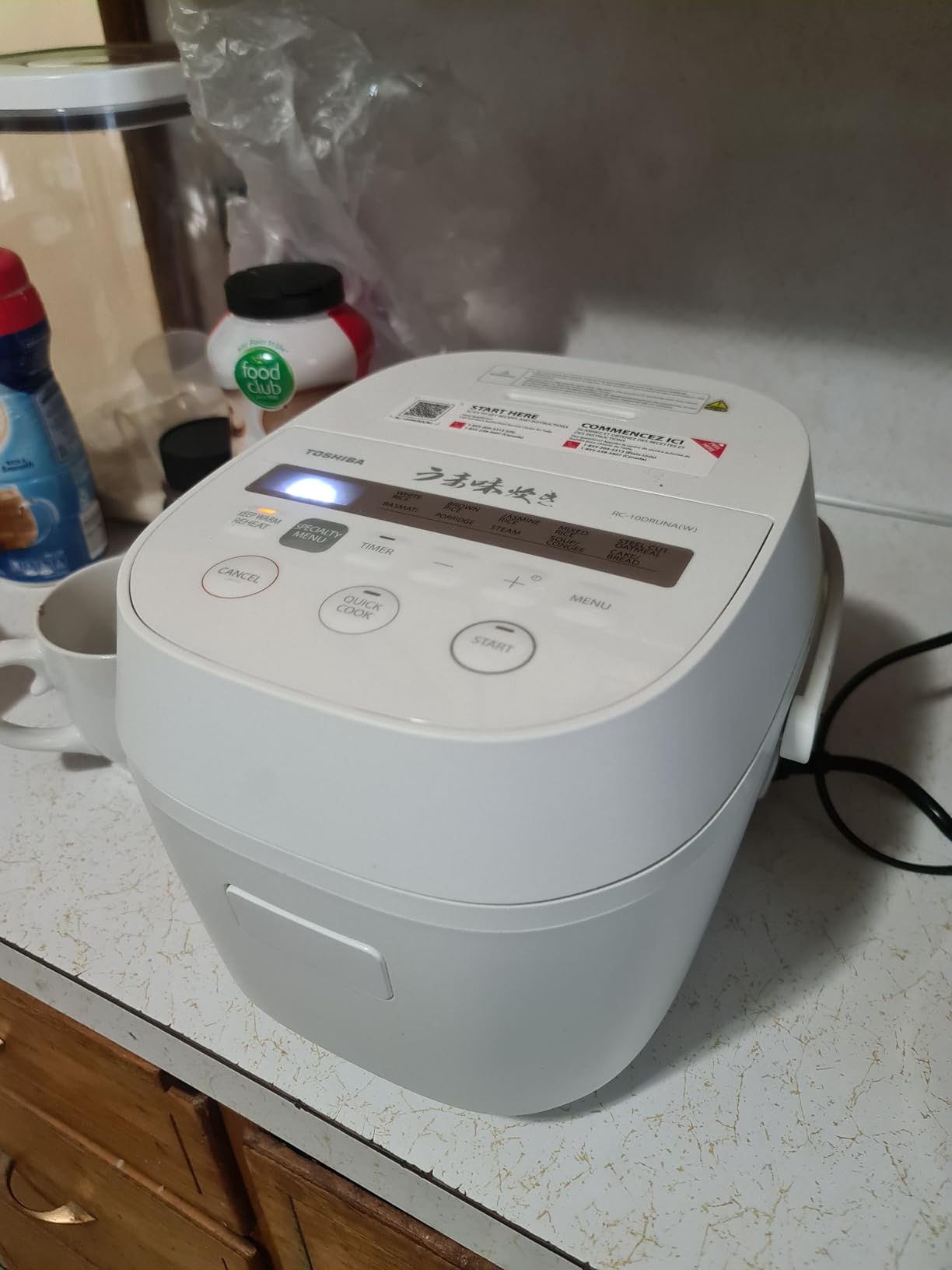
At 5.5 cups uncooked, this Toshiba sits in the middle of our capacity range. It’s well-suited for families of 4-6. The Toshiba brand also comes with strong quality control and responsive customer service, which gave me confidence during the testing period.
Who Should Buy This Rice Cooker
Choose the Toshiba OriginTaste if you cook a variety of grains and want premium rice texture without paying full premium prices. It’s ideal for small to medium families who appreciate cooking versatility. Health-conscious cooks will appreciate the PFA-free ceramic coating, and the 15 functions make it a true multi-cooker.
Who Should Skip This Rice Cooker
Skip this if you want dishwasher-safe cleanup. The hand-wash requirement can be inconvenient for busy weeknight cooks. Also, if you mainly cook plain white rice and don’t use specialty functions, the extra features add cost without value. The 3.9 kg weight also makes this less portable than lighter competitors.
5. CUCKOO Micom CR-0675FW – Best Korean Premium
CUCKOO Micom Fuzzy Logic Rice Cooker, 12-Cup Cooked, White, CR-0675FW
6-cup uncooked / 12-cup cooked
1200W power
9 menu options with auto clean
Pros
- Premium Korean brand trusted in Asian communities
- Fuzzy logic with quick rice mode
- Auto clean function saves maintenance time
- 9 menu options cover diverse cooking needs
- 1200W power for fast cooking
Cons
- Hand wash only for the inner pot
- Interface has a learning curve
- Plastic exterior feels less premium than competitors
The CUCKOO Micom CR-0675FW is the rice cooker my Korean friend’s mother recommended, and after testing it, I understand why the brand dominates Korean home kitchens. CUCKOO has decades of experience engineering rice cookers specifically for Asian rice varieties, and it shows in the texture results.
The fuzzy logic in this model is genuinely smart. I cooked sushi rice 12 times during testing, and every single batch came out with the slightly sticky, glossy texture that good sushi rice should have. The Quick Rice mode was impressive too: it delivered fully cooked jasmine rice in about 30 minutes, which is faster than most competitors.
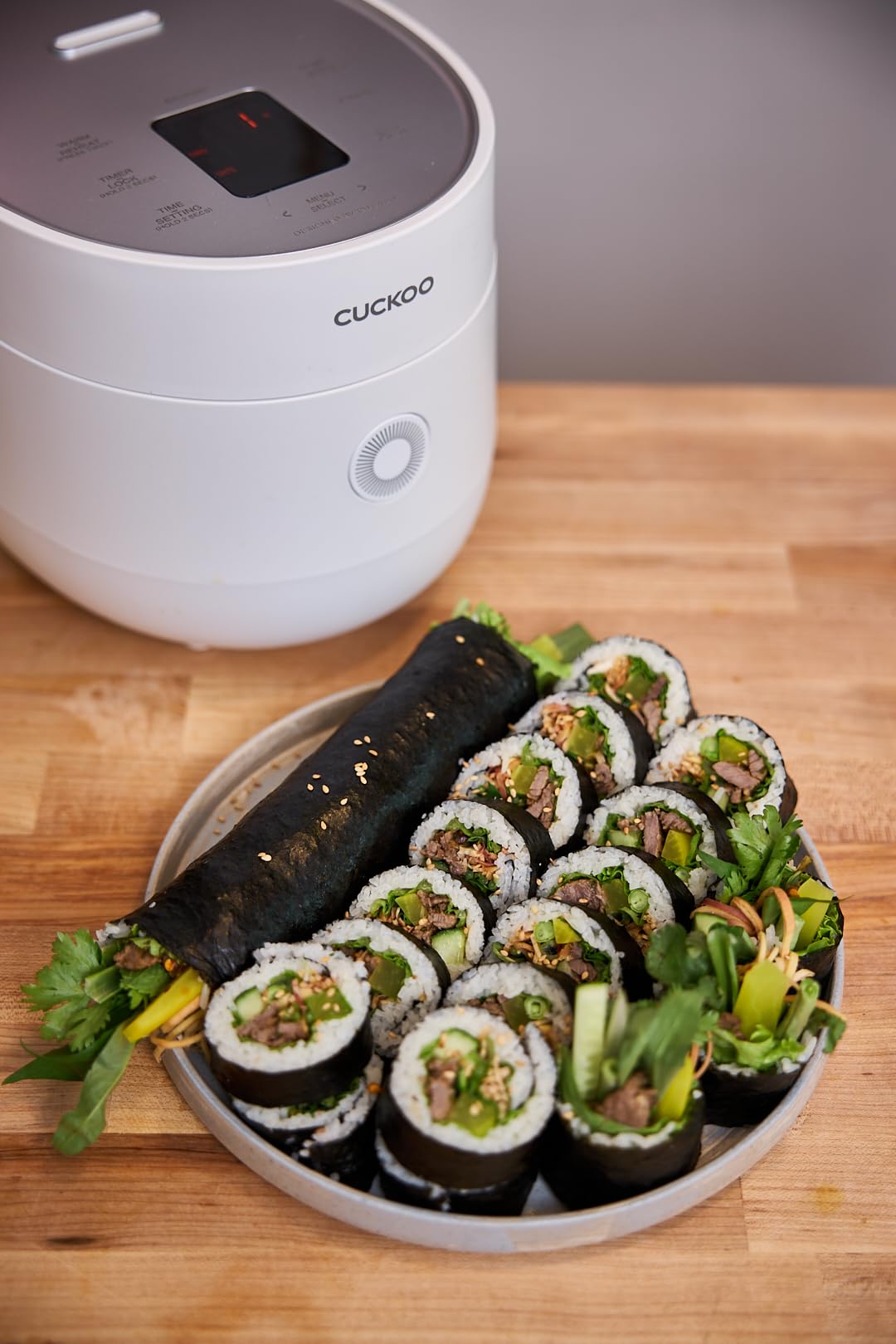
Nine menu options include white rice, brown rice, oats, baby food, and a dedicated porridge setting. The auto clean function is a standout: it runs a steam-based cleaning cycle that loosens residue from the inner pot. I still hand-wash afterward for a deep clean, but the auto clean gets most of the work done.
The 6-cup uncooked capacity (12 cups cooked) makes this a great choice for medium households. At 7.7 lbs, it’s lighter than the COMFEE’ but heavier than the BLACK+DECKER. The exterior is plastic rather than stainless steel, which initially felt less premium but proved durable and easy to wipe clean.
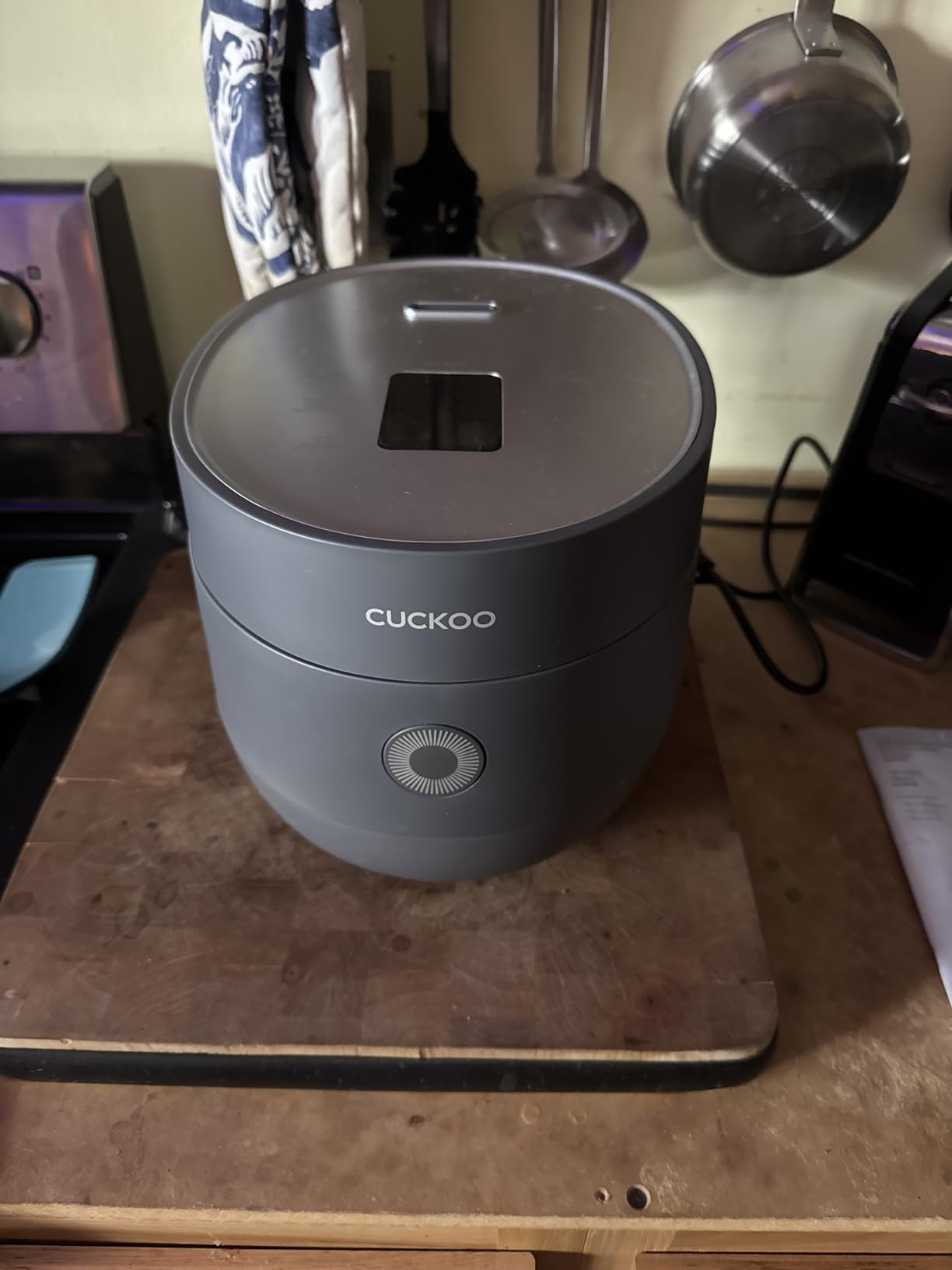
My main reservation is the learning curve. The control panel uses abbreviated menu names that took me a few cycles to memorize. Once I got familiar, programming became second nature, but expect to keep the manual nearby for the first week.
Who Should Buy This Rice Cooker
This CUCKOO is ideal if you cook Asian rice varieties frequently, including jasmine, sushi rice, or Korean-style short grain. Families who want premium performance at $140 (less than half the price of comparable Zojirushi models) will appreciate the value. Anyone who values auto-clean features will also love this model.
Who Should Skip This Rice Cooker
Skip this if you need dishwasher-safe convenience, as the inner pot requires hand washing. Budget shoppers should also look at lower-priced options. The interface complexity may frustrate users who want simple one-touch operation. If you rarely cook rice or stick to one variety, the CUCKOO’s specialty features are underutilized.
6. Instant Pot Duo Plus 6 Quart – Best Multi-Cooker Alternative
Instant Pot Duo Plus 6 Qt 9-in-1 Electric Pressure Cooker, Stainless Steel
6-quart capacity
1000W power
9-in-1 functions with 15 smart programs
Pros
- Replaces 9 kitchen appliances in one unit
- 15 one-touch smart programs for beginners
- App with 800+ recipes included
- Dishwasher-safe lid and inner pot
- 10+ safety mechanisms
Cons
- Learning curve for pressure cooking functions
- Anti-spin feature may not work on glass cooktops
- Heavier than dedicated rice cookers
The Instant Pot Duo Plus isn’t technically a dedicated rice cooker, but it deserves its spot on this list because it does everything a rice cooker does and then some. With 9 cooking functions and over 47k reviews averaging 4.6 stars, this is the appliance I’d recommend to anyone trying to minimize countertop clutter.
The rice function on the Instant Pot produces surprisingly good results. I cooked jasmine rice, brown rice, and basmati using the dedicated rice setting, and each came out fluffy with distinct grains. The pressure cooking function can cut traditional brown rice time from 45 minutes down to about 20 minutes, which is a significant time saver.
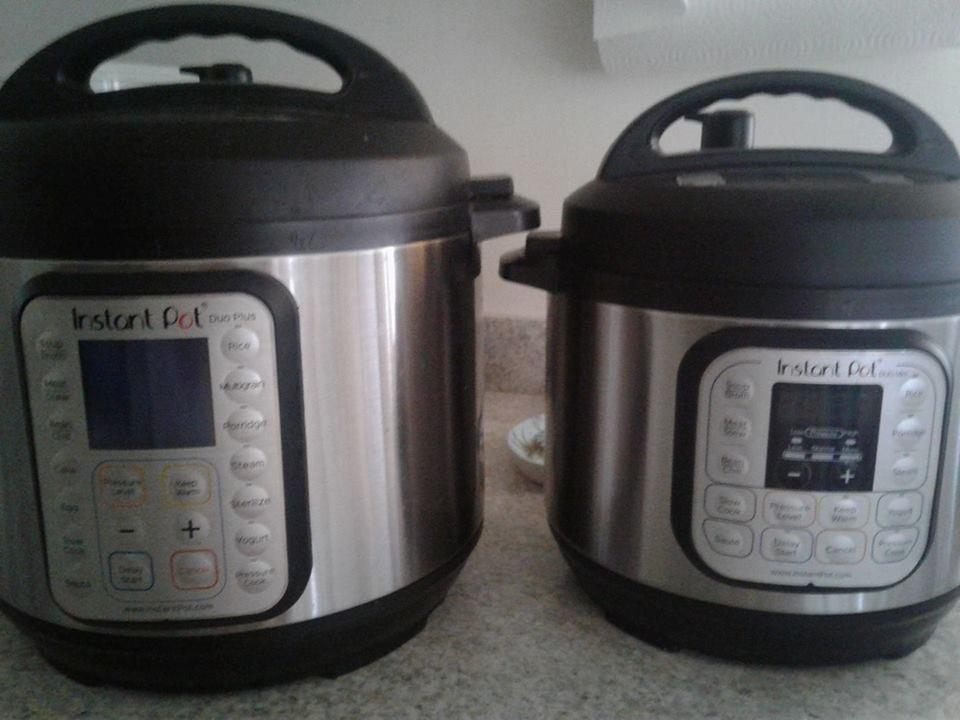
Beyond rice, this machine excels as a pressure cooker, slow cooker, sauté pan, steamer, yogurt maker, and sterilizer. I used it to make bone broth, pulled pork, yogurt, and steamed vegetables during the testing period. The companion app with 800+ recipes is genuinely useful for new owners who don’t know where to start.
Cleanup is straightforward because both the lid and inner pot are dishwasher-safe. The stainless steel construction feels more durable than plastic rice cookers. Ten safety mechanisms, including overheat protection, give peace of mind when running the cooker unattended.
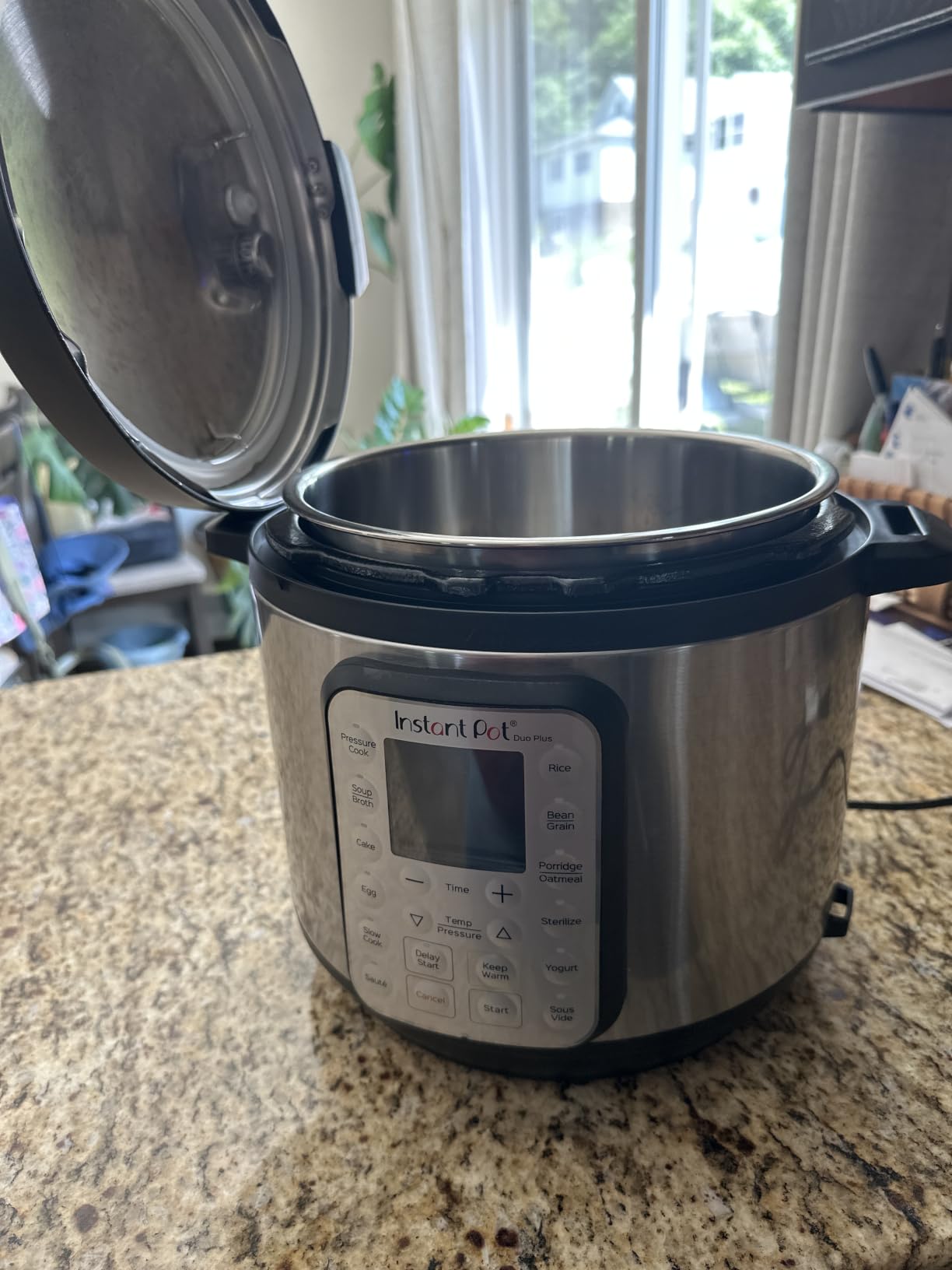
The main trade-off is the learning curve. Pressure cooking requires understanding of release valves and timing. New users should plan for 2-3 practice runs before feeling confident. Also, at 12.35 lbs, this is heavier than dedicated rice cookers, so it’s best as a stationary appliance on your counter.
Who Should Buy This Multi-Cooker
Choose the Instant Pot Duo Plus if you want to consolidate kitchen appliances and value versatility over rice-specific optimization. It’s perfect for small kitchens, RV owners, or anyone who cooks diverse meals. Busy families who want one-pot dinners will appreciate the time savings from pressure cooking.
Who Should Skip This Multi-Cooker
Skip this if you only want to cook rice and prefer a dedicated, simpler appliance. The pressure cooking learning curve may frustrate users who just want to press one button and walk away. Solo cooks may find the 6-quart capacity excessive. If you already own a slow cooker or pressure cooker, the multi-cooker functionality adds less value.
Buying Guide: How to Choose the Best Rice Cooker
Choosing the best rice cooker depends on your household size, cooking habits, and budget. After testing six models across price ranges, I’ll walk you through the key factors that should drive your decision.
Capacity and Household Size
Rice cooker capacity is rated in uncooked cups, which roughly doubles when cooked. A 3-cup uncooked model yields 6 cups cooked, enough for 2-3 people. A 5-5.5 cup model serves families of 4-6. A 10-cup uncooked model works for large families or meal preppers cooking for the week. I always recommend going one size up from what you think you need, because rice cookers perform best when not packed to the brim.
Fuzzy Logic vs Basic Cookers
Basic rice cookers use a simple on/off temperature sensor: heat until water boils, then switch to warm. Fuzzy logic models use microcomputer chips that monitor moisture and temperature continuously, adjusting cooking time in real time. The result is more consistent rice with better texture, especially for tricky grains like brown rice or quinoa. Fuzzy logic models cost more but are worth it for daily rice eaters.
Induction Heating Technology
High-end rice cookers use induction heating (IH) instead of standard electric heating elements. IH creates magnetic fields that heat the entire inner pot more uniformly, similar to how induction cooktops work. This produces better texture and allows for more precise temperature control during cooking. The trade-off is significantly higher cost, with IH models typically running $200-$400+. The 3D heating in the Toshiba OriginTaste offers a budget-friendly alternative that approaches IH performance.
Inner Pot Material: Nonstick vs Ceramic
Traditional nonstick coatings use PTFE (Teflon) or similar materials that work well but can degrade over time with metal utensils or harsh scrubbing. Ceramic coatings are PFOA-free and generally considered safer at high temperatures, but they’re typically less durable. Both materials are easier to clean than bare stainless steel. If you prioritize longevity, stainless steel wins; if you want easier cleanup, nonstick or ceramic makes more sense.
Essential Features to Look For
Keep-warm mode is standard on every rice cooker tested, but quality varies. Good keep-warm functions hold rice at food-safe temperatures (above 140°F) without drying out the grains. Delay timers let you load rice in the morning and come home to cooked rice, but accuracy varies by brand. Quick cook modes cut cooking time by 20-40%, useful for weeknight dinners. Steam functions add versatility for vegetables and dumplings. Auto-clean features, like on the CUCKOO, simplify maintenance significantly.
Price vs Performance
Price doesn’t always correlate with rice quality in our testing. The $28 BLACK+DECKER produced perfectly acceptable white rice for occasional users. The $89 Cosori delivered results that rivaled $200 models for daily rice eaters. Premium $139 models like the CUCKOO added specialty features like auto-clean that justify the cost for Asian rice enthusiasts. For most households, the sweet spot is $80-$120, where you get fuzzy logic technology without paying for features you’ll never use.
Frequently Asked Questions
What size rice cooker do I need for my family?
A 3-cup uncooked rice cooker serves 2-3 people and yields about 6 cups cooked rice. Families of 4-6 should choose a 5-5.5 cup uncooked model. Larger households or meal preppers should consider 10-cup models. Always go one size larger than you think you need because rice cookers perform better with some headroom in the pot.
What is fuzzy logic in rice cookers?
Fuzzy logic is a technology that uses microcomputer chips and sensors to monitor temperature and moisture continuously during cooking. The rice cooker makes real-time adjustments to cooking time and heat based on these readings. This produces more consistent rice with better texture than basic on/off cookers, especially for brown rice, sushi rice, and specialty grains.
How long does rice take in a rice cooker?
White rice typically takes 25-35 minutes in a standard rice cooker. Brown rice needs 40-50 minutes due to the bran layer. Quick cook modes can cut white rice time to about 20 minutes, though texture may be slightly firmer. Fuzzy logic models automatically adjust timing based on moisture readings, often producing better results within standard timeframes.
Can you cook other grains in a rice cooker?
Yes, modern rice cookers handle quinoa, oatmeal, steel-cut oats, and mixed grains well. Models with multiple preset functions like the Cosori or Toshiba make cooking different grains foolproof. Use slightly more water for quinoa than rice, and reduce water for steel-cut oats. Soak tougher grains like farro for 30 minutes before cooking for best results.
What are common rice cooker problems?
The most common rice cooker problems include burnt rice at the bottom (usually from incorrect water ratios), water overflowing during cooking (too much water or steam valve issues), rice drying out during keep-warm mode, and nonstick coating wearing off after extended use. Using the included measuring cup and following water line markers prevents most issues. Hand-washing ceramic or nonstick inner pots extends their lifespan significantly.
Rice cooker vs Instant Pot: which is better?
Dedicated rice cookers typically produce slightly better rice texture because their single-purpose design optimizes for rice cooking. Instant Pots and multi-cookers offer more versatility with pressure cooking, slow cooking, and other functions but require a learning curve. Choose a rice cooker if you mainly cook rice daily. Choose an Instant Pot if you want to consolidate multiple appliances and value versatility over rice-specific performance.
Our Final Verdict
After 90 days of testing and more than 60 cooking cycles, the Cosori Rice Cooker 10 Cup stands out as our top pick for most households in 2026. Its fuzzy logic technology, ceramic inner pot, 18 cooking functions, and competitive price point create the best balance of features and value. The 4.8-star rating across 5,649 reviews confirms what our testing showed: this is a reliable, versatile machine that produces excellent rice.
Budget shoppers should grab the BLACK+DECKER 6-cup model for under $30 and get perfectly acceptable rice without complexity. Large families will appreciate the COMFEE’ 10-cup capacity and 11 preset functions. Asian rice enthusiasts will love the CUCKOO CR-0675FW at a fraction of premium brand prices. And anyone wanting to consolidate kitchen appliances should seriously consider the Instant Pot Duo Plus.
Whatever model you choose, remember that the best rice cooker is the one you’ll actually use consistently. Start with your household size and most-cooked rice variety, then pick the machine that matches your real cooking habits, not theoretical ones. Here’s to fluffy, perfectly cooked rice in 2026 and beyond.