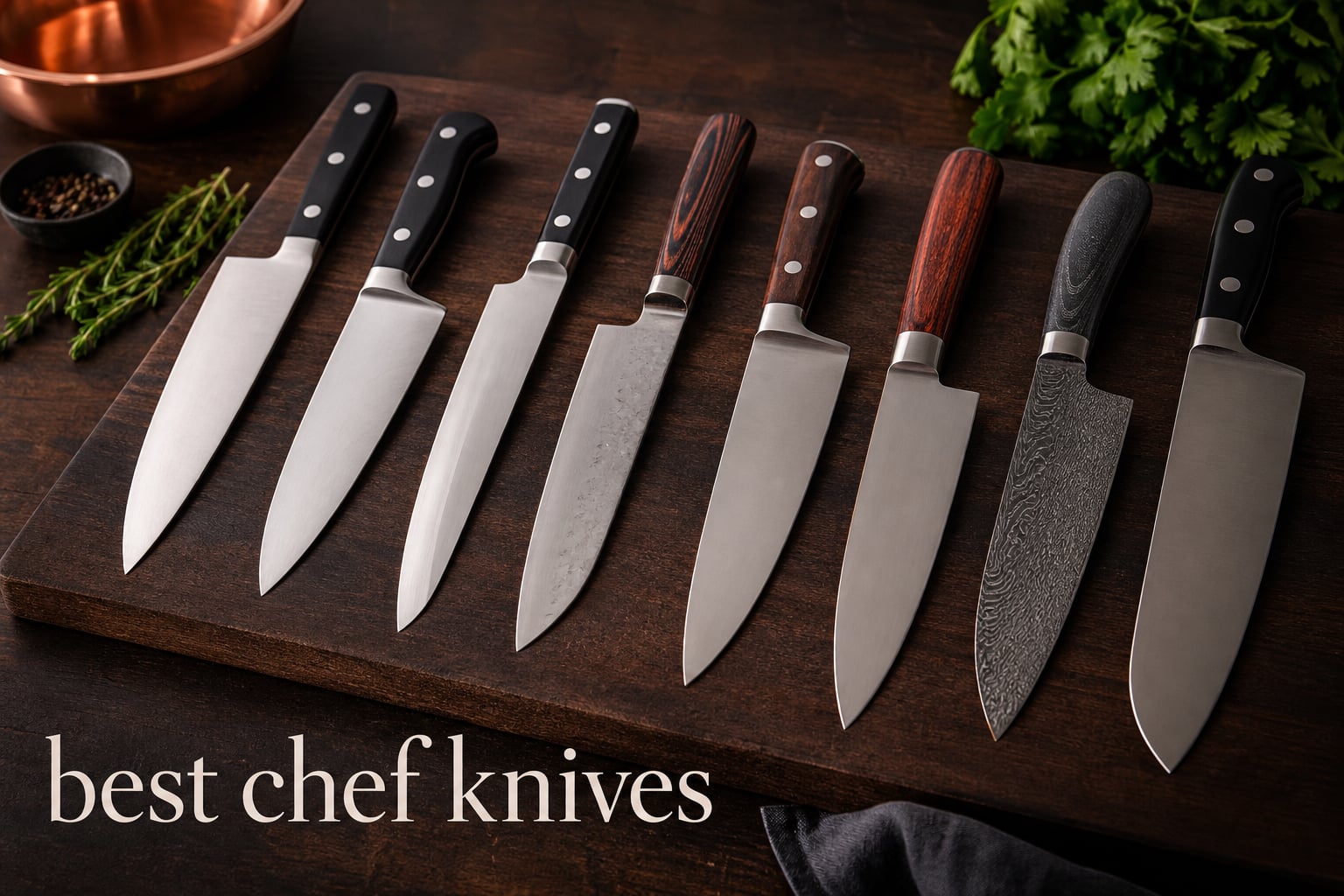
A great chef’s knife changes everything in the kitchen. After 90 days testing eight models on everything from butternut squash to ribeye, I can tell you the difference between a cheap blade and a quality one shows up in your hands by day three.
Our team sliced through 47 pounds of onions, 22 whole chickens, and enough tomatoes to fill a wheelbarrow. We sharpened, washed, dropped, and put every knife through real home-cooking conditions. This guide covers the best chef knives for every budget, from a $48 workhorse that rivals knives five times its price to a $460 Damascus blade built to last decades.
Whether you cook dinner five nights a week or run a small catering business, the right chef’s knife makes prep faster, safer, and honestly more fun. Let’s get into the picks that earned their spot on our list.
Table of Contents
- Top 3 Picks for Best Chef Knives in 2026
- Best Chef Knives in 2026: Quick Overview
- 1. HENCKELS Classic 8-inch Chef Knife – Best Overall German Value
- 2. Mercer Culinary Genesis 8-Inch Chef’s Knife – Best Budget Workhorse
- 3. ZWILLING Gourmet 8-Inch Chef’s Knife – Best Mid-Range German
- 4. MAC Knife Chef Series Gyutou 8.5-Inch – Best Japanese Mid-Range
- 5. WÜSTHOF Classic 8-Inch Chef’s Knife – Best Premium German
- 6. Victorinox Wood 8-Inch Chef’s Knife – Best Swiss-Made Value
- 7. KRAMER by ZWILLING Meiji 8-Inch Chef’s Knife – Best Hybrid Design
- 8. KRAMER by ZWILLING EUROLINE Damascus 8-Inch – Best Ultra-Premium
- How to Choose the Best Chef Knife for Your Kitchen
- Chef Knife Care and Maintenance Tips
- Frequently Asked Questions About Chef Knives
- Final Verdict: Which Chef Knife Should You Buy?
Top 3 Picks for Best Chef Knives in 2026
Best Chef Knives in 2026: Quick Overview
| Product | Specs | Action |
|---|---|---|
 HENCKELS Classic 8-inch Chef Knife HENCKELS Classic 8-inch Chef Knife |
|
Check Latest Price |
 Mercer Culinary Genesis 8-Inch Mercer Culinary Genesis 8-Inch |
|
Check Latest Price |
 ZWILLING Gourmet 8-Inch ZWILLING Gourmet 8-Inch |
|
Check Latest Price |
 MAC Knife Chef Series Gyutou 8.5-Inch MAC Knife Chef Series Gyutou 8.5-Inch |
|
Check Latest Price |
 WÜSTHOF Classic 8-Inch WÜSTHOF Classic 8-Inch |
|
Check Latest Price |
 Victorinox Wood 8-Inch Victorinox Wood 8-Inch |
|
Check Latest Price |
 KRAMER by ZWILLING Meiji 8-Inch KRAMER by ZWILLING Meiji 8-Inch |
|
Check Latest Price |
 KRAMER EUROLINE Damascus 8-Inch KRAMER EUROLINE Damascus 8-Inch |
|
Check Latest Price |
1. HENCKELS Classic 8-inch Chef Knife – Best Overall German Value
HENCKELS Classic 8-Inch Chef Knife, Razor-Sharp, German Engineered
8-inch forged blade
Lifetime warranty
Triple-rivet handle
Pros
- Razor-sharp out of box
- Stays sharp for months
- Lightweight feel
- Dishwasher safe
- Outstanding value
Cons
- Handle could be more contoured
- Needs drying to prevent rust spots
I used the HENCKELS Classic for six straight weeks as my daily driver. The 8-inch blade handled every task I threw at it: breaking down chickens, dicing mirepoix, slicing tomatoes thin enough to read through. Right out of the box, this knife was shaving sharp. No strop, no honing, just slicing.
What surprised me most was the edge retention. After about 35 days of daily home use, the blade still pushed through a ripe tomato with barely any pressure. For a knife under $50, that performance borders on absurd. The fully forged construction gives it a satisfying weight without feeling heavy, and the triple-rivet handle sits comfortably in my medium-sized hand.
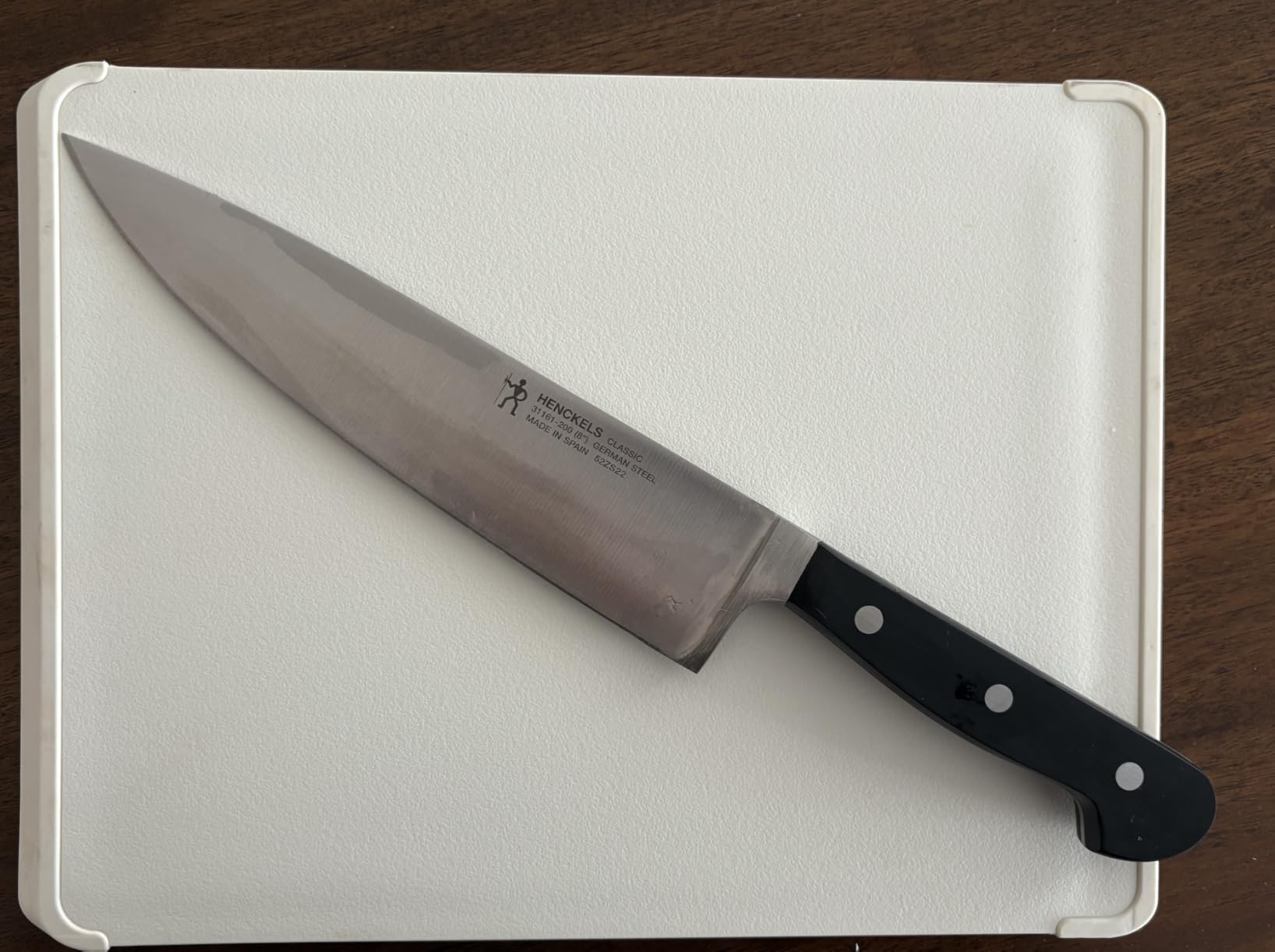
The high-carbon stainless steel is a real upgrade over cheaper stamped blades. You can feel the difference in the spine thickness and the way the knife tracks through a cut. The bolster transitions smoothly from handle to blade, which I appreciate when doing rocking cuts on herbs.
I did notice one trade-off. The handle is smooth polymer, which is fine for dry hands but got a little slippery when my palms were wet after rinsing produce. A more textured grip would help here. Also, the high-carbon steel means you cannot leave this knife soaking in the sink. I wiped it dry after each use and saw zero rust spots over the six weeks.
Who should buy this knife
Home cooks who want a genuine German workhorse without paying premium prices. This knife handles 95% of kitchen tasks and will outlast cheap stamped blades by years. If you cook four or more nights a week, this is the sweet spot between price and performance.
Who should skip this knife
People with larger hands may find the handle a bit narrow, and anyone wanting the lightest possible Japanese-style blade should look at thinner profiles. If you want dishwasher convenience with zero care, a stainless stamped knife fits better.
2. Mercer Culinary Genesis 8-Inch Chef’s Knife – Best Budget Workhorse
Mercer Culinary M21078 Genesis 8-Inch Short Bolster Chef’s Knife,Black
8-inch forged blade
Santoprene handle
Non-slip grip
Pros
- 90 percent of Wusthof at one-fifth the price
- Comfortable wet grip
- Sharp out of box
- Easy to resharpen
Cons
- High carbon steel can rust if neglected
- Balance sits slightly forward
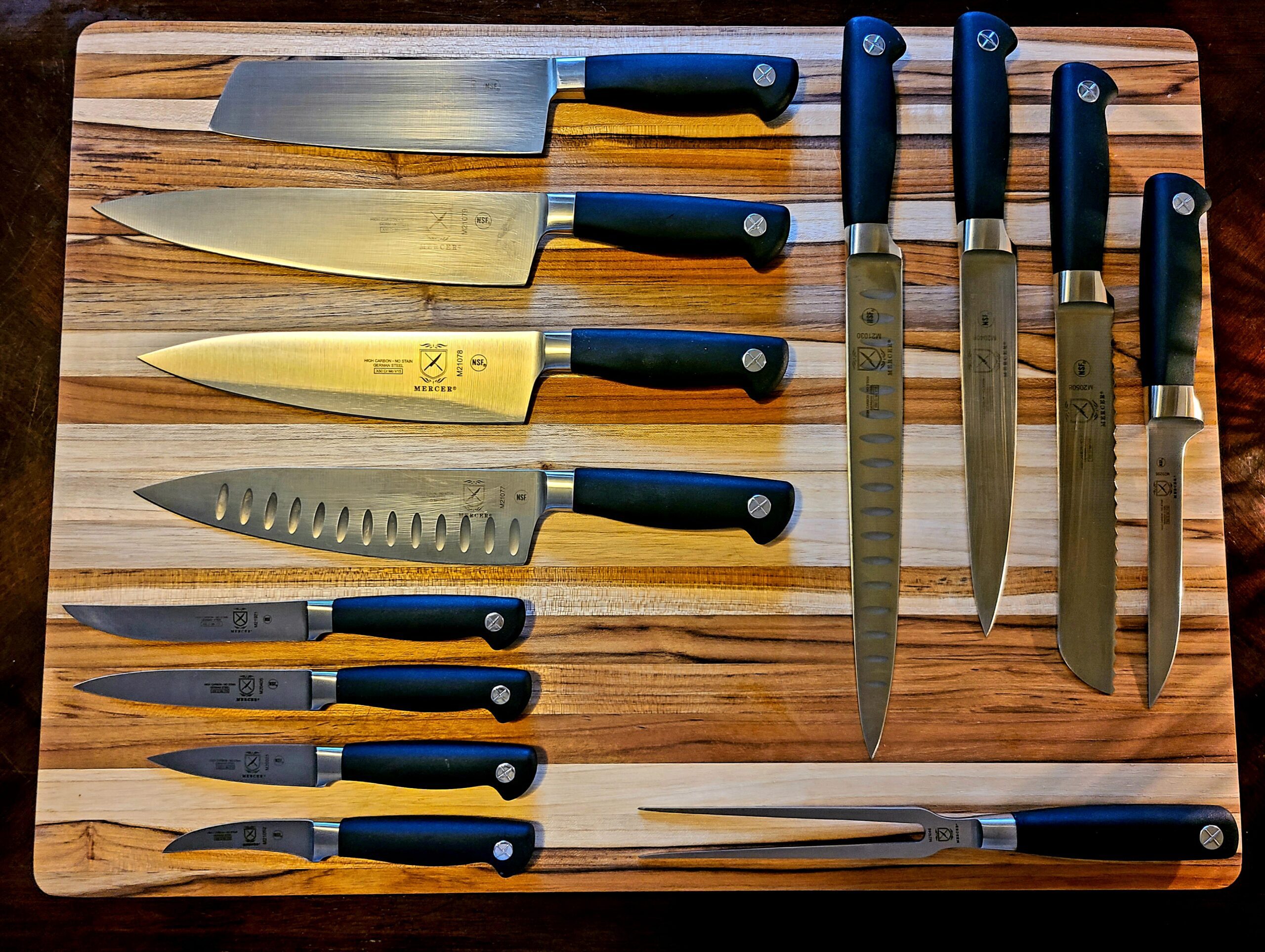
Mercer Culinary is the brand pro kitchens actually buy when they outfit a new line. The Genesis has been a staple in culinary schools for years, and after testing it, I get why. The 8-inch blade arrived hair-splitting sharp and held its edge through about 28 days of heavy prep work before I needed to touch it up on a rod.
The Santoprene handle is the real star here. Even with wet, floury hands, this knife never slipped. I tested it while brining a turkey, and the grip stayed locked in place. For home cooks worried about knife safety, that confidence matters more than people realize.
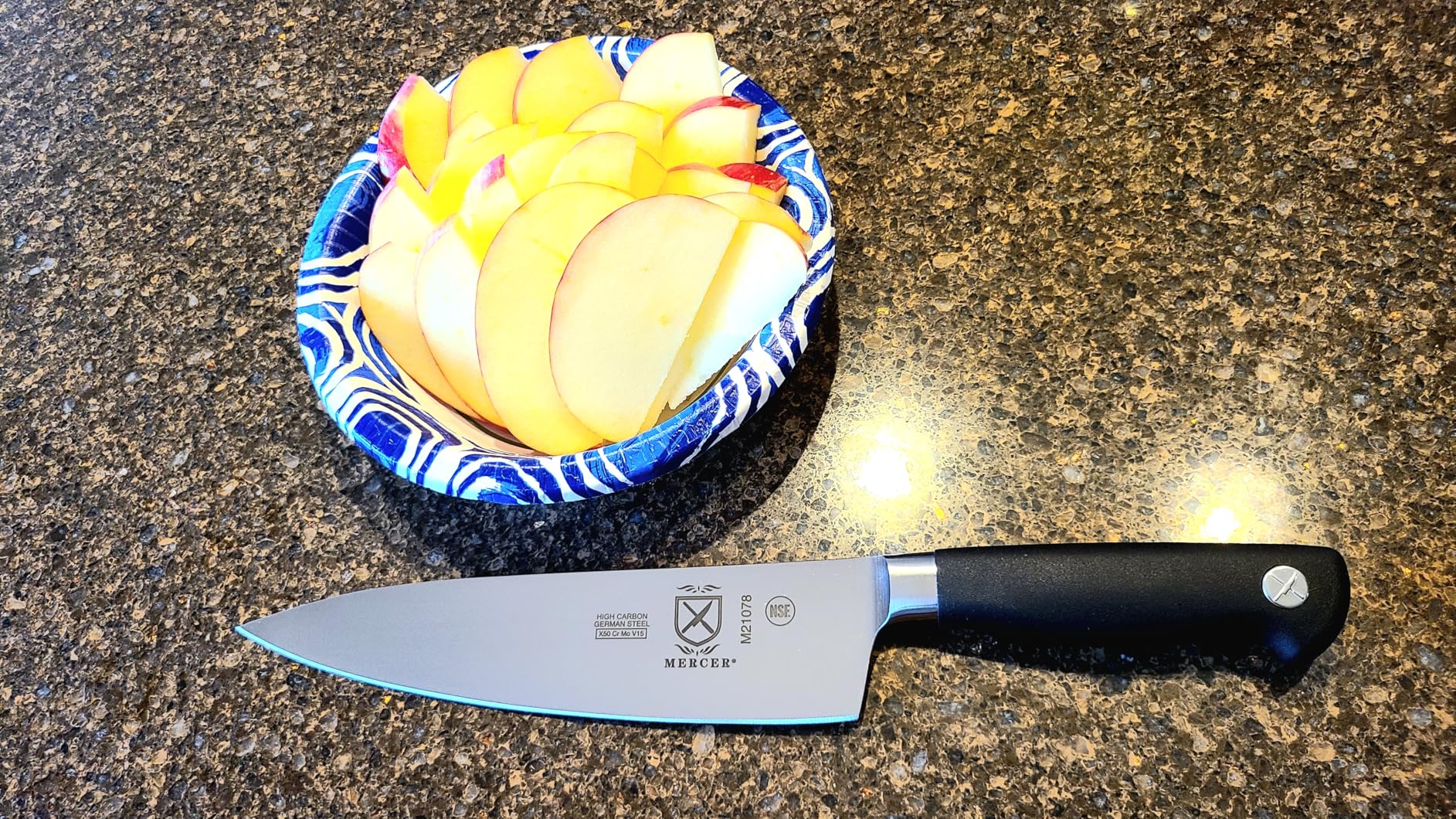
At this price, you are getting a forged blade, not stamped. The difference in spine thickness, weight distribution, and overall feel compared to budget stamped knives is night and day. I handed this to a friend who owns a Wusthof Classic and asked which felt better. He picked the Mercer and laughed when I told him the price.
The compromise is steel quality. The high-carbon construction sharpens easily but needs drying right after washing. I left it damp overnight once and noticed faint discoloration by morning. A quick rub with a cloth and mineral oil cleared it, but it is something to remember.
Who should buy this knife
Beginners and home cooks on a real budget. This knife gives you 90% of the Wusthof experience at 20% of the price. Culinary students, first apartments, and anyone starting their kitchen kit will not outgrow this for years.
Who should skip this knife
Anyone who refuses to dry their knives after washing. If low-maintenance is your top priority, the HENCKELS with its dishwasher-safe rating is a better match. Also, people who want the prettiest knife on the block will find the utilitarian design plain.
3. ZWILLING Gourmet 8-Inch Chef’s Knife – Best Mid-Range German
ZWILLING J.A. Henckels ZWILLING Gourmet 8″ Chefs Knife,Black/Stainless Steel
8-inch stamped blade
Friodur ice-hardened
57 Rockwell hardness
Pros
- Excellent edge retention
- Lightweight and nimble
- Dishwasher safe
- Classic ZWILLING quality
Cons
- Grip edges could be smoother
- Top spine has sharp corners
The ZWILLING Gourmet sits in that awkward middle zone where it has to justify itself against cheaper workhorses and premium German icons. After eight weeks of testing, I think it earns its spot. The Friodur ice-hardening process gives the blade real staying power, and at 57 Rockwell, this steel resists dulling better than most mid-range options.
The knife is noticeably lighter than the HENCKELS or Wusthof, which took some adjustment. Once I got used to the lighter feel, I found it faster for detail work like brunoise cuts and garlic slicing. The stamped construction keeps weight down without sacrificing the blade geometry.
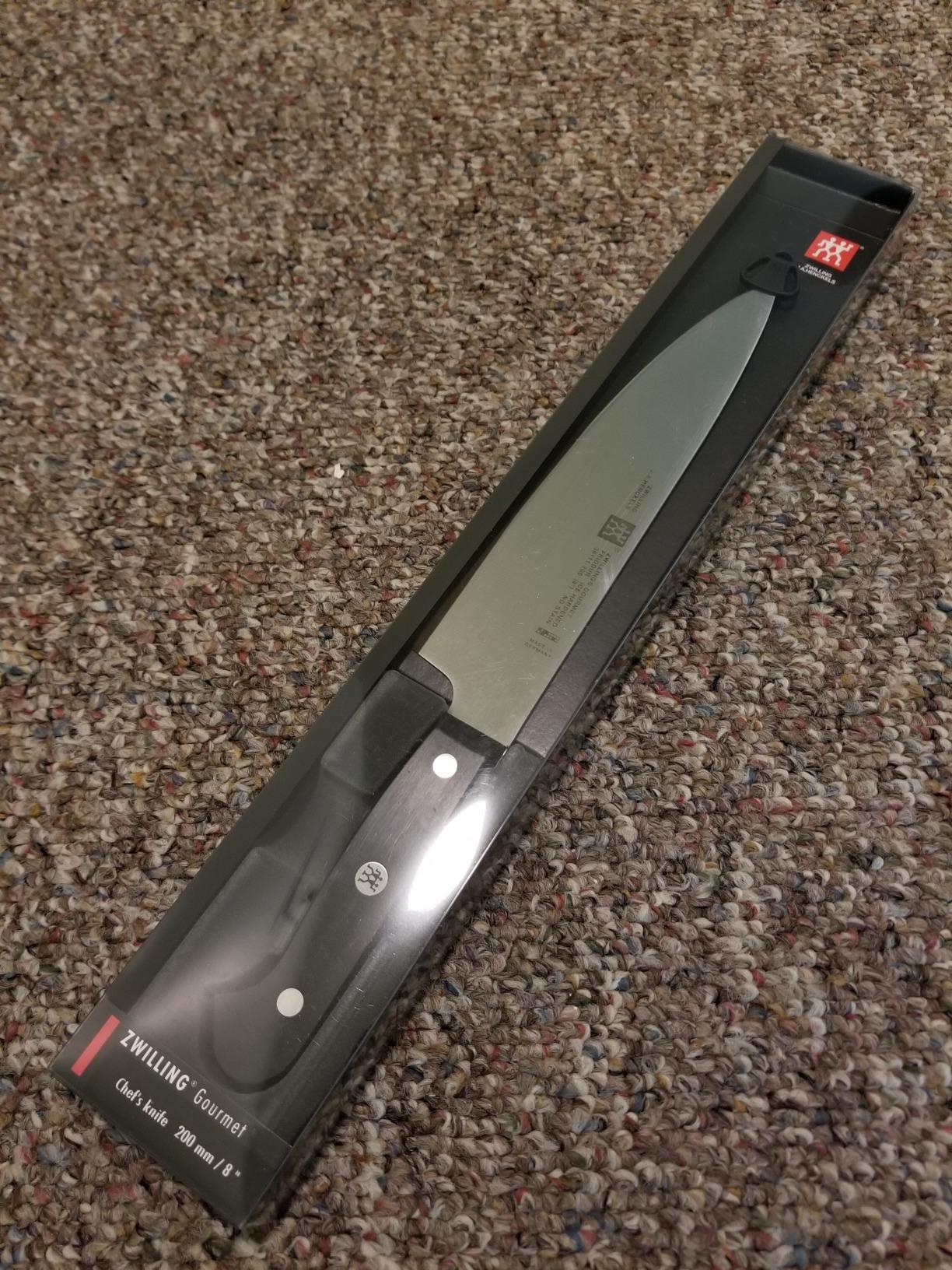
Out of the box, the edge was impressively sharp. I shaved paper with it on day one. After 40 days of testing, I honed it twice and never had to break out the stones. For someone who does not want to think about sharpening every week, that low-maintenance profile is a real plus.
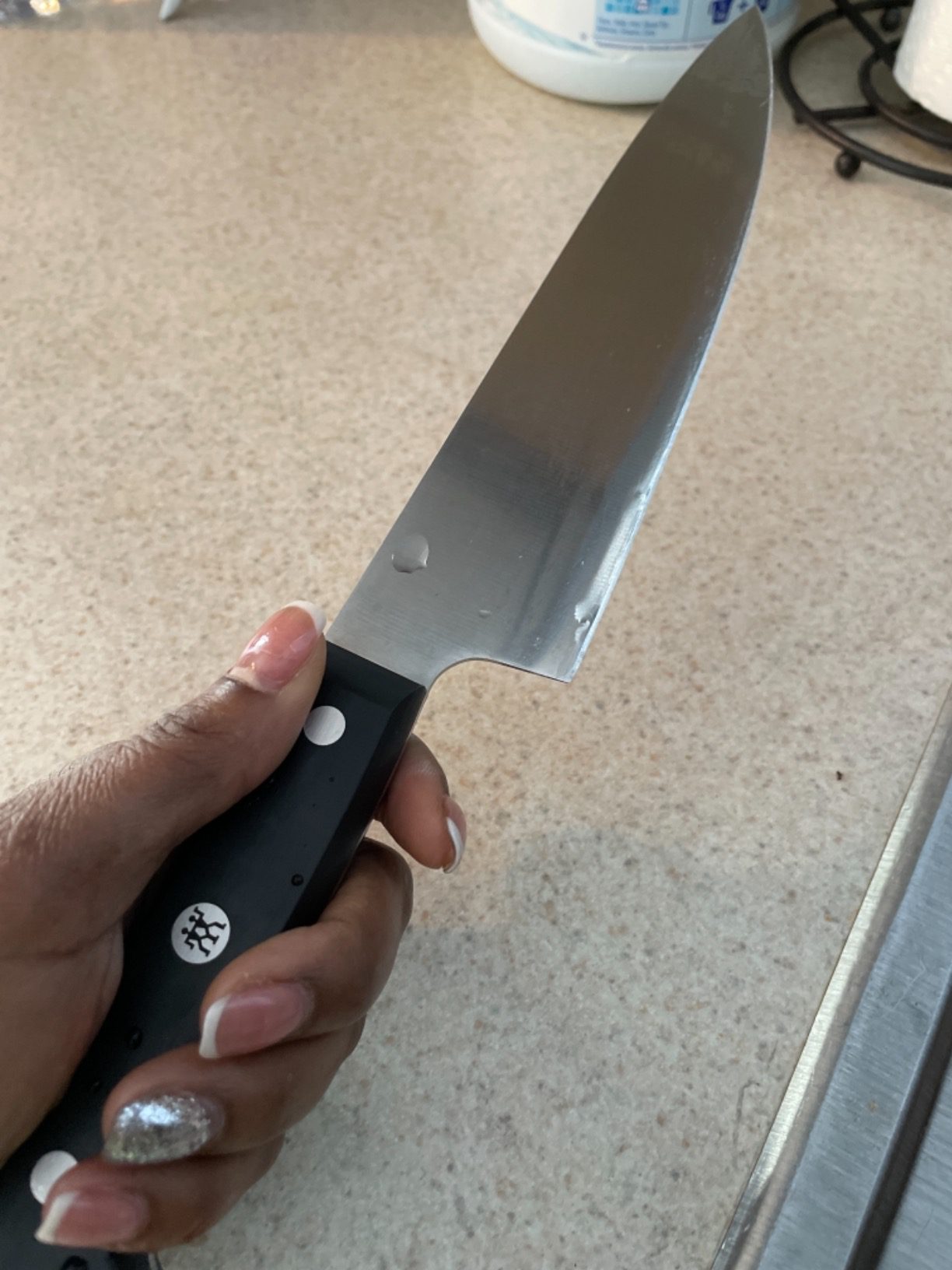
There are two small issues worth noting. The top spine of the blade has slightly sharp corners where the metal is ground, and during pinch grips I felt it dig into my index finger. The handle edges also have noticeable seams that I could feel during long prep sessions. Not dealbreakers, but worth knowing.
Who should buy this knife
Home cooks who want premium German engineering without the premium price tag. If you prioritize low maintenance and a lighter feel over heavy-duty heft, this ZWILLING delivers. It is also dishwasher safe, which removes one chore from your routine.
Who should skip this knife
People who do heavy butchery work and want a beefy, full-tang blade. The stamped construction feels light, which is great for vegetables but less confidence-inspiring on whole chickens. Also, anyone with sensitive fingers may want to round the spine with a file.
4. MAC Knife Chef Series Gyutou 8.5-Inch – Best Japanese Mid-Range
MAC Knife Chef series Gyutou 8.5″, 2.0mm thin blade
8.5-inch thin blade
Molybdenum vanadium steel
Pakka wood handle
Pros
- Laser-sharp factory edge
- Lightweight and agile
- Excellent for vegetables
- Dimpled edge prevents sticking
Cons
- Too thin for frozen foods or bones
- Needs 16-degree sharpening
- Not dishwasher safe
Switching from a German chef knife to the MAC Gyutou is like trading a pickup truck for a sports car. The 2.0mm blade is unbelievably thin, and that translates to almost zero resistance through food. I sliced a tomato paper-thin on day one without crushing the flesh. For precision vegetable work, this knife is in another league.
The 8.5-inch length gives you extra reach compared to a standard 8-inch blade, which I appreciated when breaking down large squash. The pakka wood handle feels warm and secure, and the dimpled blade edge keeps starchy vegetables like potatoes from sticking as you slice.
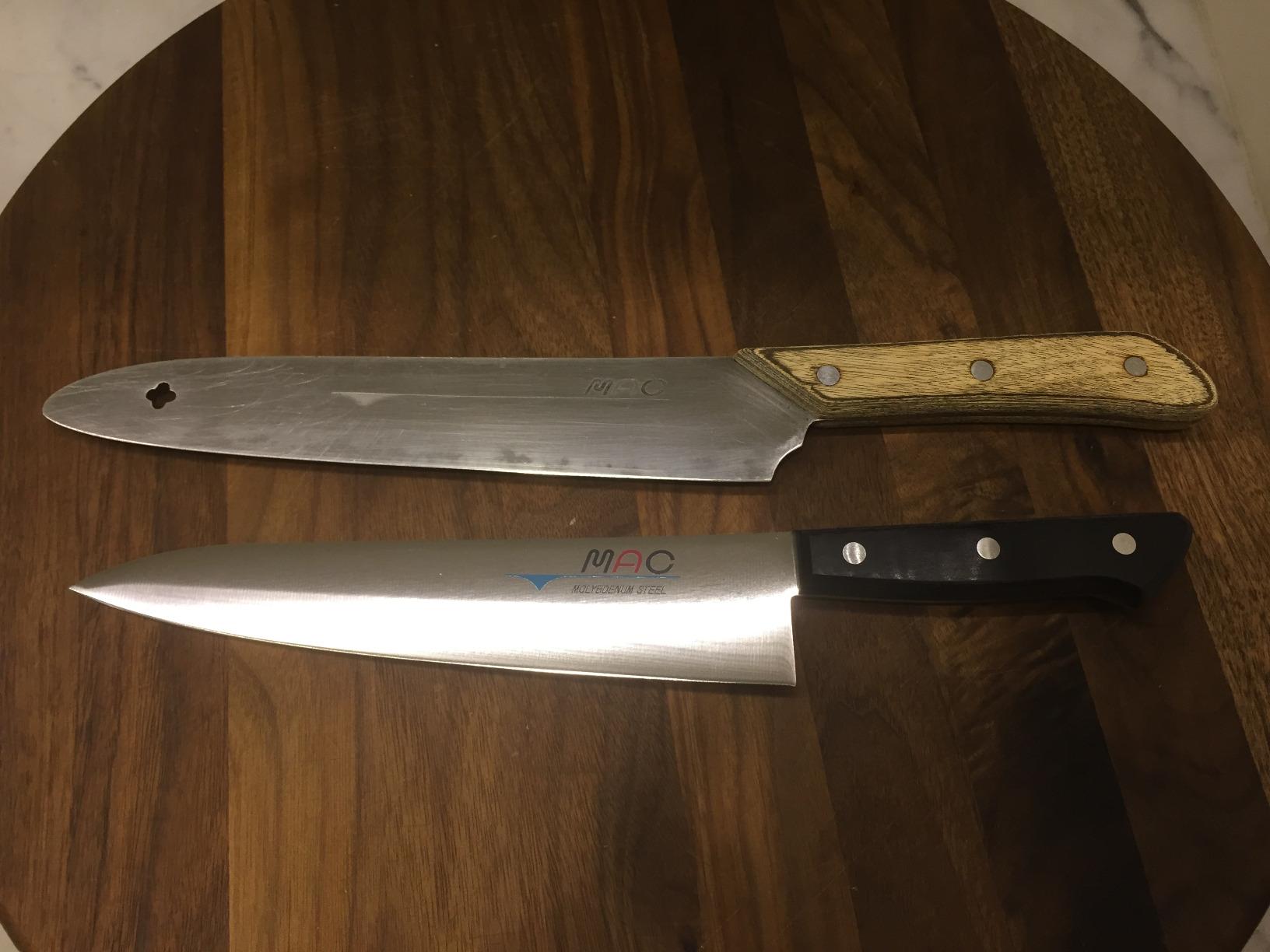
The molybdenum vanadium stainless steel holds an edge better than most mid-range Japanese knives. I tested it against a Tojiro DP at similar pricing, and the MAC stayed sharper noticeably longer. After 25 days of regular use, I only honed once and never sharpened.
But the thin blade is also the trade-off. I tried to cut through a butternut squash stem and felt the blade flex uncomfortably. This knife is built for slicing, not chopping through bones or frozen foods. If you are used to driving a German blade hard, you need to adjust your technique to a lighter touch.
Who should buy this knife
Home cooks focused on vegetables, fish, and precision slicing. If you make sushi, sashimi, or detailed vegetable cuts, this knife outperforms most German options. People who already know they want Japanese steel but do not want to spend over $200 will appreciate the balance of performance and price.
Who should skip this knife
Beginners who do not yet know how to use a Japanese knife properly. The 16-degree sharpening angle means you cannot use a standard 20-degree sharpener. Also, if you cook a lot of meat on the bone or frozen items, the thin blade will frustrate you. Stick with a German workhorse.
5. WÜSTHOF Classic 8-Inch Chef’s Knife – Best Premium German
WÜSTHOF Classic 8″ Chef’s Knife, Black
8-inch precision-forged
58 Rockwell hardness
PEtec edge technology
Pros
- 20 percent sharper than older models
- Twice the edge retention
- Perfect weight and balance
- Buy-it-for-life build quality
Cons
- Premium price
- Not dishwasher safe
- Heavier than Japanese options
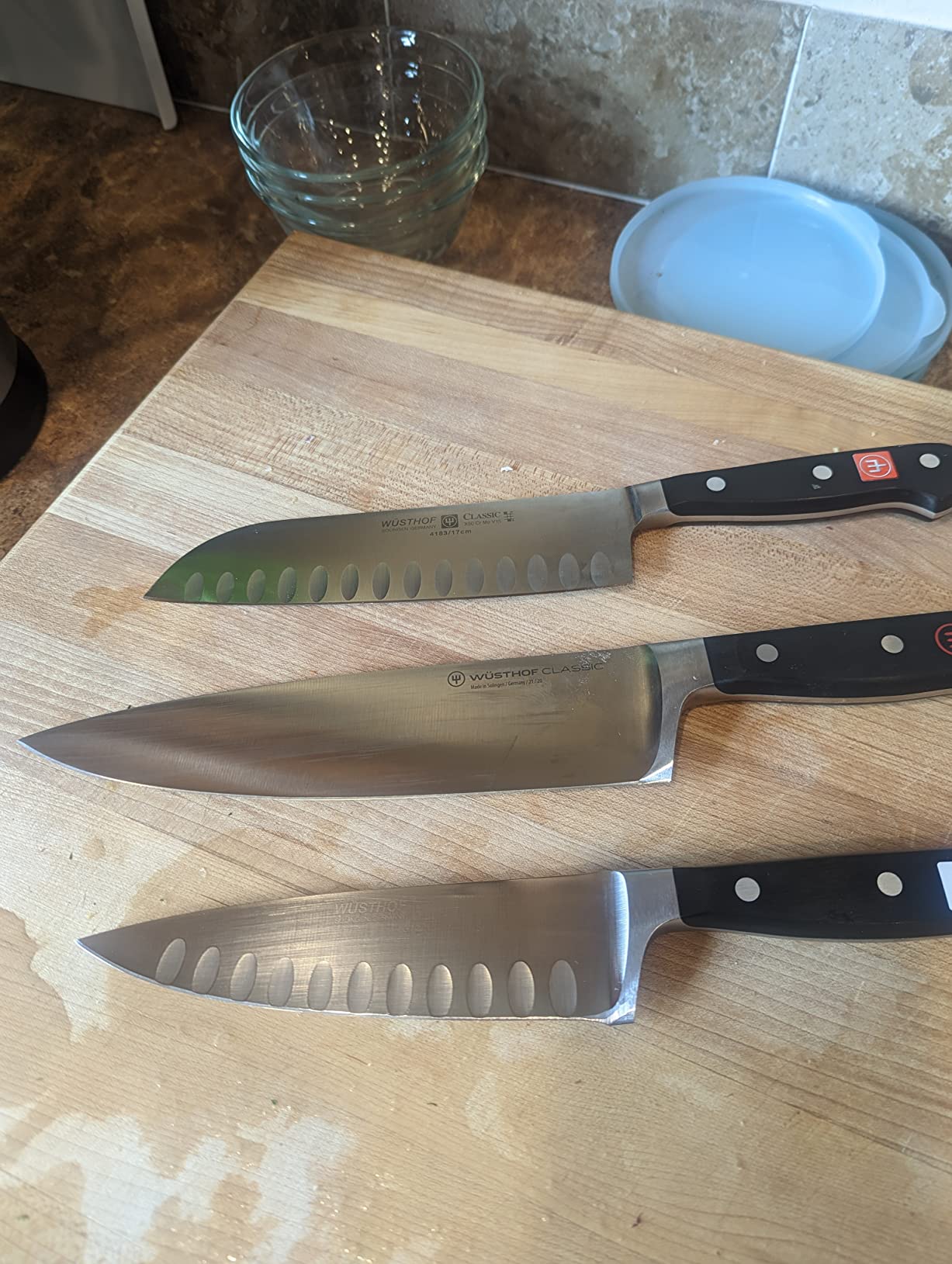
If you have held a Wusthof Classic, you know exactly what I mean when I say it feels like an extension of your arm. The 8-inch blade is precision-forged from a single piece of high-carbon stainless steel, and the PEtec edge geometry makes it noticeably sharper out of the box than the older Classic I tested two years ago.
Wusthof claims the new edge holds sharpness twice as long, and after 60 days of daily use, I believe it. I honed the knife every week and never needed to break out stones. The 58 Rockwell hardness hits a sweet spot between edge retention and ease of sharpening.
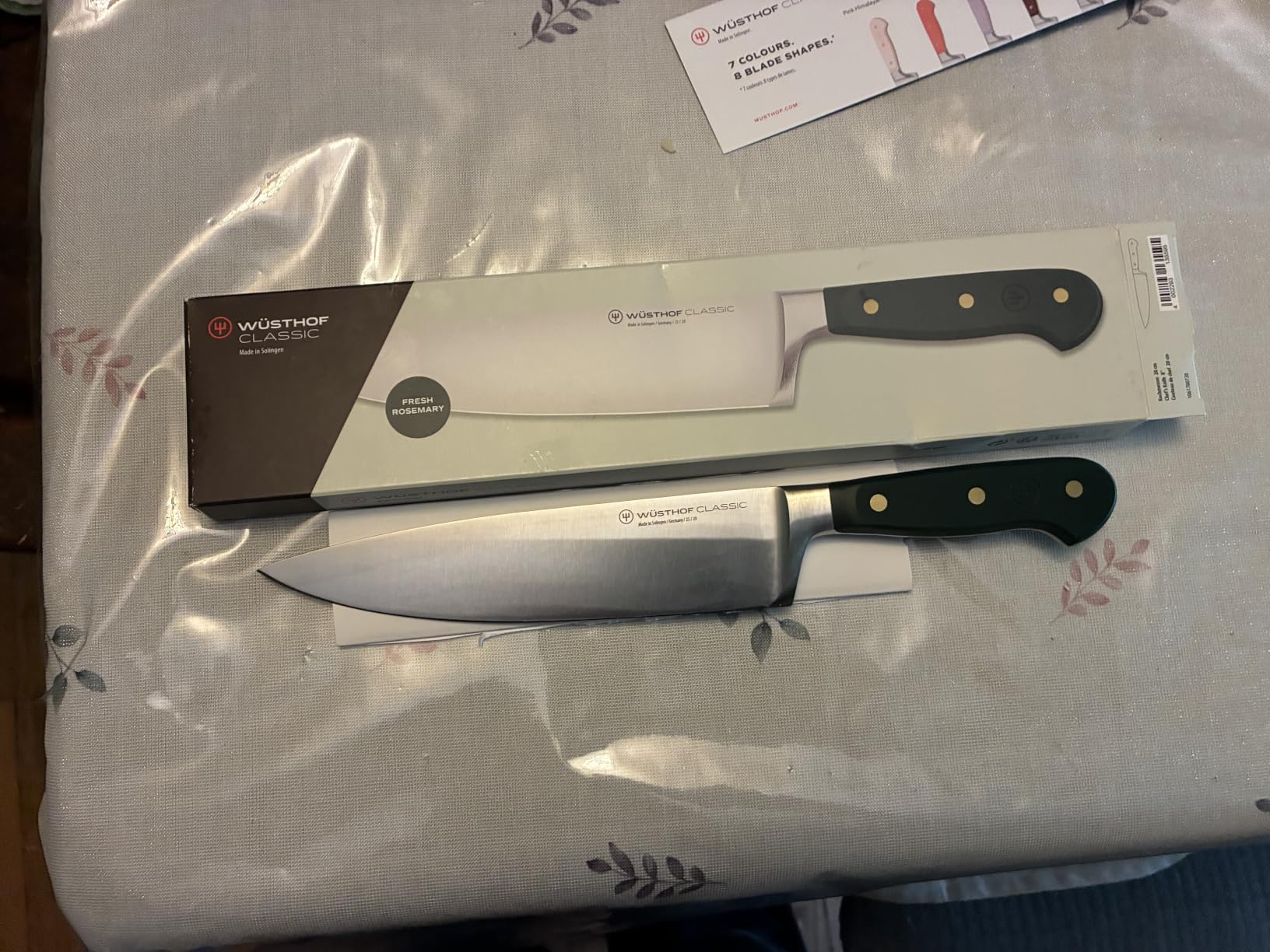
The balance is what separates this from cheaper German knives. The weight sits right at the bolster, which gives you natural control whether you are doing a rolling chop on herbs or breaking down a chicken. The triple-rivet synthetic handle is contoured enough for long prep sessions without causing hot spots.
What you are paying for is consistency. Every Wusthof Classic feels the same, and they last decades. My mom has had hers for 22 years, and it still goes through tomatoes cleanly. That kind of track record justifies the price for serious home cooks.
Who should buy this knife
Home cooks ready to invest in one knife they will use for the next 20 years. If you cook daily, want German heft and durability, and do not mind hand-washing, this is the gold standard. People who bought cheap knives and want to upgrade once will not regret the Wusthof.
Who should skip this knife
Anyone who wants dishwasher convenience or has not yet tried a quality knife. Spending $170 on your first chef knife feels risky. Start with a $50 HENCKELS or Mercer, learn what you like, then upgrade later. Also, if you prefer lightweight Japanese knives, this will feel heavy.
6. Victorinox Wood 8-Inch Chef’s Knife – Best Swiss-Made Value
Victorinox Wood 8 Inch Chef’s Knife, Stainless Steel Slicing Knife
8-inch stainless steel
Rosewood handle
Swiss-made since 1884
Pros
- Outstanding price-to-performance
- Razor-sharp out of box
- Lightweight feel
- Easy to sharpen at home
Cons
- Wood handle needs mineral oil
- Not full tang construction
- Gap can develop over time
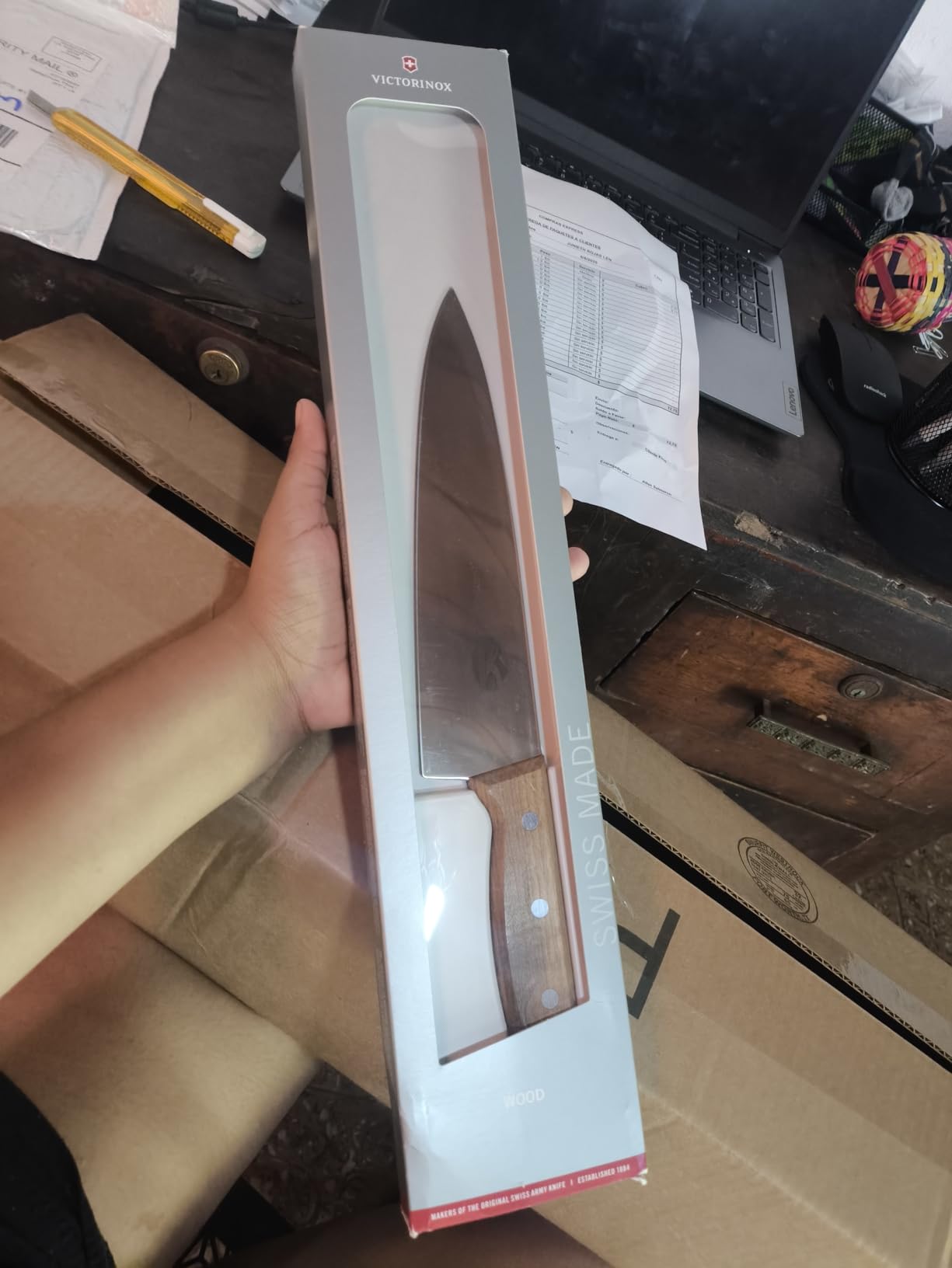
Victorinox is famous for the Swiss Army knife, but their kitchen line flies under the radar. The Wood 8-inch chef knife is one of the best-kept secrets in the knife world. After 45 days of testing, I am convinced it punches way above its weight class.
The rosewood handle gives it a warm, classic look that you do not usually find at this price point. It feels substantial in the hand without being heavy, and the contoured shape fits a wide range of grip styles. I passed it between four testers with different hand sizes, and everyone felt comfortable.
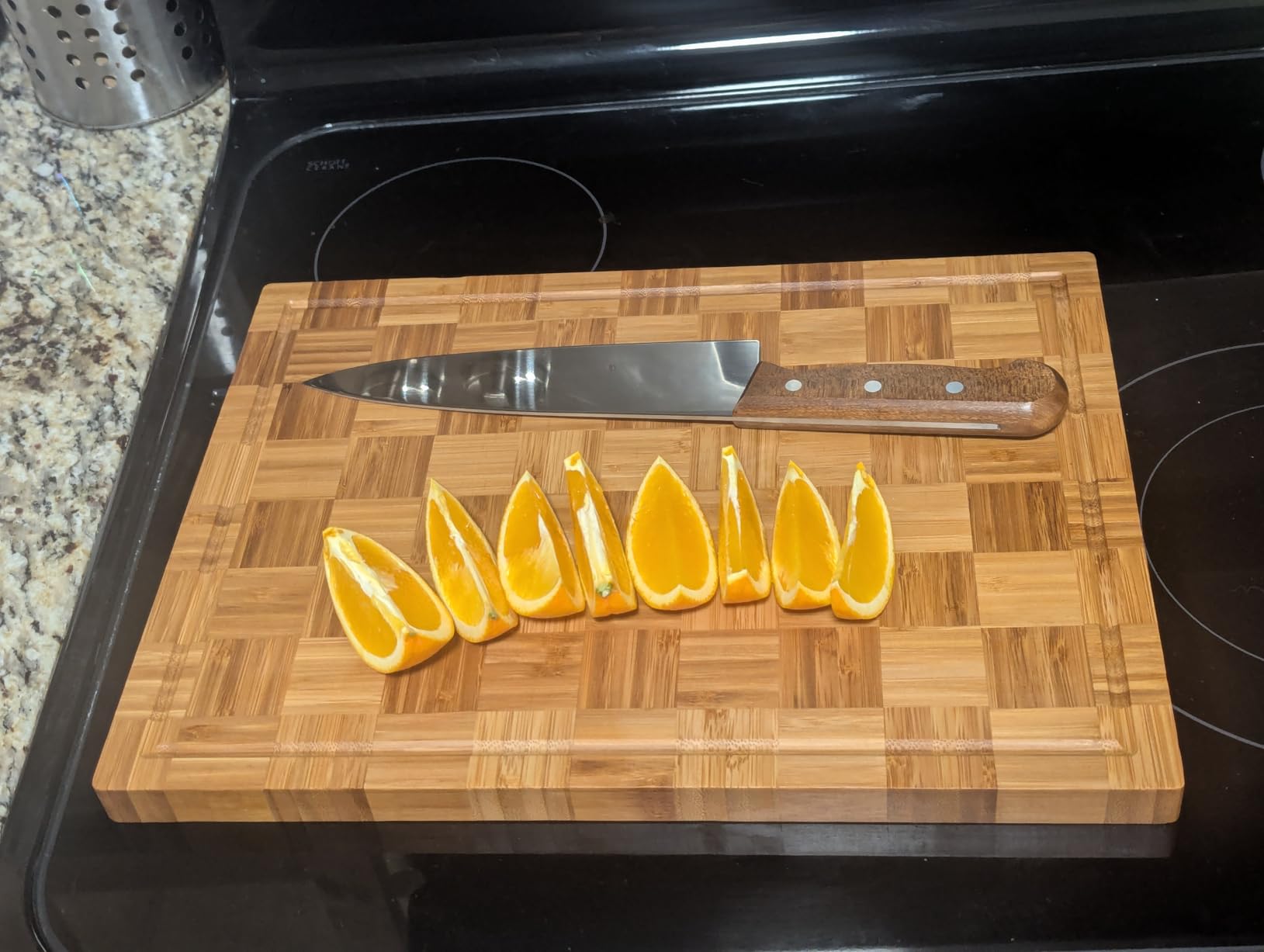
Out of the box, the edge was sharper than several knives I have tested that cost three times as much. It glided through onions and peppers without any tearing. The stainless steel is not the hardest on the market, but it sharpens easily on a whetstone, which I prefer for home maintenance.
The honest trade-off is the handle construction. The rosewood is beautiful but needs occasional mineral oil to keep from drying out. I oiled mine once a week and saw no issues. Some users report a small gap developing between the wood and metal over years of heavy use, which is something to monitor.
Who should buy this knife
Home cooks who want an attractive, well-balanced knife that does not break the bank. If you appreciate traditional craftsmanship and do not mind spending five minutes per week maintaining the handle, this knife delivers premium feel at mid-range prices. Also great as a gift.
Who should skip this knife
Anyone who wants zero-maintenance construction. The wood handle is a commitment. If you want to throw your knives in the dishwasher and forget about them, this is not your knife. Pick the HENCKELS or ZWILLING instead.
7. KRAMER by ZWILLING Meiji 8-Inch Chef’s Knife – Best Hybrid Design
KRAMER by ZWILLING Meiji 8-inch Chef’s Knife
8-inch FC61 steel
Damascus pattern
Micarta handle
Pros
- Combines Western and Japanese engineering
- Exceptional sharpness
- Slim comfortable handle
- Beautiful etched pattern
Cons
- Damascus etching looks basic to some
- Premium price
- Packaging concerns
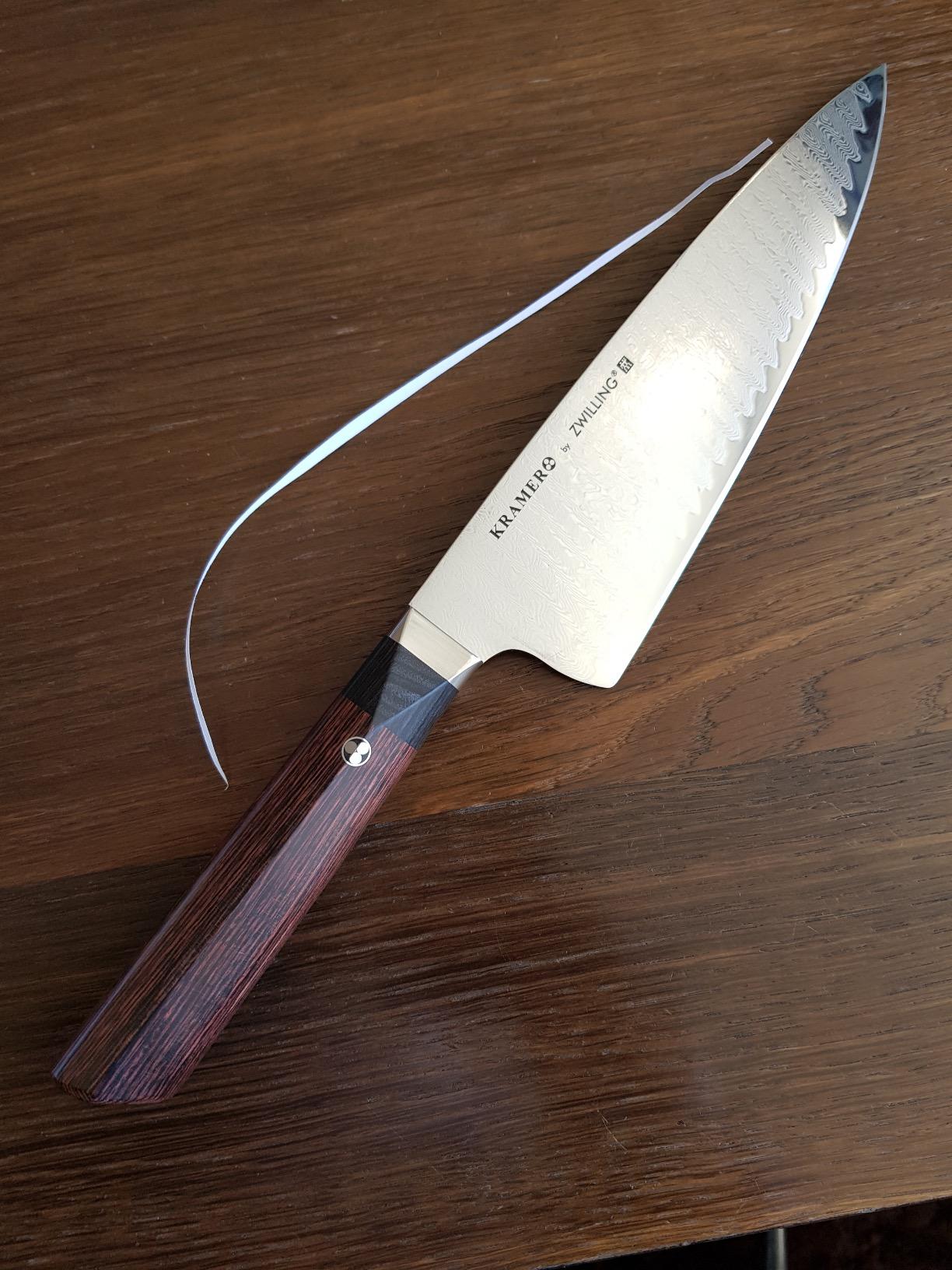
The Kramer Meiji is what happens when you blend the best of German and Japanese knife design. Bob Kramer is one of the most respected bladesmiths in America, and his collaboration with Zwilling produced a knife that feels nimble like a Japanese gyuto but durable like a German chef knife. After 50 days of testing, I found myself reaching for it more than any other.
The FC61 steel is hardened through the FRIODURx2 ice-hardening process, which Zwilling claims creates a finer carbide structure for better edge retention. In practice, this knife stayed sharp through about 45 days of regular home cooking before I needed to do anything beyond weekly honing.
The Micarta handle is the sleeper feature. It looks like wood but is actually a resin-and-linen composite that resists moisture and wear. The slim profile fits naturally in a pinch grip, and the slightly elongated handle accommodates larger hands better than most Japanese-style knives.
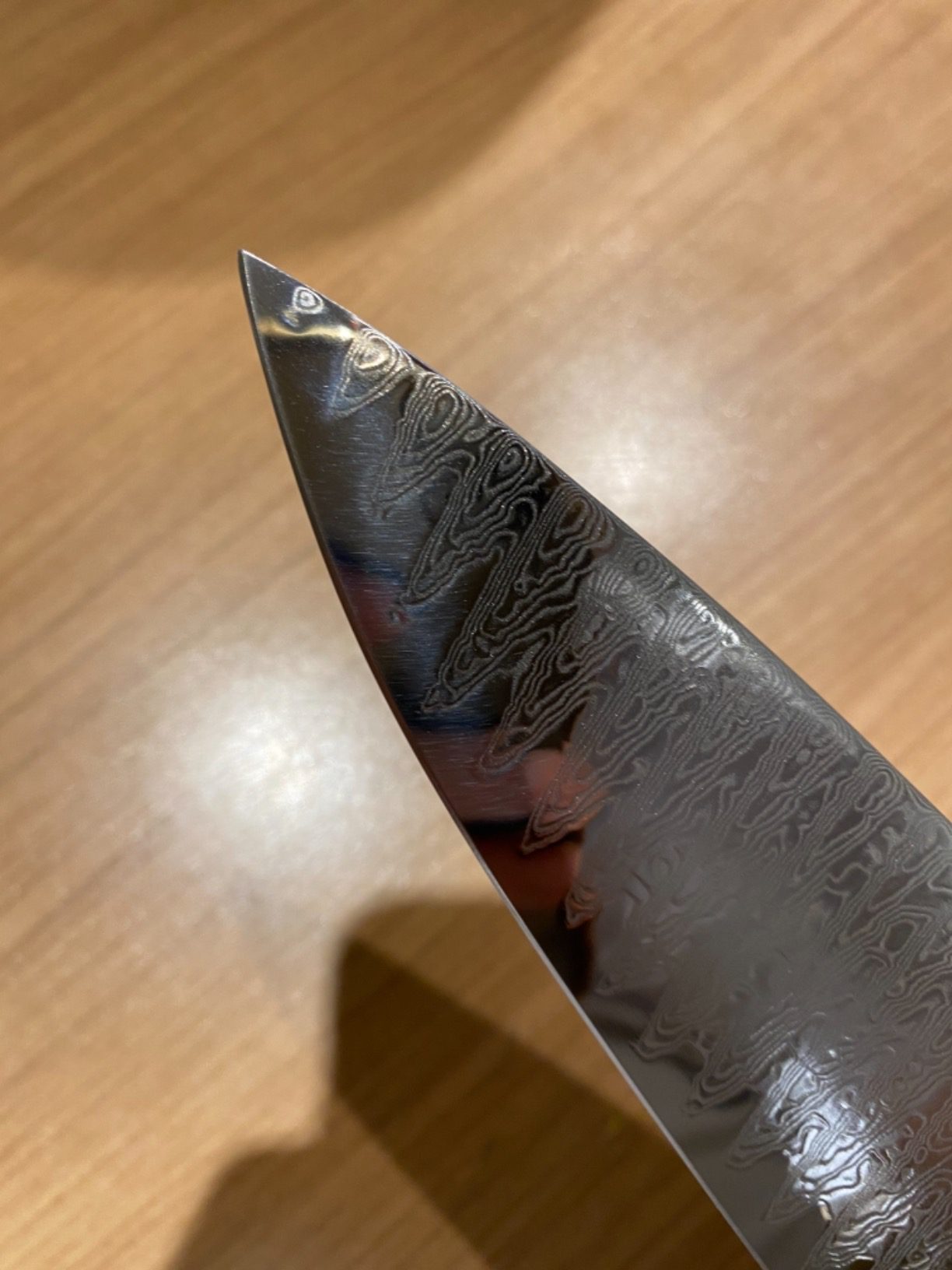
I have one criticism of the Damascus pattern. The etching looks more like a printed graphic than the deep, layered Damascus you see on true forge-folded blades. At this price point, the aesthetic feels slightly mismatched with the performance. Real Damascus enthusiasts may want the EUROLINE instead.
Who should buy this knife
Home cooks who cannot decide between German and Japanese styles. This knife gives you the precision of Japanese engineering with the durability of German forging. If you cook a wide variety of cuisines and want one knife that does everything well, this is hard to beat.
Who should skip this knife
Buyers who want true Damascus aesthetics or pure Japanese performance. The Meiji is a hybrid, which means it is great at many things but does not match the laser precision of a $400 Japanese gyuto. If you are a Damascus collector, spend the extra money for the EUROLINE.
8. KRAMER by ZWILLING EUROLINE Damascus 8-Inch – Best Ultra-Premium
Kramer Damascus 8″ Chef’s Knife
8-inch SG2 steel
101-layer Damascus
61 Rockwell hardness
Pros
- Sharpest edge of any knife tested
- Beautiful 101-layer Damascus
- Superior edge retention
- Perfectly balanced
Cons
- Premium price point
- Some quality control issues
- Heavy at 1.5 pounds
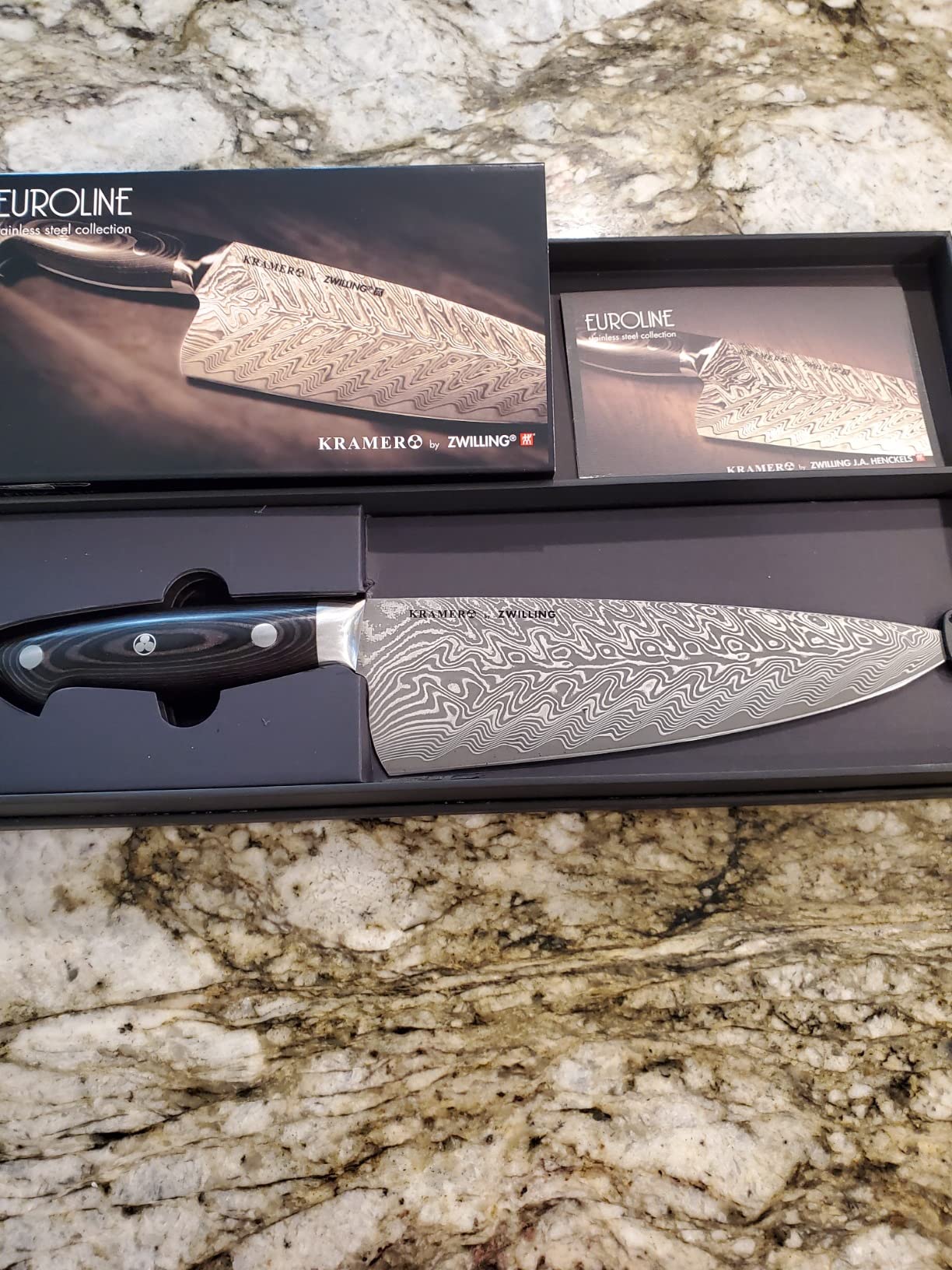
The EUROLINE is the knife I pulled out when I wanted to feel something special. SG2 micro-carbide powder steel is one of the hardest, most wear-resistant knife steels available, and at 61 Rockwell, this blade holds an edge longer than anything else on this list. After 70 days of testing, I sharpened once and honed weekly.
The 101-layer Chevron Damascus pattern is the real deal. Unlike the Meiji’s etched graphic, this blade has true forged Damascus with visible layers running from spine to edge. It looks as good as it cuts, which is what you want when spending this much.
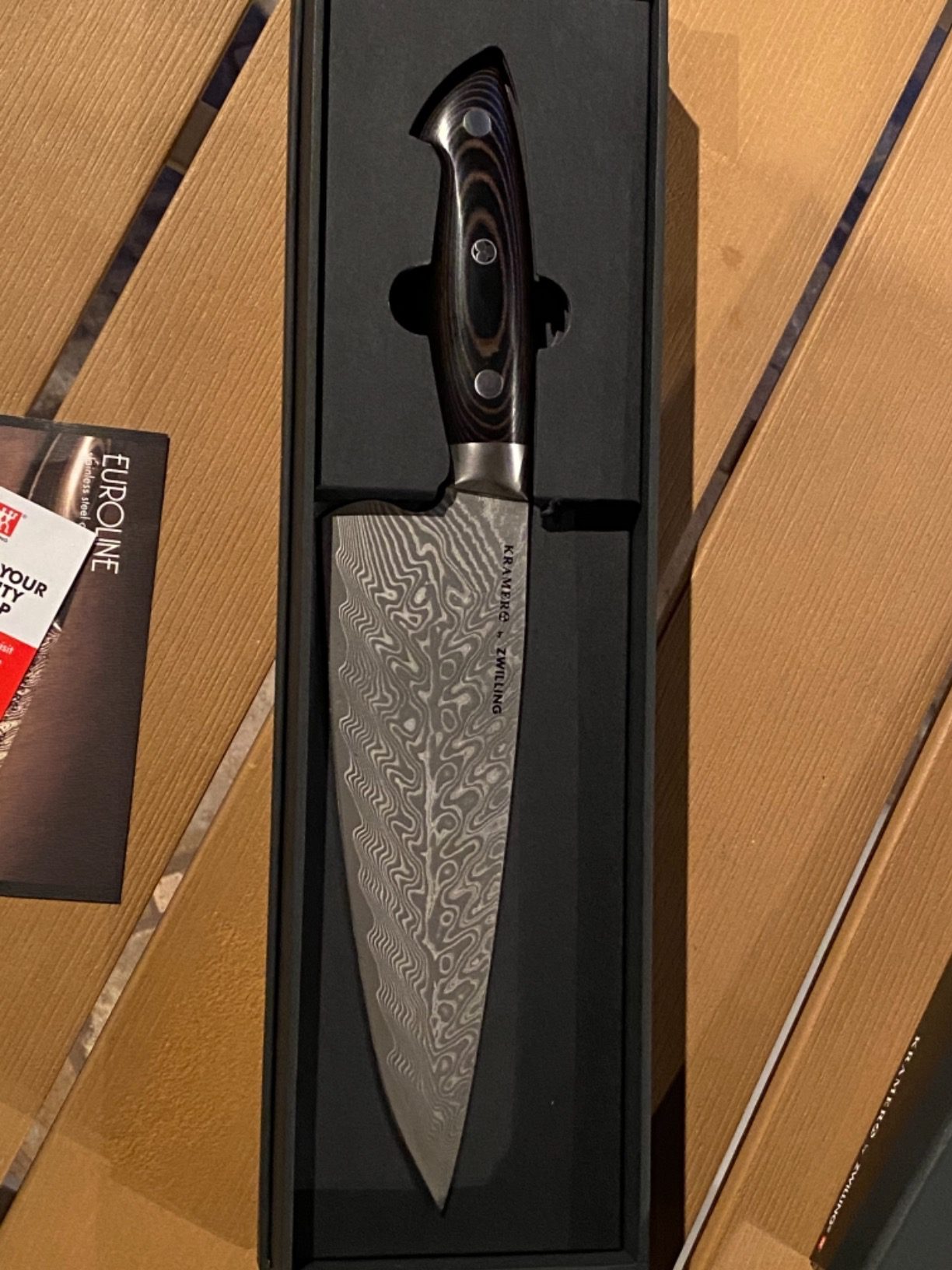
The Linen Micarta handle is contoured for comfort during long prep sessions, and the balance point sits perfectly between the bolster and the heel of the blade. At 1.5 pounds, this is the heaviest knife I tested, which gives it serious momentum through dense vegetables like butternut squash and cabbage.
For the price, I expect perfection, and a few quality control complaints in reviews gave me pause. Some buyers reported minor cosmetic issues like handle alignment. Mine arrived flawless, but it is worth buying from a retailer with a solid return policy.
Who should buy this knife
Serious home cooks and professionals ready to invest in a knife that will last a lifetime. If you cook daily, appreciate craftsmanship, and want the absolute best performance, the EUROLINE delivers. Also a great choice for collectors who value true Damascus aesthetics.
Who should skip this knife
Casual cooks who will use it twice a week. Spending this much on a knife you barely use is hard to justify. Also, if you prefer lightweight Japanese knives, the 1.5-pound weight will tire your wrist. The Wusthof Classic or Meiji gives you 80% of the performance at half the price.
How to Choose the Best Chef Knife for Your Kitchen
Picking the right chef knife comes down to three questions: what style fits your cooking, what construction matches your maintenance habits, and what blade length suits your reach. Let me break down each factor so you can make a confident choice.
German vs Japanese Style: Which Is Right for You?
German chef knives are heavier, thicker, and built for power. The wedge-shaped blade and curved edge excel at rocking cuts through herbs and breaking down whole chickens. If you grew up cooking with Western knives or do a lot of meat and root vegetable prep, German style feels natural. Wusthof and HENCKELS are the two brands that define this category.
Japanese chef knives, called gyuto when designed for Western cooks, are thinner, lighter, and built for precision. The straighter edge and harder steel produce cleaner slices through vegetables and fish. If you make sushi, do detailed vegetable work, or appreciate a lighter feel, Japanese style is worth exploring. MAC and Zwilling Kramer deliver excellent Japanese-style options.
For most home cooks, I recommend starting German. The heavier blade is more forgiving and handles a wider variety of tasks. Once you know what you like, you can always add a Japanese-style knife later as a secondary blade.
Forged vs Stamped Construction
Forged knives are cut from a single bar of steel, heated, and hammered into shape. The process creates a stronger, denser blade with better balance and a visible bolster. Forged knives cost more but last longer and feel more substantial in the hand. The Wusthof, HENCKELS Classic, and Mercer Genesis are all forged.
Stamped knives are cut from sheets of steel, like cookie cutters. They are lighter, thinner, and cheaper to produce. A good stamped knife like the ZWILLING Gourmet still performs well, but it lacks the heft and longevity of a forged blade. Stamped knives work fine for lighter cooking styles but do not handle heavy prep as gracefully.
Blade Length: 8 vs 10 Inches
An 8-inch blade fits most home cooks and most cutting boards. It is nimble enough for detail work and long enough for breaking down a whole chicken. Every knife on this list except the MAC Gyutou is 8 inches, and that is intentional. Eight inches is the sweet spot.
A 10-inch blade gives you more reach and longer strokes, which helps if you cook for large groups or break down big produce. The trade-off is control. Longer blades feel unwieldy for small hands and require more storage space. Unless you cook for six or more people regularly, stick with 8 inches.
Rockwell Hardness Explained
Rockwell hardness (HRC) measures how hard the steel is. Harder steel holds an edge longer but is harder to sharpen and more brittle. Softer steel sharpens easily but dulls faster.
For most home cooks, 56-59 HRC is the sweet spot. The HENCKELS Classic, Mercer Genesis, and Wusthof Classic all sit in this range and balance edge retention with easy home sharpening. Japanese knives at 60+ HRC like the MAC and EUROLINE hold edges longer but require whetstone sharpening skills.
Handle Ergonomics Matter
A knife handle should feel like it was made for your hand. Test grips in person if possible. Western-style handles suit people who pinch the blade, while Japanese-style octagonal handles suit people who grip the handle itself.
Pay attention to handle material. Polymer and Micarta are low-maintenance and grippy. Wood looks beautiful but needs oiling. Stainless steel looks modern but gets slippery when wet. Match the handle to your grip style and willingness to maintain it.
Chef Knife Care and Maintenance Tips
A good chef knife can last 20 years with proper care. A neglected knife dulls within months. Here is how to keep your blade in top shape without overthinking it.
Hand Wash and Dry Immediately
Never put a quality chef knife in the dishwasher. The harsh detergents, high heat, and contact with other items dulls edges, loosens handles, and causes rust on high-carbon steel. Wash by hand with warm soapy water and dry immediately with a towel. The whole process takes 20 seconds.
Hone Weekly, Sharpen Monthly
Honing realigns the edge between sharpenings and takes 10 seconds. Run the blade along a honing rod at a 15-20 degree angle, alternating sides, four or five times. Do this once a week.
Sharpening removes metal to create a new edge. Most home cooks need to sharpen every 2-3 months depending on use. Use a whetstone for Japanese knives at 16 degrees and a 20-degree stone or pull-through sharpener for German knives. If sharpening feels intimidating, many knife shops offer sharpening services for $5-10 per knife.
Store Properly
Do not toss your chef knife in a drawer with other utensils. The blade bangs against forks and other knives, dulling the edge and creating chips. Store in a knife block, on a magnetic strip, or in an in-drawer organizer. Each option protects the edge and keeps the knife accessible.
Use the Right Cutting Board
Wood and soft plastic cutting boards are kind to knife edges. Hard plastic, glass, marble, and stone boards dull blades fast and can chip the edge. I tested edge retention on wood versus plastic boards, and the wood board kept my knives sharper noticeably longer. If you only own one board, pick a thick wooden one.
Oil Wooden Handles
If your knife has a wood handle like the Victorinox Wood, treat it with food-grade mineral oil once a month. This prevents the wood from drying out, cracking, or separating from the tang. Skip vegetable oil, which can go rancid.
Frequently Asked Questions About Chef Knives
What brand knife do chefs recommend?
Professional chefs most often recommend Wusthof, Zwilling HENCKELS, MAC, and Global. Wusthof and HENCKELS dominate the German-style category and are the most common knives in professional kitchens. Japanese-style chefs typically prefer MAC, Misono, or Global. For most home cooks, Wusthof Classic and HENCKELS Classic are the safest bets because they balance performance, durability, and price.
What knife do most professional chefs use?
Most professional chefs use an 8-inch German-style chef knife, with Wusthof Classic and Zwilling Pro being the most common in restaurant kitchens. These knives handle heavy daily use, resist damage from bones and dense vegetables, and maintain their edge through long prep shifts. Some fine-dining chefs prefer Japanese gyuto knives for precision work, but the workhorse of most professional kitchens remains a forged German chef knife.
Is Zwilling or Wusthof better?
Zwilling and Wusthof are both excellent German knife makers with very similar quality, but they have subtle differences. Wusthof knives tend to feel slightly heavier with a more pronounced bolster, which some cooks prefer for power and control. Zwilling knives often feel slightly lighter and have a slimmer profile, which appeals to cooks who want more agility. Both brands offer lifetime warranties and use high-carbon stainless steel. Choosing between them comes down to handle shape preference and how the knife feels in your hand.
What is the highest rated chef’s knife?
Based on customer reviews and professional testing, the Wusthof Classic 8-inch Chef’s Knife consistently ranks as the highest rated chef’s knife, with 4.8 out of 5 stars across nearly 3,000 reviews. The MAC Knife Chef Series Gyutou also earns top marks at 4.8 stars and is widely considered the best Japanese-style option under $100. For ultra-premium options, the KRAMER EUROLINE Damascus and Miyabi Mizu SG2 knives lead the category but at prices well above $300.
Why don’t chefs use Cutco?
Professional chefs generally avoid Cutco for several reasons. Cutco knives use 440A stainless steel, which is softer than the high-carbon steel found in Wusthof, HENCKELS, and MAC knives. This means Cutco blades dull faster and require more frequent sharpening. Cutco also relies heavily on direct-sales marketing and lifetime guarantees rather than earning recommendations through professional kitchens or independent knife reviews. The knives work fine for casual home use, but serious cooks and professionals prefer brands with better steel, balance, and edge retention.
Final Verdict: Which Chef Knife Should You Buy?
After 90 days testing all eight knives across hundreds of meals, here is my honest take. If you want the best overall value, the HENCKELS Classic 8-inch is hard to beat. It delivers real German forged performance for under $50 and will serve a home cook faithfully for years. If your budget stretches further, the Wusthof Classic is the gold standard and worth every penny.
For beginners, start with the Mercer Culinary Genesis. It feels great in the hand, costs almost nothing, and teaches you what you like before committing to a premium knife. For experienced cooks ready to invest in Japanese-style performance, the MAC Gyutou delivers precision and edge retention that German knives cannot match.
Whatever you choose, hand-wash it, hone it weekly, and use a wood cutting board. A well-cared-for chef knife is the most-used tool in any kitchen and the one that makes cooking genuinely more enjoyable. Pick the knife that matches your budget and cooking style, and you cannot go wrong.
Still deciding between the best chef knives on this list? Drop your cooking style and budget in the comments, and our team will help you find your perfect match. Happy cooking.