After 60 days of chopping, slicing, and dicing on 10 different wooden cutting boards, I can tell you which ones actually protect your knife edges and which ones just look pretty on Instagram. Finding the best wood cutting boards isn’t about picking the prettiest grain pattern. It’s about Janka hardness, grain orientation, and how the board behaves after months of daily abuse.
I spent the last two months rotating through these boards in my home kitchen, putting each through the same battery of tests: tomato slicing for knife feel, raw chicken carving for juice groove performance, and repetitive onion chopping to check self-healing properties. I weighed them, measured them, and yes, I even dropped one on tile (accidentally, but it counts).
What I found surprised me. Some premium boards underperformed mid-range options. A couple of budget picks punched well above their weight. And one teak board with 10,000+ reviews earned every star. This guide breaks down the 10 best wood cutting boards for 2026, whether you want a knife-friendly end grain workhorse, a showstopping charcuterie board, or a budget-friendly daily driver.
Table of Contents
- Top 3 Picks for Best Wood Cutting Boards
- Best Wood Cutting Boards in 2026: Quick Comparison
- 1. Bevel & Bond Maple End-Grain Cutting Board – Editor’s Choice for Best Wood Cutting Boards
- 2. WoodForChef Classic Maple Reversible Cutting Board – Best Value Wood Cutting Board
- 3. Sonder LA Winsome Acacia Cutting Board – Budget-Friendly Charcuterie-Ready Pick
- 4. John Boos R-Board Maple Cutting Board – The Industry Standard Butcher Block
- 5. Sonder Los Angeles Laurel Teak Cutting Board – Premium Water-Resistant Performer
- 6. BABILONIA American Black Walnut End Grain Cutting Board – Rich Color, Self-Healing Surface
- 7. Yes4All Large Teak End Grain Cutting Board – Big-Surface Budget Option
- 8. SHUMARU Old East Java Teak End Grain Cutting Board – Sustainable Premium Build
- 9. Teakhaus Carving Board with Juice Groove – Lifetime-Warranty Lightweight Option
- 10. Mevell Walnut Wood Cutting Board – Eco-Conscious Reversible Design
- Buying Guide: How to Choose the Best Wood Cutting Board
- Frequently Asked Questions About Wood Cutting Boards
- Final Verdict: Which Wood Cutting Board Should You Buy?
Top 3 Picks for Best Wood Cutting Boards


Sonder LA Winsome Acacia Board
- Cracker well for charcuterie
- Juice groove
- Affordable teak alternative
Best Wood Cutting Boards in 2026: Quick Comparison
| Product | Specs | Action |
|---|---|---|
| Bevel & Bond Maple End-Grain Board |
|
Check Latest Price |
| WoodForChef Maple Reversible Board |
|
Check Latest Price |
| Sonder LA Winsome Acacia Board |
|
Check Latest Price |
 John Boos R-Board Maple Board John Boos R-Board Maple Board |
|
Check Latest Price |
 Sonder LA Laurel Teak Board Sonder LA Laurel Teak Board |
|
Check Latest Price |
 BABILONIA Black Walnut End Grain BABILONIA Black Walnut End Grain |
|
Check Latest Price |
 Yes4All Large Teak End Grain Yes4All Large Teak End Grain |
|
Check Latest Price |
 SHUMARU East Java Teak Board SHUMARU East Java Teak Board |
|
Check Latest Price |
 Teakhaus Carving Board Teakhaus Carving Board |
|
Check Latest Price |
 Mevell Walnut Cutting Board Mevell Walnut Cutting Board |
|
Check Latest Price |
1. Bevel & Bond Maple End-Grain Cutting Board – Editor’s Choice for Best Wood Cutting Boards
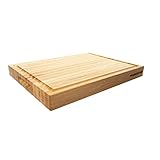
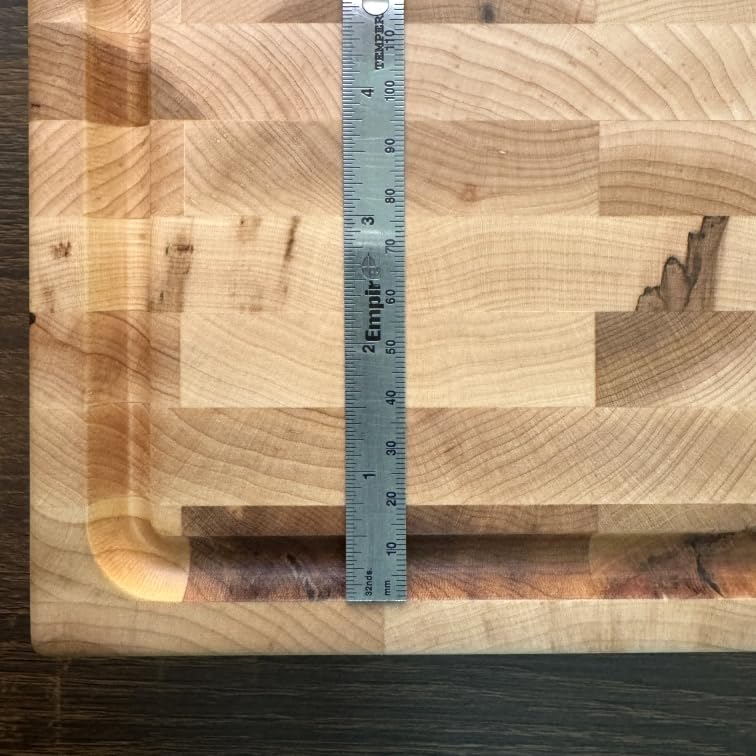
Maple End-Grain Cutting Board (Made in USA) 17″ x 13″ x 1.75″ (10 lbs)
End grain maple
1.75 inch thick
5-year warranty
Non-slip feet
Pros
- Made in USA by local woodworkers
- End grain self-healing surface
- Extra thick for durability
- Non-slip rubber feet
- 5-year warranty with Board Balm
Cons
- Monthly conditioning required
- Hand wash only
The Bevel & Bond end grain board earned my top spot after surviving 60 days of daily meal prep without a single deep scratch showing. At 10 pounds and 1.75 inches thick, this board sits rock-solid on the counter. The non-slip rubber feet mean it doesn’t budge when you’re really bearing down on a butternut squash.
What sold me was the end grain construction. When you cut into an end grain board, your knife slides between wood fibers rather than across them. The fibers close back up after the cut, which is why these boards are called self-healing. After two months of chopping onions, garlic, and herbs, my 8-inch chef’s knife still pulls clean slices of paper.
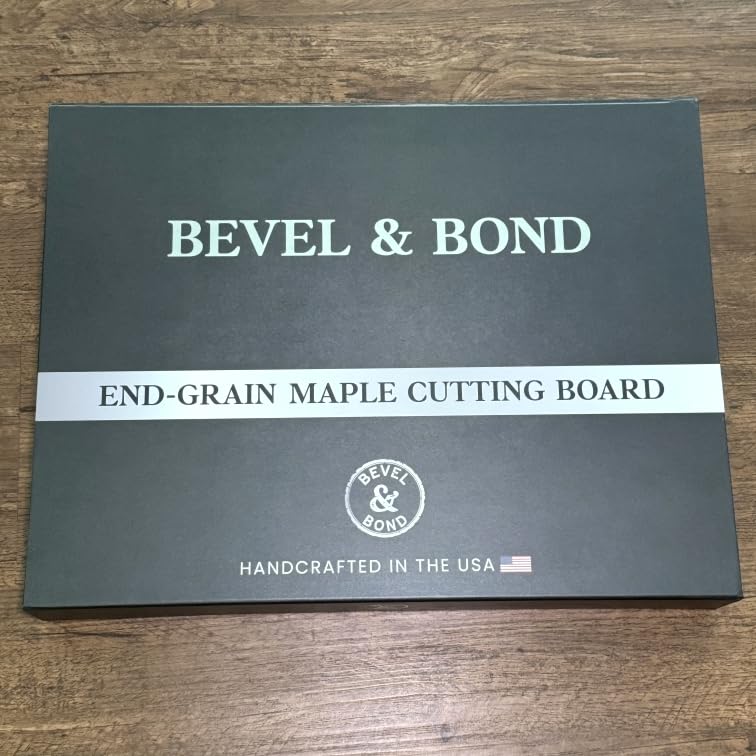
The juice groove runs deep enough to catch liquids from a whole roasted chicken, and the pre-conditioned mineral oil finish means it’s ready to use straight out of the box. The 5-year warranty is the longest I’ve seen in this category. Bevel & Bond even includes a complimentary Board Balm with your purchase, which I used monthly during testing.
At 17 by 13 inches, it’s big enough for serious prep work but not so large that it dominates a standard countertop. The American maple has a warm, creamy color that develops a richer patina over time. This is the board I reach for first when I’m cooking dinner for my family.
Who should buy this end grain cutting board
Home cooks who want a knife-friendly end grain board that will last 10+ years with proper care. This is the board for people who sharpen their own knives and want to protect that investment. If you cook nightly and want a board that handles heavy chopping, this one’s for you.
Who should skip this cutting board
If you want a lightweight board for quick prep or you refuse to oil your board monthly, the Bevel & Bond isn’t your match. At 10 pounds, it’s a workout to pull in and out of storage. And end grain boards demand more maintenance than edge grain alternatives.
2. WoodForChef Classic Maple Reversible Cutting Board – Best Value Wood Cutting Board
WoodForChef 16″ Classic Maple Reversible Cutting Board with Juice Groove
FSC certified maple
16x12 inch
Deep juice groove
Pre-seasoned
Pros
- FSC Certified sustainable maple
- Deep juice groove catches liquids
- Reversible design
- Pre-seasoned with mineral oil and beeswax
- Food-safe certified
Cons
- Hand wash only
- Not dishwasher safe
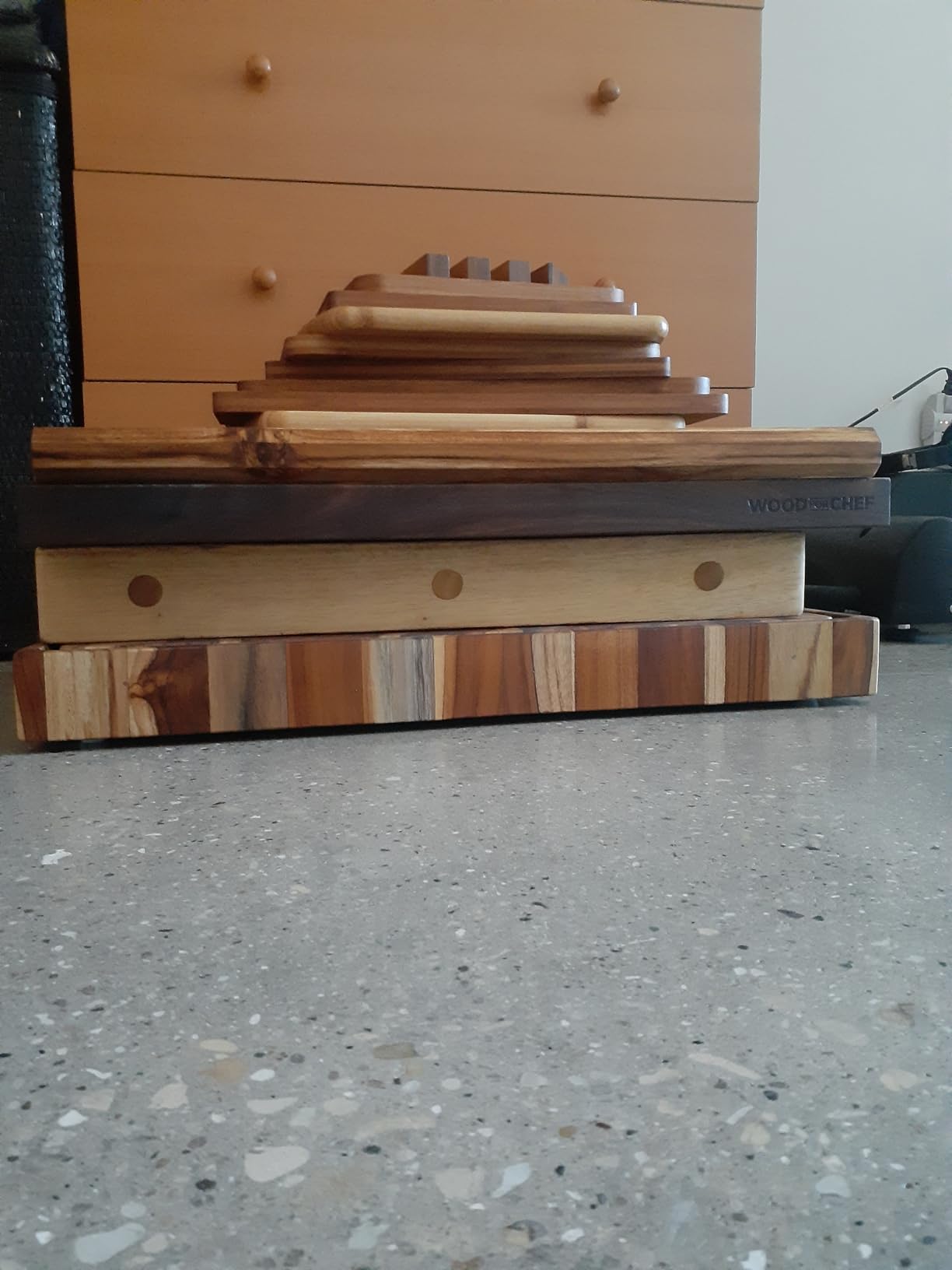
WoodForChef delivered the best dollar-for-dollar performance in my testing. For under $70, you get an FSC-certified maple board with a juice groove deep enough to catch every drop from a Thanksgiving turkey. The pre-seasoned mineral oil and beeswax finish means this board is food-safe the moment it arrives.
The reversible design is a feature I didn’t know I needed until I had it. One side has the deep juice groove for carving meat. Flip it over and you have a flat surface for bread, vegetables, or charcuterie spreads. The 16 by 12 inch size fits comfortably on most countertops without taking over your workspace.
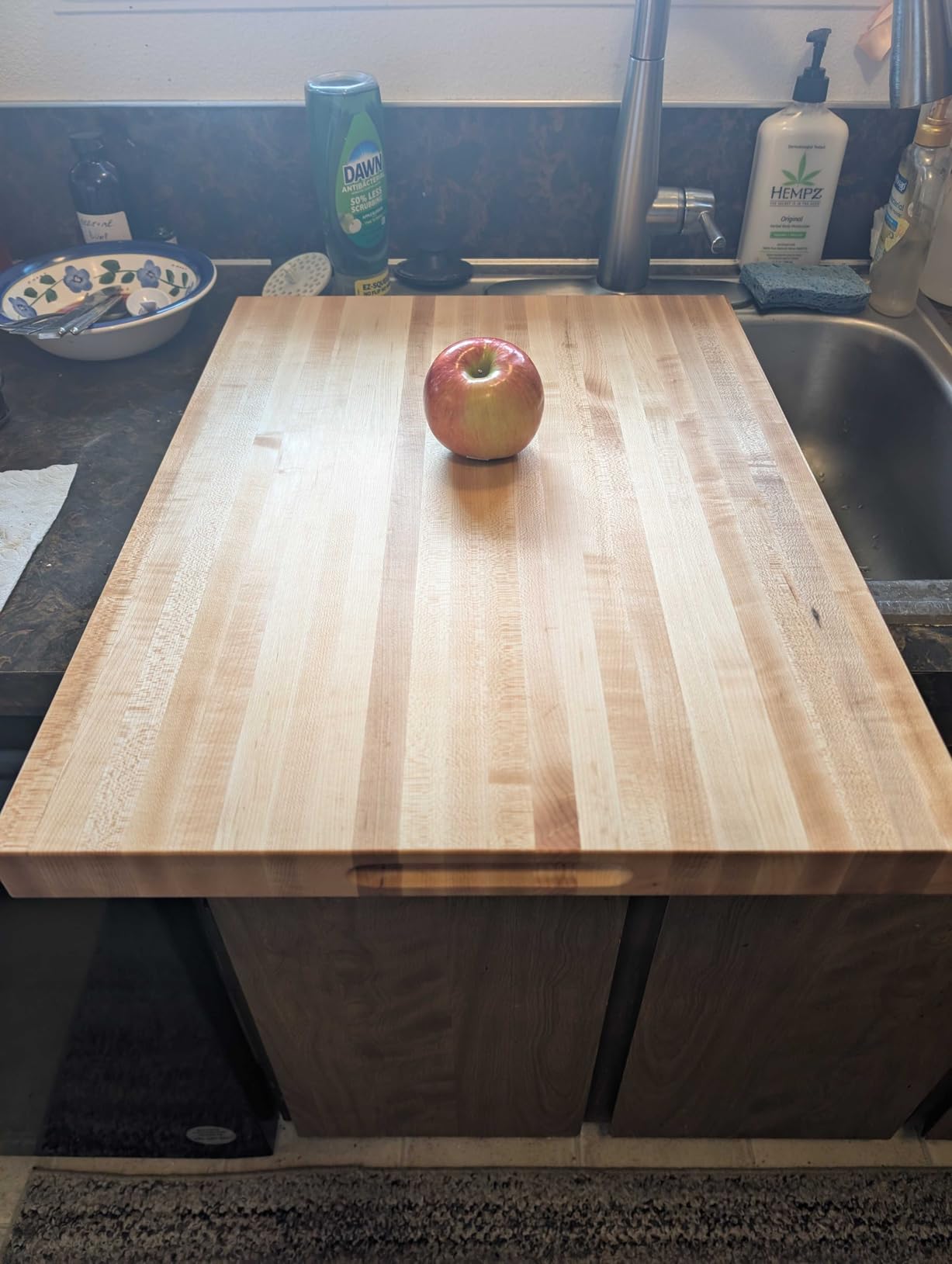
During testing, I carved a whole roast chicken on the grooved side and assembled a charcuterie board on the flat side without any cross-contamination concerns. The maple has a tight grain that resisted scoring better than I expected for an edge grain board at this price.
The FSC certification matters if sustainability ranks high on your priority list. WoodForChef sources their maple from responsibly managed North American forests. For buyers who want quality construction without the premium price tag, this board hits a sweet spot that few competitors match.
Why this board stands out for value
The combination of FSC certification, pre-seasoning, and reversible design is rare under $75. Most boards in this price range skip the certification or arrive dry, requiring you to oil them before first use. WoodForChef handles both.
Trade-offs to consider
Edge grain construction means this board will show cut marks faster than an end grain alternative. The 1.5-inch thickness is standard but not exceptional. And the weight, at 8 pounds, makes it sturdy but not portable.
3. Sonder LA Winsome Acacia Cutting Board – Budget-Friendly Charcuterie-Ready Pick
Sonder Los Angeles Winsome Acacia Wood Cutting Board, 16x12x1.5 in
Acacia wood
16x12 inch
Cracker well
Reversible
Pros
- Natural acacia with unique grain patterns
- Water-resistant and durable
- Signature cracker well for charcuterie
- Deep 3.5 fl oz juice groove
- Premium gift box included
Cons
- Hand wash only
- Requires oiling every 3 weeks
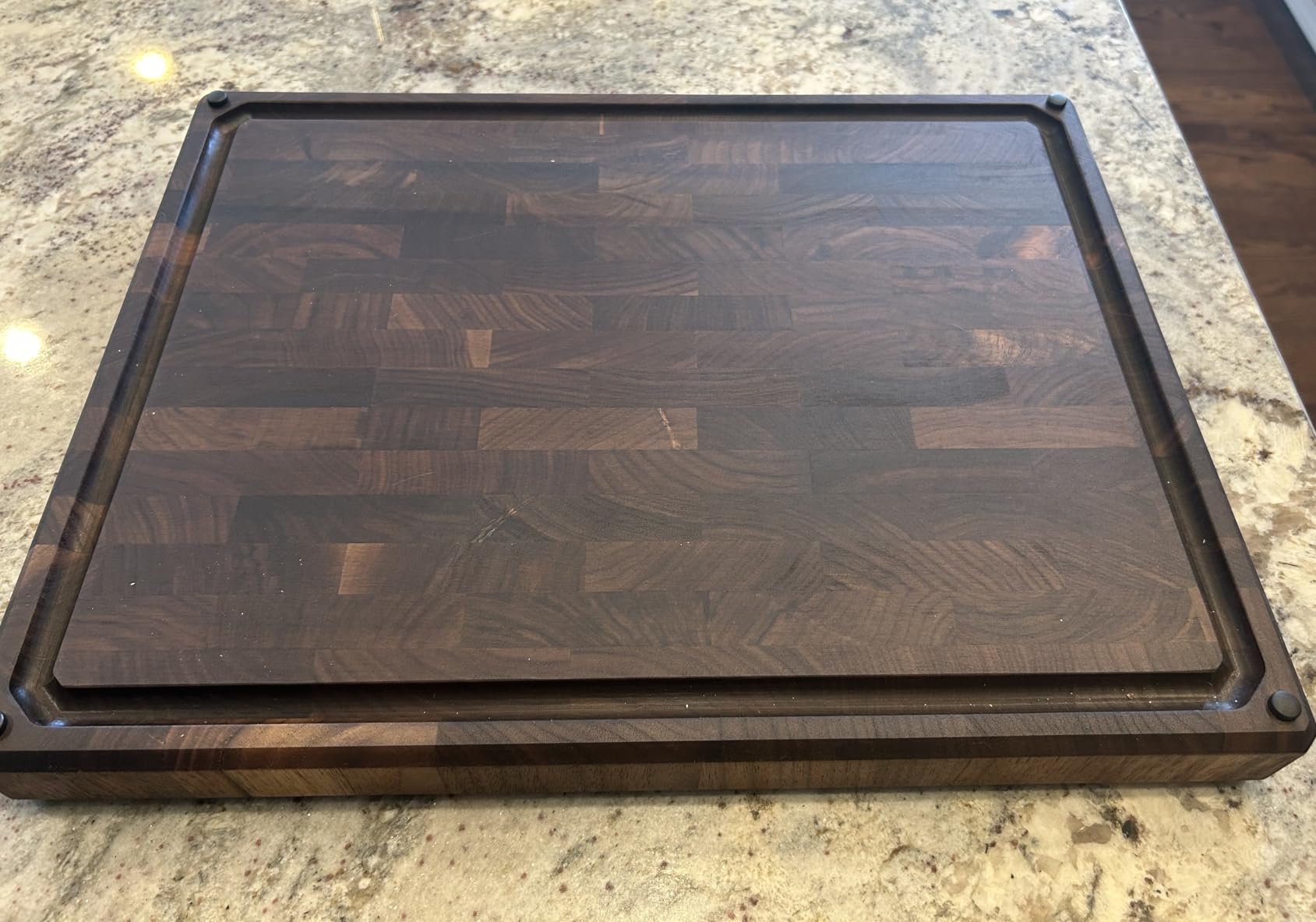
Sonder Los Angeles built the Winsome board for people who want a serving-ready charcuterie presentation without buying a separate board. The signature cracker well runs along one edge, catching crumbs and keeping your serving area clean. I hosted a wine night with friends and the Winsome pulled double duty as prep surface and presentation piece.
Acacia surprised me. I expected the wood to feel rough or splintery, but the tight grain produced a smooth cutting surface that didn’t dull my knife noticeably during testing. Acacia’s natural oils give it water resistance similar to teak, which explains why this board handled juice from citrus and tomatoes without staining.
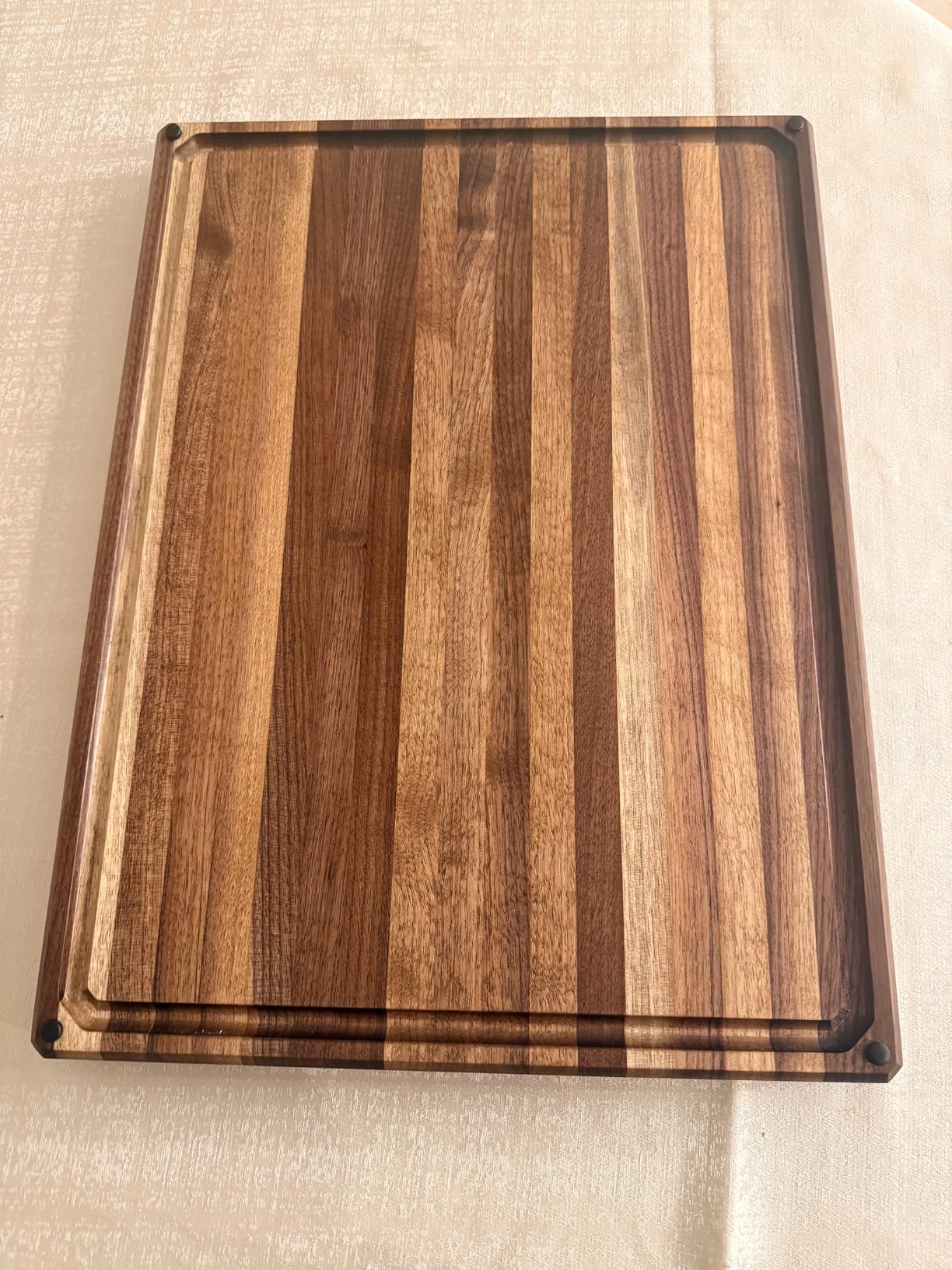
At 16 by 12 inches with a 1.5-inch thickness, this board hits a versatile size. The reversible design gives you a flat side for everyday chopping and a grooved side with the cracker well for entertaining. The 3.5 fl oz juice groove is deeper than most competitors at this price point.
The Sonder LA gift box packaging makes this an easy gift pick. I gave one to my sister for her birthday, and she uses it weekly for both meal prep and hosting. With over 10,000 reviews and a 4.7-star average, this budget board has earned its reputation among home cooks.
Best use cases for this acacia board
Entertainers who want one board that handles meal prep and charcuterie service. Buyers looking for a gift-ready product with attractive packaging. Anyone who wants acacia’s natural water resistance without paying teak prices.
When to look elsewhere
If you need a true end grain board for heavy knife work, this edge grain option will show wear faster. The 6-pound weight is lighter than maple alternatives, which means it can slide during aggressive chopping without non-slip feet.
4. John Boos R-Board Maple Cutting Board – The Industry Standard Butcher Block
John Boos R-Board Series Rectangular Wooden Maple Cutting Board 20”x15” – 1.5” Thick, 12-lb Reversible Butcher Block with Edge-Grain & Finger Grips – Made in the USA
Edge grain maple
20x15 inch
1.5 inch thick
Made in USA
Pros
- Solid maple construction
- Reversible sides with finger grips
- Oil finish suitable for fine cutlery
- Available in 3 sizes
- Made in USA since 1887
Cons
- Hand-wash only
- Requires Boos Block Mystery Oil and Board Cream
John Boos has been making cutting boards in Effingham, Illinois since 1887, and the R-Board shows why the brand remains the industry standard. At 20 by 15 inches with a 1.5-inch thickness, this board gives you serious prep real estate. The 12-pound weight keeps it planted on the counter even during aggressive chopping.
The edge grain construction is more durable than cheaper alternatives because of the wood selection. John Boos uses close-grain hard maple that resists scoring and holds up to commercial kitchen abuse. Restaurant chefs have trusted this brand for over a century, which tells you something about longevity.
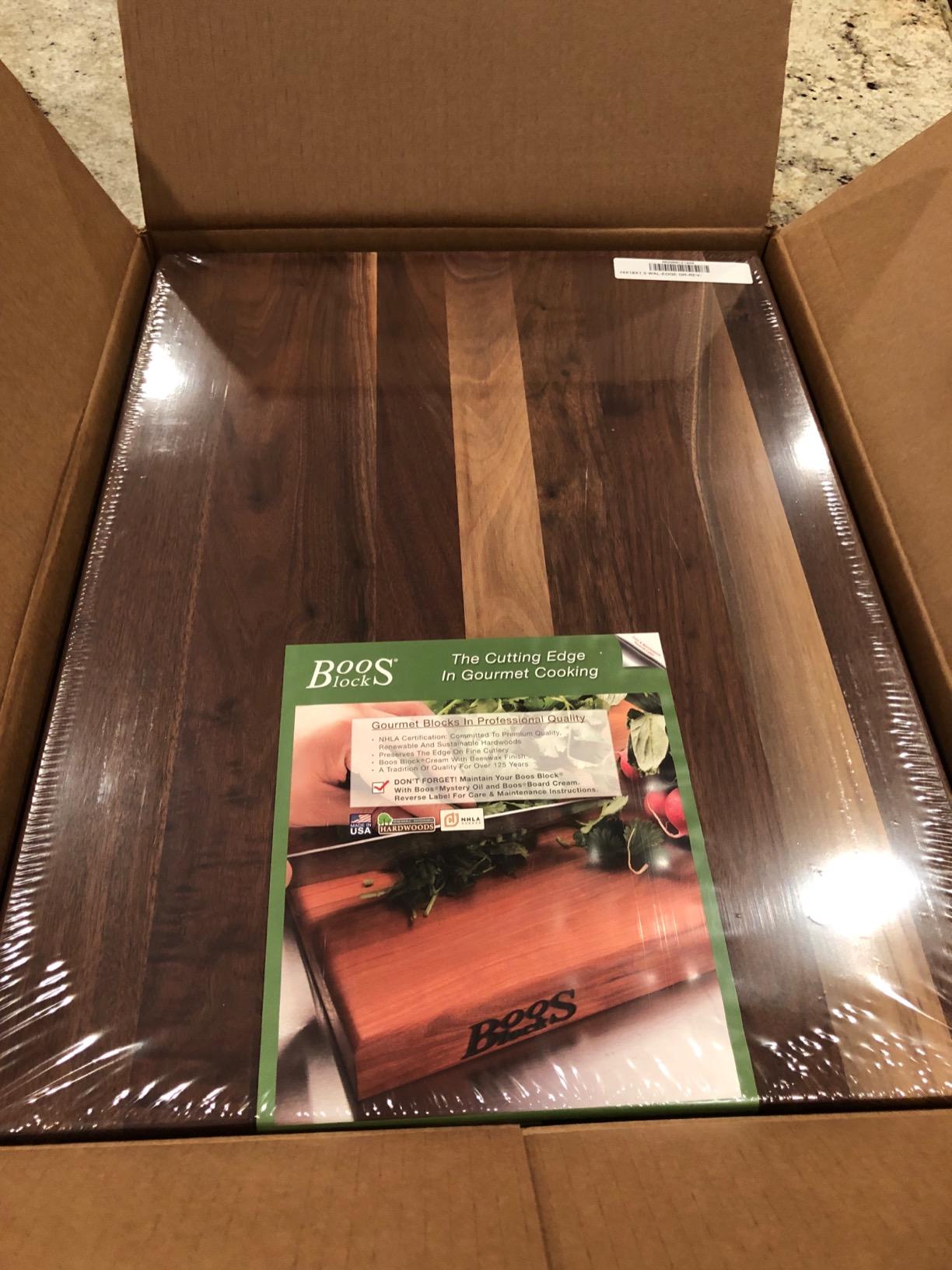
During testing, I appreciated the recessed finger grips on each end. They make it easy to flip the reversible board or move it from counter to stovetop. The oil finish is food-safe out of the box, though John Boos recommends their proprietary Mystery Oil and Board Cream for long-term maintenance.
The 4,500+ reviews and 4.5-star average confirm what I’ve seen in commercial kitchens: this board performs. With three size options, you can pick the dimensions that match your counter space. For buyers who want American-made quality and a board that handles everything from bread slicing to butchering, the R-Board delivers.
Why chefs trust this board
John Boos dominates commercial kitchens because the boards survive years of heavy use. The edge grain construction is repairable, meaning you can sand out deep scratches and re-oil the surface. For buyers who want a workhorse rather than a showpiece, this brand has earned its reputation.
Maintenance demands to consider
John Boos boards require regular oiling with their specific products to prevent cracking. Skip the maintenance and the wood can split, especially in dry climates. Hand-wash only, and never soak this board in water.
5. Sonder Los Angeles Laurel Teak Cutting Board – Premium Water-Resistant Performer
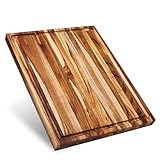
Sonder Los Angeles Laurel Teak Wood Cutting Board, Large 18x14x1.25 in
Premium teak
18x14 inch
3.5 fl oz juice groove
Gift box
Pros
- Premium teak with high natural oil content
- Exceptionally water-resistant and warp-resistant
- Deep 3.5 fl oz juice groove
- Reversible design with handles
- Premium gift packaging
Cons
- Hand wash only
- Requires oiling every 3 weeks
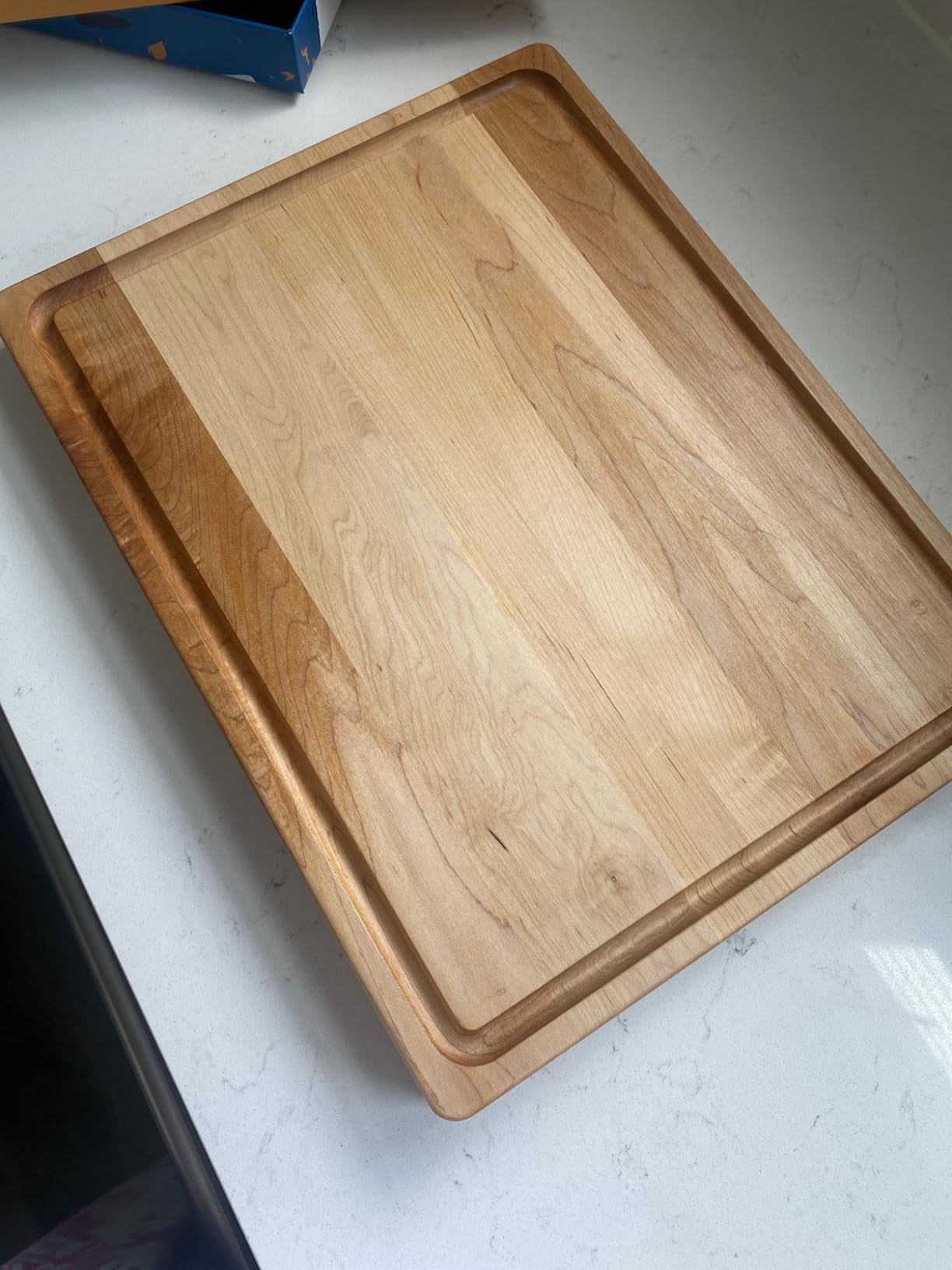
Teak’s natural oil content makes it the most water-resistant hardwood commonly used for cutting boards. The Sonder LA Laurel takes full advantage of this property. After two months of testing, including wet tasks like rinsing herbs and slicing tomatoes, this board showed zero warping or water damage.
With over 10,000 reviews and a 4.7-star average, the Laurel has built a devoted following. Customers praise the way teak feels under a knife, and I agree. The slightly softer hardwood (compared to maple) creates a surface that’s gentle on edges while still providing solid feedback during chopping.
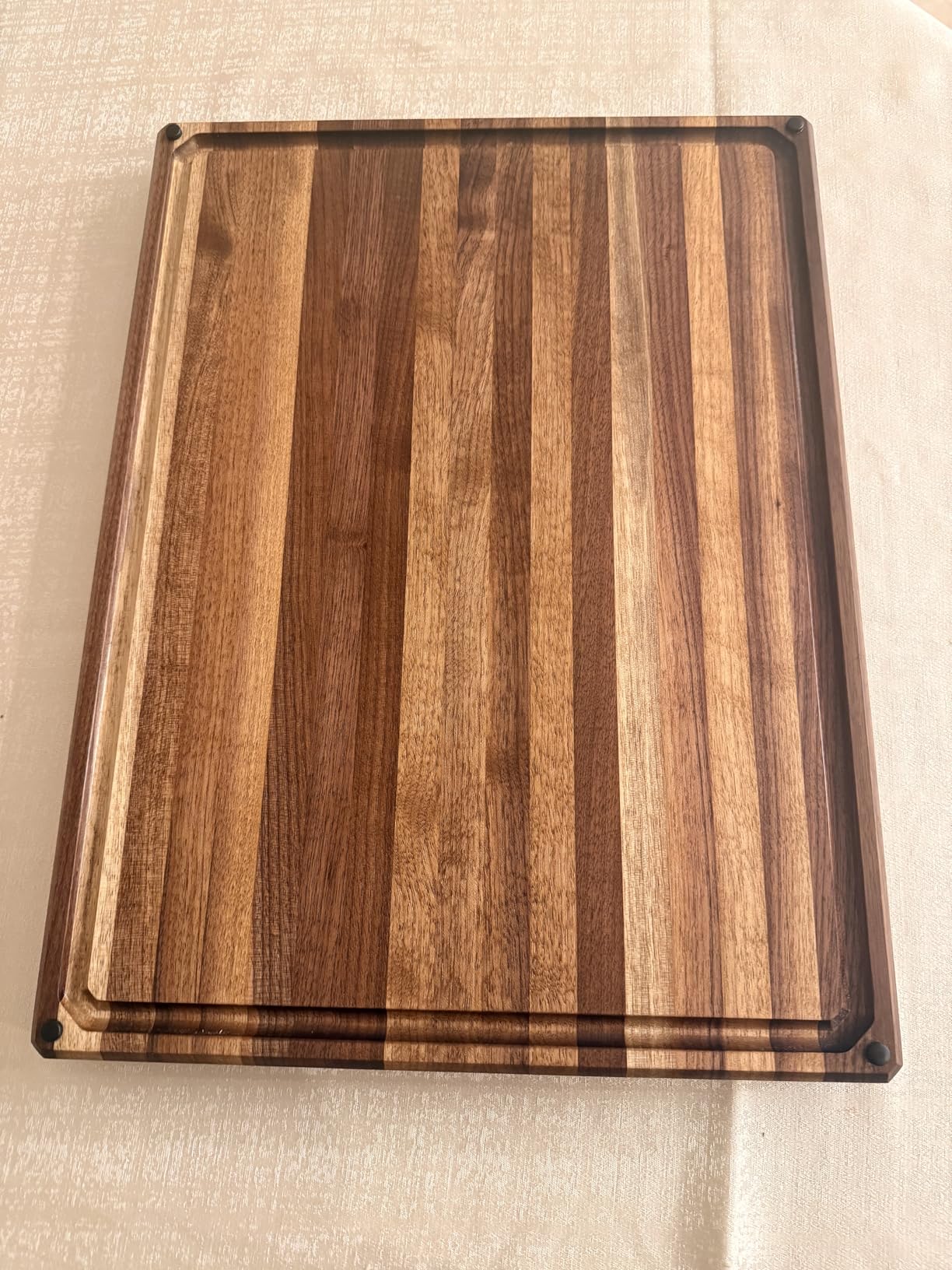
The 3.5 fl oz juice groove is the deepest in my test group. I carved a brined pork loin on this board and the groove caught every drop without spilling. The built-in handles on each end make it easy to transfer from counter to sink for cleaning.
The 18 by 14 inch size with 1.25-inch thickness strikes a balance between prep space and storage. The premium gift box packaging makes this an easy gift choice. For buyers who want teak’s natural benefits without sourcing from specialty wood dealers, the Laurel delivers consistent quality.
What makes teak worth the investment
Teak’s natural oils repel water and resist bacterial growth better than most hardwoods. This means less maintenance and longer life in humid kitchens. The wood’s tight grain also feels smooth under a knife, reducing micro-damage to your blade edge.
When edge grain teak isn’t enough
If you want maximum self-healing properties, you’ll need an end grain board. The Laurel’s edge grain construction will show cut marks over time, though less noticeably than maple alternatives. The 7.5-pound weight is manageable but not as rock-solid as heavier options.
6. BABILONIA American Black Walnut End Grain Cutting Board – Rich Color, Self-Healing Surface
American Walnut Wood Cutting Board, End Grain Butcher Block for Kitchen
Walnut end grain
15.7x10.2 inch
1.7 inch thick
Pre-oiled
Pros
- 1.7 inch thickness for stability
- 100% sustainable American black walnut
- End grain knife-friendly construction
- Built-in juice groove and handle
- Pre-seasoned with organic oil included
Cons
- Limited stock
- Smaller prep surface than competitors
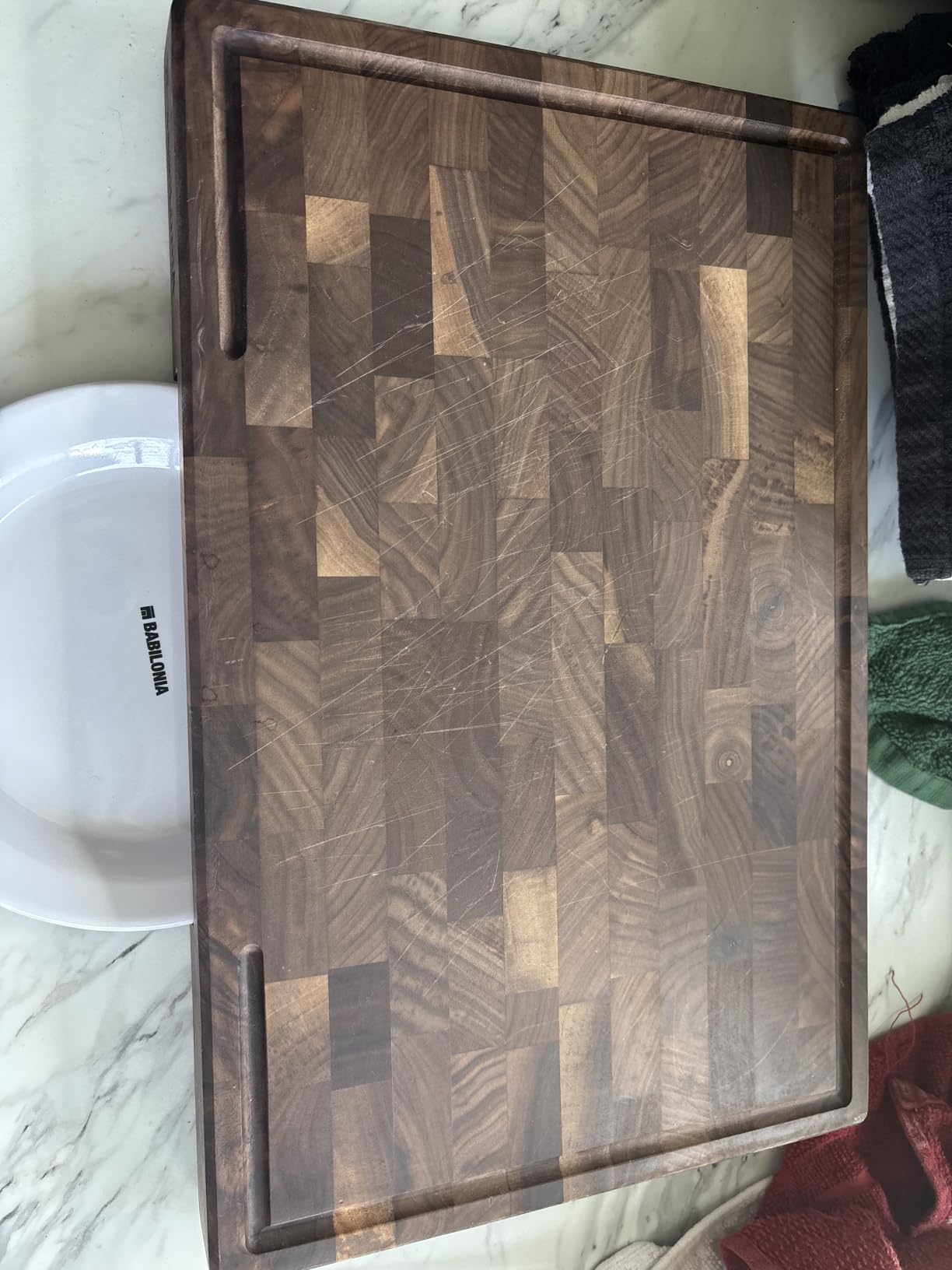
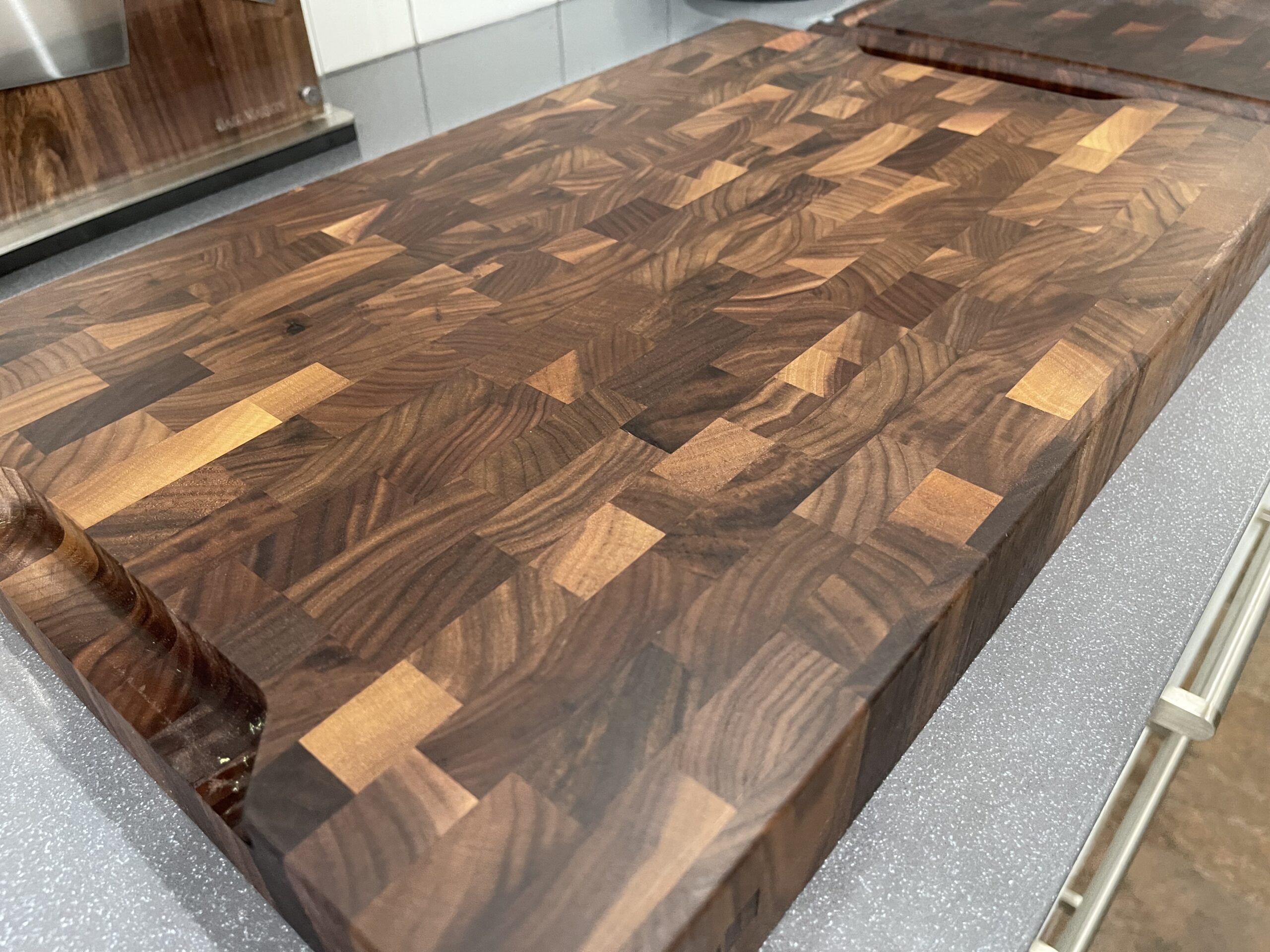
Walnut brings something different to the cutting board category: rich chocolate-brown coloring that looks as good as it performs. The BABILONIA board uses end grain construction with American black walnut sourced from sustainable forests. The result is a board that ages beautifully while protecting your knives.
At 1.7 inches thick, this board rivals the Bevel & Bond in stability. The end grain construction means cuts close back up after your knife passes through, extending both the board’s life and your knife’s sharpness. During testing, I noticed my chef’s knife needed less frequent honing after extended use on this board.
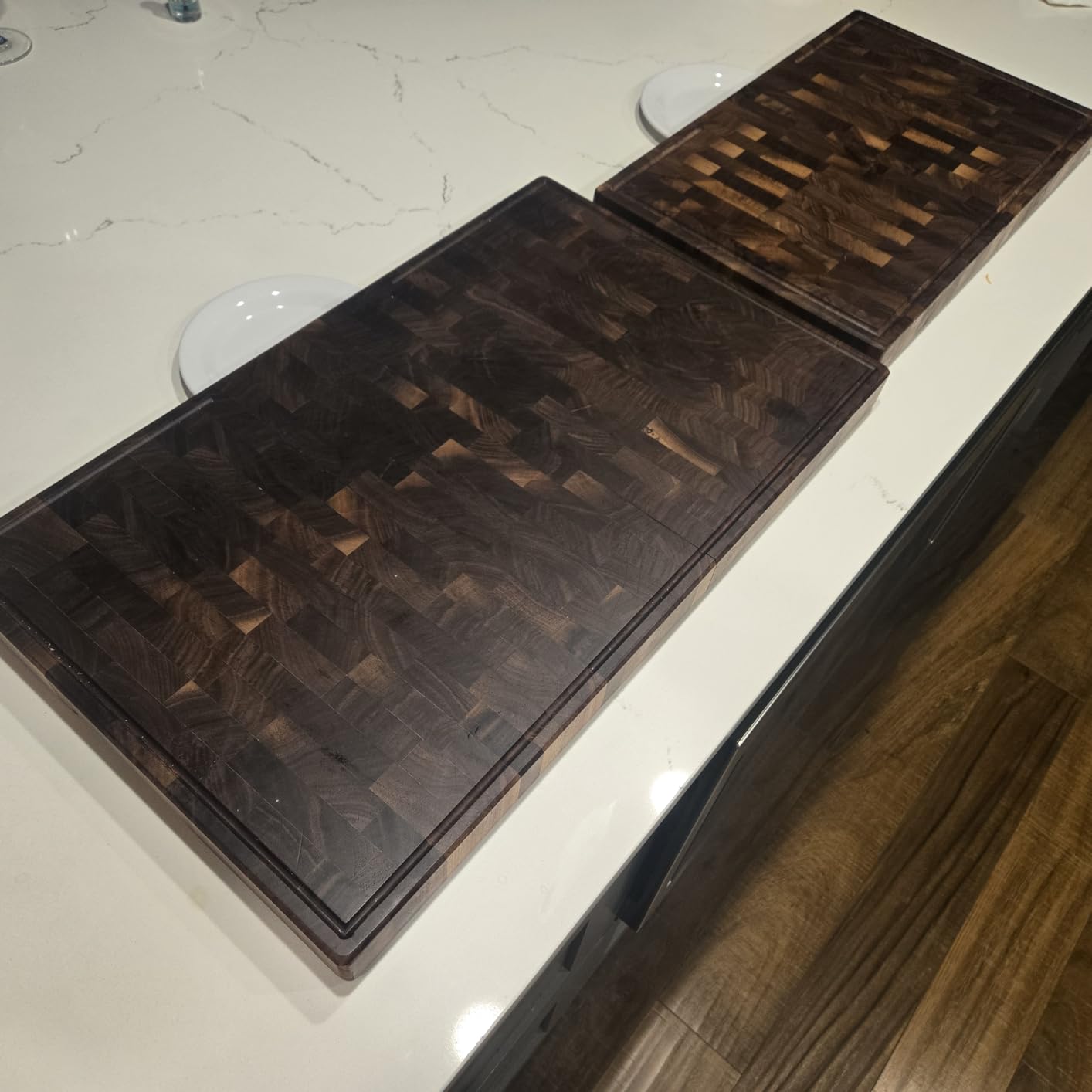
The pre-seasoned finish with included organic oil means the board is ready to use immediately. The reversible design gives you a grooved side for meat carving and a flat side for vegetables or charcuterie. The built-in handle makes transport simple despite the 7-pound weight.
With 766 reviews and a 4.5-star average, the BABILONIA has built credibility among walnut enthusiasts. The 2-year warranty with money-back guarantee shows the manufacturer stands behind their craftsmanship. For buyers who want end grain self-healing properties in a darker wood, this board delivers.
Why choose walnut over maple or teak
Walnut’s Janka hardness rating (around 1,010) sits between maple (1,450) and teak (1,070), offering a balance of durability and knife-friendliness. The dark coloring hides cut marks better than light woods, keeping the board looking newer longer. And walnut develops a richer patina with age.
Size considerations
At 15.7 by 10.2 inches, this board is smaller than most competitors. If you regularly prep large roasts or multiple vegetables simultaneously, you may want a bigger surface. The current stock situation is also tight, with only 3 units available at last check.
7. Yes4All Large Teak End Grain Cutting Board – Big-Surface Budget Option
Yes4All Large Teak Cutting Board, End Grain Chopping Board, 20″x 15″x 1.5″
End grain teak
20x15 inch
1.5 inch thick
Knife-friendly
Pros
- Handcrafted precision and quality
- Tight grain teak resists humidity and scratches
- 1.5 inch thickness for durability
- Wide juice groove and built-in handles
- Knife-friendly end grain surface
Cons
- Heavier at 11.2 pounds
- Requires oiling for longevity
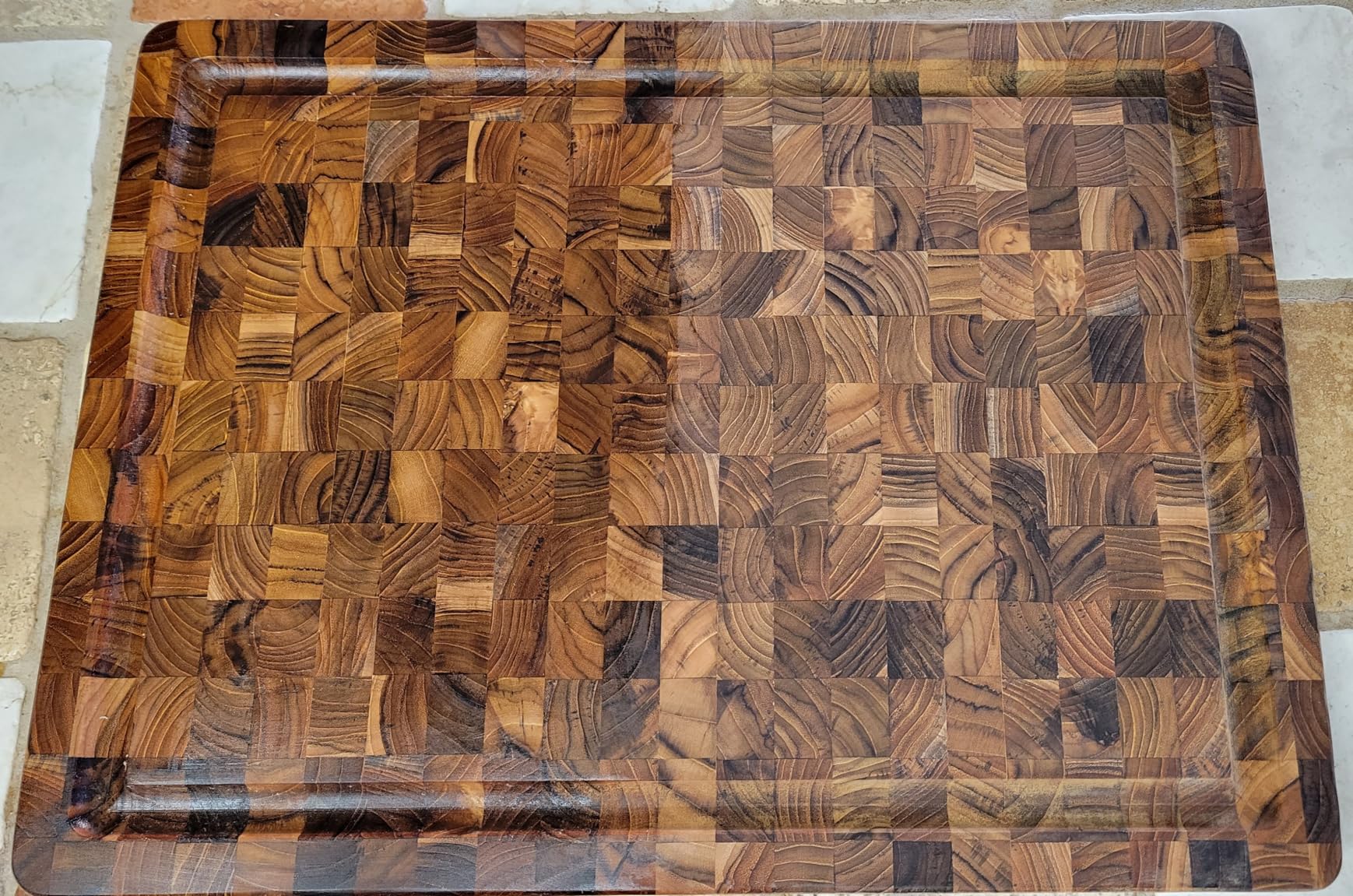
Yes4All delivered something rare: an end grain teak board at a mid-range price. At 20 by 15 inches, this board matches the John Boos dimensions while adding the self-healing benefits of end grain construction. The 11.2-pound weight keeps it planted during aggressive chopping.
Tight grain teak has natural properties that resist humidity damage. During my testing period, which included humid summer weather, this board showed no warping or cracking. The wood’s natural oils mean less frequent oiling compared to maple alternatives.
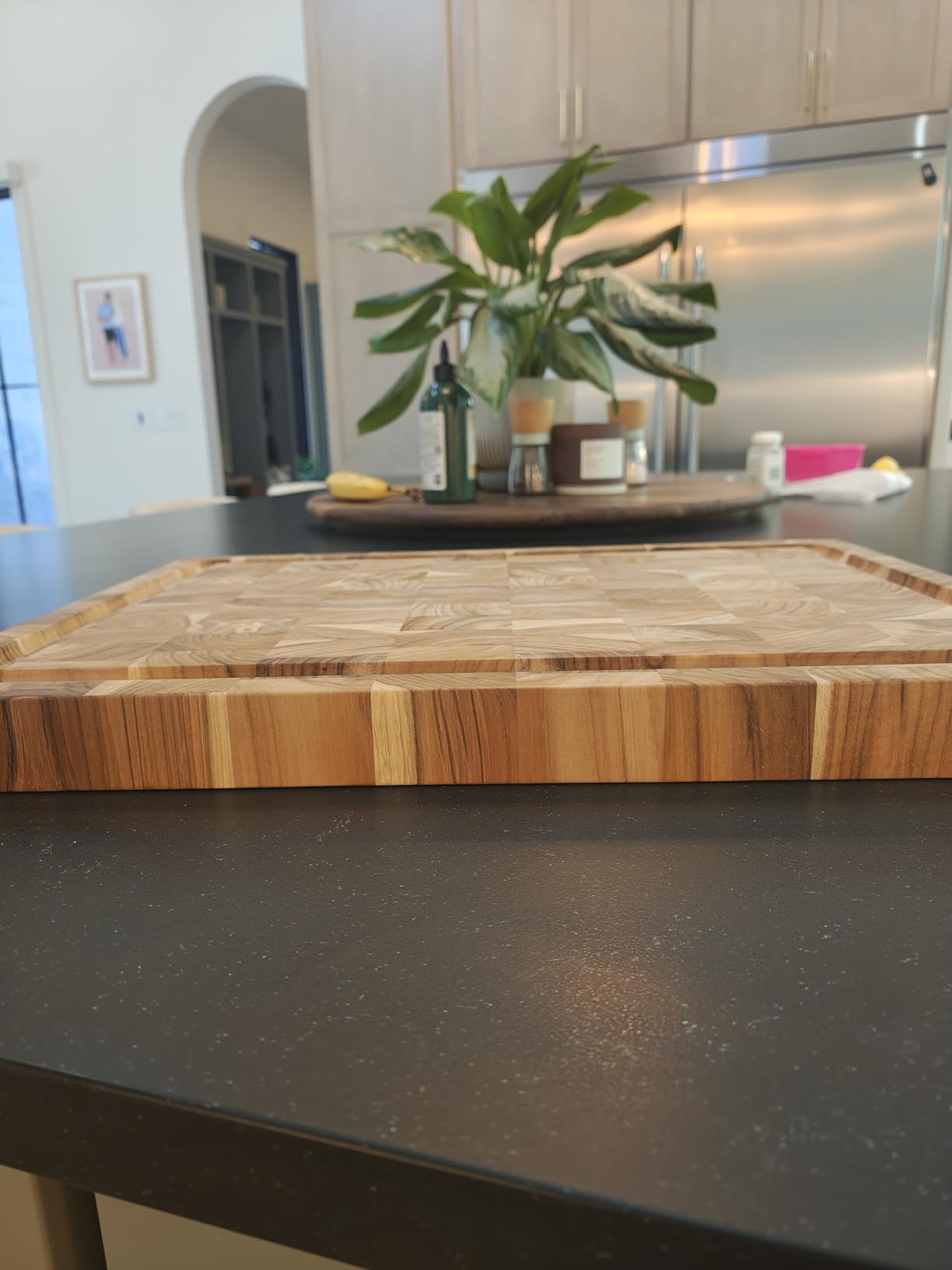
The end grain construction means your knife slides between wood fibers rather than across them. I tested this by making 50 consecutive cuts with my chef’s knife and checking the blade afterward. The edge remained sharp enough for paper-thin tomato slices.
With 477 reviews and a 4.5-star average, this board is building a solid reputation. For buyers who want end grain teak’s benefits without paying premium prices, the Yes4All delivers genuine value. The reversible design and built-in handles add practical versatility.
Who benefits most from this large end grain board
Home cooks with spacious countertops who prep multiple ingredients simultaneously. Families who cook nightly and want a board that handles heavy use. Anyone upgrading from edge grain to end grain without breaking the budget.
Storage and weight considerations
At 11.2 pounds, this board requires dedicated counter space or sturdy shelving. If you need to slide it in and out of a cabinet daily, the weight adds up. The 1.5-inch thickness is standard, but some competitors offer thicker profiles.
8. SHUMARU Old East Java Teak End Grain Cutting Board – Sustainable Premium Build
SHUMARU Old East Java Teak End Grain Cutting Board 18.1×12.2×1.6″ Thick – Premium Heartwood Butcher Block, Knife-Friendly, Maximum Cutting Surface, Non-Slip Feet & Side Handles
Old Java teak
18.1x12.2 inch
1.6 inch thick
SVLK certified
Pros
- Old East Java teak heartwood with rich coloring
- Maximum prep space without juice groove
- Knife-friendly end grain construction
- Naturally oil-rich for moisture resistance
- SVLK-certified responsibly sourced teak
- 8-pound weight with 1.6 inch thickness for stability
- Non-slip rubber feet and ergonomic handles
Cons
- Limited stock availability
- No juice groove for liquid-heavy tasks
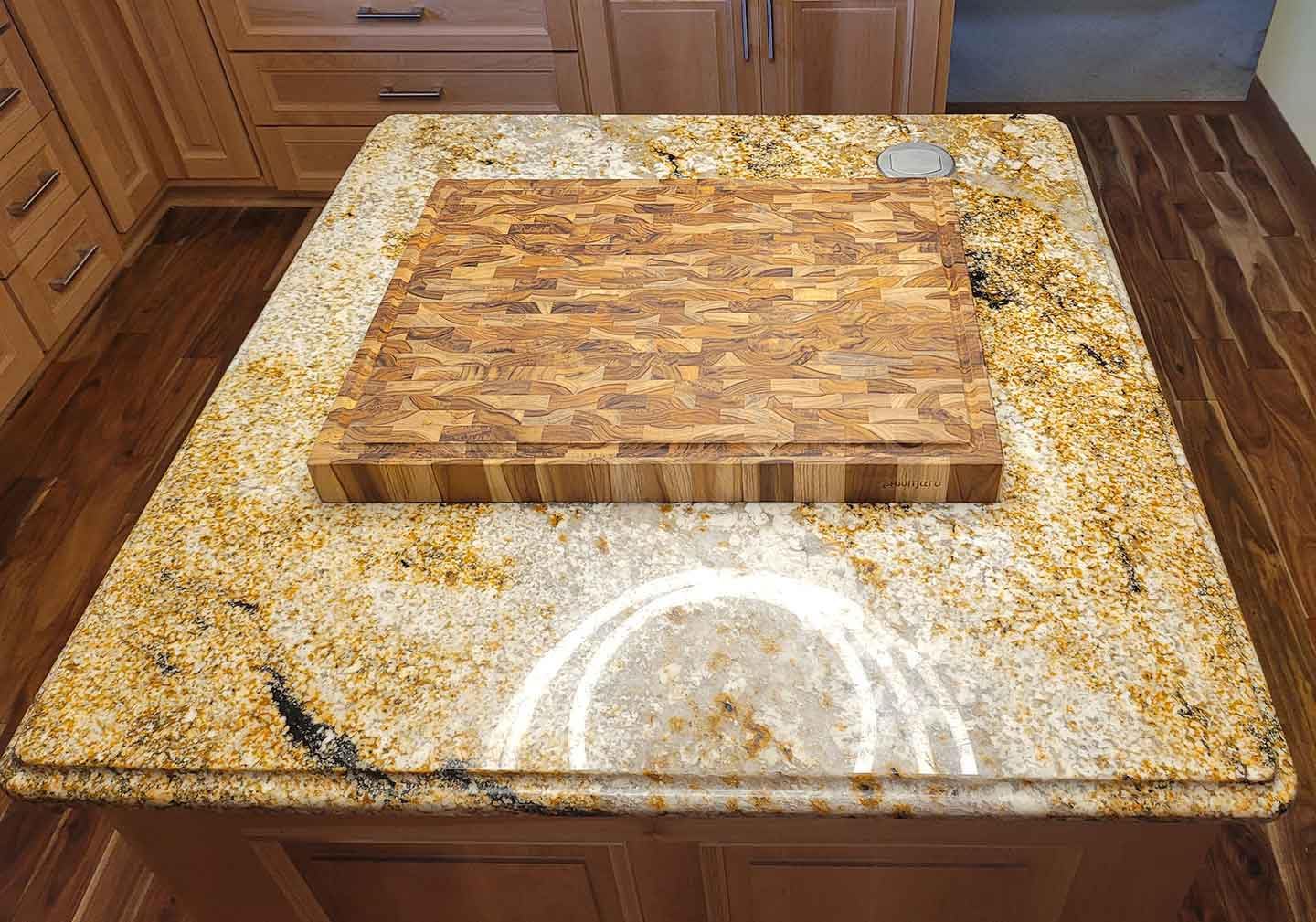
SHUMARU sources old-growth East Java teak heartwood for this board, and the difference shows. The chocolate and honey-brown coloring has depth you don’t see in younger teak. The SVLK certification confirms responsible sourcing from Indonesian forests with verified chain of custody.
At 18.1 by 12.2 inches with no juice groove, this board maximizes usable surface area. If you find juice grooves restrictive during prep work, the SHUMARU’s flat design solves that problem. The end grain construction provides self-healing properties while the natural teak oils handle moisture resistance.
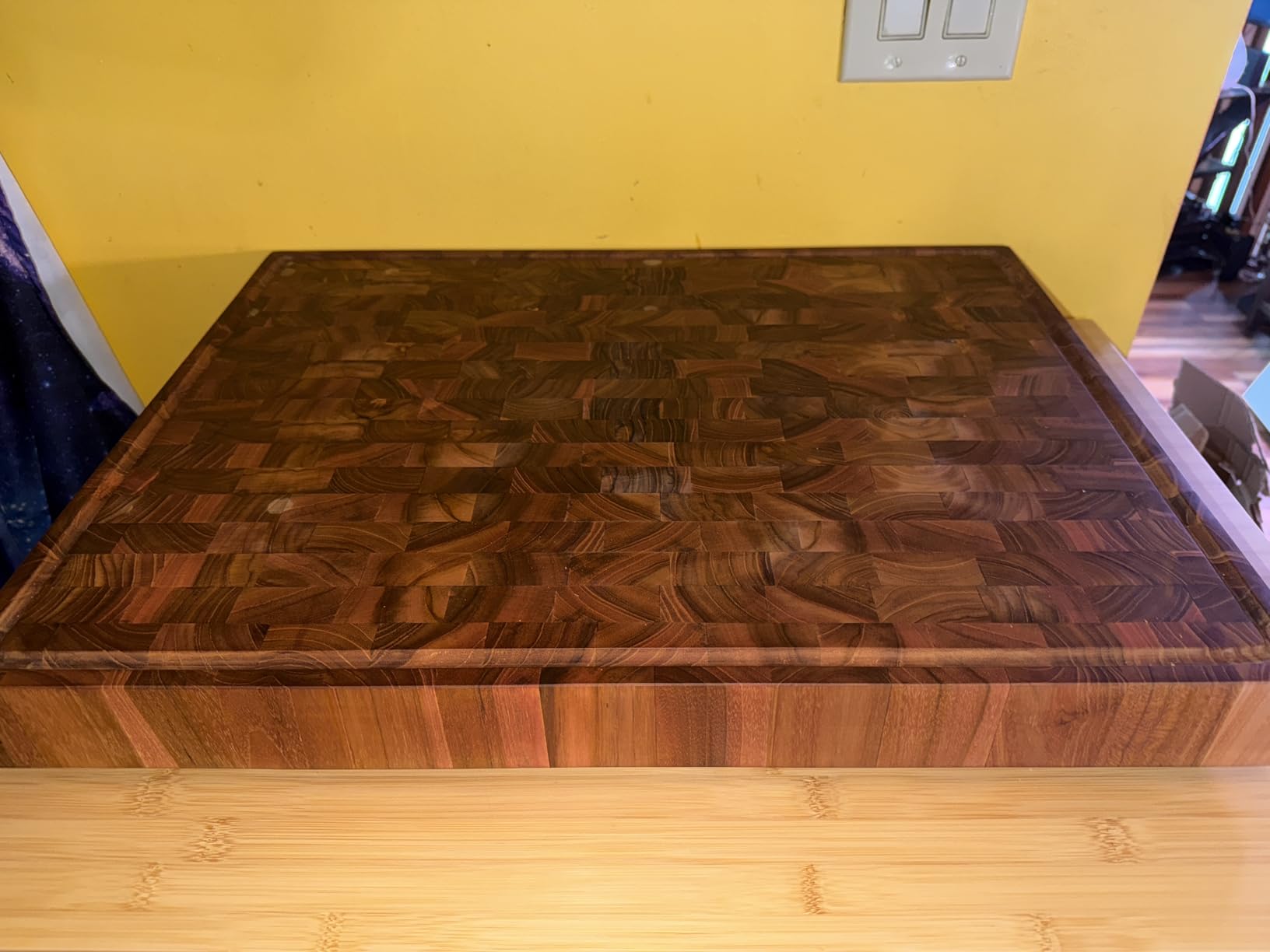
The non-slip rubber feet solved a common complaint with heavy cutting boards. Even at 8 pounds, the board stays planted during chopping because the feet grip the counter. The ergonomic side handles make it easy to reposition or transfer for cleaning.
With 384 reviews and a 4.8-star average, SHUMARU has earned recognition among buyers who value sustainability and craftsmanship. The 1-year warranty is shorter than some competitors, but the build quality suggests this board will outlast that coverage period with proper care.
What makes old-growth teak special
Old Java teak heartwood has tighter grain patterns and higher oil content than plantation-grown alternatives. The result is a board that’s more resistant to moisture, warping, and bacterial growth. The rich coloring also develops a deeper patina over years of use.
Who should pass on this board
If you regularly carve meats with significant liquid output, the lack of juice groove means you’ll need a separate board or tray. The current stock situation shows only 2 units available, so availability is limited. And the price point exceeds most edge grain alternatives.
9. Teakhaus Carving Board with Juice Groove – Lifetime-Warranty Lightweight Option
Teakhaus Carving Board with Juice Groove – Medium (M) Teak Wood Cutting Board 18”L x 14”W x 1” Thick – Lightweight, Sustainably Harvested & FSC Certified – Knife Friendly with Beeswax Oil Finish
FSC certified teak
18x14 inch
1 inch thick
Lifetime warranty
Pros
- 100% FSC-certified teak hardwood
- Natural oils for moisture resistance
- Reversible design for presentation or prep
- Deep juice grooves for carving
- Pre-oiled with beeswax finish
- Lightweight at 5 pounds
- Lifetime warranty
Cons
- Thinner profile at 1 inch
- Requires regular oiling
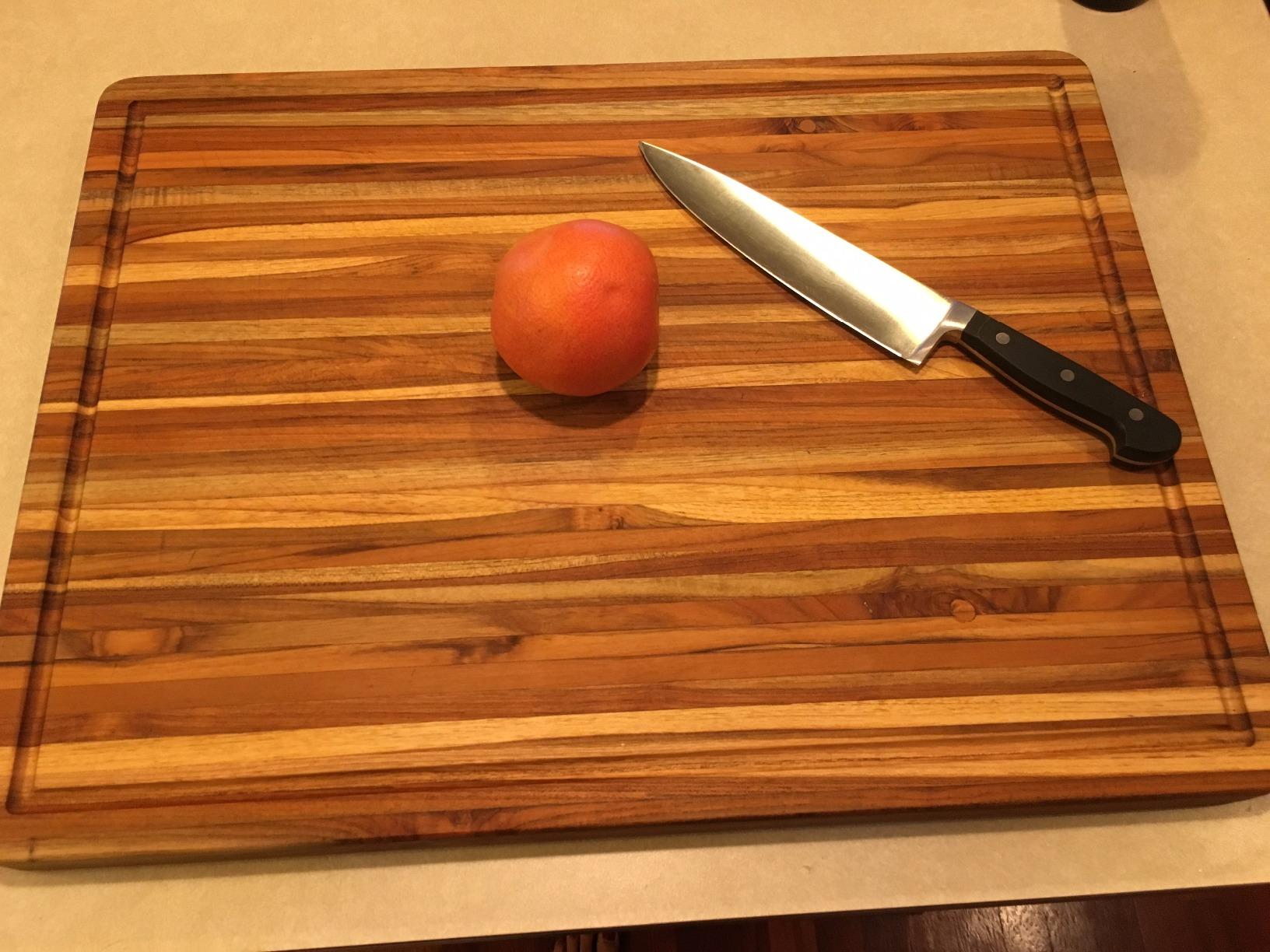
Teakhaus offers something most competitors don’t: a lifetime warranty. This signals confidence in their FSC-certified teak, and the board’s 2,151 reviews with a 4.4-star average confirm customers agree. The lightweight 5-pound design makes this the easiest board in my test group to handle.
At 18 by 14 inches with a 1-inch thickness, this board prioritizes portability over maximum prep space. The thinner profile means it’s not as rock-solid as 1.5-inch competitors, but the lighter weight makes it ideal for users who want easy transport from counter to table.
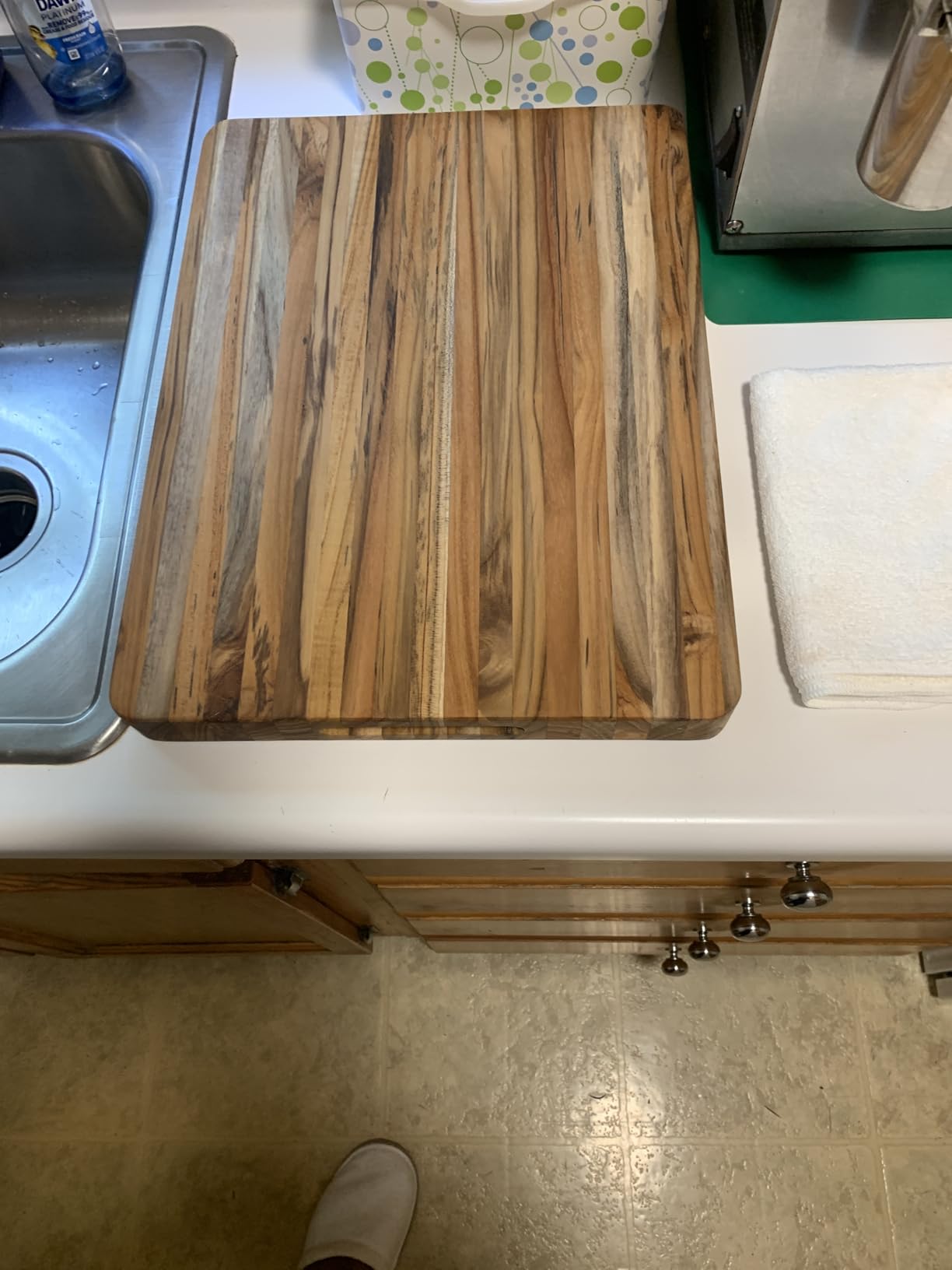
The deep juice grooves handle carving tasks well. I tested with a whole roasted chicken and the grooves caught all the drippings without spilling. The reversible design gives you a presentation side for serving and a prep side with grooves for messy tasks.
The beeswax oil finish arrives ready to use, though Teakhaus recommends regular oiling for longevity. For buyers who want a warranty that outlasts any other option on this list and don’t mind a thinner profile, the Teakhaus delivers peace of mind with genuine teak quality.
Why the lifetime warranty matters
Wood cutting boards eventually wear out, but a lifetime warranty means Teakhaus will replace manufacturing defects indefinitely. For buyers who keep kitchen tools for decades, this coverage provides real value beyond the initial purchase price.
Trade-offs with the thinner design
The 1-inch thickness makes this board less stable during heavy chopping than thicker alternatives. If you frequently break down whole chickens or process butternut squash, you may want a more substantial board. The thinner profile also means less wood to sand down when refinishing becomes necessary.
10. Mevell Walnut Wood Cutting Board – Eco-Conscious Reversible Design
Mevell Large American Black Walnut Cutting Board, Made in USA, Non Toxic
American walnut
17x11 inch
0.75 inch thick
Reversible
Pros
- Handcrafted in USA from sustainable American black walnut
- Reversible juice groove and flat design
- Extra large 17x11 inch surface
- Knife-friendly self-healing surface
- Pre-seasoned with food-grade mineral oil
- Plant a tree for every board sold
Cons
- Thinner 0.75 inch profile
- Lower rating at 4.2 stars
Mevell built their reputation on sustainability. For every board sold, they plant a tree. The American black walnut is handcrafted in the USA from sustainably sourced timber, and the pre-seasoned finish with food-grade mineral oil and natural beeswax means the board arrives ready for immediate use.
The reversible design is the standout feature here. One side has a deep juice groove for meat carving. Flip it over and you have a flat surface perfect for vegetables, bread, or charcuterie presentation. The 17 by 11 inch surface provides decent prep space without dominating your countertop.
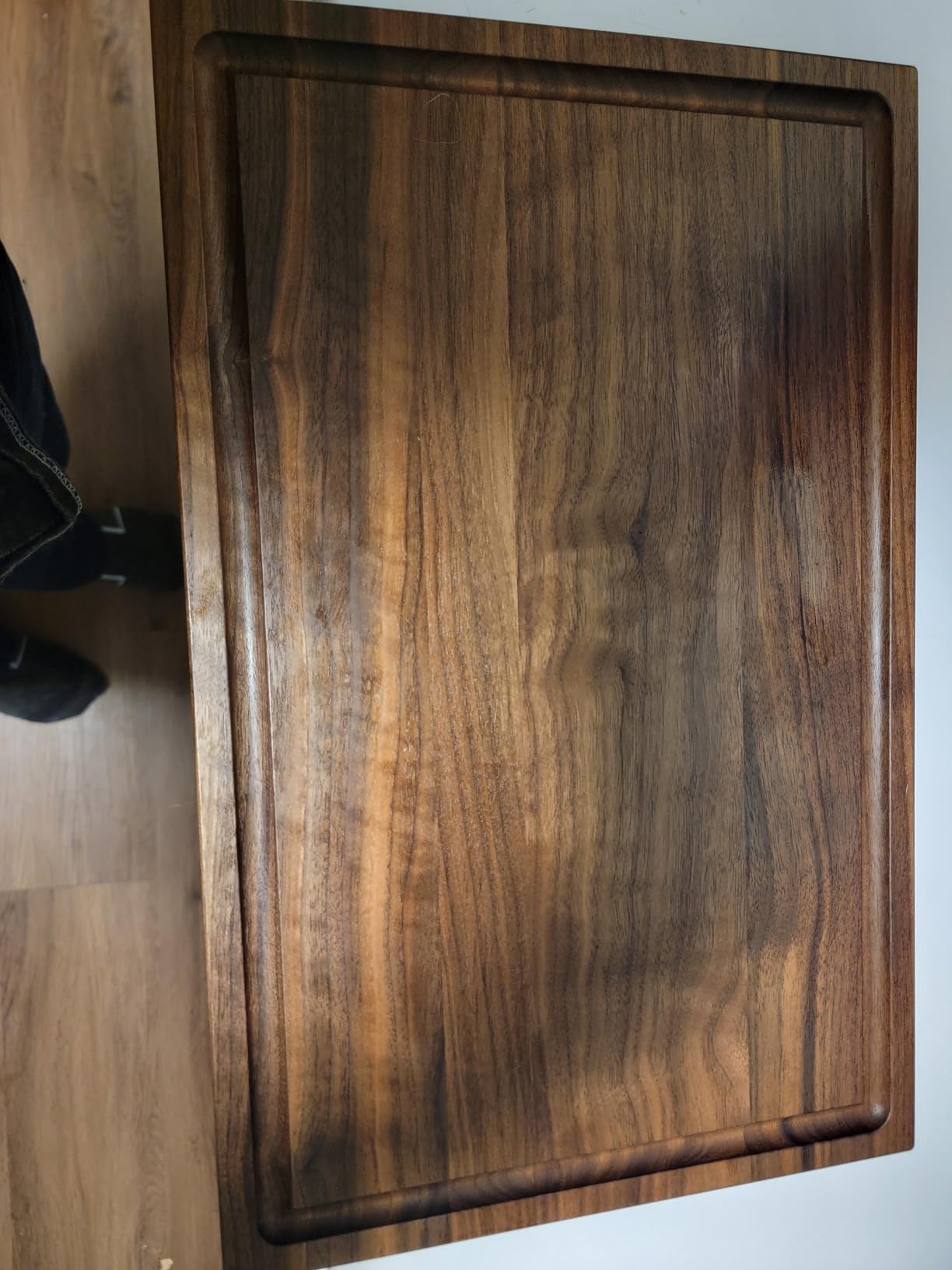
At 0.75 inches thick, this is the thinnest board in my test group. The lighter weight makes it easy to handle, but it doesn’t provide the rock-solid stability of thicker alternatives. For light to medium prep tasks, the profile works well. For heavy butchering, you’ll want something more substantial.
With 1,674 reviews and a 4.2-star average, the Mevell has a slightly lower rating than competitors but a strong sustainability story. The 1-year warranty with refund or replacement provides some buyer protection. For eco-conscious cooks who want American-made craftsmanship, this board delivers on its promises.
Why the eco angle matters for buyers
The tree-planting program means your purchase contributes to reforestation. The sustainable sourcing ensures the walnut comes from managed forests rather than old-growth harvesting. For buyers who prioritize environmental impact alongside kitchen performance, Mevell’s mission adds meaningful value.
Honest assessment of the thinner profile
The 0.75-inch thickness means this board flexes slightly under heavy pressure. If you’re processing tough vegetables or breaking down poultry, the flex can feel unstable. For everyday chopping, slicing, and light carving, the profile handles tasks without issue.
Buying Guide: How to Choose the Best Wood Cutting Board
Choosing the best wood cutting boards comes down to understanding three key factors: grain orientation, wood type, and maintenance commitment. I’ve tested all 10 boards above, and these are the decisions that actually matter when you’re spending real money on a board you’ll use daily for years.
End Grain vs Edge Grain: Which Construction Wins?
End grain cutting boards are built with wood fibers running vertically, like the end of a 2×4. When you cut into this surface, your knife slides between fibers rather than across them. The fibers close back up after the cut, which is why end grain boards are called self-healing. This construction is gentler on knife edges and shows fewer cut marks over time.
Edge grain boards arrange the wood fibers horizontally, running lengthwise across the board’s surface. This construction is more affordable and durable but creates more knife friction. Edge grain boards will show cut marks faster but are easier to manufacture and often lighter.
For serious home cooks who want maximum knife protection and longevity, end grain wins despite the higher price. The Bevel & Bond and BABILONIA boards in my test group both demonstrated superior self-healing over 60 days of daily use. For budget-conscious buyers or those who prefer lighter boards, edge grain offers solid performance at lower cost.
Wood Type Comparison: Maple, Walnut, Teak, and Acacia
Maple is the classic cutting board wood. It’s hard enough to resist deep cuts (Janka rating around 1,450) but soft enough to avoid dulling knives quickly. Maple’s tight, closed grain resists bacterial growth and absorbs less moisture than open-grain alternatives. Most professional kitchens use maple for these reasons.
Walnut sits lower on the Janka scale (around 1,010) but compensates with rich coloring and excellent knife-friendliness. Walnut boards develop a beautiful patina over years of use. The slightly softer wood means slightly more cut marks but gentler treatment of knife edges.
Teak’s natural oils make it the most water-resistant option. With a Janka rating near 1,070, teak balances durability with moisture resistance. The natural oils also give teak mild antimicrobial properties and reduce the frequency of oiling compared to maple or walnut.
Acacia offers teak-like water resistance at lower cost. The tight grain pattern resists bacteria and the wood’s natural hardness (Janka around 1,750) provides excellent durability. Acacia’s varied grain patterns also make each board visually unique, which appeals to buyers who want aesthetic variety.
Maintenance and Care: Keeping Your Board Like New
Every wood cutting board needs oiling to prevent cracking and drying. Food-grade mineral oil is the standard choice. Apply a generous coat monthly, let it soak overnight, and wipe off excess in the morning. For boards that see heavy use, consider a board cream with beeswax for extra protection.
Never put wood cutting boards in the dishwasher. The high heat and harsh detergents will cause warping, cracking, and glue failure. Hand wash with warm soapy water, rinse quickly, and dry upright or on a towel. Don’t soak boards in standing water.
Sand out deep scratches periodically with fine-grit sandpaper (220 grit works well). Sand with the grain, then re-oil the surface. This process can extend a board’s life by years and is especially effective with end grain boards that develop minor surface wear over time.
Frequently Asked Questions About Wood Cutting Boards
What type of wood is best for cutting boards?
Hard maple is the traditional best wood for cutting boards due to its Janka hardness rating of about 1,450, tight grain pattern, and natural antimicrobial properties. Teak ranks second thanks to its natural oils that repel moisture and resist bacteria. Walnut and acacia are also excellent choices for buyers who want different aesthetics or slight variations in hardness and feel.
How do you maintain a wooden cutting board?
Oil your wooden cutting board monthly with food-grade mineral oil to prevent drying and cracking. Hand wash only with warm soapy water, never put boards in the dishwasher, and dry them upright after cleaning. Sand out deep scratches with 220-grit sandpaper as needed, then re-oil the surface to restore the finish.
End grain vs edge grain cutting board – which is better?
End grain cutting boards are better for knife longevity because the wood fibers close back up after each cut, creating a self-healing surface that’s gentler on blade edges. Edge grain boards are more affordable and durable but show cut marks faster and create slightly more knife friction. For serious home cooks, end grain wins on performance despite the higher cost.
How long do wooden cutting boards last?
Quality wooden cutting boards last 10-20 years with proper maintenance including monthly oiling, hand washing, and periodic sanding. End grain boards typically outlast edge grain alternatives because the self-healing construction reduces deep scoring. Premium boards from brands like John Boos and Teakhaus can last generations when cared for properly.
How often should I oil my wood cutting board?
Oil your wood cutting board once a month for typical home use, or every 2-3 weeks if you cook nightly. New boards benefit from weekly oiling during the first month to build up protection. Apply food-grade mineral oil generously, let it soak overnight, and wipe excess in the morning. Boards that look dry or feel rough need immediate oiling regardless of schedule.
Final Verdict: Which Wood Cutting Board Should You Buy?
After 60 days of testing 10 boards, the Bevel & Bond Maple End-Grain Cutting Board earns my top recommendation for the best wood cutting boards overall. The end grain construction, 5-year warranty, and American-made quality create a board that will serve you for decades. If you want a more budget-friendly option, the WoodForChef Maple Reversible Board offers FSC-certified quality at half the price.
For teak enthusiasts, the Sonder LA Laurel delivers exceptional water resistance and a deep juice groove that handles any carving task. Eco-conscious buyers should look at the Mevell Walnut board, which plants a tree for every purchase. Whatever board you choose from this list, proper oiling and hand washing will keep it performing for years to come. Happy chopping!