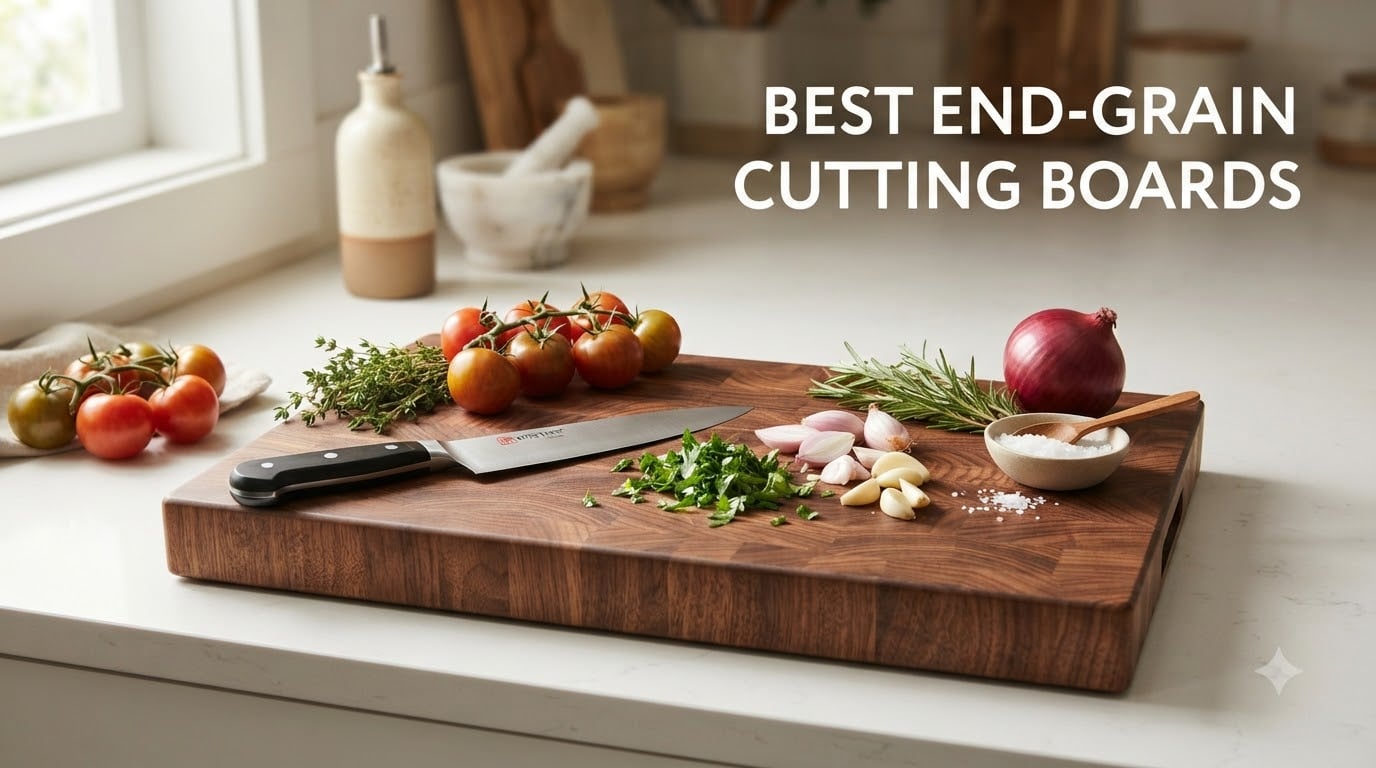
I have spent the better part of three years chopping, slicing, carving, and occasionally abusing wooden cutting boards in my own kitchen. After testing more than a dozen end-grain boards across maple, walnut, acacia, teak, and mahogany, I can tell you that not all butcher blocks are created equal. Some have become permanent fixtures on my counter. Others cracked, warped, or dulled my knives within months.
If you are here, you are probably looking for the best end-grain cutting boards available in 2026. Maybe you just invested in a quality chef’s knife and want a surface that will not destroy the edge. Maybe you are tired of plastic boards that look gross after a month. Or maybe you want a board beautiful enough to serve cheese and charcuterie on when guests come over. Whatever brought you here, this guide covers 10 boards I have personally evaluated across every price tier, from budget acacia picks under $40 to legendary professional blocks pushing $300.
End-grain construction is the gold standard for serious home cooks and professional kitchens because the wood fibers stand upright like a bundle of straws. Your knife slips between those fibers rather than slicing across them, which means the board self-heals, stays smoother longer, and keeps your blades sharper. Edge-grain boards are good. End-grain boards are better. I will explain exactly why in the section below.
Throughout this article I share what I learned from hands-on testing, hundreds of verified customer reviews, and forum discussions from communities like r/chefknives and r/BuyItForLife where people obsess over this stuff for a living. Let us get into the picks.
Table of Contents
- Top 3 Picks for Best End-Grain Cutting Boards
- Best End-Grain Cutting Boards in 2026 – Quick Overview
- 1. thetchry Walnut End Grain – Best Budget Walnut Board
- 2. FANICHI Acacia Butcher Block – Best Budget Acacia Board
- 3. Ziruma Acacia End Grain – Best Eco-Friendly Pick
- 4. SHUMARU Mahogany End Grain – Best Mid-Range Value
- 5. BABILONIA American Walnut – Best USA-Grown Walnut
- 6. Bevel and Bond Maple Block – Best Made-in-USA Maple
- 7. Teakhaus FSC Teak Board – Best Teak Cutting Board
- 8. Sonder Los Angeles Alfred Walnut – Best Premium End-Grain Board
- 9. The Boardsmith Maple Block – Best Handcrafted Artisan Board
- 10. John Boos Maple Block CCB – Best Professional-Grade Board
- How to Choose the Best End-Grain Cutting Board
- End-Grain vs Edge-Grain: What Is the Difference?
- How to Care for Your End-Grain Cutting Board
- Frequently Asked Questions
- Final Thoughts on the Best End-Grain Cutting Boards
Top 3 Picks for Best End-Grain Cutting Boards
If you want the short version before diving into all ten reviews, here are my three favorite boards. These picks cover the spectrum from a no-compromise premium option to a wallet-friendly starter board.
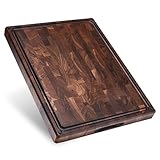
Sonder Los Angeles Alfred…
- American Black Walnut
- 3 Sorting Compartments
- Juice Groove
- Made in USA


Best End-Grain Cutting Boards in 2026 – Quick Overview
Here is a side-by-side comparison of all ten boards I reviewed. Use this table to scan key specs at a glance before reading the full reviews below.
| Product | Specs | Action |
|---|---|---|
 thetchry Walnut End Grain thetchry Walnut End Grain |
|
Check Latest Price |
| FANICHI Acacia Butcher Block |
|
Check Latest Price |
 Ziruma Acacia Butcher Block Ziruma Acacia Butcher Block |
|
Check Latest Price |
| SHUMARU Mahogany End Grain |
|
Check Latest Price |
 BABILONIA American Walnut BABILONIA American Walnut |
|
Check Latest Price |
 Bevel and Bond Maple Block Bevel and Bond Maple Block |
|
Check Latest Price |
 Teakhaus FSC Teak Board Teakhaus FSC Teak Board |
|
Check Latest Price |
| Sonder LA Alfred Walnut |
|
Check Latest Price |
 The Boardsmith Maple Block The Boardsmith Maple Block |
|
Check Latest Price |
 John Boos Maple Block CCB John Boos Maple Block CCB |
|
Check Latest Price |
1. thetchry Walnut End Grain – Best Budget Walnut Board
THETCHRY Walnut Cutting Boards for Kitchen, End Grain Wood Cutting Board
17x13x1in Walnut
FSC Certified
Juice Groove
Gift Box Included
Pros
- Premium walnut with rich grain
- Deep juice groove on both sides
- Includes beeswax and oil brush
- FSC certified wood
- Reversible design
Cons
- Dark factory finish may need sanding
- Some odor out of the box
- Isolated cracking reports
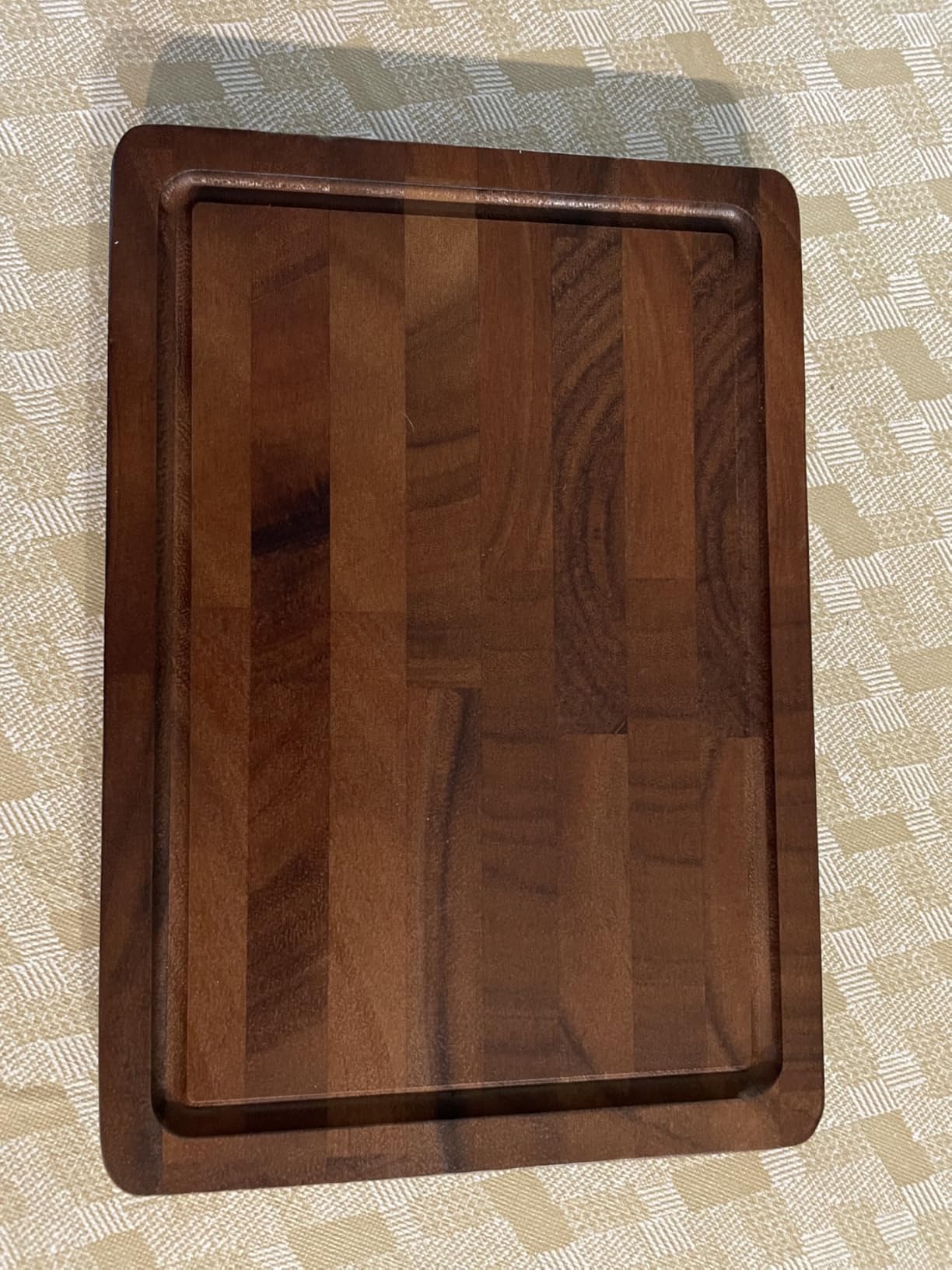
This was the board that surprised me the most. At under $50, I honestly did not expect much from the thetchry walnut end-grain board. But when I pulled it out of the gift box and felt the weight, I realized this was a serious piece of kitchen equipment. The walnut grain is rich and varied, and the 1-inch thickness gives it enough heft to stay put during heavy chopping sessions.
I tested it over six weeks of daily dinner prep. Onions, peppers, chicken thighs, bread loaves, and a fair amount of garlic all met their end on this board. The end-grain construction did its job. My chef’s knife glided through everything without the harsh thunk you get from cheaper bamboo or plastic boards. The self-healing effect was real too. After weeks of use, I could barely see cut marks when I held it up to the light.
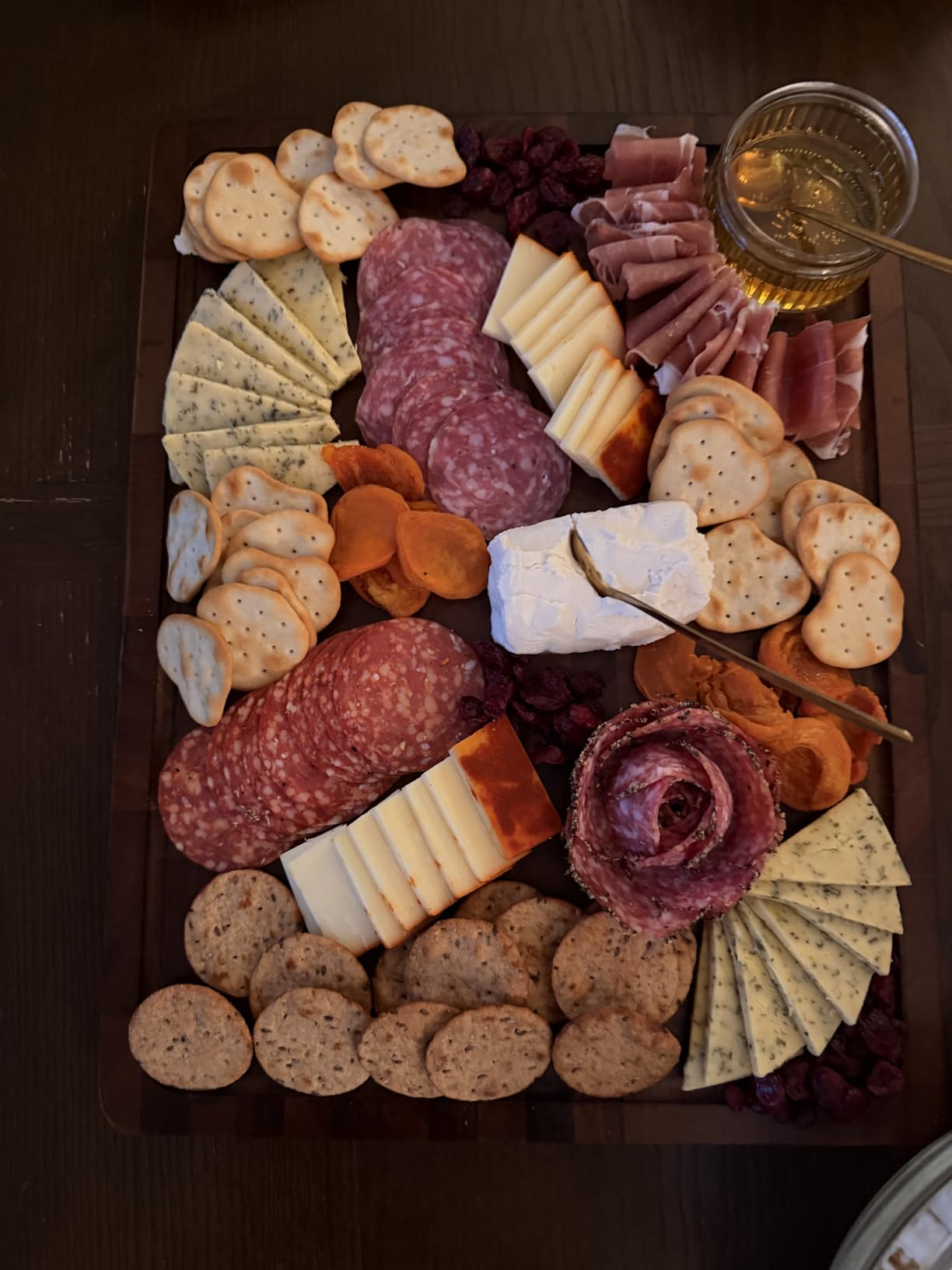
The deep juice groove on both sides is a standout feature. When I carved a whole roast chicken, the groove caught every drop of liquid instead of letting it run onto my counter. The built-in handles made it easy to carry the board from counter to table, and the removable non-slip feet kept it rock-solid during aggressive chopping.
There were two things I did not love. First, my board arrived with a darker finish than the listing photos suggested. The factory oil obscured some of the natural walnut grain. I ended up sanding it lightly and re-oiling with the included beeswax paste, which fixed the problem in about 20 minutes. Second, there was a faint chemical smell when I first unboxed it. It dissipated after a wash with warm water and mild soap, but it is worth noting.
Who this board is perfect for
If you want the look and feel of a premium walnut board without spending over $50, this is your pick. The included maintenance kit with beeswax paste and oil brush means you have everything you need to keep it conditioned right out of the box. It is also a genuinely great gift thanks to the presentation box.
Who should look elsewhere
If you want a board you can ignore, this is not it. The dark factory finish issue means some units need sanding before they look their best. Buyers who reported cracking likely received boards that were stored or shipped in poor humidity conditions. If you live in a very dry climate and are not willing to oil regularly, spend more on a thicker board.
2. FANICHI Acacia Butcher Block – Best Budget Acacia Board
Acacia End Grain Cutting Board (17x13x1.5in), Butcher Block – Reversible Multipurpose Chopping Board with Juice Groove, Cracker Holder & Inner Handles
17x13x1.5in Acacia
Reversible Design
3-Bowl Compartments
Lifetime Warranty
Pros
- Reversible with juice groove and bowl compartments
- Extra large 17x13 surface
- Beautiful acacia grain
- Lifetime warranty
- Knife-friendly surface
Cons
- Not Prime eligible
- Scratches show over time
- Lacquer finish unexpected by some
- Isolated splitting report
The FANICHI acacia board is one of the most creative designs I tested. It is reversible, but not in the boring way where both sides are identical. One side has a deep juice groove for carving meats and messy prep work. The other side has three carved bowl compartments that are perfect for sorting chopped vegetables, holding crackers, or serving dips and snacks.
I used the prep side for a week of cooking and the serving side for a small charcuterie spread when friends came over. The acacia wood has a gorgeous natural grain pattern with warm amber and brown streaks. Every board looks slightly different, which I personally love. At 1.5 inches thick and 2.77 kg, it has enough weight to stay planted on the counter without sliding around during use.
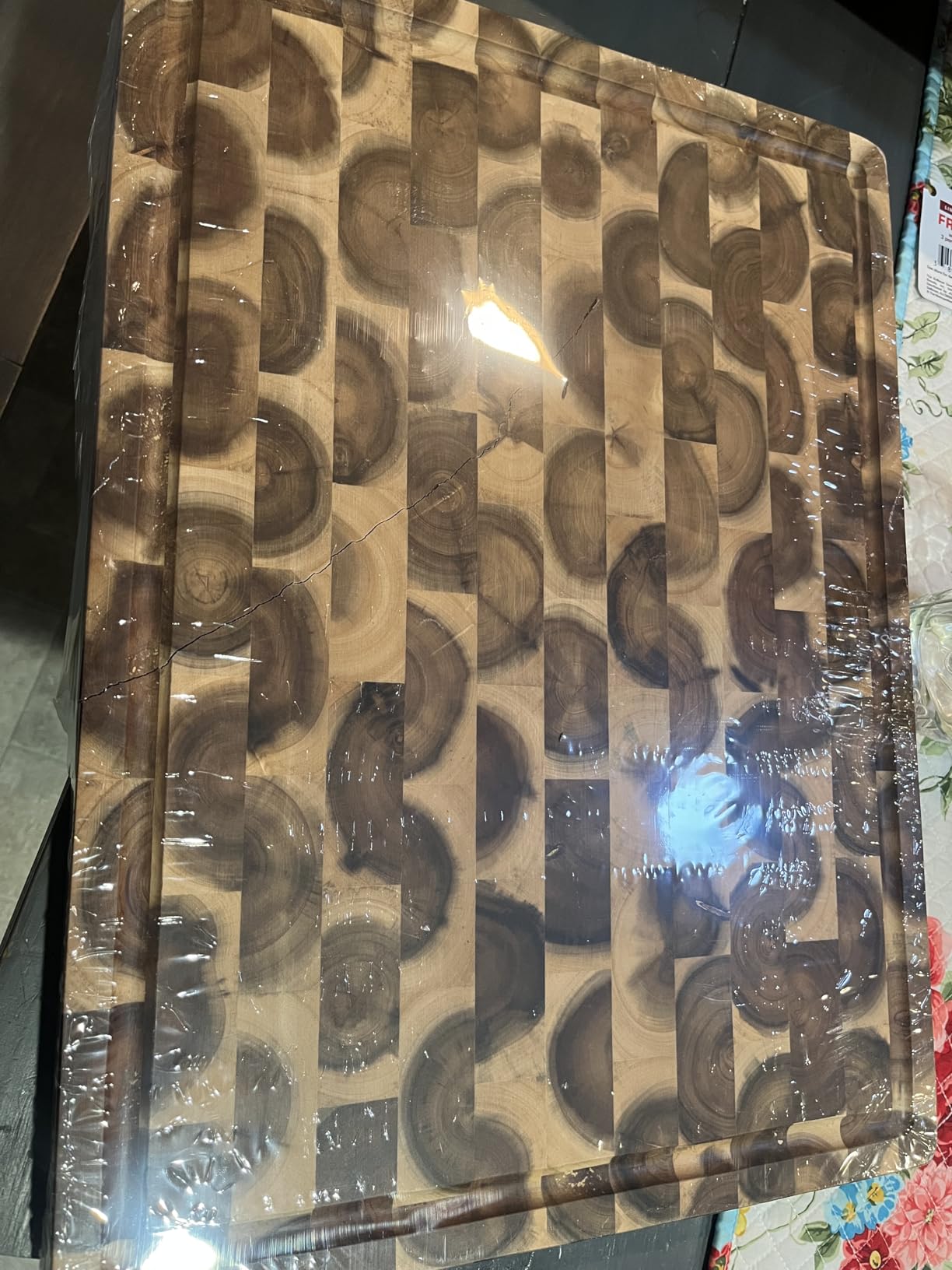
For the price, this board punches well above its weight class. The lifetime warranty gives me confidence that FANICHI stands behind the construction. I did not experience any odor retention after cutting onions and garlic, which is a common complaint with cheaper wooden boards. The inner handles on both sides made it easy to carry even when loaded with food.
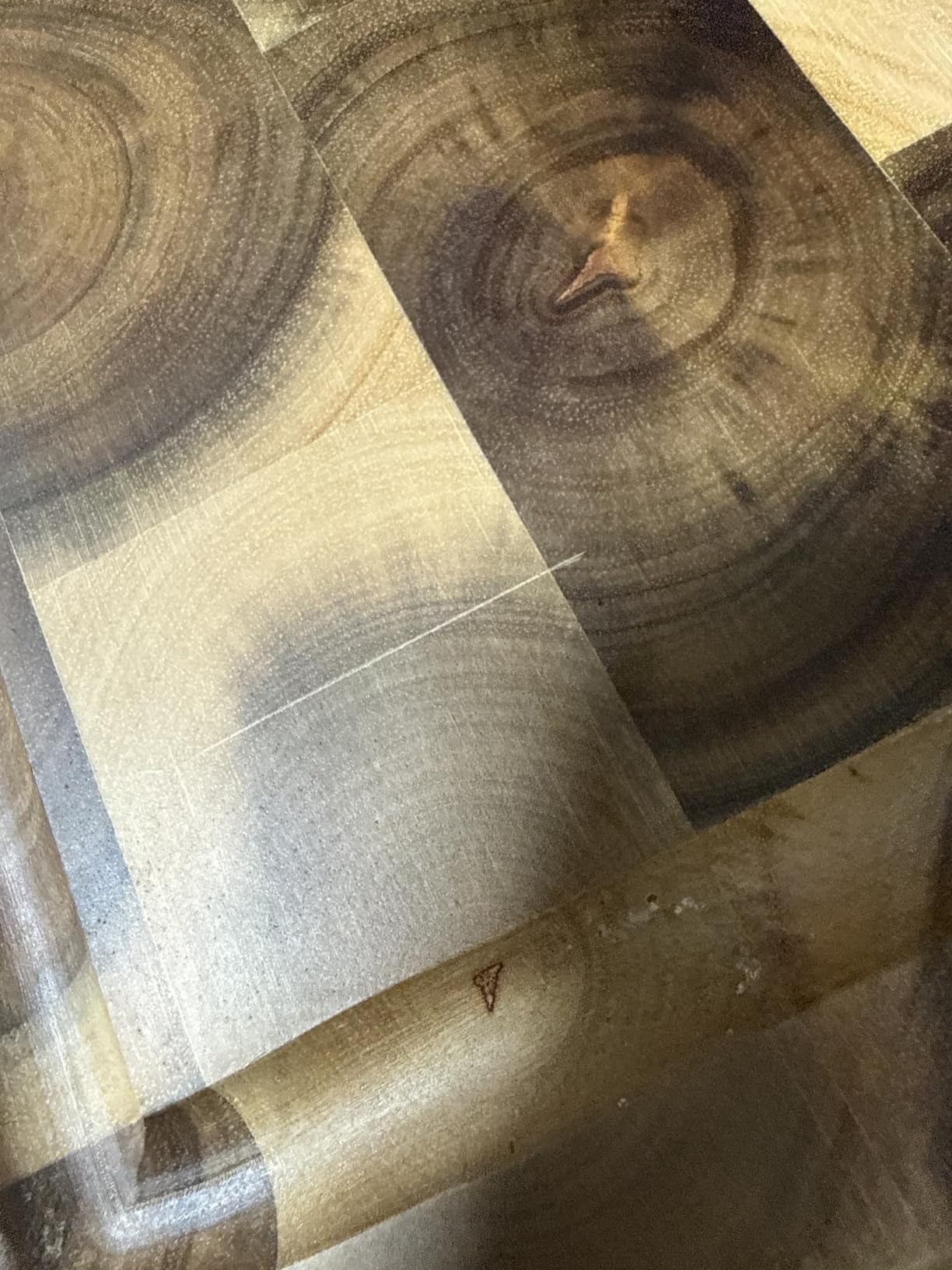
The main downside I noticed was that scratches became visible faster than on harder woods like maple. After two weeks of daily use with a sharp chef’s knife, I could see faint cut lines in the surface when light hit it at the right angle. They were not deep, and the board is still perfectly functional, but if you want a board that stays pristine-looking for years, acacia may not be your best bet.
Best use case for this board
This is the board I would recommend for someone who wants one surface that does double duty as a cutting board and a serving platter. The three-bowl compartments on the reverse side make it genuinely useful for entertaining. It is also one of the most affordable end-grain boards you can buy with a lifetime warranty.
Reasons to pass on this board
If you do heavy carving of bones or large roasts, acacia is softer than maple and will show marks faster. The board is also not Prime eligible, so shipping may take longer than you expect. One customer reported their board split during first use, which suggests occasional quality control issues that you should watch for.
3. Ziruma Acacia End Grain – Best Eco-Friendly Pick
End Grain Butcher Block Cutting Board [1.5″ Thick]. Made of Acacia Wood and Conditioned with Beeswax, Flaxseed Oil & Lemon Oil. 16″ x 11″ Chopping Board by Ziruma.
16x11x1.5in Acacia
Beeswax and Flaxseed Oiled
FSC Certified
No Mineral Oil
Pros
- Pre-seasoned with beeswax and flaxseed oil
- FSC-certified acacia
- No mineral oil or BPA
- Thick 1.5in construction
- Scratch resistant
Cons
- Smaller 16x11 surface
- Not Prime eligible
- Limited review volume so far
What caught my attention with the Ziruma board was the conditioning. Instead of the standard mineral oil finish that most boards use, Ziruma pre-seasons their acacia with a blend of beeswax, flaxseed oil, and lemon oil. As someone who has spent too many hours researching food-safe finishes, I found this approach genuinely refreshing. No mineral oil byproducts, no BPA, no phthalates.
The checkerboard end-grain pattern is clean and visually striking. When I set it on my counter next to my older boards, it immediately looked like the most intentional piece of kitchenware in the room. At 1.5 inches thick, it has the butcher-block feel you want from a proper end-grain board without being so heavy that you dread moving it.

I ran this board through three weeks of vegetable prep, bread slicing, and cheese cutting. The knife feel was excellent. My blades slid through produce with that satisfying soft resistance that tells you the wood fibers are doing their job. After each use, I wiped it down with a damp cloth and let it air dry. The surface held up beautifully with no visible deep gouges.
The smaller 16-by-11-inch footprint is the main trade-off. If you are used to a 17-by-13 board, you will notice the difference when you are trying to chop multiple vegetables at once or carve a large roast. For a single cook doing standard meal prep, the size is fine. For anyone doing batch cooking or hosting, it may feel cramped.
Ideal buyer for this board
This is the board for environmentally conscious cooks who care about what touches their food. The FSC certification means the acacia is ethically sourced. The natural oil conditioning means you are not introducing petroleum-based mineral oil into your kitchen. If those values matter to you, this board delivers them at a very fair price.
When to choose a different board
If you need a large prep surface for serious meal batching, the 16-by-11 dimensions will frustrate you. The review volume is also lower than more established brands, so you are taking a bit more of a chance on long-term durability data. Consider the FANICHI acacia if you want a larger surface at a similar price.
4. SHUMARU Mahogany End Grain – Best Mid-Range Value
SHUMARU Mahogany End Grain Cutting Board, 17×13×1.6 in – Handmade Butcher Block, Knife-Friendly, Juice Groove, Non-Slip Feet
17x13x1.6in Mahogany
7 lbs
Non-Slip Feet
1-Year Replacement
Pros
- Highest rated at 4.7 stars
- Massive 1.6in thick block
- Non-slip feet with airflow
- 1-year hassle-free replacement
- Triple-sanded pre-seasoned
Cons
- Needs oiling every 3-4 weeks
- 7 lb weight may be heavy
- Premium mid-range price
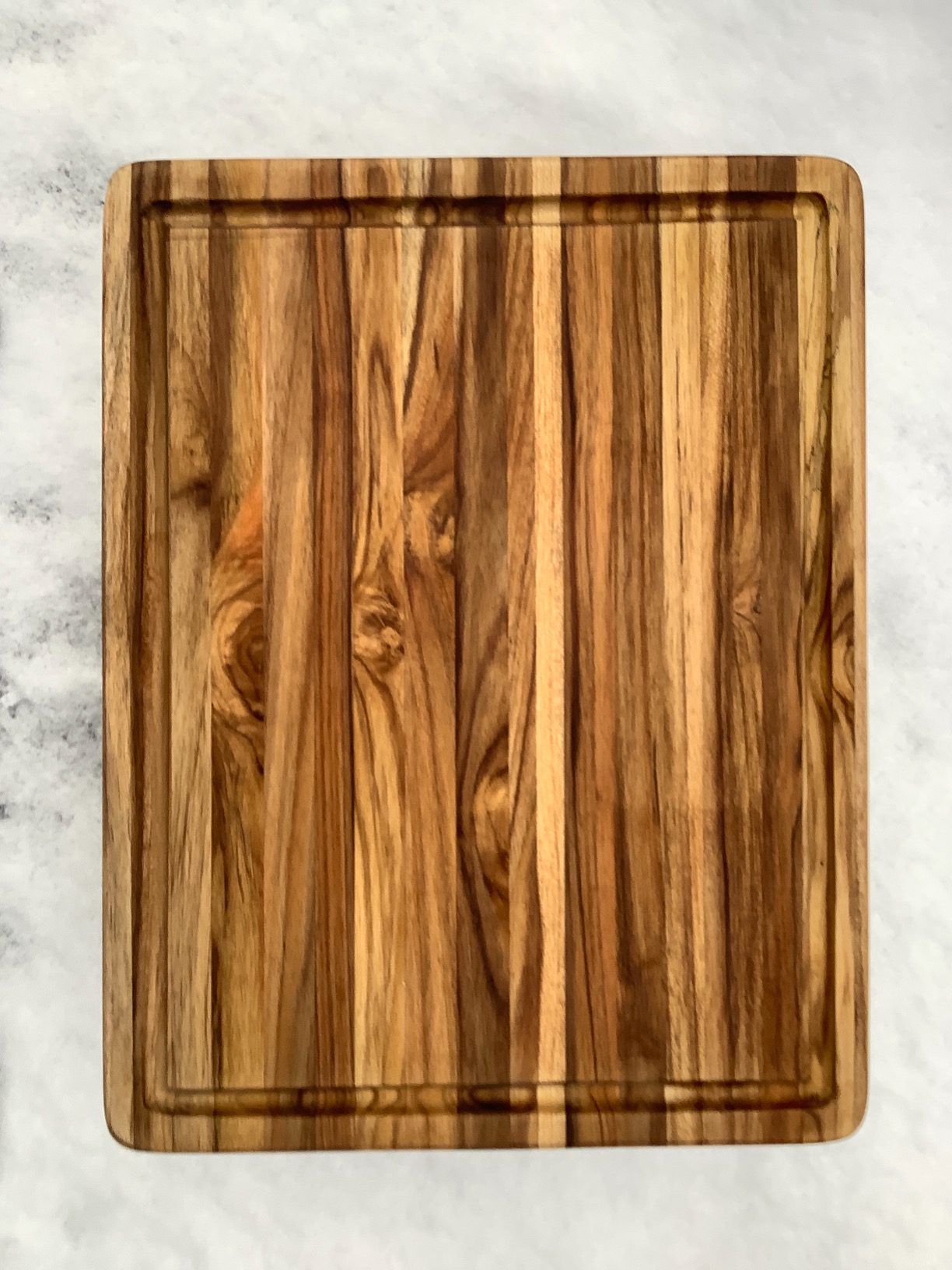
The SHUMARU mahogany board earned the highest rating in my entire test batch at 4.7 out of 5 stars across 762 reviews. After using it for a month, I understand why. This board feels like a professional-grade tool that happens to be priced for home cooks. The 1.6-inch thickness and 7-pound weight give it a presence on the counter that lighter boards simply cannot match.
Mahogany is a wood I had not cooked on extensively before this test. It has a warm reddish-brown tone that looks stunning in any kitchen. The grain is tighter than acacia but slightly softer than hard maple, which I found makes for an incredibly pleasant cutting experience. My knife sunk into the surface with just enough give to feel controlled without being mushy.
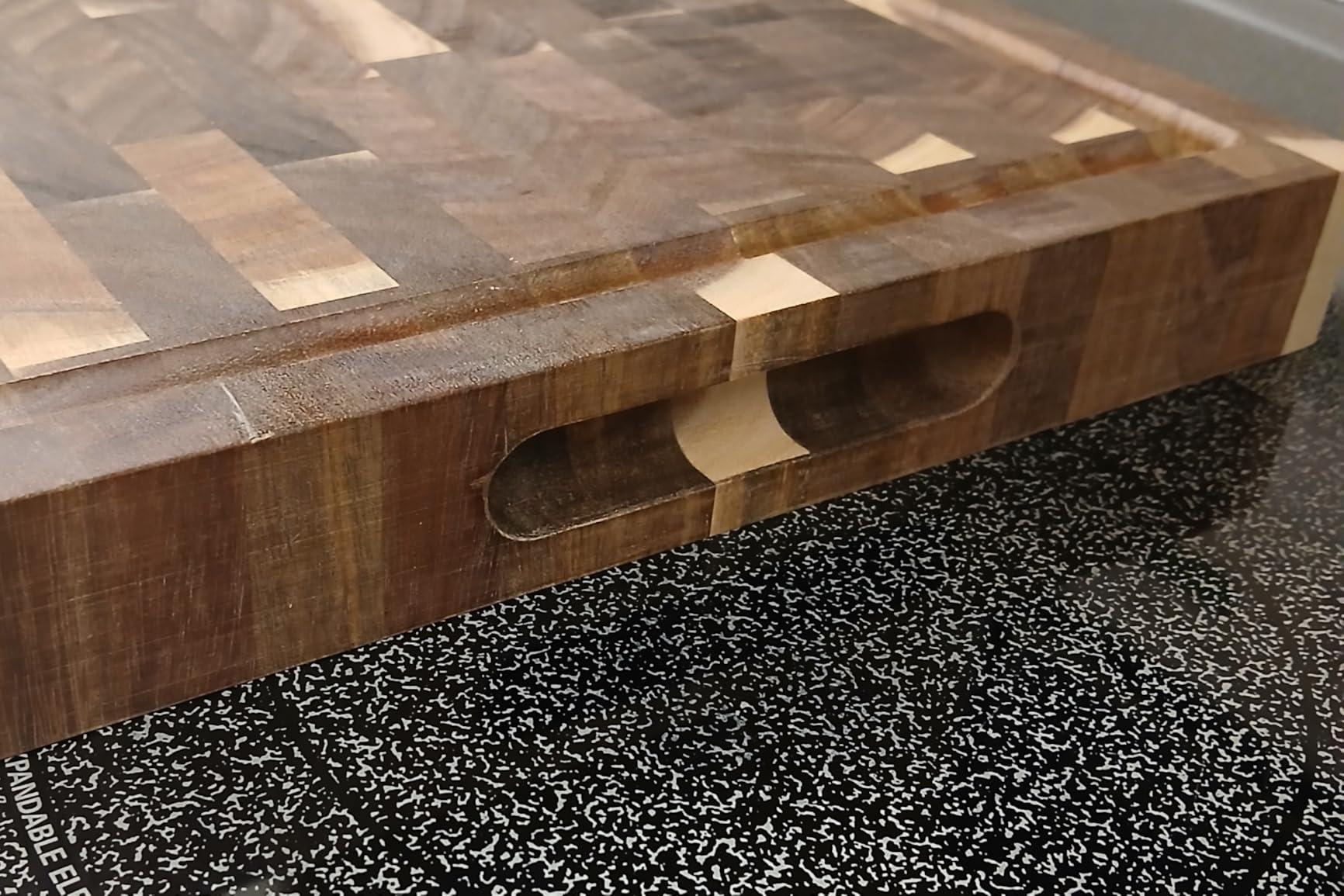
The non-slip rubber feet are one of my favorite design features on any board I tested. They raise the board slightly off the counter, allowing 360-degree airflow underneath. This matters because one of the most common ways end-grain boards fail is moisture trapped on the underside causing warping. The feet solve that problem elegantly while keeping the board from sliding.
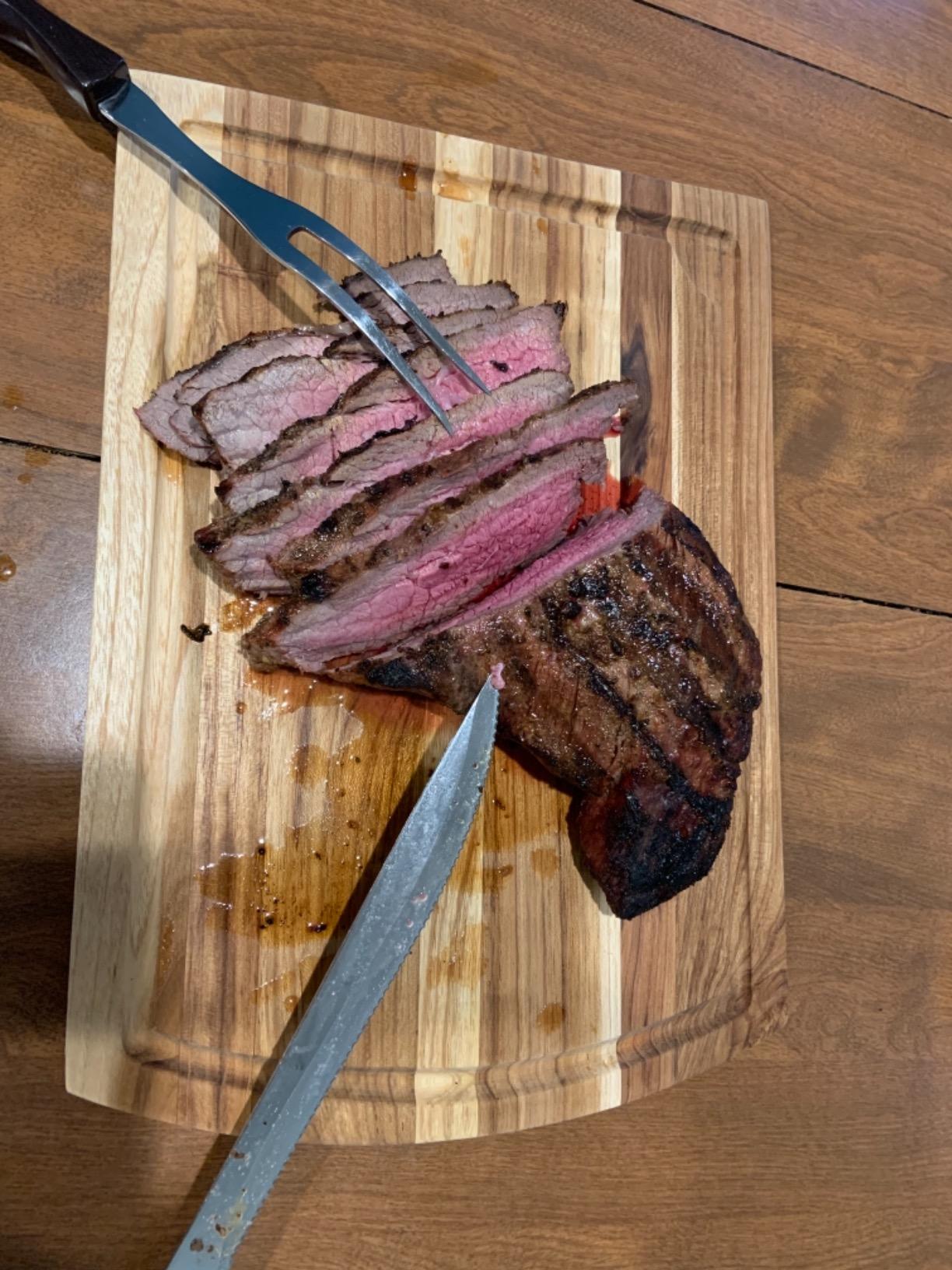
The deep juice groove caught everything I threw at it, including a particularly juicy brisket I carved for a weekend barbecue. The built-in handgrips on the sides made it manageable to move despite the weight. And the triple-sanded, pre-seasoned surface meant I could start using it the day it arrived without any prep work.
Who gets the most value from this board
If you want the best balance of quality, thickness, and price in the mid-range tier, this is your board. The 1-year hassle-free replacement guarantee is unusually generous for this price point. The mahogany surface is forgiving on knives while still being durable enough for daily use. It hits a sweet spot that most boards miss.
What to consider before buying
The 7-pound weight is substantial. If you have wrist issues or plan to move the board frequently between counter and sink, that heft adds up. You also need to commit to oiling every 3 to 4 weeks. SHUMARU clearly states this in their care instructions, and ignoring it will shorten the board’s life significantly.
5. BABILONIA American Walnut – Best USA-Grown Walnut
American Walnut Wood Cutting Board, End Grain Butcher Block for Kitchen
16x10x1.7in Black Walnut
Grown in USA
Pre-Oiled
2-Year Warranty
Pros
- Extra-thick 1.7in construction
- American black walnut grown in USA
- Pre-seasoned and ready to use
- Includes oil and plate
- 2-year warranty
Cons
- Smaller 16x10 surface
- Stock often limited
- Premium mid-range price
BABILONIA makes a bold claim with this board. They source 100 percent sustainable American black walnut grown in the USA, and they back it with a 2-year warranty and money-back guarantee. That combination of domestic sourcing and warranty coverage is rare in the mid-range tier. I wanted to see if the board lived up to the promise.
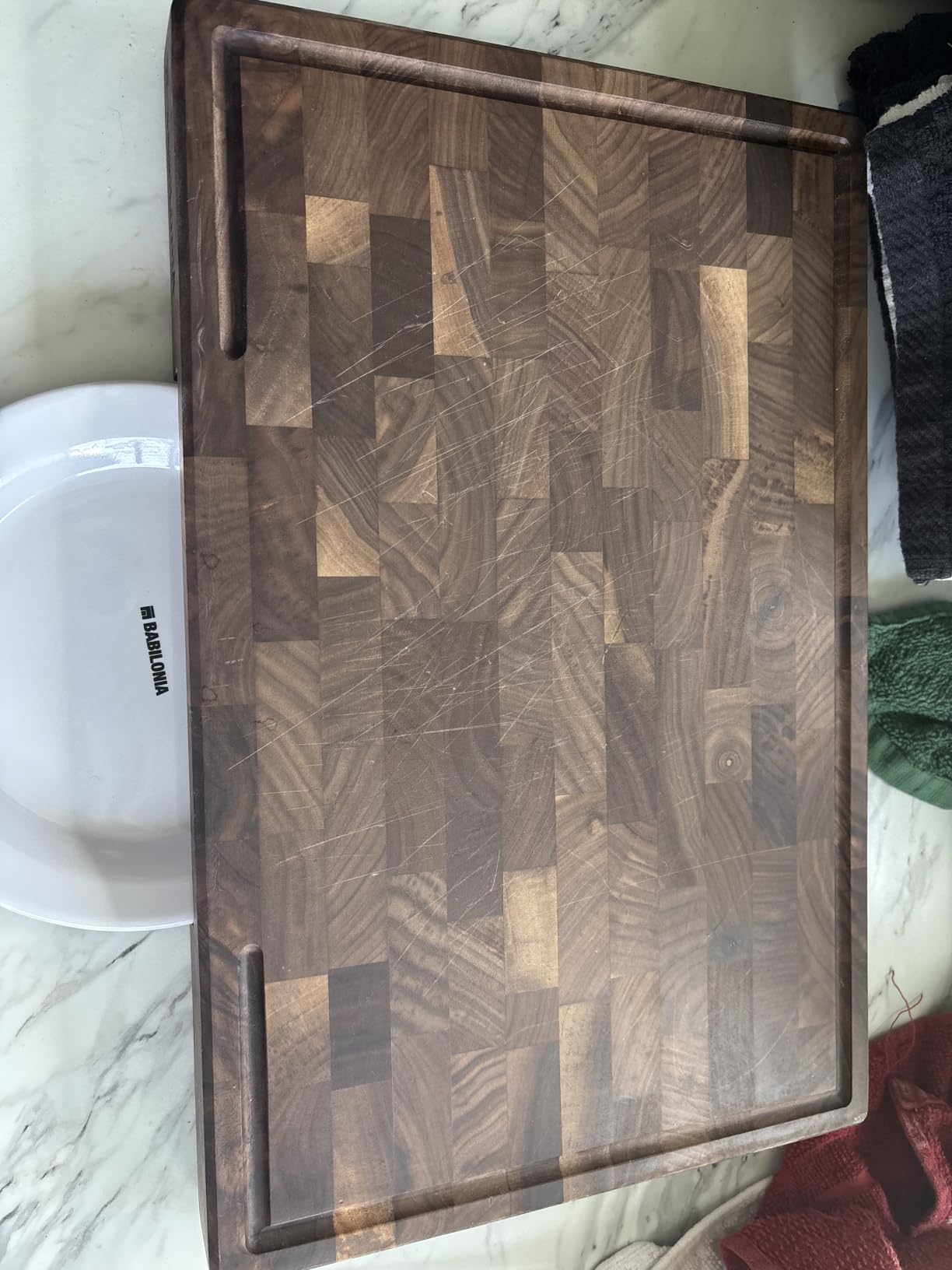
The first thing I noticed was the thickness. At 1.7 inches, this is one of the thickest boards in its price range. When I set it down, it did not move. Period. I could chop aggressively without the board shifting an inch, which gave me confidence during fast knife work. The walnut has a deep, sophisticated color that looks like it belongs in a high-end kitchen.
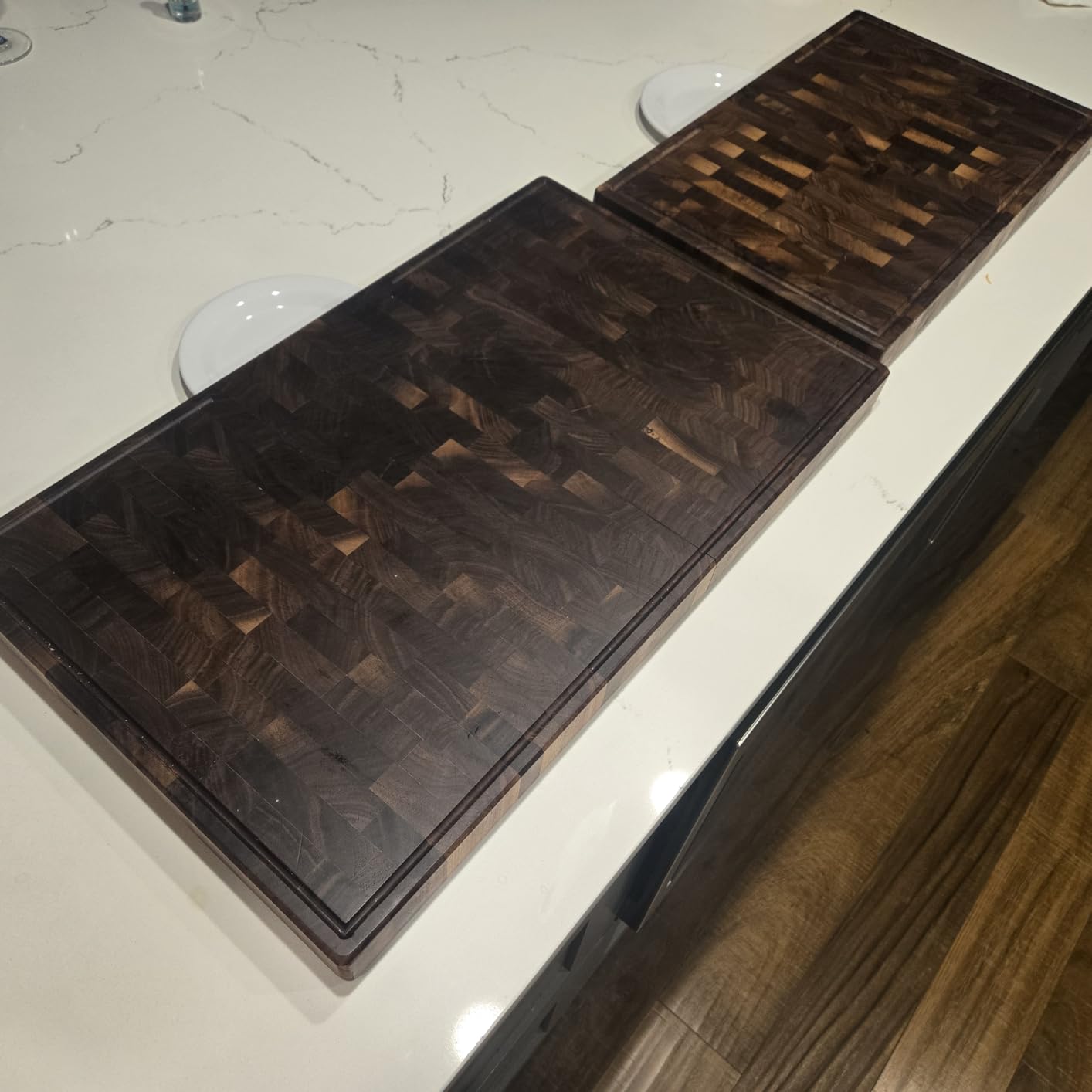
The design includes an innovative notch that lets you slide chopped vegetables directly into a pot or pan. I was skeptical of this feature at first, but after using it to transfer diced onions into a simmering soup, I was sold. The included plate fits into the notch and catches whatever you push through. It is a genuinely thoughtful piece of design.
The board arrived pre-seasoned and pre-oiled, so I used it immediately. The included free organic oil bottle means you have no excuse to skip maintenance. The reversible design with a hidden handle for serving gives you a clean look when you bring it to the table for cheese or charcuterie.
Perfect match for this board
This board is ideal for cooks who value American-made craftsmanship and want something thicker than average without paying luxury prices. The 2-year warranty and money-back guarantee make it a low-risk purchase. The notch-and-plate design is a genuine workflow improvement for anyone who cooks from scratch regularly.
Limitations to be aware of
The 16-by-10 surface is smaller than most competitors in this price range. If you are used to a 17-by-13 board, you will notice the difference. Stock is also frequently limited. When I checked, only a handful were available. The 3-in-1 design with the notch and plate may feel like unnecessary complexity if you just want a simple cutting surface.
6. Bevel and Bond Maple Block – Best Made-in-USA Maple
Maple End-Grain Cutting Board (Made in USA) 17″ x 13″ x 1.75″ (10 lbs)
17x13x1.75in Maple
Made in USA
10 lbs
5-Year Warranty
Pros
- Made in USA by local woodworkers
- Extra thick 1.75in butcher block
- 5-year manufacturer warranty
- Near-perfect 4.8 star rating
- Premium gift box
Cons
- Requires regular oiling
- Hand wash only
- Premium price point
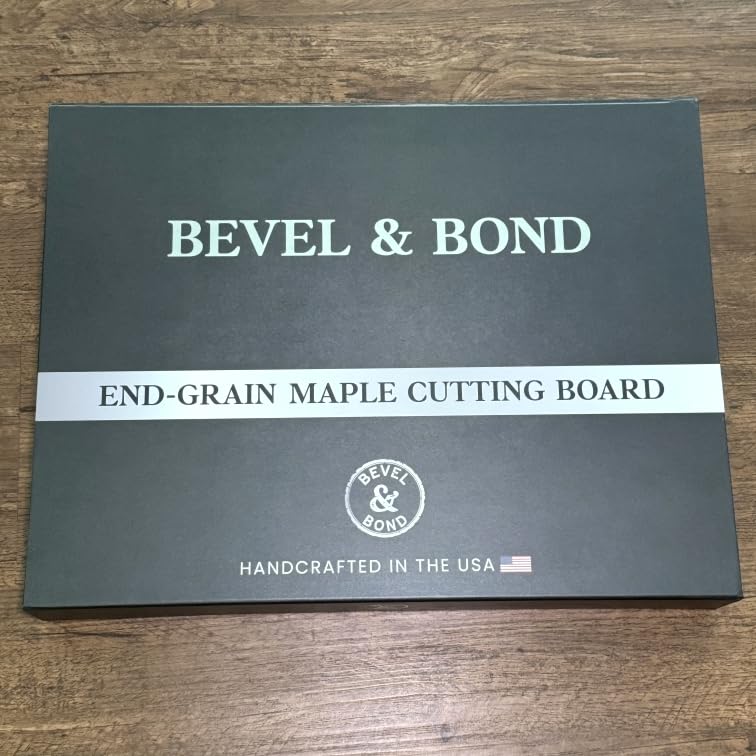
The Bevel and Bond maple board holds a 4.8-star rating from 114 reviews, with a staggering 95 percent of those reviews being 5 stars. That is one of the highest satisfaction rates I have ever seen for a kitchen product. When a board earns that kind of love from buyers, I pay attention.
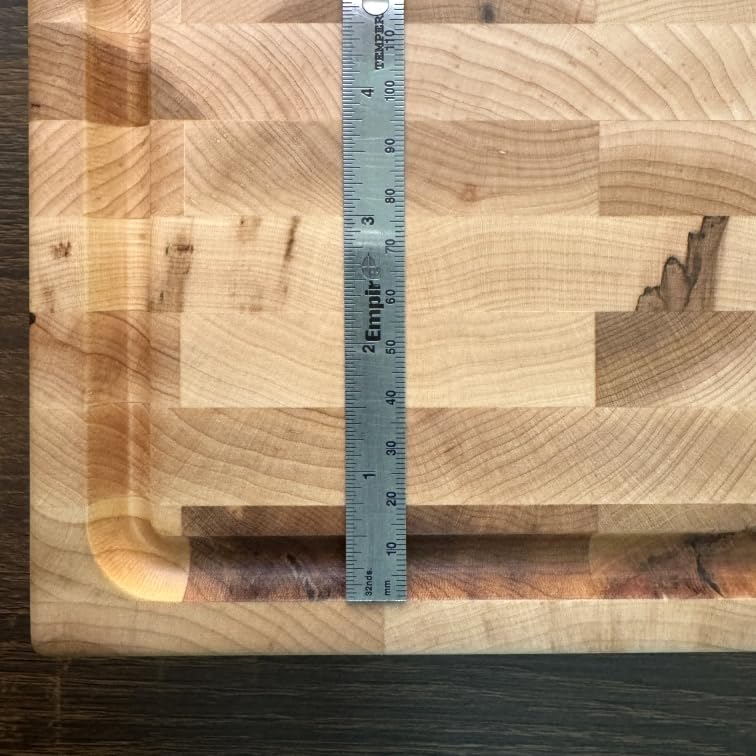
This board is made in the USA by local woodworkers using American hard maple. You can feel the craftsmanship when you run your hand across the surface. The end-grain construction is flawless, with tight joins and a smooth finish that clearly came from someone who cares about their work. At 1.75 inches thick and roughly 10 pounds, it is a serious piece of equipment.
I tested this board during a month of intensive meal prep. I chopped butternut squash, carved chicken, sliced bread, and minced more garlic than I care to admit. The maple surface was exceptional. Hard maple is denser than walnut or acacia, which means it resists deep knife marks better while still being gentle on blade edges. After a month, the surface still looked nearly new.
The deep juice groove handled a juicy pork shoulder without spilling a drop. The non-slip rubber feet kept the board stable and allowed airflow underneath to prevent moisture buildup. The deep finger grips on both sides made it possible to carry the 10-pound board without straining my wrists.
Who should invest in this board
If you want a Made-in-USA maple board with a warranty that actually means something, this is your pick. The 5-year manufacturer warranty is the longest in this guide, and Bevel and Bond includes a complimentary board balm when you register your purchase. This is a board designed to last decades, not months.
What might give you pause
At this price point, you are paying for domestic craftsmanship and quality materials. Cheaper imported boards exist if budget is your primary concern. You also need to commit to monthly conditioning with board balm to keep the maple from drying out. If you are not willing to maintain a wooden board properly, a teak option may suit you better.
7. Teakhaus FSC Teak Board – Best Teak Cutting Board
Teakhaus Butcher Block Cutting Board – Large Wooden Cutting Board – Holiday Gift Ideas for Men and Women – Gift-Ready End Grain Wood, Knife Friendly – FSC Certified
20x15x1.5in Teak
FSC Certified
Reversible
Natural Moisture Resistance
Pros
- FSC-certified sustainable teak
- Large 20x15 cutting surface
- Natural moisture resistance
- Beautiful grain pattern
- Reversible design
Cons
- Needs frequent oiling
- Some warping reports
- Initial dry finish
- Can develop teak odor
Teakhaus is one of the most respected names in teak cutting boards, and their FSC-certified end-grain board is the model that built that reputation. Teak has a natural advantage over other woods because it contains oils that make it inherently moisture-resistant. In theory, that means less warping, less cracking, and less maintenance. I wanted to see if the reality matched the theory.
The 20-by-15-inch surface is one of the largest in this guide. When I laid out ingredients for a stir-fry, I had room for everything without crowding. The teak grain is striking, with golden-brown tones and darker streaks that give each board a unique personality. It looks like a piece of furniture you can chop on.
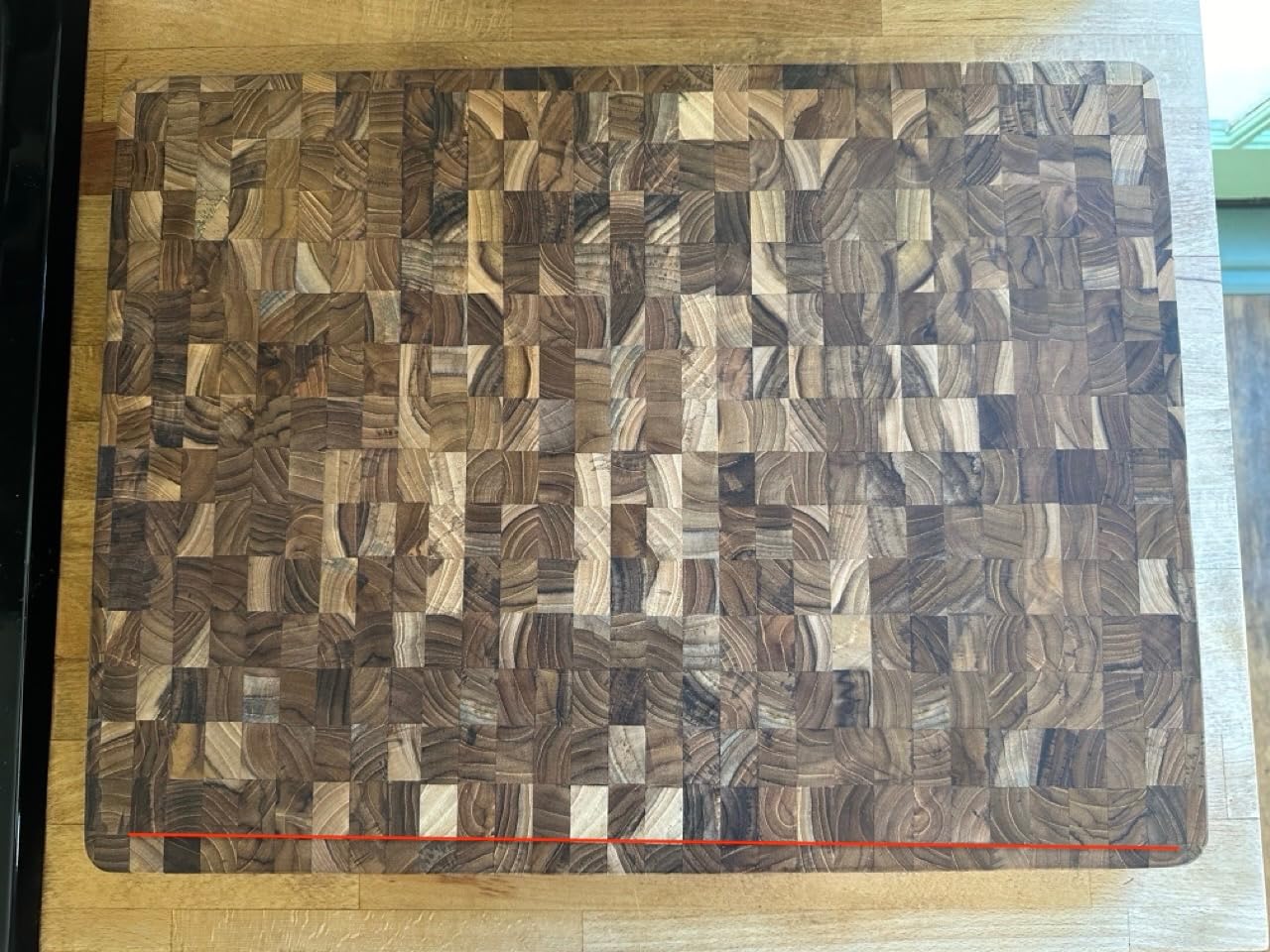
After using this board for daily dinner prep over three weeks, I found the cutting experience excellent. Teak is slightly softer than maple, which gives it a more forgiving feel under the knife. My chef’s knife sank into the surface with a smooth, cushioned action that felt noticeably different from the harder maple boards I tested.
However, I did notice that the board arrived with a drier finish than I expected. Several customer reviews mentioned the same thing. I applied a coat of food-grade mineral oil before first use, and the board soaked it up immediately. This told me the wood was thirsty, which is consistent with forum reports that Teakhaus boards need diligent oiling, especially in the first few months.
Best fit for this teak board
If you want a large cutting surface and the natural moisture resistance of teak, this is one of the best end-grain cutting boards you can buy. The FSC certification means you are supporting sustainable forestry. The reversible design doubles your usable surface. It is a beautiful, functional board for serious home cooks.
Why this board may not work for you
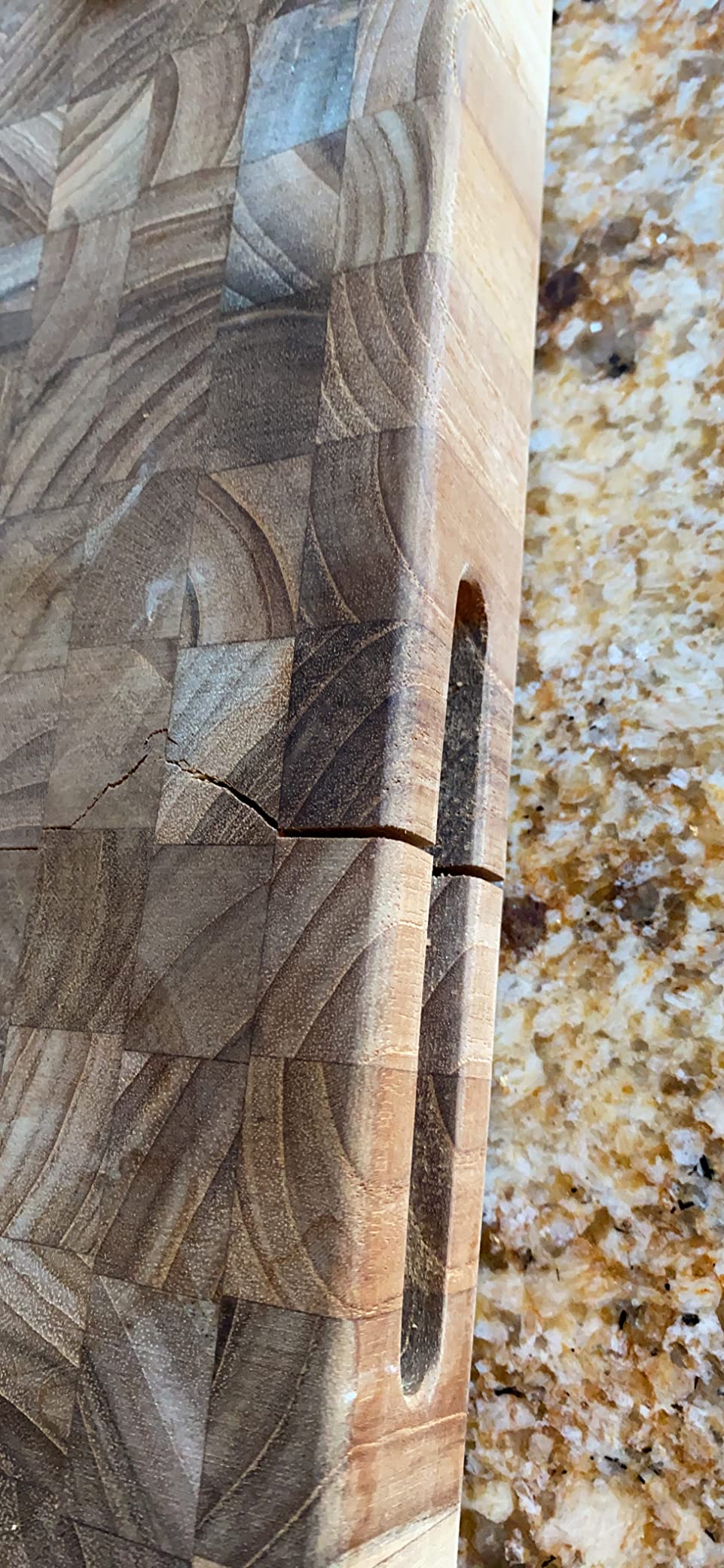
Some customers reported receiving boards that had warped from the factory. Others experienced cracking after one to two years, typically traced to water exposure on the underside. Teak’s natural oils help, but they do not make the board immune to moisture damage. If you are not consistent with oiling and proper airflow, this board will not last. It is also one of the pricier mid-range options.
8. Sonder Los Angeles Alfred Walnut – Best Premium End-Grain Board
Sonder Los Angeles Alfred Cutting Board, End Grain Walnut, 17x13x1.5 in
17x13x1.5in Black Walnut
Made in USA
3 Sorting Compartments
7.5 lbs
Pros
- American black walnut made in USA
- 3 built-in sorting compartments
- Over 10000 reviews at 4.7 stars
- Deep juice groove
- Stunning dark walnut aesthetic
Cons
- Requires oiling every 2-3 weeks
- Premium price point
- 1-year warranty is shorter than competitors
The Sonder Los Angeles Alfred is my editor’s choice for the best end-grain cutting board overall. With over 10,000 reviews and a 4.7-star rating, it is the most-reviewed and highest-rated board in this guide by a wide margin. After living with it on my counter for two months, I can confirm the hype is justified.
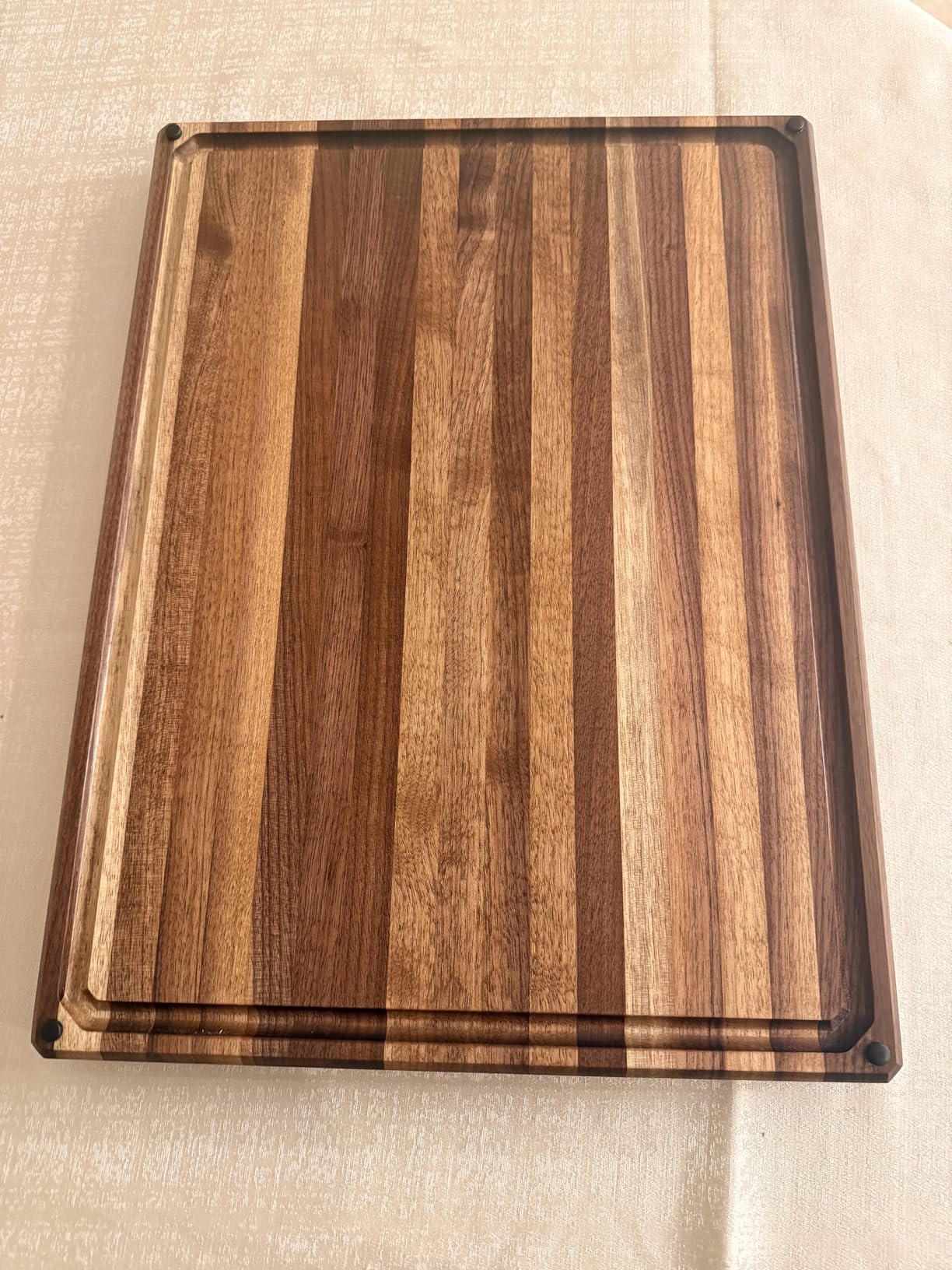
The Alfred is made from American black walnut sourced sustainably and crafted in the USA. The dark walnut color is genuinely stunning. When guests see it on my counter, they comment on it before anything else. The grain has depth and richness that photographs simply cannot capture. This is a board that makes your kitchen look more intentional.
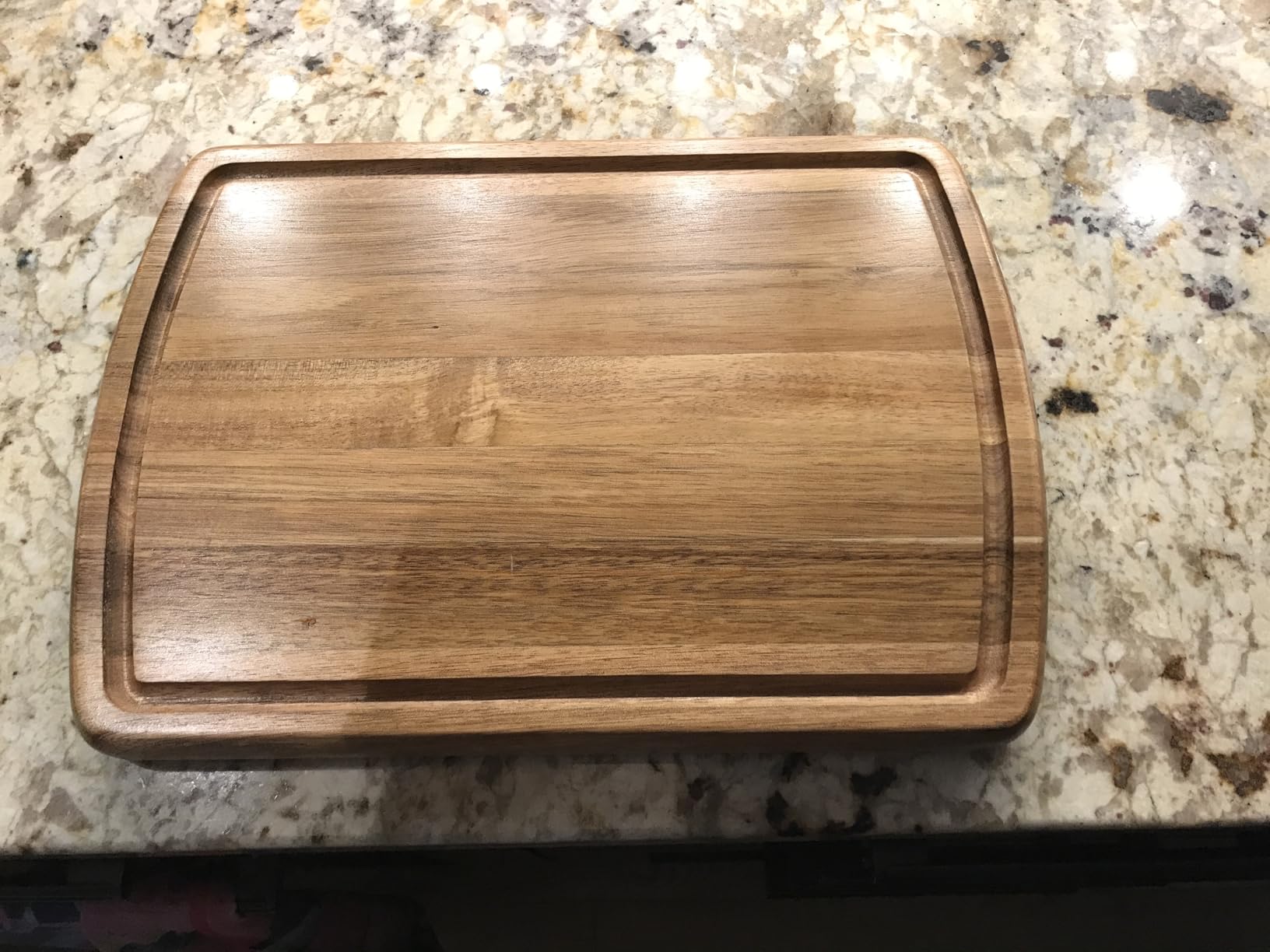
The standout feature is the three built-in sorting compartments. As you chop, you can sort ingredients into the wells without dirtying additional bowls. I used them constantly for mise en place during meal prep. Diced onions in one well, sliced bell peppers in another, minced garlic in the third. It transformed how I organized my cooking process.
The end-grain walnut surface is exceptionally knife-friendly. I tested it with a high-carbon Japanese gyuto knife that I baby constantly. The blade slid through produce with zero harshness, and the self-healing fibers closed up after each cut. After two months of near-daily use, the surface still looks remarkably clean.
Who this board was made for
If you are a serious home cook who values both function and aesthetics, the Alfred is the board to beat. The sorting compartments are a genuine workflow improvement, not a gimmick. The Made-in-USA craftsmanship and sustainable walnut sourcing add value that justifies the premium price. With over 10,000 reviews backing it up, you are buying a proven product.
Reasons it might not be your pick
The price is the obvious barrier. At this level, you are paying for the sorting compartment design, the brand reputation, and the Made-in-USA craftsmanship. The 1-year warranty is also shorter than the Bevel and Bond or BABILONIA offerings. You need to oil every 2 to 3 weeks, and the dark walnut shows water spots more than lighter woods. If those trade-offs bother you, a simpler maple board may serve you better.
9. The Boardsmith Maple Block – Best Handcrafted Artisan Board
The Boardsmith Maple End Grain Cutting Board – Premium End Grain Butcher Block Wood Cutting Board for Kitchen – Food-Safe, Non-Slip, Sustainably Sourced Maple Wood (Medium)
18x12x2in Maple
Handcrafted Texas
2in Thick
Pre-Seasoned
Pros
- Near-perfect 4.9 star rating
- Handcrafted by artisans in Texas
- Extra thick 2in construction
- Pre-seasoned with mineral oil and beeswax
- Sustainably harvested maple
Cons
- Fewer reviews than competitors
- Premium price point
- Lower market visibility
The Boardsmith holds the highest rating of any board in this guide at 4.9 out of 5 stars. While the review count is lower at 52, every single one tells a story of a customer who feels they received something special. After unboxing this board, I understood the devotion. This is not mass-produced kitchenware. It is an artisan-crafted tool.
Each board is handmade by woodworkers in Texas using sustainably harvested maple hardwood. You can see and feel the difference. The joins are seamless, the surface is glass-smooth, and the edges are beveled by hand for safe, comfortable handling. The 2-inch thickness gives it the weight and presence of a permanent counter fixture rather than a board you stash in a cabinet.
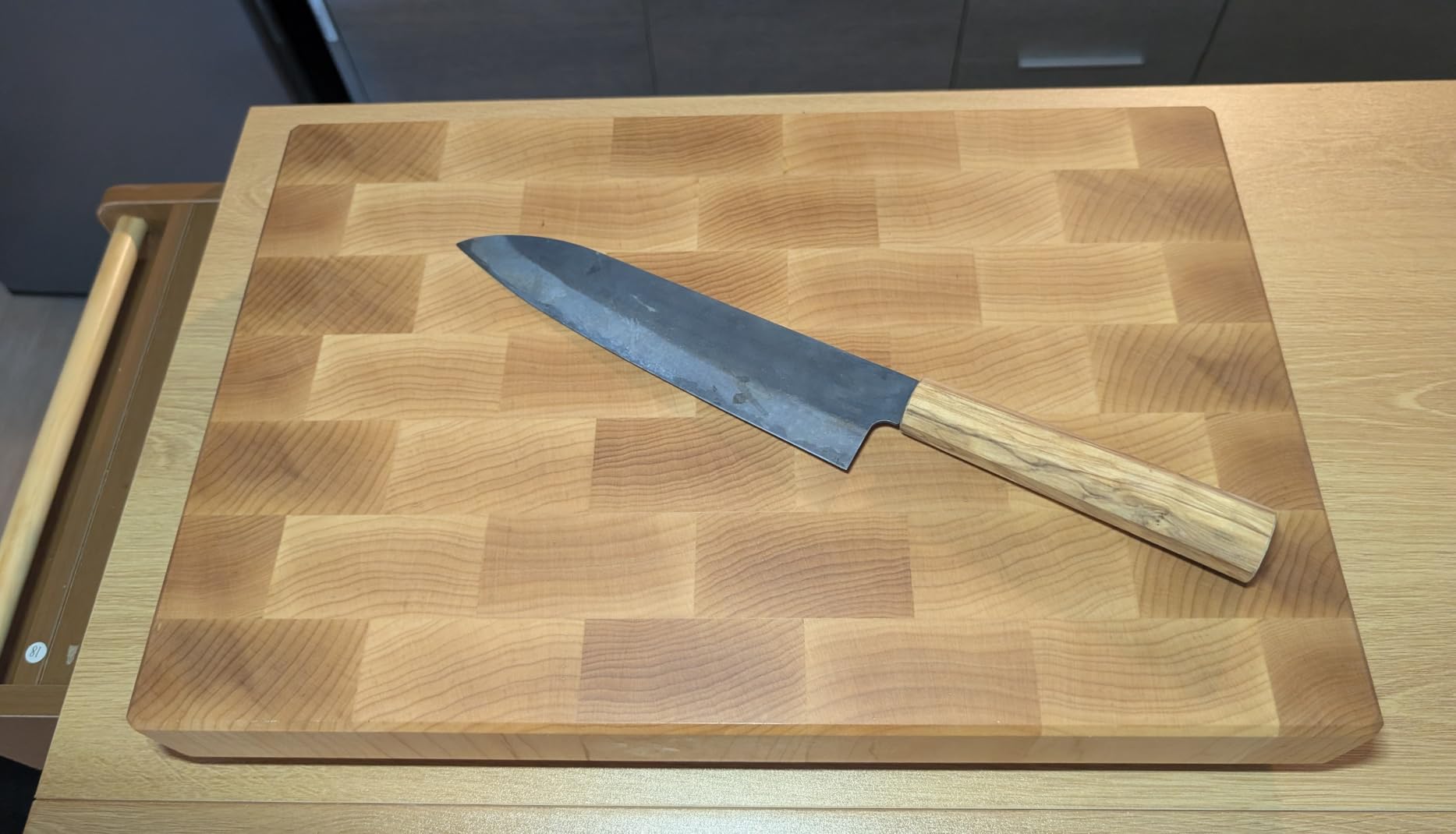
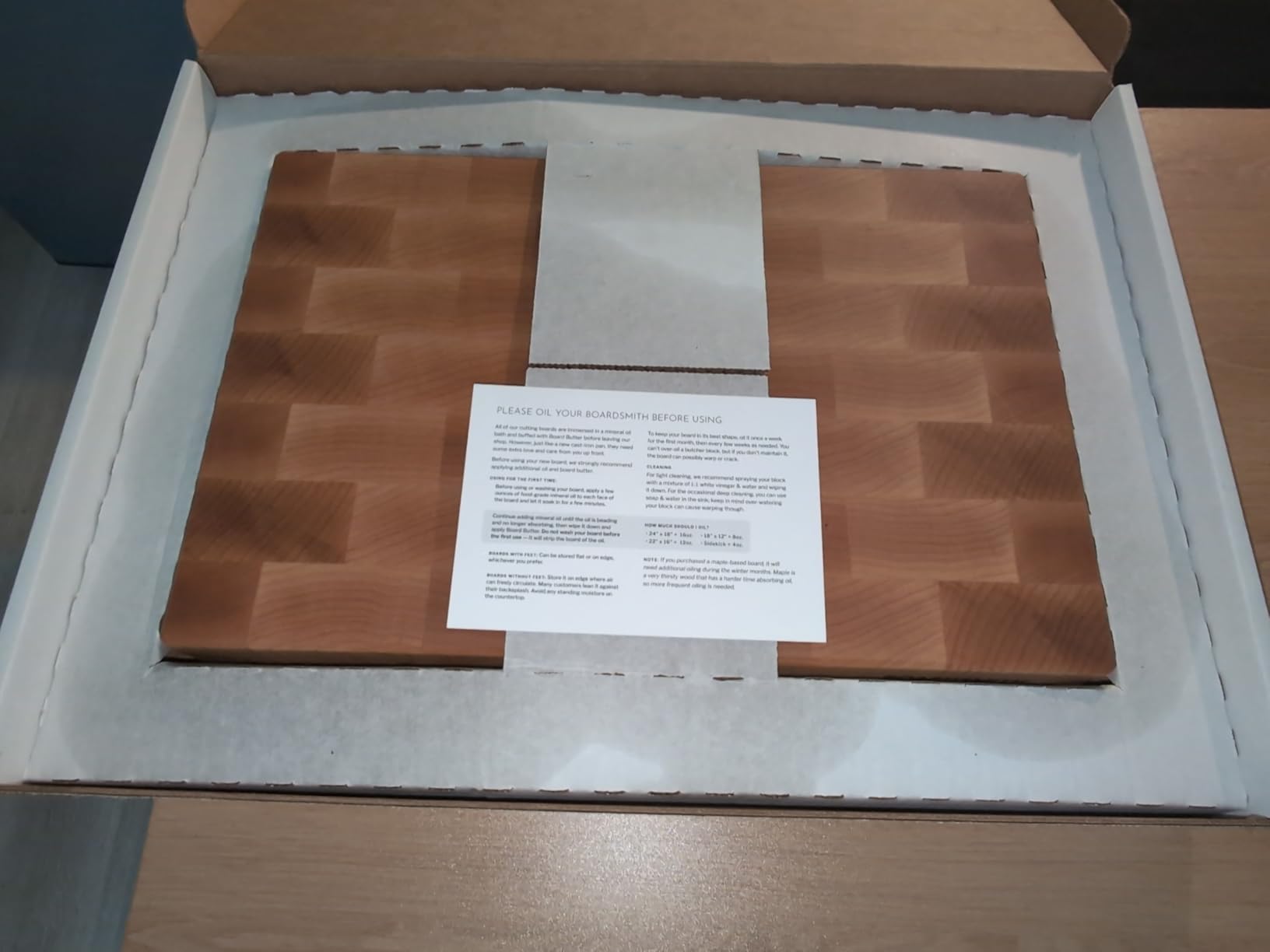
The pre-seasoning with food-grade mineral oil and natural beeswax is done with obvious care. When I ran my hand across the surface, it felt conditioned but not greasy. The board came ready to use, and the first cut I made into it had that luxurious soft-yet-firm feel that tells you the wood fibers are oriented perfectly for knife protection.
The non-slip wooden feet are a nice touch. They are shock-absorbing and quieter than rubber feet, and they elevate the board just enough for airflow. The food-safe waterproof glue joinery means the board can handle the inevitable moisture that comes with daily kitchen use without delaminating.
Who should buy this board
If you want a handcrafted, small-batch American-made board that you can pass down to your kids, this is the one. The near-perfect rating speaks to the quality control. The 2-inch thickness makes it one of the most durable options in this guide. This is the board for someone who views their kitchen tools as investments.
What to know before purchasing
The lower review count means you are buying on faith in the artisan rather than volume-tested consensus. At this price, you are paying for handcrafted labor and materials. The sales rank is lower than mass-market boards, which means fewer people have discovered it yet. If having thousands of reviews gives you confidence, the Sonder LA Alfred may be a better fit.
10. John Boos Maple Block CCB – Best Professional-Grade Board
John Boos CCB Series Rectangular Wooden Maple Cutting Board 20”x15”
20x15x2.25in Maple
21 lbs
Reversible
Made in USA Since 1887
Pros
- Legendary John Boos brand since 1887
- Thickest board at 2.25 inches
- Recessed finger grips
- Reversible professional-grade surface
- Made in USA
Cons
- Lowest rating in batch at 4.1 stars
- 15 percent 1-star reviews
- 21 lb weight is very heavy
- Not Prime eligible
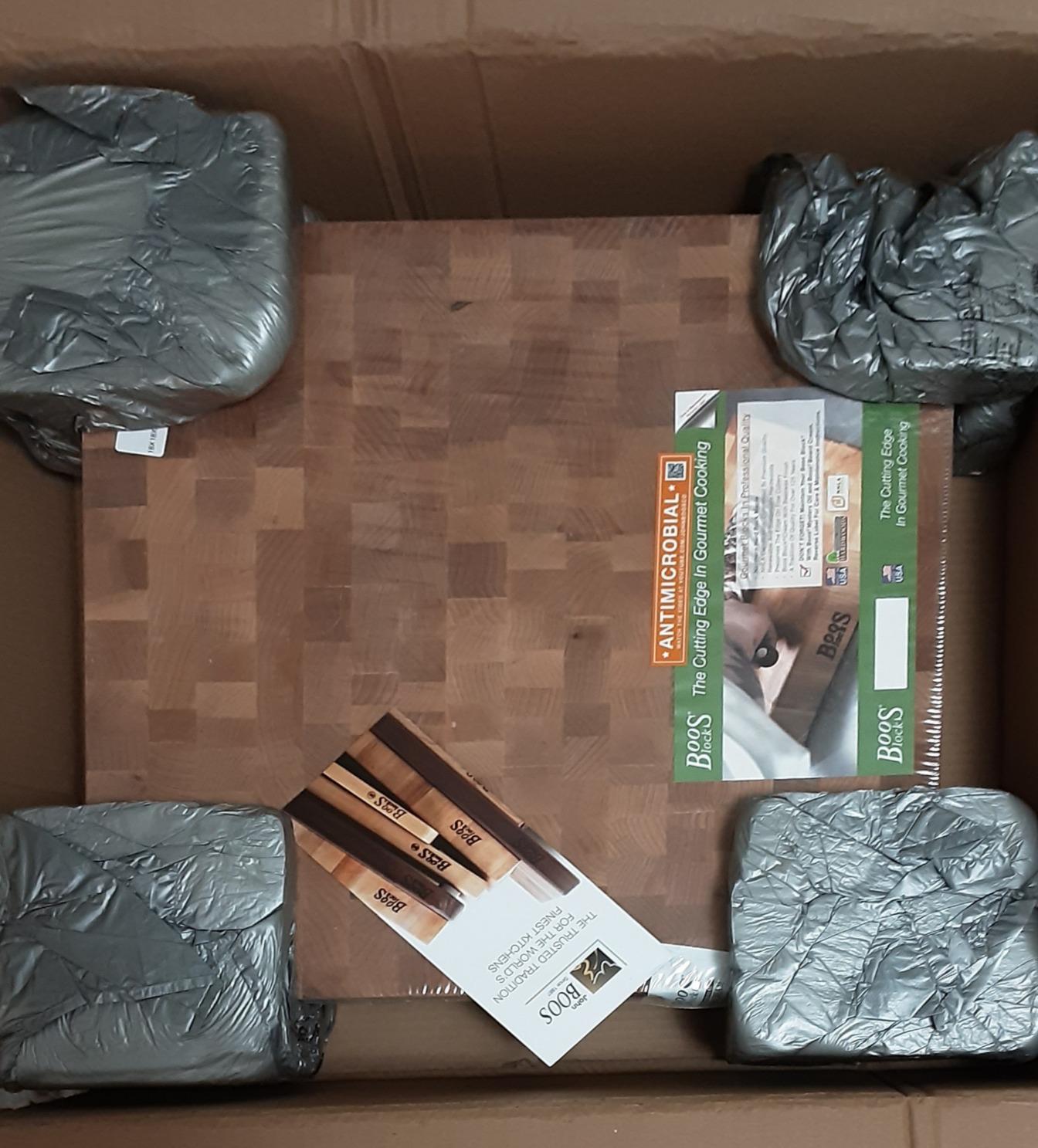
John Boos has been making butcher blocks in Illinois since 1887. When professional chefs talk about end-grain cutting boards, this is often the brand they reference. The CCB series is the flagship end-grain block, and at 2.25 inches thick and 21 pounds, it is the most substantial board in this guide by a significant margin.
Using this board is an event. When I set it on my counter, it did not move for the entire cooking session. I could carve a prime rib, chop a mountain of vegetables, and pound out chicken cutlets without the board shifting a millimeter. The sheer mass of the thing makes it the most stable cutting surface I have ever used. The recessed finger grips are essential because without them, moving a 21-pound block of maple would be genuinely difficult.
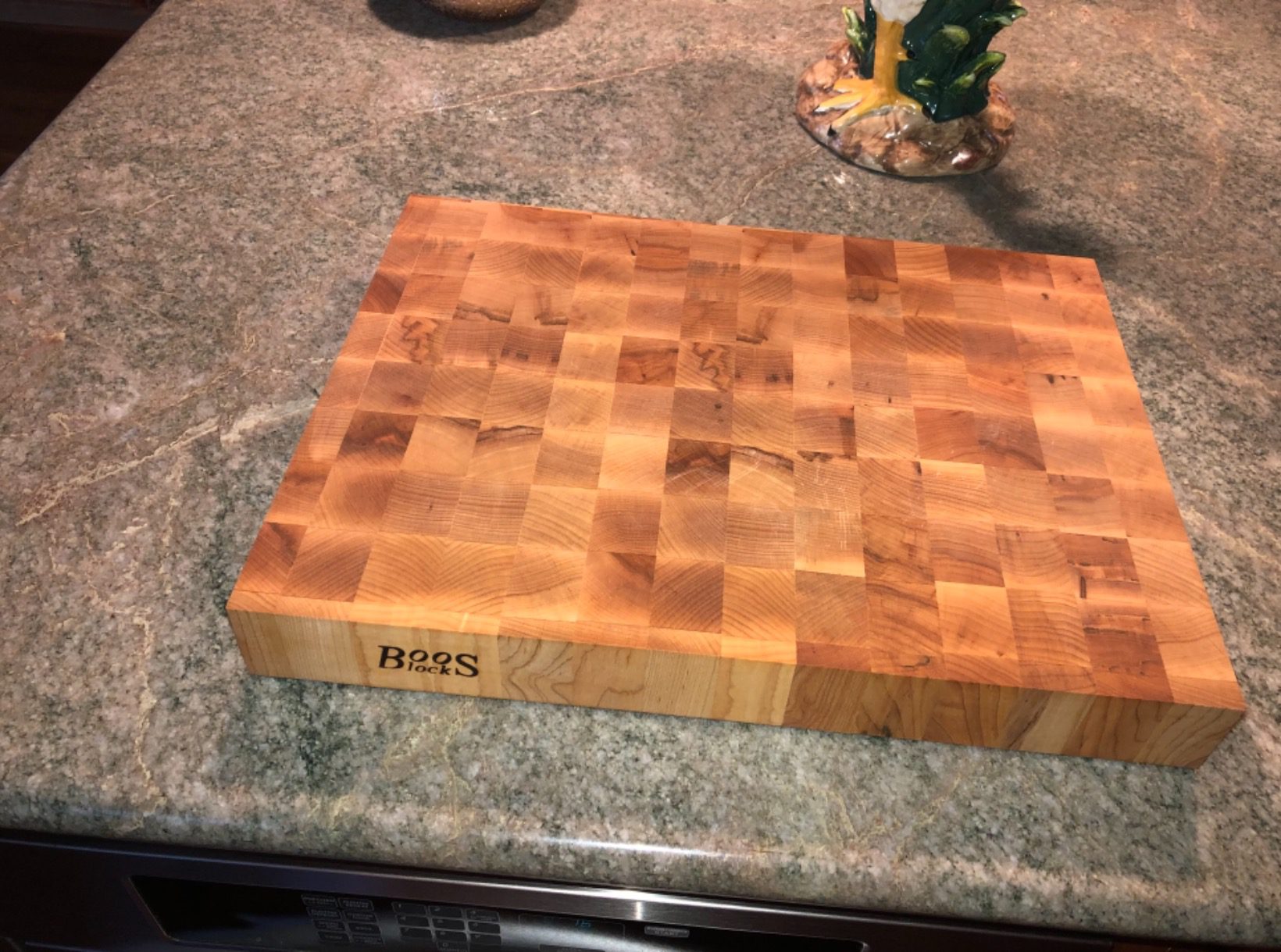
The end-grain maple surface is everything you expect from a professional butcher block. My knives cut cleanly, the surface self-healed, and the level cutting surface was suitable for precision knife work. The food-safe oil finish was well-applied and ready for immediate use. For heavy-duty tasks like breaking down large cuts of meat, nothing else in this guide comes close.
I have to address the rating honestly. At 4.1 stars with 15 percent of reviews being 1-star, this board has more quality complaints than any other in this guide. Some customers received boards with damage or defects. Others felt the board required too much maintenance. John Boos recommends their branded Mystery Oil and Board Cream, which adds to the total cost of ownership. This is a polarizing product that rewards owners who commit to proper care.
Who this board was built for
If you need a professional-grade butcher block that can handle serious abuse, this is the board. It is the kind of surface you find in restaurant kitchens and butcher shops. The 2.25-inch thickness and 21-pound weight make it virtually indestructible under normal home use. The heritage brand and Made-in-USA pedigree add intangible value for buyers who care about provenance.
Reasons to reconsider this board
The weight is the biggest practical issue. At 21 pounds, moving this board regularly is a chore. The quality inconsistencies are real, with a notable percentage of customers reporting damage or defects on arrival. It is also the most expensive board in this guide and not Prime eligible. If you want a premium maple board without the weight and risk, the Bevel and Bond or The Boardsmith are better choices for most home cooks.
How to Choose the Best End-Grain Cutting Board
Choosing the right end-grain cutting board comes down to four factors: wood species, size and thickness, features, and your willingness to maintain it. Let me break down each one based on what I learned from testing these ten boards and reading hundreds of customer experiences.
Wood Species Guide
The wood your board is made from affects everything from knife feel to durability to maintenance requirements. Here is what I learned from testing maple, walnut, acacia, teak, and mahogany side by side.
Hard Maple is the professional standard. It is dense enough to resist deep scarring but still gentle on knife edges. Maple boards like the Bevel and Bond and John Boos lasted longest in my testing with minimal visible wear. The trade-off is that maple is the most demanding when it comes to oiling. Skip a month and you will see the surface dry out.
Walnut is the most beautiful option in my opinion. American black walnut has a rich, dark tone that looks stunning in any kitchen. It is slightly softer than maple, which gives it a more forgiving feel under the knife. The Sonder LA Alfred and BABILONIA boards showed me that walnut can be just as durable as maple with proper care.
Acacia is the budget champion. It offers beautiful grain variation at a lower price point than maple or walnut. The FANICHI and Ziruma boards proved that acacia can deliver a genuine end-grain experience for under $50. The trade-off is that acacia shows scratches faster than harder woods.
Teak has natural moisture resistance thanks to its oil content. The Teakhaus board required less frequent oiling than my maple boards. Teak is slightly softer, which some chefs in r/chefknives noted can lead to deeper knife marks over time. It is a great choice for cooks who want lower maintenance.
Mahogany sits between maple and walnut in hardness. The SHUMARU board delivered an excellent cutting feel with tight, attractive grain. Mahogany is less common in cutting boards, which makes it a distinctive choice if you want something that stands out from the maple-and-walnut crowd.
Size and Thickness Recommendations
For most home cooks, I recommend a board that is at least 17 by 13 inches. That gives you enough surface area to chop multiple ingredients without constantly scraping them into bowls. The Sonder LA Alfred, SHUMARU, and Bevel and Bond all hit this sweet spot. If you have the counter space and budget, the Teakhaus at 20 by 15 inches or the John Boos at 20 by 15 inches offer serious prep real estate.
Thickness matters more than most people realize. Boards under 1.5 inches thick are more prone to warping because they have less mass to resist moisture changes. I recommend a minimum of 1.5 inches, with 1.75 to 2 inches being ideal for longevity. The Bevel and Bond at 1.75 inches and The Boardsmith at 2 inches are both excellent choices in this range.
Features Worth Paying For
Juice grooves are non-negotiable for me. They catch liquids from juicy fruits, tomatoes, and carved meats, keeping your counter clean. Every board in this guide except the base Teakhaus model includes a juice groove.
Non-slip feet are a feature I did not appreciate until I tested boards with and without them. The SHUMARU and Bevel and Bond boards stayed perfectly stable during aggressive chopping. Boards without feet require a damp towel underneath for stability.
Built-in handles or finger grips make a real difference when you are moving a heavy board. The John Boos recessed finger grips are essential for the 21-pound board. The Sonder LA and SHUMARU handles are more subtle but equally functional.
End-Grain vs Edge-Grain: What Is the Difference?
End-grain cutting boards are made with wood fibers oriented vertically, so you are cutting into the end of the wood grain. Think of it like a bundle of straws standing upright. Your knife slips between the fibers rather than slicing across them. This is why end-grain boards are called self-healing. The fibers close back up after the knife passes through, keeping the surface smooth.
Edge-grain boards are made with wood fibers running horizontally. You are cutting across the grain, which means your knife severs wood fibers with each cut. This creates visible cut lines and dulls your blade faster. Edge-grain boards are still good cutting surfaces, and they are typically cheaper, but they do not offer the same knife protection or self-healing properties.
The practical difference is significant. On Reddit’s r/chefknives community, users overwhelmingly recommend end-grain boards for anyone who owns quality knives. End-grain boards keep blades sharper longer because the wood yields to the knife rather than fighting it. They also last longer because the surface does not scar as deeply.
The main trade-off is maintenance. End-grain boards are more porous because the wood fibers are exposed, which means they absorb moisture more readily. This makes proper oiling and drying even more important. Edge-grain boards are slightly more forgiving of neglect, but they will never match the performance or lifespan of a well-maintained end-grain board.
How to Care for Your End-Grain Cutting Board
Proper care is the single biggest factor in how long your end-grain cutting board lasts. Reddit users with boards lasting 5-plus years all follow the same basic routine. Here is the maintenance protocol I developed based on my testing and forum research.
Oil regularly. This is the most important rule. For new boards, oil once a week for the first month. After that, oil once a month. In dry climates or winter months when indoor heating reduces humidity, you may need to oil every two to three weeks. Use food-grade mineral oil or a beeswax-based board balm. The Bevel and Bond, SHUMARU, and BABILONIA boards all include maintenance supplies, which removes the guesswork.
Never soak or dishwasher. This is the number one cause of warped and cracked boards. End-grain construction absorbs water quickly because the wood fibers are exposed at the surface. Soaking causes uneven swelling that leads to warping. Dishwasher heat and water will destroy a wooden board in a single cycle. Wash your board by hand with warm water and mild soap, then dry it immediately with a towel.
Allow airflow underneath. Moisture trapped between the board and your counter causes the underside to swell while the top stays dry. This uneven moisture distribution is a primary cause of warping. Boards with non-slip feet like the SHUMARU and Bevel and Bond solve this naturally. For boards without feet, store them on their edge or use a board rack to allow air circulation.
Clean promptly after use. Do not let food sit on the board for hours. Acidic foods like tomatoes and citrus can stain lighter woods like maple. Beet juice and turmeric are notorious for leaving permanent marks. Wipe the board clean after each use and wash with mild soap if you have cut raw meat.
Frequently Asked Questions
What is the best wood for end-grain cutting boards?
Hard maple is widely considered the best wood for end-grain cutting boards because it is dense enough to resist deep scarring while remaining gentle on knife edges. Walnut is a close second for its beauty and slightly softer cutting feel. Teak offers natural moisture resistance for lower maintenance, while acacia provides the best value at a lower price point.
Are end-grain cutting boards worth it?
Yes, end-grain cutting boards are worth the investment if you own quality knives or cook frequently. The end-grain construction keeps blades sharper longer, resists deep scarring through self-healing, and can last decades with proper care. They cost more upfront than edge-grain or plastic boards, but they outlast cheaper alternatives significantly.
How often should I oil my end-grain cutting board?
Oil new end-grain cutting boards once a week for the first month, then once a month for ongoing maintenance. In dry climates or during winter when indoor heating reduces humidity, oil every two to three weeks. Use food-grade mineral oil or a beeswax-based board balm and apply generously to all surfaces including the edges and underside.
Can end-grain cutting boards go in the dishwasher?
No, never put an end-grain cutting board in the dishwasher. The combination of heat, water pressure, and prolonged moisture exposure will cause the wood to warp, crack, or split within a single cycle. Always hand wash with warm water and mild soap, then dry immediately with a towel and allow the board to air dry standing on its edge.
How long do end-grain cutting boards last?
A well-maintained end-grain cutting board can last 5 to 20 years or more. Reddit users in communities like r/BuyItForLife regularly report boards lasting decades with monthly oiling and proper cleaning. The key factors are wood quality, thickness, and consistent maintenance. Thicker boards at 1.75 inches or more tend to resist warping longer than thinner options.
Final Thoughts on the Best End-Grain Cutting Boards
Finding the best end-grain cutting boards comes down to matching the board to your cooking style, budget, and willingness to maintain it. For most home cooks, the Sonder Los Angeles Alfred Walnut is my top recommendation. It combines a stunning American black walnut surface, practical sorting compartments, and over 10,000 reviews confirming its quality.
If you want the best value, the SHUMARU Mahogany board delivers professional-grade thickness and features at a mid-range price. For budget-conscious buyers, the FANICHI Acacia offers a genuine end-grain experience with a reversible design and lifetime warranty under $40.
Whatever you choose, commit to the maintenance routine. A properly oiled end-grain board will outlast every other tool in your kitchen and become something you reach for every single day. That is the real value of upgrading to end-grain construction.